The full-length debut from Bendigo Fletcher, Fits of Laughter is a collection of moments both enchanted and mundane, sorrowful and ecstatic: basking in the beauty of a glorious lightning storm, waking with a strand of your beloved’s hair happily caught in your mouth, drinking malt liquor while bingeing “The X-Files” on a lonesome Saturday night. As lead songwriter for the Louisville, KY-based band, frontman Ryan Anderson crafts the patchwork poetry of his lyrics by serenely observing the world around him, often while working his grocery-store day job or walking aimlessly in nature (a practice partly borrowed from the late poet Mary Oliver). When matched with Bendigo Fletcher’s gorgeously jangly collision of country and folk-rock and dreamy psychedelia, the result is a batch of story-songs graced with so much raw humanity, wildly offbeat humor, and a transcendent sense of wonder.
True to its spirit of purposeful wandering, Fits of Laughter unfolds in a wayward yet lushly detailed sound, embroidered with everything from crystalline harmonies to blistering guitar riffs to heady drum-machine beats. For help in forging the album’s ragged elegance, Bendigo Fletcher worked with producer Ken Coomer (the original drummer for Wilco and Uncle Tupelo), whom Anderson met in a flash of strange serendipity. Soon after he’d connected with Coomer via phone and bonded over a shared affection for Pink Floyd’s Obscured by Clouds, the band headed to Nashville to record in Coomer’s garage studio, laying down the album’s eight songs in nine frenetic days.
In keeping with the regional perspective that defines much of folk and country music, Fits of Laughter ponders certain paradoxes inherent in the band’s homeland. “In Kentucky there’s a long-running frustration of tradition and stubbornness versus progress,” says Anderson. “On one side you’re looking at things like the coal industry or Mitch McConnell, but then there’s also a feeling of togetherness and a fuck-the-man attitude and a loving desire for everyone to be left alone.” Referring to Fits of Laughter as a coming-of-age album, Anderson also examines a more internal conflict throughout the songs, including his choice to abandon his medical-school aspirations in favor of pursuing a career in music. “The title’s really about the spectrum of emotions I’ve felt on the way to finding what makes me feel like I’m living truthfully, rather than holding onto what I think other people’s expectations are of me,” he says. “It’s a phrase that bridges all of those emotions—everything from joy to hysteria.”
Cerca:sha ly
LTD. BLUE SEAGLASS WAVE TRANSLUCENT VINYL
Last spring, Devendra Banhart and Noah Georgeson started to make a record that was like nothing they had made before _ an ambient album that would be both a haven from a suddenly terrified world and a heartfelt musical dialogue between two artists who have been friends and collaborators for over two decades. Refuge is an album of profound meditative beauty which offers the listener a much-needed sense of peace and renewal. But while it was recorded in 2020 its roots go back much further _ all the way to the start of their friendship and, beyond that, to the shared sounds and ethics of their childhoods. Devendra grew up in Venezuela while Noah, six years older, is a native of Nevada City, California. But as they got to know each other, they realised that they had a similar history in the New Age subculture of the 1980s: a world of meditation, Eastern music, the Bhagavad Gita and The Whole Earth Catalog. Childhood memories were coloured by the aromas of health food stores and the sound of New Age labels like Windham Hill Records. Noah, whose production and mixing credits include Joanna Newsom and the Strokes, came on board as co-producer of Devendra's 2005 album Cripple Crow and they have been working together ever since. It was while making Devendra's 2019 album Ma that the pair finally decided to make their ambient record. Despite complicating logistics, 2020 created an emotional craving for music with this contemplative, therapeutic quality. Inspired by both memories of the past and the needs of the present, Refuge is an act of companionship and generosity which gives the listener room to breathe. "We're hoping to create a sense of comfort and coming back to the moment," Devendra says. "It's really important to have a little bit of space between us and our anxieties and impulses. What you do with that space is up to you." Dorian Lynskey May 2021
In September of 2019, Deliluh took flight with sights set on new horizons.
A long plotted scheme to uproot the group from their Toronto home and
airlift them into the touring bastion of Europe seemed like a pot worth
gambling their stack on.
Their future in the old world was read with wide-eyed optimism, emboldened
by two albums newly waxed and tour dates rolling in. Greener pastures with
foreign allure, a promised land chalk full of experimental art and sound, and a
plethora of unconventional venues ripe for the picking... it’s open season, what
could possibly go wrong?
Well, the best laid plans... ‘Amulet’ is the first release since Deliluh’s departure
from Toronto, an opening document of the group’s transition to Europe. Mirrored images of the same composition occupy each side; ‘A’ performed by their
previous four-piece lineup (Kyle Knapp, Julius Pederson, Erika Wharton, Erik
Jude) and ‘B’ by the current active two-piece (Knapp and Pederson). ‘Amulet’
is set to be released July 30th on 10” via Tin Angel Records.
The lyrics depict a jewel thief committing crimes with the conviction of a merciless zealot, and justifying them with a spite for the status quo. The protagonist
amuses with the threat of being “caught”, a fate seemingly imminent and yet
laughable in the crooked context of societal greed. Knapp delivers sharp criticisms with a swagger liberated of fear, imploring us all to root for the anti-hero
in a time when danger is craved en masse.
The tonal contrasts between both versions testify to the group’s versatility.
The A side pulls tension by way of minimalism, leaning into a sinister synth
sequence that navigates a pitch dark sonic terrain. Swooning guitar, plucking
violin, whispering synths and darting tape effects peek in and out of the periphery, circling with unsettled starkness around Jude’s gloomy bass drone, through
until Wharton-Shukster’s string soaring climax.
Flip to the B side, and the immediate motorik groove turns the sequence on its
head, snapping to a gritty dance track for nights long yearned for. Pedersen’s
modular synth takes on a fresh persona of dusted drums and otherworldly high
hats, cracking on the beat while guitar scratches, processed sax, and string
synths build with harmonic euphoria, all until the tape slips and pulls the rug
from under the DIY dance floor.
‘Amulet’ demonstrates Deliluh’s potential growing fearlessly in the face of a
tight game. They promise a plentiful stash of recordings soon to be unearthed,
giving the sense that their recently tested process of creation has been far from
hindered. What comes next is anyone’s guess, though Amulet at the very least
reassures that we’re still, as always, in trusted hands.
Knapp: “It’s ‘adapt or parish’ these days.. We’re fortunate to be safe and
healthy, and thankfully, we’re not afraid of taking risks or evolving.”
Pedersen: “It isn’t the end goal that matters, but what you learn while exploring the paths that lead into unexplored terrain.”
28 Wednesdays Later is the 4th installment of Chris Webby’s Wednesday album series, and is a body of work packed to the brim with more songs than any of its predecessors. Given that Webby is usually touring for 1/3 of the year, the pandemic allowed him an opportunity to try new, more experimental sounds while sharpening his traditional lyrical skill set even more acutely in the studio. 2020 was taxing on everyone’s headspace, but in this case it seems to have at least made for some good music.
- A1: Ain't Nobody
- A2: Reach Out (Feat Charlotte Haining)
- A3: Smile & Wave
- A4: Listen Up
- A5: Sanctuary
- B1: Pressure (Feat Cleveland Watkiss)
- B2: Underdog (Feat Dj Marky)
- B3: Piano Skit
- B4: Baby Angel Face (Feat Eva Lazarus)
- C1: Explode
- C2: Soul Silhouette (Feat Singing Fats)
- C3: Hands, Lights, Flames, Phones (Feat Drs & Fox)
- C4: Problems Skit
- D1: Take Me Home
- D2: Stranger
- D3: Smile More
Hospital Records are extremely proud to present ‘Smile & Wave’, the
second studio album from drum & bass’ friendliest MC, Inja.
With the biggest smile on his face, the lyricist, vocalist, poet, artist and storyteller delivers
16 tracks, seamlessly weaved together through Inja’s infectiously feel-good flow and sincere
wordsmithery. The entire album was produced by Whiney, further cementing their relationship as one of the most untestable dance music pairings. Also featuring Charlotte Haining,
Eva Lazarus, DRS, Fox, Cleveland Watkiss, Singing Fats, and DJ Marky.
Album title track ‘Smile & Wave’ is the musical embodiment of Inja’s playful demeanour.
Known for being the world’s smiliest artist, Inja wrote and recorded this feel-good bouncer
alongside his daughter who is “pretty much the first person to hear anything” he’s up to
musically. Expect a rude bassline and infectious wordplay.
Teaming up with superstar singer-songwriter Charlotte Haining, ‘Reach Out’ sees two of the
most distinct voices in dance music come together over a bittersweet wobbler written about
times when you feel “so out of place, out of reach” in the words of Inja. Having worked
alongside an impressive array of electronic artists including Hybrid Minds, Sub Focus, My Nu
Leng and Friction, Charlotte’s delicately powerful hooks are the perfect counterpart to Inja’s
heartfelt flows.
Luscious pads and dubbed out pianos and guitars set the scene on ‘Baby Angel’ featuring the
worldwide wave-maker Eva Lazarus who returns to Hospital Records for the first time since
featuring on Etherwood’s ‘Light My Way Home’ back in 2015. Having worked alongside staple
figures including Mungo’s Hi-Fi, Zed Bias and Gentlemen’s Dub Club, Eva infuses her reggae,
hip-hop and jungle flavours alongside Inja’s humbling storytellings.
Inja’s “personal favourite to perform live as it smashes every and any system”, ‘Explode’, is a
140BPM anthem featuring flows that will ignite any room and a killer instrumental that will
have you bobbing no questions asked. Proving himself to be a versatile and skillful microphone controller, Inja’s ability to shell down any tempo is ever more apparent on this upfront
banger.
Three legendary MCs unite on ‘Hands, Lights, Flames, Phones’ where Inja joins forces with
two of Manchester’s very finest - DRS and Fox. Sharp lyricism is rife as the triple threat of
three titan wordsmiths link up, seeing energetic bars bouncing off each other over a cold-cut
drum & bass roller. This is a combination not to be tested.
Inja has established himself as a pinnacle figure within the realms of drum & bass. Loved for
his ability to express his thoughts into honest, relatable lyrics in ‘She Just Wanna Dance’, a
spoken word piece for Amnesty International that was a viral online hit in 2017, and more
recently switching it up to ‘We Just Wanna Dance’ during the UK lockdown, expressing his
desire to be reconnected with ravers again. Then picked up by BBC News and Sky News.
On top of being the MC of choice for drum & bass powerhouse group Kings Of The Rollers,
Inja is no stranger to tearing things up on the airwaves with support from the likes of DJ
Target, Rene LaVice and Danny Byrd on BBC Radio 1 over the years. Since his debut ‘Blank
Pages’ album on Hospital Records in 2018, Inja has flourished as a multi-talented MC, vocalist, singer and songwriter with a series of singles including the Beatport Drum & Bass charttopper ‘Game Face (Stay Alert)’ alongside Whiney, as well as the infamous ‘Lumberjackin’’ on
Serum’s Souped Up.
"To all the supporters that enjoy anything I’m a part of, I would never have had the opportunities to see as much of the world as I have without you. My gratitude has no bounds and I’d
love to share a smile with you all one day.” - Inja
- A1: Billy F Gibbons -- (I've Got) Levitation
- A2: Mosshart Sexton -- Starry Eyes
- A3: Jeff Tweedy -- For You (I'd Do Anything)
- A4: Lynn Castle & Mark Lanegan -- Clear Night For Love
- A5: The Black Angels -- Don't Fall Down
- A6: Neko Case -- Be And Bring Me Home
- B1: Margo Price -- Red Temple Prayer (Two-Headed Dog)
- B2: Gary Clark, Jr. & Eve Monsees -- Roller Coaster
- B3: Ty Segall -- Night Of The Vampire
- B4: Lucinda Williams -- You're Gonna Miss Me
- B5: Chelsea Wolfe -- If You Have Ghosts
- B6: Brogan Bentley -- May The Circle Remain Unbroken
* Pressed on special RSD color wax.
* Includes bonus limited edition flexi of an ultra rare recording performed by Roky Erickson.
* Pressed at RTI.
Texan Roky Erickson was one of the true mind-blowing pioneers of psychedelic music. The original leader of the Austin-based 13th Floor Elevators formed in 1965, Erickson and band invented a brand new style or rock & roll, one that was slightly unhinged while it explored the consciousness-expanding influence of LSD on music. After three years, the group imploded with mental issues and legal challenges, ending with Erickson being incarcerated for several years in the Hospital for the Criminally Insane in Rusk, Texas. When he was released in the early '70s the musician continued on his own trail, recording songs that had come to him in his far-flung cerebral wanderings. Erickson, who passed away May 31, 2019, is now celebrated on this 12-track tribute to one of the most original rockers ever.
The participants range the whole world of modern music, and each chose one of Erickson's originals to stamp their own imprint on. They include Billy F Gibbons, Lucinda Williams, Mosshart Sexton (a/k/a Alison Mosshart & Charlie Sexton), Neko Case, Mark Lanegan & Lynn Castle, Jeff Tweedy, Margo Price, Gary Clark Jr & Eve Monsees, Ty Segal, Chelsea Wolfe, The Black Angels and Brogan Bentley. The album is co-produced for release by Bill Bentley, executive producer of the 1990 Roky Erickson tribute album Where The Pyramid Meets The Eye on Sire Records, and Matt Sullivan, co-founder/owner of Light in the Attic Records.
The songs range from Erickson's debut iconic original, "You're Gonna Miss Me," recorded when he was a member first in The Spades and then the 13th Floor Elevators during the early '60s in Austin, to some of Erickson's later songs, like "If You Have Ghosts," which heard him exploring some of the outer limits of the human psyche. Each new recording is a stunning modern take on the sound that Roky Erickson gave the world over a half-century of writing, recording and touring. No one has ever equaled those explorations.
This truly is the music of the spheres, as Erickson once sang about his sound, as seen through the eyes and ears of those who are united in their love and respect for a person who dedicated his life to rock & roll. Roky Erickson, through the trials and tribulations of a man both imbued with greatness and haunted by darkness, never quit in his quest to share with others what he heard and saw. As he sang on the 13th Floor Elevators last recording, "May the circle remain unbroken."
**LONG OVERDUE REPRESS - CLEAR VINYL 300 COPIES ONLY** “With Ela’s music I feel emotional, engaged… I can’t help but feel she’s always looking for a sense of belonging and it
seems to inform all the music that she makes. Glasgow must have more of that belonging feeling than most
cities because she’s spent the most time here, an exotic bird in a rainy city she maybe finds a lttle bit of comfort in. It’s
a pleasure to have her here, in this awful time to be living in Britain, her illuminations feel important and hopeful. A
stubborn light; someone making great timeless music out of the humdrum of the everyday.” - Stephen Pastel
Movies For Ears is a retrospective collection of works by Polish-born, Glasgow-based artist Ela Orleans which
navigates almost two decades of songwriting in the heart of the global pop underground. This remastered collection casts
an ear over what Orleans might call the ‘pop sensibility’ within her back catalogue. Released previously on a number of
small DIY labels, Orleans’ music coincided with the explosion of auto-didactic musicians finding their voice in the age of
the blogosphere, artists emboldened by the democratisation of music-making afforded by the internet. From the outset,
Orleans’ childhood studying formal music mixed with cut-up techniques, sampling, sound-art and experimentation to
create a distinctive signature cloaked in an innate melancholy and playfulness. Fully remastered by James Plotkin,
featuring extensive sleeve-notes and rare photos from Orleans’ archive, Movies For Ears presents an appraisal of the
musician’s work, painting a portrait of an artist with an uncanny ability to evoke emotions and ghosts of memories in the
listener.
Each song pulls sunshine from its surroundings, moments of pleasure plucked from eulogies. The Season employs a
hypnotic loop with Orleans’s prophetic voice heralding the season we’re doomed to repeat. In fact the singer is often cast
as the changing protagonist in her songs: on Walkingman, a hazy ballad heavy with ennui, the narrator is laden with the
world’s weight, forever pacing a groundhog day world blank, a pissed-off actor in a Kafka-esque melodrama. On Light At
Dawn we’re in a seedy kitsch bar-room go-go scene, a ghostly rock’roll romance with shimmering percussion, poledancing
in a Lynchian half-dream. Movies For Ears’ moods straddle memory and fantasy: scratchily invoking halfremembered
exotica, the flickering shadows of europhile cinemas screens, a delicately woven world anchored in Orleans
existential meditations on longing, intimacy, solitude and the search for love. These rich textures in every song don’t
overpower some crystalised moments of emotion however: on In Spring Orleans sings simply “I have been happy two
weeks together,” summarizing that feeling of elation when emerging from a depression, a long winter. It’s a moment that
perfectly illustrates the lightness of touch and clarity in the singer’s voice.
The power of the loop and Orleans’ weaving songwriting that breaks its spell is illustrated perfectly by I Know. Over an
aching chord progression, the vocal takes flight into bittersweet loneliness, Pachelbel’s Canon played at a wedding where
only one person shows up. The repeated refrain “I know, I know” ascends to the heavens as the chords descend to the
dumps and the listener is left in the middle, happy but not knowing why, maybe a little changed, two weeks together. On
Movies For Ears, Ela Orleans lets us into a secret: the rare moments of joy to be found in the joins of the loop, the spaces
between things, the spring after the winter are the moments that last after the day has faded.
- 1: ) Songs To Die For
- 2: ) Things That Make Me Happy
- 3: ) Revolt Against An Age Of Plenty
- 4: ) Losing Faith In The Wall
- 5: ) Giving Back Is Good For You
- 6: ) Debra 2021
- 7: ) Words On Fire
- 8: ) Can You Kanreki?
- 9: ) A Life More Ordinary
- 10: ) It’s A Wonderful Life
- 11: ) My World Is Not My Own Anymore
- 12: ) When Our Kingdom Comes
- 13: ) Songs To Die To Reprise
Double vinyl on blue and orange transparent vinyl in gatefold sleeve with download code.
Former bIG*fLAME singer and bassist Alan Brown returns with his long term solo project The Great Leap Forward, releasing a powerful and trademark new album ‘Revolt Against An Age Of Plenty’.
Vigorous, scintillating and life-affirming, this 13-song album sees Brown reach a milestone birthday, as explored in 'Can You Kanreki?’ - the Japanese concept of second childhood and re-birth. Then there are the trademark political and social vignettes, such as the title song of the album 'Revolt Against An Age Of Plenty' – railing against mass consumerism and media control; the wistful 'dEBRA 2021' (a re-working of the bIG*fLAME classic 'Debra'); and the ascerbic 'It's A Wonderful Lie' – a scathing attack on the lack of openness, honesty and humility of our political leaders.
Brown featured on the legendary and influential C86 NME cassette as singer and bassist with Manchester agit-post-punk trio bIG*fLAME, and recorded nine John Peel sessions for BBC Radio One in the 1980’s with bIG*fLAME (4), The Great Leap Forward (2), A Witness (2) and Inca Babies (1).
Formed by Brown following the disbandment of bIG*fLAME in 1986, The Great Leap Forward is essentially a solo project in which Brown writes all songs and lyrics, and plays / programs all instruments on recordings.
The style and sound is more melodic and accessible than bIG*fLAME, but still with overtly political lyrics and a socialist / humanist ethos: incisive political and social commentary layered over sharp yet melodic guitar pop – and with a touch of electro and humour thrown in for good measure…
Stuart Maconie, writing for NME, summed up the band's sound: "First there's the jagged guitar melodics, sweet but never tacky. Then there's the ferocious rhythmic drive. But best of all there's the stylish and witty use of found voices...snatches and snippets of speech and propaganda that are integral to the songs."
Little wonder that as with McCarthy, The Great Leap Forward were loved by a young James Dean Bradfield.
Brown writes- “This album is the culmination of four year's writing, and it has a much more varied approach than previous releases. Whereas previously I've concentrated on a political approach, this album takes a wider view of the world. Of course I still provide the trademark political and social vignettes - how could I not - such as the title song of the album 'Revolt Against An Age Of Plenty' – named after a collection of works by the English writer Jack Common in which I rail against mass consumerism and media control; the wistful 'dEBRA 2021' (a re-working of the bIG*fLAME classic 'Debra'); and the ascerbic 'It's A Wonderful Lie' – with what I think is a scathing attack on the lack of openness, honesty and humility of our political leaders.
- A1: The House Song - Lee Hazlewood
- A2: If Only She Had Stayed - Chris Gantry
- 3: Endless Miles Of Highway - Jerry Reed
- A4: The Back Side Of Dallas - Jeannie C Riley
- A5: Way Before The Time Of Towns - Hoyt Axton
- A6: Strawberry Farms - Tom T Hall
- B1: Down From Dover - Dolly Parton
- B2: July 12, 1939 - Charlie Rich
- B3: What Am I Doing In L.a.? - Nat Stuckey
- B4: Mr Stanton Don’t Believe It - Rob Galbraith
- B5: Saunders’ Ferry Lane - Sammi Smith
- B6: Four Shades Of Love - Henson Cargill
- C1: Drivin’ Nails In The Wall – Waylon Jennings & The Kimberlys
- C2: Ruby, Don’t Take Your Love To Town – Kenny Rogers & The First Edition
- C3: Why Can’t I Come Home - Ed Bruce
- C4: Mr Walker, It’s All Over - Billie Jo Spears
- C5: Harlan County - Jim Ford
- C6: Widow Wimberly - Tony Joe White
- D1: Belinda (Alt Take) - Bobbie Gentry
- D2: Joanne - Michael Nesmith & The First National Band
- D3: Mr Jackson’s Got Nothing To Do - John Hartford
- D4: Alone - Lee Hazlewood & Suzi Jane Hokom
- D5: Fabulous Body And Smile – Sir Robert Charles Griggs
- D6: I Feel Like Going Home - Charlie Rich
• “Choctaw Ridge” explores a new country sound, one that emerged at the end of the 60s in the wake of Bobbie Gentry’s ‘Ode To Billie Joe’, a shock number one hit in 1967. When singers like Gentry, Jimmy Webb, Michael Nesmith and Lee Hazlewood moved from the south to Los Angeles to make it in the music business, they were not part of the Nashville in-crowd and they forged a new direction.
• ‘Ode To Billie Joe’ was the tip of the iceberg, and its success helped a bunch of singers and storytellers to emerge over the next three or four years. Some of the tracks on this collection bear that song’s stamp more clearly than others: Sammi Smith’s moody ‘Saunders’ Ferry Lane’ had a similar mystery lyric, and Henson Cargill’s ‘Four Shades Of Love’ is a portmanteau, with one (or possibly two) of the theoretically romantic situations ending in death.
• Suddenly, character sketches of southerners became a lot more rounded – women didn’t have to stay home, or take abuse at the office, and darkness wasn’t only found at the bottom of a bottle. Storytelling is the link between all of the songs on this collection. We have cautionary tales about what could happen to someone who heads for the bright lights and doesn’t make it, ending up in the grasping hands of ‘Mr Walker’ (Billie Joe Spears), or on the ‘Back Side Of Dallas’ (Jeannie C Reilly), or on a mortuary slab in the case of the songwriter with the ‘Fabulous Body And Smile’ (Robert Charles Griggs). And there are stories about wanting to go home – Nat Stuckey’s ‘What Am I Doing In LA?’ and Charlie Rich’s ‘Feel Like Going Home’ – and others from Ed Bruce and Lee Hazlewood, who know that their home isn’t home anymore.
• The tracklist and fulsome sleeve notes have been put together by Bob Stanley (Saint Etienne) and Martin Green (Smashing, The Sound Gallery), who have been collecting these records for decades.
• The voices are resonant and relatable, and the productions take in the best of what pop had to offer in the late 60s and early 70s. Before the factionalism between smooth pop-conscious Nashville and the hedonistic ‘outlaws’ made it look inward again, this was a golden era for an atmospheric, inclusive and progressive country music. It began on the third of June, another sleepy, dusty Delta day.
Wackelkontakt are the trio that currently spearheads the Jerusalem scene, playing music that's precise yet eclectic, cruel and abrasive even when vulnerable. An unholy mixture of trap, industrial, experimental and power electronics. Wackelkontakt have already made a global mark with the sensory overload of their live multimedia performances and the scintillating presence of frontwoman Tomer Damsky AKA MC Slice, backed by Eyal Lally Bitton (electronics, visuals, scenography) and Marco Milevski Tomasin (drums and electronics). Wackelkontakt's wildly eclectic approach, bound by an impossibly consistent sound, is a direct result of the band living a minute away from The Old City's Damascus Gate and recording in the ultra-orthodox neighbourhood of Me'a She'arim; Jerusalem is present in the music, not in the shape of touristic exotica but in a sense of conflict, paranoia and isolation. The lyrics are equally contradictory, schizophrenic and chaotic. Emotional manipulation clashes with a desire to shake and be shaken, to allow oneself to become sucked as far as possible from self-loathing. When self-reflection arises it is bitter, ridiculous, pathetic, interweaving with philosophical texts lifted directly from the likes of Deleuze & Guatarri, Foucault, Artaud, WJT Mitchell and others.
The Staples do it again with another Ska classic that is guaranteed to get you singing along. This song is something of a good time anthem with happy vibes contrasting with some of the negatives that are around right now. With this song Neville and Sugary Staple really know how to put a smile on people’s faces. I can see this becoming a live favourite.
Dr Pete Chambers BEM, Coventry Observer
My goodness, the best of two huge talents. Husband and wife team Sugary & Neville Staple haven’t disappointed again! Feel good ska-based melody, toe-tapping and butt-shakingly good!TRISH ADUDU, BBC RADIO CWR
Well known for changing the face of music not once, but three times, 2Tone music legend Neville Staple (From the Specials), also known as the ‘Original Rude Boy’ and his super sidekick wife, Sugary Staple, release their brand new song, ‘Be Free Baby’, on the highly respected, Pickout Records.
A super ska track which mixes the original influences of Jamaican sounds, along with the 2Tone style that this dynamic ska duo, take on tour with them globally, alongside their top band of musicians.
Written by Neville Staple, who has scores of music awards from 40 years of 2Tone & Ska hits and albums, and his super talented sidekick, Sugary Staple and acclaimed record producer Lloyd ‘Pickout’ Dennis this song is a truly happy song, to take our minds away from the difficult days of Covid lockdowns, into a party mood of freedom and dancing. Fans will love the irresistible skanking beat, along with super feel-good lyrics to sing along to.
“After recently writing a song about the Lockdown, which related to the tough days of staying home and following rules and so on, I decided we needed some uplifting music too.” Explained Sugary, Frizzle TV Award Winner and Skamouth Festival Founder. “There is so much doom and gloom about in the news and we know how music can really be so good for the human soul. This tune has a lot of love and feeling behind it, as it encompasses all the fun, freedom and thrills that we have on stage, when we perform live. A whole year of global touring has been postponed, so we put the vibrance of a live show into this song.
Neville agrees, “I love writing with Sugary, as we are both on the same wavelength. We feed off each other. We were both in need of getting out there and performing for the masses but have had all our 2020 shows moved to next year, so we decided to bring the party to everyone through this song. We love the traditional sound and the bluebeat vibes too, with a twist of 2Tone magic. It makes me think about our holidays back home in Jamaica and beach parties, street carnivals, gigs and festivals. This is a happy tune for dancing away the blues!”
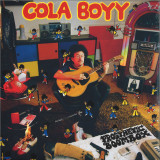
There’s liberation on the dance floor in the songs of Matthew Urango – glimpses of revolution that glimmer beneath the disco ball. “I want my music to bring people together,” says the Californian pop innovator, best known as Cola Boyy. “Because standing together is our best chance at fighting this shit show.” The shit show in question is a broken, brutal system the acclaimed multi-instrumentalist has witnessed up-close. Urango was born with spina bifida and scoliosis in Oxnard, California: a town in which almost 30,000 are estimated to live in poverty. Prosthetic Boombox, his eagerly awaited debut album, might at first glance seem a joyous confetti-burst of pop eclecticism, engineered to sound like “scanning between stations on a car radio, landing on all these different sounds and styles” as Urango puts it. Dig deeper, though, and you’ll discover a simmering sense of rebellion. “The working class are injured, struggling to pay rent and struggling to put food on the table,” he says. “I want to represent that.” Prosthetic Boombox
achieves that goal in a thrilling flurry of inventive indie, funk and soul: take Urango’s car radio analogy, place it in a time-travelling Delorean with Prince in the passenger seat, and you’re half-way there.
Look no closer than Prosthetic Boombox’s euphoric opener, the Avalanches-assisted ‘Don’t Forget Your Neighbourhood.’ The track – which Urango says mixes “the Beach Boys, French disco, house keys and ragtime piano, kinda like the Cheers soundtrack!” – ends with lyrics urging listeners to “fight for your town with your fist closed, strike it and make it more than just a memory.” It’s a reminder that the working classes need to “turn our fists against our oppressors instead of each other,” he explains. After that emphatic introduction comes a horn-laced funk wig-out titled ‘Mailbox’ – a song that gives Dua Lipa’s Future Nostalgia a run for its Studio 54-themed money, featuring rising Londoner JGrrey. Elsewhere, ‘Song for the Mister’ ventures into smooth R&B territory, before ‘Roses’ – a collaboration with Myd of Ed Banger fame – offers a bouquet of bustling disco guitars and infinite bisous of Connan Mockasin’s band drops in on the immaculate ‘Go the Mile’. Urango saves his most introspective moment for the album’s starry closer. ‘Kid Born in Space’, a cosmic collaboration with MGMT frontman Andrew VanWyngarden, sees the artist reflect on what he once had to overcome as a disabled person of colour. “I see them looking down on my dreams of being,” he sings tenderly. “I hear them making fun of my voice, but I keep on moving forward, I refuse to live in anyone else’s shadow.” Prosthetic Boombox, on this subject, is more than an album title – it’s a statement of intent.
“The message of my music is that our class is exploited, oppressed and murdered on the daily. That’s not right, and the system that enables that deserves to be wiped off the face of the earth,” he says. “The only way that happens is if we’re united. That’s the point of my music – to relate to people and unite them.” And what unites more than raucous, irresistibly danceable pop? Prosthetic Boombox is a riot of joyous grooves and catchy hooks for good reason. “I want to reach and spread my message to as many people as possible. You can’t do that if you’re some obscure motherfucker, you know?” he laughs. Don’t bet on him being an “obscure motherfucker” for long.
Bella Union announce the release of Piroshka’s stunning second album,
‘Love Drips And Gathers’. The album builds on the acclaim of the band’s
2018 debut LP ‘Brickbat’ and the reputations of former members of Lush,
Moose, Elastica and Modern English.
Piroshka emerged in 2018, four individuals with distinct musical identities but
also overlapping histories - a combination that might have unsettled, or even
overwhelmed, some bands. But in their case, the bond only got stronger.
After ‘Brickbat’ explored social and political divisions by way of what MOJO
described as “Forceful, driving garage songs and dream-pop epics,” ‘Love
Drips And Gathers’ follows a more introspective line - the ties that bind us, as
lovers, parents, children, friends - to a suitably subtler, more ethereal sound,
whilst still revelling in energy and drama.
“If ‘Brickbat’ was our Britpop album, then ‘Love Drips And Gathers’ is
shoegaze!” reckons vocalist/guitarist Miki Berenyi, formerly of Lush, a band
that effortlessly bridged the two genres like no other. “It wasn’t intentional; we
just wanted a different focus. I’ve always seen debut albums as capturing a
band’s first moments, when you really have momentum, and then the second
album is the chance for a more thoughtful approach.”
Bassist Mick Conroy (Modern English) agrees. “‘Brickbat’ was a classic first
album; noisy and raucous. On ‘Love Drips And Gathers’, we’ve calmed down
and explored sounds, and space.”
The way ‘Love Drips And Gathers’ changes shape and dynamic is less a
reprise of Nineties Brit indie than a transformation into a more shivery, Euromantic version with glistening electronic filigrees. The opening ‘Hastings’ sets
the tone. Luminous drops of guitar underpin Miki’s becalmed vocal before
drums, bass and a Mellotron add pace while the decorative coda features
their old pal Terry Edwards on flugelhorn.
‘Love Drips And Gathers’ - named after a line in a Dylan Thomas poem - was
inspired by love, family, belonging, memory. Miki and Moose split the eight
lyrics, with some poignant overlaps here too. Miki’s ‘Loveable’ looks to
Moose; Moose’s ‘The Knife-Thrower’s Daughter’ looks to Miki but also their
daughter Stella and his sister Anna; an empathic, touching embrace of the
women in his life.
Staying within the family, Moose eulogises his late mother (the idyllic
childhood seaside trip of ‘Hastings 1973’) and father (the more conflicted
‘Scratching At The Lid’). On ‘V.O.’, Miki pays fond tribute to Vaughan Oliver,
4AD’s legendary in-house art director who died suddenly in December 2019
and who had a particularly close relationship with Lush during their time on
the label (like ‘Brickbat’, ‘Love Drips And Gathers’’ beautiful and enigmatic
artwork is by Vaughan’s former design partner Chris Bigg).
LP pressed on clear vinyl.
- Tkay Maidza - Where Is My Mind? (Pixies)
- U.s. Girls - Junkyard (The Birthday Party)
- Aldous Harding - Revival (Deerhunter)
- The Breeders - Dirt Eaters (His Name Is Alive)
- Maria Somerville - Seabird (Air Miami)
- Tune-Yards - Cannonball (The Breeders)
- Spencer. - Genesis (Grimes)
- Helado Negro - Futurism (Deerhunter)
- Efterklang - Postal (Piano Magic)
- Bing And Ruth - Gigantic (Pixies)
- Future Islands - The Moon Is Blue (Colourbox)
- Jenny Hval - Sunbathing (Lush)
- Dry Cleaning - Oblivion (Grimes)
- Bradford Cox - Mountain Battles (Breeders)
- Sohn - Song To The Siren (Tim Buckley)
- Becky And The Birds - The Wolves
- Act I And Ii (Bon Iver)
- Ex:re - Misery Is A Butterfly (Blonde Redhead)
- Big Thief - Off You (The Breeders)
In 2020, 4AD turned 40. Never one to be on time for a party, the label is
commemorating that landmark this year with the release of ‘Bills & Aches & Blues’.
The compilation features 18 of its current artists covering a song of their
choosing from 4AD’s past: a creative experiment rooted in the spirit of
collaboration and a snapshot of 4AD, 41 years after its inception.
‘Bills & Aches & Blues’ will be released on double CD and double LP. The
first 12 months’ profits from ‘Bills & Aches & Blues’ will be donated to The
Harmony Project, a Los Angeles-based after-school programme for children
from communities and schools that lack equitable access to studying the arts
or music.
‘Bills & Aches & Blues’’ 18 recordings contain fascinating connections
between artist and track. The earliest song chosen (by U.S. Girls) is The
Birthday Party’s ‘Junkyard’, from 1981; the most recent are the two Grimes
covers (‘Genesis’ and ‘Oblivion’, respectively by Spencer. and Dry Cleaning)
from 2012. Suitably, for the one band that bridges 4AD past and present, The
Breeders are all over ‘Bills And Aches And Blues. They’re covered three
times - ‘Cannonball’ by Tune-Yards, ‘Mountain Battles’ by Bradford Cox of
Deerhunter and ‘Off You’ by Big Thief, whilst The Breeders cover ‘The Dirt
Eaters’ by their ‘90s contemporaries His Name Is Alive.
Landmark songs such as ‘Cannonball’, ‘Song To The Siren’ and Pixies’
‘Where is My Mind?’ will feel comfortable to casual fans, however by
contrast, much joy can be found in the album’s surprise choices, such as Air
Miami’s ‘Seabird’ and the Lush B-side ‘Sunbathing’, covered respectively by
new signings Maria Somerville and Jenny Hval.
‘Bills & Aches & Blues’ is named, arguably (as Elizabeth Fraser never
published the lyrics), after the opening line of Cocteau Twins ‘CherryColoured Funk’. Perhaps too unique and uncoverable in their own right, their
legendary take on Tim Buckley’s ‘Song To The Siren’, under the name This
Mortal Coil (along with Buckley’s pre-Starsailor acoustic version) informs
SOHN’s cover.
Some tracks unearth hitherto hidden shared DNA, such as Future Islands’
and Colourbox’s ‘The Moon Is Blue’; other tracks are more akin to
reinvention. Aldous Harding distils the melodic essence of Deerhunter’s
‘Revival’ and recasts it in her own uncanny image. U.S. Girls’ future-disco
‘Junkyard’ and Bing & Ruth’s neo-classical instrumental ‘Gigantic’ are even
more radical interpretations. Leading off the album, Tkay Maidza brings both
her Art Rap and R&B game, but also an unexpected ‘80s synth pop template,
to Pixies’ ‘Where Is My Mind?’, a perfect title for these chaotic times.
"The Shape Of Jazz To Come" - Ornette Coleman (as); Don Cherry (crt); Charlie Haden (b); Billy Higgins (dr)
It was John Lewis, pianist of the Modern Jazz Quartet, who brought Ornette Coleman to the renowned Atlantic label, having heard him play in Los Angeles. »Ornette Coleman is doing the only really new thing in jazz …« he reportedly said. The present initial Atlantic album was released just in time to coincide with the New York debut of the Coleman Quartet in November 1959. Lewis was sure that Coleman would open up new paths for jazz, and his opinion is reflected in the title of the album – "The Shape Of Jazz To Come". After the rather worn-out hard bop routine of the past years, this music was like a breath of fresh air. The fast numbers ("Eventuality", "Chronology") remind one of wildly hyped-up bebop. Other numbers ("Congeniality", "Focus On Sanity") juggle with catchy, almost folk like short motifs. This album contains two of Coleman’s most beautiful compositions: "Peace" and "Lonely Woman", which was later given lyrics and often heard in its vocal version. The Mulligan-Baker Quartet provided the model for the pianoless quartet – and when the band swings along once in a while with a moderato tempo, it is truly reminiscent of cool jazz. Be that as it may, the two wind instrumentalists just love the frenetic 'cry' and the intentionally 'imprecise' interplay. Clearly defined stanzas or traditional harmonic forms were not for them. The jazz musicologist Peter N. Wilson wrote: »A record, which is not unjustifiably so entitled« about this LP which was given 5 stars by the magazine Rolling Stone.
This Speakers Corner LP was remastered using pure analogue components only, from the master tapes through to the cutting head. More information under pure-analogue
All royalties and mechanical rights have been paid.
Recording: May 1959 at Radio Recorders, Hollywood, CA, by Bones Howe
Production: Nesuhi Ertegun
"These Exit Times" is the name of a newsletter sent by an environmental organisation advocating the extinction of the human race as a solution to save the planet. When Victor Ramirez first came across the group on the internet a couple of years ago, it brought a smile to his face. But after some pondering on the subject, he decided that "Exit Times" would be the name of his sensational third album as Ramirez Exposure.
The record started to take shape in early 2020, after a musical hiatus that had lasted a year. It had been somewhat of a dark period, and Victor felt it was time to go back to recording songs. It would be the first time he would be doing so at home. He had managed to set up a small studio that would allow him to make some proper recordings, and without having to use a computer. He'd also started a new job, as an orderly in a hospital, which gave him time to record and cash to pay the rent.
Victor was ready to take on the task of making the album with the help—albeit from a distance, this time—of Ken Stringfellow (Posies, Big Star) and Brian Young (Jesus & Mary Chain, Ivy, Fountains of Wayne), both regular accomplices of the Valencian in production and instrumentation. Working with the two of them feels very natural for him, even though they are in three different countries.
Looking back, it seemed as if he'd prepared himself for what was coming.
And so, the pandemic happened, and Victor found himself turning the ideas he had outlined on his phone into the songs for Exit Times. He was in a good place, personally and, despite the situation, he was happy to be able to contribute to society through his job at the hospital and, after coming home, to concentrate on his music and isolate himself from everything else.
Gradually, the sketches turned into luminous songs, with bright harmonies and lyrics that exude a fine irony. Victor admits that he strives to be a good pessimist every day, and the songs reveal a way of understanding life that relativises almost everything in order to stick with what's really important. This subtle sense of humour in the lyrics, like the luminosity of his music, is vintage Ramirez, and is present throughout the album, and even on the cover. The artwork is a painting by German painter Angela Dalinger, depicting Victor himself, their dog, Colombo, and some meaningful objects. The vinyl record featured is George Harrison's Brainwashed.
Exit Times is a shiny collection of songs with a universal vocation, bathed in sunshine pop with touches of new psychedelia. All simmered under the Mediterranean sun—the same sun that illuminates the entire planet.
COS might not be the first genre defying progressive music group you’ve heard who share both wordless onomatopoeic vocals and a snappy three letter title (complete with philosophical leanings and alchemic penchants) but on listening to this first ever custom Cos compendium you might have just discovered a new favourite!
Perhaps it’s no coincidence that COS share close spiritual, stylistic or social connections to the aforementioned bands, as one of the few long-withstanding single-syllable ensembles to remain utterly idiosyncratic and incomparable within their hyper-focussed and impenetrable creative bubble. But as a 1970s group that effortlessly MIX head-nod prog, synth-driven jazz, cinematic sound-designs, dislocated disco, arkestral operatics and high-brow conceptual anti-pop grooves, it’s easier to remember the name COS than thumb the vast amount of genre-dividers in your local record shop which COS COULD occupy. With the crème de la crème of Belgian jazz/prog/psych/funk within their ranks, their combined idea-to-ability ratio litters the Cos-ography with concepts that aficionados, future fans, collaborators and critics still haven’t began to unravel.
With their earliest roots in the compact jazz group Brussels Art Quintet the group spent their sapling years creating art-school prog under the name Classroom, this flourishing collective, cultivated by multi-instrumentalist mainstay Daniel Schell, would soon shed its leaves, dropping band-members and typographics reducing its moniker to simply COS (a multi-purpose, globally recognised word, with links to Alchemy and philosophy, with a hard phonetic delivery to suit the groups heavier rhythmic approach). In it’s new skin COS also shed all forms of orthodox language to find its true exclusive voice. Fronted, in the conventional sense, by the daughter of author and part-time jazz player Jean De Trazegnies, the bands wordless singer changed her name to Pascale SON, to accentuate the French word for “sound”. Drawing comparisons with sound poets like Polish jazz legend Urszula Dudziak or Hungarian Katalin Ladik, but retaining the crystalline femininity (and funk) of Flora Purim, while effectively sharing an imaginary lyric book of non-words with Damo Suzuki, Magma or a future Liz Fraser... To use the word “unique” would, by COS academic standards, be lazy journalism.
Limited Edition Classic LPs - 180g Virgin Vinyl -Audiophile Pressing Gerry Mulligan, Baritone Sax; Thelonious Monk, Piano; Wilbur Ware, Bass; Shadow Wilson, drums. New York, August 1957. Produced by Orrin Keepnews. Thelonious Monk was a creator in the true sense of the word. The current LP includes one of his rare albums that could fit within the standard formula of “jazz star 1 meets jazz star 2”. The pianist seldom shared the bill with other stars or accepted playing second fiddle to anyone. Two rare exceptions include his two 1950 sides backing singer Frankie Passions (“Especially to You” and “Nobody Knows”), and his 1950 studio session backing Charlie Parker and Dizzy Gillespie. But Monk is the leader on most of his recordings, and in a way, he was also the leading voice on this meeting with Gerry Mulligan. Most of the tunes played here are compositions by Monk, with the exception of the standard “Sweet and Lovely” - a favourite of Monk’s, who recorded it dozens of times - and Charlie Shavers’ “Undecided”, which could well have been Gerry’s only call for the evening. Although it remains clearly recognizable, the latter tune was slightly modified here, retitled “Decidedly” and attributed to Mulligan himself. No other recording of “Undecided” by Monk is known to exist. “’Round Midnight” was a Mulligan request for the session, as he wanted to record the song with its composer. It is clearly one of the best tracks of the whole album. However, the fact that no new compositions by Monk were recorded on this date seems to indicate that Monk always preferred to make his own albums and didn’t dedicate too much time to such experiments as Mulligan Meets Monk, which he may have regarded as a “commercial” venture. 4.5 Stars - Down Beat “The minutes of this meeting are very interesting indeed. They begin with a lyrical “’Round Midnight” and continue through Monk’s brittle “I Mean You”. In between, there are stretches of good to excellent Mulligan, brilliant Ware, and good to excellent Monk.” (Dom Cerulli)
g b4 | Straight, No Chaser [Alternate Version]
Action/Adventure (A/A) is a pop-punk band hailing from Chicago ready to shatter the decades-long stereotypes of the scene. As a band comprised solely of BIPOC, their mission is to create #PopPunkInColor and ensure pop punk is a genre where everyone is represented on and off stage. Playing collectively together since 2014, the band has gotten the attention of alt scene tastemakers like Alt. Press and Kerrang!, garnered nearly 20k monthly listeners on Spotify, over one million plays on TikTok, and even secured a slot at the final Vans Warped Tour in 2018. The band consists of Adrian Brown (drums), Blake Evaristo (lead vocals), Manny Avila (bass), Oren Trace (guitar), and Brompton Jackson (vocals/guitar). Pulling Focus will be the bands fourth EP joining Going Heal (2018), Last Minute Stuntman (2016), and Ruble Pak (2016). The dynamic five-piece collectively write music that slides along the vast spectrum of pop punk, typically landing in the area of melodic hardcore. Poppy lyrics and melodies bring an air of familiarity that are simultaneously bringing a fresh perspective through a new lens, and gripping riffs and trashing breakdowns that you can nod your head to. A/A has now successfully planted their flag into the national landscape of the pop-punk scene following the release of their powerful 60-second single, “Barricades,” which details the discrimination the band has faced while gigging at pop-punk shows across the country. On a whim at the suggestion of a friend, the band posted the impactful music video for “Barricades” onto TikTok one afternoon with their hashtag #PopPunkInColor, and uninstalled the ap shortly after. By the end of the day, they had over 60k plays #PopPunkInColor. Within three weeks, the guys had over one million plays and an email from their dream label in their inbox.
I first discovered khroniky – Ukranian folk songs – in the Highlands of Scotland. I was watching a screening of Bajka, a mesmerising documentary made by the filmmaker Lucia Nimcová and sound artist Sholto Dobie. I knew nothing about these ballads beforehand, but I was fascinated by these odd, beautiful songs, especially the easy way in which they mixed misery and levity, where gentle melodies blend with tales of dark violence. The folk songs describe hardship, murder, torture, death in gulags, heavy drinking, outsmarting men, love affairs. But they’re often very funny too – many of the songs make fun of marriage, and there’s an amazing subcategory of khroniky songs called potka (vagina) songs.
The khroniky have never been properly documented because they were considered too crude, or contained lyrics that were problematic, politically. When Ukrainian folk songs have been archived in the past, it’s normally a sanitised, more polite version of the ones that Lucia remembers from her childhood. Lucia grew up on the other side of the Ukrainian border in Slovakia. She is part of the Rusyn (Ruthenian) minority ethnic group found in the borderlands of Slovakia, Hungary, Romania, Ukraine and Poland. Rusyn is a centuries-old Slavic language, looked down upon as a poor, uneducated dialect by the neighbouring Ukraine and Slovakia. It was forbidden to talk about Rusyn culture at Nimcova’s primary school, but the khroniky stayed in her memories.
“I remember weddings when I was young,” says Lucia, who now lives in Addis Abeba, Ethiopia. “At the end of the night, when everyone was drunk and the young couple would go around their guests, people would sing in Rusyn. There was singing and dancing, and songs about being in prison or falling in love. I picked up the lyrics and sometimes my mum would make my sister and I sing them for people we met on the train. I was about five or six but the lyrics still come back when I sing to my kids.”
Determined that these rich, nuanced, unique songs shouldn’t be forgotten, she decided to record them. Over two years, Lucia, joined by experimental musician Sholto Dobie, visited Rusyn villages high in the Carpathian mountains to rediscover the songs and make the documentary. It was at the beginning of war breaking out in Ukraine in 2014.
“The Rusyn community is a very closed one,” explains Lucia. “Sometimes we’d have to wait several days to hear someone sing; we had to earn their trust before they shared something very personal to them. We’d stay up ‘til 5am at a wedding, then go straight to a morning baptism, or collect haystacks with the villagers, hoping they’d sing while they were working.”
DILO is named after an important independent Ukrainian daily newspaper that was shut down when the Red Army entered Lviv in 1939. The four long tracks on DILO blur field recordings with song; an unpolished, privileged glimpse into a private world. We hear dogs barking and insects buzzing in the summer heat, then a blast of hurdy gurdy or violin will drift in, or a plaintive song soars softly over the rural background noise, with casually harrowing lyrics about a cuckoo, “lifeless in a world of misery”, as translated in the album’s booklet.
For both Lucia and Sholto, it was important not to tamper too much with what they heard. “When you think about ethnography,” Lucia explains, “you have to have a lot of time, love and respect to document it with sensitivity.”
“The songs all have their own atmosphere and intimacy from the spaces they were recorded in and it was important to maintain these particularities and move with them,” adds Sholto, who now lives in Vilnius, Lithuania. “They guide and sometimes interrupt a journey between interiors – domestic spaces; in kitchens, by the fire – and exteriors; marketplaces, cow sheds. We used contact microphones to record metal bridges and fences, and we spent one afternoon recording a wool processing machine, the details of the rattling and tuning wheels are the ground layer for the third track.”
Lucia took rough notes and diary entries during the recording process, which are now shared in the booklet alongside a selection of lyrics, loosely translated, but revealing the depth and astonishing beauty that sometimes lies in the language of these folk songs.
The feel of the album is intimate, flipping between laughter, where a woman sings about selling her pussy to buy a cow in one track, then shifts to a raw, painful truth; an adult son asks his mother why his dad won’t be back for dinner, as he’s gone to war.
Since Lucia and Sholto began working together in 2014, they have shared the audio recordings on radio and film and shown photos in gallery spaces, making sure these special, smutty, poignant songs don’t get lost. This new record and booklet joins that same continuum, another glorious fruit from the same rare tree.