'CYAN’ is the third full length LP from San Francisco Bay Area-based band The Seshen. Taking its name from a colour that is both strong and soft, the LP unravels the progression that has been made since 2016’s ‘Flames and Figures’, both as a band and as individuals; “Since ‘Flames and Figures’, a lot has been taking place both internally and externally.” Lyricist and vocalist Lalin St. Juste recollects, “we were on tour for the last album during the 2016 US election. There was an intense heaviness, a familiar one, one that extends generations and it just sunk in even further.”
The battle to overcome this heaviness, felt as a result of political and social issues and through Lalin’s own experiences with combating depression, fuels ‘CYAN’. “I was at the edge of myself,” she confesses. “This album is about pulling back the layers of who I am in order to push through sadness and grab onto what’s underneath”. From the opening lines of the LP on “Take It All Away”, these ideas are displayed - “I think it’s been too long that I’ve been your puppet / Cut these strings, I don’t want any of it”, she sings. Led by exposed yet bold musical endeavours from bassist/producer Akiyoshi Ehara, the album sees The Seshen delve into uncharted eclectic realms; “I think that there’s a lot more rawness on this record” Aki muses.
Anchored by Lalin’s sly, silvery vocals (which draw frequent comparisons to Erykah Badu) and cerebral yet playful rhythms from producer- bassist Aki, The Seshen’s music pulls from a deep well of electronic influences, R&B, and indie rock. Drummer Chris Thalmann, keyboard/synth player Mahesh Rao, percussionist Mirza Kopelman and sequencer Kumar Butler make the music three-dimensional, blending live and digital instrumentation for a mercurial, transportive sound. Since 2012, the Seshen’s live show has earned them critical acclaim and a dedicated fanbase on multiple continents, as they’ve shared stages with the likes of Hiatus Kaiyote, Petite Noir, tUnE-yArDs, and Thundercat.
Cerca:sha ly
Another win for the Glowing Pin as Müller & Wandt drop a fresh new age groover on a killer club dub tip. Elsewhere Phazer Boys, Suzanne Kraft, Philipp Otterbach and River Yarra remix the pscht out of their favourite tracks from ‘Instrumentalmusik..’. Expect Goan hits, cosmic trips, loved up rave and chilled out wave on this flawless five tracker.
Growing Bin becomes Glowing Pin for the most anticipated rematch of the century. Back at the beginning of 2018, Wolf Müller and Niklas Wandt went head to head for a box office smash, throwing a high school percussion tray, wall of hardware and voodoo skull into the ring for the tribal trip of ‘Instrumentalmusik Von Der Mitte Der World’. Now the multi-instrumental duo face off once again, but this time it’s a royal rumble with Phazer Boys, Suzanne Kraft, Phillip Otterbach and River Yarra all bringing the noise to the Glowing Pin.
Müller and Wandt dominate the action on the A1, playing loose with sampler vox, serene pads and future primitive rhythms on the unreleased ‘Fun Dub’ of the also unreleased ‘Dub Dub’. Imagine Ferris Bueller’s trampoline tumble trading Chicago to the Weissenhof and you’ll sense the mood of this New Age groove. Germany’s number one party dudes, those freaky Phazer Boys take a break from dropping killer Candomblé cuts to reach for the lasers on the A2, taking ‘Ahu’ to another dimension. Dripping in neon body paint and armed with fire poi, the Düsseldorf duo power up progressive house sequences, didgeridoo bass and thumping tribal house percussion for a wall-shaking, speaker-breaking remix.
The B1 belongs to synth whiz Suzanne Kraft who revels in glistening, gliding glory on an expansive remix of ‘Auflösung’. Sleek, serene and futuristic, the track shimmers like Fritz Lang’s Metropolis, free from inequality and rendered with the 5D(ub?) majesty of a DMT breakthrough.
B2 hears Salon associate and serious talent Philipp Otterbach take over on a stripped back and psychedelic post punk dub of ‘Expedition’. Angular bass by Süne Große and a stuttering rhythm underpin astral flourishes and the hazy vocals of Lucas Croon before the African elements begin to move to the forefront.
Last man standing is Australian outlier River Yarra, who leads us into the Krautback with a chugging dub of ‘Weltraumsandalen’. Lent a lysergic sparkle by a percolating one-note bassline, this slow motion stunner masters perpetual motion amid the eerie echoes of the bush, organic percussion and electronic animal cries fading into the night. Let the pins glow again.
Patrick Ryder
Colored LP
'CYAN’ is the third full length LP from San Francisco Bay Area-based band The Seshen. Taking its name from a colour that is both strong and soft, the LP unravels the progression that has been made since 2016’s ‘Flames and Figures’, both as a band and as individuals; “Since ‘Flames and Figures’, a lot has been taking place both internally and externally.” Lyricist and vocalist Lalin St. Juste recollects, “we were on tour for the last album during the 2016 US election. There was an intense heaviness, a familiar one, one that extends generations and it just sunk in even further.”
The battle to overcome this heaviness, felt as a result of political and social issues and through Lalin’s own experiences with combating depression, fuels ‘CYAN’. “I was at the edge of myself,” she confesses. “This album is about pulling back the layers of who I am in order to push through sadness and grab onto what’s underneath”. From the opening lines of the LP on “Take It All Away”, these ideas are displayed - “I think it’s been too long that I’ve been your puppet / Cut these strings, I don’t want any of it”, she sings. Led by exposed yet bold musical endeavours from bassist/producer Akiyoshi Ehara, the album sees The Seshen delve into uncharted eclectic realms; “I think that there’s a lot more rawness on this record” Aki muses.
Anchored by Lalin’s sly, silvery vocals (which draw frequent comparisons to Erykah Badu) and cerebral yet playful rhythms from producer- bassist Aki, The Seshen’s music pulls from a deep well of electronic influences, R&B, and indie rock. Drummer Chris Thalmann, keyboard/synth player Mahesh Rao, percussionist Mirza Kopelman and sequencer Kumar Butler make the music three-dimensional, blending live and digital instrumentation for a mercurial, transportive sound. Since 2012, the Seshen’s live show has earned them critical acclaim and a dedicated fanbase on multiple continents, as they’ve shared stages with the likes of Hiatus Kaiyote, Petite Noir, tUnE-yArDs, and Thundercat.
- A1: Bill Haley And His Comets - See You Later Alligator
- A2: Elvis Presley - That's All Right
- A3: Buddy Holly And The Crickets (2) - That'll Be The Day
- A4: Fats Domino - Ain't That A Shame
- A5: Chuck Berry - Roll Over Beethoven
- A6: Everly Brothers - Wake Up Little Susie
- A7: Little Richard - Long Tall Sally
- A8: Jerry Lee Lewis - Whole Lotta Shakin' Goin' On
- A9: Chuck Berry - Maybellene
- A10: Elvis Presley - Hound Dog
- B1: Bill Haley And His Comets - Rock Around The Clock
- B2: Chubby Checker - The Twist
- B3: Elvis Presley - Jailhouse Rock
- B4: Jerry Lee Lewis - Great Balls Of Fire
- B5: The Shirelles - Will You Love Me Tomorrow
- B6: Bobby Vee - Rubber Ball
- B7: Neil Sedaka - Calender Girl
- B8: Roy Orbison - Only The Lonely
- B9: Elvis Presley - All Shook Up
- B10: Frankie Lymon & The Teenagers - Why Do Fools Fall In Love
After a global trek we're back at base camp with a pair of thrillers from the chiller for your next rumble in the jungle...
Prepare to take a cosmic cruise on the A side with 'Dromedary', a masterclass in daft drum-breaks, Saharan strings and syrupy synth-lines perfect for Arabian nights and disco daze.
This one's been a TD sure shot since our first parties, so it's high time we shared the love boat.
Move to the flip for an interdimensional trip, as TD Transport welcomes you aboard the 'Super Express', a lysergic locomotive burning up the mainline from Mos Eisley to Mumbai.
Linn drum lasers lock into a lurching groove, fuelling the furnace as we blast past Bollywood, take a detour into the Metro Area and arrive right on schedule to save your party.
100% Drum fun guaranteed.
Limited pressing inc. hand numbered insert...
Following the 360-degree drum & bass experience that is ‘Waveforms’, Logistics continues his three-part EP series, linking the sounds of past, present and future on the ‘Headspace’ EP. With seven solo albums, six EPs and several collaborative releases under his belt, Logistics is one of Hospital Records’ most prolific artists. He’s joined by the lyrical extraordinaire Inja and the vocal stylings of family mainstay Thomas Oliver. Opening this four-track EP is ‘Stay True’, a sublime dose of rolling liquid with the workings of New Zealand’s singer/songwriter Thomas Oliver. Atmospheric pads, nimble organ work and graceful harmonies come together for an elegant dose of Logistics’ drum & bass mastery. Following a path of deeper liquid is ‘Rebuild’ with its low rumbling frequencies and super sharp sonics, topped with layers of mysterious atmospherics. On a darker tangent is the title track, ‘Headspace’, rolling and hypnotic, it’s a testament of Logistics’ long-standing ability to carve out timeless, melodic grooves. Switching up the vibe is ‘Brand New Beginning’ featuring the enigmatic Inja. Setting the tone with tranquil hip-hop beats, this nod to Inja’s history outside of drum & bass transitions into an upbeat number, beaming with Inja’s trademark positivity. As one of the most renowned artists in drum & bass, Logistics’ reputation is far-reaching with regular presence across major radio airwaves with support from the likes of the BBC’s Annie Mac, Rene LaVice and Mary Anne Hobbs. He can be found at festivals and events worldwide in 2020 including a main stage set at the forthcoming London D+B takeover, Hospitality Returns To The Dock.
The Flying Luttenbachers’ “Shattered Dimension” is the first offering by the seminal cult band since 2007. It is released on CD and download on March 1st, 2019 via ugEXPLODE Records and on gatefold double LP in April 2019 via the Austrian God Records label. The current New York City based version of the group on this recording features stalwart leader and primary composer Weasel Walter on drums, saxophonist Matt Nelson (GRID, Elder Ones), bass guitarist Tim Dahl (Child Abuse, Lydia Lunch) and guitarist Brandon Seabrook.
London-based folk-psych-country band The Hanging Stars return with their eclectic third studio album, A New Kind Of Sky, due out on 21 February 2019. Carrying on their exploration of transatlantic psychedelic folk and cosmic country, the new album blends twelve-string, harmony-laden lullabies with soft rock anthems to create a guilded box of bucolic folk-rock. As well as the band’s signature wistful pastoral escapism, there are lyrical concerns about the recent past; the systematic division of people, values, facts and humanity in The West in general - and the UK in particular. The band weave the same thread they have always woven but this time with a more unified vision, creating a kaleidoscopic poncho for these times.
The Hanging Stars comprise songwriter, singer and guitarist Richard Olson, Sam Ferman on bass, Paulie Cobra on drums, Patrick Ralla on guitars, keys and vocals, and renowned pedal steel player Joe Harvey-Whyte. Returning guest Collin Hegna from Brian Jonestown Massacre plays an instrument called a Marxophone on “Choir of Criers”. They also welcome Sean Read of The Rockingbirds and Dexy's Midnight Runners, who adds horns to “Three Rolling Hills” and “I Was A Stone”.
The main bulk of the recording for the new album was done live in the studio at Echozoo in Eastbourne with Dave Lynch. For the first time, the band decided to dive straight in to the recording studio following their German tour in 2018. Having lived in each other’s pockets and playing their new songs every night, the band were as tight and primed as they could possibly be. There ensued a few, very long, days of recording, capturing the essence of the band in their element.
The songwriting process was even more collaborative for this album, with the usual co-writes between Richard Olson, Sam Ferman and Patrick Ralla enhanced by Joe Harvey-White’s arrangements and Paulie Cobra’s harmonies. The biggest difference is that Sam Ferman sings lead on the first single “‘(I’ve Seen) The Summer in Her Eyes”, a song about lost love and self doubt channeled through two and a half minutes of garage pastoralism.
The album’s title track “A New Kind of Sky” tells a story from the point of view of somebody who idealises a past that never existed. The band go glam-rock on the stand-out track “I Will Please You”, a tale of a cult leader/world leader and his irresistible (for some) charm from the point-of-view of his most recent victim and “Heavy Blue” is a country music tale of drunken debauchery seen through the eyes of an inexperienced young man. The triumphant trumpet-driven song “These Rolling Hills” is a minor-key tale of a journey into the hills of Marin County, California undertaken by Paulie and Richard to visit friends Asteroid No. 4, with a most interesting outcome.
The Hanging Stars released their debut album Over the Silvery Lake in 2016, which received plaudits from broadsheets such as The Times, who described it as; "An album with enough of a hazy, sun-dappled charm to make the capital's dreariest weather bearable”, as well as The Guardian, who said; “Mersey-laced harmonies and just a whiff of the Gun Club.” They picked up a good amount of support at 6 Music and “The House on the Hill” scored a much-coveted 10/10 by John Robb on Steve Lamacq’s Roundtable.
Their second album Songs For Somewhere Else in 2017 received critical acclaim from the likes of Uncut (Revelations article), Shindig (several features and 4* review) as well as The Quietus and The Line Of Best Fit, plus radio support from Gideon Coe and Bob Harris (they performed an Under the Apple Tree Session for Bob Harris in January 2019).
Whilst playing their own successful sold-out headline dates, the band were invited to share the stage with Teenage Fanclub, The Clientele, Wolf People, The Long Ryders and GospelbeacH, as well as playing festivals such as Liverpool’s International Festival of Psychedelia, Red Rooster, Ramblin' Roots, UK Americana Festival and The Long Road.
- A1: Opening Skit
- A2: Float
- A3: Before The World Ends
- A4: Na Na Drift
- A5: When The Saints (Interlude)
- A6: Sad Slutty Baby Wants More For The World
- A7: Ropeburn
- A8: W/Me (Interlude)
- A9: W/Me
- A10: No Freedom
- A11: Breaker Of Chains
- B1: Sanaa Lathan
- B2: Honey, Sweetie, Baby
- B3: Bbygurl
- B4: Brand Nu
- B5: Believe (Interlude)
- B6: No Weapon Formed Against You Shall Prosper
- B7: When The Saints (Reprise)
Mhysa, the newest addition to the Hyperdub roster, is ‘a popstar for the cyber resistance’ hailing from Maryland via New York. ‘Nevaeh’ is lo-fi R&B with a bedroom feel and challenging lyricism focussed on identity and black experience for the online generation.
She started ‘Nevaeh’ in late 2017, shortly after the release of debut album ‘Fantasii’, recording at home with some input from Lawd Knows, a frequent collaborator on her Scraaatch project. It is Mhysa’s intimate reflection on the black femme experience from multiple vantage points : sex and sexuality, self-love and self-discovery, black empowerment and lineage, and pleasure or the lack of it.
She describes the album as “a prayer for Black women and femmes to be taken to or find a new and better world away from the apocalypse ... a safe space, a sort of negro heaven.” ‘Nevaeh’ is deeply personal but easily relatable, its intimacy heightened by scattered acapella moments and interludes referencing black pop culture, where Mhysa’s delicate voice is laid bare, while other tracks reprise the melancholic R&B her mother raised her on, updated through a queer lens.
Conversely, several of the album’s tunes have found space in Kode9’s club sets over the last year, like the mischievous ‘Sanaa Lathan’ and skeletal ‘w_me’. Of this record’s progression from the last, Mhysa sought “to be more vulnerable and experiment with vocal range … to write more complicated vocal melodies that would be harder to do”, with her production now experimenting with new techniques, and (often self-taught) live instrumentation, as is her family tradition.
"Mr Bongo" is proud to present three unique reworks of Kit Sebastian.
Each of the producers featured in this package created their own
interpretation of the 'lo-fi-hi-fi’ originals and have taken the duo’s
sound into bold new directions. When it came to choosing who should remix Kit Sebastian, Natureboy Flako (Flako/Dario Rojo Guerra) was a producer at the top of our list.
Keeping true to the original, whilst leaving his own stamp on the
track, his mix adds break-beat drums and middle-Eastern guitar riffs
that transform the track into a more cinematic piece. It sounds to us
like the music from an exotica dive-bar scene in a David Lynch film -
which of course, is a very good thing.
Producer and DJ Baris K, who was behind the awesome 'İstanbul 70'
series (re-edits of classic Turkish gems), takes ‘Durma’ in a very
different direction. Totally reconstructing the track, his remix has
flipped the original and totally run wild.
The results are an epic left-field electronic workout. By bringing the spoken-word vocals to the forefront and giving the track a darker industrial vibe, it wouldn't sound out of place bouncing around the walls of a Berlin basement club at 5am on a Sunday morning.
The paring of Kit Sebastian and Halal Cool J grew after DJing together
at the alternative Great Escape party at the Mr Bongo HQ in May 2019.
They share a love for dusty old psychedelic Turkish records. Halal Cool J (aka Aly Jamal/Don Leisure) has released records on First World and is a co-member of Darkhouse Family with Earl Jeffers.
For his interpretation he has delivered a mix-tape-collage with a hip-hop aesthetic, and rather than focusing on remixing a specific song, he has cut and paste his favourite elements of tracks taken off the band’s 'Mantra Moderne’ album. Available in 2 limited-edition, hand-numbered sleeve designs.
Andras’Joyful is a cornucopic vision rooted in the decay of dance music from one of Australia’s most distinct yet understated voices. Cutting a path through an overgrowth of nostalgia around 70's acid folk and 90's acid house, Joyful is an invitation to till a n old garden in a glistening new light.
A thirteen year old Andrew Wilson sits in the back of his parents’ sedan, driving down the coast from Melbourne. Headphones covering his awkwardly aged ears and connected to a jam-packed mp3 player, he experiences an intense synchronicity when the car careens over a mountain crest in the Otway Ranges right as the track in his ears peaks. A momentary vision of a “first rave rush,” in which Australia’s lauded party history dances tellingly with this dreamer’s destiny.
Not so much later but perhaps more worldly and certainly more aware, Wilson returns home from touring, now a “veteran” of the dance world, to realize a different synchronicity in his record collection. Finding Ian Van Dahl nestled next to John Fahey, William Orbit spine-to-spine with Shira Small, the harmony between folk music of the early 70's and dance music from the 90s becomes perfectly audible in unimaginable ways.
Through an afterglow from both summers of love seeped in shared sonic soil, on Joyful, Wilson cultivates melodic drama and tenderness, memorable hooks and rapturous arpeggios; sentimental strings summon both joyful aspirations and the shadows of faded dreams. Using folk songs as fodder—lyrics, samples, note progressions—each entry of Wilson’s debut album under his Andras moniker is a return to a different springtime of the mind.
Many artists working in Australia can relate to the feeling of “not quite being there,” as Wilson describes it. Always a couple years behind trend. Turning up at the party as it’s winding down. Fearing that in many ways the culture is looking backwards, confirming the narrow outlook of a parochialism that many have worked tirelessly to disprove. Using this disconnect as an invitation to dream another dream, Joyful becomes the soundtrack of early teen Andrew’s fantasy of Utopic parties past, specifically the late discovery of a bygone warehouse rave scene, as well as a return to a guileless chapter of personal history as heard through plain, sane, and simple folk melodies. Joyful is a homecoming, a testament to the evolving euphoria of a flower garden rooted in earth’s tender rot, of birds and bees flying free but not without a changing landscape in sight.
Andras’Joyful is available on LP and digital formats on January 31, 2020 via Beats In Space. On behalf of Andras, a portion of proceeds from this release will benefit the Invasive Species Council on the recommendation of Tim Low, author of the book Feral Future and Where Song Began.
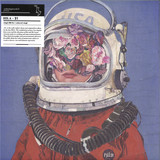
"21" is the well-crafted, sharp and original first album by the duo HILA, composed by American cellist Artyom Manukyan (who already worked with Kamasi Washington, Daedalus, Flying Lotus, Run DMC, Gretchen Parlato, Raphael Saadiq, Clive Lowe Mark...) and french producer Dawatile.
The combination of jazz, Los Angeles beat-scene and the vibrations of 80s and 90s Soviet Armenia make it a striking and unprecedented fusion. These kind of nostalgic and unconventional references forcefully shake the codes of mainstream culture to create a sincere, raw and intimate expression.
"HILA" was born from a spontaneous and intense creative impulse between Artyom Manukyan, a Los Angeles-based Armenian celloist and his partner in crime, David Kiledjian aka Dawatile, a French multi-instrumentist of Armenian descent. This project is proving to be a true master stroke given that it only took 21 days for the duo to make it a reality.
"HILA" was made in less a moon cycle but captivates and electrifies audiences upon its first outings. "H.I.L.A" colors the warmth of the Californian "High" with Armenian vibes. The artists chose this name for their creation since both have a close and valuable connection to these locales. This journey began in 2007, on the day Dawatile went to Yerevan, the capital of this small country in the Caucasus mountain to realize a first fusion project centered around local folkloric music genres.
There he was introduced to local musicians including the Armenian Navy Band, one of the country's foremost groups in which Artyom played the bass and cello. In this context, he also met many musicians such as Tigran Hamasyan and Norayr Kartashyan. This will be the beginning of connections between Lyon, Yerevan and Los Angeles. The following year, the two artists will be be seen performing next to Taylor Mc Ferrin at the Jazz à Vienne festival. More recently, they partnered up again when the cellist, who had freshly relocated in California, invited Dawatile to produce his album. As soon as the studio’s threshold was crossed, they decided to postpone this record and create a joint project: Hay (as the Armenians call themselves) / High In Los Angeles. HILA was born at the end of these 21 days of intense creation. The association of Artyom Manukyan and Dawatile is the combination of two visions, two versions of Armenia, two personalities, the reunion of the Eastern and Western blocs.
One grew up nurtured by the sounds of hip-hop and jazz in Europe and the other by art music and Russian-influenced 1980s Armenian folkloric music before moving to L. A., Ca. The cornerstone of it all, the glue that unites everything : Armenia and music. They generate a new identity synthesizing two perceptions, their complicity transcending these cultural discrepencies. To achieve this, they will scour through images of Artyom’s childhood, within the popular culture of Soviet Armenia. Together, they revisit this decidedly retro vibe, based on the work of Caucasian groups inspired by African American music. This background is rehashed and fused with ancestral Armenian sounds. The DNA of the album "21" is molded by these dear influences.
We can also hear the ancestral sounds of Armenia, a country at the edges of both Europe and Asia. The presence on two tracks of Armenian music Master Norayr Kartashyan, infuses the languor of past melodies and traditions. These purposeful anachronistic sounds offer a fantastic depth to this powerful opus. Listening to the album, one can appreciate the successful fusion of styles and influences. Those combinations, however, manage to preserve individual identities only to enhance the art through an adamant musical dialogue.
Being driven by the urge to transpose Armenian musical traditions into a unique universe, the daring artists, offer an innovative combination by blending, for the first time, these ancestral sounds with the world of Los Angeles beat-scene and jazz. An invention largely fueled by the magic strings of Artyom and maestro Miguel Atwood-Ferguson, a pillar of the genre in Los Angeles combined. These associations resonate with a triumphant equilibrium. HILA is musical uncharted territory in which Artyom's cello strings intertwine to ignite the harmonies of keyboards, the machines, the vocals and electronic layers Dawatile pieced together. HILA plays the soundtrack of an adventure set between Armenia around the end of the Soviet era and a mysterious near future.
Artyom Manukyan grew up in Armenia in the 90s. At the time, he studied Russian classical music while learning jazz with assistance by his father, a music journalist. Being an unconditional music lover, he went on to sharpen his skills at the prestigious Berkelee College of Music. Subsequently, he’s been lucky enough to travel the world touring with numerous acts and mainly with the Armenian Navy Band. The group has fostered alacritous success honored by a BBC Award as a crowning achievement. He moved on 10 years ago and made his way to L.A. with his cello on his back. In the City of Angels, he quickly became a popular figure of the jazz and hip-hop scenes thanks to his first album "Citizen". He’s accompanied prestigious musicians such as Kamasi Washington, Melody Gardot, Daedalus, Flying Lotus, Run DMC, Gretchen Parlato, Raphael Saadiq, Clive Lowe Mark, or Vulfpeck. He released his solo album on the cello, "Alone" in October 2019.
Dawatile is a bold producer and multi-instrumentist as well as a passionate and resolute musician molded by jazz. As a versatile artist, he handles and juggles the saxophone, the keys, the bass and composition. Simultaneously, Dawatile produces cross-over projects and soundtracks for the movie industry. He, as well, has had the opportunity to be a part of many tours, including with his electro hip-hop band, Fowatile and more recently with the "Future Kreyol" trio, Dowdelin. Being the ever workaholic, he has under his belt a string of prestigious collaborations with the likes of Talib Kweli, Foreign Beggars, Roy Ayers, Tigran Hamasyan, Mathieu Boogaerts, Voodoo Game and Piers Faccini. His taste for developing new musical recipes and his know-how in production make him a much sought-after album producer. In concert, the HILA duo offers a sober, precise and rhythmic performance. "21" is an aerial and lively album taking the audience on an at times joyous and sometimes melancholic dreamlike journey. The magic of "HILA" operates at the speed of light and positions it already as an avoidable group.
Award-winning bassist Daniel Casimir and vocalist Tess Hirst release their debut album via pioneering London-based record labe Jazz re:freshed. Following the success of Daniel Casimir's critically acclaimed debut EP 'Escapee' which featured Hirst on vocals and fellow rising stars on the scene Moses Boyd, Joe Armon-Jones and Shirley Tetteh, this album - 'These Days' is inspired by the duo's London surroundings, delivering thought-provoking lyricism, neo-soul and modern jazz
Casimir, a former Birmingham Conservatoire student, has collaborated with Julian Joseph, Jason Rebello, Benet McLean, Lonnie Liston Smith, Nathan Facey, Shane Forbes, Chihiro Yamanaka, Ashley Henry, David Lyttle, Nubya Garcia, The Tracey Quintet (Meantime Jubilation), Tom Harrison (Unfolding In Tempo), Jasmine Power (Stories And Rhymes), Camilla George and Art Blakey Jazz Messenger saxophonist, Jean Toussaint.
Named Young Jazz Musician of the Year by the Musicians' Company in 2016, Casimir has received plaudits for his arrangements and recital, while Hirst has made a name for herself with her vocals on the jazz circuit having moved between London, Leeds and LA to hone her craft. What sets Hirst apart as a musician is not only the originality of her music but her perspective of herself as an artist. She is an Ethnomusicology Graduate of SOAS and her writing style walks us through her upbringing in West London and down the halls of academia
Casimir and Hirst fuse traditional jazz sounds into beautiful compositions, narrating their way through a political and cultural landscape across these twelve tracks. The frenzied groove heavy'Security' addresses the need to trust one another and how we protect ourselves personally, while the rich atmospherics of 'Freedom' combined with Hirst's vocals, explore liberation and the rejection of duty - from a female perspective.
At the heart of 'These Days', Casimir plays with a passion and power that resonates throughout each composition. His knack for complex chord changes are highlighted in 'What Did I Do', bringing an energy and enthusiasm to the track while Hirst decries our changing capital. Elsewhere, references to John Agard's poem 'Listen Mr. Oxford Don' in 'The Magic Money Tree', explore the past and its relevance to now while a re-imagining of Charles Mingus' 'Fables Of Faubus' further ensures this theme remains central to the essence of the album.
Daniel Casimir and Tess Hirst have already received radio support from BBC Radio 3, BBC Music Introducing and Jazz FM, along with coverage in the London Evening Standard and Jazzwise Magazine
'Don't Let Them' interpolates elements of 'Fables Of Faubus' written by Charles Mingus (c) 1959. Published by Jazz Workshop Inc. Administered by BMG Rights Management (UK) Ltd. Used by permission. All rights reserved.
“Osondi owendi. What is cherished by some is despised by others. One man’s meat is another man’s poison. Different strokes for different folks. To each their own. Osondi owendi.
It’s a conventional aphorism in the Igbo language but if you utter the word “osondi owendi” in Nigeria today, the first thing that comes to anybody’s mind is the cucumber-cool highlife music maestro Chief Stephen Osita Osadebe and his legendary album that takes its name from the adage. Released in 1984, Osondi Owendi was instantly received as Osadebe’s magnum opus, the crowning event of an exalted career stretching back to the early years of highlife’s emergence as Nigeria’s predominant popular music.
Stephen Osadebe first appeared on the music scene in 1958 as a spry, twenty-two year-old vocalist in the Empire Rhythm Skies Orchestra, directed by bandleader Steven Amechi. With his dapper suits, urbane Nat King Cole-influenced vocal stylings and jaunty, uptempo, calypso-scented dance tunes, he personified the frisky spirit and anxious aspirations of a young, educated generation that had come of age in the wake of the Second World War, in a Nigeria that was rapidly shaking off British colonization and marching towards an independent future. 1959 would be the year that he truly made his mark in the business with his debut solo single “Lagos Life Na So So Enjoyment.” A giddy exhortation of the music, sex, fun and freedom availed by life in the big city, the song became a sensation and an anthem, and Stephen Osadebe became the leader of his own popular dance band, the Nigerian Sound Makers.
Osadebe would ride this wave of acclaim through most of the nineteen sixties, but a change in direction would be called for at the dawn of the seventies. As Nigeria emerged from a devastating civil war, so did a new generation of youth inspired by rock and funk, confrontational sounds reflective of a more violent, less idealistic era. All of the sudden, the idioms of the post-WWII dance orchestras that nurtured Osadebe’s cohort seemed quaint, the stuff of nostalgia. Osadebe needed to evolve to respond to the new tumultuous, turned-up times.
His response? He cooled it down.
Abetted by a new crop of fire-blooded young players, Osadebe slowed his music to a mellow, meditative tempo, brought forward the lumbering, Afro Cuban-accented bass and percussion, from the rockers he borrowed searing lead lines on the electric guitar. Over this musical bedrock, doesn’t so much as sing as he dreamily muses, coos, sighs aphorisms, words of wisdom and inspiration. “When one listens to my music, all I say appears meaningful,” Osadebe explained his lyrical approach, “at times they are in the form of proverbs which provoke much thought afterwards.” The result is a blend that is both rollicking and soothingly languid. Osadebe christened the style Oyolima—a tranquil, otherworldly state of total relaxation and pleasure. Osondi Owendi represents oyolima at its finest, and possibly Nigerian highlife in epitome.
Osondi owendi. What is cherished by some is despised by others. In some way, the album’s title constitutes a paradox. Because Osondi Owendi is a record that it’s almost impossible to imagine being despised by anybody."
- A1: Dur Dur Band - Daraadaa Muxibo
- A2: Omar Shoolil - Hab Isii
- A3: Mukhtar Ramadan Idii - Check Up My Head
- B1: Bakaka Band - Geesiyada Halgamayow
- B2: Fadumo Qassim & Waaberi Band - Waa Kaa Helaa
- B3: Iftin Band - Sirmaqabe
- C1: Mukhtar Ramadan Idii - Baayo
- C2: Ahmed Shimaali & Ahmed Sharif "Killer" - Hoobeya
- C3: Dur Dur Band - Shaleedayaa
- D1: Dur Dur Band - Ladaney
- D2: Bakaka Band - Gobonimada Jira
- D3: Iftin Band - Ii Ooy Aniga
After being blown away by a few tunes - probably just as you will be after listening to this - Samy Ben Redjeb travelled to the infamous capital city of Somalia in November of 2016, making Analog Africa the first music label to set foot in Mogadishu.
On his arrival in Somalia Samy began rifling through piles of cassettes and listening to reel-to-reel tapes in the dusty archives of Radio Mogadishu, looking for music that ‘swam against the current’.
The stars were aligned: an uncovered and unmarked pile
of discarded recordings was discovered in a cluttered corner of the building. Colonel Abshir - the senior employee and protector of Radio Mogadishu’s archives - clarified that the pile consisted mostly of music nobody had manage to identify, or music he described as being ‘mainly instrumental and strange music’.
At the words ‘strange music’ Samy was hooked, the return flight to Tunisia was cancelled. The pile turned out to be a cornucopia of different sounds: radio jingles, background music and interludes for radio programmes, television shows and theatre plays. There were also a good number of disco tunes, some had been stripped of their lyrics, the interesting parts had been recorded multiple times then cut, taped together and spliced into a long groovy instrumental loop.
Like everywhere in Africa during the 1970s, both men and women sported huge afros, bell-bottom trousers and platform shoes.
James Brown, Stevie Wonder, Marvin Gaye and The Temptations’ funk were the talk of the town. In 1977, Iftin Band were invited to perform at the Festac festival in Lagos where they represented Somalia at the Second World Black and African Festival of Arts and Culture.
Not only did they come back with an award but they also returned with Afrobeat. While Fela Kuti’s ‘Shakara’ had taken over the continent and was spreading like wildfire throughout Latin America, it was the track ‘Lady’ that would become the hit in Mogadishu.
Australian Soul Jazz holy grail from 1968! Limited to 300 copies w/wide. Debut release on Pacific Theatre Encore, the reissue label started by Melbourne's contemporary funk / soul lynchpin Australian Lance Ferguson (The Bamboos, Menagerie, Lanu, ex Cookin' On 3 Burners). Two high energy Mod burners, both originals taken from the forthcoming album 'Whatever It's Worth'.
Lead by Australia's own rival to Jimmy Smith and Jimmy Witherspoon, the '68 line up of Col Nolan & The Soul Syndicate would prove to be an Australian jazz super-group, consisting of John Sangster on drums / percussion (whose own late '60s Festival albums are highly collectable), John Allan on bass, Col Loughnan on sax and Jimmy Doyle on guitar (the latter two were also in mid Oz '70s jazz-rock giants, Ayers Rock).
"Pacific Theatre Encore will be reissuing music from across the globe, but it was important to me for the first release to shine a light on the important legacy of our own scene" says Ferguson, who meticulously restored the audio himself, which was then remastered.
My Music is a stellar spiritual soul / jazz-funk gem, recorded by keyboardist-singer Samuel Jonathan Johnson in 1978. The epitome of a cult classic, it didn't do much upon its release but steadily found an audience over the decades that followed. It eventually worked its way into the culture, and latterly the wantlists, of wave after wave of soul aficionados.
This is music that shares the jazzy R&B DNA of contemporaries like Roy Ayers and is an intoxicating blend of mellow moments and more groove-heavy tracks. Spacey keys and lush production give it a luxurious, enveloping warmth.
My Music opens with the gorgeous title track: an indulgent slow jam opus. Introducing us to Johnson’s compelling musical vision, it features a rich mélange of production techniques. Dripping in strings, horns, backing singers, popping funk bass lines and swooshing synth waves, it’s an unusually structured cosmic two stepper that has an irrepressible groove. Accordingly, it’s been a favourite with the diggers and it was sampled by The Alchemist for Jadakiss’s “We Gonna Make It” (and it was also used on Ras Kass’s “Home Sweet Home”… but that’s a story for another time).
The up-tempo “Sweet Love” bubbles over with joy, its uplifting lyrics backed by infectious bass and jazzy Fender Rhodes lines. It follows a cover of “What the World Need’s Now Is Love”, taken at a funereal pace that transforms it into a heartfelt plea for love and understanding. Essential in these dark days.
After a full-minute-long opening of lush cinematic strings and horns, “Because I Love You” makes space for Samuel’s voice, accompanied by some keys and just a sprinkle of guitar. It builds back up and then mellows its way out to a jazz lounge finish (in all the right ways). The feel-good ebullience of the Stevie Wonder-esque “It Ain’t Easy” closes out the LP’s first side.
The second side bursts open with the heavy bounce and disco-funk basslines of “You”, a slightly off-beat string-laden dancer with insistent horns and a piano-assisted groove. Next up is “Just Us”, a legendary steppers track that could be heard oozing out of deep soul radios and funk sound systems back in the late 80s.
“Yesterdays and Tomorrow” is a moving original ballad that is followed by an exquisite high-stepping paean to mom in the form of “Thank You Mother Dear”. The thumping easy-glide of “Reason For The Reason” brings the album to a close.
Respectfully mastered by Simon Francis and cut by the master Pete Norman, this reissue of Samuel Jonathan Johnson’s sole LP sounds as sumptuous as that scarlet gown on the front cover. The sleeve artwork was lovingly restored by the Be With team. My Music is a luxurious and rare collection of songs that now has an opportunity to reach beyond its cult audience.
The music of Chel White is celebrated in Automaton, a collection of mostly unreleased recordings from 1985 to 1991, by this innovative animator, film maker and visual artist.
Having studied music theory in grade school, White taught himself drumming and played in a new wave band until, in 1981, together with Dan Gediman, they formed the minimal wave duo Process Blue (Alternative Funk, 1985 / Dark Entries, 2018). Here their experimentation went way beyond playing drums.
His interest in industrial music, fostered in the late '70s and early '80s while working in factories as a way to put himself through college, informed his use of electronic instruments, tape manipulation, noise and unconventional percussion.
By 1985, as a now solo artist buoyed by newly affordable audio sampling technology, White tapped into his earlier teenage fascination with the art and films of both the Surrealist and Dada movements - in particular their disparate and fragmented imagery and sound - as a means to create striking new sonic palettes.
Science & Industry - a track largely influenced by Balinese monkey chanting and the consumer excess of American in the 1980's - is a clear example of "music collage". Photocopy Cha Cha, made for the short animation film Choreography for Copy Machine (Berlin International Film Festival, 1992 / Sundance Film Festival, 2001) moved his music into the realm of early multi-media.
Experimenting further, tracks like Liquid Shadows and Pensive provide minimalist moments, before the drone-like Dream #630 and Forest Song point to a future that included music video works (David Lynch/Thom Yorke).
Skyf Connection (pronounced skAyf) was a short lived project by long time friends Anthony Mthembu and Enoch Nondala. At the time they were working for Annic Music, an independent label run by married couple Anne and Nic Blignaut. Although the label was known mostly for Zulu, Sotho, Tsonga and other traditional styles, they had a few Disco releases on the label including groups like Keith Hutchinson’s Focus and Enoch’s discovery Lena, who went on to have huge success under the name Ebony a few years later.
In 1984, when an artist didn’t show up for a booked session they decided to make use of the studio time and began working on a demo. At the time Anthony and Enoch had been playing for a year at a new club called Gamsho, located on a farm on the outskirts of Kliptown Soweto. Along with Blackie Sibisi, Sepate Mokoena and Elijah “chippa” Khumalo they made up the resident house band. Due to cultural boycotts and American artists refusing to perform in the country, locals took it upon themselves to fill the market with the American sound the crowds demanded. The demo they recorded at Blue Tree Studios was going to be their product they could use to promote their brand of the American sound. They then took the demo to Universal Studios where their friend and trusted engineer Jan “fast fingers” Smit was working. It would be here that they would polish their demo into something they could take to their bosses and have pressed. Equipped with a DX 7, Linn Drum and some Juno synthesizers they were on their way. Jan lived up to his name and programmed the drums, it is rumoured he could program in almost real time, a skill that translated to the local arcade where he held high scores on many machines. Enoch would be singing and playing guitar while Anthony would do all the Bass and Keyboards. The result was 4 funky party anthems with synth work like no other recording at the time. Their take on what they believed the crowd would want to hear at the beloved club they called home.
From start to finish the 4 tracks portray what would have been a standard night at the Gamshu. Although the club would open earlier and the standard hours of most clubs was 6 to 6 , the band would start playing at 10pm. With their standard set time and Anthony and Enoch unique view on what a Disco should be, they chose the motto Ten to Ten as the album title because those were the hours when they were the stars and Disco ruled the dance floor. To get to the club was a bit difficult, you needed to drive along an empty road where thieves waited for any patrons trying their luck walking after dark. Since there was no transport during the night, the safest way to get home was to wait till the next morning to walk home. Even though in the summer months of Johannesburg light begins to peek in just after 4am, crowds refused to leave and stayed enjoying good music and company until 10am. The lead off track “Let’s Freak Together” has powerful lyrics encouraging people to let go of their worries, put aside any differences and let the music bring everyone to freak and dance together. The whole album is about the joy we can all feel when we share the same moments and how music can bring people together in a unique way, a philosophy shared with the original nightclubs of 70s New York. This approach to music is where the name Skyf Connection comes from, translating from slang to mean the connection we create through sharing, in this case Music and good times.
Skyf Connection would go on to play at Gamsho till the club’s closure in 1986. In those years their popularity lead to being booked for private events like weddings and birthday parties, as well as gigs in some other venues like Mofolo Hall. They would share the stage with many artists through the years learning artist’s songs and providing support as a backing band. After the club closed Anthony would go on to join the house band at The Pelican, another famous club located in Orlando East, as well as dabbling with songwriting for artists like Phumi Maduna and helping Enoch on many projects through the years. Enoch would ditch live music altogether and immerse himself in studio work, starting full time as a house producer and A&R for the recently formed Ream Music. He would go on to produce hit albums for pop artists like Percy Kay and Makwerhu but made his mark discovering countless artists that would become stars in the traditional market. They would remain friends until Anthony’s passing in 2016 and although Anthony is no longer with us his spirit lives in the grooves he left on this one of a kind record. His wife Vinolia will be accepting his portion of the profits on his behalf.