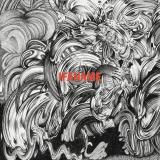
The Activist returns to Sneaker Social Club with a fresh double-drop of mutant grime futurism featuring deadly flows from Tia Talks and Jammz.
Low End Activist first came through centred on link-ups with grime MCs before widening the scope of his sound with purely instrumental, conceptually-charged albums. This sure-shot double single reaffirms his affinity for outsider grime production as a vessel for deft bars from breakthrough talent and seasoned mic veterans alike.
On 'False Idols' and 'Atomic Clock' there's an emphasis on sharply angled, glitchy production that bends and warps well outside the established formula of MC-focused beats. Constantly shifting, hyper-detailed and front-loaded with walloping slabs of bass, both cuts are devastating in either vocal or instrumental form. Tia Talks pulls no punches stating her truth on the former, while Jammz muses on the endless battle against time on the latter, continuing the peerless run of avant-grime that courses through the Activist's back catalogue.
Search:sha
2026 Repress
Bosconi Records, the Florence-based imprint run by Fabio Della Torre, is back with something truly special. Over the years, the label has built a reputation for pushing house, funk and electro in all their shades, always keeping a strong link between the local scene and international legends. And when it comes to legends, there are few names that shine brighter than Alexander Robotnick.
The Italian electro pioneer – aka Maurizio Dami – has already collaborated with Bosconi on The Hidden Game and Italcimenti Under Construction. Now he returns with My La(te)st EP, a vinyl-only release that pulls five standout cuts from his 2007 CD My La(te)st Album and finally makes them available on wax. All tracks have been remastered for the vinyl format, enhancing their depth and dynamics to deliver the best possible experience on wax.
The EP opens with “Jette Le Masque (Extended Version)”, driven by a pumping bassline and jagged sawtooth synths, with whispered French vocals by Robotnick himself. Stretched out and more DJ-friendly than the original, this version is tailor-made for the dancefloor.
On “We Love The Music” things get fun and funky: vocoder vocals, an electro-funk bounce and that unmistakable Robotnick irony. A killer cut to start a set on the right foot.
Flip the record and you dive into the acidic depths of “I’m Getting Lost In My Brain”. Old-school Chicago vibes, a hypnotic groove and basslines that just don’t quit – a peak-time weapon that feels raw and timeless.
Then comes “A Coffee Shop in Rotterdam”, one of those secret gems: melodic, laid-back and warm, built on a slapping bass and dreamy arpeggios. It has that Riviera house touch from the ’90s, but with Robotnick’s unmistakable twist.
Closing the EP is “Addio” – a track that wears its heart on its sleeve. Romantic, emotional, and driven by a bassline that nods back to Robotnick’s all-time classic Problèmes d’Amour. A perfect goodbye track, the kind that leaves a smile on your face as the lights come on.
This is a must-have for vinyl lovers and Robotnick fans alike – five cuts carefully remastered for the vinyl format, pressed exclusively on wax and ready to work the floor from start to finish. Don’t sleep on it: limited copies, vinyl only.
After the storm of their self-titled debut, Geneva duo Bound By Endogamy return to Pinkman with an album that trades brute force for precision. The rage remains, but it's sharpened, disciplined, and driven by melancholy rather than rupture. Their minimal synth and industrial instincts rise to the surface, carving out room for melody without softening their confrontational edge. Angular basslines coil beneath Kleio Thomaides' voice, at times detached and at times devastating, while Shlomo Balexert's drum programming and synth work build a taut metallic tension. The result is both intimate and mechanical: love songs for disenchanted souls, post-punk electronics stripped to the bare wire. Bound By Endogamy have always blurred the line between performance and survival, and here they do it with minimal gestures and maximum impact.
MTY-3.14 “π”, released on March 14, 2026, is the fifth and final chapter of a journey begun fifteen years ago.
This standard edition presents the final form of Polar Inertia across three 12" vinyl records, featuring 11 tracks. Nothing added, nothing removed—only the music, unfolding in full.
Images dissolve, words fall away. What remains are faint echoes, like footprints slowly erased in fresh snow.
This final opus does not close the path. It fades into it. π is not an ending, but a state: the moment where movement continues, even as the world turns silent.
A last step.
A final trace.
Still moving, beneath the cold.
POLAR INERTIA
We are no one because we want to be no one,
And to be no one we have to be everywhere and nowhere- Polar Inertia examines the enigmatic and blurry realms, embracing the art of obscured vision.
Encountering the collective Polar Inertia is much like being absorbed by fog and captivated by its ever-shifting forms and densities, with things being as indistinguishable as in a whiteout.
Formed in 2010 by a group of artists, Polar Inertia transcends visibility, delving into structures that lie beyond the public gaze. Layers upon layers intertwine within the fabric of Polar Inertia, extending beyond their profound electronic compositions and live performances. It manifests as a conceptual universe, where sound, monochrome aesthetics, and elusive narratives converge, much like trying to grasp the intangible fog. The entity that is Polar Inertia is involved in installations, print- and video work and texts created for different contexts and live in different spheres such as Palais de Tokyo in Paris or the Lyon Biennale of Contemporary Art. Still, clubs and festivals are perfect spaces to experience these nebulous soundworlds and immerse in them. Fittingly, some of Polar Inertia’s appearances include the colossal halls of Berghain and Bassiani and at experimental festivals like Mutek Montreal and Atonal Berlin, that like to break with the classic club conventions.
Polar Inertia's sonic landscape unfolds with wafting textures accompanied by resonating beats and drones, reverberating through empty spaces, merging with the vast expanse of nothingness. Their sound exists at the crossroads of ambient, experimental, and deep techno, interwoven with vocal narratives. Since their inaugural release “Indirect Light“ on Dement3d Records in 2011, they remain a stronghold of relevance and captivation in the electronic domain.
Mastered by sixbitdeep, with artistic direction by Diplomatie Studio.
As Nathan Fake rises from the nocturnal subterranea and rave catharsis of his previous records, on Evaporator, he resurfaces into the domain of daylight, bringing a tangible sense of air rushing against your face, of big skies, and endless landscapes. The idea of pop accessibility that trickled into 2023’s Crystal Vision is refracted here through the prism of sweeping ambient, deep electronica, and trance uplift. Evaporator is Fake’s idea of “airy daytime music”, with each track a different barometer reading across the album’s varying atmospheres, which range from vibrant sunbursts, bracing rainscapes, and fine mists of clement melodics. “It’s not overtly confrontational electronic club music,” states Fake. “It’s quite pleasant, it’s accessible. As I was progressing through making the tracklist, I called it a daytime album. It doesn’t feel like an afterparty album.” For the past decade Fake has been gingerly introducing collaborations with heroes and friends alike into his lone, idiosyncratic working process. Border Community alumni Dextro AKA Ewan Mackenzie transmutes his ferocious drumming for Pigs Pigs Pigs Pigs Pigs Pigs Pigs into the blurred choral thump of ‘Baltasound’. ‘Orbiting Meadows’, meanwhile, is his second collaboration with Clark, an eerily idyllic duet where microtonal 18EDO piano clangs slowly twirl around wailing pads. Evaporator marks the junction point of old technology and ever fresh creativity for Nathan. The trusty “dinosaur” age software, particularly Cubase VST5, that has powered two decades of music is rarely updated. “I used to sort of feel a bit ashamed of using such old software, and then I kind of had an epiphany – that’s just how I work”, comments Fake. “That’s just how I play. I’m very fond of these old tools, and I get the most joy out of them, but now I’ve incorporated new technology too.” When an artist accumulates so much synergy with their instrument, music making becomes instinctual. By Fake’s account, much of Evaporator just fell into place. The album title arrived randomly in his head (“it felt completely perfect. Airy.”), ideas looped and developed until things locked into place and just felt right. ‘The Ice House’ is a fleeting glimpse of the sonic world he taps into in this creative state, its glassy FM synths built around a counterpoint between rough-hewn crystalline arpeggios and sparse yet gravitas-bearing bass. “That riff I just wrote out on the keyboard, I just played it forever and ever and ever. The original track ended up being really short. Here you go, and it’s gone!” These unplanned channellings of sound call forth records from Fake’s past while he looks ahead, perhaps getting at the very essence of his musicianship. The opener ‘Aiwa’ (“the breeziest,” he muses) reminds of the introspection that characterised Providence, excited by the fire and grit of Steam Days’ textural experiments, its chunky slams and clatters surging into a flood of harmonic buzzing as they reach out for old wisdom. ‘Hypercube’ stampedes in a similar chronological confluence, infusing an incessant synth line reminiscent of the golden age of rave with the crackling, ecstatic energy of modern festival anthems. Like the vaporisation of liquid to particles, everything that Evaporator presents has a mutant desire to be amorphous. Sounds rarely settle; the irradiated garage beat of ‘Bialystok’ is pitched downwards to driving, rebounding effect, while ‘You’ll Find a Way’ warps static into shivering energy, cinematic synth strings building anticipation into a gradual gush of chords. This translates into a more expansive stereo field than Fake has explored before. ‘Slow Yamaha’ saves the wildest, most kinetic transformations for last with a cornucopia of crispy melodies and fried drums; a sibilance of cymbals on the left, a susurrus of shakers on the right, and kaleidoscopic lasers pulsing and fizzing all around. Evaporation culminating in pure excited atoms. In a world where music has increasingly become background content, making albums remains lifeblood for Fake: “It makes me realise how long; twenty years is ages! It’s weird to see how much the world has changed. Release day back then you did fuck all, now you spend all day on socials. When I grew up the people who made the electronic music I was into were quite mysterious, and the artwork was very abstract. There was a massive distance between you and that music, and that was a key part of it, really. Now it helps to be an extrovert, and I'm just not, but the album marks the first time my face has graced the cover art. I’ve never wanted to do this before, I'm very shy, and generally I don’t like being seen,” he professes. “But, twenty years in, I supposed I could try something new. I'm very lucky that I'm somehow surviving in this world, where the media world favours extroverts and interesting looking people. It’s not my world but somehow I’m still in it.” Evaporator continues to prove Nathan’s necessary presence, with some of his most engaging, varied, and magical music yet.
The West African band and new sensation LAGOS IN PARIS make their striking debut with the release of their first and bold, EP « WE ARE LAGOS IN PARIS ».
After gaining support on their two first singles « Mali Spirit » and « Afro G Western » from Colors Studio, Trace or even Rollingstone and being broadcasted on BBC Radio 1Xtra the collective continues to expand and spread what they call the AFRAW sound : a mix of traditional African music with modern electronic styles resulting in a raw, powerful, and unique sound.
Recorded in different places across West Africa and Europe, every track on « WE ARE LAGOS IN PARIS » is shaped by the artists, musicians, and cultures they encountered along the way.
Blending heady blues loops in « Afro G Western », or groovy electronic basslines in « Faya », always with pure vibrant vocals, LAGOS IN PARIS offers trough this project a visceral and authentic experience speaking directly to the soul.
The listening experience also extends to the visual with the single « Faya », which will be accompanied by a video shot in Ghana, capturing the energy and aesthetic of the song.
Melodize is bringing the world back on the dance floor with Lauer and his 4-track “K1m Fantasy” EP. Behind the label is Brooklyn-based DJ and musician Beartrax, who is known for his groovy yet moody compositions. Philipp Lauer, known as Lauer, is a true veteran in the electronic music sphere, with over 20 years of experience, yet his sound remains novel and fresh.
This time, Melodize and Lauer shape the world of a fantasy dance floor where everything is possible. “K1m Fantasy” starts with Lauer letting his confidence shine through as an experienced professional with a signature sound in the first track “Boss Electro”, which will inevitably showcase why he’s the boss.
The playful tune of “Rabbits” takes the listener on a journey through electro-induced synths much like the image of curious rabbits playing on a grass field. The eponymous B-side “K1m Fantasy,” with its steadily unfolding mellow soundscape, is an introspective piece exploring the fantastical world of the techno dance floor where all becomes one.
Lauer’s last treat is “Choirs,” where brassy exclamations take turns with a haunting choir of electronic voices, reminding us that unity is key to pleasure and existence.
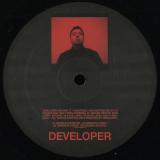
Developer returns to his personal vinyl imprint Developer Archive with the label’s 17th release, continuing a focused exploration of raw, hypnotic techno built for physical spaces. Known globally as the driving force behind Modularz, Developer uses the Archive series as a more direct and uncompromising outlet—stripped back, functional, and deeply immersive.
This latest release locks into groove-based cuts powered by tension and restraint, where repetition becomes ritual and subtle shifts create sustained drama. The rhythms are dense and forward-moving, designed to work equally well in the pressure of a warehouse or the precision of a darkened club.
With Developer Archive 17, Developer reinforces his commitment to vinyl as a medium and to techno as a tool for controlled intensity—music that doesn’t chase trends, but instead sharpens its purpose with each release.
Calvin Love is a Canadian singer-songwriter, composer, and producer from Edmonton, Alberta, now based between Edmonton and Los Angeles. With a sound that blends noir-tinged folk‑pop, crooning rock ’n’ roll, and cinematic storytelling, Love has become a distinctive voice in the international indie landscape. His music has drawn comparisons to Roy Orbison, Leonard Cohen, and Bryan Ferry, with Aquarium Drunkard describing his work as “a crestfallen soundtrack of near‑escape… like Chris Isaak trapped in a David Lynch film.”
Since his debut New Radar (2012), Love has released a run of acclaimed records including Super Future (Arts & Crafts, 2015), Highway Dancer (2018), Night Songs (2020), and Lavender (2021). Along the way, he has collaborated with renowned producers and artists such as Gus Seyffert (Beck, Roger Waters, Black Keys) and the late Richard Swift (The Shins, Damien Jurado), while earning coverage from outlets including SPIN, The Fader, Interview Magazine, and Stereogum.
A seasoned live performer, Love has toured extensively across North America, Europe, and Asia, appearing at festivals such as SXSW, Pop Montréal, Strawberry Festival (China), Endless Daze (South Africa), and Sled Island. He has shared stages with Morrissey, Mac DeMarco, Courtney Barnett, Jonathan Wilson, The Divine Fits, and Jim James, performing in iconic venues like Carnegie Hall, The Troubadour, and Hollywood Forever Cemetery.
In early February 2026, Love releases his seventh studio album, Throw My Shadow To The Sun — a bold, visceral statement that captures him at a new creative peak. Self‑produced and recorded by Reverend Baron at The Ladder Factory in East Los Angeles, the album channels raw, unfiltered energy into a late‑night rock ’n’ roll atmosphere built on moody grooves, gritty textures, and Love’s unmistakable croon.
The sessions brought together a formidable live band: Josh Da Costa (Drugdealer) on drums, Brent Randall (Vanity Mirror) on bass, Davey Chegwidden (De La Soul, Ghostface Killah, Raekwon, Too Short) on percussion, Jeremy Brian Gill (Curtis Harding) on tenor saxophone and flutes, Daniel E. Garcia (Reverend Baron) on lead guitars, and multi‑instrumentalist Laena Myers (White Fence, Orville Peck, El Mariachi Bronx) on violin.
From the hypnotic sway of “Underneath It All,” to the reverb‑drenched sax of “Forever Feels,” to the heavy sludge‑rock crush of “Setting Sun,” Throw My Shadow To The Sun draws from the lyrical storytelling of Dire Straits, the laid‑back blues of JJ Cale, and the timeless melodic drama of Roy Orbison. The result is a cohesive, lived‑in record that transforms fleeting moments and late‑night impressions into something enduring and cinematic.
- 01: 808'S N Trance Gates
- 02: Shalom Aleichem Ft. David Berman
- 03: Minouma Remix
- 04: Lekha Dodi
- 05: The Lock Ft. Muha
- 06: Sol
- 07: Talmuds Ft. Derya Yildrim
- 08: The Noise (Hitbodedut)
- 09: This Song Has A Different Title But It Can't Be Pubished Here Because Of "Reasons"(Questions With Rael)
- 10: Aleichem Shalom
On his second album for Bruk, hoyah חיה continues to take an unflinching look at his Jewish identity while confronted with the heinous actions of the Israeli state. Echoing the name of his Refuge Worldwide radio show, he examines the shared histories of the Jewish diaspora across the Middle East and North Africa — from Morocco to Uzbekistan and everywhere in between. Can I Get A Chayah? is an honest attempt to explore what Judaism could become at a time when the culture faces an existential crisis.
The sonic approach hoyah חיה takes on Can I Get A Chayah? is central to the album's theme, as hard-gated processing on every sound creates a disorienting effect aiming for a kind of 'functional transcendentalism'. From the opening strains of preceding single '808s n Trance Gates' the jagged stop-start intensity of the samples sets a head-spinning tone for the album. The source material comes from across the aforementioned Jewish diaspora, challenging the nationalist idea of the single Jewish state.
Balancing beauty and aggression, hoyah חיה also reaches to a strong cast of collaborators to round out his cultural explorations. Principle among these is the late David German, the US-born guitarist and songwriter behind Silver Jews, whose repeated, bewildered mantras on 'Shalom Aleichem' embody hoyah חיה's own struggles with faith in the face of current horrors. Internationally celebrated Turkish-descent German musician Derya Yıldırım graces 'Talmuds' with her haunting vocal — a tribute to ancient Jewish mysticism that gets passed through the album's unrelenting sonic framework. On 'The Lock' Muha tackles African transcendentalism, while Rael pulls no punches with the questions he poses on the barbed 'This Song Has A Different Title But It Can't Be Published Here Because Of "Reasons"'.
With further prayer recitals on 'Lekha Dodi' and 'The Nose' and videos examining the psychedelic nature of reading the talmud and repetitive prayer movement shuckling, hoyah חיה has taken his research deep into the spirituality of his heritage at a time of crisis for Jewish identity. Naturally, Can I Get A Chayah? is not an easy listening experience, but neither is it a bleak one. There is beauty, mystery, complexity and nuance woven within the stark approach — an intentional, considered statement on a culture much deeper and wider than the barbaric acts of an unrepresentative group of twisted ethno-nationalists.
- The Organ Grinder
- In Your Own Sweet Way
- Just A Ballad For Woody
- Sippin' At Bells
- Estate
- The Dragon
- Joshua C
Remastered from the original recordings and now presented on a 45rpm 2 LP deluxe audiophile edition, this is first time the complete 7-track album has been available on vinyl. 'In My Own Sweet Way', recorded during a month- long European tour in 1987, captures Woody Shaw in peak form playing with a spirit and a sense of adventure that identify him as a jazz giant. Woody calls the trumpet "the prince of all the horns". Woody is the king of all the trumpet players.
Nobody around plays with such a big, round, ravishing sound - a sound which could easily fool you into thinking that you are listening to a flugelhorn. Woody's musical asociates on this album are Alex Deutsch, a young drummer from Austria who has worked in Europe with many American jazz stars; Neil Swainson, a highly gifted bassist from Toronto who has worked with Pat La Barbera and Peter Leitch but is perhaps best known for his superb collaboration with George Shearing; and Fred Henke , a pianist from Montreal whose credits include backing Clifford Jordan, Steve Grossman and Junior Cook
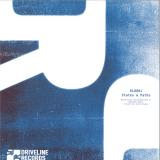
Driveline Records launches its catalog with a focused four-track vinyl EP built for the dancefloor, presenting four distinct yet cohesive techno cuts driven by groove, atmosphere and functionality.
The A-side opens with Invexis - "Roots", a hypnotic builder that slowly unfolds into a funky-driven rhythm. Tight hi-hats and rolling basslines carry the track forward, culminating in a subtle yet engaging melodic progression that lifts the energy without losing tension.
Next, Pylot - "Observation" delivers a highly functional club tool based on steady loops and an aquatic sound design. Aggressive low-end and raw basslines support an atmospheric and hypnotic flow, making it a solid choice for mid-set pressure and long blends.
On the B-side, Berlin-based duo Disguised contribute "Gitty (Dub Mix)", a dub-influenced and dreamy track designed to keep the dancefloor moving while creating a floating, immersive mood. Deep grooves and spacey textures balance rhythm and emotion.
Closing the EP, Shadow Hrym - "Delia" explores more melancholic territory, combining tribal and funky rhythms with emotive soundscapes, offering a powerful and memorable ending to the record.
A strong debut statement that defines Driveline Records' sonic vision: DJ-oriented techno with depth, groove and atmosphere, pressed on vinyl for dedicated selectors.
“Tectonic” is a concise portrait of SIMON BERZ’s geological sound explorations across continents over the last 15 years: drums, electronics, and a set of electronically manipulated basalt stones from Iceland.
SIMON BERZ is a transdisciplinary drummer, sound artist, and music educator based in Switzerland and Berlin. Working at the intersection of improvised music, sound art, and performance, and deliberately crossing boundaries between disciplines, his aesthetics are shaped by a sustained engagement with natural materials, particularly stone, and their sonic transformation through electronic manipulation. Beyond his performance work, BERZ founded BADABUM as an art label and a music school.
For the last 30 years, BERZ has been performing in Japan, China, Russia, the USA, Cuba, Iceland, Turkey, and across Europe. He has collaborated with artists including BILL LASWELL,BABY SOMMER, DAMO SUZUKI (CAN), JAMES TURRELL, JIMI TENOR, JOHN SINGLAIR, JOJO MAYER (NERVE), KONDO TOSHINORI, KIDD JORDAN, LAUREN NEWTON, LEE “SCRATCH“ PERRY, MAURO PAWLOWSKI (dEUS), NILS PETTER MOLVÆR, NIKI GLASPIE, NORBERT MÖSLANG, PAUL LOWENS, PFADFINDEREI, ROB MAZUREK, SKÚLI SVERRISSON, and he was the live drummer for APPARAT. As BERZ understands artistic practice as energy emerging from nature and through dialogue with people, his recorded output is intentionally selective, with one highlight being “Beats versus Breath” with KONDO and LASWELL (2023). Alongside a regular drumkit and electronics, he has developed his own instruments such as the “Lithophon” in which resonating stones are turned into amplified sound through water drops, and “Tectonic”, a set of Icelandic basalt stones shaped through electronic manipulation. These self- built instruments form the material basis for his performances, installations, and sound recordings.
“Tectonic” is also the title of BERZ’s latest work: a summary of his geological sound explorations across continents. From Iceland to Indonesia and Bali, from New Orleans to China, in caves and at shores, BERZ carried his millions-of-years-old basalt stones as both instrument and collaborator. On Java, he met Baron, a builder of stone gamelan instruments. At the Pacitan Tabuhan Cave (Indonesia) he performed with MISBACH BILOK and WUKIR SURYADI (SENYAWA) who work with corals as instruments. BERZ brought these encounters and “field recordings” to the Stöðvarfjörður studio in Iceland, where he recorded with his “Tectonic” set-up, drums, and electronics. The music was later mixed in Berlin by DIRK DRESSELHAUS (SCHNEIDER TM). The resulting album moves from club-driven tracks to ambient passages, from gamelan-inspired textures to HipHop-like beat patterns. It resists easy categorization while staying direct and physical in its impact.
- 01: The Lake Will Give You Everything You Need
- 02: Sounding The Voice (Feat. Koleka Putuma)
- 03: The Poetry Of The In-Between
- 04: Iqhude: A Tale Of Horns And Bones
- 05: I Am Because You Are
- 06: Portals
- 07: A Basic Guide To String Theory (Feat. Shane Cooper)
- 08: Everything Is Connected To Everything (Feat. Ben Lamar Gay &Amp; Gontse Makhene)
- 09: We Oscillate, We Modulate
- 10: Mothers
Pioneering Swiss trombonist and composer Andreas Tschopp marries contemporary jazz with South African horns and homemade ocarinas, creating a record quite unlike anything you've heard before. "What if We Align Our Breath" disregards the curvature of borders, genre, and time itself - tugging a thread through the history of wind instrumentation with ghostly agility.
At the heart of the record lie spiralling, bonelike kudu (antelope) horns - instruments that have lent their stirring calls to indigenous South African rituals and signalling systems for millennia. These horns are clustered, harmonised and stretched beyond their godly usage by Tschopp - his extended techniques coaxing an array of melancholy, playful voices to canter through the album.
Flourishes of trombone, alpine flutes and a stellar supporting cast on double bass (Shane Cooper), cornet (Ben LaMar Gay), udu drums (Gontse Makhene) and spoken word (Koleka Putuma) bring groove, countermelody and a sense of earthy introspection to the proceedings. This is inconceivable music: a sighing tapestry of brass, clay and bone that hints at some preconscious connectedness, tracing figures that rejoice, exhale and embrace outside of time.
Recommended if you like Francis Bebey, quantum physics, peat bogs.
- 01: Intro
- 02: Lunaire
- 03: Le Monde Est À Nous
- 04: Laisses Les Enfants Courir
- 05: Café Serré
- 06: Balle De Baseball
- 07: Interlude Palmier
- 08: En Solo
- 09: La Voix Lactée (Feat Natacha Atlas &Amp; Samy Bishai)
- 10: En Pas Sautés
- 11: Les Mots Se Lèvent
- 12: Monte Les Sirènes
Palmier is producer and rapper Rocé's new album. At the crossroads of Sade and Rakim, the album unfolds an impeccable flow over gentle melodies, the mellow sound of the saxophone softening the sharpness of the spoken truths. Rocé delivers a melody of hope, and appreciation of determination in the face of the impossible. "La Voie Lactée" features the captivating voice of Natacha Atlas and the sublime orchestrated violins of Samy Bishaï, the whole thing wrapped up in the style reminiscent of Isaac Hayes' soul and Portishead's trip-hop. "Laisse les enfants courir" reveals a soulful hip-hop, between powerful groove and relentless flow, where Rocé blends political lucidity and poetic verse while Cisko's subtle arrangements sculpt an organic, sensitive landscape, poised between tension and serenity. On "Lunaire", Rocé surprises us right away, with a sharp and melodic flow. Driven by powerful imagery and sharp lyrics, the track transforms anger into creative energy. It portrays an artist outside the mainstream, aware of the world's failings but determined to create his own haven. Palmier embodies themelancholy of unfinished struggles, perseverance, and the promise of a brighter dawn.FEAT. NATACHA ATLAS & LE VIOLONISTE SAMY BISHAI
- Kyle
- Being A Man
- An Angry Man
- Mood 01
- Fight A
- The View
- Rage
- Fight B
- Fight C
- Safe Zone
- Mood 02
- Chase 03
- Chase 04
- Mood 03
- Fight E
- Chimera 01
- Mood 04
- The Exiles
- Mood 05
- Timer 01
- Chimera 03
- Timer 02
- The Beast
- Mood 06
- Revenge
- A Changed Man
Double LP pressed on transparent red vinyl with black marbles. In Dying Light: The Beast, you step back into Kyle Crane's skin, but he's no longer the man he once was. Years of experiments have left him torn between fragile humanity and a monstrous power that he can barely control. Every light, every shadow, every choice feels dangerous. The forests and ruins of Castor Woods don't just set the stage, they breathe, they watch, and they punish the reckless. This is survival stripped to the bone, where horror is not just outside, but inside you. Olivier Deriviere's powerful and capturing score for Dying Light: The Beast doesn't just accompany Crane's journey, it is his voice. Sometimes it whispers in empty rooms, fragile and broken, sometimes it roars with distorted rhythms and pounding drums when the Beast takes over. Between silence and sound, the music pulls you deeper into Kyle's fractured soul, making every step and every heartbeat part of the story. It's not just a soundtrack, it's the echo of a man losing, and maybe finding, himself.
- Rabbit
- Whip The Wind
- Let's Get Involved
- It's Your World
- Cherry
- Bottomless
- Be Better
- The Valley
- In Orbit
- Paper Children
- Breathe
Green Vinyl[23,49 €]
Singer-songwriter and multi-instrumentalist Son Little expands his musical palette on his upcoming album, Cityfolk. Blending elements of soul, folk, and blues, Son Little captures his signature sound along with expressive yet personal lyrics. Cityfolk is a reflection on love, loss, and finding peace in the chaos. It"s about holding on, letting go, and learning to breathe again when the world feels heavy. Born Aaron Earl Livingston to a preacher and a teacher in Los Angeles, Little"s collaborations with The Roots and RJD2 helped him make a name for himself in his adopted hometown of Philadelphia. Critics were quick to recognize the unique power of Little"s solo recordings, which stripped the past for parts that could be reconstituted into something wholly new and original. NPR hailed Little"s "impeccably crafted songs" as "honest and unpretentious," while The Independent proclaimed him "a formidable talent." Since then, his catalog has racked up over 250 million streams, and Little has toured with everyone from Leon Bridges and Kelis to Shakey Graves and Mumford & Sons alongside festival appearances at Bonnaroo, Newport Folk, and more. Never one to rest on his laurels, Little also earned a GRAMMYî for his work helming Mavis Staples" acclaimed "See That My Grave Is Kept Clean."
Mats Gustafsson met Jan St. Werner in Berlin when they both performed with Peter Brötzmann and a group of prolific improvisers. Mats and Jan share a passion for performing not just inside rooms but also with them, activating space and shaping sound via divertion. Mats introduces Johan Berthling who adds complex bass structures to the nervous jitter of Mats’ saxophone & pedals and Werner's digital machinery.
The trio instantly agrees on sound as a physical material which can bend and move anywhere within seconds. With this material they establish musical forms which they immediately dissect and reassemble again. It’s a nervous ride, a hyperactive conversation keen on detail and open to argument. Although IFANAME’s sound is instantly graspable it is also hard to pin down. Nothing seems stable yet it lasts, holds like some kind of catchy glue and disssapears as quickly as it came to life. IFANAME is question and concern. It is music as much as it is movement. It is attention, care, curiosity and disaster. Wherever IFANAME came from there is much more waiting ready to burst and reshape in front and inside of our ears.
- A1: Honey
- A2: I Need U
- A3: Too Hot To Stop
- A4 2: Funky In Here
- A5: Cosmic Sensation
- B1: More Orgasms
- B2: Feeling (That I Got For You)
- B3: Next To You
- B4: First Crush
The groove never skipped a beat. 10 years after Global Warming and 2 years after Breaking to the Bus Stop, Romain Dalmasso aka Lord Funk, remains an insatiable crate-digger driven by one thing: the dancefloor. With his 3rd LP, More Orgasms, he drops a record that literally bleeds club culture and raw funk.
This is a deeply organic album. Moving away from clinical productions, the french producer gathered a tribe of top-tier musiciansto bring a living, breathing soul to every track. It’s an in-depth study of groove where cutting-edge electronics meet organic warmth and human vibration.
The tracklist is a map of his musical heart: from the R&B anthem First Crush co-written with his partner-in-crime Guillaume Atlan (The Supermen Lovers) and ignited by Shahdo, to the sharp 80s-Blondie energy of Merryn Jeann. True to his hedonistic roots, the vinyl sleeve doubles as an adult board game. More Orgasms isn't just a release; it’s a tangible piece of club culture—a heavy, singular pressing for the diggers and the lovers who want music that has soul and sweat in its DNA.
- Intro
- Sam Rockwell
- Cola & Chantré
- Kreuzberg
- Pong
- Houellebecq Girl
- Grains
- Shanty
- Dodgers
- Alien Mystery
- Kientopp
Seit ihrer Debüt-EP "Billstedt" aus dem Jahr 2020 schrauben Christian Klindworth, Antoine Laval und Lars Brunkhorst an ihrem ganz und gar eigenen Sound zwischen Postpunk und melodienverliebtem Indierock. fluppe haben mit "Blüte" (2021) und "Boutique" (2023) zwei Alben veröffentlicht. Sie sind beim Reeperbahn Festival aufgetreten, haben für Turbostaat eröffnet, doch vor allem sind sie unermüdlich durch die Clubs getourt und haben ihre eigenen Shows gespielt. Aber klar, auch an fluppe schrappt die Polykrisen-Gegenwart nicht einfach vorbei, zumal es vermutlich unumgänglich ist, dass hier und da mal Cure-Gitarren durchschimmern, wenn man ein Album mit Produzent Tobias Siebert (Klez.e, And The Golden Choir) aufnimmt.