Auf dem vierten Album von Chrystia Cabral als SPELLLING verwandelt die Künstlerin aus der Bay Area ihr gefeiertes Avant-Pop-Projekt in einen Spiegel. Cabrals Texte auf „Portrait of My Heart“ befassen sich mit Liebe, Intimität, Angst und Entfremdung und tauschen den allegorischen Ansatz vieler ihrer früheren Werke gegen einen Blick in ihr menschliches Herz. Die thematische Unverblümtheit des Albums spiegelt sich in den Arrangements wider und macht es zum bisher schärfsten und direktesten SPELLLING-Album. Vom düsteren Minimalismus ihrer frühesten Musik über den üppig orchestrierten Prog-Pop von „The Turning Wheel“ aus dem Jahr 2021 bis hin zu diesem neuen energiegeladenen Ausdruck ihres kreativen Geistes hat Cabral immer wieder bewiesen, dass SPELLLING alles sein kann, was sie braucht. Der Titeltrack mit seinem treibenden Drum-Groove und dem hymnischen Refrain von „I don't belong here“ ist die stärkste Verkörperung der Hinwendung des Albums zu emotionaler Direktheit. Sobald sich die Hauptmelodie herauskristallisiert hatte, nutzte Cabral den Song als Werkzeug, um ihre Ängste als Performerin zu verarbeiten, und entschied sich für eine straffere, rockigere Komposition. Diese Transformation spiegelt die allgemeine Verlagerung des Albums in Richtung Energie und Unmittelbarkeit wider, die von der Kernband Wyatt Overson (Gitarre), Patrick Shelley (Schlagzeug) und Giulio Xavier Cetto (Bass) vorangetrieben wird, deren Zusammenarbeit neue Konturen des SPELLLING-Sounds offenbart. Cabral schreibt und demontiert immer noch alleine, aber die Präsentation der Songs für „Portrait of My Heart“ vor ihren Bandkollegen hat ihr geholfen, die späteren lebendigen, organischen Formen zu entdecken. Das gilt auch für die Zusammenarbeit mit einem Produzententrio: Drew Vandenberg, der Tontechniker von „The Turning Wheel“, Rob Bisel, der mit SZA zusammenarbeitet, und Psymun, der Produzent von Yves Tumor. Wichtige Gastbeiträge prägen das Album zusätzlich. Chaz Bear (Toro y Moi) liefert SPELLLINGs erstes Duett auf „Mount Analogue“, Turnstile-Gitarrist Pat McCrory verwandelt Cabrals ursprüngliches Piano-Demo für „Alibi“ in die knackige, rifflastige Version, die auf dem Album zu hören ist, während Braxton Marcellous von Zulu „Drain“ seine schlammige Wucht verleiht. Diese Teile fügen sich nicht nur nahtlos in das Album ein, sie fühlen sich wie ein integraler Bestandteil seines Universums an. Letztendlich ist Portrait of My Heart jedoch niemandes Platte, sondern die von Cabral. Sie zieht furchtlos den Vorhang über Teile ihrer selbst zurück, die sie in SPELLLING noch nie gezeigt hat - ihre Gefühle als Außenseiterin, ihre übermäßig vorsichtige Art, die Art und Weise, wie sie sich rücksichtslos in intime Beziehungen stürzen kann, um sie dann genauso schnell wieder abzubrechen. „Es ist wie ein offenes Tagebuch all dieser Empfindungen“, sagt sie.
Search:she she pop
- Somewhere, Nowhere
- Angles Mortz
- False Prophet
- Fluoride Stare
- The Void
- Ascension
- Just A Kid
- Host
- Landslide
- Renaissance
- 7: Am
- Blue In Grey
2026 Repress
Flickering in ultraviolet, there is an elusive place where blue pill meets red, ups become downs, and day merges with night. Those liminal spaces where anything is possible is where you’ll find Nightbus and their hypnotic debut album Passenger. Doom, uncertainty, and opportunity lurk in the shadowy corners of their murky existence with stops at disassociation, co-dependency, and addiction before reaching its final destination - a glimmer of hope.
The in-between of Nightbus’ own Gotham lies where Manchester’s city pulse meets Stockport’s outer realm. An audio-visual entity formed among a musical family of friends, freaks, and foes in messy mills and after hours on dancefloors alike, their sound bleeds from tension where collective creative forces are bound together and collide with the fallout of being torn apart. Before even playing a show, their So Young released single ‘Mirrors’ – a knowing nod of respect to some well-known gloomy Northerners - may have made old school indie heads shimmy at shows in Salford’s The White Hotel but also signalled the duo’s knack for offering listeners a Bandersnatch approach to hitchhiking their own personal Nightbus in whatever direction they choose to take. “Everyone can have their moment with our songs; the music is our response to who we are as young people, living in the city full of this energy right now,” they say.
Whilst reverb hefty melodies and dread-filled loops embody isolation from writing at each of their home studio set-ups, magic happens in the ether across 90s trip-hop, indie sleaze and electronica; Jake’s production layers Olive’s pop sentimentality with drums and samples whilst tales of a cast of faceless characters place Olive as puppet master; her severed self’s perspective manipulating their stringed limbs at arm’s length to see how their stories play out when scenes reflecting her own lie close to the bone. “It’s a bit fucked; like having this out of body experience with a made-up movie running through my head,” she says. “As I write I can see they’re all from a similar world, but they allow me to explore different feelings without giving away part of myself.”
Recorded at The Nave in Leeds with producer-engineer Alex Greaves (Heavy Lungs, Working Men’s Club), surprise and danger lies in every crevice. Brooding whispers turn to chants on 6-minute opus ‘Host.’ Improvised when performed live, its immersive shift in tempo leads to hefty dub courtesy of Jake’s pedals. Even then, you won’t know shit’s hit the fan until its mid-point reveal when ominous bass blasts a thunderous soundtrack as its protagonist defiantly walks away after committing the perfect crime. “It makes you wait, and more songs should have sirens,” Olive grins.
Leaning deeper into alter-egos via the video game-psychological horror of a Silent Hill dystopia, the band’s Fight Club moment ‘Angles Mortz’ turns its literal translation of death angles on its head as it reflects upon kink and internalised shame reincarnated as pride. Elsewhere the ice cool ‘Landslide’ is a Requiem for a Dream about the addiction of being in a band; ‘The Void’ explores co-dependency and estranged relationships; and carefully selected samples revive house track ‘Just A Kid’ from the band’s early incarnation. Passenger’s every direction is to face challenges head on. “That is what’s so great about horror; you can see through predictable patterns so when the unexpected occurs it's more realistic and uncomfortable… I want to own the dark stuff!”
As for Passenger’s first single, the pulsating ‘Ascension’ is a spiralling deep dive into death, suicide, and legacy around who or what we leave behind. A noughties club banger by way of NYC beats - ergonomically designed for those who like to stay out a little too often and too late - it throbs like a house party’s partition wall as the literal levelling up undergoes a neon transformation; blue glitching to pink, diffusing the white construct of the Nightbus Matrix. “It really does feel like the end of something and was purposely written that way,” they say, “the ascension is like a firework going off!”
With wheels in motion, Nightbus has become a movement surpassing sonic realms. Between shows from Porto to Brighton taking in The Great Escape, Rotterdam’s Left Of The Dial and Paris’ Supersonic; DJing; remixing; guesting (BDRMM’s Microtonic album); and even enlisting talented like-minds to craft a 3-part queer coming-of-age music video series which ties in with a new ‘hyperpop’ phase in the evolution of their popular Nightbus Soundsystem club night, heads are now being turned from sports brands to high-end fashion designers. “There are things we can’t reveal just yet,” tells Olive, “but we’re excited about the direction this beast we’ve created is heading.” As the album philosophises and asks one ultimate question; what does it truly mean to be ‘Passenger’? Nightbus may not claim to offer a definitive answer, but it might make you feel a bit better about those demons.
- A1: Les Limites
- A2: L'autre Banc
- A3: Ce Que Tu Me Fais
- A4: Tout Pour Moi
- A5: Le Pardon Et L'oubli
- B1: Le Jour Où Tu M'as Regardé
- B2: The Cycle
- B3: Motion (Feat Tony Stone)
- B4: The Love
- B5: Toute Crue
Five years after her bossa nova single "Tes petites fesses" and a notable appearance at the Colors studio in 2023, singer LYNN releases her debut album: La vie me va si bien. Comprising eleven tracks, it blends French neo-soul, smooth R&B, and minimalist pop, with a confident and sincere approach. For LYNN, each song explores the fragility of moments when tenderness shifts into doubt, expressing the fatigue of loving, the fear of losing oneself, and the beauty of longing. Her writing, precise and nuanced, focuses on detail and restraint. Accompanied by guitars, pianos, and layered voices, she tells stories between childhood and lucidity, in an organic and harmonious soundscape. The album exudes a controlled sincerity, meant to be listened to in calm, establishing LYNN as a distinctive voice, ready to mix gentleness with truth in a hurried world.
- 1: Siphium
- 2: Moly
- 3: Psalacantha
- 4: Styrax
- 5: Argos
- 6: Murena
- 7: Snake Of Arabia
- 8: Gold Eating Ants
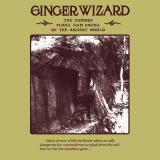
Crypt of the Wizard is proud to present Ginger Wizard - The Curious Flora and Fauna of the Ancient World on vinyl and digital formats.
About ten years ago in a record store in Prague, the Ginger Wizard discovered a copy of Bo Hansson’s Lord of the Rings LP. Although initially unfamiliar with the record, the reference to Tolkien’s masterwork and the incredible cover art drew him in and, rather fittingly, sent him off on a journey of discovery that would reshape his creative trajectory.
Years later while working in cassette tape manufacturing, Ginger Wizard noticed that most fantasy-inspired music fell into two camps: metal and dungeon synth. With little interest in the former, but intrigued by the latter, he began writing a few songs imagining a beautifully packaged and tactile cassette tape. However, dungeon synth he soon realized was “the most boring music to make”.
So began the Ginger Wizard’s own mythological discography. In 2022 came The Feast for the Dead King and Other Musical Themes recorded at home in a cold kitchen, is conversely an album full of warmth drawn from sheer exploration. A year later Can I Choose My Own Psychopompos? was recorded for the legendary Stoned to Death label - a 7” séance of semi-improvised noise and melody featuring allies from the Ginger Wizard’s live backing band The Peter Jacksons. The following year with Bathysburg Tales, a new approach was needed in order to keep the project interesting. Drawing inspiration from Popol Vuh and the inclusion of vocals lent by Protomartyr’s Joe Casey and Jakob Battick, a new more cinematic sound began to emerge.
Now, we present The Curious Flora and Fauna of the Ancient World marking a step into something stranger while still channeling the spirit of Bo Hansson. The new album rejects swords and sorcery for the mythology of the natural world “the ancient stuff,” he explains in the record’s insert, “has a similar taste for me as fantasy.” These songs bloom, creep, and shimmer like forgotten plants under distant suns while rooted in something real and organic. Inspired by the myths of nature rather than heroic quests, it’s an album that feels alive, equal parts archaeological dig and psychedelic garden.
Currently at work on a soundtrack for an imagined 1970s fantasy film in collaboration with The Peter Jacksons, the Ginger Wizard continues to expand his strange universe while The Curious Flora and Fauna of the Ancient World serves as a new map to somewhere ancient, beautiful, and unknown.
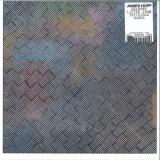
Shadows Lifted from Invisible Hands is an autobiographical record, comprised of four songs that Hoff refers to as ambient media. Each track is composed from sources drawn from his own involuntary aural landscape, specifically musical earworms and tinnitus frequencies.
Neither sound nor a daydream, the earworm (or stuck song) emblematizes music as a commercial form—immediate, ubiquitous, and persistent. Likewise, tinnitus is inaudible and unscrupulous, manifesting across a spectrum of frequencies at will. The cognitive swirling of these phenomena provides an ambivalent, internal soundtrack that scores a person’s movement through the world.
Those suffering from tinnitus or those who have grown accustomed to the “Tinnitus Effect” in movies will likely recognize the buzzing pitches on the record, but will likely not recognize the songs. Distorted and distilled, Shadows Lifted from Invisible Hands features altered versions of four commercial pop songs: Blondie’s “Heart of Glass,” David Bowie’s “Space Oddity,” Madonna’s “Into the Groove,” and Lou Reed’s “Perfect Day.”
Having been haunted by these songs on and off for years, Hoff tweaks the tracks, transposing and recomposing them for orchestral instrumentation. Speaking back to these involuntary echoes, these tracks go to great lengths to obfuscate their sources; to be sure not to simply re-introduce each earworm, as though they were samples. Otherwise, what’s the point? No one needs another stream.
Besides, earworms are not music, although we perceive them as such. They are non-cochlear and exist as an affective force that is neither subjective nor objective, which is to say they are an invasive—and alien—phenomenon. Like tinnitus, they are aggravated by economic, social, and environmental forces as well as emotional states, mental health, and aging. Hoff doesn’t underplay his own struggles with mental health in discussing the record—noting a long history of depression and its acuteness over the last few years, which serve as the backdrop to the composition of this record.
Scratch any pop song hard enough and you’ll find sadness underneath it. Subdermal, the songs on this record evoke a type of ephemeral weariness and despair. By recasting the original songs through their shadowy doubles, Hoff provides a window into the dark core of pop music. At the center of which lies capitalism’s desperate attempt to replicate itself through a cheap high built on echoing refrains. Just below the surface the listener finds a hangover of shadows dancing through the mind.
NPVR is the avant garde duo made up of the late Peter Rehberg and Nik Void. Editions Mego is proud to present their second and final release. No this is not some kind of Beatles synthetic AI that raises the dead reconstructed recordings but rather a new album made by the humans and their machines.
The initial meeting of Rehberg and Void was in London in 2016 and despite or due to their mutual awkwardness found solace and compatibility in the fact that they both had a similar electronic modular set up, along with matching cases to transport all. The idea to collaborate was an obvious and organic process as a means to connect their individual gear together and observe the outcome. The fruits of these initial experiments, recorded in London, resulted in the playful experimentation of their acclaimed 2017 release 33 33 (eMego 251).
Now in 2024 Editions Mego presents the logically titled follow up, 33 34. These sessions were recorded six months after the initial recordings at Peter’s home in Vienna. This was planned out as a mirror city release to the original London recordings. With Peter having access to his full studio set up this time around we encounter a rich audio landscape which organically folds together a variety of musical genres blurring any distinction between these forms so the resulting music hovers as a new cloud of sound. Any musical form, be it industrial, electro-acoustic, ambient, drone and techno all coexist and melt into the other as the ensuing result unveils a hypnotic swarm of divergent sounds (music). When active there were no lines or contexts with NPVR, either between sound or genre within these recordings or live where NPVR were at home playing at a techno club one night and an avant garde venue the next.
The initial session of these recordings was edited by Rehberg and sent to Void to further develop. Over time the final versions were agreed on and then shelved as other outside projects took over. The awkwardness had been surmounted and the two had become close friends. NPVR performed at a range of venues such as Tresor, Sutton House, Corsica, Blitz, Paris GRM #Focus2, LEV Festival and Rigas Skanumezs Festival. Following Rehberg’s untimely passing Void had difficulty listening back to the sessions but eventually thought it fit to complete and release this album, of which even the artwork (like 33 33, an image from Zurich photographer, Georg Gatsas) had been decided upon prior to Rehberg parting ways.
There is an unmistakable joy to these recordings. One encounters an enthralling exploration of their chosen machines which conveys the excitement of what can be randomly conjured when people speak through such devices. There is no grand statement or argument here, just the sheer thrill of creation and the recorded results of random encounters. The art of collaboration was always a mainstay of Rehberg’s practice from the advent of the MEGO adventure. Rehberg & Bauer was an initial collaboration with former business partner Ramon Bauer. Even at this stage one can hear a relaxed sense of delight in the sheer discovery of sound.
A mix made for the Wire magazine following the release of 33 33 hints at the freedom that comes with endless urge for exploration and discovery. Abstract tracks from Z'EV. Jérôme Noetinger and Jung An Tagen are included alongside British stalwarts The Fall and New Order. There were no lines between pop / academic / underground or mainstream in Rehberg’s world. All of it sat at the same table. It is just matter in the atmosphere, like the diverse exploration found in these recordings that comprise 33 34.
Towards the end of his life Rehberg was obsessing over the immense output of the German ambient musician Pete Namlook. An artist renowned for not only his sprawling catalogue of ambient masterpieces but one who often said his main inspiration was nature. This is apt with regards to the work of NPVR which also aligns with such thought as the intertwining of the two individual artists and their machines results in a natural symbiotic flow, as it happens, just like in the world around us.
Swan Song
The vinyl LP at the heart of this éthiopiques 31 tracks 2 to 11 was one of the very last vinyl records ever released in Ethiopia. But above all it represents, we felt, the absolute masterpiece of the Ethiopian Groove – the Swan Song of Swinging Addis. The album leaves a clear idea for posterity of the level of sophistication and mastery that modern Ethiopian music had achieved, before being crushed under the Stalino-military heel of the Derg – as the bloody revolution that was unfolding came to be called.
Ethiopia1976.
The Revolution that broke out in February 1974 rolled on in a ruthless march. The whole of Ethiopian society was utterly stunned. The bouquets of flowers handed joyfully to the first tanks of the coup d'état were to wilt very rapidly. From September 1976 to February 1978, 18 months of Red Terror (the name given by the junta itself) spilled blood throughout the country. This fratricidal conflict took its heaviest toll among students and youth. The shift from feudalism to a cruel and primitive Stalinism left the country's citizens deeply traumatised, and snuffed out any pretence of activism, whatever the sector of society. This ice age was to last for seventeen long years.
ሙሉቀን፡መለሰ Mulukèn Mellèssè Muluqän Mälläsä
It was three tracks by Muluken that served as the opener for éthiopiques-1 more than 25 years ago. Seven more tracks appeared on éthiopiques-3 and 13, all accompanied by The Equators, which was soon to become the Dahlak Band.
The first track, Hédètch alu, also the very first piece that Muluken ever recorded, left audiences both unsettled and amazed. Reflecting the singer's extremely young age (he was just 17 at the time), this angelic voice mystified many, who thought they were in fact listening to a feminine voice. He was not yet 22 when he released his last vinyl record in 1976 with Kaifa Records (KF 39LP), one of the very last to be issued in Ethiopia, before the cassette tape became the dominant medium for music distribution – and before the new revolutionary regime put a stop to all independent musical life, via an unspeakable barrage of prohibitions and other persecutions.
Mulu qèn, literally, “A well filled day”. This tender maternal intention wasn't enough to ward off the cruelty of fate. His mother's premature death drove Muluken to leave his native Godjam, in northeast Ethiopia, to live with an uncle in Addis Ababa. Born Muluken Tamer, he took his uncle's last name – Mèllèssè.
The spelling Muluken appeared in his administrative records. Transcription of Amharic to the Latin alphabet, both in Ethiopia and for scholars, gives rise to controversies and quibbles that can never be neatly settled. French allows for a closer approximation of the original pronunciation, thanks to its battery of accent marks, confusing as they may be to anglophones.
Between rather accommodating administrative record-keepers and the various versions that pop up in interviews given by the artist, Muluken's year of birth oscillates between 1953 and 1955…
1954? One thing is certain: the artist's talent made itself known very early indeed, because he got his start in 1966-67, at the age of 13 or 14. Photos from the period attest to his extreme youth. It's a strange sort of initiation for a very young teenager to become a sensation in the heart of Addis's nightlife at the time, Woubé Bèrèha – the Wilds of Woubé. And what's more, in the club of the Queen of the Night, the Godjamé Assègèdètch Alamrèw herself, the very same that was portrayed by Sebhat Guèbrè-Egziabhér in his novel-memoir Les Nuits d’Addis Abeba2… The legendary female club owner who is remembered to this day by the capital's ageing boomers.
Muluken first tried his hand at the drums, before he grabbed the microphone. He emigrated briefly to the Zula Club, across the street from the old Addis Post Office, one of the ground-breaking bars of the burgeoning musical scene, before joining the Second Police Band in 1968, for around three years. He spent a few months with the short-lived Blue Nile Band founded by saxophonist Besrat Tammènè. As the musical scene grew increasingly successful, and pulled slowly but decisively away from its institutional ties, Muluken released his first 45rpm single in February 1972 (Amha Records AE 440). It was included in two LP Ethiopian Hit Parade compilation albums in September of the same year. All in all, Muluken released eight two-track 45s and the same number of original cassette tapes between February 1972 and 1984, the year that he departed for permanent exile in the USA. After converting to Pentecostalism in 1980, Muluken gradually abandoned all secular musical activity. In 1985, at the end of a concert in Philadelphia, he decided to quit concerts and recording for good. Mèlakè Gèbré, the historic bass player from the Walias band who was playing with him that night, recalls that everything appeared so irredeemably diabolical in Muluken's eyes, that it was to be the end of his contribution to Ethiopian Groove.
The end of the story, the beginning of a legend.
Dahlak Band, forgotten by History
Aside from his personal history and vocal talents, it must be remembered that Muluken Mèllèssè was one of the biggest names in the musical innovations that marked the end of the imperial period. These éthiopiques aim to convince those who are just discovering this hidden gem... As for Ethiopians themselves, they are to this day captivated by this singular and atypical figure in the Abyssinian pop landscape – even though he withdrew from public life some 40 years ago. Incorrigible devotees of poetic twists, of more or less hidden meanings, Ethiopians appreciate above all the care Muluken took in choosing his lyrics and the writers who penned them, such as Feqerte Haylou, Alemtsehay Wodajo and, here, Shewalul Mengistu (1944-1977). Love songs, written by women, a far cry from the conventional drivel that pleases sappy sentimentalists.
Muluken is equally acclaimed for his perfectionism when it came to music, the opposite of the overly casual approach that is all too common. He remained a faithful partner of musicians who came from a lineage that borrowed from several inventive and pioneering bands (Venus, Equators, Dahlak). Amongst them were certain artists who began their musical lives with Nersès Nalbandian at the Haile Sellassie Theatre and who come of age in around 1973 – at just the wrong time, you might say. Among them were the pillars Shimèlis Bèyènè (trumpet), Dawit Yifru (keyboards) and Tilayé Gèbrè (sax & flute). Most notably Tilayé Gèbrè, certainly one of the most important musicians, composers and arrangers of his generation, of the end of the imperial era, and of the early years of the Derg.
It was only in 1981 that a miraculous opportunity arose for Tilayé to escape the Stalinist paradise of the dictator Menguistou Haylè-Maryam. Once again it was Amha Eshèté (1946-2021) who provided a solution. The spirited and courageous producer, who had been in exile in Washington since 1975, succeeded, thanks to his incredible perseverence, in bringing the Walias Band to the USA. It was, in fact an extended Walias Band comprising ten musicians3, six of whom chose to slip away after a few concerts and the recording of an LP (The Best of Walias, WRS 100). Tilayé Gèbrè was one of these. He has been living in the USA ever since. There he joined the then-nascent Ethiopian diaspora, which lived largely unto itself, and was making only very modest headway in the American musical market. It seems unfair that Tilayé Gèbrè and the Dahlak Band were not able to benefit earlier from the public recognition that they do deserve.
A similar draining away of the top-rate talents would lead to the reorganization of the major groups of the “Derg Time”. The remaining artists spread themselves around between Ibex Band (renamed Roha Band), Ethio Star Band and a remodeled Walias Band. That spelled the end of the Dahlak Band.
With this record, produced by the essential Ali Abdella Kaifa a.k.a. Ali Tango, we can appreciate everything that the Derg not only destroyed, but also prevented from flourishing. This gem of Ethiopian-style afrobeat came out in 1976 (and, by way of a parenthesis, before the FESTAC 1977 in Lagos, which was attended by an impressive delegation of Ethiopian musicians — although Fela was already personna non grata in his own country). Despite everything that might distinguish this ethio-groove from Fela’s music – no colonial axe to grind, no question of political confrontation with the authorities, no claims to negritude or Africanism for the Ethiopian musicians, and less extrovertion! –, this LP fits beautifully into the saga of intense and electrified soul of the new “African” groove that Fela and Manu Dibango embodied so well from that point onwards.
In restoring this record to its place in the afrobeat epic, it can be seen that, if nothing else, the timeline bestows a legitimate pedigree and a historical primacy to works that had no international impact when they were originally released.
Warning! Masterpiece!
Born in London to Scottish parents, Bishop Briggs grew up in Japan and Hong Kong. Days after graduating high school, she moved to Los Angeles where, after years of performing at any venue that would have her, she was discovered in a small hole-in-the-wall by a former-A&R rep and the rest was history. The music of Bishop Briggs transcends the limitations of singular genres, blending folk, pop and electronic music into a wholly unique sound. Her debut track “Wild Horses” reached #1 on Spotify's US Viral Chart and #2 on Spotify’s Global Viral 50 charts, with airplay on Sirius XM’s Alt Nation, Zane Lowe’s Beats 1 Show and a prized spot in Acura’s 2016 TLX and ESPN’s NFL Playoffs ads.
- Brown Is The Color
- Tame
- No Yawn
- All Odds No Chants Feat. Sara Persico & Elvin Brandhi
- Im Bann Der Wehenden Fahnen
- No Place Like
- Home
- Spellbound To Ancestral Curse
- Though The Trees Feat. Iceboy Violet
- Nowhere Everywhere Feat. Elvin Brandhi & Sara Persico
- Who, Me?
The notion of home isn’t precise, even a dictionary will offer multiple definitions. A home can be a place where you live, a place where you belong, where you originate from or a place where you’re given care; it can be a physical space, a land, a people or even a person. The concept isn’t completely universal, but everyone possesses a unique idea of what home means to them. On her fifth album, Ziúr considers not just what home symbolizes from her perspective, but the word’s resonance to the diverse community that surrounds her, and how their stories have impacted her over the years. Indeed, it’s the first time she’s felt it necessary to examine her own nationality. In the past, she’s deliberately avoided labelling herself as German, feeling disconnected from her country’s politics, culture and even the German language itself. In 2025, the idea of Germanness is in flux and progressives are under attack from all sides. The country’s politics aren’t only being turned inward by the growing throng of far-right voices, but by scared moderates, opportunists and those blinded by comfort, willing to ignore hatred to maintain their privilege. Stepping up to provide a different narrative, Ziúr scours her soul, writing and singing in German for the first time and proposing growth and evolution, not fear and regression. “I never considered being part of Germany,” she explains. “But I am.”
A solemn mood permeates the album’s opening track ‘Brown is the Color’, and Ziúr sings in measured, slow-motion breaths over noisy synth oscillations and doomed piano flourishes. Already, it’s a significant departure from her last run of releases, veering away from the frenetic, satirical chaos of 2023’s Hakuna Kulala-released ‘Eyeroll’ or its fantastical, dubby predecessor ‘Antifate’. Ziúr pulls on real world insights here, tracing her oldest, dearest musical inspirations to present her origins to anybody who might be listening. “Cold world is holding up,” she laments with a metallic crunch. “To let go of your heart, let me go.” And her voice emerges from the shadows completely on ‘Tame’; unprocessed, Ziúr sounds naked and vulnerable on ‘Tame’, curving her precise words around broken, lopsided rhythms and jangling new wave guitars. It’s pop music in its own way, inverted and reconstructed to fit snugly into her well-established sonic landscape. On ‘No Yawn’, brittle, downsampled hi-hats and industrial scrapes ping-pong around distorted riffs, provided by James Ó Ceallaigh aka WIFE; “You fail to sugarcoat your half-ass attempt,” she deadpans, “to build your promised wonderland on quicksand.” Even the beatless ‘All Odds No Chants’, a collaboration with Elvin Brandhi and Sara Persico, reveals another room in Ziúr’s autobiographical suite, mirroring György Ligeti’s enduringly influential choral works with its gnarled, dissonant vocal harmonies.
- My Baby Left Me
- Rollin And Tumblin
- Got Love If You Want It
- Gin House Blues
- Baby What You Want Me To Do
- When Things Go Wrong
- Matchbox
- Mystery Train
- So Glad You're Mine
- Bright Lights, Big City
- Lightnin's Boogie
- Lifeis Good
Throughout a professional career defined by early pop successes, every single one of Andy Fairweather Low's performances has been shaped by his blues, gospel and soul influences, and although the many hits he has enjoyed have to some extent overshadowed his undeniable credentials as a great bluesman - his talent for the blues hasn't escaped the notice of some of the world's finest artists who have drawn on his skills as a guitarist and singer Eric Clapton of course leads this impressive list of Andy's discerning employers and collaborators which includes, BB King, Benmont Tench, Bill Wyman, Bob Dylan, Bonnie Raitt, Buddy Guy, Charlie Dore, Charlie Watts, Chris Barber, Chris Rea, Clarence 'Gatemouth' Brown, Dave Edmunds, David Crosby, David Gilmour, David Sanborn, Donald 'Duck' Dunn, Edie Brickell, Elton John, Emmylou Harris, Garth Hudson, George Harrison, Georgie Fame, Gerry Rafferty, Helen Watson, Jackson Browne, Jeff Beck, Jimi Hendrix, Jimmy Page, Joe Cocker, Joe Satriani, John Mayall, Kate Bush, Levon Helm, Linda Ronstadt, Lonnie Donegan, Mary J. Blige, Mick Hucknall, Otis Rush, Paul Weller, Paul Young, Pete Townshend, Phil Collins, Richard and Linda Thompson, Rick Danko, Ringo Starr, Roger Waters, Ronnie Lane, Sheryl Crow, Steve Gadd, Steve Winwood, Stevie Nicks, The Impressions, The Who, Van Morrison, Warren Zevon, and hundreds more. But, despite the blues having become such a hugely popular genre internationally these days, and Andy having been in the thick of it for most of his professional life, he has largely missed the recognition he deserves in that field because up until now, he has never released a blues album. That's why I wanted to make a record that reveals the identity of the Invisible Bluesman to the world beyond his existing loyal fans. Meet Andy Fairweather Lowdown!
- A.waters Of March
- B.how To Cope
May Simones has been garnering attention for her solid Berklee-trained technique, musicality spanning J-pop, jazz, indie, and bossa nova, and bilingual
English-Japanese lyrics. Following her 2025 Fuji Rock Festival appearance, she has already confirmed her first Japan tour, starting in January 2026.
She is one of the most talked-about singer-songwriters today. Meanwhile, John Roseboro is a Haitian-American singer-songwriter who blends elements of indie
folk, bedroom pop, and jazz with bossa nova rhythms. Unconstrained by typical idioms, his unconventional songwriting and arrangements have led him to
proclaim himself "post-bossa nova," garnering attention among some listeners in Japan.
The duo's cover of Antonio Carlos Jobim's classic "Waters of March" was a hit that quickly raised their profile. The intimate atmosphere created by May's soft
vocals and John's guitar is a testament to the two's friendship. This outstanding cover could set a new standard for English-language bossa nova.
- 1: The End Of A New Beginning
- 2: Sweet Freedom
- 3: Home
- 4: The End Of The World
- 5: Mine
- 6: All Around Me
- 7: I Should Have Said
- 8: So Soon
- 9: Last Words
- 10: True Love Will Find You In The End
Home is the new collaborative album from Xan Tyler & Dusty Stray -
Released in Autumn 2025 on pink vinyl, the album is released by Stereogram
Recordings in partnership with Last Night From Glasgow
Xan Tyler is an English vocalist and songwriter, her voice has been described as
crystalline" by Pitchfork and "extraordinary" by Uncut - Xan has had an extensive
career after getting her start as backing vocalist for Death Bang Party as a teenager.
She went on to be half of electro pop duo Technique signed to Creation Records. She
has collaborated with the likes of Timo Mass, Martin Buttrich and Mad Professor. Her
first solo album Holding Up Half The Sky was released by Last Night From Glasgow in
May 2024. Dusty Stray is Amsterdam-based, US-raised alt-folk songwriter Jonathan
Brown. He has released six albums as Dusty Stray starting in 2009. His latest solo
album is Fire Place, released in 2023. Big Takeover described the album as "brave"
and "authentic".
- Walking Distance
- E.s.p
- Strange Thing
- Harmony In My Head
- Why She's A Girl From The Chainstore
- I Believe
- Fiction Romance
- Breakdown (Live)
- Love Battery (Live)
- Real World
- I Don't Know What To Do With My Life
- Airwaves Dream
- Ever Fallen In Love (With Someone You Shouldn't've?)
- Orgasm Addict
- Running Free
- Are Everything
- What Do You Know
Buzzcocks - Total Pop 1977-80: Rare, Live And Great Diese Compilation vereint rare Studioaufnahmen und energiegeladene Live-Versionen aus der Hochphase der Buzzcocks und zeigt, warum die Band als Pioniere des britischen Punk gilt. Mit kompromisslosem Sound und scharfem Songwriting ist das Album ein authentisches Zeitdokument der späten 70er.
- Old Friend
- Black Haired Boy
- Wine
- This Morning
- Swedish Man
- Cocaïne
- Deep Rest
- Broken Heart
Agathe Plaisance, a self-taught visual artist and musician, creates a universe where the softness of folk origins gradually metamorphoses, giving way to sonic explorations that push the door open to other worlds. Her light-and-dark electronic pop plunges us into her inner world, with deeply intimate lyrics about illness, addiction, the relationship with oneself and with others. The Lynchian atmosphere created by the synth layers surround an ethereal voice, echoing the work of artists such as Cat Power and Mazzy Star. Through a live performance of continuous tension, the woman in the making explores herself and seeks to transcend her pain in order to reinvent herself. With this new album, Agathe Plaisance delivers an intense and introspective work, born from a period of deep depression. She explores with honesty her anger, losses, fears, and addictions, while also casting a clear-eyed gaze on those of others. Despite the darkness that runs through the record, glimpses of hope, love, and light begin to surface, offering a path toward healing. Deep Rest is more than just a title - it's a metaphor, a play of shadow and light at the heart of the project. The artist transforms pain into a tool for reinvention. Her folk beginnings gradually give way to more electronic and experimental sounds - a shift that mirrors her personal rebirth.
First album of French band La Femme released in 2013 with which they won Best New Band of the year at the French Music Awards and god certified gold. It marked also the beginning of their international recognition, confirmed since with their 2nd album Mystère in 2016 and their brand new album Paradigmes today. Includes the hits Sur La Planche, It's Time to Wake Up and Antitaxi! La Femmes's debut LP, is a mix of surf revival, updated cold wave (in a similar vein to countryman Lescop), 1960s yéyé and psychedelia. "Psycho Tropical Berlin: is apparently also their self-penned genre, they have also said "strange wave, new Motown, witch wave, silly mental wave"... whatever, aach term makes for a pillar to describe their music. Psycho Tropical Berlin is the story of a couple who slipped into chaos and survives by watching each other. Le Danger est partout - Peril is all around - as written in the booklet. Rock and pop, rococo bauhaus, fed from multiples influences (Krafwerk, Elli & Jacno). La Femme just want to please you. Generous and welcoming, she stretches you her white hand in the dark, if you grasp it, it could be the shiver of your life.
- 1: Drugdealer Feat. Weyes Blood - Real Thing
- 2: Drugdealer - The News
Over two years in the making, and many more in the two musician’s shared dream, ‘Real Thing’ unites longtime collaborators Michael Collins (Drugdealer) and Natalie Mering (Weyes Blood). Recorded across continents, ‘Real Thing’ is a return, a refinement and a reminder of the deep connection that has bound these two titans of song over multiple collaborations. The journey of ‘Real Thing’ began when Collins, while on a European sojourn, crossed paths with Parisian producer Max Baby. As one does while in Paris, they found themselves in a studio owned by a member of the 1970s French prog rock band Magma. There, a chord progression long-gestating in Collins’ brain blossomed into a bonafide demo.
Collins recalls, “I realized immediately that it was the perfect thing to show Nat, who I had been wanting to collaborate with again for years.” The connection and musical camaraderie between Collins and Mering dates back to 2014 in Oakland, where a chance meeting and studio session marked the genesis of their enduring partnership. Collins reflects, “Since then, I’ve felt like she’s my musical family. I can’t really ask for more in terms of someone who inspired me to even get to this place in my songwriting.” On the B-side is ‘The News’, Drugdealer’s first collaboration with Robbie Chemical. What began as a simple harmony grew into a panoramic partnership, the musician’s voices effortlessly entwined, and a pop paragon envisioned. Inspired by generational conversations on chaos, change and connection, the track opens a new chapter - topical, personal and unmistakably Drugdealer. As Drugdealer, Michael Collins has crafted a career that blends introspective songwriting with a reverence for classic pop and R&B. A native of the East Coast, Collins’ musical adventure began with the experimental pop collages of Run DMT and Salvia Plath before evolving into the more melodic, refined songwriting heard in Drugdealer’s acclaimed albums ‘Raw Honey’ and ‘Hiding In Plain Sight’. Natalie Mering, better known as Weyes Blood, has similarly forged a path of emotive, transcendental folk-pop that delves into themes of myth, love and existential longing.
Known for her ethereal voice and evocative lyrics, Mering’s latest works, ‘Titanic Rising’ and ‘And In The Darkness, Hearts Aglow’, are nothing short of modern classics, though also feel like just the start of this artist’s undeniable ascent. “For both artists, this is their first song since their respective 2022 albums, and what a way to come back. ‘Real Thing’ feels like uncovering a forgotten ’70s disco duet” - PASTE “A lush and insistent folk-pop jam” - Stereogum For fans of Mac Demarco, Kate Bollinger, Men I Trust, Toro y Moi, TOPS, Alice Phoebe Lou, Tame Impala, Thee Sacred Souls, Vacations, Allah-Las, Kurt Vile, Beach Fossils, Slow Pulp, Foxygen, Unknown Mortal Orchestra, Hand Habits, Father John Misty, Oracle Sisters, Whitney, The Lemon Twigs, Mild High Club, Khruangbin, Angel Olsen.
- 1: Intro
- 2: Simple Things
- 3: Forever
- 4: Road To Braemar
- 5: Before & After
- 6: Mirrors
- 7: Days Of Lily
- 8: Stepping Stones
- 9: Hope
- 10: Bravery
- 11: Chances
- 12: Stepping Out
Drawing from her constant searching for her own unique sound she filters her love of rhythm and groove through her Nordic sensibility to create an accessible, compelling blend of excitement and introspection. Growing up on the island of Saaremaa in her native Estonia, Britta Virves was a keen piano student playing a strictly classical repertoire. A chance encounter introduced her to jazz: "I wanted to learn guitar. So I went to my teacher Tit Paulus, and he told me to stay with piano, and introduced me to Keith Jarrett, Herbie Hancock, Bill Evans - my mind was blown - a new world opened up." Britta immersed herself in the music and her talent soon attracted attention.
Moving to Sweden to further her studies, she was soon touring Europe with the acclaimed Norrbotten Big Band, under the direction of Joakim Milder, working closely with featured guest vocalist Genevieve Artadi and accompanying Artadi on a duo tour opening for Louis Cole. Each tune on the album draws inspiration from an aspect of Britta's own life. "Simple Things" has the directness of a pop song married to the depth of jazz, as Genevieve Artadi's ethereal vocals float over an insistent backbeat that supports limpid depths of harmony.Other tracks include "Bravery", whoch showcases the subtlety and dynamic control of the rhythm team and is one of Britta's favorite tracks on the album - "I feel it's like a big waterfall that's rushing down and making its path just by flowing naturally." By contrast, "Chances" plays with a neatly delivered set of accents that tie the roots effortlessly