“Out of Our Hands” brings together Alvin Lucier and Jordan Dykstra who, through the hands of Ordinary Affects, have created debut recordings of two new compositions.
These companion pieces have similar orbits as they were not only both composed in Middletown, CT (where Alvin and Jordan lived for a number of years), but are about Middletown, at least from a starting point. Alvin’s piece — a homage to the location of the house in which he recorded “I am sitting in a room” back in 1969 — continues his study into slow-moving glissandi and carefully crafted beating patters by interweaving three string players within a minor third (voiced by two vibraphonists). The result is entrancing, almost psychedelic, and opens space where one didn’t expect. Like much of his previous work, it is conceptual and process-based; once the wheels get turning they go on and on, giving the listener time to approach the piece, sit with it, and then move back inward.
On the other hand, Dykstra’s piece “32 Middle Tones” (a pun on his Middletown street address and the harmonic microtonality utilized in the composition) is a very textural work. His piece asks the cellist to sustain pitches for extended durations — at times quietly singing in close proximity to the stopped pitch coming from the cello — while the rest of the ensemble (violin, viola, and 2 percussion) voice a sequence of chords separated by notated silences. The cello voice is sometimes alone, but never for too long as it finds itself supported from both the top and bottom in a harmonic embrace. This supportive structure involves a percussion section which colors the seemingly simple chords (major 6th, inverted minor 7th, inverted minor 2nd, etc.) with a non-traditional toolkit of bowed singing bowls, stone sheets, harmonicas, and even leaves.
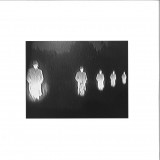
This is music that gently gives the listener a sense of predictability but always in an unexpected (and subtly indeterminate) shade. Speaking of shade, the album’s cover photo was taken in 2019 in Alvin’s backyard in Middletown. Alvin and Jordan sit with similar demeanors in front of his favorite tree — a crooked aspen which early on looked to be doomed — but which he would often saunter over to spend time with, giving it whispers of blessings and encouraging words.The world was blessed with Alvin’s presence and hopefully this album will whisper to you and yours.
Artist statement:
“With Alvin’s recent passing I was overwhelmed with messages and calls from friends, collaborators, and his former students. Everyone had a heavy heart, no doubt, but were grateful for the memories and their gift to be around Alvin during his lifetime of prolific dedication to the arts, his fascination with poetic storytelling through scientifically-inspired minimalism, and his calm and warmhearted spirit. In his last few years on earth, Alvin was busier than ever — brainstorming new ideas, creating new pieces, and planning big things. While he was here, he was alive, and may his music — and spirit — live on forever, spreading from his corner of Church and High (where he recorded his seminal piece I am sitting in a room) to every corner, concert hall, and loudspeaker in the world.”
Поиск:shee la
Все
- A1: Ricardo Bomba - Você Vai Se Lembrar
- A2: Vânia Bastos - Tabu (The Sweetest Taboo)
- A3: Rosana Mendes & Grupo Veneno - Reague
- A4: Grupo Controle Digital - A Festa É Nossa
- B1: Villa Box - Break De Rua (Versão Longa)
- B2: Batista Junior - Cheira
- B3: Dado Brazzawilly - Saramandaia
- B4: Anacy Arcanjo - Toque Tambor
- C1: Fogo Baiano - O Fogo Do Sol
- C2: Dodô Da Bahia & As Virgens De Porto Seguro - Africamerica
- C3: Via Negromonte - Love Is All
- C4: Electric Boogies - Electric Boogies
- D1: Os Abelhudos - Contos De Escola (Edit)
- D2: Nanda Rossi - Livre Pra Voar (Edit)
- D3: André Melo - Onda De Amor
- D4: Região Abissal - Feminina Mulher (Instrumental)
Some Crate-digging Compilations Are Often The Result Of Someone Hand-picking Their Choice Favourites From Another Country's Musical History, Perhaps Unaware Or Uninvolved With Its Cultural Lineage In The Process. On Soundway's Latest Release - A Treasure Trove Of Synth Jams, Pop, Samba Boogie, Balearic And Electro From 1980 & '90s Brazil - The Tracks Are Picked By Millos Kaiser, One Half Of The Brazilian Duo Selvagem, Who Are At The Helm Of Throwing Some Of The Country's Best Dance Parties. It's A Rare Compilation That Offers Brazilian Music Actually Picked By A Brazilian.
Whilst Names Such As Ricardo Bomba, Villa Box, Fogo Baiano, Electric Boogies And Batista Junior May Not Be Household Names, They Tell An Untold, Yet Rich And Important Part Of Musical History In Brazil. The Release Also Covers A Decade That Has Been Intentionally Forgotten And Brushed Aside By Many In The Country.
Onda De Amor Is A Release That Is Loaded With Smooth Grooves, Bubbling Bass, Glistening Synthesisers, Funk Strutting Guitar Lines And Sheen Of Production That Undeniably Marks It Of Its Time. For Kaiser This Compilation Is About Reintroducing Music During A Period Of Reappraisal, Catching A New Wave And Hoping Contemporary Listeners Will Ride It With Him. the Idea Is To Do Justice To These Songs. Songs That Combine All The Right Ingredients That Should Have Put Them On
Radio Playlists When I Was Growing Up Or At Least In The Cases Of More Adventurous Djs'.
Millos Kaiser Is A Dj, Digger, Vinyl Junkie/dealer Born In Rio De
Janeiro And Living In São Paulo For The Past 8 Years. He Launched The Dance Party/club Night Selvagem With Partner Trepanado In 2010, Bringing Thousands Of Dancers One Sunday A Month To A Public Square In The Heart Of São Paulo.
High Roller Records, Red/Yellow w Orange Splatter vinyl, ltd 300, 425gsm heavy cardboard cover, lyric sheet printed on uncoated paper, A5 photo card, finally available on vinyl, Kanadas Thrash-Metal-Pioniere Razor waren einigermaßen überrascht, als nach der Veröffentlichung der selbstproduzierten Debüt-EP »Armed And Dangerous« aus dem Jahre 1984 auf einmal das Majorlabel Attic Records bei ihnen anklopfte. Die Band unterschrieb wenig später einen Vertrag bei Viper Records, einem neu gegründeten Sublabel von Attic. »Escape The Fire« sollte ursprünglich der Nachfolger von »Armed And Dangerous« werden, aber Attic hatten ihre eigenen Pläne für die Zukunft von Razor und setzten die unerfahrene Band unter Druck. Als Resultat erschien anstatt »Escape The Fire« letztendlich »Executioner?s Song«. Der originale Bassist Mike Campagnolo erklärt, warum dies der Fall war: ?Wenn man der Realität ins Auge blickt, dann zieht eine junge Band doch immer den Kürzeren, wenn sie den ersten Plattenvertrag unterzeichnet. Das war bei Razor nicht anders. Wir sind ins kalte Wasser gesprungen, aber das galt letztendlich für die Plattenfirma genauso, denn Viper Records war ein völlig neues Unterlabel. Am Ende gab es also auf beiden Seiten nur Verlierer. Das grundsätzliche Problem war, dass Attic einfach nur alles auszuschlachten suchten, was wir veröffentlichten. Sie haben schlicht und ergreifend nicht verstanden, dass die damalige Szene sich gerade neu erfand, schneller und härter wurde. Diese Welle hat das Label komplett verpasst. Attic hatten ein festgefahrenes Schema, wie sie Bands vermarkteten, sie konnten nicht verstehen, dass Thrash Metal kein kurzlebiger Trend war, sondern auf Nachhaltigkeit aufbaute. Diese Kurzsichtigkeit zeigte sich darin, dass sie darauf abzielten, ein paar Stücke von »Armed And Dangerous« noch einmal zu verwerten, um diese Songs mit Material von »Escape The Fire« zu kombinieren. Am Ende wurde daraus »Executioner?s Song«. Wir waren einfach noch zu jung und unerfahren, um dem Label in dieser Frage zu widersprechen.? Die jetzt vorliegende Originalversion von »Escape The Fire« wurde am 1. Dezember 1984 in Torontos Future Sound Studios aufgenommen und von Terry Morostega zusammen mit Dave Carlo produziert.
Die Scorpions melden sich mit ihrem Album „Rock Believer“ zurück, das während des Lockdowns in ihrer Homebase Hannover im Studio entstanden ist. „Das Album hat die Scorpions DNA, den Kern bilden die Schenker/Meine Kompositionen“, sagt Frontmann Klaus Meine und erklärt, warum die neuen Songs die Frische und Power der 80er-Scorpions-Alben haben: „Wir haben als Band alle zusammen in einem Raum gespielt und die Songs aufgenommen – genau so, wie wir es damals in den 80er Jahren gemacht haben.
Wir können es nicht erwarten wieder loszulegen, um endlich wieder für unsere Fans zu spielen.“ Der Sound hat eine Energie und Kompromisslosigkeit wie ein Adrenalinstoß und lässt keine Zweifel offen, welche Power die Rocklegenden auch live abliefern werden.
Es sind grandiose Songs, jeder eine lyrische Short-Story, minimale Gedichte in Prosa, dargestellt in opulenter Soundführung, mit dem Charakter der Scorpions Anfang der 1980er Jahre, jedoch im frischen
Produktionsmantel der 2020er. Die Ressourcen der Karrierejahre sind zu einem überbordenden Fundus geworden, der die Brücke vom Gestern ins Morgen schlägt. „Rock Believer“ erscheint als 1CD und 1LP (180g, schwarz) mit 11 Tracks und als limitierte 2CD und 2LP (180g, schwarz, Gatefold) mit zusätzlichen 5 Bonustracks. info sheet from distr.
FFO: Arthur Russell, Stealing Sheep, Neu!, Agar Agar, Galaxians
Holodrum are a new disco-infused synth-pop group, who feature members of Hookworms, Yard Act, Cowtown, Virginia Wing, Drahla and more.
Maybe Holodrum were destined to start at this point. This might be the first time they’ve all officially worked together, but between Emily Garner (vocals), Matthew Benn (synth/bass/production), Jonathan Nash (drums), Jonathan Wilkinson (guitar), Sam Shjipstone (guitar/vocals), Christopher Duffin (sax/synth) and Steve Nuttall (percussion) they’ve shared bands, mixed each other’s records, promoted live shows and made music videos together in and around Leeds. As Holodrum, this is the 7 piece’s debut album, but the interlocking grooves and hot headiness of their repeato-rock-via-CBGBs dopamine hits have in one way or other been fermenting for years.
“When it comes to doing music most bands fall between two extremes of doing it for some goal or as an end to itself” says Shjipstone. “I think Holodrum is about the joy and complexity of living, and I just hope to god everyone gets to have a good time doing it.”
Ultimately the core of the group comes from Shjipstone and his former Hookworms bandmates Benn, Nash and Wilkinson. After their abrupt dissolution in late 2018, the four of them spent six months apart; Benn still had Xam Duo, his ongoing project with Virginia Wing and some-time James Holden & The Animal Spirits live member Duffin, Nash remains vocalist and guitarist of long-running DIY rockers Cowtown and helms his solo project Game_Program; and Shjipstone plays guitar with Yard Act. However, the four of them missed the sixth sense synergy they’d built-up playing together over a decade and soon enough demos were being swapped and new ideas were discussed.
The vision of a large live electronic ensemble formed quickly. Friends were added: Duffin and Nuttall – who was keen to resurrect the double percussion interplay that he and Nash had been exploring as part of motorik trio Nope joined first. Then animator and VIDE0 singer Garner crystallised the line-up by joining on vocals.
“Apart from Emily, all of us had actually played together before in a covers band at a New Year’s Eve party at the Brudenell Social Club a couple of years ago, so we knew we could have fun together” says Benn. “So we set up to be a live party band early on. We wanted lots of people on stage having fun, playing for people that also wanted to have fun. It makes sense we take inspiration from bands like Tom Tom Club and Liquid Liquid; they were trying to help people to party at a point when New York was quite a scary and dangerous place we’re doing the same, albeit in the face of a decaying world and a global pandemic.”
Covid-19 hasn’t given them much opportunity to do that yet, with two fledgling shows in late 2019 to their name before festival appearances at the likes of Bluedot, Sounds From The Other City and Gold Sounds were scuppered last year. However, the 6 tracks on Holodrum crackle with the energy of the dancefloor. Opening cut 'Lemon Chic' described by Garner as her “workout track” starts out sparsely, with tight drum claps and burbling synths holding a teetering suspense before the whole thing’s prised open, allowing beaming saxophone skronk to shine in. Garner’s vocals bob and weave around the syncopations of the track’s building cacophony.
It sets the stall for an album heavy on euphoria, built atop crisp interplaying percussion and acid-flecked grooves. At times Shjipstone provides a raw counterpoint on vocals, while elsewhere - like on the strutting, swirling disco of 'Free Advice' and 'Low Light'’s late night ping pong synths - the pair indulge in playful call and response as the instrumentation builds and contorts around them. 'Stage Echo' provides a respite of sorts halfway through, a swirling, fever dream of a track that peaks with big squelchy frequencies and cavernous reverb, before the album returns to its repetitious exercises in body-moving catharsis underpinned at all times by a relentlessly propulsive rhythm section.
The Zephyr Bones’ psychedelic rock expands in a precise and determined sophomore album. A warm and accessible record that speaks about love, self-affirmation, loss and hope.
A quicksilver track that glides on a buoyant bassline and glistening melodic interplay, “No One” is the sound of joy. While it’s easy to pigeonhole it as a dreampop track, there’s undoubtedly hints of psych, funk and Kraut all nestled in there, The Zephyr Bones blurring the lines with ease in this intoxicating track that shows growth in their sonic heft without losing their feathery lightness.
Beats per Minute
"No One" opens up like a traditional indie dance track, with sparkling guitars and a vibrant synth lead reminiscent of a cut from The Strokes or Tame Impala. But it progresses in a fascinating way, bringing in a crunchy psychedelic guitar solo and a funky instrumental breakdown at the end. This track has a variety of sounds, but it's prog rock more than anything, as the dynamic instrumentation sticks out the most. Every layer here is not only an excellent piece to the larger puzzle while also being technically impressive on its own. Despite these nods to the more experienced rock nerd, what's the most fascinating is how accessible the tune really is. The wild drum beats, dense synth layers, and lightning-quick guitars demonstrate the true cerebral chemistry of the group. The sheer musical talent doesn't hurt either.
Earmilk
When The Zephyr Bones first burst into the scene they crushed everything that got in their way. Their music slapped us like a wave when it reaches shore. It took us by surprise and left us asking yearning for more. They coined their style “beach wave”. All this became a first album titled Secret Place, something like the sonic coordinates of a sunny place with a soundtrack of guitars with reverb and intoxicating melodies. You can’t tell whether you’ve been there or not, but you definitely want to go back.
In Neon Body they are the same people, but it hits differently. Their melodies and suggestive guitar riffs are on point. They are able to take you back to places. You will never finish these 10 tracks in the same place where you were when you first hit play. Speaking of The Zephyr Bones is speaking of pure freedom. And yet, in this second album we get to know them in a different way, more determined and with a renewed intensity. The landscape has also changed and now the tone reminds us of the twilight, and in some songs you can even feel the reflection of neon light on your skin.
But let’s not lose the point. What matters here are the songs, and in this album you can find pretty damn good ones. “No One”, the first single, is an excellent entry into the universe created in Neon Body. Addictive and irresistible, it will instantly get you dancing and singing along. “So High” is a dizzying and fast-paced first track. By the time “Verneda Lights” arrives, you have fully surrendered to Brian Silva (vocals, guitar and synthesizers), Jossip Tkalcic (guitar and vocals), Marc López (drums) and Carlos Ramos (bass). “Sparks” shines with its own light: it is a controlled fire until the final part of the song makes everything burn again. “Plastic Freedom” goes all-in with an infallible riff. “Velvet” is as elegant as its title suggests, and “Rocksteady” hits the bullseye again with a chorus that hits like a poisonous dart. “Neon Eyes’’ lifts you up with heavenly back up vocals and “Afterglow” keeps you with your feet on the ground – Why? Because begs you to dance. And then comes “Celeste V”, a song that speaks about loss that puts an end to the recording.
Neon Yellow
The Zephyr Bones’ psychedelic rock expands in a precise and determined sophomore album. A warm and accessible record that speaks about love, self-affirmation, loss and hope.
A quicksilver track that glides on a buoyant bassline and glistening melodic interplay, “No One” is the sound of joy. While it’s easy to pigeonhole it as a dreampop track, there’s undoubtedly hints of psych, funk and Kraut all nestled in there, The Zephyr Bones blurring the lines with ease in this intoxicating track that shows growth in their sonic heft without losing their feathery lightness.
Beats per Minute
"No One" opens up like a traditional indie dance track, with sparkling guitars and a vibrant synth lead reminiscent of a cut from The Strokes or Tame Impala. But it progresses in a fascinating way, bringing in a crunchy psychedelic guitar solo and a funky instrumental breakdown at the end. This track has a variety of sounds, but it's prog rock more than anything, as the dynamic instrumentation sticks out the most. Every layer here is not only an excellent piece to the larger puzzle while also being technically impressive on its own. Despite these nods to the more experienced rock nerd, what's the most fascinating is how accessible the tune really is. The wild drum beats, dense synth layers, and lightning-quick guitars demonstrate the true cerebral chemistry of the group. The sheer musical talent doesn't hurt either.
Earmilk
When The Zephyr Bones first burst into the scene they crushed everything that got in their way. Their music slapped us like a wave when it reaches shore. It took us by surprise and left us asking yearning for more. They coined their style “beach wave”. All this became a first album titled Secret Place, something like the sonic coordinates of a sunny place with a soundtrack of guitars with reverb and intoxicating melodies. You can’t tell whether you’ve been there or not, but you definitely want to go back.
In Neon Body they are the same people, but it hits differently. Their melodies and suggestive guitar riffs are on point. They are able to take you back to places. You will never finish these 10 tracks in the same place where you were when you first hit play. Speaking of The Zephyr Bones is speaking of pure freedom. And yet, in this second album we get to know them in a different way, more determined and with a renewed intensity. The landscape has also changed and now the tone reminds us of the twilight, and in some songs you can even feel the reflection of neon light on your skin.
But let’s not lose the point. What matters here are the songs, and in this album you can find pretty damn good ones. “No One”, the first single, is an excellent entry into the universe created in Neon Body. Addictive and irresistible, it will instantly get you dancing and singing along. “So High” is a dizzying and fast-paced first track. By the time “Verneda Lights” arrives, you have fully surrendered to Brian Silva (vocals, guitar and synthesizers), Jossip Tkalcic (guitar and vocals), Marc López (drums) and Carlos Ramos (bass). “Sparks” shines with its own light: it is a controlled fire until the final part of the song makes everything burn again. “Plastic Freedom” goes all-in with an infallible riff. “Velvet” is as elegant as its title suggests, and “Rocksteady” hits the bullseye again with a chorus that hits like a poisonous dart. “Neon Eyes’’ lifts you up with heavenly back up vocals and “Afterglow” keeps you with your feet on the ground – Why? Because begs you to dance. And then comes “Celeste V”, a song that speaks about loss that puts an end to the recording.
Tape
The Zephyr Bones’ psychedelic rock expands in a precise and determined sophomore album. A warm and accessible record that speaks about love, self-affirmation, loss and hope.
A quicksilver track that glides on a buoyant bassline and glistening melodic interplay, “No One” is the sound of joy. While it’s easy to pigeonhole it as a dreampop track, there’s undoubtedly hints of psych, funk and Kraut all nestled in there, The Zephyr Bones blurring the lines with ease in this intoxicating track that shows growth in their sonic heft without losing their feathery lightness.
Beats per Minute
"No One" opens up like a traditional indie dance track, with sparkling guitars and a vibrant synth lead reminiscent of a cut from The Strokes or Tame Impala. But it progresses in a fascinating way, bringing in a crunchy psychedelic guitar solo and a funky instrumental breakdown at the end. This track has a variety of sounds, but it's prog rock more than anything, as the dynamic instrumentation sticks out the most. Every layer here is not only an excellent piece to the larger puzzle while also being technically impressive on its own. Despite these nods to the more experienced rock nerd, what's the most fascinating is how accessible the tune really is. The wild drum beats, dense synth layers, and lightning-quick guitars demonstrate the true cerebral chemistry of the group. The sheer musical talent doesn't hurt either.
Earmilk
When The Zephyr Bones first burst into the scene they crushed everything that got in their way. Their music slapped us like a wave when it reaches shore. It took us by surprise and left us asking yearning for more. They coined their style “beach wave”. All this became a first album titled Secret Place, something like the sonic coordinates of a sunny place with a soundtrack of guitars with reverb and intoxicating melodies. You can’t tell whether you’ve been there or not, but you definitely want to go back.
In Neon Body they are the same people, but it hits differently. Their melodies and suggestive guitar riffs are on point. They are able to take you back to places. You will never finish these 10 tracks in the same place where you were when you first hit play. Speaking of The Zephyr Bones is speaking of pure freedom. And yet, in this second album we get to know them in a different way, more determined and with a renewed intensity. The landscape has also changed and now the tone reminds us of the twilight, and in some songs you can even feel the reflection of neon light on your skin.
But let’s not lose the point. What matters here are the songs, and in this album you can find pretty damn good ones. “No One”, the first single, is an excellent entry into the universe created in Neon Body. Addictive and irresistible, it will instantly get you dancing and singing along. “So High” is a dizzying and fast-paced first track. By the time “Verneda Lights” arrives, you have fully surrendered to Brian Silva (vocals, guitar and synthesizers), Jossip Tkalcic (guitar and vocals), Marc López (drums) and Carlos Ramos (bass). “Sparks” shines with its own light: it is a controlled fire until the final part of the song makes everything burn again. “Plastic Freedom” goes all-in with an infallible riff. “Velvet” is as elegant as its title suggests, and “Rocksteady” hits the bullseye again with a chorus that hits like a poisonous dart. “Neon Eyes’’ lifts you up with heavenly back up vocals and “Afterglow” keeps you with your feet on the ground – Why? Because begs you to dance. And then comes “Celeste V”, a song that speaks about loss that puts an end to the recording.
"Rock and metal music have always been a haven for those who have bigger stories to tell; who have grander emotions to convey. For more than thirty years, Finnish figureheads Amorphis have done their best to carve their very own niche in heartfelt yet aggressive, melancholic yet soothing tunes. On “Halo”, their staggering fourteenth studio effort, the Fins underline their trailblazing status as one of the most original, culturally relevant and rewarding acts ever to emerge from the land of the thousand lakes. In the past, mythology and legend took the role of today’s pop culture: Stories and a set of values uniting us by giving us a voice and a tapestry on which we can find each other and identify with something. By weaving the tales of Finnish national epos “Kalevala” into their songs and interpreting them in a timeless way, Amorphis combine the role of ancient minstrels and luminaries of the modern world, honouring tradition without getting stuck in the past. The vibrant, lively, and touching beauty that is “Halo” highlights their musical and storytelling mastership on a once again soaring level: It’s a progressive, melodic, and quintessentially melancholic heavy metal masterwork plucked from the fickle void of inspiration by original guitarists Esa Holopainen and Tomi Koivusaari, bassist Olli-Pekka Laine, drummer Jan Rechberger, longtime keyboardist Santeri Kallio and vocalist Tomi Joutsen, the band’s long-standing lyrical consciousness Pekka Kainulainen and a selected group of world class audio professionals led by
renowned Swedish producer Jens Bogren. Considering the band’s prolonged journey in the forefront of innovative metal music, it’s difficult to grasp how Amorphis manages to raise the proverbial bar time and time again, presenting a more than worthy finale to the trilogy begun with 2015’s “Under the Red Cloud” followed by 2018’s “Queen of Time.” “It really is a great feeling that we can still produce very decent music as a band,” says Holopainen, a founding member of the band. “Perhaps a certain kind of self-criticism and long experience culminate in these latest albums.” To the songwriter himself, “Halo” sounds both familiar and different. “It is thoroughly recognizable Amorphis from beginning to end but the general atmosphere is a little bit heavier and more progressive and also organic compared to its predecessor,” he elaborates. Tomi Joutsen, the man with vocal cords capable of unleashing colossal, bear-like growls as well as singing soothing, mesmerising lullabies, adds, “To me, ‘Halo’ sounds a little more stripped down compared to ‘Queen Of Time’ and ‘Under The Red Cloud.’ However, don’t get me wrong: when a certain song needs to sound big, then it sounds very big.” He’s right, of course: By stripping down some of the arrangements, the monumental moments become even more monumental. That’s of course also thanks to producing renaissance man Jens Bogren who harvested the thirteen final tracks from a batch of thirty songs Amorphis offered him. “Jens is very demanding, but I really like to work with him,” says Holopainen. “He takes care of the whole project from start to finish, and he allows the musician to focus on just playing. I may not be able to thank Jens enough. Everything we’ve done together has been really great, and this co-operation has carried Amorphis significantly forward.” Indeed. Setting off with the stormy grandeur of opener “Northwards,” Amorphis take us on an epic journey through the lands of the north, their rich cultural and historical heritage and musical traditions. This is not only an album for fans or metal connoisseurs. It’s a must for every imaginative mind out there with a soft spot for cinematic soundscapes, triumphant melodies and breathtaking dynamics measuring the borderlands of light and dark. However, no Amorphis album would be complete without the imaginative and poetic storytelling of renowned lyricist and “Kalevala” expert Pekka Kainulainen. “From day one, Pekka has always been an enthusiastic and prolific lyricist for Amorphis,” says Joutsen. “It is a slow process of translating archaic Finnish poetry into English and adapting it our progressive rhythms. Fortunately, Pekka does everything on time and with great care.” Since 2007’s “Silent Waters,” Kainulainen has been navigating the mythological waters of his homeland with great skill and respect. For “Halo,” he outdid himself once again. “‘Halo’ is a loose themed record filled with adventurous tales about the mythical North tens of thousands of years ago,” he explains. “The lyrics tell of an ancient time when man wandered to these abandoned boreal frontiers after the ice age. While describing the revival of a seminal culture in a world of new opportunities, I also try to reach the sempiternal forces of the human mind.” Thirty-one years after their inception, with uncounted global tours under their belt and fourteen albums deep in their career, Amorphis still proves to be the musical fountain of youth, an extraordinary band constantly reinventing itself without abandoning its mystical roots. With “Halo”, they deliver an astonishing album that deserves to be played everywhere, transcending the realms of metal and rock by its sheer profoundness and musicality."
"Rock and metal music have always been a haven for those who have bigger stories to tell; who have grander emotions to convey. For more than thirty years, Finnish figureheads Amorphis have done their best to carve their very own niche in heartfelt yet aggressive, melancholic yet soothing tunes. On “Halo”, their staggering fourteenth studio effort, the Fins underline their trailblazing status as one of the most original, culturally relevant and rewarding acts ever to emerge from the land of the thousand lakes. In the past, mythology and legend took the role of today’s pop culture: Stories and a set of values uniting us by giving us a voice and a tapestry on which we can find each other and identify with something. By weaving the tales of Finnish national epos “Kalevala” into their songs and interpreting them in a timeless way, Amorphis combine the role of ancient minstrels and luminaries of the modern world, honouring tradition without getting stuck in the past. The vibrant, lively, and touching beauty that is “Halo” highlights their musical and storytelling mastership on a once again soaring level: It’s a progressive, melodic, and quintessentially melancholic heavy metal masterwork plucked from the fickle void of inspiration by original guitarists Esa Holopainen and Tomi Koivusaari, bassist Olli-Pekka Laine, drummer Jan Rechberger, longtime keyboardist Santeri Kallio and vocalist Tomi Joutsen, the band’s long-standing lyrical consciousness Pekka Kainulainen and a selected group of world class audio professionals led by
renowned Swedish producer Jens Bogren. Considering the band’s prolonged journey in the forefront of innovative metal music, it’s difficult to grasp how Amorphis manages to raise the proverbial bar time and time again, presenting a more than worthy finale to the trilogy begun with 2015’s “Under the Red Cloud” followed by 2018’s “Queen of Time.” “It really is a great feeling that we can still produce very decent music as a band,” says Holopainen, a founding member of the band. “Perhaps a certain kind of self-criticism and long experience culminate in these latest albums.” To the songwriter himself, “Halo” sounds both familiar and different. “It is thoroughly recognizable Amorphis from beginning to end but the general atmosphere is a little bit heavier and more progressive and also organic compared to its predecessor,” he elaborates. Tomi Joutsen, the man with vocal cords capable of unleashing colossal, bear-like growls as well as singing soothing, mesmerising lullabies, adds, “To me, ‘Halo’ sounds a little more stripped down compared to ‘Queen Of Time’ and ‘Under The Red Cloud.’ However, don’t get me wrong: when a certain song needs to sound big, then it sounds very big.” He’s right, of course: By stripping down some of the arrangements, the monumental moments become even more monumental. That’s of course also thanks to producing renaissance man Jens Bogren who harvested the thirteen final tracks from a batch of thirty songs Amorphis offered him. “Jens is very demanding, but I really like to work with him,” says Holopainen. “He takes care of the whole project from start to finish, and he allows the musician to focus on just playing. I may not be able to thank Jens enough. Everything we’ve done together has been really great, and this co-operation has carried Amorphis significantly forward.” Indeed. Setting off with the stormy grandeur of opener “Northwards,” Amorphis take us on an epic journey through the lands of the north, their rich cultural and historical heritage and musical traditions. This is not only an album for fans or metal connoisseurs. It’s a must for every imaginative mind out there with a soft spot for cinematic soundscapes, triumphant melodies and breathtaking dynamics measuring the borderlands of light and dark. However, no Amorphis album would be complete without the imaginative and poetic storytelling of renowned lyricist and “Kalevala” expert Pekka Kainulainen. “From day one, Pekka has always been an enthusiastic and prolific lyricist for Amorphis,” says Joutsen. “It is a slow process of translating archaic Finnish poetry into English and adapting it our progressive rhythms. Fortunately, Pekka does everything on time and with great care.” Since 2007’s “Silent Waters,” Kainulainen has been navigating the mythological waters of his homeland with great skill and respect. For “Halo,” he outdid himself once again. “‘Halo’ is a loose themed record filled with adventurous tales about the mythical North tens of thousands of years ago,” he explains. “The lyrics tell of an ancient time when man wandered to these abandoned boreal frontiers after the ice age. While describing the revival of a seminal culture in a world of new opportunities, I also try to reach the sempiternal forces of the human mind.” Thirty-one years after their inception, with uncounted global tours under their belt and fourteen albums deep in their career, Amorphis still proves to be the musical fountain of youth, an extraordinary band constantly reinventing itself without abandoning its mystical roots. With “Halo”, they deliver an astonishing album that deserves to be played everywhere, transcending the realms of metal and rock by its sheer profoundness and musicality."
Kapingbdi came together in Liberia, West Africa, during the late 1970’s and had their own unique style. This six to seven-piece band played original compositions in a vibrant mix of African Rhythms, Soul, Spiritual Jazz, Funk and Rock. Led by Kojo Samuels on sax, flute and vocals “Born in The Night” presents the essential tracks from their rare studio LPs produced between 1978-1981. The work has been carefully edited and remastered in 2019 for vinyl LP and a 6-Page Digipack CD, which includes two additional recordings. Kapingbdi toured through Europe and the U.S. and were the only Afro funk band to ever come out of Liberia.
Kapingbdi hail from Liberia, West Africa and have their own imitable style. They effortlessly combine traditional African music in a modern mix of Jazz, Funk, Soul and Rock. The band is a fusion of the old and the new.
The word "Kapingbdi" is taken from the Sierra Leone language Mende and means "born in the night". Kojo Samuels was given the name by his Latin teacher whilst attending high school in Freetown, They often meet and debate at night in the city and soon after Kojo is called Kapingbdi. The name serves as a description of his origin. Born In Lagos, Nigeria in 1943. The son of slave children. His mother from Nigeria and father from Sierra Leone who moved the family to Liberia, during the 1950’s.
Kojo has played music for as long as he can remember. He starts with the harmonica and later becomes a drummer and percussionist in his first band at school. During his art studies 1965-1972, he tours Germany and works as an art teacher in the USA. His band Kapingbdi is reorganized five times and consists of up to seven musicians. In a VW-Bulli he drives the group from concert to concert and if the drummer fails, he jumps in himself. Between 1978 and 1981 three Kapingbdi LPs are produced for the independent label Trikont, recorded in Hamburg and Munich. During this creative period, the band plays at festivals in Africa and Europe. In 1984, the band tours the United States and shortly after, they came to an end.
At their best, Kapingbdi would rouse the audience with original compositions like "Human Rights", justice for all, especially for South Africans, and "You Go Go You Go Come". The officials and employees in the government departments have no time for the common man, for any questions such as job search, scholarship or similar, he receives the answer "go, come back tomorrow" and the same thing the following day. Or "Now Is The Time For Cry For Love." Now it is time to scream for love and finally, time for humanity and justice. Despite immense difficulties, the musicians consciously live and work in Africa and are at home in Liberia.
On April 12, 1980, ordinary soldiers and non-commissioned officers organize a coup against the government. This is an attempt to put an end to a policy of exploitation of the Liberian people. Whilst efforts to eradicate poverty, lawlessness and illiteracy are obvious throughout the country, Liberia is still Americanized to a high degree. This is evident, as the radio programs of that time almost exclusively played American disco music. Under these conditions, the people seek a reconnection to their folk music, and Kapingbdi were aware of this. Kojo tried many times to come together with traditional Liberian musicians. This passion takes him north of the country. Meeting and playing with the old hornblowers and playing music on traditional instruments, such as the elephant tusk.
Kapingbdi make high quality tape copies of their own vinyl LPs and patiently try to displace all unauthorized tapes from the domestic "market". Nevertheless, it is hard to make a living through music in Liberia. Kapingbdi, is now celebrated. The radio plays are in abundance, but royalties are not forthcoming. Their musical link is the feeling of Afrobeat and Highlife, which is found in each of the many Kapingbdi pieces. They embody Jazz, which is understood to be the most refined example of black music outside of Africa. In Liberia, Jazz is virtually impossible to hear. Bright shining names such as John Coltrane, Charlie Parker or Miles Davis were widely unknown. Thus, the Black Jazz, including its Back-To-Africa movement of the 60’s and 70‘s, passes by without leaving a trace in Africa itself.
Kojo's claim at the time, was to make African music with the depth, sensitivity and the freedom of the technical level of Jazz. This makes Kapingbdi the torchbeares. The underpaid prophets in small Liberia. It is the passion with which the founder of the band continues to work on their music for years. Tirelessly, stimulating and encouraging his fellow musicians. This is ultimately responsible for the success of Kapingbdi in Liberia itself. The local audience seems to listen to the band in fascinated astonishment. One wonders about the ability to develop as demonstrated by Kapingbdi on the basis of their music. It is African and unusually jazzy, danceable and better than the American disco music heard on the radio.
Rather than chase the money and the job opportunities in Europe, Kapingbdi are firmly rooted in Africa. The musicians live in Monrovia, the capital of Liberia, at the Kabingbdi workshop, located in the Congotown area on the eastern edge of the sprawling city. Kojo works here as a sculptor, painter, batik artist and musician. The sales revenue that his activities generate, gives him the opportunity to support the development of African Jazz music. The highest percentage of funds are from Germany and Kojo’s work ethic is “to work on your own thing“. The stance taken aims to support the welfare of Liberians and Africans. The other musicians of the group live in a second house that is nearby.
For the sake of consistency, Kapingbdi is a full-time band. However, the revenue, from all of the sources, could not keep them afloat. Equally, as important to the group are Kojos's knowledge of traditional African music and his sculpting skills. His knowledge is shared with others at the afternoon workshops. It is here that they discuss new lyrics, engage in political debate and the self-imposed task of improving conditions in Africa. At times the debate became heated, especially during rehearsals. This was regarded as good and integrative, sowing the seeds of innitiative to keep the band together.
From 1980 to 1985 Kojo also opened and ran the club "Panjebota", located on the grounds of the U.S. Consulate in Monrovia. Almost every evening Kapingbdi perform the song "Wrong Curfew Walk", whose lyrics lament the killing of citizens during the curfew imposed by the Liberian government. When the head of state Samuel Doe hears the song, he behaves agressively and forces Kojo to close the "Panjebota". Kojo had already moved on. Soonafter he meets Fela Kuti at the Africa-Festival and plays concerts in Germany with Cecil Taylor's workshop band.
Kapingbdi is for thinking, dreaming, dancing. What they sing about is what they have experienced. Kojo Samuels is 76 years old today and still follows his vocation as a critical musician, artist and activist.
Ekkehart Fleischhammer / Sonorama 2019 (with the help of original press sheets and the memories of Kojo Samuels)
of time in the music world, he started to embrace his own limitations, subverting themes like “making it” and preinternet nostalgia with a Jim O’Rourkeinspired wink in his eye. While holed up in his Toronto basement, a lifelong obsession with outdated pop trickery and yesteryear’s preset sounds launched him into an alternate sonic universe—one where The Beach Boys’ late70s albums were big hits, and long-forgotten Italian soft rock is the style du jour. The resulting ten songs were given their final sheen by mastering impresario Dave Cooley (Tame Impala, Blood Orange, J Dilla). Born and raised in West Berlin sometime in the 80s, Carl has already had several musical incarnations. From a Berlin Art Prize nomination for his single-note vinyl record (“The whole concept makes me upset” — VICE), to glimpsing the album charts by cowriting an aging crooner’s magnum opus (“Glamorous” — NY Times), he has always been more interested in exploring different angles than building a career. Since a transcontinental move to Canada, his focus has shifted from the conceptual to the immediate music-making process,
Second album from The Datsuns now available on vinyl at a cheaper price. The Datsuns lead the adrenalin-charge into the sheer unadulterated stomach-churning joys of rocking and rolling. The same energy and abandon which pulsed through their eponymous 100k plus selling debut album in 2002 is present and amplified but, with ‘Outta Sight/Outta Mind’, The Datsuns’ take you on a wild and unpredictable rock’n’roll rocket-ride, a ringside seat, if you will, for two years of inspirational madness, guitar wielding in the big wide world.
- A1: Opening Credits
- A2: The Chase
- A3: Saved/Captured
- A4: The Bracelet
- A5: Council Of Draags (Part 1)
- A6: Terr & Tiwa
- A7: The Knowledge (Part 1)
- B1: The Fight
- B2: The Knowledge (Part 2)
- B3: The Initiation
- B4: Escape
- B5: The Big Tree
- B6: The Ritual
- B7: The Duel
- C1: Theft/Zarek
- C2: The Bird
- C3: The Free Oms
- C4: The Purge
- C5: The Journey To Ygam
- C6: Council Of Draags (Part 2)
- D1: The City Of Free Oms
- D2: Robot Attack
- D3: The Fantastic Planet
- D4: The Final Battle
- D5: Terr
- D6: End Credits
White / Pink LPs[30,21 €]
Double BLACK Vinyl, Gatefold sleeve, DL card. René Laloux’s celebrated 1973 sci-fi animation ‘La Planète Sauvage (Fantastic Planet)’, is overhauled with a re-imagined soundtrack by electronic modernists Stealing Sheep and legendary sound innovators The Radiophonic Workshop. This exclusive release is part of Fire Records’ re-imagined score series. “No institution has had a greater impact on the development of electronic music than the BBC Radiophonic Workshop.” The Vinyl Factory. It’s a real pre-Avatar conundrum that Stealing Sheep, with the help of Bob Earland, Dick Mills and Roger Limb from the Radiophonic Workshop, unravel. Creating an ethereal excursion that’s narrated by Roger Limb; like a futuristic Martin Denny, or Dr Who gone ambient techno, with a hint of Forbidden Planet 50 years on. It’s an analogue swirl set in an off-world paradise; a field recording from the future. This is a creative, generation-spanning, union brought together to score this unique cult film. A must for fans of psyche electronica and Stealing Sheep’s formidable ‘Big Wows’ album. “Stealing Sheep devour a broad range of styles, incorporating everything from the dark dance-pop of Grace Jones to the experimentations of Radiophonic Workshop pioneer Delia Derbyshire and John Carpenter soundtracks.” The Guardian // ‘La Planète Sauvage’ is a thing of ambient beauty punctuated with electronic earworms that switches from intensely ominous to otherworldly dream like moments.
It’s been ten years since Sadie Dupuis recorded the first Speedy Ortiz songs, a solo experiment that quickly became her full-time band. Since then, Speedy has produced an expansive and critically revered discography, toured worldwide, and inspired next generations of bands with inventive songwriting and advocacy to better the music industry. But in 2011, the younger Dupuis was struggling through concurrent traumas: heartbreak from first love, leaving her hometown of New York for Massachusetts, and the grief of losing several young friends. Speedy’s first songs glowed within the contrast of noisiness and intimacy, raw sonic elements that came with closely processing vulnerabilities and Dupuis’ insistence on performing and recording each instrument alone. As the new project fielded show offers from favorite show spaces like Death By Audio and Shea Stadium, these early tracks became the springboard for the playfully melodic and cleverly distorted style for which Speedy Ortiz as a full band is celebrated. Now, ten years later, Speedy’s first self-released collections will be widely available for the first time and reissued as a double LP The Death of Speedy Ortiz & Cop Kicker…Forever, alongside previously unreleased tracks, reflective liner notes penned by Dupuis, and unearthed photos and journal scans from that era.
The tracks on The Death of Speedy Ortiz & Cop Kicker…Forever were written after student-created prompts while Dupuis was teaching a songwriting class at the same summer camp where she’d first learned guitar. "Hexxy Sadie” was written in an hour, like the rest of the songs, and on Dupuis’ twenty-third birthday; using explosive riffs and distorted harmonies, she explores her uncertain yearning as a twinless twin. "Frankenweenie" came from the prompt “dog,” and over brooding piano, spry tambourine, and eruptive snare, Dupuis sings from the perspective of a dead childhood pet about forgiveness. “Cutco,” which navigates tricky chord changes with deft guitar passages and ironic deadpan, grins at the bitterness of friendships gone awry. These early songs highlighted Dupuis’ remarkable talent at dissecting specific emotions and moments, analyzing the many ways the pieces fit together, and scrutinizing the places where they don’t.
During the recording process, Dupuis was inspired by the impulsive DIY methods of artists like Elliott Smith and Sparklehorse; a mixing note from September 2011 read, “It's important for the 'concept' of this 'album' that I don't redo anything.” The Death of Speedy Ortiz & Cop Kicker…Forever still holds onto the magic immediacy of lo-fi recordings, but this reissue is helped by the technical know-how gained through Dupuis’ solo production work as Sad13 (Lizzo, Backxwash). Remixing in 2021, Dupuis cleaned up edits on her triple-tracked drums, made space for instrumental flourishes performed on eclectic instruments like cello, banjo and timpani, and rewired digital sounds to warm up the layers of intersecting guitars. Co-mixer Justin Pizzoferrato (Dinosaur Jr., Sebadoh), who worked with Speedy on Sports EP, Major Arcana, and Real Hair, further clarified the mix with analog compressors, and mastering engineer Emily Lazar (Liz Phair, HAIM) added a glossy sheen to the stratified bombast.
As Dupuis’ cult-beloved early material finally re-enters the world in a substantive way, The Death of Speedy Ortiz & Cop Kicker…Forever is a seamless fit to the Speedy Ortiz discography that succeeded it, and evidence that Speedy’s biting lyrics, intricate compositions, and daring performances have been inherent to the project since its outset.
A musical journey with Emile Parisien is an adventure, something way out of the
ordinary. The soprano saxophonist’s sound is instantly recognisable - as is the way
with the greats - and you know that you are in the best possible company to set off
for a destination shrouded in uncertainty.
For the past twenty years, the one-time child prodigy of Marciac has found ways to
astonish, to shake up and to enchant listeners with colourful and productive
experiments. His driving force is a passion which seems physically to take hold of
him as he plays.
Anyone who has seen his development as a performer knows what he’s about; there
is an element of the dance but also the tension of a coiled spring. And among the
musicians who seek him out are not only the very best of his own generation but also
the jazz masters, such is his reputation both as a leader and as an inspirational
partner.
As a musician he is one of a kind, with a power to be evocative and to bring
convincing shape to the unpredictable. His musical language can express sudden
frenzy, keeping the listener completely on tenterhooks, but there are also outbursts of
tenderness and a palpable emotional honesty.
‘Louise’ takes its title from Louise Bourgeois and more specifically her sculpture of a
spider, ‘Maman’. Her monumental work has motherhood as its theme, also conveyed
through the metaphor of weaving, an underlying thread that runs through Emile
Parisien’s creation.
He has assembled a group of musicians who bridge the two sides of the Atlantic. The
saxophonist has set out to combine the essence of jazz with his own purposes; so,
what shines through here are both his kaleidoscopic imagination and his appetite for
breaking down barriers. Three American musicians are in the group, all of them
friends whom he has got to know over time.
Their eagerness to engage in fruitful conversations with a trio consisting of Parisien
himself and two of his closest colleagues from France is miraculous. All kinds of
nuances and a confluence of influences are to be heard here. We find variations of
pace from skittering syncopations to the softly majestic.
Textures are meticulously calibrated, with a broad palette of instrumental colours
both in the original compositions and in a burning cover of Joe Zawinul’s
‘Madagascar’. This collective endeavour leaves plenty of room for individual
inventiveness, yet there is a happy balance between the different personalities as
well. Emile Parisien, always hyperalert, knows when to step back and to leave the
initiative to his partners, but will then re-enter authoritatively and be the catalyst who
completely re-energise them.
‘Louise’ is just magnificent in its twists and turns, and in the way it celebrates the
sheer joy of the groove. ACT have taken a path towards intoxicating freedom with a
team of artists in complete balance both individually and collectively. Through its
subtle amalgamation of diffidence and affirmation, this pellucid music tells us the
truth about life.
Formed in 1983, Hallows Eve was a thrash metal band hailing from Atlanta, GA, whose first brush with notoriety came via the inclusion of their song Metal Merchants” in the Metal Massacre, Vol. 6 compilation two years later. Duly signed by the collection’s parent label, Metal Blade, the group, comprised of vocalist Stacy Anderson, guitarists David Stuart and Steve “Skullator” Shoemaker, bassist Tommy Stewart, and drummer Ronny Appoldt, released their debut album, Tales of Terror, later the same year and then followed it with two more discs (1986′s Death & Insanity and 1988′s Monument).
Clear Vinyl Repress
After the unbridled success of her eponymous debut album, and the subsequent relentless touring schedule that took her to all corners of the earth, Nina Kraviz has finally found the time to get back in the studio and has bestowed another gift of musical material to the Rekids catalogue. 'Mr Jones' is a neat, 6-track package featuring Nina's first original output since her 2012 LP, which has since been pulled apart, re-imagined and remixed by the likes of Steve Rachmad, KiNK, Marcellus Pittman, Fred P, DVS1, DJ Qu and Radio Slave to name but a few. Now it's Nina's turn to get back behind the mixing desk, and fans of her slightly lesser-known B-side 'Tanya' will be pleased to hear the release kick off with 'Desire' - as Nina's seductive voice surges in and out over a hypnotically dissonant groove with slightly menacing undertones, much like her aforementioned track. On title track 'Mr Jones' Nina's voice is very much the star of the show - musing on the mysterious man himself, while a constant 'oom-pah' backbeat props up ticks and whirling textures generated by Nina's own vocal chords. Detroit's Luke Hess joins the fold on 'Remember', and certainly brings the flavour of his hometown, as the track builds in intensity with battering ram percussion and siren-like bleeps that are sure to land this one straight in Jeff Mills' record bag. Next up, it's back to House on the spicy 'Black White', where enchanted melodic cross-rhythms filter in and out through an Afro-Caribbean bounce, while Nina chants and calls over the top. 'So Wrong' is a more solemn affair, reminiscent of the more melancholic yet danceable tracks from her much lauded album, and 'Sheer' ends the release much like it starts, unnerving whistles and warbling textures combine to disorienting effect over a steady kick drum pulse.
Over the last twenty years Comeback Kid have been hailed as one of the major counterparts when it has come to shaping and pioneering both the Canadian and international modern punk and hardcore sound and scene alike.
After having released their first demo in 2002, before quickly drawing the attention of Facedown Records for the release of their debut, Turn It Around, the last twenty-one years have seen the band produce some of the most acclaimed records within the genre. Signing to Victory Records (Thursday, Refused) for 2005’s career defining records, Wake The Dead and Broadcasting, the five piece have undoubtedly over the years been able to balance a DIY ethos and dependability, with that of a humanitarian ethos, and genre defining musicianship which has broken down the boundaries of hardcore, and transcended the genre onto a global stage. With a back catalogue that would produce some of the most seismic and influential anthems to transverse across both punk and hardcore, 2017’s signing to Nuclear Blast Records (Hatebreed, Madball, Slayer) saw the release of powerhouse heavy hitter, Outsider.
Arguably noted as a record and turning point in both sound and the band’s career, this release would be a definitive moment in pioneering a new path of which an entire generation of new artists within the genre would follow, thus solidifying Comeback Kid next to the likes of NOFX, Terror, and Converge as both major headliners, and forefathers to set the course for what it means to be one of the most adverse punk bands of the 21st century. “We’re a hardcore band, but we don’t feel like we belong to any particular sect of that,” states Neufeld alongside band members, Jeremy Hiebert (guitar), Stu Ross (guitar), Chase Brenneman (bass), and Loren Legare (drums). “We don’t want to be limited in any sense and prefer to work on our own terms.”
Now one of the most volatile leaders within the global heavy music community and continuing to break down boundaries and champion new territories, Comeback Kid’s seventh studio album, Heavy Steps is solidifying the band’s revolutionary status.
Returning to their roots, literally, by recording in Winnipeg and co-producing with John Paul Peters (Cancer Bats, Propagandhi) as well as collaboration with prominent mixer Will Putney (Knocked Loose, Every Time I Die, Four Year Strong), Heavy Steps is no longer a prerequisite to realizing Comeback Kid’s influence on modern punk, but a delivery of pure anthemic chaos, sheer speed and force. It is a statement of intent. “It’s about hitting the ground running, not knowing when or where the ground could break from underneath you.” summarizes Neufeld. “It's heavy steps on thin ice. Heavy steps on hollow ground.”