Search:shifted

Styles
All
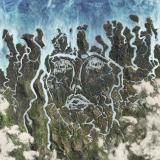
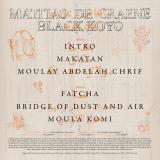
MATTIAS DE CRAENE & BLACK KOYO - MATTIAS DE CRAENE & BLACK KOYO LP

With Black Koyo, Mattias De Craene enters a sound world at once intimate and vast. Born from journeys in Morocco and Brussels, the project traces the rhythms, chants, and spirits of the Gnawa tradition, revealing a quiet resonance that echoes De Craene's own search for depth and presence. Guibri, qraqueb, call-and-response chants, saxophone, loops, and electronics come together in a trance-induced dialogue - ritualistic, elemental, and dreamlike - creating a space where listening becomes immersion, tradition meets imagination, and music unfolds as a shared act of reflection and wonder.

About Mattias De Craene
Mattias De Craene's artistic path is marked by rare coherence. As a central voice in Nordmann and MDC III, he developed a physical, rock-inflected jazz language driven by propulsion, volume, and trance-like collective energy. Over time, a period of personal rupture - burnout, tinnitus, depression - shifted his focus inward. The saxophone became a breathing, textural presence, and in his solo work, he weaves saxophone, electronics, loops, and minimal forms into a cinematic, hushed world where repetition, resonance, and silence slow perception. Rooted in ambient and introspection, his music prizes attention over impact, precision over excess - a quiet intensity recognized with a nomination as Musician for the Music Industry Awards (MIA's).

About Black Koyo
Black Koyo is a Brussels-based ensemble and one of the most compelling voices of the Gnawa tradition outside Morocco. Led by maalem Hicham Bilali, the group brings guibri, qrraqueb, and call-and-response chants to life with trance-like intensity and ritual precision. Their music is both rooted and contemporary, weaving earthbound rhythms and vocal invocations into ecstatic, immersive soundscapes, creating a space where ancestral resonance meets present-day imagination.

About Jan Bang
Jan Bang is a pioneering Norwegian producer and musician, celebrated for his mastery of live sampling and his ability to merge electronics with improvisation, rhythm, and texture in real time. He mixed the album and occasionally joins live performances, bringing his signature approach to sound as co-founder of the influential Punkt Festivaland collaborator with artists such as Jon Hassell, David Sylvian, Arve Henriksen, and ECM Records' roster. As a performer and sound architect, Bang creates immersive, trance-like sonic textures where silence and sound carry equal weight. Within Mattias De Craene ftBlack Koyo, his live sampling becomes an organic instrument, weaving saxophone, electronics, and Gnawa rhythms into hypnotic, physically charged soundscapes.

Line-up & credits
Mattias De Craene - sax, electronics | Hicham Bilali - guibri, vocals, qraqueb |Ismael Akhraz - vocals, qraqueb | Marwan Abantor - vocals, qraqueb
All tracks are original gnawa traditionals played by Black Koyo and arranged by Mattias De Craene.
Album produced & recorded by Mattias De Craene in Essaouira, Morocco and hometown Ghent, Belgium 2025.
Text by Hicham Bilali.
Mixed by Jan Bang at Punkt Studio
Mastered by Lieven Van Pee
Artwork by Marina Sviridova
Design by Benoit Van Geel
Manufactured and distributed by N.E.W.S.
Executive production by W.E.R.F. records
Supported by Flemish Government, Jazzlab, nona, HA Concerts, Aubergine artist Management,
KAAP, La Bestia (Wout Van Putten) & mdcmu.sic vzw.
2026 (c) W.E.R.F. records

out of Stock

Order now and we will order the item for you at our supplier.

27,52

Last In: 4 days ago
Jolanda Moletta - Oceanine

Jolanda Moletta

Oceanine

12inchBNSD098
Beacon Sound
01.05.2026

Oceanine, Jolanda Moletta’s third album and her first for Beacon Sound, is a powerful and ethereal statement of artistic community. Expanding on her previous work, each track represents a collaboration with a different female vocalist, with the foundational elements being generated entirely by her own voice. By turns haunting, enchanting, and inspiring, you won’t want to come up for air once you’ve been pulled under. Representing a
musical practice that is distinctly feminist, this is an album with a longer view in mind, to an age when the altars were to goddesses and women were centered as powerful beings representing the earth’s cycles of regeneration and renewal. Oceanine then, in all its beauty, can be viewed as an album of survival. It is deeply transportive, accessing something that lies within all of us. As the late, great Lithuanian folklorist and archaeologist Marija Gimbutas noted, “We must refocus our collective memory. The necessity for this has never been greater as we discover that the path of 'progress' is extinguishing the very conditions for life on earth.”

Jolanda Moletta is a multimedia artist and one-woman electronic choir. She creates wordless compositions through extended vocal techniques, integrating wearable-controlled live processing, alongside symbolic visuals. Moletta considers her performances to be a collective ritual and creates her Sonic & Visual Spells following the cycles of nature and the moon. Jolanda's 2022 critically acclaimed album Nine Spells was released on the Ambientologist label, followed by Night Caves on Whitelabrecs in 2025. Moletta’s artistic practice is a radical and spiritual journey through sound art, ritual, and the symbolic archaeology of the feminine.

Oceanine is inspired by sirens, water nymphs, and the timeless call of the sea. At its core lies Jolanda’s deep, lifelong connection to the Mediterranean Sea and to the ancient and modern myths and folklore that have emerged from its waters. Growing up by the Mar Ligure, Jolanda was surrounded by stories carried by salt, wind, and waves: legends of sirens, echoes of ancient voices, and the sea as both origin and oracle. This intimate relationship with the Mediterranean is not merely a backdrop, but a living source that shapes Oceanine’s emotional, symbolic, and sonic world.

Each track features a different female vocalist, creating a rich tapestry of voices, styles, and perspectives. This artistic choice not only broadens the album’s sonic palette, but also deepens its narrative core: celebrating the power, beauty, and mystique of feminine energy through myth, history, and sound.

The entire album is built exclusively from the human voice, processed and layered, yet always remaining voice, and nothing else. For each piece, Jolanda invited every vocalist involved to contribute a raw stem: a short, unedited melodic fragment of just a few seconds, inspired by the album’s themes. These intimate vocal seeds became the foundation of each track: the guest artists’ voices appear as brief, melodic stems, while the entire surrounding “orchestral” fabric is created solely from Jolanda’s own layered and processed voice. In this way, Jolanda’s voice becomes the Ocean itself, embracing, absorbing, and carrying the sirens’ calls within a vast, immersive soundscape. Every song is a unique expression of the feminine experience, revealing its depth, complexity, and emotional range, echoing the call of the sea and the many faces of the siren archetype.

The figure of the siren has transformed across centuries. In myths of Ancient Greece and Rome, sirens were hybrid beings, part woman, part bird, whose irresistible songs lured sailors to their doom. During the Middle Ages, the image shifted toward the half-woman, half-fish figure, often associated with temptation and danger. Historically, the voice of women has often been feared. Sirens were considered harbingers of misfortune not simply because they seduced or destroyed, but because they were powerful liminal beings.

In Ancient Greek, sirens functioned as psychopomps: figures who existed between worlds and guided souls, especially between life and death. Their songs were believed to carry forbidden knowledge, including prophetic insight and the ability to reveal truths about fate and the future. The danger of the sirens lay in what they revealed: knowledge that humans were not meant, or ready, to hear.

Oceanine confronts this legacy head-on. The voices heard throughout the album are not merely beautiful: they are dark and luminous, wild and enchanting, magical, soothing, dreamy, and at times fractured or distorted. They whisper, lament, beckon, and enchant. Like sirens, they skim the surface of the water and sink into its depths, hovering on the edge between tenderness and danger, vulnerability and power. They rise toward the sky, dissolve into mist, and return as echoes charged with raw, elemental emotion: voices that seduce, warn, mourn, and remember. They refuse to be reduced to decoration.

Alongside the album’s release in May, Oceanine will also unfold as a visual and performative work through a short art film. The film includes a live session recorded inside a sea cave facing the Mar Ligure, the very coastline where Jolanda spent her childhood, dreaming of sirens and listening to the sea as if it were speaking directly to her. This site-specific performance reconnects the music to its place of origin, allowing the voice to resonate within stone, water, and air, and transforming the cave into both a sanctuary and a threshold between myth and reality.

What if the sirens’ songs were considered dangerous because they carried another truth, an ancient truth long forgotten?

Oceanine embraces the idea that we are still deeply woven into myth. Though we may see ourselves as rational and modern beings, our world is saturated with ancient symbols and archetypes, often distorted, simplified, or stripped of their original meaning. And if those symbols are allowed to shift, if the mirror once held by the siren becomes an invitation to look beyond appearances and into what has been obscured, then we may finally uncover a deeper truth and reclaim the voice that was always ours.

Oceanine is not just an album. It is a reclamation, a spell, and a call from the depths.

pre-order now01.05.2026

expected to be published on 01.05.2026

23,95
Deaf Center - Through Time

Deaf Center

Through Time

12inchSP039LP-LTD
Sonic Pieces
29.04.2026

Deaf Center travel through quiet pathways and grand boulevards in their fourth studio album “Through Time”.

Since their last full-length LP, “Low Distance” (2019), the duo has gradually shifted towards a more long-form electroacoustic sound which perhaps makes for their most immersive listening experience so far. Otto A Totland’s piano travels in less frequent rhythms than before, yet is felt even more as a relief in the quieter moments that contrast with Erik K Skodvin’s deep atmospheric worlds. There’s a searching quality within the record which feels like slow movements on the way towards something meaningful, capturing a sense of both peace and awe.

The latter part of the album takes a different turn: fluctuating electronic rhythms over deep strings create an ecstatic yet haunting duality. It is the first time a guest musician appears on a Deaf Center record: British composer and musician Simon Goff joins with violin and viola in the finale, “Further”, a hypnotising piece submerged in layers of strings and drones.

The subject of time is an ambitious one, yet Deaf Center manage to balance the humble with the grand in great warmth as seconds become minutes, hours become days and time seemingly freezes as a still-life moment.

out of Stock

Order now and we will order the item for you at our supplier.

42,23

Last In: 11 days ago
Deaf Center - Through Time

Deaf Center

Through Time

12inchSP039LP-STD
Sonic Pieces
29.04.2026

Deaf Center travel through quiet pathways and grand boulevards in their fourth studio album “Through Time”.

Since their last full-length LP, “Low Distance” (2019), the duo has gradually shifted towards a more long-form electroacoustic sound which perhaps makes for their most immersive listening experience so far. Otto A Totland’s piano travels in less frequent rhythms than before, yet is felt even more as a relief in the quieter moments that contrast with Erik K Skodvin’s deep atmospheric worlds. There’s a searching quality within the record which feels like slow movements on the way towards something meaningful, capturing a sense of both peace and awe.

The latter part of the album takes a different turn: fluctuating electronic rhythms over deep strings create an ecstatic yet haunting duality. It is the first time a guest musician appears on a Deaf Center record: British composer and musician Simon Goff joins with violin and viola in the finale, “Further”, a hypnotising piece submerged in layers of strings and drones.

The subject of time is an ambitious one, yet Deaf Center manage to balance the humble with the grand in great warmth as seconds become minutes, hours become days and time seemingly freezes as a still-life moment.

out of Stock

Order now and we will order the item for you at our supplier.

24,79

Last In: 11 days ago
Various - Tchic Tchic: French Bossa Nova 1963-1974  Colored Edition LP 2x12"
  • A1: Les Masques - Il Faut Tenir (1969)
  • A2: Isabelle Aubret - Casa Forte (1971)
  • A3: Christianne Legrand - Hlm Et Ciné Roman (1972)
  • A4: Jean Constantin - Pas Tant D'chichi Ponpon (1972)
  • A5: Billy Nencioli & Baden Powell - Si Rien Ne Va (1969)
  • B1-: Marpessa Dawn - Le Petit Cuica (1963)
  • B2: Jean-Pierre Sabar - Vai Vai (1974)
  • B3: Sophia Loren - De Jour En Jour (1963)
  • B4: Isabelle - Jusqu’à La Tombée Du Jour (1969)
  • B5: Sylvia Fels - Corto Maltesse (1974)
  • C1: Frank Gérard - Comme Une Samba (1972)
  • C2: Ann Sorel - La Poupée Des Favellas (1971)
  • C3: Charles Level - Un Enfant Café Au Lait (1971)
  • C4: Andrea Parisy - Les Mains Qui Font Du Bien (1970)
  • C5: Audrey Arno - Quand Jean-Paul Rentrera (1969)
  • C6: Aldo Frank - T’as Vu Ce Printemps (1970)
  • D1: Christianne Legrand - Cent Mille Poissons Dans Ton Filet (1972)
  • D2: Clarinha - Lemenja (1970)
  • D3: Hit Parade Des Enfants - Aquarela (1976)
  • D4: Jean-Pierre Lang - Tendresse (1965)
  • D5: Magalie Noël - Une Énorme Samba (1970)
  • D6: Françoise Legrand - La Lune

Ever since the late 1950s bossa-nova revolution, Brazil’s influence on French music has been undeniable. Pierre Barouh, Georges Moustaki and a vast array of lesser known artists, all made the Musica Popular Brasileira (MPB) an axis of promotion at the service of a cool and metaphysical, modern and mixed Brazilian lifestyle. Some were seduced by the poetic languors of the bossa, some were looking for fun, and others just loved the American hybridization of jazz-bossa, jazz-samba.


What is bossa nova? One of its creators, Joao Gilberto said: "Its style, cadence, everything is samba. At the very start, we didn't call it bossa nova, we sang a little samba made up of a single note - Samba de uma nota so .... The discussion around the origins of bossa nova is therefore useless”. It is nevertheless useful to remember that these magnificent Brazilian songs, which the guitarist describes as samba, were shifted and balanced around improbable chords. "I like things that lean, the in-betweens that limp with grace," said Pierre Barrouh, quoting Jean Cocteau.


With emotion, arrangements for violin and supple guitar licks, bossa nova rapidly changed. A transformation that can be heard in the Tchic, tchic, French Bossa Nova 1963-1974 compilation, the result of a cultural reappropriation, which traveled through the United States and supplemented itself in France.

A musical revolution that has remained significant, bossa nova was born in Rio. From 1956 to 1961, Brazil lived through its golden years. In five years, the country had invented its modernist style. Elected president in 1956, Juscelino Kubitschek de Oliveira, an elegant man with a broad forehead, brandished a promising slogan: "Fifty years of progress in five years". He quickly got to work. Not worried about increasing debt, he launched the project for a new federal capital, Brasilia, designed by the communist architect Oscar Niemeyer. Volkswagen opened state-of-the-art factories and created the “fusquinha”, the Beetle. In Rio, the Vespa made its first appearance. The Arpoador Surf Club crew run into the “girl” from Ipanema, Helô Pinheiro - the tanned garota ("chick"), between a flower and mermaid, who at 17 walked by the Veloso bar, where the fiery author and composer, Tom Jobim and Vinicius de Moraes, were getting drunk on whiskey. From then on, bossa symbolized cool.

In 1958, Joao Gilberto recorded Chega de Saudade, which the directors of Philips denied, calling it "music for fagots". The marketing director, who believed in it, secretly pressed 3000 78-inch vinyls and distributed them at schools around Rio, creating a tidal wave.

American jazzmen then took over. In particular, trumpeter Dizzy Gillespie and guitarist Charlie Byrd. In November 1962, the Brazilian Ministry of Foreign Affairs funded a "Bossa-Nova" concert at Carnegie Hall in New York, inviting the genre’s pioneers. Unprepared, the show soon turned to disaster. But the troupe was invited to the White House by Jackie Kennedy. The first lady loved "the new beat" and in particular Maria Ninguem, a song by Carlos Lyra, later covered by Brigitte Bardot.

In Brazil, the 1964 military coup quickly ended this euphoria. The destructive atmosphere that ensued pushed many Brazilian musicians to leave, if not to exile. Thus, Tom Jobim, Sergio Mendes and Joao Gilberto arrived to the United States. In New York, Joao Gilberto met saxophonist Stan Getz. At the time, he was married to the Bahianese Astrud Weinert Gilberto, who had a German father. She had never sung before, but she knew how to speak English. Getz therefore asked her to replace her husband on The Girl From Ipanema. The Getz/Gilberto record with Tom Jobim on piano, was released in March 1964. Phil Ramone, the "pope of pop" was in charge of sound.

Bossa nova arrived in Paris through the classic “guitar-voice” channel (Pierre Barouh, Baden Powell, Moustaki…) But France loved jazz and Paris had already welcomed its American contributors. All these good people were to pass through Saint-Germain-des-Prés. The cabaret l'Escale became the Mecca of Latin American sound where one could find Pierre Barrouh and his friends, such as the Camara Trio, samba-jazz aces, whose only record was published by the Saravah label. With a band strangely called Les Masques (a band that included Nicole Croisille and Pierre Vassiliu, among others), the Camara Trio recorded an interesting Brazilian Sound, including the track Il faut tenir which is present on this tasty compilation of rarities.

Other enlightened musicians can also be found on the compilation, such as Jean-Pierre Sabar (songwriter for Hardy, Auffray, Leforestier ...) and the French pop rock organist Balthazar. In 1975, Sabar recorded Aurinkoinen Musiikkimatka on a Finnish label, which featured the crazy Vai, Vai, included on this record. We are now following the footsteps of Brazilian electronic musicians such as Sergio Mendes, Eumir Deodato or Marcos Valle who created funk and disco sounds on their keyboards and synthesizers. A style that influenced Véronique Sanson when she wrote Jusqu’à la Tombée de la nuit in 1969 for Isabelle de Funès, the niece of Louis and a great friend of Michel Berger - Sanson did end up singing this track on her 1992 Sans Regret record.


The pinnacle of exoticism and travel, Sylvia Fels’ Corto Maltese includes bongos, sea mist and ocean sounds. The title was taken from Jacky Chalard’s concept album written in 1974, Je suis vivant, mais j’ai peur (I am alive, but I am scared), based on Gilbert Deflez’s science fiction novel.


However, bossa nova extended the scope of popularity. "In the 1970s, I was a fan of Sergio Mendes, Getz / Gilberto. I fell in love with this music that I knew because I had been an orchestral singer, " explained Isabelle Aubret, who in 1971 delivered a composite record of covers by the very funky Jorge Ben, Orfeu Negro, Tom Jobim, Vinicius de Morais and Jean Ferrat. "I recorded this album for Meys Records in Paris, far from Brazil, with wonderful musicians, François Raubert, Roland Vincent, Alain Goraguer...". The latter wrote the arrangements for Casa Forte, a very percussive title borrowed from Edu Lobo, one of the initiators of the bossa who spent time in California. "Jazz and bossa came together and produced very rhythmic music. I love singing, it allows me to dream, to have fun, to feel a high on stage, and these songs brought me joy, made me swing, my singing felt like a dance.”


The world tours of French singers and their desire for the tropics, often brought them to Rio with its hills, forests, caipirinhas and tanned bodies. There are surprises though, like this Iemenja (Iemenja is the goddess of the sea in the Afro-Brazilian candomblé religion). Not unlike the composer and musician Jean-Pierre Lang, based in Sao Paulo, Claire Chevalier taught Brazil to Brazil. In 1970, the singer and painter published a 45-inch vinyl, Mon mari et mes amants (My husband and my lovers), under the improbable pseudonym of Clarinha (little Claire). She was then living in Rio, with her husband, Joël Leibovitz, who founded a band called Azimuth, and who owned a record label specialized in "sambas enredos" songs for samba school parades.


For its B side, she asked Pierre Perret to come up with lyrics for a song composed by Carlos Imperial: "Oh goddess of the sea, o goddess Iemenja, I bring a white rose to adorn your long hair ..." . "Perret came to see us, and we had fun, remembers Joël Leibovitz. We wrote Lemenja for fun, we recorded it at the Havaí studio, behind the Central do Brasil the central station. Erlon Chaves, the arranger who worked with Elis Regina, joined us" adding his share of Afro-Brazilian percussions and funky brass to the mix.

There is a common misunderstanding in Franco-Brazilian history: that bossa, admittedly hedonistic, is perceived as funny, even though the poets who wrote the texts are often philosophizing on the human condition. Its French interpreters pull it towards a carnival inspired universe, far removed from its fundamental essence. Thus, Jean Constantin covered the famous Samba da minha terra, an ode to the art of samba written by the classic Bahian composer Dorival Caymmi, renaming it with the enticing title of Pas tant de tchi tchi pompon: "On your pier there is no tchi tchi / when you arch your back, you know everything is alright ”(lyrics by Gérard Calvi). This expedited bossa aims for the absurd, but retains a certain elegance.

Indeed, Jean Constantin was not an idiot, the rather large man had a huge mustache and liked fantasy, (Les pantoufles à papa, Le pacha, inspired by cha-cha-cha-cha, salsa and jazz) but he was also the lyricist of Mon manège à moi interpreted by Edith Piaf, the composer of Mon Truc en plume by Zizi Jeanmaire and the soundtrack of François Truffaut’s 400 Blows. Le Poulpe, published in 1970, from which this bossa is extract, was arranged by Jean-Claude Vannier, an accomplice of Serge Gainsbourg’s Melody Nelson. In short: "There is enough of samba / By looking at the parasol / Because my poor cabeza / Is going to die in the sun".

Even the American actress Marpessa Down, who was at the heart of the bossa nova revolution with her role as Euridyce in Marcel Camus’ film Orfeu Negro, winner of the 1959 Cannes Palme d'or, fed the clichée with Je voudrais parler au petit cuica - "Tell me how you manage to always make people want to dance / It's true, I must admit that I cannot resist your magic" - in consequence, once can hear the cuica, a little drum inherited from the Bantu.


But bossa nova had many angles. Societal, of course, pushing actresses who were symbols of women's liberation like Brigitte Bardot, Jeanne Moreau, or Sophia Loren to engage in the exercise of accelerated bossa. In February of 1963, Sophia Loren made a record in French in Rome, Je ne t'aime plus, featuring the song De jour en jour, a bossa written by two Italians, Armando Trovajoli and Tino Fornai, which was released a little later by Barclay. Bossa accompanied the 1960s, a decade of moral liberation. Ann Sorel, who interpreted La Poupée des favellas, caused a sensation with L’amour à plusieurs, a provocative song written by Frédéric Bottom and Jean-Claude Vannier. As for the actress Andrea Parisy, she displayed her bourgeois cheekiness in Marcel Carné's Les Tricheurs before interpreting Les mains qui font du bien. And Magalie Noël, the friend of Boris Vian, who sung Johnny fais-moi mal, was hired to sing Une énorme Samba, composed by Alain Goraguer (arranger to Gainsbourg, Bobby Lapointe and Jean Ferrat) with lyrics by Frédéric Botton.

But in the end, of what wood is bossa nova made of? The answer is given by Christianne Legrand, daughter of Raymond the conductor, and sister to Michel the composer: "With me, with jà" - jà means "immediately" in Portuguese. In 1972, the singer, an expert in vocal jazz and a member of the Double Six, published Le Brésil de Christianne Legrand. Two songs included on the Tchic Tchic compilation that demonstrate how bossa, jazz, funk, rock, etc. work like a swiss army knife: the music is used to denounce broken systems, or miracles, HLM et ciné roman, Cent mille poissons dans ton filet, two songs from the O Cafona soundtrack, a successful telenovela broadcast, at the time in black and white, on TV Globo. The first was adapted in French by the fighter and friend of the Legrand tribe, Agnès Varda. The second is content with a play on words, jostling them into a summer fun.


Véronique Mortaigne
pre-order now17.04.2026

expected to be published on 17.04.2026

27,31
Linnea Talp - Variations for Light Waves LP

With Variations for Light Waves, Swedish composer Linnéa Talp deepens the focus and intensity that shaped her 2022 debut Arch of Motion. Once again, the breath and hum of the pipe organ form the album’s core, but here she pushes further into deep listening and sonic nuance. Across seven pieces, she lingers on the instrument’s most resonant points, allowing its character to reveal itself slowly and patiently.
Talp’s path to this work has unfolded with similar steadiness. After first emerging with her project Deerest, she shifted toward improvisation and minimal composition, guided by an increasing sensitivity to sound and perception. Careful listening is now central to her practice, informing both her methods and her musical language.
The album was recorded over four years on pipe organs across Sweden, including a small funeral-chapel instrument in Lötsjökapellet—an environment Talp describes as an exceptional space for listening. Several pieces feature Christer Bothén (contrabass clarinet) and Mats Äleklint (trombone), whose playing blends seamlessly into her aerated organ tones. The improvisation “Air On Both Sides,” recorded in 2022 with Bothén, became the project’s starting point, an immersive bath in glowing harmonics. At times she interweaves Buchla recordings, setting electronic breath against acoustic resonance.
Talp’s fascination with quietness and delicacy is balanced by an interest in sonic brittleness. The closing title track gradually dismantles a downward chord progression, drifting into gentle collapse, while the brief opener pushes the organ’s pipes into gasping strain. These moments create a music open to chance, instability, and transformation.
Threads running through the album include an interest in chords, subtle improvisation, light, and memories of coastal landscapes. Talp also connects the work to the “thick white fog” surrounding her daughter’s birth. The result is music that envelopes like mist yet continually reveals new shapes—a world o

pre-order now10.04.2026

expected to be published on 10.04.2026

21,43
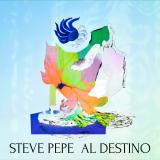
STEVE PEPE - AL DESTINO

STEVE PEPE

AL DESTINO

12inchIVR041
Ivreatornic
30.03.2026

“Al destino”, the new album by Steve Pepe, began to take shape in 2023 after roughly a year of highly abstract sound research. The original intention was to create a dancefloor-oriented record, moving away from down-tempo structures, built around minimal, percussive compositions and high BPMs, with sound conceived primarily as a functional element.
In 2024, however, the process shifted. Less time was spent producing and more time reflecting. Emotions hovered between the urgencies of the present and unresolved past traumas, and almost without conscious intention, singing returned to the center of the project. It was not a calculated choice, but an inevitable one.
The resulting album does not draw its energy from distant places, nor does it focus on sonic experimentation as an end in itself. Instead, Al destino offers an intimate perspective on how memories and emotions shape the inner self, on the sensation of being simultaneously alone and deeply connected to everything, and on the struggle to reconcile feelings, sensations, love, and desire.

pre-order now30.03.2026

expected to be published on 30.03.2026

23,49
Saša Delimar & Diffused Signal - SEQMENTS: FORM (TAPE)

High-quality FERRO cassette tapes, printed on 160g premium paper.

Release info
For the second release in the series, I invited Diffused Signal from Australia. His track can be categorised more as an extension of my original track rather than a remix. With new rhythmic elements and textures that blend smoothly with the main idea, creating a more dynamic atmosphere.
The result is a fusion of deep techno and breakbeat, with an organic aesthetic that gives the release its unique character.

pre-order now27.03.2026

expected to be published on 27.03.2026

9,03
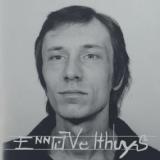
ENNO VELTHUYS - MUSIC FROM THE OTHER SIDE OF THE FENCE

A collection of previously unreleased material (between '75 & '90) by Enno Velthuys.
Compiled by Hessel Veldman.

"Hello boys and girls, my name is Enno Velthuys and I am the idiot of the group (and also the
most intelligent, the most sensitive, the most artistic and he who has to carry the heaviest
load, because this boy's luggage, DAMN, it's pretty heavy).
Luckily, I had already been through a lot when I got this ‘knock in the head’. Sex, drugs, lots
of rock and roll and a sunny childhood with beautiful views I look back on with nostalgia.
Later on I lost my focus and I only thought about one thing: how to get out of it (that damn
problem, my shifted reality, my blind spot, that piece of poisoned apple of forbidden
knowledge choking my throat)!

But I can't think my way out of it, psychiatrists are just ordinary people, and very heavy pills
suppress everything (I'll just take my pills) FLASH!

You ask me what it takes to create music or art that is meaningful and tells a story. It’s hard
when you haven't had enough setbacks, nothing more than maybe a little blues. I'm not
saying it was the right path, but at least I've come a long way. And now I'm a fish in a pool.
Please understand that this is very disturbing. It's not my waterway. A fish belongs in a river.
And my star sign is fish. >))D

See you soon, EnnO"

pre-order now

This item has not yet been released. You can pre-order the product now.

23,11
NATION OF LANGUAGE - DANCE CALLED MEMORY

Synthpop, minimal wave, post-punk, goth, new romantic - fans and critics alike have dug deeply into their vintage thesauruses to describe the beguiling work of Nation of Language. And if you can't precisely define the band, that's the point. Frontman Ian Richard Devaney has become prodigious in expanding what synthesizer-driven music can evoke, such that his output is as much an extrasensory journey as it is an all-too-human destination. With that experience in mind, he wrote the band's fourth album - the spectral, spacious Dance Called Memory - in the most humble of ways: chipping away at melancholia by sitting around and strumming his guitar. Nation of Language's first two albums, Introduction, Presence (2020), and A Way Forward (2021), came as pandemic godsends: gorgeous, relatable soundtracks to our collective doldrums. But it was their last LP, Strange Disciple (2023), that catapulted the group from cultural standouts to critical darlings, with the album being named Rough Trade's Album of the Year. With that release, Pitchfork wrote that the band "are learning what it means to get bigger and better." This is Devaney's calling: soulfully translating individual despair into a comforting, collective mourning. The single "Now That You're Gone," which radiates and reverberates with a devastating wistfulness, was inspired by witnessing his godfather's tragic death from ALS, and his parents' role as caretakers for this ailing friend. At its heart, the song is a reflection of how friends can be there for each other, and also highlights a theme throughout the record: the pain and lost promise of friendships that fall apart. On Dance Called Memory, the band once again collaborated with friend and Strange Disciple producer Nick Millhiser (LCD Soundsystem, Holy Ghost!). "What's so great about Nick is his ability to make us feel like we don't need to do what might be expected of us," says synth player Aidan Noell, who, along with bassist Alex MacKay, rounds out the Nation of Language lineup. They imbued Dance Called Memory with a shifted palette - sampling chopped-up drum breaks on "I'm Not Ready for the Change" for a touch of Loveless-era My Bloody Valentine or smashing all of the percussion of "In Another Life" through a synthesizer to cast a shade of early-2000s electronic music. Ultimately, the hope was to weave raw vulnerability and humanity into a synth-heavy album. "There is a dichotomy between the Kraftwerk school of thought and the Brian Eno school of thought, each of which I've been drawn to at different points. I've read about how Kraftwerk wanted to remove all the humanity from their music, but Eno often spoke about wanting to make synthesized music that felt distinctly human," Devaney says. "As much as Kraftwerk is a sonically foundational influence, with this record I leaned much more towards the Eno school of thought. In this era quickly being defined by the rise of AI supplanting human creators I'm focusing more on the human condition, and I need the underlying music to support that_ Instead of hopelessness, I want to leave the listener with a feeling of us really seeing one another, that our individual struggles can actually unite us in empathy."

out of Stock

Order now and we will order the item for you at our supplier.

32,14

Last In: 72 days ago
Disclosure - Energy (5th Anniversary Edition) LP
  • 1: Watch Your Step (Ft. Kelis)
  • 2: Lavender (Ft. Channel Tres)
  • 3: My High (Ft. Slowthai)
  • 4: Who Knew? (Ft. Mick Jenkins)
  • 5: Douha (Mali Mali) (Ft. Fatoumata Diawara)
  • 6: Fractal
  • 7: Ce N'est Pas (Ft. Blick Bassy)
  • 8: Energy
  • 9: Thinking 'Bout You
  • 10: Birthday (Ft. Kehlani & Syd)
  • 11: Reverie (Ft. Common)

The British electronic and sibling duo, Disclosure celebrate 5 years since the release of their third studio album ENERGY.


For this album Disclosure shifted towards a more rhythmic and percussion focused sound, taking influence from UK house, garage, hip hop and world music.


It showcases a diverse range of vocal collaborations including Kelis, Channel Tres, Mick Jenkins, Fatoumata Diawara, Blick Bassy, Kehlani, Syd, and Common.


ENERGY was nominated for Best Dance/Electronic Album at the 63rd Annual Grammy Awards and the single "My High" was nominated for the Grammy Award for Best Dance Recording at the 2021 Grammy Awards. It is BPI certified Silver in the UK.


This 5th anniversary 1LP will now be available for the first time on limited edition Zoetrope, housed in a single die cut sleeve. Designed by Drew Tetz, each side of the zoetrope is inspired by the original album artwork, using the water and the clouds imagery to create lifelike movement with these earth elements.

pre-order now20.02.2026

expected to be published on 20.02.2026

32,56
ROTCIV - MEMORY EP

ROTCIV

MEMORY EP

12inchMELOD020
Melodize
02.02.2026

ROTCIV is back with his new EP ‘Memory’, which marks the 20th release on Beartrax’s label Melodize. Throughout the record, the Berlin-based and native Brazilian producer explores his signature dark, mysterious, and atmospheric vibes shaped by the underground and queer club nights and dance-floors that fuel his sound, refined by over almost 30 years behind the decks.

Maintaining Melodize’s specialized sound deep-rooted in moody electronic principles, the EP opens with ‘Memory’, a piercing, dark, synth dynamic alongside rich tonal textures in both harmony and melodies alike. Unapologetic, yet calming and reminiscent of a slow drive through the winter nights; cold, yet bold, sharp, and comforting.

First to remix ‘Memory’ with a nostalgic, synth-heavy 80’s remix is Frankfurt-based DJ, producer, and visual artist Chinaski. Integrating his signature bold synth hooks into the track, Chinaski knows how to roll in with longing sentimentality. The remix features a bouncier approach with re-envisioned acoustic percussion and catchy synth arps, along with an eery dark disco feel.

On the B side, Rotciv kicks in with ‘Trintage’, which gives a sinister sensation with its hypnotising bass synth lines alongside contrasting, choir-like pads. Seeping with articulate poly-rhythmic synth arps, Trintage guides the listener to be indulged into a dream-like state on the border between both digital and analogue soundscapes, blurring the lines between fantasy and reality.

Next up is New York-based and founder of Samo Records, Facets, who takes on the next remix for ‘Trintage’ with a more electro-grunge techno approach consisting of heavier four to the floor kicks in company of Rotciv’s hypnotic textures. Having shifted the synth melody rhythmically, a sense of space and tension is created within the soundworld of this track. The play between gritty bass-end synths along with softer, textured high-ends helps emphasize the groove injected into this remix.

One last remix of ‘Memory’ by Melodize’s own label founder, Beartrax, rounds out the EP. Available exclusively via digital bonus, Beartrax features his deeply hypnotic aesthetic by driving in ethereal synths alongside cosmic arps and slow-rolling rhythmic and pulsating groove lines.

out of Stock

Order now and we will order the item for you at our supplier.

13,40

Last In: 83 days ago
Viktoria Tolstoy & Jacob Karlzon - Who We Are LP
  • Satellites
  • Who We Are
  • And So I Goes
  • Cloud On My Tongue
  • The Great Escape
  • Off-White
  • Trigger Warning
  • Stay
  • Fallen Empire
  • Let There Be Love
  • True Love Waits

Viktoria Tolstoy, celebrated for her expressive voice, emotional storytelling and cross-genre artistry, seamlessly blends jazz, pop and original songs.
Her standout tracks ‘Autumn Breeze’ (4.6M streams) and ‘Calling You’ (6.5M streams) have reached millions of listeners worldwide.
Collaborations with top Scandinavian and European jazz artists, including Nils Landgren and Esbjörn Svensson, have positioned Viktoria as one of the leading female voices in European jazz.
Jacob Karlzon, renowned Swedish pianist and composer, is recognized for his virtuosic technique, cinematic soundscapes and inventive harmonic language.
Their collaboration began in the mid-1990s, forming one of the most enduring and successful partnerships in Scandinavian jazz.
Their music bridges Nordic lyricism and modern jazz sophistication, appealing to both jazz and a wider crossover audience. A trusted name on the European scene, they continue to tour internationally and attract strong streaming and media presence.
Their new duo album reflects and renews that bond - an intimate conversation shaped by time, friendship, and change. The world has shifted since their last recording and so have they. Yet their shared musical language endures - evolving, deepening, and gathering new shades of emotion. There is a rare ease between them: two Artists who no longer need to explain, only to listen and respond.
The result is music that feels unforced, sincere and alive - born of trust and the courage to explore the unknown. In the end, it’s the simple beauty of reunion: two musicians meeting again, with everything they’ve lived and everything still to discover

pre-order now31.01.2026

expected to be published on 31.01.2026

24,58
Debit - Desaceleradas

Debit

Desaceleradas

12inchLOVE141
Modern Love
26.01.2026

A chopped-and-screwed love letter to the sounds of rebajada – half-speed cumbia, pioneered by Sonido Dueñez in the 1990s, and born from an overheated turntable motor that didn’t make the crowd stop dancing. With Debit’s treatment, rebajada becomes an ethereal, at times intense ambient tapestry that’s also a history lesson.

Spend any amount of time pacing the streets of Monterrey, the bustling city in the north of Mexico where Delia Beatriz, aka Debit, grew up, and you’ll be sure to catch traces of cumbia echoing from Bluetooth speakers, DIY soundsystems, or car stereos. An Afro-Latin dance form and »practica cultural« originating in Colombia in the early 19th century, cumbia evolved rapidly in the early 1900s, as a localised sound played on drums and flutes quickly modernised to integrate European instrumentation like the accordion. When it reached Mexico in the 1940s, the sound shifted again, fusing with mariachi styles and integrating further vallenato folk elements. Eventually, cumbia spread across the entirety of Latin America, splintering into a spectrum of different musical styles such as chicha in Peru, and cumbia villera in Argentina. And over in Monterrey, cumbia inadvertently found its own idiosyncratic groove.

From the 1950s to the 1970s, waves of immigrants from across Mexico and Latin America headed to Monterrey to find work, making a home in Colonia Independencia. Colombian cumbia records, shipped in from Mexico City, Houston, and Miami, became the soundtrack of the neighbourhood, relaying familiar stories to a rural working class adjusting to their new industrial reality. The sound struck a chord with locals, and huge street parties hosted by ramshackle soundsystems known as sonideros unified the diverse community. So when cumbia rebajada materialised serendipitously in the 1990s, it emphasised and highlighted the memory distortions at the heart of the immigrant experience. Local record collector, selector, and sonidero Gabriel Dueñez had been playing cumbia for hours one night when disaster struck: his turntable’s motor overheated and slowed down, turning the music into a warped groan, with half-speed voices echoing over wobbly accordion drones and splashy drums. But the crowd kept dancing, and Sonido Dueñez realised he’d struck gold – cumbia rebajada was born.

Over the next few years, he dubbed a popular series of mixtapes, hawking them at the flea market on the dried-up Santa Catarina riverbed beneath El Puente del Papa, the bridge that links downtown Monterrey with Independencia. These woozy archives became the stuff of legend, poetically but subconsciously shadowing DJ Screw’s series of epochal cassettes that appeared over the border in Houston. Beatriz uses Sonido Dueñez’s first two tapes as the starting point for »Desaceleradas«, entering into a dialogue with time, culture, and geography as she recalls the sonic ecosystem that surrounded her decades ago, long before she emigrated to the USA. If 2022’s acclaimed »The Long Count« was an attempt to recover concealed pre-Columbian history in the face of colonisation, »Desaceleradas« jumps forward, figuring out how memory and shared celebration can resist a more contemporary form of cultural erasure. As AI systems scrape, blend, and decontextualise culture around us, leaving vapid slop, »Desaceleradas« proposes a slower, more careful, and ultimately more human kind of engagement. It’s an archive with a pulse.

out of Stock

Order now and we will order the item for you at our supplier.

28,15

Last In: 81 days ago
Zeitkratzer - Reinhold Friedl: Scarlatti

Zeitkratzer director Reinhold Friedl and his ensemble present new compositions, grounded on Domenico Scarlatti's piano sonata F-minor K.466. Commissioned by the dance company Rubato and dedicated to Mario Bertoncini (1932-2019).

Little is known about Domenico Scarlatti (1685-1757). His music is, so to speak, left to its own devices: free, cheeky, playful, sonorous, surprising. Harmonically strolling again and again into unforeseen regions, the ear leads, not the theory; and also the fingers get their right: playful and haptic it goes. Scarlatti explained, "since nature has given me ten fingers and my instrument provides employment for all, I see no reason why I should not use all ten of them."

Freedom, friction and listening pleasure instead of convention: "He knew quite well that he had disregarded all the rules of composition in his piano pieces, but asked whether his deviation from the rules offended the ear? He believes there is almost no other rule than that of not offending the only sense whose object is music - the ear."

Reinhold Friedl applied this principle and composed the music for a choreography by dance company Rubato. Dance music drawn from Scarlatti, who was so inspired by dance music. The material of the piano sonata F-minor K.466 is twisted anew in all its richness, shifted back and forth, declined, frozen, noisified, sound structures extracted, floating. Those who know the sonata, will more than smell it’s shadows. Dedicated to Mario Bertoncini (Gruppo di Improvvisazione Nuova Consonanza) who was particularly fond of K.466, on which all the music presented here is grounded.

"Wild flowers", Barbara Zubers had once called Scarlatti's music. Let them bloom.

out of Stock

Order now and we will order the item for you at our supplier.

23,49

Last In: 3 months ago
Radial - Linea Recta EP

Radial

Linea Recta EP

12inchMORD001
Mord Records
09.01.2026

- 2026 repress -

Mord is from Rotterdam.
Mord is short for Morderstwo.
Mord is a label project by Bas Mooy.
Mord is here.
Mord!

Early support by Surgeon, Adam Beyer, Shifted, Speedy J, Black Asteroid, Chris Liebing, Len Faki, Gary Beck, DVS1, Svreca, Perc, Ben Klock, Truss, Dustin Zahn, Paul Mac, Paula Temple, Xhin, Samuli Kemmpi, Tommy Four Seven, Rebekah, Developer,Pfirter, Jonas Kopp and more...

stock from13.05.2026

11,56

Last In: 3 months ago
ANDY BOAY - YOU TOOK THAT WALK FOR THE TWO OF US LP

This is the first new Andy Boay album since 2013’s In The Light. I recorded it in January 2024 to a Yamaha MT8X 8-track cassette recorder in my room at the New York Center for Creativity & Dance in the East Village of Manhattan.

I mixed it in June 2024 with Joe Santarpia and Roberto Pagano at the Idiot Room in San Francisco. The three songs on Side A (“HBM,” “If I Ever Come Off,” and “You’re In The Air Now”) were initially arranged over several live performances using a multi-track looper. When I then sat down to track them to my tape machine, I meticulously sang and played out all repeating parts, layering and ping-pong-bouncing each doubled take to another tape-track. In this way I hoped to maintain the hypnotic quality of the looped parts while keeping them organic, singular, and fleeting. Side B is a triptych of more carefully arranged pop songs: a tremolo & mod-delay elegy to youth called “Careless,” bookended by two variations on the same theme — the stark, mellotron prayer of “One & One” and the lonesome after-hours funk of “I Want More”. The line “You took that walk for the two of us” has a dual meaning. In 2011, my friend Spencer Gilley took a long walk through Montreal while listening to demos I’d recorded.

He described the experience to me as magical, ecstatic, inspiring. His encouragement from that moment still echoes every time I sit down to write or record. Less than a year later, I met Florida musician Thomas Fekete. We formed a deep, brief friendship that lasted until his death in 2016. Thom entered my life during a chaotic time and helped me find direction and courage. He took me on a tour that shifted the course of my life. We bonded over surviving cancer as young men, Florida’s noise scene, and the strange lives we led as touring guitarists (he in Surfer Blood, me in Mac DeMarco’s band). Thom could always warmly anticipate all of my joy, humor, and curiosity—and all of my pain, anxiety, and fear. In this way, it felt like he was also taking that walk for the two of us—gently guiding me down a path he had already traveled. Andy Boay (Andy White) began playing and recording music as a teen in Orlando during the early 2000s, exploring noise, psych, and pop in bands and solo projects.

He has played in the duo Tonstartssbandht with his brother Edwin since 2007. He spent six years playing guitar in the touring band for Mac DeMarco. Andy Boay’s music taps the euphoric and the sorrowful, both onstage amongst friends and strangers, and tracking alone at his 8-track in the studio. These days he lives and works in the East Village neighborhood of New York City.

pre-order now19.12.2025

expected to be published on 19.12.2025

28,78
Conic Rose - Live from Kantine Berghain (LP)
  • Chopin Rosé
  • Learn To Be Cool
  • Projekt 6
  • Sad Whacky Waving Inflatable Tube Guys
  • Young Man
  • Uli
  • Gleisdreieck

Conic Rose's debut album has finally come to life on stage. After two years of playing it live, the music has grown, shifted, and deepened. This live album captures that process - recorded in one night at Kantine Berghain, Berlin.

pre-order now05.12.2025

expected to be published on 05.12.2025

21,81
Lifted - Trellis LP

Lifted

Trellis LP

12inchPEAK21
Peak Oil
24.11.2025

The core duo of Max D and Matt Papich debut on Peak Oil following full-lengths for Future Times and PAN with a fresh suite of tactile, diffuse fusion. Half the collection emerged from a 2021 session at Tempo House rounded out by Dustin Wong, Mezey, and Jeremy Hyman, while the rest took shape in moments both collaborative and isolated, collaged together with CDJs into something more liquid and liminal than the sum of its parts.

Across fractured jazz, pitch-shifted downtempo, revelatory guitar, and interstitial interplay, Lifted’s sound is one of flux, fragments, and filigree. Oblique harmonic synergies dusted in chance encounters and rogue acoustics. Diverse moods mapped with split strings and the space between notes. Music untethered by form or expectation, snaking like an ungrounded cable through a geodesic dome of deep-listening.

out of Stock

Order now and we will order the item for you at our supplier.

24,58

Last In: 16 months ago
Items per Page:
N/ABPM
Vinyl