
Buscar:sim 2


- A1: Hardy's Jet Band – Sorry, Doc! (3 12)
- A2: Hardy's Jet Band – Wind It Up (2 52)
- A3: Hardy's Jet Band – Safari Track (2 58)
- A4: Hardy's Jet Band – Look At Me (2 27)
- A5: Hardy's Jet Band – Blue Butterfly (2 44)
- A6: Hardy's Jet Band – What You Call To Be Free (3 03)
- B1: Orchestra Klaus Wuesthoff – Lady In Space (2 26)
- B2: Orchestra Klaus Wuesthoff – Big Beat (2 45)
- B3: Jan Troysen Band – A Blue Message (3 31)
- B4: Jan Troysen Band – Pop Happening (2 29)
- B5: Orchestra Gary Pacific – Ghetto Gap (2 43)
- B6: Orchestra Gary Pacific – Soft Wind (2 07)
- B7: Orchestra Gary Pacific – So Far (1 38)
13
Behold! Yes, Blue Butterfly, one of the absolute stunners on the revered Selected Sound, is finally available for all the beat-heads. Heavyweight library funk with a psychedelic touch, the super in-demand Blue Butterfly from *deep breath* Hardy's Jet Band, Orchestra Klaus Wuesthoff, Jan Troysen Band and Orchestra Gary Pacific - was originally released in 1971. Incredibly ahead of its time, it's been rare and sought-after for decades.
For many aficionados, this is the best Selected Sound release. Loaded with fuzzy wah-wah guitar, deep flute-lines atop soulful psych-rock breakbeats and huge organ action, its uncompromising funk will blow you away. Sampled for many hip hop beats and dropped by well known rare groove DJs around the world, one jewel in particular from this glorious German vault needs little introduction. The intro to Orchestra Gary Pacific's mesmeric "Soft Wind" rides the illest, crispest drum break you've perhaps never heard - like, the drum break to end them all - alongside a smooth, deep bass line from the heavens. It featured notoriously on the beloved Dusty Fingers comps of the 90s and was brilliantly sampled by Pacewon for his eternal "Sunroof Top". Just listen and be dazzled.
Beyond this mini-masterpiece, the other killer tracks offer brilliance in abundance. Hardy's Jet Band take control of the full A side, and it's full of dynamic psych-funk bombs. Hard, "big city" industrial groovers. In particular, the initial one-two of "Sorry, Doc!" and "Wind It Up" provide thrilling funky-blues rock instrumentals showcasing relentless guitars, flutes, sax and organ, the latter containing gorgeous, hypnotic breakdowns; these tracks just slay. The title track, "Blue Butterfly" is a real deep strut of a track with fantastic soloing from guitar and flute over crisp drums whilst the highway banger "What You Call To Be Free" certainly sounds a lot like unbridled, rhythmical liberty.
On the flip, the ghost-riding "Lady In Space" is a string-drenched acid-western foxtrot. Yep. “Pop Happening” by Jan Troysen Band is a heavy, druggy psych-fuzz organ groover whilst their slow beat-organ-flute gem "A Blue Message" is a gorgeous psych floater conjuring deeply strange frontier lands. Preceding their monster "Soft Wind", the soulful, uptempo groover “Ghetto Gap” by Orchestra Gary Pacific contains solo piano and flute whilst closing out the set is the free-and-easy samba beat of "So Far".
Founded in the late 60s by German composer and musician Klaus Netzle (who recorded under the alias Claude Larson for Sonoton) Selected Sound began as a production music company specialising in jazz, orchestral and electronic recordings. You can’t miss those early LPs in their iconic glossy metallic copper sleeves with minimal German typography. Serious, classy stuff.
The audio for Blue Butterfly has been remastered for vinyl by Be With regular Simon Francis whilst Richard Robinson has handled reproducing the glossy metallic (iconic) original Selected Sound sleeve. Essential.
- A1: Logic System - Unit
- A2: Kraftwerk - Computerwelt (2009 Remastered
- B1: Whodini - Magic's Wand
- B2: Rocker's Revenger - Walking On Sunshine (Feat Donnie Calvin
- C1: Klein & Mbo - Dirty Talk (European Connection
- D1: Liaisons Dangereuses - Los Niños Del Parque
- D2: Yello - Bostich
- E1: The The - Giant
- F1: The Residents - Kaw-Liga
- G1: Clan Of Xymox - Stranger
- G2: A Split - Second - Flesh
- H1: Severed Heads - Dead Eyes Opened
- H2: The Weathermen - Poison!
- I1: New Order - Blue Monday
- J1: Anne Clark - Our Darkness
- J2: 16 Bit - Where Are You?
- K1: Phuture - We Are Phuture
- K2: Model 500 - No Ufo's (Vocal
- L1: Frankie Knuckles Feat Jamie Principle - Your Love
- L2: Quest - Mind Games (Street Mix
- M1: Jasper Van't Hof - Pili Pili
- N1: Guem Et Zaka Percussion - Le Serpent
- N2: Hugh Masekela - Don't Go Lose It Baby
- O1: Sly & Robbie - Make 'Em Move
- Q1: The Ecstasy Club - Jesus Loves The Acid
- R1: Foremost Poets - Reason To Be Dismal?
- S1: Lhasa - The Attic
- S2: A Guy Called Gerald - Voodoo Ray
- T1: M/A/R/R/S - Pump Up The Volume - Usa 12" Mix
- T2: Bobby Konders - Nervous Acid
- U1: Meat Beat Manifesto - Helter Skelter
- V1: Raze - Break 4 Love
- W1: Sueño Latino With Manuel Goettsching Performing E2-E4 - Sueño Latino (Paradise Version
- X1: Off - Electrica Salsa
- O2: Brian Eno - David Byrne - Help Me Somebody
- P1: Primal Scream - Loaded (Andy Weatherall Mix
36
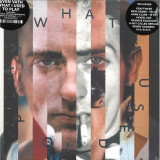
For this uniquely personal retrospective spread over twelve vinyl discs, Sven Väth takes us back to the early days of his DJ career. On What I Used To Play we meet great pioneers of electronic music, gifted percussionists, obscure wave bands, and innovative producers of a bygone 'new electronic' era. Rough beats and irresistible grooves from the identification stage of house, techno, and acid remind us not just how far electronic music has evolved over the past four decades, but how great it was to dance to EBM, techno, and house for the very first time.
If there is one protagonist of the electronic music scene who has remained curious, innovative and at the very cutting edge of music for over four decades, it's Sven Väth. His multi-layered artist albums and Sound of the Season mix compilations have been defining the genre for over two decades, and even today, he is constantly on the lookout for the next top tune to add to the highlights of his next set. At least, that's the case when he's not producing them himself as an artist or remixer. "Actually, it's always been part of my DNA to think ahead," and nothing had been further from his mind than looking back at his past, but when in spring of 2020 the international DJ circuit had to be scaled down to virtually zero, the 'restless traveler' suddenly had time. Time to stop and reflect on "how it actually was back then, at the very beginning of my career..."
"It was a great trip and with every track, beautiful memories came flooding back".
In the London apartment, he had just moved into, Sven has set up a "little music room", where he cocooned himself for several days, "to look way back for the first time and review my musical journey through the eighties, so to speak."
The interim result was six thematically oriented playlists with a grand total of 120 tracks from 'early 80s' to 'Balearic late 80s', together with excursions into afrobeat, European new wave, and EBM sounds and a few epochal techno/house tracks from the USA in between. From these 'Best of Sven Väth's favorites', the project What I Used To Play crystallized. Sven remembers how the Cocoon team reacted to his proposal: "They found the idea of making a compilation out of it MEGA from the beginning and everyone said 'Sven, go for it', but then, of course, the work really started, namely, to clear the rights and to get clean sounding masters of the up to 40-year-old tracks. There was also disappointment, of course. We couldn't clear certain titles because the rights holders in the USA had fallen out with each other or simply disappeared from the scene. In short, it wasn't easy, but now I can safely say we got the most important tracks."
Finally, after two years of research, curation, design, and administrative fine-tuning, the "little retrospective" from 1981 to 1990 is available. The exquisitely packaged, and three-kilo heavy box set is not only physically impressive, WIUTP is also the definitive record of Sven Väth's musical development. On each of the twenty-four sides of vinyl, you can trace track by track, what influenced him during which phase, and how he took off as a DJ from his parents' Queen's Pub straight into the spotlight at Dorian Gray. There and at Vogue (later OMEN), Sven became the style-defining player in the DJ booth that he still is today.
1981 - 1990: Future Sounds of Now
In the early eighties, the crowd in clubs like Vogue and Dorian Gray danced to what nowadays we call 'dance classics' - mainly disco, funk, soul, and chart pop. It was up to a new generation of DJs, including Sven Väth, the youngest protagonist in the Rhine-Main area at the time, to create their own club-ready music mix. Good new tracks and potential floor-fillers were rarities that had to be sought out and found, in order to prove oneself worthy.
Without MP3s, internet streaming, or other digital download possibilities, music didn't just gravitate to the DJ, instead, it had to be tracked down. In well-stocked record stores in Frankfurt and Wiesbaden or even in Amsterdam, London, or New York, Sven and friends sourced the material for countless magical nights. On WIUTP we can follow Sven's very personal journey through this wild, innovative era in which synth-pop, funk, hip-hop, and disco were successively replaced as 'club music' by house, techno, acid, and breakbeat. By the end of the decade, it was clear to see that these once exotic 'fringe' phenomena would soon become 'mass' phenomena.
Early 80s
Dirty Talk by the Italian-American duo Klein & M.B.O. represents the most innovative phase of the Italo-disco genre in the early eighties like no other track. Mario Boncaldo (I) and Tony Carrasco relied entirely on the original synthetic drum and percussion sounds of the Roland TR-808, coupled with the raunchy vocals of Rossana Casale and guitar accents of Davide Piatto. Of course, other tracks from this period were also influential in style, most notably Unit by Logic System, which worked as the perfect soundtrack to the laser lighting system at the legendary Dorian Gray club. With stomping beats and robotic rap interludes, Bostich by Yello also belongs on Sven's eternal playlist - after all, it caught the attention of Afrikaa Bambaataa, who invited the Swiss duo to perform at the Roxy in New York in 1983.
EBM Wave - Mid 80s
From today's point of view, the almost ten-minute-long, downtempo track Giant by Matt Johnson's band project The The, would probably not be considered an obvious club classic. However, a closer (re)listen reveals the rhythmic intricacies of the percussion overdubs by JG Thirlwell (aka Foetus) on Johnson's composition, and it becomes clear why this exceptional piece of music is one of Sven's absolute favorites. Other classics from this phase include Kaw-Liga by the mysterious The Residents, the hypnotic-synthetic Our Darkness by Anne Clark (and David Harrow), and last but not least, the somber, monotonous anthem Where Are You? by 16Bit, one of Sven Väth's projects together with Michael Münzing, Luca Anzilotti from 1986.
US House - Late 80s
You certainly can't talk about Chicago house without mentioning Frankie Knuckles. The resident DJ at the Warehouse not only gave the name to an entire genre, but also produced epochal floor fillers on the Trax label like the timeless Your Love, sung (and moaned) by Jamie Principle. Acid house protagonists Phuture also hail from Chicago, and on We Are Phuture (also released on Trax) we hear the chirping acid sounds of the legendary Roland TB-303 in full effect. Another featured classic is No UFO's by Detroit's Model 500 aka Juan Atkins, who is rightly considered the 'Godfather of Techno' even if the genre-defining track from 1985 still breathes with the spirit of hip-hop and electro from the first breakdance era.
Afrobeat
Le Serpent, by Algerian-born Abdelmadjid Guemguem, is a track that sounds completely different from everything else on WIUTP. Made in 1978, it's a monumental, rousing groove created without bass or synths, just with five congas! Even though Guem sadly passed away in 2021, his immortal, acoustic beats are understood all over the world and will continue to enrich many thousands of DJ sets for years to come. Another classic that not only Sven appreciates beyond measure is Hugh Masekela's Don't Go Lose it, Baby. In addition to being one of the most important jazz pioneers, the trumpeter and freedom fighter from Johannesburg was very experimental, integrating electronic sounds into his music in later years, in a similar vein to Miles Davis and Herbie Hancock. Dutch jazz pianist Jasper van't Hof's afrobeat project Pili Pili has also aged well. The trance-like, almost sixteen-minute-long track of the same name, manages to fill a whole side on the seventh of twelve vinyl discs in the WIUTP box.
UK-US-Euro - Late 80s
Time for a change of scene, in the truest sense of the word, and from a musical perspective, this section is like landing on another planet. First up is Andrew Weatherall's classic remix of Primal Scream's Loaded, featuring the iconic Peter Fonda sample (lifted from the 1966 biker film Wild Angels) that came to personify the mood triggered by the British Second Summer of Love in the late eighties: "We wanna be free to do what we wanna do, and we wanna get loaded...". This period also saw the emergence of M/A/R/R/S whose only single, 1987's Pump Up The Volume, became a club classic with support from DJ legend CJ Mackintosh. In this most eclectic of sections, we also encounter New York house and reggae producer Bobby Konders and his seminal Nervous Acid.
Balearic - Late 80s
Those who know him, know that Sven had already lost his heart to the 'magic island' of Ibiza as a teenager, so with that in mind, the WIUTP project couldn't end without a Balearic chapter. Inspired by Manuel Göttsching's E2-E4, the immortal, eponymously titled Sueño Latino belongs in there without question. Equally popular on the island was, and still is Break 4 Love by Raze, which thinking about it, would also fit perfectly into the house chapter. Last, but not least, there's an overdue reunion with Sven Väth himself, in his role as frontman of the successful Frankfurt trio OFF. Together with Michael Münzing and Luca Anzilotti (later of Snap!) this 'Organization For Fun' created the off-the-wall club hit Electric Salsa in 1986 which incidentally turned into an international chart smash, putting Sven in the enviable position of having to decide between pop stardom and a DJ career. Well, we all know how that decision turned out and the rest, as they say, is history. A not insignificant part of his story is What I Used To Play. Enjoy!

10
Perth-based artistic hub 823, led by producer / creator-extraordinaire Taku, joins forces with producers Idealism & Lucid Green for “Undone,” a genre-melting LP that bridges sonic comfort, textured tones and lush timbres into one serene, 10 track experience. LP arriving February 3rd, 2023 via 823 x Jakarta Records.
Finnish-born producer and pianist Idealism (1.5mil Spotify Monthly Listeners - SML) and French transplant Lucid Green (568k SML) are no strangers to each other’s subtle, yet potent productions. Having worked together on a number of past releases, their upcoming, fully collaborative LP “Undone” is a natural journey into the beautiful ambient, downtempo, lo-fi worlds they’ve each created. Through visits to Lucid’s flat in Paris and ideas being exchanged remotely, the duo experimented with different sounds, instruments and aural environments, in the process crafting a natural partnership that sits in a comfortable, melancholic pocket. With lulling guitar and poignant piano progressions that provide a pillow to rest your ears, and downtempo percussions that keeps you ebbing and flowing along on a subtle current, unsure where one wave ends and the next begins, only the albums progressions dictate the head-nod. Featuring the likes of Yutaka Hirasaka (220k SML) and Charlie Kurata (aka Charlie – 200k SML; Duumu – 109k SML), the album soars, reminiscent of life’s simple, yet wholly memorable moments that bring you a nostalgic pause.
As with all 823 releases, the project is a visual one as much as it is a musical project. The first singles visualizers are a fusion of Hopes & Dreams Club & 823’s design aesthetics with personal super8 footage captured by Idealism & Lucid Green, beautifully expressed from Hopes & Dreams Club member Mindi Ossi. Each visualizer and single art will easily stand on its own, transporting you to worlds familiar, yet undeniably groovy and sonically comfortable.
823 is a multifaceted Perth-based record label, fashion brand, and artistic community, founded by Australian producer and all-around creative, Ta-ku (852k SML). With an astute attention to detail and an ethos that appreciates the everyday things in life, 823 doesn’t stick to any particular genre. Past 823 releases include “So Far To Go” EP via Cabu (753k SML), Ta-ku and matt mcwaters’s duo project “Black and White,” featuring Masego collaboration “Flight 99” (17mil streams on Spotify), the “All Things Considered” compilations, a curated, collaborative series featuring both budding and wellestablished artists around the world and have included Idealism, Wun Two, pastels, L.Dre, Flobama, SwuM, Jinsang, Tenderlonious, among a host of others, as well as multiple sold out clothing capsules.

Crystal Clear With Green Mix Colored Vinyl. June McDoom's eponymous debut EP is a collection of songs that collage virtually everything important to her. Growing up in South Florida in a Jamaican household, McDoom was raised around reggae music, which echoed throughout every room of her childhood home. Later, she discovered and nourished her own deep love for folk music and songwriting of the 1960's and 70's. While studying in NYC for a degree in Jazz Performance, her musical palette expanded to include the more intricate influences of jazz and early soul. Realizing that her favorite vintage folk music lacked artists with similar identities as her own, it became increasingly important for McDoom to carve a unique musical space - to push folk music towards a new and different audience. Following the release of her debut single, "The City" - mixed by Gabe Wax (Soccer Mommy, Spoon) - June McDoom was eager to take the reins on the production of her debut EP. Recorded and mixed entirely from home with collaborator Evan Wright, McDoom found herself enthralled with the analog recording process, which began a textural exploration that defines this record. Experimenting with a mixture of vintage analog and modern digital recording, McDoom learned profound new ways to marry the seemingly contrasting genres and style that had individually shaped her. June McDoom's debut EP is steeped in self-discovery, and self-acceptance. Its magic lies in its ability to weave the influences of such seemingly disparate icons as Joan Baez, The Delfonics and Alton Ellis into a new, seamlessly crafted tapestry.

After a year and a half writing and recording rock music, I needed to clear my head. I listened to and made music where things generally happen gradually rather than suddenly. I would set up patches on a Monomachine or Analog Four and listen to them, hearing one sound morph into others, making changes to a patch only after having listened for quite a while, gradually adding elements, and finally manipulating the sounds on the fly. All tracks were recorded live to CD burner, with no overdubs, and executed on one or two machines.
While I was almost exclusively listening to artists such as Chris Watson, Peter Rehberg, Bernard Parmegiani, CM Von Hausswolff, Jana Winderen, Oren Ambarchi, Hazard, Bruce Gilbert, Klara Lewis, Ryoji Ikeda, and so on, I was also inspired by my mental image of John Lennon's tape and mellotron experiments he made at home during his time in the Beatles, as well as events like the first minute of Bowie's Station To Station, ...And The Gods Made Love by Jimi Hendrix, the synths in the song Mass Production by Iggy Pop, and the general idea of Eno's initial concept of Ambient music.
Music being a solitary sculpture in sonic space was the main motivating thought. I was looking at pictures of sculptures and trying to make music that simultaneously conveyed both movement and stillness. I refrained from sudden musical changes, especially avoiding sequences of notes and rhythms. In fact, this music was made from sequences which never exceed a single note, many of these pieces being made on a single pattern. The movement which a good sculptor conveys when the shape of his medium meets the eyes of the viewer who walks around the piece, or the sun changes its position, are the kinds of movement which it was the role of the synth patches to communicate.
I've been listening to music like this since I was 13 or so, but I felt that making it was out of my reach because of the amount of restraint I imagined it required. Once I found myself making this music, it did not feel like a matter of restraint at all. I wanted to build a certain type of building, and hear certain types of movement, and I knew when it was complete. There was no place for sequences of notes and rhythms in my plans.
I also cannot overstate the role that being in my band played. I had previously spent 12 years programming and engineering my own music, and then spent a year and a half making music where my role was basically to write songs and play guitar. When the band's recording phase was completed, I needed to go back to my adopted language. I had done enough with chords, rhythms, notes, defined sections, sharp transitions, etc.. What I needed was to create music from the ground up with nothing but sound, and have that music reflect "being" rather than "doing". It was a therapeutic way of re-balancing myself, before and during my band's mixing process.
This music seeks to just exist, and is not attempting to manipulate or grab the listener in any way. I believe it works well if one listens loud and focuses on it, but also works well at soft volumes and in the background. It can compete with silence on silence's own terms, and it can also happily wipe silence out.
There are two versions of this album. The CD version is pronounced "two" and called : I I . This is the longer version. The vinyl version is pronounced "one", and called . I : This version is shorter, but contains one vinyl-only track. The reason the vinyl is shorter is that some of the tracks have sounds that can not be pressed on vinyl.
John Frusciante

15
still haven't met, nor spoken, all we know he's a he. the music is a unique blend of the best sounds in pop, rock, and hip hop, occasionally sprinkled with vintage greek lyra and polish spoken word. this could either lead us to find out more about him, or simply lead us up the garden path. one thing we know for sure, much though his past remains a blur, he most definitely is a beacon for our future. #ournameisleonidas - Kitsuné Musique -

15
Timeless atmospheres, hypnotic sonorities, minimal arrangements. And a composer gifted with a never ending passion for music, experimenter in his genetic code, innovator by vocation, at ease with various instruments in order to forge avant-garde themes. Piero Umiliani was already forward in building completely new sounds in the late Seventies. “Tra Scienza E Fantascienza” finds his alter ego Moggi experimenting with alternative grooves, electronic music, jazz tunes and soundtrack motifs. One of the most interesting music libraries in the Italian composer's discography, reissued with a new remastering by Musica Per Immagini, is in full harmony with its title.
Science fiction has opened up our eyes to a variety of scenarios, possible or impossible, sometimes with a happy ending, sometimes apocalyptic, at times familiarly near, more often disarmingly far away, and always capable of inspiring our imagination. For the histrionic artist it took, perhaps, less of a cosmic leap to create this masterpiece. Centred on the cover, a strange creature with only one eye, its hands on a beaker containing a mysterious red liquid. To its right, a symbolic circle is imprinted on a sandy surface, and three bizarre constructions, similar to the volumetric flasks found in a laboratory, of differing heights and shapes. There is a strange blue planet in the distance.

Brit Taylor’s highly anticipated sophomore album, Kentucky Blue, is a drive down the famed Country Music Highway – Route 23 -- back to her Appalachian roots. Grammy-winner Sturgill Simpson and renowned engineer and producer David Ferguson caught wind of the Kentucky gem after her self-reflective debut album, Real Me, garnered praise from Rolling Stone, American Songwriter and NPR’s World Café. The two legends didn’t hesitate to jump in and get their hands dirty, producing the next musical chapter of Brit’s life story. The album is to be released on Brit’s own Cut A Shine Records in collaboration with Thirty Tigers. Having the courage to find her “real me” set Brit free. Kentucky Blue is a musical celebration of her healing and rebirth. It exudes confidence with a touch of attitude that replaces the melancholy, contemplative sound of Real Me. It is a progression of her life and her music and an introduction to the stand-your-ground and know-your-worth Brit of today. It is a shift back to her East Kentucky influences where the cry of the fiddle, the moan of the steel guitar, the twangy banjo and the atmospheric string section are like a journey floating through space and time. Brit continues to unabashedly write and sing about what she lives and what she knows and sees. It’s genuine. It’s who she is. Kentucky Blue is Brit’s personal invitation to you to join her at her cabin in the woods for a bourbon, a swing on the porch and a story-telling song.
Repressed On translucent blue vinyl! Too many people sleep on Tougher Than Leather, Run-DMC’s fourth album. But hear us out as we plead the case for this amazing LP. By 1988 there was a lot more competition in the rap game – Public Enemy, Boogie Down Productions, Eric B. & Rakim, Ice-T and many more had given Hollis, Queens’ prodigal sons lots of competition. But Joe, Darryl and Jay were still at the top of their game, and hip-hop fans should never let this classic – chiefly produced by their Queens neighbor, DJ and multi-instrumentalist Davy DMX – get lost in their crates. For starters, the album’s first single, “Run’s House” b/w “Beats To The Rhyme” is arguably the most powerful one-two punch of the trio’s career, showing contenders to the rap throne that they could still destroy a beat, tag-teaming with power at any speed. Not to be lost in the shuffle, fans were also reminded on both sides that Jam-Master Jay remained one of the world’s best DJs, flexing the pinnacle of what would be called “turntablism” a decade later. Both songs show a musical telepathy between all three that has rarely been equaled. The second single, “Mary, Mary,” driven by an infectious Monkees sample, took a different approach, shrewdly ensuring that pop fans who jumped on the Raising Hell bandwagon had something to chew on. But, like “Walk This Way,” the song wasn’t just bubblegum – there was an edge to it, and the lyrical gymnastics were very real. It wasn’t selling out, it was allowing fans to buy in. “Papa Crazy,” driven in concept and by a sample from the Temptations’ “Papa Was A Rolling Stone,” followed a similar pop-leaning path. Overall, the lyrical content on the album was a step up from the group’s first three LPs. It’s easy to infer, looking back, that they were feeling the heat from their younger competitors in the rap game. The genre was changing fast, and they were up to the challenge. On cuts like “Radio Station” they bring substance to the grooves, by attacking Black Radio for its continual denigration of rap. “Tougher Than Leather” reminds the world that they were still the Kings of Rock, with hard guitars to drive the point home. And “They Call Us Run-DMC” and “Soul To Rock And Roll” both bring things back to their early days, with sure-fire park jam rhymes and killer cuts. Tougher Than Leather, which went platinum up against a lot of competition, perfectly bookends the ‘80s output of one of the decade’s most important groups. It encompasses the full range of the trio’s capabilities, and reminds us that Run-DMC should never be forgotten as both pioneers and party-rockers. And so, we say, long live Joe, Darryl and Jay! A1. Run's House A2. Mary, Mary A3. They Call Us Run DMC A4. Beats To The Rhyme A5. Radio Station A6. Papa Crazy B1. Tougher Than Leather B2. I'm Not Going Out Like That B3. How'd Ya Do It Dee B4. Miss Elaine B5. Soul To Rock And Roll B6. Ragtime


- 1: James Brown & The Famous Flames Please, Please, Please
- 1: 2 Little Willie John Fever
- 1: 3 Barrett Strong Money (That's What I Want)
- 1: 4 Ben E. King Stand By Me
- 1: 5 Sam Cooke (What A) Wonderful World
- 1: 6 Ray Charles Unchain My Heart
- 1: 7 Solomon Burke Cry To Me
- 1: 8 James Ray I've Got My Mind Set On You (Parts & 2)
- 1: 9 Otis Redding These Arms Of Mine
- 1: 0 Marvin Gaye & The Vandellas Stubborn Kind Of Fellow
- 1: Stevie Wonder Hallelujah (I Love Her So)
- 1: 2 Gene Chandler Duke Of Earl
- 1: 3 The Isley Brothers Right Now
- 1: 4 Bob & Earl Harlem Shuffle
- 1: 5 Timmy Thomas Why Can't We Live Together
- 2: 1 Gil Scott-Heron Lady Day And John Coltrane
- 2: Aaron Neville Hercules
- 2: 3 Darondo Didn't I
- 2: 4 Lonnie Liston Smith & The Cosmic Echoes Expansions
- 2: 5 Joe Simon Drowning In The Sea Of Love
- 2: 6 Al Jarreau Ain't No Sunshine
- 2: 7 Barry White Ghetto Letto
- 2: 8 Curtis Mayfield You Mean Everything To Me
- 2: 9 Syl Johnson They Can't See Your Good Side
- 2: 10 Terry Callier Running Around (Fug City Mix)
25

Almost annually Peletronic releases a record on Fortunea. And this time he gives us a summer anthem that will transform festival and club goers into a frenzy!
‚Sanguine‘ is the title-track of this EP. And thats exactly the message he wants to get across.
Looking forward! Never stop believing! And celebrate life no matter how crazy the world around us is! Simple and effective thanks to an unbelievable hypnotic hookline that is building up tension and excitement every single minute, while still being true to its
underground roots.
A different but also powerful approach can be heard on the B-side. ‚Reflections‘ steeps into 909 infused techno and house patterns. More raw and analogue then he was ever before. A piece that has the capability to be the next serious dancefloor-weapon on abandoned
warehouse parties.
Both compositions will come out this july in its digital form and on limited 10“ vinyl record later this year. And yet again with the mastering expertise by Patrick Pulsinger.
_____
LIMITED TO 300 COPIES! THERE WILL BE NO REPRESS!
Support by Laurent Garnier, COEO, Glenn Underground, Manuel Sahagun, Alexi Delano, Fred P, Sune, Roman Rauch, Orlando B, Pawas, Tiptoes, Severino, Makossa, Lars Berenroth

Double Groovy / Trans-Pacific Express by Big Boss Man, one of two limited edition of 500 vinyl 45s to Juju Funk / Return To Baron Samedi by Big Boss Man, one of two limited edition of 500 vinyl 45s to be released simultaneously of essential killer funk. Grab while you can. The tracks have already received very strong radio responses from around the world. Both tracks being supported by Gideon Coe and Cerys Mathews at BBC Radio 6 Music, whilst Nasser Bouzida from the band discussed the rhythm influences of Return Of Baron Samedi on the Cerys Mathews show. Specialist funk shows from Australia, Germany, France, Canada and the US have already been supporting these tracks. The tracks are also set to appeal to fans of one of Big Boss Man’s biggest tracks ‘Sea Groove’, which is currently one of the UK’s biggest home-grown funk recordings on Spotify currently close to 7 million streams. These are the first new releases from Big Boss Man since their fourth album Last Man on Earth on Blow Up Records. A Side – Juju Funk, B-Side – Return Of Baron Samedi

15
Kode9's most ambitious work yet as a multi-disciplinary artist, `Escapology' is the soundtrack album to the sonic fiction `Astro-Darien', itself soon to be released on Hyperdub sub-label Flatlines. Already available as a special edition CD and digital album, we now offer a 1000 piece limited pressing on lucent orange vinyl, in spot-gloss sleeve with additional artwork by Optigram. `Escapology' reconfigures `Astro-Darien's tense, off-world atmospheres into slices of high definition, asymmetric club rhythms, woven through thrilling sound design and vertiginous sonics. "A record brimming with ideas and novel sounds, departing from genre exercises to offer something genuinely different." - Album of the Month -DJ Mag "Kode9's most dextrous and intuitive club music yet, full of mind-bending rhythmic nuggets. He's still the brilliant master behind the scenes, quietly one-upping everyone else." - Resident Advisor "The 15 tracks become proper dancefloor scorchers _ `Escapology' builds a futuristic jumble of aesthetics and sound design." - The Wire

4
Glasgow’s Seated Records return with more archival Scottish New Wave material; this time, in the form of Pop Wallpaper’s disco-not-disco interpretation of the Shuggie Otis classic, “Strawberry Letter 23”. And interpretation is the right word, guitarist Evan Henderson confesses that the lyrics sang by Audrey Redpath on the record were, “err inaccurate due to pre-internet home recording translation”.
The Edinburgh band first released “Strawberry Letter 23” in 1986 as a double A side 12” alongside original song, “Nothing Can Call Me Back". The 1986 record’s sleeve states that the original - “Strawberry Letter 23" has been “re-modelled for special pleasures, namely on the dance floor”. Here the re-model has been re-modelled once more. The track is recontextualised for 2022 playing on a four track 12” that includes an unreleased instrumental demo version of the track, as well as mixes from label founder Pigeon Steve and close friend of the label, Useful Tom.
Wallpaper’s first EP “Over Your Shoulder” was released in 1984. The release received a considerable amount of radio support, not least from Radio 1’s John Peel and Janice Long, which culminated with a live session for Long’s show at the BBC’s studios in London. Released a couple of years later, Strawberry Letter received similar levels of radio play. Despite (much to the band’s confusion) being tracked by Motown UK at one point, Pop Wallpaper did not go on to receive commercial success and eventually went their separate ways.
“Strawberry Letter 23” sits in the singular historical, cultural context of mid-80s Britain. Following the explosion of punk at the end of the 1970s, in the 1980s many British bands began experimenting with new styles and instruments - always keeping an eye firmly on their punk roots. The loose percussion and synthesiser melodies have an almost new-age, balearic mood, while the falsetto vocals of singer Audrey Redpath are an unmistakable embodiment the Post-punk style of the time. The prominent bass-line suggests a reggae or disco inspiration, and bass player Myles Raymond admits that he obsessed over a Sly & Robbie Taxi records compilation around the time the band put the tune together.
This reissue includes an unreleased, unheard instrumental demo-version of the cover, “SL23”. The band recorded the demo during an nighter at Wilf’s Planet studios in Edinburgh, just after Wet Wet Wet had just finished up their own demo for “Wishing I Was Lucky” (Pop Wallpaper all insist they thought it would never be a hit). In this version, we hear the band messing around with drum machines and synths which, in a similar style to Kevin Low and Fiona Carlin on Seated 001, creates a stripped back dance floor work-out that bares almost no resemblance to any version of “Strawberry Letter 23”. In an attempt to emulate the Trevor Horne production style of the time, the band’s drummer Les Cook recalls pushing for more and more reverb on the drums during the session to a reluctant producer Chic Medley, who “eventually obliged, but needed a lot of persuading”. Much to Cook’s disappointment “the reverb was toned down when we got to the final release”.
On the B side, label boss Pigeon Steve delivers a dubbed-out and acid drenched, cosmic rendition of the track with “SL24”, before Useful Tom (son of Pop Wallpaper bass player Myles Raymond) brings the EP to an end with spacey de-construction of fractured vocals and gliding synths on the B2 with “SL25”.

- A1: Like A Rainy Night
- A2: No Broken Heart
- A3: Baiao
- A4: Straussmania
- B1: Bridge Over Troubled Waters
- B2: A Song For A Helping Hand
- B3: Atlantis
'Atlantis' is a smouldering jazz-funk, cinematic excursion courtesy of the Brazilian maestro, Daniel Salinas. A conductor, pianist, arranger, and producer, he has worked across several genres within Brazil’s rich musical tapestry, including the Beatles-inspired Jovem Guarda movement, jazz-funk, and MPB to name just a few. He featured on records by Franco, Célia, Perfume Azul Do Sol, Wilson Simonal, Juca Chaves and a whole host of Brazilian greats.
Released in 1973 on Top Tape Records, 'Atlantis’, features one of Salinas’ best-known recordings (at least in Europe), his much-loved interpretation of 'Also Sprach Zarathustra’ entitled 'Straussmania’. It was inspired by Eumir Deodato's global hit of the same year and went on to be adopted by various scenes becoming a classic within rare groove circles as well as amongst breaks and beats diggers.
Other highlights include the only original Salinas composed track on the album; the driving, orchestrated Brazilian groover, 'Baião', and an epic, head nod breakbeat interpretation of Donovan's folky 'Atlantis'.
'Atlantis' was also issued by the American record label Cadet in 1974 with alternative yellow sleeve artwork; this re-issue is a replica of the original Brazilian Top Tape version from 1973.
• Smouldering jazz-funk & cinematic excursions from the Brazilian maestro Daniel Salinas.
• Featuring his much-loved interpretation of 'Also Sprach Zarathustra' entitled 'Straussmania'.
• Replica of the original Brazilian Top Tape version from 1973.
