
Поиск:sim 2
Стили
Все
2025 Repress
One for the heads as they say ... this deep Detroit Techno inspired 12" by UK Techno veteran Paul Mac was supposed to be released on Ben Sims' infamous Theory sub label Navite in 2003, but apart from 5 test pressings with the catalogue number NTV 04 it never made it to a proper release. When asking Paul about this 12" we were very happy that he agreed to release it on Mojuba sub label a.r.t.less. Some of his most soulful and deeper organic Techno EPs finally available and remastered by Redshape to current standards.
For illustration duties we are super grateful to have the one and only Kilian Eng on board for the next releases, showcasing some of his sketch work in a new context, some of you might remember his stunning artwork from the Sam McQueen album "Dreams In Sepia" for a.r.t.less. Enjoy! Limited edition in hand-pulled screen-printed cover.

- A1: Cookin&Apos; The Books
- A2: I&Apos;M Comin&Apos; Home To You (Feat Stella Angelico)
- A3: Only Words (Feat Natalie Slade)
- A4: No Bread For You
- A5: Away From My Heart (Feat Wilson Blackley)
- A6: Brighter (Feat Stella Angelico)
- B1: Ms Fat Booty
- B2: Give A Little Bit More (Feat Stella Angelico)
- B3: Phoenix
- B4: The World Is Cold (Feat Mantra &Amp; Jane Tyrrell)
- B5: New Yorker
11
Hot off the griddle, Cookin' The Books is the long awaited new album from Australia's kings of Hammond soul, Cookin' On 3 Burners. Their first studio LP in six years finds the trio in top form - deep in the pocket, wide in scope, and stacked with heavyweight collaborators. With a 27-year legacy, global tours, and over 2 billion streams (including the international smash This Girl), Cookin' On 3 Burners remain a defining force in vintage soul, funk, and groove.
Cookin' The Books features a collection of killer collaborators including electrifying live vocalist Stella Angelico, acclaimed soul artist Natalie Slade (Steve Spacek, Katalyst, Simon Mavin), hip hop mainstay Mantra alongside Jane Tyrrell (The Herd), rising alt-soul voice Wilson Blackley, and a sweeping string arrangement from composer/violinist Tamil Rogeon (Aloe Blacc, The Dandy Warhols).
Across the record, the group shifts seamlessly between gritty instrumentals and lush vocal cuts - from the cinematic funk of "Only Words", to the break-beat heavy title track "Cookin' The Books", the bumping bounce of "No Bread For You", and the introspective soul of "Phoenix". Every track reflects the group's deep funk DNA while carving out bold new territory.
With airplay from BBC6's Craig Charles, support from tastemakers (Wax Poetics, Dusty Groove, Rolling Stone Australia), and a world tour booked for 2026, this release is a must-stock for deep funk, soul, and cinematic groove audiences.


Sampler & Soul - The Originals Behind the Hits (5LP) Diese exklusive Compilation versammelt die Originalsongs, die später in großen Pop-, Hip-Hop- und R&B-Hits gesampelt wurden. Von Betty Wright über Quincy Jones bis zur Lafayette Afro Rock Band - hier sind die musikalischen Wurzeln moderner Urban-Sounds zu hören. Die 5LP-Box bietet eine stilvolle Reise durch Jazz, Funk, Soul und Blues mit Klassikern von Billie Holiday, Nina Simone, B.B. King, Screamin" Jay Hawkins, Ray Charles, Etta James und vielen mehr.

6
First Word Records are proud to bring you 'Penny Ballads', a 5-track EP from Royce Wood Junior.
Royce Wood Junior is a Grammy & Mercury Award-nominated musician, songwriter and record producer from London, currently based in Brighton. As a multi-instrumentalist, he's collaborated with a litany of brilliant artists over the years, such as Jamie Woon, Nao, Disclosure, Jessie Ware, Olivia Dean, Joy Crookes, Jamie Lidell and Jordan Rakei, additionally to touring with the likes of the legendary Thomas Dolby. He's released two acclaimed solo albums to date ('The Ashen Tang' in 2015, and 'No Two Blue Ticks' in 2021).
'Penny Ballads' demonstrates RWJ's varied talents, with a collection of alternative soul compositions, each one as unique as the next. It includes the first two singles, the Poplife-Prince era flavoured 'Go Get Your Money', and the double-time future funk adrenaline shot, 'Clean Up', along with three previously-unreleased tracks. 'Beretta' is low-slung soul funk, beginning with quirky squelchy synths, before the soulful lead vocal of feature artist Lucey Way breezes in to melt everyone's hearts. 'Things' sweeps in next, an infectiously soulful midtempo heavy soul bop, with an instant earwork of a hook, like a modern-day Steely Dan / Doobie Brothers, complete with a head-nodding string section to end the track. The collection concludes on a more melancholy downtempo tip with 'Rolling'; an almost-folktronic anthem, with a key refrain that wouldn't be out of place on a 70's Stevie piece.
RWJ (aka Jim Wood) says of this project… "Back in the 17 and 1800's Troubadours and minstrels would go from Tavern to Tavern selling Penny Ballads, single sheets of music and lyrics written quickly and frivolously to make a quick buck.. It strikes me that we're in a similar phase in the way we value music in 2025. An old Penny Ballad was cheap and dog-eared, ink-smudged, sung aloud by firelight, Now songs live in the digital ether, dissolved in the air, a ghostly breath paid in micro cents. The new era of Penny Balladry is here, and weird.
This EP is a snapshot of my writing over a two year period. Focussed on minimal recording styles, one mic on the drums, generally first or second takes on parts and vocals, I wanted the music to feel like small moments with lyrics that talk about the weird nuances of being alive as a latter stage human on the cusp of the Ai revolution. Culturally so evolved, but physiologically still just a bunch of mammals walking about with primitive fears and needs. Just trying to reconcile it all moment to moment…"
Previous support for Royce's music has included Radio 1's Future Sounds, BBC 6 Music's New Music Fix, Annie Mac, Clara Amfo, Jo Whiley (BBC Radio 2), Mary Anne Hobbs, Jamz Supernova, Tom Robinson, Huw Stephens (BBC 6 Music), Zane Lowe and MistaJam. There have been sessions previously for the likes of Red Bull and press from Huck, Line of Best Fit, Clash, Aesthetica & DIY magazine.
Entirely self-written and self-produced, this EP gives a solid taste of RWJ's talents. A deeply funky diverse set of music from an immensely talented individual.
'Penny Ballads' is due to be released on vinyl & digital, 24th October 2025.
The vinyl version also includes an exclusive additional mix of the first single 'Go Get Your Money'.

11
Do you believe in spring? Simon Wangen (cello) and Philipp Sutter (piano) pose this question as the title for their new project. Whereas Bill Evans made a demand in 1981, the two Cologne-based musicians believe that in times of uncertainty, crisis, and environmental destruction, it is ok to set a questin mark here. But politics and world events aside: Do you believe in spring? Of course! It's never too late to start something new, get creative, and test your own limits. Simon Wangen is a classically trained cellist, Philipp Sutter a trained jazz pianist. Their different musical roots merge on this instrumental album into a lively mix of neoclassical, new jazz, and Cinéma Nordique. Ten pieces come across as sometimes dark, sometimes wild, sometimes delicate, always focusing on the dialogue between the two instruments that harmonize so well. The subtle use of electronic effects constantly opens up new perspectives and builds a bridge to contemporary sound aesthetics. Cello and piano—this combination has been established for centuries, but can still add new facets today. Do you believe in spring? begins stormily and turbulently, oscillating between romantic, sad, and beautiful moments, and leads from a rather dark beginning to the final and eponymous piece in C major, which leaves the listener with a glimmer of hope. Do you believe in spring? From October 24, 2025!
Do you believe in spring? Simon Wangen (Cello) und Philipp Sutter (Klavier) werfen den Titel für ihr neues Projekt als Frage in den Raum. Wo Bill Evans 1981 eine Forderung formulierte, sind die beiden Kölner Musiker der Ansicht, in Zeiten der Unsicherheit, der Krisen und Umweltzerstörung durchaus ein Fragezeichen setzen zu können. Aber abgesehen von Politik und Weltgeschehen: Do you believe in spring? Natürlich! Es ist nie zu spät, etwas Neues zu beginnen, kreativ zu werden und die eigenen Grenzen zu testen. Simon Wangen ist klassisch ausgebildeter Cellist, Philipp Sutter studierter Jazzpianist. Die unterschiedlichen musikalischen Wurzeln verschmelzen auf diesem Instrumentalalbum zu einer lebendigen Mischung aus Neoklassik, New Jazz und Cinéma Nordique. Zehn Stücke kommen mal düster, mal wild, mal zart daher, stets die Zwiesprache der beiden so gut harmonierenden Instrumente im Fokus. Der dezente Einsatz elektronischer Effekte öffnet immer wieder neue Perspektiven und schlägt eine Brücke zur zeitgenössischen Klangästhetik. Cello und Klavier - diese Besetzung ist seit Jahrhunderten etabliert, aber kann auch aktuell immer wieder neue Facetten hinzubekommen. Do you believe in spring? beginnt stürmisch und aufgewühlt, changiert zwischen romantisch - traurig - schönen Momenten und führt von einem eher düsteren Beginn hin zum letzten und namensgebenden Stück in C-Dur, das die Zuhörenden mit einem Hoffnungsschimmer entlässt. Do you believe in spring? Ab 24.10.2025!

13
GATEFOLD DOUBLE VINYL WITH SPOT UV FRONT COVER
Following the skewed-unself-help-brilliance of ‘Sus Dog’ (which marked his first full foray into songs, abetted by Thom Yorke), and its companion piece ‘Cave Dog’, Chris Clark returns to the dancefloor’s simple, but no less affecting pleasures, with ‘Steep Stims’.
“I found it hard to pull away from listening to this record, hard to stop making it, I had to remove myself from the Stims and stop enjoying it at some point. The album feels like nature to me. I love it when electronic music feels more naturalistic than acoustic music, more potent, that’s the devil’s trick, the promise of electronic music.” comments Chris.
“I used an old synth - the Virus on all of the tracks. I used it at Mess in Melbourne - run by my friend Robin Fox - I loved it so much I had to buy one when I got back to the UK, it took a while to find. They’re a bit clunky to program but make some of my most favourite sounds.”
‘Steep Stims’ marks a back-to-basics approach, invoking the early years of gung-ho creativity enforced by limitations in technology at the time. “Most of the tracks on this album capture the spirit of making music on old samplers, which don’t have much memory time”, explains Clark. “It reminds me of making ‘Clarence Park’, my first album, where I would have to finish tunes in the session, as they would be saved on floppy disks and I couldn’t easily go between tracks. This new record is just a few synths and a few choice sounds; the writing is the important thing.”
Made quickly, ‘Steep Stims’ reflects the immediate rave energy of his live show, but that’s not to say it’s basic floor fodder, as it’s rife with personality, synth magic, and knack for melody. Although swift and impressionistically captured rather than laboured over, it’s still formidably deft, with plenty of oddball weirdness lurking beneath the dancefloor.
Soft, orange, scorched, brutal, the opening track ‘Gift and Wound’ captures the classic dance music dread / awe / euphoria combo perfectly, before ‘Infinite Roller’ merges sparkly-minimalism with snarling bass and soft sines, which turn more dense and metallic as it progresses.
The melancholic smoke belch of ‘No Pills U’ gives strong classic vibrations, which is belied by its creation, made in just 20 minutes. “I love working quickly sometimes”, comments Clark. “Inspiration hits, rough and ready. It’s off the cuff but also screams ‘don’t gild the lily with nonsense, keep it simple keep it clean’”. Segueing into its elder brother, the piece becomes bigger and beatier on ‘Janus Modal’, where it permutates for over 7 minutes of fluttering, beatific club majesty.
At ‘18EDO Bailiff’ you inexplicably find yourself at a clearing, things have suddenly got much quieter. You enter a decrepit and eerie old house, and as you move through its unsettling interior, you arrive at ‘Globecore Flats’. A real piano tuned to 18 notes per octave gives the pair of tracks a haunted, olde worlde feel, which promptly gets eaten by a huge tech step tearout monster, birthing a strange but exotic beast.
The white hot ‘Blowtorch Thimble’ is all hooktasm-rave-hyper-amen-energy, whilst acidic flute leaps around like Ian Anderson on pingers throughout the catchily simple jump-up lurch of ‘Civilians’.
“‘In Patient’s Day Out’ is like some sort of Morricone-does-kraut-rock-with-drum-machines, but that’s probably just in my head” says Clark. “I made several versions of this then went with the early mix but cranked through some choice outboard because it just had something.”
Drumless, yet still full of exhilarating-big-trance-drama, ‘Who Booed The Goose’ flashes by in stroboscopic fast forward, then ‘5 Millionth Cave Painting’ gives a palate cleanser, letting “the virus with its delicious broken, luxurious reverb have a moment”, before ‘Negation Loop’ swoops down in all its glory, with Clark’s tweaked vocals leading deconstructed trance breakdowns, tape edits and brutal noisebursts.
An antidote to the bombast of its predecessor is ‘Micro Lyf’, which closes the set on a poignant note, of sorts. Muted staccato gives way to field recordings “that gradually put it in this outside space; alien in a meadow somewhere nameless. It feels like a sinkhole. The record kinda swallows itself up and then is gone”, ends Chris.

- 1: Diamonds & Rust
- 2: Fountain Of Sorrow
- 3: Never Dreamed You'd Leave In Summer
- 4: Children And All That Jazz
- 5: Simple Twist Of Fate
- 6: Blue Sky
- 7: Hello In There
- 8: Jesse
- 9: Winds Of The Old Days
- 10: Dida
- 11: I Dream Of Jeannie
- 12: Danny Boy (Medley)
If people were unaware of the significance of Joan Baez to western culture, her portrayal in the Bob Dylan biopic A Complete Unknown (played by Monica Barbaro) underlines how central she was to the popularization of folk music in the early 1960s. And it is her decade- previous relationship with Dylan that hovers joyously over Diamonds & Rust. The title track is about a thinly disguised ex-lover who calls up out of the blue; it remains one of her most loved songs in a 65- year- career.
There's a playful cover of "Simple Twist Of Fate" from Dylan's then just released Blood On The Tracks, complete with impersonation in a later verse; and "Winds Of The Old Days", written in response to Dylan touring again after a lengthy hiatus. Diamonds & Rust is a perfect, sunshine- drenched album of west- coast folk- tinged rock, full of star session players. It could almost have been a signal to all the recent comers on her patch many of them friends and colleagues, Joni Mitchell, Carole King, Maria Muldaur that Baez was here first and was sweetly reasserting her authority. Just listen to her mastery on "Children & All That Jazz", her cover of Stevie Wonder's "Never Thought You'd Leave In Summer" and the poignant closing medley of "I Dream Of Jeannie/Danny Boy".

4
также имеющийся в продаже
Acid 2[21,22 €]
2025 Repress
Pye Corner Audio shows off his love of acid on the first of two EPs for Emotional Response that drop simultaneously. This first one is his debut on the label and comes with a gorgeous cover that perfectly encapsulates the sounds within. 'Dust Acid' is a sparse cut with dusty drums and meandering basslines that slowly sink you in, then 'Magnetic Acid Two,' which like all of these was recorded live, is another expertly reduced brew of murkiness with plenty of frayed edges and vintage analog sounds. 'Wanna Show U Acid' is a late-night acid dream and 'Magnetic Acid Four' shuts down slightly more bite. Four timeless backroom cuts, make no mistake.

- 01: Back At School
- 02: Dead Roo
- 03: I'm Up You're Out
- 04: Loser
- 05: Nightshift
- 06: Hooray Fuck
- 07: Do It To Me
- 08: Never Grow Old
- 09: What
- 10: Elle
40 Years COSMIC PSYCHOS, 40 years dirty, mean, simple, garagey punk rock & roll! EU pressing of the guys seminal 1991 album, the first for Amphetamine Reptile Records back then Noisy alternative punk rock from Down Under for fans of Stiff Richards, The Chats, Nashville Pussy, Supersuckers, Hard -Ons, AmpRep, early Sub Pop "As 1990 set in, Jones vacated the guitar spot. Knight and Walsh asked their friend Robbie Watts, a self-taught guitarist, to join the fold. Watts said yes and Cosmic Psychos ventured to Wisconsin to record their third full-length release at producer Butch Vig's Smart Studios. Released in 1991, Blokes You Can Trust was the band's first record for the American noise rock label Amphetamine Reptile, after the bandmembers became drinking buddies with label head Tom Hazelmeyer. ... The Psychos conducted a European tour during which they developed an unusual trademark. After seeing many other rock bands take bows after performances, at the end of a show in Potsdam, Germany, Cosmic Psychos decided to alter the tradition by pulling down their pants and mooning the unsuspecting audience." - Do we have to say more? Classic.

His fourth album, City Music works as a counterpart to Morby’s acclaimed 2016 release Singing Saw, an autobiographical set that reflected the solitude and landscape in which it was recorded. Saw was imagined as “an old bookshelf with a young Bob and Joni staring back at me, blank and timeless. They live here, in this left side of my brain, smoking cigarettes and playing acoustic guitars while lying on an unmade bed.” And now follows City Music, the yang to its yin, the heads to its tails. It is a collection crafted using the other side of its creator’s brain, the jumping off point perhaps best once again encapsulated by an image. “Here, Lou Reed and Patti Smith stare out at the listener,” explains Morby. “Stretched out on a living room floor they are somewhere in mid-70s Manhattan, also smoking cigarettes.” It finds Morby exploring similar themes of solitude, but this time framed by a window of an uptown apartment that looks down upon an international urban landscape “exposed like a giant bleeding wound.”

Berlin’s ZentaSkai returns to his Mask Records with the ‘Billie’ EP, collaborating with Palawan, Jeremy Reinhard, and Thomas Grün for release on vinyl only, 2nd November 2025. He kicks off with the solo cut 'A1', which is quick, sophisticated, raw House with a funky clip to the beats that diffuses heat in the grainy sustained pads. It brings serene emotional release through stylish hypnosis and gorgeous vocals that blend seamlessly into the mix. Next, ZentaSkai collaborates with the mysterious Palawan, as he did on one track of his 2023 album The Architecture Of The Mind, on 'A2.' This one suspends you in backlit synth glows while rounded drums and funky claps tap out the supple rhythm. Cautious hope comes from the quiet chord stabs and soft focus melodies in what is a masterclass in deep Techno minimalism. 'B1' reunites ZentaSkai with Cologne's Jeremy Reinhard following previous cuts on that same 2023 album. Reinhard has long been a pillar of his local Berlin scene as a resident DJ, but also the wider underground with his own label Lekker Record. Their track taps into dub depths but ups the pace and allows radiant synths to piece the surface next to muttered spoken word that keep it intimate and perfectly seductive for body and mind. Last of all is a collab with Austrian Thomas Grün, who has been shaping deep and Tech House with his immaculate grooves for decades. Their 'B2' brings US garage snares to buoyant drums and douses them in layers of fuzzy synth warmth. It's meditative yet direct with an ever-rising sense of hope that makes it all the more indelible. ZentaSkai (aka No Mad Ronin, Matt Nowak, and MASK) is a German DJ and producer active since 1997. Based out of his studio in Berlin, ZentaSkai runs the Zaijenroots label and, since 2017, the Mask sub-label, which houses his stunning 2023 ‘Architecture of the Mind’ LP as well as his Cuddling Monsters project with Laura Merino Allue, who has been significantly involved in the label's work since 2023. - with other credits including a release on Jerome Sydenham’s Ibadan Records and support from the likes of Richie Hawtin, Joseph Capriati, Marcel Dettmann, Luke Slater, Laurent Garnier, DVS1, Ben Sims, and Radio Slave.

Discover the melancholic sound of Margitte
Hailing from the historic city of Ghent (BE), Margitte crafts a unique sonic tapestry that resonates with both ethereal and fierce. Think Portishead, Pj Harvey, The War on Drugs, St. Vincent and even Gainsbourg. Her music is a journey through scapes, blending haunting melodies with intricate electronic textures and poetic lyricism.
Margitte's sound is both timeless and contemporary, weaving together the mystical and the modern with a vision that is thought-provoking as it is emotionally stirring.
Her performances are true to her artistry and passion. Margitte is not just to be heard, but to be felt, lingering on in your ears long after the last notes faded.
Come and get it, join the haze.
SOUNDS LIKE: Laura Marling, Beach House, Warhaus, Gainsbourg, St. Vincent, Liv, Portishead, PJ Harvey, Nick Cave, Neil Frances, James Blake, David Byrne, Grace Jones, Kruangbin, The War on Drugs.
Credits:
Margot De Ridder: Voice, keys, composition
Artan Buleshkaj: Guitar
Simon Raman: Drums, Percussion
Annelies Emmerechts: Voice, keys
Artwork by Mwahrk
Mastered by Lieven Van Pée

8
AOKI takamasa and Tujiko Noriko’s 2005 album »28« has become a cornerstone in the artists’ respective discographies. 20 years after its initial release, Keplar issues it on vinyl for the very first time. Three years in the making, »28« saw the sound artist and the avant-pop singer-songwriter combine their distinct aesthetics for an album that defied categorisation. Their combination of advanced electronic experimentation and pop appeal paved the way for a new generation of artists and turned »28« into an enduring fan favourite. Remastered by Stephan Mathieu, the reissue comes with a brand-new artwork by Joji Koyama and a changed track listing—authorised by Takamasa and Tujiko—for the vinyl version to fit it on a single LP, while the digital version remains identical to the original release.
Tujiko and Takamasa first shared the stage together after the turn of the millennium. Both were emerging solo artists, with Takamasa a mainstay on the Progressive Form label and Tujiko forging a connection with Mego in Vienna, Austria. »I simply liked Noriko’s voice and music, and since we often performed at the same events, it felt like a natural progression for us to start working together,« remembers Takamasa. They first collaborated in 2002 for two shows at the Fondation Cartier in Paris and at SonarLab in Barcelona, respectively. The first joint piece was a rework of Tujiko’s »Fly« from »Hard Ni Sasete (Make Me Hard)« by Takamasa, appearing as the album opener »Fly2« on »28.«
After that, the Paris-based Tujiko and Takamasa, still based in Osaka, worked sporadically and remotely on new material. For the first two years of their collaboration, the two met in the context of live events or Takamasa’s visits to the French capital to discuss their process and exchange hard drives while also occasionally sending each other CDrs in the mail. »Aoki made beats and sounds that complemented my music perfectly, building the foundation on which my voice could float,« Tujiko says today. Takamasa used hardware such as the Nord Modular, the Korg Z1, and the Korg ER-1, while also working with different kinds of software and plug-ins as well as Logic. Tujiko was using Cubase, her preferred piece of gear at the time being an AKAI MPC.
After Takamasa moved to Paris in 2004, this enabled the duo to finish the album together in person. Starting with its subtle use of glitches to the almost-anarchic way in which it deals with the structures of a song, »28« came to be an incomparably intricate album. 20 years on, it remains timeless because of its flawless synthesis of the cutting-edge avant-garde ideas of early 2000s electronica with an idiosyncratic but accessible pop sentiment. Both artists look back fondly—though not uncritically, with Takamasa noting a certain »youthfulness« in his contributions—to the album that was titled after their respective age at that time. »Maybe we should make ›51‹ now?,« quips Tujiko. See you in three years, perhaps.

- A1: Money's Too Tight (To Mention)
- A2: Come To My Aid
- A3: Jericho
- A4: The Right Thing
- A5: Holding Back The Years
- B1: If You Don’t Know Me By Now
- B2: It's Only Love
- B3: A New Flame
- B4: You've Got It
- B5: Ev'ry Time We Say Goodbye
- C1: Stars
- C2: Something Got Me Started
- C3: Your Mirror
- C4: For Your Babies
- C5: Fairground
- D1: Mellow My Mind
- D2: Say You Love Me
- D3: You Make Me Feel Brand New
- D4: Home
- D5: Sunrise

For his last solo record ‘Through a Room’, Bill Nace shifted his usual saturated guitar sound and added tapes, hurdy gurdy, doughnut pipe, bird calls and the mysterious Japanese taishōgoto. Setting up for the final night of his three day residency at OTO with only the taishōgoto soundchecked, Nace hoped that Parker would arrive with his small soprano as its opposite. “I’ve been interested in state change, you know, playing until there’s a shift in time.” Known for his development of multiphonics to produce a constantly shifting pattern, Evan Parker has evolved an instantly recognizable sound - his work the soprano most distinct. Happily, it was the soprano Evan brought with him and as soon as the two start to play they entwine - taking off in a double helix of keys and reed primed for endless reconfiguration. Space warps under the velocity of playing, the pitch rising unrelentingly. It felt like unending lift off in the room, sheer energy until the last note makes remember your feet have been on the floor the whole time. Total time bending shredding.
–
"They had never played together before. They had never even met each other before this springtime 2024 concert at London’s Café Oto.
Evan Parker, circular breathing maestro of the saxophone, a legend in the universe that is Free Improvisation since the late 1960s and Bill Nace, one of the most intriguing experimental “noise” guitarists of the 1990s/2000s underground scene.
For those of us who have been enamored by the live and documented work of both these gents, this Café Oto duo was a must-hear event. It could have gone anywhere musically and that would have been totally fine. Particularly with Evan having a history of being thrown into a variety of challenging collaborations throughout his career, employing the learned elegance of trust in his own sensitivity to listening, responding, leading, following, sparring, intertwining, dialoguing, creating in the instant and, essentially, dignifying the non-hierarchical grace of chance.
The aesthetics of socialist consideration in Evan Parker’s playing, in his community of expanded and personal technique, for a younger player such as Bill Nace, strikes an exemplary model. This notion of respect would be entirely the reason Nace, when offered a residency at the most critical “new music” room in England, would request to play in duo with Parker.
Bill Nace came to prominence mostly during the apex of experimental music activity in and around Western Massachusetts in the early days of the aughts, with a focus on visual art and free improvisation guitar action. He could be found in the daytime hours, his head hanging down over a notepad, penning fine-tuned illustrations and abstract line drawings, while in the evenings he’d be attending any number of basement noise gigs, many of which he’d be participating in. His guitar style came across as being informed as much as by the physicality of his writing utensils in friction to the page as it was to his hearing and redefining of radical recordings ranging anywhere from the Black Unity Group to Black Flag.
Utilizing various metal files and other small cylindrical objects Bill would allow his guitar and amplifier to be in tandem with the improvisatory movements of his body as the instrument balanced, intentionally and, at times, precariously, upon his lap. The performances came across thrilling and daring and they would be mostly in the context of venues nothing more than a low-ceilinged damp and dank New England basement, a clutch of people hanging onto rusty pipes or sitting up on dilapidated washer/dryer machines, the shards of Bill’s “file guitar” sounds ringing out like the most alive music on Earth.
By the time Bill reached Café Oto in early 2024 he had relocated to Philadelphia all the while releasing a succession of collaborative LPs on his Open Mouth label to present his developing progression of solo and collaborative work. He also would find himself considerably engaged with playing the electric taishōgoto, a keyboard-activated string instrument from Japan which can exist as a one, two, four, five, or six string oblong sound object. Bill’s approach to the taishōgoto would not be too unlike his approach to the traditional electric guitar, though no outboard implements such as files, sticks, and rocks are utilized. The similarity would lie wholly with Bill’s full immersion of high velocity action-playing where, with the taishōgoto, an electric drone beauty occurs. The flurry of sonics and resultant harmonics emanating from the amplifier (which Bill opts to dial into with borderline loud-as fuck volume settings) furthers the meta-mantra properties of the instrument in an astounding display of drone dynamism.
This sound world of Bill’s two-stringed taishōgoto on this Café Oto night worked beautifully with Evan Parker’s improvisatory saxophone conceptions. The duology achieved instant lift off at ground zero only to find it’s eventual finale as if it were organically ordained. Time seemingly morphed from its ancient human construct of control, rendered inconsequential to the torrential transcendence of the room wildly activated by the magic resonance of the multi-directional pan-spatial sonance of the music as if it were some beatific blessing. It was one of those nights where art as a liberating force of spirit gifted the listeners with an offering of exaltation and joy. It was entirely mystical and mind blowing. A night of Total Music."
Thurston Moore, London, 2025

- A1: Off Stage—Med Dark Fade Out (Exit) (Starts Edit)
- A2: On Stage—Strike (Falls) (A) (Vinyl Edit)
- A3: Off Stage—Walk (A) (Vinyl Edit)
- A4: On Stage—Crystal
- B1: Off Stage—Pile & Surfaces (B)
- B2: Off Stage—Leaf K2
- B3: Off Stage—K2 Line (Vinyl Edit)
- B4: Strike Ftx (B) (Vinyl Edit)
- C1: On Stage—Strike Ftx (C)
- C2: Off Stage—Stick & Clap (D1)
- C3: Off Stage—Tree Transition (A)
- C4: Off Stage—Stick Walk (Crystal Approach)
- C5: On Stage—Crystal (Rush)
- D1: Reiy C & Swing Mic (B) (Vinyl Edit)
- D2: Off Stage—Surfaces (All) (Vinyl Edit)
- D3: Off Stage—Leaf K2X
- D4: Alt Stage—Drom (A) (Billy Fulcrum)
- D5: On Stage—Everybody Cycles (Vinyl Edit)
- D6: On Stage—Strike Snx (Vinyl Edit)
- D7: Med Dark Fade Out (Vinyl Edit)
Slip is Paul Abbott’s response to his 3 day residency at OTO in 2023. It’s a continued exploration of the acoustic-digital hybrid drum setup Abbott has been developing for some time, which involves drum kit and synthetic sounds combined closely—through an entanglement of limbs and cables—in an intimate but strange relationship with each other.
Paul Abbott hasn’t had any formal musical training, but has a long history of making music, having collaborated for years with Seymour Wright, Pat Thomas, Michael Speers, Cara Tolmie, Anne Gillis and many others. Eventually, led by a profound suspicion of what is fixed or limited, Abbott began finding other ways to organise sound - or what he calls ‘material’:
“I wanted a way to 'persuade' or guide the possibility of something happening - my activity or the events of an algorithmic composition - for example, but without certainty or formalism. It felt to me, during playing, that certain ideas had a particular sort of shape, but more than the form of a line. I began to write alongside (before/after) playing the drums, and ‘characters’ began to enter the scene as a more wobbly, and therefore appropriate option to notation. Working with these characters allowed me to simultaneously approach body, imagination, language and music: without dividing things up or separating these aspects from each other. It allowed me to leave things messy and entangled, whilst trying to deal with form and specificity: wanting to have some things feel or respond differently to other things at other times.”
In approaching his residency, Abbott developed a fixed cast of characters - crystal, lleaf, reiy.F, reiy.C, strike, nee, qosel, sphu and aahn. They each communicate using different kinds of movement and drum kit/s, and Abbott choreographed them as ‘dances’ based on different feelings, or outlines of behaviours suggestive of ways of moving (body, drums, sounds). He then arranged these characters into ‘compositions’: one for each performance day, with each composition featuring multi-layered activity - options for behaviours, ways to move around the rooms, play drums, develop synthetic sounds, change the lights or re-distribute the sound in the space.
After the performances, Abbott took home 9 hours of recordings split into up to 28 multitrack channels for each day, and re-organised his cast once more into a performance for 2LP, CD and digital. It’s an enormous amount of work - but Abbott is activated by the process. For him, the pleasure of unstable edges, possibilities, slippages, is the vital attraction. Like all living organisms, Abbott’s characters have malleability and responsivity. They stimulate a bundle of possible behaviours, a tendency to act a certain way, a temperament, a boundary of respective limits or affordances.
It’s an affective way of working, inclusive of Roscoe Mitchell, Sun Ra, Nathaniel Mackey and Milford Graves. In ‘Pulseology’(2022), Milford Graves reminds us, ‘Breath varies, so cardiac rhythm never has that (metronomic) tempo. It’s always changing. All the alignments of the heart are determined based on the needs of the cells, specifically tissues and organs. The heart knows if it needs to speed up.’ In Slip, to slip, in a heartbeat, is to descend not into the grid of the even metre accorded to the heartbeat, but into a play of mutability and modality. To change is the condition of the heart.
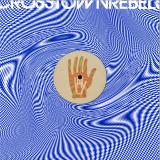
Mia Moretti makes her Crosstown Rebels debut with ‘Safe With Me’, featuring Irma Thomas. The soulful new single, backed by a remix from Sweden’s Tiger Stripes.
Los Angeles-based DJ and producer Mia Moretti heads to Damian Lazarus’ Crosstown Rebels with ‘Safe With Me’, a disco-house celebration featuring New Orleans soul legend Irma Thomas, the Grammy-winning Soul Queen of New Orleans. Co-produced by award-winning producer Mark “Blakkat” Bell, a longtime figure in house and electronic music whose work spans from M People to King Britt, the release marks a full-circle moment for Moretti, who draws on her years of crate digging, gospel house expertise, and deep love for vocal-driven grooves.
‘Safe With Me’ pairs Moretti’s richly textured production with Thomas’ commanding vocal presence, creating a track that balances heartfelt emotion with dancefloor energy. Similar to Moretti's DJ sets, the track blends gospel, disco, and house sensibilities with storytelling. Swedish mainstay Tiger Stripes reinterprets the track with his own forward-thinking production. Known for his house and techno grooves that have energised clubs from Panorama Bar to Ministry of Sound, he injects ‘Safe With Me’ with shimmering synth layers and driving percussion, making it a perfect complement to the original production.Mia Moretti has established herself with vocal and gospel-driven house sets and productions. Her debut EP ‘Tambor’ (2023) marked a confident step as a producer sampling female bullerengue artists from Colombia, including Petrona Martinez and Toto La Momposina, followed by ‘Best I Can’ (2024) alongside gospel icon Vonita White and remixes from house music pioneers. In 2025, Mia has continued to build momentum with appearances from Ibiza to Paris Fashion Week alongside the launch of her Chef’s Kiss radio show on Diplo’s Revolution. ‘Safe With Me’ continues that trajectory, highlighting her instinct for timeless grooves and soulful storytelling.

- 1: Be Faster Than Your Own Depression (Roland Alpha Juno-) 03:4
- 2: The Tenderness Of Our Own Autobiography (Roland Alpha Juno-1) 03:8
- 3: Eternal Life Makes Your Past Grow Too Big (Roland Alpha Juno-1) 0:24
- 4: You're Mist To Us (Roland Alpha Juno-1) 02:06
- 5: Blissfully Tired (Roland Alpha Juno-1) 06:28
- 6: Breakfast In A Night Club (Roland Alpha Juno-1) 03:59
- 7: Always Ready To Drop It (Roland Alpha Juno-1) 02:33
- 8: A Visit To The Brion-Vega Tomb (Roland Alpha Juno-1) 03:54
- 9: Don't Ask, Don't Pray (Roland Alpha Juno-1) 04:54
- 10: Keep Your Spirits (Roland Alpha Juno-1) 04:48
10
One Instrument welcomes Morning Seance, composer and sound artist, originally from Italy and based in Vienna. On this debut LP, Morning Seance traces a drifting narrative composed of unstable harmonies, fluid structures, and ghostlike forms. The album unfolds like a dream told in fragments, oscillating between fluctuating pulses and decaying transmissions, from nocturnal stillness to acoustic mirages. The first half of the record moves through zones of suspended tension and evanescent contours, where tracks like “Be faster than your own depression” and “The tenderness of our own autobiography” sketch fragile architectures of affect. The second half enters a more spectral terrain — “Breakfast in a night club,” “A visit to the Brion-Vega tomb” — not places, but agglomerates of sonic sensation, detached from any personal frame.
With each piece, the music dissolves and reconstitutes itself, resisting finality or form, and doing so with an indestructible joy that hums beneath the wreckage. This is degenerate ambient music: anti-geometric and subject to emotional weather — not a refuge, but a slow collapse of structure and purity, where atmosphere gives way to excess and disobedience.
The album is crafted entirely from a single source: the Roland Alpha Juno-1. Despite this constraint, it achieves a vast sound spectrum, transforming one synthesizer’s voice into a layered landscape of textures and moods.
The electronic music of Morning Seance is built on constant variation and intricate, looping patterns with no clear beginning or end. This variation is not simply applied to an audio element, but enacted as a compositional logic — avoiding mechanical combinations and obvious rhythms. The result is a mutable mass of audio matter and tonal debris, guiding the listener through richly divergent environments.
