Available on CD and 180gram heavyweight gatefold LP.
Noura Mint Seymali hails from a Moorish musical dynasty in Mauritania, born into a prominent family of griot and choosing from an early age to embrace the artform that is its lifeblood. Yet traditional pedigree has proven but a stepping-stone for the work Noura and her band have embarked upon in recent years, simultaneously popularizing and reimagining Moorish music on the global stage, taking her family's legacy to new heights as arguably Mauritania's most widely exported musical act of all time.
Arbina is Noura Mint Seymali's second international release. Delving deeper into the wellspring of Moorish roots, as is after all the tried and true way of the griot, the album strengthens her core sound, applying a cohesive aesthetic approach to the reinterpretation of Moorish tradition in contemporary context. The band is heard here in full relief, soaring vocals and guitar at the forefront, the mesmerizing sparkle of the ardine, elemental bass lines and propulsive rhythms swirling together to conjure a 360 degree vibe. Arbina refines a sound that the band has gradually intensified over years of touring, aiming to posit a new genre from Mauritania, distinct unto itself, music of the "Azawan."
Supported by guitarist, husband and fellow griot, Jeiche Ould Chighaly, Seymali's tempestuous voice is answered with electrified counterpoint, his quarter-tone rich guitar phraseology flashing out lightning bolt ideas. Heir to the same music culture as Noura, Jeiche intimates the tidinit's (Moorish lute) leading role under the wedding khaima with the gusto of a rock guitar hero. Bassist Ousmane Touré, who has innovated a singular style of Moorish low-end groove over the course of many years, can be heard on this album with greater force and vigor than ever before. Drummer/producer Matthew Tinari drives the ensemble forward with the agility and precision need to make the beats cut.
Many of the songs on Arbina call out to the divine, asking for grace and protection. "Arbina" is a name for God. The album carries a message about reaching beyond oneself to an infinite spiritual source, while learning to take the finite human actions to necessary to affect reality on earth. The concept of sëbeu, or that which a human can do to take positive action on their destiny, is animated throughout.
Lyrically, the Moorish griot tradition is complex and associative. Poetry is held in a continuum between author and audience in which a singer may draw on disparate sources, selecting individual lines here or there for musicality to form a lyrical patchwork expressing larger ideas via association. A griot may relate her own thoughts and poetry, sing poetry written for and about her by a third party, and transmit lines from one party addressing another in the course of a single song. With this ever-fluid narrative voice, stories are told.
quête:sim one
Wewantsounds is delighted to reissue Sylvia Robinson's super rare soul LP released in 1975 on her Vibration label, part of her All-Platinum/Stang/Turbo empire. A few years later, she would bring hip hop to the international stage producing "Rapper's Delight" in 1979 and "The Message" in 1982. "Sweet Stuff" features several Sylvia cult classics including "Private Performance," "Soul Je T'aime", a cover of Serge Gainsbourg's "Je T'aime Moi Non Plus" and the mellow favourite "Sho Nuff Boogie" recorded with The Moments. As bonus tracks, the release features "Sho Nuff Boogie, Part 2" which only came out as the single's b-side at the time and the long version of "Soul Je T'aime", all packaged in the album's original artwork.
Born and raised in New York, Sylvia Robinson began recording at a young age under the name "Little Sylvia" in the early 1950s. She gained exposure when she teamed up with Mickey Baker scoring a hit in 1956 with "Love Is Strange" as Mickey & Sylvia. She went on to record many singles during the late 50s and 60s before setting up her own label, All Platinum Records in 1966 followed by Stang Records and Vibration. Through these labels, she had several hit records in the 70s as a producer including The Moments' "Love On A Two Way Street" and Shirley & Co's "Shame Shame Shame".
Sylvia Robinson continued to record as a solo artist shortening her name as 'Sylvia'. She got a massive hit of her own with "Pillow Talk" in 1973, a song she'd originally penned with Al Green in mind. The song went to nr 3 in the charts and started a string of other hits over the next few years. In 1973 she covered Serge Gainsbourg's 1969 megahit "Je T'aime Moi Non Plus" renaming it here "Soul Je T'aime" and duetting with Fania Records' Latin soul singer Ralfi Pagan.
The following year was also busy for the singer and producer with three singles that went to the R&B chart: the Soul Ballad "Alfredo", the Funky "Private Performance" and "Sho Nuff Boogie," sung with The Moments. They are all featured on the album "Sweet Stuff" which was released in 1975. Interestingly the song "Sweet Stuff" notoriously sampled by J Dilla for "Crushin'" doesn't appear on this album even if "Sho Nuff Boogie" sounds very much like a forerunner of the song with its similar languorous pace and almost identical melody. "Sweet Stuff" is packed with other tasty soul songs including "I Can't Help It", "The Notion" and "Love Is The Only Thing."
Four years later in 1979, Sylvia Robinson would make another genius move with the launch of Sugarhill Records and the Sugarhill Gang's single "Rapper's Delight" but that's another chapter of Sylvia Robinson's life. Wewantsounds is delighted to reissue one of her rarest albums from her best 70s period for the first time in decades and make it available on vinyl.
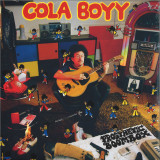
There’s liberation on the dance floor in the songs of Matthew Urango – glimpses of revolution that glimmer beneath the disco ball. “I want my music to bring people together,” says the Californian pop innovator, best known as Cola Boyy. “Because standing together is our best chance at fighting this shit show.” The shit show in question is a broken, brutal system the acclaimed multi-instrumentalist has witnessed up-close. Urango was born with spina bifida and scoliosis in Oxnard, California: a town in which almost 30,000 are estimated to live in poverty. Prosthetic Boombox, his eagerly awaited debut album, might at first glance seem a joyous confetti-burst of pop eclecticism, engineered to sound like “scanning between stations on a car radio, landing on all these different sounds and styles” as Urango puts it. Dig deeper, though, and you’ll discover a simmering sense of rebellion. “The working class are injured, struggling to pay rent and struggling to put food on the table,” he says. “I want to represent that.” Prosthetic Boombox
achieves that goal in a thrilling flurry of inventive indie, funk and soul: take Urango’s car radio analogy, place it in a time-travelling Delorean with Prince in the passenger seat, and you’re half-way there.
Look no closer than Prosthetic Boombox’s euphoric opener, the Avalanches-assisted ‘Don’t Forget Your Neighbourhood.’ The track – which Urango says mixes “the Beach Boys, French disco, house keys and ragtime piano, kinda like the Cheers soundtrack!” – ends with lyrics urging listeners to “fight for your town with your fist closed, strike it and make it more than just a memory.” It’s a reminder that the working classes need to “turn our fists against our oppressors instead of each other,” he explains. After that emphatic introduction comes a horn-laced funk wig-out titled ‘Mailbox’ – a song that gives Dua Lipa’s Future Nostalgia a run for its Studio 54-themed money, featuring rising Londoner JGrrey. Elsewhere, ‘Song for the Mister’ ventures into smooth R&B territory, before ‘Roses’ – a collaboration with Myd of Ed Banger fame – offers a bouquet of bustling disco guitars and infinite bisous of Connan Mockasin’s band drops in on the immaculate ‘Go the Mile’. Urango saves his most introspective moment for the album’s starry closer. ‘Kid Born in Space’, a cosmic collaboration with MGMT frontman Andrew VanWyngarden, sees the artist reflect on what he once had to overcome as a disabled person of colour. “I see them looking down on my dreams of being,” he sings tenderly. “I hear them making fun of my voice, but I keep on moving forward, I refuse to live in anyone else’s shadow.” Prosthetic Boombox, on this subject, is more than an album title – it’s a statement of intent.
“The message of my music is that our class is exploited, oppressed and murdered on the daily. That’s not right, and the system that enables that deserves to be wiped off the face of the earth,” he says. “The only way that happens is if we’re united. That’s the point of my music – to relate to people and unite them.” And what unites more than raucous, irresistibly danceable pop? Prosthetic Boombox is a riot of joyous grooves and catchy hooks for good reason. “I want to reach and spread my message to as many people as possible. You can’t do that if you’re some obscure motherfucker, you know?” he laughs. Don’t bet on him being an “obscure motherfucker” for long.
Die weltbekannte Band aus Island ist mit ihrem elften Studioalbum, dem hoch emotionalen "Mobile Home", zurückgekehrt und veröffentlicht damit ihr erstes Album seit 2018. Das Kollektiv beweist einmal mehr die Meisterhaftigkeit, seine künstlerischen Grenzen zu erweitern, indem sie eines ihrer ambitioniertesten und kraftvollsten Alben seit Jahrzehnten veröffentlichen. Für ihr neuestes Album holten sich GusGus die VÖK-Sängerin Margrét Rán zur Hilfe, um ihren Stil zu erweitern und den Sound des Kollektivs so frisch wie immer zu halten. Das 9-Track-Album bietet eine Mischung aus elektronischem Rock, Ambient, Darkwave, Downtempo und Synthpop. GusGus besser denn je!
World-renowned group GusGus have returned with their 11th studio album, the highly emotive Mobile Home, marking their first album release since 2018. The collective once again prove their commitment to pushing their artistic boundaries as they release one of their most ambitious and powerful albums in decades. For their latest record, GusGus call on VÖK’s lead singer Margrét Rán to help expand their style, keeping the collective’s sound as fresh as ever. The 9-track album features a concoction of electronic rock, ambient, darkwave, downtempo, and synthpop.
After announcing a new album in October 2020, GusGus wowed fans with their first single “Higher,” offering a first taste of how VÖK’s impactful vocals mesh seamlessly with GusGus’ intelligent and powerful electronic production. “Higher” was soon followed up with the darker, downtempo “Stay The Ride” and the bright and energetic synth work on “Our World.” The three captivating singles each received equally remarkable music videos courtesy of founding members Arni & Kinski, the directing team known for working with the likes of Sigur Rós, Kiasmos, Ólafur Arnalds, Of Monsters and Men, and more.
Every track on Mobile Home doubles as a window into a futuristic dystopian world that has been overtaken by machines. A nod to the rise of technology and ever-growing uncertainty surrounding automation, the album explores themes of solitude, rebellion, science fiction, hedonism, pleasure, and anger. Swirling within this world is a disconnected, aching soul who is on the verge of slipping into complete dementia. Forgotten purpose and goals but continues to be driven by the hedonistic default program of material consciousness; sensually self-indulgent and engaged in the pursuit of pleasure alone. In Mobile Home, GusGus challenge themselves like never before, resulting in a wonderfully chaotic reflection of the ongoing war between soul and machine.
With Mobile Home, GusGus show the quality and sonic diversity of the singles pervades throughout the full LP, while preserving the melodramatic themes that tie its 9 tracks together. “Simple Tuesday” showcases the group’s aptitude for blending contemporary electronic production with pop sensibilities while keeping an optimistic tonality at the forefront. Meanwhile, “Love Is Alone” and “Original Heartbreak” offer a slower, more pensive take on synthpop, and evoke feelings of solitude and deep melancholia. “Silence” and “The Rink” boast some of GusGus’s more experimental production, each alternating between radio-ready vocal verses with inventive and exciting synth elements. GusGus closes Mobile Home with “Flush,” an instrumental score that leaves the listener riding high as they finish the LP.
- 1: Seriously
- 2: Dysfunction
- 3: Motivated By Fear
- 4: Interdependency
- 5: Ultimate Violations
- 6: The Threat
- 7: Sexism Impressed
- 8: In Your Face
- 9: Violent Tongue
- 10: True Self
- 11: Word Problem
- 12: Touch
- 13: Right
- 14: In Tradition
- 15: Isolation Burns
- 16: Removal
- 17: Moral Casualty
- 18: Fences
- 19: Blue
- 20: You & Me & The Art Of Being A Woman
- 21: What Are Little Girls Made Of?
- 22: Emaciation
- 23: Unknown
- 24: Wizened
- 25: 6 Feet Down
- 26: All Grown Up
“They were one of those bands that were a prequel to what the future was becoming. Feminism, human rights, animal rights, environmental
protection, gender issues... Spitboy was singing about these issues
30 fucking years ago.
I’m so grateful to have witnessed it.” - Billie Joe Armstrong “Spitboy are one of the most
important punk bands to have ever existed. To me, an angry 20-year-old in London, discovering them felt like the first time I truly identified with a band’s politics and agenda.
One of my all-time favourite albums (then and now) was Penis Envy by Crass. No lyrics
had ever touched me the way this album had--until Spitboy entered my life. My people. My radical feminists. My punk scene. Where I have lived and belonged for over 30
years.” -Vique Simba
- A 1: Time After Time (Acoustic)
- A2: Wayfaring Stranger (Acoustic)
- A3: Early Morning Rain (Acoustic)
- A4: At Last (Acoustic)
- A5: Who Know Where The Time Goes (Acoustic)
- B1: Dark Eyed Molly (Acoustic)
- B2: Songbird (Acoustic)
- B3: Bold Young Farmer (Acoustic)
- B4: Tennessee Waltz (Acoustic)
- B5: It Doesn't Matter Anymore (Acoustic)
- B6: People Get Ready (Acoustic)
- C1: The Water Is Wide (Acoustic)
- C2: Kathy's Song (Acoustic)
- C3: True Colours (Acoustic)
- C4: You Take My Breath Away (Acoustic)
- D1: American Tune (Acoustic)
- D2: I Wandered By A Brookside (Acoustic)
- D3: Autumn Leaves (Acoustic)
- D4: Wade In The Water (Acoustic)
- D5: Danny Boy (Acoustic)
• 20 acoustic tracks, compiled as an acoustic best-of album.
• The new album builds on the popularity of a previous acoustic album, Simply Eva (12 tracks), released 10 years ago, which has UK scanned sales of 236K and was Top 5 on release.
• The 3rd Jan 2021 was the 25th anniversary of Eva Cassidy’s legendary Blues Alley concert. A new documentary, “One Night That Changed Everything” was premiered on the anniversary itself with a general promotional campaign around this date.
• The 18th March 2021 is the 20th anniversary of the Songbird album going No.1, there will be a promotional campaign in support.
Soul Jazz Records’ CD / LP (plus digital download code)
reissue of this very rare album, first released as a private-press
LP in 1978 on flautist Lloyd McNeill’s own Baobab Record label
in Washington, DC. The album has been out-of-print for 43
years and is lovingly remastered by Soul Jazz Records.
‘Tori’ is a stunning album that blends Brazilian and Latin flavours
with deep Spiritual Jazz. The album features a strong line up
which includes legendary Brazilian figures like Dom Um Romao,
Nana Vasconcelos and Dom Salvador alongside jazz
heavyweights such as Buster Williams, Howard Johnson, John
La Barbera and more. These A-team musicians were all
regulars in McNeill’s long-running and highly successful resident
live group in New York, all set up to blend deep jazz, Brazilian
and Latin music together.
Lloyd McNeill is an African-American flautist, painter, poet, and
photographer born in Washington, D.C. in 1935. His multidisciplinary creative life led to encounters and friendships with
Nina Simone, Picasso, Eric Dolphy, Nana Vasconceles and
other legendary cultural figures.
Lloyd McNeill’s hypnotic ‘Washington Suite’ was originally
commissioned as a piece of music for the Capital Ballet
Company, in Washington DC.
McNeill grew up through the era of the Civil Rights Movement in
the 1960s and his life and work is a reflection of those ideals. In
the mid-1960s he moved to France where he became friends
with Picasso, working with a number of émigré-jazz musicians
whilst living in Paris. In the late 1960s he taught jazz and
painting workshops at the New Thing Art and Architecture
Center in Washington. In the 1970s he travelled throughout
Brazil and West Africa studying music and taught music
anthropology in the US.
Having already unearthed three collections of archival ‘70s recordings by Catherine Christer Hennix, Blank Forms continues their annual illumination of the visionary Swedish composer’s music by turning to more recent work with this first-time vinyl edition of Hennix’s “Blues Alif Lam Mim in the Mode of Rag Infinity/Rag Cosmosis,” a 2014 piece first released as a CD in 2016 (Important Records).
The double album captures the April 22, 2014 premiere of Hennix’s composition by by the Chora(s)san Time-Court Mirage, her expanded just intonation ensemble, featuring a brass section of Amir ElSaffar, Paul Schwingenschlögl, Hilary Jeffery, Elena Kakaliagou, and Robin Hayward; live electronics by Stefan Tiedje and Marcus Pal; and voice by Amirtha Kidambi, Imam Ahmet Muhsin Tüzer, and Hennix herself. Intended to reveal the blues’ origins in the eastern musical traditions of raga and makam, “Blues Alif Lam Mim in the Mode of Rag Infinity/Rag Cosmosis” has its roots in Hennix’s 2013 realization of an “Illuminatory Sound Environment,” a concept developed in 1978 by anti-artist Henry Flynt on the basis of Hennix’s own “The Electric Harpsichord.”
As Hennix explains in Other Matters, Blank Forms’ 2019 collection of her writings:
“Rag Infinity/Rag Cosmosis presents fragments of ‘raga-like’ frequency constellations following distinct cycles and permuting their order, creating a simultaneity of ‘multi-universes.’ When two such ‘universes’ come in proximity of each other and begin unfolding simultaneously along distinct cycles, there is a kaleidoscopic exfoliation of frequencies as one universe is becoming two, but not separated—the effect of cosmosis is entrained, binding two or more frequency universes into proximity where their modal properties interact and blend, creating in the process entirely new microtonal constellations in an omnidirectional simultaneous cosmic order with phenomenologically ‘transfinite’ Poincaré cycles (cyclic returns to initial conditions).”
As with Hennix’s best work, the organic unfolding of this quivering drone belies a precision that opens onto the infinitesimal. Upon its mesmerizing ebb and flow, the vocalists incant a devotional poem written in Arabic by Hennix and featuring quotations from the Quran. Also reproduced on the album’s gatefold jacket, Hennix’s reduction of the sacred text to its most elegant formulation invites the contemplator to bring their inner knowledge to the composition for use as a prompt for meditation. Yet the piece offers depth to even the most secular listener willing to immerse themselves in music brimming with such serene intensity.
Catherine Christer Hennix (b. 1948) started her creative life playing drums with her older brother Peter, growing up in Sweden where she heard jazz luminaries, such as John Coltrane, Eric Dolphy, Dexter Gordon, Archie Shepp, and Cecil Taylor perform from 1960 to 1967. Directly after high school, Hennix went to work at Stockholm’s pioneering Elektronmusikstudion (EMS), where she developed early tape music, incorporating computer generated speech done at the Royal Technological University (KTH), where she was an undergraduate student. After traveling to New York In 1968, she met artists Dick Higgins and Alison Knowles who invited her to stay at the Something Else Press Town House where she had the opportunity to meet, among others, composers John Cage, James Tenney, and Phil Corner. During the following years she developed fruitful collaborative relationships with many composers in the burgeoning American avant-garde, including, most significantly, Henry Flynt and La Monte Young. Young introduced Hennix to Hindustani raga master Pandit Pran Nath and she would later study intensively under him as his first European disciple. While Hennix continued to make music performing alongside Arthur Russell, Marc Johnson, Henry Flynt, and Arthur Rhames, she also served as a professor of Mathematics and Computer Science at SUNY New Paltz and as a visiting Professor of Logic (at Marvin Minsky’s invitation) at MIT’s Artificial Intelligence Laboratory. In recent years Hennix has led the just-intonation ensemble the Chora(s)san Time-Court Mirage, which has featured musicians Amelia Cuni, Amirtha Kidambi, Chiyoku Szlavnics, Hilary Jeffrey, Amir El-Saffar, Benjamin Duboc and Rozemarie Heggen. She currently resides in Istanbul, Turkey pursuing studies in classical Arabic and Turkish makam.
Techno isn't a genre that has birthed many consistent albums, and the dub techno subgenre even less so, but one indisputable classic is Porter Ricks' debut 'Biokinetics'. Originally issued on the legendary Basic Channel sub-label Chain Reaction in 1996 following a trio of 12"s, 'Biokinetics' was the first of the label's album releases, and still stands as its crowning achievement. Porter Ricks are Thomas Köner and Andy Mellwig, and between them they re-framed the techno sound, imbuing the spacious ambience pioneered by label bosses Mark Ernestus and Moritz Von Oswald with a frosty, isolated experimental bent, and combining it with the sort of haunted minimalism of early Plastikman.
What separated 'Biokinetics' from other albums at the time was its unwavering narrative - the exact sound has been interpreted countless times since, but the immersive qualities of this singular record have rarely been touched. Maybe it is down to the silvery underwater concept that ties each track together - the bubbling pads, sub-aquatic basses and muffled kick drums. But as with any great album, it's hard to exactly put your finger on what makes it a classic. Simply put 'Biokinetics' is one of the most important records in the genre and one of techno's finest albums. It has been re-released ten years ago by Type Records, and now Mille Plateaux is celebrating Porter Ricks' and Biokinetics' 25th anniversary with this sumptuous double viny edition.
Reissue for John Joseph’s own all-star group 2017 debut album
At its purest, there is little that can match the visceral thrill and empowering spirit of hardcore. As front-man of New York City hardcore kings Cro-Mags, this is something John Joseph knows very well, and with Up In Arms, he and his Bloodclot compatriots deliver a furious collection that hits hard on every level. "In this band we're doing what each of us have always done: give it our all," he states plainly. "We work hard, and we have a lot to say. Look around the planet - people are fed up with the corrupt ruling class. They destroy the planet and kill millions for profit, and the formula for our response is simple: Anger + applied knowledge = results. Don't just bitch. Change it."
The results reflect the roots and passions of the individual members. Danzig/Murphy's Law guitarist Todd Youth was the first piece of the puzzle. "We've always talked about doing this record together, Todd had songs written and I had notebooks full of lyrics. In late September 2015, I went out to LA to do a triathlon and injured my calf muscle, so I couldn't race, and Todd said he could get some studio time. So, we went in and cut the demo. While there are things we may perceive as a negative in our lives, in fact the universe has a bigger plan, and that experience ultimately resulted in the record." Having been friends with Queens Of The Stone Age and Danzig powerhouse drummer Joey Castillo for three decades, the two musicians had long admired each other's work, and their collaboration has been a long time coming. Following Castillo's suggestion of bringing in Nick Oliveri (Queens Of The Stone Age/The Dwarves) to handle bass duties, the lineup was complete. The songs that comprise Up In Arms manifested after the quartet plugged in and let the music speak for them. "We didn't decide to try to play anything, these are the songs that happened when we started jamming, and I love this band because there are no egos involved. Our goal is to make the best music possible, period. I love it when those guys contribute with melodies, etc., and I've even helped with some of the arrangements. Because we all think alike, our lyrics deal with the issues of the day, and that makes for better songs."
Every track on Up In Arms lives up to the rallying cry of the album's title - the bursts of high energy hardcore act as the perfect accompaniment to Joseph setting his sights on injustice and the seemingly endless flaws of the contemporary world. The breakneck thrashing of "Slow Kill Genocide" is an anthem for everyone sickened by those responsible for "killing the planet and all its inhabitants through industry and war. They're fucking maniacs and must be stopped." The suitably titled "Manic" attacks with bared fangs, Joseph making it clear that you can only push someone so far before they will react with violence - a call to arms for the disenfranchised who want tomorrow's world to be better than today's. Tracked at NRG in Los Angeles, the raw, old-school production that leaps out from the speaker comes courtesy of producer Zeuss (Hatebreed, Revocation), and the record was mixed by Kyle McAulay at NRG. From the moment the opening title track explodes to life, it's clear that everyone involved is having a blast and playing from the heart, and that this is no frills / no bullshit music at its most passionate - every song evoking mental images of utter chaos in a heaving mosh pit.
For anyone approaching the album for the first time, Joseph has only this to say: "Turn the volume way the fuck up!" And with plans to tour everywhere, Bloodclot will be getting in a lot of faces in 2017 and beyond. "We are already writing material and the next album is in the works. But, for now, all we want is to hit the stage to support 'Up in Arms', and every single night leave every ounce of ourselves up there."
A deep dive into the one of most collectable jazz catalogues in the world, a selection of some of the rarest and most sought-after recordings from the 60s and 70s, a time when British jazz began to find its own identity. Drawn from the iconic labels of Decca, Deram, Argo, EMI Columbia/Lansdowne Series, Fontana, Mercury, & Philips. A figure in British modern jazz for over half a century, Don Rendell was both active protagonist and key witness to the main developments in the music from its rise out of tiny clubs and back rooms on up to the most prestigious national stages. From his earliest performances in London’s West End and his work of the 50s and 60s — most not ably with the Don Rendell-Ian Carr Quintet — to the lower profile work of the 70s and 80s, his quite assurance and consistent performance marked him out as a highly respected figure among his peers. He is one of a handful of British artists to feature on Blue Note Records and appeared on some of the most distinctive and characterful British jazz albums by the likes of Michael Garrick, Stan Tracey, Amancio D’Silva, and Neil Ardley. Even though Rendell eschewed much of the free and electric fusion styles that came to the fore in the late 60s, in the main sticking to an acoustic sound with melody and rhythm at its heart, he similarly bridled at any notion that he was merely a ‘bopper’, a description he positively hated. In many ways, Space Walk was as much a valedictory as transitionary album for Rendell. It was his last for Denis Preston, the fabled producer behind Lansdowne Studios, described by Neil Ardley as a ‘rare Diaghilev like figure’ who steered many of the key figures of the British jazz scene into the studio when nobody else would record them. It was also Rendell’s final project for EMI Columbia and his last as a leader for a major record label. After Space Walk, Rendell would record for smaller, independent labels like Spotlite. But as much as the album is a farewell to one chapter, it also marked the way forward to the next..
A little over a year ago, Nathan Williams found himself back in San Diego, writing what would eventually become Hideaway, his seventh album as Wavves, in a little shed behind his parents’ house. It was also the place where he made some of his earliest albums, before he became known for his uncanny ability to write songs that sneered at the world while evoking pathos, sympathy, and a deep understanding of how sometimes we’re our own worst enemies, and that can be okay. Williams’ return to his childhood home was not just a symbolic attempt at jumpstarting creativity. It came as a result of a series of major life changes. A decade ago, Williams released King of the Beach on the maverick indie label Fat Possum. The album was a cocky collection of pop punk gems that catapulted him into the public consciousness, eventually prompting a jump from Fat Possum into the major label system, where he released two albums before becoming disillusioned by the lack of creative agency available to him. In 2017, Williams self-released You’re Welcome on his label, Ghost Ramp. Now, Williams has returned to Fat Possum with a barbed collection of anxious anthems that grapple with the looming sense of doom and despair that comes with getting older in an increasingly chaotic world. “He’ll always skew toward the Bart Simpson character,” says Matthew Johnson, founder of Fat Possum. “But that does not mean that he doesn’t have some commentary, and once in awhile, it’s totally spot on.” Across its brief but impactful nine tracks, Hideaway is about what happens when you get old enough to take stock of the world around you and realize that no one is going to save you but yourself, and even that might be a tall order. The album features Williams’ most universal and urgent songs yet. “Honeycomb” lopes along sunnily, as Williams sings affecting lines like “I feel like I’m dying, it’s cool, it’s great, just pretend I’m okay.” His directness is shocking, and proof that Williams is the kind of songwriter who can capture pain and uncertainty with resonant brutal force. “It’s real peaks and valleys with me,” Williams says. “I can be super optimistic and I can feel really good, and then I can hit a skid and it’s like an earthquake hits my life, and everything just falls apart. Some of it is my own doing, of course.” It’s this self awareness that permeates each of Hideaway’s songs, marking them each as mature reckonings with who he is. After realizing the material he’d been working on in the hideaway was starting to take shape, Williams, along with bandmates Stephen Pope and Alex Gates workshopped the songs in a series of now-abandoned studio sessions, before linking up with musician and producer Dave Sitek of TV on the Radio to help fully realize their new songs.
Strapping Young Lad was a Canadian extreme metal band formed by Devin Townsend in Vancouver in 1994. The band started as a one-man studio project; Devin Townsend played most of the instruments on the 1995 debut album, Heavy as a Really Heavy Thing. By 1997, he had recruited permanent members; this line-up, which consisted of Townsend on vocals and guitar, Jed Simon on guitar, Byron Stroud on bass, and Gene Hoglan on drums, lasted until the band's dissolution. Strapping Young Lad's music was characterized by the use of polyrhythmic guitar riffing and drumming, blast beats and wall of sound production. band leader Devin Townsend was also noted for his eccentric appearance and on-stage behaviour, which greatly contributed to the band's intense live performances. The band gained critical success and a growing underground fan base from their 1997 album City. After a hiatus between 1999 and 2002, the band released three more albums, reaching their commercial peak with the 2006 effort, The New Black. Townsend disbanded Strapping Young Lad in May 2007, announcing his decision to retreat from public view while continuing to record solo albums. Listenable is now extremely delighted to be releasing All Strapping Young Lad beyond Legendary studio albums on De Luxe Limited Edition Vinyls. A brand new vinyl master has been made for each album. All albums include bonus tracks . Grab them now !.
COS might not be the first genre defying progressive music group you’ve heard who share both wordless onomatopoeic vocals and a snappy three letter title (complete with philosophical leanings and alchemic penchants) but on listening to this first ever custom Cos compendium you might have just discovered a new favourite!
Perhaps it’s no coincidence that COS share close spiritual, stylistic or social connections to the aforementioned bands, as one of the few long-withstanding single-syllable ensembles to remain utterly idiosyncratic and incomparable within their hyper-focussed and impenetrable creative bubble. But as a 1970s group that effortlessly MIX head-nod prog, synth-driven jazz, cinematic sound-designs, dislocated disco, arkestral operatics and high-brow conceptual anti-pop grooves, it’s easier to remember the name COS than thumb the vast amount of genre-dividers in your local record shop which COS COULD occupy. With the crème de la crème of Belgian jazz/prog/psych/funk within their ranks, their combined idea-to-ability ratio litters the Cos-ography with concepts that aficionados, future fans, collaborators and critics still haven’t began to unravel.
With their earliest roots in the compact jazz group Brussels Art Quintet the group spent their sapling years creating art-school prog under the name Classroom, this flourishing collective, cultivated by multi-instrumentalist mainstay Daniel Schell, would soon shed its leaves, dropping band-members and typographics reducing its moniker to simply COS (a multi-purpose, globally recognised word, with links to Alchemy and philosophy, with a hard phonetic delivery to suit the groups heavier rhythmic approach). In it’s new skin COS also shed all forms of orthodox language to find its true exclusive voice. Fronted, in the conventional sense, by the daughter of author and part-time jazz player Jean De Trazegnies, the bands wordless singer changed her name to Pascale SON, to accentuate the French word for “sound”. Drawing comparisons with sound poets like Polish jazz legend Urszula Dudziak or Hungarian Katalin Ladik, but retaining the crystalline femininity (and funk) of Flora Purim, while effectively sharing an imaginary lyric book of non-words with Damo Suzuki, Magma or a future Liz Fraser... To use the word “unique” would, by COS academic standards, be lazy journalism.
Before there was Rimarimba, Suffolk-born, Felixstowe-based musician and home recording enthusiast Robert Cox assembled a cast of friends, some musicians and some not so much, for an experiment in group exploration and ecstatic expression under the name The Same. Sonically and gravitationally defined by Cox’s collaboration with guitarist Andy Thomas (a partnership which formed in 1976 to record as General Motors), Sync or Swim, The Same’s one and only album, also featured keyboards by Florence Atkinson and Paul Ridout, and vocals by Robert’s sister Rebecca.
Originally released in small cassette and vinyl quantities on Unlikely Records, Cox’s imprint and a meeting point for many other musicians found at the fringe, the back cover of the original album jacket is as much a map of the personnel, place, and process
fundamental to Sync or Swim as it is a table of contents for DIY music-making at the beginning of the 80s: “Recorded in peaceful Wiltshire between September 18th and October 6th 1981 (using a miscellany of home made devices) onto a Teac A-3300SX via a Teac A-3440. No noise reduction systems were used.”
The additional equipment listed – a combination of consumer technology and DIY innovation – speaks to an unpretentious, improvisational ethos that pilots Sync or Swim, and Cox’s career as a whole. Rimarimba, whose near complete discography Freedom To Spend made available again in 2019, showcased Cox’s simultaneously hermetic and prolific creative process, while The Same celebrates making sound for sound’s sake and the serendipity surrounding those moments.
Wiltshire, home to the Stonehenge stone circles and a county of empty plains in the southwest of England, is worlds away from the commerce and industry of Glenn Branca’s New York City or Neu’s Düsseldorf. While The Same may feel in some ways like a British blend of these minimalist and motorik machinations, Cox and Thomas were curiously fascinated with The Grateful Dead and Frank Zappa’s brand of psychedelic music.
Cox’s own definition of British psychedelia is “folk music meeting technology and going bonkers.” It’s by this definition that Sync or Swim takes unexpected forms, from tape-speed tomfoolery, concrète sound collage and analog delayed marimbas, to the colorful spectrum of interwoven guitar play between Cox and Thomas reminiscent of Ghanaian Highlife but more accurately indebted to Jerry Garcia.
Cold crushed electronics and tape noise by iDEAL faithful, Altar of Flies, returning to his native Swedish label with a 3rd album of possessed and unsettling tonal abstraction and psychoacoustic isolationism.
Known to the reaper as Mattias Gustafsson, Alter of Flies is the Mjölby-based sound artist’s most prolific alias, responsible for dozens of tapes and LPs for Chondritic Sound and White centipede Noise beside his trio of turns for iDEAL since the mid ‘00s. ‘Bortom Reven’ sticks closely to what he does best, conjuring bleakly depressive atmospheres ripe for inhabitation by the harder-to-please followers of North European ambient and industrial musicks, with an alchemic application of field recordings, tape loops, and primitive oscillators that vividly brings his thoughts into the dark light.
‘Bottom Reven’ is perhaps reflective of a certain, ascetic and isolated Swedish characteristic, enacting solitary rituals that better connect Altar of Flies with his environment, or simply entertain him during long, cold, dark nights. With hints of CMvH’s EVP and John Duncan’s searching shortwave radio textures to ‘Hur regn uppstår,’ and more ruptured reception of scrambled ether voices in ‘Terapimusik,’ alongside the title track’s worn-out nub of intrigue, and the damp basement clangour of ‘Under vår livstid’; its not one for those who get shook by the sight of their own shadow, but a real treat for listeners of a lonelier disposition who get off on the sound of the house creaking at night.
- A1: Sunspots
- A2: Wishing Well
- A3: Compositions For The Young And Old
- A4: Heartbreak A Stranger
- A5: Dreaming, I Am
- B1: If You're True
- B2: Poison Years
- B3: Sinners And Their Repentances
- B4: Lonely Afternoon
- C1: Brasilia Crossed With Trenton
- C2: See A Little Light
- C3: Whichever Way The Wind Blows
- C4: All Those People Know
- D1: Shoot Out The Lights
- D2: Hardly Getting Over It
- D3: Celebrated Summer
- D4: Makes No Sense At All
- E1: Gift
- E2: Company Book
- E3: Hoover Dam
- E4: After All The Roads Have Led To Nowhere
- F1: Where Diamonds Are Halos
- F2: Slick
- F3: Going Home
- G1: Changes
- G2: Can't Help You Any More
- G3: Helpless
- G4: If I Can't Change Your Mind
- G5: In The Eyes Of My Friends
- H1: Clownmaster
- H2: Gee Angel
- H3: Explode And Make Up
- H4: The Slimlp 5 & 6
- I1: Moving Trucks
- I2: Taking Everything
- I3: First Drag Of The Day
- I4: I Hate Alternative Rock
- I5: Stand Guard
- J1: Classifieds
- J2: Hear Me Calling
- J3: Art Crisis
- J4: Anymore Time Between
- K1: Skintrade
- K2: Eternally Fried
- K3: Roll Over And Die
- K4: Lonely Afternoon
- L1: Egoverride
- L2: Reflecting Pool
- L3: Disappointed
- L4: Hanging Tree
- F4: Running Out Of Time
- L5: Man On The Moon
- M1: The Act We Act
- M2: A Good Idea
- M3: I Hate Alternative Rock
- M4: See A Little Light
- M5: Hoover Dam
- M6: Circles
- N1: Paralyzed
- N2: I Apologize
- N3: Chartered Trips
- N4: Celebrated Summer
- N5: Makes No Sense At All
- N6: New Day Rising
- O1: Fort Knox, King Solomon
- O2: I Hate Alternative Rock
- P1: Could You Be The One?
- P2: I Apologize
- P3: Chartered Trips
- F5: Frustration
Demon Records presents Distortion: Live, the fourth and final edition in a series of expansive vinyl box sets chronicling the solo career of legendary American musician Bob Mould.
Bob Mould’s career began in 1979 with the iconic underground punk group Hüsker Dü before forming the beloved alternative rock band Sugar and releasing numerous critically acclaimed solo albums. The final volume in the series features 8LPs of live recordings from across Mould’s solo career.
8 LPs including –
• 4 live albums – Live At The Cabaret Metro, 1989 (first time on vinyl), The Joke Is Always On Us, Sometimes, LiveDog98 (first time on vinyl), and Live At ATP 2008 (first time on vinyl)
• Each album is presented with brand new artwork designed by illustrator Simon Marchner and pressed on 140g clear vinyl
with unique splatter effects
• Bonus LP Distortion Plus: Live which features live rarities including B-sides and stand-out tracks from the Circle Of Friends concert film
• Mastered by Jeff Lipton and Maria Rice at Peerless Mastering in Boston Plus -
• A 28-page companion booklet featuring: a new and exclusive foreword by Bob Mould; an interview conducted by journalist Keith
Cameron; an exclusive testimonial from Bully’s Alicia Bognanno; rare photographs and memorabilia
180g Coloured Vinyl Series. Contains New Specially Prepared Liner Notes By Penguin Guide To Jazz’s Writer Brian Morton And By Paris’ Prestigious Jazz Magazine. “....The mood of their Verve recording together, though, was deliberately gentler, less taxing, more intimate. These tunes, light in their way, almost homespun, are invested with an extraordinary humanity. There isn’t an ounce of sentiment in “Under a Blanket of Blue” or “Isn’t This a Lovely Day?”, but there is deep feeling and a profound sense of human solidarity. They were not singing about civil rights, there is no erotic charge in the encounter; when they sing about breaking hearts, it’s clear that everything is mendable. The challenge of bebop had been met and quietly negotiated. Here was jazz with its original message: the individual matters, but others matter, too. The mutual respect with which Ella Fitzgerald, Louis Armstrong and the other four exceptional musicians go through a repertoire of unforgettable standards selected by Granz is readily apparent. Songs like “They Can’t Take That Away from Me”, “Tenderly” and “April in Paris” make Ella & Louis a jewel of simplicity and timeless humanity.” Vocals; Louis Armstrong, Trumpet & Ella Fitzgerald Vocals; Oscar Peterson, Piano; Herb Ellis, Guitar; Ray Brown, Bass; Buddy Rich, Drums Hollywood, August 16, 1956. Original Session Produced By Norman Granz. *Bonus track: Ella Fitzgerald (vc), Louis Armstrong (tp, vc) with Bob Haggart & His Orchestra. New York, January 18, 1946. 5 Stars - Down Beat Magazine Ella & Louis is one of the very, very few albums to have been issued in this era of the LP flood that is sure to endure for decades.” (Nat Hentoff)
- A1: Pennies From Heaven
- A2: Please Be Kind
- A3: (Love Is) The Tender Trap
- A4: Looking At The World Thru Rose Colored Glasses
- A5: My Kind Of Girl
- A6: Pennies From Heaven (1956 Version)
- B1: I Only Have Eyes For You
- B2: Nice Work If You Can Get It
- B3: Learnin’ The Blues
- B4: I’m Gonna Sit Right Down And Write Myself A Letter
- B5: I Won’t Dance
- B6: Nice Work If You Can Get It
180g Coloured Vinyl Series Contains New Specially Prepared Liner Notes By Penguin Guide To Jazz’s Writer Brian Morton And By Paris’
Prestigious Jazz Magazine. Frank Sinatra & Count Basie Sinatra Basie + 2 Bonus Tracks (Orange Vinyl) “Sinatra had long since mastered the microphone, which had become his instrument, capable of a full-on roar or a whisper so intimate it seemed to be spoken inside the listener’s head. Tackling things like “Nice Work If You Can Get It” and “I Won’t Dance” took him back to a kind of repertoire he had mastered
two decades before. The youthful sheen hadn’t quite left the voice and age hadn’t yet darkened it. Basie wasn’t the greatest sight-reader and may not have played on all the tracks, but his band knew the score and Sinatra-Basie remains a collaboration of great strength and naturalness.” Penguin Guide to Jazz “The following decade would see his comeback to stardom, and Sinatra-Basie remains one of the highlights of that period. In this summit meeting, the iconic sonority of Basie’s orchestra is sublimated by Neal Hefti’s arrangements, while Sinatra, impeccable from start to finish, draws from the prodigious energy of the horns, strings and drums of this triumphant big band a simply irresistible elegance.” Jazz Magazine
Before there was Rimarimba, Suffolk-born, Felixstowe-based musician and home recording enthusiast Robert Cox assembled a cast of friends, some musicians and some not so much, for an experiment in group exploration and ecstatic expression under the name The Same. Sonically and gravitationally defined by Cox's collaboration with guitarist Andy Thomas (a partnership which formed in 1976 to record as General Motors), Sync or Swim, The Same's one and only album, also featured keyboards by Florence Atkinson and Paul Ridout, and vocals by Robert's sister Rebecca. Originally released in small cassette and vinyl quantities on Unlikely Records, Cox's imprint and a meeting point for many other musicians found at the fringe, the back cover of the original album jacket is as much a map of the personnel, place, and process fundamental to Sync or Swim as it is a table of contents for DIY music-making at the beginning of the 80s: "Recorded in peaceful Wiltshire between September 18th and October 6th 1981 (using a miscellany of home made devices) onto a Teac A-3300SX via a Teac A-3440. No noise reduction systems were used." Cox's own definition of British psychedelia is "folk music meeting technology and going bonkers." It's by this definition that Sync or Swim takes unexpected forms, from tape-speed tomfoolery, concrète sound collage and analog delayed marimbas, to the colorful spectrum of interwoven guitar play between Cox and Thomas reminiscent of Ghanaian Highlife but more accurately indebted to Jerry Garcia. On the album's culminating final track, "E Scapes," all of these elements are brought together in twenty-minute journey through layers of chiming guitar loops and spritely solos, keyed percussion, and tape experiments, all played as though the sun were rising over the standing stones of Salisbury Plain. Cox would later go to similarly greath lengths with certain solo sound endeavors, but the confluence of musicians on "E Scapes" pushes the piece to exceptional, unforgettable heights. Transferred and remastered from the original tapes, The Same's Sync or Swim arrives on LP July 16th, 2021 on Freedom To Spend, just in time for the album's 40th anniversary.