Search:sister bossa

Styles
All
  • 1
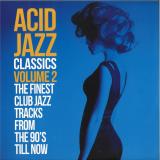
Various - ACID JAZZ CLASSICS VOL.2 LP 2x12"
 
19

After the excellent response to the first volume, Acid Jazz Classics returns with the second volume.
The Acid Jazz sound born in the 1990s, which harked back to the Soul Funk of the 1970s, found in IRMA one of the labels most dedicated to
this world, and still releases music that can be categorized under this name.
From songs from the 1990s with artists like Jestofunk, Bossa Nostra, Black & Brown, Gazzara, Italian Secret Service, LTJ Xperience, Sarah
Jane Morris, to the present day with artists like The Smoke Orchestra, Yuts and Culture, Fusion Funk Foundation, Micky More & Andy Tee,
Belladonna, and many others.
19 tracks on a double vinyl, some of them never before released on vinyl, all rigorously perfect for both the club and listening.
In fact, some tracks are little club gems:
"Say It Again" by Jestofunk in its very first version from 1993;
Belladonna - Black Jazz, one of her most requested songs ever released on vinyl;
Key Tronics Ensemble - You For Me, the Montuno Salsa version performed for years by Little Louie Vega at many of his gigs;
the Micky More & Andy Tee remix of Sarah Jane Morris's Hold On To Love!

In Stock

On Stock and ready to ship

24,79
Balthazar - Rats LP

Balthazar

Rats LP

12inch39231781
PLAY IT AGAIN SAM
23.11.2023

'Rats' von 2012 war das zweite Album der belgischen Indie-Band Balthazar. Das selbst-produzierte Album enthält die Essenz von Balthazar: Herzzerreißende Melodien und Gesangsharmonien, melancholischer Bossa Nova und euphorische Walzer treffen auf Geschichten von Liebe, Verlangen und anderen Dummheiten. Zur Feier des 40-jährigen Jubiläums von PIAS erscheint nun die limitierte Re-Issue auf transparent-orangen Vinyl.

In Stock

On Stock and ready to ship

22,48
Various - Tchic Tchic: French Bossa Nova 1963-1974  Colored Edition LP 2x12"
  • A1: Les Masques - Il Faut Tenir (1969)
  • A2: Isabelle Aubret - Casa Forte (1971)
  • A3: Christianne Legrand - Hlm Et Ciné Roman (1972)
  • A4: Jean Constantin - Pas Tant D'chichi Ponpon (1972)
  • A5: Billy Nencioli & Baden Powell - Si Rien Ne Va (1969)
  • B1-: Marpessa Dawn - Le Petit Cuica (1963)
  • B2: Jean-Pierre Sabar - Vai Vai (1974)
  • B3: Sophia Loren - De Jour En Jour (1963)
  • B4: Isabelle - Jusqu’à La Tombée Du Jour (1969)
  • B5: Sylvia Fels - Corto Maltesse (1974)
  • C1: Frank Gérard - Comme Une Samba (1972)
  • C2: Ann Sorel - La Poupée Des Favellas (1971)
  • C3: Charles Level - Un Enfant Café Au Lait (1971)
  • C4: Andrea Parisy - Les Mains Qui Font Du Bien (1970)
  • C5: Audrey Arno - Quand Jean-Paul Rentrera (1969)
  • C6: Aldo Frank - T’as Vu Ce Printemps (1970)
  • D1: Christianne Legrand - Cent Mille Poissons Dans Ton Filet (1972)
  • D2: Clarinha - Lemenja (1970)
  • D3: Hit Parade Des Enfants - Aquarela (1976)
  • D4: Jean-Pierre Lang - Tendresse (1965)
  • D5: Magalie Noël - Une Énorme Samba (1970)
  • D6: Françoise Legrand - La Lune

Ever since the late 1950s bossa-nova revolution, Brazil’s influence on French music has been undeniable. Pierre Barouh, Georges Moustaki and a vast array of lesser known artists, all made the Musica Popular Brasileira (MPB) an axis of promotion at the service of a cool and metaphysical, modern and mixed Brazilian lifestyle. Some were seduced by the poetic languors of the bossa, some were looking for fun, and others just loved the American hybridization of jazz-bossa, jazz-samba.


What is bossa nova? One of its creators, Joao Gilberto said: "Its style, cadence, everything is samba. At the very start, we didn't call it bossa nova, we sang a little samba made up of a single note - Samba de uma nota so .... The discussion around the origins of bossa nova is therefore useless”. It is nevertheless useful to remember that these magnificent Brazilian songs, which the guitarist describes as samba, were shifted and balanced around improbable chords. "I like things that lean, the in-betweens that limp with grace," said Pierre Barrouh, quoting Jean Cocteau.


With emotion, arrangements for violin and supple guitar licks, bossa nova rapidly changed. A transformation that can be heard in the Tchic, tchic, French Bossa Nova 1963-1974 compilation, the result of a cultural reappropriation, which traveled through the United States and supplemented itself in France.

A musical revolution that has remained significant, bossa nova was born in Rio. From 1956 to 1961, Brazil lived through its golden years. In five years, the country had invented its modernist style. Elected president in 1956, Juscelino Kubitschek de Oliveira, an elegant man with a broad forehead, brandished a promising slogan: "Fifty years of progress in five years". He quickly got to work. Not worried about increasing debt, he launched the project for a new federal capital, Brasilia, designed by the communist architect Oscar Niemeyer. Volkswagen opened state-of-the-art factories and created the “fusquinha”, the Beetle. In Rio, the Vespa made its first appearance. The Arpoador Surf Club crew run into the “girl” from Ipanema, Helô Pinheiro - the tanned garota ("chick"), between a flower and mermaid, who at 17 walked by the Veloso bar, where the fiery author and composer, Tom Jobim and Vinicius de Moraes, were getting drunk on whiskey. From then on, bossa symbolized cool.

In 1958, Joao Gilberto recorded Chega de Saudade, which the directors of Philips denied, calling it "music for fagots". The marketing director, who believed in it, secretly pressed 3000 78-inch vinyls and distributed them at schools around Rio, creating a tidal wave.

American jazzmen then took over. In particular, trumpeter Dizzy Gillespie and guitarist Charlie Byrd. In November 1962, the Brazilian Ministry of Foreign Affairs funded a "Bossa-Nova" concert at Carnegie Hall in New York, inviting the genre’s pioneers. Unprepared, the show soon turned to disaster. But the troupe was invited to the White House by Jackie Kennedy. The first lady loved "the new beat" and in particular Maria Ninguem, a song by Carlos Lyra, later covered by Brigitte Bardot.

In Brazil, the 1964 military coup quickly ended this euphoria. The destructive atmosphere that ensued pushed many Brazilian musicians to leave, if not to exile. Thus, Tom Jobim, Sergio Mendes and Joao Gilberto arrived to the United States. In New York, Joao Gilberto met saxophonist Stan Getz. At the time, he was married to the Bahianese Astrud Weinert Gilberto, who had a German father. She had never sung before, but she knew how to speak English. Getz therefore asked her to replace her husband on The Girl From Ipanema. The Getz/Gilberto record with Tom Jobim on piano, was released in March 1964. Phil Ramone, the "pope of pop" was in charge of sound.

Bossa nova arrived in Paris through the classic “guitar-voice” channel (Pierre Barouh, Baden Powell, Moustaki…) But France loved jazz and Paris had already welcomed its American contributors. All these good people were to pass through Saint-Germain-des-Prés. The cabaret l'Escale became the Mecca of Latin American sound where one could find Pierre Barrouh and his friends, such as the Camara Trio, samba-jazz aces, whose only record was published by the Saravah label. With a band strangely called Les Masques (a band that included Nicole Croisille and Pierre Vassiliu, among others), the Camara Trio recorded an interesting Brazilian Sound, including the track Il faut tenir which is present on this tasty compilation of rarities.

Other enlightened musicians can also be found on the compilation, such as Jean-Pierre Sabar (songwriter for Hardy, Auffray, Leforestier ...) and the French pop rock organist Balthazar. In 1975, Sabar recorded Aurinkoinen Musiikkimatka on a Finnish label, which featured the crazy Vai, Vai, included on this record. We are now following the footsteps of Brazilian electronic musicians such as Sergio Mendes, Eumir Deodato or Marcos Valle who created funk and disco sounds on their keyboards and synthesizers. A style that influenced Véronique Sanson when she wrote Jusqu’à la Tombée de la nuit in 1969 for Isabelle de Funès, the niece of Louis and a great friend of Michel Berger - Sanson did end up singing this track on her 1992 Sans Regret record.


The pinnacle of exoticism and travel, Sylvia Fels’ Corto Maltese includes bongos, sea mist and ocean sounds. The title was taken from Jacky Chalard’s concept album written in 1974, Je suis vivant, mais j’ai peur (I am alive, but I am scared), based on Gilbert Deflez’s science fiction novel.


However, bossa nova extended the scope of popularity. "In the 1970s, I was a fan of Sergio Mendes, Getz / Gilberto. I fell in love with this music that I knew because I had been an orchestral singer, " explained Isabelle Aubret, who in 1971 delivered a composite record of covers by the very funky Jorge Ben, Orfeu Negro, Tom Jobim, Vinicius de Morais and Jean Ferrat. "I recorded this album for Meys Records in Paris, far from Brazil, with wonderful musicians, François Raubert, Roland Vincent, Alain Goraguer...". The latter wrote the arrangements for Casa Forte, a very percussive title borrowed from Edu Lobo, one of the initiators of the bossa who spent time in California. "Jazz and bossa came together and produced very rhythmic music. I love singing, it allows me to dream, to have fun, to feel a high on stage, and these songs brought me joy, made me swing, my singing felt like a dance.”


The world tours of French singers and their desire for the tropics, often brought them to Rio with its hills, forests, caipirinhas and tanned bodies. There are surprises though, like this Iemenja (Iemenja is the goddess of the sea in the Afro-Brazilian candomblé religion). Not unlike the composer and musician Jean-Pierre Lang, based in Sao Paulo, Claire Chevalier taught Brazil to Brazil. In 1970, the singer and painter published a 45-inch vinyl, Mon mari et mes amants (My husband and my lovers), under the improbable pseudonym of Clarinha (little Claire). She was then living in Rio, with her husband, Joël Leibovitz, who founded a band called Azimuth, and who owned a record label specialized in "sambas enredos" songs for samba school parades.


For its B side, she asked Pierre Perret to come up with lyrics for a song composed by Carlos Imperial: "Oh goddess of the sea, o goddess Iemenja, I bring a white rose to adorn your long hair ..." . "Perret came to see us, and we had fun, remembers Joël Leibovitz. We wrote Lemenja for fun, we recorded it at the Havaí studio, behind the Central do Brasil the central station. Erlon Chaves, the arranger who worked with Elis Regina, joined us" adding his share of Afro-Brazilian percussions and funky brass to the mix.

There is a common misunderstanding in Franco-Brazilian history: that bossa, admittedly hedonistic, is perceived as funny, even though the poets who wrote the texts are often philosophizing on the human condition. Its French interpreters pull it towards a carnival inspired universe, far removed from its fundamental essence. Thus, Jean Constantin covered the famous Samba da minha terra, an ode to the art of samba written by the classic Bahian composer Dorival Caymmi, renaming it with the enticing title of Pas tant de tchi tchi pompon: "On your pier there is no tchi tchi / when you arch your back, you know everything is alright ”(lyrics by Gérard Calvi). This expedited bossa aims for the absurd, but retains a certain elegance.

Indeed, Jean Constantin was not an idiot, the rather large man had a huge mustache and liked fantasy, (Les pantoufles à papa, Le pacha, inspired by cha-cha-cha-cha, salsa and jazz) but he was also the lyricist of Mon manège à moi interpreted by Edith Piaf, the composer of Mon Truc en plume by Zizi Jeanmaire and the soundtrack of François Truffaut’s 400 Blows. Le Poulpe, published in 1970, from which this bossa is extract, was arranged by Jean-Claude Vannier, an accomplice of Serge Gainsbourg’s Melody Nelson. In short: "There is enough of samba / By looking at the parasol / Because my poor cabeza / Is going to die in the sun".

Even the American actress Marpessa Down, who was at the heart of the bossa nova revolution with her role as Euridyce in Marcel Camus’ film Orfeu Negro, winner of the 1959 Cannes Palme d'or, fed the clichée with Je voudrais parler au petit cuica - "Tell me how you manage to always make people want to dance / It's true, I must admit that I cannot resist your magic" - in consequence, once can hear the cuica, a little drum inherited from the Bantu.


But bossa nova had many angles. Societal, of course, pushing actresses who were symbols of women's liberation like Brigitte Bardot, Jeanne Moreau, or Sophia Loren to engage in the exercise of accelerated bossa. In February of 1963, Sophia Loren made a record in French in Rome, Je ne t'aime plus, featuring the song De jour en jour, a bossa written by two Italians, Armando Trovajoli and Tino Fornai, which was released a little later by Barclay. Bossa accompanied the 1960s, a decade of moral liberation. Ann Sorel, who interpreted La Poupée des favellas, caused a sensation with L’amour à plusieurs, a provocative song written by Frédéric Bottom and Jean-Claude Vannier. As for the actress Andrea Parisy, she displayed her bourgeois cheekiness in Marcel Carné's Les Tricheurs before interpreting Les mains qui font du bien. And Magalie Noël, the friend of Boris Vian, who sung Johnny fais-moi mal, was hired to sing Une énorme Samba, composed by Alain Goraguer (arranger to Gainsbourg, Bobby Lapointe and Jean Ferrat) with lyrics by Frédéric Botton.

But in the end, of what wood is bossa nova made of? The answer is given by Christianne Legrand, daughter of Raymond the conductor, and sister to Michel the composer: "With me, with jà" - jà means "immediately" in Portuguese. In 1972, the singer, an expert in vocal jazz and a member of the Double Six, published Le Brésil de Christianne Legrand. Two songs included on the Tchic Tchic compilation that demonstrate how bossa, jazz, funk, rock, etc. work like a swiss army knife: the music is used to denounce broken systems, or miracles, HLM et ciné roman, Cent mille poissons dans ton filet, two songs from the O Cafona soundtrack, a successful telenovela broadcast, at the time in black and white, on TV Globo. The first was adapted in French by the fighter and friend of the Legrand tribe, Agnès Varda. The second is content with a play on words, jostling them into a summer fun.


Véronique Mortaigne
pre-order now17.04.2026

expected to be published on 17.04.2026

27,31
Various - Ryukyu Rare Groove Revisited - Okinawa Pops 1957 - 1978 (LP)

A compilation of rare and unique songs that blend rock and soul grooves with pop songs sung in the traditional scales of Okinawa, a southern island of Japan. It includes 14 tropical groove tracks from notable artists such as the iconic Yara Families, the pioneer of Okinawan folk rock Shokichi Kina, and Mitsuko Sawamura, who transitioned from Okinawa to American musical films.

out of Stock

Order now and we will order the item for you at our supplier.

36,56

Last In: 59 days ago
Grupo Ébano - Grupo Ébano LP 2x12"

Grupo Ébano

Grupo Ébano LP 2x12"

2x12inchBBE765ALP
BBE Music
17.05.2024

GRUPO ÉBANO (Pr. "Grupo EH-ba-no") In the time-honored spirit of excavating gold from the unlikeliest dark corners, we bring you the shiniest of gems which is guaranteed to thrill lovers of classic Brazilian bossa and MPB. This self-titled album by Rio's Grupo Ébano, an all-female gospel vocal group, was originally released on CD only in 1997 on a small independent label and in small quantities. The songs, all originals from the pen of group leader (and backing vocalist to the stars) Gil Miranda, are richly melodic and sophisticated in the mode of all the 60s and 70s Brazilian classics (think Quarteto Em Cy) while their positive spiritual message is more reminiscent of the Clark Sisters if they sang in Portuguese. This first-time reissue, first-time vinyl & digital edition and debut international release will bring many new fresh ears to this lovely and very classy album which will appeal to different generations of Brazilian music lovers, from tastemaking DJs to their parents to even their grandparents.

pre-order now17.05.2024

expected to be published on 17.05.2024

33,19
MFSB - Mysteries Of The World LP

Mysteries Of The World is the stunning final studio album from legendary Philly supergroup MFSB. Expertly co-written and produced with the mighty Dexter Wansel, it features the untouchable, sparkling masterpiece "Mysteries Of The World". The whole album is truly exquisite; a stylish, classy collection of pure Philly soul and orchestral jazz-funk.

MFSB, an acronym for Mother, Father, Sister, Brother, was formed by producers Gamble & Huff of Philadelphia International Records. The band's roots can be traced back to the house band at the legendary Sigma Sound Studios, where they played on numerous hit records by artists like The O'Jays, Harold Melvin & The Blue Notes and The Stylistics. Mysteries Of The World comprises slick jazz-funk grooves, mostly penned by Wansel, who produced a fair chunk of the album in a similar style to his space-funk records. MFSB's smooth sound is retained but it receives a fresh, elegant and jazzy upgrade. While this album is as mellow as the rest of the latter-period MFSB recordings, it never forgets the group's soul music underpinnings.

Swaggering, well-timed horn blasts, sweeping strings and a percolating, hard thumping slap-bassline combine to devastating effect on amazing opener "Manhattan Skyline". It's a sexy mid-tempo instrumental which sets us up nicely for what follows. Essays could be written analysing the perfection of title track. Arguably the finest jazz-funk instrumental ever made, it's absolutely magnificent. Featuring musicianship of the highest calibre, the band play with their trademark tight discipline, cooking up a syncopating rhythm with an array of exploratory keyboard riffs wrapped around a punchy bassline sent from heaven. It sounds like house music, it's that ahead of its time. The string intro is sumptuous, hypnotic and divine and that's all before the beat hits. The track fuses classical, jazz and funk into a musical journey that you never want to end. Absolutely flawless, it's a dramatic disco dancefloor killer.

Says Dexter Wansel himself: "You know, of all the songs I wrote/produced/arranged for MFSB, this is for me the most different. I think it's an experiment in rhythmic, soft sonic synth and live string and harp combinations. I composed it in an effort to blend a funky groove, along with synthesis, and orchestral sounds. There are 3 synthesizers: Oberheim 4 voice, Polymoog, and of course Arp 2600v. And, as I remember, I recorded the track with the rhythm section, string, harp and flute players first. Then I added synthesis."

The profound elegance remains in abundance on the slinky, harp-laced "Tell Me Why"; Carla Benson's beautiful voice truly shines on this sophisticated cut. The side closes out in dramatic style with the string-drenched "Metamorphosis". It's a staccato, Blaxploitation groove workout featuring wah-wah guitar, creeping basslines, rich horn solos and soulful vocals drifting in and out of the mix. The bouncy, irrepressible "Fortune Teller" opens the B side in the bass-heavy orchestral funk style before the beautiful "Old San Juan" glides in, a Balearic-adjacent track with intricate arrangements, building its mellow soul groove around an atypical flamenco guitar hook. Melancholy, guitar-led instrumental "Thank You Miss Scott" is a real highlight, with gorgeous flute, string and percussive elements whilst closer "In the Shadow" works an otherworldly synth line into its bossa nova groove.

An essential record for fans of Philly soul and groovy jazz-funk, Mysteries Of The World was mastered for vinyl by Simon Francis and cut by Cicely Ralston for Alchemy at AIR Studios. The stunning artwork, the work of renowned illustrator Robert Giusti, was restored at Be With HQ to round out this beautiful reissue.

out of Stock

Order now and we will order the item for you at our supplier.

23,49

Last In: 23 days ago
Dom La Nena - Ela LP

Dom La Nena

Ela LP

12inchSABIA022022LP
Sabia
10.03.2023

"Ela", Dom La Nena's first album, was released in 2013. Co-produced with the complicity of Piers Faccini, the album received the highest praise from the international press (New York Times, NPR, Les Inrocks, Wall Street Journal, etc). On the occasion of the 10th anniversary of its release, here is a reissue of the record, now available on vinyl.

Dom La Nena is a Brazilian singer, cellist, songwriter and producer based in Paris. Having accompanied artists such as Jane Birkin, Jeanne Moreau, Etienne Daho and collaborated with the likes of Marcelo Camelo, Julieta Venegas and Piers Faccini, Dom's solo work has drawn comparisons as disparate as “a young Brian Wilson” (Wall Street Journal), “a bossa Joanna Newsom” (Time Out New York) and “Cat Power’s lost sister” (Pop Dose).

Dom sings in Portuguese, Spanish, French and English. Her lyrics touch upon feelings of longing, melancholy, and nostalgia of a childhood spent living in Brazil, Argentina and France. Performing in a solo capacity alone on stage with her cello, ukulele, electric guitar, keyboard and percussions, Dom employs sophisticated looping techniques, layering vocals and instrumental tracks, building audio soundscapes that create a full band atmosphere in each venue.

Dom’s debut solo album, “Ela”, was released during 2013 and immediately praised by the international music press including the New York Times, Wall Street Journal, Le Figaro, Les Inrockuptibles, Voir, O Globo and many other media outlets. Dom's second album “Soyo”, an internationally flavored collection of indie-folk songs with wandering melodies and lightly layered vocals, was released in 2015 and co-produced with Brazilian musician Marcelo Camelo (Los Hermanos).

Dom's third full length album, titled "Tempo", was self produced and mixed by Noah Georgeson (Devendra Banhart, The Strokes, Rodrigo Amarante) and is scheduled for a spring 2019 worldwide release.

pre-order now10.03.2023

expected to be published on 10.03.2023

19,54
Various - Tele Music, 26 Classics French Music Library, Vol. 3
 
26

Welcome to the third part of the TELE MUSIC saga, the label founded by Roger Tokarz. He deeply marked the era with his audacity and his vision of music on film. This irresistible new selection tells the story from 1968 to 1985 of a prolific label that sometimes produced ten albums a year, and which delighted many French and foreign film directors who, to 'flavour' their films, drew on this sumptuous catalogue.
In this volume 3 TELE MUSIC, we have highlighted legendary artists who have left an indelible mark on the history of the music bookshop and on the history of music in general:

• Janko Nilovic (also known as Yanko Nilovic, Anady Loore, E. Orti or Alan Blackwell),
• Jean-Jacques Debout with his irresistible “Mitsuko” released in 1967 and re-released in 1969 on “Music Bazaar”, • Bernard Lubat, the impressive percussionist, vibraphonist, multi-instrumentalist and very good “scator” (Bernard played in the Doubles Six with Quincy Jones and Eddy Louiss),
• Gabriel Yared, the man with a hundred film scores. Arranger and composer for Johnny Hallyday and Charles Aznavour, among others!
• Hervé Roy conductor and writer for Nancy Holloway,
• George Chatelain, pianist, guitarist, clarinettist, founder of the famous studio “CBE” created in 1966 with his sister Janine Bisson and his high school friend Bernard Estardy.

All these composers were renowned for their acute sense of composition, arrangement, conducting and inter- pretation, and in their own way left their mark on many sound recordings of musical illustration "made in France!
CBE, the Chatelain, Bisson and Estardy studio is located in the 18th arrondissement of Paris. Still in operation and run by Julie Estardy, it has been receiving major artists for over half a century. It is a place of reference. At the time: Johnny Hallyday, Claude François, Sheila, Carlos, Françoise Hardy, Nino Ferrer recorded their hits there.
Now it's the turn of Sebastien Tellier, Bertrand Burgalat, Keziah Jones, Tony Allen, Jeff Miles to name but a few. CBE and its giant Bernard Estardy put TELE MUSIC in the best conditions to produce an atypical and powerful sound.
Bernard Estardy had a custom- built mixing console built by his German friend Gunther Loof, offering the perfect tool for recording 4 and then 32-track Arp 2000, Moog, Korg, Prophet synthesizers and all acoustic instruments. The field of experi- mentation was limitless.
Until now, the titles of this collection were only available in vinyl format, via rare and expensive prints that collectors sell for a high price on dedicated websites. This volume 3 gives you access to the "crème de la crème" of the legendary repertoire made in France!

out of Stock

Order now and we will order the item for you at our supplier.

29,87

Last In: 3 years ago
ELVIS PRESLEY - WORLDWIDE 50 GOLD AWARD HITS (VOL.1) 4x12" Boxset
 
51

• 180 GRAM AUDIOPHILE VINYL
• DELUXE LIFT-OFF BOX SET
• INCLUDES 20-PAGE PHOTO ALBUM
• 4LP SET FEATURING “HEARTBREAK HOTEL”, “HOUND DOG”, “IN THE GHETTO”, “WOODEN HEART” & “VIVA LAS VEGAS”
• LIMITED EDITION OF 2500 INDIVIDUALLY NUMBERED COPIES ON GOLD & BLACK MARBLED VINYL

Worldwide 50 Gold Award Hits Vol. 1 is a compilation box set by the King of Rock and Roll Elvis Presley. This four-album set was originally released in 1970, as his 38th album. The set peaked at #45 on the Billboard 200 and was certified double Platinum not long after its release. Of the 51 tracks that are featured, four made their album debut in this collection back when it was originally released: “Viva Las Vegas”, “Suspicious Minds”, “Don’t Cry Daddy” and “Kentucky Rain”.

Worldwide 50 Gold Award Hits Vol. 1 is available as a deluxe lift-off box set containing 4LP’s and a 20-page photo album. It is available as a limited edition of 2500 individually numbered copies on gold & black marbled vinyl.

out of Stock

Order now and we will order the item for you at our supplier.

100,80

Last In: 3 years ago
Sola - Un Muñeco De Madera

Sola

Un Muñeco De Madera

12inchBEWITH069LP
Be With Records
23.02.2021

It’s hard not to notice such an unforgettable sleeve, and if the music it protects is half as memorable as the artwork, you know you just have to hear it. We don’t think you’ll be disappointed because yes, this is the majestic 1971 album Un Muñeco De Madera, courtesy of the shadowy Sola, and it sounds exactly as you’d want it to. Originally released on RCA in Mexico, it’s kaleidoscopic Acapulcan-funk.

The album’s endless grooves are propelled by softly rocking, quasi-library funk breaks. Vocally, Sola is in step with the 60s French pop-chanteuse style, but of course her lyrics are delivered in sensuous Spanish. Her voice is beautiful. Pillowy soft and tender, it can suddenly explode in mystical anger. These are ten tracks of moody, mysterious vibes that stir the spirit and sooth the soul.

The LP was written, arranged and directed by prolific Spanish composer Manuel Alejandro, the man behind an incredible number of now classic Latin love songs from the 60s, 70s and 80s. As for Sola herself, next to nothing is known about the Mexican singer except the occasional whisper heard in only the darkest corners of the annals of music history. It’s said that upon growing disillusioned with the music industry she ended up in a convent of Carmelite Sisters. Fitting perhaps, given that Un Muñeco De Madera is a spiritual wonder of a record.

Much-loved single and title-track “Un Muñeco De Madera” opens the album. It introduces us to Sola’s sparkling Latin-funk, bursting with swaggering grooves sewn by tight drums, sweeping strings and lush keys. It’s followed by the serene but melancholic bossa groove of “Oye Mamá, Oye Papá” and the strings and guitar of “He Bajado Al Infierno” that hold up vocals reaching for an eternal truth. With full-on soundtracky feels, the rolling keys underpinning the Morricone-esque soundscape of “En Ellos Creo” will give you goosebumps. The gorgeous “Soy Rebelde” (“I’m Rebellious”), sets its gentle, piano-led delivery in delicate contrast to the lyrical sentiment.

Perhaps Sola’s most well-known track, the exotic bossa of “Tabu, Tabu”, is a formidable groove. Elegant bongos, prominent bass, delicate acoustics and a persistent flute blend with Sola’s unique voice; sinuous, sassy and forceful at the same time. The stunning “La Última Palabra”, while not literally the album’s last word, is nevertheless a stirring statement of strutting Latin soul, with more musical ideas packed into this one song than the entirety of most long-players.

If you hadn’t decided already, the final two tracks that are the funk-fuelled “Bada-Bada-Ba” and the horn-heavy percussive masterclass “Únete A Mi” will leave you in no doubt that this is one very special record.

Mastered with great respect by Simon Francis, cut by the master Pete Norman and with that sleeve lovingly restored by the Be With team, this re-issue ensures that Un Muñeco De Madera now sounds, looks and feels as beautiful as it deserves to.
: Un Muñeco De Madera (LP)

out of Stock

Order now and we will order the item for you at our supplier.

23,15

Last In: 4 years ago
Syncro Jazz - Live

Syncro Jazz

Live

12inchMAD020
Mad About Records
23.06.2020

Rare Brazilian spiritual jazz. Reissue for the first time worldwide from the original master tapes. Legendary sessions produced by Amado Maita. Deluxe Numbered Limited Edition with OBI and thick cover. Recorded Live at S. Paulo in 1982 it was originally issued on Amado Maita’s small indie label in the 80's called Poitou.

Featuring one of the best Brazilian Sax Players, the legendary Nestico and his sister composer, piano player Lilu. Nestico joined several Jazz ensembles in São Paulo, having participated in 1977 in the first Jazz festival held at the Municipal Theater, alongside the musicians Samuel (piano), Nilson (bass) and Caram (drums).

He performed several times in São Paulo with Syncro Jazz group. In 1982 released with the ensemble the LP “Syncro Jazz - Live”, along with the musicians Lilu Aguiar (piano), Peter Wooley (bass), Vidal (sax and flute), Dagmar (trumpet) and Ronny Machado ( drums).

In the repertoire, the songs “Pro César”, dedicated to pianist César Camargo Mariano, “Winter know” and “Black Cock”, all by Lilu Aguiar, “For Guzi” (Peter Wooley), “Cruzan” (M. Santamaria) and Revelation (S. Fortune). The LP contains amazing Fender Rhodes solos in a Heavy Modal Spiritual and Bossa Jazz a la Strata-East & Black Jazz Records.

out of Stock

Order now and we will order the item for you at our supplier.

29,37

Last In: 5 years ago
Claudia / Os Tres Morais - Garra / Freio Dynamico

Brazil 45, number 36


Claudia - Garra

Rich, sweet, orchestral bossa nova/MPB from the excellent Claudia, another of our favourite artists and featured several times in this series. Taken from her 'Você, Claúdia, Você' LP released in 1971 by Odeon Brazil.


Os Tres Morais - Freio Dynamico

Uptempo, cinematic, vocal MPB/Jazz with muted trumpets, pinging bass guitar strings and even a little bit of fuzz for good measure! Os Tres Morais we're two brothers and a sister; Jane Vincentina, Sidney and Roberto do Espírito Santo. They formed in 1963.

'Freio Dynamico' is taken from the groups self-titled LP on Odeon 1971.

out of Stock

Order now and we will order the item for you at our supplier.

13,24

Last In: 3 years ago
  • 1
Items per Page:
N/ABPM
Vinyl
