Barker's debutalbum Utility (on Berghain's Ostgut Ton label) was something of a sensation in the world of electronic music when it was released. Utility made numerous Best of 2019 year's end lists, including Pitchfork (8,2 review), The Quietus, DJ Mag, Resident Advisor (Recommends) and others. It also earned title of Mixmag's Album of The Year 2019. Now its finally time for the follow-up Stochastic Drift on Smalltown Supersound. And where Barker on Utility was "using ambient materials to remake techno" as Pitchfork's Philip Sherburne wrote, he takes this approach even further here creating - as the title suggests - a dreamy stochastic drift and beautiful freeform float.
Buscar:smalltown supersound
Flautist Johanna Orellana teams up with Carmen Villain for a collection of horizontal, pastoral field recordings and close mic-ed flute sounds that zero in on the instrument’s unstable resonance and levitational magic. There’s no cringe virtuoso business or fourth world firewalking here - just sonic purity, sublime minimalism and the precise capture of time, place and poetry.
You might have come across Johanna Orellana before if you’ve listened to Carmen Villain’s music (or seen her perform live), and Villain appears here in a producer’s role, using her engineering expertise to impart a level of restraint and sonic fidelity that’s quite startling. There are only really two central elements to the album: environmental recordings and flute. There’s no psychedelic delay, no cavernous reverb; no audible treatments at all - Orellana and Villain instead force us to consider the flute and its musical lineage.
‘El Jardín I’ introduces the instrument as a physical conduit; Orellana allows her breath to distort the sound - the padded pat pat of the keys forms a kind of rhythm, closely recorded so it’s amplified and jarring, linking to primal wind instruments like conch shells, bamboo flutes and wooden whistles. Recalling the way in which Debit interfaced with the ancient world using AI- assisted tech on last year’s ‘The Long Count’, Orellana uses a comparatively modern contemporary transverse flute, an instrument with roots that stretch back through the baroque era, into Medieval Europe, back to the Byzantine era and into Asia. The component that connects the instruments and eras is breath, and its amplification and modification through differently shaped pipes and vessels.
Orellana lets the environment sing: insects, rushing water and zephyr-like winds form a stage that presents her mortal energy, suggesting a harmony between our use of breath and its environmental ubiquitousness. Her technique is steeped in folk history and decouples itself from expectation by rooting itself in nature. It allows her to bridge the gap between equal temperament and less ordered (less commercially-focused) microtonality without overstating the concept. Other sounds waft in from the sidelines; what might be an Indian bansuri, stray notes, a gust of air.
There’s a link to the foundational new age recordings that Joanna Brouk made with Maggi Payne back in 1980, but Orelanna also absorbs the outdoor folk magic of Fonal or Stroom, and the improvisational grist of Bendik Giske or legendary US horn duo Nmperign.
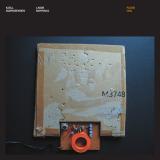
Some years ago, Kjell Bjørgeengen and Keith Rowe attempted to convert video signals into sound by setting up Rowe’s pickups next to an old CRT monitor, turning its magnetic field into a sound generator. Rowe further developed the system with David Jones at Alfred University, slimming down the setup using a copper coil, a circuit board, a video input, and a telephone pickup. Jones named it the »Flood Coil«, and it’s that instrument you can see on the album’s front cover and that lies at the core of these recordings, made without any physical live input from the artists themselves. In essence, it’s generative music in its purest form.
Bjørgeengen’s video feed is generated by oscillators, then routed into Marhaug’s pedals and then back into the Flood Coil, so any visual shifts alter the sound, and any modification to the sound changes the video. The duo have played this setup live many times, but for this studio version they left the system to do its thing without any intervention for two minutes at a time before moving onto the next idea. They recorded hours and hours using this process and then selected 18 highlights for this album, extracting harsh noise, power electronics, lulling feedback drone, and peculiar rhythmic snippets to show the scope of their technique.
A wall of growling, hi-octane Pulse Demon-style noise opens the set, gradually exposing us to more asymmetric textures, shifting through unstable repetitions that transform Merzbow’s metal-inspired screams into »Aaltopiiri«-era rhythmic noise. It’s remarkable, actually, how much Marhaug and Bjørgeengen can squeeze from the system, chancing on shivering, lower-case chugs and pops, galloping drums, soundsystem subs, and grinding blast beats that sound like Napalm Death’s »Scum« piped through a broken amp stack. It ain’t pretty, but noise/industrial freaks will revel in the fierce delights inside.
- Multiphonic I
- Gurgle
- Air Hand Whistle
- Inhale Exhale
- Birds
- Multiphonic Ii
- Mouth Synthesizer
- Multiphonic Iii
- One Pitch
- Throat
- Whistle Pitch
Un-easy listening from »anti-singer« and improviser Sofia Jernberg, a celebration of the voice in its rawest, most malleable form. Jernberg was born in Ethiopia and grew up in Vietnam and Sweden, so one can only imagine these diverse languages opened up a wealth of phonetic possibilities before she entered academia to study jazz and composition. If you dive into her catalogue you’ll clock her startling range – working as a jazz soprano and as an improviser, collaborating with everyone from Stefan Schneider to Mats Gustafsson, as well as appearances on the stage and screen, most notably in Matthew Barney, Erna Ómarsdóttir, and Valdimar Jóhannsson’s »Union of the North«.
On »Voice«, Jernberg provides a ground-level entry point to her work, meticulously running through a litany of unconventional techniques (non-verbal vocalisation, split tones, toneless singing, and distortion) without any effects, just pure batshit sonics designed to show off the voice’s scope as an experimental instrument. On »Mouth Synthesizer« she purses her lips to make ratcheting pops like some analog oscillator, hoarsely mimicking the sort of blustery, Merzbow-coded distortions you might get if you patched a RAT pedal into a broken guitar amp. It isn’t an act of caricature, it’s Jernberg’s way of demonstrating that expensive modular rigs aren’t an essential tool for experimental music, before throwing a side-eye to the field recording industrial complex on »Birds«, transforming her vocal chords into a nightmare aviary. But it’s Jernberg’s startling »multiphonic« experiments that hit hardest. The album opens on »Multiphonic I«, and it’s difficult to tell that you’re listening to a human voice at first – you could just as well be on Colin Stetson’s overblown sax airstreams. Jernberg creates a captivating spiral of crooked, phased tones and hoarse, guttural croaks that she develops over three movements. On »Multiphonic II«, her voice is turned into a storm of pained shrieks, and on the third and final segment, it almost resembles Arve Henriksen or Jon Hassell’s muted brass curlicues. Each track pulls a different musical muscle, whether it’s »One Pitch« with its unsettling yodel-like quivering drones or »Gurgle«, sounding like a close mic-ed recording of a small pot gently simmering.
WHITE VINYL[22,27 €]
Changes In Air ist ein wunderschönes, langsam fließendes Stück in fünf Teilen für elektronische Orgel, Klavier und modulare Synthese. Es ist das dritte und letzte Album der kanadischen Komponistin Kara-Lis Coverdale aus dem Jahr 2025, nach From Where You Came (Frühling) und A Series of Actions in a Sphere of Forever (Sommer), und vervollständigt eine exquisite Trilogie von Werken, die ihre lang erwartete Rückkehr zur Musikaufzeichnung feiern.
Black Vinyl[22,27 €]
Changes In Air ist ein wunderschönes, langsam fließendes Stück in fünf Teilen für elektronische Orgel, Klavier und modulare Synthese. Es ist das dritte und letzte Album der kanadischen Komponistin Kara-Lis Coverdale aus dem Jahr 2025, nach From Where You Came (Frühling) und A Series of Actions in a Sphere of Forever (Sommer), und vervollständigt eine exquisite Trilogie von Werken, die ihre lang erwartete Rückkehr zur Musikaufzeichnung feiern.
Actress delivered his mix for RA in June and it wassuprisingly all new and exclusive Actress music. Whenasked if this was a new album, Actress aka Darren S.Cunningham simply answered that "it's a collage -Braque". Whatever you call this, a mix, a mixtape, acollage/braque, a new album , what it is, is anotherActress statement. Actress grows music. Completelyunconcerned with what it is, with what format it is orwhat it's defined as.
KARA-LIS COVERDALE
A SERIES OF ACTIONS IN A SPHERE OF FOREVER ()
,A Series of Actions in a Sphere of Forever" ist eine Sammlung von neun Soloklavierwerken, die sich mit Widerstand, Resonanz und Raum mit einer ausgeprägten spektralen Sensibilität auseinandersetzen. Diese Stücke sind Nocturnes, die tief in der Stille des Winters in einem kleinen ländlichen Studio in Valens, Kanada, geschrieben wurden. A Series of Actions in a Sphere of Forever ist der Nachfolger von From Where You Came, das im Mai veröffentlicht wurde und eine RA-Empfehlung sowie die Auszeichnung ,Experimentelles Album des Monats" von The Guardian erhielt, das es als ,stille Ekstase eines Komponisten ohne Grenzen" bezeichnete.
Clear Vinyl. ,A Series of Actions in a Sphere of Forever" ist eine Sammlung von neun Soloklavierwerken, die sich mit Widerstand, Resonanz und Raum mit einer ausgeprägten spektralen Sensibilität auseinandersetzen. Diese Stücke sind Nocturnes, die tief in der Stille des Winters in einem kleinen ländlichen Studio in Valens, Kanada, geschrieben wurden. A Series of Actions in a Sphere of Forever ist der Nachfolger von From Where You Came, das im Mai veröffentlicht wurde und eine RA-Empfehlung sowie die Auszeichnung ,Experimentelles Album des Monats" von The Guardian erhielt, das es als ,stille Ekstase eines Komponisten ohne Grenzen" bezeichnete.
Der norwegische Saxophonist Bendik Giske steht an der Schwelle zu seinem dritten Soloalbum und kennt sich selbst gut. Mit seinem neuen, selbstbetitelten Album befindet er sich in seiner Blütezeit als Künstler: selbstbewusst in Bezug auf seine Stimme und seine Fähigkeiten, beflügelt von Kritikerlob aus allen Ecken - einschließlich zweier norwegischer Grammy-Nominierungen - und einer Welle von Zuhörern überall. Mit der Wahl von Beatrice Dillon als Produzentin des Albums - die britische Elektronikmusikerin ist eindeutig eine Weggefährtin in der Praxis des originellen ästhetischen Ausdrucks - ist ihr Einfluss unmittelbar und deutlich spürbar. Gemeinsam entfernen sie eine Schicht des Melodismus und konzentrieren sich auf Muster und Rhythmus, um eine andere Dimension seines faszinierenden Sounds hervorzuheben. Da er wieder mit Einzelaufnahmen arbeitet, ohne Overdubs, nur mit Saxophon und seinem Körper, sind der hallige Raum und der liebliche Glamour verschwunden. Für Giske kommt das Ergebnis einer musikalischen Nacktheit von ganz vorne gleich - jedes Detail, jedes Röcheln und Schnaufen ist hörbar, nichts wird verdeckt, nichts ästhetisiert. Die Leute schauen vielleicht weg, wenn es nicht so schön ist, aber was übrig bleibt, fühlt sich präsenter und stärker an. Es ist konfrontativ, verlangt mehr Aufmerksamkeit, aber durch seine Körperlichkeit - man kann seinen Körper in der Musik hören und fühlen - versetzt es einen in einen Flow-Zustand, irgendwo zwischen Ekstase, Hochgefühl und spirituellem Erwachen. Es ist sehr menschlich, aber es gibt auch eine starke Spannung - die es immer geben wird, wenn man um Existenz und Gültigkeit kämpft - elegant illustriert durch Florian Hetz' eindrucksvolle Fotografien des Künstlers zu der Veröffentlichung. Zum Teil ist Giske von Judith Halberstams The Queer Art of Failure inspiriert. So sehr er auch von seiner Ausbildung und Teilnahme am Umfeld des Jazz-Konservatoriums profitiert hat, führte ihn sein Weg doch weit über dessen Grenzen hinaus. Die Arbeit an diesen neuen Erkundungen mit seinem Instrument war ein zehnjähriger Prozess, in dem er das, von dem er wusste, dass es letztlich nicht passte, abstreifte und das klangliche Territorium seiner gelebten Erfahrung fand. Daraus entstanden Systeme, die Studien von Tempo und Proportionen ermöglichten, ein Ausgangspunkt für einen immersiven improvisatorischen Ansatz, der jahrelange musikalische Erkundungen abbildet. Es ist der Klang von sozialer Emanzipation durch den meditativen Puls und die Geschwindigkeit der Zirkularatmung und den Tanz des Körpers, insbesondere der Finger, der Zunge und der Lippen. Giske weiß, dass Musik ein mächtiges Werkzeug sein kann, um Menschen zusammenzubringen und Ideen zu finden, und die Langlebigkeit seines Projekts ist vor allem ein Aufruf zu Fürsorge, Zusammengehörigkeit, Geschichtenerzählen und der Fähigkeit, sich für eine gemeinsame Sache zu versammeln. In aller Ernsthaftigkeit ist BendikGiske ein Vorschlag für Wahrhaftigkeit und Existenz, ein Raum für jemanden, der sein tiefstes Selbst ausdrücken kann.
Bendik Giske’s Beatrice Dillon-produced 2023 album gets an addendum with reworks from Carmen Villain, aya, Hanne Lippard, Hieroglyphic Being, Wacław Zimpel and Dillon herself.
Giske’s clearly got his ear to the ground; his last remix record was an invitation for Laurel Halo to put her stamp on »Cruising«, while 2018’s »Adjust EP« roped in Deathprod, Total Freedom, Lotic, and Rezzett. Now comes this new LP of remixes and it’s one of the best we’ve heard in aeons. Carmen Villain boots things off with a remix of »Slipping«, following her excellent (and way, way too underrated) »Nutrition EP« with a giddy, subtle roller that sounds as if it’s been constructed using only Giske’s raw stems. His breaths and leathery key presses – already amped up by Dillon’s detailed recording – are magicked into a dubby concrète groove that’s enhanced with the sparest melodic elements: echoing rainforest-at-night horn blasts, and lopped off decay trails that help fuel the momentum.
aya’s revision of the same track takes a different approach, forming forceful overlapping polyrhythms from Giske’s clanks, using the gamelan-like arpeggios for melodic weight and repetition. The result is a constantly shifting, hypnotic trancer that’s achingly organic – more Raja Kirik than Paul Van Dyke. Polish clarinetist and producer Wacław Zimpel, meanwhile, supplements his trippy recent collaboration with James Holden on a similarly levitational wrinkle of »Slipping« that twists Giske’s quivering sequences with microtonal synth prangs, and gusty echoes. But it’s Jamal Moss who plays fastest and loosest with Giske’s source material, calling back to April’s psy-house stunner »Dance Music 4 Bad People« with a powdery, sexualised banger that buries the breathy »Start« stems underneath neon synths, and brittle drum loops.
»I’m a digital nomad,« Lippard deadpans over Giske’s »Not Yet«. »I’m addicted you know that.« It’s a typically dry treatment from the conceptual artist that unexpectedly amps up the hypnotic qualities of Giske’s original, adding her circuitous charm to his concertina-ing sax sequences. And to tie things up perfectly, Beatrice Dillon returns with her diaphanous remix of »Rise and Fall«, built to emphasise the radically different approaches of each artist.
- Fruit Gathering
- Interbeing
- Ma
- Forevermore
- Seaside
- Champa Flower
- At Noon
- Like The Sun
- In Heart
"Sun" ist das erste Album der aus Tennessee stammenden Baritonsaxophonistin Zoh Amba für das in Oslo ansässige Label Smalltown Supersound - und ihr zweites Album nach "Oh Sun", das 2022 auf dem Label Tzadik erschienen ist. Auf "Sun" stellt Amba eine neu zusammengestellte Gruppe mit einer Reihe von Kompositionen vor, die die Grenze zwischen Performance und Prozess verwischen - wobei sich sowohl die Musik als auch der Akt ihrer Aufnahme in Echtzeit entfalten, teilweise geleitet von improvisatorischen Aufnahmetechniken. Als Bandleaderin bewegt sich Amba an den Rändern eines improvisatorischen Deltas, in dem spiritueller Jazz und Free Folk nicht als getrennte Genres auftreten, sondern als Nebenflüsse derselben Strömung, die beide aus einem gemeinsamen Glauben an die Musik als heilige Kraft entspringen. Die Entscheidung, "Sun" auf Smalltown Supersound zu veröffentlichen, entstand aus einer gemeinsamen Verbindung zum verstorbenen deutschen Saxophonisten Peter Brötzmann, der sowohl ein spiritueller Mentor für Amba war als auch mehrere Platten auf dem Label veröffentlicht hat. Und während das Album in amerikanischen Folk-Traditionen verwurzelt ist, ist es Brötzmanns furchtloser Geist - selbst ein immenser historischer Katalysator für den europäischen Free Jazz -, der wie ein roter Faden durch die musikalische Zusammenarbeit des Ensembles und seine experimentellen Aufnahmetechniken verläuft. Für Amba war es jedoch wichtig, dass das Ensemble - bestehend aus Caroline Morton (Bass), Lex Korton (Piano) und Miguel Marcel Russel (Percussion) - vor den Aufnahmen eine tiefere musikalische Verbindung aufbauen konnte: ,Wir haben tagelang einfach nur zusammen gespielt, und ich habe versucht, mir mental Notizen zu machen, was in dieser Band ganz natürlich vorhanden war - bevor ich Anweisungen gab oder Noten austeilte. Ich wollte sehen, wo wir alle in diesem Moment in unserem Leben standen. Von dort aus begann ich, mit ihnen den Prozess zu gestalten. So entstanden die Struktur der Band und der Ansatz für das Album."
Ein dynamisches und erhabenes Werk voller Emotionen und Sensibilität, "From Where You Came" als eine Reihe nächtlicher Übertragungen, altertümlicher Verfeinerungen und lebendiger Geschichten, die reich an erhellenden Qualitäten sind. Die Kombination von programmatischer Musik des 19. Jahrhunderts mit Jazz aus der Mitte der 70er Jahre und ihrem unverwechselbar farbenfrohen und mehrdimensionalen Kompositionsansatz, der die Improvisation einschließt, ermöglicht Coverdale die Synthese mit Live-Instrumenten in einer genrefreien, aber deutlich erkennbaren Geste der Wiederverbindung mit Land und Körper durch Klang zu verbinden. Sie betrachtet Komposition als diagnostische Methodik zu spirituellen Zwecken, leitet emotionale Resonanz wie Ladungsströme und verdrahtet das rein Gefühlte in elektronische Signale. Obwohl sie auf mehreren Kontinenten komponiert und aufgenommen hat, unter anderem im GRM Studio in Paris und dem Elektronmusikstudion EMS in Stockholm, wurde "From Where You Came" im ländlichen Ontario, Kanada, fertiggestellt. Mit Beiträgen der multidisziplinären Klangkünstlerin und Cellistin Anne Bourne und dem mit einem Grammy ausgezeichneten Posaunen-Wunderkind Kalia Vandever, enthalten die 11 ausgedehnten und doch verdichteten Kompositionen des Albums Streicher, Holzbläser, Blechbläser, Tasten, Software und modulare Synthese, die eine musikalische Sprache einschreiben, die Animationen mit ungefilterter, beeindruckender Klarheit wiedergibt. ,Alles kann eine Stimme haben", sagt sagt Coverdale. ,Für mich ist die Stimme mehr als nur menschlich." Passenderweise ist es die eigene Stimme der Künstlerin die sich im einhüllenden Schwellwerk des Albumauftakts in Luft auflöst: ,Everything you know is real", singt sie in ,Eternity`, "I'm sorry, life is beautiful." Als zwischen Animismus und Animalismus oszilliert, ist das folgende Album absolut voll von Leben in all seiner atemberaubenden Komplexität. Coverdale rechnet mit der Erfahrung von Trauer, Entwurzelung und dem Druck der totalen Freiheit und Unabhängigkeit ab, und beweist eine übernatürliche Fähigkeit, die Trübsal in höchst fantasievolle und inspirierende Fantasy-Epen aus Klang zu verwandeln.
On ‘Animal’, Ash Fure appeals to “animal intelligence” by using sounds that are inherently physical and driven by perception, athleticism and interaction. Placing polycarbonate sheeting over an inverted subwoofer she built alongside her partner Xavi Aguirre and brother Adam, Fure isolates the physical impact of sound by focusing on psychoacoustic sub-bass pulses, semi-perceptible micro-rhythms and discomfiting white noise bursts, linking the process to her experiences in Berlin and Detroit’s techno dungeons where the sound has to adapt to the space it’s performed in. When she performed ‘Animal’ for the first time, Fure fabricated a “listening gym”, allowing the audience to interact in real-time by circuit training in response to the sound. The sweat is almost audible across the record, a run-on selection of rhythms, resonances and abstractions that sound like interlocking heartbeats on a series of treadmills. Her fascination with techno’s cavernous cathedrals is clear from the beginning, but Fure doesn’t worship at the altar: we’re hit with the feeling, not the aesthetic. The beats themselves, made from unstable vibrations and waterlogged, reverberating clicks, echo the brain’s unconscious reaction to repetition in a vast concrete box, the feeling you get when each percussive snag ricochets from every surface in the building. Coddling these whirring, criss-crossing polyrhythms with harsh, distorted low-end retches, Fure accurately recreates the energy and fatigue of the endless weekend sesh. We never once encounter techno in its expected shell, just its residue - the outline of humans figuring out their relationship with technology, architecture and each other. Fure’s use of dynamics is also deviously smart, marking out an overall rhythm that’s not tied to the strength of the sounds themselves, but just volume and physical impact. Often her most brutal sounds - ear-splitting squeals and overdriven mechanical whirrs - are reduced to an almost inaudible level, a bit like the bandy legged trip to the bathroom, or the escape to some dimly lit nook, the part of the night where you can still detect the sound on your skin without being battered by it. When the undulating rhythm returns in earnest, Fure masks acidic sequences in jet engine expulsions, still refusing to objectify anything that an AI model might be able to pick up on.
Ein dynamisches und erhabenes Werk voller Emotionen und Sensibilität, "From Where You Came" als eine Reihe nächtlicher Übertragungen, altertümlicher Verfeinerungen und lebendiger Geschichten, die reich an erhellenden Qualitäten sind. Die Kombination von programmatischer Musik des 19. Jahrhunderts mit Jazz aus der Mitte der 70er Jahre und ihrem unverwechselbar farbenfrohen und mehrdimensionalen Kompositionsansatz, der die Improvisation einschließt, ermöglicht Coverdale die Synthese mit Live-Instrumenten in einer genrefreien, aber deutlich erkennbaren Geste der Wiederverbindung mit Land und Körper durch Klang zu verbinden. Sie betrachtet Komposition als diagnostische Methodik zu spirituellen Zwecken, leitet emotionale Resonanz wie Ladungsströme und verdrahtet das rein Gefühlte in elektronische Signale. Obwohl sie auf mehreren Kontinenten komponiert und aufgenommen hat, unter anderem im GRM Studio in Paris und dem Elektronmusikstudion EMS in Stockholm, wurde "From Where You Came" im ländlichen Ontario, Kanada, fertiggestellt. Mit Beiträgen der multidisziplinären Klangkünstlerin und Cellistin Anne Bourne und dem mit einem Grammy ausgezeichneten Posaunen-Wunderkind Kalia Vandever, enthalten die 11 ausgedehnten und doch verdichteten Kompositionen des Albums Streicher, Holzbläser, Blechbläser, Tasten, Software und modulare Synthese, die eine musikalische Sprache einschreiben, die Animationen mit ungefilterter, beeindruckender Klarheit wiedergibt. ,Alles kann eine Stimme haben", sagt sagt Coverdale. ,Für mich ist die Stimme mehr als nur menschlich." Passenderweise ist es die eigene Stimme der Künstlerin die sich im einhüllenden Schwellwerk des Albumauftakts in Luft auflöst: ,Everything you know is real", singt sie in ,Eternity`, "I'm sorry, life is beautiful." Als zwischen Animismus und Animalismus oszilliert, ist das folgende Album absolut voll von Leben in all seiner atemberaubenden Komplexität. Coverdale rechnet mit der Erfahrung von Trauer, Entwurzelung und dem Druck der totalen Freiheit und Unabhängigkeit ab, und beweist eine übernatürliche Fähigkeit, die Trübsal in höchst fantasievolle und inspirierende Fantasy-Epen aus Klang zu verwandeln.
Barker's debutalbum Utility (on Berghain's Ostgut Ton label) was something of a sensation in the world of electronic music when it was released. Utility made numerous Best of 2019 year's end lists, including Pitchfork (8,2 review), The Quietus, DJ Mag, Resident Advisor (Recommends) and others. It also earned title of Mixmag's Album of The Year 2019. Now its finally time for the follow-up Stochastic Drift on Smalltown Supersound. And where Barker on Utility was "using ambient materials to remake techno" as Pitchfork's Philip Sherburne wrote, he takes this approach even further here creating - as the title suggests - a dreamy stochastic drift and beautiful freeform float.
An imperial phase Actress commits a lushly amorphous installation piece made for the Berliner Festspiele to vinyl, rendering a post-industrial symphony full of iridescent shifts in gyring, OOBE-like spatial coordinates landing somewhere between nutopian ambient, kankyō ongaku and sawn-off bass science.
‘Grey Interiors’ was made in collaboration with Actual Objects and is an absorbing animation and navigation of those post-human ideals that have prompted Darren J. Cunningham to his best work across the preceding two decades. In its hypnagogic symphony of the elements, he short-circuits distinctions of classical music’s metric freedoms and the hyperspatial sensuality of concrète/electro-acoustic and ambient musics with an artistic license that has come to distinguish his work in the contemporary field, and arguably identified him as this generation’s most vital electronic abstractionist.
The first half of the album is bewitchingly airless, materialised in a twinkling vacuum. Naturalistic environmental recordings and a half-heard piano swirl around nauseous airlock whooshes and eerie bass drones. It's all pulverised to a powdery, shimmering residue; if Actress's music is defined by its character and texture - that sweet spot between the bedroom and the soundsystem - then this one advances the narrative without losing its backbone. And like a lot of his best work, it comes into its own on the back of zonked eyelids, conjuring a play of shifting geometric patterns within its imaginary physics and nuanced narration of ephemeral melodic phrasing and vaporous textures.
At about the halfway point, that dissociated piano finds its groove, coalescing into a jerky drum machine rhythm popping like bubbles in the stifling atmosphere. We can draw some intersecting lines here thru electronic music lore - traces of vintage AE, Push Button Objects, UR - but Actress always leaves an indelible fingerprint on anything he touches. Even when he's rubbing against the gallery-industrial complex, he manages to fill a stagnant space with electricity and wit; look at the title itself: is it a reference to the "landscape beyond man" as the installation's press release might have us believe, or the institutions themselves?
Prolific Norwegian trumpeter and ECM veteran Arve Henriksen returns with Estonian guitarist/composer Robert Jürjendal in tow, matching his idiosyncratic shakuhachi-style melodic condensations with Jürjendal's glassy electro-acoustic soundscapes and sonorous percussion.
Henriksen releases a lot but is remarkably reliable; his playing is so versatile that hearing it dematerialise into different ensembles and individual methodologies is always a treat. Jürjendal is a veteran guitarist, but doesn't approach his instrument from a purely classical standpoint, taking a Fripp-inspired path towards texture, processing and looping his sounds until they're barely recognisable. The duo share a similar love for Hassell's Fourth World ambience, and here inject new life into that mood.
Jürjendal's percussion is impressive: he offsets cascades of oddly-tuned electronics on 'Tuonela' with booming, ritualistic tom hits that punctuate Henriksen's melancholy phrases; and on the brilliant 'Ancient Bells', plays a set of gongs and gamelan-style instruments, creating swirling hammered tonal clusters that quiver beneath Henriksen's echoed-out, spirited improvisations. It's not always that corporeal, either; on 'A Remarkable Flow', he loops guitar phrases, creating gentle vibrations that rumble in the background while he mirrors Henriksen's pitchy zig-zags with high-pitched oscillator vamps.
Even on the peaceable 'Miraculous Lake', discreet kalimba loops set a celestial tempo that anchors the duo's gaseous soundscapes. And although they veer towards end-credits loveliness on the Göttsching-influenced 'Reunion Hymn', it’s balanced by the album's darker passages, like 'Rebirth' and 'Another Me'. On the latter, Henriksen's trumpet is transformed into a voice-like warble, while Jürjendal replies with glacial E-bowed drones that resonate creepily alongside his lysergic FM pads.
Free jazz poetry by a spry, 85 year old Joe McPhee, adapting his renowned improvised practice to words - juxtaposed with Mats Gustafson’s sparing brass and electric gestures. It’s an utterly timeless and transfixing salvo, another shiny notch for Smalltown Supersound’s Le Jazz Non Series.
As a common ligature to the OG free jazz scene of ‘60s NYC, with formative binds to its European offshoots and the experimental avant garde, Joe McPhee is a true force of nature who has represented jazz at its freest over a remarkable lifetime. In duo with Swedish free jazz and noise standard bearer Mats Gustafson, he upends expectations with an astonishingly vivid and upfront example of his enduring contribution to freely improvised music. In 11 parts he variously reflects on everything from the neon sleaze and scuzz of NYC to contemporary US politicians and laugh out loud imitations of his previous sparring partners such as Peter Brötzmann, with a head-slapping immediacy that leaves you reeling, spellbound.
McPhee’s flow of rare, organic cadence, ranging from urgent to contemplative and dreamlike, is blessed with a unique turn-of-phrase that surely mirrors his decades of instrumental work. Gustafsson, meanwhile, dextrously takes up the mantle with a multi-instrumental spectrum of sounds, leaving McPhee unbound and able to float and sting on the mic. There’s obvious wisdom in his perceptively penetrative observations, as derived from a rich cultural life well spent, but also a playful naivety and levity in his ability to veer from almost melodic speech to explosive aggression and a knowing, bathetic wit. It’s perhaps hard to believe that McPhee only started incorporating and performing spoken word in his work in the past ten years, a half century since his declaration of “What Time Is It‽” announced his arrival on a legendary debut ‘Nation Time’ (1971), ushering in one of free jazz’s most singular characters in the process.
Oscillating between discordant reflections on life as a touring musician, set to Gustafsson’s skronk and culminating in a snort-worthy imitation of Peter Brötzmann’s gruff German accent, on ‘Short Pieces’ or the glowering growl and noise exhortations of ‘Guitar’, he evokes a more sweetly consonant calm in ‘When I Grow Up’ and eerie threat of ‘The Dreams Book’, and viscerality of ‘Disco Death’, where Gustafson’s tonal versatility comes into hugely mutable play, whilst McPhee’s extraordinary, unaffected voice is a constant. It’s perhaps McPhee’s balance of cool measuredness and wellspring of barbed energies that allows us, at least, to get the most out of this one; not stifling with mannered or manicured enunciation that can trigger certain icks; keeping close to the nature of spoken word in a way that avoids cliche and becomes inherently critical of it within his purposeful, non-hesitant clarity and unflinching approach.
Producer, designer, publisher, filmmaker, all-round scene phenom - Lasse Marhaug returns with his first album since relocating from Oslo to the Arctic Circle, surveying his 35-year career for a set of grizzled, doom-pocked rhythms and foghorn drones pulled from the aether. Expansive and hard to categorise, it's a precision-tooled set of ice-cold tonal productions that heavily lean into Mika Vainio’s rhythm experiments, with extra levels of growling bass and curious noises to send us deep into the uncanny.
Lasse Marhaug has put his mark on literally hundreds of albums - working with artists like Jenny Hval, Merzbow, Jim O'Rourke, Kevin Drumm, Hilary Woods - so many others - yet he still regards himself as a primarily visual artist who got diverted into an occasionally different path. If his last album 'Context' was a kiss goodbye to decades of life in Oslo, 'Provoke' turns a new page, but one that draws heavily from memories of the distant past, reflecting on the way the topographies of Norway's frozen north helped shape his creative worldview. Weaving electronics into environmental recordings captured in the bleak Arctic winter, the album was mixed during the Polar night season, when, for two straight months, the sun never rose past the horizon. Somehow, even at its bleakest, Marhaug avoids the usual aesthetic signifiers for this kinda thing, finding elements of queered beauty in all the severity, juxtaposing elements that shine a bright light on all the odd spaces in-between.
A consideration of noise music's place in 2024, and whether it can still be a tool for subversion when its aesthetics have been so commodified, ‘Provoke’ also refernces an experimental '70s Japanese art magazine that attempted to define a new language for photography. Operating somewhere between these two guiding poles, Lasse feels his way through a subtly altered mode of expression, a new approach to familiar concepts. Album opener ‘Plates’, for example, gives it the full Ø treatment, like some exceptional ‘Oleva’-outtake, but , eventually, shards of interference start to exhale like horses blowing, creating uncanny sensations that hit through ambiguous feeling rather than sheer noise terror. Ritualistic, corporeal - hard to know what you’re listening to and why it makes you feel that certain way - so much more than just machine cycles optimised for their ultimately hollow brutalist aesthetic.
Marhaug paints vivid pictures from a carefully chosen palette, drawing us into a soundworld that's rich with contradictions and contrasts. Even the relatively deafening 'New Topographics' offsets its wall of distortion with a muffled, perforating kick drum, cutting into the noise like a knife through butter. And all of this preparation makes the album's lengthy centrepiece 'Monochrome Head' even more impactful; hinging on a Pan Sonic-like alloy of bass and drums, the track snowballs through tempered feedback and improv scrapes and whistles that pick up into an orchestral din. Marhaug accents the bluster with rhythmic hums that gather in momentum until they're almost oppressively heavy, as if everything's about to collapse.
A masterclass in quietly subversive world-building, 'Provoke' invites us to peer at an expansive sonic landscape and marvel at its intricacies, but this time around there's a Lovecraftian behemoth lurking somewhere beneath its icy surface.