‘Leon’ is the highly anticipated fourth album from Grammy Award-winning recording artist, songwriter, and producer Leon Bridges. With 13 tracks featuring Leon’s signature storytelling and a unique blend of organic genre alchemy, ‘Leon’ is his most poignant, powerful, and personal work to date. He takes fans on a trip through the heart of Ft. Worth he knows best, the things he holds dear, and the people and places that shaped him. Featuring production by Ian Fitchuk (Beyonce, Noah Kahan), Daniel Tashian (Kacey Musgraves), and Tyler Johnson (Harry Styles, Miley Cyrus), Leon describes the album as “somewhat of a self-portrait… I’m excited to share these stories about my home, about nostalgia, about my upbringing, about where I’m from, with all of you. I hope this music brings you back to your roots and your journey.”
Quote from Leon:
“‘Leon’ has been a long-time coming. I started writing pieces of it as far back as ‘Gold-Diggers Sound.’ They didn’t fit what I was trying to do with that album and I tried moving on. But I couldn’t shake them because they’re part of me. And, if I’m honest, also because I think this is some of my most excellent work yet.In many ways, Leon has been in the works since my childhood. This record is about simpler days. It’s about time spent in my beloved Fort Worth and the experiences that made me the man I am today. It’s soulful music in the truest sense - it’s imbued with my soul.I’m excited to share these stories about my home, about nostalgia, about my upbringing, about where I’m from, with all of you. I hope this music brings you back to your roots and your journey.”
Suche:so what music
Recital presents a newly unearthed recording of an interview between Sun Ra and composer Charlie Morrow recorded at his New York studio in 1989. This voice-only recording develops more like a kaleidoscopic sermon than any standard interview.
Charlie Morrow recalls:
My 1989 Summer Solstice Celebration featured Sun Ra and his Arkestra. On March 29, 1989, ahead of this historical performance, Sun Ra came to New York to plan the performance and do an interview with me in the Charles Morrow Associates studio. There were members of the Sun Ra Arkestra, some of my team, and a photographer present. Once in the sound studio, Sun Ra wanted to record the discussion. What he says is so much more than anyone expected. I pushed record on the tape recorder, which quietly took it all in.
What Sun Ra recorded is a breathtaking expression of his feelings and strong convictions, illustrated with personal memories and stories. My few questions to him about the upcoming Solstice and about the sun and his thoughts about a dawn event triggered his mind. He launched into a nonstop journey of ricocheting stories and concepts, climaxing when I started jamming with Sun Ra on conch horn. Our duo drives to a climactic peak with explosive conch breath sounds giving line-by-line affirmations to Sun Ra’s points.
The 1989 Summer Solstice event brought together Sun Ra and his constellation of musicians and fans with my large-scale gatherings and work with the New Wilderness Foundation. Here in 2023 and beyond, the events live again. Sean McCann of Recital was drawn to Sun Ra’s words, which inspired the production of this edition. Sun Ra’s words seem to have an even greater resonance in present time. Ra is calling out the turbulence of the bad actions of the righteous and the good actions that an evil man, as he dubs himself, can perform, all the time believing that music has the possibility to bring all humans to a better place.
Charlie Morrow, 2023 / Helsinki, Finland
One-time pressing of 425 copies, includes 12-page booklet with rare photos and full transcription of interview, 24”x18” poster of Sun Ra 1989 Solstice performance photograph
Section 25 release their 10th studio album ‘Move On’ via Nine X Nine records. Originally formed in Lancashire in 1977 they are best known for their work with iconic Manchester label Factory Records. Fusing elements of post-punk, electro and synth-pop their sound is unmistakable and influential. ‘Move On’ has optimism at its core. It is a reflection of the past and a meditation on the present. Emotionally engaging with the here and now by understanding what has passed. Section 25 have built a lasting legacy as one of Britain’s most important bands in electronic music. Younger audiences may be familiar with their work through it being extensively sampled, including by Kanye West. The band were also namechecked in LCD Soundsystem’s breakout single ‘Losing My Edge’.
Confidence Man’s third studio album, "3AM (LA LA LA)" released via CHAOS/Polydor Records/I OH YOU Records, sees the delinquent party starters popify 90's UK rave sounds like no one before. Inspired by a recent move to London, meeting their idols KLF, and becoming immersed in the queer club scene, Confidence Man have taken the ideas of hedonism, ecstasy and losing yourself to the music and distilled them into pure a-grade euphoria. The record spans the electronic spectrum from breakbeat and trance, to left-field Underworld size techno and the “let’s 'ave it” punk energy of legacy artists like The Prodigy. “3AM (LA LA LA)” follows their hugely successful second album “TILT”, which featured breakout single and festival crowd favourite ‘Holiday’. Staunchly defying trends and bringing Janet, Sugar, Reggie and Clarence along for a helluva good time, "3AM (LA LA LA)" feels bigger, bolder and in some ways brutal, but like, in a hot way. "3AM (LA LA LA)" is a welcome escape from the dull wasteland of modern mediocrity, bringing the weird and wonderful world of Confidence Man to the masses.
~~~From Mississippi and Olvido Records~~~~~~ Steel-string guitar and vocals by the great Giorgos Katsaros, a mythic figure of Greek rembetiko. Our obsession with underground Greek music continues with 10 ultra-rare recordings of heartbreak and vice from rembetiko legend Giorgos Katsaros. Katsaros, who by some accounts lived to be over 100 years old, carried the old songs of Greece to the Diaspora in the United States, bridging centuries of music in one storied lifetime. Born in 1901 on the Greek island of Amorgos, Katsaros' was enchanted with the songs he picked up as a kid in the streets of Piraeus and Athens. Encouraged by his grandfather, an amateur singer, Katsaros developed a style that mirrored his upbringing - centuries-old Asia Minor songs, island rhythms of his homeland, well-known Athenian songs of the time, and anonymous `rebetiko' songs. Katsaros' songbook was vast, but he was most drawn to the street life and music of the manges of early 20th-century Greece: outcasts who dealt with the indignities of an unstable economy and an inauspicious future with the old standbys: wine, hash, and dancing. These ten tracks are remastered from Katsaros's 64 surviving early recordings, many rarely heard since their original release. Hypnotic melodies plucked over repeating thumbed basslines back his deep, mournful voice. Katsaros brought this nostalgic late-night music to smoke-filled rooms of Greek exiles in Chicago, Philly, and New York, where he emigrated in 1917. He continued to travel the country and play until his music was supplanted by more modern styles in the 1950s. He retired to the town of Tarpon Springs, FL, famous for its Greek sponge fishers, til a late-in-life revival brought him back to Greece for a few massive concerts and national accolades in the 1990s. Like many great artists, Katsaros carefully curated his own mythic backstory over the decades. He sometimes claimed he was born in 1888, making him 109 on his passing, and conflicting accounts of his birth and travels circulate to this day. Greek researchers Stavros Kourousis and Konstantinos Kopanitsanos, who also compiled these tracks, contribute groundbreaking new historical research on Katsaros' life. Lyrics, poetically translated by Tony Klein, further fill in the picture. Clean and rare 78s were remastered by Stereophonic. Katsaros has never sounded better than on this LP, pressed on heavy black vinyl, with extensive notes and lyrics.
Did you know there are horses on the cover of Earth 2: Special Low Frequency Version? There are at least three in the right hand corner, gathered inexplicably near a white canvas tent, a human possibly perched among its folds. As widescreen and vast as the cover may seem, those little details-the horses, the possible human, the faint wisp of white clouds-give it depth and wonder, something to which the imagination can return. Did you know that the music on Earth 2-repressed now for its 30th anniversary, back in its original artwork, and accompanied by a riveting set of remixes that demonstrate the reach of what Dylan Carlson long ago called "ambient metal"-works much the same way? The surface is massive and obvious, the meatpaw riffs of Carlson and bassist Dave Harwell pounding and swiping and pawing at the speakers, a true bludgeon in three-dimensional sound. Listen, though, for the details in the corners, for the finesse beneath the force, and Earth 2 reveals new levels of depth and wonder. The widespread impact of Earth 2 suggests that others have indeed been leaning in, listening to these minutiae and making something new of them. A masterpiece without many genre precedents, Earth 2 surely helped send doom metal down its more modern drone, ambient, and avant-garde avenues. Those descendants are obvious. Perhaps more surprising and gratifying are the ways it has influenced electronic music, modern composition, and even hip-hop by realigning our senses of tempo, time, and texture. Earth 2 engendered a rearrangement of expectations, regardless of preferred form.
As with most things, this project started with a conversation in the pub between me and Martin.
As we discussed what J-Walk and BiD could do next we chatted about our mutual love of DIY, Post Punk, Reggae, Digital & Dub, how about using that feel as an initial jump off on the next thing and see how you get on? I suggested.
As is his way Martin considered the suggestion, then promptly disappeared, 6 weeks later something landed in my inbox, it was titled Broken Beauty and the music contained embraced all those symbiotic ideals and culture.
Nailed it!
Recorded entirely in Stockport using a mixed kit bag of cheap forgotten keyboards, guitar, bass and effects pedals, this LP takes the J-Walk aesthetic and applies the wider palette of these influences to create something unique, those past and present influences forged together to bring you something truly DIY - instructions below.
How To Make Such A Thing...
Deactivate social media. Ignore the internet, don't answer text messages, avoid other music, the telly and other people. This is a process where it's only you in the room with whatever's in your mind. You will be there for some time and the loneliness can hurt a little.
Forget any predetermined ideas. Forget everything you've ever done before. This is an opportunity to start from scratch, but with years of accumulated knowledge and craftsmanship. Trust yourself.
Be scared. Be excited about not knowing what will happen and what will result.
Don't use midi sequencing, virtual instruments or samples. Just plug a toy instrument into an amp, press a rhythm and play around to see what happens. If it sounds good and fresh then record it. Plug a bass in to jam around and you'll soon hear and feel what sits in the pocket of the beat. Record it as it is. Dirty is real and good. Cleanliness equals sterility. Loop the bassline. Plug a guitar in and do the same.
Don't think when doing any of this. Just experiment with interest and curiosity and the music will take care of itself. You will now have a groove which is also about half a song minimum. Play some keys from the toys on top of what you have. Put 'em through effects pedals. Again, don't overthink it and don't try to get it clean. Add sound effects in right and random places.
There you go. Something you've never made before. But more importantly, it's something you've never heard before.
You don't have to die to be reincarnated.
BROKEN BEAUTY...You can't be either without also having been the other.
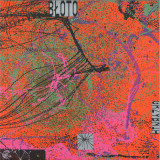
Błoto’s bold 2020 debut brought forth three albums in just twelve months. This prolific creative burst, followed by an ongoing tour and involvement in other projects, meant that fans had to wait over three years for the next release. During this time, new ideas took shape, and the vision for their fourth LP crystallized. The wait for Błoto's new album is nearly over. As always, autumn signals the arrival of Grzybnia (Mycelium).
The idea for the album had been simmering within the band since the release of Kwasy i zasady and finally took shape in late January 2023 at Warsaw's Studio Pasterka, under the careful guidance of Piotr Zabrodzki. It was by far the most fruitful session in the group's history, with ideas flowing in abundance. The chosen tracks not only resulted in two well-received singles, Szlam / Ścieki and Bakteria, but also provided enough material for an EP set to drop next year.
The seemingly chemical title of the album Kwasy i zasady (Acids and Bases) ultimately referred to interpersonal relationships, describing traits that prevent harmony. The album embodied the polarization of societies in the 21st century. The metaphor of Grzybnia (Mycelium) goes a step further. It emphasizes the importance of cooperation as a fundamental skill that can yield various results (fruits, fungi)—both good and bad. Above all, it underscores the power of collective action beyond divisions.
In a complex, unstable modern world that is breaking apart into pieces, the concept of mycelium offers a powerful model. Mycelium thrives in degraded, seemingly lifeless environments created by humans. A key aspect of the broader significance of mycelium is that cooperation benefits all involved parties, where each contributes something and receives something in return. Mycelium is a symbiont, meaning it forms a symbiotic relationship with certain tree species through mycorrhiza, where the roots of the trees and the mycelium exchange essential life-sustaining substances. This results in mutual benefits. The world of mycelium exemplifies cooperation.
A single mushroom, like a person, dies, but mycelium endures, much like humanity itself. Thus, similar to culture, it is immortal. Błoto operates in a manner akin to mycelium. It undoubtedly belongs to the underground realm, embodying the essence of the underground. It is also a destructor of music. In what sense? The Polish Nobel laureate Olga Tokarczuk noted in her book Primeval and Other Times that “... Mycelium thrives by drawing the last remnants of life from what dies, decomposes, and seeps into the earth. Mycelium is the life of death, the life of decay, the life of what has died.” In the same way, Latarnik, Cancer G, Wuja HZG, and OlafSaxx, through their collaboration, process cultural products to create entirely new and surprising combinations. The result of this work is both edible and poisonous mushrooms, manifested in the form of fat beats, house, spiritual jazz, improvised music, illbient, organic techno, and genre-defying electronics.
The peak mushroom season in Poland occurs in autumn, which is why Grzybnia will be released on October 11, 2024, via Astigmatic Records.
"As I'm getting older, chip up on my shoulder..." is the opening line from Mac DeMarco's second full-length LP `Salad Days,' the follow up to 2012's lauded `Mac DeMarco 2.' Amongst that familiar croon and lilting guitar, that initial line from the title track sets the tone for an LP of a maturing singer/songwriter/producer. Someone strangely self-aware of the positives and negatives of their current situation at the ripe old age of 23. Written and recorded around a relentless tour schedule (which picked up all over again as soon as the LP was done), `Salad Days' gives the listener a very personal insight into what it's all about to be Mac amidst the craziness of a rising career in a very public format. The lead single, "Passing Out Pieces," set to huge overdriven organ chords, contains lines like "...never been reluctant to share, passing out pieces of me..." Clearly, this isn't the same record that breezily gave us "Dreamin," and "Ode to Viceroy" but the result of what comes from their success. "Chamber of Reflection," a track featuring icy synth stabs and soulful crooning, wouldn't be out of place on a fantasy Shuggie Otis and Prince collaboration. Standout tracks like these show Mac's widening sound, whether insights into future directions or even just welcome one-off forays into new territory. Still, this is musically, lyrically and melodically good old Mac DeMarco, through and through. The same crisp John Lennon / Phil Spector era homegrown lush production that could have walked out of Geoff Emerick's mixing board in 1972, but with that peculiar Mac touch that's completely of right now. "Brother," a complete future classic, is Mac at his most soulful and easygoing but with that distinct weirdness and bite that can only come from Mr. DeMarco. "Treat Her Better" is rife with "Mac-isms," heavily chorused slinky lead guitar, swooning vocal melodies, effortless chords that come along only after years of effort, and the other elements seriously lacking in independent music: sentiment and heartfelt sincerity. We're only at Part 2 and 1/2 (one EP and two LP's in) into Mac's career. As you read this and as you hear the album on April Fool's Day of this year, he'll probably be on tour, or preparing for one... or maybe already writing new music. A relentless work ethic is something to be admired in today's indie music scene, but when it's of the quality Mac is giving us time and time again, it starts to turn from admiration to awe.
- Sunday Morning
- Sun
- Love Songs
- Thoughts
- Don't Go Away
- Take A Picture
- What Can I Give You
- Think Of Rain
- Can You Tell
- Someone I Know
- Love
- California Shake
Auf dieser Tribute-Compilation finden sich Interpretationen von Margo-Guryan-Songs von TOPS, Rahill, Clairo, June McDoom, MUNYA und Kainalu, Frankie Cosmos und Good Morning, Kate Bollinger, Pearl & The Oysters, Bedouine und Sylvie, Empress Of, Barrie, und Margo Price. Die meisten unserer Geschichten über Kultmusiker, die ein oder zwei Alben machen und dann zu verschwinden scheinen, sind von Trauer, Verzweiflung und ausgefranstem Ehrgeiz umrahmt. Nicht so bei Margo Guryan, einer begeisterten Jazz-Ausnahmeerscheinung, die Popmusik verachtete, bis sie 1966 „God Only Knows“ hörte, das ihr ein Fenster zu den Wundern öffnete, die diese Musik-Form enthalten konnte. Nur zwei Jahre später veröffentlichte sie auf dem Album „Take a Picture“ ihre eigenen kleinen Popsinfonien und erntete dafür großes Lob und hohe Erwartungen. Aber da sie sich bereits von dem Posaunisten Bob Brookmeyer hatte scheiden lassen, lehnte sie es ab, ein Musikerleben zu führen und auf Tournee zu gehen oder auch nur darüber zu sprechen. Ihre Zurückhaltung führte dazu, dass „Take a Picture“ bald in den Regalen der Discounter und letztlich in den Mülleimern landete. Sie schrieb weiterhin Songs und nahm noch jahrelang auf, arbeitete sogar mit der Band von Neil Diamond zusammen, aber meistens schien sie mit ihrem relativ privaten Leben zufrieden zu sein. Wie es sich für eine so atemberaubende und subtile Musik gehört, erlebte die 2021 verstorbene Guryan in den letzten sechs Jahrzehnten mehrere Wiederauferstehungen. Und jetzt geschieht es wieder: Kurz nachdem ihre fast geflüsterte und liebeskranke Hymne „Why Do I Cry“ sie 2021, im selben Jahr, in dem sie starb, zum TikTok-Star machte, startete die Numero Group eine Wiederveröffentlichungskampagne, aus der 2024 das hochgelobte Set „Words and Music“ hervorging. Und jetzt haben ein Dutzend Künstler - von denen keiner geboren war, als „Take a Picture“ entstand - das gesamte Album (plus einen Bonustrack) für „Like Someone I Know: A Celebration of Margo Guryan“ neu interpretiert. Empress Of, Margo Price, Clairo, June McDoom: Sie alle bestätigen Guryans Schärfe als Songwriterin und die Brillanz eines Albums, das den Werbezyklus, den Guryan vor so langer Zeit ablehnte, bei weitem übertroffen hat. Guryan wurde in einer weitläufigen Familie in Far Rockaway geboren, als der Ort noch größtenteils von Bäumen umrahmt war. Während ihres Kompositionsstudiums an der Boston University stolperte Guryan in einen Auftritt als Pianistin zwischen den Konzerten des Miles Davis Quintet, unterschrieb einen Vertrag als Songwriterin bei Atlantic Records und verpatzte eine Session mit Nesuhi Ertegun. Aber sie war nicht darauf aus, ein Gesangsstar zu werden. 1959 ging sie an die Lenox School of Jazz in den Berkshires, um für Ornette Coleman und Don Cherry zu schreiben, die Aufmerksamkeit des Dozenten Max Roach zu gewinnen und in Gunther Schuller einen langjährigen Mentor und Freund zu finden. Sie wurde eine versierte Texterin und schrieb nicht nur für Coleman und Nancy Harrow, sondern auch für Harry Belafonte und Gary MacFarland. Aber es war die spätere Begegnung mit den Beach Boys, die Guryan die Tür zu „Take a Picture“ und einer Reihe anderer großartiger Songs öffnete, von denen viele auf „Words and Music“ erschienen sind. „Take a Picture“ ist eine ausgefeilte Bestandsaufnahme der Romantik und Unentschlossenheit der Mittzwanziger, vom koketten Treiben in „Sunday Morning“ und der Verliebtheit in „Can You Tell“ bis zur verzweifelten Hilflosigkeit in „What Can I Give You“. Ihre ewig weiche Stimme, ihre kühne Songkunst und ihre völlige Offenheit: Guryan machte 1968 und darüber hinaus gewagte Musik, egal wie sanft sich diese Klänge zu bewegen schienen. „Like Someone I Know: A Celebration of Margo Guryan“ unterstreicht die Stärke von Guryans Liedern, indem es einem Dutzend verschiedener Künstler erlaubt, sie auf ihre eigene Reise mitzunehmen. Im Laufe der letzten Jahrzehnte ist immer deutlicher geworden, wie gut Guryan war, wie stabil ihre Lieder inmitten der wechselnden Geschmacksrichtungen. „Like Someone I Know: A Celebration of Margo Guryan“ ist eine absolute Bestätigung, ein Zeugnis für die anhaltende Relevanz und Brillanz von Guryans Arbeit. Ein Teil des Erlöses dieses Albums wird für die Bereitstellung von und den Einsatz für erschwingliche reproduktive Gesundheitsdienste gespendet.
- Specimen_Uno_____(Probe#1162011)
- _Specimen_Due_____(Probe#1292011)
- _Specimen_Tre_____(Probe#1312011)
- _Specimen_Quattro_(Probe#1132010)
- _Specimen_Cinque__(Probe#0542009)
- _Specimen_Sei_____(Probe#1262011)
- _Specimen_Sette___(Probe#1012010)
- _Specimen_Otto____(Probe#1082010)
- _Specimen_Nove____(Probe#0532009)
- _Specimen_Zero____(Probe#1642024)
arottenbit is an electronic music project born in 2008 by Alessandro 'Otto' Galli (FOH Sound Engineer for Messa, Deafheaven, Pallbearer, Truckfighters, Bongzilla, Fuoco Fatuo). Playing solo with a 1989 NINTENDO GAME BOY or accompanied by hardcore punk drummer Guido Montanarini (PARADISE LOST, IMPLORE, THE SECRET), he soon found himself opening for some of his favorite bands like MELVINS, ATARI TEENAGE RIOT, THE BODY, MELT BANANA, AUTHOR & PUNISHER, FULL OF HELL and performing at major international festivals like ROADBURN 2022, HELLFEST 2022. "You Don't Know What Chiptune Is" is a bold exploration of the chiptune genre, pushing the boundaries of 8-bit music with an experimental and innovative approach. Each track on the album is a unique specimen, meticulously crafted to showcase the versatility and depth of chiptune sounds. The album is characterized by its inventive use of 8-bit sound chips, evoking the essence of vintage gaming consoles like Game Boy. arottenbit skillfully manipulates these sounds to create a wide range of textures and atmospheres. The lo-fi, raw quality of the 8-bit era is preserved, while contemporary production techniques enhance the overall listening experience.
- A5: Where Have I Been All My Life
- A3: Maniac
- A1: Oo Cute
- A2: Heart Of Lead (Take It Off!!!)
- A4: Leo’s Song (The Social Media Guy)
- A6: Stay Wid De Money (Go Home!!!)
- B1: Footyliciou$
- B2: The Bomb (Is It The Tear Gas Or Babe Are You)
- B3: Sukc My Dikc
- B4: Vip Parties
- B5: An Old Country Ballad
- B6: Best Dj Ever (I’m The!!!)
In a world of division, BEÃTFÓØT’s delayed second album is as an invitation to unite at a utopian celebration of life. Originally scheduled for release in October 2023 but postponed due to the ongoing Israel/Palestine war, the intrinsically-political ‘TOO CUTE’ has taken on more prominence than the Tel Aviv duo of Udi Naor and Adi Bronicki could have imagined.
“It's more urgent than ever for us to share this now, even though the album has been ready for a while,” says producer Naor. “BEÃTFÓØT are against any war, and believe that people should talk and not use violence - never,” he adds vehemently. “We feel the pain of Palestinians and Israeli loss of life, and are devastated by it. We hope the war will be finished soon and that peace and prosperity will come soon for both sides.”
While both Naor and vocalist Bronicki have been active in protests, charity work and community efforts over the past year - explicitly against the current government in Israel - such values of peace, acceptance, coexistence, inclusiveness and anti-hate from all sides are further instilled in the songs that form ‘TOO CUTE’.
“We're really trying to highlight that there are people here working tirelessly for a brighter future for our ill kids and our neighbour’s kids,” adds Naor, who is also co-founder of techno duo Red Axes. Having had to flee the country with his family, it’s through music that Naor and Bronicki have found hope.
In light of such conflict, the multi-layered yet sonically-bonkers record also enables escapism, which is needed more now than ever. Following their self-titled 2021 debut (released on DJ Tennis’ label Life and Death), ‘TOO CUTE’ is a refreshingly-ridiculous dark-rave rollercoaster which careers between hard-dance, big-beat, post-punk, techno, hyperpop, country and everything in between.
Things blast off at breakneck speed with the chaotic title track’s hyperpop snares, instantly-catchy lyrics (which feel ominously striking considering the war) and a stadium-ready chorus that erupts into rolling breakbeats, punishing EDM and even a nod to The Bloodhound Gang’s ‘The Magic Touch’. Somehow, we’re just three minutes into the record.
The tongue-in-cheek ‘HEART OF LEAD (TAKE IT OFF)’ still bangs despite its silliness, like if Kero Kero Bonito got in the studio with will.i.am. Later, ‘LEO’S SONG (THE SOCIAL MEDIA GUY)’s wittily satirical one-liners - “I just wanna get high with AI” - come thick and fast amid a barrage of glitches and guitars. ‘SUKC MY DIKC !!!’, meanwhile, pairs flute with pulsing hardstyle beats.
While their first record’s experimental explosion captured the pure carnage and energy of the BEÃTFÓØT universe in a conceptual fashion (though remaining polished in its own way), album two is primed to connect with a bigger audience thanks to its pop melodies, structures and songwriting.
Much of ‘TOO CUTE’ was written while the duo toured Europe for the first time, with rough sketches of tracks created in the moment during their incendiary live shows, and then recorded in planes and cars.
If their first record was a case of testing the vibes, album two is more assured and confident within their sonic world. “In the first album, we stepped into the club, metaphorically, and started making eye contact with everyone to figure out the energy,” Bronicki says. “But, this time round, I already had an idea of the story that I wanted to tell to these random people.”
And what is that story? “Radical silliness, or radical fun – that’s the essence of BEÃTFÓØT,” Naor confirms. “What we really want to do is goof around and have fun, and that brings out something very profound and honest,” he explains. A sense of nostalgic freedom is also at the album’s core, thanks to the removal of adult predetermined social constructs that decide how people should behave or look. “There’s a very honest and positive energy in holding onto your childlike wonder and trying to explore that with others,” Bronicki suggests, adding that “the adult world can be so wrong and angering”.
She feels this relates to both the album’s lyrics and the artistic state of mind that the duo always work to: “the goal is to feed a really thought-out and profound idea, but through a playful spoon,” she says. With this in mind, the recurring theme of ‘TOO CUTE’ stems from the duo’s “radical and lived experience of existing in a place that holds a lot of guilt and fear – because death is so imminent and prevalent in a very confronting way”. This is clearly represented on ‘FOOTYLICIOU$’, on which Bronicki screams “someone’s gonna die tonight!” before emphatically shouting “NOT ME!”
The album title is BEÃTFÓØT’s response to that: “We want to be a celebration of life, and that applies to all lives, of all backgrounds, including animals… that’s our guiding light,” Bronicki says.
“We create in the context of living in a country where the current government’s anti-democratic measures are limiting who is included in the celebration of life. Because different people are always being pushed out and excluded: whether it’s queers, Palestinians or people from different religions.”
BEÃTFÓØT - who have found a home among the LGBTQIA+ community - are fighting back against oppression. “We want everybody to come to the party and celebrate life together,” says Naor, setting out his and Bronicki’s mission… “and our goal is to widen that party as wide as it can go.”
c MANIAC ft. Princess Rani
e WHERE HAVE I BEEN ALL MY LIFE ft. Bugle Boy
c MANIAC ft. Princess Rani
[e] WHERE HAVE I BEEN ALL MY LIFE [ft. Bugle Boy]
[c] MANIAC [ft. Princess Rani]
[e] WHERE HAVE I BEEN ALL MY LIFE [ft. Bugle Boy]
The Outer Edge is excited to announce the release of an intense and previously undiscovered funk rap / boogie single, featuring two tracks recorded in 1986.
While researching for his book on 80s funk music in Germany, DJ Scientist explored bands from Bavaria that collaborated with GIs. One of these bands is Grand Slam, a group that remains active to this day. The band’s leader, Toby Mayerl, lived near a US Army base in Amberg, where he fell in love with funk after hearing Roger Troutman and Zapp. He soon became part of two groups: Total Control and Grand Slam.
Originally led by guitarist Harry Zawrel, Grand Slam had a “European” funk sound similar to Talking Heads or Level 42. However, in 1985, Mayerl took over the band and merged it with Total Control, a mixed group that included African-American soldiers. From that point on, they shifted towards a heavier funk and soul sound, continuing to work with musicians from the GI community. By late 1986, they had enough material to record their debut album, Make My Day. Although published by the independent label Kerston, the album was only available on cassette, primarily sold at their concerts in early 1987.
DJ Scientist managed to track down an original copy of this ultra-rare tape in the MUZ archive in Nuremberg. "What I heard blew my mind," he said. "The cassette featured seven raw, well-produced funk and soul jams with fantastic arrangements and vocals." As an old-school funk and disco rap collector, he was immediately captivated by the track "Goin' Out," which features GI rapper Calvin E. Flagg. This song evokes the energy of early recorded rap singles from labels like Enjoy or Sugar Hill Records.
On Side B, the second track from the unheard debut album, ‘Don’t Let You Down,’ offers another glimpse of what we've been missing. This uptempo boogie-funk track features lead vocals by Aletha Mcbryde, Calvin E. Flagg, and Oliver Allwardt, along with thrilling synths and a lively brass section - perfect for turning up the volume.
Both tracks have been remastered from the original master tapes, which Toby Mayerl fortunately still had in his archive. The artwork for the release is inspired by original band posters, with the Grand Slam logo taking cues from Bootsy's Rubber Band’s Body Slam! cover from 1982. This limited vinyl pressing is capped at just 350 copies.
Clothilde’s new album sounds like a constant departure from almost everything. Up until now, her music pieces seemed uncontrolled, a total commitment to the machines. She was, somehow, in between us - listener, audience - and the idea of a machine producing sounds she doesn’t seem to control. Of course, none of this was entirely true, she was mostly in control, but the fantasy, the orchestration of it was beautiful. It was sci-fi-ish, Metropolis-magnificent.
In “Cross Sections” everything is purposely under control. We feel, without being told, that Clothilde is directing the narrative, inviting us to partake of this raw and austere electronic sound, forcing us to learn to enjoy it. This is new. Whereas before she would expect you to stay put and listen, eventually you would understand and give in. Or your body would. Now she is telling you to be there, she doesn’t want to be alone, she wants us to feel this subterranean urgency at all costs.
The real eureka moment comes with “Medullary Rays”, when we start cohabiting with the sounds, when they feel familiar. The darkness becomes real; it is palpable how she is stretching each sound and making them come to life at every moment. It is violent, brutal. Like every track, it's a relief when it ends, it's like coming out of a car crash alive. Much of the A side of is Clothilde pushing the boundaries of her sound. She is not testing but finding new ground and sharing it with us. She is exorcising, demolishing and building over and over again, she is crying and screaming, dozing off with the demential levels of bass, making us constantly listen to alarm bells. She is scaring the shit out of us.
The B side keeps the levels of anxiety high up, especially on the 13-minute “Ring”. Surrealistic drones come and go, every second sounds like the end of something, the accumulation of tension is torrential and it never, never stops. We hope there is a conclusion to this. But there is not. “Cross Sections” builds and feeds on this darkness but, in a way, it is self-contained. Never explodes, never releases itself from itself. It is a continuous process of catharsis that it is never over. It never aims to be. Like, you know, life itself.
We've all been there. It feels familiar. Now it has a sound, or sounds. It can be heard and it is outer dimensional. “Cross Sections” is a tremendous effort from an artist trying to survive something. You never know what is. You don’t need to know what it is. It is just there. Cliché but it has to be said: highest possible volume on this one.
Hellbilly Deluxe 2: Noble Jackals, Penny Dreadfuls and the Systematic Dehumanization of Cool is the fourth solo studio album by former White Zombie frontman Rob Zombie. The album is a sequel to his debut album Hellbilly Deluxe and was released on February 2, 2010. This is the first album with bassist Piggy D and the last with drummer Tommy Clufetos.
Hellbilly Deluxe 2 is also the first release where Rob Zombie worked with his full touring band. Previous albums were written and recorded by Rob Zombie himself and a rotating set of musicians. The lead single ""What?"" debuted on radio stations on October 6. Rob Zombie enlisted the help of artists Dan Brereton (creator of Nocturnals), Alex Horley (of Image Comics and DC Comics) and David Hartman (storyboard artist) to create the album artwork. British dark/horror/science fiction/steampunk artist Sam Shearon aka 'Mister Sam Shearon' (artwork for Ministry, Slayer, Clive Barker, and tour merchandise for Iron Maiden) also contributed to the artwork of Hellbilly Deluxe 2.
Hellbilly Deluxe 2 is now available as a limited numbered edition of 1500 copies on Dracula coloured vinyl, housed in a gatefold and it comes with a 4 page booklet.
Matter-of-factly, Lycox exclaims "Yaaahh" right at the beginning. That's an affirmation but in times of distress it can also mean resignation, something like "Yeah, whatever". Lycox says he was only freestyling though. Then the bassline appears. Elastic, expressive, full-bodied. And it's not even present the whole time. He was "trying to develop a new formula for the Kuduro beat."
Songs for the club? Most certainly. Different sensibilities, one same focused mind. Lycox evolves within tradition, he has mastered the groove, the ambience, the right tones. Simply called "Energia", the last track circles above wistfully, menacing but maybe just promising some sort of action. With a few drops one could almost switch over to a parallel universe of old school Trance, a reference that feels as alien here as maybe this track feels to someone for whom the standard Afro House sound represents modern African music.
These songs pile up in a threshold balanced between styles, sensations, maybe in the middle of life itself. Such a concentration of energy is bound to need release and that comes figuratively through details in the music reaching out to receptive ears. "To Bem Loko" explicitly tries to "literally drive everyone crazy on the dancefloor." Once again Lycox provides vocals, as in "Edson no Uige", about a friend who embarked on a trip to the Angolan province of Uige and came back speaking only the local dialect known as lingala. A nod to tradition, very emotional, without compromising complex arrangements. Consequently, we the listeners are kept believing there is still enough space for a bright future. To ears accustomed to Lycox productions the title "Contemporaneo" (opening of side B) reads like a redundancy, then.
Maybe this music can never be quite as massive as other Afro styles. Without sounding pretentious, it avoids simplistic patterns, it demands a bit more mental processing while it certainly aims to loosen the limbs. Universal in vocation, underground at the core, Lycox definitely calls it Batida but for some it is still Ghetto Music. Like DJ Veiga said when describing a previous release for Príncipe, Ghetto is home, though. Lycox adds it is a foundation of personality. "Few in our community will recognize your work when you come from the same environment, but once you establish your reputation outside of the neighbourhood and even outside of the country, people will look at you differently, as if you were a star."
Tina Edwards "absolutely loving Ensoul and Locked! Big fan of what this band are doing. One of the most original outfits in London Jazz atm."
Jamie Cullum "beautiful music from Ambient Jazz Ensemble"
Presenting the genre defining and much hip hop sampled Ambient Jazz Ensemble. AJE’s Colin Baldry has a highly accomplished career in music writing and producing for iconic labels Motown, RCA, Geffen, Virgin and Capitol Records
London Fields describes London energy, vibe, anticipation; ‘fields' of electricity. The phrase conjours something of my own relationship with London. Having moved away after living & working there for 20 years I’ve recently fallen in love with the city again. I've been walking the streets, rediscovering it’s parks, canals, the architecture, the river; … & experiencing new music in London is always a joy. The 'London Fields’ have recaptured my imagination
Ensoul delivers sparse felt piano before Lynsey Ward releases her inner Kate Bush. Locked inspired initially by Tony Robert-Fleury’s 1891 painting ‘Alix Appearing in Mask’. And then the collaboration with singer songwriter Lynsey Ward an inspiration and a joy which comes across in the music
Peni Candra Rini (she/her), the Indonesian composer and performer whose musical practice encompasses a wide range of traditional and experimental Javanese styles, announces her new album Wulansih (July 12, 2024) via New Amsterdam Records. Kronos Quartet's David Harrington, a frequent collaborator of Rini, recently called her “one of the world's greatest singers”, and on Wulansih she places her voice in conversation with a wide array of experimental and traditional musicians, including Andy McGraw, Lester St. Louis, Shahzad Ismaily, John Priestley, Curt Sydnor, and many others. Produced by Ismaily at New York's Figure 8 Recording, Wulansih creates a world all its own.
The 8 songs on Wulansih exert a deep sense of spiritual calm and act as, in Rini’s words, “a reminder that you are still human, listening to expressions of other humans.” Her music is deeply inspired by the poetry of Rumi and Hafez, Wayang Kulit (Indonesian shadow play), and Serat, the tradition of Sufi thought in Central Javanese court poetry. Rini says that Wulansih aims to “express my inner feelings, my soul, to provide inspiration to younger Indonesian composers, and to introduce Indonesian new compositions to new global audiences.”
Wulansih is a small encyclopedia of Indonesian music. Rini explains: “The album mixes a wide range of materials, including traditional Javanese gamelan singing, Balinese chant, stringband music of the 1960s, and intercultural improvisations, bringing them all together through my contemporary compositional approach. We created experimental ensembles, and even experimental instruments and tunings to create an album that, whatever you think of it, sounds like nothing else.”
Rini’s lyrics are poems, strongly inspired by Javanese Sufism, with a deep emphasis on love and the inner self. Estu explores the idea of “love as a sacrifice; it takes a commitment to put one’s heart in the right place. It requires the seriousness of an artist,” while Warahsih explores how “always through understanding and sincerity, teaching Love to those who study the ways of life, through the ages.”
The music on Wulansih transforms these poems of love and compassion into open and lush sonic spaces that are crafted using synthesizers, traditional Indonesian instruments, Rini’s wide vocal range, guitars, and Ismaily’s production.
Amandra, half head honcho behind Ahrpe Records, goes for subtly evolving and droning atmospheres. With releases spanning electronic genres and record labels: Nous klaer Audio, AD 93, Tikita or Semantica, just to name a few; the French producer ba with coherence his own vision of acid and tribal rhythms that can be presented with either bright and soft feelings or through a
Brera Som Som EP
As always with Amandra, there is a blend of poetic and soft hidden touch given to the music through carefully crafted personal Som is a 4 tracker EP, recorded back when he lived in Warsaw Poland, showcasing the artists ability to navigate through nich double 12 package cherry topped with four intelligent and eclectic remixes from artists with their own unique identity: Shieldin Brainwaltzera.
Amandra on disc 1
Brera Som Som
I want my music to breathe dirty so its alive to my ears, trying to stay away from surgical, clean, electronic music. The Prophet recorded by hand, with assumed offbeat imperfections, as always. I wanted to get a naive Asian mood out of it, just to try and c track. I tend to think a lot about my tracks and their meaning more in terms of feelings, art and techniques than in terms of dee
dance floors or whatever. Brera Som Som is a try at using the chiaroscuro technique depicted in classical paintings for instance interesting focus on some very specific elements.
Cyborg Pelikana
Recorded out of a jam on a Soma Pulsar 23 and some heavy distorted synths, it ended up sounding like no other recordings bit different as I wanted to have a more composed like approach here.
Fanfaron
Here is a try at going jungle... with a Moog DFAM and a 303 processed through a Sherman Filterbank.
Prorokini
This one belongs to a phase where I was exploring the sampling side of electronic music. Until that moment I was building 100 based on raw drum machines and some processing, then started feeling how it would feel to sample some raw external beats and process them my way. I didnt pursue that sampling lead much afterward because it felt like a boring approach to me that
stood out anyway, like this one, which Im very proud of. The synths are clearly programmed on the Prophet 08, it cant go any Instruments than that, if you like them, go grab that synth
Remixers on disc 2
Cyborg Pelikana Shielding Remix
I liked the dry and direct qualities of the original track and wanted to maintain that feeling while collaging it using my own proc Recorded in my old home studio in Stockholm.
Brera Som Som Brainwaltzera Remix
no comment.
Fanfaron Whylie Remix
The remix was made using resampling techniques, the rhythmic noises were transformed into driving percussive layers pushi character. A more emotional overlay was added to the track based on the sentimental and personal approach I built through.
Brera Som Som Martinou Remix
Interpreting Amandras work has been on my bucket list for a while. Theres something in it that is innately humanizing and raw capture in my remix. The melody line from the remix is just a snapshot of a small part of the full original track, but it stuck with my improvisation to what you see before you today. With this remix I wanted to make something that would swell slowly and ring o
All original tracks written and produced by Amandra.
Remixes written and produced by Brainwaltzera, Whylie, Martinou and Shielding.
Mastered by Amandra.
Artwork by Neurotypique.
Where would a painter paint if it were not on a white canvas? Where would a composer compose if it were not on the stave and the spaces in between the lines? How would a musician play his instrument if there were no melodies composed, written down, painted for him to follow?
The magic of art needs a frame, a somewhat solid container to hold the freedom that can only be found once we integrate some form of structure. And that also holds in every other area of life. We all need a frame, a structure, a rhythm, or else, we fall apart. This human form needs the body, and yet it transcends the limitations of the body - through art.
Consistency being one of them seems oftentimes less tangible, for it resides more in the act of doing, and showing up for the practice, for devoting energy and presence. Strangely, if we consistently show up for our practice, regardless of its form, the solid frame of the hour we devote to playing the instrument, learning a language, doing the sport, sitting silently for that meditation: It feels different every single time. It feels new every single time.
The repetitive consistency in being present again and again allows for nothing short of magic to happen. Magic feeds consistency. Consistency feeds magic. Consistency sets a foundation that strengthens over time. It allows us to slowly but surely develop any kind of skill, to find and hence to embody expertise. On the fertile grounds of such a solid foundation, creativity fosters, and innovation blossoms.
Establishing consistent rituals and routines can bring a sense of comfort and safety into every-day-life. For routine beholds repetition and its frame enables our experience within to change. In the familiar, we dare to explore, maybe even experiment, merely because a part of us remembers we depart from, and always return to, a safe space. We do not get lost. We do not fall apart. As we practice, again and again, we build resilience in overcoming obstacles or literally persevering through challenging situations and stretches of time.
While consistency gifts steadiness and stability, its overdose risks to result in what may appear as uniformity. It feels like constantly - consistently - dancing on the fine line of freedom within a structure. Life is filled with unexpected twists and turns, adjustments need to be made to accommodate change and avoid rigidity. By striking a balance between consistency and flexibility, we can create harmony in our lives, just like a beautiful melody that flows smoothly from one note to the next.
Within the magical waves of music, skills are needed, too. Consistency is key to show up and do the work. It frames the freedom of magic that resides beyond and only beyond effort. Learning to play an instrument, learning to sing, does never happen within the blink of the eye. It takes time. Time to show up for the practice, to do precisely that: practice. Again and again, every single time, again and again. Precision feeds perfection that falls apart inside the structure of a song, a line, a rhythm, dissolving into magic.
Consistency in practicing, in composing and sharing music with the world regardless of the form allows any musician to refine his style, to carve out his uniqueness. For any artistic expression is, after all: Unique. And this uniqueness is born inside the vessel of any structure, over and over again. Sharing music in the form of new releases and public performances nourishes the bond between artist and audience. And for that to unfold, both parties need to show up - while the underlying beat of this never-ending practice is presence fuelled by consistency.