Originally released in 1990, Royal Trux's 'Twin Infinitives' is being re-issued in all its (yet to be translated) alien glory, by Fire Records. A dismantled overture that sprawls out over two records, an avant-garde masterpiece that was the spark for Drag City Records and generations of new sound seeking musicians. Hailed in the same immortal breath as Beefheart's 'Trout Mask Replica', the Velvets' at their frenzied peak and Ornette Coleman at his most avant-garde, the duo of Pussy Galore's Neil "Michael" Hagerty and Jennifer Herrema recorded 'Twin Infinitives' while imbibing all kinds of mind-altering substances to create an inadvertent blueprint for what the duo was building with moog's, guitars and melodicas to name a few ingredients. It is the legendary second album from the masters of the genre mashup - long before "genre mashups" even existed. Arguably, the term "mashup" was coined to describe what Trux, as they subconsciously scrolled through the radio stations of their lives. The album's chaotic sound and offbeat construction laid the foundations for a string of Royal Trux albums that spiralled between genres, tunings, and noise. Through the 90s they would re-invent the rock 'n' roll ethic, straddle alien surf music, re-align boogie rock, not to mention 80s hair metal, and confound critics by their wildly meandering and courageous rites of passage. Remastered as part of a career spanning catalogue deal with Fire Records. The infamous and influential duo of Jennifer Herrema and Neil Hagerty will be delving into the archive with a comprehensive reissue series, unearthing the vaults and revisiting what made them such a compelling benchmark for their contemporaries and imitators. Reawakening their prolific output within a new monochrome vinyl series covering 1988-1993, they begin with their seminal deconstructed rock masterpiece Twin Infinitives. "Sounding like a subway ride inside a television inside an earthquake inside the end of the world and a pounding death rhythm of apocalyptic now." Pitchfork Ltd Double Silver Vinyl, Monochrome edition artwork, DL card.
Buscar:so what music
With Pere Ubu on hiatus since 1982’s excellent ‘Song Of The Bailing Man’, David Thomas had recorded a` much-praised solo album and the band had now signed to a major label. In a period of rampant world commercialism, what would happen next? Another crucial era for the band unravelled, Pere Ubu’s journey charted new undulating territory and so began a three-album escapade that retooled our understanding of what pop music is. “Solid as the band can be, it's also likely to dissolve songs from the bottom up. For all Pere Ubu's uncertainty, the band isn't arbitrary; its music has the off-the-wall unity of a Marx Brothers routine,” said Jon Pareles of The New York Times. In 1991, ‘Worlds In Collision’ became “the most atmospheric, carefully sculpted recording in the band's 13-album catalog.” (Tom Moon, Spin).
In March 2023, @ turned heads with their debut album Mind Palace Music that utilized an array of acoustic instrumentation and densely layered harmonies, like the great outsider folk records of the 60s and 70s and placed it in a modern setting. If Mind Palace Music was @ playing on story mode, their new EP Are You There God? It’s Me, @ is the darker, stranger side quest.
Mind Palace Music was written in very specific circumstances. The band was formed while they were confined to their homes during quarantine — Victoria Rose in Philadelphia and Stone Filipczak in Baltimore — exchanging musical sketches over iMessage and email. Even though the world has opened back up and they’ve been able to play together live, this EP was again created remotely while in their respective cities. What did change, however, was the production.
Are You There God? It’s Me, @ is @’s foray into electronic music — consisting primarily of software instrumentation (with the occasional flute, guitar or bass part sprinkled in). The band’s experience producing in this style was minimal, but they found the new process to be a rewarding exercise allowing them to explore new textures and structures made possible by computer music. Where their previous acoustic recordings had a looser and more human feel, these new songs allowed them to experiment with autotune and quantized beats. Rose was able to resurrect her passion for classical choir by singing and recording a capella vocal arrangements to be incorporated into Filipczak’s instrumentals.
Across five songs, @ call upon a higher power, as the title suggests, in search of fulfillment. While they try to remain hopeful, daily suffering casts doubt on whether that high power even exists. On “Soul Hole,” overtop an autotuned vocal loop and hyper-pop-esque production, Rose repeats “I’m going to the soul hole and I’m never coming back,” hoping to leave behind the material world and the desires that comes with it. “Webcrawler,” named after the pioneering search engine, might be considered Are You There God?’s epic. @ sees their search for meaning in life akin to how search engines pull together data from all over the internet to find answers. The music itself is even reminiscent of dial-up internet connection, with droning keys and machine-like drum programming until overheating and erupting into chaos, in the form of heavy-metal shredding, only to cool down again back on a loading screen.
While the band confesses the departure from their usual sound may only be temporary, it’s an exciting listen full of twists and turns that surprised even themselves. “We’re both really dramatic in our musical sensibilities and don’t shy away from ridiculous choices,” Rose recalls, “which can really be exaggerated when working mostly with electronic sounds.” Full of soul searching and sonic experimentation, Are You There God? It’s Me, @ is an encapsulating spiritual saga for the digital age.
Rising from the fiercely DIY Philadelphia underground, CARLY COSGROVE graft achingly vulnerable lyrics atop a bed of mathy rhythms, intricate guitar work and a penchant for indie-rock cool meets emo authenticity. Their debut album, 2022's See You In Chemistry, was the sound of figuring life out in real time, tracing personal growth through anxiety, depression, and self-actualization - heavy subjects for a band originally formed as a low-stress side-project stopgap in 2018.
The quest for the answers to life's big questions is once again front and center on the band's second album, THE CLEANEST OF HOUSES ARE EMPTY, as Naylor, bassist Helen Bars and drummer Tyler Kramer find themselves face to face with the chronic emotional struggles of life in the modern age.
From the stop-start polyrhythms of first single "You Old Dog" and garage-rock sheen of "Random Dancing" and "What Are You, A Cop," which sounds like Motion City Soundtrack filtering "Everlong" through their idiosyncratic rock tilt, The Cleanest Of Houses is the type of record Carly Cosgrove simply couldn't have made last time - not musically, and certainly not emotionally. They needed to live, through hard touring and harder life experiences.
- A1: Shikasta - Self Indulgence
- A2: Dance 2 Trance – Freaks
- A3: It's Anything You Want It To Be, And It's A Gas (Smoke Machine)
- B1: Eden Transmission – I'm So High
- B2: Fatal Error - Fatal Error
- B3: Scarecrow – Roe
- C1: Industrial – The Gauntlet
- C2: Eat Static Almost Human Abduction Mix
- C3: Pulse 8 - Radio Morocco (Mix 2 Youth Dub Mix)
- D1: Hno3 - Doughnut Dollies
- D2: Digital Connection – Heatwave (Hotter Mix)
- D3: Axel F - Geronimo (Special Instrumental M
Part 1[28,15 €]
A continuation of the extensive research project initiated last year between Sound Metaphors, Transmigration and surviving eye-witness/historian Ray Castle. An in depth analysis of the dancefloor landscape that developed in Goa during the 80s' and early 90's well before "Trance" became the unfortunate dirty word it is today. Before "trance" was even a genre, Goa was brewing a scene with unparalleled aesthetics, with a constant influx of dedicated collectors and DJs coming and going to this tropical underground dancefloor haven, filtering through vast amounts of emerging electronic music of the times and distilling only the finest of "Special Goa Music". Here is another compilation of our chosen most impactful tracks that would have been soundtrack to a very special and pure moment of freedom in dancefloor culture before the bastardisation of what we now know as "Goa Trance". A highly sought after selection of New Beat, Proto Techno, early Progressive/Trance, Industrial, EBM and House Music. Featuring photographs of the events presented in a double LP gatefold with poster and liner notes by Ray Castle himself. Re-mastered at Manmade mastering in Berlin. A generous body of research essential to any well rounded record collection.
"The new avant-garde isn't about creating something that doesn't yet exist, it's about abandoning and confusing rigid genres. I want to open up, in order to both abolish and reconstruct the musical past." — Noémi Büchi
Noémi Büchi's album 'Does It Still Matter' completes a series of releases whose titles - 'Matière', 'Matter', and 'Does It Still Matter' - place the physicality of music in the center of attention. Büchi's specific sound structures and aesthetic choices question the state of materiality in a world that is becoming more and more fluid and intangible.
From 'Matière' to 'Matter', Büchi subtly transferred from a focus on substance to questioning the enigmatic core of
being, passing from a noun to a verb, and from a single word to an inquiry. 'Does It Still Matter' weighs in on the importance of questioning. Her pieces juxtapose multi-layered analog synthesizer textures, crystal clear sounds and almost brutalistic noises, while they unfold in compositional structures akin to pop songs. Driven by an orchestra of myriad parts, her music creates transcendent intonations that resonate deeply with the listeners' bodies. A daring blend of complexity and accessibility are molded into captivating sound sculptures that challenge and intrigue listeners alike.
Deviating from conventional time divisions, 'Does It Still Matter' immerses listeners in a discordant succession of elements, and guides them towards an eternal present that erases the past with each new revelation, while maintaining it through recurring themes that serve as intimate memories. Büchi's electronic maximalism questions our linear perception of time, offering a glimpse into a world where the past, present, and future converge into a singular moment. Her avant-garde approach rejects predictability, inviting listeners to immerse themselves fully in the present. Everything starts anew at any given instant. Each musical idea exists for one precise moment, rendering the future unpredictable.
'Does It Still Matter' unfolds against a backdrop of collective disaster and biocidal urgency, challenging the very essence of time. Büchi explains: "The world appears to have gone mad. It's all but impossible to reflect on the meaning of avant-garde in music, considering the future in this sepulchral kind of stability of the human condition." Her compositions resonate like an infernal machine, questioning the instantaneous dissipation of everything. Finally, echoes and fragments of sounds remain, haunting memories like ghostly companions.
'Does It Still Matter' is an immersive experience that invites listeners to contemplate the impermanence of our world and the enduring power of sound.
The wide tapestry of sounds on ‘Inside Out’ reflects many of Richard's musical influences as a pianist. He has always strived to find his own voice when it comes to composition and improvisation, and this comes into focus with the music recorded here. The album features Richard's original compositions and two arrangements of tunes penned by the legendary Carla Bley. The album blends intricate melodies, evocative harmonies and energetic grooves alongside pieces where space becomes the sonic focus. When the band plays as a trio there is always a sense of exploration and freedom within the music and this feeling is what makes this band, and this record, a special one.
idal Perspectives is an album by Giovanni Di Domenico, Pak Yan Lau, and John Also Bennett. Recorded across a single afternoon in Brussels, Belgium, the album’s four parts are a rippling alchemy of processed Rhodes piano, sizzling ceramics, and liquified bass flute, a rare meeting of three unique voices from the contemporary music landscape that manages to flow with the effortless inevitability of the oceanic tides.
Giovanni Di Domenico, an accomplished composer and prolific collaborator who has released albums with Jim O’Rourke, Eiko Ishibashi and Akira Sakata, among many others, initiated the collaboration with Bennett after the two met at a record fair in Saint-Gilles, Belgium and bonded over a shared inquisitiveness for unconventional sonic combinations. Along with Pak Yan Lau, a Belgian-born sound artist and improviser who has developed her own rich and unique sonic footprint, the trio entered the studio with little, if any, discussion beforehand, jumping right into playing without preconceived structures. The resulting recordings had a depth of sound and emotional resonance surprising even them, with finished pieces emerging from single live takes and minor edits.
Bennett, known for his solo work as well as his collaborations with Christina Vantzou as CV & JAB, gives us here a taste of his bass flute in free flowing form. Unconstricted by concept, joyfully and lazily bouncing off the melodic shimmers of Di Domenico’s Rhodes, Bennett uses his flute’s pitch information to trigger long tones that emerge like rays of light piercing through low hanging clouds - moments of clarity among a clicking world of sonic stimuli. Meanwhile, Lau’s crackling and sometimes dissonant contributions on prepared piano, live hydrophone, and custom ceramic sound objects balance out the triangle, adding a sense of microcosmic intrigue that allows the music to seamlessly ebb and flow between moments of comfort and foggy uncertainty.
The album’s title track and climax, the eighteen minute “Tidal Perspectives”, drifts in with some kind of clarity, Lau’s glinting tonal waves edging in just beyond the horizon lines drawn by Di Domenico’s Rhodes and Bennett’s bass flute. But like the tidal flows of the Atlantic that inspired its title, just as you begin to perceive what’s happening, the currents have already taken you out to sea. Tidal Perspectives will be released on June 14th, 2024, in a limited edition of 300 LPs by Editions Basilic.
- Tracing Hallmark
- Pulling Quotes
- Pallor Tricks
- Albatross
- Down To Size
- Keys Down If You Stay
- Reprise
- Nice Try
- Bell Wheel
- Bitter Melon
The Gloss is the second album from Cola. From their inception Cola have expanded on the d.i.y. ethic of the Dischord and SST eras, creating potent sounds from a minimal palette of drums/bass/guitar and lacing their songs with winsome one-liners and societal commentary. What’s another word for commentary? Gloss, apparently. Never basic, the lyrics reward repeated listening for deeper meanings. David Berman’s poetry-via-garage light pennings are an inspiration, as equally so are the lighter side of UK first-wave New Wave and the Dunedin sound. The results are in the pudding: at times sparse and poetic, at others a thrilling, hook-laden good time, as with the cheeky romantic sketch of a one-night stand that is so overflowing with innuendo-cum-journalism talk that it almost teeters over into self-parody. But the results are the right combination of lightheartedness and sincerity. Romanticism is never far from laughter, and equally never far from righteous anger in the music of Cola: “Pulling quotes now in the dark/Our outlook is restrained/Your tongue might weaken to be-fit your smile/Til nothing ill remains.” ‘nuff said. It's an album bursting with energy and wit and ideas–filled to the margins.
Los Angeles April 18, 2024The origin of this record is a weird one. In 2019, we had just returned from two long European tours when we decided to take a “little break” from the road. You all know what happened next. That “little break” turned into a couple of years and during that time Dane, our drummer, decided to quit the band and music in general (no hard feelings).. Sean and I had a discussion and thought about ending the band as a whole, but I knew I had to go out on my own terms. I had an ace in the hole, though. Jeff Murray, drummer from LA rippers The Shrine. I had been friends with Jeff and The Shrine’s founder, Josh Landau since our “Scavenger” 7” came out, around 2012. We had run into them in Berlin a few months back and I knew they weren't playing anymore. I called Josh first, ‘cause asking a dude if you can take his drummer, is like asking your girlfriend's Dad if you can marry her. And Josh said “go for it”. And Jeff was in. Honestly if he had said no, that would have been the end. I had written a ton of stuff since our last album but I had shelved most of it. I was trying too hard - basically. Eventually Sean, Jeff and I said, ‘Fuck it, let’s make a “Fake Live” record’ - like Kiss or Slayer did. John Dwyer from Osees was opening his new studio, Discount Mirrors and it seemed like the perfect place to record it. We settled on re-recording a bunch of old stuff while simultaneously demoing our new material, as the three of us were now starting to really get in the groove. The result is Strange Masters Vol. 1. These are not new songs. These are Zig Zags classics re-recorded with a ripping-ass band that’s old and angry and just wants to get on with it. We are already on to recording the next album of new songs. That one is coming soon, but in the meantime, enjoy this one…while you still can!-Jed Maheu-Guitars-Vocals-Zig Zags
On the top floor of RG Scotts in Margate you'll find an assortment of tables _ tables that became field recordings, then programmed scatter rhythms, and eventually the foundations of the new solo album from Mike Lindsay: supershapes (volume 1). It's the first instalment in a series of records from the Mercury Prize-winning producer and mixing engineer (who's also the co-founder of UK acid folktronica band Tunng, and one half of electronic alt-psych duo LUMP, with Laura Marling), a series that explores "the miraculous in the mundane". Volume 1 looks widely at "everyday domestic objects, especially tables, coffee table books, and the daily rituals that shape us, heavily focusing on the majestic in the domestic". The album is a kind of table in its own right: those who sit round it include Anna B Savage and many other musicians and artists _ a sense of collaboration that has run through all of Lindsay's work.
"Since 2012, New York City singer-songwriter Nate Amos (Water From Your Eyes, My Idea) has recorded and self-released hundreds of songs under the This Is Lorelei moniker, and perhaps surprisingly, after a decade plus, ""Box for Buddy, Box for Star"" marks the first attempt at a traditional, intentionally written full-length album. Amos describes the bulk of This Is Lorelei’s discography as “unedited diary entries,” written and recorded without much forethought, regard for genre or reverence for albums as thematic bodies of work, so oddly enough, ""Box for Buddy, Box for Star"" is both a fresh start and the culmination of years of diligent, interesting songwriting.
""Box for Buddy, Box for Star"" embraces traditional pop songcraft and a confessional, carefully written brand of lyricism, dabbling in the kind of classic singer-songwriter cliches he never imagined toying with—but not without the counterbalancing force of shitpost-y irony, which listeners have come to expect from Amos. Inspired by the gritty romanticism of Shane MacGowan and the Jim Croce mimicry of Tim Heidecker’s ""What the Brokenhearted Do…"", the LP exudes both a grizzled charm and youthful intensity. Sonically, Amos adorns the record with quaint country gestures—a full-circle artistic choice for Amos whose father is a veteran bluegrass musician.
And it wouldn’t be a Nate Amos release without a few curveballs, like “Dancing in the Club,” a bouncy auto-tuned pop song, which he likens to Bruce Hornsby-via-Blink-182, or “Perfect Hand,” an intimate piano-led track with vocal samples, alarm bell-like effects and skittering electronic beats. He also mischievously opens the album with a red herring of sorts, “Angel’s Eye,” a twangy sci-fi country duet about an angel who abducts a cowboy and unintentionally falls in love."
"15 sizzlin’ surf guitar cuts recorded at the crest of the genre! Brothers Richard and Thomas Frost, more known for their work as Powder, shred through these surf-rockin’ standards – all tucked away until now!
Turning in a smoking rendition of studio guitarist Jan Davis’ “The Fugitive,” later covered by the Ventures (and much later, Laika & the Cosmonauts), they also lay down a hot version of “Opus Twist” – also by way of the Ventures, written by Tommy Allsup and J.I. Allison of the Crickets. Three other instrumentals came from the Let’s Hide Away & Dance Away With Freddy King album: “San-Ho-Zay,” “Just Pickin’,” and “Sen-Sa-Shun.” He delivers a lovely “Sleep Walk” sans Santo & Johnny’s steel guitar, and converts pianist Floyd Cramer’s “Last Date” to guitar.
Balancing out the program are live tracks from Big Al’s Gas House in neighboring Belmont, showing the emergence of British Invasion along with credible renditions of R&B warhorses “Linda Lu” and “Come On.” “Route 66” is obviously the Stones version, with Rich playing the Keith Richards guitar solo – “and ‘Roll Over Beethoven,’ you could tell it was the Beatles’ version because my guitar licks are George Harrison.”
Vividly illustrating the band’s meld of R&B and surf are the two versions of “San-Ho-Zay” – the relaxed groove in the bedroom versus the furious live rave. Lord knows what’s going on in “The Fight” – a typical set-opening/closing riff breaking up a brawl?
Though they never released even a 45, these live cuts and “Bedroom Tapes” prove without a doubt that they’d have been up to the task had the opportunity presented itself."
My Back Was A Bridge For You To Cross, ANOHNI"s sixth studio album, expresses a world view by shape-shifting through a broad range of subject matter. Through a personal lens, ANOHNI addresses loss of loved ones, inequality, alienation, acceptance, cruelty, ecocide, devastation wrought by Abrahamic theologies, Future Feminism, and the possibility that we might yet transform our ways of thinking, our spiritual ideas, our societal structures, and our relationships with the rest of nature. On her first full album since 2016"s HOPELESSNESS, she explains the creative process was painstaking, yet also inspired, joyful, and intimate, a renewal and a renaming of her response to the world as she sees it. "Some of these songs respond to global and environmental concerns first voiced in popular music over 50 years ago." ANOHNI"s approach since her last record has shifted from someone tasked with challenging global denial, to an artist seeking to support others on the front lines. "I learned with HOPELESSNESS that I can provide a soundtrack that might fortify people in their work, in their activism, in their dreaming and decision-making. I can sing of an awareness that makes others feel less alone, people for whom the frank articulation of these frightening times is not a source of discomfort but a cause for identification and relief. On "It Must Change," ANOHNI soulfully describes systems in collapse with a note of compassion for humanity: "The truth is I always thought you were beautiful in your own way // That"s why this is so sad." ANOHNI"s voice is sensual and smoothed, selectively reaching to the edges of what it can contain. "We"re not getting out of here // No one"s getting out of here // This is our world," she murmurs. A portrait of legendary human rights activist Marsha P. Johnson taken by Alvin Baltrop features on the cover, reflecting a 25-year relationship with the memory of Johnson that ANOHNI has held space for in the presentation of her own work. Elsewhere, the album artwork states "IT"S TIME TO FEEL WHAT"S REALLY HAPPENING". In some ways it feels as if she is reaching across her life"s expression, and has found a moment of unique composure, wearing her long exploration of disarming intensity, with the maturity of a painter carefully choosing her colors. "I want the work to be useful, to help others move through these conversations we are now facing, to move with dignity and resilience through this bitter dawning."
Pro Replacement Stylus
Great performance and durability as to basic scratch and back-cueing is what the Pro is known for.
It has a good quality spherical stylus, a rock-solid cantilever, and serves general purposes well.
The Pro is the logical alternative to the more expensive expert carts. It offers both reasonable output and high sound quality which is, in fact, all there is needed to entertain an audience.
The Pro Series of cartridges provides a great balance of sound quality with tracking ability, for virtually any style of music. With flat, transparent sound across the spectrum and excellent handling ability, the Pro Series represents one of the longest running values in DJ cartridges.
Ideal choice for talented, but less experienced DJs!
Pro Stylus Technical Data
Output voltage at 1000Hz, 5cm/sec. - 5 mV
Channel balance at 1kHz - 1,5 dB
Channel separation at 1kHz - 20 dB
Channel separation at 15 kHz - 15 dB
Frequency response - 20-20.000 Hz +3/-2 dB
Tracking ability at 315 Hz at recommended tracking force - 70 μm
Compliance, dynamic lateral - 7 μm/m N
Stylus type - Spherical
Stylus tip radius - R 18 μm
Tracking force range - 3.0-5.0 g (30-50 mN)
Tracking force recommended - 4.0 g (40 mN)
Tracking angle - 20°
Internal impedance, DC resistance - 750 Ohm
Internal inductance - 450 mH
Recommended load resistance - 47 kOhm
Recommended load capacitance - 200-600 pF
Concorde/OM cartridge weight - 18.5 / 5.0 g
Folly Group become the first band on Ninja Tune imprint Technicolour
(Elkka, Sofia Kourtesis, VTSS) with their new EP ‘Human and Kind’.
The four-piece of Sean Harper, Louis Milburn, Kai Akinde-Hummel and Tom Doherty formed in the tumultuous melting-pot of the London musical circuit. They released their debut EP ‘Awake and Hungry’ last year, receiving wide acclaim for their electronic infused post-punk sound and furiously brilliant live shows, landing coveted slots at Pitchfork Music Festival, in NME’s 100 Artists On The Rise and a co-sign from IDLES’ singer Joe Talbot.
Speaking about the EP, Folly Group said: “Where ‘Awake and Hungry’
doubled as a diary of the band’s formative months and encapsulation of our live show, ‘Human and Kind’ is a projection of our ambition, and our desire to push ourselves through what we might previously have
perceived as the ceiling of possibility for four players.”
For fans of Black Country, New Road, Squid, Yard Act, Black Midi, Dry Cleaning, Shame, Do Nothing.
140g crystal clear vinyl in 12” sleeve with spine and printed inner, plus
digital download code. Pressed sustainably within a 99% circular
environment at Deepgrooves.
“Every track is so good. They haven’t released anything that isn’t
amazing.” - Joe Talbot (IDLES, speaking on BBC 6 Music)
“thriving in well-crafted chaos.” - NME
“brilliant, experimental jungle rock” - i
“Give me that post-punk syncopation any day of the week” - Lauren
Laverne, who has made the band’s last three singles (including ‘I Raise You…’) her While You Were Sleeping Track Of The Day.
Headline UK Tour starting 31 March, taking in London, Bristol,
Manchester, Leeds, Birmingham, Nottingham, Margate, Newcastle,
Southampton, Milton Keynes and more.
U.S. Cinematic outfit Whatitdo Archive Group returns to explore the worlds of Mid-Century Exotica and Library Music with "Palace Of A Thousand Sounds," out on May 5th.
From the instrumental cinematic-soul outfit behind 2021's critically acclaimed The Black Stone Affair comes Whatitdo Archive Group's most recent foray into the realms of the esoteric and arcane, and their most adventurous album to date: Palace Of A Thousand Sounds, available May 5th, 2023 on Record Kicks on limited edition LP, CD and digital platforms.
After The Black Stone Affair enthralled record collectors by traversing the cinematic landscape of an imagined 1970s Spaghetti Western, Palace Of A Thousand Sounds finds Whatitdo Archive Group entrenched deeper in the worlds of mid-century exotica and library music—from the Tropicalia-steeped Amazon to the minor key tonalities of the far-out Near East.
When the dust finally settled from their debut album, composer and tireless sound scientist Alexander Korostinsky set out to discover the band's new direction, with the ultimate goal to breathe new life into the mid-century era sound with the compass of modernity as his guide.
From its conception in 2021, Palace has sought to carry on a legacy set in motion by the likes of Martin Denny, Les Baxter and Juan García Esquivel. Korostinsky, guitarist Mark Sexton, and drummer Aaron Chiazza recorded the album in marathon sessions from Korostinsky's Studio "A," in Reno, Nevada—a mysterious sonic laboratory where the year 1970 has yet to happen, and vintage analog equipment interfaces with modern musical perspectives and experimental recording techniques to produce era-defining sounds.
Not content to appeal to the sensibilities of armchair anthropologists, Palace Of A Thousand Sounds finds the band interrogating the genre itself while making studious tributes to the real places and times it draws from. It's in this tension between here and there, fantasy and reality, that Whatitdo Archive Group find their groove.
Drawing from a century of pop and folk sounds from around the world the way only 21st-century crate-diggers can, Palace is rooted in an undercurrent of heavy funk that is decidedly here and now. Whatitdo Archive Group showcase the breadth of their influences with disarming confidence, equally at home behind sweeping harp, loungey vibraphone or Turkish bağlama saz. A lush seventeen-piece orchestra commanded by award-winning composer Louis King (Janelle Monáe, Monophonics) completes the instrumental mélange, enticing listeners to imagine a borderless planet unified by melody and rhythm.
The album is unafraid to explore the strange and uncomfortable in pursuit of an authentic musical identity, subverting expectations in pursuit of forwarding the genre while paying homage to its past. Fans will appreciate the architectural complexity of the record accessible only through multiple listens—each visit to the palace yielding new details to marvel at, curiosities to ponder, grand mysteries to explore.
Once the needle drops, W.A.G carefully guides you from room to room, sound to sound within the walls of the album's sonic palace. Listening becomes an aural journey providing glimpses into different worlds both real and imagined; you are everywhere and nowhere all at once—a guest in the grand halls and hanging gardens of time and sound.
Steeped in obscurity, a cult following of crate-diggers and musical oddity collectors has been brewing over the mysterious releases of the Whatitdo Archive Group. Surfacing in 2009 from the high deserts of Reno, NV USA, this three-piece recording collective(Alexander Korostinsky, Mark Sexton and Aaron Chiazza) focuses solely on curating, performing and preserving esoteric soundtrack, library and deep-groove collections. As an onlooker, it's hard to tell whether the music they are procuring is actually archival, music of their own creation, or both. Their debut LP The Black Stone Affair, the formerly lost soundtrack music of a once-shelved Italian cinematic masterpiece, was released in 2021 and received praise from the likes of Wall Street Journal, Mojo Magazine, Uncut, Shindig, Blues & Soul Magazine, BBC 6, FIP Radio (FR), KCRW (US), JazzFM (UK) and more. Two years later, the Whatitdo Archive Group is back. Get ready for an exotic adventure with their sophomore full-length effort: Palace of a Thousand Sounds.
- A1: James Clay - New Delhi
- A2: Werner-Rosengren Swedish Jazz Quartet - Bombastica
- A3: Sal Nistico Quintet - Ariscene
- B1: Frank Strozier - The Crystal Ball
- B2: Cannonball Adderley Sextet - Primitivo
- B3: Blue Mitchell - Turquoise
- C1: Sonny Red - The Mode
- C2: Clifford Jordan - Sunrise In Mexico
- C3: Lee Konitz Quintet - Thumb Under
- D1: Mccoy Tyner - Valley Of Life
- D2: Joe Henderson - Earth (Feat Alice Coltrane)
Vol.8 PT2[26,01 €]
Vol.9[22,14 €]
Vol.1[23,49 €]
Vol.13 PT2[23,40 €]
Vol.13 PT1[23,49 €]
Vol.15[26,47 €]
Since 2008 our Spiritual Jazz series has presented unlimited horizons. Each album celebrates the rich tradition of African-American songs based on the belief in a higher force than oneself and has also focused on geographical areas, such as Europe or Japan, thus recognizing that these territories have immense cultural riches. Religions, like Islam, whose musical traditions have vivid Arabic and North African resonances, have also been highlighted. The stylistic range of all the above is wide.
Yet historic record labels, from Blue Note and Impulse! to Prestige and Steeplechase, have also featured because their catalogues are musical treasure troves that could not be more relevant to Spiritual Jazz, even though they issued vast amounts of music between the late '30s and present day, that have not been confined to any one school.
Spiritual Jazz 16 is a focus on Riverside and its associated sister labels. Riverside itself was founded in 1953 by Orrin Keepnews and Bill Grauer, and became an important purveyor in that decade and beyond of what would be marketed as of modern jazz. That coinage was itself an amorphous, umbrella term that essentially created a demarcation from the vocabulary of pre-war classic jazz and inter-war big band swing, thus recognizing that improvising artists were breaking new creative ground that would subsequently give rise to a flurry of sub-genres, for example bebop, hard bop, cool, modal and Latin jazz. And it's from this multiplicity of sub-genres that we choose the deepest, most vibrant selections that the vast, pan-generational catalogue of Keepnews & Grauer has to offer
Split Colour Heavyweight Vinyl Repress!
'2 Sim' is a phrase the references mobile phones with two sim cards to describe people of mixed heritage, dual nationality or multiple residence. After being called 2 Sim in conversation with a stranger while on a walk through Freetown (a recording of this moment features on the record) Duval began to explore what the 2 Sim experience is in contemporary West-Africa.
2 Sim EP was created from 2 months of field recordings and interviews with family, friends and peers in Freetown Sierra Leone. These site specific recordings are collaged with solo piano recordings and production recorded in Sierra Leone and the UK. The EP is accompanied by a short film/ music video of the same name which Duval shot and Directed whilst making the record.
2 Sim EP is the second release from Carrying Colour which follows on from 2017's 'Sen Am'"
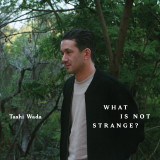
What Is Not Strange? is the first full-length album by Los Angeles-based composer Tashi Wada in over five years, comprising his most far-reaching and impassioned music to date. Written and recorded over a period that encompassed the death of his father and the birth of his daughter, the album sees Wada reflecting inward to explore broad narratives - being alive, mortality, finding one's place in the world - through new modes of ecstatic, song-based expression. While the denser forms, stark contrasts, and overt surreality may carry a different weight than Wada's earlier work, which elicited perceptual effects with minimal means, the heart of What Is Not Strange? is still in experimentation and unforeseen outcomes.