This deluxe 2025 vinyl edition of The Grateful Dead's Grayfolded was pressed at Optimal in Germany, known for their high end audiophile pressings.In 1993 Canadian composer John Oswald was invited by Phil Lesh to transform historical recordings of the Dead into something new, along the lines of what they had attempted in their Anthem of the Sun album.
Oswald chose to focus on the Dead’s Dark Star, which, over the courseof a quarter century, they had expanded and transformed in myriad waysin live performances. Oswald was given access to the Vaults, whereover the course of a month, with the guidance of the Dead's resident archivist Dick Latvala, he collected 105 performances, which throughthe following year he formed, folded, fondled, and finessed into a kaleidoscopic unstuck-in-time documentary of the Grateful Dead in someof their most psychedelic, symphonic, and rocking excursions— asingular 110-minute fantasy performance.Here it is, Deadheads, the ultimate Dark Star is now on vinyl. Deluxe audiophile pressing cut in Toronto under the watchful ears of John Oswald. Elaborately printed packaging in a heavy duty triple gatefold jacket includes liner notes by musicologist Rob Bowman featuring interviews with Jerry Garcia, Phil Lesh, and Robert Hunter plus six"time maps" which chart the source concerts of Dark Star.Music performed by The Grateful Dead (c) Grateful Dead Productions Inc. & Ice Nine Publishing Inc.
Taken from over 100 performances of Dark Star recorded between 1968 and 1993. Built, layered and "folded"to produce one large, new re-composed Dark Star.John Oswald is best known as the the creator of the music genre Plunderphonics, an appropriative form of recording studio creation which he began to develop in the late sixties. This has got him in trouble with, and also generated invitations from major record labels and musical icons. Meanwhile, in the í90ís he began, with several commissions from the Kronos Quartet, to compose scores for classical musicians and orchestras, the latest of which is an orchestral work,commissioned by the BBC, combining aspects of The Beatles, Gyˆrgy Ligeti, and Terry Riley. He also improvises on the saxophone in various settings, dances, and is a successful visual artist, best known for the chronophotic series Stillnessence
Поиск:so what music
Все
- 1: Mom'lo Siwaju
- 2: The World Is A Village
- 3: L'enfant C'est Notre Dieu
- 4: Bowo Fun Obir
- 5: Women Rights
- 6: Jusqu'au Bout Du Monde
- 7: Unis Pour Toujours
- 8: Azo We Yin Gbeto
- 9: Tonkuro, Yonnu
- 10: Yonin Isa Pom'bi
- 11: Nin Yani
- 12: Pee
Star Feminine Band, hardest working women in Beninese show business, are releasing their third album on Born Bad, who went all out for their first. Some get malaria at the sight of that sticky world label : rest assured, the world is all they deserve after nine years of hard work. These eight young women, from a village that even Beninese can't quite place, started out in hard mode.
They had to convince themselves that it was worth a shot, but also their family, their village and an entire continent.
André Balaguemon, composer, manager and lyricist, does a lot, while remaining in the background. He put the group together, included his three daughters, houses everyone with his wife Edwige who also manages dances and costumes. He gave them a musical training, and created the framework for them to continue school while rehearsing hard. From local heroes to UNICEF ambassadors, the group has made it. The very existence of this new album is a testament to the perseverance of Grâce, Anne, Urrice, Bénie, Angélique, Sandrine, Julienne and Ashley. The personnel of this family affair has changed a bit : two new women have joined the group, which conquered bigger stages (Glastonbury in the summer, the X-mas BBC special).
This new album brings simple joys : watching them grow from Benin's first girl band to a band in its own right. And never forgetting why they took to the stage in the first place. Star Feminine Band makes straightforward music, taking no detours to express what's missing in the country. When Grâce advocates for kids getting a chance to get to school it's because there's nothing else more important to say that day. Teachers, don’t leave the kids alone, after all.
As they said on their first album, « music is our job », let them be that : musicians having a lot of fun on this album. It wanders through the vast territory of the countless West African styles. They even make a quick foray into reggae to talk about marriage (with a little rap thrown in), and interweave their voices in multiple languages (Waama, Ditamari, Bariba, Fon, Yoruba). And boy do they have hits. To each is own, but “L'enfant c'est un don de Dieu » (Child is god’s gift) is a mighty steamroller, methodically smoothing out the ground for dancing together to its final chorus, singing « debout-les-en-fants / get up, kids ! » along.
Smoother than the first two albums, supported by fine arrangements, ambitious keyboard parts and more complex vocal harmonies without losing any of their spontaneity, this third opus quietly adds to Benin's musical heritage. As they make clear in « Jusqu'au bout du monde », clever little number that we can already hear swelling up on stage: « oui, c’est Star Feminine Band qui a gagné - o / Star Feminine Band won».
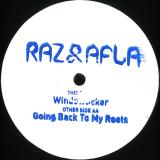
Wah Wah 45s present two very special cover versions from our beloved Afro-electronic duo, Raz & Afla, available on 12" vinyl for the very first time! Having recently released their sophomore LP, Echoes Of Resistance, to great acclaim and support ranging from Nick Grimshaw on BBC 6 Music to Tash LC on BBC Radio 1, and the follow up remix project Remixes Of Resistance, the pair offer up their unique takes on two very different slices of club culture on twelve inches of wax.
First up, the pair tackle Aphex Twin's sleazy and sinister turn-of-the-century dance floor bomb Windowlicker and take it somewhere completely unexpected, as Raz explains:
"We wanted to go to a different place from our influences for this one. When we told people we will cover this tune everyone said 'but how?!' In Raz & Afla style. We had an idea of what elements to recreate from the original and how we can reference it within our spectrum of sounds. It was so much fun to do and really kicks off at our live shows."
It's a heavily percussive reinterpretation, replete with spooky wordless vocals, funky guitars and spine tingling synths that builds into something of a future Afro-house anthem, whilst respecting the genius of the original recording.
On the flip, Going Back To My Roots has become a mainstay in Raz & Afla's live sets, and means a lot to them personally, as Raz once again explains:
"We love this song. The lyrics resonate with us, talking about the meaning of connection to a land and its people. The history of this song is also fascinating, from Hugh Masekela and Orlando Julius through Odyssey and Richie Havens. We wanted to give it our own flavour. You can't choose your heritage and where you are born. It is always a part of you and we like to celebrate that."
Written and first recorded by Lamont Dozier in 1977, Going Back To My Roots was famously covered by Richie Havens in 1980 before becoming a huge crossover hit when interpreted by disco outfit Odyssey in 1981. Raz & Afla very much give their version their own unique dance floor feeling. It's one which has received much support on BBC 6 Music.
Transparent green vinyl. After an uncomfortably long five-year hiatus-likely spent arguing about time signatures, chord progressions, and who forgot to bring snacks to rehearsals-Glutton is finally back. The beloved (by at least a few people) trio is ready to unleash their questionable wisdom upon an unsuspecting world with their upcoming album: "Skiva heter Vishnu!" On their latest outing, Glutton boldly ditches vocals (likely realizing that nobody was really listening to their lyrics anyway) and commits fully to an instrumental format. This time around, it's only guitar, bass, and drums-because who needs keyboards or vocalists when you have enough distortion pedals and élan? Guitarist Eirik Orevik Aadland (Spurv), bassist Ola Mile Bruland (Actionfredag, Jordsjo), and drummer Jonas Eide Hollund (Mt. Mélodie) clearly didn't bother to consider commercial viability while crafting this sonic oddity, delivering tracks like "Hallux Valgus," "Orkensur," and "Rematusenogennatt" with absurd seriousness and delightfully misplaced confidence. Expect a reckless fusion of punk attitude, jazz complexity, and prog rock pretentiousness, presented with complete sincerity and zero self-awareness (well, almost zero). Each track is carefully constructed to give the illusion of a band deeply serious about their art, while simultaneously admitting that they may have no idea what they're doing. Whether you're a sophisticated music connoisseur with an ear for complexity, or just someone who enjoys pretending to appreciate weird music, Glutton's latest record promises to be precisely the type of organized hotchpotch you didn't realize your life was lacking. "Skiva heter Vishnu!" - because of course it does.
- A1: Diamonds Are A Girl's Best Friend
- A2: I Wanna Be Loved By You
- A3: My Heart Belongs To Daddy
- A4: Do It Again
- A5: A Fine Romance
- A6: Two Little Girls From Little Rock (With Jane Russell)
- A7: You'd Be Surprised
- A8: After You Get What You Want, You Don't Want
- B1: River Of No Return
- B2: Some Like It Hot
- B3: Heat Wave
- B4: One Silver Dollar
- B5: When Love Goes Wrong (Nothing Goes Right)
- B6: I'm Gonna File My Claim
- B7: I'm Through With Love
- B8: Happy Birthday, Mr. President
Many have followed in her stiletto-heeled footsteps, yet there is, was and only ever will be one Marilyn Monroe. Amazing as it now seems, Hollywood’s greatest ever sex symbol enjoyed less than a decade at the peak of the acting profession. The movies she made and the iconic images they contained, such as the billowing skirt from The Seven Year Itch, remain staples of popular culture. Andy Warhol turned her image into pop art, but Marilyn’s ‘15 minutes of fame’ made an unprecedented impact. Music was another gift she left the world, and this collection of songs reminds us she could do much more than merely look good
- A1: Destination (Dr. Yusef Lateef)
- A2: Black Family
- A3: What Shall I Tell My Children Who Are Black (Dr. Margaret Burroughs)
- A4: Impepho
- A5: We Are Starzz
- A6: London
- B1: Capetown (Feat. Asher Simiso Gamedze)
- B2: The Oracle
Angel Bat Dawid's International Anthem debut The Oracle introduced her multifaceted voice to the world. The response to its modest, initial cassette/digital release in January of 2019 was immediate, and immense. Within a month of its announcement, Dawid was being featured on magazine covers and receiving offers from international festivals; and her subsequent activity marked the beginning of an epic run of creative output (including 2020's LIVE double LP, the same year's EP Transition East, 2021's Hush Harbor Mixtape Vol. 1 Doxology, and the sprawling opus Requiem for Jazz, released in 2023) that continues through the present.
The collection of compositions on The Oracle present a deep blend of powerful and emotive songs alongside heavy and free improvisation. In true DIY fashion, Dawid recorded and mixed the album using only her cell phone.
"Angel's fieldnote approach affirms that the everyday remains a legitimate site of creative production," says South Africa based percussionist, collaborator, and IARC labelmate Asher Gamedze in his liner notes for the album's IA11 Edition. Gamedze - the only other musician to appear on The Oracle besides Dawid, who constructed most of the album's tracks by layering, overdubbing, and arranging lo-fi symphonies of her own voice, wind instruments, percussions, and keyboards - waxes extensively about Dawid's significance in his notes, calling her "a living exemplar and extension of the spacious sonic horizons opened by the likes of the AACM and their refusal of any limitations on their creative vision and the destruction of the demarcation between composer and improviser."
"...a masterpiece, rich with dense improvisation and Afrocentric themes." - Suraya Mohamed, NPR
Issued in May 2000, Toploader’s debut album was a major success, reaching number four on the UK chart and going multi platinum within a matter of months. It was mostly written by lead singer and keyboard player Joseph Washbourn, with the exception of ‘Just Hold On’ and the huge worldwide hit ‘Dancing In the Moonlight’, which had been a success across the pond for King Harvest in 1972. A retro-sounding record upon release, with an impressive vitality and soulfulness, it remains a highly enjoyable experience; an album that evokes some of the best sounds of the 1970s and blends them all together with great skill.
- The Sink Thank You
- Beers With My Name On Them
- Why I Bought The House
- Travel Safe
- Cobalt Room: Good Work / Silver Saab
- Voice Memo
- Like Another Planet Instrumental
- Country Girls
- Falls
On the cover of 8 Tips for Full Catastrophe Living, the new album by Asher White, The Statue of Liberty is in pieces but not destroyed - in progress, being built, not yet complete. Her torch is on the ground, her head somewhere out of frame. Before she was a symbol, she was metal, and living, sweating people riveted her together. The spirit of de/construction characterizes 8 Tips, White's 16th LP overall and first since signing to Joyful Noise. Like White's previous albums, 8 Tips for Full Catastrophe Living darts boldly among varied musical styles. Doom metal splits open into bossa nova; psychedelic rock and power pop flip into industrial techno. Each song emerges from its composite parts in the studio: White doesn't draft or demo before recording, but builds out her pieces sculpturally, sound by sound. "It's forever collage, forever assemblage," she says of her music. "To me, it has more to do with J Dilla, L.A. beat, and musique concrète than pop songwriting." The record's quick turns and vivid contrasts reflect White's cultural voraciousness. A writer, painter, and sculptor as well as a musician, she gathers materials constantly, always digging for new ideas in every possible form. The films of Claire Denis, the novels of Clarice Lispector, and the memoirs of Eve Babitz all funnel into White's reflection of 21st century disaster capitalism. 8 Tips is also White's first album to have been mixed outside her Providence studio; after recording it herself, she brought tracks to Seth Manchester (Lightning Bolt, Battles, The Body) who gave the album its brawny, unruly charge. "I was interested in making something that serves dually as a self-help book and a chronicle of self-destruction," says White. Overlaying autobiography onto character vignettes, 8 Tips for Full Catastrophe Living wrenches open the idea of apocalypse - an abrupt disaster rained down on uncomplicated innocents - and peers inside at its bursting, devastated particulars. Apocalypse is slow and uneven. Nations falter as do individual people, clinging fast to their old, dilapidated self-preservation strategies. What saved you in the past might destroy you in the future. Flip it around, shake yourself loose, ruin the person you've known yourself to be, and you might get the chance to become something else. "There have been so many end times, many other apocalypses." White says. "People were writing self-help tips, and people were partying." We have survived catastrophe before. Out of the ruins, people made work - art, books, culture. "I was interested in making something that sounds like a self-help book, but it's actually about self-destruction," says White. "In full catastrophe living, you just have to do a bunch of whippets. This album is mostly about doing whippets. I'm not even kidding."
- A1: Floodbound
- A2: Cure Your Ills
- A3: ? | I'm No Good Without You
- A4: For A While
- A5: Golden Vanity
- A6: Rainmaker, Sunseeker
- B1: The House On The Hill
- B2: Ruby Red
- B3: She Never Sleeps
- B4: The Hanging Stars
- B5: Hang Me High
- B6: Crippled Shining Blues
- B7: Running Waters Wide
*Long overdue reissue of the first album by The Hanging Stars to coincide with their tour support slot with Edwyn Collins – initial 300 copies come with 12 x 12 print*
“In late-Sixties California, the Byrds and Flying Burrito Brothers combined traditional country music with hippy rock to great success. The influence lingered and whatever cultural relevance it has this is a delightful, transporting listen” – The Times 4/5
London-based psych-folk outfit The Hanging Stars re-release their much-loved debut album Over the Silvery Lake on Crimson Crow. Blending folk pastoralism with swampy 60s Americana, they sound like the missing link between the California desert sun and the grey skies of London Town. The album was recorded between LA, Nashville and Walthamstow, with each of these vastly different places leaving an indelible mark on the songs.
Now signed to the Loose Records label and fronted by London-based songwriter, singer and guitarist Richard Olson (The See See, Eighteenth Day of May), The Hanging Stars are essentially a loose collective of people who weave together a blissed-out psychedelic tapestry. The rest of the core band is made up of Sam Ferman on bass and Paulie Cobra on drums, Horse on pedal steel and Patrick Ralla on banjo, guitar. They jam rather than write and hang out rather than rehearse, harnessing a kind of tipsy euphoria resplendent with luscious arrangements and glorious vocal harmonies.
During 2015, prior to this album’s original release the band released two critically acclaimed singles via The Great Pop Supplement (both of which also appear on the album). “Golden Vanity” was premiered by The Line of Best Fit who said; “you'd be forgiven for thinking you'd just unearthed a rare deep cut from the late 60s/early 70s boom of psychedelia infused Americana” and “The House on The Hill” was described by The Guardian as; "a hazy, desert-dream of a song, nicely sharpened with steely-eyed guitars, Mersey-laced harmonies and just a whiff of the Gun Club”.
There are a number of allusions to nature and the weather on the album, borne in part out of the contrasting surroundings in which it was produced. The band’s fascination with Americana led them to record some of the material Stateside, laying down some of the parts at Battle Tapes Studios in Nashville (Lambchop, Paperhead), as well as at Vision Quest Studios in Los Angeles with Rob Campanella. His work with The Quarter After, The Brian Jonestown Massacre, Beachwood Sparks The Tyde, and GospelbeacH was a perfect match to capture their sound and they even had San Franciscan legend Chrystof Certik step in on lead guitar for a couple of tracks.
Following the LA recordings, a trip to the Californian desert provided the core notion of what they wanted to produce - a shard of light that they clung on to whilst recording the rest of the album in the significantly more rain-soaked atmosphere of Walthamstow, London, under the watchful eye of Brian O'Shaughnessy at Bark Studios (The Clientele, Comet Gain). As the band explained at the time: “Ultimately we hope you can hear both the sand and the rain in this record.”
The Hanging Stars place themselves firmly as part of a long folk tradition encompassing European and North American influences – as a continuation rather than a pastiche of these styles. This is the sound of a band really coming in to their own, fully formed and in no doubt of their vision. With Over the Silvery Lake they succeeded in producing a record, which has the country, blues and folk traditions at its heart.
- A1: Vital Disorders - Zombie
- B1: Kotoa - Zombie
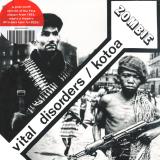
Wah Wah 45s present a unique moment from 1982 where New Wave and Post Punk collided with Afrobeat in the shape of Norwich DIY outfit Vital Disorders and their subversive yet instantly memorable version of the Fela Kuti classic, Zombie.
Band member Suzy Cox explains more:
"The song came to the band through our vocalist Lenneka Van Gilst who was in the group between January 1980 and December 1981. Lenneka grew up in Nigeria and had the original track on vinyl. When she moved to Trowse House, Norwich, the flat under Chris, the VD's bass player, he heard the vibes floating through the floorboards. One thing led to another and it was in our set for ages. Lenneka had left the band to travel to Mexico by the time we recorded the track. We did well to choose it as the song has really stood the test of time. Lenneka had a lot of African Beat which was a big influence on us."
The track came to label boss Dom Servini's attention having been unearthed by BBC 6 Music DJ Gilles Peterson in late 2024, and a vinyl reissue of this rare and one-off gem was the obvious choice. Rather than pairing it with its original punky B-side though, Dom enlisted new signings to the label - young Afro-dub outfit Kotoa - to record their take on the Kuti classic. The quintet delivered what is a three minute, intense take on the Afrobeat genre, complete with youthful voices of protest echoing those of over 30 years ago.
The 7-inch vinyl only release of Zombie comes with re-worked art courtesy of our award winning designer Animisiewasz, taking the home-made look of the original cover and updating it respectfully for 2025.
- A1: Something In My Eye – The Acid Jazz Orchestra Featuring Sherine
- A2: Samba De Flora (Original Full Length Version) – Romero Bros
- A3: Tambores Da Vida (Drums Of Life) – Chris Bangs
- A4: Coconut Rock – Soul Revivers Featuring Sheila Maurice-Grey And Anoushka
- A5: Rocksteady – Brand New Heavies
- B1: Crucifix Lane – Matt Berry
- B2: Thinkin’ About You – Carmy Love
- B3: Beggin’ – Bdq
- B4: This Is Day One – Earth-O-Naut
- B5: That’s About The Time (I Fell In Love With You) – Quiet Fire
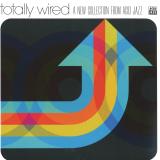
We are excited to announce the return of the iconic Totally Wired series with a brand new collection on LP and CD. The first 50 orders will include a special art print of the artwork. We are also doing a limited edition T-shirt to celebrate this milestone!
In 1988 Acid Jazz released its first compilation album ‘Totally Wired: A Collection From Acid Jazz Records’. Compiled by Eddie Piller and Gilles Peterson it collated 11 tracks that summed up the early days of our scene, mixing new label signings, cool new records being played in our clubs and a couple of oldies. It sold well to the then small scene and set the template for a series, that in the wake of the international success of The Brand New Heavies, Jamiroquai, The James Taylor Quartet and others exploded. By the time that Volume 5 appeared, we were selling tens of thousands of copies, with major label artists vying for inclusion.
By that point ‘Totally Wired’ was a phenomenon, that sign-posted changes in both the directions of new music, but of the oldies that were played on the scene. It gave DJs new tunes to play and soundtracked 1000s of Cafés and bars the world over in the age of the CD. It was largely retired at the end of the 90s and as times changed.
Over the years we have been asked to return to the scene of the crime, but it has never quite felt right, until now. With vinyl back, and the need for easy to digest compilations becoming neccessary in the chaos of streaming’s ‘I can listen to anything I want, but can’t think what that might be’ is evident, but also we are feeling excited about where Acid Jazz is right now. New artists on the label are making great records, Matt Berry has a Top thirty album, and The Brand New Heavies are headlining the Royal Albert Hall. It’s easy to make an exciting album when that is happening.
So we are releasing “Totally Wired: A New Collection From Acid Jazz” and treating it like the important milestone that it is. From the Acid Jazz sid we have new and exclusive recordings by Matt Berry, Chris Bangs and new signings Earth-o-Naut and Quiet Fire, there is also a recent white label only 45 cut by the Soul Revivers – released ahead of their new album due this Autumn and featuring Kokoroko’s Shiela Maurice-Grey and Anoushka Nanguy. For the oldies we have dug deep into our own archives to bring you the Acid Jazz Orchestra’s version of Corduroy’s ‘Something In My Eye’ and The Brand New Heavies astounding funk take of Aretha Franklin’s ‘Rock Steady’. These are all joined by recent scene records by Carmy Love – one of the greatest voices in the UK – The Romero Brothers, and BDQ, carrying the series onwards at last.
- A1: Malavoi - Te Traigo Guajira
- A2: Los Caraibes - Donde
- A3: Tropicana - Amor En Chachacha
- A4: Ryco Jazz - Wachi Wara
- A5: Eugene Balthazar - Dap Pignan
- A6: Roger Jaffort - Oye Mi Consejo
- A7: Les Kings - Oriza
- B1: Les Supers Jaguars - Tatalibaba
- B2: Super Combo De Pointe A Pitre - Serrana
- B3: L'ensemble Abricot - Se Quedo Boogaloo
- B4: Henri Guedon - Bilonga
- B5: Les Aiglons - Pensando En Ti
- B6: Los Martiniquenos - Caterate
In Guadeloupe, many people think that jazz and ka music are like a ring and a finger. To some extent, the same could be said about so called Latin music and the music played in the French West Indies.
Both aesthetics were born in the Caribbean and bear so many connections that they can easily be considered cousins. In constant dialogue, there are lots of examples of their fruitful alliance and have been for a while. The English country dance that used to be practiced in European lounges came to be called kadrille in Martinique and contradanza in Cuba. They both featured additional percussion instruments inherited from the transatlantic deportation. Drawing from shared feelings about the same traumatized identity – later to be creolized – it would be hard not to assume that they were meant to inspire each other. The golden age of the orchestras that graced the Pigalle nights during the interwar period further proves the point. As soon as the 1930s, Havana-born Don Barreto naturally mixed danzón and biguine music in a combo based at Melody's Bar. In the following decade, Félix Valvert, a conductor who was born and raised in Basse-Terre in Guadelupe, also worked wonders in Montparnasse with La Coupole, which was an orchestra made up of eclectic musicians. Afro- Caribbean performers of various origins were often hired on rhythm and brass sections in jazz bands, which used to enliven the typical French balls of the capital. In the 1930s and onwards, Rico’s Creole Band was one of them.
Martinican violinist-clarinettist Ernest Léardée, who would become the king of biguine music as well as the main figure of French Uncle Ben's TV commercials (a dark stigma of post-colonial stereotypes), had musicians from the whole Caribbean sphere play at his Bal Blomet – and they all enchanted "ces Zazous-là" (according the words of Léardée's biguine-calypso piece). In les Antilles (French for French West Indies), music history started to speed up in the 1950s, when trade expanded and radio stations grew bigger. The Guadelupean and Martiniquais youth tuned in their old galena radio sets to South American and Caribbean music. As for the women traders, les pacotilleuses, they bought and sold goods across different islands (the "passing of items through various hands" was thought to be most pleasurable) and brought back countless sounds in their luggage. Such was the case of Madame Balthazar, who once returned from Puerto Rico with the first 45rpm and 33rpm to ever enter Martinique.
Out of this adventure was created the famous Martinican label La Maison des Merengues, a music business she opened and undertook with her husband and which proved to be a major landmark. At the end of the 1950s, in Puerto Rico, Marius Cultier competed in the Piano International Contest playing a version of Monk's Round 'Midnight. He won the first prize and this distinction foreshadowed everything that was to come. Cultier, the heretic Monk of jazz, was quickly praised for writing superb melodies, always tinged with a twist that conferred a unique sound to his music. It didn't take long for the gifted self-taught musician to get to play with Los Cubanos, making a name for himself thanks to his impressive maestria on merengues.
The rest is history. Besides, in the late 1950s, Frantz Charles-Denis, born into the upper middle class in Saint-Pierre and better known by his first name Francisco, went back home after working at La Cabane Cubaine – a club located rue Fontaine where he had caught the Latin fever. Francisco's music was therefore heavily marked by his Cuban cousins' influence, which gave the combos he led a specific style and also led to renewal. Things were swinging hard in La Savane, located in the main square in Fort-de-France. He set up the Shango club close by and tested out the biguine lélé there, a new music formula spiced up with Latin rhythms. Soon afterwards, fate had him fly to Puerto Rico and Venezuela.
As for percussionist Henri Guédon (percussions were only a part of his many talents), he was born in Fort-de-France in May 22nd 1944, the day marking the celebration of the abolition of slavery. As an old man, he could remember that in " his father's Teppaz, a lot of hectic 6/8 music was constantly playing...". In the opening lines of his Lettre à Dizzy, a small illustrated collection of writings published by Del Arco, he highlighted the huge impact that cubop had on him as a teenage boy, around 1960. He eventually turned out to be the lider maximo in La Contesta, a big band steeped in Latin jazz. He was also the one who originated the word zouk to describe music which brought the sound of the New York barrio to Paris. It was the culmination of a journey that started in Sainte-Marie: "a mythical place for bélé, the equivalent of Cuban guaguancó". In the early 1960s, the tertiary economy developed to the detriment of agriculture. Yet rural life was where roots music emerged in Martinique and in Guadeloupe.
Record companies played a major part in the process of Latin versions sweeping across the islands – before reaching everywhere else. Producer Célini, boss of the great Aux Ondes label, and Marcel Mavounzy, both the head of Émeraude records - a firm which was founded in 1953 - as well as the brother of famous saxophonist Robert Mavounzy, were big names to bear in mind. Although there were many of them - all of whom are featured on this record - Henri Debs was definitely the major figure in the recording adventure. He proved to be so influential that he even got compared to Berry Gordy. In the mid 1950s, when he acquired his first Teppaz, he worked on his first compositions: a bolero and a chachacha. Then, he became the one man who made people discover Caribbean music, from calypso to merengue. He was among the first ones to rush out to San Juan, Puerto Rico, to buy records and distribute them through a store run by one of his brothers in Fort-de-France. He had members of the Fania All Star come and perform there, which he was madly proud about. He was also the first one to pay attention to Haitian music, such as compas direct and various other rhythms which would soon flood the market. As a result, many of the combos hitting his legendary studio would end up boosted by widespread "Afro-Latin" rhythms. However, he never denied his identity: gwo ka drums were given a major role, although they were instruments which had long been banned from the "official" music spheres. The present selection bears witness to such a creative swarming. Here are fourteen tracks of untimely yet unprecedented cross-fertilization: all types of music rooted in the Creole archipelago have found their way, whatsoever, to the tracklisting. Whether originating from the city or being more rural, they all go back to what Edouard Glissant, in an interview about the place of West Indian music in the Afro-American scope, called "the trace of singing, the one which got erased by slavery." "It is so in jazz, but also in reggae, calypso, biguine, salsa... This trace also manifests through the drums, whether Guadelupean, Dominican, Jamaican or Cuban... None of them being quite the same. They all point to the idea of a trace, seeking it out and connecting to each other through it. This is the hallmark of the African diaspora: its ability to create something new, in relation to itself, out of a trace. It may be the memory of a rhythm, the crafting of a drum, a means of expression which doesn't resort to an old language but to the modalities of it." The opening track features one of the emblematic orchestras of this aesthetic identity, criscrossing many music types from the archipelago. The 1974 Ray Barretto guajira – Ray Barretto was a major New York drummer influenced by Charlie Parker and Chano Pozzo – is magnificently performed by Malavoi, a legendary Fayolais group (i.e from Fort-de-France). Additionally, the compilation ends on a piece by Los Martiniqueños de Francisco. It symbolically closes the circle as it is a genuine potomitan of Martinique culture which also functions as a tireless campaigner for Afro-Caribbean music. Practicing the danmyé rounds (a kind of capoeiria) to the rhythm of the bèlè drum, it delivers a terrific Caterete, a kind of champeta of Afro- Colombian obedience which was originally composed by Colombian Fabián Ramón Veloz Fernández for the group Wgenda Kenya. The icing on the cake is Brazilian Marku Ribas, who found refuge in Martinique in the early 1970s, bringing his singing to the last trance-inducing track. These two "versions" convey the whole tone of a selection composed of rarities and classics of the tropicalized genre, swarming with tonic accents and convoluted rhythms. It is the sort of cocktail that the West Indians never failed to spice up with their own ingredients. For instance, the Los Caraïbes cover of Dónde, a famous Cuban theme composed by producer Ernesto Duarte Brito, has a typical violin and features renowned Martinique singer Joby Valente and his piquant voice.
The track used to be – or so we think – their only existing 45rpm. The meaningful Amor en chachachá by L'Ensemble Tropicana, a band which included Haitian musicians among whom was composer and leader Michel Desgrotte, also recalls how Latin music was pervasive in the tropics in the mid-1960s. They were the ones keeping people dancing at Le Cocoteraie in Guadelupe and La Bananeraie in Martinique. Around the same time, another "foreign" band, Congolese Freddy Mars N'Kounkou's Ryco Jazz, achieved some success on both islands by covering Latin jazz classics – such as their adaptation of Wachi Wara, a "soul sauce" by Dizzy Gillespie and Chano Pozo whose interweaving of strings and percussions can have anyone hit the dancefloor. How can you resist Dap Pinian indeed, a powerful guaguancó by Eugene Balthazar, performed by the Tropicana Orchestra and published by the Martinique-founded La Maison des Merengues? It also acts as a symbol of the maelstrom at work. Going by the name Paco et L'orchestre Cachunga, Roger Jaffory used to play guaguancó too: his Fania-inspired Oye mi consejo is one example of his style. Baila!!!!! Dancing was also one of the Kings' focus points. Oriza is a Puerto Rican bomba and a "classic" originally composed by Nuevayorquino trumpeter Ernie Agosto, which reserves major space for brasses, giving it a special sheen.
Emerging from the New York barrios crucible was also La Perfecta, a Martinique group originating from Trinidad, whose name directly references the totemic Eddie Palmieri figure as well as his own band, also called La Perfecta. Here they borrow Toumbadora from Colombian producer and composer Efraín Lancheros and interpret it by emphasizing percussions, which set fire to the track even more than the wind instruments. The same goes for Martinique's Super Jaguars, who use Tatalibaba – a composition by Cuban guitarist Florencio "Picolo" Santana which was made famous by Celia Cruz & La Sonora Matencera – as a pretext for sending their cadences into a frenzy. In a more typically salsa vein, the Super Combo, a famous Guadelupean orchestra from Pointe-Noire that was formed around the Desplan family and had Roger Plonquitte and Elie Bianay on board, adapt Serana, a theme by Roberto Angleró Pepín, a Puerto Rican composer, singer and musician also known for his song Soy Boricua. Here again, their vision comes close to surpassing the original. In the 1970s, L'Ensemble Abricot provided a handful of tracks of different syles, hence reaching the pinnacle of the art of achieving variety and giving pleasure. They played boleros, biguines, compas direct, guaguancó and even a good old boogaloo - the type they wanted to keep close to their hearts for ever, "pour toujours", as they sang along together in one of their songs. Léon Bertide's Martinican ensemble excelled at the boogaloo which had been composed by Puerto Rican saxophonist Hector Santos for the legendary El Gran Combo.
Three years later, in 1972, Henri Guédon, with the help of Paul Rosine on the vibraphone, tackled the Bilongo made famous by Eddie Palmieri. Such a classic!!!!! And so were the Aiglons, the band from Guadelupe: choosing to execute Pensando en tí, a composition by Dominican Aniceto Batista, on a cooler tempo than the original, they noticeably used a wonderfully (un)tuned keyboard in place of the accordion. On the high-value collectible single – the first one released by Les Aiglons under the Duli Disc label – there is a sticker classifying the track under the generic name "Afro". Now that is what we call a symbol. Jacques Denis
Seeking overlooked beauty and prizing reflection in a distracted world, Hammock creates cinematic music for the road less traveled. In stirring works of shimmering post-rock ambience that swell with hope and melancholic nostalgia, the Nashville-based duo of Marc Byrd and Andrew Thompson immerse listeners in living visions of moments long past, animating life's fond remembrances and scarring losses with gentle lens-flare harmonics, heart-surging neoclassical drama, and pensive silence. A direct challenge to the passive existence of modern life, where everything can be experienced but precious little is felt, Hammock demands, and richly rewards, patience and contemplation. One of Hammock's career defining works, the Mysterium, Universalis, and Silencia trilogy came to a close in 2019. The first chapter, Mysterium, was written following the death of Byrd's 20-year-old nephew and dealt with incomprehensible, shattering loss. Difficult understanding came on Universalis, and an altered reality understood through quiet reflection took hold on Silencia. Emerging from the silence, a period that brought with it the global pandemic of Covid-19 that has kept loved ones apart, conscripted months upon months of isolation, and roused directionless longing for escape, Hammock presents Elsewhere. Recorded by Byrd and Thompson at their homes, apart and with minimal equipment, Elsewhere serves as a gateway to another place, materializes feelings of separation and loss without closure, and calls listeners back to live their lives - not spend them longing to be something or somewhere else. - Wyatt Marshal
- A1: October (1 19)
- A2: My & Me (Feat Sampha, Laura Groves, Ricky Washington & Alabaster Deplume) (3 21)
- A3: Porcupine Tattoo (Feat Noah Cyrus & Bill Callahan) (3 38)
- A4: Never Felt Better (Feat Sampha & Florence Welch) (4 06)
- A5: Ether (Feat Maddy Prior) (3 17)
- A6: Losing You (Feat Sampha, Laura Groves, Jah Wobble & Yazz Ahmed) (3 09)
- A7: Firelight (Feat Florence Welch, Berwyn & Alabaster Deplume) (3 19)
- B1: The Summons (1 29)
- B2: No More Rehearsals (Feat Roses Gabor, Jah Wobble, Jack Jack Penate & Yazz Ahmed) (3 14)
- B3: You Were Smiling (Feat Samantha Morton) (3 51)
- B4: Norm (Feat Bill Callahan) (1 26)
- B5: Swamp Dream #3 (Feat Clari Freeman-Taylor) (5 57)
- B6: The Meadows (Feat Roses Gabor, Kamasi Washington & Ricky Washington) (4 50)
- B7: Goodbye (Hell Of A Ride) (Feat Nourished By Time) (3 32)
Black Vinyl[21,81 €]
Everything Is Recorded, ist das musikalische Kollaborationsprojekt von XL-Recordings Chef Richard Russell. Auf dem Album "Temporary" sind zu hören u.a. Sampha, Bill Callahan, Noah Cyrus, Florence Welch, Maddy Prior, Berwyn, Alabaster Deplume, Jah Wobble, Yazz Ahmed, Laura Groves, Kamasi Washington, Ricky Washington, Roses Gabor, Jack Penate, Samantha Morton, Clari Freeman-Taylor und Nourished By Time. "Temporary" entstand im Verlauf von vier Jahren in Russells Londoner Copper House Studio und während einiger zusätzlicher Sessions in Tottenham, Cumbria, Dorset, Los Angeles und Las Vegas Es schließt an die vorangegangenen Releases wie das 2018 für den Mercury Prize nominierte Debüt an. Auf dem neuen Album erfährt Russells musikalische DNA allerdings ein Reboot: Sein Cut & Paste Approach reicht in die Zeit vor Sampling-Helden wie The Bomb Squad und Prince Paul zurück bis hin zu Innovatoren wie Steve Reich, Robert Rauschenberg und William S. Burroughs. Während Russells Musik bislang geprägt war von Rhythmus, Worten und Melodie - in ebendieser Reihenfolge - tauschen zwei Aspekte diesmal ihre Rollen. Der Rhythmus tritt zugunsten der Melodie in den Hintergrund. Musikalisch ist "Temporary" vom Gedankenexperiment "what if folk music had "gone digital" in the 80s, just as reggae had?" geleitet, während sich in spiritueller und lyrischer Hinsicht vieles um Trauer und den Verlust von Freunden, Familienmitgliedern und Kollegen dreht. Im Ergebnis stehen leuchtende und gelassene Kompositionen, auch dank der faszinierenden und vielfältigen Gästeliste, die "Temporary" mitbringt. Die fragilen, zärtlichen und stillen Tracks liefern vielleicht eines der sanftesten Alben, die je über den Tod geschrieben wurden. "Das Album zu machen, war erfüllend, eine Art, das Leben zu heiligen", so Russell. "Temporary" ist die erste reguläre Veröffentlichung von Everything Is Recorded nach über vier Jahren. In der Zwischenzeit war Russell allerdings nicht untätig. Via Soundcloud und Bandcamp erschienen zuletzt "Summer Solstice", "Autumn Equinox", "Winter Solstice" und "Spring Equinox", die alle mit einer Reihe von Gastmusikerinnen und -.musikern im Rahmen ausgiebiger Jams an jeweils nur einem Tag entstanden. Mit der Schauspielerin und Regisseurin Samantha Morton tat er sich zum Duo Sam Morton zusammen, welches sein Debüt "Daffodils und Dirt" veröffentlichte. Für Peter Gabriels Comeback-Album "i/o" produzierte Russell den Song "Four Kinds of Horses".
Tasmin - Tezeta
The debut album is a journey through layers of influences connected by the band members bringing the sound of Ethio-Jazz, Afrobeat, Percussion, Dub and Tribal Music with an electronica sauce are interwoven, all mixed together in a delicate balance that creates a cinematic soulful and one-of a kind aesthetic blend from the connection of several worlds
The name "Tezeta" is taken from the well-known Ethiopian musical scale, which served as a major inspiration for the writing. This scale symbolizes nostalgia, longing & love songs and serves as a starting point that resonates a quiet pain and longing for a far away place, but still feels like home. In the case of Hadar and Tushiner, this is a tangible longing and the African sounds are woven into them like a second language
The approach to the production of the album reflects loyalty to the tradition of classic studio recordings that include tape reels, field recordings, African percussion, flutes, saxophone and old synthesizers combined with guitars and drums. Every recorded sound went through a filter of precision, listening, and searching for depth that is both technical and emotional
Their music always takes place in the present, it is a living, open moment, connected at the same time to what is heard in the distance from the winds of the Gulf of the African continent and through the streets of Tel Aviv, inviting listeners into a space where emotion and rhythm move together as one
Eran Hadar guitars, synths, percussion, sound
Eylon Tushiner saxophone, flute, keys
Dror Tshuva bass guitar
Omri Gondor drums
Mysterious Bristol based Rali Pibs, carves out 6 stunning tracks, undefinable in the left-field. File under Industrial-Synesthetic-Amnesia. “U Paradise” is a solid mix of atmospheric chugging, primal, bold and abrasive yet textured, rich and full of emotion. Outsider music with a hint of pop edge that is sure enough to make heads twist on the dance-floor (tried and tested). If you don’t believe us stick Shaka on in the club and see what happens. Weirdo music with a cosmic and emotive tinge that we love at the inc.
I was aware of Submerse from a long time ago, mainly for when he was making hip-hop & footwork tunes but I had noticed that a few years ago, on his SoundCloud page, he was uploading jungle tunes that he had started making, which got me interested in keeping tabs on what he was doing.
But it wasn't until I met him in Tokyo where he's based, when I played after him at an event at Circus (venue in Osaka & Tokyo) and then met up with him again later on that week that I realised how much he had been making.
He sent me some of the stuff he'd been doing that wasn't available publicly yet and I was really impressed by how strong the melodies were and how much influence from video game soundtracks he had in his tunes, I knew I had to get him on Future Retro London for a release.
Big up to Submerse for allowing me to put out this EP of his on Future Retro London, look out for more music from him to come on Future Retro London and other labels!
- 1: Can't Lose You
- 2: Covering My Tracks
- 3: Take Back Goodbye
- 4: Run
- 5: Can't Be Alone Tonight
- 6: Here With Me
- 7: Angel Eyes
- 8: How Gone
- 9: Lost And The Lonely
- 10: Never Let You Go
- 11: Full Time Fool
- 12: Photograph
- 13: Kiss This Thing Goodbye
- 14: Driving And Listening To Music
- 15: Time After Time
- 16: Look What We Did
The Collective Move
Land of the Sun, the Moon and Cosmic Melodies LP 2x12"
- 1: Chaos:cosmos (0:25)
- 2: Land Of The Sun (03:56)
- 3: Evolution (02:18)
- 4: Il Canto Della Luce (0:31)
- 5: Chandranandan (10:22)
- 6: Luna Mia Domina (02:48)
- 7: Pizzica Lunatica/Votata Cosmica (04:56)
- 8: The Prophecy (02:52)
- 9: Cosmic Melodies (07:32)
- 10: Cosa Dicono Gli Uccelli? Parte I (:58)
- 11: Cosa Dicono Gli Uccelli? Parte Ii (12:28)
- 12: Epilogue (03:00)
Black Vinyl[28,53 €]
"The Land of the Sun, the Moon and Cosmic Melodies" is a conceptual Opera of III movements, inspired by a cosmogony that features the planets of the sun and the moon. These two characters guides us on a journey of light and shadow, rising and setting in a cycle of unexplored musical territories.
The Collective Move presents its debut album with a broad palette of sounds, ranging from jazz to opera, from southern Italian folk music to northern Indian classical music, orchestrating a 60-minute "sonic narration" that ends with the fable "What do the birds tell?".
The Collective Move is an international group of young musicians formed in the Amsterdam Conservatory in 2022. The Collective's vision is to unite diverse artistic expressions and musical genres, inviting diverse artists and musicians from diverse cultures and countries to collaborate in flexible and interdisciplinary formations.
- Woozy
- Pistachios
- Big Tings (Feat Tune-Yards)
- J.o.y
- Assumptions
- Gratitude
- Ask 4 Help
- Palma Wise
- Dsntrlymttr
- Untitled (Swirl)
- Sun Baby
JayWood - the nom de plume of Jeremy Haywood-Smith - is embracing new pastures having moved his music-making from Winnipeg, Manitoba to Montreal, and his new album Leo Negro chimes with a different tone as it looks to reconnect the self and grapple with one's identity. Marking a moment of meaningful change where controlled chaos takes the lead, it philosophises on what it truly means to be an experimentalist building a multi-faceted world where genre is infinite through sounds braver, more playful, and truthful than he's dared deliver before. Despite its astute sampling with layers of twists and turns, Leo Negro doesn't showboat but roars in the presence of vulnerability as it considers one's absolutes as a way of navigating the identity crisis. "Always looking for attention, I admit it, I can't help it, I'm a Leo," he reasons between vintage hip-hop scrubs on `Pistachios,' recalling a childhood need to be the centre of attention then stepping out of the spotlight as a grown-up. "Leos are confident and sure about themselves, but this record isn't that; so really, when translated, the title inspires `black confidence.' It's an uncomfortable, weird, and surreal term which bends the truth and embodies everything within." Experimenting in both life and music, Leo Negro and its first cut, `Big Tings' (feat. California, art-pop duo Tune-Yards) couldn't be further from 2023's Grow On EP and the previous year's slick LP Slingshot. Moving with flow akin to D'Angelo with Toro Y Moi textures, its twinkling intro of whirling synth and playful approach circles back to Jeremy's adolescence when he'd reverse, slow down, and speed up his favourite songs through the media player on his computer. Encouraged by his musical squad Will Grierson, Arthur Antony, Brett Ticzon, and enlisting his stylist and thrifter friends to capture the Leo Negro aesthetic, JayWood's big `in' for 2025 is collaboration, with the tight-knit crew of likeminded musical colleagues captured in session photo grins beaming from his Instagram grid. Nominated for Canada's coveted Polaris Music Prize, it'd be easy to be the cowardly lion; to rinse and repeat what's worked up to this point. But for JayWood, leaning into his natural `what if?' curiosity to make up his own rules as he goes along ("I never really knew what they were to begin with") and venture into honesty's unsafe space to seek comfort, confidence and make even greater connections, really is the only option. After all, he can't help it; he's a Leo.