Formed in 2007, The Boxmasters have recorded an impressive and diverse catalogue of music that touches on their love of a wide array of influences, but most importantly, the rock and roll of the 1960’s. Love & Hate In Desperate Places is their 17th album and the ten songs evince a wry perspective on human nature and love. The lively melodic rock cloaks the wry wit of the lyrics. The album was produced by The Boxmasters, Billy Bob Thornton and J.D. Andrew, who also wrote every song. Listening to The Boxmasters, one can hear obvious odes to the Beatles, Byrds and Beach Boys, but also important to The Boxmasters are The Mothers of Invention, Kris Kristofferson, John Prine and Big Star. Since forming The Boxmasters, several long-time friends have contributed to the sound of the band, but the core of The Boxmasters has always been Andrew and Thornton. As primary songwriters, the sound of the Boxmasters has been an evolution as the duo constantly strive to find new inspiration, new sounds and new ways of expressing what is in their hearts and on their minds. But at the core, there is a backbeat, a lyric with meaning and music played with emotion. As a touring band, The Boxmasters have cultivated a rabid cult fanbase across the United States and Canada. Opening for the likes of ZZ Top, Steve Miller, George Thorogood and Kid Rock The Boxmasters have proven to win over large audiences. As a headliner, frequent stops in Kansas City at “Knuckleheads”, Springfield, Illinois at “Boondocks” and “Merrimack Hall” in Huntsville, Alabama have shown dedicated yet still growing audiences. Two appearances at Levon Helm’s “Midnight Ramble” in Woodstock, New York were highlight performances for the band, as well as the “Ramble at The Ryman” that Levon hosted in 2008. The Boxmasters performed on “The Grand Ole Opry” in 2015, another in a growing resume of must-play venues.
Cerca:sole
"Even God Has A Sense Of Humor" is the long-awaited follow up album to Maxo's critically acclaimed 2019 release Lil Big Man. Across the 14-tracks, Even God Has A Sense Of Humor pays tribute to the mercurial nature of life and includes features from Liv.e, keiyaA, LastNameDavid, and Melanie Charles along with the previously released singles "Free!," produced by Dev Morrison and "48," produced by Madlib and featuring Pink Siifu. The FADER recently sat down with Maxo to discuss the album, which they described as having "a defiant glow, like a bronze statue still standing after an intense tornado."
Born Maxamillian Allen, Even God Has A Sense Of Humor finds Maxo earnest, full-hearted, and lyrically agile. His delivery punches as he poetically unpacks the trials and blessings that have marked the last three years since Lil Big Man, his stirring and meditative debut album. “Life is always gonna be life-ing,” Maxo says, speaking to the spiritual lessons that inspired this new project and an album process that has revealed to him the many ways in which he’s divinely protected.
The album’s striking cover features three casted sculptures of Maxo by legendary NYC-based artist artist John Ahearn, photographed by the rapper’s friend Steven Traylor. The image both preceded the music and set the tone for the record’s overall aura. Experiencing the casting process—which required long periods of stillness for form, and breathwork to avoid claustrophobia—became a metaphor about ego death for Maxo. “I had to go to a space where I was just not there,” he says. As the molding was poured over his body and the voices of those in the room became distant, Maxo’s inner world came into focus. “By the time it hardened, it seemed like the sculpture had risen to be 20 feet above where it was first— almost like it grew tall,” he explains. EGHASOH, in its aural ebbs and flows, honest questioning, profound revelations, and elegant verse, is Maxo standing spiritually tall following a period of challenges with family and friends.
Maxo’s writing process has always been rooted in imagery, observation, and capturing moments. Growing up in Southern California, Maxo spent a lot of time combing through old family photo albums, some of whose contents have become the artwork for prior releases. But his fascination with visual memento is less about nostalgia or remembering, and more about exploring concepts of growth, healing, and cycles. His artistry is intentional and deeply sensitive: “If I’m not feeling it, I’m not gonna record.” While his past records openly grappled with emotional turbulence, anger and depression, EGHASOH is Maxo’s acceptance stage: “I can't really judge nothing. I can't sit up and be mad at shit because everything is, everything is kind of coexisting,” he says.
Musically, EGHASOH is an impressive evolution from Maxo’s earlier, unornamented lo-fi projects. With an emphasis on jazzy instrumentalism and soothing, intricate vocals from both the artist and featured chanteueses Liv.e, Melanie Charles, and keiyaA, EGHASOH is a welcome and beautifully complex sonic effort. Its contributors include a range of musicians: Pink Siifu, LastNameDavid, Madlib, GrayMatter, Karriem Riggins, Beat Butcha, Lance Skiiiwalker, and more. The album was executive produced by Mount Kimbie’s Dom Maker.
“Nobody talks about the fact that we’re changing as we get older... Everybody just acts like you supposed to know,” Maxo says on album standout, “Face of Stone”. It's moody bassline meets a cinematic accordion melody that paradoxically both broods and uplifts—a fitting production choice that mirrors the song’s story. “I’m seeing how this world is chipping you and withering your bones,” Maxo says. “I’m talking about myself, talking about my bro. But it’s never nothing you gonna do that’s a one stop shop in this life. You gotta keep staying diligent and consistent.” For Maxo, Even God Has a Sense of Humor is nothing more than another moment on the timeline of his offerings of self-expression as an artist—one whose sole intention is to, in his words, develop as a human being and heal.
In 2004, California-based indie band Golden Shoulders followed up their highly acclaimed debut with their second album, Friendship Is Deep. Now, on the twentieth anniversary of its release, the album most requested by their fans for a vinyl release is finally set for one on Unspun Heroes. Described as “one of the great semi-lost albums of the 21st Century”, the album showcases singer, songwriter, and band mainstay, Adam Kline’s knack for lyrical hooks and penchant for catchy melodies. But, like friendship, this is deeper than its pop sensibilities might suggest.
From the moment the opening track I Will Light You On Fire opens with its simple piano refrain and vocal harmonies you know you’re listening to something worthy of further exploration. From this building of tension between its temporary aural chaos and the beauty that ultimately emerges, you’ll be hooked. Yet, scratch beneath the surface and you’ll find this is an album that carries with it a political, pro-peace, and pro-humanity message, albeit somewhat more satirical than you might expect of a band hailing from America’s West Coast. This is particularly notable on tracks such as Golden Soldiers and the Committee, where Kline’s turn of phrase and wit shines through, cleverly weaving words so they create detailed poetic mosaics.
Golden Shoulders is a loose and ever-changing lineup of international talent, with Kline as the kingpin and sole songwriter. Given the pedigree of those whose talents grace the album – among them, Todd Roper and Greg Brown (Cake), Josh Klinghoffer (PJ Harvey, RHCP, Pearl Jam), Neal Morgan (Joanna Newsom, Fleet Foxes), and Dan Elkan (Broken Bells) – it’s no surprise the compositions and attention to detail present in each and every one of the 14 songs is top notch. It’s this pleasing mix of accomplished individuals, and their mishmash of influences, which lend a pinball effect to the set of stylistically diverse songs on Friendship Is Deep. Collectively though, the music you’ll hear has a focus, one that channels late 90’s Brendan Benson, the poppier side of 80’s Violent Femmes, and even the mid-60’s flair of the Beatles’ Rubber Soul.
WRWTFWW Records is wonderfully proud to announce the long anticipated official reissue of Chrysalide (1978), the sole album from French multi-instrumentalist and enigmatic genius Michel Moulinié. The krautrock/ambient/minimalism paragon is available as a limited edition LP with one never-heard bonus track. It is sourced from the original reels and housed in a heavy 350gsm sleeve.
Originally released in 1978 on Ange and Jean-Claude Pognant's mythical prog rock label Crypto,
Chrysalide is a fusion of minimalist meditations, cosmic soundscapes, and ambient with a human warmth, carried by a profoundly beautiful and unique use of twelve-string guitar, bass, and violin.
Ideal for an introspective listening experience, the hypnotic Kosmische Musik of Michel Moulinié belongs to the same psychedelic family as Manuel Göttsching’s Inventions For Electric Guitar, Mike Oldfield’s Tubular Bells, early Tangerine Dream, and Steve Hillage’s innovative guitar mastery. WRWTFWW listeners might also be reminded of the label’s seminal French release, Dominique Guiot's L'Univers de la Mer, which makes a great spiritual pairing with Chrysalide.
Escape into the vast universe inside yourself :
After two very intimate solos albums, pianist and singer Gregory Privat returns with PHOENIX, a luminous album celebrating the cycle of life and the constant rebirth from the ashes. A metaphor for the firebird, it's a continuation of the album SOLEY released in 2020. With double bassist Chris Jennings and drummer Tilo Bertholo, this unique trio blends spiritual jazz with urban pop, Creole songs, and electronic music.
Born in Martinique in December 1984, Gre\u0301gory Privat is the son of pianist Jose\u0301 Privat, known for his participation in the internationally recognized Caribbean group, Malavoi. Attracted by the piano at an incredibly young age, he took private lessons from the age of six and devoted himself for 10 years to a classical apprenticeship before turning to improvisation techniques and jazz.
Performers on this recording:
Gregory Privat - piano; Chris Jennings- double bass; Tilo Bertholo - drums
Katya Shirskova - David Maranha - Le Héron / A Reuniåo
Stellagedelivers a compelling split LP fromKatya ShirshkovaandDavid Maranha, "Le Héron / A Reuniåo," set for release in July 2024. Created and produced in residence at La Box contemporary art gallery at ENSA - École national supérieure d'arts de Bourges in 2023, this album is a profound exploration of the two artists' respective voices, showcasing their distinctive approaches.
Katya Shirshkovaopens the LP with side-long "Le Héron." This piece is an unadulterated exploration of voice, devoid of any field recordings or added effects. Embracing minimalism, the work revolves solely around vocal loops and re-recordings, creating choral structures that evoke folk traditions while delving into experimental realms. The ASMR-like techniques employed serve not merely as an auditory gimmick but as an intricate tool to illustrate the delicate flight of birds, mirroring the ethereal quality of the entire composition.
"Le Heron" aptly draws inspiration from its avian namesake, weaving birds into its fabric through the concept of vertical polyphony. The piece is underpinned by a profound understanding of this polyphonic approach, demanding meticulous precision in its looping technique. Each fragile construction is crafted in a single, unbroken take, showcasing an impeccable blend of simplicity and complexity.
David Maranhatakes over on the flip side with "A Reuniåo," delivering seven suites of powerful, minimalist drone compositions. Maranha's mastery of sustained tones and evolving harmonics creates a mesmerizing, meditative experience that is both intense and transformative.A dynamic interplay of harmonics creates a dense, immersive auditory environment, a study in sustained tones and subtle variation, leaving a lasting impression.
Mixed and mastered by Giuseppe Ielasi
- A1: Ora Di Punta (Ruscigan)
- A2: Sin Palabras (Ruscigan)
- A3: Sole Rosso (Ruscigan)
- A4: Il Giorno Dopo (Ruscigan)
- A5: Festa Al Quartiere (Ruscigan)
- A6: Ansiedad (Ruscigan)
- A7: Chemin De Fer (Selmoco)
- B1: Itinerario B. (Ruscigan)
- B2: Semplice E Bella (Ruscigan)
- B3: Fuoco Freddo (Ruscigan)
- B4: Parentesi (Ruscigan)
- B5: Corner (Ruscigan)
- B6: Verso Sud-Ovest (Ruscigan)
- B7: Spag E Spig (Selmoco)
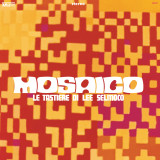
Francesco Anselmo, also known as Lee Selmoco, Dorsey Dodd, Alex Brown, Arsenio Bracco or Tommy Ruff, is an Italian keyboardist that covered the role of of artistic director for Vedette Records, historical Italian imprint founded by director and violinist Armando Sciascia, and also recorded for its notorious Phase 6 Super Stereo, its sub-label focused on instrumental records and production music.
"Mosaico (Le Tastiere Di Lee Selmoco)" is an incredible display of his creative and composing skills, featuring 14 tracks of what could be classified as "happy music", with killer electric organ and rhythms alternating with fuzzy guitars and spacey / psychedelic hints thrown in for good measures, written alongside Guido Baggiani, alias Ruscigan. We are very happy to start a series of reissues from the Vedette Records catalog with the first ever reissue of this title after 50 years from its original release, and since the original pressing did not feature the correct track listing, it is reissued here for the first time in its correct version!
The second LP by Tokyo ambient conceptualists UNKNOWN ME began as a commission for historic Japanese cosmetic conglomerate Shiseido, conjuring audio approximations of seasons and scents, but soon flowered into its own refracted and rarefied environment: Bitokagaku. Translated as “beauty and science,” the album is the foursome’s first composed solely with software, reflecting the collection’s utopian, laboratorial muse.
From levitational electronica (“A Rainbow in Meditative Air”) and vaporous downtempo (“Dancing Leaves”) to planetarium reverie (“Kitsune No Yomeiri”) and AI IDM (“Retreat Beats”), the music moves like weather patterns in a bio-dome: dazzling, microcosmic, and delicately calibrated. Percolating synths crossfade with field recordings from Shiseido’s research division; the sound of streams and distant birds blur into a processed haze; clinical voices read lists of precious stones. It’s a vision of new age as soft robotics, of serenity streamlined by sentient systems.
UM’s team of engineers (Yakenohara, P-RUFF, H. Takahashi, and Osawa Yudai) cite an eclectic swath of inspirations behind Bitokagaku – molecules, stars, Kenji Miyazawa, Akira Kurosawa, even “the sparkle of rainbows” – but their guiding artistic principle is as ancient as it is eternal: “beauty.”
Silver Metallic[33,57 €]
Black[31,89 €]
- A1: Prayer (From Xabo: Father Boniecki)
- A2: In Between (From Xabo: Father Boniecki)
- A3: Journey (From Xabo: Father Boniecki)
- A4: Trip To Ireland (From I Never Cry)
- A5: The Beach (From I Never Cry)
- A6: The Locker Room (From I Never Cry)
- A7: At The Hospital (From I Never Cry)
- B1: Waiting (From At Home)
- B2: Wildfires (From Truth In Fire)
- B3: Ghosts (From Pradziady)
- B4: Soleil Pâle
- B5: Nora (From Nora)
Writing music for film and theatre has always been a big part of Hania Rani's musical world. It is also a part of the creative process that can be tantalisingly out of reach for listeners, either the project doesn't come to fruition or the music simply isn't available away from the film or play. From early collaborations with friends, to last year's two scores for full length films (xAbo: Father Boniecki directed by Aleksandra Potoczek and I Never Cry directed by Piotr Domalewski') Rani has been involved in many such projects, each representing an important step in her artistic development and life as a composer and artist:
"Composing for motion picture or theatre is for me a very different kind of work than writing for my own projects. Firstly, I need to collaborate with somebody else who sees the world through the lense of their own art and craft. That's why these kinds of encounters can be so exciting - they are a promise of creating something very new, as a result of creative work of so many people from all walks of life. Secondly, I feel that music in film is an invisible character, a missing emotion that creates a special atmosphere and sensation. It doesn't illustrate, it completes the work of art. I think it is an extremely sensitive matter that rejects banal associations and easy solutions. I feel like composing for film works like an exercise for my imagination."
It is the nature of these collaborations though, that sometimes the composers own preferred compositions don't make the final cut. This is where Music for Film and Theatre comes in as it allows Rani to present a selection of her own personal favourite pieces composed for film and plays. Pieces that made it to the final cut and pieces that were rejected by the director or the producer. Bringing the music together as an album offers a chance for Rani to share her music with her listeners on her own terms and a chance for her fans to hear a different side of her art.
"I put them in one place, as a collection of precious objects that were kept for years in a drawer. Some of them were composed a couple years ago, some are the result of recent research. I am very happy to finally be able to present them as a separate project."
Rani is of course grateful to all of the directors who have entrusted her to create music for their projects, but she professes especially warm feelings for the pieces composed for her first 'real' theatre play, Pradziady, directed by Michał Zdunik. The title comes from 'Dziady' a term in Slavic folklore for the spirits of the ancestors and a collection of pre-Christian rites, rituals and customs that were dedicated to them. The essence of these rituals was the 'communion of the living with the dead', namely, the establishment of relationships with the souls of the ancestors. "I felt this story needed extremely dark and fragile music, and at the same time a sound that could express the mixture of the two worlds - the living and the dead. I decided to compose part of the soundtrack with a string quartet but including two cellos, viola and only one violin. We recorded in a little house, completely built from wood, mostly from Finnish pine. I always felt this space has a very special, warm and natural acoustics - especially when it is combined with string instruments. The track composed for this theatre play is called Ghosts but actually didn't finally make it to the performance, although I like it so much that I thought it would perfectly fit
this compilation". Other highlights include the enchanting Soleil Pâle written for a collaboration with director Neels Castillon, and improvising dancers Alt Take, the beautiful melancholy of In Between (from the film score for xAbo: Father Boniecki) and the magical bliss of The Beach (from I Never Cry) and together they create a beautiful offering from an artist whose every note is worth hearing, but for whom the journey is just beginning:
"I am very happy to see that many artists consider my music as the right soundtrack for their works, because film music was always a huge inspiration for any of my compositions. I find there a lot of life and real emotions, but also a feeling of freedom. Freedom from my own thinking patterns and prejudices. I also believe strongly in collaboration between people, I always feel this is the way to create something really new, based on a mixture of different ways of thinking, feeling, expressing."
This then is Hania Rani, Music for Film and Theatre – enjoy!
Pascal Gaigne, born in France in 1958 and installed in San Sebastian since 1985, is a musician with a vast trajectory composing music for films. He has composed for more than 50 movies, won 16 awards (including a Goya award, Spanish Oscar equivalent) and had 15 nominations. He has worked with some of the most interesting new directors in Spanish cinema (Víctor Erice, Icíar Bolláin, Salvador García Ruíz, Daniel Sánchez Arévalo, Montxo Armendáriz), and foreign directors like France (Le cou de la girafe), Finland (Matka Edeniin) or Cuba (Omerta).
Early in his career, before working in cinema, he collaborated with some of the most interesting artists and voices in the short history of Basque folk music, including well known Amaia Zubiria (check the two records he made with her “Egun Argi Hartan” & “Kolorez eta Ametsez”), as well as Basque traditional chant avant-gardist Beñat Achiary. It is together with Amaia & Beñat that he paired himself up to create “music pour le ballet du Iguzki Hauskara”, an entire album of compositions made for the 80’s French Basque Ballet group “Ekarle”. Originally released on cassette only in 1984, it is now reissued by Hegoa including three unreleased pieces taken from a second album that was never published.
Limited edition of 250 black vinyl LP’s housed in a coloured reverse board cover recreating the original hand painted artwork.
George Adams (1940-1992) was a passionate tenor-saxophonist who always had his own intense sound and personal approach to playing jazz. Paradise Space Shuttle is his third album as the sole leader and includes the set standard ""Send In The Clowns"", ""Metamorphosis"", a tribute to Charlus Mingus, and the album opener ""Intentions"". The line-up for these recordings included Ron Burton on piano, Don Pate on bass, Al Foster on drums and Azzedin Weston on percussion. Paradise Space Shuttle includes newly written liner notes by music journalist Scott Yanow.
60 Jahre nach Luciano Pavarottis erster Aufnahme für Decca veröffentlicht das Label zwei der beliebtesten
Alben des Jahrhundert-Tenors neu auf CD und farbigem Vinyl: „O Sole Mio“ und ”Arias by Verdi and
Donizetti”.
Arias by Verdi and Donizetti
Das 1968 aufgenommene Album „Arias by Verdi and Donizetti“ beginnt mit einer Auswahl von Arien
aus vier Verdi-Opern: „Luisa Miller“, „I due Foscari“, „Un ballo in maschera“ und „Macbeth“. Es folgen
Arien aus vier Opern von Donizetti: “Lucia di Lammermoor”, “Il duca d’Alba”, “La favorita” und “Don
Sebastiano”. Kaum je war Pavarottis Gesang natürlicher und vollendeter zu erleben als auf diesem Album,
gepresst auf gelbem Vinyl, in dem sich die Farben des prägnanten Covers widerspiegeln.
"Foreigner, released in 1973, was Cat Stevens’ fifth LP with Island Records and represents the adventurous, risk-taking streak in his character. In a departure from his largely acoustic sound, the album saw Cat explore his love of R&B and Soul music, as can be heard on the record’s main single, ‘The Hurt.’ Recorded largely in Jamaica with an all-star band and the first record to be produced solely by Cat himself, Foreigner is deep, funky and rich with layered meaning.
Newly remastered, Foreigner will be reissued on 180g black 1LP vinyl with replica 12” lyric card insert. The initial production run will feature the super rare color-front cover (originally released only on first US pressings in 1973)."
GB's debut album, Gusse Music, emerges as a collaged symphony of experimental music with a pop sensibility. Its makeshift compositions, stretched out to linger in memory, offers a 33-minute textural plunge into the melancholy of the infinite – shadowed by loneliness yet illuminated by glimpses of light, a longing for the memories ahead. Tracks bleed into each other, like videos in a feed, momentarily grabbing the listener's attention only to be forgotten again shortly after. However, in the constant stream of impressions, GB patiently strives to inspire new thoughts and conjure an image, quaint and affectionate. From the sludged electric guitars and hypnotic baritone vocals of the opening track "FACETIME," to a solemn, almost Wicker Man-esque, acoustic instrumentation on "CONCRETE CITY," to stoned-out beats and rolling bass on "NEW PLANES”. Gusse Music evokes a world of music that is both welcoming and fun, hauntingly desolate, dark, and gritty. “the world in us, and all the spectacle, so much it hurt, wouldn’t trade anything”
Scottish experimental/electronic musician Drew McDowall's lifelong interest in an elegiac solo bagpipe style called pibroch (ceòl mòr in Gaelic) has been an inspiration for much of his previous work (including Coil's legendary Time Machines). This form, often traditionally used for laments and for tributes to the dead, fuses modal drones with flickering dissonance and plaintive melody evoking an ancient, solemn mood. His latest work, A Thread, Silvered and Trembling, both incorporates and transforms these elements via exploratory electronic processing, weaving an electro-acoustic tapestry of strings, shudders, voids, and voices, alternately disembodied and displaced. Co-produced with engineer Randall Dunn at Circular Ruin Studios in Brooklyn, the collection's four pieces capture McDowall at his most elevated and elusive, in thrall to "the ineffable - that which refuses to be spoken." McDowall's palette here is unusually eclectic, sourced from a dynamic orchestral ensemble arranged by Brent Arnold and comprised of cello, viola, violin, harp (Marilu Donovan of LEYA), and french horn. Ebbing between shrouded electronics and enigmatic, sometimes spectralist orchestration, the album moves with a seething, simmering energy, surging into elegant, uneasy crescendos. The first two pieces are inspired by a liberatory hijacking and inversion of a grim biblical story (and by a cryptic and strange UK simple syrup branding). Opener "Out of Strength Comes Sweetness" shivers with short echo and resonant pads, before shifting into the album's centerpiece: the 14-minute saga "And Lions Will Sing with Joy." A murmuring electrical storm of keening strings and disorienting drones gradually grows darker and denser, until suddenly there's a crack in the clouds, revealing mutated choral voices and sparkling harp. McDowall describes the track as "an incantation to help usher in a break, and a new beginning." The record's latter half evokes a deep untamed animism shot through with spiraling radiance. "In Wound and Water" sways with harp, plucked strings and eerie cello undertows while lush layers of disorientated electronics hang in the dusk. There is no resolution, only a faint gradient of fragile dissipation, leading into the album's harrowing and climactic closer, "A Dream of a Cartographic Membrane Dissolves." Processed voices (credited on the liner notes to "The Ghosts Who Refuse to Rest") contort, whisper, and gather as the rest of the ensemble sharpens, poising to strike. Then it does - grand, tragic stabs of strings and horns lashing the sky, storming heaven by force. The fallout is poetic and inevitable, raining embers into a dark sea. But the journey and catharsis of A Thread linger long after it goes silent. Like so much of McDowall's multifaceted catalog, this is music of immanence and alchemy, attuned equally to the sacred and the profane, to the tile and the mosaic.
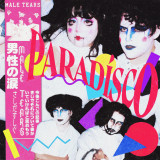
One mere year after their previous pitch-black sounding album Krypt, LA outfit Male Tears is back with a new full-length and – oh boy – everything is changed.
The used-to-be duo is now a four piece with James Edward as the sole founding member remaining and apparently this new line-up helped the original vocalist to shapeshift again.
Remember their very first debut album from 2021 and those dark synthpop sounds?
With their upcoming fourth album (in only three years), this American electronic-pop act from Southern California doubles the stakes once again and where Krypt was all about being goth and gloomy and disturbingly paroxysmal, Paradisco is somehow quite the opposite.
Eight new tracks of pure italo disco, hi-NRG and freestyle bliss that pick up where the band left off three years ago to pursue much darker realms. Now that the quest for darkness is done, it is time to polish our nails and dress up for the night-out cause there’s more in life than feeling sorry for yourself. Yes you will need to cut out the deadwood but there is no change in stillness.
So join Male Tears and their new arsenal of bangers and floor fillers with assertive titles such as Out of my Life, Regret 4 Nothing and Leave it Alone.
Get yourself wrapped up in one warm cover of delicate nostalgia and reborn romanticism, driven by sounds that pay homage equally to Miko Mission and Ken Laszlo, Lisa Lisa and Exposé and, well yeah, even The Smiths because say what you wanna say but you simply cannot not love The Smiths.
Embrace the vintage vibes that organically propagate from this new record’s grooves and get in the mood for this new course in full-on 1980’s Pop.
One mere year after their previous pitch-black sounding album Krypt, LA outfit Male Tears is back with a new full-length and – oh boy – everything is changed.
The used-to-be duo is now a four piece with James Edward as the sole founding member remaining and apparently this new line-up helped the original vocalist to shapeshift again.
Remember their very first debut album from 2021 and those dark synthpop sounds?
With their upcoming fourth album (in only three years), this American electronic-pop act from Southern California doubles the stakes once again and where Krypt was all about being goth and gloomy and disturbingly paroxysmal, Paradisco is somehow quite the opposite.
Eight new tracks of pure italo disco, hi-NRG and freestyle bliss that pick up where the band left off three years ago to pursue much darker realms. Now that the quest for darkness is done, it is time to polish our nails and dress up for the night-out cause there’s more in life than feeling sorry for yourself. Yes you will need to cut out the deadwood but there is no change in stillness.
So join Male Tears and their new arsenal of bangers and floor fillers with assertive titles such as Out of my Life, Regret 4 Nothing and Leave it Alone.
Get yourself wrapped up in one warm cover of delicate nostalgia and reborn romanticism, driven by sounds that pay homage equally to Miko Mission and Ken Laszlo, Lisa Lisa and Exposé and, well yeah, even The Smiths because say what you wanna say but you simply cannot not love The Smiths.
Embrace the vintage vibes that organically propagate from this new record’s grooves and get in the mood for this new course in full-on 1980’s Pop.