French composer and sound artist Franck Vigroux returns to raster with a new album called »Sonnailles«, set for release this spring.
Conceived as a sequence-driven work, »Sonnailles« unfolds through a series of tightly
structured musical passages interspersed with fragments of voices that appear within the compositions like ghostly presences. These vocal shards drift through the sonic landscape, punctuating Vigroux’s dense electronic textures and amplifying the album’s sense of tension and movement. At the heart of the project lies a deliberate contrast: the collision of raw, almost primitive sonic force with an underlying sense of compositional sophistication. Vigroux crafted the music with an ear for immediacy and physical impact, exploring how rough textures and driving rhythms can coexist with intricate sound design. The album was also inspired by two unusual invitations that pushed the artist beyond his typical performance environments: a rock and punk festival in France and a series of techno club performances in China. These contexts led Vigroux to imagine music whose primary purpose was to move bodies on the dance floor — an approach that marks a new direction in his work.
For Vigroux, the challenge was particularly compelling. Alongside his musical practice, he frequently collaborates with dancers and stages multidisciplinary performances known for their radical physicality. With this new album, he brings those parallel worlds together, completing a circle in his ongoing exploration of the relationship between sound and the moving body — where composition, rhythm, and physical motion converge.
Buscar:sole
On his fourth solo album, and debut work for Nick Klein's Psychic Liberation imprint, Henrik Munkeby Nørstebø presents »Faint Light Blackens«, a negotiation between the atomized instrumentation of the solo trombone is pushed towards a full range wall of sound over the concise sprawl of seven distinct acts on two sides of a vinyl record.
The seven acts that make up the album were developed specifically for recording within Emanuel Vigeland’s »Tomba Emmanuelle«. The fresco within the mausoleum anchors themes of existential weight, ripe with weighted imagery of love, birth, and death. The solemn space is a cavernous acoustic terrain wherein reverberant reverie makes it almost impossible to speak aloud, let alone sing through horn and electronics. This chamber's expanse is baked into the compositional directions employed on »Faint Light Blackens«.
Experientially, the record was produced in a long form performance gesture, with no overdubs. While edited to fit the record format, no additional post production coloring took place. Here Nørstebø shines as an instrumentalist, wherein the symbiosis of the site specific architecture and his sound sources are synced. At once musing and brooding, the gamut of emotive sonic landscapes is at play for a fully dynamic listening experience. The territory in Nørstebø’s vocabulary through interplay with the mausoleum is not vaulted , unlike Vigeland’s urn’ed ashes. On »Faint Light Blackens«, the spirit takes bound beyond the cavern and reanimates the listeners stereo alters for a holistic listening experience of perfectly challenging electroacoustic endeavors.
Henrik Munkeby Nørstebø – acoustic & amplified trombone, monotron, feedback, sound files.
Recorded by Espen Reinertsen October 10. and 11. 2023 in Tomba Emmanuelle, Oslo Norway.
Cover Photos and mix by Henrik Munkeby Nørstebø
Mastered by Helge Sten (Deathprod) at Audio Virus Lab
- A1: Eighteen Days
- A2: Sir Casey Jones
- A3: The Highest Tree
- A4: Deed I Do
- A5: Hide And Seek
- B1: Twig Folly Close
- B2: Lady Margaret
- B3: Cold Early Morning
- B4: Monday Morning’s No Good Coming Down
- B5: The Waterman’s Song To His Daughter
- C1: Seven Dials
- C2: Up The Hill
- C3: Quiet Joys
- C4: Would Be King
- C5: Stone Cold
- D1: Tell Me Tomorrow
- D2: Mary Anne
- D3: Dawn
- D4: Cod’ine
- D5: Flowers Of The Forest
“Released on Joe Boyd’s Hannibal label here was a band rooted in Thompson/Swarbrick Fairport but also a snatch of the Velvet Underground and a sprig of The Byrds. The Eighteenth Day Of May evoked a legendary era, and now they are a justifiably legendary band too.” – KLOF Mag
Beginning life as a trio in London, 2003, the original line-up consisted of Allison Brice (vocals, flute), Richard Olson (acoustic guitar) and Ben Phillipson (guitar, mandolin) before expanding the following year to include the rhythm section of Mark Nicholas (bass) and Karl Sabino (drums, autoharp) and finally Alison Cotton (viola).
This being the mid zeros, the independent music scene in the UK was reluctant to embrace a sun-dazed folk band but this, their sole album, has gradually feathered a bed of affection amongst international folk fans. Twenty years on, the album is now rightfully seen as a trailblazer for the myriad alternative/psych folk bands that emerged in its wake.
Andy Childs who signed the band originally takes up the story. “I first heard their music on a cover mounted CD with the much missed Comes With A Smile magazine and as far as I could tell no-one was making music like this anymore, certainly not with such panache and confidence. To my jaded ears it all sounded so uninhibited - old weird folk songs, Americana, original psych-folk, minimalist drones. Great melodies and all six of them could sing! A joyous, unfettered sound that could in one moment conjure up flashes of The Byrds and then effortlessly the spirit of Velvet Underground would drift through. They even covered a Spacemen 3 song. I loved the fact that they had the aplomb to tackle traditional folk songs like Lady Margaret and Flowers In The Forest and not be afraid to stamp their own identity on them.
Signing them to the Hannibal label was straightforward. If anything the album somehow sounds fresh and undated, even better than it did in the day when perhaps eclecticism was out of synch with the times; its subtleties have become more apparent.”
“Their rendition of Lady Margaret builds to a headswirling crescendo that challenges anyone who claims Shirley Collins, Buffy Sainte-Marie or Trees have recorded the definitive version and the hallucinatory The Waterman’s Song To His Daughter raises an already brilliant album to an unholy level” - IT’S PSYCHEDELIC, BABY Magazine
There is an abruptness to waking up to the sight of the other person’s back, a quiet violence hidden in the impression of intimacy, that’s leaving an aftertaste of emptiness. The feeling of losing oneself completely in a love that is given but never returned. Or the slower, less immediate one - the gradual disintegration of a world into which so much was once invested.
Love, Diskito is like a worn out overdubbed cassette found in a drawer, with its underlying tracks flickering between contrasting emotional states. Written, produced and mixed by GbClifford, the release follows up on the elusive, multifaceted output of the Prague-based experimental artist, who dresses fleeting glimpses of youthful yearning, sentiment and fragility in the blunt apparel of distortion and immediacy.
Drawing from their idiosyncratic, collage-like approach to music production, GbClifford condenses on Love, Diskito a varied palette of field recordings, samples, distorted instruments and ambient sounds. They resemble doodles in the corner of a school notebook, tightly overlapping with the evocative, minimalistic artwork by Czech artist Kateřina Šípová.
The guidance of GbClifford’s personless, at times highly decomposed vocals modulates the emotional urgency of the recording and reflects on the past. “I’m so close to relapsing, I’m here for you, closer than ever,” echoes in the elusive track So Only Yours, carrying the undercurrents of surrendering to the sole necessity of caring, even at the cost of individual ache. While the album does not forgo its earthbound, bare setting, there is something deeply pastoral and sky-gazing in the layered, multi-pitched vocals, horn-like tones and sense of space that Love, Diskito evokes.
Various Artists - Collector IV (FURV4)
Future Romance returns with another V/A EP called „Collector IV“, the next chapter in its vinyl-only series dedicated to the label’s most in-demand releases. This edition brings together four standout tracks that move effortlessly between melodic house and techno, crafted by a handpicked selection of distinctive artists. Each track has already made its mark on dancefloors worldwide, earning strong DJ support and international recognition. Collector IV underlines Future Romance’s ongoing passion for curating timeless club music, pressed with care for true vinyl lovers. Featuring tracks by Solee, Microtrauma, SNYL & Berny, and Cyantist.
Emotional Rescue returns after a much-needed year hiatus, refreshed and ready, as it moves into its 15th year, to further explore the environs of oft-forgotten musical secrets and present them to new heads and minds.
To celebrate, the label looks back to one of its favourite collaborations, the music of French ‘Ethno-Industrialists’ Vox Populi! in presenting a truly unique EP of “In Dub”, inspired remixes by 4 fellow Paris based artists of today in Full Circle, Froid Dub, Krikor and Shelter.
“In Dub” takes a selection of songs from the series of albums reissued or compiled on Emotional Rescue and sister label, Platform 23, and gives the Master tapes to this talented ensemble to offer their own, unique dub reworks. The project explores the on-going advances in technology offered, mixed with pure talent and a respectful homage.
Formed by Axel Kyrou and including wife Mitra, as well as long-term music and art partners Pierre Jolivet aka Pacific 231 and Francis Lafont aka FR6 Man, they forged a path from obscure, drum and drum-based cassette releases on to fully realized albums and compilations on their now cult Vox Man Records.
Alexis Le Tan and Joakim’s Full Circle project starts, with their electronic dub remake of Soleyman Dub from the ‘Alternatif Réalisme’ compilation (ERC079). With releases on Good Morning Tapes, Offen and their own “Released” label, their plaudits as master diggers and producers of dubby tripped-out inspired electronics – releasing slowed Trance some 10 years before anyone else – is inspired. Tuning in and turning on the original dub into a mantra style slow-breaks (Digi)dub is the perfect experimental flavour.
Jube Man is next, a twisted, psychedelic dub out by rising stars Froid Dub. The stand-out from the ‘Magiques Creations’ release (ERC052), an album that explored Vox Populi’s furtive post-industrial period of 1984 to 1988, Jube Man was the perfect selection by the duo of François Marché and Stéphane Bodin.
Froid Dub have steadily developed their “cold” Digidub style to acclaim –
releasing a steady flow of dub inspired electronics on their own label Delodio, as well as recently appearing on sister label Emotional Response’s 10th year anniversary collection, ‘All Trades’. Their haunting, shuffling and murky acid / piano dub, with the drifting “Space Echoing” of Mitra’s vocals from the live desk mix, creates a ghostly version to effect.
Next, master mixer, producer and engineer Krikor serves a steppers remake with his “OverDub” of Zen-Dub. With a career that spans releases on Tigersushi, LIES and Soul Jazz, his sound has developed from Electro, House and Techno, to Acid, Bleep, Dancehall, Dub and touches of Gabba.
Taken from Vox Populi!’s master-opus Aither (ERC030), the first of our reissues dating back to 2016, Zen-Dub’s pacey, lo-fi dub experience is transformed and overdubbed into an incessant sound system throb, a true bass quaking “steppa”.
To close, Micro Climax is put through Shelter’s increasing avant dub exposition. Appearing on the likes of Growing Bin, Emotional Response and his own Protopost, as well for – and being in-house designer – on the much-missed Séance Centre, Alan Briand aka Shelter productions have developed from Balearic, Edits and House to explore Avant, Raga and live Dub productions.
Appearing on the recent ‘Ethniques Pyschedeliques’ compilation on Platform 23 (PLA032), in original form Micro Climax is a sprawling 10-minute ethno-dub of whispered vocals, drone and sub bass. Shelter strips it back, keeping background effects, adding live bass and percussion to create a wonky, slow, shuffling ska-lite excursion to complete a true “In Dub”.
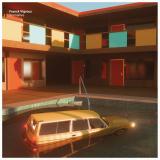
Josh Mason’s new collection, "Wave Salt +7," emerges from an oblique origin. Unearthed from a dormant hard drive, it documents a set of work sessions only partially recoverable, their original continuity and intent fractured by time and technical failure. What remains is a constellation of mercurial gestures that proves, against all odds, to be entirely consonant with Mason’s ongoing musical concerns.
In a sense, the very condition of partiality proves generative, with elision operating on multiple levels - structural, sonic, and archival - shaping both the music itself and the circumstances of its (re)appearance. Phrases surface only to be truncated or displaced, hovering at the edge of resolution, and transitions are implied rather than fully enacted. Absence functions not as a deficit, but as an important compositional resource.
Central to the album’s sound is a distinctive use of vocoding. Deployed not to simulate vocal presence but as a tool for tonal sculpting, it yields a shifting lattice of smeared harmonics, angular melody, and attenuated noise. Sounds are pressed through one another, their edges softened, shifted, or selectively erased, producing surfaces simultaneously articulated and porous. Rather than reconstructing a lost whole, the album posits a mode of listening attuned to gaps, interruptions, and unstable forms. Even so, in keeping with Mason’s broader practice, this music remains grounded in melodic logic and a distinctly human scale, ensuring that its fragmentary structures register not solely as experiments, but as expressions of proximity and feeling.
With Mr. Coconut, Cosmo Dance delivers a four-track EP that strengthens a distinctive sonic identity, blending retro aesthetics, club culture and cinematic sensibility into a cohesive body of work.
The title track unfolds through refined dynamic control. Warm multilayered percussion, textured guitars and a deep yet restrained bassline create an organic groove that evolves gradually rather than relying on obvious drops. The production favors subtle progression and hypnotic growth, resulting in elegant, mature dance music.
Goodbye expands the project’s narrative dimension. Inspired by the atmosphere of Italian ’70s library music, the track represents the protagonist’s theatrical exit from the club — not a melancholic farewell, but a charismatic closing scene. A playful detail emerges when Dandolo (Cosmo Dance’s alter ego) delivers an ironic “cough solo” precisely as an off-voice introduces Mr. Coconut, adding a self-aware cinematic twist.
Dub nuts explores deeper dub-informed territory. Built through layering and subtraction, the track showcases careful spatial control and restrained low-end management.
The EP closes with the Coccappella Version, a stripped-down reinterpretation of the title track focused solely on percussion and voice, revealing the rhythmic backbone of the project.
Mr. Coconut is a refined balance between club functionality and cinematic storytelling — controlled, elegant and unmistakably personal. It’s not about peak-time fireworks — it’s about atmosphere, detail and identity.
On June 5th, Tectonic Recordings will release Beatrice M.’s debut LP, Sinking, on a vinyl triple pack and digital download. The vinyl edition will be split across 3 separate 12” vinyl releases, packed in matching printed disco bags. This is part 2 of 3.
Beatrice M. pushes the needle forward for a sound and scene that nestles among a niche that blends UK dubstep, techno, and the golden era of tech house. The Paris-born artist is in their mid-20s and has been building up a grassroots following and plenty of momentum over the last few years, through their Bait label and its output of sonically resonant artists, alongside numerous remixes and collaborative and solo releases for labels such as Tectonic, Tempa, and Rinse. There are plenty of accolades coming in for Beatrice's work too, with notable DJ mixes for respected heavyweights such as Mixmag as well as featuring in Resident Advisor’s best mixes of 2025.
Beatrice is known for making deep explorations into the history of the scenes that have interested them, tracking and highlighting connections between dubstep, tech house, jungle and beyond across various self-produced, one-off radio shows, often taking a journalistic approach to subjects of true passion. They travel across Europe on a packed-out DJing schedule, avoiding air travel, and doing it mainly by train. Many of the LP's tracks started life as sketches put together on these long journeys, as the sights of different countries rolled past the window.
Having taken inspiration from Tectonic artists such as 2562, the label – a home to music that was originally placed in the dubstep-techno crossover spectrum—feels like the perfect place to host Beatrice M.'s debut album Sinking, beginning a new chapter for this kind of sound.
The album's lead single and sole vocal track, ‘In Touch’, showcases Beatrice M.’s split UK-France upbringing. The track unites French MC Kaba and UK MC Jinnal for a bass-driven anthem that seamlessly trades French and English lyrics. Next up is a vinyl exclusive track: the ‘Remedy Mix’ VIP of ‘Poison’, a rolling, bass-driven tech house/techno crossover version of a track originally released on the Tectonic Sound collection from last year.
‘Here’ sees Beatrice M. collaborating with Jay Carder to create a soulful broken-beat flavoured track as ‘Years’ rounds off the journey with contemplative melancholy, providing a deep and dubby closer.
- A1: Return Of The Knödler Show 2 52
- A2: The Frogs Of Miwa - Cho (1) 4 52
- A3: Waiting (I) 5 38
- A4: An Old Friend Passes By 3 46
- A5: Coco Bolo Strip (1) 5 25
- B1: Peace And Pipe Utopia 3 14
- B2: Unidentified Dancing Object 1 44
- B3: The Call (I) 2 41
- B4: Wenn Das Rohr Dommelt 4 03
- B5: Mariahilf (Live Version) 3 36
- B6: Watching The Shades (I) 2 59
- B7: Playing The Table Music (Ii) 2 43
- C1: Could Be Nice Too 5 29
- C2: Ox Of Inner Depth 4 51
- C3: Ymir Shows Up 3 58
- C4: Could Be Nice 5 24
- C5: Playing The Table Music (I) 4 23
- D1: Coco Bolo Strip (Ii) 4 52
- D2: Locusts Looking Like Men 5 55
- D3: Waiting (Ii) ︎ 3 36
- D4: No Stove 2 29
- D5: An Old Friend Passes By Again 3 00
- D6: Heimkehr Der Holzböcke 3 16
Black Truffle is thrilled to announce Dalbergia Retusa, an extensive double LP selection of the solo guitar music of Hans Reichel, compiled by Oren Ambarchi. Last heard on Black Truffle as one quarter of the joyously anarchic Bergisch-Brandenburgisches Quartett, Hans Reichel (1949-2011) is one of the great figures of experimental guitar music. Though perhaps lesser known than peers like Derek Bailey, Fred Frith and Keith Rowe, Reichel’s rethinking of the instrument was in some ways the most radical of all. Early on, he dispensed with existing guitars to build a series of his own that explored the use of additional strings and fretboards, moveable pickups, extra bridges, special capos, and other innovations documented in the extensive booklet accompanying this release.
Reichel was a long-term resident of Wuppertal, the small Western Germany city that became an unlikely centre of European free jazz in the late 1960s, also home to Peter Brötzmann and Peter Kowald. His solo debut Wichlinghauser Blues was an early entry into the FMP discography and began a relationship with the label that stretched into the 1990s; all the solo performances heard here were first released on FMP. As Reichel says in the charming archival interview with Markus Müller included here, he was ‘always a cuckoo’s egg at FMP’, a label that began as an outlet for roaring European free jazz. What strikes the listener right from the opening selection on Dalbergia Retusa—‘Return of the Knödler show’, from 1987’s The Dawn of Dachsman—is the extraordinary beauty of Reichel’s music, at once alien in the shimmering sonorities and unconventional pitch relationships made possible by his invented instruments, and deeply lyrical, even romantic in its harmonic content. Growing up in West Germany in the 1960s, Reichel’s formative influences were mainly British and American rock bands, a background that shines through in many of the pieces included here: ‘An old friend passes by’ is haunted by the ghost of Hendrix’s rhythm guitar, and the wild closer ‘Heimkehr der Holzböcke’, taken from a rare 1975 7” and the only piece to use overdubbing, layers errant hammer-on and slide tones over a Canned Heat boogie chug.
Reichel was an important source for the development of Oren Ambarchi’s own extended approach to the electric guitar. Appropriately enough, his selection opens with the very first piece by Reichel he ever heard, on a flexidisc included with a 1989 issue of Guitar Player magazine. Though Reichel collaborated with others extensively in many settings and also performed on violin and his other major contribution to instrument invention, the daxophone, his music for solo guitar remains at the core of his oeuvre. Focusing exclusively on solo pieces recorded between 1973 and 1988, the 23 pieces on Dalbergia Retusa showcase the range and consistency of Reichel’s work, allowing the listener to see how his performances developed hand-in-hand with his instrumental inventions. On a piece from his very first LP, played on an 11-string instrument (partly strung with piano strings and using a schnapps glass a slide), we hear his intensive exploration of fret-hammering to create zither-like, chiming tone, which Reichel would hone further in later years with a double fretboard guitar specifically designed to be hammered rather than fretted and picked. On a piece from 1979’s Death of the Rare Bird Ymir, Reichel uses two steel-string acoustic guitars at once, with beautiful results: ‘some even say too beautiful’, he jokes in the interview included here. Many of the pieces from the 1980s make use of varieties of the ‘pick behind the bridge guitar’, instruments of uncanny harmonic richness primarily designed to be played on the ‘wrong’ side of the bridge. At times the unexpected behaviour of attacks, resonance, and decay can almost seem electronic, conjuring up the technology-assisted work of Henry Kaiser or even Fennesz, but realised solely through Reichel’s unorthodox techniques on his invented instruments. Extensively illustrated with photos and Reichel’s own plans and drawings of his instruments, Dalbergia Retusa is an essential introduction to the unique world of Hans Reichel. Rarely has music been at once so strange and so beautiful.
- A1: C’est Loin
- A2: Là Où Tu Veux (Deixa A Gira Girá)
- A3: Pas Tant De D'chichi Ponpon
- A4: Assez
- A5: Le Soleil En Haut
- A6: Tout L’or
- B1: Désillusion
- B2: Attends-Moi
- B3: O Sapo
- B4: Horssaison
- B5: Presque Rien
- B6: Vou Festejar
For his sixth solo album, Ezéchiel Pailhès returns with a new collection of songs infused by a sunny wandering spirit.
Within each of the twelve songs on SOL is a thread of melancholic happiness that has permeated much of Pailhès’ music and songwriting. He addresses love, the passing of time, hope, lost illusions, fleeting moments of grace, the temptation of forgetting, a need to escape, and desire. All this is
insulated by understated orchestrations that blend acoustic and electronic instrumentation with deft confidence.
The Portuguese and Brazilian concept of saudade—a form of melancholic longing and nostalgia— pervades, thanks in part to Pailhès decision to record the album in Rio de Janiero and to reinterpret some of the finest works of Música Popular Brasileira (MPB). In particular, he revisits a handful of
lesser known classics from the mid-century samba and bossa nova era—originally written or performed by talents including Vinícius de Moraes, João Gilberto, Tom Zé, Dorival Caymmi, João Donato, Os Tincoãs, and Ataulfo Alves.
The shift from Brazilian Portuguese to French and the decision to adapt rather than perform a straightforward cover versions, allows Pailhès to invent a form of prosody and euphony (the musicality and harmonious combination of words) that feels vibrant and unlike anything else in today’s French
chanson landscape.
“Some lyrics are simple translations from Portuguese, in what I’d call an expanded version. For others, I started from a single word or a single phrase and embroidered an entirely new text that carried me elsewhere,” explains Pailhès. “I allowed myself great interpretive freedom, while preserving the humanist dimension of the original songs. I’ve always been deeply moved by the way Brazilians transfigure reality through heightened emotion. I love this visceral and spontaneous country, which always seems to live through emotion. And above all, I love its music both popular and unifying,
bringing together all social classes. In that sense, it’s very political music, but even more so utopian, made by the people and for the people.”
On this new album, however, the French artist was keen to avoid cliché. Each song is therefore built around a carefully balanced interplay between Pailhès’ piano and synthesizers, alongside restrained arrangements of percussion, brass, bass, and cavaquinho (a small four-string plucked guitar). These parts were recorded in Rio de Janeiro with two musicians who regularly perform alongside the legendary Caetano Veloso—Kainã Do Jêje and Alberto Continentino—joined by Thomas Harres, Antônio Neves, Eduardo Neves, and Gabriel Loddo.
Since the 1960s, France and Brazil have shared a long-standing cultural and musical relationship. Some Brazilian artists, most famously Gilberto Gil, took refuge in France during the dictatorship years (1964–1985). But above all, French chanson quickly fell in love with the richness and ingenuity of
bossa nova and samba, translating and reinventing them in the language of Molière. Throughout the 1960s and 1970s, albums and hits by Henri Salvador, Georges Moustaki, Pierre Barouh, Pierre Vassiliu, and Claude Nougaro all drew from the MPB repertoire.
Fifty years later, with SOL, Ezéchiel Pailhès reinvents this rich Franco-Brazilian musical legacy, bringing to it a personality and modernity that stand confidently alongside those of his forbears.
- 1: When Hamlet Left Town 0:32
- 2: Radio Four 05:45
- 3 34: E 03:34
- 4: Solid Ground 0:25
- 5: Arc 04:37
- 6: Aelita 03:12
- 7: All Tomorrows Past Part Ii 04:26
- 8: Interlude 03:26
- 9: Henry & The Ghosts 03:22
- 1: Space Minor 03:22
- 2: Loop D 03:36
- 3: Tomorrows Past Part I 0:11
- 4: Modest Farewell 03:5
- 5: Nordlead 03:3
- 6: Momo 03:12
On his new album, Micha Acher rearranged compositions for bands such as Tied & Tickled Trio and Ms. John Soda from previous years.
Why are we interested in ghosts? What fascinates us about the eerie? According to cultural theorist Mark Fisher, the allure that the eerie possesses is not captured by the idea that we „enjoy what scares us“. It has, rather, to do with a fascination for the outside. For that which lies beyond standard perception, cognition or experience, as he writes in his book „The Weird and the Eerie“.
In fact, also none of the 15 pieces from Henry and the Ghost is really scary. On the contrary, they all feel strangely familiar. Like revenants or doppelgängers, which in fact they are. They have all been released before. But in a different form. In different line-ups. With different band projects such as Tied & Tickled Trio, The Notwist or the Alien Ensemble.
With the „Songbook“, Micha Acher's aim was, as he says, to find out how the familiar pieces sound in a chamber music instrumentation. Therefore he met with Theresa Loibl (bass clarinet, piano), Timm Kornelius (bassoon), Markus Rom (guitar, banjo, electronics) and Simon Popp (drums, percussion) in his living room for a musical séance in the summer of 2022. The séance lasted two days. Afterwards, Markus Rom (Oh No Noh), added some haunting electronical ideas.
The mood of most of the pieces is melancholic. There are surprising twists and siren-like melodies. Just as ghost stories should be. However, most of the songs sound very light-footed. With their feet in pop, folk, jazz and classical music. Pieces such as „Johanna“ with its wheezing harmonium and spooky piano, or the dreamy „Modest Farewell“ on the other hand have a cinematic flair. Immediately faces and scenes arise in the mind. But at the beginning, there is „Hamlet“. It starts with ghostly electronics and merges into a calm, almost classical guitar piece. Could it be that the ghost of Hamlet's father is hiding between the strings?
„34E“ begins with a banjo. Then the deep humming of Micha Achers sousaphone and the other brass instruments kick in. In the slow, solemn „Aelita“, the sousaphone starts a dialogue with a children's piano. With the banjo and the other wind instruments acting as mediators. The title of „All Tomorrow's Past“ brings Velvet Undergrounds „All Tomorrow's Parties“ to mind. Another ghost from the past. What connects the two pieces is free-floating percussion, which accompanies the sumptuous melodies.
„Arc“ takes us on an exhilarating voyage at sea, with the sousaphone providing powerful propulsion. Towards the end, things get quite turbulent. With the clarinet stirring up the water, before the sea calms down again. „Henry and the Ghost“ is characterised by a ghostly mood change between major and minor. In „Radio Four“ the banjo with its stoic chords keeps the lively brass section in check. „Solid Ground“ is imbued with melancholy. „Space Minor“ takes us into outer space, with the power of sousaphone and percussion.
„Tomorrows“ is filled with cautious optimism. And the concluding „Nordlead“ turns out to be a revenant of the instrumental „N.L.“ from The Notwist's legendary album „Shrink“ from 1998. In the new version, the piece sounds like a distant echo. One that also brings to mind how Micha Acher's music has evolved. Which new worlds he explored and opened up since the nineties. And yet Acher's signature is recognisable in every single note of this fascinating „Songbook“.
- 1: On The Nature Of Human Memory
- 2: The Colony
- 3: At Punishment Park
,Manifestations in the Shadow of an Uncertain Land" entfaltet sich durch aleatorische Komposition und intuitive Prozesse, geprägt von tief miteinander verflochtenen politischen und ästhetischen Traditionen. Verwurzelt in den gelebten Erfahrungen von Körpern und Köpfen, die sich mit der lokalen und globalen Last des Imperialismus auseinandersetzen, schöpft das Werk zudem aus der zeitlichen Logik von Film und Literatur, in der Erinnerung, Angst und Vorfreude nebeneinander existieren. Mit Stimme und modularer Elektronik arbeitet Lowe und behandelt Klang als skulpturale und filmische Kraft, geprägt von der entfremdeten Erinnerung an Chris Markers ,Sans Soleil", der politischen Desorientierung in Peter Watkins' ,Punishment Park" und der prozeduralen Gewalt in Kafkas ,In der Strafkolonie". Anklänge an elektroakustische und zeitgenössische klassische Traditionen kommen eher durch die Atmosphäre als durch direkte Zitate zum Vorschein und führen die Musik durch Zustände der Kontemplation, des Schreckens, der Feierlichkeit und der Dynamik. Das Ergebnis ist ein spannungsgeladenes Klangfeld, das sich einer festen Bedeutung widersetzt und von Bruch und der Möglichkeit der Transformation geprägt ist.
Following his debut 12" on Futura Resistenza, Aukio Sound returns with a new release on Turbo Guidance Entertainment — a deep dub techno exploration rooted in heavy reggae influence, featuring the late Baba Ras. A solemn tribute to a singular voice. Like Rousseau's Tiger in a Tropical Storm, this record paints a dense, dreamlike fresco — where rhythm and texture grow wild beneath the surface. The record also includes a remix by Non Posso, a mysterious duo. Mastered by Carsten Dämbkes and pressed on 180g vinyl for the full listening experience.
Tony Bontana, the Birmingham rapper, producer and multi-instrumentalist, releases his 35th album My Name, which is also his first to receive a proper vinyl pressing. The album follows an impressive 2025 in which he performed with Nourished By Time, Mark William Lewis, YHWH Nailgun, TAGABOW and 454.
His earlier 2025 album The Beautiful Malaise made The Wire’s annual top 50, and he appeared as the sole feature on Nourished By Time’s album The Passionate Ones, where Marcus praised his “freewheeling spirit.”
Tony’s production work has appeared on records by Billy Woods, Cities Aviv and Novelist, with upcoming collaborations planned with Blackhaine and DJ Python. The single Battered Chips has received airplay from NTS, Esk on Rinse and Huw Stephens on 6 Music.
If anyone is counting this is the 35th album by Birmingham rapper, producer, multi-instrumentalist Tony Bontana. A pioneer of his own ‘Splayed’ style of production characterised by heavily manipulated samples, non-linear rhythms and introspective lyricism. My Name is a significant landmark for Tony being the first album to receive a proper vinyl pressing. It caps an impressive 2025 which has seen Tony play live with acts such as Nourished By Time, Mark William Lewis, YHWH Nailgun, TAGABOW and 454. His previous album “The Beautiful Malaise” (one of four he released in 2025) made The Wire’s annual top 50. He appeared as the sole feature on the acclaimed Nourished By Time album The Passionate Ones on the track Jojo with NBT’s Marcus praising the rapper as having the “freewheeling spirit of a street baller out on the playground” . His productions have already appeared on records by Billy Woods, Cities Aviv and Novelist with further collabs to come with the likes of Blackhaine and DJ Python. The standout single Battered Chips has received airplay from NTS, Esk on Rinse, New Music Fix and Huw Stephens on 6.
- A1: Echi Tribali 2 01
- A2: Danza Della Pioggia 2 31
- A3: Totem 2 51
- A4: Danza Della Morte 3 14
- A5: Rito Della Fecondazione 2 45
- A6: Danza Di Guerra 2 29
- B1: Rito Nuziale 1 55
- B2: Iniziazione 2 09
- B3: Rito Del Sole 1 14
- B4: Invocazione 1 07
- B5: Rito Della Fertilità 1 23
- B6: Danza Dello Stregone 2 28
- B7: Rito Di Propiziazione 2 35
- B8: Adorazione 1 58
“Alle Sorgenti Delle Civiltà Vol. 3 - Africa, Australia, Nuova Zelanda” (1971) is the third and final chapter of a triptych of folk-based sound recordings released by Folkmusic. The album contains a total of fourteen tracks by Braen and Raskovich, i.e. the a formidable multi-instrumentalists Alessandro Alessandroni and Giuliano Sorgini, each grappling with seven different compositions characterised by a tribal mood. Among the grooves of this record, repressed on vinyl for the first time by Musica Per Immagini, it is possible to discern an in-depth study of one of those forms of popular culture referring to a specific geographic area, comprising the types of traditions often handed down orally and concerning knowledge, beliefs, fairy tales, legends, myths, narratives linked to the dimension of the fantastic, customs and traditions, namely music. Festivals and propitiatory rites, fights and dances, magical and sacred representations were all expressions of life whose sound and rhythm contributed to an appropriate description of the environment. Alessandro Alessandroni and Giuliano Sorgini have chosen some of the most significant musical characters that even belong to specific ethnic realities scattered across two distant continents, where the use of some of the typical instruments has favoured the realisation of sonorities of considerable interest.
After a quiet year in the shadows, Mithra rises once more, offering four tributes to the sun. Opening the ritual, Titino’s “Sole Nero” radiates with dark-wave tension and Italo-synth euphoria, a storm of emotion forged for the twilight hours. Riccardo’s “Neosun” follows as a luminous, left-field Euro-pop surge to an ecstatic sunrise in motion. On the flip, Sweater’s “Talk to Me” drifts into warm organic grooves, a perfect hymn for open-air dusk and introspective transitions. Finally, Ewan Jansen’s “Kuseni Yayo” closes the circle with lush pads and earthy resonance, echoing the spirit of dawn breaking through the forest. Together, these four offerings form the first light of our next journey, an initiation toward the mountain peaks that lie ahead.
- A1: Super Boiro Band - So I Si Sa
- A2: Bembeya Jazz National - Armée Guinéenne
- A3: Kaloum Star - Maliba
- A4: Balla Et Ses Balladins - Nyo
- B1: Quintette Guinéenne - Douga
- B2: Le Simandou De Beyla - Festival
- B3: Horoya Band - Zoumana
- C1: Kaloum Star - Gbassikolo
- C2: Sombory Jazz De Fria - Nana
- C3: Syli Authentic - Fabara
- D1: Balla Et Ses Balladins - Paulette
- D2: 22 Band Kankan - Deny
On October 2 1958, after over 60 years of colonial rule, Guineans voted overwhelmingly for their independence, and Guinea was declared a Republic with Sékou Touré as President. Guinea was the first of West Africa’s Francophone colonies to gain independence. To free Guinea from its colonial legacy, president Touré sought to restore dignity to his nation and give cause for Guineans to take pride in their culture, history and newfound freedom. To achieve this, he instructed his government to implement new cultural policies that were intended to revitalise and celebrate indigenous culture. The focus of these new policies was on music.
In 1961, President Touré launched authenticité, the name of his new cultural policy for Guinea. One of its first acts was to assemble the best Guinean musicians into a new state-sponsored orchestras that were tasked with presenting traditional Guinean music in a new and modern style. All musicians in Guinea’s orchestras were officially designated as members of the public service. During the years of Sékou Touré’s presidency (1958 – 1984), the government’s cultural policy of authenticité was applied strictly to the creative arts. Guinea’s sole political party, the Parti Démocratique de Guinée exercised complete authority over artistic production. The scale of the Guinean government’s commitment and efforts to invigorate its indigenous musical cultures was unmatched in Africa, and it presented a clear contrast to the minimal endeavours undertaken by Guinea’s former colonial rulers.
From 1967 to 1983, Guinea’s government presented selections of songs from the Voix de la Révolution catalogue on its own recording label, Syliphone. These recordings were described as ‘the fruit of the revolution’. Syliphone was revolutionary in many aspects: it was the first recording label to feature traditional African musical instruments such as the kora and balafon within an orchestre setting; it was the first to present the traditional songs of the griots within an orchestre setting; and it was the first government-sponsored recording label of post-colonial Africa. Syliphone represented authenticité in action, and over 750 songs were released by the recording label on 12-inch and 7-inch vinyl discs. All are highly sought after by collectors worldwide.
This is the second of a two-volume release which presents a selection of the best songs from Guinea's Syliphone recording label. This volume focuses on recordings from the 1970s, when Guinea’s authenticité policy had transformed the nation's music through a network of over 30 orchestras, each representing their local region, and each presenting Guinean musical traditions alongside the influences of Cuban music, jazz and funk.
- A1: Youth
- A2: Concave
- A3: Convex
- A4: Belong
- B1: Martial
- B2: Enemy
- B3: Warface
- B4: Abandon
Naibu is a well respected artist with 6 critically acclaimed solo albums and releases on prominent labels like
Creative Source, Soul:R, Hospital and Paradox Music
The album takes influences from dnb's greatests (Photek, Paradox…) blending them with flavours of electronica and experimental music. A unique combination of sounds that will please home listeners and DJs alike, with cuts like 'Martial' shaking dancefloors worldwide.
Record comes with fully printed inner sleeve featuring original artwork by Japanese artist Hitomi Ito
⁃ Only 200 copies worldwide
Following up on the success of 'Sans Soleil' on Minato Music, Naibu brings out 'Abandon', a new and intimate album that showcases his talent not only as producer but also as singer / songwriter.
Probably his most personal release to date, this is a project that brings opposites together and champions
experimentation. From classic d’n’b stylistic references in tracks like 'Concave' and 'Convex', to the soft minimal tones of 'Belong', the album steps into uncharted territory with 'Martial' and its military paced drums, a track that will leave a mark on any dancefloor.
Naibu’s music is supported by a wide range of DJs, from Fabio to Loxy, and is regularly featured on Laurent
Garnier's radio show