Selva Discos keeps broadening horizons. Its next release celebrates the start of a new series called Novaterra, this time focused on showcasing the music of contemporary Brazilian artists. First up is Zopelar, known not only for his work with the anarchic-techno-punk act Teto Preto but also for the project My Girlfriend and his solo LP, both on Apron Records.
Novaterra vol. 1 by Zopelar is a mini-LP featuring 6 tracks that range from the introversion to the extraversion. In one hand you have an A-side banger like "Be Together", with its addictive looped-sample, and in the other, you get the laidback interlude of "Modo Avião", which sounds like one of those MF Doom's instrumentals – and between both, you will find a whole spectrum of music where you can experience the duel between super crispy beats (a signature in Zopelar's work) and the richness of melodies and harmonies that he's able to knit stitch close to perfection.
The opener "Livre" has a great deep house vibe that makes you think of Prescription Records and Jazzanova, featuring a catchy bossa ad-lib. "NOX" is a Hammond-led tune with a groove bassline and lead that gets you going in no time as if Cesar Camargo Mariano and Larry Young toured together in the late 70's, like, a big, fat jazz-funk tune. "Dias Tensos" is a nervous drum workout led by an automat Tony Williams as if jamming in a 16-bit version of The Tony Williams Lifetime. And to wrap things up, "Boogie da Paz" is one of those perfect comedown tunes – a true tearjerker that works its melody line like a good pill works your serotonin, making it one of those tracks that you keep under your sleeve for those special 6 AM moments on a dancefloor.
The artwork is courtesy of Colletivo Design Studio in Sao Paulo.
quête:solo sounds
Between Christmas 2000 and New Year 2001 producers Ekkehard Ehlers and Stephan Mathieu recorded an album of warm, soft, delicately crackling electronic music in the space of that week. It was christened with the ambivalent title "Heroin" and was released on CD via the label Brombron in 2001 and later in 2003 re-issued on Kit Clayton's Orthlorng Musork on double-LP with remixes the pair had commissioned as expansions.
17 years later Heroin sees its first vinyl release to include all 13 tracks from the original CD track-list on this LP + 12“ set. The centerpiece "Herz" finally receives its long deserved vinyl treatment (side C, at 45rpm) and on the flip side Thomas Brinkmann contributes a mirror in a magnificent remix of that very piece on side D.
Ehlers and Mathieu were both highly prolific solo artists during the period 2000-2004, and in just two years after the initial release of "Heroin" each had produced over half a dozen new solo recordings: among them the serial masterpiece Ehlers' "Plays" (Cornelius Cardew, Hurbert Fichte, John Cassavetes, Albert Ayler, Robert Johnson) released as 5 stunning LPs in a series on Staubgold, while Mathieu's 'Full Swing Edits' spread over five 10" records plus his album 'FrequencyLib' on Mille Plateaux, 'Die Entdeckung des Wetters' on Lucky Kitchen and ‘The Sad Mac’ on Atsushi Sasaki’s Headz label were greeted to critical acclaim.
Both artists were expanding their conceptual sonic approaches in the glow of developing laptop technologies which would to these times in 2020 seem quite primitive, but these two in that period used the state-of-the-art to aid and abet their conceptual visions, while at times the duo used unorthodox experimentation - yet always had a distinctively melodic and musical form at its heart and soul.
Ehlers can be seen as a conceptualist, as a meta-musician who interrogates the mediums and methods of sound production - reflecting on the conditions and possibilities of improvisation (e.g. "Plays Albert Ayler") and exploits ideas of mutation and distortion of popular aesthetics played out within a ghostly form of divine pop beauty in his project März.
Mathieu, originally a drummer and co-founder of what has come to be known as the Berlin 'Echtzeitmusik' scene. His approach could be similarly described as working a critical analyst and researcher: Subtly and precisely working in the realm of processing as a method of intervening in melodious/harmonic analog sound sources.
Ehlers and Mathieu may not think too much about their singular productions and publications outcomes, but instead concentrate on the process and musical personality that characterizes their gesture- style itself stays in the background - and they usher a music from small minimal sound sources coaching a patient music of slow intervention - much like a refraction of light than a concrete painting or a blurred photograph - beatus accident.
And indeed, "Heroin" is an album that embraces the happy accident being made up of reduced, often very catchy and very direct micro hooks which seem laser-guided into a space accepting obvious melodic beauty in what feels like an observation of musics unfolding and revealing it's DNA, embed with for a kind of yearning for innocence and naiveté - as if Satie were on the jukebox in "The Crying of Lot 49". Not to say the music is "reduced", but rather: 'restricted' and born from acceptance of limitations, and the artists allowing the sounds to just "be.." with some incremental degrees of coercion.
The album not only sounds like that of 2 producers who are both dreamers and scientists, but that Ehlers and Mathieu chose to work with these means in a dialogue together to reduce pop music to its musical/tonal core, it is not Pop music anymore, rather a ghostly pointilistic itteration of song. "Heroin" is located at this transition, around that point at which tracks, that were or could have become pop compositions, irrevocably slip into a static harmonic nirvana. We are invited to follow the arch of Heroin in a slow-motion morphine musical haze.
Heroin sounded timeless when originally released and proof is that it remains so, one wishes that Ehlers and Mathieu would convene again for a week, a month or an entire year to continue this process of slow rumination, picking affectionately over the sounds they both love - and then maybe when everything is condensed, evaporated they would write more songs with those sonic refractive elements that remain.
Sasanami" is the result of a dialog between the Japanese photographer Yamamoto Masao and the Japanese musician Uchida Akira (with
Miu Sakamoto at the voice) initiated by IIKKI, between October 2019 and August 2020.
After to have worked as a saxophonist for several years, Akira Uchida, in 2007 learned piano tuning under Mr. Satoshi Yoshida. Planning and holding "Sound workshop" which is to introduce how to interact with various sounds from the viewpoint of sound turning. In 2015 while he was learning from Mr. Masahiro Adachi, Akira Uchida started to create a Clavichord (keyboard instrument), invented in the 14th century.
"Making instruments, tuning sounds, being a musician, this flow is essential for me to see the world".
Yamamoto Masao was born in Aichi Prefecture, Japan in 1957. He started to photograph when he was 16 years old. He also studied painting but later chose gelatin silver print as his media. His first gallery show in the U.S. was in 1994 in San Francisco. In 1996 he had a solo exhibition at Yancey Richardson Gallery in New York. His works have been shown in Europe since 2006. Besides Japan, U.S.A., and Europe, his museum and gallery exhibitions were held in Moscow and Sao Paulo. Media coverage includes NY Times and other major art magazines. Yamamoto lives in Yatsugatake Nanroku,Yamanashi Prefecture where he enjoys creating his work while being close to nature.
After being summoned from Ohio to London by Adrian Sherwood, Nick Riggio and Rebecca Magnetic have brought their Midwest musical experience to the South London electronic music scene with a unique creative vision. Fusing elements of techno, post-punk and psychedelic rock they explore spiritual connections and transcendence while Rebecca Magnetic's introspective vocals set against a tough backdrop of Detroit influenced rhythms and vibrations leave you in awe.
Their superb single 'My Future' is a brilliantly cosmic exploration of spaced out and spacious grooves. Crashing hits bring an edgy mood, while lurching drums drag you forwards.
Molten acid synths and the strained and pained vocals from Rebecca add further layers of intrigue to this most adventurous electronic trip.
First to remix is Oosh! man Dan Wainwright, and his version is laced up with sci-fi chords and echoing vocal sounds. The downtempo drum rotations are superbly heavy and trap you in a trance.
Next up, Retroforward is Al Mackenzie's solo remix/music project named after his successful Birmingham night.
Al is one half of Field Of Dreams. His 'No Future' remix is an airy and atmospheric remix that takes the track to the farthest edges of space on smooth, hypnotic grooves and beautifully astral melodies.
Lastly, Richard Sen has already been getting support for his remix from ALFOS man Sean Johnston, and he goes for a superbly rugged yet slow motion chugger that is dubbed out and expansive thanks to the arching guitar riffs that ring out to the heavens above fat-bottomed drums.
Whether experienced on the dance floor or in metaphysical states, this music is medicine for the mind and body.
Unclassifiable percussionist and producer Chiminyo will be releasing his long-awaited debut album “I Am Panda” via London tastemaker label Gearbox Records on the 25th of September. The ten-track album is a foray into unexplored sonic territory, featuring a host of diverse guest musicians from London’s burgeoning music scene. Chiminyo's music may be rooted in the London jazz scene, but his music is transcendent of anything that could be defined as such. Whilst his joint use of analogue and digital technology meaningfully honours the manic city lights of London’s bustling scene, it remains ever-changing crossing over into hip-hop, future pop, experimental electronic and global spheres. Chiminyo's tech-heavy drum kit set-up, combines the raw, immediate live sound of percussion and the futuristic timbres of his electronic productions to create his own, daring soundscapes. Via laboriously self-coded software, each cymbal crash and drum hit triggers a synth or sample, allowing Chiminyo complete control and freeing him of all loops, click-tracks and backing tracks.However, it is important to note that Chiminyo's music is far more than just a technical feat. Whilst still highly innovative in it's composition, "I AM PANDA" is purely the result of a deep and tireless exploration of the music that Chiminyo truly resonates with to create a soulful, spiritual, and evocative record that feeds off the conflicting duality between technology and nature. Composed and arranged by Chiminyo and recorded at Konk Studios by Ricardo Damian (Jorja Smith, Sampha, Binker & Moses), the new album also features a host of talented guests including Kweku Sackey aka K.O.G, singer Dunja Botic, and spoken word artist Brother Portrait of Steam Down fame. The new album follows on from Chiminyo's 2019 debut EP "I Am Chiminyo", which served as a visceral introduction to his unique sound, and earned plaudits from the likes of Gilles Peterson, BBC 1Xtra, CLASH, Red Bull, Jazzwise, Jazz FM and more. As well as his own solo project, Chiminyo also performs and records with some of the leading figures of London’s music scene, including spiritual jazz-leaning outfit Maisha and psychedelic energy bomb Cykada. He has also previously collaborated and recorded with Gary Bartz, Nubya Garcia, Shabaka Hutchings, Theon Cross, and Zara McFarlane.
We are thrilled to welcome Phaction back to the label for a follow up to last years debut Metalheadz EP, one which garnered support far and wide.
This time jumping over to Metalheadz Platinum for the 'Ubiquitous EP', Phaction has conjured up 4 uncompromising solo cuts that combine his passion for creativity and discernible production talents. The Cypriot-born producer has taken the word 'ubiquitous' quite literally with an overarching soundscape bound to fit the dancefloor as much as anywhere else, constructing a body of work that impresses from start to finish.
Faitiche presents a new album by Frank Bretschneider. abtasten_halten was made as part of the raster.labor installation first presented at CTM Festival in 2019. It is perhaps the most radical work in Bretschneider’s distinctive oeuvre: abtasten_halten is a self-generating composition for synthesizer modules whose sole sound source is the movement of two VU meter needles. The resulting percussive sounds coalesce into rhythmic combinations – all random, without repetition. The album resembles a meditation on infinite rhythmic variation. abtasten_halten is Frank Bretschneider’s first release on Faitiche.
One sound can give birth to thousands of tones through self-fertilization. Pierre Henry, 1982
Frank Bretschneider on abtasten_halten:
abtasten_halten (sample_hold) is a largely self-generating composition for a modular synthesizer system. Self-generating here means that as soon as a current flows, the various modules interact, but within limits set by the composer via the connections between the modules (patches): timing, tempo, timbres, dynamics. These conditions are kept variable to a certain extent or left to chance, so that the composition created is always similar but never the same. On the one hand, the use of random generators opens up possibilities that would not otherwise have been considered. On the other, it offers the fascination of the unfinished and the unique: totally unexpected musical events that you might hear only once.
abtasten_halten combines my preferences for percussive music in general and electronic music in particular. Largely avoiding repetitive structures, the piece is more like a free improvisation, quiet and diffuse, but also extremely dense, in ever-changing contrasts and transformations.
The tone generators are two modified VU meters whose needles, driven by trigger impulses, create a simple one-bar pattern by hitting against a metal spring that is connected to a piezo element (thanks to Gijs Gieskes / Gieskes.NL). The tempo is continuously varied over a period of about ten minutes by several mutually modulating LFOs, ranging from about 0.06 Hz up to the lower audio range of about 18Hz.
The percussive sounds thus obtained are then passed through low-pass filters with moderate resonance and random frequency modulation to additionally colour the sound. Further processing is then executed by an echo module whose tempo and repetitions are again determined by random parameters. Finally the audio signal is occasionally enriched with reverb to add more spaciousness to the sound.
The concept for the installation raster.labor was developed by Olaf Bender, Frank Bretschneider and David Letellier. Many thanks to raster - artistic platform.
On Frank Bretschneider:
Frank Bretschneider works as a musician, composer and video artist in Berlin, making mainly electronic work based on complex rhythmic structures and interlocking textures, whose many-layered sound is inspired by the experimental set-ups of modern physics, often supplemented by perfectly synchronized computer-generated visualizations. In 1986, he founded AG Geige, one of the most influential underground bands in East Germany. In 1996, he co-founded the label raster-noton and has since released many solo albums.
Having previously brought together world-renowned Theremin soloist Carolina Eyck and electronic producer Eversines for a specially commissioned collaborative mini album, yeyeh founder Pieter Jansen has now conjured up another unlikely but inspired joint album, this time featuring award-winning free-jazz vocalist Greetje Bijma and leftfield house, techno and ambient producer Oceanic.
The project has its roots in a chance meeting between Jansen and Bijma, a legendary figure on the Dutch jazz scene who in 1990 became the first woman to win the country’s top jazz accolade, the VPRO/Boy Edgar award. Apart from having previously worked with the likes of Anna Homler (aka Breadwoman), Jasper van ’t Hof, Han Bennink, Louis Andriessen and Willem Breuker and her own solo projects, she’s in a league of her own.
Jansen is a big fan of Bijma’s 1996 heavily electronic collaboration with Jasper van’t Hof and Pierre Favre, Freezing Screens, and was with the friend who first introduced him to it when he bumped into Bijma.
Excited to meet someone who had made one of his favourite records, Jansen took the opportunity to ask Bijma if she would be interested in working with young electronic music producers. To Jansen’s delight, Bijma quickly agreed.
Weeks later, Bijma stepped into the studio with Oceanic, a rising star of the Dutch electronic underground whose releases as Oceanic for Nous’klaer Audio and BAKK Plafond revolve around mechanical rhythms, opaque ambient textures, minimalist melodic movements and effervescent electronics. The pair quickly connected on an emotional and musical level, with Bijma taking her cues from Oceanic’s electronic sounds and rhythms, and Oceanic drawing inspiration from Bijma’s dexterous, mind- bending and otherworldly vocalizations.
After two hugely productive days, the cross-generational duo had completed a couple of mesmerizing songs – breathlessly haunting album opener “Swallow a Party” and chilly ambient closer “A Window Drifting” – and recorded several hours or improvisations that Oceanic later edited, layered-up and re-modelled.
The results are little less than spellbinding. The range and versatility of Bijma’s vocalizations is breathtaking, while Oceanic’s music – which cleverly incorporates the free-jazz singer’s vocal notes, tones and proclamations – swings between becalmed beauty and breathless intensity.
Some of the set’s most striking moments are those where Oceanic re-contextualizes Bijma’s varied vocal sounds with the dancefloor in mind. On the pulsating “Technicolour Memories”, up-tempo “Step Snakes” and hypnotic “Never Done”, Bijma’s scat outbursts not only ride Oceanic’s rhythms, but also form part of the densely layered percussion tracks beneath.
Like the release’s more downtempo and ethereal moments, these hybrid organic- synthetic compositions defy easy categorization, offering a unique brand of alien electronic/acoustic musical fusion that lingers long in the memory.
Senthulà is one of the many aliases of musical jack of all trades José Guerrero, a long standing figure in the already rich underground scene of Valencia. In this solo excursion he explores the vast possibilities of mechanical repetition, the machine funk of dirtbag rhythms and proper boogie DIY synth music, sculpting a syncopated sound that is both modern and atavistic. Coming from a deep knowledge and ability to communicate very diverse sounds, slow jams unfold into dance music for clear eyed lounge lizards for whom sleaze comes not dizzy but focused. Whitened african rhythms beat up no wave disco pleasure points, managing the hard task of being very cool and nonchalant, but also hot and dedicated.
This closed door nightclub music will appeal to fans of the new developments in dance music that put Cabaret Voltaire, impLOG or Orchestre Poly-Rythmo de Cotonou into XXI Century basements. The record comes also with a killer remix by Tolouse Low Trax, probably our favourite producer in modern rhythmic music.
F.S.Blumm is a man most might not know. He ́s no pop artist, and not overtly experimental either. But somehow with In Sight he has done the impossible: put his own sound in that perfect middle point, leaving his voice behind to deep-dive into some truly memorable, fully composed pieces.
In Sight is the kind of record you can put on at first crack of dawn, to enjoy its beautiful instrumental varieties during morning routine, while equally fitting as a listening experience towards the darker time of day, in the background or as highly rewarding deep listening experience. It ́s the kind of album that would be great to encounter played in a tiny Japanese jazz bar on a vintage, top notch speaker system together with a handful of local oddities. It sounds incredibly well produced and is full of beautiful, heart-warming, melancholic moments performed on everything from guitars to percussion, vibraphone, strings, piano and who knows what else. Frank shines on this record. He has created quietly composed pieces for moments one could only wish were real.
As often with F.S.Blumm ́s music, it ́s hard to pin down where to categorize it. He might be best known as frequent collaborator of Nils Frahm. Together they made three great duo albums for Sonic Pieces previously. Although this is far from his first solo album, it is his first for the label, and after listening to it on repeat for some time, we can only say that this is Frank on his finest, creating some of the most thought provoking instrumental music you can find in these parts of the world.
The King & City reissue series continues with Paul Robinson's disco boogie jam Come On Sister. Moving from the Lovers sound of his early productions, his first solo recording was aimed straight at the blues, clubs and pirate stations of South London and beyond - a prolific artist on the rise.
Appearing as a 13 year old protegee drummer in The Simeons, recording for the legendary Freedom Sounds label out of Kingston; to forming the influential Roots / Lovers Rock outfit One Blood; then vocalist in the Nick Straker Band; and through to a 30 year career as "dubplate" producer / singer Barry Boom, Robinson is a man of talents and serious legacy.
This highly sought after debut, part of Neville King and Lee Laing's family of labels, followed releases in One Blood and productions for female Lovers groups Blood Sisters and Charisma. A pure disco boogie party cut, Come On Sister sees the Robinson family hit the Brit funk.
In label style, the flip is given the Discomix treatment, here by up and coming digger, dealer and producer, Bruno (Perfect Lives). Letting the horns, dub bass and drums build in anticipation before the keys and guitar join and it all drops to Robinson's vocals - Come On Sister.
A memorable name with an outstanding cover, Fuzzy Duck is a classic slice of underground London art rock and melodic psychedelia. Originally released on MAM in 1971, it’s truly a musical force of infectious riffs and fiery solos, sharp tempo changes, a tight rhythm section and heavy, Hammond-drenched grooves. With echoes of Spencer Davis Group, early Grand Funk and Vanilla Fudge, it comes on like a heavier Soft Machine or Caravan. No wonder Fuzzy Duck’s cult appeal has endured.
The album features Mick Hawksworth (Five Day Week Straw People, Andromeda) on bass, acoustic 12-string, electric cello and some of the vocal duties, and also Roy “Daze” Sharland (Crazy World of Arthur Brown, Spice) on organ and electric piano. Accompanying those two were Paul Francis on drums and percussion, and Grahame White on guitars and the rest of the vocals.
Originally released in an edition of 500, Fuzzy Duck became legendary all over the world through a holy trinity of scarcity, personnel and its sheer brilliance.
The album kicks off with a heavy, bass-fuelled, Hammond rocker titled “Time Will Be Your Doctor”. This is pure hard-edged blues rock, brilliantly played. Its drum break intro was sampled by DJ Premier for Gang Starr’s “Mostly Tha Voice” on 1994’s legendary Hard To Earn. And we can hear its personality all over Harvey and Thomas Bullock’s Map Of Africa.
Rollicking highlight “Mrs. Prout” follows. At nearly 7 minutes long, it incorporates more psych-leaning guitar and drawn-out keyboards à la Ray Manzarek with the band effortlessly switching from jazzy rhythm section to a progressive one. That magnificent instrumental jam that starts half-way and continues through to the end is a true wonder.
“Just Look Around You” is propulsive folk-rock with a soaring, proto power-pop chorus, backed by frenetic organ and heavy bass high in the rich, intoxicating mix. Back comes the heavy, strung-out psych to both close out side one with “Afternoon Out” and kick off side two with “More Than I Am”. Both tracks are improvisational winners that stylistically nod to the late sixties and “More Than I Am”’s guitar hook, catchy organ and memorable chorus would’ve surely made it a great single.
“Country Boy” quenches the thirst for rhythm and melody, only the lyrics and vibe are wonderfully creepy. The sudden cut of the groove and the drop into a more sinister tempo will make you stumble, before the band pick up speed and toss you back again into the opening jam, this time with a badass organ to ride you home. The final, fully fleshed out track is the majestic “In Our Time”, which oscillates between endless organ-driven boogie and heavenly, genuinely moving vocals. Just stunning.
Infamous instrumental cut “A Word from Big D” rounds out the album. Yes, that’s the band jamming with duck quack sound effects accompanying the music. “Ducking vocals” as the sleeve says. You know, just in case the whole “duck” theme had passed you by. It’s an appropriate closer for what sounds like an album that must have been *a lot* of fun to record. It’s definitely fun to listen to.
Mastered by Be With’s chief sound duck Simon Francis and cut with glee by the veteran Pete Norman, this reissue of Fuzzy Duck’s one-and-only LP sounds as mighty as it should. That unforgettable sleeve artwork has been carefully restored and the records pressed by the wonderful Record Industry in the Netherlands. Essential.
Linda “Babe” Majika’s insanely brilliant Don’t Treat Me So Bad is a tight six tracks of blistering electro-flavoured bubblegum and synth-drizzled solar-powered machine-funk. It has become increasingly hard to find, with copies currently moving for over £200. But this is definitely a case of eye-watering price equalling heart-thumping quality.
Once of the Hot Soul Singers, Don’t Treat Me So Bad was Linda’s debut LP as a solo artist. It was produced by Ace Mbuyisa of boogie-funk maestros Freeway and was originally released on Umkhonto Records in South Africa in 1988.
The enormous “Let’s Make A Deal” is probably the best known track here, and it’s definitely the best one if you ask us. Linda’s vocals drip with attitude over warm, breezy synths and an urgent, edgy electro beat to create a timeless club-ready bomb that sounds as fresh as ever. But the rest of the album is far from filler.
Opening track “Kunzima (Tabalaza Mjita)” instantly brings the sunshine vibes, strutting out the gate with that unmistakable South African steppers groove. It’s a deceptively simple song, with multiple instrumental elements arriving and taking leave with admirable restraint.
“It’s Our Home” is a powerful showcase for Linda’s vocals, enhanced by some life-affirming call and response backing vocals throughout. In fact they’re a joyous presence on the whole album. The insistent pipes and swirling, bubbling synths of title track “Don’t Treat Me So Bad” follow. A spacious proto-piano house banger that closes out the first side in phenomenal fashion.
Arriving as track two on the second side, “Unga B’Omthemba Umuntu” has the unenviable task of following the huge “Let’s Make A Deal”. It does the job with class, bringing the tempo down to a mid-paced tropical bounce with lilting harmonies and welcome traces of hi-life guitar. Wonderful stuff. “Playboy” is is another unbeatable head-nod groover rounds out the set wonderfully. That bassline high in the mix is to die for, and the chorus will make any dancefloor smile.
As ever, Simon Francis on mastering duties elevates this release, adding heft and elegance in all the right places with his customary deft touch. The memorable cover art, in which Linda appears straight out of the 1950s with her polka dot skirt and butter-wouldn't-melt pose, has been faithfully restored. But don’t let the innocent styling fool you - Don’t Treat Me So Bad is the work of one badass woman who can hold her own, and then some.
Sublime, unique, sexy and peculiar unreleased scores by electronic and jazz pioneer Ron Geesin, made for the sublime, unique, sexy and peculiar films by maverick director Stephen Dwoskin. There. we’ve said it. And if you have not heard of one or either of these two dudes it doesn’t really matter. Geesin made great music and worked with Pink Floyd. Dwoskin made odd films, most of them are in the BFI permanent collection. They are great and a bit strange.
These superb unreleased soundtracks come from a fascinating, progressive and important period in British film history. They represent an intriguing collaboration between the lively Ron Geesin from Scotland and the American Stephen Dwoskin, who both met in London.
Musically they are minimal, charismatic and quite groundbreaking. Here is the story…
HISTORY:
Steve Dwoskin arrived in London in 1964, aged 25, with several 16mm films in his trunk, shot in the cold-water flats of Greenwich Village. He had been on the fringe of the Factory scene, and some of his films starred Beverly Grant, ‘the queen of the underground’. But they had scarcely been seen, and they didn’t have soundtracks. For almost a year they stayed in the trunk, and stayed silent. Then he met Ron Geesin, somewhere around Portobello Road.
‘Slept last night, completely dressed after working over 12 hours on sound tracks at Ron’s,’ wrote Dwoskin in his diary for 29 July 1965. ‘My films are not anywhere near being anything. I need more energy, more concise and positive ideas and less inhibition. And of course space, money and people.’ Dwoskin, who taught and practised graphic design by day, had recently decided to stay in London beyond the term of the Fulbright scholarship that had brought him there.
Ron, living with Frankie in a basement flat in Elgin Crescent – they would marry the next year, with Dwoskin as best man – was about to leave the Original Downtown Syncopators, the trad jazz band he had joined aged seventeen-and-a-half, and was trying to go solo. On stage he would make vigorous use of piano and banjo; at home Frankie had bought him a new kind of instrument – a tape recorder. ‘Soon I had one tape recorder, two tape recorders, three tape recorders.’
Ron, wrote Dwoskin in his unpublished autobiography, ‘loved to record, and to cut and splice the quarter-inch recording tape to make new sounds. This triggered in me the idea of getting back to my films and finishing them’. Soon he was living in a dank basement in Denbigh Road, a few minutes’ walk from Elgin Crescent. Ron’s soundtracks for Dwoskin’ films, recorded in the Geesins’ flat, encompassed Ron’s very eclectic range of styles – madcap piano and fretted banjo as well as tape manipulation.
Aside from Ron’s soundtracks, some of which belong to films that no longer exist (including Pot Boiler), Frankie would act in one of the films that Dwoskin either lost or never finished during these years. He was disabled, having contracted polio as a child, and Ron and Frankie were both carers and collaborators; Ron had met him when he was struggling into his car.
There was no London equivalent to the underground film scene that Dwoskin had known in New York, and his films remained unseen until such a scene began to come into being, in the autumn of 1966. Some of them made their debut at the Mercury Theatre, near Notting Hill Gate, that September. Dwoskin wrote that Alone, starring Zelda Nelson (from Ron Rice’s Chumlum), and Chinese Checkers, with Beverly Grant and Dwoskin’s friend Joan Adler, went over best.
Soon both Dwoskin and Geesin became involved in the nascent London Film-Makers’ Co-op, which put on screenings in Better Books on Charing Cross Road – ‘if you can call them screenings,’ Ron recalls; ‘I’d call it fifteen blokes in various stages of disarray, peering through the smoke’. One or more of the films had been ‘striped’ with magnetic audiotape; with others ‘we had no means of direct syncing to the picture, so he started the film and I started the tape recorder’.
In the same autumn, Dwoskin moved into a flat almost opposite the Geesins on Elgin Crescent. More collaborations followed, including Naissant, on which Gavin Bryars, whom Geesin had met during a stint on the northern club circuit with novelty act Dr Crock and His Crackpots, played double bass.
Around the end of 1967 Geesin released his first solo LP, A Raise of Eyebrows, and Dwoskin won recognition the Fourth Experimental Film Competition, aka EXPRMNTL 4, an occasional film festival staged at Knokke-le-Zoute in Belgium. By now the films had optical soundtracks.
It was only after this that Dwoskin completed his first ‘British’ films, including Me Myself and I, with Barbara Gladstone, an American dancer who had appeared in Barbara Rubin’s Christmas on Earth, and with whom Dwoskin and Geesin had at one point devised a stage show, never produced. For Moment, a single-shot film, Geesin provided his most experimental score yet. At the time of its debut in 1970, Dwoskin and the Geesins were sharing a house in Ladbroke Grove.
By then, Ron was working with Pink Floyd, and soon afterwards he and Frankie moved out to the country, to be replaced by Bryars both in the house and as Dwoskin’s principal collaborator.
Until now these scores have remained part of the Geesin Archive and have never been issued.
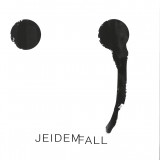
The man in the crowd is a wonderer with relaxed habits. In him the course of things and movement of the city is reproduced. The Düsseldorfer Detlef Weinrich is such a man in the crows. Some one who is constantly listening to future winds through rushes of the past. He loves the night for its free will. And his music tells stories about it. You might know him as a member of the band Kreidler. As a solo artist he goes under the name Tolouse Low Trax. And he's already got three Eps and two albums under his belt. His first solo album „Mask Talk“ thrives on a feathery beat frequency and cool new-wave-strength. His recently released piece „Corridor Plateau“, which appeared as a limited edition to accompany the exhibition „Corridor Plateau“ contains percussive electronics and Industrial sounding like its from the second industrial revolution. His third album „Jeidem Fall“, is also not from here. It sounds like music brought down to earth from the heavens. But its a dark cosmos in which there are only fleeting glimpses of light. All eight tracks were composed in a short space of time over the period of just a few months and fit together perfectly atmospherically. With a musical expressiveness that undoubtedly twists your emotions, „Jeidem Fall“ attacks the subconscious and clouds the mind. The drums have more movement that on „Mask Talk“. Along with the constant tapping of drumsticks goes melodical arpeggios dancing dark and dirty. At times longing vocals drift abstractly through the room, as on „Sa Seline“ or „Geo Scan“, without telling any obvious story.
To sound like stylistic cross references from the present and past is all just speculation for nothing on „Jeidem Fall“ really sounds like anything that has gone before. You could compare the dark minimal timbre of the drum computer aesthetic with Craig Leon's first reductive album „Nommos“. There is also a hint of the minimallist industrial of the Spanish band Esplendor Geometrico in the bubbly textures. But Tolouse Low Trax is still looking from the present into the future and filter and filters all his personal preferences through his MPC and his small synth setup to make them come alive here and now in a new way. Again Tolouse Low Trax has created a truly mysteriously vibrating drum computer music which offers hypnotic magic for the shadowy dance floor. Only a little light should illuminate the whole thing and the bodies that move above them should have no fear from threatening percussion which are displaced into a misty trance. A dark swaying shadowy mass, ideal for a journey at the end of the night and all those non-places where longing sleeps and the last romantics dance while getting drunk.
The Kenyan music scene is one of the most diverse and vibrant in Africa. However, ask any Kenyan which pop music style truly represents Kenya as a nation and there is only one possible answer: benga.
Benga is a pop style with its roots in traditional rhythms, instruments, and melodies. Luo musicians from western Kenya brought the style to prominence in the late 60s but other cultural/linguistic groups in other parts of Kenya quickly developed their own localized variants. With its pulsing beat, interlocking guitars, extended solos, and rapid-fire bass, benga music has dominated the Kenyan music scene over most of the post-colonial period.
Kakai Kilonzo is one of only a handful of benga artists to attract a broad following across Kenya. He opened up his music to others outside his Kamba language and background by singing in Swahili, which is widely understood throughout Kenya. At the same time, with catchy melodies and engaging lyrics, Kakai sang about subjects that all Kenyans can relate to: songs on all aspects of love and marriage, on social responsibility, societal ills (like drinking and witchcraft), moral guidelines, national unity, economic development, and more.
The songs on this compilation are taken from across Kakai's recording career, spanning from the mid-1970s to the mid-1980s, shortly before his illness and untimely death in early 1987, aged only 33. No Wahala Sounds are proud to present this selection of hard-to-find 45s from Les Kilimambogo Brothers, which are being released on vinyl here, for the first time outside Kenya.
The vinyl version includes a free CD copy of the album.
Due for release on 31 July 2020. Interest for airplay from Tom Ravenscroft and Gideon Coe from BBC 6 Music, DJ Ritu from Resonance FM/SOAS Radio, Roger Hill from BBC Merseyside and Steve Barker from BBC Lancashire.
Black Truffle is pleased to announce a new solo album by Eiko Ishibashi, her first for the label, following on from the duo recording Ichida alongside bassist Darin Gray. Hyakki Yagyō (Night Parade of One Hundred Demons) was produced for the ‘Japan Supernatural’ exhibition at The Art Gallery of New South Wales, Sydney focusing on ghost stories and folklore from the Edo period onwards. As with The Dream My Bones Dream (Drag City, 2018), the album is a response to troubling questions about Japanese history, and the influence of the past upon the present, but finds Ishibashi shifting further away from her earlier piano-led songwriting and showing a deepening interest in electronics and audio collaging.
The two sidelong parts of Hyakki Yagyō feature layered synthesisers, acoustic instrumentation, recited verse and field recordings, at times densely mixed but always with a subtle interplay of changing elements. The influence of European and American forerunners as diverse as Alvin Curran, David Behrman and Strafe Für Rebellion can be traced, yet at the same time Ishibashi evokes the flute and string sounds associated with Japanese storytelling, and draws directly on the subversive literary tradition of Kyoka (‘mad poetry’) with a verse by the 15th-century poet Ikkyū Sōjun repeated throughout the album. Revisiting what has gone before, re-thinking what is possible musically, as a way of articulating what else might be possible in the future.
As Ishibashi’s liner notes make clear, the album reflects an attention to persistent dangers, myths and evasions in Japanese culture – as well as the lurking uncertainties that might threaten positive change. This would seem to be manifested in the emerging melodies soon met by dissonance, erratic collisions and near silence, as well as the eerie manipulation of the double-tracked vocals. Ishibashi’s underlying concerns ring true more widely of course. Hyakki Yagyō is a work of multiplicities, and mystery, a landscape where nothing is as it seems at first, and everything is vulnerable to sudden violent interruptions.
The album was produced with regular collaborators Jim O’Rourke (double bass) and Joe Talia (percussion), and features dancer and choreographer Ryuichi Fujimura performing Ikkyū’s satirical tanka. O’Rourke’s immersive mix creates a three-dimensional effect, with Ishibashi’s various sound sources enmeshing and interacting in captivating ways.
Pressed on coloured vinyl and presented in a deluxe package with an inner sleeve featuring and artist portrait and liner notes from Eiko Ishibashi. Cover and label design by Shuhei Abe.
Back cover design by Lasse Marhaug. Mixed and mastered by Jim O’Rourke.
key selling points:
- Black Truffle is pleased to announce a new solo album by Eiko Ishibashi, her first since her acclaimed 2018 Drag City release The Dream My Bones Dream.
- This album finds Ishibashi shifting further away from her earlier piano-led songwriting and showing a deepening interest in electronics and audio collaging.
- Hyakki Yagyō (Night Parade of One Hundred Demons) was produced for the ‘Japan Supernatural’ exhibition at The Art Gallery of New South Wales, Sydney focusing on ghost stories and folklore from the Edo period onwards and is a response to troubling questions about Japanese history, and the influence of the past upon the present.
- Produced with regular collaborators Jim O’Rourke (double bass) and Joe Talia (percussion), O’Rourke’s immersive mix creates a three-dimensional effect, with Ishibashi’s various sound sources enmeshing and interacting in captivating ways.
- The two sidelong parts of Hyakki Yagyō feature layered synthesisers, acoustic instrumentation, recited verse and field recordings, at times densely mixed but always with a subtle interplay of changing elements, hinting at an influence of European and American forerunners as diverse as Alvin Curran, David Behrman and Strafe Für Rebellion.
- Pressed on coloured vinyl and presented in a deluxe package with an inner sleeve featuring an artist portrait and liner notes from Eiko Ishibashi. Mixed and mastered by Jim O’Rourke.
- A1: Flying Between The Clusters Of Trees Without Buoyoant, Floating Wing Beats
- A2: He Was Beginning To Despair Of Ever Knowing
- A3: Like Sleepwalkers Ghosting Through A Dreamscape
- A4: Lions In The Supermarket Don‘t Sound Like Humans
- B1: Misty Fog Covering The Side Window
- B2: He Or She Will Then Drill Into The Pulp To Reach The Root Canal
- B3: Into Your Brain - A News Report Said The Line Carried 13,000 Volts Of Electricity
- B4: The Film Is About A Clown Who Leaves His Circus And Lives In A Building Near The Railway Station
- B5: She Wanted Her To Grow Up In A Nice House With A Backyard, So She Could Play
- C1: The Drawings Were Rearranged, As If By Magic
- C2: He Didn‘t Seem The Kind Of Guy Who Would Just Get Talking To A Stranger
- D1: Pigeons Dancing On The Roof
- D2: When They Returned Home After Midnight
- D3: I Wanted To Hold Her Close And Whisper In Her Ear That She‘d Be Fine
- D4: Good Bye My Love
This time, RØDHÅD tunes into a place of reflection and reformation on his most avant-garde project to date: WSNWG – BACK TO ZERO. Intended to provide a space for solo releases, the imprint comes at a crucial turning point, as society circles in on itself during the pandemic.
RØDHÅD christens the label with MOOD, his first ambient experimentalist release, comprised of his own solo archival material mostly from 2017/2018, working on a plane of spontaneity, devoid of set structures. The result is a life-giving, intimate and solipsistic work. Awash with field recordings, droning loops and subtle granulations, the sparse soundscapes on the 18- track album are deeply profound and satisfying.
Collating a myriad of emotions through this sonic venture, RØDHÅD demonstrates his kaleidoscopic nature as a producer of atmospheric and ambient soundscapes, as well as his legacy provider of dance floor energies. The album will have unique artwork contributed by DJ & producer Silent Servant.
Originally recorded direct to disc and released by Incus in 1978, this new edition from Treader is pressed from the original stampers. Hand-finished sleeve.
‘Parker uses rapid tonguing techniques and circular breathing to create a sound all his own, marked by the simultaneous intonation of multiple notes. One hears a note as well as all the residual tones around it; each breath ends up sounding like a battle between the different registers of the horn. At various times, Parker’s saxophone sounds like dolphin speech, electronic tape squeals, or human murmurs; namely, anything but what it actually is. His language on the instrument is essential listening for anyone interested in acoustic experimental music’ (AllMusic).
‘Eight years after Topography Of The Lungs, and two years after his Saxophone Solos, Monoceros was the most muscular statement of Evan Parker’s solo saxophone muse. Superbly recorded, it seemed to place the listener within the chaotic air flows of the saxophone’s own tubing. Philip Clark said: ‘Parker’s dialogue with the saxophone throws up so much that is unexpected, and indeed unknowable, that the problem he faces is how to keep pace with his own invention’’ (The Wire, Best Albums Of The Year).
French synth-pop talent Lucien & The Kimono Orchestra unveils his new solo piano album, a journey into cinematic soundscapes
Alone at the piano, Lucien takes us on a very personal album in a deep and quiet reverie. We spend a soft winter morning in his company, reminiscing about tender childhood memories.
Between previously unreleased tracks and revisited Kimono Orchestra pieces, "Piano Matinée" concludes a trilogy of recordings which have barely been released, while paving the way for a wider future. Universal, sensitive, cinematographic, the piano language spoken here by Lucien opens us to his musical world in a light that is both more authentic and accessible.
The album also tells us a personal story. That of a grandfather - an exceptional pianist but forced to give up his career when the Second World War broke out - who passed on to him a taste for music in his early childhood, before passing away.
Many years later, Lucien came across old cassette recordings of his eldest son, soon afterwards having a disturbing dream in which he swore he had had a dialogue with him and decided to go his own way. The self-taught musician spent a whole year honing his piano skills before deciding to freeze his performance in the summer of 2019 at the legendary Steinway at the Studios Saint-Germain.
Drawing freely on all his influences - jazz, funk, classical, cinema - Lucien's "Piano Matinée" is a special object, as intimate as it is melodious.