2024 repress
Isle Of Jura go back to 1976 to resurrect 'Anambra', the jewel in the crown of Dub, Soul & Funk outfit Ozo. 'Anambra' is something of a classic, a unique song that's slow, ritualistic and spiritual, mixing African & Nyabinghi drumming with a Buddhist Sanskrit mantra 'Om Mani Padme Hum'. An alternate version 'Anambra River' appears for the first time on the same 12'.
Search:som sam
2024 Restock
A mix of post-Tropicalia Brazilian rock and some of the more soulful elements filtering through the country's music in the early 70s and one of the most enigmatic albums by this unique singer! Sergio's got a sound that's incredibly hard to describe at once sweet and melodic, but also kind of twisted, in an intimate singer/songwriter mode. The production of the album is compressed with a number of post-Beatles touches that make it sparkle like work by Caetano Veloso in the mid 70s, or some of the Peruvian rock by groups like We All Together and hearing the record gives us the same sort of excitement of new discovery as when we heard their best work. Titles include "Rulzito Seixas", Viajei De Trem, "Pobre Meu Pai", "Labirintos Negros", "Filme De Terror", and Lero E Leros E Boleros
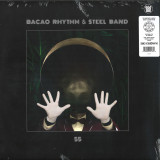
Shrouded in mystery, hailing from Hamburg, Germany, Bacao Rhythm & Steel Band (BRSB) releases their long awaited debut “55” on Brooklyn’s own Big Crown Records. Long time multi-instrumentalist and band leader Bjorn Wagner spent a few months in Trinidad & Tobago where he became fascinated with Steel Drums. His initial intrigue with local steel pan music culture led him to learning the instrument both through help of local players and on his own. After he became proficient on the pans Bjorn had his own instrument built from a used oil barrel by legendary pan man Louis C. Smith. Upon returning home to Germany, Bjorn set out to blend the Tropical Steel into his already sharply honed Funk, Soul, and Hip-Hop sensibilities. The outcome is an updated take on a classic format, a truly unique sound. Their first two recordings were covers of The Meters “Look A-Py-Py” & “Ease Back” which they self-released on a 45. Looking back on these two sides you can tell they were just getting their chops up for what was to come next. This is evidenced by how all hell broke loose when they went on to cover 50 Cent’s hit PIMP taking the DJ and vinyl collecting communities by storm. Many people thought the recording was the original sample and probably still do to this day when it is played. The original Mocambo pressing sold out quickly and is now a collector’s item fetching heavy prices when it changes hands. It was this tune that made the introduction between Bjorn and Danny Akalepse of Big Crown. They immediately hit it off and started making plans to do a full length project with the band. Keeping in the tradition of Steel Drum records, 55 is a journey through re-interpolations and covers with an updated approach, pushing Steel Pan music to uncharted territory. Flawlessly bringing previously untouched genres into the steel pan cannon ranging from Underground Hip Hop tunes to staple Funk tracks and some of all that falls in between. BRSB’s 55 is reinvigorating tunes both well-known and helping to shed some light on tunes still largely undiscovered. However, some of the strongest tunes on the album are original compositions, from spaced out Disco vibes on “Beetham Highway Ride” and “Port Of Spain Hustle” to the ugly face inspiring drums of “Laventille Road March”. Recorded to analog 8 track tape at The Mocambo Studios in Hamburg, 55 is a gritty, punchy journey in sound drawing on music from around the world, using production aesthetics from across both eras and genres, all coming together seamlessly. If the 45s that have already come out on Mocambo, Plane Jane, and Truth & Soul are an indication, this full length is going to be a staple to both casual listeners and Disc Jockeys alik
"Everybody Funk is the first album from Japigia Records, which launches into 2024 with great ardor. This is the first splendid house music album by Pasquale Fanelli, an industrialist from Bari with boundless passion for music and for the show in general, whose greatest merit is of having created a working group full of ideas and talent: the IAPIGI team. The DJ-arranger Paky Fanelli - so called by his friends - with the help of the multifaceted artist-DJ Fabio Ricciuti has dug extensively into the hinterland of the Puglia region in search of his own roots to find the right synergies and give meaning and value to the context, to the habits, to the organization of a city generous in history and culture like Bari, which crossed the ocean via the Adriatic Sea and the Mediterranean. Thanks to IAPIGI we have therefore arrived in New York where Danilo Braca captures Paky's work and shapes it with excellent Italian taste, which is exactly that of a DJ resident for several decades in the Big Apple where he generates surprising and always current sounds. Although radically different, "Daytona" and "Everybody Funk" represent some of the most exciting Italian house songs of this season. In addition to the skilful remix of these two songs, it is worth mentioning "The Edge", whose main melody develops slowly. Once again Danilo Braca has raised the bar and changed the rules of the game. Good boy! The experts Qubiko & Fabio Ricciuti bring a worthy close to this first work by Paky Fanelli with a short piece, originally entitled "Disaccord" and then merged into "Accord", with the aim of putting everyone on the same wavelength. on the same level or musical chord. Comes with an amazing embossed cover too."
Released in March 2003, “Home” was Simply Red’s eighth album. It was preceded by Top Ten hit
“Sunrise”, (which includes the sample of Hall & Oates “I Can’t Go For That (No Can Do)”), earning a
Double Silver Disc for sales of 400,000. The album also includes three more hits in “Fake”, “Home”
and the fabulous cover of The Stylistics’ “You Make Me Feel Brand New”, which reached number 7.
• The album peaked at number 2 in the UK album charts, and went on to qualify for a Double Platinum
Disc for sales of 600,000.
• This 20th Anniversary Edition has been newly mastered from the original production tapes, and is
housed in a new gatefold sleeve. The inner sleeve features the lyrics, credits and a previously unseen
photo, and the record is pressed on 180g black vinyl.
Yogisoul returns with his first album in 8 years, a timeless throwback offering & an instant classic that will leave you wondering if you somehow missed this record reminiscent of 90’s West Coast Rap. It’s that blunt rolling record, with deep G-Funk grooves, skits, and raps provided by US-based rapper Woof. A record inspired by the albums Yogisoul grew up listening to. A combination of his imagination of the West Coast California landscape portrayed by 90’s records on Death Row Records, and the real-life experiences of California-based rapper, Woof.
The first track they worked on - “94 Heavy - wastes no time setting a vibe and transporting you back to 1994. It’s an undeniable head nodder, with smooth horns & deep synth bass that will leave no question about the record's low-end power, and a dope drum swing.
Other notable tracks on the record are “Comin Thru”, which is a braggadocious, G-Funk, banger! It contains all the ingredients to classic West Coast Rap albums. A smooth beat for Woof to weave in and out of, talkbox, scratches in the hook, and samples of legendary Los Angeles voices. A track that will make you feel like you should have a forty and a doobie nearby.
The title track, “Let the Dopeness Begin”, the self-titled track on the album is an homage to the West Coast Classics radio station on GTA: San Andreas. A cruise with the windows down & a jam that slaps!
Marking sixty years of Bossa Nova, and twenty years since Marcos Valle’s first release for Far Out Recordings, what better time to bring back this era-defining classic from the Brazilian master composer?
Throughout his astounding six-decade career, infiltrating pop, bossa nova, samba, delicate psychedelia, jazz and funk, Marcos Valle has consistently shown a dogged determination to transcend the traditions and structures of bossa nova, whilst never veering away from the movement’s inherent, fundamental spirit. To some extent, his epithet ‘the original Rio beach boy’ is a handy one: it reflects the origin and character of his often sun-soaked sound, but expounding his importance in the lineage of Brazilian music, he is more discerningly known as ‘the renaissance man of Brazilian pop’. He is indeed one the very greatest and most important composers, arrangers, writers and performers in Brazil.
Up until Nova Bossa Nova, Marcos Valle hadn’t released an album for well over a decade. After 1983, he resented the way the music industry had changed with commercialisation and new demands curtailing his creative freedom. This was until 1994 when Marcos met Far Out boss Joe Davis and they recorded a track for Far Out’s first Friends From Rio album. This new collaborative partnership resulted in a new solo album, which commenced recording in 1996.
Nova Bossa Nova brought Marcos bouncing back into the 90s, slotting nicely in place alongside the acid jazz movement as well as a voracious new demand for Brazilian music on dancefloors from London to Tokyo. It was witnessing the London club scene’s growing appetite for Brazilian music, as well as a lack of new sounds coming out of Brazil at the time, that a young Joe Davis put in a proposal to record a new album with one of his musical idols. Joe wanted to facilitate an album which would combine the latest technologies and production techniques, with live to analogue tape recording: a Marcos Valle album tailor-made for London’s clubs. Always open to modern influences and possibilities, Marcos agreed to the project, and Joe and his production partner Roc Hunter flew to Rio in ‘96. The record wasn’t released until ’98, as the original ½ inch tapes were stolen from Far Out’s London studio, meaning parts of the album had to be re-recorded.
Nova Bossa Nova was unveiled at the peak of the of the Brazilian movement, the record would also prove to be something of a revolution, inspiring a new generation of artists like Bebel Gilberto, Sabrina Malheiros, Da Lata and Bossacucanova, who continued to fuse Brazilian influences with modern electronic sounds.
Indignation Meeting are punky rail fans from Leeds. 15-year-old Peter is the driver - he's the drummer and lead singer, writes most of the songs, and also plays bass and trumpet on the album. The rest of the crew is his dad Michael on guitar, Hugo on bass, and with Keith, Heather and Sally often along for the ride when they play out. Here at DGHQ we've been listening to their self-released debut album Trouble In The Shed since last year and finally spoke with the band and agreed to release it on vinyl for the first time. It was very good timing as they've just been in the studio to finish recording their second album, so we'll be releasing that later in 2024. Welcome on-board! We caught up with Peter to ask as few questions about the band_ Q: "In a week when the Labour Party promised to return the rail network to public ownership, we ask how did your fascination with trains begin?" A: "Honestly, I don't really know - I've just loved them ever since I can remember. It's not like with some people who had a family connection or watched Thomas the Tank Engine; I've just always loved them. I guess it's just a childhood obsession that never went away!" Q: "'Trouble In The Shed' is quickly becoming a firm office favourite here at DG. There's a touch of punk, indie and new wave about it. What would you say are the key influences that make up your musical DNA?" A: "My main influence when this album was released was Blyth Power. They'd been my favourite band for years when this was recorded, so everything on it was influenced by them in some way. They've had so many different musical styles over the years that they kind of conglomerated into this album, to create yet another eclectic mix of songs. The only real exception to that on this album is Electrification - no prizes for guessing the influence there! If you see us live, however, you may notice another influence pervading through our songs. That influence is the anarcho-hippy band 'The Astronauts,' whom I discovered midway through the recording process, and have quickly become one of my all-time favourite bands!" Q: "What's the story behind your song 'Hornby Horrors'?" A: "Hornby Horrors is an interesting one. People who haven't heard it may assume it's about some ill-fated model railway endeavour, but it's actually a tale of corruption in, of all places, the model train company Hornby! This song was the result of several minor scandals at Hornby HQ making their way to the modelling masses, the main ones of which were an ill-fated tier list, which placed retailers in three categories as to whether or not they received Hornby's products, with tier 3 retailers barely getting anything at all. Interestingly, the UK's former biggest retailer, Hatton's Model Railways, was a tier 3 retailer due to their 'competing products' (made by their own small brand Hatton's Originals') and has recently announced closure due to financial hardship. Now as we all know, correlation does not equal causation, but I wonder_" Q: "The album is being released on a specific shade of green vinyl. What's the significance?" A: "The shade of green on the vinyl is very similar to the shade worn by the locomotives from the Great Western Railway in the 1870s - 1940s. Due to this connection, we thought it was only proper we picked this colour, which we have dubbed 'Great Western Green!'" Q: "The album release coincides with an appearance at Rebellion Festival in Blackpool this August. Can you give the readers three reasons why they should come and see your performance?" A: "1 - We like to think we provide something different with our music - it is very obviously punk, but it's a bit more light-hearted than a lot of the political stuff, with nearly all the songs being about some sort of obscure steam loco engine. If you just want something light-hearted to enjoy, we might just be the band for you! 2 - We've got a rather interesting line up - instead of the usual line-ups you see, we've got a 15 year-old singing drummer with his dad on guitar, a newly-turned adult with a massive ginger afro playing the bass, the guitarist from the old anarcho band 'Dog On A Rope' playing some gnarly lead parts, and all topped off with some beautiful backing vocals from the drummer's sister and mother. As Attila the Stockbroker described us, Blyth Power meets the Partridge Family - not to be missed! 3 - Here's something you won't forget in a hurry - as well as his vocals, our 15-year-old frontman Peter plays drums and trumpet at the same time! If that's something you want to see, make sure you get down to see us!"
180g vinyl + Deluxe hard-cardboard sleeve + OBI + resealable outer sleeve
This isn’t just a seminal album. It is an estuary. All the black rivers that would form Brazilian funk/hip-hop flow through it. Led by Paulista pianist Salvador Silva Filho – Dom Salvador – “Som, Sangue, e Raça” from 1971, one year after the explosion of Tim Maia on the scene, catalyzed the bossa nova and jazz background of its leader with the rhythm and blues of its members like saxophonist Oberdã Magalhães, nephew of samba-enredo master Silas de Oliveira and future leader of Banda Black Rio, who since the group Impacto 8 (which had, among others, Robertinho Silva on drums and Raul de Souza on trombone) had already been trying to reconcile MPB with Stevie Wonder and James Brown. Add to all this a mixture of samba, Nordestino accent, and even the black side of the Jovem Guarda represented by the authorial presence of Getúlio Cortes (older brother of Gerson King Combo, our James Brown “cover”) in ‘Hei! Você’. Alongside these elements and the presence of Rubão Sabino (bass), who still called himself ‘Rubens’, drummer Luis Carlos (another member of Black Rio), the record enlists the trumpet and flugelhorn of symphonic musician Darcy in place of the original Barrosinho (yet one more founder of Black Rio), who was traveling during the recording but would end up being a leading force of the band.
The album ‘Som, Sangue e raça’ paves the way for future generations of musicians and producers of the Carioca scene at the beginning of the 1970s. The lyrics that dealt with the question of race and the explosive fusion of samba, soul, jazz, and funk, elaborated by Dom Salvador and his troupe, Abolição, established the bases for the development of new sounds and tendencies in Brazilian music.
Comes with insert and download coupon.
Imagine a Latin remake of Back to the Future. The mad scientist is Arsenio Rodriguez (the godfather of salsa) and the young student who travels through time with him is Eblis Alvarez (Meridian Brothers). This album can only be described as the perfect soundtrack for that movie that never was.
After the massive buzz generated by his first solo album, Mentallogenic, Alex Figueira got back in the studio to work in a more collective fashion this time, carefully assembling the second album of his largest project to date, Conjunto Papa Upa; a team of 6 musicians, spanning 3 generations of some of the best talent in the Latin and avant-garde scenes.
In an era where tropical music is dominated by purely electronic and rhythmically uniform sounds, the ten songs encompassed in “Fruta Madura” (“Ripe Fruit”) wander through the most diverse tempos, rhythms, and motifs effortlessly. A real breath of fresh air that gracefully incorporates soul, funk, jazz, psychedelia, and electronics into a solid tropical, irresistibly polyrhythmic foundation, without ever succumbing to the many genre clichés.
The distinctive production and catchy songwriting of Figueira shine in a very distinctive light on this second full-length. Living up to his reputation (Miles Cleret, founder of Soundway Records, called him “one of the scene's truly authentic and eccentric producers”), he takes the opportunity to show he’s not afraid to keep walking his own path.
Taking the band for a wild ride through the traditions of Africa, America, and the Caribbean; contrasting them with a ridiculously wide plethora of vintage, contemporary, and futuristic sounds, and pivoting on the exuberant musicality displayed by his musicians; the result leaves no doubt: this album is destined to be considered a future classic of the exciting tropical psychedelic music of the 21st century.
Addressing the most diverse themes in this new collection of songs, things take on a much more mature tone, as the title clearly suggests.
The opening track “El segundo es más sabroso” (“The second one is tastier”) sets the tone in the most assertive way imaginable, with the band boldly declaring, through multiple metaphorical references (laid upon a crazy mix of Dominican merengue, Detroit techno, classic and free jazz, dub, and electro), that the bar will be set higher with this second album.
The remaining compositions touch upon the most diverse subjects, with a fair dose of humor, sarcasm, and postmodern “magic realism”. “El Algoritmo” (The Algorithm) is a parranda-cumbia hybrid (for lack of a specific term) about the omnipresence of technology in our lives. The sophisticated Latin soul of the titling track “Fruta Madura” makes a case for the beauty of the maturity process. Some key philosophical teachings of Marcus Aurelius (the role of causality, the impositions of “the logos” and the importance of self-control) get a twisted cumbia treatment on “Reos del Deseo” (Prisoners of Desire). “No le pongas Coca-Cola” (“Don’t put Coca Cola in it”) shows us the most satirical side of the band, accusing those who mix Coca Cola with Rum of committing "sacrilege", on a powerful base of Dem Bow (the grandfather of Reggaeton), intertwined with touches of soul, salsa, and Cuban comparsa.
"Háblame Claro" (“Talk to me clearly”) is a story of heartbreak that evokes in its first part the spirit of the erotic salsa of the 80s (a subgenre deeply despised by purists), and after an unexpected samba interlude, leads to the hardest salsa of the 70s (a subgenre adored by purists), to end up in the surprising form of pure Afro-Cuban ceremonial music.
“Tu mamá tenía razón” ("Your Mom Was Right") is an attempt to exalt the spirit of the Latin American soap opera in the key of “acid bachata”, to recount a real-life case, witnessed by the band on countless occasions: the partying woman who arrives at the show accompanied by her bitter husband, who obviously does not like to dance. A very cheeky song to talk about the very serious and pertinent topic of female empowerment.
“La misma vaina” (“The same thing”) with its indescribable blend of bantú, candomblé, and Mozambique rhythms with abstract synthesizers, is an ode to adventure in favor of the aversion to taking risks and seeking predictability.
“Amigas picadas” (“Salty friends”) is another humorous song recounting another real-life case witnessed by the band on countless occasions: a love encounter sabotaged by the girlfriend's friends, who all happen to fancy the same guy. A jazzy take on the ancient Dominican rhythm of pambiche (grandfather of merengue), with generous psychedelic touches, resembling the classy late 60s releases of Guadeloupe's legendary producer / label owner Henri Debs.
“Vinimos a hablar” (“We came to talk”) takes sarcasm to the highest level, to ridicule the absurdity (also experienced by the band firsthand) seen in live music venues where people pay a ticket to go and have conversations that could be carried out much better on any bar, where no band is playing. The music alternates between a delicate melody with loose, sparse percussion and a full-on, pumping Angolan semba, with a techno kick drum included; bringing things to an apotheotic grooving finale, where the peculiar swing of Venezuelan calypso from the Callao region is thrown on top of all the precedent elements; closing the album in the most uplifting, “end of the carnival parade” feel.
The artwork is a delicate and impactful oil painting by Colombian artist Kevin Simón Mancera, who has collaborated many times with the label before (“Maracas, tambourines and other hellish things” tape and the Lola’s Dice LP).
What the experts are saying:
“Alex (Figueira) dove into this work with a brutal cohesion between lyrics and synths. Timbre poetry, sound poetry (you name it). And that, superimposed on his always impeccable percussive base, confirms the title of “avant-garde visionary of our beautiful Latin music”".
EBLIS ALVAREZ (MERIDIAN BROTHERS)
“Papa Upa's infectious quirkiness is a balm against boredom. A mature album, but without an expiration date”.
GLADYS PALMERA
“Here there is a lot of strength, drum, cadence and psychedelia, lost dance rhythms, united in an intercontinental Latin/African/and Caribbean journey, a unique winning combination that we could consider the new “Ritmo Figueira”.
DISCODELIC
Conjunto Papa Upa are:
Alex Figueira - Timbales, percussion, vocals.
Gerardo Rosales - Congas, percussion, vocals.
Ramón Mendeville - Bongos, percussion, vocals.
Randy Winterdal - Bass.
Andrew Moreno - Guitar.
Nico Chientarolli - Organ, piano, synths.
All songs written by Alex Figueira.
Arranged and performed by Conjunto Papa Upa.
Recorded, produced, mixed and mastered by Alex Figueira at Heat Too Hot, Amsterdam.
- A1: Music Of The Earth
- A2: Let’s Sing A Song Of Love
- A3: When I Found You
- B1: Haven’t You Heard (12” Version)
- B2: Givin’ It Up Is Givin’ Up With Dj Rogers
- C1: Forget Me Nots (12” Version)
- C2: Look Up! (Long Version)
- C3: Where There Is Love
- D1: Never Gonna Give You Up (Won’t Let You Be) (Long Version)
- D2: Number One (12” Version)
- E1: All We Need
- E2: Remind Me (Lp Version)
- E3: Settle For My Love
- F1: Feels So Real (Won’t Let Go) (12” Version)
- F2: To Each His Own
Black Vinyl[27,52 €]
Strut present the first definitive retrospective of an icon of 1970s and ‘80s soul, jazz and disco, Patrice Rushen, covering her peerless 6-year career with Elektra / Asylum from 1978 to 1984. Joining Elektra after three albums with jazz label Prestige, Patrice had shown prodigious talent at an early age and had first broken through after winning a competition to perform at the Monterrey Jazz Festival of 1972. By the time of the recordings on this collection, she had become a prolific and in-demand session musician and arranger on the West coast, appearing on over 80 recordings for other artists. She joined the Elektra / Asylum roster in 1978 as they launched a pop / jazz division alongside visionaries like Donald Byrd and Grover Washington, Jr. “The idea was to create music that was good for commercial radio / R&B,” Patrice explains. “We were all making sophisticated dance music, essentially.”
Drawing on some of the leading musicians in L.A. like saxophonist Gerald Albright, drummer “Ndugu” Chancler and bassman Freddie Washington and keeping an open minded approach from her training in classical, jazz and soundtrack scores, Patrice’s music was a different, more intricate proposition to many of the soul artists of the time. “L.A. musicians were not so locked into tradition,” she continues. “None of us were accustomed to limitation and the record label left us to take our own direction.”
Early classics like ‘Music Of The Earth’ and ‘Let’s Sing A Song Of Love’ were among Patrice’s first as a lead vocalist before her ‘Pizzazz’ album landed in 1979, featuring the unique disco of ‘Haven’t You Heard’ and one of her greatest ballads, ‘Settle For My Love’. “Although ballads make you feel more vulnerable as an artist because they are often personal, I think listeners relate to that sincerity,” she reflects. By now, Patrice’s records were supremely arranged and produced as her confidence as an all-round writer, producer, arranger and performer grew. Slick dancefloor anthem ‘Never Gonna Give You Up’ and the ‘Posh’ album in 1980 led to her landmark album ‘Straight From The Heart’ two years later. Receiving little support from her label, Patrice and her production team personally funded a promo campaign for the first single from it, ‘Forget Me Nots’. It went on to peak at no. 23 on the Billboard Hot 100 and the album was later Grammy-nominated, while the track became a timeless anthem and popular sample, inspiring Will Smith’s theme for the film ‘Men In Black’ and George Michael’s ‘Fastlove’.
Patrice’s final album for Elektra, ‘Now’ kept the bar high with sparse, synth-led songs including ‘Feel So Real’ and ‘To Each His Own’. It concluded a golden era creatively for Patrice which remains revered by soul and disco aficionados the world over.
‘Remind Me’ features all of Patrice Rushen’s chart singles, 12” versions and popular sample sources on one album for the first time. Formats included a 3LP set and 1CD fully remastered by The Carvery from the original tapes. Both formats include an exclusive new interview with Patrice Rushen and rare photos.
• First definitive Patrice Rushen compilation released on vinyl since the ‘80s
• Includes all of her chart hits, DJ favourites and sample sources
• Official release featuring full interview with Patrice Rushen about her career and music • Features rare photos from her personal collection + some of the photographers she has worked with during her career
• Fully remastered by The Carvery from the original ¼” tapes
• Start of full Patrice Rushen reissue programme from her Elektra era
- A1: Prayer (From Xabo: Father Boniecki)
- A2: In Between (From Xabo: Father Boniecki)
- A3: Journey (From Xabo: Father Boniecki)
- A4: Trip To Ireland (From I Never Cry)
- A5: The Beach (From I Never Cry)
- A6: The Locker Room (From I Never Cry)
- A7: At The Hospital (From I Never Cry)
- B1: Waiting (From At Home)
- B2: Wildfires (From Truth In Fire)
- B3: Ghosts (From Pradziady)
- B4: Soleil Pâle
- B5: Nora (From Nora)
Writing music for film and theatre has always been a big part of Hania Rani's musical world. It is also a part of the creative process that can be tantalisingly out of reach for listeners, either the project doesn't come to fruition or the music simply isn't available away from the film or play. From early collaborations with friends, to last year's two scores for full length films (xAbo: Father Boniecki directed by Aleksandra Potoczek and I Never Cry directed by Piotr Domalewski') Rani has been involved in many such projects, each representing an important step in her artistic development and life as a composer and artist:
"Composing for motion picture or theatre is for me a very different kind of work than writing for my own projects. Firstly, I need to collaborate with somebody else who sees the world through the lense of their own art and craft. That's why these kinds of encounters can be so exciting - they are a promise of creating something very new, as a result of creative work of so many people from all walks of life. Secondly, I feel that music in film is an invisible character, a missing emotion that creates a special atmosphere and sensation. It doesn't illustrate, it completes the work of art. I think it is an extremely sensitive matter that rejects banal associations and easy solutions. I feel like composing for film works like an exercise for my imagination."
It is the nature of these collaborations though, that sometimes the composers own preferred compositions don't make the final cut. This is where Music for Film and Theatre comes in as it allows Rani to present a selection of her own personal favourite pieces composed for film and plays. Pieces that made it to the final cut and pieces that were rejected by the director or the producer. Bringing the music together as an album offers a chance for Rani to share her music with her listeners on her own terms and a chance for her fans to hear a different side of her art.
"I put them in one place, as a collection of precious objects that were kept for years in a drawer. Some of them were composed a couple years ago, some are the result of recent research. I am very happy to finally be able to present them as a separate project."
Rani is of course grateful to all of the directors who have entrusted her to create music for their projects, but she professes especially warm feelings for the pieces composed for her first 'real' theatre play, Pradziady, directed by Michał Zdunik. The title comes from 'Dziady' a term in Slavic folklore for the spirits of the ancestors and a collection of pre-Christian rites, rituals and customs that were dedicated to them. The essence of these rituals was the 'communion of the living with the dead', namely, the establishment of relationships with the souls of the ancestors. "I felt this story needed extremely dark and fragile music, and at the same time a sound that could express the mixture of the two worlds - the living and the dead. I decided to compose part of the soundtrack with a string quartet but including two cellos, viola and only one violin. We recorded in a little house, completely built from wood, mostly from Finnish pine. I always felt this space has a very special, warm and natural acoustics - especially when it is combined with string instruments. The track composed for this theatre play is called Ghosts but actually didn't finally make it to the performance, although I like it so much that I thought it would perfectly fit
this compilation". Other highlights include the enchanting Soleil Pâle written for a collaboration with director Neels Castillon, and improvising dancers Alt Take, the beautiful melancholy of In Between (from the film score for xAbo: Father Boniecki) and the magical bliss of The Beach (from I Never Cry) and together they create a beautiful offering from an artist whose every note is worth hearing, but for whom the journey is just beginning:
"I am very happy to see that many artists consider my music as the right soundtrack for their works, because film music was always a huge inspiration for any of my compositions. I find there a lot of life and real emotions, but also a feeling of freedom. Freedom from my own thinking patterns and prejudices. I also believe strongly in collaboration between people, I always feel this is the way to create something really new, based on a mixture of different ways of thinking, feeling, expressing."
This then is Hania Rani, Music for Film and Theatre – enjoy!
Two tracks from Chicago’s mighty Salem Travelers, from their brief time on the Chess subsidiary Checker in 1968. The A-side, ‘Tell It Like It Is’, goes for around £45 on seven, its follow up, an previously unheralded classic from the same year. Both tracks are a unique funky take on gospel.
‘Tell It Like It Is’ is filled with wah wah guitar chops and some excellent lead breaks that spice up the conga-adorned upbeat; a heady song grasping for the truth.
‘Give Me Liberty Or Death’ is slightly slower, with a Motown-styled backbeat behind a fist pumping anthem that reels in its churchy roots and some great vocal interplay, a message song filled with emotion.
Two fantastic tunes from a transient ever-changing group who, in the 1960s and 1970s, were known for soulful harmonies and glass-shattering lead singing. Typical of their repertoire of songs that provided social commentary on the troubles of the world from the war in Vietnam, drugs, violence, prejudice, civil rights and child delinquency.
Filipovich is one of a kind. The Belarus-born, Paris-based artist works in a multitude of media - found footage films, painting, silkscreening and performance to name a few. It's her musical output that has caught the attention of late, though, with Filipovich dropping a run of releases in recent years which began with 2021's Magnificat on Time Released Sound. Filipovich takes as much of a novel approach to her music-making as she does with her other artistic endeavours - Magnificat was centred around treated samples of Sergei Rachmaninov's All-Night Vigil, and she's also combined classical composition with contemporary electronic techniques on her subsequent drops.
For Idealized, Filipovich's debut on Sheffield's Central Processing Unit, she maintains the gothic air which characterised her previous releases and applies it to a record of widescreen contemporary techno joints. These tracks represent something of a gear shift for CPU, a label which has long made its name by delivering top-quality electro and machine-funk jams, but such is the quality of Idealized that these superbly-executed techno productions are sure to win over label fans both old and new.
Idealized is very much schooled in the German tradition of minimal/dub techno. Tracks like 'Physical', 'Wave' and 'Dance Minor' all anchor themselves on single, steady drum pulses and delay-drenched single-chord loops. Filipovich generally lets the central idea of these tracks play out across several minutes while introducing increasingly disorientating elements into the rest of the mix - wiccan atmospherics, clashing chords, spiralling delays and so forth. It's an approach at once respectful of Filipovich's predecessors - Basic Channel, Deepchord, Ellen Allien and so on - but also full of idiosyncrasies and individuality.
Many of the club cuts here hardwire us into the moody, murky environs of the darkest Berlin Basements. 'Ultra Red' rides forward on a crisp drum machine snap, a menacing burble of bassline and an eerie single-note synth whistle in the upper end of the mix; 'Dance Minor' shows off a bit of KiNK in the brain-bending modular loop that waxes and wanes at its centre; the second-half run from 'Wave' to closer 'Small Cave' travels ever-further out into deep space - the kick drums remain insistent, yet the textural elements are delivered with an edge and flair that evidences Filipovich's ability to think outside the box.
Filipovich's unusual methods, and the influence of sound art and electroacoustic composition on her music, are drawn out further when Idealized steps away from the dancefloor. 'Hydra' comes off like a more gothic version of Pole - its central pulse draws from dub techno but never quite settles into a danceable groove, and this beat is combined with the kind of unnerving keyboard work that would make John Carpenter proud. Although closer 'Small Cave' eventually locks into another dark-room techno roller, the opening section of the track delivers a weightless soundscape of bright, tinny chords and a scene-setting field recording.
Idealized, the first drop on Central Processing Unit from Paris-based Belarusian Lina Filpovich, broadens the label's horizons with a selection of finely crafted minimal/dub techno joints.
RIYL: Andy Stott, Deepchord, Ellen Allien, Moritz von Oswald
This album was a self imposed ambitious project for us. Something to kick in the creative flow. The last few years, having been a challenging time in general, felt like a good time for a pivot. The last two albums were so guitar and keyboard centric, I wanted a weird and fun set of parameters for us to work with. I demo’d everything at home on cassette 4 track (harkening back to simpler times) using drum loops, and just had at it 'til I had a pile of “songs”. Tom and I chose one sound each using synths and created a range of 3 octaves of that sample, then loaded them into Roland SPD-SX samplers and learned the transcribed songs using drum sticks. The idea was to change the way we wrote and to have 4 people along the front of the stage essentially playing percussion. So no guitar, no keys. As we were recording I kept thinking how the sounds, when paired up, sounded a bit like brass. So, we added a saxophone horn section to round out the horniness of the sound with a bit of reedy bell tones. Thanks to Cansfis Foote & Brad Caulkins on tenor and Baritone saxophones :) Sort of a Dexy’s Midnight Runners meets Von LMO meets The Flesh Eaters meets the Screamers kinda punk junk. Poppy and hooky, heavy at times.. Sort of vacuous and maybe a bit sci-fi in sound. Boneheaded in riff and heady in lyrics. Recorded at Stu-Stu-Studio by me on 8 track 1/4” tape . So pretty hot and raw. Lots to write about today. A lot of these lyrics were taken from things people said in passing about taking on life right now that stuck with me. Things that made me reflect. Things that made me laugh. Things that made me WTF. Some folks are kind, genuine & give you love and energy. Some are greedy manipulative ghouls who hang off your veins. You must be strong, composed and take care of yourself. Be self aware and check your mind for cracks. Learn to relax and be well. There are moments of beauty and redemption. Its not all bad news and there’s always hope. People continue to surprise me one way or another. Anyhow, Hope you enjoy and good luck out there. — John Dwyer
Mit „hi, my name is insecure“ veröffentlicht Sam Tompkins sein mit Spannung erwartetes Debütalbum. Als Summe jahrelanger harter Arbeit werden bekannte Fan-Favoriten, wie „time will fly“, „lose it all“ oder „die for someone“, mit neuem Material vereint und bilden somit einen Long Player nach Sams Vorstellungen.
Unterstützt wird Tompkins durch Writer Pablo Bowman (u.a. Calvin Harris, James Arthur), sowie Writer und Produzent Danny Casio (u.a. Rudimental, Little Mix). Seine EP „Who Do You Pray To?” war 2022 direkt in den Top 10 der UK Album Charts. Seitdem zählt Sam Tompkins zu einem der spannendsten britischen Talente. Auf „hi, my name is insecure” zeigt sich Sam von seiner introvertierten Seite und erklärt: „Ich mag es sehr mit meinen Freunden zusammen zu sein.
Doch sobald man mich aus meiner Komfortzone zieht, z.B. auf einer Party, gehe ich in mich und versuche eine Ausrede zu finden, um rauszugehen.“ Das Album „hi, my name is insecure“ erscheint auf Vinyl, als CD und digital.
Repress!
The label has a simple mantra; no frills club cuts designed for the dancefloor. For their second outing, Demi Riquísimo has enlisted Kiosk Radio and Fuse Brussels resident DC Salas to fulfill the brief, via the ‘Tio’ EP.
A DJ noted for his versatility with his sets effortlessly melding a plethora of styles from house, techno and trance to disco & new beat. This broad range of influences is on full display on the buttons as DC Salas shows his range as a producer right across the ‘Tio’ EP.
The EP kicks off with the emotive title track ‘Tio’. DC explains the context:
“It features the voice of my godfather (my dad’s uncle, who was like a brother to him) who passed away unexpectedly some months ago. We found a video of him (he hated being filmed) one week after he passed away, with a wonderful talk he did on his birthday last year. The vocal is an extract of this video.”
Up next is 'Fearless Is More', a track where DC’s production dexterity comes to the fore. The track combines elements of 90’s trance, with a jackin’ bass line and vocal samples that evoke images of the early Amnesia Ibiza golden era.
The B-side opens with 'Never Ending Story', another track which speaks to Salas’ vast array of influences with a synth topline sounding like it was straight out of the Ancienne Belgique. 'A Departure' chugs along menacingly with an acid house flourish in its second stanza, for some peak time perfection. The EP is completed with 'Slowtospeed', which juxtaposes melancholic pads with progressive synths and a driving to bass to make for an extremely well rounded first outing for DC Salas on the burgeoning imprint.
DJ Feedback:
Job Jobse - Great release!!!
Make A Dance - this is wicked, Never Ending Story is the track for me.
Kiara Scuro - Absolutely love this! Definitely will be playing.
Dave Harvey - This is great.
Tech Support / Asa Tate - DC is king!
Timo Deeprhythms / Echocentric Records - Stupid good release!
REES - Love this one!
Martyn Bootyspoon - Absolutely send these over!!
Sara Miller / Public Possession - Really really like this record. Totally my vibe :) All are excellent tracks but Fearless is More is my fave. But really digging Never Ending Story and Tio too!
Aletha / Rinse FM - Sounding perfect for my sets at dimensions
Aiden Francis - Wooooah, love these. Such a varied release!
Ciel - I love the A1 on this! Tio is gorgeous.
Holly Lester - Great release, Tio is biggg!
FFO: Melvins, Big Business, Torche, Karp, Lightning Bolt, Red Fang. Super limited vinyl, first press is transparent-y orange. Based in Sheffield, POHL is a stunning and brutal noise rock duo, featuring former Hey Colossus axeman Will Pearce on guitar/vocals, and drummer Dr Linda Westman of Toronto-based death metal two-piece, Old Hope. This July the band releases their debut album Mysteries; a sonic tome which draws as much from MF Doom as it does doom metal. It’s a swirling, cosmic onslaught of heavy motorik riffs and offhand musings about everything and nothing in equal measure. New single ‘The Whale’ summons the glorious thunder pop of Torche, the pithy lyricism of Karp and the DIY derring-do ethos of Guided by Voices. As guitarist/vocalist Will Pearce explains: “I suppose you could say that Mysteries is an album about grief. How we live with grief, and how we overcome it. When you’re trapped in the belly of the beast, and all seems lost - how do you come back from that? All I can say is that sometimes you eat the whale, and sometimes the whale eats you." Pearce, who played with Hey Colossus on their 2019 album Four Bibles and 2020’s Dances/Curses is thrilled to be teaming up once more with former bandmates Joe Thompson and Chris Summerlin and their Wrong Speed Records imprint. Recorded at the band’s own Cool World studio and mixed by serial collaborator and producer Wayne Adams, Mysteries is many things, often all at the same time. Veering from biblical allusions to fragmented Burroughsian cut-ups, it is at once mystical, profane, sacred, and scatological. Profoundly stupid, perhaps? Or just stupidly profound… either way, Mysteries demands your attention
Freefall Blue Vinyl[26,26 €]
Crack Cloud has always been something beyond a rock band: both profound and grand, vaporous and elusive. The first iteration of Crack Cloud was formed nearly a decade ago as a proxy-rehab outlet on the fringes of Calgary. Over time, two EPs and accompanying visual pieces were produced out of the residence known as Red Mile. By 2017, several members had relocated to Vancouver, working out of harm reduction centers and low-barrier shelters. Sobriety, self-reformation and the idealism of their work further formed an ethos for Crack Cloud. It was during these years that the band produced their astounding 2020 album Pain Olympics. At once, their vision became expansive, cinematic. Now, Red Mile is a bit of a homecoming. Members have returned to Calgary. But Calgary/home has become a liminal space, a place of flux. After a decade of personal and collective growth, what does home even mean? Red Mile is, for them, something like samsara: a return and a rebirth. Red Mile's sound breathes expansive energy into the circuitous, street bound sonics of Crack Cloud's prior material. Fizzling synths intertwine with chiming pianos. Songs layer like Russian nesting dolls; one may find a Ramones chorus set within a desolate Western prog soundtrack only to watch it erupt into a joyous anthem. Real-ass guitars _ alternately lilting, scuzzy and soaring _ ring out across wide sun-bleached spaces. In 2024, the cumulative effect is (in rock instrumentation terms) naturalistic. Any whiff of embalmed nostalgia is absent. Even the close of the album - a winding, almost Jerry Garcia guitar noodle that leads us out of Red Mile - is delivered without sentimentality. Principal songwriter Zach Choy's lyrics are cutting but merciful, with a sharp self-awareness that never slides into self-satisfaction. Crack Cloud as artists are critical _ and ultimately as forgiving _ of themselves as they are the melting world around them. The songs balance an easy charm and cathartic power: affirming life without denying death. Recorded predominantly between the outskirts of Joshua Tree California, and Calgary, Alberta, this record is informed by a bittersweet mélange of old and new. The sprawling, novelistic structures of their previous albums are condensed and sharpened, while maintaining their refusal to delve into superficiality. Through playful melodies and elliptical guitar soliloquy, they deliver a final product of exceptional depth and distinctly unprecious warmth. Crack Cloud have produced a mature, vital work that interrogates the platitudes of the rock-n-roll lifestyle, but ultimately exalts its sacredness. Red Mile's de facto thesis statement "The Medium" is itself a rock song meditation: an ode to the form and its practitioners. This genre that _ typical, repeatable, corporatized as it can be _ somehow still has the power to help us live through life. We see the dusty sentiment of "I love rock and roll" exhumed, taken apart, and stitched back together. It's a song guided by faith _ if the medium helps us proclaim our love today, it's worth protecting from derision tomorrow. We live in an era where music seems to love hitting its head against the wall. Crack Cloud's Red Mile is the sound _ the feeling! _ of the bricks giving way.
Black Vinyl[23,95 €]
Crack Cloud has always been something beyond a rock band: both profound and grand, vaporous and elusive. The first iteration of Crack Cloud was formed nearly a decade ago as a proxy-rehab outlet on the fringes of Calgary. Over time, two EPs and accompanying visual pieces were produced out of the residence known as Red Mile. By 2017, several members had relocated to Vancouver, working out of harm reduction centers and low-barrier shelters. Sobriety, self-reformation and the idealism of their work further formed an ethos for Crack Cloud. It was during these years that the band produced their astounding 2020 album Pain Olympics. At once, their vision became expansive, cinematic. Now, Red Mile is a bit of a homecoming. Members have returned to Calgary. But Calgary/home has become a liminal space, a place of flux. After a decade of personal and collective growth, what does home even mean? Red Mile is, for them, something like samsara: a return and a rebirth. Red Mile's sound breathes expansive energy into the circuitous, street bound sonics of Crack Cloud's prior material. Fizzling synths intertwine with chiming pianos. Songs layer like Russian nesting dolls; one may find a Ramones chorus set within a desolate Western prog soundtrack only to watch it erupt into a joyous anthem. Real-ass guitars _ alternately lilting, scuzzy and soaring _ ring out across wide sun-bleached spaces. In 2024, the cumulative effect is (in rock instrumentation terms) naturalistic. Any whiff of embalmed nostalgia is absent. Even the close of the album - a winding, almost Jerry Garcia guitar noodle that leads us out of Red Mile - is delivered without sentimentality. Principal songwriter Zach Choy's lyrics are cutting but merciful, with a sharp self-awareness that never slides into self-satisfaction. Crack Cloud as artists are critical _ and ultimately as forgiving _ of themselves as they are the melting world around them. The songs balance an easy charm and cathartic power: affirming life without denying death. Recorded predominantly between the outskirts of Joshua Tree California, and Calgary, Alberta, this record is informed by a bittersweet mélange of old and new. The sprawling, novelistic structures of their previous albums are condensed and sharpened, while maintaining their refusal to delve into superficiality. Through playful melodies and elliptical guitar soliloquy, they deliver a final product of exceptional depth and distinctly unprecious warmth. Crack Cloud have produced a mature, vital work that interrogates the platitudes of the rock-n-roll lifestyle, but ultimately exalts its sacredness. Red Mile's de facto thesis statement "The Medium" is itself a rock song meditation: an ode to the form and its practitioners. This genre that _ typical, repeatable, corporatized as it can be _ somehow still has the power to help us live through life. We see the dusty sentiment of "I love rock and roll" exhumed, taken apart, and stitched back together. It's a song guided by faith _ if the medium helps us proclaim our love today, it's worth protecting from derision tomorrow. We live in an era where music seems to love hitting its head against the wall. Crack Cloud's Red Mile is the sound _ the feeling! _ of the bricks giving way.