Al Fajer Group was established in Kuwait in 1987, co-founded by four artists: Sima Kanaan (Vocals), Bashar Shammout (Guitar) Jameel Saraj (Oud and Guitar) and Nizar Alyan (Percussion). Al Fajer Group became known for their unique frequencies and the transparency of their sound. The band is rooted in acoustic oud, guitar and percussion and they never used any electronic equipment during their sets. When they were first established they would perform Palestinian patriotic songs, related to the Palestinian liberation struggle. They released their launch album, recorded on reel tapes, during the First Intifada in 1988, after which they began composing and writing their own original music. They were unable to release this due to the Iraqi invasion of Kuwait in 1990, when all the band members were forced to leave the country and could not reunite to release the second album. During the limited time in which they were able to work together, they participated in multiple tours in Kuwait, Iraq, Germany and other locations.
This is the first vinyl release for the band and includes original music, which has not been available until today.
نشأت فرقة الفجر في الكويت في العام 1987 بمبادرة ذاتية من قِبَل أعضائها الأربعة وهم سيما كنعان (غناء) وبشار شموط (غيتار) وجميل سراج (عود وغيتار) ونزار عليان (أيقاع). تميزت الفرقة بأدائها الموسيقي الشفاف والهادئ والذي اعتمدت به على استعمال آلتي العود والغيتار وبعض الآلات الايقاعية المتنوعة وتجنبت استخدام أي آلات كهربائية. اعتمدت الفرقة في بدايتها على إعادة أداء بعض الأغنيات الوطنية الفلسطينية ذات الكلمات الواضحة والهادفة. أصدرت فرقة الفجر ألبومها الوحيد في ظلال الانتفاضة الأولي في العام 1988 ثم بدأت في تلحين أغانيها الخاصة بها والتحضير لإنتاج ألبومها الثاني، لكن لم تتمكن من تسجيله وإنتاجه وذلك بسبب نشوب حرب الخليج عام 1990 في الكويت حيث اضطر أعضائها للرحيل من هناك ولم تعد الفرقة قادرة على الاستمرار. رغم المدة المحدودة جداً التي نشطت فيها فرقة الفجر، إلا أنها شاركت في عدد لافت من العروض والمهرجانات في الكويت والعراق وألمانيا وغيرها.
Buscar:son of a son
French modular tribalist Sindh launches the Komudo Origins Series on his own label with a fierce first chapter built for deep physical immersion. Still rooted in rythmic ritualism, these four tracks push further into shadowy, shape-shifting techno. 'Sauros' is the beatless opener, all hovering, menacing atmospheres and sonically refracted voices. 'Arbhar' glides along with a sleek, understated techno framework that feels like it's made of pure air. 'Mystic Sun' begins to edge towards the pumping, firing echoes and low level spoken words across a progressive-style builder, before 'Denali' closes things off via thumping, late-night techno charge. Subtle darkness, alien textures and body-focused grooves define this potent new series.
- 2: Against Death
- Smashed
- Can't Touch
- Sit
- Lucky
- Safe
- Son Of
- Destiny
- Billions
- Death Of Music
- No Mail
- I.d.o.l
- Yo
- Bawk
- Crack
- Headless
- In So Many
- Ajukaja Me
“Certain albums hit like howling bullets at pivotal moments, tearing open the face of music to reveal hidden sonic muscles and fusing them back into something both strangely familiar and yet entirely unrecognisable. We believe this is one of those records.”
The double album Death of Music delivers 18 crooked vocal pops, some ruthless, others unexpectedly disarming. In some songs, Ajukaja & Mart Avi function like a two-headed saurus swinging its spiky tail to shady pop-house smackers. In others, Ajukaja's serene organ licks descend into subterranean caverns, allowing Avi to float to the surface on their wavelengths and turn his voice into billions of extinct moths, enslaved by the moonlight’s pull. There are songs that face destruction and those that seek to prevent it.
One kykeon rap goes, “If you die before you die, then when you die, you don't die!”. Ajukaja & Mart Avi have embraced this notion to create new music that allows them to thrive in the algorithmic wasteland. 13 years in the making, these 66 minutes are packed with lifetimes of truths you didn’t know you needed to know. They are Ajukaja & Mart Avi – two against death.
Produced by Ajukaja
Words by Mart Avi, Music by Raul Saaremets
Guitar and Bass by Sten Sheripov (Can’t Touch The Earth, Safe)
Sax by Steve Vanoni (I.D.O.L.)
Recorded between 2011—2024
Mastered by The Bastard
Cover Photo by fs
Sleeve by Marke, Mart Avi
Pressed in Tartu, Estonia
- Side A. Gypsy Song
- Side B. Never Land
After traveling through Mexico, Miami, the Bahamas, and New Orleans, Nishioka recorded his fourth album South American Journey in Los Angeles,
released in 1979. From this album, two of his most celebrated tracks—“GYPSY SONG”, a fan favorite with numerous cover versions, and “NEVER LAND”,
featuring the distinctive sound of steel pans and a Japanese reggae vibe are now being pressed on 7-inch vinyl for the first time in a limited edition!
The recording features members of the So What Review band, including Junshi Yamagishi (guitar) and Osamu Ishida (guitar), along with renowned steel pan
player Robert Greenidge, known for collaborations with Van Dyke Parks and Taj Mahal.
(FLATT THE LAIDBACK)
Kyozo Nishioka Profile
(Born May 7, 1948 – Died April 3, 1999)
Singer songwriter from the Shima Peninsula in Mie Prefecture, affectionately nicknamed “Zo-san”.
After enrolling at Kinki University and moving to Osaka, Nishioka became a regular at the folk cafe Dylan in Namba, opened in August 1969 by Masaji Otsuka
and Yoko Ishimura. Dylan was a gathering spot for folk music enthusiasts from all over Japan.
Nishioka formed the folk group The Dylan with Masaji Otsuka and You Nagai, performing at folk camps and the Nakatsugawa Folk Jamboree. In 1971, Nishioka
left the group, and Otsuka and Nagai continued as The Dylan II. Nishioka wrote and composed the song “Puka Puka” under the pen name Zokyozo, which became
one of his signature works. The song was first released in July 1971 as the B-side of The Dylan II’s single “Otoko rashii tte Wakarukai” on URC Records.
Nishioka began his solo career, releasing his debut album “Dylan nite” in July 1972, produced by Kinji Yoshino on Bellwood Records, which included his own
version of “Puka Puka”. In September 1973, he appeared at the farewell concert of Happy End titled CITY – LAST TIME AROUND at Bunkyo Public Hall in Tokyo.
His 1974 album “Machiyuki Murayuki” was produced by Haruomi Hosono, and his 1975 album “Rokka My Baby” featured support from Shigeru Suzuki’s band
HUCKLE BACK. Nishioka recorded three albums under Hosono’s production, deepening their friendship.
Together with his wife and lyricist KURO, Nishioka wrote songs for artists such as Eikichi Yazawa. The couple traveled the world, recording overseas albums such
as “Nanbei Ryoko” (1977), “Yoh-Sollo” (1979), and “New York to Jamaica” (1981), incorporating reggae, calypso, and other global sounds. In the 1980s, he released
works under the duo name KYOZO & BUN with Yoshifumi Okajima, and in the 1990s returned to solo projects with albums like “START” (1993) and “Farewell
Song” (1997).
After KURO’s passing in 1997, Nishioka continued his musical activities until his own death in 1999 at the age of 50. His music transcended the boundaries of folk,
blending jazz and tropical elements to create a unique world view, leaving an indelible mark on Japanese music history.
- Dust On Trial
- Concrete
- One Rizla
- The Lick
- Tasteless
- Donk
- Gold Hole
- Friction
- Lampoon
- Angie
In der Heimat der Wettbüros wird zurzeit ein Name groß gehandelt: SHAME. Die Band lebt von Konfrontation. Sei es die brodelnde Intensität, die auf ihrem Debüt ,Songs of Praise" knistert, oder das Adrenalin-pumpende Chaos, das sich bei ihren aufregenden von großen Emotionen angetriebenen Shows entfaltet. Bestehend aus dem Sänger Charlie Steen, den Gitarristen Sean Coyle-Smith und Eddie Green, dem Bassisten John Finerty und dem Schlagzeuger Charlie Forbes, begann das in London lebende Quintett bereits im Schuljungenalter. Mit einem gesunden DIY-Ethos als Grundlage und mit The Fall und Wire als musikalische Einflüsse schafften sich SHAME eine Nische in der Musikszene Südlondons und entwickelten furchtlos ihren aufrichtigen, eckigen, peitschenden Post-Punk. Die zehn Songs von ,Songs of Praise" lassen keine Fragen offen. Ob "Gold Hole", ein augenzwinkernder Takedown von Rock-Narzissmus, oder die Single "Concrete", die den überwältigenden Moment der Erkenntnis einer zum Scheitern verurteilten Beziehung beschreibt, oder das frustrierte "Tasteless", das die Monotonie des Alltags beschreibt. ,Songs of Praise" bietet keine Atempause.
We invite you to take a journey through the music of the Pacific and Caribbean coasts of Colombia, where traditional rhythms blend with contemporary sounds.
Mangle Rojo is a compilation album of 8 songs, released on vinyl of 12 inches, with some of the most popular rhythms of Colombian folklore, like Cumbia, Currulao, Bullerengue and, Puya, played by renowned artists like Nelda Piña, Inés Granja, Sixto Silgado Paíto, Emilsen Pacheco and Francisco Torres.
Side A consists of four songs from the Pacific Coast, and side B has four songs from the Caribbean region. In this record take part bands and also collaborations between independent musicians. Six of the songs were composed for the album.
Independent record label Bánfora Records produced Mangle Rojo, with support from the Ministry of Culture of Colombia
- 1: The Yellow Tinker (Slow Reel) 03:03
- 2: Liostáil Mé Le Sáirsint (Song) 03:11
- 3: The Donegal Selection: An Bóthar Mór/Tommy Peoples’ Reel/Is Cuma Liom (Reels) 0:24
- 4: Faoiseamh A Gheobhadsa (Song) 05:18
- 5: Port Árainn Mhór/Port Kitty Rua Mooney (Jigs) 03:30
- 6: The House Of Baoithín Selection: Miss Stewart’s/Bonnie Annie/Hand Me Down The Tea Things/House Of Baoithín (Reels) 03:54
- 7: The Barley And The Rye (Song) 03:18
- 8: An Gasúr Dána/An Ghirseach Dholba/Ríl Na Mbreac Beadaí (Reels) 04:0
- 9: Gabhaim Molta Bríde (Song) 04:2
- 10: The Letterkenny Blacksmith/John Doherty’s Favourite/Scread Na Bealtaine (Reels) 04:16
Altan is arguably the most iconic band working in traditional Irish music today. For the past 35 years, they have brought the music of their native County Donegal to the world stage. The band's newest album, aptly titled Donegal , pays homage to County Donegal's rich musical heritage, breathtaking landscapes, and vibrant culture. The music's authenticity and allure transport listeners to a bygone era in rural Ireland while forging a connection between the past and the present.
Featuring co- founder, lead vocalist, and fiddler Mairead Ni Mhaonaigh ; newest member Clare Friel on vocals and fiddle; accordionist Martin Tourish; guitarists Daithi Sproule and Mark Kelly; and Ciaran Curran on bouzouki and mandolin. With Jim Higgins (percussion), Steve Cooney (bass), and Graham Henderson (keyboards). Recorded by Manus Lunny at Seafront Studio in County Donegal, Ireland.
- 1: Grief (Feat. Maya Al Khaldi)
- 2: Karakoz
- 3: Echoes Of The Harvest (Feat. Alabaster Deplume)
- 4: Old Poem Made Of Sand
- 5: Dawn On The Cremisan Valley (Feat. Julmud)
- 6: Jinn Of The Bethlehem Souk (Feat. Osama Abu Ali)
- 7: Wondering Through The Crowded Paths Of Al-Hisba
Mai Mai Mai’s artistic path has never rested on laurels, it’s been a constant evolution, a profound and poetic research, a dark and dusty journey through awareness and collaborations where the heart of the process has always been about building connections and understanding people and their rituals. Mai Mai Mai’s new album ‘Karakoz’ was mostly recorded in Palestine (Ramallah and Bethlehem) in 2024 during an ongoing genocide and follows his acclaimed Southern Gothic double-album ‘Rimorso’. The album opens a new chapter for the Roma based artist, a deeply personal record where his traditional industrial miasma flows into a weeping vortex of spiritual hymns, Mediterranean hauntology and Middle Eastern chants of sorrow, carrying the despair of a battered population and matching the fighting hope with echoes of ambient bliss. Recorded during his artistic residency in collaboration with Radio Alhara and Wonder Cabinet, the album is the result of an immersive six-week residency between January and May 2024, in Bethlehem and Ramallah, where Mai Mai Mai delved deep into the traditional music of Palestine, meeting and collaborating with local musicians, exploring archives, and recording the resonances of the land. This deep engagement allowed him to unearth the intricate layers of Palestinian sonic heritage, weaving them into his own sonic language.
- A1: Song Of A Devil's Servant
- A2: Angelina
- A3: Pam Pam Poope Poope Loux
- A4: Hurry Hurry Hurry
- B1: My Baby Ruby
- B2: Judy
- B3: Goodbye Mama
- B4: Murdock 9-6182
- B5: Just A Little Bit Of Peace In My Heart
- C1: Sad Story Of Sam Stone
- C2: High In The Sky
- C3: Remember My Friend
- C4: Time Is A Book
- C5: Backbiting Baby
- D1: I'm A Running
- D2: I Sing My Song
- D3: Mitch Mover
- D4: God Bless The Day
- D5: Grand Piano
Our well received series of Golden Earring remastered and expanded editions continue with On The Double. The Red Bullet archive was turned inside out again by Wouter Bessels and he found the original first-generation quarter inch master tapes of this classic 1969 album. These particular tapes have never been used for any release before, as in the analogue days of mixing and mastering it was customary to run off a set of equalized tape copies - with compression and sometimes reverb added - for release on vinyl and cassette. Also, genuine stereo mixes of both ‘Dong-Dong-Di-Ki-Di-Gi-Dong’ and its B-side ‘Wake Up-Breakfast!’ were found.
As the On The Double album was mixed in glorious stereo, we've included these never-before released stereo mixes (instead of the original 1968 mono mixes), alongside the original stereo mixes of ‘Where Would I Be’/’It’s Alright, But I Admit It Could Be Better’, the single that came out after On The Double. All in all, this expanded release of On The Double contains everything released by Golden Earrings between the albums Miracle Mirror and Eight Miles High and, as it features all original stereo mixes, fills another important hole in the reissue programme of the band. On The Double (remastered and expanded) is now available as a individually numbered edition of 1000 copies on crystal clear vinyl. It contains an insert, printed inner sleeves with liner notes by acclaimed Golden Earring biographer & archivist Jeroen Ras and additional remastering notes and comes in a gatefold sleeve.
- 1: Broke No More
- 2: All For Sale
- 3: Warning You Whiskey
- 4: Done Pretending
- 5: Land Of The Forgotten
- 6: Lately I've Been Thinkin
- 7: Queen Of Fools
- 8: Around And Around
- 9: Crazy Leaf
- 10: Bars Closing
- 11: Bird Of Prey
On her new album, Land of the Forgotten, Brit Taylor takes us to her much discussed and misunderstood homeland, Appalachia, with songs that reveal the complex heart and complicated people of the place. Taylor is an accomplished singer-songwriter who has been performing professionally since she was a child. She has always taken the bull by the horns; Taylor has spent seven nights a week singing on Broadway, cold-called record execs, and she even formed a cleaning business to help finance her first album, Real Me, on which Dan Auerbach (The Black Keys) co-wrote five of the songs. Only three years later she found herself being produced by two of the most sought-after producers in Nashville: Grammy winners Sturgill Simpson and David Ferguson. Since then she has made her Grand Ole Opry debut, gained a devoted following as she toured the whole country, and garnered praise from the likes of NPR, Billboard, Rolling Stone, and American Songwriter. Land of the Forgotten will be released March 6th 2026 by RidgeTone Records, LLC Under Exclusive License from Cut A Shine Records, LLC Marketed and Distributed by Thirty Tigers
- The Set Up Part 1
- Can You Get Me Out Of Phoenix?
- Jumping Off In Madras
- Dilaudid Diane
- Keep The Shades Down
- Getting Out Of The Ward
- The Set Up Part 2
- The Reckless Life
- Walking With His Sleeves Down
- The Meter Keeps Ticking
- The Set Up Part 3
- The Last Time I Saw Her
The Delines were finishing the "Mr. Luck & Ms. Doom" sessions when Willy brought in a tune called "Walking With His Sleeves Down". Vocalist Amy Boone learned it on piano and the Band recorded it live. The take was stunning but the song didn"t quite fit the record so they set it aside along with "The Reckless Life", "Dilaudid Diane" (featured in their recent encores) and "Jumping off in Madras". The song worked sonically but again didn"t feel quite right lyrically and when they finished the record Willy couldn"t stop writing songs for it. The US opioid epidemic with thousands of young people rattled with addiction and living in tents and on the streets and in old cars and RVs, influenced "Luck and Doom" but even more so with The Set Up. Their stalwart producer, John Morgan Askew, was at the helm again and he"s the king of building atmospheric worlds. You can really feel it on this one. By the time we finished they realized "The Set Up" was the wayward, misguided, and lonely sister to "Mr. Luck & Ms. Doom". More ragged and undone but all CinemaScope Delines.
LTD. TRANSPARENT YELLOW DELUXE VINYL[14,08 €]
'Pretty (Ugly Before)' b/w 'A Distorted Reality Is Now A Necessity To Be Free' holds the distinction of being the last recording by Elliott Smith to be released while he was still alive. Originally released as a single in August 2003, the songs were a part of the recording sessions that would ultimately yield the acclaimed posthumous album From A Basement On The Hill. The two songs serve as a powerful reminder of why Smith became the voice for a dejected generation.
- 1: Ghost Sub
- 2: Harm
- 3: Deltas
- 4: Kay
- 5: Walrus
- 6: Two
Nachdem sie sich schon fast 20 Jahre kannten, schien die Zusammenarbeit zwischen Nick Sanborn und Chris Rosenau irgendwie vorprogrammiert, kam aber eher zufällig zustande - bei einem Musikfestival in Eaux Claires, wo die Chemie sofort stimmte. Während sie probten, merkten sie, dass sie schon dabei waren, ein Album aufzunehmen. Sie behielten die Arbeitsmixe und Titel bei, auch die Vogelstimmen und Verkehrsgeräusche, die ins Mikrofon kamen. Das Ergebnis war ,Bluebird" aus dem Jahr 2019, ein kleines Wunderwerk mit fünf Titeln, bei dem man das Gefühl hatte, mit ihnen im Raum zu sitzen und zu lächeln, während sie ihre wortlose Harmonie fanden.Zwei Jahre später trafen sich Rosenau (Volcano Choir, Collections of Colonies of Bees) und Sanborn (Sylvan Esso, Made of Oak) wieder. Sie hatten Spaß bei Runde zwei, aber die Sessions waren weder so unbeschwert wie beim ersten Versuch noch so fokussiert, dass sie sich spannend und neu anfühlten. Die beiden legten diese Stücke beiseite, um es zu einem späteren Zeitpunkt erneut zu versuchen. Dann kam die Pandemie. Es gab Tourneen. Es gab andere Platten. Es gab das Leben im Allgemeinen. Als Rosenau sich wieder zu Betty's (Sylvan Esso's Studio in den Wäldern von North Carolina) wagte, um es erneut zu versuchen, waren vier Jahre vergangen. Und Sanborn baute sein Live-Equipment von Sylvan Esso auseinander, ordnete es neu und fügte neue Teile hinzu, in der Hoffnung, jegliche Muskelgedächtnis für einen Echtzeitaustausch zu vermeiden. Sie wussten sofort, dass es funktionierte, ohne die Zweifel der Vergangenheit im Schlepptau. An diesem ersten Tag, einem Donnerstag, entstanden ,Ghost Sub" und ,Harm". Am zweiten Tag hatten sie einen Fehlstart mit einem Stück namens ,Kay", bei dem Sanborns Synthesizer nicht ganz zu Rosenaus Riff passten, bevor sie mit ,Deltas" weitermachten. Es gab einen Fehlstart, der hier erhalten geblieben ist, aber was folgte, war eine erhabene Morgenmelodie, als würde man müde aufwachen und von dem plötzlichen Licht draußen überwältigt werden. Es ist der Klang des Erwachens zum Leben und der Liebe zu diesem Leben, und es ist das kleine Juwel in der Mitte der sechs Songs, die sie an diesem Wochenende aufgenommen haben, die sechs Songs, die hier in der Reihenfolge präsentiert werden, in der sie entstanden sind. Sie beendeten ,Two" kurz bevor Rosenau zum Flughafen aufbrach; es ist ein langer Abschied, süß und sentimental und traurig, ein letztes Gespräch zwischen zwei Freunden, die ihre gemeinsame Zeit genossen haben. Das Band bricht ab, aber man muss nicht hören, was er sagt, um zu wissen, was er sagt. Das war gut, perfekt, genau das, was wir gesucht haben, genau richtig, Kumpel. So fühlt sich ,Two" von Anfang bis Ende an - zwei Freunde, die fest miteinander verbunden sind und sich in ihren schönen Austausch vertiefen.
Sonic Groove Experiments returns with the debut album from Mendikant DX. A Pack of Ghosts draws the listener into a deep ambient-industrial swirl of decay; a haunting soundtrack to the grim, back-lit, post-reality world we find ourselves in. Written and produced by techno veteran Bryan Zentz.
- 1: Private Symphony (Feat. Stuart Murdoch)
- 2: The Cold Collar (Feat. Gruff Rhys)
- 3: Love Is A Life That Lasts Forever (Feat. Molly Linen)
- 4: First Moonbeams Of Adulthood
- 5: Road To The Amber Room
- 6: Hachi No Su (Feat. Saya From Tenniscoats)
- 7: In Portmanteau (Feat. Field Music)
- 8: Irreparable Parables
- 9: Spectators In The Absence Of God (Feat. Kathryn Joseph)
- 10: Soul Enters The Ocean Sun Climbs Out The Sea
White Vinyl[26,26 €]
Very limited numbers, orders will need to be confirmed.
For his new album, Irreparable Parables, Andrew Wasylyk felt a strong desire to write a set of songs featuring an element hitherto rare in his work: the human voice. Equally strong was the conviction that he did not want to sing them himself.
The Scottish multi-instrumentalist and composer set about assembling a group of guest singers, sending out the songs to wherever they were in the world. The vocals were recorded remotely and then, like migrating birds, winged their way back to Scotland. The result is an album of great beauty which, perhaps preeminently in Wasylyk’s work, expresses the vulnerability and resilience of the human spirit.
Six singers appear on the record, represented by six songbirds illustrated on the sleeve by Clay Pipe Music’s Frances Castle. The cuckoo is a nod to Belle and Sebastian’s 2004 single ‘I’m A Cuckoo’, that band’s Stuart Murdoch being the first voice you hear on the new album. When the vocal for ‘Private Symphony #2’ arrived, says Wasylyk, “it was everything that I was looking for and more. But this is Stuart Murdoch. Of course he’s going to make something incredibly beautiful and thoughtful.”
The song lyrics were, for the most part, written by the singers. The music is Wasylyk’s creation. He navigates a sound world that lies somewhere beyond the borders of classical and jazz, ambient and abstract. It is difficult to describe, but easy to understand, which is to say to feel. That is the way Wasylyk’s work is experienced: as a feeling. It takes you back to childhood, perhaps, to feelings of comfort and safety, or to memories of walks at sunrise and sunset, or to the way a shadow falls on a particular field in a particular place at a particular time in your life. This is consoling music. That is why, though pretty, it is not merely pretty. These are songs to shore up the soul.
Wasylyk writes in a room, in his native Dundee, full of “half broken” instruments. He picks these up, plays a little, seeking an idea, a feeling, a door that lies ajar. The musical palette of Irreparable Parables includes brass and woodwind, a six-piece string section, guitar, bass, drums, vibraphone, Mellotron, Fender Rhodes, tape loops, synthesisers and percussion. The strings were arranged by the cellist Pete Harvey, a long-term collaborator.
Among the other guest vocalists are Gruff Rhys of the Super Furry Animals, Saya Ueno from Japan’s Tenniscoats and Peter Brewis from Field Music. Wasylyk himself takes the lead vocal on the title track, though a throat infection and touch of pitch-shifting have altered his singing in a way that even he, having fallen out of love with his own voice, finds acceptable.
The heart of the record can, arguably, be found in two tracks, ‘Love Is A Life That Lasts Forever’ and ‘Spectators In The Absence of God’, sung respectively by Molly Linen and Kathryn Joseph. The former, bright with trumpets, was inspired by the writing of Derek Jarman. “I was feeling deeply upset about the world and wanted to try and write some- thing that was obviously hopeful,” Wasylyk says.
‘Spectators …’ offers an emotional counterpoint. It is an “apocalyptic hymn” that seems to grapple with watching human suffering from afar, too distant to be at physical risk, but experiencing the psychological wounding, and feelings of helplessness, even complicity, that come with constant awareness of other people’s pain. “Kathryn’s a pal, I love her dearly, and she’s a brilliant artist who really feels what she writes,” Wasylyk says. “The cracked tenderness of her voice is spellbinding.”
The album closes with an instrumental piece, ‘Soul Enters The Ocean Sun Climbs Out Of The Sea’, all piano and strings, that offers a sense of resolution and ascension. A good moment, too, for Wasylyk to reflect upon the artistic companionship that he enjoyed while making this record – the songbirds that answered his call: “These humans are incredible at what they do. I’m deeply grateful and feel so lucky. It blows my mind.”
- 1: Lemonade Tycoon
- 2: Anti-Bird-Spike-Bird-Nest
- 3: Interlude (Stride)
- 4: Allcapsallbold
- 5: Pet Boss
Taupe’s latest album release, waxing | waning delivers jazz experimentalism, ‘skronk’, avant-rock, and electronics, by the Glasgow-based trio, due out via Minority Records. Across its seven tracks, waxing | waning captures Taupe’s approach – bold and boundary pushing – shaped by a fresh shift in the band’s dynamic and compositional approach.
Taupe’s waxing | waning, co-composed and realised by its players in a studio that was once an undertaker’s premises in Glasgow, is an absolutely affirmative album, an act of cultural defiance in desperate times.
Comprising Mike Parr-Burman (guitar, bass guitar, electronics), Jamie Stockbridge (alto and baritone saxophones) and Alex Palmer (drum kit, percussion), Taupe work up a storm of skronk, free jazz and harmolodic frenzy whose closest relations include Zu, Melt Banana and John Zorn. However, waxing | waning is from its opening, stuttering blasts, an exercise in seeking out and claiming new territory, finding unique and novel permutations in which jazz, rock, electronics interbreed at breakneck pace. Here is a group determined to say and do things they don’t get to say and do elsewhere in their musical lives.
‘Lemonade Tycoon’ hits the ground skronking. It’s cubistic jazz, cumulative in its impact, avoiding the white lines of the conventional freeway, bridling, bustling, coming at you from all angles – a three way conversation of astonishing rapidity, fast track, telepathic communication – everyone from James Chance to Albert Ayler coming at you at once, before morphing in to a spidery scrawl of electronics and furious percussion. ‘Anti-Bird-Spike BirdNest’s‘ title somehow sums up the sort of mental images evoked by the music – its sheer creative disobedience, as if being chased in vain, like a delivery rider evading capture by ICE agents -– shapeshifting, assuming different shades, sprouting metal quills and, in its midsection, seeming almost to swallow itself alive, before regurgitating itself in a sublime mess.
‘Interlude (Stride)’ is not exactly ambient, more a horizontal enmeshment of percussion, drones, reverberant noise, electronics, a sonic mulch. ‘allcapsallbold' reminds of early Aksak Maboul, in its playfulness, a haywire series of short phrases, subject to mechanical interference, a complex weave of irregular rhythms, increasingly eloquent sax phraseology and caustic guitars, which land heavier and heavier. ‘Pet Boss' is the new jazz equivalent of a highly evolved, mature conversation among brilliant equals, sharp, empathetic, complementary, rising to a collective, joyful noise. On the title track, electronics descend like a shower of bright particles, intensifying in their luminosity, whitening the skies, as sax and drums kick up a tempestuous, spontaneously sculpted noise that summons the ghosts of the great free jazz players, before a dark calm descends slowly. Finally, ‘Turn Push Kick’, a burgeoning chatterstorm of electronics, before the group kicks in, at angles to one another, led by abrasive guitars, reminiscent of Sunn O))) in their ritualistic concussion, riffing, digging deep amid squealing sax and piledriving percussion.
- 1: Tinkerbell
- 2: Lights On, Nobody Home
- 3: Coping
- 4: Astro Boy/Ochanomizu
- 5: Duuude
- 6: Friends Of Fire
- 7: A Chance Of A Lifetime
- 8: Turn Of Luck
Turquoise/Black Smoke Vinyl[24,33 €]
KALEIDOBOLT’s fifth album is pungent to the ears – KARAKUCHI out in March Karakuchi is one record you can judge by its cover. The first time Kaleidobolt’s faces have adorned an LP, they have been fused into a torpedoing biomechanical vehicle. Echoing The Birthday Party’s Junkyard or Motörhead’s Orgasmatron (…on acid?!), the illustration epitomises perfectly Kaleidobolt’s agenda of “hyperkinetic rock”. Their feverish, psych-prog sound is full of motion. It jerks around at different speeds, threatening to spin out of control and crash into flames at any given moment. What’s more, it isn’t taken too seriously. This is heavy and intricate music, yes. But as bassist and co-singer Marco Menestrina puts it, the Kaleidobolt attitude is “an ugly smirk more than an angry face with a fist.” On their fifth album since forming in 2014, the Helsinki-based outfit lean into their strengths as a formidable power trio. With their previous two records, 2019’s Bitter and 2022’s This One Simple Trick, they had thrown everything at their disposal into the recording with no expense spared on overdubs, effects and kitchen sinks. Produced again by Niko Lehdontie (Oranssi Pazuzu), Karakuchi comes from tightly rehearsed, live-in-the-studio takes. Kaleidobolt realise that greater sparsity can be a strength, and they’ve allowed their instruments extra space to breathe. It makes for their earthiest, purest and perhaps most authentic record to date. Karakuchi’s exuberant style emerges from the individual members’ contrasting listening habits. These span classic prog, Japanese city pop, noise rock, post-hardcore and historical podcasts. One record they can all agree is a masterpiece, the centre of the Venn diagram where all three members meet, is King Crimson’s Red. As for their new album’s title, that’s as suitable as the cover art. “Karakuchi” is the slogan of the Japanese beer brand Asahi Super Dry. Translated literally, this means “pungent to the mouth”. As drinkers of that product, Kaleidobolt acknowledge its parallels to their songs. “It’s very intense, right at the front, like at the first bite,” explains Menestrina. “And then it leaves your mouth feeling refreshed. The flavour doesn’t linger in your mouth, basically. It has a quick, hard finish. With a bit of a stretch, we thought that that could also be said of our music.” Karakuchi is Kaleidobolt at their hardest, fastest, tightest and super-driest. Pungent to the ears. -JR Moores, November 2025
- 1: Tinkerbell
- 2: Lights On, Nobody Home
- 3: Coping
- 4: Astro Boy/Ochanomizu
- 5: Duuude
- 6: Friends Of Fire
- 7: A Chance Of A Lifetime
- 8: Turn Of Luck
Black Vinyl[23,49 €]
KALEIDOBOLT’s fifth album is pungent to the ears – KARAKUCHI out in March Karakuchi is one record you can judge by its cover. The first time Kaleidobolt’s faces have adorned an LP, they have been fused into a torpedoing biomechanical vehicle. Echoing The Birthday Party’s Junkyard or Motörhead’s Orgasmatron (…on acid?!), the illustration epitomises perfectly Kaleidobolt’s agenda of “hyperkinetic rock”. Their feverish, psych-prog sound is full of motion. It jerks around at different speeds, threatening to spin out of control and crash into flames at any given moment. What’s more, it isn’t taken too seriously. This is heavy and intricate music, yes. But as bassist and co-singer Marco Menestrina puts it, the Kaleidobolt attitude is “an ugly smirk more than an angry face with a fist.” On their fifth album since forming in 2014, the Helsinki-based outfit lean into their strengths as a formidable power trio. With their previous two records, 2019’s Bitter and 2022’s This One Simple Trick, they had thrown everything at their disposal into the recording with no expense spared on overdubs, effects and kitchen sinks. Produced again by Niko Lehdontie (Oranssi Pazuzu), Karakuchi comes from tightly rehearsed, live-in-the-studio takes. Kaleidobolt realise that greater sparsity can be a strength, and they’ve allowed their instruments extra space to breathe. It makes for their earthiest, purest and perhaps most authentic record to date. Karakuchi’s exuberant style emerges from the individual members’ contrasting listening habits. These span classic prog, Japanese city pop, noise rock, post-hardcore and historical podcasts. One record they can all agree is a masterpiece, the centre of the Venn diagram where all three members meet, is King Crimson’s Red. As for their new album’s title, that’s as suitable as the cover art. “Karakuchi” is the slogan of the Japanese beer brand Asahi Super Dry. Translated literally, this means “pungent to the mouth”. As drinkers of that product, Kaleidobolt acknowledge its parallels to their songs. “It’s very intense, right at the front, like at the first bite,” explains Menestrina. “And then it leaves your mouth feeling refreshed. The flavour doesn’t linger in your mouth, basically. It has a quick, hard finish. With a bit of a stretch, we thought that that could also be said of our music.” Karakuchi is Kaleidobolt at their hardest, fastest, tightest and super-driest. Pungent to the ears. -JR Moores, November 2025
- 01: Just Because You Don&Apos;T Believe That I Want To Dance, Don&Apos;T Mean That I Don&Apos;T Want To
- 02: Psalm 68 (22-35)
- 03: Cyber Feminism Index
- 04: Faithful And True
- 05: Crimes Of The Future
- 06: Rider On The White Horse
- 07: The Royal Arch
- 08: Best Served Cold
- 09: Op1 Dead
- 10: Ai Futurr
XDCVR_ unveils 'I HATE THAT SHIT, I HATE ALL THAT SHIT' a blistering sonic manifesto on the 'performativity of decay'.
In a world saturated with digital perfection, the album emerges as a vital, hand-made act of electronic rebellion.
Framed as a "soundtrack for the end stretch" the record explores the notion that societal decay is not a passive process, but an active performance—a machine chugging along long after its wheels have fallen off.
This is cyborg music for a bifurcated reality: carbon-fiber toughness shielding a core of systemic rot. The sound palette is intentionally raw and imperfect, a direct challenge to the sterile, automated order of what the artist calls the "techno-fascist oligarchy."
Tracks eschew conventional temporality, mirroring the feeling of existing in two concurrent timelines—one hyper-aware of the collapse, the other numbly consuming it.
Drawing a line from the Cold War anxieties of the past to the data-farming dystopia of the present, 'I HATE THAT SHIT…' posits art as the last authentic incubator for societal change. It is, in the artist's words, "a deliberate 'fuck you' to the oppressive order of the status quo. This is not easy listening; it is a contested space, a lit fuse, and a necessary noise for our complicated times."
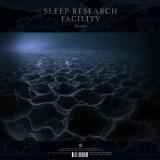
- 1: Sleep Research Facility - Sargo (20:32) (Side A) (Cd Track )
- 2: Llyn Y Cwn - Dale Dawn (:35) (Side B)
- 3: Llyn Y Cwn - Pebble (5:18) (Side B)
- 4: Llyn Y Cwn - Doppler Current Profiler (7:9) (Side B)
The ultimate deep listening experience from two masters of dark ambient. A slow descent into the blackened watery abyss, where light cannot reach. The first release from Sleep Research Facility since 2012's "Stealth" (Cold Spring) is inspired by the deep sea ocean floor. The Canadian-based composer explores notions of awareness and perception in the sub/unconscious listener. Focusing primarily on sound bereft of rhythm based energies, SRF provides an environments wherein the music adds texture to the silence. Using form without structure and concentrating on space as opposed to narrative, SRF entertains the idea that music can reside in the very fabric of sound itself. The brand new material here was created specifically for this split release.Taking inspiration from the beautiful, but often harsh landscapes and environments of his home on Anglesey, North Wales, Llyn Y Cwn has built on the nautical theme of "Du Y Moroedd" (Cold Spring). These tracks are based on field recordings relating to the ocean, and could be seen as a companion piece to the album. 'Dale Dawn' features a recording of the dawn chorus made from the floating pontoon at Dale, Pembrokeshire. 'Pebble' includes the sound of waves crashing on a Dorset cobble beach, thousands of rocks colliding in chorus. 'Doppler Current Profiler' is based on the sound of an ADCP, an acoustic sonar instrument used to measure water currents - a 600Khz ping slowed to a heartbeat. CD in mini-LP sleeve, replicating the vinyl design. The artwork features a separate front cover design with individual art for each side, making this a true split release.