Buscar:song sung

Estilos
Todo
DsorDNE - É Un Sole LP

Dsordne

É Un Sole LP

12inchDE206
Dark Entries
29.03.2018

DsorDNE (pronounced Disordine) is a project from Torino, Italy that evolved as group out of the electronic experimental post punk project Novostj in 1987. At the core of DsorDNE is Marco Milanesio, musical engineer and co-founder of the HAX record label, joined by a revolving cast of musicians. Their spectrum ranged from experimental to structured electro-poetry and Soundtrack like instrumental electronic music. In 1987 they released their first track on a split-single with The Legendary Pink Dots. Between 1987 and 1994 they released 6 full length albums, 3 split-EPs and appeared on various cassette compilations. à Un Sole (Itâs a Sun) was the groupâs only vinyl full length originally released in 1990 on HAX. Itâs 8 tracks of electro-beat poetry and experimentation recorded between July 1989 and January 1990 by Marco Milanesio (music) and Roberta Ongaro (vocals) with guests Claudio Burdese (guitar), Danilo Beltrame (guitar) and Cristiana Bauducco (vocals). The album is broken up into two distinct halves. Side A contains four chunks of hard hitting, percussive patterns and rushing bass sequences. Dark, moody female vocals force their monologues through the machinery in their native Italian tongue. The traditional song structure is carefully avoided by giving lyrics equal opportunities be they recited, half-sung, whispered or spoken. Side B displays moodier moments, less savage attacks and subtler sensuality, veering towards the more melodic and existential. All songs have been remastered by George Horn at Fantasy Studios in Berkeley. The record is housed in an exact replica of the original jacket featuring a black and white drawing with silver metallic spot color housed in a clear PVC plastic cover with a three color screen-printed design. Each copy includes a 11x11❠double-sided lyrics sheet with English translations as well an 8x11❠sheet with original press notes from 1990 by Marco Pustianaz.

Disponible

En el almacen y preparando para el envío

Ültimo hace: 83 Días
17,86 €
Selofan - Animal Metality LP

In the ever-evolving landscape of the underground music scene, few bands have made an impact quite like Selofan, an immensely talented duo of Joanna Pavlidou and Dimitris Pavlidis, has carved a niche for themselves within the international pantheon of darkwave, post-punk, and '80s synthpop, blending these influences to create a sound uniquely their own. Their journey, marked by a commitment to artistic integrity and evolution, has taken them from the cozy confines of local venues to the grand stages of international festivals, earning them a dedicated following and critical acclaim along the way. Their sixth album, Partners in Hell, released in October 2020, navigated the band through unprecedented times, testing their adaptability and resilience. Despite the hurdles to performing live and the global pandemic's challenges, Selofan emerged stronger, embarking on international tours with a newfound appreciation and connection with their global audience, during this period of introspection and isolation, Joanna Pavlidou embarked on a new venture, GIOVANNA, released under Selofan’s house label, Fabrika Records. GIOVANNA, which places Pavlidou at the helm of vocal and lyrical composition, represents a full on foray into synth-pop. showcasing a different facet of her artistic identity, with lyrics entirely in Greek. In 2023, Selofan hit the circuit hard, lighting up revered festivals with their presence. They stood shoulder to shoulder with heavy hitters like Molchat Doma and Lebanon Hanover at Grey Scale and performed with with the likes of The Sisters of Mercy, VNV Nation, and She Past Away at the Death Disco fest in their hometown of Athens. With each album they have released Selofan made significant strides in their evolution, deepening their engagement with their art. And their forthcoming seventh full length studio release, Animal Mentality, is poised to be their most compelling work yet. Animal Mentality unfolds as a labyrinthine journey through the elemental aspects of human emotion and experience, set against the backdrop of Selofan's signature darkwave sound. Each track on the album delves into different facets of the human condition, from the depths of desire to the pangs of isolation, encapsulating the duo's profound understanding of the intricate spectrum of human emotion and subjective experiences. The album kicks off with "Sticky Fingers," a track that melds cinematic scope with a haunting storyline, reminiscent of Jean-Michel Jarre's icy synths and a lyrical nod to Joy Division. This opening salvo revisits the tragic allure of classic car accident songs, weaving a tale of joy turned to sorrow amidst the snowy Alps. "Love's Secret Game" delves into the depths of forbidden desire, with vocals that echo the melancholy timbre of Xmal Deutschland, Lebanon Hanover, and Nico. It's a tale of passion and ephemeral connection, promising an enduring presence despite the inevitable fracture of time and distance. In "Lucille," sung by Dimitris Pavlidis, the plot is ensnared in the machinations of a tempestuous affair, with gothic undertones evoking the dramatic soundscapes of Ultravox and Clan of Xymox. The lyrics are steeped in danger and desire - a dance with the shadows. "Sacrifice Me" plunges into the abyss of despair, driven by a Bauhaus-esque bassline. It's a plea for release from the chains of alienation, a yearning for a final gesture of solace in the face of overwhelming darkness. "Bluebirds" offers a poignant reflection on solitude, with the fleeting imagery of bluebirds symbolizing the elusive quest for happiness. The song serves as a meditation on the internal struggle to maintain hope in a world shaded by sorrow. The narrative shifts with "Glassplitter," where German lyrics paint a portrait of deceptive allure and toxic entanglement. We are confronted with irresistible danger, masked by a veneer of beauty. "Ignoranz" continues the exploration in German, pondering the universality of misunderstanding. It's a reflection on the subjective nature of truth and the shared human experience of ignorance. "Behind My Eyelids" closes the odyssey, a contemplation on melancholy and metamorphosis. The phoenix rises from the ashes of betrayal to the brighter realm of renewal - a beautiful homage to the resilience of the human spirit amidst the often harrowing cycles of life. More than just an album, Animal Mentality is a milestone in Selofan's career, marking a decade of musical innovation and growth. It's a testament to their enduring spirit and a bold step into new realms of artistic expression. As Selofan continues to evolve, they remain at the forefront of their genre, pushing boundaries and exploring the depths of the human psyche through their haunting melodies and poignant lyrics.

Reservar21.09.2026

debe ser publicado en 21.09.2026

26,01 €
Quinie - Forefowk, Mind Me LP

The record is largely sung in Scots language, one of Scotland’s three official languages along with Gaelic and English. “Scots gives me a way of expressing myself which is connected directly with the landscapes I love. It brings the songs alive and it is a fascinating language. The name of the record is in Scots - Forefowk means the people who came before, or ancestors. When we say ‘mind me,’ we can mean a few things- remind, remember, watch over or care for me. The record explores how tradition needs to be constantly reconnected with, built upon, looked after, and shared.”
Quinie sings with a style inspired by Scottish Traveller singers. “I began singing unaccompanied Scots Song in 2015 after hearing Scots Traveller singer Sheila Stewart on the radio. Initially I felt like I shouldn't sing these songs because I'm not a Traveller, and I saw people around me doing that in a way that made me uncomfortable. But on the other hand this music made sense to me and I felt driven to learn. Over the years I have met Traveller friends who taught me that settled people sharing these songs could contribute to raising awareness. Scottish Travellers are marginalised and discriminated against in modern Scotland, despite being custodians of so many of our important traditions. So I started to perform them and tell this story. From there I built on my repertoire and started writing my own songs”.
To develop this record, Quinie travelled across Argyll with her horse. They went on a pilgrimage of sorts through the ancient landscapes of the West of Scotland to explore the interconnected relationships between people, ancestors, animals, and place. The album’s vinyl release is accompanied by a book and film, documenting this unusual research process.
Forefowk, Mind Me was recorded in August 2024 at The Big Shed in Highland Perthshire with support from Creative Scotland. Quinie is accompanied by an ensemble of musicians: Ailbhe Nic Oireachtaigh (viola), Oliver Pitt (duduk, bouzouki, percussion), Harry Górski-Brown (small pipes, violin), and Stevie Jones (double bass, recording, and mixing). Each of these artists brings their own distinctive voice, bridging contemporary experimental practice with worlds of traditional and early music.

Reservar18.09.2026

debe ser publicado en 18.09.2026

41,13 €
Railcard - Two Steps At A Time LP
  • 1: Two Steps At A Time
  • 2: 196 Forever
  • 3: Hillman Minx
  • 4: Flannelette
  • 5: Foxy
  • 6: I’m A Disaster
  • 7: Paper Thin
  • 8: Unstable Neighbour
  • 9: Runaround
  • 10: When You Say You Love Me
  • 11: Snow Blind
  • 12: Sunday Sun

You have to wonder why Railcard took so long to be born: their debut album feels like it should have been in your collection for years.


But it wasn’t until 2025 that Rachel Love (Dolly Mixture), Ian Button and Peter Momtchiloff (both Heavenly) met at a gig, realised that they were exactly the same age, and decided that this was an excellent reason to form a new band. The shared history, the same pop references, the parallel lives… Railcard had to happen, and there was no time to lose. Two Steps At A Time - the album title and theme song - express exactly how quickly Railcard have worked since then - jumping over pavement cracks and whistling past graveyards to get these songs written, recorded and released while they are still sweet and fresh.


The band released three digital EPs in early 2026, which were then gathered onto a CD and released by Skep Wax and Slumberland. They sold out very quickly. The critical response to a mail-order-only CD was far greater than anyone expected.


Railcard made their live debut in December 2025 and had by then recruited their fourth member: Allison Thomson (Trash Can Sinatras, The Love Band), whose flawless trumpet and swirly keyboard-playing complete the Railcard sound, allowing the band to fulfil the significant ambition and range of the songs, which are mostly co-written and often co-sung by Love and Button. “Flannelette” and “Sunday Sun”, delicate and swoony, could almost be Slapp Happy at their most Bacharach. “Foxy”, mysterious and charming, has more than a hint of Kate Bush December magic. The raucous duet “I’m A Disaster” is The Kinks meets deadpan Shangri-Las. The title track could have been an alternative theme tune for Whatever Happened To The Likely Lads. “Runaround” is like a school choir doing The Raincoats. “Unstable Neighbour” is mesmerising and insistent: it might make you think of Stereolab; we might imagine an indiepop Hawkwind. Peter Momtchiloff also contributes two wonderful songs on the album: the fragile and hallucinatory “Paper Thin” and the Love-meets-Undertones rush of “Hillman Minx”.


As with the first EPs, Railcard enlisted the sonic services of Medway psych expert Allan Crockford (of The Prisoners, James Taylor Quartet and many more) who has delivered mixes that pump with vintage valve energy and reverby depth.


Railcard have a string of UK dates through the summer and Autumn.

Reservar18.09.2026

debe ser publicado en 18.09.2026

23,95 €
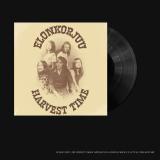
Elonkorjuu - Harvest Time

Elonkorjuu

Harvest Time

12inchSRE168LPRE
Svart Records
11.09.2026
  • 1: Unfeeling
  • 2: Swords
  • 3: Captain
  • 4: Praise To Our Basement
  • 5: Future
  • 6: Hey Hunter
  • 7: The Ocean Song
  • 8: Old Man's Dream
  • 9: Me And My Friend
  • 10: A Little Rocket Song
También disponible

Violet Vinyl[26,47 €]


Finnish prog-psych masterpiece Harvest Time by Elonkorjuu reissued in September The original pressing of Elonkorjuu's debut album Harvest Time is among the most valuable collector’s items in Finnish rock; its average price in 2026 is over 1200 euros, and even 1500 euros have been paid for a mint copy. Recorded almost entirely live and originally released in 1972, Harvest Time is a best kept secret for many Scandinavian Prog aficionados. Inspired by groups like Cream and Free with a more progressive and free-jam style, Elonkorjuu is one of the few bands that successfully progressed the whole heavy Blues/Psych Rock style in a way that made them unique and ahead of their time. Drawing influences initially from the schools of bands like Sabbath and Colosseum but expanding them with soulful church organ and cutting guitar from bandleader Jukka Syrenius, Harvest Time is entirely worth its reputation as a sought after treasure. A killer album from beginning to end. Heavy guitar work all over with great vocals sung in English, which is rare for a Finnish band of this era. After the sold out 2017 and 2021 reissues by Svart and due to a constant high demand, Harvest Time will be available on wax and CD again in September. If you have a place in your heart for the shadowy and mysterious world of early heavy progressive rock, then it’s probably Harvest Time for you!

Reservar11.09.2026

debe ser publicado en 11.09.2026

25,63 €
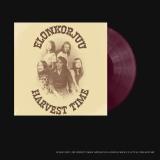
Elonkorjuu - Harvest Time

Elonkorjuu

Harvest Time

12inchSRE168LPB2
Svart Records
11.09.2026
  • 1: Unfeeling
  • 2: Swords
  • 3: Captain
  • 4: Praise To Our Basement
  • 5: Future
  • 6: Hey Hunter
  • 7: The Ocean Song
  • 8: Old Man's Dream
  • 9: Me And My Friend
  • 10: A Little Rocket Song
También disponible

Black Vinyl[25,63 €]


Finnish prog-psych masterpiece Harvest Time by Elonkorjuu reissued in September The original pressing of Elonkorjuu's debut album Harvest Time is among the most valuable collector’s items in Finnish rock; its average price in 2026 is over 1200 euros, and even 1500 euros have been paid for a mint copy. Recorded almost entirely live and originally released in 1972, Harvest Time is a best kept secret for many Scandinavian Prog aficionados. Inspired by groups like Cream and Free with a more progressive and free-jam style, Elonkorjuu is one of the few bands that successfully progressed the whole heavy Blues/Psych Rock style in a way that made them unique and ahead of their time. Drawing influences initially from the schools of bands like Sabbath and Colosseum but expanding them with soulful church organ and cutting guitar from bandleader Jukka Syrenius, Harvest Time is entirely worth its reputation as a sought after treasure. A killer album from beginning to end. Heavy guitar work all over with great vocals sung in English, which is rare for a Finnish band of this era. After the sold out 2017 and 2021 reissues by Svart and due to a constant high demand, Harvest Time will be available on wax and CD again in September. If you have a place in your heart for the shadowy and mysterious world of early heavy progressive rock, then it’s probably Harvest Time for you!

Reservar11.09.2026

debe ser publicado en 11.09.2026

26,47 €
Josephine Foster - No Harm Done
  • A1: Freemason Drag
  • A2: The Wheel of Fortune
  • A3: Conjugal Bliss
  • A4: Love Letter
  • B1: Sure Am Devilish
  • B2: Leonine
  • B3: How Come, Honeycomb?
  • B4: Old Saw

2020 album from Colorado’s freewheelin’ melodist Josephine Foster. Revolving between her adopted Spain and her native American West, Josephine was stationed this spring in Nashville with maverick guitarist and comrade-in-arms Matthew Schneider. The result: ‘No Harm Done’, a spacious and enveloping love letter of an album. Eight new slow-burning songs branch forth from idiosyncratic country folk blues, sung with sibylline wit and a hint of the absurd, awash in sensually anachronic lyricism. “The Wheel of Fortune”, nearly a title track by virtue of its refrain: 'No harm will come/if there's no harm done', are words of a homebound wanderer finding refuge in healing stillness with her beloved, having 'time to kill' in the midst of 'hard times to feel at home'. All delivered with calm sagacity upon the pedestal of Mr. Schneider's pedal steel and underscored by a knowing trebled chorus in Foster's lower register. Going nowhere never felt like so righteous of a destination before. Devotion in all its permutations, spiritual to carnal, are seamlessly explored. In 'Conjugal Bliss', overtones of the 12-string and autoharp gently interplay, sounding like some unearthed Carter family wedding hymn (it bears the subversive subtitle '69' ) while 'How come, Honeycomb?' bounces low in the hips like a sultry old music hall number à la Harry Nilsson. The obliquely sapphic 'Leonine', it's unquiet harp scaling right out of ancient Lesbos, dreams of a kingless land; in 'Sure Am Devilish', a stargazer humbly confesses to a lowercase lord. 'Old Saw', the mesmeric album closer, is a medium's petition to cross the threshold and merge with the holy spirit. Josephine's enigmatic voice captured once more by frequent co-producer Andrija Tokic in his analog Bomb Shelter studio, where layers of her guitar, piano, organ entwine with Schneider's 12-string, pedal steel and electric bass to rouse a spectral yet full blooded band. The ensuing cycle of songs pulse and glow within the ruins and deep fundamental roots of American song. “Remarkable, ghostly music” The Guardian.

Reservar11.09.2026

debe ser publicado en 11.09.2026

14,71 €
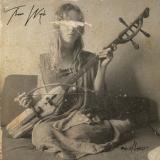
Thorn Wych - Aesthesis LP
  • A1: Ouch Epi Pote
  • A2: Out of the Eater Came Something to Eat
  • A3: The Blue Rose of Forgetfulness
  • A4: Longing Song
  • A5: Serpent Psalm
  • B1: Auld Haunt
  • B2: Ramble in the Brambles
  • B3: May the Immortal Amma keep you seated
  • B4: There is Nothing in the Well
  • B5: Anaro Knows

LP includes double-sided print insert. Thorn Wych makes instruments from tree branches; bowed strings, flutes and percussion that she runs through a chain of loopers, pitch bending glitches and delay pedals. Strange songs sung in tongues, mashed up chewed and spat out. As the adder weaves her way through the dirt and mycelium hum, we play in the mud and converse with insects. 'Aesthesis' is Thorn Wych's debut LP that she recorded and mixed herself at home, often performing long improvised pieces, then later editing them down, cutting and pasting and overlaying other instruments. This album takes inspiration from such works as 'The Secret Book of John', the 1940 film 'The Thief of Bagdad', and Lata Mangeshkar's 'Meera Bhajans'. She dedicates her work to the Divine Mother Asherah, Holy Spirit, Guardian of the Tree of Life.

Reservar04.09.2026

debe ser publicado en 04.09.2026

23,95 €
Hot Mulligan - You'll Be Fine LP

Repress of full length album from the awesome emo-rockers Hot Mulligan, following on from their 2018 acclaimed record Pilot. If you're into the likes of The Hotelier, Spanish Love Songs, Tiny Moving Parts or Free Throw should definitely check this out.


Hot Mulligan writes songs for people to sing as loud as possible. Their music is the cathartic outcry for growth from a generation of forward-thinking Midwesterners caught in the gears of a rusted system in desperate need of hope. The members - Tades Sanville, Chris Freeman, Ryan Malicsi, Garrett “Sniff” Willig, and Brandon Blakeley - use songwriting to explore the lessons they’ve learned from lives lead in the pursuit of dreams with full awareness of the cost.

Reservar28.08.2026

debe ser publicado en 28.08.2026

28,99 €
DAILY TOLL - SING FOREVER (SINGING IS FREE): SONGS FROM 2021-2023
  • 1: PREAMBLE
  • 1: 2CHERRY TREE
  • 1: 3SUMMER RAIN MURDER SCENE
  • 1: 4STUCK IN THEE BATH
  • 1: 5U CAN'T UNHEAR WHAT'S BEEN SUNG THE VIRGIN
  • 1: 6THAT HOUSE ON MY STREET
  • 1: 7TREE PEOPLE

Sing Forever (Singing Is Free): Songs from 2021-2023 meets us as a foreword to A Profound Non-Event, Daily Toll's debut album from 2025. Offering an earlier chapter in the ever-growing songbook of the Sydney/Gadigal-based group, Sing Forever... is a collection in demo-form that maps their initial formative period as a duo, largely marked by Covid-era isolation, diabolical housemates, sonic experiments and copious amounts of wine sourced from Kata's job at the time. As bowerbirds of song, Kata and Jasper are making sounds from their own pocket - their world! - singing from nowhere to no-one from (in) a context of global upheaval, loss and mass confusion. Here we find the urge to sing forever, to share a morsel of spirit, and with it a mode of grounding one's humanity. The songs are loose, off-beat and textural, a period of "first thought, best thought" in boundless practice that finds inspiration from all over: a bracelet and a solo afternoon in Budapest; lyrics formed via a black-out poem scrawled across the page of a Neil Young biography; the scratch of paper daisies, toy drums, typewriters, and pots and pans all welcome melodies repeating and fumbling unto themselves until ultimately falling apart and into something else. These songs were never initially intended to find a physical release or to even be distributed further than the Bandcamp void, and yet here we arrive at a kind of essence of Daily Toll, or at least one iteration thereof, before the studio, before the additional band members, and before being known (perhaps, even loved) by more beyond. Sing Forever (Singing Is Free): Songs from 2021-2023 was initially released as a seven song cassette that came with early copies of A Profound Non-Event. Now with the addition of an extra song and a remastering by Mikey Young, it is now released as a limited 12" LP via Tough Love in a ww ltd edition of 275 copies.

Reservar21.08.2026

debe ser publicado en 21.08.2026

27,52 €
Wiregrass Sacred Harp Singers - Songs From The B. F. White Sacred Harp (Tape)
  • 01: The Happy Sailor
  • 02: Blooming Youth
  • 03: Weeping Pilgrim
  • 04: There We Our Jesus Shall Adore
  • 05: Bound for Canaan
  • 06: Cuba
  • 07: Firm Foundation
  • 08: Florida
  • 09: Desire For Piety
  • 10: Ragan
  • 11: Struggle On
  • 12: Ninety-Fifth Psalm
  • 13: Fallen by the Way
  • 14: Happy Home
  • 15: Coronation
  • 16: The Dying Boy
  • 17: The Fathers Boundless Love
  • 18: The Christians Flight
  • 19: Give Me Just a Little More Time

Recorded April 17 and 18, 1993, at the Union Grove Baptist Church, Ozark, Alabama.

The Wiregrass Singers' Dewey Williams began learning the shape-note tradition in his childhood. He studied under Judge Jackson, who authored the landmark 1934 hymnbook The Colored Sacred Harp. In 1971, Williams formally organized The Wiregrass Sacred Harp Singers to preserve the music full-time. This unified troupe began touring nationally and leading workshops, which ultimately launched them onto stages at the Smithsonian and Newport folk festivals up until Williams' passing in 1995 when the group disbanded. The African-American Sacred Harp tradition in the Wiregrass region has steeply declined since the start of the 21st century, due to an aging generation of singers, and today it is largely sustained through archival preservation and occasional multi-book singing meetups.

This raw recording, made at the Union Grove Baptist Church, Ozark in mid-April 1993 finds the group singing from B. F. White’s The Sacred Harp (1844), which together with his brother-in-law William Walker’s Southern Harmony (1835) formed the musical backbone of generations of Southern music and Southern musical styles.

"On almost any Sunday between the months of March and October, the season most conducive to travel and outdoor dinner-on-the- grounds, Sacred Harp devotés join with fellow songsters at the County Line Church in Slocomb, or the Mount Sinai Church in Henry County, or the Union Grove Baptist Church in Dale County, or at any one of a dozen or so churches in the southeast Alabama counties of Barbour, Coffee, Dale, Geneva, Houston and Pike, to form the square and sing fa-sol-la. Approximately fifteen African-American Sacred Harp singings occur annually in the Wiregrass region of southeast Alabama. A singing tradition characteristically associated with white culture in the Deep South, southeast Alabama has enjoyed a vibrant African-American Sacred Harp tradition for well over a century.

On a day of a typical African-American Sacred Harp Singing, the participants arrive casually in the late morning, seat themselves in the square according to voice part, and begin to sing. A dinner break occurs in the early afternoon, and the singers enjoy a covered-dish "dinner-on-the-grounds" (or in the church basement) prepared by the women. The most intense and emotional singing typically occurs after the dinner break. Each singer takes a turn leading the song of his choice. He walks to the middle of the square, calls out the song's page number and waits for the designated tuner to key the song. Singers are discouraged by the other singers from repeating a song that has already been sung, or "used." This proscription is often dispensed with, however, if the singer is particularly young, particularly old, or if the song has special significance to the individual song leader (perhaps the favorite song of a recently deceased relative).

Every singer is given an opportunity to lead a song. Often, older or more infirm singers will request younger singers to lead their songs for them. The motions of the song leaders are highly stylistic and often emotional. Young children are taught in singing school to mark time with their right arm while holding the book in their left. Typically, a singer will stand in place at the center of the square while leading the singing of the notes. When he begins to lead the lyrics portion of the song, he will often begin to "walk time," rhythmically pacing from one side of the square to the other, being careful never to turn his back on the tenor section. This "walking time" is unique to the African-American tradition. As a singer grows more confident he develops his own distinctive leading style. During fuguing songs in particular, he may gesture to each section of the square as its part joins in. Skilled song leaders often elicit applause or other emotional responses from the group. Occasionally a singer may fall into a state of spiritual ecstasy and "get happy." The episode might include a personal testimonial followed by a repeat of the last verse or refrain from the previous song. The singings break up around 5 P.M."
—Henry Willett, 1997 credits

Reservar07.08.2026

debe ser publicado en 07.08.2026

16,77 €
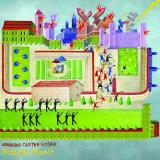
Creekbed Carter Hogan - Peasants Revolt LP

The world is ending, and rent is due. The empire is crumbling, and you’re late refilling your meds. War is ceaseless, pandemics go unchecked, billionaires poison the well water and cops abduct neighbors while wildfires burn… but here at the hot dog stand, relief and joy are yours for five buck ninety-nine.

This is PEASANTS REVOLT, the latest album from trans folksinger Creekbed Carter Hogan. Playing the part of court jester in the halls of a dying empire, Hogan croons, hollers, and grins in the face of despair as we feast together on one last humble supper before everything falls apart.

A rollicking medieval-Americana manuscript, Hogan’s new work anchors itself in transitions. PEASANTS REVOLT was written living and moving between the North and the South; sung by a body both pre- and post-trans affirming healthcare; and recorded during a time of genocide, federal occupation, and workers’ uprisings. Decorating its margins are influences spanning time and medium. Here, 14th century king-killer ballads sit next to Appalachian strike songs. Labor and union songs find kinship with Ethiopian jazz records. Hogan’s work echoes with historical struggle, too, from the Haitian Revolution to the struggle for trans rights to the surreal futurism of Rio Grande Valley writer Fernando A. Flores. This album takes the entwinement of the personal and the political seriously, a path often walked by everyone from Hazel Dickens and John Prine to ANOHNI. The 10 tracks of PEASANTS REVOLT are themselves endlessly transitioning, hinging on mid-song shifts and building into wildfires that crackle and sputter with the courage of momentum and catchy hooks. By centering this work so deeply in the tumult of change, Hogan illuminates all of capitalism’s attempts to isolate us — and the power that we regain when we refuse to face our lives and our selves alone.

Reservar07.08.2026

debe ser publicado en 07.08.2026

28,15 €
The Story So Far - Under Soil And Dirt
  • 1: Roam
  • 2: Daughters
  • 3: States And Minds
  • 4: Mt. Diablo
  • 5: Quicksand
  • 6: Four Years
  • 7: Swords And Pens
  • 8: Rally Cap
  • 9: Placeholder
  • 10: High Regard
  • 11: Closure

The debut album from The Story So Far. These 11 songs do burst with the cathartic desperation of the former and the boundless urgency of the latter. Rough but catchy, raw but well-recorded, songs such as “High Regard” and the terse, broken-hearted indictment of “Mt. Diablo” threaten to burst with youthful, angst-ridden aggression. While these are powerful, punchy anthems, there are subtleties and nuances in the arrangements that elevate the likes of “Quicksand” and “Daughters” to be more than just another batch of angry songs sung by frustrated young men. Under Soil and Dirt 10 Year Anniversary Picture Disc - Limited to 5000 - Die Cut Gatefold Jacket - Screenprinted Slipmat

Reservar31.07.2026

debe ser publicado en 31.07.2026

27,31 €
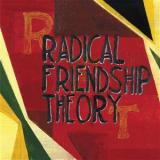
RADICAL FRIENDSHIP THEORY - RADICAL FRIENDSHIP THEORY
  • 1: CONSIDERING
  • 2: THINGS TO DO IN WINTER
  • 3: LISTEN TO THE NEWS
  • 4: RADICAL FRIENDSHIP
  • 5: THE WORDS
  • 6: THE MORE THAT I THINK ABOUT WHAT WE SHOULD DO
  • 7: STAY WITH US
  • 8: ACROSS THE GREAT DIVIDE
  • 9: ALWAYS IN LANDSCAPE
  • 10: SENSE OF TIME
  • 11: NOBODY WANTS TO LIVE IN THIS HOUSE ANYMORE
  • 12: IS THIS REAL ENOUGH?

In den letzten paar Jahren haben wir alle den Sinn für die Zeit verloren, aber es muss so um 2023 herum gewesen sein, dass Robert Rotifer, Journalist, Singer-Songwriter und zeitweiser Gitarrist/Bassist bei allen möglichen Bands, von Louis Philippe & The Night Mail über Swansea Sound, Penrose Web, Papernut Cambridge, André Heller, Keiron Phelan bis hin zu Fay Hallam's Band, seinen Freund Kenji, Ex-Sänger der deutschen Sunshine-Pop-Sensation Friedrich Sunglight, fragte, warum er eigentlich in keinen Bands mehr singt. Das war der Auslöser einer Zusammenarbeit, aus der zuerst langsam, dann immer schneller, eine üppige LP gewachsen ist, auf der neben Robert & Kenji noch der elegante post-Glam Veteran John Howard, das große junge Wiener Talent Leo Schlager alias The Zew, die lebende She-Punk-Legende Helen McCookerybook und der beliebteste singende Drummer der britischen Indie-Szene Ian Button zu hören sind. Die ursprüngliche Idee war, dass Robert Songs für Kenjis glockenklare, wendige Stimme schreiben sollte, was stilistisch automatisch eine melodiöse Baroque Pop-Richtung suggerierte. Als nächstes entwickelte sich ein textliches Thema, vom Opener "Considering", einem Lied an einen Freund, der seinen Weg verloren hat, über Songs der Ermutigung ("Things to do in Winter", "Stay With Us", "The More That I Think About What We Should Do") zu Songs über den feindseligen Zustand der Welt ("The Words", "Listen to the News", "Sense of Time"). Was für Rotifer als eine Reihe von Heim-Demos an Gitarre und Tasten in ungewohnten Tonarten (für Kenjis Stimme) begann, wuchs bald zu größeren Arrangements heran, angereichert durch Ian Buttons Drums, seine Stimme, weitere Instrumente und sein Ohr für einen guten Mix. Kenji und Rotifer hörten noch mehr am Horizont und beschlossen, dass dieses Material noch mehr verschiedene stimmliche Schattierungen gebrauchen konnte. Während Robert seine über den Kontinent verstreuten Freund:innen John (Südspanien), Helen (London) und Leo (Wien) für Vocal-Takes gewinnen konnte, die Ian in den Mix einfließen ließ, schrieb Roberts Tochter Emma gerade eine Seminararbeit an der Uni darüber, wie in der Independent-Musik-Szene Arbeit organisiert ist. Sie kam zu dem Ergebnis, dass das Musiker:innen-Netzwerk, in dem ihr Vater sich herumtreibt, einer Theorie der gegenseitigen Unterstützung gleicht, die man "Radical Friendship" nennt. Also widmete Rotifer dieser Idee noch einen Song, den er diesmal selber sang (nebst dem Schluss-Song "Is This Real Enough?"). Am Ende ergab es sich, dass alle Beteiligten auf jeweils einem Track die Haupt- oder Nebenstimme und auf allen anderen Songs unterstützende Harmonien singen. Auf diese Weise wurde das Album per se zu einer Verkörperung von Radical Friendship, nicht in der Theorie, sondern in der Praxis. Radical Friendship Theory is keine Band. Es ist ein liebevoll arrangierter Reigen von Songs in vielen verschiedenen Stilen, von Baroque Pop zu Psychedelia, Power Pop, Country Rock bis zu Bücherwurm-Indie, interpretiert von einem Kreis von Freund:innen, der sich immer erweitern und wandeln kann. Rotifer, der während der Fertigstellung des Albums von Canterbury nach Berlin gezogen ist, wird diese Songs in verschiedenen Städten mit verschiedenen Musiker:innen spielen, von Wien über London bis Glasgow, Hamburg, wahrscheinlich Berlin und Paris, wo immer seine radical friends zuhause sind. Indessen bringt das britische Label Spinout Nuggets die Studio-Version des Stoff in seiner Original-Besetzung heraus - eine Zelebrierung menschlicher, kreativer Freundschaft als lebensrettende Alternative zu einer Welt der digitalen Pseudokommunikation und künstlich geschürter Konflikte.

Reservar31.07.2026

debe ser publicado en 31.07.2026

26,01 €
LOS CAMPESINOS! - We Are Beautiful, We Are Doomed... LP

For the first time ever, Los Campesinos! are proud to offer new pressings of their first three studio albums on their very own record label; Heart Swells.
2026 marks the 20th anniversary of LC!’s formation, and coincides with the band being more popular and relevant than ever before. The 3 albums are available for the first time since 2020, on brand new colour ways, on 12” vinyl and CD, with updated artwork and packaging.

What the press said:

“a messy, glorious, noisy document of internet café-era indie life that sounds best when sung by heart.” 8.3/10 - Pitchfork

“full of half-heartfelt, half-hilarious songs that capture the rush of being young in a noisy new century.” - 10/10 - Entertainment Weekly

“smart, immediate, and anthemic” - 10/10 - The AV Club

Reservar31.07.2026

debe ser publicado en 31.07.2026

21,81 €
Holybrune - Joyride (2026 Edition)

After her featurings on the king of funk' tracks, Dabeull (DX7, You & I, Day & Night), the french r'n'b singer Holybrune returns with a solo EP 'JoyRide'. Sung in English and French and composed by Dabeull and Rude Jude, this new project is a 90's funk drive into the summer heat. Out on eponym label : Dabeull Records.

No en stock

Haga su pedido ahora y le encargaremos el artículo en nuestro proveedor.

Ültimo hace: 7 Días
25,00 €
Sessa - Grandeza LP

Sessa

Grandeza LP

12inchMEX3651
MEXICAN SUMMER
10.07.2026

Grandeza, the debut album by Sao Paulo’s Sessa, points to new, subtle directions for modern Brazilian music – a deep, minimalist, almost insinuated use of the rich textures that define the songwriting history of Brazil, one which Sessa now joins among its most promising new voices. His songs are sung in Portuguese, with visceral, sensual lyrics in the vein of Caetano Veloso, and the melodic flourishes of Tom Jobim and Arthur Verocai.

However, the music gets a deliberate minimalist treatment rarely found in contemporary Brazilian music, more reminiscent of the bareness of Leonard Cohen, with touches of tropicalia, psychedelia, and the mystic jazz of Moondog and Pharoah Sanders. Recorded in various locations between São Paulo and New York City.

Reservar10.07.2026

debe ser publicado en 10.07.2026

26,68 €
Various - Tchic Tchic: French Bossa Nova 1963-1974  Colored Edition LP 2x12"
 
22

Ever since the late 1950s bossa-nova revolution, Brazil’s influence on French music has been undeniable. Pierre Barouh, Georges Moustaki and a vast array of lesser known artists, all made the Musica Popular Brasileira (MPB) an axis of promotion at the service of a cool and metaphysical, modern and mixed Brazilian lifestyle. Some were seduced by the poetic languors of the bossa, some were looking for fun, and others just loved the American hybridization of jazz-bossa, jazz-samba.


What is bossa nova? One of its creators, Joao Gilberto said: "Its style, cadence, everything is samba. At the very start, we didn't call it bossa nova, we sang a little samba made up of a single note - Samba de uma nota so .... The discussion around the origins of bossa nova is therefore useless”. It is nevertheless useful to remember that these magnificent Brazilian songs, which the guitarist describes as samba, were shifted and balanced around improbable chords. "I like things that lean, the in-betweens that limp with grace," said Pierre Barrouh, quoting Jean Cocteau.


With emotion, arrangements for violin and supple guitar licks, bossa nova rapidly changed. A transformation that can be heard in the Tchic, tchic, French Bossa Nova 1963-1974 compilation, the result of a cultural reappropriation, which traveled through the United States and supplemented itself in France.

A musical revolution that has remained significant, bossa nova was born in Rio. From 1956 to 1961, Brazil lived through its golden years. In five years, the country had invented its modernist style. Elected president in 1956, Juscelino Kubitschek de Oliveira, an elegant man with a broad forehead, brandished a promising slogan: "Fifty years of progress in five years". He quickly got to work. Not worried about increasing debt, he launched the project for a new federal capital, Brasilia, designed by the communist architect Oscar Niemeyer. Volkswagen opened state-of-the-art factories and created the “fusquinha”, the Beetle. In Rio, the Vespa made its first appearance. The Arpoador Surf Club crew run into the “girl” from Ipanema, Helô Pinheiro - the tanned garota ("chick"), between a flower and mermaid, who at 17 walked by the Veloso bar, where the fiery author and composer, Tom Jobim and Vinicius de Moraes, were getting drunk on whiskey. From then on, bossa symbolized cool.

In 1958, Joao Gilberto recorded Chega de Saudade, which the directors of Philips denied, calling it "music for fagots". The marketing director, who believed in it, secretly pressed 3000 78-inch vinyls and distributed them at schools around Rio, creating a tidal wave.

American jazzmen then took over. In particular, trumpeter Dizzy Gillespie and guitarist Charlie Byrd. In November 1962, the Brazilian Ministry of Foreign Affairs funded a "Bossa-Nova" concert at Carnegie Hall in New York, inviting the genre’s pioneers. Unprepared, the show soon turned to disaster. But the troupe was invited to the White House by Jackie Kennedy. The first lady loved "the new beat" and in particular Maria Ninguem, a song by Carlos Lyra, later covered by Brigitte Bardot.

In Brazil, the 1964 military coup quickly ended this euphoria. The destructive atmosphere that ensued pushed many Brazilian musicians to leave, if not to exile. Thus, Tom Jobim, Sergio Mendes and Joao Gilberto arrived to the United States. In New York, Joao Gilberto met saxophonist Stan Getz. At the time, he was married to the Bahianese Astrud Weinert Gilberto, who had a German father. She had never sung before, but she knew how to speak English. Getz therefore asked her to replace her husband on The Girl From Ipanema. The Getz/Gilberto record with Tom Jobim on piano, was released in March 1964. Phil Ramone, the "pope of pop" was in charge of sound.

Bossa nova arrived in Paris through the classic “guitar-voice” channel (Pierre Barouh, Baden Powell, Moustaki…) But France loved jazz and Paris had already welcomed its American contributors. All these good people were to pass through Saint-Germain-des-Prés. The cabaret l'Escale became the Mecca of Latin American sound where one could find Pierre Barrouh and his friends, such as the Camara Trio, samba-jazz aces, whose only record was published by the Saravah label. With a band strangely called Les Masques (a band that included Nicole Croisille and Pierre Vassiliu, among others), the Camara Trio recorded an interesting Brazilian Sound, including the track Il faut tenir which is present on this tasty compilation of rarities.

Other enlightened musicians can also be found on the compilation, such as Jean-Pierre Sabar (songwriter for Hardy, Auffray, Leforestier ...) and the French pop rock organist Balthazar. In 1975, Sabar recorded Aurinkoinen Musiikkimatka on a Finnish label, which featured the crazy Vai, Vai, included on this record. We are now following the footsteps of Brazilian electronic musicians such as Sergio Mendes, Eumir Deodato or Marcos Valle who created funk and disco sounds on their keyboards and synthesizers. A style that influenced Véronique Sanson when she wrote Jusqu’à la Tombée de la nuit in 1969 for Isabelle de Funès, the niece of Louis and a great friend of Michel Berger - Sanson did end up singing this track on her 1992 Sans Regret record.


The pinnacle of exoticism and travel, Sylvia Fels’ Corto Maltese includes bongos, sea mist and ocean sounds. The title was taken from Jacky Chalard’s concept album written in 1974, Je suis vivant, mais j’ai peur (I am alive, but I am scared), based on Gilbert Deflez’s science fiction novel.


However, bossa nova extended the scope of popularity. "In the 1970s, I was a fan of Sergio Mendes, Getz / Gilberto. I fell in love with this music that I knew because I had been an orchestral singer, " explained Isabelle Aubret, who in 1971 delivered a composite record of covers by the very funky Jorge Ben, Orfeu Negro, Tom Jobim, Vinicius de Morais and Jean Ferrat. "I recorded this album for Meys Records in Paris, far from Brazil, with wonderful musicians, François Raubert, Roland Vincent, Alain Goraguer...". The latter wrote the arrangements for Casa Forte, a very percussive title borrowed from Edu Lobo, one of the initiators of the bossa who spent time in California. "Jazz and bossa came together and produced very rhythmic music. I love singing, it allows me to dream, to have fun, to feel a high on stage, and these songs brought me joy, made me swing, my singing felt like a dance.”


The world tours of French singers and their desire for the tropics, often brought them to Rio with its hills, forests, caipirinhas and tanned bodies. There are surprises though, like this Iemenja (Iemenja is the goddess of the sea in the Afro-Brazilian candomblé religion). Not unlike the composer and musician Jean-Pierre Lang, based in Sao Paulo, Claire Chevalier taught Brazil to Brazil. In 1970, the singer and painter published a 45-inch vinyl, Mon mari et mes amants (My husband and my lovers), under the improbable pseudonym of Clarinha (little Claire). She was then living in Rio, with her husband, Joël Leibovitz, who founded a band called Azimuth, and who owned a record label specialized in "sambas enredos" songs for samba school parades.


For its B side, she asked Pierre Perret to come up with lyrics for a song composed by Carlos Imperial: "Oh goddess of the sea, o goddess Iemenja, I bring a white rose to adorn your long hair ..." . "Perret came to see us, and we had fun, remembers Joël Leibovitz. We wrote Lemenja for fun, we recorded it at the Havaí studio, behind the Central do Brasil the central station. Erlon Chaves, the arranger who worked with Elis Regina, joined us" adding his share of Afro-Brazilian percussions and funky brass to the mix.

There is a common misunderstanding in Franco-Brazilian history: that bossa, admittedly hedonistic, is perceived as funny, even though the poets who wrote the texts are often philosophizing on the human condition. Its French interpreters pull it towards a carnival inspired universe, far removed from its fundamental essence. Thus, Jean Constantin covered the famous Samba da minha terra, an ode to the art of samba written by the classic Bahian composer Dorival Caymmi, renaming it with the enticing title of Pas tant de tchi tchi pompon: "On your pier there is no tchi tchi / when you arch your back, you know everything is alright ”(lyrics by Gérard Calvi). This expedited bossa aims for the absurd, but retains a certain elegance.

Indeed, Jean Constantin was not an idiot, the rather large man had a huge mustache and liked fantasy, (Les pantoufles à papa, Le pacha, inspired by cha-cha-cha-cha, salsa and jazz) but he was also the lyricist of Mon manège à moi interpreted by Edith Piaf, the composer of Mon Truc en plume by Zizi Jeanmaire and the soundtrack of François Truffaut’s 400 Blows. Le Poulpe, published in 1970, from which this bossa is extract, was arranged by Jean-Claude Vannier, an accomplice of Serge Gainsbourg’s Melody Nelson. In short: "There is enough of samba / By looking at the parasol / Because my poor cabeza / Is going to die in the sun".

Even the American actress Marpessa Down, who was at the heart of the bossa nova revolution with her role as Euridyce in Marcel Camus’ film Orfeu Negro, winner of the 1959 Cannes Palme d'or, fed the clichée with Je voudrais parler au petit cuica - "Tell me how you manage to always make people want to dance / It's true, I must admit that I cannot resist your magic" - in consequence, once can hear the cuica, a little drum inherited from the Bantu.


But bossa nova had many angles. Societal, of course, pushing actresses who were symbols of women's liberation like Brigitte Bardot, Jeanne Moreau, or Sophia Loren to engage in the exercise of accelerated bossa. In February of 1963, Sophia Loren made a record in French in Rome, Je ne t'aime plus, featuring the song De jour en jour, a bossa written by two Italians, Armando Trovajoli and Tino Fornai, which was released a little later by Barclay. Bossa accompanied the 1960s, a decade of moral liberation. Ann Sorel, who interpreted La Poupée des favellas, caused a sensation with L’amour à plusieurs, a provocative song written by Frédéric Bottom and Jean-Claude Vannier. As for the actress Andrea Parisy, she displayed her bourgeois cheekiness in Marcel Carné's Les Tricheurs before interpreting Les mains qui font du bien. And Magalie Noël, the friend of Boris Vian, who sung Johnny fais-moi mal, was hired to sing Une énorme Samba, composed by Alain Goraguer (arranger to Gainsbourg, Bobby Lapointe and Jean Ferrat) with lyrics by Frédéric Botton.

But in the end, of what wood is bossa nova made of? The answer is given by Christianne Legrand, daughter of Raymond the conductor, and sister to Michel the composer: "With me, with jà" - jà means "immediately" in Portuguese. In 1972, the singer, an expert in vocal jazz and a member of the Double Six, published Le Brésil de Christianne Legrand. Two songs included on the Tchic Tchic compilation that demonstrate how bossa, jazz, funk, rock, etc. work like a swiss army knife: the music is used to denounce broken systems, or miracles, HLM et ciné roman, Cent mille poissons dans ton filet, two songs from the O Cafona soundtrack, a successful telenovela broadcast, at the time in black and white, on TV Globo. The first was adapted in French by the fighter and friend of the Legrand tribe, Agnès Varda. The second is content with a play on words, jostling them into a summer fun.


Véronique Mortaigne

No en stock

Haga su pedido ahora y le encargaremos el artículo en nuestro proveedor.

Ültimo hace: 81 Días
27,31 €
Dulce Neves - T'Chuba T'Chiba (7")

HOT CASA RECORDS is very proud to present two fantastic songs from 2007 by the great singer DULCE NEVES for the first time on vinyl .


Born on January 28, 1960, in Mansoa, in the Oio region, in northern Guinea-Bissau, Dulce Neves is one of the greatest voices in Bissau-Guinean music. Coming from a family of musicians, she began her professional singing career at the age of 16. After the country gained independence on September 24, 1973, she became the pioneer among female vocalists to join the famous group Super Mama Djombo (whose name references the protective god of warriors), with whom she recorded several albums delivering sublime, politically engaged music blending Tina and gumbe styles.


After completing primary school in Bubaque (an island in the Bijagos archipelago), then secondary school at the Kwame Nkrumah national high school in Bissau, and secretarial courses in 1976, Dulce Neves spent ten years working at the National Bank of Guinea-Bissau, all while continuing to sing.


In 1980, she decided to return to her passions — singing and music — and launched a solo career. Four years later, she won the “Prix Calao,” followed in 1985 by the “President of Mali Prize.” It wasn’t until 1996 that Nha Destino arrived, her debut album with its afro-zouk-gumbe flavors, sung in Portuguese Creole. In 2000, Dulce Neves was appointed Ambassador of Modern Bissau-Guinean Music by President Kumba Yala.
In 2007, the album Mundo Rabiba was released, blending gumbe and afro-zouk — and it was a massive success, going gold that same year.

No en stock

Haga su pedido ahora y le encargaremos el artículo en nuestro proveedor.

Ültimo hace: 3 Meses
15,08 €
Ragnar Johnson & Ralph Harrisson - Ethiopian Musics 1971 LP 2x12"

For nearly four decades, since its founding during the mid 1980s, the Belgian imprint, Sub Rosa, has continuously plumbed the depths of numerous, radical creative histories, assembling a catalog of releases that has almost no equivalent, while remaining nearly impossible to nail down. That said, for most of its run, Sub Rosa has been primarily recognized for its rigorous explorations of the lesser explored shadows of experimental sound practice (sound-art, sound-poetry, early electronic and electroacoustic music, free-improvisation, etc.), delivering a remarkable body of artifacts that have collectively helped to rewrite history in their wake. While it's always been impossible to anticipate where the label might take us next, threading their catalog are plenty of releases that throw further wrenches in the cogs, expanding our understanding of what they pursue, as in the case of a handful of titles, appearing as early as the 1980s, dedicated to ethnographic field-recordings from various parts of the world. Among the most striking and celebrated of these was 2017's Ethiopian Urban And Tribal Music: Mindanoo Mistiru / Gold From Wax, comprising an astounding body of recordings made by Ragnar Johnson and Ralph Harrisson in Ethiopia during 1971, reissuing material originally released by Lyrichord the following year. Now, Sub Rosa returns to the incredible work embarked upon by the pair and captured on that same trip with Ethiopian Musics 1971, comprising the recordings originally released by Ocora shortly after their completion, expanded in this edition to include an entire disc of never before released music. Widely regarded as some of the most important field-recordings ever made of indigenous Ethiopian folk music (as captivating and intoxicating as they are revelatory: providing insights into the roots of the country's singular traditions of popular music and jazz that have come to be celebrated the world over), this incredible collection is issued by Sub Rosa in a beautifully produced 2LP edition, complemented by a four page insert providing detailed descriptions of each song, as well as notes by the ethnomusicologists and recordists, as well as a 2CD edition, with a twelve page booklet. Insanely good and absolutely essential for any fan of field-recording, ethnomusicology, the music of Ethiopia, or the label's mission at large. Once again, Sub Rosa has defied our expectations and delivered a remarkably important intervention in the history of recorded sound.

Located in the Horn of Africa region of East Africa, few cultures are distinctly singular, while being so diverse (containing 80 distinct ethnic groups who speak 70 languages and 200 dialects) as that of Ethiopia. The home to some of the oldest surviving sects of Judaism, Christianity, and Islam (each contributing important aspects of its collective cultural body), particularly the country's culinary and musical traditions have become celebrated the world over, and (generally speaking) feel entirely independent of those of its neighbors. Given this, it's unsurprising that, during the summer of 1971, the young ethnographer, Ragnar Johnson, accompanied by Ralph Harrisson, traveled to Ethiopia to begin his brief career as a field recording ethnomusicologist, capturing material on reels of magnetic tape that would be subsequently released across three LPs for Lyrichord and Ocora, respectively, coming to form a cornerstone of documentation and study of the country's many indigenous musical traditions, as well as providing wide, global access to them for the first time. While Johnson's recording career was relatively brief, ending toward the end of the decade when he began to focus more on teaching in UK universities, with a focus on the anthropology of art and social anthropology, his impact on the field was lasting. Between 1971 and 1979, in addition to those he made in Ethiopia, he made hugely significant recordings in Yemen (also issued by Lyrichord before being reissued by Sub Rosa) and Papua New Guinea, which were originally released by David Toop's Quartz Publications to wide celebration, before being revisited by Ideologic Organ in 2023.

While it's worth noting that commercial releases of ethnomusicological recordings by labels like Folkways, Lyrichord, and Ocora were still in their relatively early days when he entered the field, Johnson's recordings quickly stood apart for their vivid qualities and clarity of space, allowing them to stand the test of time. As he later stated: "I used a Uher Report L stereo tape recorder, BASF quarter inch tapes at a recording speed of seven and a half inches per second with two directional microphones mounted to record an isosceles triangle of stereo sound," he reveals. "The location of the microphones and musicians was critical. The musicians were fully informed of all aspects of the recording process."

Johnson's recordings are extremely vivid, there is a clear sense of space and the cries of the flutes exist across the entire stereo field. It's a reflection of Johnson's skill as a field recordist that his recordings continue to be reissued over forty years later. "I used a Uher Report L stereo tape recorder, BASF quarter inch tapes at a recording speed of seven and a half inches per second with two directional microphones mounted to record an isosceles triangle of stereo sound," he reveals. "The location of the microphones and musicians was critical. The musicians were fully informed of all aspects of the recording process… I used to enjoy being in the moment and hearing something wonderful despite the stress of the vigilance required to ensure that the recordings were accomplished according to plan. The responsibility is to record and document the music as effectively as possible so that it has been preserved for posterity. It is better to actually record music than to sit in a seminar room debating the ethics of recording music." It is this very ethos and sense of clarity that can be encountered across the length of Ethiopian Musics 1971.

For the sake of clarity, the two LPs of material that comprise Ethiopian Musics 1971 should be regarded as a single body of recordings alongside those made in Ethiopia by Ragnar Johnson and Ralph Harrisson during the summer of 1971 (previously issued by Lyrichord and reissued by Sub Rosa), and as two that have, until now, remained historically distinct. The first LP gathers that material released by Ocora during the early 1970s on Musiques Ethiopiennes, while the second comprises (as far as we can tell) twelve never before issued recordings, expanding the journey and making this the definitive edition of the release with its incredible total of 23 recordings of songs, allowing it ever greater scope to achieve the recordists' modus operandi of capturing the broadest and most diverse cross section of Ethiopia's many musical cultures, ranging from different forms of urban music captured in Addis Ababa, documenting largely orally transmitted idioms within which lyrical content is given greater emphasis than the instrumental components (played on masenko fiddles, craar and bagana lyres, washint flutes and kabaro drums), to folk idioms hailing from the Danakil desert and the border regions with Sudan and Kenya. There are songs sung and played in bars, divination chants, laments, dances, Christian songs, and Amharic sung poetry, to only begin to scratch the surface.

Ethiopian Musics 1971 is one of those rare albums where each musical moment is pure, intoxicating gold, while also being greater through the sum of its parts. There are the many songs, forming a rich tapestry of remarkable range across the respective two LPs/CDs (moments that wondrously flirt with sonic abstraction; hypnotic rhythms; pulsing chant; melodies that, in structural arrangement and tonal combination, help us reframe how such a thing might be understood, and a great deal more), each imbued with a remarkable directness and emotive sensibility, and there is the stunning quality of these recordings themselves, transporting each sound to our ears as though we intimately share its creator's space, while being imbued with the pure heart and remarkable spirit with which they were made. As we said before, it's little wonder, once heard, why these recordings and this music feels as fresh and relevant (enduring more than 50 years) today as when they were made. Once again, Sub Rosa has raised the bar with this essential addition to the incredible work that Ragnar Johnson and Ralph Harrisson did back in Ethiopia during 1971, radically expanding our access to the sounds that they captured with these stunning, beautifully produced 2LP and 2CD editions. Absolutely engrossing from the first sounding to the last, this one can't be missed.

Reservar26.06.2026

debe ser publicado en 26.06.2026

23,95 €
AARON MF OLSON - SONGS ALBUM II
  • 1: More Than a Life's Work
  • 2: Nobody Can Tell
  • 3: There Comes a Time
  • 4: The Small Planets
  • 5: Who Do You Think You Are I Am?
  • 6: Gilded Lawns of Summer
  • 7: Jennifer (Here With Me)
  • 8: We Welcome Our Travelers From the Wormworld
  • 9: The Punisher
  • 10: The Endless List of Anything

"Songs Album II" is LA musician Aaron MF Olson"s Country Thyme Records debut, the second "sung songs" album from the L.A. Takedown architect in just over a decade of releasing music. Mixing satiric, confessional and experimental lyric modes in his songs, Songs Album II is an overwhelming show of Aaron"s compositional gifts and pop sensibilities, cut from a fine cloth of head-informed, classically sweet and soft pop/rock modes. "Songs Album II" is a collection of widescreen, hi-def songs and sounds. With moments of sound laced into song, functioning both as toe-tapping sweet melodies and near-Joycean full-function index of personal reference, Aaron MF Olson"s music is meant for listening to in the spirit of listening, and higher calling.

Reservar26.06.2026

debe ser publicado en 26.06.2026

27,94 €
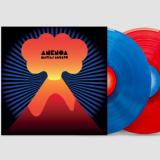
Matias Aguayo - Anenoa (LP 2x12")

Matias Aguayo

Anenoa (LP 2x12")

2x12inchSER003COLOR
SERENDEEPITY
19.06.2026

Matias Aguayo returns with Anenoa, a vibrant and imaginative new album arriving May 29, 2026. Known for continually redefining the possibilities of electronic music, Aguayo’s latest work expands his exploration of voice, rhythm, and collective experience — creating songs that invite participation as much as they reward listening.

Across more than two decades, Aguayo has remained one of the most inventive figures in contemporary electronic music. From co-founding the influential duo Closer Musik, to his long-standing creative relationship with Kompakt, and the creation of the genre-defying C meme label, Aguayo has consistently pushed dance music beyond convention — blending raw electronics, storytelling, humor, and performance into something deeply human and alive.

Now based in Mexico, Aguayo’s music has absorbed the vibrant energy of community-driven dance culture. Much of Anenoa is sung in Spanish and shaped by a spirit o collaboration that runs throughout the record. Long known for building creative communities through his label and performances, Aguayo brings together a diverse group o artists across Latin America, Europe, and beyond, turning the album into a constellation of voices and perspectiveS

No en stock

Haga su pedido ahora y le encargaremos el artículo en nuestro proveedor.

Ültimo hace: 3 Meses
23,49 €
Mick Harris / Martyn Bates - Murder Ballads [Incest Songs] LP 2x12"

Incest Songs is the final chapter of the Murder Ballads trilogy, and its most fully realized expression. Where Drift and Passages explored the post-isolationist frame through voice and single instrument, this third volume dispenses with that approach entirely, opening instead onto a more labyrinthine sonic architecture - one built from overlapping, saturating, blurring voices, all of them Martyn Bates'. The decision feels both inevitable and quietly inspired. Bates' vocalizations unfold as layered calls and responses, muted and distant echoes, sung whispers and counter-melodies, ultimately resolving into a mesmeric conversation of musical inferences and correspondences. There is a mellifluous, dream-like quality to the whole - infused with that characteristic stillness that slow, hypnotic unfolding of gossamer subtlety - yet never quite losing a certain drugged, disquieting beauty beneath its surface.

Incest Songs pushes the post-isolationist form further out than either of its predecessors, innovating and extemporising with a dazzling assurance. And yet, remarkably, this remains a territory still almost entirely unexplored by other artists - the sole province, it seems, of M.J. Harris and Martyn Bates.

As Bates himself reflects: "I feel, in personal terms listening to it, I think it's easy to detect that the whole thing has been a truly exhilarating experience for the both of us, realising and developing this strange, sublime creature of ours and now I guess it's up to others to take up the challenge, to build on what we've done and I think that there are still SO MANY fantastic possibilities "

No en stock

Haga su pedido ahora y le encargaremos el artículo en nuestro proveedor.

Ültimo hace: 26 Días
22,65 €
Yellow Days - Rock and a Hard Place LP 2x12"
  • A1: Roadkill
  • A2: Special Kind Of Woman
  • A3: Let Me Down Easy
  • A4: Glitter & Gold
  • B1: Sharon
  • B2: Love Is Getting Complicated
  • B3: Baby, I'm For Real
  • C1: I Cannot Believe In Tomorrow
  • C2: Worried I'll Break Your Heart
  • C3: Shoot Me With Your Love Gun
  • D1: Daylight Miracles
  • D2: California
  • D3: Can't Fight The Tears
  • D4: You Didn't Leave Me

Yellow Days' new album Rock And A Hard Place is a tour de force which sees George van den Broek returning to his soul roots, channelling everyone from Stevie Wonder to Gil Scott-Heron to his idol, Ray Charles, in a set of emotionally charged songs constructed with an attention to detail worthy of the Brill Building.
Beautifully sung, brilliantly played and almost glowing with intelligence, it's the sound of Yellow Days coming of age.

Reservar12.06.2026

debe ser publicado en 12.06.2026

29,83 €
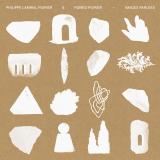
Philippe Lamiral Poirier & Roméo Poirier - Images Parlées

Besides his work as a painter, filmmaker and set designer, Philippe Lamiral Poirier (1951-2025) played guitar and saxophone in the group Kat Onoma, which he co-founded with Rodolphe Burger.

His fifth studio album combines his written texts with music composed by his son, Roméo Poirier, whom he considered to be cut from the same musical cloth as he was. It also confirms what has emerged from his previous albums, namely songs more spoken than sung and whose words evoke images, thus the album’s title – Images parlées.

A book of his paintings, Images traversées, will be published simultaneously with the album.

In this continual back and forth movement between text and image, music has always been present – sensitive and abstract, expressing nothing other than itself. It hollows out a place to tell us where we are. It is life without delay.

Roméo Poirier is working in the field of electronic music, focusing on heavy processing of samples and digital collage. He released albums on the London based record label Kit Records (Plage Arrière), the mancunian record label Sferic (Hotel Nota), and Jan Jelinek’s own imprint Faitiche (Living Room and Off The Record).

No en stock

Haga su pedido ahora y le encargaremos el artículo en nuestro proveedor.

Ültimo hace: 3 Meses
25,42 €
Andrew Wasylyk - Irreparable Parables

Very limited numbers, orders will need to be confirmed.

For his new album, Irreparable Parables, Andrew Wasylyk felt a strong desire to write a set of songs featuring an element hitherto rare in his work: the human voice. Equally strong was the conviction that he did not want to sing them himself.

The Scottish multi-instrumentalist and composer set about assembling a group of guest singers, sending out the songs to wherever they were in the world. The vocals were recorded remotely and then, like migrating birds, winged their way back to Scotland. The result is an album of great beauty which, perhaps preeminently in Wasylyk’s work, expresses the vulnerability and resilience of the human spirit.

Six singers appear on the record, represented by six songbirds illustrated on the sleeve by Clay Pipe Music’s Frances Castle. The cuckoo is a nod to Belle and Sebastian’s 2004 single ‘I’m A Cuckoo’, that band’s Stuart Murdoch being the first voice you hear on the new album. When the vocal for ‘Private Symphony #2’ arrived, says Wasylyk, “it was everything that I was looking for and more. But this is Stuart Murdoch. Of course he’s going to make something incredibly beautiful and thoughtful.”

The song lyrics were, for the most part, written by the singers. The music is Wasylyk’s creation. He navigates a sound world that lies somewhere beyond the borders of classical and jazz, ambient and abstract. It is difficult to describe, but easy to understand, which is to say to feel. That is the way Wasylyk’s work is experienced: as a feeling. It takes you back to childhood, perhaps, to feelings of comfort and safety, or to memories of walks at sunrise and sunset, or to the way a shadow falls on a particular field in a particular place at a particular time in your life. This is consoling music. That is why, though pretty, it is not merely pretty. These are songs to shore up the soul.

Wasylyk writes in a room, in his native Dundee, full of “half broken” instruments. He picks these up, plays a little, seeking an idea, a feeling, a door that lies ajar. The musical palette of Irreparable Parables includes brass and woodwind, a six-piece string section, guitar, bass, drums, vibraphone, Mellotron, Fender Rhodes, tape loops, synthesisers and percussion. The strings were arranged by the cellist Pete Harvey, a long-term collaborator.

Among the other guest vocalists are Gruff Rhys of the Super Furry Animals, Saya Ueno from Japan’s Tenniscoats and Peter Brewis from Field Music. Wasylyk himself takes the lead vocal on the title track, though a throat infection and touch of pitch-shifting have altered his singing in a way that even he, having fallen out of love with his own voice, finds acceptable.

The heart of the record can, arguably, be found in two tracks, ‘Love Is A Life That Lasts Forever’ and ‘Spectators In The Absence of God’, sung respectively by Molly Linen and Kathryn Joseph. The former, bright with trumpets, was inspired by the writing of Derek Jarman. “I was feeling deeply upset about the world and wanted to try and write some- thing that was obviously hopeful,” Wasylyk says.

‘Spectators …’ offers an emotional counterpoint. It is an “apocalyptic hymn” that seems to grapple with watching human suffering from afar, too distant to be at physical risk, but experiencing the psychological wounding, and feelings of helplessness, even complicity, that come with constant awareness of other people’s pain. “Kathryn’s a pal, I love her dearly, and she’s a brilliant artist who really feels what she writes,” Wasylyk says. “The cracked tenderness of her voice is spellbinding.”

The album closes with an instrumental piece, ‘Soul Enters The Ocean Sun Climbs Out Of The Sea’, all piano and strings, that offers a sense of resolution and ascension. A good moment, too, for Wasylyk to reflect upon the artistic companionship that he enjoyed while making this record – the songbirds that answered his call: “These humans are incredible at what they do. I’m deeply grateful and feel so lucky. It blows my mind.”

Reservar30.05.2026

debe ser publicado en 30.05.2026

26,26 €
Spalarnia - Tajemnica LP

Tajemnica is a transgression—too gentle for dancing, too euphoric for standing still. Sparse, scarce, and subtle, the new album by Polish performance artist, musician, and poet Wojciech Kosma, aka spalarnia, eagerly explores modern dance genres, experimental production, and nostalgic electronics to surrender to what is truest—essential song forms, melodies, harmonic and rhythmic basics, the most resonant feelings.

Sung in spalarnia’s trademark soft, low, almost tactile voice, the eight hypnotic songs tell stories of closeness and love, and their favored companions—pain and heartbreak. In “Bliżej” he sings “I love not loving you / I want to be a part of you.” And in “Jedyna”—the album's single—he states: “You are the only one / there is no other me / only the one for whom you are the only one.”

Contrary to the meaning of its Polish title (Tajemnica translates to “secret”), the album that moves between ghostly ambient pop, languid R’n’B, and Eastern European folk doesn’t reveal anything outright—the music only points to where the secrets might lie. One can choose whether to hear them or not.

Reservar22.05.2026

debe ser publicado en 22.05.2026

19,12 €
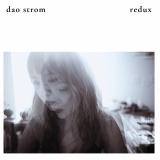
Dao Strom - Redux

Dao Strom

Redux

12inchLPNUY012
Disasters By Choice
08.05.2026

Redux, an ambient-folk album from Portland, Oregon musician, poet, and multimedia artist Dao Strom, is a collection of nine resurrected pieces. Reimagining songs she initially composed as a member of the Austin, Texas alt-country and singer-songwriter scenes of the early 2000s, Strom reworks these lost songs into ambient-folk mini-epics—part grounded and earthly, part ethereal and otherworldly. Drawing on an intimate yet spacious palette of folk, ambient, and experimental textures, woven through with a poetics of vulnerability and quiet emotion, Redux explores song as gently reverberant fields of layered vocals over finger-picked guitars with touches of electronics and sampling. Strom’s musical journey initially began in a roots and acoustic vein, simultaneously with her career as a fiction writer. In the years since, she has moved from Austin, Texas to Juneau, Alaska to Portland, Oregon; her work too has expanded across genres into more experimental formats of poetry, music, and multidisciplinary art. In returning to these earlier songs, Strom reclaims and revives them, exploring her relationships to time, voice, and the continuances of emotion and memory. The word redux means “brought back; revived”; a sense of something restored—earlier renditions of some of the Redux songs were recorded with Austin-based collaborators and producers; some songs were written in that time period but never recorded. Produced, performed, and recorded by Strom alone in her home studio, Redux is a return and reemergence of the artist to her own most personal, intuitive structures and atmospheres of voice, sound, and song. Released on cassette by Antiquated Future Records, and reissued on vinyl in 2026 by Disasters By Choice.

Dao Strom is an artist who works with three “voices”—written, sung, visual—to explore hybridity and contemplate the intersection of personal and collective histories. Her music releases move between “song-poem” cycles and ambient-folk albums. She is the author/composer of several hybrid projects that blend poetry, music, and visual art into unique multimodal experiences, including Tender Revolutions/Yellow Songs, a song-cycle with set of four chapbooks, jointly released by Beacon Sound, Antiquated Future Records, and The 3rd Thing Press (2025), and Instrument/Traveler’s Ode, a poetry-art collection and song-cycle released by Fonograf Editions and Antiquated Future Records (2020). Born in Vietnam and based in Portland, Oregon, Strom began her musical journey in the early 2000s, when she first began infusing into the context of “Americana” folk/roots music her own diasporic Vietnamese experience and stories. Her music has since moved in more experimental directions, resisting easy categorization, yet still maintaining tendrils of folk ethos. She also writes songs about the ineffable nuances of emotion, memory, and connection, as captured on the album, Redux, which gathers songs from across her songwriting years into an ambient-folk setting, self-produced and recorded by Strom, released on cassette in 2022 by Antiquated Future Records, and reissued on vinyl in 2026 by Disasters By Choice. As a multidisciplinary artist, Strom has presented performance and installations at venues such as the Time Based Art Festival (Portland Institute for Contemporary Art) and Moving Poets Novilla in Berlin, Germany, and has received awards from the Creative Capital Foundation, Spark Artist Award, and others. Strom is also a founding member of She Who Has No Master(s), a collective of Vietnamese women writers and artists making polyvocal poetry-art works as a means of reaching across borders.

Reservar08.05.2026

debe ser publicado en 08.05.2026

26,68 €
Dionysos - Happening Songs LP

Dionysos

Happening Songs LP

12inchDIONYSOS001LP
Diggers Factory
08.05.2026
  • A1: Wet
  • A2: No Sense Words Harmony
  • A3: Polar Girl
  • A4: Can I ?
  • A5: Everything
  • A6: Children Of My Walk
  • B1: Flying Cake
  • B2: Still Bleeding
  • B3: New Eye Blues
  • B4: Socks Tears
  • B5: Screamin' Like An Egg
  • B6: Sad Smiling F…
  • B7: Wet Folk
  • B8: Here Comes The Sun

To celebrate the 30th anniversary of its release, Happening Songs, the debut album by Dionysos, is finally being issued on vinyl for the very first time.

Recorded in 1996, the record captures the early days of a band still in its rawest form, already driven by a singular stage energy and a boundless imagination. Entirely sung in English, Happening Songs unfolds a free and inventive sonic universe where indie rock, dark humor, and surreal visions intertwine. Tracks such as "Wet," "Polar Girl," and "Screamin' Like an Egg" sketch the foundations of a poetic, strange, and deeply endearing artistic world that would become Dionysos' signature.
Long regarded as a cult album, passed from stage to stage and through word of mouth, it now returns in a brand-new vinyl edition, faithful to its original spirit.
This anniversary release is presented by EGGMAN RECORDS, the label founded by Mathias Malzieu, giving new life to this foundational work and inviting listeners to rediscover the initial spark of a project that has since become essential.
Thirty years on, Happening Songs remains the opening chapter of a unique artistic journey: inhabited, unruly, and profoundly free rock.

Reservar08.05.2026

debe ser publicado en 08.05.2026

22,65 €
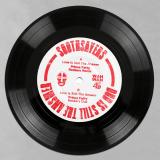
Soothsayers - Love Is Still The Answer (Prince Fatty Remixes) (7")

Wah Wah 45s are very excited to announce a brand new remixes from dub donPrince Fattyfor beloved Afro-reggae outfitSoothsayers.

Love Is Still The Answeris a beautifully uplifting song, written and sung by long time Soothsayers member and collaboratorJulia Bielabout the eternal power of love and its ability to overcome hate. It appears in its original incarnation on the band's recent, critically acclaimed album,Fly Higher.

Mike Pelaconi, AKA Prince Fatty has been part of the Wah Wah 45s and Soothsayers extended family for many years, and here he delivers a typically crowd pleasing mix, in both vocal and dub form, from the world of Rockers Reggae, calling legendary reggae drummerHorsemaninto the studio, and crafting a lush rocksteady remix with a new horn arrangement and stripped back instrumentation.


"In a world that feels more divided and chaotic than ever,Love Is Still the Answer is a reminder that real change can still come from within. We may feel powerless in the face of global turmoil, but when we choose love - actively, consistently, even in tough situations - we reclaim strength for ourselves. This song calls us back to our shared humanity, to the energy that connects us all. It's an invitation to tune into what really matters, and to rediscover beauty where we may have forgotten to seek it." Robin Hopcraft (Soothsayers)

a A1: Prince Fatty Rockers Remix feat. Julia B.

a A1: Prince Fatty Rockers Remix [feat. Julia B.]

[a] A1: Prince Fatty Rockers Remix [feat. Julia B.]

No en stock

Haga su pedido ahora y le encargaremos el artículo en nuestro proveedor.

Ültimo hace: 4 Meses
18,07 €
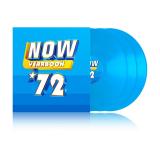
Various - NOW - Yearbook 1972 (3x12")
  • A1: John Lennon, The Plastic Ono Band, Yoko Ono & The Harlem Community Choir - Happy Xmas (War Is Over)
  • A2: Rod Stewart - You Wear It Well
  • A3: Don McLean - American Pie
  • A4: America - A Horse With No Name
  • A5: Simon & Garfunkel - America
  • A6: Harry Nilsson - Without You
  • A7: Bob Dylan - If Not For You
  • A8: Paul McCartney & Wings - Mary Had A Little Lamb
  • B1: Bread - Baby I'm-A Want You
  • B2: Carly Simon - Anticipation
  • B3: Neil Diamond - Song Sung Blue
  • B4: Gilbert O'Sullivan - Clair
  • B5: Colin Blunstone - Say You Don't Mind
  • B6: Cat Stevens - Morning Has Broken
  • B7: Michael Jackson - Got To Be There
  • B8: Labi Siffre - It Must Be Love
  • B9: Johnny Nash - I Can See Clearly Now
  • C1: Alice Cooper - School's Out
  • C2: Roxy Music - Virginia Plain
  • C3: Mott The Hoople - All The Young Dudes
  • C4: Sweet - Wig Wam Bam
  • C5: Slade - Mama Weer All Crazee Now
  • C6: Elton John - Crocodile Rock
  • C7: Chicory Tip - Son Of My Father
  • C8: Jeff Beck - Hi Ho Silver Lining
  • D1: The Stylistics - Betcha By Golly, Wow
  • D2: Bill Withers - Lean On Me
  • D3: Love Unlimited - Walkin' In The Rain With The One I Love
  • D4: Sly & The Family Stone - Family Affair
  • D5: The O'Jays - Back Stabbers
  • D6: The Supremes - Floy Joy
  • D7: Michael Jackson - Ben
  • D8: Melanie - Brand New Key
  • D9: The New Seekers - I'd Like To Teach The World To Sing (In Perfect Harmony)
  • E1: Elton John - Rocket Man (I Think It's Going To Be A Long Long Time)
  • E2: Python Lee Jackson featuring Rod Stewart - In A Broken Dream
  • E3: Slade - Take Me Bak 'Ome
  • E4: Electric Light Orchestra - 10538 Overture
  • E5: Hawkwind - Silver Machine
Reservar08.05.2026

debe ser publicado en 08.05.2026

37,19 €
The Bluebeaters - MANTRA (7")

The Bluebeaters

MANTRA (7")

7"-VinylCARIBB705
Caribb Roots
01.05.2026
  • A1: Mantra
  • B1: Mysterious dub by Ezra (Version)

Mantra is the first single from The Bluebeaters' upcoming album, due for release in 2026. It is an unusual track in the band's discography, reminiscent more of The Clash's Rock The Casbah than Jamaica. It is a track with a 4/4 beat without the classic Jamaican syncopation typical of The Bluebeaters.

"It's a challenge to the background that has always driven the band. The album will not be entirely in this direction, but we decided to release this single to broaden our range of expression."

Produced by singer Patrick Benifei, aka Pat Cosmo, together with the solid rhythm section of The Bluebeaters, Count Ferdi on drums, Cato Senatore on guitar, Danilo Scuccimarra on piano and organ, and Paolo Parpaglione on saxophone.

It is the first in a series of singles that will form the backbone of the album.

Sung in Italian, Mantra is an original song written by Pat Cosmo.

The B-side is a dub, an instrumental version mixed by Ezra, producer, artist and our co-producer for all the tracks that will be released on the new album.

He has collaborated on many productions that are part of the Caribb Roots world, including Casino Royale and The Uppertones, as well as his own Dub Pigeons.

His studio is the NoMad Studio, located in the San Salvario area of Turin.

Reservar01.05.2026

debe ser publicado en 01.05.2026

11,98 €
QANAT - AIGUA BALLANT

QANAT

AIGUA BALLANT

12inchRUMI16
Rumi Sounds
24.04.2026
  • 1: Dzamin
  • 2: Lalai baraye Madjnun va Perendenga
  • 3: Sant Antoni de Khorasan
  • 4: Harame del
  • 1: As Gissoom ta Formentera
  • Figues de Tadjikistan
  • 3: Motreba Narmak Bessan
  • 4: Fandango Bandari

Dancing Waters is a musical fusion where the Mediterranean soul meets the deep-rooted mysticism of Cental Asia. Inspired by the surprising resonance between the work melodies of Balearic Islands and Pitiüses Islands and the haunting beauty of Persian and Byzantine melodies. QANAT weaves together the rich traditions of the Mediterranean, Mesopotamia, and Persia. The project blends old Balearic work songs with the modal textures of Middle Eastern and Central Asian music -including influences from Iran, Turkey, Tajikistan, and the ancient region of Khorasan. At the heart of the project is the remarkable melodic kinship between Balearic field songs-once sung during rural labor-and the ancient echoes of Byzantine chant. QANAT bridges these traditions, crafting new musical landscapes through original compositions, instrumental dialogues, and vocal ornamentations that celebrate the shared soul of these distant-yet-connected cultures.

Reservar24.04.2026

debe ser publicado en 24.04.2026

23,11 €
Donald Beaman - Fog On Mirror Glass LP
  • 1: Glass Bottom Boat
  • 2: Paper Screen
  • 3: Awhile
  • 4: Fog On Mirror Glass
  • 5: Old Universe
  • 6: Makeshift Room
  • 7: Your Dreaming Eyes
  • 8: Valley Floor
  • 9: Usual Phantom
  • 10: Bamboo

Fog On Mirror Glass introduces a new aesthetic amongst Donald Beaman albums. After four albums of varied full-band arrangements, this album emerged as an idea to present solo performances in conversation with full-band work. The bulk of the songs were recorded in the same place they were written: Beaman’s living room. Long time bandmate and producer Kirt Lind set up a makeshift studio at Beaman’s house to record the guitar parts in the same room where they were written, using the same guitars on which they were first played.

Unfurling with a measured pace, the resulting album combines elegiac lyrics with elemental arrangements played with an almost jazz-like reverential expressiveness, calling to mind the works of Cass McCombs, Will Oldham, and Jake Xerxes Fussell. Album opener “Glass Bottom Boat” sets the tone for the album with just Beaman and his guitar – written during the final months of a decade-long stay in New York City, the song was finished upon his arrival back in California. Meanwhile the title track, long a staple in live sets, lands near the middle of the album to recalibrate the mood, featuring the ghostly guitar work of longtime collaborator Ken Lovgren. “Old Universe” lifts things up a bit, propelled by the brushwork of drummer Michael Nalin and the jaunty bass playing of Kirt Lind. Finally, the album ends much the way it began, with Beaman and his guitar on album closer “Bamboo”.

“The dictionary definition of less is more.” - ---- Mojo
“His ability to carve universal empathy from mundane domesticity is remarkable.” - ---- RNR Magazine
“...a collection of evocative scenes and vivid emotions sung to sparse musical arrangements in Beaman’s distinctive sonorous tones” - Americana UK
“...pure and simmering, like a tattoo dedicated to a long lost friend, slightly fading from years in the sun, a memory that will always bring a tear in those quiet reflective moments.” - Psychedelic Baby Magazine

Reservar24.04.2026

debe ser publicado en 24.04.2026

23,49 €
Petter Eldh, Koma Saxo & Sofia Jernberg - Koma West LP

Petter Eldh's explosive ensemble Koma Saxo continues their adventures with a new album "Koma West", out on We Jazz Records, 18 March 2022. The album sees Koma Saxo expand on their previous sound with the addition of vocalist Sofia Jernberg and a strong cast of featured artists, including cellist Lucy Railton, violinist Maria Reich, pianist Kit Downes and accordionist Kiki Eldh (Petter's mom!). The hard-hitting key quintet remains, including Eldh on bass and assorted instruments, Christian Lillinger on drums, plus saxophonists Otis Sandsjö (of Y-OTIS), Jonas Kullhammar and Mikko Innanen bringing the SAXO to the KOMA operation.

At 14 tracks, "Koma West" is a full menu of monumental compositional ideas that could spawn entire albums. True to his chop & go production style, Eldh relies on continuous movement while presenting another all killer no filler program taking Koma Saxo on a sonic outing not quite like anything that had previously appeared under the band's name. That being said, there's very much the Petter Eldh touch here, one which might be hard to pinpoint and verbalise, but nevertheless a recognisable style of composing, producing and arranging.

Thematically, the album is rooted in the West Coast of Sweden, where Eldh grew up – he's from a tiny town called Lysekil. There's a thread of Swedish folk song tradition that has been part of the Koma Saxo DNA from the get-go and you can hear that here as well, especially on cuts such as "Närhet", beautifully sung by Sofia Jernberg.

Petter Eldh says:

"In a way, it's a concept album and a celebration of the Swedish West Coast. The first single is called 'Koma Kaprifol', and kaprifol is the landscape flower of Bohuslän on the West coast, where I grew up. I'm not too wild about attaching strong narratives to my music but there's no way around it this time. The oysters, a common snack around the coast, are a strong conceptual presence here. Anyway, they seem to pop up here and there quite often already thus far in the Koma Saxo narrative, even though it's not always so obvious. Koma Vocals! Koma Strings! I love the presence of Sofia Jernberg here and I love writing string arrangements, too, although I never thought I would do it for Koma, but of course, Koma should have some strings, why not?. Koma Saxo should and can become anything."

No en stock

Haga su pedido ahora y le encargaremos el artículo en nuestro proveedor.

Ültimo hace: 5 Meses
22,48 €
INFESTA - ABISSO BLU

INFESTA

ABISSO BLU

12inchOE027
OSÀRE! EDITIONS
17.04.2026

In a most original impetus this album traverses forty years of Italian new wave and singer-songwriter tradition. As in the desert where Infesta’s urge is to walk, we are ambushed by the most intense thermal and sonic difference.

It is from here that this important journey we mustn’t miss begins. It leads us eight thousand meters deep in the blue abyss. Not quite enough to come out the other side and, as a kite, bestow all the heights that I will reach. These depths are nevertheless necessary to adjust our eyes to the darkness that lives within us, as a machine to burst our hearts to which we can’t and won't be accomplices.

Machine against machine. The increasing pressure of the lashes of an incessant current, at times sweet and at times sour, on which all the courage is sung and yet is everywhere dispersed like thoughts on water and melodies to be lost at sea. Darkness persists: you said the world can be lived where all was taken. And it’s a crazy and estranging babbling that, stripped by a current, answers: never never never never, in no direction.

My companions, come back, the breaking point has been found, we sing together. Leaf after leaf the time has come: it is possible to destroy the Machine in a mad blinding light.

No en stock

Haga su pedido ahora y le encargaremos el artículo en nuestro proveedor.

Ültimo hace: 5 Meses
20,59 €
Guilty Razors - Complete Recordings 1977 - 1978

UILTY RAZORS, BONA FIDE PUNKS.


Writings on the topic that go off in all directions, mind-numbing lectures given by academics, and testimonies, most of them heavily doctored, from those who “lived through that era”: so many people today fantasize about the early days of punk in our country… This blessed moment when no one had yet thought of flaunting a ridiculous green mohawk, taking Sid Vicious as a hero, or – even worse – making the so-called alternative scene both festive and boorish. There was no such thing in 1976 or 1977, when it wasn’t easy to get hold of the first 45s by the Pistols or the Clash. Few people were aware of what was happening on the fringes of the fringes at the time. Malcolm McLaren was virtually unknown, and having short hair made you seem strange. Who knew then that rock music, which had taken a very bad turn since the early 1970s, would once again become an essential element of liberation? That, thanks to short and fast songs, it would once again rediscover that primitive, social side that was so hated by older generations? Who knew that, besides a few loners who read the music press (it was even better if they read it in English) and frequented the right record stores? Many of these formed bands, because it was impossible to do otherwise. We quickly went from listening to the Velvet Underground to trying to play the Stooges’ intros. It’s a somewhat collective story, even though there weren’t many people to start it.
The Guilty Razors were among those who took part in this initial upheaval in Paris. They were far from being the worst. They had something special and even released a single that was well above the national average. They also had enough songs to fill an album, the one you’re holding. In everyone’s opinion, they were definitely not among the punk impostors that followed in their wake. They were, at least, genuine and credible.

Guilty Razors, Parisian punk band (1975-1978). To understand something about their somewhat linear but very energetic sound, we might need to talk about the context in which it was born and, more broadly, recall the boredom (a theme that would become capital in punk songs) coupled with the desire to blow everything off, which were the basis for the formation of bands playing a rejuvenated rock music ; about the passion for a few records by the Kinks or the early Who, by the Stooges, by the Velvet mostly, which set you apart from the crowd.
And of course, we should remember this new wave, which was promoted by a few articles in the specialized press and some cutting-edge record stores, coming from New York or London, whose small but powerful influence could be felt in Paris and in a handful of isolated places in the provinces, lulled to sleep by so many appalling things, from Tangerine Dream to President Giscard d’Estaing...
In 1975-76, French music was, as almost always, in a sorry state ; it was still dominated by Johnny Hallyday and Sylvie Vartan. Local rock music was also rather bleak, apart from Bijou and Little Bob who tried to revive this small scene with poorly sound-engineered gigs played to almost no one.
In the working class suburbs at the time, it was mainly hard rock music played to 11 that helped people forget about their gruelling shifts at the factory. Here and there, on the outskirts of major cities, you still could find a few rockers with sideburns wearing black armbands since the death of Gene Vincent, but it wasn’t a proper mass movement, just a source of real danger to anyone they came across who wasn't like them. In August 1976, a festival unlike any other took place in Mont-de-Marsan – the First European Punk Festival as the poster said – with almost as many people on stage as in the audience. Yet, on that day, a quasi historical event happened, when, under the blazing afternoon sun, a band of unknowns called The Damned made an unprecedented noise in the arena, reminiscent of the chaotic Stooges in their early adolescence. They were the first genuine punk band to perform in our country: from then on, anything was possible, almost anything seemed permissible.

It makes sense that the four+1 members of Guilty Razors, who initially amplified acoustic guitars with crappy tape recorder microphones, would adopt punk music (pronounced paink in French) naturally and instinctively, since it combines liberating noise with speed of execution and – crucially – a very healthy sense of rebellion (the protesters of May 1968 proclaimed, and it was even a slogan, that they weren’t against old people, but against what had made them grow old. In the mid-1970s, it seemed normal and obvious that old people should now ALSO be targeted!!!).
At the time, the desire to fight back, and break down authority and apathy, was either red or black, often taking the form of leafleting, tumultuous general assemblies in the schoolyard, and massive or shabby demonstrations, most of the time overflowing with an exciting vitality that sometimes turned into fights with the riot police. Indeed, soon after the end of the Vietnam War and following Pinochet’s coup in Chile, all over France, Trotskyist and anarcho-libertarian fervour was firmly entrenched among parts of the educated youth population, who were equally rebellious and troublemakers whenever they had the chance. It should also be noted that when the single "Anarchy in the UK" was first heard, even though not many of us had access to it, both the title and its explosive sound immediately resonated with some of those troublemakers crying out for ANARCHY!!! Meanwhile, the left-wing majority still equated punks with reckless young neo-Nazis. Of course, the widely circulated photos in the mainstream press of Siouxsie Sioux with her swastikas didn’t necessarily help to win over the theorists of the Great Revolution. It took Joe Strummer to introduce The Clash as an anti-racist, anti-fascist and anti-ignorance band for the rejection of old-school revolutionaries to fade a little.

The Lycée Jean-Baptiste Say at Porte d’Auteuil, despite being located in the very posh and very exclusive 16th arrondissement of Paris, didn’t escape these "committed" upheavals, which doubled as the perfect outlet for the less timid members of this generation.
“Back then, politics were fun,” says Tristam Nada, who studied there and went on to become Guilty Razors’ frontman. “Jean-Baptiste was the leftist high-school in the neighbourhood. When the far right guys from the GUD came down there, the Communist League guys from elsewhere helped us fight them off.”
Anything that could challenge authority was fair game and of course, strikes for just about any reason would lead to increasingly frequent truancy (with a definitive farewell to education that would soon follow). Tristam Nada spent his 10th and 11th unfinished grades with José Perez, who had come from Spain, where his father, a janitor, had been sentenced to death by Franco. “José steered my tastes towards solid acts such as The Who. Like most teenagers, I had previously absorbed just about everything that came my way, from Yes to Led Zeppelin to Genesis. I was exploring… And then one day, he told me that he and his brother Carlos wanted to start a rock band.” The Perez brothers already played guitar. “Of course, they were Spanish!”, jokes their singer. “Then, somewhat reluctantly, José took up the bass and we were soon joined by Jano – who called himself Jano Homicid – who took up the rhythm guitar.” Several drummers would later join this core of not easily intimidated young guys who didn’t let adversity get the better of them.

The first rehearsals of the newly named Guilty Razors took place in the bedroom of a Perez aunt. There, the three rookies tried to cover a few standards, songs that often were an integral part of their lives. During a first, short gig, in front of a bewildered audience of tough old-school rockers, they launched into a clunky version of the Velvet Underground's “Heroin”. Challenge or recklessness? A bit of both, probably… And then, step by step, their limited repertoire expanded as they decided to write their own songs, sung in a not always very accurate or academic English, but who cared about proper grammar or the right vocabulary, since what truly mattered was to make the words sound as good as possible while playing very, very fast music? And spitting out those words in a language that left no doubt as to what it conveyed mattered as well.
Trying their hand a the kind of rock music disliked by most of the neighbourhood, making noise, being fiercely provocative: they still belonged to a tiny clique who, at this very moment, had chosen to impose this difference. And there were very few places in France or elsewhere, where one could witness the first stirrings of something that wasn’t a trend yet, let alone a movement.

In the provinces, in late 1976 or early 1977, there couldn’t be more than thirty record stores that were a bit more discerning than average, where you could hear this new kind of short-haired rock music called “punk”. The old clientele, who previously had no problem coming in to buy the latest McCartney or Aerosmith LP, now felt a little less comfortable there…
In Paris, these enlightened places were quite rare and often located nex to what would become the Forum des Halles, a big shopping mall. Between three aging sex workers, a couple of second-hand clothes shops, sellers of hippie paraphernalia and small fashion designers, the good word was loudly spread in two pioneering places – propagators of what was still only a new underground movement. Historically, the first one was the Open Market, a kind of poorly, but tastefully stocked cave. Speakers blasted out the sound of sixties garage bands from the Nuggets compilation (a crucial reference for José Perez) or the badly dressed English kids of Eddie and the Hot Rods. This black-painted den was opened a few years earlier by Marc Zermati, a character who wasn’t always in a sunny disposition, but always quite radical in his (good) choices and his opinions. He founded the independent label Skydog and was one of the promoters of the Mont-de-Marsan punk festivals. Not far from there was Harry Cover, another store more in tune with the new New York scene, which was amply covered in the house fanzine, Rock News (even though it was in it that the photos of the Sex Pistols were first published in France).
It was a favorite hang-out of the Perez brothers and Tristam Nada, as the latter explained. “It’s at Harry Cover’s that we first heard the Pistols and Clash’s 45s, and after that, we decided to start writing our first songs. If they could do it, so could we!”
The sonic shocks that were “Anarchy in the UK”, “White Riot” or the Buzzcocks’s EP, “Spiral Scratch” – which Guilty Razors' sound is reminiscent of – were soon to be amplified by an unparalleled visual shock. In April 1977, right after the release of their first LP, The Clash performed at the Palais des Glaces in Paris, during a punk night organised by Marc Zermati. For many who were there, it was the gig of a lifetime…
Of course, Guilty Razors and Tristam were in the audience: “That concert was fabulous… We Parisian punks were almost all dressed in black and white, with white shirts, skinny leather ties, bikers jackets or light jackets, etc. The Clash, on the other hand, wore colourful clothes. Well, the next day, at the Gibus, you’d spot everyone who had been at this concert, but they weren’t wearing anything black, they were all wearing colours.”

It makes sense to mention the Gibus club, as Guilty Razors often played there (sometimes in front of a hostile audience). It was also the only place in Paris that regularly scheduled new Parisian or Anglo-Saxon acts, such as Generation X, Siouxsie and the Banshees, the Slits, and Johnny Thunders who would become a kind of messed-up mascot for the venue. A little later, in 1978, the Rose Bonbon – formerly the Nashville – also attracted nightly owls in search of electric thrills… In 1977, the iconic but not necessarily excellent Asphalt Jungle often played at the Gibus, sometimes sharing the bill with Metal Urbain, the only band whose aura would later transcend the French borders (“I saw them as the French Sex Pistols,” said Geoff Travis, head of their British label Rough Trade). Already established in this small scene, Metal Urbain helped the young and restless Guilty Razors who had just arrived. Guitarist for Metal Urbain Hermann Schwartz remembers it: “They were younger than us, we were a bit like their mentors even if it’s too strong a word… At least they were credible. We thought they were good, and they had good songs which reminded of the Buzzcocks that I liked a lot. But at some point, they started hanging out with the Hells Angels. That’s when we stopped following them.”

The break-up was mutual, since, Guilty Razors, for their part, were shocked when they saw a fringe element of the audience at Metal Urbain concerts who repeatedly shouted “Sieg Heil” and gave Nazi salutes. These provocations, even still minor (the bulk of the skinhead crowd would later make their presence felt during concerts), weren’t really to the liking of the Perez brothers, whose anti-fascist convictions were firmly rooted. Some things are non-negotiable.
A few months earlier (in July 1978), Guilty Razors had nevertheless opened very successfully for Metal Urbain at the Bus Palladium, a more traditonally old-school rock night-club. But, as was sometimes the case back then, the night turned into a mass brawl when suburban rockers came to “beat up punks”.

Back then, Parisian nights weren’t always sweet and serene.

So, after opening as best as they could for The Jam (their sound having been ruined by the PA system), our local heroes were – once again – met outside by a horde of greasers out to get them. “Thankfully,” says Tristam, “we were with our roadies, motorless bikers who acted as a protective barrier. We were chased in the neighbouring streets and the whole thing ended in front of a bar, with the owner coming out with a rifle…”
Although Tristam and the Perez brothers narrowly escaped various, potentially bloody, incidents, they weren’t completely innocent of wrongdoing either. They still find amusing their mugging of two strangers in the street for example (“We were broke and we simply wanted to buy tickets for the Heartbreakers concert that night,” says Tristam). It so happened that their victims were two key figures in the rock business at the time: radio presenter Alain Manneval and music publisher Philippe Constantin. They filed a complaint and sought monetary compensation, but somehow the band’s manager, the skilful but very controversial Alexis, managed to get the complaint withdrawn and Guilty Razors ended up signing with Constantin with a substantial advance.

They also signed with Polydor and the label released in 1978 their only three-track 45, featuring “I Don't Wanna be A Rich”, “Hurts and Noises” and “Provocate” (songs that exuded perpetual rebellion and an unquenchable desire for “class” confrontation). It was a very good record, but due to a lack of promotion (radio stations didn’t play French artists singing in English), it didn’t sell very well. Only 800 copies were allegedly sold and the rest of the stock was pulped… Initially, the three tracks were to be included on a LP that never came to be, since they were dropped by Polydor (“Let’s say we sometimes caused a ruckus in their offices!” laughs Tristam.) In order to perfect the long-awaited LP, the band recorded demos of other tracks. There was a cover of Pink Floyd's “Lucifer Sam” from the Syd Barrett era – proof of an enduring love for the sixties’ greats –, “Wake Up” a hangover tale and “Bad Heart” about the Baader-Meinhof gang, whose actions had a profound impact on the era and on a generation seeking extreme dissent... On the album you’re now discovering, you can also hear five previously unreleased tracks recorded a bit later during an extended and freezing stay in Madrid, in a makeshift studio with the invaluable help of a drummer also acting as sound engineer. He was both an enthusiastic old hippie and a proper whizz at sound engineering. Here too, certain influences from the fifties and sixties (Link Wray, the Troggs) are more than obvious in the band’s music.

Shortly after a final stormy and rather barbaric (on the audience’s side) “Punk night” at the Olympia in June 1978, Tristam left the band ; his bandmates continued without him for a short while.

But like most pioneering punk bands of the era, Guilty Razors eventually split up for good after three years (besides once in Spain, they’d only played in Paris). The reason for ceasing business activities were more or less the same for everyone: there were no venues outside one’s small circuit to play this kind of rock music, which was still frightening, unknown, or of little interest to most people. The chances of recording an LP were virtually null, since major labels were only signing unoriginal but reassuring sub-Téléphone clones, and the smaller ones were only interested in progressive rock or French chanson for youth clubs. And what about self-production? No one in our small safety-pinned world had thought about it yet. There wasn’t enough money to embark on that sort of venture anyway.

So yes, the early days of punk in France were truly No Future!
No en stock

Haga su pedido ahora y le encargaremos el artículo en nuestro proveedor.

Ültimo hace: 5 Meses
21,43 €
Lebanon Hanover - Besides The Abyss

The album opens with the ominous guitar-driven Hollow Sky, accompanied by its haunting music video's verdant vistas. The song, with Iceglass ghostly vocals, shimmers with that sounds like an Omnichord flittering like sonic firefly lights and brooding bass. This perfectly scores the less traveled wanderings through the dark wooden path of Dante's perdition, leading to the titular well that graces the album cover. The Crater opens with an unsettling riff and bass, with low, repetitive frequencies on the synth create a sense of unease. Here, Iceglass recounts a fatalistic requiem for the king of romance that is cataclysmic and leaves a scar upon the earth. With Fall Industrial Wall, once again, Iceglass channels a silky and Nico-like emotive deadpan; against a dirgelike melody backed by minimal synth, bass, and drum. Almost medieval and plaintive, with its folk droning horns, deep and shallow in their resonance. This song is anachronistic, setting the scene of ruins centuries-old with crumbling edifices strewn about like memories lost in time. With the poetic lyrics of The Chamber do we find the eponymous abyss. Here, dualities are laid bare; besides love, there is heartbreak, and without this sorrow, what meaning would there be to love if one knows not what it is to lose? This song encapsulates the idea that love is heartbreak, and love lost is reaching the deepest chamber of the heart. This is carried through a sombre horn, minimalist drum machine, and deliberate bassline overlaid with Iceglass german and english lyrics. The Well is led in with a softly distorted bassline overlaid with eerie banshee howls give way to Iceglass otherworld vocal refrain, echoing through time as if emanating from a hole in the ground, and encircling that hole is a garden of woe and despair. The sinfully seductive song The Moor features a captivating SAX SOLO courtesy of Perseas; a welcome shift in tone, juxtaposed well with the intensity of Iceglass tenebrous vocal purr. This hitherto unexplored foray into dark sensuality takes the song into sordid mid 80s territory, bringing to mind a dusky drive along a serpentine road, with equally haunting instrumentations straddling time with icy fire. Broken Characters is an acoustic folk interlude featuring Selofan's Dimitris Pavlidis on guitar. Here we find a more gentle approach with its earnest and romantic lyrics. The song's melodic hook is a soft caress along with the forlorn horn elements highlighting Iceglass at her most Nico-sounding vocal yet, singing the sorrowful truth that most artists are indeed broken characters. Chimerical opens with dirgelike synth organs. The chill of winter has befallen the lamentations sung by Iceglass carried by haunting chord progressions and minimal percussion, plaintively beseeching the song's subject to remain elusive, idealistic, and a dreamer. After an album highlighting more Jill than Jack, our male protagonist finally makes his ascent in the sonorous and breathtaking Dark Hill, a masterful march of sweeping synth horns, and trepidatious drum machine with William Maybelline's bellowing voice cracking like thunder, rattling the atmosphere like his heart against his ribs. Spirals swirls in a cautionary knell of cathedral-esque droning synth dirge, with Icarian lyrics shining like a sombre ray of hope; like the sun's rays creeping into the darkest of places. The song, minimalist in its tight percussion, echoes with the solace of Larissa Iceglass vocal litany; invoking elements of the supernatural, almost like a Casio preset sequenced to the beating of an angel's wings.

Reservar03.04.2026

debe ser publicado en 03.04.2026

21,43 €
Quinie - Forefowk, Mind Me LP

The record is largely sung in Scots language, one of Scotland’s three official languages along with Gaelic and English. “Scots gives me a way of expressing myself which is connected directly with the landscapes I love. It brings the songs alive and it is a fascinating language. The name of the record is in Scots - Forefowk means the people who came before, or ancestors. When we say ‘mind me,’ we can mean a few things- remind, remember, watch over or care for me. The record explores how tradition needs to be constantly reconnected with, built upon, looked after, and shared.”
Quinie sings with a style inspired by Scottish Traveller singers. “I began singing unaccompanied Scots Song in 2015 after hearing Scots Traveller singer Sheila Stewart on the radio. Initially I felt like I shouldn't sing these songs because I'm not a Traveller, and I saw people around me doing that in a way that made me uncomfortable. But on the other hand this music made sense to me and I felt driven to learn. Over the years I have met Traveller friends who taught me that settled people sharing these songs could contribute to raising awareness. Scottish Travellers are marginalised and discriminated against in modern Scotland, despite being custodians of so many of our important traditions. So I started to perform them and tell this story. From there I built on my repertoire and started writing my own songs”.
To develop this record, Quinie travelled across Argyll with her horse. They went on a pilgrimage of sorts through the ancient landscapes of the West of Scotland to explore the interconnected relationships between people, ancestors, animals, and place. The album’s vinyl release is accompanied by a book and film, documenting this unusual research process.
Forefowk, Mind Me was recorded in August 2024 at The Big Shed in Highland Perthshire with support from Creative Scotland. Quinie is accompanied by an ensemble of musicians: Ailbhe Nic Oireachtaigh (viola), Oliver Pitt (duduk, bouzouki, percussion), Harry Górski-Brown (small pipes, violin), and Stevie Jones (double bass, recording, and mixing). Each of these artists brings their own distinctive voice, bridging contemporary experimental practice with worlds of traditional and early music.

Reservar03.04.2026

debe ser publicado en 03.04.2026

16,77 €
Selwyn Birchwood - Electric Swamp Funkin' Blues

Rolling Stone calls award-winning Florida musician Selwyn Birchwood “a remarkable, contemporary bluesman…a powerhouse young guitarist and soulful vocalist.” Now, this mesmerizing guitarist, lap steel master and cinematic songwriter unleashes the powerful new album Electric Swamp Funkin’ Blues, further blazing his own musical trail.

Birchwood’s sound is an intoxicating mix of deep blues, blistering, psychedelic-tinged rock, booty-shaking funk and sweet Southern soul, played and sung with true blues passion. From an emotionally devastating whisper to a soul-baring scream, Birchwood’s vocals command attention. Schooled in the blues' storied traditions (he toured with and was mentored by the famed Sonny Rhodes), Birchwood maps out a dazzling future for the blues with his visionary music.

Selwyn Birchwood is one of the hardest-touring artists on the Alligator roster, and will support the new release with shows throughout the U.S. He's no stranger to European stages either, with plenty of tours there under his belt, and having just completed over a month's worth of European dates, 27 shows in all, with 24 taking place in France, three in Belgium and one in Czechia.

Reservar03.04.2026

debe ser publicado en 03.04.2026

26,85 €
Artículos por página

Language

N/ABPM
Vinyl