Four years in the making, Duct Tape Project is the new brainchild of Tripmastaz in the realms of Trip-Hop and Downtempo. And it's a project that makes perfect sense to anyone familiar with Andrei's background (making Hip-Hop beats since his teenage years), musical capabilities and decades-long experience. Duct Tape Project joins Andrei with a troupe of stellar musicians not only from many different corners of the world but also from acutely distinct genres - Guti, Argenis Brito, Mad Dim, Denis Kaznacheev, Krussia, Damien Vandesande of DOP, Sarkis Ricci, Andrey Orenstein, and vocals by Inga.
Featuring all sorts of live instruments, drum machines, synthesizers and modular systems, Duct Tape Project brings forward a complex work brimming with musicality. Using Hip-Hop, not only its rhythmic structures but also its sampling techniques, as a foundation, Tripmastaz created a vibrant and fascinating ecosystem with enough sonic texture to leave one captivated, enraptured and lost at the edge of words. There are 13 musical compositions in total that explore all things Hip-Hop, Downtempo, Trip-Hop, Chill Pop and Lounge, forming a cohesive and deeply soulful album.
Cerca:sonic system
Hospital Records proudly present the debut solo album from drum & bass icon Grafix. ‘Half Life’ is an introspective glimpse into the influences and sonic development of the Bristol-based producer, who over the years has established himself as a pinnacle of the dance music world. Grafix’s first ever studio longplayer as a solo artist consists of 14 hotly-anticipated pulse pounding anthems, featuring killer collaborations from the likes of Metrik, Lauren L’aimant, Reiki Ruawai and Chrissie Huntley in his hit singles ‘Somewhere’, ‘Feel Alive’ and ‘Skyline’.
High-octane dancefloor energiser ‘Skyline’ sees drum & bass titans Grafix and Metrik collide for a third time on this futuristic drum & bass cut infused with pure uplifting soundscapes. Enter a world of powerhouse synthesis, relentless basslines and Metrik’s very own vocal performance. This is just the follow up you needed from the mammoth success with the duo’s previous collaborations ‘Overdrive’ and ‘Parallel’.
Grafix draws upon his love for rave culture on the acid heavy ‘Blast Out’ - a no-holds-barred drum & bass system shocker. Skittery vocal chops, shredding bass hits and minimal-funk drums show the side of Grafix well known for tearing up the dance - never afraid to drop a wild card.
From the hypnotic and distorted energies on the likes of ‘CTRL’ and album title track ‘Half Life’, to the forward-facing vibes on LP numbers such as ‘Accelerate’ and ‘The Chance’, the versatile flavours supplied by Grafix throughout are a testament to his years of experience in the studio.
Other album highlights include two tracks with the immensely talented Lauren L’aimant who boasts previous releases on staple dance imprints including Anjunadeep, Colorize and Protocol Recordings. ‘Watch The Sky’ is an anthemic stepper home to Lauren’s spine-tingling vocals and Grafix’s catchy synth hooks. ‘Feel Alive’ captures the pair’s undeniable ability to strike up a euphorically cutting-edge dance music banger.
The ‘Half Life’ LP also features the previously released tracks ‘Radiance’ as well as radio hit ‘Somewhere’ featuring New Zealand’s very own Reiki Ruawai. Both tracks of which are no stranger to worldwide drum & bass listeners.
Grafix’s debut album marks a signature milestone within his musical journey as a solo artist and his achievements so far only scratch the surface. The first single ‘Somewhere (feat. Reiki Ruawai)’ to drop from his album racked up global airwave support with an impressive number of plays from radio tastemakers including Danny Howard, René LaVice, Mollie Collins, the George FM crew in New Zealand and of course, Fred V. With regular support from big hitters including Sub Focus, Wilkinson, Friction, Camo & Krooked and more, Grafix’s music continues to talk for itself when racking up countless DJ spins as well as consistent landings across pinnacle industry platforms such as UKF. Keep an eye out for Grafix at Snowbombing, Hospitality On The Beach Albania and more throughout 2022!
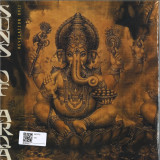
Suns of Arqa is a sonic mission created by luminary Michael Wadada, who began in 1979 after receiving higher guidance in Jamaica while working with roots reggae chanter Prince Far-I. It is a prolific traveling music collective that has seen over 200 collaborators, meant to connect people from all cultures and walks of life through a “deeply spiritual vibration that merges cultures, faiths and musical genres”. Wadada combines ancient Hindustani raga systems with Piobaireachd and Nyabinghi roots drumming, creating ritualistic world music infused with dub and reggae.
The lyrics combine both mystical and sensory elements, often including prayer and referencing a higher power but finding root in experiences common to all people- memory, sight, and physical sensation.
Their first album, Revenge of the Mozabites, was a collaboration between Wadada and On-U Sound creator Adrian Sherwood. Following its 1980 release,Peter Gabriel invited them to perform at the first WOMAD festival. Today, the record is regarded by some as a cult classic. Over the years they have played at many major music festivals including Glastonbury, Big Chill, Telerama Dub Festival, and Transmusicales, and released over 40 albums on Virgin, EMI, Interchill Records, Antler Subway, Red Rhino, and their own label, Arka Sound.
Suns of Arqa has had a seminal influence on the World Beat sound, and continued to make appearances at seasonal festivals and sacred ritual spaces all over the world until 2021. Michael Wadada passed away in the midst of planning their U.S. tour for this release. The record is a compilation of some of Wadada’s and Sleepers Record’s favorite old Sun of Arqa tracks, mixed by Youth and Adrian Sherwood, and mastered by Eroc (drummer of Grobshnitt).
Notable collaborating artists include: Guy Called Gerald, UK producers Youth and John Leckie, Greg Hunter, 808 State's Graham Massey, Finley Quaye, Sounds From the Ground, Bryn Jones aka MuslimGauze, Adrian Sherwood, John Cooper-Clarke, The late great Professor Stanley Unwin, Eric Random, New age guru Tim Wheater, Astralasia, Prince Far-I, The Orb's Alex Patterson, Zion Train, and Gaudi.
"And although the Great Spiritual being Michael Wadada has returned to source and his body to earth at our time, his music is alive and will continue to be a great force for higher spiritual realms and raising vibration through occult frequencies...Suns of Arqa will continue to raise the vibration of the hearts and minds of humanity" – Angela aka Angel-Eye (Wadada's wife and bandmate)
‘.dev’ was yet another collaborative piece from Agoria, aka Sebastien Devaud. As well as Blasé and STS, who returned after featuring on ‘Drift’, Devaud worked with Domino’s Ela Minus, flamenco innovator Niño De Elche, and the unique hip hop delivery of Rome Fortune across the LP, with additional collaborators including Sacha Rudy and Oscar winner (The Sound of Metal), Nicolas Becker.
Sonically, the LP saw Agoria presenting a kaleidoscopic haze of cinematic and evolving electronica that touched on house, techno, electro, hip hop, and beyond but beneath the aesthetics, ‘.dev’ was the work of an artist asking himself questions in order to create worlds out of his answers.
Beyond looking to question the very systems of the traditional album format, his holistic approach to AI and NFT’s within the thematic world of his work were laid out front and centre through the visual and conceptual identity surrounding the album.
Repress
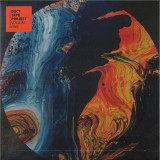
Hallucinations storm the border between wakefulness and sleep. Accurate perceptions give way to distorted visions, senses torn and split through. Borne of mutual inspiration, legendary duo Dopplereffekt and sonic adventurer Objekt present Hypnagogia, a split 12" on Leisure System, with each transmission derived from a shared journey into extrasensory perception and subconscious thought.
Modularz presents emerging artist Patrick Carrera to our family of producers. We are excited to present this next level release focused on pure analog manipulation and sonic hypnosis. The berlin based producer spent a year producing this project for us, its techno in the purest form and taking modern sequencing to a new level. We couldn't be more excited for this body of work to be hammered on the most highly regarded sound systems and venues around the globe. Highly recommended TIP!
Analog Tara’s Life of the Mother is a sonic meditation on the depth, expansiveness, complexity, and power that this phrase holds. This album is made from layers of generative processes and interactions with them. Analog Tara uses a Zillion sequencer and Xone mixer as system guides, and sounds of the ARP 2500, Jealous Heart, Access Virus, Oberheim OB-6, Jomox XBase, Moog DFAM, and more to create a compelling electronic narrative.
Composed, recorded + mixed by Tara Rodgers. Mastered by Piper Payne, assisted by Colby Gustafson, at Neato Mastering in Nashville, TN. Art by Jackie Milad, She Goes Ancient, mixed media, 2019.
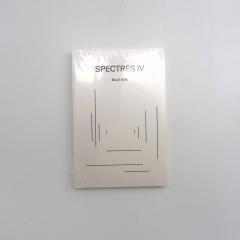
Fourth issue of Shelter Press' annual publication series »Spectres« (in association with INA GRM), this time themed around ›voice‹. Featuring contributions from/about François J. Bonnet, John Giorno, David Grubbs, Yannick Guédon, Lee Gamble, Sarah Hennies, Haela Ravenna Hunt-Hendrix, Stine Janvin, Joan La Barbara, Youmna Saba, Akira Sakata, Pierre Schaeffer, Peter Szendy and Ghédalia Tazartès.
The book includes an essay about the essence of improvisation by Joan La Barbara, Lee Gamble looking at neural networks and vocal simulation systems, an untitled anecdote from Ghédalia Tazartès (RIP) and Stine Janvin on the necessity of singing, plus much more.
»The voice is everywhere, infiltrating everything, making civilisation, marking out territories with infinite borders, spreading from the farthest reaches to the most intimate spaces. It can be neither reduced nor summarised. And accordingly, when taken as a theme, the voice is inexhaustible, even when seen in the light of its very particular relation with the sonic or the musical, as is the case in most of the texts collected in this volume. There is no point therefore in trying to circumscribe or amalgamate the multiple avatars of the voice. We must rather try to apprehend what the voice can do, to envisage its landscape, its potential effects.«
— Extract from the editors' foreword.
UILTY RAZORS, BONA FIDE PUNKS.
Writings on the topic that go off in all directions, mind-numbing lectures given by academics, and testimonies, most of them heavily doctored, from those who “lived through that era”: so many people today fantasize about the early days of punk in our country… This blessed moment when no one had yet thought of flaunting a ridiculous green mohawk, taking Sid Vicious as a hero, or – even worse – making the so-called alternative scene both festive and boorish. There was no such thing in 1976 or 1977, when it wasn’t easy to get hold of the first 45s by the Pistols or the Clash. Few people were aware of what was happening on the fringes of the fringes at the time. Malcolm McLaren was virtually unknown, and having short hair made you seem strange. Who knew then that rock music, which had taken a very bad turn since the early 1970s, would once again become an essential element of liberation? That, thanks to short and fast songs, it would once again rediscover that primitive, social side that was so hated by older generations? Who knew that, besides a few loners who read the music press (it was even better if they read it in English) and frequented the right record stores? Many of these formed bands, because it was impossible to do otherwise. We quickly went from listening to the Velvet Underground to trying to play the Stooges’ intros. It’s a somewhat collective story, even though there weren’t many people to start it.
The Guilty Razors were among those who took part in this initial upheaval in Paris. They were far from being the worst. They had something special and even released a single that was well above the national average. They also had enough songs to fill an album, the one you’re holding. In everyone’s opinion, they were definitely not among the punk impostors that followed in their wake. They were, at least, genuine and credible.
Guilty Razors, Parisian punk band (1975-1978). To understand something about their somewhat linear but very energetic sound, we might need to talk about the context in which it was born and, more broadly, recall the boredom (a theme that would become capital in punk songs) coupled with the desire to blow everything off, which were the basis for the formation of bands playing a rejuvenated rock music ; about the passion for a few records by the Kinks or the early Who, by the Stooges, by the Velvet mostly, which set you apart from the crowd.
And of course, we should remember this new wave, which was promoted by a few articles in the specialized press and some cutting-edge record stores, coming from New York or London, whose small but powerful influence could be felt in Paris and in a handful of isolated places in the provinces, lulled to sleep by so many appalling things, from Tangerine Dream to President Giscard d’Estaing...
In 1975-76, French music was, as almost always, in a sorry state ; it was still dominated by Johnny Hallyday and Sylvie Vartan. Local rock music was also rather bleak, apart from Bijou and Little Bob who tried to revive this small scene with poorly sound-engineered gigs played to almost no one.
In the working class suburbs at the time, it was mainly hard rock music played to 11 that helped people forget about their gruelling shifts at the factory. Here and there, on the outskirts of major cities, you still could find a few rockers with sideburns wearing black armbands since the death of Gene Vincent, but it wasn’t a proper mass movement, just a source of real danger to anyone they came across who wasn't like them. In August 1976, a festival unlike any other took place in Mont-de-Marsan – the First European Punk Festival as the poster said – with almost as many people on stage as in the audience. Yet, on that day, a quasi historical event happened, when, under the blazing afternoon sun, a band of unknowns called The Damned made an unprecedented noise in the arena, reminiscent of the chaotic Stooges in their early adolescence. They were the first genuine punk band to perform in our country: from then on, anything was possible, almost anything seemed permissible.
It makes sense that the four+1 members of Guilty Razors, who initially amplified acoustic guitars with crappy tape recorder microphones, would adopt punk music (pronounced paink in French) naturally and instinctively, since it combines liberating noise with speed of execution and – crucially – a very healthy sense of rebellion (the protesters of May 1968 proclaimed, and it was even a slogan, that they weren’t against old people, but against what had made them grow old. In the mid-1970s, it seemed normal and obvious that old people should now ALSO be targeted!!!).
At the time, the desire to fight back, and break down authority and apathy, was either red or black, often taking the form of leafleting, tumultuous general assemblies in the schoolyard, and massive or shabby demonstrations, most of the time overflowing with an exciting vitality that sometimes turned into fights with the riot police. Indeed, soon after the end of the Vietnam War and following Pinochet’s coup in Chile, all over France, Trotskyist and anarcho-libertarian fervour was firmly entrenched among parts of the educated youth population, who were equally rebellious and troublemakers whenever they had the chance. It should also be noted that when the single "Anarchy in the UK" was first heard, even though not many of us had access to it, both the title and its explosive sound immediately resonated with some of those troublemakers crying out for ANARCHY!!! Meanwhile, the left-wing majority still equated punks with reckless young neo-Nazis. Of course, the widely circulated photos in the mainstream press of Siouxsie Sioux with her swastikas didn’t necessarily help to win over the theorists of the Great Revolution. It took Joe Strummer to introduce The Clash as an anti-racist, anti-fascist and anti-ignorance band for the rejection of old-school revolutionaries to fade a little.
The Lycée Jean-Baptiste Say at Porte d’Auteuil, despite being located in the very posh and very exclusive 16th arrondissement of Paris, didn’t escape these "committed" upheavals, which doubled as the perfect outlet for the less timid members of this generation.
“Back then, politics were fun,” says Tristam Nada, who studied there and went on to become Guilty Razors’ frontman. “Jean-Baptiste was the leftist high-school in the neighbourhood. When the far right guys from the GUD came down there, the Communist League guys from elsewhere helped us fight them off.”
Anything that could challenge authority was fair game and of course, strikes for just about any reason would lead to increasingly frequent truancy (with a definitive farewell to education that would soon follow). Tristam Nada spent his 10th and 11th unfinished grades with José Perez, who had come from Spain, where his father, a janitor, had been sentenced to death by Franco. “José steered my tastes towards solid acts such as The Who. Like most teenagers, I had previously absorbed just about everything that came my way, from Yes to Led Zeppelin to Genesis. I was exploring… And then one day, he told me that he and his brother Carlos wanted to start a rock band.” The Perez brothers already played guitar. “Of course, they were Spanish!”, jokes their singer. “Then, somewhat reluctantly, José took up the bass and we were soon joined by Jano – who called himself Jano Homicid – who took up the rhythm guitar.” Several drummers would later join this core of not easily intimidated young guys who didn’t let adversity get the better of them.
The first rehearsals of the newly named Guilty Razors took place in the bedroom of a Perez aunt. There, the three rookies tried to cover a few standards, songs that often were an integral part of their lives. During a first, short gig, in front of a bewildered audience of tough old-school rockers, they launched into a clunky version of the Velvet Underground's “Heroin”. Challenge or recklessness? A bit of both, probably… And then, step by step, their limited repertoire expanded as they decided to write their own songs, sung in a not always very accurate or academic English, but who cared about proper grammar or the right vocabulary, since what truly mattered was to make the words sound as good as possible while playing very, very fast music? And spitting out those words in a language that left no doubt as to what it conveyed mattered as well.
Trying their hand a the kind of rock music disliked by most of the neighbourhood, making noise, being fiercely provocative: they still belonged to a tiny clique who, at this very moment, had chosen to impose this difference. And there were very few places in France or elsewhere, where one could witness the first stirrings of something that wasn’t a trend yet, let alone a movement.
In the provinces, in late 1976 or early 1977, there couldn’t be more than thirty record stores that were a bit more discerning than average, where you could hear this new kind of short-haired rock music called “punk”. The old clientele, who previously had no problem coming in to buy the latest McCartney or Aerosmith LP, now felt a little less comfortable there…
In Paris, these enlightened places were quite rare and often located nex to what would become the Forum des Halles, a big shopping mall. Between three aging sex workers, a couple of second-hand clothes shops, sellers of hippie paraphernalia and small fashion designers, the good word was loudly spread in two pioneering places – propagators of what was still only a new underground movement. Historically, the first one was the Open Market, a kind of poorly, but tastefully stocked cave. Speakers blasted out the sound of sixties garage bands from the Nuggets compilation (a crucial reference for José Perez) or the badly dressed English kids of Eddie and the Hot Rods. This black-painted den was opened a few years earlier by Marc Zermati, a character who wasn’t always in a sunny disposition, but always quite radical in his (good) choices and his opinions. He founded the independent label Skydog and was one of the promoters of the Mont-de-Marsan punk festivals. Not far from there was Harry Cover, another store more in tune with the new New York scene, which was amply covered in the house fanzine, Rock News (even though it was in it that the photos of the Sex Pistols were first published in France).
It was a favorite hang-out of the Perez brothers and Tristam Nada, as the latter explained. “It’s at Harry Cover’s that we first heard the Pistols and Clash’s 45s, and after that, we decided to start writing our first songs. If they could do it, so could we!”
The sonic shocks that were “Anarchy in the UK”, “White Riot” or the Buzzcocks’s EP, “Spiral Scratch” – which Guilty Razors' sound is reminiscent of – were soon to be amplified by an unparalleled visual shock. In April 1977, right after the release of their first LP, The Clash performed at the Palais des Glaces in Paris, during a punk night organised by Marc Zermati. For many who were there, it was the gig of a lifetime…
Of course, Guilty Razors and Tristam were in the audience: “That concert was fabulous… We Parisian punks were almost all dressed in black and white, with white shirts, skinny leather ties, bikers jackets or light jackets, etc. The Clash, on the other hand, wore colourful clothes. Well, the next day, at the Gibus, you’d spot everyone who had been at this concert, but they weren’t wearing anything black, they were all wearing colours.”
It makes sense to mention the Gibus club, as Guilty Razors often played there (sometimes in front of a hostile audience). It was also the only place in Paris that regularly scheduled new Parisian or Anglo-Saxon acts, such as Generation X, Siouxsie and the Banshees, the Slits, and Johnny Thunders who would become a kind of messed-up mascot for the venue. A little later, in 1978, the Rose Bonbon – formerly the Nashville – also attracted nightly owls in search of electric thrills… In 1977, the iconic but not necessarily excellent Asphalt Jungle often played at the Gibus, sometimes sharing the bill with Metal Urbain, the only band whose aura would later transcend the French borders (“I saw them as the French Sex Pistols,” said Geoff Travis, head of their British label Rough Trade). Already established in this small scene, Metal Urbain helped the young and restless Guilty Razors who had just arrived. Guitarist for Metal Urbain Hermann Schwartz remembers it: “They were younger than us, we were a bit like their mentors even if it’s too strong a word… At least they were credible. We thought they were good, and they had good songs which reminded of the Buzzcocks that I liked a lot. But at some point, they started hanging out with the Hells Angels. That’s when we stopped following them.”
The break-up was mutual, since, Guilty Razors, for their part, were shocked when they saw a fringe element of the audience at Metal Urbain concerts who repeatedly shouted “Sieg Heil” and gave Nazi salutes. These provocations, even still minor (the bulk of the skinhead crowd would later make their presence felt during concerts), weren’t really to the liking of the Perez brothers, whose anti-fascist convictions were firmly rooted. Some things are non-negotiable.
A few months earlier (in July 1978), Guilty Razors had nevertheless opened very successfully for Metal Urbain at the Bus Palladium, a more traditonally old-school rock night-club. But, as was sometimes the case back then, the night turned into a mass brawl when suburban rockers came to “beat up punks”.
Back then, Parisian nights weren’t always sweet and serene.
So, after opening as best as they could for The Jam (their sound having been ruined by the PA system), our local heroes were – once again – met outside by a horde of greasers out to get them. “Thankfully,” says Tristam, “we were with our roadies, motorless bikers who acted as a protective barrier. We were chased in the neighbouring streets and the whole thing ended in front of a bar, with the owner coming out with a rifle…”
Although Tristam and the Perez brothers narrowly escaped various, potentially bloody, incidents, they weren’t completely innocent of wrongdoing either. They still find amusing their mugging of two strangers in the street for example (“We were broke and we simply wanted to buy tickets for the Heartbreakers concert that night,” says Tristam). It so happened that their victims were two key figures in the rock business at the time: radio presenter Alain Manneval and music publisher Philippe Constantin. They filed a complaint and sought monetary compensation, but somehow the band’s manager, the skilful but very controversial Alexis, managed to get the complaint withdrawn and Guilty Razors ended up signing with Constantin with a substantial advance.
They also signed with Polydor and the label released in 1978 their only three-track 45, featuring “I Don't Wanna be A Rich”, “Hurts and Noises” and “Provocate” (songs that exuded perpetual rebellion and an unquenchable desire for “class” confrontation). It was a very good record, but due to a lack of promotion (radio stations didn’t play French artists singing in English), it didn’t sell very well. Only 800 copies were allegedly sold and the rest of the stock was pulped… Initially, the three tracks were to be included on a LP that never came to be, since they were dropped by Polydor (“Let’s say we sometimes caused a ruckus in their offices!” laughs Tristam.) In order to perfect the long-awaited LP, the band recorded demos of other tracks. There was a cover of Pink Floyd's “Lucifer Sam” from the Syd Barrett era – proof of an enduring love for the sixties’ greats –, “Wake Up” a hangover tale and “Bad Heart” about the Baader-Meinhof gang, whose actions had a profound impact on the era and on a generation seeking extreme dissent... On the album you’re now discovering, you can also hear five previously unreleased tracks recorded a bit later during an extended and freezing stay in Madrid, in a makeshift studio with the invaluable help of a drummer also acting as sound engineer. He was both an enthusiastic old hippie and a proper whizz at sound engineering. Here too, certain influences from the fifties and sixties (Link Wray, the Troggs) are more than obvious in the band’s music.
Shortly after a final stormy and rather barbaric (on the audience’s side) “Punk night” at the Olympia in June 1978, Tristam left the band ; his bandmates continued without him for a short while.
But like most pioneering punk bands of the era, Guilty Razors eventually split up for good after three years (besides once in Spain, they’d only played in Paris). The reason for ceasing business activities were more or less the same for everyone: there were no venues outside one’s small circuit to play this kind of rock music, which was still frightening, unknown, or of little interest to most people. The chances of recording an LP were virtually null, since major labels were only signing unoriginal but reassuring sub-Téléphone clones, and the smaller ones were only interested in progressive rock or French chanson for youth clubs. And what about self-production? No one in our small safety-pinned world had thought about it yet. There wasn’t enough money to embark on that sort of venture anyway.
So yes, the early days of punk in France were truly No Future!
Ashley Tindall, AKA Skeptical, returns in peak form with Blimp EP — the fourth release on his Rubi Records imprint — delivering four meticulously crafted cuts of uncompromising drum & bass.
Opening with the title track, Blimp sets the tone with a deep, steppy wobbler that nods subtly to the title track from his second Rubi Records release, Capsize EP. All the signature Skeptical hallmarks are here: hypnotic, pared-back metronomic drums and shimmy-inducing, undulating subs that demand movement. Yet this time there's a noticeable shift — warm, underlying melodic pads bring an unexpected emotional depth. It's not dreamy, but it is more introspective than we're used to, showing another layer to his sonic palette.
So Good flips the script entirely. A dark, cinematic growler, it leans into ghosted vocal fragments and a futuristic film-noir aesthetic. Tense, claustrophobic rhythms and sinister textures create an unsettling atmosphere — tailor-made for those lights-out, pressure-heavy dancefloor moments.
Third comes the undeniable monster of the EP, Technology. Trademark "stink-face" Skeppiness is in full effect from the first bar. Disjointed sci-fi stabs and eerie pads collide with clinical, almost militaristic drum programming, all anchored by a devastatingly weighty bassline. Movement isn't optional — this is pure Skeptical, uncompromising and lethal.
Closing the EP is Bad Generation, a sound system–influenced weapon that finds Skeptical operating at his dubwise best. Fusing minimal D&B with heavyweight, roots-inspired rhythms is no easy task, but here it's executed with effortless authority. It's equally suited to shelling down a rave or getting lost in a deep, eyes-closed session.
Four tracks. Four distinct moods. 100% Skeptical.
Blimp EP confirms once again that his sound continues to evolve — sharper, deeper, and more refined with every release.
Support: Ben UFO, Joy Orbison, Gilles Peterson, dBridge, Break, DLR, Doc Scott, Mefjus, Kasra, Kings of the Rollers, Alix Perez, Jubei, Dub Phizix, Flight, Tasha, Loxy, Lens.
- 1: Redirect Revenge
- 2: All Contrast
- 3: Preserve/Manifest
- 4: Dead Calls
WHITE Vinyl[24,79 €]
INTERWOVEN' is a four-track split EP that binds together two of Denmark's most forwardthinking heavy acts: HIRAKI and Meejah. Built on a shared appetite for boundary-pushing intensity, the collaboration channels the urgency of electronic hardcore, the spaciousness of experimental rock, and the emotional depth of cinematic metal into an immersive work that is at once confrontational and deeply connective. As a part of Denmark's flourishing underground scene for dark and heavy music, the HIRAKI trio deploys an aggressive style of progressive synthpunk from the edge of the abyss. The band presents this sonic assault to accompany the inevitable fact that our world is sick, and we all take part in maintaining the fucked up systemic structures. MEEJAH is a Post/Experimental Danish-Korean band from Copenhagen weaving together Nordic Melancholia & Korean Ancestry. The results sound like Heaven, Thunder, Mountain, Earth, Wind, Fire, Water, Lake. Across these four tracks, both bands challenge each other to step past familiar contours, unraveling and recombining their musical identities until a new hybrid shape emerges_volatile, textured, and unmistakably alive. FOR FANS OF The Body * The Armed * Sightless Pit * Massive Attack * Julie Christmas * Death Engine
Black Vinyl[22,65 €]
INTERWOVEN' is a four-track split EP that binds together two of Denmark's most forwardthinking heavy acts: HIRAKI and Meejah. Built on a shared appetite for boundary-pushing intensity, the collaboration channels the urgency of electronic hardcore, the spaciousness of experimental rock, and the emotional depth of cinematic metal into an immersive work that is at once confrontational and deeply connective. As a part of Denmark's flourishing underground scene for dark and heavy music, the HIRAKI trio deploys an aggressive style of progressive synthpunk from the edge of the abyss. The band presents this sonic assault to accompany the inevitable fact that our world is sick, and we all take part in maintaining the fucked up systemic structures. MEEJAH is a Post/Experimental Danish-Korean band from Copenhagen weaving together Nordic Melancholia & Korean Ancestry. The results sound like Heaven, Thunder, Mountain, Earth, Wind, Fire, Water, Lake. Across these four tracks, both bands challenge each other to step past familiar contours, unraveling and recombining their musical identities until a new hybrid shape emerges_volatile, textured, and unmistakably alive. FOR FANS OF The Body * The Armed * Sightless Pit * Massive Attack * Julie Christmas * Death Engine The single colour edition comes as white vinyl!
Vortex 1 marks the next chapter in the DUB Recordings / Repetitive Rhythm Research series on Clone Records. Aleksi Perala dives deep into his unique sonic universe - unleashing a powerful collection of advanced rhythms. Precision-crafted patterns spiral into a mesmerizing vortex of sound, pulling you into new dimensions of rhythmic exploration. A signature experience from one of electronic musicâ??s most singular and prolific producers, known for the unique Colundi tuning system and a sound that has continually pushed musical boundaries since his early releases on Rephlex. Powerful tools for adventurous DJs and devoted braindancers alike. Clone Exclusive *Limited edition on Silver/Black and Gold/Black Marbled vinyl*
A mutant beat manifesto from Miami luminaries Jonathan Trujillo (Jonny from Space) and Pablo Arrangoiz (El Gusano, DJ Fitness, Baüzer Vep), Crespi Drum Syndicate’s Colada Talk follows the duo’s debut on Sonido Isla with a freshly freaked collection of percussive oddities. Rooted in foundational clave rhythms and avant-garde experimentation, Crespi Drum Syndicate emerges from the amphibious underbelly of Miami’s Latin-infused club scene with their singular electro-acoustic vision.
Extensive live recording sessions, free improvisation, and a ritualistic studio practice
— countless hours spent twisting and rearranging sounds from found objects and Buchla modular systems — coalesce into new rhythmic forms. Atonal saxophone, bass clarinet, and slide whistle further expand upon Trujillo and Arrangoiz’s ever-evolving sonic palette, while NYC’s AceMo lends a hand on the heavily syncopated “Siu,” and closer “Boubow” might be the duo’s most hook-driven production to date with its mangled pop vocal and lewd drum-line bounce.
Landing somewhere between Steve Reich’s polyrhythmic “Six Marimbas,” Moebius & Plank’s industrial Krautrock sessions, and Ricardo Villalobos’ hypnotic techno minimalism, Colada Talk delivers on a world of subtropical rhythmic futurism and experimental body music that’s as heady as it is culo-shaking.
- Matches
- Frightening Machines
- Sirius
- Hurricane
- Madeleine
- Atlas
- A Matter Of Time
- Table Four
- I'm Always Willing
- Could This Be Enough?
RED SMOKE COLORED VINYL[23,11 €]
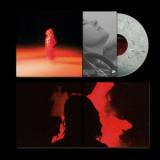
The new record follows Priddy"s sophomore LP "The Pendulum Swing" which firmly established her as one of the most exciting artists on the contemporary British music scene. Produced by Rob Ellis (PJ Harvey, Anna Calvi, Bat for Lashes), "These Frightening Machines" was written over the course of a year as Priddy made the transition from her 20s to her 30s. The most sonically varied of her career, the songs span a full spectrum of emotions from anger and despair to hope, longing and lust, from reclaiming the voices of women silenced by history, to expressing solidarity and love, to confronting illness, disconnection, the vulnerability and importance of relationships, and the general ache of growing older and not always wiser. They explore what it means to keep going when things fall apart, to hold onto connections in a world that sometimes divides, and to figure out where we fit into the machines and systems we find ourselves a part of.
- 01: Just Because You Don&Apos;T Believe That I Want To Dance, Don&Apos;T Mean That I Don&Apos;T Want To
- 02: Psalm 68 (22-35)
- 03: Cyber Feminism Index
- 04: Faithful And True
- 05: Crimes Of The Future
- 06: Rider On The White Horse
- 07: The Royal Arch
- 08: Best Served Cold
- 09: Op1 Dead
- 10: Ai Futurr
XDCVR_ unveils 'I HATE THAT SHIT, I HATE ALL THAT SHIT' a blistering sonic manifesto on the 'performativity of decay'.
In a world saturated with digital perfection, the album emerges as a vital, hand-made act of electronic rebellion.
Framed as a "soundtrack for the end stretch" the record explores the notion that societal decay is not a passive process, but an active performance—a machine chugging along long after its wheels have fallen off.
This is cyborg music for a bifurcated reality: carbon-fiber toughness shielding a core of systemic rot. The sound palette is intentionally raw and imperfect, a direct challenge to the sterile, automated order of what the artist calls the "techno-fascist oligarchy."
Tracks eschew conventional temporality, mirroring the feeling of existing in two concurrent timelines—one hyper-aware of the collapse, the other numbly consuming it.
Drawing a line from the Cold War anxieties of the past to the data-farming dystopia of the present, 'I HATE THAT SHIT…' posits art as the last authentic incubator for societal change. It is, in the artist's words, "a deliberate 'fuck you' to the oppressive order of the status quo. This is not easy listening; it is a contested space, a lit fuse, and a necessary noise for our complicated times."
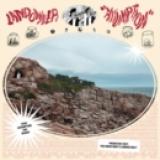
"Western Massachusetts band Landowner play abrasively-clean minimalist punk. Singer Dan Shaw started Landowner in 2016, writing and recording the project's debut Impressive Almanac with a practice amp and a laptop drum machine. Shaw's initial concept was a made-up genre called “weak d-beat”, meant to sound intentionally absurd “as if Antelope were reading the sheet music of Discharge”. When Shaw joined with his current bandmates in 2017, they translated these early experiments in restraint, minimalism, and caricatured hardcore as a live band. This provided Landowner with its own unique set of blueprints: the guitars “slap hard” without using any distortion or effects, the rhythm section is tight, fast, and repetitious, and the song structures make space for lyrics that reflect on the global systems and dark absurdities our lives are tangled in. Comparisons could be made to The Fall, Lungfish, or Uranium Club, but across their five albums, they make it clear: Landowner just sound like Landowner.
Assumption is the band's fifth album. Sonically, it captures the vibrancy and intensity of their live performances. The album title “Assumption” encapsulates the album's multi-layered themes. We make assumptions, taking in information online through an overload of decontextualized snippets and headlines, and then quickly form conclusions, or we allow artificial intelligence to do the thinking for us. Assumption is the sound of a band that established its own musical identity and has reached a place of tightness with an ease gained from years of playing together, sounding mechanically precise and at the same time fully human. It may be the band's most cohesive and fully realized work to date."
Athens-based percussionist and sound artist Yorgos Stavridis makes a stark, physical debut for Heat Crimes with »Solo Percussion«, a set of one-take improvisations that approach percussion as a field of friction between body, objects, space, and sound. Working with membranes, metals, found objects, and feedback systems, Stavridis foregrounds timbre, texture, and spatial presence, collapsing distinctions between instrument, environment, and recording apparatus.
Microphones and speakers are treated as unstable instruments in their own right, introducing opaqueness, resistance, and feedback into the performative chain. Scrapes, low-end pressure, brittle metallic chatter, and sudden bursts of resonance emerge through close bodily engagement with surfaces and materials, each piece documenting a specific configuration of objects, gestures, and acoustic conditions. Performed and recorded live, »Solo Percussion« captures sound in its most contingent state; situational, physical, and irreducibly present. Eschewing narrative, pulse, or formal development, the record sits squarely in Heat Crimes’ lineage of process-led, uncompromising sonic research, where listening becomes an active, tactile act and sound itself is the primary event.
There is a breaking point where the mind yields and the body takes command. This is precisely the territory of Frenetic Habits EP.
Asymetric80 lands at INDUSTRIAS MEKANIKAS with an unapologetic statement: a direct immersion into the aesthetics of collapse and extreme habits. The work places you in the center of a post-apocalyptic scenario, where survival no longer relies on calm, but on your ability to endure mechanical tension.
The sound is built upon solidity and saturation. You won’t find fragility here, but rather an architecture of EBM, New Beat, and Industrial Techno designed to dominate any sound system that dares to play it.
Side A establishes the hierarchy with Frenetic Habits. Far from linear, the track unfolds a broken, demolishing rhythm, generating a devastating sonic pressure that completely envelops you. It is a piece of constant drive, an armored machine advancing over the very ground you stand on. It is followed by Exile and Unmasked, which shifts the strategy towards depth: a hypnotic immersion where industrial textures densify, creating a dark atmosphere that traps you with no escape.
On Side B, Bleak materializes the heaviness of the environment. A slow-burning, corrosive track with deep bass, which you can feel advancing with the force of concrete. To close, Dementia releases the accumulated tension with overflowing kinetic energy; a final outburst of controlled aggression that closes the cycle with maximum intensity.
Frenetic Habits EP is a record of ironclad textures and terminal atmosphere. A work that documents not defeat, but the brute force needed to remain standing when everything around has come crashing down.