Cerca:sop artists

Generi
Tutto
KATHERINE PRIDDY - THESE FRIGHTENING MACHINES
  • Matches
  • Frightening Machines
  • Sirius
  • Hurricane
  • Madeleine
  • Atlas
  • A Matter Of Time
  • Table Four
  • I'm Always Willing
  • Could This Be Enough?
disponibile anche

RED SMOKE COLORED VINYL[23,11 €]


The new record follows Priddy"s sophomore LP "The Pendulum Swing" which firmly established her as one of the most exciting artists on the contemporary British music scene. Produced by Rob Ellis (PJ Harvey, Anna Calvi, Bat for Lashes), "These Frightening Machines" was written over the course of a year as Priddy made the transition from her 20s to her 30s. The most sonically varied of her career, the songs span a full spectrum of emotions from anger and despair to hope, longing and lust, from reclaiming the voices of women silenced by history, to expressing solidarity and love, to confronting illness, disconnection, the vulnerability and importance of relationships, and the general ache of growing older and not always wiser. They explore what it means to keep going when things fall apart, to hold onto connections in a world that sometimes divides, and to figure out where we fit into the machines and systems we find ourselves a part of.

pre-ordina ora06.03.2026

dovrebbe essere pubblicato su 06.03.2026

23,11
KATHERINE PRIDDY - THESE FRIGHTENING MACHINES

The new record follows Priddy"s sophomore LP "The Pendulum Swing" which firmly established her as one of the most exciting artists on the contemporary British music scene. Produced by Rob Ellis (PJ Harvey, Anna Calvi, Bat for Lashes), "These Frightening Machines" was written over the course of a year as Priddy made the transition from her 20s to her 30s. The most sonically varied of her career, the songs span a full spectrum of emotions from anger and despair to hope, longing and lust, from reclaiming the voices of women silenced by history, to expressing solidarity and love, to confronting illness, disconnection, the vulnerability and importance of relationships, and the general ache of growing older and not always wiser. They explore what it means to keep going when things fall apart, to hold onto connections in a world that sometimes divides, and to figure out where we fit into the machines and systems we find ourselves a part of.

pre-ordina ora06.03.2026

dovrebbe essere pubblicato su 06.03.2026

23,11
Sam Shure - Best Of Me

Marking his return to Mind Against’s HABITAT imprint, German DJ/producer Sam Shure steps forward with ‘Best Of Me’ - a sophisticated four-tracker that reflects his continued evolution as a producer and performer. Known for fusing adventurous electronic design with melody-driven storytelling, Shure’s latest EP captures both the energy of the dancefloor and the introspective moods that define his sound.

Title track ‘Best Of Me’ opens with warmth and precision, balancing vivid melodies with propulsive rhythm and infectious vocals to form an emotionally charged journey. ‘CV Winds’ dives deeper into hypnotic territory, layering fluid percussion and enveloping synths in a piece built for late-night connection. On the B-side, ‘The Vibe’ sees Shure link with Turkish pairing Drumstone for a magnetic collaboration, a heady, trippy, and earworming dive into both artists’ sonic worlds. Closing with ‘Together’, the EP’s finale brings a sense of unity and release, blending tension and release with intricate grooves to round out the journey.

Having begun his musical journey under the guidance of his father, the Egyptian jazz musician Basem Darwisch, Sam Shure has evolved into an artist renowned for his expressive and forward-thinking sonic approach. Following releases on TAU, Cercle Records, and Magnifik, ‘Best Of Me’ reaffirms Shure’s reputation as a unique voice within the modern electronic landscape, making him a perfect fit for HABITAT’s expanding vision.

non in magazzino

Ordina ora e ordineremo l'articolo per te presso il nostro fornitore.

15,92

Last In: 19 days ago
FABIANO DO NASCIMENTO & VITTOR SANTOS ORCHESTRA - VILA

Hidden away amidst the bustle of Rio de Janeiro’s Catete neighbourhood is a small alleyway behind a cast iron gate. At its end is Bairro Saavedra, the courtyard surrounded by Neo-colonial houses where Brazilian guitar virtuoso Fabiano do Nascimento spent much of his childhood. Built in 1928, this secluded neighbourhood with its wooden shutters, tiled floors and tranquil benches, provides the inspiration for the title of Do Nascimento’s new album VILA, a collaborative project with a sixteen piece orchestra led by trombonist and arranger Vittor Santos.

Recorded between Rio de Janeiro and Los Angeles, VILA is grand, tender, warm, playful and nostalgic. On this stunningly ambitious work, the delicate compositions led by Nascimento's guitar, which sits central in the mix, are surrounded by Santos’ breathtaking orchestral arrangements which swirl in all directions: complimenting, questioning, responding; in constant conversation.

Like the eclecticism of the architecture Do Nascimento grew up surrounded by, his music straddles many worlds at once. He is known as a Brazilian acoustic guitar master and as such has collaborated with Arthur Verocai, Airto Moreira and Itibere Zwarg. But equally at home in Los Angeles's jazz and experimental music scenes, Do Nascimento is also known for his work with artists like Sam Gendel and Carlos Nino.

Vittor Santos is an arranger and Trombonist who has worked extensively with many of the greats of Brazilian music, including João Donato, Marcos Valle, Toninho Horta, and Elza Soares.

=====================================
Credits:

Fabiano do Nascimento – 6, 7 and soprano guitars.
All orchestral arrangements and production by Vitor Santos.
Recorded at Electro-Sound studio, Los Angeles and Estúdio Fibra, Rio de Janeiro
Engineered by Jason Hiller and Garbiel Lucchini
Mastered by Mike Bozzi

Oboe – Francisco Gonçalves
Contrabaixo – Rodrigo Villa
Drums – Márcio Bahia
Violino - Ricardo Amado
Violino – Thiago Teixeira
Violin – Daniel Albuquerque
Violin – Márcio Sanches
Viola – Ivan Zandonade
Viola – Dhyan Toffolo
Cello - Hugo Pilger
Cello – Janaína Salles
Double Bass – Rômulo Gomes
Clarinet – José Batista
French Horn – Philip Doyle
Trombones - Vittor Santos
Violin – Daniel Guedes

non in magazzino

Ordina ora e ordineremo l'articolo per te presso il nostro fornitore.

23,11

Last In: 30 days ago
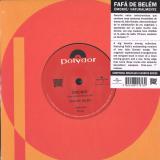
FAFA DE BELEM - EMORIO

FAFA DE BELEM

EMORIO

7"-VinylVAMPI45118
Vampisoul
20.02.2026

A longtime favorite among Brazilian music collectors! Fafá de Belém’s take on Joao Donato´s ‘Êmoriô’ and ‘Naturalmente’ strip away the originals’ sophisticated arrangements in favor of a more driving groove and a raw, funky edge that makes them absolute dancefloor weapons.

First time 7” reissue, cut at 45 RPM !

--------------------------------------------------------------------

Singer and actress Fafá de Belém is one of Brazil’s most beloved and popular artists. This vinyl single from 1975 marked the very beginning of her long and successful career in Brazilian popular music and, over the years, has become a highly sought-after collector’s item among DJs worldwide.

The record features two tracks, ‘Êmoriô’ and ‘Naturalmente’, written by João Donato alongside Gilberto Gil and Caetano Veloso, originally released on his album “Lugar Comum” that same year. Fafá de Belém’s versions, however, strip away the originals’ sophisticated arrangements in favor of a more driving groove and a raw, funky edge that makes them absolute dancefloor weapons.

non in magazzino

Ordina ora e ordineremo l'articolo per te presso il nostro fornitore.

12,56

Last In: 11 days ago
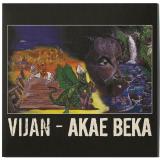
Akae Beka - Vijan

Akae Beka

Vijan

12inchIGBZRLP009
Before Zero Records
13.02.2026

Vijan, originally released in 2003 by I Grade Records, is a seminal release from the “golden era” of St. Croix roots reggae, now available for the first time on 12” vinyl courtesy of Before Zero Records.

Produced by the legendary combination of Vaughn Benjamin and Laurent “Tippy I” Alfred, Vijan balances the raw, spiritual intensity of Vaughn’s songwriting with the sophisticated, melodic arrangements that became the hallmark of the I Grade sound.

This album features an incredible lineup of musicians who helped shape the sound of Virgin Islands reggae. The production credits boast the textured guitar layers of Tuff Lion , the deep, driving bass of Kenyatta Itola , and the rhythmic precision of Dion “Bosie” Hopkins. Uniquely, this album also showcases Vaughn Benjamin’s versatility as a multi-instrumentalist, contributing drums, bass, and keys on standout tracks like “All Ye Naashan” and “Thanks for Life”.

Akae Beka’s inimitable style of rich, deep, multi-layered songwriting and uncompromising devotion to RasTafari is on full display here. At the point of his untimely passing in 2019, Vaughn Benjamin had released over 70 albums, solidifying his place as one of the most prolific reggae artists ever known. Vijan remains
a glowing highlight in this expansive catalogue, capturing a specific moment of creative brilliance in the early 2000s.

The vinyl reissue allows listeners to engage with the album’s analogue richness and features the striking original artwork by Marcus Wilson, presented here as a 12” square masterpiece.

pre-ordina ora13.02.2026

dovrebbe essere pubblicato su 13.02.2026

23,11
JOE ALLOTTA - TRANSITION

JOE ALLOTTA

TRANSITION

12inchSGH00020
Irma Records
13.02.2026
 
5

Joe Allotta's solo project (drummer, composer, and singer) was born from his need for freedom of expression after numerous experiences
as a session musician for artists such as Davide Shorty, Johnny Marsiglia, Funk Shui Project, Mario Biondi, Leburn Maddox, Giles Robson,
Amy True, and Imaani (Incognito).
His compositions embody the desire to make jazz, in its various forms and influences, accessible to the widest possible audience without sacrificing the impact of an engaging and captivating live performance.
Joe Allotta blends hip hop, funk, and drum 'n' bass with contemporary jazz, perfectly blending vocals with his performances. He combines
his rhythmic exploration with a sweet and surprising voice, capable of lending further emotional depth to his music.
"Transition" is a musical journey that reflects a life in constant motion, where everything seems fleeting, fast, and fleeting, immersed in the
frenetic rhythms that surround us every day. The title also encompasses a more intimate dimension: the growth of his artistic identity. Joe is
no longer just a drummer and composer, but also a singer. His intense and surprising voice intertwines with his drumming in a continuous
dialogue, opening up new expressive possibilities and adding further depth to his musical language.
The album was produced in the studios of the Sghetto Club in Bologna, where Joe, together with his producer Jacopo Trapani, spent weeks
researching and experimenting: rehearsing, playing, processing and synthesizing sounds, developing and arranging ideas, thanks also to
the collaboration of extraordinary musicians. The result is a work that blends instinct and research, intimacy and openness, movement and
transformation: exactly what Transition aims to convey.
CREDITS
Giuseppe "Joe" Allotta: Compositions, Vocals, Drums, Bass, Keyboards
Jacopo Trapani: Compositions, Recording, Mixing
Chicco Allotta: Piano (Track 1)
Giovanni Galdo: Bass (Track 1)
Riccardo Dalle Vedove: Trombone (Track 1)
Piergiorgio Perrella: Guitar (Tracks 2, 5, 8, 9)
Elijah Lee Last Jacinto: Piano (Track 6)
Matteo Diego Scarcella: Sax (Track 6) Francesco Brini: Master

pre-ordina ora13.02.2026

dovrebbe essere pubblicato su 13.02.2026

22,65
David Bowie - Under The Influence? 2x12"
  • A1: Little Richard - Fabulous Little Richard
  • A2: Anthony Newley - Who I Can Turn To
  • A3: Ann Peables - I Can’t Stand The Rain
  • A4: Ken Nordine & The Fred Katz Group - Word Jazz
  • A5: Gerry Mulligan - California Concerts
  • A6: Koerner, Ray & Glover - Blues, Rags & Holler
  • A7: Stooges - Stooges
  • A8: Moondog - Moondog
  • A9: Linton Kwesi Johnson Forces Of Victory - Forces Of Victory
  • A10: Pixies - Doolittle
  • B1: Air - Moon Safari
  • B2: Scott Walker - Scott Walker
  • B3: Grandaddy - The Sophtware Slump
  • B4: Tom Verlaine - Tom Verlaine
  • B5: Brian Eno - Another Green World
  • B6: Kevin Ayers - Unfairground
  • B7: Mother Of Invention - Freak Out
  • B8: Roxy Music - Roxy Music
  • B9: The Langley Schools Music Project - Innocence & Dispair
  • B10: The Polyphonic Spree - Section 8

Which musical artists influenced David Bowie? Which records did he listen to over and over again during his youth and beyond? Who were his favorite songwriters and composers? What were his favorites? And in the case of such an artist, unique in his genre from the beginning to the end of his career, is the term “influences” the right one? As we delved into Bowie’s work, we learned that, even if he was the type to pick and choose from all over the place, he drew most of his inspiration from himself

pre-ordina ora13.02.2026

dovrebbe essere pubblicato su 13.02.2026

27,94
Kirk DEGIORGIO - Kirk Degiorgio Presents Clappp

Hearts and Minds is a new vinyl-only label founded in 2025 by house-head Rich Carrick, named after his Northern UK club night of the same name (co-founded with DJ partner Rayees), and dedicated to showcasing the finest underground artists old and new who have influenced him over the past 30 years. First up is a hero of the scene who carries on his tradition of making 'sublime, sophisticated machine music' with something a little different, in the form of two deep chuggers that will sound equally as good on more discerning dance floors, or on home systems. Lead track 'Acid Cry' brings to mind the menacing, string-laden intensity of Underworld's 'Dark and Long', while the flip-side 'Feel That Vibration' is an uplifting euphonic workout reminiscent of a Spirit Catcher composition. The quality is, unsurprisingly, high, and there are more exciting releases planned for the near future. Definitely one to watch!

In stock dal22.04.2026

14,08

Last In: 30 days ago
Viktoria Tolstoy & Jacob Karlzon - Who We Are LP
  • Satellites
  • Who We Are
  • And So I Goes
  • Cloud On My Tongue
  • The Great Escape
  • Off-White
  • Trigger Warning
  • Stay
  • Fallen Empire
  • Let There Be Love
  • True Love Waits

Viktoria Tolstoy, celebrated for her expressive voice, emotional storytelling and cross-genre artistry, seamlessly blends jazz, pop and original songs.
Her standout tracks ‘Autumn Breeze’ (4.6M streams) and ‘Calling You’ (6.5M streams) have reached millions of listeners worldwide.
Collaborations with top Scandinavian and European jazz artists, including Nils Landgren and Esbjörn Svensson, have positioned Viktoria as one of the leading female voices in European jazz.
Jacob Karlzon, renowned Swedish pianist and composer, is recognized for his virtuosic technique, cinematic soundscapes and inventive harmonic language.
Their collaboration began in the mid-1990s, forming one of the most enduring and successful partnerships in Scandinavian jazz.
Their music bridges Nordic lyricism and modern jazz sophistication, appealing to both jazz and a wider crossover audience. A trusted name on the European scene, they continue to tour internationally and attract strong streaming and media presence.
Their new duo album reflects and renews that bond - an intimate conversation shaped by time, friendship, and change. The world has shifted since their last recording and so have they. Yet their shared musical language endures - evolving, deepening, and gathering new shades of emotion. There is a rare ease between them: two Artists who no longer need to explain, only to listen and respond.
The result is music that feels unforced, sincere and alive - born of trust and the courage to explore the unknown. In the end, it’s the simple beauty of reunion: two musicians meeting again, with everything they’ve lived and everything still to discover

pre-ordina ora31.01.2026

dovrebbe essere pubblicato su 31.01.2026

24,58
GRUPO UM - NINETEEN SEVENTY SEVEN

Grupo um celebrate 50 years with release of lost dictatorship-era album nineteen seventy seven!

First time release - vinyl comes with printed innersleeves

Brazilian avant-jazz vanguardists Grupo Um celebrate their 50th anniversary, sharing a second previously lost 1970s album from the vaults. Nineteen Seventy Seven (titled after the year it was recorded) is another rip-roaring instrumental fusion treasure from the band which spawned from within Hermeto Pascoal’s famed mid-1970s São Paulo collective.

Like their debut album Starting Point, Grupo Um’s Nineteen Seventy Seven was recorded when Brazil's military dictatorship was at its most repressive. “There were no open doors to those who dreamt to be protagonists in creative instrumental music”, remembers drummer Zé Eduardo Nazario, “even popular composers and singers had to submit their songs to censors and many records were banned and confiscated from the stores.”

Just like Hermeto Pascoal's Viajando Com O Som (1977) and Grupo Um's previous album Starting Point (1975), both of which remained unreleased until the 21st century, Zé Eduardo asserts that the 1977 album was flatly 'without any chance to be released at that time."

Recorded at Rogério Duprat’s Vice-Versa Studios in São Paulo, the group were under both time and space restraints, “we chose the small Studio B,” Lelo Nazario recalls, “which had a Tascam (TE AC) 12x8 console and a 4-channel AMPEX AG 440 machine. Therefore, we had to record without overdubs, everything straight to tape.”

Expanding from a trio to a quintet, original Grupo Um members Lelo Nazario (keys), Zé Eduardo Nazario (drums), and Zeca Assumpção (bass) were joined by saxophonist Roberto Sion and percussionist Carlinhos Gonçalves. Carlinhos, Zé and Zeca had already played together in the group Mandala, while brothers Lelo and Zé had just finished a stint backing Hermeto Pascoal during his years in São Paulo.

Lelo was deeply immersed in modular synthesizer experimentation during this period, working extensively with the ARP2600 and EMS Synthi AKS. These electroacoustic explorations formed the sonic foundation for "Mobile/Stabile," one of his first compositions to merge modular synthesis with Brazilian music, a fusion that would ripple throughout the Brazilian jazz scene. The piece premiered at the first São Paulo International Jazz Festival in 1978, performed by Grupo Um with guest trumpeter Márcio Montarroyos. In a shocking moment, festival organizers interrupted the show mid-performance, sparking fierce backlash from both audience members and journalists who denounced the incident as artistic censorship during Brazil's era of political and cultural repression. The version on Nineteen Seventy Seven is the first recording of the composition.

Nineteen Seventy Seven combines Afro-Brazilian rhythm, modular synthesis and a plethora of whistles, percussion and effects pedals. Album opener “Absurdo Mudo” - so titled for the absurd difficulty it poses to the musicians performing it - starts out in a cloud of mysterious dissonance, before the haze breaks for a glorious keyboard and saxophone interplay atop an uptempo samba groove. “Cortejo dos Reis Negros (Version 2)” (Procession of the Black Kings), based on the maracatu rhythm, inverts the traditional jazz song structure by beginning with improvisations, which are followed by the theme and a final coda. “The studio also had two Parasound electronic reverb units,” Lelo notes, “and the timbre is very audible on the soprano sax and percussion.”

Grupo Um’s daring music represents a manifesto of resistance during the dictatorship years, but it’s one which remains just as relevant today. As Lelo puts it: “For me, the aesthetic issue has always been about combining contemporary avant-garde languages with Brazilian music, independent of categories and commercial interests. The result of this fusion takes music to a new level.”

Recording credits (1977)
Recorded at Vice-Versa B Studio, São Paulo, November 9, 1977
Produced by Lelo Nazario and Zé Eduardo Nazario
Engineered by Ricardo “Franja” Carvalheira


Lelo Nazario – Wurlitzer electric piano, acoustic piano, signal generator, percussion

Zé Eduardo Nazario – drums, percussion

Zeca Assumpção – electric bass

Carlinhos Gonçalves – percussion

Roberto Sion – soprano sax, clarinet

Release credits (2025)
Produced by UTOPIA Studio, São Paulo
Project Coordination in Brazil by Irati Antonio (Utopia Studio)
Tape Restoration and Digital Mastering by Lelo Nazario at Utopia Studio, July 2025
Liner Notes by Lelo Nazario and Zé Eduardo Nazario
Photography by Jorge Las Heras, Lelo Nazario, and artists' personal archives
Photo Restoration by Lelo Nazario
Artwork and Design by Alessandro Renaldin

pre-ordina ora30.01.2026

dovrebbe essere pubblicato su 30.01.2026

23,11
Various - Wizzz! French Psychorama Volume 5 (67-75)

The journey through French-speaking pop archives continues with this fifth volume, packed with fuzz, gimmicks, and dissent. Far from the charts, the selected tracks display a great creative freedom, often backed by corrosive humor. Welcome to the surprising, kaleidoscopic, and colorful world of the late sixties and early seventies, Wizzz!
Born in Montauban, Robert Pico stumbled into music by chance when he met René Vaneste, then artistic director at Pathé-Marconi. René brought him to Paris to record his first 45 RPM EP in 1964. A year later, Pierre Perret introduced him to Vogue, where he recorded his second album with Claude Nougaro’s orchestra. Sylvie Vartan then introduced him to RCA, where he recorded four singles, including the astonishing "Chien Fidèle," a track backed by a hair-rising fuzz guitar. Alongside his solo career, he also composed for other artists like Alain Delon (the song was recorded but remains unreleased), Magali Noël, Bourvil, and Georges Guétary. In the Paris of the sixties, he mingled with Mireille Darc, Elsa Martinelli, Marie Laforêt, France Gall, Françoise Hardy, Petula Clark, Régine, Dani, Serge Gainsbourg, Joe Dassin, Franck Fernandel, Charles Level, and Roland Vincent. Despite his efforts and winning a Grand Prix Sacem for his final record, Robert Pico didn’t achieve the expected success in show business and decided to leave Paris and return to the Southwest, where he devoted himself to writing. He is the author of 23 books (including Delon et Compagnie, Jean-Marc Savary Editions 2025, a memoir about his youth and his many encounters). Today, he is relieved to never have become a celebrity and devotes himself to his work with passion.
In 1969, the Franco-Italian movie Erotissimo was released, directed by Gérard Pirès (who later directed Taxi in 1998, written and produced by Luc Besson). This pop comedy features Annie Girardot, Jean Yanne, Francis Blanche, Serge Gainsbourg, Nicole Croisille, Jacques Martin, and Patrick Topaloff. The soundtrack was written by Michel Polnareff and William Sheller, with lyrics by Jean-Lou Dabadie. "La Femme Faux-cils," performed by Annie Girardot. It recounts the feelings of a rich CEO's wife who seeks to develop her sex appeal under the influence of advertisement and magazines. Groovy, sparkling and light, this track, with ITS lush arrangements humorously critiques consumer society and feminine beauty standards.
“Je suis l’Etat” (1967) is the flagship track of the first EP by singer-songwriter Spauv Georges, aka Georges Larriaga, better known as Jim Larriaga (1941-2022). Born into a family of bakers, the young man was initially planning to become a hairdresser when he discovered English-speaking music through Elvis Presley and the Beatles. After this revelation, he decided he would become a songwriter and gave himself five years to succeed. He recorded his first two EP’s independently for RCA under the pseudonym Spauv Georges; meaning “that poor George”, a nickname given to him by the mother of her friend Jean-Pierre Prévotat (future drummer of the Players, Triangle, or Johnny Hallyday). Portraying a depressed and eccentric young man, Spauv Georges created corrosive and amusing songs that didn’t reach a wide audience, despite a TV appearance with Jean-Christophe Averty.
Supported by his loyal friend and fellow songwriter Jean-Max Rivière, Georges Larriaga met the future singer Carlos in the early '70s, then Sylvie Vartan’s assistant. He wrote songs for Carlos, including the popular "La vie est belle," "Y’a des indiens partout," and "La cantine", which went onto become a huge hit in 1972. He also composed for Claude François (“Anne-Marie”, 1971), Charlotte Julian (“Fleur de province”, 1972), helped launch child singer Roméo (who sold 4 million records), and later wrote the hit "Pas besoin d’éducation sexuelle" (1975) for the young Julie Bataille. In 1971, Jim recorded an album for Disc'Az: “L’univers étrange et fou de Jim Larriaga”, which featured pop gems like “La maison de mon père”.
The story of the song "Zoé" began when Pierre Dorsay, artistic director at Vogue Records, asked Swiss singer and musician Pierre Alain to write a song for a new female singer. The inspiration came when he realized that Zoé (the artist's name) was also the name of France's first atomic battery, created in 1948, which consisted of uranium oxide immersed in heavy water! The lyrics reflect a bubbling energy that must be handled with caution, while the instrumentation echoes this atomic theme, notably with the use of a theremin.
Zoé’s career lasted only as long as a single 45 RPM, but it seems Christine Fontane was the vocalist behind this pseudonym, who is known for several EPs, a good "popcorn" album in 1964, and a handful of children’s singles in the '70s. Regardless, the photograph on the cover is of a different girl entirely.
Later, Pierre Alain continued his career, writing songs for himself, Marie Laforêt, Danièle Licari, Alice Dona, Arlette Zola (3rd place in Eurovision 1982), and achieving multiple gold and platinum records in Canada. Also an inventor with several patents, president of the Romande Academy, and head of the French Alliance in Geneva, he now composes atonal music, books, and poetry. Moreover, he is also the host of "Les Mardis de Pierre Alain" at "Le P'tit Music'Hohl" in Geneva.
Filled with oriental choruses and fuzz guitar, "Fou" is from Jacques Da Sylva's only EP released by Vogue in 1967. Despite the quality of this recording, all traces of this singer disappear after this first effort.
Valentin is a baroque pop singer born in Belgium. He is the songwriter and composer of most of the tracks on his three singles released in the late 60s in Canada. A legend says that he reincarnated himself as Jacky Valentin during the 1970s for a rock'n'roll revival career in Belgium, but his older brother sadly debunked this story. Valentin's first two singles were arranged by Claude Rogen, a Parisian session pianist who had come to Canada to promote the song “Mister A Gogo”, a cover of David Bowie’s “Laughing Gnome”, adapted by singer Delphine, his wife at the time. Far from his usual network, Claude Rogen arranged music for Polydor, including the arrangements for “Je suis un vagabond” in 1969, a jerk tune with string arrangements and a furious optimism.
Jacques Malia wrote, composed, and recorded his only 45 EP for Festival in 1966. “Histoire de gitan” is an incredible beat track with bohemian scat that tells the story of a gypsy musician who came to Paris to make it in the Music-Hall, to no avail. The hero of the song and its author probably shared a similar fate, as Jacques Malia faded into anonymity after this remarkable attempt.
Bernard Jamet recorded two EPs for Barclay in the late sixties and co-wrote several songs with Christine Pilzer, Pascal Danel, and prolific songwriters Michel Delancray and Mya Simile. The track “Raison Légale” (1968), his masterpiece, immerses the listener in a courtroom right when a murderer is being judged, with jerk rhythm and free arrangements. A unique, paranoid, judicial, and psychedelic oddity.
Jean-Pierre Lebrot-Millers started his career in show business in 1967 as a singer and songwriter for the Philips label. After three singles, he wrote several songs of a new kind with his friend Pierre Halioche, in the midst of the sexual liberation movement and the democratization of drugs. With provocative lyrics, “Les filles du hasard” and “Barbara au Chapeau Rose” were released on a Philips singles in 1968. The character of Barbara was inspired by a queen of Parisian nightlife during the psychedelic years: model Charlotte Martin, who dated Eric Clapton from 1965 to 1968, then Jimmy Page from 1970 to 1983. Jean-Claude Petit’s arrangements, with a table-filled intro, soul brass, and Hendrixian guitar, emphasize the flamboyance of a hedonistic and sexy character, whose dog is named Junkie because “Junkie est un nom exquis”! The track was recorded live in three takes with a full orchestra.
Upon its release, the record was censored by Europe 1 and RTL due to its references to drug use. Jean-Pierre Lebrot was then banned from the airwaves and later dismissed by his record label. He changed his artist name to Jean-Pierre Millers, while his companion Pierre Halioche became D. Dolby for a new dreamy composition, “Chilla”, which Jean-Pierre produced himself with arrangements by Jean Musy. Once again, the song was immediately censored everywhere. After this setback, he decided to stop singing and started taking on odd jobs to support his Swedish wife and their son until the day he met Jean-Pierre Martin, then production manager at Decca, who had worked with Manu Dibango. Martin offered Jean-Pierre Lebrot-Millers, then employed at Rank Xerox, the position of artistic director at Decca. He accepted and became, a year later, promotion director (radio, press, TV). He worked on Julio Iglesias’s first album for Decca, which became a massive hit and allowed him to meet Claude Carrère. The latter asked him to write new songs and find their performers, much like a “talent scout.” It’s through him that Jean-Pierre discovered Julie Pietri and Corinne Hermès. He composed “Ma Pompadour” for Ringo, Sheila’s husband, and took the microphone again for the syncope hit “Rendez-Vous” in 1982.
That same year, Jean-Pierre Lebrot-Millers tried to release a track for which he had heavily gone into debt: “Si la vie est un cadeau”. Having recorded it in London, he presented it to numerous professionals, all of whom refused to get involved. The same thing happened with Antenne 2 and the Sacem when he proposed the song as France’s entry for Eurovision. He then met Haïm Saban, who was producing cartoon soundtracks and had just launched the Goldorak theme song. Saban, having listened to the song, declared it had the potential to become a hit. He sent Jean-Pierre and Corinne Hermès to meet the CEO of the Luxembourg radio and television network. The latter received them, asked to hear a verse and chorus a cappella in his office, and immediately hired them to represent Luxembourg at Eurovision 1983. They reworked the arrangements and recorded a new version with Haïm Saban as co-producer. The song ended up winning Eurovision 1983, a great comeback for our hero. He continued producing and hung out with the band Nacash in Belgium when a couple came to introduce their daughter for an impromptu audition in a hotel room. The girl sang “Les démons de minuit” while dancing to a radio cassette. Impressed, he had her take singing lessons for a year and composed a song for her (for which he had the melody and title, but no lyrics). This required him to go on the hunt for a lyricist, who ended up being Guy Carlier. They recorded the song, which was initially a ballad, at Bernard Estardy’s CBE studio, and gave the singer a new name: Melody. They showed the song around their industry network without success. Later, Estardy called Jean-Pierre to suggest changing the rhythm and making it pop-rock. Orlando, Dalida’s brother, liked the result and decided to co-produce the track. “Y’a pas que les grands qui rêvent » became a classic hit. The song has since been covered by Juliette Armanet (as a ballad, like the original) and Valentina.

Born into an aristocratic Breton family, Hervé Mettais-Cartier worked as a DJ at Queen Kiss, a nightclub in Poitiers, where he formed the band Les Concentrés with Michel (an actor) and Christian (a radio technician). Together, they created a repertoire of whimsical songs (“Ma bique est morte”, “J’suis un salaud”, “Fils de dégénéré”...) that they performed on stage dressed in white (in homage to “concentrated milk”). They performed at Bliboquet and Olympia in 1968 for the 10th edition of the “Relais de la chanson Française” organized by L’Humanité-Dimanche and Nous les Garçons et les Filles, sponsored by Pepsi Cola. Winners in the author-composer category, alongside Danish singer Dorte, their visibility allowed them to record a 45, and appear on television in Jean-Christophe Averty’s show. The A-side of the disc features Bruno le ravageur, a casatchok dedicated to Bruno Caquatrix, the director of Olympia, nicknamed in the song “Coq Atroce” or “croque-actrices”. The B-side is dedicated to “Fils de dégénéré”, a quirky tribute to Hervé's aristocratic roots, mixing absurdity with sophisticated vocal harmonies.
After Les Concentrés, Hervé Mettais-Cartier formed the duo La Paire et sa Bêtise with his friend Olivier Robert. They performed in Parisian cabarets and toured with Pierre Vassiliu. In the late 1970s, Hervé began a solo career. He recorded two albums for the Motors label in 1978 and 1979, which did not achieve their anticipated success due to lack of promotion. In 1980, he met Bernadette, with whom he started a family and created a “Chansons à voir” (songs to see) show that he performed until his death at the end of 2024.

Publicité comes from the final EP by the Missiles (Ducretet Thomson, 1966), a disc that also includes “La (nouvelle) guerre de cent ans”, featured on Volume 4 of our Wizzz! series. Please refer to the booklet for the story of the band.

“He’s 1.82 meters tall, 28 years old, weighs 135 kg, is black and Belgian”: this is the description of singer Hegesippe on the back of his sole single (Decca, 1967). He appears on the album cover wearing a Greek toga, like a hippie gag – we are at the end of the year 1967. In “Le crédo d’Hegesippe”, this former bodyguard of Antoine and the Charlots plays the delightful card of the thick brute converted to Flower-Power and non-violence, with arrangements by Jean-Daniel Mercier, aka Paul Mille.
“Ethéro-disco” was released on a promotional record for clients of the Maréchal company (Liège, Belgium) for the New Year 1979. Over a funky rhythm, celebrity impersonations (Brigitte Bardot, Jacques Dutronc, Fernandel…) deliver an enigmatic text about pharmaceutical products like ether, bismuth, and aspartate. The track was composed by Dan Sarravah (responsible for Joanna's “Hold-up inusité” featured on Wizzz! Volume 3) and Tony Talado, who was also a singer (one 45 in 1967), songwriter (with over a dozen credits between 1964 and 1985 in various styles from surf music to disco), author (Devenez Végétarien, Dricot Editions, 1985), ad designer, and psychologist.

Décollez-les is on the A-side of Mamlouk's only single, a pseudonym for Marsel Hurten, who is known for his work on several EPs in the late sixties, as well as composing music for Hervé Vilard’s “Capri, c’est fini”, Claude Channes' “La Haine”, Annie Philippe’s “On m’a toujours dit”, and Nancy Holloway’s “Panne de Cœur”.
This strange song, with Afrobeat horns and absurd dialogues between a chef and his kitchen staff, is the result of a collaboration between Marsel Hurten and one of his neighbors, a photographer from Pavillon-sous-Bois (93), where the musician settled after returning from the Algerian War. A music video was shot to promote the record.
Marsel Hurten was born in Tourcoing (59) into a musical family. At a young age, he joined the brass band founded by his grandfather, playing the piston before studying trumpet at the conservatory, as well as teaching himself how to play the guitar. As an orchestra musician, he toured in France, Belgium, Germany, and England. He released a series of solo 45’s between 1965 and 1968 for the DMF and Az labels before stopping recording to focus on working for other artists (Gilles Olivier, Noëlle Cordier…).
“L’amour nu” (Vogue, 1971) is the work of the short-lived Belgian band Mozaïque. The track, written by singer Jacques Albin, closely resembles another of his compositions, “Carré Blanc”, which he recorded in 1969 for Disc’AZ.
Represented by the Lumi Son micro-label based in Marignane (Côte d'Azur), Jean-Marc Garrigues released two 45 RPMs in the late sixties, defending the French jerk sound. The song “Je dis Non” is a short, joyful ode to youth, pop music, and rebellion.
Songwriter and performer Jacques Penuel released three singles. The first one, “Astronef 328” (Fontana, 1969), features a dizzying series of chords punctuated by sound effects, a sci-fi story, and arrangements by Jean-Claude Vannier.

We would like to sincerely thank Pierre Alain, Moon Blaha, Marsel Hurten, Bastien Larriaga, Jean-Pierre Lebrot-Millers, Bernadette Mettais-Cartier, Robert Pico, Olivier Robert, Claude Rogen, Micky Segura.

non in magazzino

Ordina ora e ordineremo l'articolo per te presso il nostro fornitore.

23,11

Last In: 79 days ago
Lucy Kitt - Telling Me LP
  • Blink
  • Waiting Game
  • Telling Me
  • Lonely Rose
  • Sweet Time
  • Tides
  • Like This
  • What Would I Do
  • Without Her Loving You
  • Missing Out
  • Resting Blues

British singer-songwriter Lucy Kitt unveils her highly anticipated second album, Telling Me, a deeply personal collection that shifts focus from introspection to storytelling, capturing the lives and struggles of those closest to her. Drawing from her love of 70’s Laurel Canyon folk, 90’s indie rock, and country music, Kitt crafts narratives that blend her own experiences with compassionate observations of loved ones. Based on a raw acoustic “three chords and the truth” style of songwriting that ripples throughout, the album expands with full-band arrangements that give a huge range and richness to the sound.

Though influenced by American musical traditions, the Essex-native maintains her distinctive voice and authenticity, ensuring the music remains unmistakably her own. Following her 2018 debut Stand By, this new record represents a more mature approach to songwriting, written during her early 30s and completed in the 2021 lockdown – a storybook of songs capturing that moment in time.

Musically, Telling Me showcases Kitt's stripped-down acoustic foundations, while incorporating fuller arrangements that blend her love of Nick Drake, Bob Dylan, Gram Parsons, Joni Mitchell and Joan Baez, with music she loved as a teenager such as The Lemonheads and Veruca Salt. The album features collaborations with an impressive roster of musicians, including Jay Starkey on drums, Nashville-based pedal steel virtuoso Spencer Cullum, Treetop Flyer’s Sam Beer and longtime collaborator Pat Kenneally on drums and piano.

Recorded between 2021-2023 at London's Lightship 95 studio at Trinity Buoy Wharf, the album was co-produced and engineered by Dave Holmes, with some musicians contributing remotely from Nashville and London.

Kitt's commitment to authenticity extends to every aspect of the album, from the down-to-earth, home-based album artwork which represents her life right now as a musician and a working mum, with all the wonderful chaos that comes along with it. Also her decision to maintain her natural accent throughout her vocals. "I have always retained my authentic self in my songs," she explains. "Always singing with my own accent, despite the influences of all the bands and artists over the years."

Kitt has been songwriting and performing for over 20 years, starting in a riot grrl band in her teens in her hometown of Romford, Essex, before evolving into the thoughtful folk storyteller she is today. A semi-finalist at the BBC Young Folk Awards in the early 2000s, she has performed at major festivals including Glastonbury and Cambridge Folk Festival, building a reputation for intimate, lyrically-focused performances.

Telling Me is a resplendent collection of songs, capturing the human experience with great empathy, honesty and musical sophistication that has become Lucy Kitt's signature.

pre-ordina ora30.01.2026

dovrebbe essere pubblicato su 30.01.2026

19,20
Andrea - Due In Color LP 2x12"

Andrea

Due In Color LP 2x12"

2x12inchITLP14
Ilian Tape
27.01.2026

Andrea opened this sophomore album Due In Color mostly during 2020 and 2021. You may reverb that those times were slightly crazy due to the small matter of a pandemic which is what lead the artists to explore a world of more hazy and experimental jazz sounds. That in turn inspired him to use more acoustic sounds in his music and so this is a record that turns its back on dark and booming club spaces and heads instead towards blooming fields of expansive downtempo, textured ambient and dreamy soundscapes.

non in magazzino

Ordina ora e ordineremo l'articolo per te presso il nostro fornitore.

22,65

Last In: 82 days ago
JORGE BEN - Jorge Ben (1969) LP

JORGE BEN

Jorge Ben (1969) LP

12inch91006
OPINIAO
23.01.2026out soon
  • A1: Criola (Jorge Ben)
  • A2: Domingas (Jorge Ben)
  • A3: Cadê Teresa (Jorge Ben)
  • A4: Barbarella (Jorge Ben)
  • A5: País Tropical (Jorge Ben)
  • B1: Take It Easy My Brother Charles (Jorge Ben)
  • B2: Descobri Que Eu Sou Um Anjo (Jorge Ben)
  • B3: Bebete Vãobora (Jorge Ben)
  • B4: Quem Foi Que Roubou A Sopeira De Porcelana Chinesa Que A Vovó Ganhou Da Baronesa? (Jorge Ben)
  • B5: Que Pena (Jorge Ben)
  • B6: Charles, Anjo 45 (Jorge Ben)

Jorge Ben’s 1969 self-titled LP is a bright, energetic landmark of Brazilian music. Mixing samba, soul, and pop with effortless charm, the album captures Ben at a moment of bold creativity.
His warm guitar lines, catchy melodies, and rhythmic drive shape songs that feel both relaxed and full of life. This masterpiece helped define a modern, upbeat sound that influenced generations of artists. More than fifty years later, this LP still stands out for its simplicity, groove, and unmistakable style—an essential snapshot of an artist who transformed Brazilian popular music.

pre-ordina ora

Questo articolo non è stato ancora rilasciato. È possibile pre-ordinare il prodotto ora.

18,45
Various - Jalapeno Records: Twenty Five LP (3x12")
 
25

Jalapeno Records are celebrating their 25th anniversary in the business. The label are marking the occasion with the release of a 3LP compilation featuring some of label boss Trevor Mac's favourite dancefloor gems from across the years. From a humble start in a basement recording studio on Holloway Road to a quarter century anniversary celebrated from their Brighton offices – Jalapeno Records has been an indie label with a mission - to bring the funk to the masses. Along the way that has taken in so many genres from chill to house, gospel to soul, breaks to drum & bass but it has all had a common thread running through it - the funk. "Twenty Five years means there are too many artists to list and this album is not supposed to be a Greatest Hits. We did that on the 20th anniversary. The album is dedicated to all of the artists that trusted us with their music and all the people who supported us along the way" says Trevor


k 11. Back Again (Hot Toddy Remix) feat. John Turrell — Kraak & Smaak


n 14. Alone with You (Purple Disco Machine Remix) [feat. Cleopold] — Kraak & Smaak


[k] 11. Back Again (Hot Toddy Remix) [feat. John Turrell] — Kraak & Smaak


[n] 14. Alone with You (Purple Disco Machine Remix) [feat. Cleopold] — Kraak & Smaak


[k] 11. Back Again (Hot Toddy Remix) [feat. John Turrell] — Kraak & Smaak


[n] 14. Alone with You (Purple Disco Machine Remix) [feat. Cleopold] — Kraak & Smaak

In stock dal23.04.2026

39,45

Last In: 26 days ago
MULUKEN MELLESSE - MULUKEN MELLESSE WITH THE DAHLAK BAND (ETHIOPIQUES)

Swan Song

The vinyl LP at the heart of this éthiopiques 31 tracks 2 to 11 was one of the very last vinyl records ever released in Ethiopia. But above all it represents, we felt, the absolute masterpiece of the Ethiopian Groove – the Swan Song of Swinging Addis. The album leaves a clear idea for posterity of the level of sophistication and mastery that modern Ethiopian music had achieved, before being crushed under the Stalino-military heel of the Derg – as the bloody revolution that was unfolding came to be called.

Ethiopia1976.

The Revolution that broke out in February 1974 rolled on in a ruthless march. The whole of Ethiopian society was utterly stunned. The bouquets of flowers handed joyfully to the first tanks of the coup d'état were to wilt very rapidly. From September 1976 to February 1978, 18 months of Red Terror (the name given by the junta itself) spilled blood throughout the country. This fratricidal conflict took its heaviest toll among students and youth. The shift from feudalism to a cruel and primitive Stalinism left the country's citizens deeply traumatised, and snuffed out any pretence of activism, whatever the sector of society. This ice age was to last for seventeen long years.

ሙሉቀን፡መለሰ Mulukèn Mellèssè Muluqän Mälläsä

It was three tracks by Muluken that served as the opener for éthiopiques-1 more than 25 years ago. Seven more tracks appeared on éthiopiques-3 and 13, all accompanied by The Equators, which was soon to become the Dahlak Band.

The first track, Hédètch alu, also the very first piece that Muluken ever recorded, left audiences both unsettled and amazed. Reflecting the singer's extremely young age (he was just 17 at the time), this angelic voice mystified many, who thought they were in fact listening to a feminine voice. He was not yet 22 when he released his last vinyl record in 1976 with Kaifa Records (KF 39LP), one of the very last to be issued in Ethiopia, before the cassette tape became the dominant medium for music distribution – and before the new revolutionary regime put a stop to all independent musical life, via an unspeakable barrage of prohibitions and other persecutions.

Mulu qèn, literally, “A well filled day”. This tender maternal intention wasn't enough to ward off the cruelty of fate. His mother's premature death drove Muluken to leave his native Godjam, in northeast Ethiopia, to live with an uncle in Addis Ababa. Born Muluken Tamer, he took his uncle's last name – Mèllèssè.

The spelling Muluken appeared in his administrative records. Transcription of Amharic to the Latin alphabet, both in Ethiopia and for scholars, gives rise to controversies and quibbles that can never be neatly settled. French allows for a closer approximation of the original pronunciation, thanks to its battery of accent marks, confusing as they may be to anglophones.

Between rather accommodating administrative record-keepers and the various versions that pop up in interviews given by the artist, Muluken's year of birth oscillates between 1953 and 1955…

1954? One thing is certain: the artist's talent made itself known very early indeed, because he got his start in 1966-67, at the age of 13 or 14. Photos from the period attest to his extreme youth. It's a strange sort of initiation for a very young teenager to become a sensation in the heart of Addis's nightlife at the time, Woubé Bèrèha – the Wilds of Woubé. And what's more, in the club of the Queen of the Night, the Godjamé Assègèdètch Alamrèw herself, the very same that was portrayed by Sebhat Guèbrè-Egziabhér in his novel-memoir Les Nuits d’Addis Abeba2… The legendary female club owner who is remembered to this day by the capital's ageing boomers.

Muluken first tried his hand at the drums, before he grabbed the microphone. He emigrated briefly to the Zula Club, across the street from the old Addis Post Office, one of the ground-breaking bars of the burgeoning musical scene, before joining the Second Police Band in 1968, for around three years. He spent a few months with the short-lived Blue Nile Band founded by saxophonist Besrat Tammènè. As the musical scene grew increasingly successful, and pulled slowly but decisively away from its institutional ties, Muluken released his first 45rpm single in February 1972 (Amha Records AE 440). It was included in two LP Ethiopian Hit Parade compilation albums in September of the same year. All in all, Muluken released eight two-track 45s and the same number of original cassette tapes between February 1972 and 1984, the year that he departed for permanent exile in the USA. After converting to Pentecostalism in 1980, Muluken gradually abandoned all secular musical activity. In 1985, at the end of a concert in Philadelphia, he decided to quit concerts and recording for good. Mèlakè Gèbré, the historic bass player from the Walias band who was playing with him that night, recalls that everything appeared so irredeemably diabolical in Muluken's eyes, that it was to be the end of his contribution to Ethiopian Groove.

The end of the story, the beginning of a legend.

Dahlak Band, forgotten by History

Aside from his personal history and vocal talents, it must be remembered that Muluken Mèllèssè was one of the biggest names in the musical innovations that marked the end of the imperial period. These éthiopiques aim to convince those who are just discovering this hidden gem... As for Ethiopians themselves, they are to this day captivated by this singular and atypical figure in the Abyssinian pop landscape – even though he withdrew from public life some 40 years ago. Incorrigible devotees of poetic twists, of more or less hidden meanings, Ethiopians appreciate above all the care Muluken took in choosing his lyrics and the writers who penned them, such as Feqerte Haylou, Alemtsehay Wodajo and, here, Shewalul Mengistu (1944-1977). Love songs, written by women, a far cry from the conventional drivel that pleases sappy sentimentalists.

Muluken is equally acclaimed for his perfectionism when it came to music, the opposite of the overly casual approach that is all too common. He remained a faithful partner of musicians who came from a lineage that borrowed from several inventive and pioneering bands (Venus, Equators, Dahlak). Amongst them were certain artists who began their musical lives with Nersès Nalbandian at the Haile Sellassie Theatre and who come of age in around 1973 – at just the wrong time, you might say. Among them were the pillars Shimèlis Bèyènè (trumpet), Dawit Yifru (keyboards) and Tilayé Gèbrè (sax & flute). Most notably Tilayé Gèbrè, certainly one of the most important musicians, composers and arrangers of his generation, of the end of the imperial era, and of the early years of the Derg.

It was only in 1981 that a miraculous opportunity arose for Tilayé to escape the Stalinist paradise of the dictator Menguistou Haylè-Maryam. Once again it was Amha Eshèté (1946-2021) who provided a solution. The spirited and courageous producer, who had been in exile in Washington since 1975, succeeded, thanks to his incredible perseverence, in bringing the Walias Band to the USA. It was, in fact an extended Walias Band comprising ten musicians3, six of whom chose to slip away after a few concerts and the recording of an LP (The Best of Walias, WRS 100). Tilayé Gèbrè was one of these. He has been living in the USA ever since. There he joined the then-nascent Ethiopian diaspora, which lived largely unto itself, and was making only very modest headway in the American musical market. It seems unfair that Tilayé Gèbrè and the Dahlak Band were not able to benefit earlier from the public recognition that they do deserve.

A similar draining away of the top-rate talents would lead to the reorganization of the major groups of the “Derg Time”. The remaining artists spread themselves around between Ibex Band (renamed Roha Band), Ethio Star Band and a remodeled Walias Band. That spelled the end of the Dahlak Band.

With this record, produced by the essential Ali Abdella Kaifa a.k.a. Ali Tango, we can appreciate everything that the Derg not only destroyed, but also prevented from flourishing. This gem of Ethiopian-style afrobeat came out in 1976 (and, by way of a parenthesis, before the FESTAC 1977 in Lagos, which was attended by an impressive delegation of Ethiopian musicians — although Fela was already personna non grata in his own country). Despite everything that might distinguish this ethio-groove from Fela’s music – no colonial axe to grind, no question of political confrontation with the authorities, no claims to negritude or Africanism for the Ethiopian musicians, and less extrovertion! –, this LP fits beautifully into the saga of intense and electrified soul of the new “African” groove that Fela and Manu Dibango embodied so well from that point onwards.

In restoring this record to its place in the afrobeat epic, it can be seen that, if nothing else, the timeline bestows a legitimate pedigree and a historical primacy to works that had no international impact when they were originally released.

Warning! Masterpiece!

non in magazzino

Ordina ora e ordineremo l'articolo per te presso il nostro fornitore.

20,59

Last In: 3 months ago
BERSARIN QUARTETT - III LP 2x12"

Reissue of the 3rd full length by Thomas Bücker aka Bersarin Quartett.

Melancholia. Longing. It is difficult to speak about these moods or states of the mind without invoking stereotypes. In ancient medicine, melancholia was considered to be one of the four temperaments, matching the four humours. In fact, melancholia, meaning "black bile" in Ancient Greek, was thought to be caused by an excess of this very body substance. By contrast, in more modern interpretations, literates and Freudians relate many variations of longing to the one primordial longing, the desire to return to one's mother's womb. In this context, the womb is considered to be the place of absolute comfort and cosiness, of total bliss. Thus it should not be surprising that to many of us melancholia is a mood which we like to invoke and to maintain, we like to envelop ourselves in it like in a warm blanket. Our brain and our sensory systems appear to be made for perceiving and emotionally responding to music in a very immediate fashion. Consequently music is the obvious drug for all of us melancholia-addicts. However, there is a thin line between melancholia and sadness, and music which is meant to be melancholic too often crosses this line by far. Only very few artists succeed in avoiding this crossing, and in creating music which is melancholia in its most pure form. It is safe to say that BERSARIN QUARTETT - the electronic music project of Thomas Bücker - is one of them.

After his debut in 2008 and the sophomore "II" in 2012 - album of the month in many magazines and in numerous "Best of the year" lists - Bücker in 2015 returned with his third BERSARIN QUARTETT album "III". Much like his two predecessors, III is a pure paradox. It is the creation of a perfectionist, an adamant control freak. Every element, be it a note, an ambience layer, a string arrangement, a field recording, a baseline, a vocal (Clara Hill on Track 11) or a beat, is meticulously modified and then assigned its place in Bücker's vast but still minimalistic arrangements. Thus, superficially Bücker's pieces seem to radiate a certain mechanical bleakness. However, there is a unique reduced warmth and liveliness emerging from these stainless compositions and transcending them. This transcendence is precisely the point where Bücker ironically looses control over his creations. In contrast to the first two BERSARIN QUARTETT albums, III offers a few darker shades and succeeds even further in narrowing down the arrangements to the absolute essentials without loosing the characteristic grandeur of Bücker's sound. Whereas BERSARIN QUARTETT's debut was merely a description of melancholia in its most pure form, III maybe even goes as far a defining what melancholia really is. It is the only emotion in the vast spectrum of human states of mind which one can bear forever.

non in magazzino

Ordina ora e ordineremo l'articolo per te presso il nostro fornitore.

29,37

Last In: 3 months ago
Or Kantor & Sefi Zisling - Snake Island

Or Kantor returns with his sophomore album Snake Island, a vivid and cinematic journey through imagined landscapes and lost love, for fans of Eden Ahbez and other seekers of sound and spirit.

Following the critical success of his 2024 debut Sarda Sarda, praised by BBC Radio 6 Music, FIP Radio, RRR Australia, WYEP, KCRW, and Songlines Magazine, Kantor continues to refine his distinctive sonic identity, grounded in instrumental storytelling.

With Snake Island, Kantor ventures deeper into what he calls Subterranean Music, an atmospheric fusion of Mediterranean ballads, desert blues, spiritual jazz, and psychedelic textures. Drawing inspiration from artists such as Gábor Szabó, Omar Khorshid, The Budos Band, Dorothy Ashby, and Tommy Guerrero, he crafts instrumentals that feel both timeless and cinematic.

"Snake Island was written as a soundtrack to a fictional film that disappeared from the world, one that most likely no one has ever seen," says Kantor. "It began as a tragic love story, imagined during my time on a remote island in the Cyclades. Every landscape felt like a scene waiting for music. Eventually, the story gave way to sound."

A respected tattoo artist and founder of the Love Light Studio, Kantor's musical path began after a chance encounter with Johnny Sharoni (Garden City Movement, A&R at Anova Records). During a tattoo session, Sharoni heard Kantor's demos and was immediately struck by their raw beauty.

Kantor now steps confidently into the next chapter of his creative journey. Snake Island is more than an album. It is a mythic, imagined soundtrack to a film that only exists in memory, rendered in tones that shimmer like heat on stone.

pre-ordina ora21.11.2025

dovrebbe essere pubblicato su 21.11.2025

24,58
Demetrio Stratos - Box-set, includes LP, Book and Poster (Limited)
  • A1: Filastrocca (Nursery Rhyme) 1:11
  • A2: Scuola Di Retorica (School Of Rethorics) 2:08
  • A3: Retarius In Lotta (Retarius' Fight) 2:13
  • A4: Scena, Fiaba, Pantomima (Scene, Tale, Pantomime) 5:24
  • A5: Quartilla 0:31
  • A6: Quartiere Dei Bordelli (Brothels' Quarter) 2:26
  • A7: Mercato, Nebbia (Market, Fog) 1:02
  • A8: Orgia (Orgy) 2:34
  • B1: Bali 7:02
  • B2: Epitaffio (Epitaph) 1:09
  • B3: La Nave (The Ship) 1:34
  • B4: Inizio Tempesta (Storm Begins) 1:04
  • B5: Tempesta Violenta (Violent Storm) 1:30
  • B6: Succhiata (Sucking) 0:12
  • B7: Naufragio (Shipwreck) 1:33
  • B8: Giardino Di Circe (Circe's Garden) 0:43
  • B9: Proseleno 0:51
  • B10: La Maga (The Witch) 1:19
  • B11: Mangiando Il Cadavere + L'uccello (Eating The Corpse + The Bird) 2:27

Within the world of theatrical archives, there are the known, the unknown, the forgotten, and the lost. Demetrio Stratos' stage compositions for Teatro dell'Elfo's groundbreaking 1979 production Satyricon - directed by future Oscar winner Gabriele Salvatores - represents one such lost artifact now wondrously returned to life. This radical sonic work, integrating extended vocal techniques, Balinese instruments, and pioneering whale song recordings, stands as the final masterpiece of Italy's most visionary vocal experimenter, lost for over four decades until Die Schachtel's extraordinary recovery. As Stratos himself explained: "The musical operation performed on Satyricon is particular: the composer-musician here does not compose, but borrows ready-made music, vivisects it, melts it, intervenes and recomposes it on magnetic tape. The structure of the signifier, from a morphological point of view, presents itself as a conceptual collage." The music is obtained by utilizing compositions and musical elements from David Behrman, Joan La Barbara, Balinese Ketyak, Turkish Nay flute, Yugoslavian bagpipe, Pan flute, and whale song, with synthesizer interventions by Paolo Tofani. It began as part of something known - a wild, immersive theatrical event that inaugurated Teatro dell'Elfo's historic venue in 1979, was almost entirely forgotten, becoming lost and then unknown. The original production marked a radical departure for the company: no longer popular street theatre, but a dark, immersive, sophisticated spectacle that transformed their space into a rough wooden arena with a sand floor. Demetrio Stratos, working with Paolo Tofani (fellow Area member), created an entire sonic universe that subverted every conventional function of stage music. Their composition wasn't accompaniment, but autonomous sonic dramaturgy that integrated extended vocal techniques, archaic electronic elements, Nay flutes, Balinese instruments, and pioneering whale song recordings. The result was a three-dimensional soundscape that enveloped audiences, creating an otherworldly acoustic dimension. Stratos' score even intervened in the actors' vocal delivery, with the recordings capturing both the performance and his coaching sessions with the cast. The production featured young actors destined for fame - Elio De Capitani, Ferdinando Bruni, Cristina Crippa, Corinna Agustoni, Ida Marinelli - guided by Gabriele Salvatores in this adaptation of Petronius' ancient novel. Shortly after the Satyricon performances, Stratos was hospitalized for the condition that would lead to his death at just 33 years old. This work represents his final composition - a haunting farewell from one of Italy's most innovative sound artists. Die Schachtel presents this recovered work in collaboration with Teatro dell'Elfo, pulled from the original magnetic tape and carefully restored. Satyricon '79 is one of the great artifacts of 1970s Italian avant-garde - a wild, grinding sonic expose which sucks the ear into its depths, made in the spirit of collaboration and creative risk-taking. The edition includes critical apparatus with essays, testimonies from protagonists, and period photographic documentation, documenting an unrepeatable moment where theatre, vocal research and sonic experimentation converged. This release marks a poignant moment in experimental music history - Stratos' final work, now rescued from the archives and restored to its rightful place in the canon of Italian avant-garde masterpieces. A true wonder of towering historical importance. As essential as it gets for any fan of experimental music, or the history of the Italian avant-garde. Fully restored and newly mastered from the original analog tapes. Absolutely essential.

pre-ordina ora21.11.2025

dovrebbe essere pubblicato su 21.11.2025

98,28
Articoli per pagina:
N/ABPM
Vinyl