Search:soul in the horn

Styles
All
Crow - Crow Music

Crow

Crow Music

12inchLPSUND5617C
Sundazed Music
11.11.2022
also available

White Vinyl[33,19 €]


Surging brass and organ-laden funk wonderment! Formed in 1967, Crow
combines gritty blues with nasty, hard-charging garage rock
Inspired by the likes of The Ventures and The Trashmen, Minnesota natives Harry
Nehls, Dick Wiegand, and Larry Wiegand combined forces with ex- Jokers Wild
members David Wagner and Dave Kink Middlemist. Originally known as South 40,
the band released two singles and one album, Live at Someplace Else, on
Metrobeat Records.
After winning a recording session with Columbia from a battle of the bands
contest in Des Moines, Iowa, the band recorded five demos: Evil Woman, Time to
Make a Turn, Busy Day, and White Eyes. Columbia didn't offer the band a contract,
but Dunwich signed the band.
To give their sound a more commercial appeal, Dunwich added horns to Evil
Woman without the band's knowledge- and it worked! Crow signed with Capitol
subsidiary Amaret Records after turning down Atlantic, hoping to be a big fish in a
small pond. Recording their first electrifying album, Crow Music, in 1969, Crow
delivered their very best. Before it was covered by Black Sabbath and Ike & Tina
Turner, their acclaimed single, Evil Woman (Don't Play Your Games With Me), hit
the Top 20 that Fall. Reminiscent of Blood, Sweat & Tears, Deep Purple, and
James Gang, Crow blends an alluring mix of soul, funk, blues, psychedelia, and
garage rock into one package. I'm sure you'll agree Crow Music is a holy grail of
heart-poundin', grease grindin' rock!

pre-order now11.11.2022

expected to be published on 11.11.2022

33,19
Crow - Crow Music

Crow

Crow Music

12inchLPSUND5617C
Sundazed Music
11.11.2022
also available

Yellow Vinyl[33,19 €]


Surging brass and organ-laden funk wonderment! Formed in 1967, Crow
combines gritty blues with nasty, hard-charging garage rock
Inspired by the likes of The Ventures and The Trashmen, Minnesota natives Harry
Nehls, Dick Wiegand, and Larry Wiegand combined forces with ex- Jokers Wild
members David Wagner and Dave Kink Middlemist. Originally known as South 40,
the band released two singles and one album, Live at Someplace Else, on
Metrobeat Records.
After winning a recording session with Columbia from a battle of the bands
contest in Des Moines, Iowa, the band recorded five demos: Evil Woman, Time to
Make a Turn, Busy Day, and White Eyes. Columbia didn't offer the band a contract,
but Dunwich signed the band.
To give their sound a more commercial appeal, Dunwich added horns to Evil
Woman without the band's knowledge- and it worked! Crow signed with Capitol
subsidiary Amaret Records after turning down Atlantic, hoping to be a big fish in a
small pond. Recording their first electrifying album, Crow Music, in 1969, Crow
delivered their very best. Before it was covered by Black Sabbath and Ike & Tina
Turner, their acclaimed single, Evil Woman (Don't Play Your Games With Me), hit
the Top 20 that Fall. Reminiscent of Blood, Sweat & Tears, Deep Purple, and
James Gang, Crow blends an alluring mix of soul, funk, blues, psychedelia, and
garage rock into one package. I'm sure you'll agree Crow Music is a holy grail of
heart-poundin', grease grindin' rock!

pre-order now11.11.2022

expected to be published on 11.11.2022

33,19
Third Attempt - The Novel Sound LP

Beatservice Records are thrilled to present the hotly-anticipated third album from Oslo-based production maestro, Third Attempt. 'The Novel Sound' follows on from the widely acclaimed 'Beats From The Quarantine' album released in April 2021, and further compliments the young artist's deserved reputation as one of the dance underground's most exciting talents to emerge in recent years.

Third Attempt (aka Torje Fagertun Spilde) has been dazzling us with his far-reaching music since arriving in the Beatservice fold with 'Shoreline' back in 2018, and since then his ever-evolving repertoire has continued to serve up immaculate sonic surprises. The fast-rising 23-year old artist has wasted no time making his indelible mark, displaying a frenetic work rate alongside an impeccable ear for constructing compelling leftfield grooves.

'The Novel Sound' opens with the rolling deviance of 'Freak Out', where a dusty string sample makes way for vocal samples, scratches, and searing sirens permeating a bass-heavy groove, setting the tone magnificently for the music that's primed to unfold. Next, we arrive in the mid-tempo chug of 'Age Of Steam'. Evolving over a crisp, club-ready rhythm, heavy funk guitars, dancing keys and distant vocal stabs cascade over driving bass before soaring strings herald the arrival of a slick breakdown section. The icing on the cake arrives as bubbling acid joins sensational horn motifs, breaking down once again for a starry-eyed beatless passage that leaves us yearning for a reprise.

'My Girl' features amorous vocal samples hovering over an irresistible disco beat, with alluring rhythm guitars and dreamy e-piano chords setting the scene for rousing horns to blast off into blissful summer skies. Before we've found time to catch our breath, 'Nu Funk' arrives with snappy hip hop samples scratched over tight beats and a delectable bass guitar hook. The groove pauses for dubbed-out space delays to echo into the night before a singing lead guitar joins the rhythm elements to burst back into life, with flute motifs, elegant strings, and otherworldly sweeps elegantly meandering across the panorama.

Set over a groove that arrives like a cool summer breeze, 'Sunbeam Symphony' drifts over soul-soothing chords, weighted bass and slick, rolling beats. Hypnotic keys guide us into position as the drums build energy and the bass notes power us forward. Third Attempt's dextrous keyboard solo dazzles momentarily before subsiding for a dub-infused break, with spaced-out vocal chops and rising sweeps building tension before the groove resumes and the virtuoso solo once again majestically soars. Maintaining the sun-kissed meditations, 'Definite' effortlessly floats through waves of thick bass, funk guitar chops and elegantly fused samples, with seductive chords, hypnotic horns and laser-tight drums combining to create a near overpowering dream state.

The heavy trip-hop rhythms of 'Nightfall' enrapture the listener as rich chords discreetly beckon, with cascading congas, mysterious melodies and exotic refrains building before the glorious lead vocal appears like a hyper-luminous flash of light. The chords disappear into the nothingness, before the carefully selected sample of 'Working Man' drifts in to fill the empty space. Smokey drums soon arrive, joined by weighted bass, foggy chords and an enigmatic whistle lead, fusing to conjure a half-lit world lifted from the pages of an evocative film noir novel.

The enlivening tablas, glitchy effects and saucer-eyed sweeps of 'Greed' hide subliminal messages casting a knowing eye over the consumer-driven society and self-help culture that pervade our society, before we arrive at the album's charmed finale. 'Last Winter Of My Childhood' yet again manages to transport the listener into a gently hallucinatory realm, with drowsy bass notes, tripped out pads and emotive strings building to a profound and rush-inducing crescendo.

'The Novel Sound' once again sees Third Attempt dextrously merging expansive musical aesthetics that fuse trip-hop, funk, soul and disco to deliver a sound that – although endowed with vintage sensibilities – feels proudly up to date. Continuing his breathtaking development in dazzling style, the album feels destined to echo over blissed-out sunsets, back-room excursions and twilight skies for many years to come.

out of Stock

Order now and we will order the item for you at our supplier.

11,98

Last In: 6 months ago
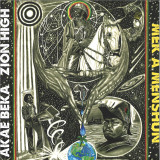
Akae Beka & Zion High - Mek a Menshun (feat. Protoje) LP

Akae Beka's inimitable style of rich, deep, multi-layered songwriting, uncompromising devotion to RasTafari and soulful healing melodies developed over decades performing with St. Croix based band Midnite and countless recordings. At the point of his untimely passing in 2019, he had released over 70LP's. He is without a doubt one of the most prolific reggae artists ever known.

The stellar production trinity that is Zion I Kings have been involved collectively and individually in creating some of the most highly regarded contributions to the vast Akae Beka catalogue. The timeless songs of 'Mek A Menshun' amply reward the listener who can penetrate into the mystical musical realms of Rastafari. Longtime fans of Midnite and Akae Beka will note that Vaughn Benjamin's singing on 'Mek a Menshun' reached new heights of melodic delivery and emotional intensity. Coupled with his always poetic and insightful lyrics, these 10 original songs rank among his best recordings to date. The title track 'Mek A Menshun' includes vocals by Protoje Grammy (R)-nominated artist.

Mek A Menshun features the stellar musicianship of the ZIK distinguished in typical fashion by the rock-solid drumming of Lloyd "Junior" Richards. On this album, his playing is complemented by Aston Barrett Jr. ("By Day", "Only Now") and Kirk Bennett ( "Kagm Mystory", "Mek A Menshun"). The signature stylings of the other core ZIK musicians are augmented by horns (Andrew "Drew Keys" Stoch -trombone, Donald "Jahbless" Toney -saxophone), flute- Sheldon "Attiba" Bernard, kette- Andrew "Bassie" Campbell, and the guitar of Chet Samuel. ZIK guitarist Andrew "Moon" Bain contributes a string arrangement on "Only Now". Throughout the album, Laurent "Tippy I" Alfred's spot-on organ shuffle bubbles the rhythm forward. Many of the 'Mek A Menshun' tracks were among the last recordings done by the veteran engineer Gary Woung.

Originally released digitally and on CD, this LP is now being released for the first time on as a 12" vinyl LP courtesy of Before Zero Records.

out of Stock

Order now and we will order the item for you at our supplier.

20,97

Last In: 3 years ago
Pharoah Sanders - Journey To The One LP 2x12"

Repress expected. Date TBA

By 1980 when this was originally released Pharoah Sanders was solidly entrenched with his own voice on tenor. The passing of John Coltrane and Sanders's fruitful years of playing with the prolific saxophone genius resulted with an unmistakable influence on his sound and explorations of the instrument. Beginning with "Greetings to Idris" the structure of the music is one that follows tradition yet opens up for the musicians to improvise within the arrangements. "Greetings to Idris" is in reference to the featured drummer Idris Muhammad who also played with Coltrane during his late period. Naturally Sanders is featured as the main instrument and his horn can be bold and demanding of your full attention. Always interested in other instruments from other cultures, much like Trane, he incorporates the Japanese instrument the koto, a beautifully harmonic stringed instrument to counter his soft rich blowing on tenor with only wind chimes and a harmonium for a delicious peaceful bit of music on "Kazuko"(Peace Child) that has the qualities of a meditative offering. Most of the music, eight tracks, is composed and arranged by Sanders and demonstrates his leadership. There is one John Coltrane composition entitled "After The Rain" that gets the Tranesque treatment by Sanders that makes it hard for even the most discerning listener to distinguish between the original version and Sanders impression. It is a bluesy duet featuring only sax and piano and leaves you wanting to hear it over and over again because of it's simple and haunting melodies. Another song that Coltrane recorded entitled "Easy To Remember" has a gentle swing to it built around a classic quartet (drums, bass, piano, sax) like that employed by Coltrane that results in a superb standard. Sanders incorporates the use of another "foreign" instrument to jazz by working in a tabla and sitar on "Soledad " that takes center stage before Sanders joins in on the music. The result is a thing of genius as the East and West merge and interface for composition that is peaceful. Sanders music on this LP fluctuates between the tranquil sounds of his mellow horn to the outer limits where he left off with the explorations of Trane's late period. What separates this LP from others is that it is a group playing under his leadership where he gives all others close to equal billing. The uptempo, "You've Got To Have freedom" is one such song where Sanders gets out there on some of his solos but works within the group structure as the other musicians, most notably Eddie Henderson on flugelhorn, bring the music back home. There is a chorus sung much of the time throughout where the the proclamation "Ya gotta have peace and love, ya gotta have freedom" is presented in Manhattan Transfer style but with much more soul. The use of vocalists is done again on the track entitled "Think About The One." The chorus features vocalese specialist Bobby McFerrin. This LP shows the different sides of Pharoah Sanders, a man always willing to explore the music, explore his soul and share it with you. The closing track "Bedria" is a mellow exploration of the various ranges of the tenor. It is a ten minute song that displays all the grace of his being, a gentle giant who can manipulate the horn to do extraordinary things, reverberating out and back in undulating waves of harmonic bliss. Sanders on this LP is next to perfect. One of his best recording from his post Impulse career. It belongs in your jazz collection right next to John Coltrane.

out of Stock

Order now and we will order the item for you at our supplier.

53,74

Last In: 3 years ago
Southside Johnny & The Asbury Jukes - Live In Cleveland '77 (2LP)

Before Southside Johnny and the Asbury Jukes even had an album on the shelves, they were being played on the radio in Cleveland. That’s how far back the New Jersey band’s relationship goes with the city. As the “Jukes” part of their name would suggest, Southside Johnny and his group were spiritually a band from another time. They had a big sound (and a full horn section, courtesy of The Miami Horns) that conjured a vision of a large band, jammed together on the bandstand. Which was hardly far from the truth on a number of nights. Mixing carefully chosen blues and soul covers with their own originals (and some choice songwriting contributions from Bruce Springsteen), they had a live show that was even more potent than what had been laid to tape in the studio. This 1977 performance at the Cleveland Agora was the group’s second outing at the legendary venue in less than a year. Live in Cleveland ‘77, the recorded evidence of that night, presented here for the first time by Cleveland International Records, shows exactly why they would become frequent visitors and really, honorary Clevelanders. Songs like “I Don’t Want to Go Home,” Springsteen’s “The Fever,” “Havin’ a Party” and “Without Love” were already well-loved favorites with the local audience, thanks to frequent airplay on WMMS long before they even had an album. Cleveland got a special bonus round that other cities would have killed for. Ronnie Spector had joined the group in the studio as they recorded that debut and came to Cleveland to share the stage with the Jukes, sharing her soon-to-be-legendary take on Billy Joel’s “Say Goodbye to Hollywood” with the Agora crowd. As she did with so many songs, Spector made it her own. Southside Johnny and the Jukes continue to thrill audiences with their live performances worldwide to this day. Now, thanks to the release of Live in Cleveland ‘77, you can be in the audience to hear a bit of the early magic as they were on their way to the top.

pre-order now04.11.2022

expected to be published on 04.11.2022

28,15
DjeuhDjoah & Lieutenant Nicholson - 2+ LP 2x12"

2+ is the 3rd album of DjeuhDjoah & Lieutenant Nicholson. A new sound stopover in their funky trip since their beginning with T’es qui ? album in 2015. This new building stone prolongs their critically acclaimed album Aimez ces airs released in 2019.

What’s new? 15 tracks , eclectic, soft, deep, and funky, where electro, soul even afro beat touches , or bossa nova live together harmoniously. DjeuhDjoah & Lieutenant Nicholson make praise of slowness (« Pas si vite »), address environmental issues (« Coeur béton »), social statements on (« Police », « Raie publiques », « clic »), childhood on (« Bola Mba ») , the post colonial relation between Africa and the other continents. Love is also really well presented ( « Thé à la menthe «, « Ping Pong ») and why not sailing to Essaouira in Morocco ?

During the summer of 2020 , when the french national radio asked them to perform a live cover , our french funky duo chose the famous « Né quelque part » by Maxime Leforestier released in 1987. Their Suave interpretation, haunting beat and spatial & languid atmosphere give a fantastic tribute to this beautiful melody and strong lyrics. They found a very intimate link with chorus in Zulu, harking back to the strong connection they made with South Africa during their last tour.
It became clear that they needed to put this track on their new album , as their now club remix classic « Bwe Dlo « performed with their friend David Walters.

After their tour in South Africa, they met « Cool Affair », the musician and electro house producer in Johannesburg who made a beautiful remix of « Aimé Césaire » which close perfectly this new opus. Recorded at « Le triangle des Bermudes » the home studio of Lieutenant Nicholson, produced and mixed by him with a electro analog sound dear to them. Horns, live drums, percussions and vocal choir were recorded at Bastille village at the label basement , even during the pandemic… On 2+, we can also hear the swirls of Antoine Berjeaut at the trumpet and bugle, magic keys from Florian Pellissier , two new flagships of the French jazz scene.

Once again, DjeuhDjoah & Lieutenant Nicholson push the boundaries of the traditional « French song « to make the world dance. They want to keep their international audience , from Australia, Japan, Usa, South Africa to name a few the dance floors of the world will ignite with this new album . The French touch will still shine !

out of Stock

Order now and we will order the item for you at our supplier.

25,50

Last In: 3 years ago
Pete Rock & Cl Smooth - All Souled Out
  • A1: Good Life
  • A2: Mecca & The Soul Brother
  • A3: Go With The Flow Side
  • B1: The Creator
  • B2: All Souled Out
  • B3: Good Life (Group Home Mix)

Pressed On Clear Vinyl! 1991 was the year that it all broke loose for producer Pete Rock and his rhyme partner, CL Smooth. But the duo was far from an overnight sensation. The two friends had been on the grind since high school in Mt. Vernon, NY in the mid-'80s, and Pete had been building up to his big moment since he first manned the decks on WBLS's hugely influential 'In Control With Marley Marl' radio show, starting in 1987. In '91, Pete's talent finally forced him from the studio shadows into the spotlight, and after remixes and co-productions for Heavy D (1989's Big Tyme album); Johnny Gill ('Rub You The Right Way,' 1990); and Elektra label-mates Brand Nubian ('Slow Down,' 1990); it was time for top billing. As Pete's rep skyrocketed with a revolutionary remix to Public Enemy's 'Shut 'Em Down' in 1991, the stage was set. The duo's debut EP, 'All Souled Out', was the perfect set-up - and bridge to - their flawless LP, Mecca & The Soul Brother, which appeared only one year later. Fans new (thanks to a recent revival, resulting from the song's use in a Google / Android commercial) and old are sure to know the EP's only single, 'The Creator.' The cut is a perfect slice of early '90s hip-hop - jumpy, funky and rolling along at a sprinter's pace, with killer horns that sew up the chorus. Interestingly, it's the only song on the EP where Pete Rock rhymes (and solo at that, with lines written by Brand Nubian's Grand Puba). The remaining five of the EP's songs, with CL Smooth in full charge of the mic, are no less impressive. The sleeper is perhaps 'Go With The Flow,' a kinetic groover with an egregiously thick, muted bassline, surgical cuts and never-endingly captivating lines by the liquid-tongued CL. 'All Souled Out' boasts all of the Pete Rock trademarks - a jumpy, filtered bassline; beautifully stitched horn samples on the hook; and this time with a faster tempo. CL has no issues with Pete's BPM challenge, proving he can drop knowledge at any speed. And of two different versions of 'Good Life' on the platter, the EP's final cut, the 'Group Home Mix,' is perhaps the winner, with an abundance of musical action to back up CL's lyrical musings on ways to achieve success and comfort in life. 25 years after its initial impact, 'All Souled Out' sounds as heavy and essential as ever, and will remind fans how important this duo was to the artform.

pre-order now31.10.2022

expected to be published on 31.10.2022

27,31
Mr. Confuse - Time to Move

Confunktion Records very own Mr. Confuse returns with a cover version of Carmen's 80s Boogie/Electro funk classic "Time To Move" in true organic funk style. The songs kicks off with heavy funk drums, an incredible horn section, funky guitar sound and soulful vocals by Houston / Texas soul singer Alicia Cibola.

On the flip side you have the Instrumental of the track with feature of Hammond C3 player Hakan Türközü who plays the lead vocal line on his organ.

Don't miss this release on Confunktion Records as the 7 Inch vinyl version is limited to 300. Be quick on this one!

out of Stock

Order now and we will order the item for you at our supplier.

14,50

Last In: 3 years ago
Alex Chilton - Feudalist Tarts

Alex Chilton

Feudalist Tarts

12inchBRN255LP
Barnone
30.10.2022

Alex Chilton’s Feudalist Tarts (1985) found the Big Star/The Box Tops front man re-making himself as a southern fried hipster offering up original tunes like “Stuff” and sly soulful covers “B-A-B’Y” and “Thank You John” while adding a horn section to his road tested rhythm section. Side Two features a number of rare Chilton tracks including “Rubber Room” and “Wild Kingdom.” Chilton had hit rock bottom in his home town of Memphis after 15 years of substance abuse and hard partying. He chose New Orleans as the city where he would re-make himself. One of the benefits was exposure to all the music he would hear down there. He immediately immersed himself in the city’s laid back, stretched out grooves. The covers he chose for this record were songs he heard being played by older musicians around New Orleans. Expanded version includes a side of rare tracks. Out of print on vinyl since 1986. Includes seven original Chilton compositions. Original album release coincided with his most prolific touring schedule since his days in The Box Tops.

pre-order now30.10.2022

expected to be published on 30.10.2022

24,58
JAMES BROWN - SOUL SYNDROM (HENRY STONE RECORDS) LP
  • 1: Rapp Payback (Where Iz Moses?)
  • 2: Mashed Potatoes
  • 3: Funky Men
  • 4: Smokin' & Drinkin
  • 5: Stay With Me
  • 6: Honky Tonk

By 1980 James Brown did one album for Henry Stone"s T.K. While this doesn"t have Brown bubbling over with innovation, he still provided a more substantial alternative to disco. On this album, we have a sublime sped-up version of "The Payback," which rocks like nobody"s business. Or on the remake of "Mashed Potatoes", Brown is reuniting with Bobby Byrd. Shortly afterward they both go through a travelogue of cities and states like it"s "Night Train" all over again. Soul Syndrome has Brown still full of ideas. The inane "Funky Men" has a killer reggae/funk guitar riff and a fantastic Latin horn arrangement...In the end, it makes it a nice album that counts in the rich carrer of the master of Funk !

pre-order now28.10.2022

expected to be published on 28.10.2022

18,45
Ikebe Shakedown - Ikebe Shakedown LP

Repress!

Originally released in 2011 with a limited pressing and repressed once a few years later in 2016. “Right now in cities across the globe, there are plenty of great Afrobeat revivalist bands aping the sound and groove of Fela Kuti’s legendary sound. Yet, surprisingly few of the new groups have strayed from an orthodox interpretation of the genre or done much real innovation. ..Ikebe Shakedown is here to change that. The band takes signature Afrobeat elements—big unison horns, slinky bass lines, tight little guitar licks—and blends them with tasty grooves culled from '70s-style horn-driven funk”. -Marlon Bishop, WNYC

Ikebe Shakedown, the self-titled album and Ubiquity Records debut from the Brooklyn-based band, plays with elements of Cinematic Soul, Afro-funk, Deep Disco, and Boogaloo in all the right ways. Pushing their globally-informed sound and eclectic approach to tune-writing into new territory, “Self-titling the album is a way to introduce the audience to the many facets of the band -- to provide a more complete understanding of what we do,” bassist Vince Chiarito says. “Our sound has grown to incorporate our influences without overtly representing any one in particular. It just sounds like us," he adds.

out of Stock

Order now and we will order the item for you at our supplier.

28,11

Last In: 3 years ago
THE KITCHEN II ALLSTARS - BONGO GROVE / ONYEABOR 80 7"

Yellow Vinyl

"Onyeabor 80" draws equal influence from War, William Onyeabor, and Isaac Hayes. This steady groover is sure to keep the dance-floor moving! On the flip side we have "Bongo Grove", an Incredible Bongo Band influenced, upbeat horn-driven anthem. This one features Mitchum Yacoub on Bongos. Members of The Sure Fire Soul Ensemble, Mestizo Beat, and Mitchum Yacoub exploring new tones and directions!

out of Stock

Order now and we will order the item for you at our supplier.

8,87

Last In: 2 years ago
Ndikho Xaba And The Natives - 50th Anniversary Remaster (2022)

Ndikho Xaba was born in 1934 in Pietermaritzburg, KZN, South Africa. For thirty-four years — 1964 -1998 — he lived in exile in the US, Canada and Tanzania. Originally issued by Trilyte Records out of Oakland, California, this 1970 recording is bracing, freewheeling Now Thing, suffused with SA idioms, and focussed by a political urgency wiring together US Black Power, Black Aesthetics and the anti-apartheid front-line like nothing else. You can hear Trane from the off — 'a spiritual offering to my ancestors' — and plenty of Sun Ra, with whom The Natives several times shared double-bills. (Xaba was to become close with Phil Cohran and the AACM.) Freedom is a gutbucket-soul rendition of the people's anthem; Nomusa is dedicated to Xaba's new wife, a poet and CORE activist from Chicago. The thunderous finale Makhosi features drummer Keita from the West Indies, and Baba Duru, who studied percussion in India, before winding up with Xaba blowing eerily through a horn made from a giant piece of tubular seaweed. Hats off to Matsuli for this outstanding reissue.

out of Stock

Order now and we will order the item for you at our supplier.

23,49

Last In: 3 years ago
Lee Tracy & Isaac Manning - Is it What You Want

As the sun sets on a quaint East Nashville house, a young man bares a piece of his soul. Facing the camera, sporting a silky suit jacket/shirt/slacks/fingerless gloves ensemble that announces "singer" before he's even opened his mouth, Lee Tracy Johnson settles onto his stage, the front yard. He sways to the dirge-like drum machine pulse of a synth-soaked slow jam, extends his arms as if gaining his balance, and croons in affecting, fragile earnest, "I need your love… oh baby…"

Dogs in the yard next door begin barking. A mysterious cardboard robot figure, beamed in from galaxies unknown and affixed to a tree, is less vocal. Lee doesn't acknowledge either's presence. He's busy feeling it, arms and hands gesticulating. His voice rises in falsetto over the now-quiet dogs, over the ambient noise from the street that seeps into the handheld camcorder's microphone, over the recording of his own voice played back from a boombox off-camera. After six minutes the single, continuous shot ends. In this intimate creative universe there are no re-takes. There are many more music videos to shoot, and as Lee later puts it, "The first time you do it is actually the best. Because you can never get that again. You expressing yourself from within."

"I Need Your Love" dates from a lost heyday. From some time in the '80s or early '90s, when Lee Tracy (as he was known in performance) and his music partner/producer/manager Isaac Manning committed hours upon hours of their sonic and visual ideas to tape. Embracing drum machines and synthesizers – electronics that made their personal futurism palpable – they recorded exclusively at home, live in a room into a simple cassette deck. Soul, funk, electro and new wave informed their songs, yet Lee and Isaac eschewed the confinement of conventional categories and genres, preferring to let experimentation guide them.

"Anytime somebody put out a new record they had the same instruments or the same sound," explains Isaac. "So I basically wanted to find something that's really gonna stand out away from all of the rest of 'em." Their ethos meant that every idea they came up with was at least worth trying: echoed out half-rapped exhortations over frantic techno-style beats, gospel synth soul, modal electro-funk, oddball pop reinterpretations, emo AOR balladry, nods to Prince and the Fat Boys, or arrangements that might collapse mid-song into a mess of arcade game-ish blips before rallying to reach the finish line. All of it conjoined by consistent tape hiss, and most vitally, Lee's chameleonic voice, which managed to wildly shape shift and still evoke something sincere – whether toggling between falsetto and tenor exalting Jesus's return, or punctuating a melismatic romantic adlib with a succinct, "We all know how it feels to be alone."

"People think we went to a studio," says Isaac derisively. "We never went to no studio. We didn't have the money to go to no studio! We did this stuff at home. I shot videos in my front yard with whatever we could to get things together." Sometimes Isaac would just put on an instrumental record, be it "Planet Rock" or "Don't Cry For Me Argentina" (from Evita), press "record," and let Lee improvise over it, yielding peculiar love songs, would-be patriotic anthems, or Elvis Presley or Marilyn Monroe tributes. Technical limitations and a lack of professional polish never dissuaded them. They believed they were onto something.

"That struggle," Isaac says, "made that sound sound good to me."

In the parlance of modern music criticism Lee and Isaac's dizzying DIY efforts would inevitably be described as "outsider." But "outsider" carries the burden of untold additional layers of meaning if you're Black and from the South, creating on a budget, and trying to get someone, anyone within the country music capital of the world to take your vision seriously. "What category should we put it in?" Isaac asks rhetorically. "I don't know. All I know is feeling. I ain't gonna name it nothing. It's music. If it grabs your soul and touch your heart that's what it basically is supposed to do."

=

Born in 1963, the baby boy of nine siblings, Lee Tracy spent his earliest years living amidst the shotgun houses on Nashville's south side. "We was poor, man!" he says, recalling the outhouse his family used for a bathroom and the blocks of ice they kept in the kitchen to chill perishables. "But I actually don't think I really realized I was in poverty until I got grown and started thinking about it." Lee's mom worked at the Holiday Inn; his dad did whatever he had to do, from selling fruit from a horse drawn cart to bootlegging. "We didn't have much," Lee continues, "but my mother and my father got us the things we needed, the clothes on our back." By the end of the decade with the city's urban renewal programs razing entire neighborhoods to accommodate construction of the Interstate, the family moved to Edgehill Projects. Lee remembers music and art as a constant source of inspiration for he and his brothers and sisters – especially after seeing the Jackson 5 perform on Ed Sullivan. "As a small child I just knew that was what I wanted to do."

His older brother Don began musically mentoring him, introducing Lee to a variety of instruments and sounds. "He would never play one particular type of music, like R&B," says Lee. "I was surrounded by jazz, hard rock and roll, easy listening, gospel, reggae, country music; I mean I was a sponge absorbing all of that." Lee taught himself to play drums by beating on cardboard boxes, gaining a rep around the way for his timekeeping, and his singing voice. Emulating his favorites, Earth Wind & Fire and Cameo, he formed groups with other kids with era-evocative band names like Concept and TNT Connection, and emerged as the leader of disciplined rehearsals. "I made them practice," says Lee. "We practiced and practiced and practiced. Because I wanted that perfection." By high school the most accomplished of these bands would take top prize in a prominent local talent show. It was a big moment for Lee, and he felt ready to take things to the next level. But his band-mates had other ideas.

"I don't know what happened," he says, still miffed at the memory. "It must have blew they mind after we won and people started showing notice, because it's like everybody quit! I was like, where the hell did everybody go?" Lee had always made a point of interrogating prospective musicians about their intentions before joining his groups: were they really serious or just looking for a way to pick up girls? Now he understood even more the importance of finding a collaborator just as committed to the music as he was.

=

Isaac Manning had spent much of his life immersed in music and the arts – singing in the church choir with his family on Nashville's north side, writing, painting, dancing, and working various gigs within the entertainment industry. After serving in the armed forces, in the early '70s he ran The Teenage Place, a music and performance venue that catered to the local youth. But he was forced out of town when word of one of his recreational routines created a stir beyond the safe haven of his bohemian circles.

"I was growing marijuana," Isaac explains. "It wasn't no business, I was smoking it myself… I would put marijuana in scrambled eggs, cornbread and stuff." His weed use originated as a form of self-medication to combat severe tooth pain. But when he began sharing it with some of the other young people he hung out with, some of who just so happened to be the kids of Nashville politicians, the cops came calling. "When I got busted," he remembers, "they were talking about how they were gonna get rid of me because they didn't want me saying nothing about they children because of the politics and stuff. So I got my family, took two raggedy cars, and left Nashville and went to Vegas."

Out in the desert, Isaac happened to meet Chubby Checker of "The Twist" fame while the singer was gigging at The Flamingo. Impressed by Isaac's zeal, Checker invited him to go on the road with him as his tour manager/roadie/valet. The experience gave Isaac a window into a part of the entertainment world he'd never encountered – a glimpse of what a true pop act's audience looked like. "Chubby Checker, none of his shows were played for Black folks," he remembers. "All his gigs were done at high-class white people areas." Returning home after a few years with Chubby, Isaac was properly motivated to make it in Music City. He began writing songs and scouting around Nashville for local talent anywhere he could find it with an expressed goal: "Find someone who can deliver your songs the way you want 'em delivered and make people feel what you want them to feel."

One day while walking through Edgehill Projects Isaac heard someone playing the drums in a way that made him stop and take notice. "The music was so tight, just the drums made me feel like, oh I'm-a find this person," he recalls. "So I circled through the projects until I found who it was.

"That's how I met him – Lee Tracy. When I found him and he started singing and stuff, I said, ohhh, this is somebody different."

=

Theirs was a true complementary partnership: young Lee possessed the raw talent, the older Isaac the belief. "He's really the only one besides my brother and my family that really seen the potential in me," says Lee. "He made me see that I could do it."

Isaac long being a night owl, his house also made for a fertile collaborative environment – a space where there always seemed to be a new piece of his visual art on display: paintings, illustrations, and dolls and figures (including an enigmatic cardboard robot). Lee and Issac would hang out together and talk, listen to music, conjure ideas, and smoke the herb Isaac had resumed growing in his yard. "It got to where I could trust him, he could trust me," Isaac says of their bond. They also worked together for hours on drawings, spreading larges rolls of paper on the walls and sketching faces with abstract patterns and imagery: alien-like beings, tri-horned horse heads, inverted Janus-like characters where one visage blurred into the other.

Soon it became apparent that they didn't need other collaborators; self-sufficiency was the natural way forward. At Isaac's behest Lee, already fed up with dealing with band musicians, began playing around with a poly-sonic Yamaha keyboard at the local music store. "It had everything on it – trumpet, bass, drums, organ," remembers Lee. "And that's when I started recording my own stuff."

The technology afforded Lee the flexibility and independence he craved, setting him on a path other bedroom musicians and producers around the world were simultaneously following through the '80s into the early '90s. Saving up money from day jobs, he eventually supplemented the Yamaha Isaac had gotten him with Roland and Casio drum machines and a Moog. Lee was living in an apartment in Hillside at that point caring for his dad, who'd been partially paralyzed since early in life. In the evenings up in his second floor room, the music put him in a zone where he could tune out everything and lose himself in his ideas.

"Oh I loved it," he recalls. "I would really experiment with the instruments and use a lot of different sound effects. I was looking for something nobody else had. I wanted something totally different. And once I found the sound I was looking for, I would just smoke me a good joint and just let it go, hit the record button." More potent a creative stimulant than even Isaac's weed was the holistic flow and spontaneity of recording. Between sessions at Isaac's place and Lee's apartment, their volume of output quickly ballooned.

"We was always recording," says Lee. "That's why we have so much music. Even when I went to Isaac's and we start creating, I get home, my mind is racing, I gotta start creating, creating, creating. I remember there were times when I took a 90-minute tape from front to back and just filled it up."

"We never practiced," says Isaac. "See, that was just so odd about the whole thing. I could relate to him, and tell him about the songs I had ideas for and everything and stuff. And then he would bring it back or whatever, and we'd get together and put it down." Once the taskmaster hell bent on rehearsing, Lee had flipped a full 180. Perfection was no longer an aspiration, but the enemy of inspiration.

"I seen where practicing and practicing got me," says Lee. "A lot of musicians you get to playing and they gotta stop, they have to analyze the music. But while you analyzing you losing a lot of the greatness of what you creating. Stop analyzing what you play, just play! And it'll all take shape."

=

"I hope you understood the beginning of the record because this was invented from a dream I had today… (You tell me, I'll tell you, we'll figure it out together)" – Lee Tracy and Isaac Manning, "Hope You Understand"

Lee lets loose a maniacal cackle when he acknowledges that the material that he and Isaac recorded was by anyone's estimation pretty out there. It's the same laugh that commences "Hope You Understand" – a chaotic transmission that encapsulates the duality at the heart of their music: a stated desire to reach people and a compulsion to go as leftfield as they saw fit.

"We just did it," says Lee. "We cut the music on and cut loose. I don't sit around and write. I do it by listening, get a feeling, play the music, and the lyrics and stuff just come out of me."

The approach proved adaptable to interpreting other artists' material. While recording a cover of Whitney Houston's pop ballad "Saving All My Love For You," Lee played Whitney's version in his headphones as he laid down his own vocals – partially following the lyrics, partially using them as a departure point. The end result is barely recognizable compared with the original, Lee and Isaac having switched up the time signature and reinvented the melody along the way towards morphing a slick mainstream radio standard into something that sounds solely their own.

"I really used that song to get me started," says Lee. "Then I said, well I need something else, something is missing. Something just came over me. That's when I came up with 'Is It What You Want.'"

The song would become the centerpiece of Lee and Isaac's repertoire. Pushed along by a percolating metronomic Rhythm King style beat somewhere between a military march and a samba, "Is It What You Want" finds Lee pleading the sincerity of his commitment to a potential love interest embellished by vocal tics and hiccups subtlely reminiscent of his childhood hero MJ. Absent chord changes, only synth riffs gliding in and out like apparitions, the song achieves a lingering lo-fi power that leaves you feeling like it's still playing, somewhere, even after the fade out.

"I don't know, it's like a real spiritual song," Lee reflects. "But it's not just spiritual. To me the more I listen to it it's like about everything that you do in your everyday life, period. Is it what you want? Do you want a car or you don't want a car? Do you want Jesus or do you want the Devil? It's basically asking you the question. Can't nobody answer the question but you yourself."

In 1989 Lee won a lawsuit stemming from injuries sustained from a fight he'd gotten into. He took part of the settlement money and with Isaac pressed up "Saving All My Love For You" b/w "Is It What You Want" as a 45 single. Isaac christened the label One Chance Records. "Because that's all we wanted," he says with a laugh, "one chance."

Isaac sent the record out to radio stations and major labels, hoping for it to make enough noise to get picked up nationally. But the response he and Lee were hoping for never materialized. According to Isaac the closest the single got to getting played on the radio is when a disk jock from a local station made a highly unusual announcement on air: "The dude said on the radio, 107.5 – 'We are not gonna play 'Is It What You Want.' We cracked up! Wow, that's deep.

"It was a whole racist thing that was going on," he reflects. "So we just looked over and kept on going. That was it. That was about the way it goes… If you were Black and you were living in Nashville and stuff, that's the way you got treated." Isaac already knew as much from all the times he'd brought he and Lee's tapes (even their cache of country music tunes) over to Music Row to try to drum up interest to no avail.

"Isaac, he really worked his ass off," says Lee. "He probably been to every record place down on Music Row." Nashville's famed recording and music business corridor wasn't but a few blocks from where Lee grew up. Close enough, he remembers, for him to ride his bike along its back alleys and stumble upon the occasional random treasure, like a discarded box of harmonicas. Getting in through the front door, however, still felt a world away.

"I just don't think at the time our music fell into a category for them," he concedes. "It was before its time."

=

Lee stopped making music some time in the latter part of the '90s, around the time his mom passed away and life became increasingly tough to manage. "When my mother died I had a nervous breakdown," he says, "So I shut down for a long time. I was in such a sadness frame of mind. That's why nobody seen me. I had just disappeared off the map." He fell out of touch with Isaac, and in an indication of just how bad things had gotten for him, lost track of all the recordings they'd made together. Music became a distant memory.

Fortunately, Isaac kept the faith. In a self-published collection of his poetry – paeans to some of his favorite entertainment and public figures entitled Friends and Dick Clark – he'd written that he believed "music has a life of its own." But his prescience and presence of mind were truly manifested in the fact that he kept an archive of he and Lee's work. As perfectly imperfect as "Is It What You Want" now sounds in a post-Personal Space world, Lee and Isaac's lone official release was in fact just a taste. The bulk of the Is It What You Want album is culled from the pair's essentially unheard home recordings – complete songs, half-realized experiments, Isaac's blue monologues and pronouncements et al – compiled, mixed and programmed in the loose and impulsive creative spirit of their regular get-togethers from decades ago. The rest of us, it seems, may have finally caught up to them.

On the prospect of at long last reaching a wider audience, Isaac says simply, "I been trying for a long time, it feels good." Ever the survivor, he adds, "The only way I know how to make it to the top is to keep climbing. If one leg break on the ladder, hey, you gotta fix it and keep on going… That's where I be at. I'll kill death to make it out there."

For Lee it all feels akin to a personal resurrection: "It's like I was in a tomb and the tomb was opened and I'm back… Man, it feels so great. I feel like I'm gonna jump out of my skin." Success at this stage of his life, he realizes, probably means something different than what it did back when he was singing and dancing in Isaac's front yard. "What I really mean by 'making it,'" he explains isn't just the music being heard but, "the story being told."

Occasionally Lee will pull up "Is It What You Want" on YouTube on his phone, put on his headphones, and listen. He remembers the first time he heard his recorded voice. How surreal it was, how he thought to himself, "Is that really me?" What would he say to that younger version of himself now?

"I would probably tell myself, hang in there, don't give up. Keep striving for the goal. And everything will work out."

Despite what's printed on the record label, sometimes you do get more than one chance.

out of Stock

Order now and we will order the item for you at our supplier.

11,72

Last In: 3 years ago
Martha High & The Italian Royal Family - Nothing's Going Wrong

"Nothing's Going Wrong" is Martha's sophomore album on Blind Faith Records, backed by the mighty Italian Royal Family and produced and mixed by Luca Sapio at Blind Faith Recordings studio. The super solid back beat and the lush horn arrangements evokes the golden era of the Italian movie soundtracks (inspired by Piero Piccioni, Ennio Morricone and Luis Bacalov). Lyrically the album is very much inspired by the socially and politically conscious records made by the likes of Marvin Gaye, Gil Scott Heron and Curtis Mayfield in the mid 70s. A hidden gem proudly shines through in the song ‘ I’ve Still Have A Lot To Learn’; Italian maestro Antonello Vannucchi (leader of the Marc 4 band and keys player behind thousands of iconic Italian soundtracks), has laid down a stellar Hammond B3 take on the melancholic ballad, sadly it was his very last recording session before passing away. Every once in a while an album comes along, and this is one of them, that is beyond what is currently fashionable at any given time, which evokes the best sounds of the soul golden era, combined with Italian soundtracks of the 60s; infuse them together and you get a funk/soul masterpiece, showcasing one of soul music’s most precious gems- Miss Martha High.

pre-order now10.10.2022

expected to be published on 10.10.2022

15,92
The Commonheart - For Work or Love

New single by Pittsburgh, PA-based band The Commonheart. "They pay soulful tribute to the soul gods without disrespecting their exhumed remains." - No Depression Live and in the studio, the Pittsburgh-based collective is offering feel-good positivity, Golden Rule messaging, and sweat-soaked performances that nimbly ease through blues, vintage soul, and rock. The band is bonded by familial-like ties and a desire to foster spiritual uplift. Among its ranks are female backup singers, drums, bass, guitar, a horn section, and keyboards. Out front is Clinton, a lightning bolt charismatic frontman with dynamically expressive pipes that effortlessly traverse bluesy pleading, and honeyed balladeering. "Hustler" is an anthem for perseverance. Told thru the eyes of a street hustler's mindset; this song offers their interpretation of what it takes to make a living in this world thru the hardest times. The narrative runs parallel for anyone that's finding their way thru life with grit, fearlessness & drive. The new album, produced by Steve Berlin, saxophonist, keyboardist, and record producer, best known as a member of the rock group Los Lobos, entitled 'For Work or Love' will be released on September 16th, 2022.

pre-order now07.10.2022

expected to be published on 07.10.2022

17,86
Radikal Guru - Dub Mentalist

2022 Repress !!

2x12" 180g Vinyl LP w/ Download Card.
The dub master Radikal Guru returns to the trusted Moonshine Recordings to deliver his third album, which highlights his refreshing take on the beloved, dub sound of 2016. A selected few of the cuts involve exciting collaborations that are not to be missed.

Similar to King Yoof's recent album endeavour called 'Homage To The King', Radikal Guru exerts his speciality in various tempo ranges with the 'Dub Mentalist' LP. The result is just as exciting as his existing back catalogue; all mastered to meet the requirements of the true Moonshine vibration.

The polish producer once again shows appreciation to both the dancefloor fans and the more meditating listeners. Fusing his compelling sound in dub, reggae and dubstep with timeless, old school samples makes every release a reminiscing journey. The amount of dread and energy will most definitely spark a riot across the globe.

Radikal Guru executes his mix-up of dub by incorporating a dose of happiness and psychedelics. The effects take over the mixes in wild fashion; delays spin off the tasty spring reverberation tails, delivering a comfortable setting. Radikal's horns, including the trumpet, saxophone and trombone joined the Radikal Guru's live melodica to complement each other in rhythm and sound.

The collaborations featuring Moonshine familiars Jay Spaker, Echo Ranks, Solo Banton, Violinbwoy and Earl 16 bless the righteous sound waves, as the bassweight, immersive vocals and tight arrangements speak for themselves. Whether it is the bass weight, vocal parts or simply the rhythms, you know exactly when Radikal Guru's music is being played on a true sound system.

The contribution of the polish dub genius, to the healing of the nations and to global dub culture trembles, as he immediately reveals why his 'Dub Mentalist' LP forms an important chapter in our history of Moonshine Recordings material.

out of Stock

Order now and we will order the item for you at our supplier.

22,48

Last In: 3 years ago
Leon Thomas - Blues And The Soulful Truth LP

Der Titel von Leon Thomas' drittem Album für Bob Thieles Flying Dutchman-Label bezog sich auf Oliver Nelsons klassische LP "The Blues and the Abstract Truth" von 1961. "Blues And The Soulful Truth" wurde im Original 1972 veröffentlicht und enthielt eine All-Star-Band, zu der Pretty Purdie (Schlagzeug), Stanley Clarke (Bass), Cecil Payne (Baritonsaxophon) und Neal Creque (Keyboards) gehörten. Es ist ein Soul meets Jazz meets Blues-Meisterwerk mit Arrangements von Ex-James Brown Hornist Pee Wee Ellis.

Der Klassiker enthält das außergewöhnliche 'Shape Your Mind To Die', 'L-O-V-E', eine fesselnde Gesangsversion von Gabor Szabos 'Gypsy Queen', das fesselnde 'Love Each Other', das klagende 'China Doll' und eine treibende Version von John Lee Hookers 'Boom-Boom-Boom'.
Gatefold 180 Gr.-Vinyl in klassischem Schwarz mit dem Flying Dutchman-Layout als Nachbildung!

pre-order now07.10.2022

expected to be published on 07.10.2022

24,33
Various - Countdown to... Soul 2 (2x12")

** SISTER FUNK, SOUL-JAZZ and BLUE-EYED-SOUL - OBSCURE RARE GROOVES ALL THE WAY THRU! **

- the double vinyl LP comes with a full album download code
- deluxe double-gatefold LP with detailed liner notes & unseen photographs
- ALL songs appear on LP & digital for the very first-time
- sales notes by Joel Ricci (aka Lucky Brown)

When Tramp Records was founded, there really were very few ways in which the music lover could discover new music besides the traditional methods of digging, good luck, and inheritance. First there were torrent sites such as Napster and Limewire where generous collectors might digitize and upload portions of their accessions, and sometimes you could find entire radio show broadcasts of live vinyl curation made by real Disc Jockeys out there, a lot of the Deep Funk I heard for the first time in around 1999 I found this way via Disc Jockeys on radio shows from the UK, tunes were faded and mixed together and of course veiled with that unmistakable Mp3 'whoosh'. And unless you have been living as an off-grid hermit for the past 20 years, you know the rest of the story.

But though our world has changed, and even though everyone from our grandparents to our 5-year old nieces are curating their own internet playlists, I submit that the role of DJ has become even more vital, not less. We as a culture have always relied on our Disc Jockeys to introduce us to sounds that speak to their souls, to control the vibe and most importantly put forth the narrative that speaks to society as a whole. DJs are our tribal storytellers, and the music they bring us are the stories. And when a DJ like Tobias Kirmayer is telling us that story clearly and with conviction, it speaks to our souls as well.

"Countdown to...SOUL" is a compilation series that, much like Tramp Records' other critically-acclaimed comps such as Movements, Feeling Nice, and the Praise Poems Series' examines a unique facet of the Golden Era of Soul, Funk, Jazz and R&B. Perhaps, in this case the dawning of the Soul era, "proto-soul", "primitive soul", or even "pre-soul" if you will. When they were recorded, many of these tunes were still firmly ensconced in the Black Radical Jazz tradition, but there was a change in the air, something happening in the coming years that would revolutionize popular music forever. In fact, Soul had already taken over the world by the time many of these tunes were released on 45, but for various reasons, the artists and their music occupied the fringes of the idiom and therefore remained obscure. Countdown to...SOUL chronicles that beginning, that buildup, those heady moments before the lid blew off and American Black music would explode across the planet, while scouring the outskirts and tide pools for specimens that were emanating in their own respective neighborhoods and communities, so often overlooked by the American pop music machine.

Side A features barrier-breaking pioneer Frankie Staton and her message of "Love One Another" to the world that is as fresh and vital today as it was when it first came out in the late seventies. In that spirit, Tenison Stevens' appeal "Don't Rip Me Off" reminds us to treat each other as brothers and sisters.

Side B meets us at the altar of the formidable Hammond Organ with an Unknown and uncredited Organist found languishing on a one-of-a-kind unreleased acetate and moving on to explore the nexus of Soul, Bebop, and R&B with Don Patterson's "Paddy Wagon".

Side C satisfies our hunger for the blaring horn sections, big beat drums, wailing Hammonds, pleading vocals and gritty guitars of authentic Soul music (both brown and blue-eyed) with Marva Josie, Shirley Wahls and The Echomen, among others, but then takes a hard left turn into undoubtedly uncharted territory with the hybrid folk/country/soul story of Sherrif Black and poor Sally who, though she is tragically met with a terrible fate, thanks to the careful and conscientious mastering of our German engineers, the song itself remains alive and is a genuine addition to the canon.

For the remaining side, I'm gonna just let you discover this music on its own terms, as you won't find these tunes anywhere else, not on Napster, not even on Limewire, or anywhere else. I want to personally thank you for putting your trust in the DJ and for continuing to listen, study, appreciate, and share the work and mission of Tramp Records.

-Joel Ricci (May 2022)

out of Stock

Order now and we will order the item for you at our supplier.

21,43

Last In: 3 years ago
Items per Page:
N/ABPM
Vinyl