The Deacon had been in exile from
the following crimes committed
faith and sonic soul saving
using the Holy Ghost as the
weapon of choice.
Last known whereabouts Mt Fuji Japan.
but since then a virus has infected the world
it also has affected the soul in music
and prevented people from gathering,
dancing and living normal everyday lives.
So the deacon returns from exile
to fight and do battle with the faithless,
un soulful sounds created by the fear
of the global pandemic by using
faith,hope and the "Holy Ghost" to
restore the faith and soul in the hearts
and minds of people through music
and bring order back to the global
dance community...
Suche:soul revolution
High Focus Records linchpin Fliptrix announces his 8th solo album ‘Light Work’. The 16-track project is a complete representation of Fliptrix as both an artist as well as reflecting the person behind the artistry. The album tackles deep rooted issues within society, the current state of the world as well as portraying an overarching message of peace, openness and optimism.
“Light Work is the culmination of years of experience, emotion, research and love. Crafted to heal, fulfil my desire to create and further raise vibrations.”
The London born, Brighton based lyricist’ creative CV has become one of legends. His long-standing trade as a solo artist is paired with him being one-quarter of the acclaimed collective The Four Owls (Big Owl), adding in Founder and Director of High Focus Records and not to forget becoming a first-time dad earlier this year. Operating at this level has been achieved by years of self-development and his mission is to pay it all forward.
Both Fliptrix and High Focus Records have been irreplaceable cogs in the UK HipHop machine for well over a decade. He and the label have been there for the hard times and the glory days but have never sought out fame or verification. Albums such as ‘The Road To The Interdimensional Piff Highway’ and ‘Patterns Of Escapism’ were pioneering amongst peers and resulted in multiple global tours and a dedicated fanbase across the world.
Kicking off the album is the title track ‘Light Work’ which starts with faded, eerie laughter whilst Fliptrix unleashes a barrage of flows ending with “DMT be elevating my consciousness”. An introspective cut,
‘Light Work’ expresses his undeniable passion for his craft whilst tackling personal demons and overcoming them through altered states of consciousness. ‘Multicolour’ paints a raw psychedelic picture and encourages us to think outside the box and not take everything for face value. His vivid storytelling continues throughout with feelings of being burnt out expressed in ‘Broken Glass’ whilst ‘Powerizm’ switches up the tempo and he conveys his daily grind whilst paying homage to his fallen friend and legendary London graffiti artist ‘POW’ as well as his recently born first child. Tracks ‘Problem, Reaction, Solution & The Realisation Part 2, tackle the world's current situation head-on with a no holds barred viewpoint. Coming full circle, Fliptrix closes the project with ‘Vibes’ which is full of positivity and hope.
No stranger to talking openly about his mind-altering experiences, spirituality, quest for knowledge and dedication to the exploration of consciousness, Fliptrix’s raw flow and intricate lyricism perfectly portray the albums hard hitting narratives and set him apart from the rest of the scene. Self-reflection, personal improvement, determination and revolution are at the core of ‘Light Work’ and they come together harmoniously under one roof.
SupaFunki – Rhythm Rhyme Revolution
Let’s face it Barrie Sharpe and Gareth Tasker never stand still. Having done a trilogy of vinyl albums that turned out to be certainly their most characteristic work of late. They are valiantly pushing onto the next chapter and now in the middle of releasing a slew of 45’s.
‘SupaFunki’ (which is actually a re-release from 2016) is a slow burning slice of light and airy funk buoyed by his chants and short vocal sermonettes, which retains an exciting vitality and relevance. It’s a funk mantra done with the guileless self-assurance of a preaching true believer.
Here is a futuristic freedom of mind and spirit at work and spreading much joy into the bargain.
Gareth’s nifty musicianship is a highlight too, escalating the aural excitement these two can muster proving groove is in the heart but also in the mind body and soul.
(Emrys Baird - Blues & Soul)
Dark Soldier is a unique multi-layered tale that shows the true soul behind Ray’s many alias’s. The book reveals more to the jungle pioneer than he has ever revealed before. From his adverse and challenging childhood to narrowly escaping death and completely revolutionising his health via a rich life dedicated to music. From soul, rare groove, disco, jazz-funk and hip-hop to acid house and the jungle and drum and bass movement, he’s been a pinnacle character in the UK club culture since day one.
A story of UK culture, of jungle music, of personal growth and self-development. Dark Soldier is much more than a personal biography, as Ray tells many more stories than his own. Interviewing the pioneers and dear people in his life, including Fabio & Grooverider, Goldie, LTJ Bukem, Bryan Gee and Jumping Jack Frost, A Guy Called Gerald, Dextrous, DJ Trace, GQ, Navigator, Alex P, London Elektricity, Nicky Blackmarket, Micky Finn, Darren Jay, Euphonique and many more….….
Approx 650 pages, 56 Chapters.
- A1: Bob Marley - Sun Is Shining
- A2: Lee "Scratch" Perry & The Upsetters - Soul Fire
- A3: Cornell Campbell - No Good Girl
- A4: Don Carlos - Rivers Of Babylon
- A5: Gregory Isaacs - Oh What A Feeling
- A6: The Wailers - I Shot The Sheriff (Instrumental)
- B1: Ini Kamoze - World A Music
- B2: Barrington Levy - Warm & Sunny Day
- B3: The Tamlins - Baltimore
- B4: Dennis Brown - Revolution
- B5: Sugar Minott - Rub A Dub Sounds
- B6: Horace Andy - Cus Cus
- C1: Freddy Mcgregor - Big Ship
- C2: Michael Rose - Artibella
- C3: Bob Marley & The Wailers - Soul Rebel
- C4: John Holt - I've Got To Get Away
- C5: Jimmy Riley - Sexual Healing
- C6: Yellowman - Zungguzungguguzungguzeng
- D1: Black Uhuru - Sinsemilla
- D2: Clint Eastwood - Love Story
- D3: Jackie Edwards - Let Me Go Girl
- D4: U-Brown - Tu-Sheng-Peng
- D5: Jackie Edwards - Angel Of Love
- D6: The Heptones - Island Woman
- E1: Dillinger - Cool Operator
- E2: Ricky Grant - Rocky Road
- E3: Marcia Griffiths - Come See About Me
- E4: Black Uhuru - I Love King Selassie
- E5: Chaka Demus & Pliers - Murder She Wrote
- E6: Sly & Robbie - Hot You're Hot
- F1: Max Romeo - Material Man
- F2: Wayne Smith - Under Me Sleng Teng
- F3: Derrick Morgan - Sensimella
- F4: Maxi Priest - Only A Smile
- F5: Alton Ellis - I'm Still In Love With You
- F6: Sly & Robbie - Night Nurse (Feat Simply Red)
- G1: Sister Nancy - Bam Bam
- G2: Beres Hammond & Zap Pow - Last War
- G3: Ranking Dread - Fattie Boom Boom
- G4: Mighty Diamonds - I Need A Roof
- G5: Capleton - That Day Will Come
- G6: Errol Dunkley - Ok Fred
- H1: Ken Boothe - Artibella
- H2: Eek-A-Mouse - Ganga Smuggling
- H3: John Holt - Police In Helicopter
- H4: Marcia Aitken - I'm Still In Love With You
- H5: Althea & Donna - Uptown Top Ranking
- H6: Johnny Osbourne - Jahoviah
- I1: Winston Mcanuff & Fixi - Garden Of Love
- I2: Gregory Isaacs - Babylon Too Rough
- I3: Matthew Mcanuff - Be Careful
- I4: Morgan Heritage - The Return
- I5: Inna De Yard - Let The Water Run Dry (Feat Ken Boothe)
- I6: Alborosie - No Cocaine
- J1: Alpha Blondy - Cocody Rock
- J2: Clinton Fearon - This Morning
- J3: Horace Andy - Ain't No Sunshine
- J4: Tom Fire - Brainwash (Feat Matthew Mcanuff)
- J5: Soom T - Politic Man
- J6: Biga Ranx - Liquid Sunshine
As the 21st century was born, so Kreator underwent what was nothing less than a seismic creative rebirth. By this time, the iconic German band had released nine studio albums in the 1980s and '90s, which had established them as one of the most important metal names of these decades.In the first period, they had helped to shape and pioneer the thrash scene through such releases as 'Pleasure To Kill' (1986), 'Terrible Certainty' ('87) and 'Extreme Aggression' ('89). During the following decade, the band had opened up exciting horizons of experimentation on albums like 'Coma Of Souls' (1990), 'Renewal' ('92) and 'Endorama' ('99).
Now, though, it was time to move into a fresh era, as vocalist/guitarist Mille Petrozza explains.
“During the 1990s, we were definitely experimenting with what the band were doing. But (drummer) Ventor and I decided that for this album – our first of the new millennium – we wanted to go back to the sort of sound that we had at the start of Kreator. In other words, to get back to the reason why we began the band in the first place.”
There was also new guitarist introduced, as Sami Yli-Sirniö (who had made his reputation with Finnish band Waltari) took over from Tommy Vetterli. The latter (also known as Tommy T. Baron) had joined in 1996 and played on the 'Oucast' (1997) and 'Endorama' albums.
The producer for this album was Andy Sneap, who was now making a name for himself as one of the pre-eminent masters of this art in the modern metal world.“I had known and liked Andy since the days he had been the guitarist in Sabbat, as they were signed to Noise Records as Kreator were on that label. He was our first choice to work on this new project. I liked what he'd done for Testament on their album 'The Gathering' (released in 1999). He had given them a sound they'd never had before, and that really was what we were after. It was natural and organic, and also very modern. I remember phoning him at his Backstage Studios in England (Ripley in Derbyshire). And Warrel Dane, the vocalist in Nevermore, answered. Andy was producing their new album at the time ('Dead Heart In A Dead World', 2000). And when I heard this, again I was very impressed. So, I was delighted when he agreed to produce the new Kreator album.”
The album title came from something Petrozza had read. “In a book I came across a comment that John F. Kennedy said (in 1962). This was: "Those who make peaceful revolution impossible will make violent revolution inevitable”. I thought 'Violent Revolution' would make a good title for an album. So, I kept it in my mind for this record. I think 'Violent Revolution' is a title that makes a real impact.”
One interesting aspect of the track listing was that the 52 second instrumental 'The Patriarch' actually came after the opening song 'Reconquering The Throne'. Fans might have been expected that it would have opened the album. But for Petrozza, there was a logical reason for this not to happen. “We really wanted to lead off with a thrashing track, to show everyone what we were now doing musically. After 'Endorama', it was important that everyone should recognise this was a new era for Kreator.”
'Violent Revolution' is without question an excellent album. While in some ways it does hark back to the glories of the band's earlier days, nonetheless it does not sound at all nostalgic. The performances and production values are very much part of the contemporary era, and the strength of the compositions themselves are of the highest values. Rising to the challenge offered by a new generation of ambitious metal bands, Kreator proved they were far from being a spent force. Unlike so many of their peers, here was a band who still had so much creativity to offer, and were also clearly excited themselves by what they were doing. And when you hear the band themselves enjoying the entire process, then you know this is a bona fide revitalisation.
- A1: Orlando Julius & The Afro Sounders - Alo Mi Alo (Parts 1 & 2)
- A2: Segun Bucknor & His Revolution - La La La
- A3: Lijadu Sisters - Orere Elejigbo
- B1: Peter King - Shango
- B2: Sahara All Stars Band Jos - Enjoy Yourse Lf
- C1: Fela Ransome Kuti & The Africa 70 - Jeun Ko Ku (Chop %U2018N%U2019 Quench)
- C2: Tunji Oyelana & The Benders - Ifa
- C3: Ofo The Black Company - Allah Wakbarr
- D1: He Funkees - Dancing Time
- D2: Monomono - Tire Loma Da Nigbehin
- D3: Bala Miller & The Great Music Pirameeds Of Afrika - Ikon Allah
- E1: Sir Victor Uwaifo & His Melody Maestroes - Akuyan Ekassa
- E2: Shina Williams & His African Percussionists - Agboju Logun
- F1: Gasper Lawal - Kita Kita
- F2: Sunny Ade & His African Beats - Ja Fun Mi (Instrumental)
25TH ANNIVERSARY EDITION[31,05 €]
Strut present a definitive vinyl edition of the groundbreaking compilation 'Nigeria 70'. Originally released in 2001, the collection set the benchmark for a new generation of archive labels and releases mining the vaults for rare Afro funk and Afro jazz fusions and helped to paint the wider picture of the 1970s Lagos scene beyond Fela Kuti's catalogue for a legion of soul, funk and dance music enthusiasts. This definitive reissue features the original LP remastered and pressed on 180g triple vinyl in a gatefold sleeve.
Narrated by Wunmi with commentary by the late Nigerian academic "Elder" Steve Rhodes, this one-hour piece is an essential snapshot of the 1970s Lagos scene and the cultural and political context from many of the key players of the time. It includes interviews with Ginger Baker, Fela Kuti, Ebenezer Obey, Segun Bucknor, Joni Haastrup of Monomono and many more.
- A1: Push Out The Noise (Feat Jessica Care Moore - Intro)
- A2: A Beautiful Chicago Kid (Feat Pj)
- A3: When We Move (Feat Black Thought & Seun Kuti)
- A4: Set It Free (Feat Pj)
- A5: Majesty (Where We Gonna Take It) (Where We Gonna Take It)
- B1: Poetry (Feat Marcus King & Isaiah Sharkey)
- B2: Saving Grace (Feat Brittany Howard)
- B3: Star Of The Gang (Feat Pj)
- B4: Imagine (Feat Pj)
- B5: Get It Right
- B6: Exclamation Point (Feat Morgan Parker - Outro)
A Beautiful Revolution Pt. 2 was created with hope and inspiration in mind. The spirit of the album was meant to emulate what a greater day would sound and feel like. We were in the midst of some tough political and socially challenging times. There was still hurt, anger and pain lingering, so I was thinking, “what is the next step in this revolution?” I thought about what being still in these times had brought me and that was a peace beyond understanding, a greater love for self, a closer connection with God, and more appreciation for my family, friends and the simple things in life. I wanted to write about that and create music that embodied that. What does a new day, a brighter day feel like being told through an emcee and some gifted musicians? How could this music be an example of the beautiful aspects of revolution that include joy, self-love, compassion, dreams, peace and good times? As a piece of art, I believe we took it to different places musically only to come back to the original intention. To bring joy to people’s hearts, fun to their lives and smiles to their souls. ABR2. Love Common RADIO: 6Music A List, Album Of The Week on 6Music, support across BBC R1, 1XTRA, Radio 2, 6Music. PRESS: Features in Huck, New Cue, DIY, Daily Star, The Guardian, Line Of Best Fit, MOKO, Clash, NME and more… “If ‘…Pt 1’ felt like a look at the progress we made last year, then this follow up stares down the road ahead – not with trepidation, but with boundless optimism” – DIY **** ‘A Beautiful Revolution, Pt. 2’ is the soundtrack to a new revolt. It’s about unity in the face of adversity and bringing awareness to the Black struggle. But at its core it’s a celebration of Black pride that sees Common in full swing as a champion of peace, love and freedom.” - NME “This is Common’s most hopeful album in years” – The Independent “A late career high” - Clash
- A1: Push Out The Noise (Feat Jessica Care Moore - Intro)
- A2: A Beautiful Chicago Kid (Feat Pj)
- A3: When We Move (Feat Black Thought & Seun Kuti)
- A4: Set It Free (Feat Pj)
- A5: Majesty (Where We Gonna Take It) (Where We Gonna Take It)
- B1: Poetry (Feat Marcus King & Isaiah Sharkey)
- B2: Saving Grace (Feat Brittany Howard)
- B3: Star Of The Gang (Feat Pj)
- B4: Imagine (Feat Pj)
- B5: Get It Right
- B6: Exclamation Point (Feat Morgan Parker - Outro)
A Beautiful Revolution Pt. 2 was created with hope and inspiration in mind. The spirit of the album was meant to emulate what a greater day would sound and feel like. We were in the midst of some tough political and socially challenging times. There was still hurt, anger and pain lingering, so I was thinking, “what is the next step in this revolution?” I thought about what being still in these times had brought me and that was a peace beyond understanding, a greater love for self, a closer connection with God, and more appreciation for my family, friends and the simple things in life. I wanted to write about that and create music that embodied that. What does a new day, a brighter day feel like being told through an emcee and some gifted musicians? How could this music be an example of the beautiful aspects of revolution that include joy, self-love, compassion, dreams, peace and good times? As a piece of art, I believe we took it to different places musically only to come back to the original intention. To bring joy to people’s hearts, fun to their lives and smiles to their souls. ABR2. Love Common RADIO: 6Music A List, Album Of The Week on 6Music, support across BBC R1, 1XTRA, Radio 2, 6Music. PRESS: Features in Huck, New Cue, DIY, Daily Star, The Guardian, Line Of Best Fit, MOKO, Clash, NME and more… “If ‘…Pt 1’ felt like a look at the progress we made last year, then this follow up stares down the road ahead – not with trepidation, but with boundless optimism” – DIY **** ‘A Beautiful Revolution, Pt. 2’ is the soundtrack to a new revolt. It’s about unity in the face of adversity and bringing awareness to the Black struggle. But at its core it’s a celebration of Black pride that sees Common in full swing as a champion of peace, love and freedom.” - NME “This is Common’s most hopeful album in years” – The Independent “A late career high” - Clash
Truly adventurous and life enhancing music that invigorates your soul. TIP!
Press Release:
Gordan join traditional Serbian singing with abstraction, energy and minimalism. Their music is marked by radical reduction, seemingly endless ascension and a passion for experiments.
The Serbian singer Svetlana Spajić is an internationally recognized and acclaimed artist. She, like almost no other contemporary singer, is a master of all the complex local stylistic variations of singing from Balkan music. Guido Möbius plays bass and various electronic sound generators. Additionally he uses guitar amps, microphones and effects to provoke feedback which either harmonize or are juxtaposed with the song. It is a dialogue between sound and noise which is accentuated or fragmented by means of Andi Stecher’s expressive drumming. With a rich pool of ideas the percussionist drives the sound forward breathlessly and grounds it. Together the trio form a dynamic body of sound.
Gordan recorded their debut during the first wave of the Covid19 pandemic in Europe in March 2020. Due to the lockdown in Berlin at that time the city didn’t have many distractions to offer, so the trio just concentrated on work. The atmosphere of being isolated in a recording studio had a big impact on the musical results. All three band members came up with ideas for new pieces, which were immediately tested, worked out and recorded. On abstract instrumentals provided by Stecher and Möbius, Svetlana Spajic sometimes reacted with personal interpretations of serbian traditionals, and the other way around. Most of the time it was as if the music just happend to the band; playing together felt natural from the first moment on.
Some of the old serbian traditional songs that Spajic sang are extinct forms with a specific local melodic mode. The skillful improvisation of their lyrics and ornaments was of great importance and very estimated among village singers. The title song Down In The Meadow for instance originally is a love song from the village of Odevce in eastern Kosovo, Serbia. The singing manner is of a great intensity and sonority, with lots of specific local ornaments. It disappeared along with the village communities from the area. Oh, my Rose flowers is from the region of Kopaonik mountain (southwest Serbia) and the mode, scale is known as ”kopaonički glas” (Kopaonik mountain air). Svetlana adopted the style from the late singer Veličko Veličković from the village of Ostraće. It is an old mountain solo chant, rich in fast ornamentation movements and microtonal intervals. Don’t ask how I live is Svetlana’s homage to the new popular folk music movement from the 80ies known as Južni Vetar (Southern Wind) led by a musician and composer Mile Ilić, known as Mile Bas (“Mile the Bass”) which revolutionized popular music introducing tabooed oriental music and original arrangements.
All music by Spajic Stecher Möbius except ‘Don’t Ask How I Live’ by Miodrag M. Ilić, original title Što me pitaš
All lyrics are traditional, except ‘Don’t Ask How I Live’
Svetlana Spajic — vocals
Andi Stecher — drums & percussion
Guido Möbius — bass, feedback, electronics
Recorded by Alberto Lucendo at UFO sound studios Berlin in March 2020 mixed by Morphosis
Mastering by Neel at Enisslab, Rome
Artwork by Lorenzo Mason Studio
- A1: Solo Dancer (Stop! Look! And Listen, Sinner Jim Whitney!)
- A2: Duet Solo Dancers (Heart's Beat And Shades In Physical Embraces)
- A3: Group Dancers (Soul Fusion) Freewoman And Oh, This Freedom's Slave Cries)
- B1: Trio And Group Dancers (Stop! Look! And Sing Songs Of Revolutions!)
- B2: Single Solos And Group Dance (Saint And Sinner Join In Merriment On Battle Front)
- B3: Group And Solo Dance (Of Love, Pain, And Passioned Revolt, Then Farewell, My Beloved, 'Til It's Freedom Day)
- A1: Que Bolá (Feat. Oldjay, Buddy Sativa)
- A2: Luchando (Feat. Dela, Medline, Oldjay
- A3: La Sombra De La Palma (Feat. Niko Coyez, Florian Pellissier)
- A4: Luna Habanera (Feat. Obsession)
- B1: El Café De María Y El Baile De Celso (Feat. Buddy Sativa)
- B2: Oda (Feat. Jorge Bolaño, Florian Pellissier, Dan Amazig)
- B3: La Lanchita De Regla (Feat. Oldjay, Dan Amazig)
- C1: Babalawo Y Caracoles (Feat. Niko Coyez, Dan Amazig)
- C2: Caminando Tu Lumbre (Feat. Florian Pellissier, Dan Amazig)
- C3: Planchao Y Criollos (Feat. Oldjay, Medline)
- C4: Batido De Trigo (Feat. Niko Coyez)
- D1: Taínos (Feat. Fulgeance)
- D2: La Danza De Mis Muertos
- D3: Ella Y El Resto De Mis Dias (Feat. Vinczdef)
You have to know how to move away from the rich, strong and noisy streets, if you want to discover another Havana. A Havana far from the tourist circuits and preconceived images. A Havana where one discovers bucolic, but hard and stripped too after slow journeys in the crowded buses, a Havana with which Al Quetz maintains a passionate history since more than fourteen years.
Installed in one of those neighborhoods that can only be reached by going deeper into the alleys, from the open window of the studio comes the sound of banging drums and thumping bass. The sound reaches the streets on which the day rises.
The place wakes up in a growing tumult, with some rare engines coughing, conversations under the windows, songs of the street vendors , an urban ballet sets up as the sun darts its rays.
Far from the musical clichés with percussions and horns, Cuba is an island bombarded with influences that one discovers.
An island which vibrated for the jazz, the soul, the psychedelic rock , from the waves coming from the Caribbean to those of the bulky neighboring ogre.
A musical flowering as varied as abundant that the glorious post-revolutionary label Areito has on thousands of recordings,
and that Al Quetz has designated as the sole source of his samples to compose Habanologia.
From the ambiences that punctuate the local daily life caught by his samplers, he let the melancholy infiltrate his hip hop beats, the nostalgia melting in the depths of his grooves. Nostalgia in the Cuban air, even during moments of intense laughter, which never totally disappears.
Habanologia restores these moments when the song of the birds has extinguished those of the cars. Where, sitting on a doorstep, we comment on the life of the neighborhood, we watch the women's swaying at eye level. The whole day if necessary, the coffee at one peso, after a certain hour, which leaves its place to the Planchao rum. Wandering through its streets where a chance encounter can itself bring others and lead to the essence of the habanera life. From Regla, after a short trip on the bus-boat that crosses the bay, savor the end of the day, observe the capital from afar, let the nocturnal insects ensure some arrangements and drift towards mysterious horizons, bringing to the contemplation of the place and the moment.
A flute, a keyboard, percussions or a voice. Al Quetz also invited his friends from the island or elsewhere to decorate his productions with their live touch. To share with him this Havana for which he covered his tracks, mixed times and distorted space-time to make it timeless.
To write with Habanalogia, a declaration of love to the Cuban capital, to make Havana, His Havana.
With "Broken Land" Daniel Nitsch presents the first album of his latest project "Hounah" - and thus grants a deep look into his feelings and thoughts. Pieces like "Sorrow", "Fairbanks" or "Norton Bay", which invite you trace inside, are accompanied by those that present Daniel's personal views on very political and generally relevant issues, presented in songs like "Revolution", "Guilty State" or "Cash For Your Home". They cover topics like racism and gentrification, deal with the burden that imperialism places on us. Ask for what a future could look like - and how it could successfully happen at all. Thus, Hounah is not a feel-good project, "Broken Land", the title suggests it, a profound, here and there even painful inventory, which wants to stimulate reflection and further thinking. Very diverse, thematically as well as musically – and created with great attention to detail. Listening closely allows light bulb effects in terms of content, but also in terms of sound, lets us walk in the footsteps of downbeat, hip-hop, trip-hop, ambient, electronica and jazz. Hounah quickly reveals here that they are not afraid of breaks, but are also capable of soulful fusions in sound collages. The circle of friends behind Hounah, consisting of producer Daniel Nitsch, pianist Johann Blanchard, singer Lena Schmidt and guitarist Marten Pankow, came together for the album "Broken Land" in order to immediately try out further alliances: two of the songs on the album were created in creative cooperation with A-F-R-O, the internationally known rapper from Los Angeles. And so it is little surprise that each song creates a new world of sounds and thoughts – and one suspects already after the first tracks that there is more waiting for us, that "Broken Land" will not remain Hounah’s last work.
Saxophonist Wendell Harrison has lived by a standard philosophy for his 50-plus-year career: One must have complete self-autonomy. Both his music and business dealings reflect this. Besides being a legend on the Detroit jazz scene and mentoring up-and-coming musicians through his non-profit organization Rebirth Inc., he co-founded the Tribe Records label in the 1970s, which produced a magazine and many classic albums.
Harrison is continuing Tribe’s legacy—this time around with a group of rising jazz musicians from the Motor City such as drummer Louis M. Jones III, trumpeter Trunino Lowe, and guitarist Jacob Schwantz—on his new recording Get Up Off Your Knees.
There’s a lot to digest here because the original compositions encompass R&B, soul, spoken word, and “world” music, all seen through the lens of jazz. Harrison tends to weave elements of African music into many of his compositions. On “Siera” and “Samoulén Khalé Yi,” both written by vocalist and bassist Pathe Jassi, he pays tribute to Guinea-Bissau and Senegalese culture. “Educators” also has African nuances in its hardcore drumming and Harrison’s sublime blowing on bass clarinet and clarinet.
Any discriminating jazz listener will be consumed by Get Up Off Your Knees, but it seems Harrison’s primary purpose for making this album is to encourage the current generation to put education first and build social awareness. On the title track, vocalist Miche Braden pushes the self-determination angle, which is again highlighted on “Revolution,” a reimagined take on Gil Scott-Heron’s “The Revolution Will Not Be Televised” delivered with an adherence to contemporary events by the poet Rev. Mbiyu Chui. By Veronica Johnson from Jazz Times.
For the second release in our Re-Issue Series we've teamed up with London duo Euphonic for a cherry picked deep dive into their back catalogue exploring some of their finest works, fusing Jungle, Breaks, and Down Tempo with unique programming, bass lines and traditional jazz/blues instrumentation.
The "Low Orbit Archives" 12" features a number of artists whom they have collaborated with since the project's inception back in 1997, including dr. Israel, Soothsayer, Kirsty Rock and Neech. Euphonic is led by producer Rob Henry and former Graffiti artist turned DJ Nick Trimm.
Following Part 1 of the project, the recently released 10" vinyl "Jah Science", the full LP follows, featuring an additional 5 tracks with Part 2 offering a wide spectrum of music for audio lovers and record collectors. All tracks have been taken from CD, Vinyl and DAT, unearthed and newly remastered.
Black Country Communion the rock supergroup comprised of vocalist/bassist Glenn Hughes (Deep Purple Black Sabbath, Trapeze), drummer Jason Bonham (Led Zeppelin, Foreigner), Derek Sherinian (Dream Theater, Billy Idol, Alice Cooper) and blues rock guitarist Joe Bonamassa.
Their debut album “Black Country Communion” was originally released by Mascot Records in Europe in 2010. Three Black Country Communion albums will be re-issued as part of the Black Country Communion Glow In The Dark Vinyl Series: On September 24, "Black Country Communion" and "2", and on October 22, 2021 their latest studio album "BCCIV".
On "Black Country Communion" most songs are sung by Glenn Hughes, with the exception of 'Song Of Yesterday' and 'The Revolution In Me' which are both sung by Joe Bonamassa. Hughes and Bonamassa share lead vocals on the songs 'Sista Jane' and 'Too Late For The Sun'. Also included on the album is a new version of Medusa, the classic rock song that Hughes originally recorded with his first band Trapeze. Black Country Communion initially came to fruition when Kevin Shirley saw Glenn Hughes and Joe Bonamassa join forces on stage in Los Angeles in November 2009 for an explosive performance at Guitar Center’s King of the Blues event. Shirley then recruited powerhouse drummer Jason Bonham and keyboardist Derek Sherinian. The band is named after the industrial area in the British Midlands where both Hughes and Bonham were born and raised.
- A1: Max Cilla - La Flute Des Mornes
- A2: Kallaloo - Star Child
- A3: Ophelia - Red Light Lady
- A4: The Revolution Of St Vincent - The Little You Say
- A5: Wganda Kenya - El Testamento
- B1: Richard Duroseau & Son Orchestre - Compas Jupiter
- B2: Max & Henri - Mizik A Ka Kafe
- B3: The Beginning Of The End - Come Down
- B4: Afrosound - Caliventura
- B5: Super Combo - Rosita Femme Chaud
- C1: Camille Soprane - Si Ou Dit Ca Ce Ca
- C2: Henry Guedon - Bomba Des Musiciens
- C3: Simon Jurad & Freres Dejean - Mawa
- C4: Wganda Kenya - Pim Pom
- C5: Max Cilla - Crepuscule Tropical
- D1: Gordon Henderson - More Power
- D2: Shleu Shleu - Alouette
- D3: Les Aiglons - Musiciens De Grande Classe
- D4: Skah-Shah - Racine Core
- D5: Afrosound - Salome
An invitation to multi-cultural musics reunited around the Carribean Islands. From Haïti to the Bahamas, passing by the French West Indies this journey explores traditional rythms from Soca, Calypso or Biguine. Musicians as Gordon Henderson, Max Cilla or the band Skah Shah knew how to use Soul, Funk and Disco influences to create a unique groove with multiple faces.
The redoubtable renaissance man Barrie K Sharpe is back with a scorching vinyl 45 showing he’s lost none of his edge or ingenuity in producing a potent fusion of funk, soul jazz and beyond. This effusive cut sounds utterly unlike anybody else and is testament to his flamboyant superfly style cementing why he is considered to being one of the burgeoning spearheads in the Acid Jazz movement of yesteryear.
It’s interesting to note he hasn’t stood still either and has been extremely prolific releasing three exceptional albums under the banner of Rhythm Rhyme Revolution and this slow burning dance floor groove is the perfect distillation of his recent body of work.
‘BaDThingz’ falls between the sensual and the spiritual like all good dance music and the direct ‘come on’ lyrics becomes an injunction to move on the facts not just suppositions!
The groove is the epitome of seduction itself with a funkified blessedness as clear as a bell. A fantastic homily signalling the virtues of sexual chemistry whilst highlighting the modern era of cutting edge studio production to sonic perfection. The groove is simply total atomic explosiveness and DJ Tabu is someone you’d definitely want cooing in your ear!
Aided and abetted by multi instrumentalist Gareth Tasker and trumpeter Kenny Wellington it seems your man is riding his groove to glory - with a bit of added polish from Fritz Catlin. This is going to have untold longevity in any DJ’s trunk of funk. Grab it now for a shock of pure pleasure. (Emrys Baird – Blues & Soul)
REISSUE - from original press release: For three decades the reclusive Revolutionary Army of The Infant Jesus (RAIJ) have confounded musical classification and studiously declined every invitation to explain their unique form of musical and artistic experimentation. Initially the Liverpool outfit built their reputation on their extraordinary immersive multi-media performances combining multiple layers of visual imagery, elements of ritual, enigmatic samples, field recordings and mesmeric live music. Their cult status was further reinforced with the release of the now much sought-after two studio albums The Gift of Tears (1987) and Mirror (1990) and two EP collections, Liturgie Pour La Fin Du Temps (1992) and Paradis (1995). After an 18-year hiatus the appearance of a new RAIJ album, and the apparent relaxation of their strict vow of silence, are generating predictable excitement and expectancy. Beauty Will Save the World does not disappoint. RAIJ's intoxicating mix of ethereal beauty, dazzling soundscapes and oblique mystery reach new levels of intensity and subtlety. The album title - a quote from Russian novelist Fyodor Dostoevsky - is one of the many literary, cinematic and spiritual references underpinning RAIJ's unexpected comeback. Founder members Paul Boyce, Jon Egan and Les Hampson, joined by a fresh wave of collaborators, have crafted an album of unique beauty and originality. Prolonged silence seems to have deepened rather than dimmed their creative impulse. As ever it is the breadth of musical genres, cultural references, borrowings and retrieved sounds that define the RAIJ aesthetic, but there is also a more consistently meditative and melodic strain that underpins the album's integrity and purpose. In a rare insight into the RAIJ's creative method, Jon Egan explains: "Although our work takes elements and inspiration from many disparate sources we have never viewed it as deconstruction. We are looking for the thread that connects every manifestation of beauty, however fragile, transitory and seemingly accidental. " In addition to the album release on Occultation, RAIJ's second coming also includes a live performance at this year's Greenbelt Festival and the re-release on vinyl of The Gift of Tears by California-based label Feral Sounds. "There is renewed interest and appreciation of our music and that's great", said Leslie Hampson. "We have never tried to cultivate obscurity or anonymity, we simply wanted to avoid having to explain and justify a creative process that isn't necessarily premeditated. Isn't it enough to listen to and experience it?"
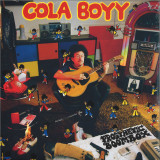
There’s liberation on the dance floor in the songs of Matthew Urango – glimpses of revolution that glimmer beneath the disco ball. “I want my music to bring people together,” says the Californian pop innovator, best known as Cola Boyy. “Because standing together is our best chance at fighting this shit show.” The shit show in question is a broken, brutal system the acclaimed multi-instrumentalist has witnessed up-close. Urango was born with spina bifida and scoliosis in Oxnard, California: a town in which almost 30,000 are estimated to live in poverty. Prosthetic Boombox, his eagerly awaited debut album, might at first glance seem a joyous confetti-burst of pop eclecticism, engineered to sound like “scanning between stations on a car radio, landing on all these different sounds and styles” as Urango puts it. Dig deeper, though, and you’ll discover a simmering sense of rebellion. “The working class are injured, struggling to pay rent and struggling to put food on the table,” he says. “I want to represent that.” Prosthetic Boombox
achieves that goal in a thrilling flurry of inventive indie, funk and soul: take Urango’s car radio analogy, place it in a time-travelling Delorean with Prince in the passenger seat, and you’re half-way there.
Look no closer than Prosthetic Boombox’s euphoric opener, the Avalanches-assisted ‘Don’t Forget Your Neighbourhood.’ The track – which Urango says mixes “the Beach Boys, French disco, house keys and ragtime piano, kinda like the Cheers soundtrack!” – ends with lyrics urging listeners to “fight for your town with your fist closed, strike it and make it more than just a memory.” It’s a reminder that the working classes need to “turn our fists against our oppressors instead of each other,” he explains. After that emphatic introduction comes a horn-laced funk wig-out titled ‘Mailbox’ – a song that gives Dua Lipa’s Future Nostalgia a run for its Studio 54-themed money, featuring rising Londoner JGrrey. Elsewhere, ‘Song for the Mister’ ventures into smooth R&B territory, before ‘Roses’ – a collaboration with Myd of Ed Banger fame – offers a bouquet of bustling disco guitars and infinite bisous of Connan Mockasin’s band drops in on the immaculate ‘Go the Mile’. Urango saves his most introspective moment for the album’s starry closer. ‘Kid Born in Space’, a cosmic collaboration with MGMT frontman Andrew VanWyngarden, sees the artist reflect on what he once had to overcome as a disabled person of colour. “I see them looking down on my dreams of being,” he sings tenderly. “I hear them making fun of my voice, but I keep on moving forward, I refuse to live in anyone else’s shadow.” Prosthetic Boombox, on this subject, is more than an album title – it’s a statement of intent.
“The message of my music is that our class is exploited, oppressed and murdered on the daily. That’s not right, and the system that enables that deserves to be wiped off the face of the earth,” he says. “The only way that happens is if we’re united. That’s the point of my music – to relate to people and unite them.” And what unites more than raucous, irresistibly danceable pop? Prosthetic Boombox is a riot of joyous grooves and catchy hooks for good reason. “I want to reach and spread my message to as many people as possible. You can’t do that if you’re some obscure motherfucker, you know?” he laughs. Don’t bet on him being an “obscure motherfucker” for long.