quête:soul women

Genres
Tout
Various - Highway of Diamonds - Black America Sings Bob Dylan (2x12")
 
20

Ace’s small but ever-evolving “Black America Sings…” series has been quiet of late, but it springs back into action this month with the 2-LP and CD releases of “Highway Of Diamonds” – a second dip onto the catalogue of Bob Dylan, as reimagined by some of the foremost African-American artists of the 20th century.

From almost the start of his songwriting career, Dylan’s words and music have impacted on black American music, with ‘Blowin’ In The Wind’, speaking to an America that was still mostly segregated and becoming an anthem for all colours and creeds. As Dylan’s own career progressed, so did the number of covers he received, with a significant amount coming from what might be termed ‘non-traditional’ sources such as those heard here.

The 20 songs on “Highway Of Diamonds” continue the story that was told in part on the earlier “How Many Roads” compilation, with an almost entirely different selection of artists lending their voices to some of the best songwriting of the 20th century, and an almost entirely different selection of songs (with the exception of ‘Blowin’ In The Wind’ itself, which provides a common thread linking the story told across the two sets).
Big names from the worlds of soul, gospel and jazz, timeless songs and, for many, new ways of appreciating ever-durable material make “Highway Of Diamonds” as essential a purchase as its predecessor.

As ever, the great audio is complemented by a handsomely illustrated package on both CD and double vinyl, with a plethora of illustrations and in depth song-by-song-and-track-by-track annotation by Ace legend Tony Rounce.

pré-commande30.01.2026

il devrait être publié sur 30.01.2026

31,72
MULUKEN MELLESSE - MULUKEN MELLESSE WITH THE DAHLAK BAND (ETHIOPIQUES)

Swan Song

The vinyl LP at the heart of this éthiopiques 31 tracks 2 to 11 was one of the very last vinyl records ever released in Ethiopia. But above all it represents, we felt, the absolute masterpiece of the Ethiopian Groove – the Swan Song of Swinging Addis. The album leaves a clear idea for posterity of the level of sophistication and mastery that modern Ethiopian music had achieved, before being crushed under the Stalino-military heel of the Derg – as the bloody revolution that was unfolding came to be called.

Ethiopia1976.

The Revolution that broke out in February 1974 rolled on in a ruthless march. The whole of Ethiopian society was utterly stunned. The bouquets of flowers handed joyfully to the first tanks of the coup d'état were to wilt very rapidly. From September 1976 to February 1978, 18 months of Red Terror (the name given by the junta itself) spilled blood throughout the country. This fratricidal conflict took its heaviest toll among students and youth. The shift from feudalism to a cruel and primitive Stalinism left the country's citizens deeply traumatised, and snuffed out any pretence of activism, whatever the sector of society. This ice age was to last for seventeen long years.

ሙሉቀን፡መለሰ Mulukèn Mellèssè Muluqän Mälläsä

It was three tracks by Muluken that served as the opener for éthiopiques-1 more than 25 years ago. Seven more tracks appeared on éthiopiques-3 and 13, all accompanied by The Equators, which was soon to become the Dahlak Band.

The first track, Hédètch alu, also the very first piece that Muluken ever recorded, left audiences both unsettled and amazed. Reflecting the singer's extremely young age (he was just 17 at the time), this angelic voice mystified many, who thought they were in fact listening to a feminine voice. He was not yet 22 when he released his last vinyl record in 1976 with Kaifa Records (KF 39LP), one of the very last to be issued in Ethiopia, before the cassette tape became the dominant medium for music distribution – and before the new revolutionary regime put a stop to all independent musical life, via an unspeakable barrage of prohibitions and other persecutions.

Mulu qèn, literally, “A well filled day”. This tender maternal intention wasn't enough to ward off the cruelty of fate. His mother's premature death drove Muluken to leave his native Godjam, in northeast Ethiopia, to live with an uncle in Addis Ababa. Born Muluken Tamer, he took his uncle's last name – Mèllèssè.

The spelling Muluken appeared in his administrative records. Transcription of Amharic to the Latin alphabet, both in Ethiopia and for scholars, gives rise to controversies and quibbles that can never be neatly settled. French allows for a closer approximation of the original pronunciation, thanks to its battery of accent marks, confusing as they may be to anglophones.

Between rather accommodating administrative record-keepers and the various versions that pop up in interviews given by the artist, Muluken's year of birth oscillates between 1953 and 1955…

1954? One thing is certain: the artist's talent made itself known very early indeed, because he got his start in 1966-67, at the age of 13 or 14. Photos from the period attest to his extreme youth. It's a strange sort of initiation for a very young teenager to become a sensation in the heart of Addis's nightlife at the time, Woubé Bèrèha – the Wilds of Woubé. And what's more, in the club of the Queen of the Night, the Godjamé Assègèdètch Alamrèw herself, the very same that was portrayed by Sebhat Guèbrè-Egziabhér in his novel-memoir Les Nuits d’Addis Abeba2… The legendary female club owner who is remembered to this day by the capital's ageing boomers.

Muluken first tried his hand at the drums, before he grabbed the microphone. He emigrated briefly to the Zula Club, across the street from the old Addis Post Office, one of the ground-breaking bars of the burgeoning musical scene, before joining the Second Police Band in 1968, for around three years. He spent a few months with the short-lived Blue Nile Band founded by saxophonist Besrat Tammènè. As the musical scene grew increasingly successful, and pulled slowly but decisively away from its institutional ties, Muluken released his first 45rpm single in February 1972 (Amha Records AE 440). It was included in two LP Ethiopian Hit Parade compilation albums in September of the same year. All in all, Muluken released eight two-track 45s and the same number of original cassette tapes between February 1972 and 1984, the year that he departed for permanent exile in the USA. After converting to Pentecostalism in 1980, Muluken gradually abandoned all secular musical activity. In 1985, at the end of a concert in Philadelphia, he decided to quit concerts and recording for good. Mèlakè Gèbré, the historic bass player from the Walias band who was playing with him that night, recalls that everything appeared so irredeemably diabolical in Muluken's eyes, that it was to be the end of his contribution to Ethiopian Groove.

The end of the story, the beginning of a legend.

Dahlak Band, forgotten by History

Aside from his personal history and vocal talents, it must be remembered that Muluken Mèllèssè was one of the biggest names in the musical innovations that marked the end of the imperial period. These éthiopiques aim to convince those who are just discovering this hidden gem... As for Ethiopians themselves, they are to this day captivated by this singular and atypical figure in the Abyssinian pop landscape – even though he withdrew from public life some 40 years ago. Incorrigible devotees of poetic twists, of more or less hidden meanings, Ethiopians appreciate above all the care Muluken took in choosing his lyrics and the writers who penned them, such as Feqerte Haylou, Alemtsehay Wodajo and, here, Shewalul Mengistu (1944-1977). Love songs, written by women, a far cry from the conventional drivel that pleases sappy sentimentalists.

Muluken is equally acclaimed for his perfectionism when it came to music, the opposite of the overly casual approach that is all too common. He remained a faithful partner of musicians who came from a lineage that borrowed from several inventive and pioneering bands (Venus, Equators, Dahlak). Amongst them were certain artists who began their musical lives with Nersès Nalbandian at the Haile Sellassie Theatre and who come of age in around 1973 – at just the wrong time, you might say. Among them were the pillars Shimèlis Bèyènè (trumpet), Dawit Yifru (keyboards) and Tilayé Gèbrè (sax & flute). Most notably Tilayé Gèbrè, certainly one of the most important musicians, composers and arrangers of his generation, of the end of the imperial era, and of the early years of the Derg.

It was only in 1981 that a miraculous opportunity arose for Tilayé to escape the Stalinist paradise of the dictator Menguistou Haylè-Maryam. Once again it was Amha Eshèté (1946-2021) who provided a solution. The spirited and courageous producer, who had been in exile in Washington since 1975, succeeded, thanks to his incredible perseverence, in bringing the Walias Band to the USA. It was, in fact an extended Walias Band comprising ten musicians3, six of whom chose to slip away after a few concerts and the recording of an LP (The Best of Walias, WRS 100). Tilayé Gèbrè was one of these. He has been living in the USA ever since. There he joined the then-nascent Ethiopian diaspora, which lived largely unto itself, and was making only very modest headway in the American musical market. It seems unfair that Tilayé Gèbrè and the Dahlak Band were not able to benefit earlier from the public recognition that they do deserve.

A similar draining away of the top-rate talents would lead to the reorganization of the major groups of the “Derg Time”. The remaining artists spread themselves around between Ibex Band (renamed Roha Band), Ethio Star Band and a remodeled Walias Band. That spelled the end of the Dahlak Band.

With this record, produced by the essential Ali Abdella Kaifa a.k.a. Ali Tango, we can appreciate everything that the Derg not only destroyed, but also prevented from flourishing. This gem of Ethiopian-style afrobeat came out in 1976 (and, by way of a parenthesis, before the FESTAC 1977 in Lagos, which was attended by an impressive delegation of Ethiopian musicians — although Fela was already personna non grata in his own country). Despite everything that might distinguish this ethio-groove from Fela’s music – no colonial axe to grind, no question of political confrontation with the authorities, no claims to negritude or Africanism for the Ethiopian musicians, and less extrovertion! –, this LP fits beautifully into the saga of intense and electrified soul of the new “African” groove that Fela and Manu Dibango embodied so well from that point onwards.

In restoring this record to its place in the afrobeat epic, it can be seen that, if nothing else, the timeline bestows a legitimate pedigree and a historical primacy to works that had no international impact when they were originally released.

Warning! Masterpiece!

pas en stock

Commandez maintenant et nous commanderons l'article pour vous chez notre fournisseur.

20,59

Last In: 3 months ago
Various - Spring Revisited LP 2x12"

Various

Spring Revisited LP 2x12"

2x12inchAJX2LP859
ACID JAZZ
03.11.2025

Spring Revisited pays us a respectful revisit this autumn as a full double LP on Acid Jazz, Ace Records and Cosmos, pinching the celebrated 12" singles into one power-punchy grab bag. Spring, founded in late 60s New York by Bill Spitalsky with Roy and Julie Rifkind, became a 70s soul powerhouse, home to such dance music pioneers Millie Jackson, Joe Simon and The Fatback Band. Their collegiate creations were of course ripe for modern reinterpretation - a fated intention - and as recently as 2025 saw DJs and producers pull them apart and reappraise them for modern floors: Dimitri From Paris turned Jackson's 'We Got To Hit It Off' into a stout summer anthem, Joaquin 'Joe' Claussell reimagined Fatback's 'Snake', and Kenny Dope, Dave Lee, DJ Spinna, Opolopo, Colleen 'Cosmo' Murphy and others added their own ensouled spins.

pas en stock

Commandez maintenant et nous commanderons l'article pour vous chez notre fournisseur.

30,46

Derniere entrée: 71 jours
MELANIE CHARLES - Y'ALL DON'T (REALLY) CARE ABOUT BLACK WOMEN
  • A1: God Bless The Child
  • A2: All Africa (The Beat)
  • A3: The Music Is The Magic
  • A4: Perdido (Reimagined)
  • A5: Pay Black Women Interlude
  • A6: Woman Of The Ghetto (Reimagined)
  • B1: Jazz (Ain't Nothing But Soul) (Reimagined)
  • B2: Detour Ahead (Reimagined)
  • B3: Go Away Little Boy
  • B4: Beginning To See The Light (Reimagined)
  • B5: What A Difference (Reimagined)
pré-commande23.10.2025

il devrait être publié sur 23.10.2025

28,15
EMMA HESSELS - CONSTANT DISTANCE
  • A1: Always Lost
  • A2: We Will
  • A3: Insular
  • B1: Aretha
  • B2: Woollen Women
  • B3: Breaking

Belgian singer-songwriter Emma Hessels releases her debut EP 'Constant Distance' on October 24 via Unday Records. With a voice that lingers long after the song has ended and lyrics that feel like pages torn from a diary, Hessels has quickly carved out her place in the Belgian scene. She was named laureate of Sound Track in 2023, went on to play intimate yet arresting sets at Ancienne Belgique, Botanique, and the prestigious Cirque Royal, and appeared at Best Kept Secret this summer.

Milestones that signaled the arrival of a singular new voice in folk and soul.

'Constant Distance' gathers six songs bound by a recurring undercurrent: the presence of distance in its many forms - absence, longing, loneliness, the fear of loss, but also the desire for belonging. The songs weren't conceived around a single theme, but when brought together, a pattern revealed itself. Loss implies distance, longing implies distance, even love can. Yet the EP closes on 'Breaking', a gospel-tinged anthem of connection and alignment, written during a women's writer's retreat where community and music became inseparable.

Musically, 'Constant Distance' moves between folk and soul, carrying the feel of modern blues and occasionally leaning into gospel's call-and-response. The atmosphere is warm and nostalgic, drawing inspiration from Laura Marling, Damien Rice and Big Thief as much as from Aretha Franklin, Nina Simone and Richie Havens. Emma's voice remains the constant thread: soulful, unforced, quietly commanding. "I hope my songs can be like a warm blanket, something that keeps you company, that makes you feel a little less alone."

Though written solo on guitar, often during long train rides, the songs expanded into layered productions through collaboration with Aram Santy, Nard Houdmeyers and Fender Mackenson Rooms, with additional contributions such as Marthe van Droogenbroeck's evocative trumpet. Recorded over two intense days at Studio Beertje, the EP captures both intimacy and expansiveness. The result is music that carries the weight of Emma's fears and questions, but also the joy of collective creation.

With 'Constant Distance', Emma Hessels doesn't just deliver a debut - she opens a world where fragility and strength coexist, and where music becomes a way of closing the gap between people.

pré-commande10.10.2025

il devrait être publié sur 10.10.2025

18,91
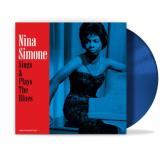
NINA SIMONE - SINGS & PLAYS THE BLUES LP
  • A1: I Want A Little Sugar In My Bowl
  • A2: House Of The Rising Sun
  • A3: Central Park Blues
  • A4: I Got It Bad
  • A5: Gin House Blues
  • A6: Come On Back, Jack
  • B1: Mood Indigo
  • B2: Nina’s Blues (Live)
  • B3: No Good Man
  • B4: Nobody Knows When You’re Down And Out
  • B5: Rags And Old Iron
  • B6: Work Song
  • B7: You’ve Been Gone Too Long

There can be no doubt that Nina Simone was one of the great Black American women who bridged the movement from Blues and R&B to Soul. She was nicknamed 'The High Priestess Of Soul' and spoken of in the same awed tones as the likes of Etta James, Aretha Franklin and Ruth Brown, but in so many ways she trumps all of them with her musicality and versatility. This release emphasizes her bluesier side

pré-commande12.09.2025

il devrait être publié sur 12.09.2025

21,43
Various - Dolores: Salsa & Guaracha From 70's French West Indies

In Guadeloupe, many people think that jazz and ka music are like a ring and a finger. To some extent, the same could be said about so called Latin music and the music played in the French West Indies.

Both aesthetics were born in the Caribbean and bear so many connections that they can easily be considered cousins. In constant dialogue, there are lots of examples of their fruitful alliance and have been for a while. The English country dance that used to be practiced in European lounges came to be called kadrille in Martinique and contradanza in Cuba. They both featured additional percussion instruments inherited from the transatlantic deportation. Drawing from shared feelings about the same traumatized identity – later to be creolized – it would be hard not to assume that they were meant to inspire each other. The golden age of the orchestras that graced the Pigalle nights during the interwar period further proves the point. As soon as the 1930s, Havana-born Don Barreto naturally mixed danzón and biguine music in a combo based at Melody's Bar. In the following decade, Félix Valvert, a conductor who was born and raised in Basse-Terre in Guadelupe, also worked wonders in Montparnasse with La Coupole, which was an orchestra made up of eclectic musicians. Afro- Caribbean performers of various origins were often hired on rhythm and brass sections in jazz bands, which used to enliven the typical French balls of the capital. In the 1930s and onwards, Rico’s Creole Band was one of them.


Martinican violinist-clarinettist Ernest Léardée, who would become the king of biguine music as well as the main figure of French Uncle Ben's TV commercials (a dark stigma of post-colonial stereotypes), had musicians from the whole Caribbean sphere play at his Bal Blomet – and they all enchanted "ces Zazous-là" (according the words of Léardée's biguine-calypso piece). In les Antilles (French for French West Indies), music history started to speed up in the 1950s, when trade expanded and radio stations grew bigger. The Guadelupean and Martiniquais youth tuned in their old galena radio sets to South American and Caribbean music. As for the women traders, les pacotilleuses, they bought and sold goods across different islands (the "passing of items through various hands" was thought to be most pleasurable) and brought back countless sounds in their luggage. Such was the case of Madame Balthazar, who once returned from Puerto Rico with the first 45rpm and 33rpm to ever enter Martinique.

Out of this adventure was created the famous Martinican label La Maison des Merengues, a music business she opened and undertook with her husband and which proved to be a major landmark. At the end of the 1950s, in Puerto Rico, Marius Cultier competed in the Piano International Contest playing a version of Monk's Round 'Midnight. He won the first prize and this distinction foreshadowed everything that was to come. Cultier, the heretic Monk of jazz, was quickly praised for writing superb melodies, always tinged with a twist that conferred a unique sound to his music. It didn't take long for the gifted self-taught musician to get to play with Los Cubanos, making a name for himself thanks to his impressive maestria on merengues.

The rest is history. Besides, in the late 1950s, Frantz Charles-Denis, born into the upper middle class in Saint-Pierre and better known by his first name Francisco, went back home after working at La Cabane Cubaine – a club located rue Fontaine where he had caught the Latin fever. Francisco's music was therefore heavily marked by his Cuban cousins' influence, which gave the combos he led a specific style and also led to renewal. Things were swinging hard in La Savane, located in the main square in Fort-de-France. He set up the Shango club close by and tested out the biguine lélé there, a new music formula spiced up with Latin rhythms. Soon afterwards, fate had him fly to Puerto Rico and Venezuela.

As for percussionist Henri Guédon (percussions were only a part of his many talents), he was born in Fort-de-France in May 22nd 1944, the day marking the celebration of the abolition of slavery. As an old man, he could remember that in " his father's Teppaz, a lot of hectic 6/8 music was constantly playing...". In the opening lines of his Lettre à Dizzy, a small illustrated collection of writings published by Del Arco, he highlighted the huge impact that cubop had on him as a teenage boy, around 1960. He eventually turned out to be the lider maximo in La Contesta, a big band steeped in Latin jazz. He was also the one who originated the word zouk to describe music which brought the sound of the New York barrio to Paris. It was the culmination of a journey that started in Sainte-Marie: "a mythical place for bélé, the equivalent of Cuban guaguancó". In the early 1960s, the tertiary economy developed to the detriment of agriculture. Yet rural life was where roots music emerged in Martinique and in Guadeloupe.

Record companies played a major part in the process of Latin versions sweeping across the islands – before reaching everywhere else. Producer Célini, boss of the great Aux Ondes label, and Marcel Mavounzy, both the head of Émeraude records - a firm which was founded in 1953 - as well as the brother of famous saxophonist Robert Mavounzy, were big names to bear in mind. Although there were many of them - all of whom are featured on this record - Henri Debs was definitely the major figure in the recording adventure. He proved to be so influential that he even got compared to Berry Gordy. In the mid 1950s, when he acquired his first Teppaz, he worked on his first compositions: a bolero and a chachacha. Then, he became the one man who made people discover Caribbean music, from calypso to merengue. He was among the first ones to rush out to San Juan, Puerto Rico, to buy records and distribute them through a store run by one of his brothers in Fort-de-France. He had members of the Fania All Star come and perform there, which he was madly proud about. He was also the first one to pay attention to Haitian music, such as compas direct and various other rhythms which would soon flood the market. As a result, many of the combos hitting his legendary studio would end up boosted by widespread "Afro-Latin" rhythms. However, he never denied his identity: gwo ka drums were given a major role, although they were instruments which had long been banned from the "official" music spheres. The present selection bears witness to such a creative swarming. Here are fourteen tracks of untimely yet unprecedented cross-fertilization: all types of music rooted in the Creole archipelago have found their way, whatsoever, to the tracklisting. Whether originating from the city or being more rural, they all go back to what Edouard Glissant, in an interview about the place of West Indian music in the Afro-American scope, called "the trace of singing, the one which got erased by slavery." "It is so in jazz, but also in reggae, calypso, biguine, salsa... This trace also manifests through the drums, whether Guadelupean, Dominican, Jamaican or Cuban... None of them being quite the same. They all point to the idea of a trace, seeking it out and connecting to each other through it. This is the hallmark of the African diaspora: its ability to create something new, in relation to itself, out of a trace. It may be the memory of a rhythm, the crafting of a drum, a means of expression which doesn't resort to an old language but to the modalities of it." The opening track features one of the emblematic orchestras of this aesthetic identity, criscrossing many music types from the archipelago. The 1974 Ray Barretto guajira – Ray Barretto was a major New York drummer influenced by Charlie Parker and Chano Pozzo – is magnificently performed by Malavoi, a legendary Fayolais group (i.e from Fort-de-France). Additionally, the compilation ends on a piece by Los Martiniqueños de Francisco. It symbolically closes the circle as it is a genuine potomitan of Martinique culture which also functions as a tireless campaigner for Afro-Caribbean music. Practicing the danmyé rounds (a kind of capoeiria) to the rhythm of the bèlè drum, it delivers a terrific Caterete, a kind of champeta of Afro- Colombian obedience which was originally composed by Colombian Fabián Ramón Veloz Fernández for the group Wgenda Kenya. The icing on the cake is Brazilian Marku Ribas, who found refuge in Martinique in the early 1970s, bringing his singing to the last trance-inducing track. These two "versions" convey the whole tone of a selection composed of rarities and classics of the tropicalized genre, swarming with tonic accents and convoluted rhythms. It is the sort of cocktail that the West Indians never failed to spice up with their own ingredients. For instance, the Los Caraïbes cover of Dónde, a famous Cuban theme composed by producer Ernesto Duarte Brito, has a typical violin and features renowned Martinique singer Joby Valente and his piquant voice.


The track used to be – or so we think – their only existing 45rpm. The meaningful Amor en chachachá by L'Ensemble Tropicana, a band which included Haitian musicians among whom was composer and leader Michel Desgrotte, also recalls how Latin music was pervasive in the tropics in the mid-1960s. They were the ones keeping people dancing at Le Cocoteraie in Guadelupe and La Bananeraie in Martinique. Around the same time, another "foreign" band, Congolese Freddy Mars N'Kounkou's Ryco Jazz, achieved some success on both islands by covering Latin jazz classics – such as their adaptation of Wachi Wara, a "soul sauce" by Dizzy Gillespie and Chano Pozo whose interweaving of strings and percussions can have anyone hit the dancefloor. How can you resist Dap Pinian indeed, a powerful guaguancó by Eugene Balthazar, performed by the Tropicana Orchestra and published by the Martinique-founded La Maison des Merengues? It also acts as a symbol of the maelstrom at work. Going by the name Paco et L'orchestre Cachunga, Roger Jaffory used to play guaguancó too: his Fania-inspired Oye mi consejo is one example of his style. Baila!!!!! Dancing was also one of the Kings' focus points. Oriza is a Puerto Rican bomba and a "classic" originally composed by Nuevayorquino trumpeter Ernie Agosto, which reserves major space for brasses, giving it a special sheen.

Emerging from the New York barrios crucible was also La Perfecta, a Martinique group originating from Trinidad, whose name directly references the totemic Eddie Palmieri figure as well as his own band, also called La Perfecta. Here they borrow Toumbadora from Colombian producer and composer Efraín Lancheros and interpret it by emphasizing percussions, which set fire to the track even more than the wind instruments. The same goes for Martinique's Super Jaguars, who use Tatalibaba – a composition by Cuban guitarist Florencio "Picolo" Santana which was made famous by Celia Cruz & La Sonora Matencera – as a pretext for sending their cadences into a frenzy. In a more typically salsa vein, the Super Combo, a famous Guadelupean orchestra from Pointe-Noire that was formed around the Desplan family and had Roger Plonquitte and Elie Bianay on board, adapt Serana, a theme by Roberto Angleró Pepín, a Puerto Rican composer, singer and musician also known for his song Soy Boricua. Here again, their vision comes close to surpassing the original. In the 1970s, L'Ensemble Abricot provided a handful of tracks of different syles, hence reaching the pinnacle of the art of achieving variety and giving pleasure. They played boleros, biguines, compas direct, guaguancó and even a good old boogaloo - the type they wanted to keep close to their hearts for ever, "pour toujours", as they sang along together in one of their songs. Léon Bertide's Martinican ensemble excelled at the boogaloo which had been composed by Puerto Rican saxophonist Hector Santos for the legendary El Gran Combo.


Three years later, in 1972, Henri Guédon, with the help of Paul Rosine on the vibraphone, tackled the Bilongo made famous by Eddie Palmieri. Such a classic!!!!! And so were the Aiglons, the band from Guadelupe: choosing to execute Pensando en tí, a composition by Dominican Aniceto Batista, on a cooler tempo than the original, they noticeably used a wonderfully (un)tuned keyboard in place of the accordion. On the high-value collectible single – the first one released by Les Aiglons under the Duli Disc label – there is a sticker classifying the track under the generic name "Afro". Now that is what we call a symbol. Jacques Denis

pas en stock

Commandez maintenant et nous commanderons l'article pour vous chez notre fournisseur.

21,43

Derniere entrée: 30 jours
Beebe Gallini - Begged, Borrowed and Stealed LP

The original line up of all women featured Sally Sweet of Minneapolis garage bands THE CAVEGURLS and THE BLUE UP. After some time the original line up morphed into a mixed band of men and women and the group released a 45 on Ramo Records. This caught the attention of Boston record label RUM BAR RECORDS, who would release the BEEBE GALLINI album 'Pandemos', a collection of material made during the worldwide pandemic. A well-received collection ranging from garage nuggets to 60's BEE GEES' hit and original material.

For their next project producer and drummer for the group Travis Ramin brought the group into the legendary Kay Bank Studio in Minneapolis. A studio rich in musical history where everything from DAVE DUDLEY's Six Days on the Road and THE FENDERMEN's Muleskinner Blues to THE TRASHMEN's Legendary Surfin Bird and all of Soma Records' Big Hits Of Mid America were recorded. The early GUESS WHO recorded there and decided on their name in the building even ... the list goes on and on!

Travis' idea for a record was to re- record some Minnesota garage classics that were originally recorded there in the same room and invite some of their garage rockin' friends to join them. Run Run Run by THE GESTURES and Why by THE ACCENTS would feature on lead guitar Keith Patterson (formerly of THE FUNSEEKERS, THE SPECTORS, and THE CONQUERORS). I Believe from THE HIGH SPIRITS would feature Melanie Vammen of THE PANDORAS organ solo and Russell Quan famously of THE MUMMIES, FLAKES and DUKES OF HAMBURG would take lead vocal on THE KAN- DELS raucous Cry Girl. The session was so successful that it expanded into the full- length album "Begged, Borrowed and Stealed" and batch of material expanding beyond the Minnesota borders, with tunes from DAVE DEE, DOZY, BEAKY, MICK & TICH, OTIS REDDING, BEEBE themselves and more! Recording in the sacred space made for a special rock and roll party album which also features the artwork of legend Cliff Mott! So, get ready for an all-star cast and a little dose of Minnesota Garage Rock and Soul!

pré-commande23.05.2025

il devrait être publié sur 23.05.2025

27,52
Teal - Original Watercolour

Teal’s debut LP, Original Watercolour, is an album that feels like a canvas come to life. A sonic blend of street-soul, digi-dub, and downtempo. Original Watercolour explores the complexities of love, oneness, and intuition — themes that resonate deeply within the context of the history women have shared with what was once known as the “ladies’ medium.”

The bi-coastal family trio—Ashleigh and Melissa Ball, better known as the Ball Sisters, alongside producer N1_SOUND—bring a fresh, genre-defying sound to the table with their latest 6-track album. Running just under 30 minutes, this immersive collection weaves together skipping beats, addictive bass lines, three-dimensional flute textures & emotional vocal melodies. This musical portrait is as ethereal as it is powerful, inviting the listener to get lost in its depths while celebrating the beauty of self-expression.

The opening track, “Original Watercolour,” takes you on a psychedelic trip-hop journey. From the first reverberous snare hit, you’re whisked away to a sonic wetland — lush and euphoric. The soft yet poignant soundscapes set the tone for the album, inviting us into a world where the boundaries between earth and music, reality and imagination, automatically seem to blur.

“Locked In 2 Love” offers a boogie-fueled bassline that pushes Teal into dance-floor territory with soaring flutes and rhythmic intricacies that make it impossible not to move — it’s a track that exemplifies the magic of Teal’s ability to craft both intimate and expansive musical landscapes. And then, there’s the hypnotic flow of “One In The Same,” where stacked vocal harmonies and mantra-esque lyrics transport you to a place that could easily be mistaken for a lost Soulquarians demo. It’s gentle yet unrelenting in its depth.

The second side of the album opens with “Sleep on It,” a track that immediately grabs attention with its dancehall-driven rhythm. Ashleigh Ball's vocals set the stage for a song that’s both introspective and emotionally charged, yet unmistakably rooted in groove. The phased-out bassline creates an almost hypnotic atmosphere. Pulling the listener into a mood of contemplation—matching the restless, sleepless night that Ball describes. As the song progresses, this groove builds in intensity, culminating in an explosive ending that mirrors the emotional release of a long-held frustration.

Original Watercolour is more than just an album — it’s a meditation on the interconnectedness of life and art. “Frog Kingdom,” the longest and only instrumental track creates a contemplative space that builds upon the themes introduced earlier. It feels like a sequel to their earlier work, Frog Legacy from their debut Bluish Green 2024 12”, expanding on the familiar sound with even more complex layers.

Yet the real emotional power of the record lies in its closing track, “Can’t Shake the Feeling.” Simple in structure but profound in impact, this song captures a deep yearning and understanding — that everything, from the ecosystems we inhabit to the relationships we nurture and the art we create, is fundamentally interconnected. As the track crescendos in a falsetto peak, it becomes clear that the album is a reflection of both the world around us and the personal journey each member of the band has embarked upon to get to this point.

Just as the medium of watercolor has been traditionally linked to women artists, Teal carries this legacy into the modern musical landscape, blending the richness of history with a unique forward-thinking perspective. The album feels like both a celebration of the past and a bold declaration of a path forward — one that welcomes anyone ready to join in and shape the future of the art form.

The beauty of Teal’s work is that it feels familiar, while simultaneously offering something new and refreshing. Original Watercolour doesn’t just push musical boundaries; it redefines them, offering a lush and textured soundtrack for those willing to listen closely.

In a world that often feels over-saturated, Original Watercolour stands as a reminder of the power of simplicity, intuition, and connection. Teal’s debut album invites you to experience something both deeply personal and universally understood. The landscapes they create are vivid, yet soft, grounding yet expansive. With each track, Teal’s music reflects the interconnectedness of all things — a truly unique piece of work in the world of experimental soul and dub adjacent electronic music.

Rising and falling. We all live in the same pond. Peace to all.

pas en stock

Commandez maintenant et nous commanderons l'article pour vous chez notre fournisseur.

20,38

Last In: 9 months ago
Diplomats Of Soul - I Love You / Teacherman
  • A1: Teacherman
  • B1: I Love You

Sofia Kourtesis has announced that she will release her new EP Volver on 1 August via Ninja Tune. Along with the announcement she has shared lead single ‘Unidos’ which is made in collaboration with Daphni (aka Dan Snaith aka Caribou), the first ever Daphni collaboration track.

Speaking of the single Sofia says:
“Unidos is about the power and beauty of how much stronger we are together. I always admire the light and the beautiful shine of Dan, he is a hero and he is so generous without making a big fuss about it”

While Daphni says:
“Sofia sent me a demo of this track that she’d been working on and it was immediately evident that it was a massive track. To be clear, all the good ideas in this track are Sofia’s I just added some drums and pumped up the arrangement”

Speaking of the Volver EP Sofia says:
“In the Volver EP I am paying tribute to all the LGBT+ community and all the amazing trans women that I was lucky to meet through the course of the last few years. Their bravery and existence in a world full of hate and danger, they find a way to bring the lights to the most vulnerable communities, specifically those that are behind the walls of terrible corruption in the Latino America Security and Health System.”

The EP recording itself she describes - in keeping with its title - as like a Pedro Almodóvar movie: a chaotic, painful but ultimately joyful experience, as she worked across her twin homes in Germany and Peru with dramatic changes occurring all the time. Across this process Sofia was touring the world, playing bigger and bigger shows, working with local communities in Germany and South America, navigating the continued care of her mother, and even decided to throw beginning to study medicine into the mix.

This has always been what makes Sofia such a special artist - there is so much living crammed into every inch of her music. Here she builds on that, her intoxicating spirit more present than ever.

pré-commande07.03.2025

il devrait être publié sur 07.03.2025

15,34
VARIOUS - BLUE PLATE SPECIAL 02
  • Funky Country - Jesters Iii
  • Wanderin' Soul - Gary Atkinson
  • Big Country Blues - Shirl Milete
  • Northeast Texas Women - Willis Allan Ramsey
  • Want You - Tony Joe White
  • Crack Up In Las Cruces - Michael Murphey
  • Love And Little Joe - Lee Conway
  • I'd Rather Be (Blind, Crippled And Crazy) - O.v. Wright
  • Long Line Rider - Bobby Darin
  • Misfit - Joe South
  • A Little Less Conversation - Mac Davis
  • Catman - Sherman Hayes

What is Country Soul? This brief period hapened in Country Music(1968/1973) history when Cowpokes gave a try to LSD and pot, and so transformed their own music into something less formatted, opened to many others influences has funk and Soul or Psychadelism. Drum n" Bass are groovy and the Cow-Boy is cooking!

pré-commande20.12.2024

il devrait être publié sur 20.12.2024

24,33
Thee Sacred Souls - Got A Story To Tell LP+MP3

The highly anticipated follow-up to Thee Sacred Souls's breakout 2022 self-titled debut, Got A Story To Tell, features 12 all original new songs, a soaring statement of exquisite craftsmanship from this young band from San Diego whose story grows bigger by the day. Recorded and produced by Gabriel Roth at Penrose Recorders, in Daptone’s Riverside, CA studio, and written in the throes of supporting their 2022 album, which was met with significant excitement and major touring that brought them across the world. What swirls together on Got A Story To Tell is an appreciation of decades of soul music, and beyond - a sound and feel that is timeless, lived in, and very much in the now. Album opener “Lucid Girl” champions independent women, set to some of the toughest sounding drums and bass the band has yet to put to tape. “Waiting On The Right Time” slinks with a touch of slow-burning psychedelia. A plea for empathy punctuates “One and the Same,” with Lane singing: “We’re one and the same, I feel one day / We learn to live with each other / In love, not fear / Just for a moment, why can’t we be together.” “On My Mind” is a sweeping orchestration, with Lane navigating the complexities of finding happiness while balancing the good with the bad. The album is punctuated with strings and squelching guitar, trundling piano, pops of conga, horns - it makes for a thrilling, layered listen that rewards with multiple spins.

pas en stock

Commandez maintenant et nous commanderons l'article pour vous chez notre fournisseur.

22,65

Derniere entrée: 57 jours
Nothing In Rambling - Live At Bush Hall	LP

Captures a night at London’s well known vintage venue Bush Hall when the stage was shared with Jerron ‘Blind Boy’ Paxton. Takes you on a musical journey through Mississippi and Louisiana performing music by artists such as Memphis Minnie, Blind Boy Fuller, Rev Gary Davis. Acoustic duo project of Sister Suzie and Andy Twyman. Part of a growing movement in the UK presenting stripped back acoustic blues. Be ready to be transported back to the 1920s with a show of early folk blues evoking the playfulness, power and soul of the music and the people who created it. The duo are singer/songwriter, guitarist, occasional member of Dana Gillespie’s Blues Band and sometime one-man-band Andy Twyman, and Sister Suzie, singer/songwriter and frontperson of The Right Band; both busy and popular artists in their own right. They have toured the UK and Europe extensively.

Nothing In Rambling as the project name is taken from a Memphis Minnie song which Sister Suzie describes as “very poignant – and like so many in that era, it sounds deceptively cheery and upbeat, but the lyrics are dark, telling a tale of danger and bravery in taking to the road rambling especially as a black person. and the struggles that women, especially black women, faced in that era.” Sister Suzie published a dissertation “Women In The Blues, Pre-1960’ detailing the struggle that women, especially black women, had against the ‘patriarchy’ and in their own sexual liberation. The latter element was often written about observing the ‘racy’ side of life, and on songs such as ‘Me And My Chauffeur’ and ‘Kissing In The Dark’ Sister Suzie takes the cue to deliver with particular juke joint panache. PRESS / ADDITIONAL SALES POINTS: Launched at The Sound Lounge (Sutton) September 12th - Feature published in September issue of Blues In Britain magazine - Reviews in Rock n Reel, Blues In Britain, Blues Matters - Radio play on IBBA and RMR stations - Live shows, and Festival appearances through 2024 – Red Rooster, Ealing Blues, Upton Blues, Tenby Blues, Glastonbury

pré-commande11.10.2024

il devrait être publié sur 11.10.2024

25,63
Thee Sacred Souls - Got A Story To Tell LP+MP3

The highly anticipated follow-up to Thee Sacred Souls's breakout 2022 self-titled debut, Got A Story To Tell, features 12 all original new songs, a soaring statement of exquisite craftsmanship from this young band from San Diego whose story grows bigger by the day. Recorded and produced by Gabriel Roth at Penrose Recorders, in Daptone’s Riverside, CA studio, and written in the throes of supporting their 2022 album, which was met with significant excitement and major touring that brought them across the world. What swirls together on Got A Story To Tell is an appreciation of decades of soul music, and beyond - a sound and feel that is timeless, lived in, and very much in the now. Album opener “Lucid Girl” champions independent women, set to some of the toughest sounding drums and bass the band has yet to put to tape. “Waiting On The Right Time” slinks with a touch of slow-burning psychedelia. A plea for empathy punctuates “One and the Same,” with Lane singing: “We’re one and the same, I feel one day / We learn to live with each other / In love, not fear / Just for a moment, why can’t we be together.” “On My Mind” is a sweeping orchestration, with Lane navigating the complexities of finding happiness while balancing the good with the bad. The album is punctuated with strings and squelching guitar, trundling piano, pops of conga, horns - it makes for a thrilling, layered listen that rewards with multiple spins.

pas en stock

Commandez maintenant et nous commanderons l'article pour vous chez notre fournisseur.

22,65

Last In: 9 months ago
Noel Hawks & Jah Floyd - Rock Steady To Rockers From Treasure Isle To Channel One

The growth of the Jamaican recording industry…

Records have played an integral part in the history of Jamaican music and the importance of making records, as opposed to making music, can never be overstated. These are the stories, told through first-hand accounts wherever possible, of the men and women… manufacturers, musicians, singers, deejays, arrangers and record producers… who made the records and who made the sound of reggae available worldwide.

“This volume of what promises to become a crucial series covers in comprehensive fashion Jamaican music’s pivotal phase, when the music absorbed its US influences from soul and moved on from rock steady and progressed to the uniquely Jamaican sound of reggae and rockers.

It was a period in which old and new rhythms became the cornerstone of the music and thus the true
foundation of reggae. This second volume in the trilogy, amply illustrated, contains a wealth of interview testimony from the creators of the music and is both utterly authentic and essential reading.”
Steve Barrow
Co-author of ‘Reggae The Rough Guide’

“Noel Hawks takes another deep dive into the history of Jamaica’s recording studios, the businessmen who owned them and the record producers who worked in them. While the previous volume, ‘The Birth Of Ska’, dealt with Jamaica’s nascent music business and the journey, from its mento and folk roots to rhythm & blues and then ska, ‘Rock Steady To Rockers’ picks up the story as ska is about to transform into the smoother rock steady style and carries us through to reggae and the sonically sophisticated dub of the Seventies.

The book contains a stunning collection of hard facts about the business of making records, as well as personal recollections from many of the leading lights of Jamaica’s music scene, and is a fascinating read for record collectors, reggae fans and anyone who loves music.
Chris Lane
Fashion Records

“The second part of this important trilogy is no less informative and engrossing than the first volume. The author’s blending of his own authoritative narrative and entertaining quotes from people who watched everything that’s chronicled here unfold… artists, producers and early collectors… makes for a seamlessly entertaining read from start to finish.

If you couldn’t be there, or even thereabouts, at the time consider this book your very own literary TARDIS to help you to relive the evolution of Jamaican music at (almost) first hand. I’m very proud to have had even the smallest involvement with this essential read. Roll on Volume Three…”
Tony Rounce
Author & Music Historian

pré-commande04.10.2024

il devrait être publié sur 04.10.2024

18,91
The Mars Volta - Amputechture LP 2x12"

The Mars Volta

Amputechture LP 2x12"

2x12inch4250795602484
CLOUDS HILL
04.10.2024

Amputechture Beneath the technical flash, the fury, the fearless creative brinkmanship of the first two Mars Volta albums lay a potent seam of the blues, an existential vexation that powered every twist and turn of Omar and Cedric’s imaginations. That mournful vibe would come to the surface of the group’s third full-length Amputechture, a simmering/blistering set that was unquestionably the group’s darkest yet. There was no overarching theme here, no interlinking concept binding the songs together, though Cedric concedes that, lyrically, the album was influenced “by a lot of stuff I was going through, a really bad break-up and a lot of other crazy stuff, and trying to put that feeling into the record.” But Amputechture – its name another of the late Jeremy Michael Ward’s invented words – was no downbeat bummer. Opener Vicarious Atonement might’ve been a deliciously gloomy, slow-burning thing, capturing Cedric in delirious duet with Omar’s swooning guitar lines, accompanied by squalling saxophone by Adrian Terrazas-Gonzales and dream-frequency fuckery by the group’s new sonic manipulator, former At The Drive- In member Paul Hinojos. But second track Tetragrammaton swiftly set pulses racing, an epic-in-miniature and containing more ideas within its 16 minutes than most bands manage over an entire career, its proggy, complex guitar figures tessellating in infinite configurations and converging as if conforming to mathematical formulae from another reality. The raw material Amputechture was hewn from started life on the road. Omar now travelled with his own mobile recording studio – a little Neve ten-channel tape recorder and an array of microphones – and was able to work on new ideas on tourbuses, in hotel rooms and during soundcheck (and, occasionally, after the show was done). After touring for Frances The Mute was complete, Omar relocated to Amsterdam, staying with his photographer friend Danielle Van Ark and her partner, Nils Post. It’s here that he demoed Amputechture, flying in engineer Jon DeBaun, drummer Jon Theodore and his brother, Chino, to work on these raw sketches. He later returned to Los Angeles, where the album was finally recorded. Omar ceded guitar duties to his dear friend and kindred spirit John Frusciante, instead assuming the role of musical director. “I wanted to hear the sound of the band,” he says. “I thought, I’ll be able to sit at the console, feel the air of the speakers moving, the unified sound of everything, and not feel distant from it. It was fun, but it was also challenging.” Part of Omar’s new method was to teach the musicians their parts only moments before the tapes rolled. “To keep things fresh, and to keep everyone on edge,” he says, before chuckling. “No, not on edge – on their toes. Amputechture would prove The Mars Volta’s most diverse set yet, drawing into the group’s tornado of influences moments of fiery jazz spirituality and esoteric folk introspection, finding space for passages of devastating subtlety and also their most fierce and full-on moments to date. The aforementioned Vicarious Atonement found its meditative mood echoed by Asilos Magdalena, an intimate, acoustic piece that invoked traditional Latin folk music, as Cedric sang in Spanish a sorrowful tale of a lost soul’s quest for sanctuary within a Magdalen Asylum, a refuge set up by the Catholic church for “fallen women”. The shadowy, sinister closer El Ciervo Vulnerado, meanwhile, tapped into the darker side of spiritual jazz to further explore the album’s themes of redemption and religious myth and magick. Elsewhere, the interplay between guitar and clarinet on Viscera Eyes created complex, unsettling counter-melodies, while the coiling, ornate Meccamputechture – Cedric’s wild fusion of sacred texts, occultism and dystopian science fiction – proved a great showcase for Ikey Owens’ swarming, infernal organ runs, in concert with Frusciante’s arcane guitar-play. But it was Day Of The Baphomets that would prove Amputechture’s most ambitious and most defining epic. Cedric’s lyrics tore into the hypocrisy of religious cant and myths of sin and punishment. “I wanted to make a song that was like the movie The Believers, where this cabal stole kids and did some occult shit with them,” he explains. “But I wanted it to be like, ‘What if the people you hire to do jobs you don’t wanna do rise up one day and then pull some shit like that?’ Like it was the guerrilla warfare, them taking over – wouldn’t that be some fucked up shit? And the music just lent itself to that – the big intro, the bass solo, and all of the ruckus that occurs.” That ruckus was some of the most thrilling Mars Volta music yet, as Omar directed his musicians to rumble through fiery modes of wild tribal groove, ransack-the-palaces riot- rock and supreme progressive experimentalism. Amputechture, then, is the sound of The Mars Volta in imperial mode: fearless, insatiable, unstoppable.

pré-commande04.10.2024

il devrait être publié sur 04.10.2024

33,57
ISIK KURAL - MOON IN GEMINI LP

Isik Kural returns with Moon in Gemini, a luminous scrapbook of slow-flowing narratives couched in intuitive and symbolic storytelling. Bending a playful take on environmental music to the folk song form, Isik's vocals coo atop pastoral field notes, airy chamber instrumentation and archival recordings culled from a curious musical life. A tender pastiche coalesces across the suite of Moon in Gemini's fourteen pieces, and Isik invites the listener to daydream as-deep-as-possible. "The songs on Moon in Gemini don't mind being slower or taking their time to reach the listener," says Isik, who wanted the title to speak to the album's dreamy, liminal nature. "I enjoyed how the phrase could be used to describe an object, a time or a place simultaneously," he explains. Similarly and subsequently, these songs contain a multiplicity of sonic artifacts, moments and spaces that span Isik's rich musical career to date. With the bulk of the album realized between Amasya, Turkey and Isik's current home in Glasgow, in both domestic and studio recording environments, additional tracks unearthed from his personal recording archive lend their lush patina. The record emerged as a fertile space to reimagine a handful of previously unreleased songs and unfinished ideas spanning the past fifteen years of his life and work, including streetside sounds documented while growing up in Turkey and recordings made while studying music engineering in Miami, Helsinki and Glasgow. Looking to the more recent past, Isik found himself wanting to build upon some of the methodologies and textures explored on his 2022 album in february, seeking a newly intimate, vocal-forward sound. He points to the track "film festival" from that album as a door through which to enter Moon in Gemini, where sample-based arrangements are presented in the context of asymmetrical "build ups and progressions" and ambience and vocals intertwine. Inspired in part by listening to iconic, if not sometimes misunderstood, singers such as Nina Simone, Aldous Harding and Ed Droste of Grizzly Bear, Isik aimed to carve out a new space for his voice on Moon in Gemini, experimenting with novel recording and mixing techniques. Captured at his aunt's farmhouse in Amasya during an extended three week recording session, we find Isik's vocal high in the mix, front-and-center and on newly expressive terms. As a songwriter, Isik is an intuitive and playful lyricist who allows his deep love of literature to flow through his off-kilter texts. Here, echoes of Silvina Ocampo's poem "Dialogues of the Silence" reverberate from the margins of "Most Beautiful Imaginary Dialogues". Likewise, Elliott Smith and Virgina Astley shapeshift through "Behind the Flowerpots," some lines of which were based on misheard lyrics from Smith's "Stickman" and Astley's "Some Small Hope." Attuned to the magic of happy coincidences, other unexpected "themes and connections between tracks flourished" during the recording process, resulting in some songs being more "thematically and lyrically connected to each other compared to previous records." The duos "Prelude" and "Interlude" as well as "Grown One Iota" and "After a Rain" explore connected stories, while "Almost a Ghost" and "Behind the Flowerpots" serendipitously emerged out of a conversation with Stephanie "Spefy" Roxanne Ward, whose balmy vocals heard highlighting in february return and call out to Isik's in sweet dialogue. Plumbing these new potentials of structure and songwriting, Isik also developed a taste for an expanded sonic palette, one enriched by the lulling undertones of live woodwinds and strings. The resulting collaborations with flutist Tenzin Stephen, harpist Kirstin McCarlie and clarinet player Giulia Tamborino envelop the record in an altogether "dreamier sound," swaying pastel and awash in lunar light. Moon in Gemini, brimming with natural imagery and lullaby-inflected tones, tunes into states of being where the wonder filled sound of everyday is heard and felt, perfectly imperfect in its poetry; where the invisible steps forward; where dauntless ghosts wait around every corner and play enriches the soul; where bird song fills sun-soaked afternoons and carries us on its wings into each enchanted evening. Isik Kural's Moon in Gemini will be released on vinyl, Japanese import CD, and digital editions on September 6, 2024. On behalf of Isik and RVNG, a portion of the proceeds from this release will benefit Mor Çaty Women's Shelter Foundation, whose social work at their solidarity centers and shelters supports women building lives unhindered by gender-based discrimination and male violence under free and equal conditions.

pré-commande06.09.2024

il devrait être publié sur 06.09.2024

22,27
CAM RICHARD & BERT - SOMEWHERE IN THE STARS LP

Previously Unreleased Recording. Limited to 1200 copies on transparent cherry vinyl. Tip-on jacket, Download code. Insert featuring LP sized original art by Grungie O'Muck. Includes the original recording of Richard Tucker's "Are You Leaving For The Country", later covered by Karen Dalton, and the only song co-written by Karen & Richard, "Sleeping In The Garden". "Richard, Cam & Bert seem to have grasped The Great Harmony. That is, ensemble singing that is at once sweet, precise, funky and a bit sardonic..." -Mike Jahn / New York Times (1970) "For a few years in the late sixties and early seventies Richard Cam & Bert ruled MacDougal St. walking a fine line between the increasingly commercialized demands created by groups like Crosby Stills and Nash and the fierce integrity of earlier folk performers, the generation to which Richard belonged. They managed this with great aplomb, producing original tunes of great integrity and obvious folkloric origins, as well as those which expressed the anarchic omnipresent psychedelia of the moment. They also never abandoned the idea of including some traditional material in their performances. But for the usual random application of luck they could have been very big." - Grungie O'Muck / Artist, Bluesman, Cover artist for their first album and contributor to this one. Richard Tucker, Campbell Bruce, and Bert Lee coalesced as a trio in the spring of 1968, and by the end of that year had become regular performers at fabled Greenwich Village nightspots - The Gaslight, The Bag I'm In, Cafe Feenjon, among others. But mostly they were street singers, busking regularly in Central Park. Their only LP, Limited Edition, was released in 1970, and sold mainly at gigs and on the street. Somewhere in The Stars compiles earlier, previously unreleased recordings, when all three members were signed with Peer-Southern Music publishers as writers and began using their studio to make demos and experiment musically. Beautifully recorded by house engineer Charlie Mack (supervised by Jimmy Ienner), the demos capture a back room casualness and rustic, homespun quality. For me, listening to their songs and harmonies is like entering a world you always hoped existed but had never experienced. Some of the songs were re-recorded the following year for Limited Edition, but many are heard here for the first time. Among them is the original demo for Richard Tucker's song, "Are You Leaving For The Country", which Karen Dalton covered on her seminal 1971 release, In My Own Time. Richard and Karen were husband and wife for much of the 1960s, performing as a duo (initially as a trio with Tim Hardin), and navigating their time on the Village scene while alternating living in a small mining town outside Boulder, Co. before splitting up in 1967. Also making its debut, is the only song Richard and Karen ever wrote together, the haunting "Sleeping In The Garden". Also contains two epic songs by Cam "One Of These First Nights", and "Stockholm") not on their LP, but staples of their live performances, and noted in a gig review by The New York Times, and in a column by future A&R hero, Karin Berg, who was an early champion. Another rarity is the only cover of "Sweet Mama" by Fred Neil we've ever heard. Campell Bruce came to New York in 1967 as lead singer with a band from Washington, DC, The Natty Bumpo. They'd recently signed a record deal with Phillips, but were falling apart. Cam landed in the Village with an acoustic guitar and first started playing and singing in the basket houses, and shortly thereafter at The Gaslight, as the "Cam Bruce Trio" (which included Collin Walcott). After opening for Mose Allison, Cam's hero, the trio went their separate ways, and Cam returned to regular solo gigs at The Flamenco, and the basket houses on Bleecker. Richard and Cam met up on that scene and quickly found a musical kinship as well as becoming best pals. Bert Lee arrived in New York as a runaway the following winter, and began playing and sleeping wherever he could. His sometime accompanist, Ron Price, introduced Bert to Richard and Cam just as Bert's own songs were garnering attention from publishers. According to Bert, "I arrived on the New York scene during a time of great change, and it was the notion of change that influenced me. All around me I saw there were two sorts of songwriters, on the one hand dedicated to the traditions that had inspired them, folk, jazz, the American songbook. On the other hand were songwriters influenced by the wave of experimentation that The Beatles were the perfect example of. Mixing genres, writing lyrics that weren't just about ordinary love and loss. Richard Tucker was a country blues player, with a relaxed and melodic approach to the craft. Cam wrote something more akin to soul songs, with a hint of jazz in the changes. I was writing tunes that sometimes drew on classical structures with a tendency toward what I suppose would be known as prog-rock. But I was rather adamant about not being pinned down stylistically, and so I would write, for example, a song based on some complex classical chord structure, and then go right ahead and write a simple folk song, like Evelyn. Our band was popular locally, and it was this variety that made it distinct." Delmore is excited to present this unearthed treasure, fifteen years in the making. In the words of Richard Tucker, "Tap on your knee, roll on the floor; if you aint free, what's it all for?" "The trio's singing, playing, and writing have all withstood the test of time. Believe me, because I was there. In 1969 R,C&B, myself, Charles John Quarto, David Bromberg, Ron Price, and Keith Sykes were just a few of that year's crop of song-slingers. We were young turks back then, out on the prowl in New York's Greenwich Village for record deals, gigs, and beautiful young women to sleep with and maybe even write a song about. I've lost the names and numbers of those lovelies and I'm not sure what happened to Ron Price, but Richard, Cam, and Bert are back! - Loudon Wainwright lll

pré-commande23.08.2024

il devrait être publié sur 23.08.2024

24,33
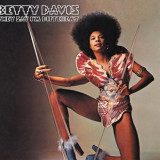
Betty Davis - They Say I Am Different

One can hardly imagine the genre-busting, culture-crossing musical magic of Outkast, Prince, Erykah Badu, Rick James, The Roots, or even the early Red Hot Chili Peppers without the influence of R&B pioneer Betty Davis. Her style of raw and revelatory punk-funk defies any notions that women can’t be visionaries in the worlds of rock and pop. In recent years, rappers from Ice Cube to Talib Kweli to Ludacris have rhymed over her intensely strong but sensual music.


There is one testimonial about Betty Davis that is universal: she was a woman ahead of her time. In our contemporary moment, this may not be as self-evident as it was thirty years ago – we live in an age that’s been profoundly changed by flamboyant flaunting of female sexuality: from Parlet to Madonna, Lil Kim to Kelis. Yet, back in 1973 when Betty Davis first showed up in her silver go-go boots, dazzling smile and towering Afro, who could you possibly have compared her to? Marva Whitney had the voice but not the independence. Labelle wouldn’t get sexy with their “Lady Marmalade” for another year while Millie Jackson wasn’t Feelin’ Bitchy until 1977. Even Tina Turner, the most obvious predecessor to Betty’s fierce style wasn’t completely out of Ike’s shadow until later in the decade.


Ms. Davis’s unique story, still sadly mostly unknown, is unlike any other in popular music. Betty wrote the song “Uptown” for the Chambers Brothers before marrying Miles Davis in the late ’60s, influencing him with psychedelic rock, and introducing him to Jimi Hendrix — personally inspiring the classic album Bitches Brew.


But her songwriting ability was way ahead of its time as well. Betty not only wrote every song she ever recorded and produced every album after her first, but the young woman penned the tunes that got The Commodores signed to Motown. The Detroit label soon came calling, pitching a Motown songwriting deal, which Betty turned down. Motown wanted to own everything. Heading to the UK, Marc Bolan of T. Rex urged the creative dynamo to start writing for herself. A common thread throughout Betty’s career would be her unbending Do-It-Yourself ethic, which made her quickly turn down anyone who didn’t fit with the vision. She would eventually say no to Eric Clapton as her album producer, seeing him as too banal.


Her 1974 sophomore album They Say I’m Different features a worthy-of-framing futuristic cover challenging David Bowie’s science fiction funk with real rocking soul-fire, kicked off with the savagely sexual “Shoo-B-Doop and Cop Him” (later sampled by Ice Cube). Her follow up is full of classic cuts like “Don’t Call Her No Tramp” and the hilarious, hard, deep funk of “He Was A Big Freak.”

pré-commande14.06.2024

il devrait être publié sur 14.06.2024

36,93
Dexys - The Feminine Divine + Dexys Classics: Live! (3x12")

Dexys are back! 11 years since the release of their last album of original music, the acclaimed One Day I'm Going to Soar, the band return with a stunning new record, The Feminine Divine, out July 28th on 100% Records.

The Feminine Divine’s arrival is heralded by today’s release of the glorious first single ‘I’m Going To Get Free’, soaked in horns and with a heavy dance-hall feel. "The character is optimistically breaking free from internalised trauma, depression and guilt," Kevin Rowland said of the track.

The Feminine Divine is Dexys’ fifth album of original material produced once again by Pete Schwier, along with acclaimed session musician and producer Toby Chapman. After taking some time out to refocus his energy, Kevin Rowland came back to music with a fresh perspective and new-found positivity. A personal, if not strictly autobiographical, record portraying a man whose views have evolved over time. Not just on women, but the whole concept of masculinity he had been raised with: an education and an un-learning that is traced across the arc of The Feminine Divine with dizzying effect.

With two tracks on the album with Goddess in the title in ‘My Goddess Is’ and ‘Goddess Rules’, it’s no surprise Kevin chose to use a painting inspired by Pele, the Hawaiian goddess of fire and volcanoes, for the artwork.

Dipping into the archives for a song he’d originally written in 1991, the album’s opener, ‘The One That Loves You’, is a tough-guy feint before he lifts the curtain on “what I really feel”, as announced by a classic bit of Kevin spoken word that leads into the second track, ‘It’s Alright Kevin (Manhood 2023)’.

The record’s first half is full of music hall-esque swagger, much of it written with original Dexys’ trombonist Big Jim Paterson. The second side of the record is like nothing Dexys have done before. A saucy, synth-heavy cabaret, written in collaboration with Sean Read and Mike Timothy. It’s steamy, fizzing and sultry, at times doom-laden and heavy and at other times raunchy and funky. Quite a heady mix.

Today the band is more of an “organic” assemblage – Kevin, Jim (a non-touring band member), Sean Read and Mike Timothy. “It’s always just natural with me,” says Kevin. “The inspiration comes first, I think about what I can do, what songs I’ve got, then approach the band.” He describes their current lineup as “very much the nucleus, these days.”

With over a billion worldwide streams, three top 10 albums in the UK, two number 1 singles, a Brit Award and a multi-platinum selling album with their sophomore release Too-Rye-Ay (as Dexys Midnight Runners), Dexys are as vital and exciting today as ever. With live shows set to be announced shortly in support of the record, The Feminine Divine marks a new chapter in a book that just keeps getting better and better.

“I’ve been doing this a long time,” says Kevin. “But I feel I’ve got to it now.”

pré-commande24.05.2024

il devrait être publié sur 24.05.2024

38,61
Articles par page:
N/ABPM
Vinyl