80s alt country punk outfit, Lone Justice, with Maria McKee, Ryan Hedgecock, Marvin Etzioni and Don Heffington are in full flight with the release of a brand new 7". Taken from their forthcoming album, Viva Lone Justice, 'Teenage Kicks' is a rambunctious slice of punk angst that sounds like it was recorded in one take. It's a timeless anthem with a joyous riff that explodes into a hail of feedback. A favour returned as Maria McKee, the songwriter of Feargal Sharkey's only solo hit 'A Good Heart', Lone Justice cover The Undertones' Peel-approved favourite with the artwork of the single being a nod to the original. "As much as we loved Merle Haggard, George Jones, and many other authentic hard core Country artists, we were also deeply impacted by Punk; from the Velvet Underground (we were playing "Sweet Jane" live as early as 1983) to the MC5 ("Sister Ann" is on the album "Viva Lone Justice")." Backed with 'Nothing Can Stop My Loving You' that's cut with a wild, squeezebox-powered interpretation of the George Jones and Roger Miller country stomp. "Speaking of George Jones, here's one written by George Jones and Roger Miller. Two of our favorites! We played this song at nearly every show starting in 1983. This ragged and right live recording captures the fire from a sold out show at The Palace in Los Angeles and features Jo-El Sonnier on lead accordion documenting the only time Sonnier played with LJ. "Nothing Can Stop My Loving You" is the only live track on Viva Lone Justice." // "A roots rock band that took Los Angeles by storm in the 80s and developed a smaller but deeply enthusiastic following outside the Golden State
Search:sound man
Isabell Gustafsson-Ny joins Warm Winters Ltd. with Rosenhagtorn, a suite of short pieces for piano, violin and voice. Absorbing in its profound focus on listening, this collection is a striking exploration of these sound sources; their repetitions, harmonics and oscillations. Conceiving of the release as a house, a different song is playing in each room, Gustafsson-Ny was able to explore the rawness and fragility of each instrument with incredible freedom and sensibility. She describes the album in the following words: "In the music there is both repetition and flow, but also the creak of the pedal organ. Here are Radigue traces and slow slow piano. Here is the violin again, resumed after many years of almost fallow. Here are the overtones and the scratchy strings. Here I dare to open the door to the voice." A unique kind of dusty, intimate folk music.
"Oyster Cuts", das vierte Album und Merge Records-Debüt von Quivers, zeigt, dass die in Melbourne, Australien, ansässige Band in der Art von Emotionen schwimmt, in denen sich die meisten Menschen zu verlieren fürchten. Der überdimensionierte Gitarrenpop von Quivers schimmert wie die Oberfläche eines Ozeans, unter der ein Riff liegt, das abwechselnd schön und schmerzhaft ist, dessen Züge fremdartig und scharf genug sind, um zu verwunden. Angetrieben von Melodien, die manchmal an Galaxie 500 und The Pretenders erinnern, machen Quivers Musik, die zart und hart ist und den Hörer dazu zwingt, immer wieder einzutauchen, wobei jeder Song einen neuen Gefühls-Blickwinkel eröffnet. "Oyster Cuts" ist Sonnenschein-Pop mit Blut im Wasser. Die Verluste und Lieben, die Quivers' Musik seit ihren Anfängen geprägt haben - der plötzliche Verlust eines Bruders im gebrochenen Optimismus von "We'll Go Riding on the Hearses" (2018) und das Leben in und nach der Trauer von "Golden Doubt" (2021) - fließen in "Oyster Cuts" ein, das sich dem Weitermachen verschrieben hat, während es akzeptiert, dass einige Gefühle, wie Trauer, ein Kreislauf sind. Entscheidend ist, dass Quivers sich verpflichten, miteinander Vorwärts zu gehen. Ohne den Chor und die Streicher von "Golden Doubt" ist "Oyster Cuts" ein Beispiel dafür, was immer noch möglich ist, wenn vier Leute - Sam Nicholson (Gitarren), Bella Quinlan (Bass), Michael Panton (Gitarren) und Holly Thomas (Schlagzeug) - zusammen Musik machen. Durch die Verwendung von Tape Loops - die "Oyster Cuts" eröffnen und schließen und das Album wie Haie umkreisen - legen Quivers Wert auf Wiederholung, setzen gemusterte Riffs ein und navigieren durch kreisförmige Gedanken, bis sie an ihre Grenzen stoßen und schließlich zu einem neuen Song zusammenfinden. Ihr verträumter, sonnenverwaschener Jangle-Pop ist dadurch schlanker und muskulöser geworden, und ihre Sound-Palette wird durch Anklänge an The Cure, Echo & the Bunnymen und The Durutti Column verdunkelt. Innerhalb dieses Rahmens betreten Quivers als Band Neuland, indem sie ihrem charakteristischen Gruppengesang eine neue Dimension hinzufügen: Quinlan übernimmt bei vier Songs die Leadstimme, die ineinander verwobenen Gitarren von Nicholson und Panton werden in den Mittelpunkt gestellt und der zielgerichtete Groove von Quinlan und Thomas treibt das Ganze voran. Die Songs von Quivers fühlen sich wie lange Gespräche zwischen Freunden an, in dem Sinne, dass ein Gespräch sowohl ein Akt der Sprache als auch ein Raum ist, den Menschen füreinander einnehmen. Die ersten beiden Tracks auf "Oyster Cuts", "Never Be Lonely" und "Pink Smoke", nehmen diese privaten Universen, die aus gemeinsamer Sprache, Erinnerungen, Songfetzen und dem Licht eines Handybildschirms mitten im Doomscroll bestehen, und verwandeln sie in ein Leuchtfeuer, in suchende Texte, die von massiven Hooks entfacht werden. "All I ever wanted was a true friend / All I wanted was a friend with benefits / All I ever wanted was transcendence" singen Quinlan und Thomas zu Beginn des Albums, und von da an spult "Oyster Cuts" in den Horizont hinaus. Die vier Mitglieder von Quivers erforschen diesen Raum nicht nur, sondern füllen ihn auch so weit wie möglich mit sich selbst aus, indem sie sich aneinanderbinden, egal wie unklar und chaotisch Herzensangelegenheiten werden können. Jeder Moment der Katharsis, den Quivers aus dem Äther zaubern, ist eine Einladung, sich ihnen anzuschließen. Wenn man ihnen zuhört, wie sie dort aufsteigen, wo andere grübeln würden, ist es unmöglich, ihrer Einladung zu widerstehen.
Ambitious, smart, and magnetically retro, The Rise and Fall of American
Kitsch will charm you with dazzlingly quirky storytelling, stellar
performances, and an adventurous Americana soundscape
It's nuanced enough that you'll want to soak it in with front-to-back listens, and
fun enough for a road trip soundtrack. With American Kitsch, Karen Jonas is
clearly on the rise.
Full PR plan in place
UK Tour in October 2024
COMPLETE ALBUM + 8 BONUS TRACKS -180g VIRGIN VINYL - LIMITED EDITION
Specially prepared liner notes by renowned music writer Brian Morton. From his early days as a pioneer of rockabilly and rock & roll in the 1950s, to his decades as an international representative of country music, to his resurgence to fame as both a living legend and an alternative country icon in the 1990s, Johnny Cash has influenced countless artists and left a body of work matched only by the greatest artists of his time. This LP presents some of his greatest hits, including the classic I Walk the Line.
Johnny Cash (1932-2003) developed a unique sound from his early Sun recordings with the Tennessee Two. His unusually deep, resolutely un-decorous voice rode atop the boom- chicka- boom guitar style invented by his right- hand man Luther Perkins and a rockabilly-ish slap bass by Marshall Grant.
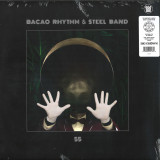
Shrouded in mystery, hailing from Hamburg, Germany, Bacao Rhythm & Steel Band (BRSB) releases their long awaited debut “55” on Brooklyn’s own Big Crown Records. Long time multi-instrumentalist and band leader Bjorn Wagner spent a few months in Trinidad & Tobago where he became fascinated with Steel Drums. His initial intrigue with local steel pan music culture led him to learning the instrument both through help of local players and on his own. After he became proficient on the pans Bjorn had his own instrument built from a used oil barrel by legendary pan man Louis C. Smith. Upon returning home to Germany, Bjorn set out to blend the Tropical Steel into his already sharply honed Funk, Soul, and Hip-Hop sensibilities. The outcome is an updated take on a classic format, a truly unique sound. Their first two recordings were covers of The Meters “Look A-Py-Py” & “Ease Back” which they self-released on a 45. Looking back on these two sides you can tell they were just getting their chops up for what was to come next. This is evidenced by how all hell broke loose when they went on to cover 50 Cent’s hit PIMP taking the DJ and vinyl collecting communities by storm. Many people thought the recording was the original sample and probably still do to this day when it is played. The original Mocambo pressing sold out quickly and is now a collector’s item fetching heavy prices when it changes hands. It was this tune that made the introduction between Bjorn and Danny Akalepse of Big Crown. They immediately hit it off and started making plans to do a full length project with the band. Keeping in the tradition of Steel Drum records, 55 is a journey through re-interpolations and covers with an updated approach, pushing Steel Pan music to uncharted territory. Flawlessly bringing previously untouched genres into the steel pan cannon ranging from Underground Hip Hop tunes to staple Funk tracks and some of all that falls in between. BRSB’s 55 is reinvigorating tunes both well-known and helping to shed some light on tunes still largely undiscovered. However, some of the strongest tunes on the album are original compositions, from spaced out Disco vibes on “Beetham Highway Ride” and “Port Of Spain Hustle” to the ugly face inspiring drums of “Laventille Road March”. Recorded to analog 8 track tape at The Mocambo Studios in Hamburg, 55 is a gritty, punchy journey in sound drawing on music from around the world, using production aesthetics from across both eras and genres, all coming together seamlessly. If the 45s that have already come out on Mocambo, Plane Jane, and Truth & Soul are an indication, this full length is going to be a staple to both casual listeners and Disc Jockeys alik
Marking sixty years of Bossa Nova, and twenty years since Marcos Valle’s first release for Far Out Recordings, what better time to bring back this era-defining classic from the Brazilian master composer?
Throughout his astounding six-decade career, infiltrating pop, bossa nova, samba, delicate psychedelia, jazz and funk, Marcos Valle has consistently shown a dogged determination to transcend the traditions and structures of bossa nova, whilst never veering away from the movement’s inherent, fundamental spirit. To some extent, his epithet ‘the original Rio beach boy’ is a handy one: it reflects the origin and character of his often sun-soaked sound, but expounding his importance in the lineage of Brazilian music, he is more discerningly known as ‘the renaissance man of Brazilian pop’. He is indeed one the very greatest and most important composers, arrangers, writers and performers in Brazil.
Up until Nova Bossa Nova, Marcos Valle hadn’t released an album for well over a decade. After 1983, he resented the way the music industry had changed with commercialisation and new demands curtailing his creative freedom. This was until 1994 when Marcos met Far Out boss Joe Davis and they recorded a track for Far Out’s first Friends From Rio album. This new collaborative partnership resulted in a new solo album, which commenced recording in 1996.
Nova Bossa Nova brought Marcos bouncing back into the 90s, slotting nicely in place alongside the acid jazz movement as well as a voracious new demand for Brazilian music on dancefloors from London to Tokyo. It was witnessing the London club scene’s growing appetite for Brazilian music, as well as a lack of new sounds coming out of Brazil at the time, that a young Joe Davis put in a proposal to record a new album with one of his musical idols. Joe wanted to facilitate an album which would combine the latest technologies and production techniques, with live to analogue tape recording: a Marcos Valle album tailor-made for London’s clubs. Always open to modern influences and possibilities, Marcos agreed to the project, and Joe and his production partner Roc Hunter flew to Rio in ‘96. The record wasn’t released until ’98, as the original ½ inch tapes were stolen from Far Out’s London studio, meaning parts of the album had to be re-recorded.
Nova Bossa Nova was unveiled at the peak of the of the Brazilian movement, the record would also prove to be something of a revolution, inspiring a new generation of artists like Bebel Gilberto, Sabrina Malheiros, Da Lata and Bossacucanova, who continued to fuse Brazilian influences with modern electronic sounds.
Maritime Blue Colored Vinyl. Numero's Hottest Sounds Around trio gathers castaway late-'70s grooves from across the Greater Antilles. Stan Chaman's Trinidadian Semp concern delivered Wilfred Luckie's wobbly "My Thing" and the Hamilton Brothers' calypso-disco smash "Music Makes The World Go `Round" in 1978. Across the sea, Frank Penn's G.B.I studio tracked Stephen Colebrook's Doobies-inspired "Stay Away From Music" for the cruise ship curious. All three are housed in a custom Numero sleeve inspired by Edward Seaga's Caribbean music manufacturing and distribution powerhouse WIRL (West Indies Records Ltd.)
- 1: Still Diggin Wit Buck
- 2: The People's Champ
- 3: Definition Of A Rap Flow (Ft. Amalie Bruun)
- 4: Learn Truth (Ft. Talib Kweli)
- 5: Bang Boogie
- 6: Tom Thum
- 7: Holla-Loo-Yuh (Ft. Tech N9Ne & Krizz Kaliko)
- 8: Media Midgets
- 9: Shoot Me In The Head
- 10: Legends Never Die (Daddy's Halo)
- 11: The Dangerous Three (Ft. Brother Ali & Masta Ace)
- 12: Luv To Fuk (Ft. Eamon)
- 13: Underground Hitz (Ft. Hopsin)
- 14: Laugh, Clown, Laugh
- 15: Sam Pecknpah (Ft. Vinnie Paz & Sadat X)
- 16: Outro
- 17: Still Get Through The Day (Ft. Eamon)
- 18: Bonus: Make You Famous (Ft. Block Mccloud)
Nur wenige Künstler sind so umstritten und einflussreich. New York-Legende R.A. The Rugged Man wird dieser Einordnung durch seine Kombination aus Authentizität, seines unbestreitbar wilden Lebens mit seinen unverkennbar außergewöhnlichen Fähigkeiten am Mikrophon gerecht. Schon in den Neunzigern, als er mit Notorious BIG, Sadat X und Company Flow aufnahm und zwischenzeitlich bei Jive gesigned war, wo sein Album jedoch nie veröffentlicht wurde, glaubte niemand mehr an eine erfolgreiche Karriere. Aufgrund seiner vielen Eskapaden war er aus sämtlichen Studios, Konzerthallen und Plattenfirmenbüros verbannt worden. Doch R.A. The Rugged Man blieb sich treu, veröffentlichte mehrere Underground-Singles und ein Album auf Rawkus, Eastern Conference und Nature Sounds und erhielt sich einen harten Kern an treuen Fans. Nun legt er mit "Legends Never Die" den Nachfolger zu "Die Rugged Man Die" vor. Mit dabei sind MCs wie Tech N9ne, Talib Kweli, Brother Ali, Masta Ace, Vinnie Paz (Jedi Mind Tricks), Sadat X, Bumpy Knuckles u.v.a. Für die Beats haben unter anderem Marco Polo, Buckwild, Apathy, Ayatollah und Mr. Green gesorgt.
Joe Ely präsentiert sein erstes Road-Album Driven to Drive, dreiundzwanzig Alben und mehrere Millionen Meilen nachdem er zum ersten Mal auf die
Reise ging. Die Sammlung von Songs über und inspiriert von motorisierten Reisen wurde von Ely zusammengestellt, der Mitte der 1970er Jahre wie
ein wirbelnder Tornado über die flachen Ebenen des Llano Estacado in Westtexas fegte und eine legendäre Band anführte, die zu sehr Rock für
Country und zu sehr Country für Rock war. Der wilde, offene Honky-Tonk-Roadhouse-Sound der Joe Ely Band bescherte ihrer Heimatstadt Lubbock
den ersten Musikhelden seit Buddy Holly.
Das Projekt setzt sich aus Aufnahmen zusammen, die über mehrere Jahrzehnte hinweg in den Spur Studios, seinem Heimstudio außerhalb von Austin,
gemacht wurden. Unterstützt wird er dabei von den Musikern/Nachbarn Joel Guzman am Akkordeon, dem Keyboarder Bill Guinn, dem Sänger Eddie
Beethoven und dem Geiger Richard Bowden. Letztes Jahr im The Zone in Dripping Springs, Texas, fügte Jeff Plankenhorn seine Gitarre zu drei Stücken
hinzu und der Tontechniker Pat Manske, der Driven to Drive gemastert hat, steuerte das Schlagzeug bei.
Die Bewegung in diesen Liedern wird auf viele Arten erfasst: Autos, sechzehnrädrige Lastwagen, Motorräder, Greyhound-Busse. Es gibt
Pedal-to-the-Metal-Hymnen, die auf einem geraden, zweispurigen schwarzen Asphaltstreifen dahingleiten; ein träges Mäandern auf dem Gulf Blues
Highway; eine Geschichte über die Flucht auf der Interstate; Geschichten darüber, wie man von hier nach dort kommt, und Lieder darüber, wie man
überhaupt nirgendwo hingeht. The Lord of the Highway is calling. Joe Ely möchte Sie auf eine Reise mitnehmen.
2024 Repress
Dauw welcomes Berlin based musician Midori Hirano to the label with her new album Soniscope. Award winning composer Robot Koch provided a rework of the track Patterns under his recently announced new ambient project Foam and Sand.
With releases on acclaimed labels such as Longform Editions, Sonic Pieces and Alien Transistor, Midori Hirano is no stranger within the field of electro-acoustic piano music. While she is more known for her studio-work, it is often forgotten that she also has a long tradition of writing for films and theatre productions. This forms an important part in her work and a constant inspiration for her autonomous work. Soniscope is no exception in that regard. While working on the film Mizuko (Kira Dane, Katelyn Rebelo, 2019), a still of many little Jizo statutes got her attention and came to be the first steps of her new album.
“I was fascinated by the combination of the image and sound which well emphasized the stillness with a slight of emotion.” (Midori Hirano)
With the Jizo statutes on her mind, Midori Hirano wanted to make an album and started envisioning several personal narratives. Soniscope can be considered as the soundtrack of her own personal stories related to these statues of which Mizuko Jizo was the starting point. With Soniscope, Hirano continues in the same vein as her previous albums in which piano and electronic arrangements hold a central place. However, on this record she specifically explored new possibilities in terms of techniques and instruments.
Midori Hirano is a Japanese musician, composer and producer, born in Kyoto and living in Berlin since 2008. She started learning the piano as a child, and this triggered what was to later see her study classical piano at university. Therefore her productions are based on the use of acoustic instruments such as the piano, strings or guitars, but yet experimental and an eclectic mixture of modern digital sounds with subtle electronic processing and field recordings.
Her first two albums were released on noble records, and her second, “klo:yuri”(2008), saw her further develop of her sound, garnering critical acclaim from various media including TIME magazine , BBC radio and FACT Magazine. Over the following years Midori has performed in venues and festivals as diverse as Club Transmediale, Heroines of Sound Festival, Erased Tapes Sound Gallery, L.E.V. Festival, Boiler Room Berlin, and Wonderfruit Festival.
The nine solo albums and numerous single track releases to date include the works of her other moniker MimiCof, in which she explores the realm of experimental music and detailed rhythmic patterns, combined with an idea of drawing melodic shapes and harmonies. Her recent works have been released by labels such as Sonic Pieces, Daisart, Alien Transistor, raster-media, 7k! Music and Longform Editions.
Besides producing her own works, she composes music for films, video installations and dance performances. The films that have commissioned works by Midori have been screened at Berlin International Film Festival, SXSW Film Festival, International Documentary Film Festival Amsterdam and among others.
Waxwork Records is proud to release TAROT Original Motion Picture Soundtrack by Joseph Bishara. TAROT is a 2024 American supernatural horror film written and directed by Spenser Cohen and Anna Halberg. The story follows a group of college students who, after using a strange Tarot card deck, begin to gruesomely die one by one and must uncover the deck's mystery.
The soundtrack to TAROT was composed and conducted by Joseph Bishara (Malignant, The Conjuring, Insidious, Annabelle). The soundtrack features Bishara's signature dark and haunting composition style that expertly blends heavy usage of synthesizers and electronics with evocative orchestral cues.
Waxwork Records is proud to release TAROT Original Motion Picture Soundtrack by Joseph Bishara as a deluxe double LP featuring three-color hand poured vinyl, new artwork by illustrator and TAROT creature designer Trevor Henderson, heavyweight gatefold packaging with matte satin coating, an 11"x11" insert, and one of five collectable character Tarot cards.
Heaven Born and Ever Bright is the third studio album by British rock band Cardiacs. It was produced by Tim Smith, engineered by David Murder and mixed by both Available on CD Digifile and Single Sleeve Violet coloured vinyl (pressed from the 1991 master) Cardiacs are an English rock band formed in Kingston upon Thames by Tim Smith (guitar and lead vocals) and his brother Jim (bass, backing vocals) in 1977 under the name Cardiac Arrest. One of Britain's leading cult rock bands, Cardiacs' sound folded in genres including art rock, progressive rock, art punk, post-punk, jazz, psychedelia and heavy metal (as well as elements of circus, baroque pop, medieval music, nursery rhymes and sea shanties), all of which was topped by Smith's anarchic vocals and impressionistic lyrics. Their bizarre sound and image made them unpopular with the press, but they amassed a devoted following Tim Smith was the primary lyricist, noted for his complex and innovative compositional style. He and his brother were the only constant members in the band's regularly changing lineup. The band created their own indie label, the Alphabet Business Concern, in 1984 and found mainstream exposure with the single "Is This the Life?" from their debut album A Little Man and a House and the Whole World Window (1988). Their second album, On Land and in the Sea (1989), was followed by Heaven Born and Ever Bright (1992), which displayed a harder edged, metal-leaning sound retained in the subsequent albums Sing to God (1996) and Guns (1999). Tim Smith was hospitalised with dystonia resulting from a cardiac arrest in 2008, which brought increased and belated critical recognition to Cardiacs, with several music outlets calling Sing to God a masterpiece. His death in 2020 saw a raft of tributes on social media
To experience Justin R. Cruz Gallego's pulverizing Sub Pop debut is to get burned down to ashes and burst forth, born anew. Grim Iconic...(Sadistic Mantra), the Tacoma-based artist's second album, is driven by opposing forces: noisy abstractions and tightly structured beats, anguish and dissolution at the outside world and empowerment within, apathy and catharsis. Grim Iconic...(Sadistic Mantra) weds scouring electronics to hooky songs and Gallego's powerful drumming in a way that feels visceral and new. It's his most personal statement to date, at once playful and intent, driven and combustible, total fucking chaos mixed into glints of broken-glass beauty. Born in Tucson, Arizona, Gallego experienced culture shock as a child after relocating to the frigid climes of the Pacific Northwest. He found solace in the Seattle punk scene centered around Iron Lung Records and has since remained a fixture in the underground community. "I see this record as first and foremost a musical statement," Gallego says. "I grew up in punk and DIY subcultures, but before that I had Latin music playing in the background through my childhood and every phase of adolescence. It was surprisingly natural to incorporate. I realized I wanted to go deeper into these rhythms. I wanted to make a record that felt as experimental as much as it felt from the perspective of a Latino. When I got a glimmer of that possibility, it felt exciting." Lead single "Dogear" is a face-melting party starter that sounds like someone forced Talking Heads and Rudimentary Peni to share a practice space. "I wanted a song that felt playful in the way it attempted to be dissonant without taking itself too seriously," Gallego says. "Cholla Beat" is even more ambitious, an anthemic mix of WAR and Wire led by unruly synthesizers spiraling down a labyrinth of production. Gallego's influences for the album are vast, ranging from British documentary filmmaker Adam Curtis to electric Miles Davis to audio miscreants like Demdike Stare and Oneohtrix Point Never. But it's Gallego's assured sonic vision that resounds the loudest. And, while J.R.C.G. is a solo project, conceived and executed primarily in Gallego's home studio, he found strength in opening the project to others, starting with Seth Manchester as co-producer. Manchester's penchant for bone-rattling frequencies, as seen in his production work with The Body, Battles, and Mdou Moctar, made him a natural fit for Gallego. Together, they retained the intimacy of Gallego's home recordings while taking advantage of the hi-fi stylings of his Machines With Magnets Studio in Rhode Island. The closing song, "World i," offers a glimpse into the live experience of Grim Iconic...(Sadistic Mantra), with upwards of seven band members blasting off. The album features a fascinating mix of supporting players, many of whom cycle through J.R.C.G.'s live lineup: Morgan Henderson (The Blood Brothers, Fleet Foxes), Jason Clackley (Dreamdecay, The Exquisites), Jon Scheid (Dreamdecay, U Sco), Erica Miller (Casual Hex, Big Bite), Veronica Dye (Terminator) Phil Cleary (U Sco), and Alex Gaziano (Dreamdecay, Kidcrash, Science Amplification). Taken as a whole, G.I.S.M. is a whirlwind of sound, pummeling, and cleansing. It's a sweaty, thrilling aural adventure and, like a great basement show, it'll leave you breathless, exhausted, and wanting to repeat it all over again. As any good mantra should.
I’ve lost my sense, I’ve lost control, I’ve lost my mind! Yeah, we all know how the song goes, but those words will no doubt end up driving their point home throughout the duration of Bloodstains’ self-titled debut LP. This thoroughly-welcome Euro pressing follows the album’s DIY release earlier in 2024, which is excellent news for UK/mainland fans of early 80s SoCal hardcore who’ve yet to hear it - the whole thing absolutely fkn rips. Feel free to rifle through your Adolescents, Weirdos and (natch) Agent Orange records to see what these guys have been mining, but all you’ll find is a launchpad - Bloodstains inevitably hail from California and they’re clearly au fait with all the above (not to mention a certain compilation), but they manage to inhabit that sound with a personality all of their own. Vocalist Cesar Marin splits his delivery between a sneering bark (like the most withering put-downs you’ve ever heard being delivered via nailgun) and a purposeful, melodic croon… which itself sounds it’s made from sandpaper and vitriol, but there you go. Most importantly, this is a band with SONGS. Eight of ‘em here, to be precise, and you’ll rarely have been so glad to have something turned up so loud it blows holes in your speakers. ‘Stray Bullets’ hangs its mighty chorus on a call-and-response refrain that dares you not to pick a side and bellow along, while instrumental opener ‘The Last Rites’ sets you up perfectly for the seething, volatile bundle of hooks to follow. I’d say the interplay between the band’s string-wielding Espinoza contingent is something to behold as well, but what am I, some kinda nerd? The guitars sound fkn awesome - that’ll do ya. And I don’t wanna spoil the party ahead of time, but just wait til you hear future anthem ‘Public Hanging’. I could go on about this record all day, but ultimately all you need to do is listen to it. Hell, even buy it. And dare I return to a theme, lose your mind.
2024 Repress
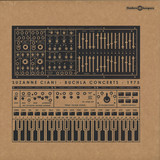
Finders Keepers invite you to witness the incredible first ever Buchla synthesiser concerts/demonstrations providing a distinctive feminine alternative to The Silver Apples Of The Moon if they had ever been presented in phonographic form. This is history in the remaking.
This spring Finders Keepers Records are proud to release an archival project that not only redefines musical history but boasts genuine claim to the overused buzzwords such as pioneering, maverick, experimental, groundbreaking and esoteric, while questioning social politics and the evolution of music technology as we've come to understand it. To describe this records as a game-changer is an understatement. This record represents a musical revolution, a scientific benchmark and a trophy in the cabinet of counter culture creativity. This record is a triumphant yardstick in the synthesiser space race and the untold story of the first woman on the proverbial moon. While pondering the early accolades of this record it's daunting to learn that this record was in fact not a record at all... It was a manifesto and a gateway to a new world, that somehow never quite opened. If the unfamiliar, modernistic, melodic, pulses, tones and harmonics found on this 1975 live presentation/grant application/educational demonstration had been placed in a phonographic context alongside the promoted work of Morton Subotnick, Walter Carlos or Tomita then the name Suzanne Ciani and her influence would have already radically changed the shape, sound and gender of our record collections. Hopefully there is still chance.
In short, Suzanne was a self-imposed twenty-year-old employee of the Buchla modular synthesiser company, San Francisco's neck and neck contender to New York's Moog. Buchla was run by a community of festival freaks and academic acid eaters whose roots in new age lifestyles and the reinvention of art and music replaced the business acumen enjoyed by its likeminded East Coasters. In the eyes of the consumer the creative refusal to adopt rudimentary facets like a piano keyboard controller rendered the Buchla synthesiser the more obscure stubborn sister of the synth marathon, steering these incredible units away from the mainstream into the homes and studios of free music aficionados, art house composers and die-hard revolutionaries. Championed and semi-showcased by composer Morton Subotnick on his albums The Bull and Silver Apples Of The Moon, Buchla's versatility began to open the minds of a new generation, but the high-end design features and no-compromise modus operandi was often confused with incompatibility and, in the pulsating shadow of Moog's marketing, the revolution would not be televised nor patronised. Suzanne Ciani, as one of the very few female composers on the frontline (and also providing the back line) did not lose faith.
These concerts' are the epitome of rare music technology historic documents, performed by a real musician whose skills and academic education in classical composition already outweighed her male synthesiser contemporaries of twice her age. At the very start of her fragile career these recordings are nothing short of sacrificial ode to her mentor and machine, sonic pickets of the revolution and love letters to an absolutely genuine vision of and 'alternative' musical future. In denouncing her own precocious polymathmatic past in a bid to persuade the world to sing from a new hymn sheet, Suzanne Ciani created a bi-product of never before heard music that would render the pigeon holes ambient' and futuristic' utterly inadequate. Providing nothing short of an entirely different feminine take on the experimental records' of Morton Subotnick and proving to a small, judgmental audience and jury the true versatility of one of the most radical and idiosyncratic musical instruments of the 20th century. These recordings have not been heard since then.
The importance of these genuinely lost pieces of electronic musics puzzle almost eclipses the glaring detail of Suzanne's gender as a distinct minority in an almost exclusively male dominated, faceless, coldly scientific landscape. Those familiar with Suzanne's work, a vast vault of previously unpublished non-records', will already know how the creative politics in her art of being' simultaneously reshaped the worlds of synth design, advertising and film composition before anyone had even dropped a stylus in her groove. Needless to say this record, finally commanding the archival format of choice, courtesy of the Ciani and Finders Keepers longstanding unison, was not the last first' with which this hugely important composer would gift society, and the future of a wide range of exciting evolving creative disciplines.
You have found a holy grail of electronic music and a female musical pioneer who was too proactive to take the trophies. With the light of Buchla and Ciani's initial flame Finders Keepers continues to take a torch through the vaults of this lesser-celebrated music legacy shining a beam on these non-records' that evaded the limelight for almost half a century. You can't write history when you are too busy making it. With fresh ink in the bottomless well, let's start at the beginning. Again. You, are invited!
"Million Dollar Baby" ist Pixeys bislang ehrgeizigstes Popprojekt, das sie zusammen mit Tom McFarland (Jungle, Olivia Dean, Alfie Templeman) und Rich Turvey (Rachel Chinouriri, Blossoms, The Coral) produzierte. Das Album folgt ihrer Reise der Selbstfindung als Künstlerin und dem Abwerfen damit verbundener Illusionen. "Million Dollar Baby" kombiniert Pixeys Liebe zu 90er Breakbeats mit ihren Skills als Popkünstlerin und -Produzentin, probiert und interpoliert einige ihrer Lieblingssongs, um nicht nur die Lücke zwischen alten und neuen Sounds zu schliessen, sondern einen völlig neuen Sound zu schaffen. Pixey erhält enorme Unterstützung von den britischen Popmedien und zierte hierzulande das Cover von Spotifys "Indie Brandneu" Playlist.
POISON RUIN greifen mit der neuen EP "Confrere" einmal mehr in die Dunkelheit!"Confrere" - eine Ode an die heiligen Bande der Freundschaft; eine
Stärke, die durch die endlosen Verrenkungen und Belastungen von Raum und Zeit hindurch Bestand hat.
Mit "Confrere" haben POISON RUIN ihren Sound mit mehr Atmosphäre und spürbarer Dringlichkeit aufgewertet. Nach dem Titeltrack rast Confrere
weiter durch Songs über Kampf, Tod, Verzweiflung, Ungerechtigkeit und Rache. In einem dunklen Zeitalter, in dem die Grundfesten der Menschheit
zu zerbröckeln drohen, glauben POISON RUIN, dass das Einzige, woran man sich vielleicht noch festhalten kann, die Hand eines Freundes ist.
Tooflie is back with a new exploration of regional sound from all over theglobe by the anonymous crew of edits lovers. The five different, but equallyimpressive, cuts on the fourth installment are deep dives into the soniccarnival of Brazilian favelas through the skillful reinterpretations by hiddentalents. The A2 track 'CBACA' bolsters the signature baile funk raw energywith hard house rhythms and acidic melodic patterns. Stepping between thefunkier side of electro and polyrhythmic panache, MWR - 'man withrefrigerator' is tailored to take the dancefloor to a new level. The openingtrack starts with a minimalistic yet paunchy breakbeat groove on 'PDNCA' and continues the deepness through the heavy and raw low-endextravaganza on 'RTK'. Bringing the vinyl to a close, 'LAPA' goes full-throttleon haunting arpeggios and leaves things on a blissful note.
- A1: Call Off The Search
- A2: Crawling Up A Hill
- A3: The Closest Thing To Crazy
- A4: My Aphrodisiac Is You
- A5: Learnin' The Blues
- A6: Blame It On The Moon
- B1: Belfast (Penguins And Cats)
- B2: I Think It's Going To Rain Today
- B3: Mockingbird Song
- B4: Tiger In The Night
- B5: Faraway Voice
- B6: Lilac Wine
- C1: Call Off The Search (Demo)
- C2: Tiger In The Night (Demo)
- C3: Faraway Voice (Demo)
- C4: I Think It's Going To Rain Today(Demo)
- C5: My Aphrodisiac Is You (Demo)
- C6: September Song (Demo)
- C7: It Seemed Like A Good Idea At The Time (Demo)
- D1: Downstairs To The Sun
- D2: Shirt Of A Ghost
- D3: Deep Purple
- D4: Turn To Tell
- D5: Jack's Room
- D6: Anniversary Song (Live)
2x12"[37,66 €]
Katie Meluas Debütalbum "Call Off The Search" machte sie sofort zu einem außergewöhnlichen neuen Talent. Das Album, welches dieses Jahr sein 20-jähriges Jubiläum feiert, zeigt ihren einzigartigen Gesangsstil, der Jazz-, Blues- und Folk-Einflüsse mit zeitgenössischer Pop-Sensibilität vermischt. Das Album wurde von Mike Batt mitgeschrieben und produziert, der eine zentrale Rolle bei der Entwicklung des prächtigen und anspruchsvollen Klangs des Albums spielte. Das zentrale Thema von "Call Off The Search" ist die Liebe und die Selbstfindung, ausgedrückt durch eine Sammlung von gefühlvollen und introspektiven Songs, darunter die Leadsingle "The Closest Thing to Crazy", die mit ihrer gefühlvollen Performance und der fesselnden Melodie das Publikum weltweit sofort in ihren Bann zog. Von Kritikern und Zuhörern wurde das Album für seinen reifen und gefühlvollen Sound gelobt, vor allem wenn man bedenkt, dass Katie Melua zum Zeitpunkt der Veröffentlichung erst 19 Jahre alt war. Call Off The Search" fand bei einem breiten Publikum Anklang, wurde ein kommerzieller Erfolg und zu einem der meistverkauften Alben des Jahres 2003.
Diese Neuauflage zum 20-jährigen Jubiläum wurde in den Metropolis Studios in London neu gemastert und enthält B-Seiten sowie sieben bisher unveröffentlichte und unverfälschte Demos, die Katie und Mike Batt 2002 aufgenommen haben. Die von Pete Paphides verfassten Liner Notes enthalten Beiträge aus einem neuen Interview mit Katie.