Flat Duo Jets: White Trees 2024 Remaster Fronted by the late Dex Romweber. The duo’s fourth album was the first album of all original material. Produced by Caleb Southern, White Trees is a Jets’ masterpiece that proved that Romweber could diversify his band’s material without losing his recklessness and urgency.
Dex passed away earlier this year on February 16th and this reissue is dedicated to his memory and legacy. Jack White from the White Stripes has called Dex and the Flat Duo Jets a major influence when starting out. White declared that seeing the Jets for the first time “opened up a whole new inspiration for me about the guitar.” And he was downright effusive in the 2006 cult-classic Romweber documentary ""Two Headed Cow"", calling Romweber “a huge influence on my music… one of the best-kept secrets of the rock & roll underground.” In 2009, White recorded a seven-inch with Romweber, and in 2011 he reissued the Jets’ long-out-of-print 1991 album Go Go Harlem Baby on his Third Man Records imprint.
“[White Trees] by North Carolina’s Jets is a tarnished neo-rockabilly gem. Dexter Romweber’s battered honk is the perfect voice to wrap around these twisted tales about Charlie Dick (Patsy Cline’s hubby), UFOs, and dining with Van Gogh. It’s as if the ”Eraserhead” soundtrack were recorded at Sun Studios and sent to Weekly World News for editing.”- Entertainment Weekly Arguably the busy Duo’s most accomplished set, ‘93s handily diversified White Trees jumbled stylistically antiquated originals in a cohesively dignified manner. -Beermelodies"
Suche:sounds from around
Gavin Vanaelst runs the space Aboli Bibelot in Antwerp where exhibitions and musical performances can happen side to side with dealings in centuries-old furniture and unique pieces of folk art or volkskunst. Gavin makes music under the aliases DJ Charme, Kassett and So Sorry. This is the first album under his birth name. Takeaway Loops cycles back to the days when Gavin was working as a courier for .
is a food delivery company. Their couriers - ehm, brand ambassadors, as the company prefers to call them - dressed in bright orange, they race their bikes around the city. They deliver meals and groceries for all sorts. Thanks to them, the privileged can stay tucked in their private spaces. Interaction between the two groups - the privileged and the brand ambassadors - is mostly kept to the bare minimum. And sparse communications are often driven by annoyances - “my Coke is warm because you kept it too close to the French Fries.” And on the streets the general public dis-approaches the brand ambassadors with pity. We tell our peers: “That’s not a good job,” and “stay away from the Sharing Economy.” Because, you know, in our capitalistic dollhouse we all stand our grounds and play our parts wholeheartedly.
During his shifts for , Gavin recorded location sounds on his phone at fast food restaurants while waiting on the orders he had to pick up and deliver. Later in his home studio Gavin added piano and electronics to this source material. The result: a gloomy soundtrack for a shadow world. Seven songs in evening blue with a bright orange glare.
A few years ago, our favorite Belgian publishing house Het Balanseer released Seizoenarbeid by Heike Geissler (available in English trough Semiotext(e)). Geissler writes about her job at Amazon in Leipzig. Because her writing and freelance work did not pay the bills any longer, she was forced towards this underprivileged shadow-world of unwanted jobs. Seizoenarbeid shed a light on freedom in an unfree world. A monument of ‘we are all in this, but not together’. Takeaway Loops gives us a similar peak in a world that is at the same time so visible, but then also very veiled for many. A world that we prefer to use, yet that most of us prefer not to see - a world that we don’t like to enter.
Last year at Harbourland subway station in Kobe i was mesmerized by its sound design, created by Hiroshi Yoshimura. For each part of the subway station he composed a short phrase. While walking trough the station, a full composition grows in your head. The looping melodies guide you trough a microworld. Trough a blue world of commuters, of the homeless, of the lonely, of the fast paced, of the tourist. Gavin creates a similar effect with Takeaway Loops. The tonality somehow corresponds to Yoshimura’s work. Yet instead of being guided trough a building, we are now taken to the after dark. You feel the concrete evening heat of the city. You hear the rain. Stiff fingers during cold winters’ nights. You are alone on the bike, cruising. Your maps app telling you where to go. You just left the fake leather bench of the well-lit pastiche interior of a fast food restaurant.
Next order, number ECN44! Please wait outside, sir?
If Katsuhiro Otomo’s Akira were a utopia instead of its opposite, this EP could be a possible sound track. Using the ingredients of classic house as a platform (pianos anyone?), Nick Nikolov‘s imagination as a producer for his new new NKLV project is far too vivid to stay on the beaten track.
The sound design and nerdy attention of IDM and ambient (Clusters) connects with the brazen boogie approach of the French touch, micro-sampling manifestos have to stand up to the weirder moments of signature sounds like Basement Jaxx or KiNK‘s musical side (Heartbeat). Not too far off from his peer‘s early approach, the Bulgarian‘s take is emotionally charged, play- and powerful.
For instance, Speak to Me and No More hit their respective topical nails on the head and the EPs title track Inbetween is sultry serotonin soul. If you are looking for plain and pure euphoria in between all the hardships, happiness is just around the bend.
Repress!
Techno, Disco, Italo, Electronics, House, Library, Cosmic and Ambient frequencies - These are the bedrocks of the Midnight Drive ethos and sound. A label shining a light on overlooked or unheralded creations and respectfully reissuing them for the contemporary audience.
A label that respects and understands the connection between these disparate and sometimes forgotten forms of musical expression and celebrates them. Midnight Drive are extremely proud to reintroduce the world to the sublime after-hours, cult downtempo sounds of Belgian duo Pieter Kuyl and Jan Van Den Bergh aka Mappa Mundi.
Mappa Mundi's sole release 'Musaics' was released on Belgium's legendary USA Import label in 1990, riding on the wave of early trance and ambient house sounds and exploring the same sonic terrain and worlds as The Orb, The KLF, Sun Electric and other like minded outfits. A wonderful swirling collage or mosaic of breakbeats, samples and new-age synth stylings, 'Musaics' is indeed a real trip.
A spontaneous late night studio concoction borne of endless takes and experimentation between Kuyl and Van Den Bergh who both display a deep knowledge and a shared love of different sounds from around the world. The end result is a meditative, sprawling journey that touches on many different styles from languid widescreen techno to frantic drum machine driven machine-funk, all while retaining a feeling of post-rave atmospherics and psychedelia.
This is a very special record indeed, and is somewhat of a lost gem from a very fertile and interesting period in sample based music. Undoubtedly the perfect soundtrack to numerous late nights and early mornings to come, remastered and spread across 2 discs for maximum sonic playback.
Marionette presents 'dessus oben alto up', the first collaborative recording by Andrea Belfi and Jules Reidy. Hailing from different ends of the globe (Australia and Italy) but both longtime residents of Berlin, Reidy and Belfi’s approaches have much in common, bringing together compositional precision and electroacoustic rigour with improvisation freedom, the immediate gratifications of rhythmic pulse, and an overtly lyrical sensibility. Working together during a residency at the sound studio of Berlin’s Callie’s, an arts institution housed in a 19th century machine factory, the pair (with Marco Anulli manning the desk) have conjured up four expansive pieces where the beautifully recorded percussive clarity of Belfi’s drums threads through a sparkling haze of guitars and electronics.
Opener ‘dessus’ begins with Reidy’s distinctive just-intoned guitar figures, shimmering over a delicate substratum of Befli’s brushwork and bass drum accents. As in all of Reidy’s recent work, the guitar is twisted out of cliché by the unfamiliar tuning and electronic processing. Hanging almost inaudibly in the background for much of the piece, a rush of synthetic tones surges into the foreground to end it. ‘oben’ is built from kinetic patterns of picked guitar arpeggios, locking into irregular grooves with Belfi’s drums, which move from elegant rolls and cymbal patter to driving closed hi-hats and explosive rock interjections. Around the traditional instruments and across the stereo field, electronic sounds swarm and swirl, fizzing and popping in a sun-drenched soundscape that at points suggests both vintage analogue synth destruction and glitching harmonies. ‘alto’ begins in similar territory but turned up a notch, eventually settling into a propulsive 6/8 groove of shifting drum accents, manically strummed 12 string acoustic, and burbling synth chords.
The B side is dedicated to the fifteen-minute ‘up’, where the strategies adopted on the other pieces are put in the service of a more relaxed, slowly unfolding epic. Anchored by a steady pulse throughout, the piece combines chiming guitars, dubbed-out bass lines and constantly adjusted percussive details into a complex flux of sound. Change is at once so subtle and so ever-present that, at any given moment, the listener can never be entirely sure quite how they got there.
Lili Holland-Fricke and Sean Rogan’s debut album “dear alien” is a constellation of radiant improvised impulses, imagined in lucent fragments of cello, guitar and voice. Spacious, tender and glistening with rich electronic distortion, the record melds a spectrum of processed and natural sound as the artists invite listeners into their dreamlike world of synergetic introspections.
Cultivated through a shared spirit of resourcefulness and play, “dear alien” emerges as an organic meeting place in the compositional output of British-German experimental cellist Lili Holland-Fricke and Manchester-born guitarist and producer Sean Rogan. Having studied their respective instruments at the Royal Northern College of Music, both artists have flourished in eclectic solo and collaborative projects, creating intricate and intimate spheres of sound with a deep appreciation for songwriting and improvisation.
Holland-Fricke’s transition from the classical world to writing her own material, and later vastly expanding her palette with electronics, first converged with Rogan’s distinctive flair for production in 2022 on her EP “birdsong for breakfast” and single ‘draw on the walls’. Now, the duo present an album envisioned through true ‘50/50’ collaboration during the summer of 2023, written across two intensive weeks of improvising and experimenting at Rogan’s Greenwich home studio. A convergence of the artists’ sounds and influences, the music was fostered by the idea of making an album with ‘no plan’ and their shared recent discovery of Arthur Russell, to whom the final track is dedicated.
“dear alien” assembles eight compositions that emerged naturally as the duo created sketches with cello and pedals, guitar, tape loops and poetic vocal musings, forming songs that explore themes of waiting, circling back around, and glitchy communication. Moments of drifting through pillowy layers of sound contrast with saturated visions of electronic modification, where the record’s glowing instrumental contours are pushed to the extremes.
The plaintive shades of ‘half blue’ and meandering deliberations of ‘slow thing’ are teased by the friction of static signals and a sense of ever-mutating sonic mass – a sensibility most acutely realised in ‘dawning’, where cello-vocoder eruptions grow in magnitude, the absence of sound between them burdened with something sinister and unspoken. As the artists expand on this piece, ‘It’s the sound equivalent of squeezing your eyes shut to shield against the brightness of something you don’t want to see, only to find that each time you open them again the world is not softening but getting more relentlessly overwhelming, to the point of being totally blinding.’
Three tracks with lyrics – ‘at first’, ‘dear alien’ and ‘seem asleep’ – refract the album’s wistful and melancholic colours into poetic imagery and metaphors, ushering in reflections on relationship tensions and someone close feeling unknown, with hints towards wider unsettled feelings about climate change. In the spirit of lyrical improv, ‘seem asleep’ compiles lone lines from Holland-Fricke’s journals into a cut-and-paste collage around hopeful patience or futile lingering – either way conjuring a softness that welcomes the hazy ambience of ‘for a. r.’, the final composition which soundscapes the summer days spent making the album. As the artists describe of this track, ‘The music kind of leads somewhere, but then kind of leads nowhere, and just meanders around where it is, content to just be walking in a circle back to where it started.’
- 1: Cypress Crossing
- 2: Pink River Dolphins
- 3: Ride To Cerro Rico
- 4: Dust From The Mines
- 5: The Shadow Song
- 6: Irene, Goodnight
Ava Mendoza has never made an album quite as personal as her second solo full-length, The Circular Train. Through her decades of collaborations with Nels Cline, Carla Bozulich, William Parker, Fred Frith, Matana Roberts, and Mick Barr—plus years leading her power trio Unnatural Ways and playing in Bill Orcutt’s quartet—the guitarist’s name has become synonymous with virtuoso technique, raw passion, and visceral resonance, a player pushing the edges of the guitar’s possibilities. Along the way, from 2007 to 2023, Mendoza was writing these slow-burning, incandescent songs. The Circular Train is comprised solely of her single-tracked guitar playing and, on two songs, her corporeal singing. Her first solo LP of original material since relocating from California to New York City a decade ago, much of The Circular Train was honed amid pandemic years that clarified the virtues of slowing down. This expressive avant-rock is a definitive introduction to one of the most uncompromising and inquisitive visions in creative music. Mendoza’s thrilling melange of free jazz, blues, noise, classical training, and blazing experimental rock’n’roll all coheres with ecstatic feedback, with picking and solos that crest with shimmer. Sometimes she sounds like a one-woman Sonic Youth with guttural and poised vocals that equally evoke Patti Smith and blues greats like Jessie Mae Hemphill. Conceptually, The Circular Train is presented as a psychogeographical train ride through certain of Mendoza’s musical homelands. The songs draw on ancestral and recent familial memories, notably of her parents’ roots in mining towns—in her father’s home country of Bolivia and mother’s hometown of Butte, Montana, each country with its own history of colonialism, racism, forced labor, the eradication of culture and the subsequent excavation of it. These adventurous songs were composed in cars and planes, in the heart of the Mississippi Delta, in Los Angeles and upstate New York—which is to say in motion. “Ride to Cerro Rico,” named for the mountain and silver mine at the center of Potosi, Bolivia, was inspired by Mendoza’s great grandmother’s life there in a Quechua mining family. “Dust From the Mines” drew from that history as well as Mendoza’s familial lineage of miners in Montana, building up to stunning swaths of shredded iridescence. “Pink River Dolphins” was inspired by a visit to the Amazon rainforest, swimming with dolphins alongside her father—the pink bufeos that inhabit both Bolivia and Columbia—and the song is dedicated to the memory of Mendoza’s late friend, the Colombian-American trumpeter jaimie branch. They shared a fascination with those intelligent and agile creatures who often communicate by echolocation. “Make a sound, it comes back around,” Mendoza sings, and later, “Echo, echo/The answer in a sound,” evoking what branch knew well: through music we navigate life. The Circular Train contains one cover, “Irene, Goodnight,” composed by Gussie Lord Davis and popularized by Leadbelly; Mendoza has been performing it for over 20 years. Almost as deeply embedded in her repertoire is the penultimate track, “The Shadow Song.” “Treat your shadow kind and it might treat you good,” Mendoza sings on this song that she’s been reworking for over a decade, an emblem of devotion. “Treat your shadow kind and it might treat you right,” she repeats, becoming a blues mantra. What is a shadow self if not one’s secret world, which, once laid bare, awaits an echo, a return?
Ramkot is a wrecking ball from Ghent, Belgium, playing powerful yet danceable rock music. After two EP’s and building a reputation as one of the most exciting live bands around, the spring of 2023 sees the release of debut album In Between Borderlines, a razor-sharp 25-minute uppercut aiming for both head and hips. They tour extensively, playing a hefty 100 shows in just one year: from steamy venues and sun-drenched festival stages (Pinkpop, Down The Rabbit Hole) to even opening for Metallica in Amsterdam. For their sophomore album, instead of producing it themselves again, Ramkot enlist producer Alain Johannes (QOTSA, Eagles of Death Metal, Them Crooked Vultures), who invites them to the Joshua Tree desert. For three weeks, Ramkot reside in the legendary Rancho De La Luna studio, famous for QOTSA frontman Josh Homme’s The Desert Sessions. ‘We pulled out all the stops, not pushing our foot down on the accelerator all the time, which allows the music to breathe more. There’ll be a couple of softer songs the fans will not be expecting from us.’ But rest assured, every single note still sounds very much like Ramkot. The band will only play a handful of shows this year, including 2000 Trees (UK), Sziget (H), Pukkelpop and Lowlands.
You find Andrew Gabbard on the road and in his creative prime on this astral road trip, collecting songs like a cosmic traveler hitching a ride. "Ramble & Rave On!," Andrew's third solo LP, sounds like the kind of weathered tattoo you'd see etched on a barfly's forearm as he slams another drink in a dive. Like its title, the record feels like something that's always been around; a trusty mixtape that everyone can agree on. Andrew comes to this collection of songs with something that very much feels like a `studio' record, the kind of album a 60s rock star feels like they've built the confidence to make, to shake off a rawness for something fuller and more realized. The fact that this record was yet again a homemade effort, with Andrew playing everything (apart from Sven Kahns' pedal steel), gives you an idea of how devoted and studied he is to creating that perfect song. `Ramble & Rave On!' is Andrew's most personal album yet, it finds him journeying between his worlds as a decades-long touring & studio musician/vocalist for the Black Keys, as a songwriter with his head-in-the-stars, and as the man in his home with the people he holds dearest and with the studio where he brings it all together. It is clear that Andrew finds himself at this prolific point in his career completely beholden to songs, to their absolute power, and to their otherworldly ability to connect. He has mastered his craft, and proves throughout the course of this album that he can truly make a pitstop stop at every genre.
Ludwig Hart, who over two albums has established himself as our foremost innovator of classic American road rock aesthetics, has throughout 2024 released songs with a sound that is even bigger than on the artist's breakthrough album, 2021's "Paloma". The song "Less I Try" has been in constant radio rotation in Sweden, Germany and the UK, and Hart has had time to appear on national TV, embark on a major tour with two successful gigs at The Great Escape in Brighton and spend a summer playing the biggest Swedish festival stages. On his third album "Stay Young" - released on September 27 via Argle Bargle Studios - Hart showcases an increasing freedom to genre and style. From reflective, stripped-down tracks like "Ghost of You" and the title track, we're taken through the reverb-drenched garage boogie of "Run Run" to the big chorus wind-in-the-hair rock of single favorites like "Less I Try" and "Journey." On previous albums, Hart has been praised for his lyrics - personal stories about people around him growing up and their life situations. On ”Stay Young” - on the contrary - he turns inward and faces his own fears and demons. "It's been scary but necessary. The album is about my fears of getting older, fears of ending up like my dad. It's about how much I've tried to suppress things I've been through, and how they've probably shaped me into who I am. I live with ghosts that never seem to want to let go, I have my own devil on my shoulder that constantly makes itself known. I am periodically terrified of ending up in total fucking darkness. This record has helped me try to understand why."
As with most things, this project started with a conversation in the pub between me and Martin.
As we discussed what J-Walk and BiD could do next we chatted about our mutual love of DIY, Post Punk, Reggae, Digital & Dub, how about using that feel as an initial jump off on the next thing and see how you get on? I suggested.
As is his way Martin considered the suggestion, then promptly disappeared, 6 weeks later something landed in my inbox, it was titled Broken Beauty and the music contained embraced all those symbiotic ideals and culture.
Nailed it!
Recorded entirely in Stockport using a mixed kit bag of cheap forgotten keyboards, guitar, bass and effects pedals, this LP takes the J-Walk aesthetic and applies the wider palette of these influences to create something unique, those past and present influences forged together to bring you something truly DIY - instructions below.
How To Make Such A Thing...
Deactivate social media. Ignore the internet, don't answer text messages, avoid other music, the telly and other people. This is a process where it's only you in the room with whatever's in your mind. You will be there for some time and the loneliness can hurt a little.
Forget any predetermined ideas. Forget everything you've ever done before. This is an opportunity to start from scratch, but with years of accumulated knowledge and craftsmanship. Trust yourself.
Be scared. Be excited about not knowing what will happen and what will result.
Don't use midi sequencing, virtual instruments or samples. Just plug a toy instrument into an amp, press a rhythm and play around to see what happens. If it sounds good and fresh then record it. Plug a bass in to jam around and you'll soon hear and feel what sits in the pocket of the beat. Record it as it is. Dirty is real and good. Cleanliness equals sterility. Loop the bassline. Plug a guitar in and do the same.
Don't think when doing any of this. Just experiment with interest and curiosity and the music will take care of itself. You will now have a groove which is also about half a song minimum. Play some keys from the toys on top of what you have. Put 'em through effects pedals. Again, don't overthink it and don't try to get it clean. Add sound effects in right and random places.
There you go. Something you've never made before. But more importantly, it's something you've never heard before.
You don't have to die to be reincarnated.
BROKEN BEAUTY...You can't be either without also having been the other.
*Includes download code
In the performance of this work, "Plan for Sleep" (1986), created simultaneously with “Every Dog Has His Day” (1985), Yamanaka took on the role of sound operation. The performance begins with a minimal piece where the tones of the electronic organ and striking phrases from the piano and saxophone race forward in syncopation. Following this, various sound fragments drift over a deafening industrial beat reminiscent of machine noises. There are also pieces that transform the typing sounds of a typewriter into rhythm, showcasing a range of experiments inspired by the then-novel sampling technology, beautifully intertwining with the physicality of the performance.
Additionally, influenced significantly by film music, Yamanaka incorporates a rich tapestry of colors through melancholic melodies that evoke various scenes, from secular jazz to other influences. This work constructs a uniquely original and sophisticated worldview that stands out even when surveying the canon of avant-garde performance art from around the globe in the postmodern era.
DUMB TYPE is a multimedia performance art group based in Kyoto that was formed in 1984 and continues to be active at the forefront of the art scene. We are excited to announce the simultaneous release of two cassette book works produced by musician Toru Yamanaka and the late Teiji Furuhashi, a central figure of the group, for works from the early DUMB TYPE Theatre era: "Every Dog Has His Day (recorded in 1985)" and "Plan For Sleep (recorded in 1986)," now available for the first time on vinyl.
Since the founding of DUMB TYPE, Yamanaka has primarily been responsible for music production, while the late Furuhashi played a crucial role in translating Yamanaka’s compositions into stage direction. Their collaboration began with previous groups ORG and R-STILL, and was influenced by the NEW WAVE and progressive rock trends they were pursuing at the time, as well as by artists like Laurie Anderson, Meredith Monk, and Robert Wilson, who fused minimal music and avant-garde performance. Moreover, their bold incorporation of cutting-edge sampling and house music during that era laid the foundation for DUMB TYPE's sound, marking an important intersection in the history of minimalism, ambient music and performance art in Japan.
Throughout the 1960s, Canadian composer Bruce Haack was as ubiquitous on children’s and variety shows as were exotic animals from the San Diego Zoo. But he wasn’t there to perform so much as demonstrate. In his formative compositions for theatre and ballet, he had experimented with tape loops and musique concrète techniques; by the early ’60s, he wasn’t just playing around with electronic sounds, but also making the very gizmos that generated them. By day, Haack would eke out a living as a composer for commercials and a series of instructive, interactive children’s records made with collaborator Esther Nelson.
But by night, Haack was making music that was decidedly adults-only.
Originally released in 1970, The Electric Lucifer was Haack’s first work pitched to a contemporary rock audience, released by Columbia Records in the dying days of a post-hippie moment when bizarro outsider-psych could still find a home on a major label. If it was not the first rock record to feature electronics, it was certainly among the first to give them a starring role—both musically and conceptually.
Water ripples all around, and echoing sounds stretch out into a shady sub aquatic habitat. Its dark corners slowly burst into view as cresting noises reveal fresh caverns teeming with liquid life. This is Sueños acuáticos, the latest sonic exploration from Lamina, a musical project by French artist, Clarice Calvo-Pinsolle. Built from years of carefully gathered field recordings, the album constructs immersive, detailed soundscapes where watery environments, caves, and forests intertwine with digital manipulations.
Rooted in the myth of the ‘Lamina’, a creature from Basque folklore, the project blends this oral tradition with technology to build a geological myth. The Lamina’s world—a nocturnal ecosystem of water and stone—serves as the foundation for the album’s sound design. Lamina reshapes these natural recordings into something new: stretching, pitching, and layering them to build intricate sound environments that feel simultaneously organic and synthetic. “I transform these sounds much like I would sculpt in ceramics,” explains Calvo-Pinsolle, “by adding, removing material, and imagining landscapes.
Drawing from hydrofeminist and posthuman ideas, particularly those in Astrida Neimanis’ Bodies of Water, the album treats sound like water—shifting, flowing, connecting, and buoying life. Tracks flow into one another without clear boundaries, much like the natural currents they represent. The result is a continuous listening experience, inviting deep focus on texture above melody.
Lamina is exploring the potential of the field recording as a compositional tool. Natural sounds, like trickling water or wind through trees, are processed out of recognition—or cliché. A sense of weightless immersion takes hold as Lamins’a music unfolds, and listeners float freely and choose their own adventure in the Lamina’s home. Less a set of songs than its own evolving environment, Sueños acuáticos (‘Aquatic Dreams’ in English) is a meticulously constructed work in which we can freely float.
Highly polished, cinematic “hypernoise” melded with industrial metal /rock. Follow up to 2019’s industrial noise classic, The Origin Of My Depression. Uboa’s fifth album Impossible Light almost never made it out of the dark. From its initial conception in 2018, this record went to hell and back, dragging its immensity and too-big-to-hold emotion through the torturous process of translation to sound and returned triumphantly as a full-bodied record in a distinct new style. Impossible Light begins where Uboa’s 2019 breakout album The Origin Of My Depression left off—and ends somewhere entirely different. The Origin stunned with its methodical use of doom, harsh noise, and ambient soundscapes while documenting a raw, unhindered account of Xandra Metcalfe’s experiences with her transition and her struggles with mental health. Over time The Origin steadily grew a cult-like following which developed into a full-fledged internet community focused around noise, neurodiversity and transness. While Uboa’s signature style of highly polished, cinematic “hypernoise” is front and center in Impossible Light, there is also a daring departure into the genres of industrial metal / rock, setting it apart from any other Uboa release thus far and distinguishing it from other contemporary noise records. Metcalfe kept the lyrical content of this record as a time capsule of the catastrophic ups and downs and rapidly changing environments within herself and in the world from 2018-2023. Key collaborators include Blood Of A Pomegranate, Otay:onii, Charlie Looker and Haela Hunt-Hendrix of Liturgy. Impossible Light dives fearlessly into queer sexuality, trans embodiment, grief for those who couldn’t make it, solidarity for those facing unimaginable discrimination, the toxic spread of transphobic hatred and misinformation, and the ultimate hope of recovery from trauma and mental anguish. This is a record about the light at the end of the tunnel and the power it takes to keep moving towards it
SYML—Welsh for “simple”—makes music that taps into the instincts that drive us to places of sanctuary, whether that be a place or a person. Born and raised in Seattle, Brian Fennell studied piano and became a self-taught producer, programmer, and guitarist. This May marked the fifth anniversary of his self-titled debut album, which included the platinum-selling song “Where’s My Love” and the Gold Record fan favorite, “Girl,” and one year since his sophomore album, The Day My Father Died, which was recorded and produced with fellow Seattle-native Phil Ek (Band of Horses, Father John Misty, Fleet Foxes) and features Elbow’s Guy Garvey, Lucius, Sara Watkins of Nickel Creek, and Charlotte Lawrence. In the last year, he was also featured on Lana Del Rey’s song, “Paris, TX,” from her Grammy-nominated album Did You Know That There’s A Tunnel Under Ocean Blvd, and realized several other notable collaborations including UK-electronic artist George Fitzgerald, Latin Grammy-nominated Colombian artist Elsa Y Elmar. In February 2024, he launched his imprint, FIN. Recordings, a new venture in collaboration with his label, Nettwerk Music Group, and management team, Good Harbor Music. Says Fennell about Infinity, “Sometimes, songs are wandering souls with no home, and it’s not until enough of them are written that the home is realized. I have a proud obsession with all things apocalyptic and the doom and wonder of an ever-expanding universe. This group of songs is an ode to the absurdity of human existence and my fondness for it. My inspirations were very cinematic ranging from big blaring soundscapes to more gentle, dusty settings like Ennio Morricone was so gifted in painting. I am fascinated by what humans are capable of, especially the stories we tell ourselves to explain our world and the space around it. Importantly, I am thankful for the creative space to make art without rules or expectation.
PIFF Records welcome 4 in - demand artists to the label on their latest release, also available as a limited 500 press vinyl release. Home to forward-thinking house, trance, and techno, PIFF Records boasts a diverse yet united musical output. Cosmic, dub - driven techno, atmospheric house beats, and everything in between coalesces under the imprint’s distinctive output of thoughtful, club - ready sounds. All aspects of PIFF Records come together on this release as the featured artists balance the cerebral and visceral in their productions.
Cybernet kicks off the release with Resonant Shifter. Pumping kicks lay the foundation for captivating synth arpeggios and warped call and response basses in this ‘90s - inspired cut of contemporary progressive trance. The perfect soundtrack for any location from sunset on the Ibiza seafront to sunrise as the shutters open at a warehouse rave.
Goa elements are out in full force on Hoe Down, courtesy of Glen S. Squelchy 303s, low textures, and metallic arpeggios resonate above a pulsating bassline and weighty kicks, relentlessly pushing forward and ascending to a new sonic dimension - taking you along for the ride.
Body Clinic substitutes the progressive trance for progressive house on Love X, bringing down the tempo but keeping intensity intact. An infectious, syncopated plucked bassline dances around groove - rich drums, psychedelic effects and leads indebted to early ‘90s releases. A masterful blend of the past, present, and future together on one track.
Closing the EP with Empty Clip, Tom Jarmey disrupts the 4x4 rhythms of the preceding tracks w ith a genre - bending cut of electro - infused breaks. Two-step drums are matched with clinical sound design, deep basses, and mystical arpeggios. Sure to add depth to any set and turn heads in the process.
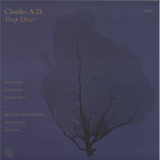
The sea has long been central to Japanese culture, symbolizing both sustenance and spiritual depth. Charles A.D.'s Deep Diver draws inspiration from this, channeling the ancient traditions of diving and fishing into his music. Historically, the sea has influenced everything from Shinto rituals to the livelihoods of coastal communities. In Deep Diver, this reverence flows through aquatic soundscapes, where rhythmic waves of 90s house and Detroit techno meet Japanese minimal production techniques, New Age and Pacific Jazz. Like the tides, the album ebbs and flows, creating a serene yet dynamic homage to the timeless connection between Japan and the sea.
The opening track 'Deep Diver' plunges into the depths, its abstract sound design capturing the sensation of deep-sea propulsion. Rhythmic bubbles pulse gently alongside slow-moving chords, creating an otherworldly atmosphere. The textures are lush yet restrained, setting a tranquil stage that pulls the listener into a submerged world. 'Underwater Ruins' builds on this aquatic theme, introducing rhythmic layers and bass-heavy notes reminiscent of mid-90s Japanese ambient techno. The smooth, melodic flow nods to pioneers like Mr.YT and Susumu Yokota, while subtly incorporating the Detroit techno influence through soulful, deep basslines.
The track feels like a fusion of ambient and techno, balancing serene tones with a rolling groove, emblematic of Japanese techno soul. As the album progresses into 'Bubble Ring', it becomes clear that Charles A.D. is a master of minimalism. The production is timeless, leaning
on analog techniques where echo-drenched chords and carefully layered soundscapes take on an addictive, hypnotic quality. The simplicity of the composition is deceptive, as each element carries weight, drawing the listener deeper into the rhythm and space between the notes.
'Merperson' is where organic rhythms truly come into play. Charles A.D. gently evolves the patterns, allowing each percussive hit to flow naturally into the next. Soothing melodies emerge from within the track’s structure, eventually reaching an emotional peak without ever feeling forced. The organic nature of the arrangement creates an effortless progression that feels deeply connected to the natural movement of water.Starting the second half with 'Deep Exploration', the theme of underwater excursions becomes even more pronounced. Light, steady drumming anchors the track, allowing the melodic layers
to develop gradually. It unfolds with a calm, measured pace, before ending softly, almost as if the sounds are drifting off into the oceanic depths. 'Diffuse Reflection' stands out as the most dub house-influenced on the album, with rolling rhythms and hypnotic elements reminiscent of Maurizio's deep, pulsing sound. Yet here, the production feels submerged, with aquatic effects swirling around the rhythmic core, blending dub house with a fluid, oceanic touch. 'Traitors' delves even deeper into dub-inspired territory. Deep, resonant bass hits combine with wooden drums, while static-like sounds evoke the image of a radio tuning through static to find clarity.
Chords shimmer briefly before fading back into the liquid depths, evoking the ebb and flow of the tide. The final track on Deep Diver 'Levitation', is a fitting conclusion, as the rhythms merge and overlap like waves gently lapping the shore. The minimalistic arrangement allows each element to blend effortlessly into the next, creating a sense of unity and closure. The sounds move with the gentle grace of water, ending the album in a way that feels both complete and
open-ended, like the infinite motion of the sea.
2024 Reissue
Touching Bass continue to prise open a distinct, exciting lane for themselves as a label home for forward-thinking, soulful music with the incredible debut project from London's Demae (aka Bubblerap and ? of Hawk House) entitled "Life Works Out...Usually" - "Life Works Out...Usually" is a soothing antidote to these turbulent times; a soulful coming-of-age story celebrating black joy, self-empowerment and life learnings centred around an integral two year period of growth and featuring appearances from Fatima (Eglo Records), Joe Armon-Jones, Ego Ella May and Nala Sinephro - all part of our close-knit, London-based musical community. Sonically, it draws a unique line between the grit of inner-city London soul, interstellar Flying Lotus electronic rushes and new-age Dilla-isms mixed with flecks of London's exciting jazz-influenced sounds. Production comes from rising producers like Eun (Ego Ella May, Denzel Himself), Jake Milliner (Slum Village, Yazmin Lacey, Lord Apex), 104.ROG (Liv.e, THEESatisfaction) and Wu-Lu (Ego Ella May). For those not yet accustomed, Demae's work stretches beyond her solo project. She has been a fundamental part of Fatima's touring band as a backing vocalist since the release of her much loved second album And Yet It's All Love. Prior to that, she was one-third of hip-hop adventurists, Hawk House, whose introspective, eclectic style was reshuffling the rule book for UK-based rap, quickly making them one of the UK's most exciting emerging sounds and earning fans from Mac Miller and Ghostpoet to Wretch 32 and Jill Scott.