Ever since the release of their acclaimed debut EP P'eau (2018) these Mechelen-based musicians have been honing their craft in songwriting and production, building a new home studio to record future material while also expanding from a three-piece to a five-piece ensemble. By adding singer/percussionist Stefan De Graef (Psychonaut) and guitarist/singer Sander Rom (L'Itch) to their ranks, HIPPOTRAKTOR have become a more versatile outfit able to employ a broader palette of sounds, taking the band's earlier instrumental prog metal sound to new heights. Taking notes from the best moments in contemporary progressive and post metal, HIPPOTRAKTOR capture the awe-inspiring power of nature_from the delicacy of the first falling leaf to the massive cosmic energy of the sun. By combining the big, catchy riffs and the rhythmical prowess of Gojira with the relentless but equally groove-loaded complexity of Meshuggah, Meridian delivers an overwhelming experience of sound, presenting the listener with sentiments that are recognisable, but with an intensity that seems larger-than-life. "Meridian finds its origin in everyday moods, taken out of context and morphed into a stylised version that re- flects the dreamer in me," explains main songwriter and guitarist Chiaran Verheyden. "It tells the story of someone who's lost in a world too massive to comprehend, and seeks answers in places where none can be found. Meridian was written as an attempt to distillate what I felt but couldn't put into words." As the main vocalist in the group, finding these words was the job of Stefan De Graef, who carried over his fascination for philosophy and religion from his other band Psychonaut. "Meridian tells the story of a solitary wanderer on the Earth in the absence of other beings," explains Stefan. "Without anyone to share knowledge and history with, the protagonist is forced to create his own truths and stories about the nature of life, consciousness and the universe. The protagonist begins to personify and deify his surroundings, assigning sentience to the trees, the mountains, the wind, the waters etc. for they are his only companions in this desolate world." Essentially, Meridian is an exploration of the evolutionary theory of naturism, which was put forth by German scholar Max Mu"ller in the 19th century, and which argues that religion finds its origin in the deification of the forces of nature by early human beings. By juxtaposing this sociological theory with seven tracks that unfailingly conjure images of the earth, sea and sky, HIPPOTRAKTOR have created an analogy that enlarges the imaginative quality of their music to (literally) epic proportions. Combining the best of prog, groove and post-metal, Meridian comprises an incredible ride for fans of soaring hooks, technical riffing and earth-shattering breakdowns. Limited bluegreen-grey single colour vinyl edition, gatefold! FOR FANS OF Meshuggah, Periphery, Cloudkicker, Intronaut, Animals As Leaders, Gojira, Skyharbor, Psychonaut
Buscar:sounds of life
Featuring Anthony Green of Circa Survive, Adam Lazzara and John Nolan of Taking Back Sunday and additional percussion from Benjamin Homola of Grouplove, Fuckin Whatever is a fluid project born of longtime friendships and late nights on the road, but what it could grow to become is entirely unwritten. It all started on the 2016 Taste Of Chaos tour. After Green wrapped his opening set with Saosin each night, itching to play more music, he started setting up impromptu acoustic gigs in the parking lots after his set. One night, his restless energy led to an impromptu backstage jam session with Lazzara, Nolan, Homola, and others––except there were no instruments involved. Using just their voices and a stomp or two in lieu of percussion... before they even realized it, Fuckin Whatever was born. They decided to start recording these nightly jam sessions on their phones, and by the end of the tour, there were literally dozens of recordings. There are some as long as 17-minutes, some recorded in bathrooms, and even one in the legendary tunnel between the stage and sound booth at Red Rocks Amphitheatre in Colorado. What they share in common is the camaraderie of the many talented voices (and sounds) involved. Fast forward to 2020––ugh. With a creative need to continue making and releasing music, Anthony approached the group about releasing some of those recordings. Feeling a similar restlessness, Nolan suggested they try making and recording something for real instead. "I'm Waiting On You" is what came next, and it's truly the spark that led to the rest of this EP coming together. There are zero instruments on Fuckin Whatever's self-titled debut. "It's pretty much 80% mouth noises and 20% Ben slapping things around the house," Lazzara explains. Those voices, however, are among some of the most recognizable in modern rock music, yet here they take on a new life. Call it a band, or a supergroup... it's Fuckin Whatever.
To emerge from a global pandemic with a renewed sense of situational awareness, hard won insight, and a new album is the kind of move we've come to expect from THRICE over the last twenty years. With Horizons/East, Dustin Kensrue and his bandmates address, with candor and courage, the fragile and awkward arrangements that pass for civilization, while inviting us to dwell more knowingly within our own lives. Without surrendering any of the energy and hard edge of their previous albums, they've given us a profoundly meditative work which serves as a musical summons to everyday attentiveness. Since forming THRICE with guitarist Teppei Teranishi, bassist Eddie Breckenridge, and drummer Riley Breckenridge in 1998, Kensrue has never been one to back down from a mental fight. This mood is set by the opening synth-driven number "Color of the Sky," which sounds well-suited to accompany the closing credits of the Stranger Things season finale. Think Flying Lotus giving way to Elbow and setting the listener down in a new dimension. A self-recorded effort, Horizons/East conveys a palpable sense of danger, determination, and possibility.
To Walk a Middle Course is the second studio album by American band Kylesa, released in 2005. The album incorporates elements of sludge metal, alternative metal and stoner rock. To Walk A Middle Course features a variety of metal and non-metal influences, including doom metal, stoner rock, punk rock and gothic rock.
Freestyle Records will release Dan Berkson's debut LP, Dialogues, on September 17th on LP & digital.
Following a move to London and an immersion in the city's deep house scene, Dan Berkson's subsequent rediscovery of his earliest musical foundations and the drawing of inspiration from London's buzzing contemporary jazz scene would lead to Dialogues - an accomplished and rewarding body of work pulled together during his final days in London before relocation to California.
"It was inevitable that Dan Berkson would make a jazz album like Dialogues: joyful, danceable, entertaining, driven by the pleasure principle, and filled with virtuosity. It represents Berkson's experiences in London, where jazz is a living, breathing, dancing scene. It's his love letter to the city, bristling with British talent such as bassist Andrea di Biase (Heidi Vogell, Maria Chiara Argiro, Bruno Heinen) and drummer Jon Scott (Kairos 4Tet, Sons Of Kemet, Mulatu Astatke) and recorded in his final days in the city before relocating to California. It's also rich with history: the musical journey that brought him to this point covers almost 40 years and 4,000 miles.
Berkson received lessons from Chicago boogie-woogie veteran Erwin Helfer - who in turn had learned alongside foundational legends such as Mahalia Jackson and Glover Compton. In 2001 he came to the UK, throwing himself into the deep house scene of East London, his duo with James What signing to Steve Bug's legendary Poker Flat.
But eventually he felt that he'd achieved what he could in the house format. Rediscovering the piano and discovering that jazz provided him the opportunity to keep learning, he enrolled in Trinity College in South London just as South London's jazz scene was exploding into the public consciousness.
Dialogues is a jazz album, not an electronic one – but all the groove-based influences, from the rootsy blues and ragtime of his youth, through the funk he played at college and the house he imbibed in London can be heard, as can his love of the studio as an instrument and mixdowns that suit a club soundsystem. Detroit dons Theo Parrish and Moodymann are every bit as important to this record as Charlie Haden, Carla Bley, Keith Jarrett, Ornette Coleman, Jimmy Giuffre, and Herbie Hancock. There's 50s and 60s cool modernism (just listen to the elegant ripples of "Sketches"), there's 70s funk fusion ("Unity" kicks things off with a spring in its step), and of course there's the pumping blues heart of "Live Bait". Above all else, though, it's a personal document: a life of music and collaboration crystalised in a magical, transitional moment. Where Dan goes next musically is as uncertain as anything in these times... but this one record tells you everything you need to know about where he's been."
- A1: & Beverley Knight (Feat London Community Gospel Choir) - Everything's Gonna Be Alright
- A2: Feat Chenai - Bit By Bit
- A3: Feat Shingai - Feel The Pressure
- A4: & Michael Gray (Feat Gia) - Love Is All We're Living For
- A5: Feat Damon Trueitt - You Saw Me
- A6: Feat Alex Mills - It's A Wonder
- B1: Feat Clementine Douglas - 10,000
- B2: Feat Gene Farris & Jafunk - Untold Business
- B3: & James F Reynolds (Feat Mike City) - Fire Burning
- B4: & D Ramirez (Feat Robert Owens) - Pass It Up
- B5: & Rene Amesz - All 4 Love (Feat Tasty Lopez)
- B6: Feat Laura Davie & Melody Men - If It's Love
- B7: Feat Chenai, & Mr V – Tonight
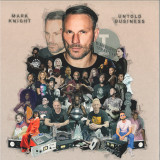
Toolroom founder and Grammy-nominated producer Mark Knight announces his new album Untold Business: 13-track collection of vocal house music which aims to inject a much-needed dose of meaning and longevity into the world of dance music.
Mark Knight has gone back to his roots on his new album Untold Business, reprising the sounds and records that made him the artist he is today. Diving through his extensive collection of classic Funk, House, Soul and Disco records from the 1970s and 80s has provided the bedrock for the album, which is an homage to the soulful, vocal-led house music that Mark first fell in love with in the 90s.
Step forward Mark Knight with a collection of meticulously crafted, positive, life-affirming records with a focus on real instrumentation and properly crafted songs that will stand the test of time. Untold Business is the antithesis of the functional, cookie-cutter dance music that has become increasingly ubiquitous over the years, and it sounds absolutely glorious.
Lead single ‘Everything’s Gonna Be Alright’ features vocals from Beverley Knight as well as the London Community Gospel Choir, who together bring a powerful message of positivity, solidarity and hope: themes that echo throughout the rest of the album.
“I wanted to write a song of hope as we come out of this incredibly tough time. I feel that musicians and producers have a responsibility to provide the soundtrack to people’s lives, and with this glimmer of hope on the horizon, I wanted this song to be a moment of positivity for the future ahead.” Mark Knight
From the string section, to the 14-piece London Community Gospel Choir, to the incomparably brilliant Beverley Knight on lead vocals – Mark worked with some incredible musicians on the single: an approach that informs his approach for the entire album. Untold Business features further collaborations with the likes of Shingai (Noisettes), Michael Gray, Robert Owens and many more.
In addition to the 10 new tracks recorded especially for the album, Untold Business also includes three of Mark’s singles from 2020, including one of the biggest releases of his career to date. All 4 Love was a collaboration with Rene Amesz and Tasty Lopez which became firmly lodged on the Radio 1 A list for six weeks with worldwide success following soon after. Picking up more than 10 million streams on Spotify it was without doubt one of the biggest house records of the year. Also included here are ‘If It’s Love’ - a joyous celebration of a soulful house sound that came to prominence in the 90s – and ‘Tonight’, which took inspiration from the brisk, looping, filtered house music of the early 00s.
Crepuscule presents a brand new collaborative project by Julie Campbell (aka LoneLady), Stephen Mallinder (Wrangler, Cabaret Voltaire) and Benge (Wrangler, John Foxx). Titled Clinker, the first 800 copies of the 6 track mini album have been pressed in turquoise vinyl.
‘The project began a couple of years ago,’ explains Julie. ‘Benge had these great sketches that were beats and synth patterns, so those were the starting point. I really went to town adding lots of guitar layers and experimenting with different sounds. On some tracks the guitar is deft and rhythmic, as if mimicking sequencer patterns. On others it’s a deconstructed noise-based approach - scratching strings, making fitful, heavy chunks, howls and scrapings of noise and texture.’
Due to competing solo commitments for all 3 members the tracks disappeared into hard drive exile for a couple of years. Julie continues: ‘Last year we revisited the mixes and Stephen added his trademark mysterious and menacing vocals. Now we find ourselves with a finished piece of work. I thought of the name Clinker as I love its meaning: 'stony residue from burnt coal'. This seemed liked an apt description of both industrial and creative processes, and a nice nod to the industrial North of England.’
Stand-out tracks include Camouflage and Condition Collapsing. ‘I’d forgotten how liberating it is to play bass guitar on something,’ enthuses Mal. ‘It compliments Julie’s beautifully angular guitar, and Benge and me ripping up live percussion onto the sound of machines… As a collection of tracks these benefited from a lengthy gestation, as they follow no particular trend and were allowed to twist and turn to develop a life of their own. After successive cycles we suddenly drew it all together so the tracks have a sense of completion and identity.’
‘The real fun for me was during the mixing process when Mal and I looked at each other as the rawness of the tracks hit us on the big studio monitors,’ adds Benge. ‘We knew we had something untameable, and wanted to preserve that feeling of edgy rawness in the mixes.’
The cover image is by Julie Campbell, with overall design by Twilight. The vinyl edition comes with a digital copy (MP3).
Truly, the luscious, soulful new album from Manchester singer-songwriter Caoilfhionn Rose (pronounced Keelin) moves through a tapestry of curious musical inflections; nods towards folk, jazz, ambient, electronica and even a subtle influence of psychedelia, it never stands still to take a breath, despite its ethereal and delicate core. Out April 9th on Gondwana Records (Mammal Hands, Portico Quartet, Matthew Halsall, Hania Rani), in Truly, the young singer-songwriter has accomplished a body of work that is both sonically and lyrically wise beyond her years.
Co-produced by Kier Stewart of The Durutti Column following Rose's collaborative endeavours with them on their album Chronicle LX:XL, the musician's song writing draws from a diverse palette of influences, including Building Instrument, Rachel Sermanni, Alabaster dePlume and Broadcast. Rose also professes to a love for beautiful, stripped back, piano based music, such as Dustin O'Halloran and label mate Hania Rani.
Truly came to exist due to a deep-routed need to create – even though its conception was interrupted as Caoilfhionn Rose recovered in hospital from an illness, she found strength within writing music. "In Spring 2019 I took part in a gig swap with my good friend and fellow musician Kristian Harting who is from Denmark. We played several gigs in the UK but unfortunately the Denmark part of the tour was cut short as I was taken ill. I was hospitalised for several weeks and have taken the last year out to recover" says Rose. "I gradually returned to finishing my second album" she continues. "Coming back to creating after being unwell was challenging but also therapeutic. This record marks a difficult time of my life and writing it helped get me through that. I am really grateful to have music as an outlet." It may be this tremendously challenging period that has abetted its characterising qualities.
Rose's beautifully restrained vocal is all at once soothing yet mesmerising. She demands and holds attention through her evident talent yet hypnotises the listener into a trance with her experimental tendencies. "After being unwell, getting back to recording helped me recover my voice after not singing for so long. Finishing bits of songs, writing lyrics and recording vocals helped me get back on my feet and get better."
Lead single from the album – 'Flourish' – is an intoxicating song that meditates on being present in the moment, allowing peace to come to you. "The song 'Flourish' is about looking forwards with hope and possibility, 'let it flow away, let it turn around and flourish'. It's about finding peace and feeling wonder again" says Rose about the track. "'Flourish' hints at the ideas of what could be, how things can unfold if you let go 'and just be here'."
A message of hope is instilled throughout the record, echoed again in 'Fireflies', a song inspired by a campsite in France, which became filled with fireflies at night. "To me 'Fireflies' has a nostalgic and comforting feel. It's about feeling hopeful about the future 'though there may be dark clouds the sun will always come'. There are references to older lyrics I have written. The line 'free from all the chaos' is a nod to a song I collaborated on with The Durutti Column. The song is about acknowledging the past and moving on as 'time is always healing'."
A recurring theme of reflection and being grounded in the present, acknowledging the past and looking forwards with courage is one that envelopes 'Truly', and is something that is echoed in its beautiful swelling flourishes and its tranquillity – resonating with atmosphere, the album all at once sounds so large and yet so subdued. "The line on Every Waking Minute; 'we forget what lies behind the eyes' is about remembering that everyone has their own things going on and challenges to face but we should 'feel every waking minute', become aware of what's unfolding around us outside of our own stories. It's a self-reflective song really, reminding myself that 'life can take you bysurprise', there are going to be ups and downs along the way"
Elsewhere on the album, Rose explores the connection between nature and life on single To Me. "I love going on long walks and the healing power of nature is a recurring theme in a lot of my lyrics. I have a very optimistic outlook and I find solace in the small things like being outdoors."
Caoilfhionn's debut Awaken, co-produced with label mate Matthew Halsall, saw the singer, songwriter and producer tie together remnants of Manchester's musical past with its evolving present. Prior to this, the artist collaborated with one of her biggest musical influences, Vini Reilly of The Durutti Column. The musician worked with the Manchester band on four songs on their album Chronicle LX:XL. "I've learnt a lot from collaborating with musicians like Vini Reilly, Matthew Halsall and my bandmates" says Rose. "This is reflected in my current style and approach to making music. I no longer just write as a therapeutic or reflective process; I can write more abstractly and outwardly."
Kier Stewart of The Durutti Column co-produced her latest offering, Truly, following his band's collaborations with Rose. "I befriended Kier after we worked together. Collaborating with The Durutti Column was my first experience of recording music with other people in a studio." Together, the pair have created something expansive yet fragile – and altogether unique. "He's brought so much to this project" she says. "I feel Keir has brought out the best in the songs, adding really intricate and subtle details and effects. It was inspiring getting to work with Keir and I've learnt a lot from his approach of just experimenting and seeing what works."
No less than 12 months later arrives ‘Deep Blue View’ – not so much of a follow-up, as a mini-flipside moving the Jazz from AM to PM, between city and sea.
“I originally had AM Jazz down as walking around some New York backstreet at 4am, smoking in a fedora, looking for crimes to solve but it now ends as night begins,” reveals Al, of his latest tale’s gradual evolution. “Deep Blue View is the night-time album now… like losing yourself deeper in the fog, or disappearing in the sea… would someone, or some 'thing' come to save you or would they , or it , come along for the ride?”
Usually by now, Daveyhulme’s own could-be John Barry would have left distractions of success for suburban side-projects and writing with his fellow Mancunian musicians, but AM Jazz left unfinished business - and, with 50 or so session recordings leaving a litter of sonic debris strewn about the cutting room floor, one major clean-up. Deep Blue View is 6 brand new tracks crafted from its reconstructed and revived remnants, unfurling like Sinatra’s Wee Small Hours to reinforce the strangely beautiful atmosphere of Al’s now revered repertoire. “I had the urge to create something new and started playing around with different EPs and pseudonyms but when I sequenced these tracks, I was really happy how smoothly they flowed; it just needed an opener. I quickly wrote ‘Deep Blue View’ and it fell into place. It’s great, so I carried on, knowing it was time to save the best stuff for myself,” Al grins.
Just as AM Jazz was created in the spirit of his earlier working style on debut album Tower of Love, Deep Blue View fuses Al’s love of finding the ‘right’ in the odd, weird, back-to-front and everything in between, with the hi-fi meets lo-fi sounds of his crate-digging curiosity and empathy for TV themes and movie soundtracks. Guided by melody, his home-based sorcery of working with analog, tape and field recordings opposed to the lure of studio mechanics allowed his inner subconscious to tap at the door and reveal itself in new musical forms. “In the studio it’s tempting to turn everything up loud but I’ve got bad tinnitus and don’t want to write anything else in a Beatles style. I have done all that now… at home I have a computer, a microphone and just go crazy and lose myself staring at the screen. Then suddenly loads of music is written.”
Setting his inner autopilot to flight mode, ‘Peppergone’ adds to the tracks’ nocturnal narrative and appears reborn after a last-minute culling from AM Jazz’s initial tracklist. Like a beautifully romantic ode to Beethoven’s Moonlight Sonata, it is a fitting tribute to dearly departed best friend 'Batfinks', written in the middle of a tough night. “I have no idea why or how the song came about because I was so upset to do anything, let alone record any music. But there you go. Somehow I did and it’s a really special thing. I know he would have dug me using his chords; growing up we’d both try to create the perfect chord sequence. This is his idea of that. I hope he doesn’t think it’s shit,” Al jests.
Also revived from AM Jazz’s archive is the simmering groove of ‘Night Talk Late Street’ and instrumental ‘Star Six Seven’, whilst ‘Have Another Cigar’ weaves its own semi-autobiographical fairy-tale with lyrics written and sung by long-time pal and former housemate Aidan Smith. Transformed from backing track into a cool morsel of story pop, it recalls the drunken joy of when the pair would make recordings together between singing the Everly Brothers at full volume. “I’m sure it’s about not wanting the musical party to stop and having to get on with real life,” Al says.
‘String Beat’ meanwhile, soars like a beautiful Bond theme with the shimmer of Lee Hazlewood holidaying in Palm Springs, alongside perhaps, the waltzing string-like synthonies of some long-lost rhythm and blues orchestra of Davyhulme (whose real-life origins reside with the Berlin Symphony Orchestra), introduced to him by Super Furry Animals’ Cian Ciaran. “I’ve never created anything this moody before and have always threatened to do something John Barry-esque with some slightly dark and spooky musical changes.”
* Kamana is a multiformat release inspired by and channeling the cultu- re and traditions of the Aeta, an indigenous group from the Zambales region in the Philippines. One of the oldest inhabitants of the region the Aetas are also some of the most fascinating and ancient nomadic and hunter gathering cultures. The release goes from the realms of the
real to the imaginary, from transcription to syncretism, from concrete to abstract. An (un)real Sonic Exorcism filled with
*Ancestral Frequencies, Haunted Ghosts and other animistic spirits roaming the Pinatubo forests.
The release features a series of materials released in different formats from the Field recording digital only release, an LP and CD release to a special 7inch vinyl featuring an Interview with a bat hunter.
* Kamana is a long due homage to the Aeta community that hosted me a few years back, fascinated by the endurance of these people and their connection to their land, devastated by the eruption of the Pinatubo volcano in 1991, they continued to go back to their ancestral lands surviving on basic agriculture and hunting bats and wild pigs. Living with them for weeks, I managed to capture some essential field recordings and sounds that form and com- pose the basis for this release, from the more reprocessed and interpreted LP release to the pure field recording documentation of the digital release. It is meant to be accessible to all and provide a window to the livelihoods of these unique communities. For this reason, this release serves as both an archival document and a syncretic one, trying to channel memories and feelings of living in these jungles whilst listening to their stories as well as witnessing their lifestyles.”
Carlos Casas, 2021
This magnificent project was born in 2006 on one of the most famous labels in the world Mille plateaux . It was in 2006 and just in CD. It was important that a vinyl version existed.
Edith Progue is the project of Paris-based musician, Bernie Swell. After having formed izdatso as a gathering of musicians and visual artists in 1999, Bernie Swell has slowly but surely moved to a more minimal approach towards digital composing. Timeline consists of a chronological report of the different moods experienced by the composer over a 24-hour period of time spent in an apartment overlooking the dark waters of Canal St. Martin in Paris. The dreamy environment created by the melodic sound of an acoustic piano is only troubled by the intrusion of a few micro-electronic beats and sounds. The music was created as an attempt to reconcile the noisy environment that surrounds day-to-day modern urban life with the inner peace that can eventually be found through meditation. While listening to these pieces, you might leave the TV or radio on, or hear a cell phone's new message alert, a fridge sub-bass might rumble or, more simply, an opened window on a busy street would constructively mix with these hypnosonic soundscapes, revealing the hidden art behind any intruding noise/sound manifestation.
Spirale were an Italian quintet from Rome, consisting of Gaetano Delfini (wind instruments, vocals, percussion), Giancarlo Maurino (saxophone, flute, percussion), Corrado Nofri (piano, marimba, mbira, siren, Jew’s harp), Giuseppe Caporello (contrabass, guitar, percussion) and Giampaolo Ascolese (drums) who released a single eponymous album in 1974. This is a release known mostly by Italian progressive rock lovers, since its sound can be easily associated
to the jazz-rock delivered by the way more popular Napoli Centrale and Perigeo - but also to the ‘fundamentals’ Dedalus, Arti & Mestieri, Uno, or even the lesser known Bauhaus for instance. But playing this
kind of music and trying to release an album in the first half of the ’70s in Italy was also incredibly hard and courageous: Spirale, in fact, was one of the many bands that lived a very short life, before splitting up and disappear forever. Spirale was originally released on the International King record label, thanks to Mario Schiano, a free-jazz
saxophonist who discovered the band, and producer Toni Cosenza, who included the album in the ‘King JazzLine’ series. Consisting of just four tracks, most of which taken by the 13-minute long “Cabral, Anno 1” and the marvellous 17-minute “Peperoncino (Cose vecchie, cose nuove)”, Spirale is an incredibly balanced and flowing record that sounds still fresh and inspired even today, and it’s a shame that it has remained hidden and overlooked for such a long time. Moreover, it is characterized by that undescribable and particular Mediterranean flavour that only Italian musicians were able to obtain. This beautiful album is of course immensely rare in its original edition, and is now finally reissued on Dialogo record label in a faithful restored version that will finally satisfy any collectors who have waited for
years for this beauty to see the light again!
After his contribution to the "Lifesaver Compilation 4 - 21 (Dedicated To Andrew Weatherall)" last year with the pumping "Let's Hide Away", Damiano von Erckert presents his first proper full four tracker on LARJ. Expect dreamy moments with a lot of punch and great vocal snippets as Damiano dominates the bass drum in his masterful way.
A1 "MOONS" sucks you in with light and groovy bongo patterns which build the foundation for an uplifting track that's a bit dark around the sunnier side of things, yet still keeps the positive message: You and I can make it!
A2 "A MONSTER TO LOVE" sounds a bit like a modern take on the "Captain Future Theme", yet much deeper and darker. Atmospheric but built on one hell of a monster groove.
B1 "THESE ARE THE MOMENTS (FOR ZIMNI)" has epic qualities and is full of the uplifting moments we all need - not only Zimni … It does have a certain British sound to it and will definitely rule on a lot of dancefloors with its majestic bass line and whipping hi-hat.
B2 "WISHES" is reminiscent of yet more British sounds from the early 90ies (think Warp and early Nightmares On Wax). The beautiful vocal sample helps build up the tension here before a driving 303 bass line kicks in and takes no prisoners. You better wish for moments like these indeed … and relish them.
DEATH's landmark ‘Spiritual Healing’ record is nothing short of genre-defining. Originally released in 1990, Spiritual Healing marked a new turn in the DEATH discography, one which ushered in cleaner production, a new level of boundary pushing musicianship and songwriting skills that were previously unimaginable from a metal band. Spiritual Healing sets the standard for riffs, insane time changes and of course mainman Chuck Schuldiner's masterful guitar solos. Includes Digital Download
“Spiritual Healing hacked and exploited gaps in the boundaries of death metal. It was brutal and toxic, yet replete with unorthodox, cleaner shadings. On this reissue, it sounds as visceral and vital as the day it was originally released, affirming the fact that its narrative and musical sophistication laid the groundwork for countless metal bands to explore frenetic musical pathways with unabashed artistic honesty.” - PopMatters
Basking in the golden glow of an Indian Summer, Basso brings us a much needed reissue of one of his most treasured musical discoveries, Guy Maxwell's 'Outside My Window'. A long time favourite in the Growing Bin, this mellow masterpiece originally crept out in 1980 with no backing from its label, the soon to burst Bubble. Now resequenced and redressed to the exacting standards of Mssr. Maxwell, 'Outside My Window' is ready to warm the hearts and cheer the ears of a whole new audience.
Born in Bordeaux under a wandering star, Guy spent the 70s on the road, freewheelin' from Paris to Rome, guitar in tow, before settling in Switzerland at the end of the decade. There he reconnected with school friend Serge Maillard, whose Santiago bandmates swung by to help bring Guy's arrangements to life. Joined by Jan Dix (Om Buschmann and Foodband) on percussion and Ruth Failure (later in Mag and the Suspects) on guitar, and the Santiago powerhouse of Tato Gómez, Sergio Castillo and Paco Saval, who also leant his deft touch behind the desk, Guy put together a nine track trip through groovy AOR, gentle jazz fusion, cosmic folk and yacht rock.
For this reissue, Guy's stripped back the tracklist, tossing aside a trio which didn't quite stand the test of time in favour of a concise six song LP which brings brilliance in every bar. 'Watch Out Sally' introduces the LP with playful keys and a Latin lilt, a sophisticated seventies pop song that's more Aja than A-Ha, sax and strings sending the whole track soaring as Guy muses on wanderlust in his honeyed tones. 'You Never Sang This Song' is undoubtedly a lost classic, embodying all the bittersweet beauty of yearning while riding a rollercoaster arrangement of folk-jazz fusion enhanced by Serge Maillard's quicksilver solo. 'Funny Weather' looks both ways as it closes out the A-side, marrying the smooth sounds of the 70s with the rain-soaked jangle of the decade to come. The B-side opens with the LPs second lost classic, the frankly sublime 'Beautiful Day'. Stripped back to acoustic guitar and subtle hand percussion, this jazzy ballad brings a tear to your ear before drawing your attention skywards with the acid folk energy of the chorus. There's mellow magic in the air on 'Summer Song', an optimistic ode to sunshine and romance lifted way beyond the AOR standard by a lyrical sax solo before Maxwell closes the set with the 7/4 escapism of 'There's A Train Leaving', a fond farewell which sees the ensemble say goodbye in perfect harmony.
What started as an underground techno label in the early 90's, Juice Records typified the head in the clouds ambition of the techno generation by both sound and action. Anything was possible and similar minds would be reached through the vinyl medium. By the mid 90's, Juice Records established itself as a southern beacon to the techno and house music movement.
… but many people would have little knowledge of where the label sits in todays music sphere. Juice Records, wether by choice or default have remained free from the uber industry of dance music but continue to represent with our Adelaide based music activities.
What started as casual discussions about Antony's studio activities with label owner, Donato, soon progressed to talk of an album. A couple of years and many iterations would follow till the vision was clear. Juice 020 highlights the musical existence that Antony commits too. It goes beyond the drum machine and synthesiser sounds the label would be known for and embraces a wider spectrum with use of a Yamaha baby grand, Fender Rhodes, Washburn bass and Yamaha Electone E-75.
With a definitive genre hard to pin on the album, Juice 020 remains very much a traditional Juice Record. It is a clear example of what Adelaide happenings have been missed by the global industry while it plays with a techno formula that goes beyond our underground imaginings.
one hand on the steering wheel the other sewing a garden is the name of the second album by Canadian songwriter Alexandra Levy, publicly known by the moniker Ada Lea. On one hand, it’s a collection of walking-paced, cathartic pop/folk songs, on the other it’s a
book of heart-twisting, rear-view stories of city life. Ada Lea has followed up the creative, indie-rock songcraft of her debut what we say in private with surprising arrangements and new perspectives. The album is set in Montreal and each song exists as a dot on a personal history map of the city where Levy grew up. Due on September 24th from Saddle Creek and Next Door Records in Canada, the physical record will be released alongside a map of song locations and a songbook with chords and lyrics, inspired by Levy’s love of real book standards.
Levy penned and demoed this batch of songs in an artist residency in Banff, Alberta. After sorting and editing she made her way to Los Angeles to record with producer/engineer Marshall Vore (Phoebe Bridgers) who had previously worked on 2020’s woman, here E.P. After a long walk to the studio each morning, Levy spent her session days diving into the arrangements, playfully letting everything fall in place with complete trust for her collaborators. She notes “Marshall’s expertise and experience with drumming and songwriting was the perfect blend for what the songs needed. He was able to support me in a harmonic, lyrical, and rhythmic sense.” Other contributors that left a notable fingerprint on the soundscape include drummer Tasy Hudson, guitarist Harrison Whitford (of Phoebe Bridgers band), and mixing engineer Burke Reid (Courtney Barnett). Many songs came together with a blend of studio tracks and elements from the pre-recorded demos.
The resulting sounds range from classic, soft-rock beauty to intimate finger-picked folk passages and night-drive art-pop. And the textures are frequently surprising due to the collage of lo-fi and hi-fi sounds that tastefully decorate the album without ever clouding the heart-center of the song. Tracks like “damn” and “oranges” feel timeless with their AM gold groove and 70’s studio sheen, while songs like “my love 4 u is real '', “salt spring” and “can’t stop me from dying” sound completely modern in their use of electronics, sound effects, and pitched vocals. In their subtle, sonic variety, all of the album’s songs flow together with ease into one big, romantic dream for Levy’s silken vocals to float above.
Inspired by personal experience, daydreams, and Elena Ferrante’s Neapolitan novels, the lyrics of one hand... center storytelling on a bigger scale. The experience and emotions of a year are communicated through Levy’s vignettes of city life. Her prose is centered in its setting of the St Denis area of Montreal as it draws up memories from local haunts like Fameux, La Rockette, and Quai des Brumes in rearview reverie. Levy creates a balance through the album’s year by splitting her songs evenly into four seasons. Opening track “damn”, as a song of winter, kicks off the narrative with the events of a cursed New Year’s Eve party. Immediately this timeline becomes jumbled into a Proustian haziness. The listener is then led through the heat-stricken, brain fog of Summer song, “can’t stop me from dying” and then into the autumnal romanticism of “oranges” before returning back to New Year’s on “partner,” which Levy describes as “a woozy late-night taxi blues reflection on moments when timing can be so right, yet so wrong…”. These collected stories as a whole chart the unavoidable growth that comes with experience. “All is forgiven in time. All is forgotten in time. And when the music stopped, I heard an answer” (from “my love 4 u is real”).
Whether to consider these songs fiction or memoir remains unknown. On one hand, Levy says “Why would I try to write a story that’s not my own? What good would that do?” but on the other hand, she is quick to note the ways that language fails to describe reality, and how difficult this makes it to tell an actually true story. The poetic misuse of the word “sewing” in the album’s title serves as a nod to the limitations words provide. What does it mean to sew the garden? And how can we appreciate its carefully knit blooms when the rearview mirror is so full of car exhaust?
one hand on the steering wheel the other sewing a garden is the name of the second album by Canadian songwriter Alexandra Levy, publicly known by the moniker Ada Lea. On one hand, it’s a collection of walking-paced, cathartic pop/folk songs, on the other it’s a
book of heart-twisting, rear-view stories of city life. Ada Lea has followed up the creative, indie-rock songcraft of her debut what we say in private with surprising arrangements and new perspectives. The album is set in Montreal and each song exists as a dot on a personal history map of the city where Levy grew up. Due on September 24th from Saddle Creek and Next Door Records in Canada, the physical record will be released alongside a map of song locations and a songbook with chords and lyrics, inspired by Levy’s love of real book standards.
Levy penned and demoed this batch of songs in an artist residency in Banff, Alberta. After sorting and editing she made her way to Los Angeles to record with producer/engineer Marshall Vore (Phoebe Bridgers) who had previously worked on 2020’s woman, here E.P. After a long walk to the studio each morning, Levy spent her session days diving into the arrangements, playfully letting everything fall in place with complete trust for her collaborators. She notes “Marshall’s expertise and experience with drumming and songwriting was the perfect blend for what the songs needed. He was able to support me in a harmonic, lyrical, and rhythmic sense.” Other contributors that left a notable fingerprint on the soundscape include drummer Tasy Hudson, guitarist Harrison Whitford (of Phoebe Bridgers band), and mixing engineer Burke Reid (Courtney Barnett). Many songs came together with a blend of studio tracks and elements from the pre-recorded demos.
The resulting sounds range from classic, soft-rock beauty to intimate finger-picked folk passages and night-drive art-pop. And the textures are frequently surprising due to the collage of lo-fi and hi-fi sounds that tastefully decorate the album without ever clouding the heart-center of the song. Tracks like “damn” and “oranges” feel timeless with their AM gold groove and 70’s studio sheen, while songs like “my love 4 u is real '', “salt spring” and “can’t stop me from dying” sound completely modern in their use of electronics, sound effects, and pitched vocals. In their subtle, sonic variety, all of the album’s songs flow together with ease into one big, romantic dream for Levy’s silken vocals to float above.
Inspired by personal experience, daydreams, and Elena Ferrante’s Neapolitan novels, the lyrics of one hand... center storytelling on a bigger scale. The experience and emotions of a year are communicated through Levy’s vignettes of city life. Her prose is centered in its setting of the St Denis area of Montreal as it draws up memories from local haunts like Fameux, La Rockette, and Quai des Brumes in rearview reverie. Levy creates a balance through the album’s year by splitting her songs evenly into four seasons. Opening track “damn”, as a song of winter, kicks off the narrative with the events of a cursed New Year’s Eve party. Immediately this timeline becomes jumbled into a Proustian haziness. The listener is then led through the heat-stricken, brain fog of Summer song, “can’t stop me from dying” and then into the autumnal romanticism of “oranges” before returning back to New Year’s on “partner,” which Levy describes as “a woozy late-night taxi blues reflection on moments when timing can be so right, yet so wrong…”. These collected stories as a whole chart the unavoidable growth that comes with experience. “All is forgiven in time. All is forgotten in time. And when the music stopped, I heard an answer” (from “my love 4 u is real”).
Whether to consider these songs fiction or memoir remains unknown. On one hand, Levy says “Why would I try to write a story that’s not my own? What good would that do?” but on the other hand, she is quick to note the ways that language fails to describe reality, and how difficult this makes it to tell an actually true story. The poetic misuse of the word “sewing” in the album’s title serves as a nod to the limitations words provide. What does it mean to sew the garden? And how can we appreciate its carefully knit blooms when the rearview mirror is so full of car exhaust?
The Men’s hugely influential album Leave Home came out during an exciting time in New York City. DIY lofts and shitty bars littered downtown Manhattan and North Brooklyn. The Acheron had just opened its doors. Kill Your Idols had broken up. Toxic State Records was just getting started with Crazy Spirit, Dawn of Humans, Hank Wood and Perdition EP’s. The city was alive with punk and noise and filth. And right at that time, The Men were the show to be at.
Every gig was dripping with sweat. Hallways and sidewalks were packed between sets. Chaos reigned in the pit. The Men hit like a bag of hard cement, a hardcore band with a familiar sound but with an aura of absolute chaos and intensity, like everything was on the brink of going off the rails at every moment of their set, a downhill freight train with no brakes. During these shows one’s focus could shoot back and forth between the intimidatingly angry-eyed, bald-headed Chris Hansell (who went on to front Warthog) and the long haired hippie punks Mark Perro, Nick Chiericozzi and Rich Samis, that made up the surrounding band.
Just one of the many juxtapositions the band embraced. If The Men were a chapter in Michael Azzerad’s Our Band Could Be Your Life, the early EP’s and cassettes would obviously be Minor Threat and Black Flag, while Leave Home would likely be… Sonic Youth. It was just before they made the full jump into each record being a smorgasbord of underground genres, from dream pop to folk;
before they had tracks called “Country Song,” for example. But it was a preview of what was to come. Leave Home was a pivot from pure hardcore punk (some might even call it mysterious guy hardcore), as the band got lost in the groove in a way one couldn’t on a straight up punk record. That groove was so strong on “If You Leave…,” “(),” and “Bataille,” while they spaced out on “Shitting With The Shaw,” and stayed as aggro as ever on “LADOCH.” But of course, Leave Home had a re-recording of their hardest track to date, “Think,” making it clear that they were still the moshers we all had come to know and love. If The Men raised their flag as an important New York punk band with Immaculada, they started waving it in the freakiest way with Leave Home.There is no doubt that Leave Home was one of the most influential records of the last decade.
You can hear their mark everywhere from Ty Segal and The Oh Sees to Milk Music and Hank Wood. Few bands have traversed as many genres as The Men and even fewer have done it so well. It is a testament to the band’s undying authenticity and adventurism that the record sounds as timeless and urgent now as it did when it blew the doors of New York punk off its hinges ten years ago, leaving a giant hole for bands of all kinds to come racing through.
Digitmovies is proud to release on LP the OST by Ennio Morricone: "Noi lazzaroni" (aka "We Rascals”). Ennio Morricone has composed a very "rural" score with the sounds, that represent the life of the protagonist. Although integrated within modern society, the soul of this man is always directed to his past, to his land, to the teachings of his father which he could never leave behind. This adherence to the homeland is expressed through deliberately wild and almost enraged vocal performances of Edda Dell'Orso. Ennio Morricone has composed music which reflects the bucolic atmosphere of this tale through a series of archaically flavoured themes played by instruments like recorder and mandolin. Among the recurrent themes there are a mysterious motif, dramatic music for dissonant strings and a lounge theme with the typical Morricone sound. The main theme is reprised for recorder and guitar and there is Baroque music for the puppet theater played by woodwinds and percussions. Our LP contains two bonus tracks, unreleased alternate takes of the original album versions which will surely be quite attractive for fans and scholars of the music of Ennio Morricone.