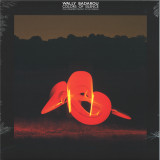
C"mon Tigre, the innovative music collective known for their genre-blending compositions, releases their highly anticipated fourth album Habitat. Drawing inspiration from the concept of an ecosystem where various forms of life, both animal and vegetal, thrive and coexist, the album takes listeners on a sonic journey through the intricate and ever-evolving nature"s theater. C"mon Tigre"s ability to blend inï¬éuences from distant corners of the world enriches their music and visual imagery. The album is deeply inï¬éuenced by rhythms coming from Brazilian tradition, the backbone is rooted in samba, forro, through instruments and tempos that come from this cultural magnificence. However, it retains the African jazz, electronic, and mixed inï¬éuences that have characterized the project thus far. Connecting the dots, the result is a richly layered and genre-defying soundscape. The record boasts a stellar lineup of collaborations. Among these are Seun Kuti, heir to the legacy of the legendary Fela Kuti, whose afrobeat roots infuse the album with a potent and infectious energy. The record also features Xenia Franca, a dynamic Brazilian artist hailing from Sao Paulo, Arto Lindsay, recognized as a pivotal figure in the world of experimental music, Giovanni Truppi and the Californian collective Drumetrics which featured on C"mon tigre"s records since their debut in 2014.
Поиск:sounds of life
Все
On 'Der Ferne', Phil Struck intricately weaves an abstract tapestry of textures, incorporating elements reminiscent of Hassellian-like sounds and multi-textured dubby soundscapes, a testament to the musician's getaways from urban life, journeying in the heart of nature. The music's warm and concise amalgamation of audio fragments lends it an ineffable quality, evoking hazy, sun-drenched memories, while the radiating reminiscences of the natural world invite contemplation of its true essence, remaining captivating for the discerning listener. What enigmatic experiences await discovery, and should the extraordinary always overshadow the ordinary?
„Der Ferne im Nahen. Der Ferne jenseits der Stadt. Der Ferne und den Dingen, die sich einem dort zeigen.“
"Der Ferne" stands as the fourth album by ambient and experimental artist Phil Struck, hailing from Kiel, Germany.
In the late 1960s, vibraphonist Roy Ayers was among the top young talents in jazz, thriving during a remarkable era for the genre. While Ayers would later become a jazz-funk pioneer and delve heavily into R&B fusions, his third album Stoned Soul Picnic is a masterful showcase of soul-jazz grooves. Produced by Herbie Mann, Stoned Soul Picnic features a memorable Laura Nyro-penned title track, along with an exceptional lineup of musicians, including Gary Bartz, Hubert Laws, Ron Carter, Herbie Hancock, and Grady Tate. Originally released in 1968.
Behind the alias GO.SOUL.MAP. hides Salvo 'Dub', one of the most authentic and purest talents with a marked sensitivity,
not only artistic, of the current music scene in Catania, of which, under other guises and names, he has been an indispensable pillar for over a decade.
The debut album of this project is anticipated by two preview tracks that will be released not only digitally, but also in physical format on 7" / 45 rpm.
The launch single is 'Pushing', an explosive track in a Nu-disco key, modern but firmly rooted in the past, with a production that enhances the sound of the keyboards; full of 70s/80s Funk and Soul, it also has a Disco-Pop vein that makes it perfect for radio. The track is excellently performed by Derane Obika of Living Sounds. A Londoner of Nigerian origin, as well as an exceptional singer, Derane is also the author of the song's melodic lines and lyrics, which can be interpreted as a dialogue between an imaginary interlocutor and his spiritual guide journeying through the maze of life.
The 'Pushing' 45 will feature as a B-side an exclusive instrumental version (the one sung by Reiwa Pia will be included on the full-length) of 'Back In The Underwater', a track that combines a Hip-Pop groove with cinematic atmospheres.
GO.SOUL.MAP.'s debut album is titled 'Peaceful Sound for Broken Minds' and is scheduled for release February 28th 2024, a little gem in which pop and soul intersect and the clichés between mainstream and underground leap. A SpaceNu-Disco, Soul and R&B journey in which Derane Obika's fundamental contribution to the lyrics and melodies of no less than nine tracks out of twelve stands out! - This is a greatly anticipated album made for the ears of music lovers performed and produced by musicians with same love for the art of music.
Dont miss it!!!!!!
Artists like Jalen Ngonda come around once in a lifetime, so it is our privilege and distinct pleasure to announce the release of his debut album Come Around and Love Me.
Anyone who has had the pleasure of seeing Jalen perform live knows that he is one of the most captivating performers on today's soul scene. His voice, equal parts raw feeling and elegance, exudes confidence and charm-disarming packed rooms of rowdy concert goers, leaving them silent as they hold fast to every syllable sung. Plans for the album were struck just months before the COVID 19 pandemic shut the world down. Notwithstanding, Jalen eventually made it to Hive Mind Studios in Brooklyn, NY where he began writing and recording with the help of producer/arrangers Mike Buckley and Vincent Chiarito (both members of Charles Bradley's Extraordinaires) and a crack team of a-list musicians from the Daptone family.
The team skillfully blends heavy arrangements and introspective lyrics with motown sophistication, leaving the listener in a blissful wash of wonderment. Jalen has been writing songs since he was 14, and his compositions are also very much of these times. He explains, "I love music from the 20th century- I listen to it all the time, but I?m in this world and the 21st century. ...to a stranger, I?d describe my music as modern soul and R&B, while trying to fit in the Beach Boys and the Beatles somewhere in between." Come Around and Love Me reveals how he creates a classic approach that is rooted in the sounds of revered pioneers, without falling into imitation-leaving no doubt that Jalen will continue to shine within the superlative, timeless musical tradition that is Daptone?s hallmark.
Now it's your turn to come around and love one of the finest soul albums of the decade.
‘A Concrete Pasture’ by Coen Oscar Polack is the follow-up to ‘Haarlemmerhout’ (2020), an album named after a park close to his home in Haarlem in the Netherlands. ‘A Concrete Pasture’ brings Polack’s interest in exploring the larger world around him back into his music. Polack is a magician in combining field recordings from all over the world, be it a temple in Bangkok, the Dutch Wadden Islands or a the percussive Gamelan instruments, and electronic processing of these recordings. With all these ingredients he creates a vivid, nostalgic, futuristic but familiar world of sounds and emotions.
At first, the colors of the recordings seem scattered, the sounds unrelated, but there is a deeper train of thought running through the music. It is the persistent impression of a travelogue; of places, family and friends, helping Polack in co-creating his music. In ‘Cuore Nero’, nostalgic powerchords are composed into tapestries of ambient-noise, ‘Unseen Shores’ uses a recomposed recording of Polack’s children on the Dutch island of Schiermonnikoog and develops into visceral, almost spiritual music, and a field recording of Wat Po in Bangkok in ‘Phra Buddhasaiyas’ becomes a luminous homage that the incorporated guitar sound burns into your skull.
While listening, it becomes evident that Polack is being reflective in auditive images and memory, giving a meaning to a music that is liberated of its formalities and charged with a poignant imagery by transformation, one that is bright and lucid and respects the process from recording until ornamentation.
The longest piece of the album ‘Kraaiennest’, starts with the recording of a Hong Kong traffic light, later to be cut up and transformed into a technoid Musique Concrète piece, with a slow progression into a warm crescendo-decrescendo themed electroacoustic piece, which takes on a life on its own. The finale is Polack on this tenor saxophone putting a stamp on the completion of his work, a performance reminiscing of the raw expressiveness of Albert Ayler.
‘A Concrete Pasture’ points to a landscape, or to a person’s current situation in life. Coen Oscar Polack did himself justice by writing an elegant, vibrant album, a tribute to his reflection of reality, his aesthetics, and with raw authenticity and skill, leaving a great space for the audience’s imagination.
Singer, songwriter and author Ali Sethi had been entranced by Jaar's music long before they began collaborating. He'd absorbed the sounds over a number of years, listening casually and taking in their subtleties in bars and rooftop parties across Lahore and London. "It felt familiar to me, that sense of adventure you have when you hear his music, like a tale that teases you and plays with your expectations as it unfolds," says Sethi. "In that sense it resembled the leisurely improvised ghazals and qawwalis I grew up hearing in Pakistan." So when the two were finally introduced by Indian visual artist Somnath Bhatt, a regular Jaar collaborator who also handled the album's artwork, Sethi was well prepared. He began to sketch out voice notes using loops snipped from Jaar's acclaimed 2020 album 'Telas', improvising vocalizations and seductive Urdu poems over Jaar's weightless, time-bending productions. Jaar was astonished by the result; "It was what 'Telas' had been missing," he explains.
Improvisation has been important to the Chilean artist for many years. Before he had even started making electronic music, Jaar jammed on accordion with friends on the street in New York City. It's at the core of his practice, "a moment in time," in his own words. 'Intiha', the opening track on the album, is the first they finished together, and positions Sethi's evocative phrases over Jaar's faded, metallic percussion. It's a perfect proof of concept, re- imagining the world of 'Telas' and augmenting it with a sense of ancestral melancholy and giddy euphoria that's truly transformational.
Sethi is best known globally for his attempts to revive the ghazal, an ancient poetic form that was taken by Sufi mystics from the Arab world to Persia and throughout the Indian subcontinent, where it captivated the royal court. It's been unfashionable in the last few decades, a mannered style associated with decadence, and Sethi offers it a new lease of life through his playfully revisionist covers and renditions. (His most popular single 'Pasoori' is a global phenomenon, one of the most Googled songs of 2022, with hundreds of millions of listeners tuning into its timeless message of forbidden love.) Sethi updates the ghazal form by using his years of training in raga music, lifting metaphors that reflect his journey as an out-of- place queer kid in Pakistan who became a US citizen and now lives in New York City.
Cycles is a concept which is deeply intertwined with everyday life, both on a micro and macro level. They manifest in various natural, biological and societal processes, influencing our daily routines, behaviours and the world around us. Unconventional rhythms and time signatures, complex patterns, evolving modulations and shifting textures were created and used to present it (Cycles) as an integral part of our existence, shaping how we navigate to the world, make decisions and experience the passage of time..." Kostas Giazlas (Onepointwo). Kostas hails from Thessaloniki, Greece, and describes himself as a keen record collector, who is "always trying to emulate a musical journey into space, time, memories and frequencies". With Influences ranging from late 50s electronic experimental sounds, motorik krautrock bands, lush shoegaze melodies and modern electronica, Onepointwo seeks to crystallise this musical backdrop via judicious use of minimal arrangements, abstract and distorted shortwave radio signals, dystopian soundscapes made up of both digital and analogue sources, all punctuated with heavily affected percussive sounds. The listener is drawn in by the psychedelic impact achieved through repetition. Onepointwo's previous discography ably demonstrates his consummate skill in this field. Keene (Poeta Negra) / SANS (Lotus RecordShop Editions), plus various appearances / remixes in domestic label compilations. He has also clocked up an number of releases on UK labels, including Miracle Pond, Woodford Halse, Werra Foxma and Subexotic Records across various formats; plus several live performances/dj sets and a host of rave reviews including Electronic Sound Magazine.
- A1: Celloloop / More That Connects Us
- A2: Rain Gutter
- A3: Fourth Floor
- A4: Nairobi Traffic Light
- A5: Possibility / Kardio Loop (A)
- A6: Stonerella
- A7: Don't Kill It By Naming It
- A8: Insanely Alive
- A9: El Condor Pasa
- A10: Kardio Loop (B)
- B1: Can't Escape Into Space
- B2: Kardio Loop (C)
- B2: Celloloop / Stronger Than This
- B4: Im Treppenhaus (A)
- B5: Late For The Webinar
- B6: Kardio Loop (D)
- B7: Kantine
- B8: Ocean Walk
- B9: Give Me A Shadow
2023 Repress
Moon in Earthlight describes the phenomenon one can see in the first few days after a New Moon, when the slim crescent of the moon is completed into a full circle by a faint light that is not lit by sunlight but by the light reflected from Earth. It is also the apt title for the first album from an artist whose first love was astronomy. After 6 EPs over the course of 5 years, Wolfgang Tillmans now releases his first album, Moon in Earthlight, a singularly plural 53-minute piece comprised of 19 tracks.
Opening with more that connects us than divides us, 'Celloloop / More That Connects Us', a looped cello sets out a discursive path for a bright keyed melody to flirt with while the sounds of the organ and synthesizer build their supporting roles, all along a bouncing four-to-the-floor beat punctuated with bright electronic chimes and the rhythmic tempo of a shaker. The invitation is hard to resist as a yearning voice opens up to let us know he's left his "place in security." And, "you're shining … All the way down to this glittering place … you're shining." Where voices and laughter are then overheard in the background of another field recording sounding water dripping from a 'Rain Gutter' later caught by the soft, warm rhythmic bounce between two synth notes on 'Fourth Floor' where chime-like and percussive timbres resonate from the metal tine keys of the kalimba creating a meditative acuity, which Tillmans peppers with arpeggiated synth riffs.
A composition of multiplicities, Tillmans' album debut is a collage of sounds, field recordings, words, studio jam sessions and live recordings, voice, soundscapes, and instrumentation scored with audible space to breathe along the way. Keeping pace, the first 'Kardio Loop' is a vocal callisthenics contemplating 'the possibility of a happy life' and/or the propositional properties of its semantic constructions backed by the recording of a heartbeat from a cardiogram. This movement is gradually accompanied by a set of orchestral synth pads that build to a crescendo before the soft, twirling melody of 'Stonerella' carries us along a carousel-like melodic, pop, instrumental timed in the percussive clapping of pebbles.
Not knowing where one leaves off and the other begins is part of this album's enigma, as we move in and out of these aural spaces choreographed with the slightest, open hand, where we can float through 'Don't Kill It by Naming It' before dancing along 'Insanely Alive' all the while contemplating the inherent, fragile complexities of language and being.
This enigma also stems from the raw vulnerability of Tillmans' voice. Whether lyrically playful or introspective, it is always giving: intimately unfolding as in the surprising take on Simon & Garfunkel's 'El Condor Pasa' or shapeshifting in 'Can't Escape into Space' or fully naked as raw material expression in 'Kantine' and 'Ocean Walk'.
Whether it's Tillmans voice or voices overheard, a field recording or a pop synth melody, these sounds defy track listings, audibly held together as one of many in an aural space that becomes a reflective cycle that develops over the course of the album. The accumulative effect of which (reminiscent of the artist's installations), drives the singularity of each of the album's elements into a complete, unconsolidated whole. Like a phenomenon that marks time, Moon in Earthlight is the shadow and the reflection, fifty-three minutes in time.
Synth pioneer and musical polymath, Wally Badarou is a genius. But you know that already. A vinyl version of his majestic Colors Of Silence has been craved by the Balearic cognoscenti ever since its low-key 2001 release. Indeed, when we first started work on Be With, we asked some pals with exquisite taste what their dream release would be. We asked Balearic legend Moonboots and, without hesitation, he said Colors Of Silence by Wally Badarou. We didn't know Wally had made this album. And most still don't. But that's about to change.
Colors Of Silence is ostensibly a new age album. As ever though, Wally's sophisticated synth textures and expressive keyboard runs are so full of character, so full of life, that this work of art transcends any easy genre categorisation. It's simply stunning, throughout. It sounds like A.r.t. Wilson or Suzanne Kraft, with traces of CFCF and Jonny Nash. But it was made a good decade earlier than the work of these modern giants. Sometimes, it doesn't seem far from some Larry Heard albums.
Island Records founder Chris Blackwell's friend Nathalie Delon asked Wally to provide music for the yoga DVD she was to release. Lack of time on both sides made them agree on using "quality demos" Wally had in his ideas bank. It's understandable why Colors Of Silence remains somewhat of a lost gem. As Wally explains: "Total lack of promotion made it an 'intimate' release, which was exactly what I was looking for: just a buzz-maker and time-buyer that would allow me to concentrate on the real thing as soon as I'd have time, which could also turn into a rare collecting item later, once the final versions made their way to success. You never know."
Over the years, Colors Of Silence has become a true cult record for the ambient/Balearic heads.
The beguiling but brief "Dance In The Dust" is the shuffling, hyper-percussive, hypnotic opener. It gives way to the deep serenity of "Amber Whispers". It's a gliding, divine, mini melodic masterpiece. It'll make you swoon in its extreme beauty. The bright and breezy "Where Were We" follows, a tropical, reggae-tinged bounce through the islands.
The uptempo groove is maintained on the keys-drizzled soca-funk of "The Lights Of Kinshasa" before Side A is rounded out with "Pictures Of You". It starts with stately, melancholic, unadorned piano and this alone would make for a beautiful song. But Wally always gives us that bit extra and he effortlessly introduces warm, dreamy pads and minimal, slo-mo percussion to augment a frankly stunning piece of work.
Ushering in Side B, Wally's mesmeric piano playing is to the fore again, in the intro to uber-chilled "Serendipity For Two". The playing becomes more mellifluous as the track progresses and adds warmth through exotic percussion, woodwind, sweeping synths and digi-drums. It has echoes of, er, Echoes. It segues seamlessly into the more propulsive, wavy "Smiles By The Millions". If you're not nodding and grinning along widely to the gently throbbing bassline underpinning this, we can't help you. The meditative "Higher Still" follows, cinematic in feel and ever so slightly sinister with the strings. It sounds particularly Badalamenti-esque, if you ask us.
That unmistakable, almost peculiar Badarou funk - so lyrical, so texturally rich and so rhythmically spacious - is all over "Oriental". Next up, "Days To Wonder" brings the serenity back, insistent yet melodic keys, as if played in a place of worship, coupled with birdsong, conjure a kind of instant nostalgia for halcyon days of youth. The contemplative "Dawn Of Europa" is a sombre, beatless, ambient journey whilst the glorious, too-brief "Crystal Falls" features soft percussion and sparkle before fully glistening with some gentle head-nod beats. Wally brings this incredible collection to a mellow, tender close with the graceful "Purple Lines".
There can be few artists more under-appreciated given their vast influence than Wally Badarou. His solo work practically defined the sound of the Balearic DJs of the 1980s, and thus the more sophisticated sound of dance culture thereafter. A synth specialist, Badarou was the long-time associate of Level 42. He was one of the Compass Point All Stars (with Sly and Robbie, Barry Reynolds, Mikey Chung and Uziah "Sticky" Thompson), the in-house recording team of Compass Point Studios responsible for a series of albums in the 1980s recorded by Grace Jones, Tom Tom Club, Mick Jagger, Black Uhuru, Gwen Guthrie, Jimmy Cliff and Gregory Isaacs. Badarou's keyboard playing could also be heard on albums by Robert Palmer, Marianne Faithfull, Herbie Hancock, M (Pop Muzik), Talking Heads, Manu Dibango and Miriam Makeba. He also produced Fela Kuti. Phew!
Meticulously remastered and cut by both Simon Francis and Cicely Balston respectively, it has been pressed to the highest possibly quality at Record Industry in Holland. Special thanks must go to Apiento from Test Pressing who first introduced us to Wally and facilitated all those early zoom meetings. It couldn't have happened without his help. Not least on pulling the art together, too, which features striking original photography by Mads Perch. Benji Roebuck of Roebuck Press did his thing brilliantly in art working the whole package to completion. All in all: essential.
Most of Gen X-ers who grew up in the mid-1980s Indonesia must have seen Soedjarwoto Soemarsono, known with his nom de guerre “Gombloh” performing on a state-run television station, playing some of his biggest hits from that era, pop gems like “Kugadaikan Cintaku (I Pawn Off My Love)”, “Setengah Gila (Half-Crazy).”
But of course, it is not fair to judge Gombloh only from these hits. Dig deeper and you will find buried treasure in his early stuff from Indra Records, and there are many of them.
His album with the band Lemon Tree’s Anno ‘69 (yes, that’s the name of the band) is all remarkable, but what he did for Chandra Records was no less spectacular. How can you go wrong with songs like “Kebyar-Kebyar”, the unofficial national anthem for Indonesia, dan “Berita Cuaca” one of the better epic songs in a catalogue full of epochal songs? These were all long out of print and in our journey to source the original master for these albums we met Bob Djumara of Nirwana Records, the Surabaya, East Java-based label which broke Gombloh into the mainstream in the mid-1980s. Almost all albums Gombloh recorded for his early labels, Indra Records and Chandra Records were critically acclaimed, but commercially they bombed, big time. Nirwana Records came up with an ingenious plan. What if they recorded Gombloh performing live and release it as is. After all, the first song in Gombloh debut record Nadia & Atmospheer is him strumming on his guitar backed by the cheering of a crowd, who could be heard going wild when he hurled that epithet “bastard” at the end of the song
The end result is a brilliant recording which despite being recorded live the sound quality so pristine leading many to doubt the claim of being live. Regardless, Nirwana shipped a decent number of units and Gombloh could buy his first car, a Katana Jeep, with money from the royalty.
One of the best things about Live Gila is its perfect sequencing, beginning with Gombloh’s social commentary on the rich’s debauched lifestyle of preying on young boys and girls, one of the most popular subjects allowed by the censoring machine of the New Order authoritarian government. The second song “Untuk Persada” is a soaring ode to the nation. For this song, Gombloh could be heard drawing his inspiration from The Police, which was undoubtedly popular in the early 1980s, even in a faraway port city like Surabaya.
Listening to this record as a whole (we omitted the last song from the original master tape “Bagimu Negeri” which sounds too jingoistic), we could not help but point to some of similarities it has with Bob Dylan’s Blood on the Tracks. Not a single composition in this record sound indigenous (the Malay-influenced rock of Panbers or Koes Plus come to mind); they all sound modern and effortlessly catchy, and had it not been for the language, this album could be mistaken for a musical output from someone growing up in Laurel Canyon or Southern France.
There are only limited copies of vinyl records in the second-hand market today available for Gombloh music, if at all. For his ardent fans, they have to scavenge for old cassettes to continue to be able to enjoy his music and have to pay top dollar for that. In Indonesia, where he was a superstar in the early 1980s, Gombloh was largely forgotten. With this project, we can only hope that the time is ripe for Gombloh to reemerge and now, more than ever, his music could speak to a bigger audience.
After her album with producer High John on MPM in 2019 and collaborations with agajon, Àbáse, KUOKO, Cap Kendricks and Move 78, soul singer douniah returns with her debut solo project!
douniah imparts her debut solo project "A Lot, Not Too Much" to an unexpecting audience. Thoughtfully, the singer-songwriter invites us to embark on our own saviour. The collection of songs is steeped in artistic and emotional integrity. Production was ledand executed by Dhanya Langer, one half of band project Modha, and producer of JujuRogers' 2019 album "40 Acres N Sum Mula". Written amid the pandemic, this piece is aneffort of immense proportions - experimenting with her sound in time, wading through spirals of arduous personal challenges. 'A first impression of how my journey sounds.'Agadir-born and Hamburg-raised, douniah engages in the practice of interpreting herspirit, impressively, in German, Darija and English. We find here, a body of work that threads together the tenets of free-form poetry and romanticism, backdropped by neo-experimental jazz tendencies. In euphony, a worldly array of instruments act insymbiosis to carry us through "A Lot, Not Too Much". douniah's voice is one to fall into; her message is enunciated with every word, delivered delicately with an inventory ofriffs and ranged tone. The utilisation of choppy, note-like, freestyles bridges the EP's strong singles, into a rhapsodic whole.
New West Records is proud to present Strange Country, the new full-length album from the young and gifted cousin-duo Kacy & Clayton. The ten-song collection was recorded over seven freezing Canadian winter days at Ghetto Box Studios, a historic community hall turned studio. The product of a lifetime of deep kinship, the record showcases the purity and astounding beauty of Kacy Anderson's voice, one that has been notably compared to Fairport Convention's Sandy Denny. Only Clayton Linthicum's intricate guitar work, expert time changes and vocal harmonies could forge the foundation for Kacy's voice to soar even higher - the result being an enormously satisfying and organic album. Drawing a wide swath of inspirations ranging from the Greenwich Village folk scene to the ancestral music of Southern Appalachia and the British Isles, the cousins fashion songs steeped in those traditions, simultaneously paying homage and building on those sounds.
2023 markiert den Beginn einer neuen Ära für IN FLAMES mit der Veröffentlichung des vierzehnten Studioalbums Foregone - ein neues Meisterwerk einer Band, deren kreativer Output den Kurs und die Richtung des modernen Metals verändert hat.
Um den Aufwärtstrend fortzusetzen, markiert 2023 auch die Wiederveröffentlichung von vier bahnbrechenden Titeln aus dem umfangreichen Katalog der Band, nämlich A Sense of Purpose (2008) (15th Anniversary Edition inc. The Mirror's Truth EP, die noch nie auf Vinyl erhältlich war), Reroute to Remain (2002), Come Clarity (2006) (mehr als 400.000 verkaufte Exemplare weltweit + Gewinner des schwedischen Grammis-Preises für das beste Hard Rock-Album 2017) und Sounds of a Playground Fading (2011), die alle vergriffen und bei alten und neuen Jesterheads gleichermaßen sehr gefragt waren.
Die Wiederveröffentlichungen von 2023 enthalten alle Original Artworks mit einigen wenigen, sorgfältigen Retuschen. Alle Veröffentlichungen wurden von Justin Shturtz im legendären Sterling Sound Studio in Nashville, Tennessee, speziell für Vinyl neu gemastert. Alle Platten werden auf schweres 180g-Vinyl gepresst und sind mit dem unverkennbaren Jesterhead-Logo auf Seite D (z.B. A Sense of Purpose) versehen!
The album is the proverbial musical journey, made to be listened to from beginning to end, then flipped over for another spin.
SONLIFE is an 8 track LP that spans genres from Downtempo to Jazz, and is an amalgamation of live instrumentation, field recordings and samples. A lot of the tracks on the album started out as very simple ideas; repetitive, single, distorted loops - “very odd and rough ideas conjured up in the middle of the night in my early twenties”. He originally imagined the project being an experimental solo project in 2015, trying out new sounds and genres. The tracks were back under wraps for a few years when he took a break from making music, and when he returned, they were all reimagined with a brand new life.
The album has heavy influences from the likes of Massive Attack, “Black Sands”-era Bonobo, Portico Quartet and the more dance orientated musicians such as Overmono and Mount Kimbie.
Lovers Grain and The Quiet feat James Mollison
Piecebypiece features Plumm
"Fast Rate" blends echoes of nostalgia with futuristic innovation, crafting a sonic landscape. In the relentless rush of life's high-speed journey, it invites introspection, courageously urging listeners to delve into the intricate web of contemporary life.
This EP is inspired by deep reflections on the meaning of life in a fast-paced world filled with thoughts and emotions. It symbolizes a futuristic journey, mirroring the human struggle to gain an external perspective in our busy lives. Random Alias prompts users to contemplate their existence, offering a musical experience that transcends mere dance rhythms.
The 5 tracker showcases a wide array of sounds, from aggressive tones to captivating and atmospheric elements unveiling a new face of the label that keeps exploring the interconnection between human and technology.
The A side roars with high bpm and furious rhythms."Keep me high" express the need of escaping ordinary life, seeking something that keeps us "high" and allows to escape and reset.
Following up "Fast Rate" spans a variety of influences, blending the allure of old-school Detroit electro with futuristic sounds achieved through bold experimentation and advanced wave modeling. This fusion results in a diverse and innovative sonic aesthetic, ranging from nostalgic '80s/'90s vibes to experimental dimensions where tones morph and evolve.
"Solo in Space" and "Restless" on the filp side deliver direct, pulsating sounds and rhythms, embracing an impactful electro-techno vision. These tracks merge both worlds, combining the energy and drive of electro with the power and tension typical of techno, resulting in a sonic journey that blurs genre boundaries.
Completing the collection is a digital bonus track, "Galactic Power," which serves as a soulful embodiment of the EP's essence. With its otherworldly alien-style pitched vocals,The track intricately crafts a cosmic palette of bright pulses and ethereal FM synthesis.
This release represents a bold and progressive vision of electro, confirming and solidifying the eclectic direction and the concept of inter genre flexibility. Music can be an ever-evolving form of art, blending elements that transport listeners to distant cosmic realms.
Time shapes people, people shape technology, technology shapes music, music shapes time.
Color Vinyl[20,97 €]
In the decade or so that hard-working New York quartet Sunwatchers have operated, the group has steadily & subtly refined their sound - a brain-blasting mixture of jazz, psychedelia, krautrock, punk, noise, & Saharan blues - into something that is avant-leaning enough to appeal to the discerning jazz & experimental music fan & weird & wooly enough to get the true heads' toes tapping. "Music Is Victory Over Time" is the band's 5th album, and fourth for Chicago-based Trouble In Mind Records, seeing the long-running lineup of Peter Kerlin (bass guitar), Jim McHugh (guitars), Jason Robira (drums), and Jeff Tobias (alto saxophone and keyboards) in prime form. Album opener "World People" is a classic Sunwatchers number whose title expresses their Anarcho-Internationalist ideology (and the atypically multi-culti make up of their crowds), with an underlying melodic resonance to New Orleans funeral marches à la Albert Ayler _ a triumphant call to arms to all peoples. Live fave "Too Gary"'s gang vocal shout punctuates a motorik rager named for a phrase often uttered by a badass eight year old skateboarder McHugh knew with a speech impediment (it means "that's too scary"). "T.A.S.C." (or "Theme For Anarchist Sports Center") is inspired by Sonny Sharrock's maligned 80's output & sounds exactly like a wrathful, mutant version of a prime-time athletic show theme, replete with the requisite "sitcom ending." The sun- scorched "Foams" - a longform piece intended to depict natural stuff like tides, nightfall, and time slowly passing, ancient, peaceful and slightly gross all at once - practically jumps out of the speakers, its palpable intensity crackling in your eardrums. The title of "Tumulus" might reference an ancient burial mound, but the music itself might be the group's most high-tech song to date, complimented by an arpeggiating sequencer, three different forms of tape delay and an electric saxophone; ecstatic, fiery & deeply spiritual. "There Goes Ol' Ooze" is a smoky creeper that lets Tobias & Kerlin take a walk for a while, with respectful nods to the Stones and Steve Reich. "Song For The Gone" closes out the album, showcasing a sincerely tender moment for the gang, as an expression of love and resolve for dear friends who had recently, tragically died. Its cascading, bluesy melody attuning itself to our own collective unconscious grief. Having the distinct pleasure of being the first band to record in John Dwyer 's new LA-based recording studio Discount Mirrors, "Music Is Victory Over Time" boasts a beefed up sound. The band worked closely with in-house engineer Eric Bauer - facilitator, troubleshooter, sonic obsessive, a legendary freak and a DIY lifer. The band also had full access to the studio's epic armory of gear: amps, axes (it's Dwyer's Eddie Harris model electric sax), synths, a bass guitar once belonging to Klaus Flouride of the Dead Kennedys. Crucial for the sounds and the vibe. The album art was created by Josh MacPhee, the activist artist, author, archivist and founding member of both the radical artist collective Just Seeds and Interference Archive, a public collection of materials from social movements based in Brooklyn. MacPhee's participation in the project works as a statement of Sunwatchers' progressive utopian intentionality, and organically underscores their involvement in revolutionary projects within and without of their hometown. Listening to "Music Is Victory Over Time", Sunwatcher's rebellious spirit & unbridled enthusiasm remain fully intact, but the secret sauce is their infectious irreverence in the face of the horrors of this world. Much of our best cultural commentary is Trojan-horsed to the general public via humor & satire & the band has a knack for lacing the ridiculous with the radical. It's good to have them back. "Music Is Victory Over Time" is released worldwide digitally via most DSPs, on CD, black vinyl & a limited "Sunflare" blue/red splatter vinyl while supplies last.
Black Vinyl[20,97 €]
In the decade or so that hard-working New York quartet Sunwatchers have operated, the group has steadily & subtly refined their sound - a brain-blasting mixture of jazz, psychedelia, krautrock, punk, noise, & Saharan blues - into something that is avant-leaning enough to appeal to the discerning jazz & experimental music fan & weird & wooly enough to get the true heads' toes tapping. "Music Is Victory Over Time" is the band's 5th album, and fourth for Chicago-based Trouble In Mind Records, seeing the long-running lineup of Peter Kerlin (bass guitar), Jim McHugh (guitars), Jason Robira (drums), and Jeff Tobias (alto saxophone and keyboards) in prime form. Album opener "World People" is a classic Sunwatchers number whose title expresses their Anarcho-Internationalist ideology (and the atypically multi-culti make up of their crowds), with an underlying melodic resonance to New Orleans funeral marches à la Albert Ayler _ a triumphant call to arms to all peoples. Live fave "Too Gary"'s gang vocal shout punctuates a motorik rager named for a phrase often uttered by a badass eight year old skateboarder McHugh knew with a speech impediment (it means "that's too scary"). "T.A.S.C." (or "Theme For Anarchist Sports Center") is inspired by Sonny Sharrock's maligned 80's output & sounds exactly like a wrathful, mutant version of a prime-time athletic show theme, replete with the requisite "sitcom ending." The sun- scorched "Foams" - a longform piece intended to depict natural stuff like tides, nightfall, and time slowly passing, ancient, peaceful and slightly gross all at once - practically jumps out of the speakers, its palpable intensity crackling in your eardrums. The title of "Tumulus" might reference an ancient burial mound, but the music itself might be the group's most high-tech song to date, complimented by an arpeggiating sequencer, three different forms of tape delay and an electric saxophone; ecstatic, fiery & deeply spiritual. "There Goes Ol' Ooze" is a smoky creeper that lets Tobias & Kerlin take a walk for a while, with respectful nods to the Stones and Steve Reich. "Song For The Gone" closes out the album, showcasing a sincerely tender moment for the gang, as an expression of love and resolve for dear friends who had recently, tragically died. Its cascading, bluesy melody attuning itself to our own collective unconscious grief. Having the distinct pleasure of being the first band to record in John Dwyer 's new LA-based recording studio Discount Mirrors, "Music Is Victory Over Time" boasts a beefed up sound. The band worked closely with in-house engineer Eric Bauer - facilitator, troubleshooter, sonic obsessive, a legendary freak and a DIY lifer. The band also had full access to the studio's epic armory of gear: amps, axes (it's Dwyer's Eddie Harris model electric sax), synths, a bass guitar once belonging to Klaus Flouride of the Dead Kennedys. Crucial for the sounds and the vibe. The album art was created by Josh MacPhee, the activist artist, author, archivist and founding member of both the radical artist collective Just Seeds and Interference Archive, a public collection of materials from social movements based in Brooklyn. MacPhee's participation in the project works as a statement of Sunwatchers' progressive utopian intentionality, and organically underscores their involvement in revolutionary projects within and without of their hometown. Listening to "Music Is Victory Over Time", Sunwatcher's rebellious spirit & unbridled enthusiasm remain fully intact, but the secret sauce is their infectious irreverence in the face of the horrors of this world. Much of our best cultural commentary is Trojan-horsed to the general public via humor & satire & the band has a knack for lacing the ridiculous with the radical. It's good to have them back. "Music Is Victory Over Time" is released worldwide digitally via most DSPs, on CD, black vinyl & a limited "Sunflare" blue/red splatter vinyl while supplies last.
I want to introduce this work ‘Halos of Perception’ to you in the way Lisa introduced me to it, through the sharing of experiences.
Lisa and I met for a walk near South Yarra station to talk about this work, when inclement weather made it too wet to visit the tunnels. Moving almost seamlessly from a world of leisurewear, infinite milk alternatives and blaring neons to stretches of green by the water that brimmed with sounds and life, we saw a few people climbing the Burnley bouldering wall, butterflies suspended in the hot wind and lots of plants I wish I knew the names of. Overhead the cars rumbled like a ceaseless animal as we talked about hidden ecosystems, imagined spaces and networks of care.
Stemming from a serendipitous encounter with an original Cave Clan member that led to many underground adventures, this work explores the worlds that exist outside of our perceptions. By the river, I leafed through a selection of tunnel photos Lisa had printed off at Officeworks, revealing alien textures, tunnels that stretch on into abysses of their own, underground flowing streams. Light is sparse and delicate, something reflected by the flickering and wavering in Lisa’s piano compositions.
As we walked, we noticed the ways in which infrastructure is often designed to keep people out—cut doors into fencing and clipped wires show an active and ongoing defiance of this. We spoke about how her Cave Clan friend used to go down to this painted room and read in solitude, using candles for light. The way sound exists underground, encased in these hollow cement tunnels, a painted room with its own deep hum. How people used to hold underground shows, how there were rules for safety (no exploring after rain, never alone) that was shared with each other. This warmth and absorption of other’s experiences is present in Lisa’s work—it’s immersive, like wading in water.
We paused on the walk to eat berries and talk about how The Caretaker creates transitory worlds with recorded sound, how this technology captures memory, and the exploratory pursuits of Pauline Oliveros’ Deep Listening Band. These citations of memory and deep listening inform Lisa’s use of analogue and classical instruments, playback artefacts and acoustic feedback in her own world-building. When speaking about ‘Halos of Perception’, she describes it as a fascination with timbre and acoustic artefacts.
Ideas of networks and enmeshment are felt deeply in Lisa’s compositions, motifs overlaid over each other evoking the image of many hands interlinking playfully, tenderly, softly. The way her compositions delve into refraction and echo makes me think about the tunnels and the way they splinter off into many possibilities. Manipulated textures reminiscent of the chalky, earthy, moss air that perfumes the tunnels’ subterranean air. Tactile details that gesture towards close attention, verging on obsession.
This work is also about imagining ecosystems of potential. Lisa shared with me that during this project, she has been reimagining subterranean networks in dreams, thinking about oral traditions, and the way water moves—from the sky to the earth, through the ground, connecting all these spheres. Realised in collaboration with hyperreal video artist Tristan Jalleh, Lisa’s dream landscape melds waterfalls, leaks, flower graffiti, and hidden messages lit up by imagined light sources with existing subterranean networks. There’s a real sense of wonder in this world she has built, how the city can reveal itself to you with some patience and care, how the city and its secrets can find its way into your dreams.
— Panda Wong
- A1: The Its Way
- A2: Mindful Solutionism
- A3: Infinity Fill Goose Down
- A4: Living Curfew (Feat Billy Woods)
- A5: Pigeonometry
- B1: Kyanite Toothpick (Feat Hanni El Khatib)
- B2: 100 Feet Tall
- B3: Salt And Pepper Squid
- B4: Time Moves Differently Here
- C1: Agressive Steven
- C2: Bermuda (Feat Lealani Teano)
- C3: By The River
- C4: All City Nerve Map
- D1: Forward Compatibility Engine (Feat Rob Sonic)
- D2: On Failure
- D3: Solid Gold
- D4: Vititus
- D5: Black Snow (Feat Nikki Jean)
A tech company's "senior spirit guide" finally comes to the defense of the "financially unsuccessful" Vincent van Gogh; wonders of the natural world are reimagined as "muster points for brainstorming innovators"; the "artificial char lines" on fast-food burgers are cited as if signs of the apocalypse. For the better part of three decades, Aesop Rock has used the syntax of the moment to pinpoint the fault lines in that moment's supposedly solid foundation. With his tenth album, Integrated Tech Solutions, Aes wields insidious corporatespeak as a tool to pry that parasitic worldview away from the parts of life that truly matter. A concept album about an organization offering "lifestyle- and industry-specific applications designed to curate a desired multi-experience," Integrated Tech Solutions picks apart the charlatan language that hears app inventors put themselves on continuums starting with cavemen and continuing through da Vinci. On "Mindful Solutionism," the wheel evolves seamlessly into modern agriculture - and then into atomic bombs, Agent Orange, cigarettes, and surveillance cameras. In a rare moment of transparency, the engineers Aes give voice to sum up this spiral in just a few words: "We cannot be trusted with the stuff that we come up with." Appropriately, the album sounds like the past and future at once. Largely self-produced, Integrated Tech Solutions catches Aes at his leanest and most innovative, leveraging "SolutionismÖs careening bounce against the wistful "By the River" or the slow creep of "Salt and Pepper Squid." The effect is a record that sounds itself like an organism growing, mutating, hurtling toward profitability - and then destruction. As fans have come to expect, Aes is cuttingly funny and slyly profound at once, whether recounting a childhood restaurant run-in with Mr. T ("100 Feet Tall") or quipping, on "Pigeonometry," that "white dove is a pigeon - you motherfuckers is bigots." At the same time, Integrated Tech Solutions is working on another parallel project: tracing the sprawl of modernity and cutting directly to its core. "I've been doing laps of the lost worlds," he raps on "All City Nerve Map," sounding at once wearied and reinvigorated. "I can draw a map to the raw nerve."