If Shelter swam through the serene side of the Library experience on GBR016, CV Vision blasts off in the opposite direction, riding an explosion of funk breaks and frazzled synths into the event horizon on his retro-futurist opus ‘Insolita’.
As contemporary life accelerates way past peak-weird, CV Vision leans into uncertainty and leaves Earth in the rear-view. Strung out on Simulacron-3, World On A Wire and Omaggio Ad Einstein, the Berlin-based musician imagines his own Brave New World, an alternate eXistenZ in a secret simulation.
Using the space age obsession of the Italian libraries as a launch pad, Dennis Schulze slathers a sonic storyboard with ferocious percussion, psychedelic fuzz and the pastoral electronics of Germany’s Kosmische movement. But this is less Can, more uncanny - and Schulze perfectly renders the cognitive estrangement of a simulated reality through his adventurous production. The monolithic live drums, recorded in a Neukölln garage on a battered Soviet kit are smeared with tape hiss, compressed to death and fired through LFOs, re-materialising on record in impossible scale. Time slips out of joint under the wow and flutter of the reel to reel, drum computers add digital interference to organic rhythms and the unfaltering slew of the 303 lends the hallucinatory thrill of the club sound system to an already psychedelic affair.
As Schulze’s imagination runs free, we’re taken through epic space battles and narrow escapes, moments of reflection and affection and a final resolution, all expressed through a dexterous control of movement and mood. For every explosion of break-fuelled adrenaline, there’s a cruise into cryo-chamber music and holodeck exotica. For each neck-snapping blast of acid funk, there’s a zero gravity lullaby waiting just around the corner.
So put isolation on ice and surrender to the strange, this is a trip you don’t want to end.
quête:soviet
The debut album of the singer-composer Rita Ray from Estonia packs powerful, warm vocals and crisp production to go with it. "Old Love Will Rust" contributes 8 soul-heavy cuts to the current scene: it's got that slower, classic R&B side of affairs, as well as an uptempo disco delight, that keeps things tight. While miss Ray herself has credits in almost all aspects of the LP, it's a certified Solid Gold Production, led by Martin Laksberg of Lexsoul Dancemachine. Blue-eyed soul hasn't sounded so strong in ages! Rita Ray is a small-town girl whose vocal chords are hardened by a decade in choir singing, spirit toughened by the city life and a foundation built in jazz studies. She's the first contemporary soul diva to rise from the post-Soviet state. Her soul-stirring shows have yet to leave a heart cold - she'll have you in her palm to deliver tender melodies, irony-filled lyrics, catchy riffs and disco-stomping sessions.
Music for animation cyber-noir film “Battlefield” (based on same-titled book by Stephen King)
Animated films soundtrack is one of the most substantial aspects of Bystryakov's career. He masterfully balances between being a composer and a sound designer. A cartoon thriller for Stephen King's original story was created at the Kyivnaukfilm studio in 1986. The work itself reached the Soviet reader in 1981 for the first time and was King's first publication in the USSR, as well as "Battleground" was the first and only film adaptation.
"Battlefield" is a work that belongs entirely to its time. This soundtrack is a semi-conscious journey through the night TV network: from Italian horror movies and detectives to the movie Blade Runner on the last working channel well past midnight.
Actually, in such a sequence, the fabric of the work is revealed. The atmosphere in the style of Goblin (Untitled I), thus echoing the work of Enno Morricone (Title theme, Theme of the boss). In addition to melodic fragments, he boldly creates minimalist pieces that undoubtedly sound like an early acid house (Untitled II), because the sounds of Roland TB-303 and TR-606 are instantly recognisable.
Bystryakov's approach did not involve the use of many tools or effects. He worked with one Roland Juno-106 synthesiser, using the full palette of its sound. His new tool is a counterpoint. This is how the final theme (End Theme) is constructed, where a piercing solo on a saxophone changes the atmosphere to nostalgia.
The group Magizter formed in Malmö, Sweden in the early 90s, and mainly consisted of former members of the Hungarian industrial band Das Kapital, of which some managed to flee to Sweden from the communist regime before the fall of the Soviet Union.
Gyula Szilagyi, who was the first to make his escape via train through Berlin in 1987, recalls: “it was a few weeks before mandatory military service would begin, and our passports should have been turned over to the authorities”. Risking deportation and prison, he was granted asylum in Sweden after some months in Stockholm.
Szilagyi and the rest of the band were all part of the underground scene in Budapest, of which some had been under surveillance by the secret police since their teens. It was a tight knit community where anti-communist and illegal literature was distributed, and many bands shared mutual members.
The track “Das Kapital” was produced in Malmö in 1993 by Szilagyi and fellow Magizter member Zoltan Lengyel, in a home studio overlooking the Möllevång Square, were Szilagyi had moved after some years working at the glass factory in Orrefors. He had managed to save a few performances by Das Kapital recorded on cassette, of which one served as sample material for the Magizter track; an homage of sorts to a group involuntarily disbanded.
The cassette sampled here was recorded in 1986 during a live concert at the university-affiliated venue Ráday Klub, where Das Kapital performed alongside the British industrial act Left Hand Right Hand (who had formed from the Sheffield band Zahgurim).
On the eve in question, Szilagyi remarks: “we used a guitar that we had made ourselves to resemble a Kalachnikov rifle. During the concert at Ráday Klub the guitar was destroyed using a drill machine. It made a powerful sound effect”
A remix of the remix is offered by Vienna-based Heap, who with his own productions as well as his work with the Neubau label is building a bridge towards the new era of European industrial music.
- A1: Grupo Irakere - Chequere Son
- A2: Conjunto Rumbavana - El Son Del Campeon
- A3: Juan Formell & Los Van Van - Mi Ritmo Caliente
- B1: Grupo Monumental - Mi Son Caridad
- B2: Grupo De Experimentacion Sonora Del Icaic - Sondeando
- B3: Las D'aida - Con Cadencia Y Con Dulzura
- B4: Juan Formell & Los Van Van - Y No Le Conviene
- C1: Pablo Milanes - Te Quiero Porque Te Quiero
- C2: Emiliano Salvado - Luna Wanestain
- C3: Los Reyes 73 - Un Lamento Hecho Cancion
- D1: Eduardo Ramos - Vocacion Revolucion
- D2: Grupo Monumental - Hasta Las Cuantas
- D3: Los 5 U 4 - Solo Esta Musica
- D4: Grupo De Experimentacion Sonora Del Icaic - Cancion Con Todos
- D5: Orquesta Los Van Van - Yo Se Que Van Van
- E1: Grupo Monumental - Nadie Se Siente Cansado
- E2: Orquesta Ritmo Oriental - Maria, Baila El Son
- E3: Juan Pablo Torres Y Algo Nuevo - Rompe Cocorioco
- E4: Los Reyes 73 - Grandes Amigos
- F1: Paquito D'rivera - La Patica
- F2: Grupo De Experimentacion Sonora Del Icaic - Grifo
- F3: Raul Gomez - Dacapo
- F4: Grupo Irakere - Juana 1600
‘Cuba: Music and Revolution’ is a new album compiled by Gilles Peterson and Stuart Baker (Soul Jazz Records) that explores the many new styles that emerged in Cuba in the 1970s as Jazz, Funk, Brazilian Tropicalia and even Disco mixed together with Latin and Salsa on the island as Cuban artists experimented with new musical forms created in the unique socialist state of Cuba.
The album comes as a deluxe double CD and heavyweight triple vinyl, complete with extensive sleeve notes, jam-packed with heavy basslines, synth and WahWah guitar funk combined with the heavyweight percussion, powerful brass lines and the all-encompassing Latin rhythms of Cuban music known throughout the world.
The album is released to coincide with the massive new deluxe large format book ‘Cuba: Music and Revolution: Original Cover Art of Cuban Music: Record Sleeve Designs of Revolutionary Cuba 1959-90’, which is also compiled by Gilles Peterson and Stuart Baker (Soul Jazz Records) and which features the music and record designs of Cuba, made in the 30-year period following the Cuban Revolution.
The music on this album features legendary Cuban groups such as Irakere, Los Van Van and Pablo Milanés, as well as a host of lesser known artists such as the radical Grupo De Experimentación, Juan Pablo Torres and Algo Nuevo, Grupo Monumental and Orquesta Ritmo Oriental, groups whose names remain largely unknown outside of Cuba owing to the now 60-year old US trade embargo which remains in place today and which prevents trade with Cuba - and thus most Cuban records were only ever available in Cuba or in ex-Soviet Union states.
The music on this album reflects the most cutting-edge of Cuban groups that were recording in Cuba in the 1970s and 1980s - who were all searching for a new Cuban identity and new musical forms that reflected both the Afro-Cuban cultural heritage of a nation that gave birth to Latin music - and its new position as a socialist state. Most of the music featured on this album has never been heard outside of Cuba.
Both Gilles Peterson and Stuart Baker have been involved in Cuban music for more than two decades - Gilles Peterson with his many Havana Cultura projects for his Brownswood label and Stuart Baker with a number of Soul Jazz Records albums recorded in Cuba. This Soul Jazz Records album is released in conjunction with Egrem, the Cuban state record company, and has been put together after the many crate-digging trips that both compilers have made on the streets of Havana and beyond in Cuba stretching over a 20-year period, searching out rare and elusive original Cuban vinyl records.
Press - Reviews & features in Mojo, The Wire, The Guardian, The Times, The Telegraph, Pitchfork, Irish Times, The Observer, Clash, Vice, Metro, Record Collector, Uncut, Independent, Q.
Fortunately for us, Dmytro Nikolaienko agreed to open up the jewellery boxes of his tape-loop archive for his debut album on Faitiche. What came to light was a collection of dreamy glittering gems, masterfully presented using the compositional possibilities of analogue tape machines. Some may consider a tape machine to be limited as a musical instrument, but Rings makes a convincing case with its sure-handed use of the available parameters – moving tape over the tape head mechanically and manually, cutting loops, manipulating timbre and creating noise by means of saturation. The results are eleven blurred, repetitive, rhythmic patterns that can be understood as an intervention against digital precision, as mechanical irregularities and background noise become musical events.
For those familiar with Nikolaienko’s work, his nostalgic approach here will come as no surprise: born in Ukraine and now based in Estonia, he has chosen a historical medium (that has been enjoying a renaissance for some years now) to record historical-sounding sequences. The way he manages his own back catalogue is similarly archival, documenting the chronology of his tape loops in such a way as to leave no doubt as to their advanced age. And then there are his two wonderful labels Muscut and Shukai, the latter being an archival project releasing electroacoustic obscurities from the Soviet past. Which brings us back full circle …
More than 90 years after their creation, THE RED ARMY CHOIR – still today one of Russia’s pure artistic gems – have become universal and their reputation cannot be ignored! Inseparable from the revolution that would give birth to the Soviet Empire. The Ensemble was originally dedicated to celebrating the founding father of Bolshevism, Vladimir Ilyich Ulyanov, says Lenin… Even though they were, in fact, founded four years after his death! Lenin as well as the The Red Army Choir, remain two symbols of the Russian revolution, even if the tyrannical period of Stalin and the Soviet purges have passed, the Ensemble distances itself from any political representation by being consecrated as an international icon and today the most famous choir in the world.
This album takes us back to the origins of sedition and revolutionary songs, even before the Red Army Choir also became the heroes of the great patriotic war against the Nazis.
For the first time, far from the folk songs often associated with their repertoire, this album offers an anthology of the most famous Russian revolutionary songs. A disc completely remastered, original recordings to collect… Like an artistic bridge linking the history of music and the great history of the world.
"Cantanti dall’est" is the third EP by producer Francesco
Panettone. He delivers 3 diverse tracks, which all have in
common, that they’re partly consisting of vocal-samples
from eastern european jazz/funk tracks of the soviet era.
Hence the sightly ironicle italien title, in english: "Singers
From The East". The ¦rst track is more like a jazzy house
thing, the second one disco-ish and the third has some more
deep vibes to it. To conclude the EP, Francesco Panettone
has invited his good friends Twerking Class Heroes to make
a own track with some of the samples from the project.
'Visions in Black and White' is a collection of rare jazz and improvised themes by one of the greatest Russian film composers Mikael Tariverdiev (1931-1996). Transferred from the original tapes and beautifully remastered, these recordings manage to retain their original ambience and capture a master at work. Originally composed for cinema and TV movies of the 1960s and 1970s, it centres on Mikael playing at the piano and keyboard. Many of the compositions can be described as jazz, a genre whose troubled story in the Soviet Union meant they probably would not have existed outside the context of a film score. But, as Vera Tariverdieva, Mikael's wife, tells, it is probably more in accordance with his vision to hear them in the context of his life-long love of improvisation. "Astoundingly, he said more than once that he wasn't fond of jazz. This perplexed me, as he'd always been great at improvisation. Imagine my amazement then when I rummaged through one of our old closets and found a crumbling old tape. It was the score for the 1964 film 'Until Tomorrow'. I played it. And the realisation came: not only had Mikael had been fond of jazz - no, he'd been an amazing jazz musician." Vera Tariverdieva The pieces here are an introduction to Mikael's musical world. The tonality of individual tracks varies - they were transferred from original tapes of different eras and conditions that are kept in the Tariverdiev apartment in Moscow where Vera still lives and works.
Ike Yard remain a legendary band of early '80s New York City – at once immensely influential, yet obscured by a far-too-brief initial phase. Their debut EP, the dark and absorbing Night After Night, sounds almost like a different group, so rapidly would Ike Yard evolve towards the calmly menacing electro throb of their self-titled LP.
Originally released on Factory in 1982, the album put Ike Yard's indelible mark on the synth-driven experimental rock scene then emerging all over the planet. While historical analogues would be Cabaret Voltaire's Red Mecca or Front 242's Geography, opening track "M. Kurtz" makes starkly clear that Ike Yard is a far heavier proposition.
With a thick porridge of bass, ringing guitar and strangled/stunted layers of voice, these six pieces are densely packed and perversely danceable. "Loss" sounds like a minimal techno track that could have been made last week, while "Kino" combines Soviet-era imagery with sparse soundscapes à la African Head Charge's Environmental Studies.
Ike Yard somehow pull off the toughest trick in modern music: making repetition hypnotically compelling through subtle variation. The effect of Ike Yard's first LP can be heard in many genres – from industrial dance labels like Wax Trax to electro-punk bands and innumerable European groups (Lucrate Milk, Red Lorry Yellow Lorry, etc.).
The fact that the cover artwork does not include any photos of the band, but rather features the original catalogue number (FACT A SECOND) only further illustrates the release's importance and Ike Yard's timeless mystique.
- A1: Radar Bol (Main Theme)
- A2: Verlaten Dierentuin Wassenaar
- A3: Geheimzinnige Helikopter Basis/Regen
- A4: Liquidatie Bij Albert's Corner
- A5: Men Spreekt Over Atlantis
- B1: Valscherm Malfunction (Ongeluk) (Ongeluk)
- B2: Spannings Bas
- B3: Albert Helpt Met Inpakken
- B4: Nachtelijk Konvooi Op De N44
- B5: Moord Op De Kagerplas
- C1: Verdwaald In De Waddenzee
- C2: Schaduw Horizon (Aktie) (Aktie)
- C3: Land In Zicht
- D1: Voor Een Grotere Zaak
- D2: Duinvallei (Bonus Track)
- D3: Man's Land (Bonus Track)
- D4: Verdwenen Weg (Bonus Track)
Utter presents Danny Wolfers' aka Legowelt's cult spywave album 'Schaduw Horizon' on vinyl for the first time. Initially released on CDR on Wolfers' Strange Life label back in 2008, this DX7-drenched soundtrack was influenced by real locations near Wolfers' coastal dune studio in The Hague.
Set in the depths of the cold war at an abandoned zoo, it scores the imaginary story of Percival, a NATO animal parapsychologist researching the extra-sensory powers of a Siamese cat and a chess-playing chimpanzee named Albert. After the Soviets discover the project, Percival's team members are assassinated one by one, forcing him and his animal friends to escape in a small sailboat towards a mysterious island...
The album has been remastered by Wolfers then transferred and cut by Helmut Erler at D&M. It is housed in a deluxe gatefold sleeve that opens to reveal detailed stories behind each track, while the entire back cover is a life-size chess board for any budding Alberts wishing to play a game. A special 'confidential documents' envelope completes the package and contains a map of the abandoned zoo, a top secret letter including coordinates of the locations featured in the story, DX7 schematics, foldable chess pieces and a 'Schaduw Horizon' sticker.
It is possible that a deeply fickle Bryn Jones, who was never happy with remixes of Muslimgauze music apart from his own, might be with this one.
Extreme, an earlier Muslimgauze label, had a long history of remixing the material Bryn sent to them and this was the main reason for the artist to move to the staalplaat label.
It’s an interesting coincidence that Extreme hired Anders Peterson to remaster Muslimgauze for them. In the process of listening to masters and studying the music, the idea of a remix or ‘rework’ seemed an intuitive next step, reflects Peterson, “The remixes are based on various material from about 6 DAT tapes. I did not choose any specific tracks, rather sections and parts of all the recordings on those tapes. I did not seek to do a remix, it just grew up of that remastering project. I think I could not find any artist in any genre, anywhere, that would be more interesting to rework / remix than Muslimgauze, so I definitely feel very honored having been able to record these remixes.”
Musically, this release falls in line with the more deep spiritual, meditative, abstract side of Muslimgauze, which is often overlooked. The music remains timeless, the production as crisp as ever. Those familiar with the Muslimgauze oeuvre know this music is more than just a series of infectious rhythmic works. Rather a historical document, a musical commentary on the tumultuous times that inspired it; a reflection on the Iran/Iraq war, Operation Desert Storm, the Soviet invasion of and retreat from Afghanistan and the first Intifada. Anders Peterson brings the music of Muslimgauze and successfully found new ways to reveal the artistries from one of the 20th century’s more intriguing artists. Through circumstance, Staalplaat is to ensure that the remix project sees the light of day, now available on the evidently timeless medium of a vinyl record.”
Welcome to the curious world of Peter Graf York: a world full of city centre safaris and epic train journeys, Soviet cosmonauts and Oakland rappers, filtered synths and plucked mbiras. It's a wild ride inspired as much by Jamaican dub sorcery as by playful minimalism outta the Pacific Northwest.
Many of these tracks were composed on the hoof - literally en route across sections of the ever-reliable Deutsche Bahn network. As such, there’s a certain travellin-without-moving dynamic across this collection, capturing that cinematic feel of window frames flickering past graffiti'd signal exchanges, morphing into rolling hills and green forests. Expedition Bahn is the sound of ideas being set in motion, each track heralding the arrival of an uncanny destination. Blazed beats give way to acid-fuelled electro, and dub rhythms step aside for 4th world meditations as readily as sleepers on a train track.
We can leave the last word to heroic USSR cosmonaut Vladimir Komarov, who spent the final moments of his fateful re-entry giving the administration an earful of righteous proportions (regarding the technical failures of the spacecraft). Taking his place as the first martyr of space travel, Komarov accepted the Soyuz mission despite safety concerns, in order to protect the other cosmonauts. It's an attitude that echoes throughout PGY’s sonic universe - make the most of the trip you're on... ‘cause you never know just which way it will go.
Gear used: Tascam MIDISTUDIO 644, MPC1000, Roland JX-3P, MODE MACHINES DT200, Electro-Harmonix MEMORY BOY analog delay, Nord Drum 3P, MacBook Pro, Logic Pro 9
Following the labels theme of reaching beyond the conventional record label by combining music experimentation, short narratives, true stories, and illustrations – Jujuka 002 pushes into new territory with the Split EP “Raw Reflex” featuring founder Julia Govor on the A side followed by the first recordings of EMIT. Julia reaches into her imagination to find Soviet Union enthusiasm met with an American punk drive to add to her signature vibrant arrangement. Behind the EMIT alias is the intricate and vivid musician / producer – Kamran Sadeghi. EMIT read backwards is ‘time’ – the continuum of experience in which events pass from the future through the present to the past. The project is guided by the literal and musical use of time. A culmination of styles unravel within each track, encouraging listeners to discover their own path through the rhythmic and tonal patterns. The music belongs to every-body and no-body.
"Filterealism" starts from the territories where Gamayun haven't stepped before, from the music that only seems to be simple, but in fact it turns out to be very compound. Their recordings are not escapist in any sense of its meanings anymore; the whole album consists of divisions, explorations and adoptions through the personal and collective experience of music-making. The technical side of this sound acts likewise: you can hear a large amount of routine items (furniture, utensils and deformed recordings of the nature) among "conventional" electronic gadgets and live instruments.
"Filterealism" sounds just like some Soviet electronic music pioneer, which had shifted his focal grip from the modulations and synthesizers to all the simple things of surrounding and completed the piece with profounder shot of weirdness and commonplace wondering. And it literally works like a wonder.
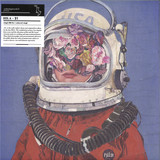
"21" is the well-crafted, sharp and original first album by the duo HILA, composed by American cellist Artyom Manukyan (who already worked with Kamasi Washington, Daedalus, Flying Lotus, Run DMC, Gretchen Parlato, Raphael Saadiq, Clive Lowe Mark...) and french producer Dawatile.
The combination of jazz, Los Angeles beat-scene and the vibrations of 80s and 90s Soviet Armenia make it a striking and unprecedented fusion. These kind of nostalgic and unconventional references forcefully shake the codes of mainstream culture to create a sincere, raw and intimate expression.
"HILA" was born from a spontaneous and intense creative impulse between Artyom Manukyan, a Los Angeles-based Armenian celloist and his partner in crime, David Kiledjian aka Dawatile, a French multi-instrumentist of Armenian descent. This project is proving to be a true master stroke given that it only took 21 days for the duo to make it a reality.
"HILA" was made in less a moon cycle but captivates and electrifies audiences upon its first outings. "H.I.L.A" colors the warmth of the Californian "High" with Armenian vibes. The artists chose this name for their creation since both have a close and valuable connection to these locales. This journey began in 2007, on the day Dawatile went to Yerevan, the capital of this small country in the Caucasus mountain to realize a first fusion project centered around local folkloric music genres.
There he was introduced to local musicians including the Armenian Navy Band, one of the country's foremost groups in which Artyom played the bass and cello. In this context, he also met many musicians such as Tigran Hamasyan and Norayr Kartashyan. This will be the beginning of connections between Lyon, Yerevan and Los Angeles. The following year, the two artists will be be seen performing next to Taylor Mc Ferrin at the Jazz à Vienne festival. More recently, they partnered up again when the cellist, who had freshly relocated in California, invited Dawatile to produce his album. As soon as the studio’s threshold was crossed, they decided to postpone this record and create a joint project: Hay (as the Armenians call themselves) / High In Los Angeles. HILA was born at the end of these 21 days of intense creation. The association of Artyom Manukyan and Dawatile is the combination of two visions, two versions of Armenia, two personalities, the reunion of the Eastern and Western blocs.
One grew up nurtured by the sounds of hip-hop and jazz in Europe and the other by art music and Russian-influenced 1980s Armenian folkloric music before moving to L. A., Ca. The cornerstone of it all, the glue that unites everything : Armenia and music. They generate a new identity synthesizing two perceptions, their complicity transcending these cultural discrepencies. To achieve this, they will scour through images of Artyom’s childhood, within the popular culture of Soviet Armenia. Together, they revisit this decidedly retro vibe, based on the work of Caucasian groups inspired by African American music. This background is rehashed and fused with ancestral Armenian sounds. The DNA of the album "21" is molded by these dear influences.
We can also hear the ancestral sounds of Armenia, a country at the edges of both Europe and Asia. The presence on two tracks of Armenian music Master Norayr Kartashyan, infuses the languor of past melodies and traditions. These purposeful anachronistic sounds offer a fantastic depth to this powerful opus. Listening to the album, one can appreciate the successful fusion of styles and influences. Those combinations, however, manage to preserve individual identities only to enhance the art through an adamant musical dialogue.
Being driven by the urge to transpose Armenian musical traditions into a unique universe, the daring artists, offer an innovative combination by blending, for the first time, these ancestral sounds with the world of Los Angeles beat-scene and jazz. An invention largely fueled by the magic strings of Artyom and maestro Miguel Atwood-Ferguson, a pillar of the genre in Los Angeles combined. These associations resonate with a triumphant equilibrium. HILA is musical uncharted territory in which Artyom's cello strings intertwine to ignite the harmonies of keyboards, the machines, the vocals and electronic layers Dawatile pieced together. HILA plays the soundtrack of an adventure set between Armenia around the end of the Soviet era and a mysterious near future.
Artyom Manukyan grew up in Armenia in the 90s. At the time, he studied Russian classical music while learning jazz with assistance by his father, a music journalist. Being an unconditional music lover, he went on to sharpen his skills at the prestigious Berkelee College of Music. Subsequently, he’s been lucky enough to travel the world touring with numerous acts and mainly with the Armenian Navy Band. The group has fostered alacritous success honored by a BBC Award as a crowning achievement. He moved on 10 years ago and made his way to L.A. with his cello on his back. In the City of Angels, he quickly became a popular figure of the jazz and hip-hop scenes thanks to his first album "Citizen". He’s accompanied prestigious musicians such as Kamasi Washington, Melody Gardot, Daedalus, Flying Lotus, Run DMC, Gretchen Parlato, Raphael Saadiq, Clive Lowe Mark, or Vulfpeck. He released his solo album on the cello, "Alone" in October 2019.
Dawatile is a bold producer and multi-instrumentist as well as a passionate and resolute musician molded by jazz. As a versatile artist, he handles and juggles the saxophone, the keys, the bass and composition. Simultaneously, Dawatile produces cross-over projects and soundtracks for the movie industry. He, as well, has had the opportunity to be a part of many tours, including with his electro hip-hop band, Fowatile and more recently with the "Future Kreyol" trio, Dowdelin. Being the ever workaholic, he has under his belt a string of prestigious collaborations with the likes of Talib Kweli, Foreign Beggars, Roy Ayers, Tigran Hamasyan, Mathieu Boogaerts, Voodoo Game and Piers Faccini. His taste for developing new musical recipes and his know-how in production make him a much sought-after album producer. In concert, the HILA duo offers a sober, precise and rhythmic performance. "21" is an aerial and lively album taking the audience on an at times joyous and sometimes melancholic dreamlike journey. The magic of "HILA" operates at the speed of light and positions it already as an avoidable group.
Fleeing her Soviet ruled home of Tbisili at a young age with her parents, Saze grew up as a nomad living in Russia, France, Canada and the USA before finally settling down and pursuing a career in NYC. A classically trained musician and dancer, before long the Georgian turned her back on corporate life to pour her heart and soul into the arts. Becoming a diligent and versatile electronic music producer, DJ and live act, Sophia Saze is as comfortable sculpting intricate and atmospheric productions in the studio as she is decimating dancefloors with robust Techno and frenetic Breaks. Reflecting on her turbulent life and how it’s formed her own identity, Saze composed her aptly titled debut album, ‘Self’. Released on cassette in two instalments, ‘Part I’ dropped in June and was critically acclaimed with support from the likes of BBC 6MUSIC’s Tom Ravenscroft, Mixmag, DJ Mag, XLR8R, Resident Advisor, Future Music, Attack Magazine, TRAX, Tsugi, Ransom Note and Groove Magazine, with the latter drawing a parallel between hers and Burial’s music. Completing the journey, ‘Part II’ meanders through genres like Ambient, Hip Hop and Breaks, and features very personal insights including handpicked samples from Soviet television shows and VHS cassette recordings from her childhood. Hidden allusions of her classical music education bring up distant memories and melt together the organic but thoroughly electronic ambience. Crackles, hushes and hisses are elaborated so well that the record virtually gushes over the ears like mountain torrents. It appears peaceful and quiet, then rousing and it is sparked with bewildering sounds. It lets scattered beats arise from the thicket and drown again in streams of noise. But
"Celebrity clouds" is compiled of four songs, which have been produced and recorded in 2018. It's an online collaboration of Alexandre Kordzaia (kordz) and Natalie Beridze. These two came up with the concept of the record uneventfully, after recording their first track "Celebrity clouds". Beridze's lyrics came out completely irrelevant to Kordz's music, that adopted a flair of humor and sarcasm to it. After that, they decided to stick the line of weird lyrics on top of synth, piano and ambiance recordings, played live by kordz. Musical ideas belong to kordz. Beridze would complete the tracks, adding few instruments (or none, in some cases), wrote lyrics and recorded vocals.
The artwork of the vinyl, made by Georgian artist Thea Djordjadze, resembles the concept of the music nonetheless. As though having nothing to do with neither celebrities, nor their clouds, it shows the sadness and the beauty of half-molten candle.
Alexandre Kordzaia aka kordz is a Georgian composer. After moving to Switzerland at a young age, he professionally studied piano and drums, audio design and recording acoustic music. shortly after he started producing electronic music.
Kordzaia is currently studying in Hague, Netherlands, where he is accomplishing his master's degree in composition. He releases on labels such as: Prrrrrrrr Records, Medschool Records, Hospital Records, Majestic Casual Records. Kordzaia also writes for acoustic instruments and orchestras with live electronics: for the Junge Norddeutsche Philharmonie, the Georgian Philharmonic Orchestra, the Residentie Orchestra (The Hague), the Dortmunder Philarmoniker, the Zagareli String Orchestra, the Nieuw Ensemble (Amsterdam) and Kluster5 (The Hague). To pack his music into popular categories is not easy: "His music is a mesh of carefully balanced oppositions: deliciously snappy transients punctuate shimmering soundscapes, gently morphing into funk; a melancholic post-soviet feel pays sentimental homage to a private vision of the 80s. Acoustic instruments sit side by side with analogue synthesizers and drum machines; field and foley recordings blend the recognizable into the fuzzy and surreal.
Natalie Beridze (tba) is a Georgian music composer and songwriter, considered a pioneer of Georgian electronic music. She has released over 10 records on labels such as Cologne based Max.E, Berlin based Laboratory instinct, CMYK, Chainmusic, CES Records and Berlin's Monika Enterprise, which has become her main label. Beridze's collaborations include: Thomas Brinkmann, AGF (Antye Greie), Gudrun Gut, Joerg Follert, Marcus Schmickler, Nika Machaidze aka Nikakoi, Sonae, Ryuichi Sakamoto, Gacha Bakradze, Alex Kordzaia.
Beridze works on music for acoustic instruments, orchestra and choir.
Her recent work - "Mapping Debris" was written for Swiss "Mondrian Ensemble" piano and string trio and electronics, performed in Zurich, in 2019.
Beridze collaborates with a Georgian string ensemble "Zagareli and strings", composing pieces for electronics, strings and viola.
Georgian artist Sophia Saze releases her debut two-part album 'Self' on Francis Harris' Kingdoms imprint, with part one dropping on cassette this June. "The record embodies my story of duality within the context of identity, insomuch as the idea that every person has a deeper layer we don't show on the surface."
Born in Tbilisi, Sophia Saze is the daughter of political refugees who's spent her life living in numerous different countries before eventually finding home in Brooklyn. Finding it difficult to find her own identity due to living a nomadic lifestyle, the classically trained musician became entangled with electronic music before becoming a key player within New York's nightlife scene and launching her Dusk & Haze imprint in 2017.
A reflection of her struggles throughout life, 'Self' is very much a memoir of the many different places she's lived during her journey, including Georgia, Russia, USA, France and Canada. Contrasting to her recent productions, which are geared more towards the dancefloor, her debut longplayer is downtempo and features a medley of musical influences - mixed in two parts and released as a concept album on cassette. Maintaining a sonically raw feel throughout, 'Self' draws the analogy of analog to modern day digital culture whilst also taking a stance against perfection, whether integrating the distance crackle of her machines or intentional off-beat piano notes in minor. Part One was conceived, for the most part, during a sleepless yet inspired 48-hour studio session. Processed field recordings accompany samples from her childhood, such as soviet cartoons and intimate VHS recordings of her family. The result is a well-seasoned and personal story portrayed in fourteen tracks mixed together.
"I feel the element of patience is somewhat of a lost commodity in our generation, particularly for albums. We're consumed by track to track interpretations and constantly searching for the next instant stimulation. With this record, I wanted to reiterate the idea that if you don't have the willingness to sit through the whole thing, then you're not stepping into it with the right mindset to begin with."
Every artist who collaborated on the record is handpicked, such as vocalist Ricardo Rivera. The final production was also mixed by Francis Harris himself. All of their involvement means they share a fragment of the concept.