BLKG 7 is an essential triple-threat for collectors who go deep into that jazz-funk-psych crate.
Side A features Joe Pass’ haunting “A Time For Us,” lifted from his slept-on Guitar Interludes LP (1970, World Pacific). Heavy w/ cinematic strings, sparse drums & spacious guitar—perfect for blends, loops, or just zoned-out listening. J Dilla thought the same on “Chopped Thoughts”, & for Slum Village’s “Too Much”, but the original stands alone as pure mood.
Side B is a masterclass in moody grooves: “Enchanted Lady” (Milt Jackson & Ray Brown, Much In Common, 1964) is an underrated modal slow-burner w/ a hypnotic swing. Pete Rock & CL Smooth double dipped in “Caramel City” & Escape”, but others were also inspired: Large Professor “Ijuswannachill”, De La Soul“Dinninit”, Rob Swift“Natural Hight”, Knxwledge “3Koins”, among others.
Then comes “Cross Country” by Archie Whitewater—famously Kanye chopped it for Common’s “Drivin’ Me Wild”, but the OG is all groove: head-nod drums, brass stabs & electric piano that goes there.
Cerca:spac
Sailing beyond the boundaries of electronic music, Purelink embrace liquidity on their second album, washing live instrumentation and exposed vocals over their patented cascade of dubbed ambience and ebbing rhythmic experimentation. Since 2020, Tommy Paslaski (aka Concave Reflection), Ben Paulson (aka kindtree) and Akeem Asani (aka Millia) have channeled their most euphoric musical whims into the Purelink project. Drifting between brittle '90s drum 'n bass and dub techno on their cult debut 12" 'Bliss / Swivel' and vaporizing Windy City jazz and post-rock motifs with muggy soundscapes on 2023's critically revered first full-length 'Signs', the trio have managed to define a painterly signature sound that's reflective but not reverent. Sure, Purelink's music can be graceful and bucolic, but it's powered by their innate devotion to the dancefloor's soundsystem.
'Faith' illustrates a period of upheaval for the three friends; relocating from Chicago to New York City, they found themselves surrounded by new scenery and fresh inspirations that permeated their compositions as they adapted to the change. On their previous records, the production process was relatively simple, just three laptops jacked into an interface in Paslaski's living room. Here, they augment the intermixed electronics with acoustic and electric timbres, opening up space for vocal contributions from Hyperdub luminary Loraine James and poet Angelina Nonaj. "Always time for rest," James ponders candidly on 'Rookie', "we settle." Her voice floats like smoke over the trio's familiar pattering rhythms and light-headed synths, now enhanced by capsized guitar motifs and subtle bass plucks.
On 'First Iota' meanwhile, Nonaj's deadpan narration grounds Purelink's dissociated echoes, sub swells and delicate improvisations. "Not everything beautiful has to be real," Nonaj repeats as organic and digital sounds sublime into a lysergic haze. And the softly propulsive 4/4 thuds that steered 'Signs' haven't disappeared entirely, either. On 'Kite Scene' a heartbeat-like pulse underpins Purelink's balmy pads and acidic synths, tactfully disrupted by hollow live percussion, and 'Yoke' muffles its chugging, broken beat sequences with swaddled trance hallucinations, gesturing cautiously towards euphoria. Each element falls into place on the album's final track, 'Circle of Dust', when Paslaski, Paulson and Asani find a fertile middle ground, ornamenting the kinetic, reverberating beats with evaporating whispers, evocative instrumental scrapes and hopeful, ecstatic harmonies.
Hamburg-born composer, pianist and producer Niklas Paschburg announces his latest project, 'Mexican Alps' EP due for release on July 11th. 'La Hormiga' is a rhythmic exploration of life in motion. Pulsing beats and textured synths create forward momentum, echoing the journey through the winding paths of Oaxaca's mountainous surroundings, where tradition and nature intertwine. 'Mexican Alps' combines inspirations gathered from the picturesque mountains of southern Mexico and the majestic peaks of the Swiss Alps. The EP is a mesmerizing journey through those landscapes; drawing inspiration from nature's grandeur and the vibrancy of Día de los Muertos, Niklas blends electronic textures, atmospheric samples, and innovative instrumentation to create a soundscape that is both grounding and transcendent. Without relying on his signature piano, this EP explores new creative territories, evoking deep emotional resonance and moments of introspection. -- If his first album, 'Oceanic '(2018), was conceived as an ode to the Baltic Sea, for his next release, 'Svalbard' (2020), produced with Andy Barlow of Lamb, the Hamburg-born musician, now a Berliner by adoption, sought refuge on an island in the Arctic Ocean, surrounded by snow, ice, darkness and breathtaking landscapes. This time, however, the setting is completely different. "It all started with an invitation to play at a festival in Oaxaca," Niklas says. "Since I had never been to Latin America, I began considering how to take advantage of the opportunity to stay for a while and write something there. I started looking for houses, but I quickly realized it was almost impossible to find one with a piano—it's not a common instrument in Mexican culture. I thought, why not try immersing myself in a writing process that doesn't involve one? I was so excited about the idea that I jumped in." 'Mexican Alps' is the result of a challenge in which Paschburg harnessed his collection of synths and effects to create an ambient-electronic record. On the one hand, an evolution of the work primarily carried out in 'Svalbard' and 'Panta Rhei'; on the other hand, an episode in its own right, distinct from its predecessors due to the absence of the piano and the greater role played by improvisation, by coincidence, it became his first work created without his signature instrument. "Not having the opportunity to write chords, harmonies, and everything else on the piano, I improvised more, focusing on the sound. This was the approach I used to record demos in Mexico, which I then brought with me to Switzerland, where I carried on working on the EP. In addition to my usual setup (the OB-6 by Dave Smith and Tom Oberheim and the OP-1 by Teenage Engineering, plus my ever-beloved Hohner accordion, inherited from my grandfather), I was also guided by the purchase of a new Moog Matriarch with a unique delay. All this helped me build the sound I had in mind: a spacious, abstract, 3D sound that is definitely immersive." He expands. It is an emotional landscape that translates into music. In some of the tracks, Paschburg has also included field recordings collected during the Día de los Muertos, a deeply felt Mexican holiday: "A great celebration, a colorful parade of skeletons, skulls, flowers, and decorated altars, so engaging and intoxicating that I felt compelled to use its sounds in my music." It was precisely from this blend of influences that the fourth track, "Oaxaca de Juárez", emerged—a single characterized by a catchy funk procession and enhanced by the guitar work of Tal Arditi, a rising European jazz artist and singer-songwriter based between Basel and Berlin. 'Mexican Alps' is his new calling card, featuring an enveloping sound crafted by Paschburg in collaboration with Gijs van Klooster, who mixed the EP in a studio specifically designed for Atmos music. Mastering was handled by Bo Kondren at Calyx Studio in Berlin.
- A1: Rockit Man
- B1: Millennium Man
Rockitman and Millennium Man were recorded in the summer of 1996 around the time bushpilot re-emerged from a hiatus following making the recordings that would become the album '23' to appear 3 times in short sucession at that years Leeds Sound City festival. The appearances led to interest from a major label in the USA, but as usual life got in the way ..With a new drummer in the shape of Nick Tonge of Leeds heavy noise merchants Zoopisa Rockit man and Millennium Man took from improvisations developed working with legendary Leeds producer Richard Formby in his studio and turning them more into songs: Richard thinks of them as 'Frankenstein creations'. We think noise rock with heavy Can influence compressed into two 3 and half minutes blasts of furious joy.The video was created by award winning Leeds artist Sarah Doyle, who also created the cover artwork. The video stars British rocker Vince Taylor, a key unfluence on a young David Bowie, and a host of model spaceships.
Originally intended for release in 2021, well covid got in the way, so here it is at last!
- 1: Bellicose Rhetoric
- 2: Damyata
- 3: Screw The Naysayers
- 4: Sunblood
- 5: For All The Wrong Reasons
- 6: Tranquility Base
- 7: The Last Tree
- 8: The Hidden Hand (Theme)
- 9: Divine Propaganda
- 10: Prayer For The Night
Clear[25,17 €]
Things just get heavier and heavier in Scott ‘Wino’ Weinrich’s career and his short-lived classic band The Hidden Hand is no exception. Formed in 2002 and already disbanded in 2007 the trio featured Wino, Bruce Falkinburg on bass/songwriting/vocals and drummer Dave Hennessy.
If The Obsessed, St. Vitus, Shrinebuilder, Probot and Spirit Caravan aren’t enough to bring Wino's CV to legendary status, stop reading now.
LINER NOTES from WINO:
"When I returned from California after The Obsessed Columbia record deal fell apart, I didn't have any gear at all and after we put together (SHINE) which became Spirit Caravan, I was hustling to put a guitar rig together. I discovered ATOMIC MUSIC a super cool store in MARYLAND that encouraged trades, and had a lot of cool shit there,we had met another cat Sonny, who being the gregarious friendly cat he was befriended us (the band) and introduced me to his friend who's recording studio shared space with Atomic Music, Bruce Falkinburg and Phase recording studio. Bruce was a very interesting and hyper intelligent guy, bassist, knowledgeable in all things but specializing in recording rock music. We had decided to diversify our recording process and parted ways with one of my old friends Chris Kozlowski and PolarBearLair studios who had recorded everything Spirit Caravan had done so far.
I hired Bruce to record the version of Darkness and Longing that was our song on the Sixty Watt Shaman -Spirit Caravan split single. We liked what he did on that recording and decided to record more with Bruce at Phase and so we did ;the last SC single -" So Mortal Be/ Undone Mind" and recorded three tracks that were eventually released on "The Last Embrace." Bruce and I had firmly cemented our friendship and when shit fell apart with Spirit Caravan , we decided to form a band. Out of a very interesting list of possible band names Bruce's idea" The Hidden Hand " seemed to resonate the most and once Bruce had recruited Dave Hennessy (guitarist for OSTINATO) to play drums it was ON. Over the next couple years and a couple different drummers, The Hidden Hand would record one single, one split ep ,one compilation song and Three full length albums. Knowing Bruce, and working with everyone in The Hidden Hand realm enriched my life greatly . Bruces enthusiasm, knowledge, creativity, intellect and musical abilities remains an inspiration. Thanks Bruce, Sonny, Louis and Eric and all at ATOMIC MUSIC, Dave Hennessy,Matt and Jeremy Osinato ,Evan Tanner, J Robbins, Mcarthyism records, Andreas at Exile from Mainstream records, Greg Tubevision, 930 club ,Black Cat, Gussound, Diana W, Woody, Stinking Lizaveta, Jadd Schickler and Meteor City, Southern Lord records and extra special thanks to Gianluca and Improved Sequence for keeping this music alive!"
Wino - summer 2024
Things just get heavier and heavier in Scott ‘Wino’ Weinrich’s career and his short-lived classic band The Hidden Hand is no exception. Formed in 2002 and already disbanded in 2007 the trio featured Wino, Bruce Falkinburg on bass/songwriting/vocals and drummer Dave Hennessy.
If The Obsessed, St. Vitus, Shrinebuilder, Probot and Spirit Caravan aren’t enough to bring Wino's CV to legendary status, stop reading now.
LINER NOTES from WINO:
"When I returned from California after The Obsessed Columbia record deal fell apart, I didn't have any gear at all and after we put together (SHINE) which became Spirit Caravan, I was hustling to put a guitar rig together. I discovered ATOMIC MUSIC a super cool store in MARYLAND that encouraged trades, and had a lot of cool shit there,we had met another cat Sonny, who being the gregarious friendly cat he was befriended us (the band) and introduced me to his friend who's recording studio shared space with Atomic Music, Bruce Falkinburg and Phase recording studio. Bruce was a very interesting and hyper intelligent guy, bassist, knowledgeable in all things but specializing in recording rock music. We had decided to diversify our recording process and parted ways with one of my old friends Chris Kozlowski and PolarBearLair studios who had recorded everything Spirit Caravan had done so far.
I hired Bruce to record the version of Darkness and Longing that was our song on the Sixty Watt Shaman -Spirit Caravan split single. We liked what he did on that recording and decided to record more with Bruce at Phase and so we did ;the last SC single -" So Mortal Be/ Undone Mind" and recorded three tracks that were eventually released on "The Last Embrace." Bruce and I had firmly cemented our friendship and when shit fell apart with Spirit Caravan , we decided to form a band. Out of a very interesting list of possible band names Bruce's idea" The Hidden Hand " seemed to resonate the most and once Bruce had recruited Dave Hennessy (guitarist for OSTINATO) to play drums it was ON. Over the next couple years and a couple different drummers, The Hidden Hand would record one single, one split ep ,one compilation song and Three full length albums. Knowing Bruce, and working with everyone in The Hidden Hand realm enriched my life greatly . Bruces enthusiasm, knowledge, creativity, intellect and musical abilities remains an inspiration. Thanks Bruce, Sonny, Louis and Eric and all at ATOMIC MUSIC, Dave Hennessy,Matt and Jeremy Osinato ,Evan Tanner, J Robbins, Mcarthyism records, Andreas at Exile from Mainstream records, Greg Tubevision, 930 club ,Black Cat, Gussound, Diana W, Woody, Stinking Lizaveta, Jadd Schickler and Meteor City, Southern Lord records and extra special thanks to Gianluca and Improved Sequence for keeping this music alive!"
Wino - summer 2024
Emotional Especial reaches a landmark with its 50th release. Started in 2012 as a “dancier & trippier”, club friendly spin off, sub label to Emotional Response, it has gone on to forge a path, releasing a myriad of artists including the opening release by Jamie Paton (Cage & Aviary / ESP Institute) to Richard Sen (Bronx Dogs), the debut of Khidja (Malka Tuti / DFA) and on to unearthing the breaks masters Alphonse (Klasse Wrecks) and Junior Fairplay (Crimes Of The Future), the uplifting Italo influenced Lauer (Robert Johnson), the new wave anthem of Sfire (featuring Sophie), plus perfect remixes bt Kris Baha (CockTail D’amore) and INHALT (Dark Entries), the NYC pop-rave-vox of Kim Ann Foxman, through to showcasing upcoming artists like Berlin’s Giraffi Dog (Aiwo Recs) and the global acid adventures of Akio Nagase (Chill Mountain) to most recently, the slo-mo trance muscle of 53X and post-rave uplighters of Remotif (Space Lab) and DJ 1985.
As with every 10th release on the label, the label present a various artists “Showcase” of what and where the label is. Aptly it is recent signing 53X who opens Gracias Especial with the bounce of Radar. Finland’s Jonne Lydén debut EP on Especial, Zen ’23 came out of nowhere, more than simply riding a zeitgeist of the “Trance Revival”, his all-live analogue symphonies drop the bpms, presenting widescreen beats, darkroom bass, sirens and tripped out vox all mix to propel a singularly driven.
Taking things much deeper has been the hallmark of Jamie Paton’s remixes for the label. As well as providing the opening EP in 2013, designing every sleeve and producing 20 remixes and counting another 2 for the label here, it’s impossible not to associate Especial with Jamie’s music. First, he reworks rising star DJ, but recent break out producer Chez De Milo, with a trademark dub excursion that takes the ethnic origins of Kremer to a space echo wonderland. Space is the place, the lulling beats, see you falling through the gaps, true dub style.
Alphonse makes a rightful return to Especial, with Raze Rave highlighting the allusive producers’ unique understanding of the varied history of rave culture via a techno-suite of soundscapes, perfectly mixing uplifting breaks, memory inducing vocal samples and dub bass, with a nod to the pop sensibility that rave encompassed, while being that allusive “lost chord” moment of man and machine.
The finale returns to the trance acid expanse of 53X, with the mastery of label stalwart Jamie Paton. An apt marriage, Paton takes the title cut from Lydén’s debut EP and crafts a trademark durge-dub, where TB303 and space echo intertwine with the De Witte vocal, hinting at touches of dub, new wave, trance and acid house all in one melting pot of sound the label optimistically termed “Protoid” back at inception of summer 2013.
- Trophy Girlfriend
- K-Klass Kisschase
- Space Manatee
- Ben Sherman
- By The Way
- Cut Off
- Nous Ne Sommes Pas Des Anges
- Mark Angel
- Fat Lenny
- Snail Trail
- Pet
For most members of the band it's the best album. But, tragically, the release of Operation Heavenly in 1996 was overshadowed by the sudden death of drummer Mathew Fletcher. The promotional tour was cancelled, the surviving members of the band went into emotional hibernation and no-one could bring themselves to celebrate these vibrant, upbeat songs. So, this release by Skep Wax Records, nearly thirty years on, is more like an album launch than a re-issue. Time has healed most wounds, and the songs on Operation Heavenly feel like they can finally emerge onto the stage, with Mathew's spirit very much alive: his effervescent witty drumming sounding as fresh now as it did then. These tracks are gleeful, melodic, sophisticated and knowing. The tough riot grrrl edge that Heavenly had developed a year before with seminal singles P.U.N.K. Girl and Atta Girl, has been blended with a deliberate quantity of Britpop styling. Heavenly were clearly listening to what was going on, liked the energy, but didn't necessarily feel the need to join in. Some of the tracks (eg Ben Sherman) are as jaunty as early Blur, but the lyrics, mocking a narcissistic boyfriend for his obsession with hair, clothes and his own erections, show that Heavenly didn't need or want to be part of the la - or even ladette - herd. Operation Heavenly was the band's first release on a label other than Sarah Records. Matt Haynes and Clare Wadd had brought that exceptional label to a deliberate and dramatic end. The liaison with US punk label K Records continued - as did the duets with Calvin Johnson: Pet Monkey is a moving duet between a growling Calvin Johnson and a sweet-voiced Cathy Rogers, as they dramatize another complex, maybe doomed relationship, with another self-centred boy finding himself frustrated by a girl who won't take any shit. But in the UK, Heavenly needed to find a new home - and Wiija Records were welcoming hosts, ushering the band into a brasher, less cloistered world: the production on this album is brighter than before, the artwork is colourful and upbeat. With tracks as catchy and as complete as Fat Lenny, Trophy Girlfriend and Space Manatee there was an expectation that Heavenly might finally emerge from the indiepop shadows and trouble the charts. And who knows if this might have happened. Mathew was lost before the album was released, and the band had no choice but to bring things to an end. This reissue also contains two tracks that appeared on the B side of the 7" single of Space Manatee. They are both cover versions, and along with Serge Gainsbourg's Nous Ne Sommes Pas Des Anges on the main album, these vivacious assaults on Art School by The Jam and You Tore Me Down by The Flamin' Groovies show that the band, briefly in its prime, could happily embrace any variant of pop music and make it something Heavenly.
Since its founding back in 2014, Blume has carved a unique place in cultural landscape, issuing free-standing works, spanning the historical and contemporary, that represent singular gestures of creativity within the field of experimental sound. Joining their broad efforts in building networks of context and understanding that already includes the works by Werner Durand, Sarah Hennies, Bruce Nauman, John Butcher, Jocy de Oliveira, Mary Jane Leach, Valentina Magaletti, Alvin Curran, Julius Eastman, Alvin Lucier, and following the first ever vinyl release to attend to James Tenney's legendary Postal Pieces, the label now presents the first LP published by the visionary Swiss composer Jürg Frey. Drawing from the transformative power of breath and resonance, this release represents one of the most profound explorations of musical metamorphosis to emerge from the contemporary experimental landscape.
The completed work represents a "conjunction of these two artists" that has "activated a transformative form of experimentalism." These renderings "dance with an airy lightness, humour, and play, imbuing them with a beauty and emotiveness that can be rare within experimental music." They exist as "breaths, carrying the curiosities of life, belonging to no time and all time, to no one and everyone: a human music to be inhaled and pondered, for which the outcome remains unknown." In this liminal space between composition and interpretation, between breath and resonance, Zurria and Frey have created something that transcends the boundaries of experimental music itself, offering what might be called a metaphysical cartography of sound in its most essential form. As Bradford Bailey observes in his penetrating liner notes, "music is rarely a fixed entity," existing instead in a state of perpetual flux, "taking on the influences of its interpreters and performers." This fundamental truth finds its most eloquent expression in the transformative collaboration between Italian flutist Manuel Zurria and Frey, longtime member of the Wandelweiser Group. Where conventional recordings might preserve a definitive version, this release activates what Bailey calls "states of unknowing and continued experimentation," allowing Frey's compositions to evolve into entirely new dimensional territories. The original string quartet and piano works dissolve into breath-carried architectures of sound, where "the original remains in a constant dialogue with its transformation." This is not mere arrangement but ontological metamorphosis - an alchemical process through which crystalline harmonies are reborn as atmospheric phenomena.
The metaphysical dimensions of this transformation become clear through detailed analysis of the musical result. Where Frey's original compositions operate through what he calls "basic confidence in the clear and restricted material," Zurria's interpretation activates entirely new perceptual territories. Space holds almost atomic sense of weight against the airy punctuations of timbres, textures, and tones, creating "suspensions of time within which questions and identities posed by instrumentation fade." The Extended Circular Music pieces - each comprising "a small number of bars to be repeated an undetermined number of times" - become organizations of sound that defy being definitive or fixed. Originally scored for different combinations of violin, viola, cello, and piano, these works now exist as pure phenomena of breath and resonance, where "hanging, breath-length utterances dance and intertwine amongst complex harmonic clusters and conjunctions."
The philosophical implications of this transformation illuminate a lineage of composers who have moved "away from abstraction and responding to the need to create" something beyond mere technique. Drawing parallels to Morton Feldman's understanding of non-functional harmony, Zurria's approach represents "a transformative form of experimentalism" that activates what Frey calls the "thaumaturgic power" of music - its capacity to heal and transform consciousness itself. The result is "a radical reimagining of ambience: sprawling sonorities and resonances adrift in space, carrying the liberated traces of the work's former incarnations and their truths." In Zurria's interpretation, Frey's String Quartet n.3 becomes something approaching "an organ played in slow motion, its seals leaking," while the Extended Circular Music pieces transform into "glacial chords from a diverse palette of voicings, harmonies, timbres, and tones."
Performed by Manuel Zurria. Recorded and mixed by Zurria at BigCardo, Catania between 2022-2024, with mastering by Bruno Germano at Vacuumstudio, Bologna, this Blume release represents a profound exploration of musical transformation.
- I'm | Getting Sick
- Evicted | 05 24
- We've | Made It This Far
- Undercurrent
- King | Of Swords
- Omw
- Happy | Is Hard
- Tired
- Keep | Driving
- I'll | Be Here 03 56
Vines, the solo project of New York-based multi-instrumentalist and composer Cassie Wieland, offers a window into her inner world through expansive swaths of sound. She pieces together a celestial mix of synths, percussion, strings, and vocoded voice, making music that is at once deeply personal and cinematic in scope. This diaristic approach first took shape with her 2023 EP Birthday Party, and is crystallized on her debut LP, I’ll be here. With the sweeping and vulnerable I’ll be here, Vines arrives fully formed as an artist who crafts deeply resonant and open music–the kind that invites listeners in to listen, reflect, and share in the journey of learning through living.
“It was through making music that I was able to meet myself,” Wieland said. “Anything I’m going through or feeling is something that somebody else out there can relate to, and that’s really special to me.”
I’ll be here is both a culmination of years spent creating gossamer soundscapes and an opening to a new journey for Wieland as an artist. The album grew out of her years as a composer and songwriter, and builds on the language she developed on Birthday Party, which transformed the tumultuous feelings of the passing of time into minimalist meditations. It was just a start, though–a prologue, a development of the kind of language and ideas she wanted to express. With I’ll be here, she digs deeper and writes music that feels more sprawling, further solidifying her singular voice.
Wieland’s musical composition process is similar to journaling, lending itself to the music’s honesty. When she writes, she makes room for all the ideas she has; in these sessions, there are no wrong ideas, and she allows the music to be attuned to the experiences she’s having at the time. With I’ll be here, Wieland zeroes in on themes of anxiety, loneliness, navigating human connection, and having to grow up from a young age, ultimately coming to a place of acceptance. And though it began as a journal written in solitude, her collaborators shape the music with her.
Working with friends, in fact, was a crucial part of bringing the record to life. “Everything that was supposed to happen came together so easily because of the people involved,” Wieland said. I’ll be here was co-produced and recorded with Wieland’s longtime collaborator Mike Tierney, a four time Grammy-nominated engineer who has worked with artists across the contemporary classical and experimental scene like minimalist pioneer Steve Reich, LA’s preeminent classical ensemble Wild Up, and various bands on Bang on a Can’s Cantaloupe Music label. Percussionist and composer Adam Holmes and violinist Adrianne Munden-Dixon are two other longtime collaborators who are frequent fixtures of her live show. Holmes plays synths, drums, and banjo; in live settings, his kit is loaded with elements of the songs that are then triggered by MIDI, making the music an interactive, evolving experience. The album’s gentle, filamented edges are colored by Munden-Dixon, whose poignant string melodies elevate Wieland’s introspective compositions, as well as cellist Helen Newby, saxophonists Julian Velasco and Jordan Lulloff, and bassist Pat Swoboda.
Wieland takes an economic approach to writing music, building the swirling and immersive landscapes of Vines through short melodies, lyrics, and phrases. As each element layers and interweaves, they grow into sprawling webs of ghostly sound. Prior to Vines, Wieland composed pieces for other people to play using a minimalist’s sensibility, writing slowly unfolding melodies for instruments like violin and saxophone. In recent years, she sharpened her solo style across a variety of singles and covers which have garnered significant attention on social media for their emotional resonance (“being loved isn't the same as being understood” in particular went massively viral on TikTok in 2024). Birthday Party, her debut as Vines, brought her writing to a much more intimate space, centering on her vocoded voice cloaked in feathery reverb. A series of recent singles, meanwhile, including “I am my home,” showcase the way that Wieland’s music is born from the story of her innermost feelings, extending far beyond just the self.
Though Wieland’s music often deals with dark themes, it unfolds with tender melancholy, the kind that feels like a warm embrace. On “Evicted,” Wieland wonders if she’s getting sick or moving on, if she’s lost or found. Her vocals expand with each lyrical repetition, as the instrumentals slowly encircle and the music’s rhythm grows and bursts into a heart-wrenching, yet radiant wave reminiscent of post-rock bands like Explosions in the Sky. “Tired” follows a similar trajectory, building from a looping, melancholy rhythm and floating lyrics into a solemn resignation. Elsewhere, Wieland takes a more ruminative approach: “Omw” begins with twinkling piano and melancholy strings that gradually transform into an undulating mass. It is a song born out of the warm feeling of reminiscence, the slight return of hope that comes with nostalgia.
With any searching journey, there is also a point of understanding. The title track closes the album with the freedom of acceptance. A marching drum beats steadily beneath Wieland’s open vocals, moving forward, ever onward as it flies into the ether. In Wieland’s delicately textured music, there is room to come into yourself, and learn to love whomever that is. I’ll be here is a special space that can be all your own, one in which to feel what needs to be felt. “This is music for your story,” Wieland said. “I want you to use it how you need it.”
A truly essential piece of early Detroit Techno history here, Octave One's original white label "Octivation" EP from 1990 has long been a sought after and coveted slab of wax. This 5 track journey charts the Burden brothers mood from sinister, spacey, acidic Techno jams ("Sonic Fusion") to deeper, more melancholic mid-tempo cuts ("Nicolette") and along the way manages to usher in a new wave of Detroit Techno sounds.
Steeped in soul and depth "Octivation" was hinting towards the epic style Octave One would shape with their various projects in the following decades and releases. The earliest glimpse (Their 1st release) into a long and fruitful career that is still continuing today. This EP was a game changer and it's influence can still be felt in contemporary House and Techno right now.
Now, finally made available again to be re-discovered and experienced.
Re-mastered, re-pressed and re-issued with all the original 430 West white label and sticker artwork intact, in conjunction with the Burden brothers / 430 West Records.
The incredible story that began with The Most Mysterious Song on the Internet (TMMS) now enters an exciting new chapter: Skyscraper, the debut album by FEX.
Skyscraper features ten original tracks recorded in the early to mid-1980s-carefully re-transferred, remastered, and brought back to life. The album cover, designed by Darius S., brings the story full circle. Darius is the very person who preserved the now-iconic track Subways of Your Mind by recording it from NDR radio in the mid-80s. Without him, FEX may never have been discovered.
FEX's debut opens with its namesake, Skyscraper-a brooding, previously unreleased track the band once described as part of their "psychedelic phase." With haunting synth-helicopter textures and deep guitar riffs, it immediately sets the tone and raises tension.
The release flows naturally into the energetic and fully remastered studio version of Subways of Your Mind. This version of the TMMS - re-discovered on the "yellow label tape" by Reddit user Marijn-was long believed to be from a smaller home studio, but was actually recorded in November 1984 at Hawkeye Studios in Ganderkesee, near Hamburg.
Goldrush, first teased in raw form on FEX's YouTube channel, bends toward mechanical rhythm and shimmering synths, a snapshot of the band's experiments with programmed drum machine sound. Rückwardt's lyrics point to greed and criticizes materialism, and while the music leans toward pop sensibilities, it carries a raw, fractured edge.
Heart in Danger and I've Got My Eyes On You offer contrasting experiences-one rooted in classic post-punk tension, the other floating in melodic synth layers. The latter in particular feels like a fragment from a parallel radio history: a precise and one of a kind synth pop love song with a progressive touch.
From a rehearsal tape comes Dirty Slapstick, its urgency intact. Missing keyboard parts were later reconstructed by Michael Hädrich using his original DX7 synthesizer-recovering lost elements without rewriting the past. The lyrics take a wry look at forced optimism. Also included are the songs Talking Hands, Jenny and Strange Feeling, the latter being a slower blues-tinged cut, revealing yet another facet of the band's reach and Rückwardt's songwriting diversity.
The album closes where the legend began-with the original radio recording of Subways of Your Mind from Darius' cassette. This version of The Most Mysterious Song features alternate vocal effects, contributing to the track's enigmatic aura. Digitally transferred using a high-end Revox machine and carefully remastered, it now has its long-deserved official release.
The cover features a photo of the Eichenberg Bunker in Kiel-one of FEX's original rehearsal spaces and a symbolic monument to their sonic legacy.
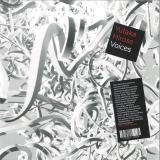
WRWTFWW Records is very excited to announce its third release from visionary Japanese ambient/experimental/environmental composer/producer Yutaka Hirose, this time with brand new album Voices, available on limited edition heavyweight-sleeved double LP as well as double CD, both with liner notes from the artist.
Voices finds Yutaka Hirose expanding his signature spatial layering into a three-dimensional videography of sound, blending field recordings, electronic manipulations, and abstract narratives. The 12-track album is a journey through a crumbling library where books whisper, history collides, and sonic textures weave new realities. Chaos, memory, and transformation – Hirose’s voices echo throughout the space, creating a fully immersive sonic experience.
The pioneering experimental and abstract electronic piece with deep hints of ambient and IDM is beautifully represented by the original artwork by Koji Shiroshita and Mifuku gracing the double LP and double digipack CD sleeves.
Voices marks Yutaka Hirose’s third full-length release on WRWTFWW Records, following his kankyõ ongaku classics Nova + 4 (an expanded version of his genre defining Soundscape 2: Nova album) and archival compilation TRACE: Sound Design Works 1986-1989, both available in vinyl, CD, and digital formats.
- A1: A Planet
- A2: Going In
- A3: Engineers
- A4: Life
- A5: Weyland
- A6: Discovery
- B1: Not Human
- B2: Too Close
- B3: Try Harder
- B4: David
- B5: Hammerpede
- B6: We Were Right
- C1: Earth
- C2: Infected
- C3: Hyper Sleep
- C4: Small Beginnings
- C5: Hello Mommy
- C6: Friend From The Past (Contains “Theme From Alien”)
- C7: Dazed
- D1: Space Jockey
- D2: Collision 3
- D3: Debris
- D4: Planting The Seed
- D5: Invitation
- D6: Birth
Prometheus is the 2012 science fiction horror film directed by Ridley Scott, written by Jon Spaihts and Damon Lindelof and starring Noomi Rapace, Michael Fassbender, Guy Pearce, Idris Elba, Logan Marshall-Green and Charlize Theron. It is set in the late 21st century and centers on the crew of the spaceship Prometheus as it follows a star map discovered among the artifacts of several ancient Earth cultures. Seeking the origins of humanity, the crew arrives on a distant world and discovers a threat that could cause the extinction of the human species.
Marc Streitenfeld is a German composer. He has frequently collaborated with director Ridley Scott. Streitenfeld has composed the music for many high-profile Hollywood features as well as critically acclaimed independent films, including American Gangster, Body of Lies, The Grey, Poltergeist and All I See Is You.
Prometheus became the fifth collaboration between the composer and the director. The score was recorded over one week with a 90-piece orchestra at Abbey Road Studios. Streitenfeld began coming up with ideas for the score after reading the script prior to the commencement of filming. To create an “unsettling” sound, he provided the orchestra with reversed music sheets to have them play segments of the score backwards, before then digitally reversing it. The track “Friend from the Past” reprises Jerry Goldsmith’s original main title from the Alien soundtrack.
- Raised On Graves
- Strings Of Red
- Clean
- No Good Things
- Alt Vi Kan Ge Ar Upp
- Copper + Dirt
- Through Veils Of Glass And Silica
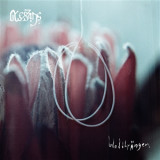
Blodsträngen, the third from Gothenburg's inimitable fourpiece Blessings, begins and ends in the same space: the safety and familiarity of their rehearsal room. In between these moments however, the album knows no boundaries; it rampages through your inner sanctum, upending everything it can, razing everything you hold dear and drawing on the walls whilst panting, drooling and muttering to itself in strange tongues_ Blodsträngen is Blessings fine-tuning their deliberately dissonant sound whilst simultaneously casting their net wide for ever more left-field, experimental influences; a disparate collection of idiosyncrasies that the band somehow manage to pull into something cohesive, captivating and empowering. The band leave the messages and meanings behind their music open to interpretation as a means of sharing this attitude of openness with their audience because, when all is said and done, all that matters is all playing disgustingly loud music together in a room. FOR FANS OF Unsane, Breach, Young Widows, Black Flag, Trap Them, Converge, Old Man Gloom, At The Drive In, Swans, The Jesus Lizard
- Cooper
- All | Your Tiny Bones
- Macgill
- Look | Up
- 26:
- Tomorrow | Held
- Will
- Four
‘Tomorrow Held’ is the visionary new album bytwenty-something mould-breakers andconservatoire-trained virtuosos, fiddle player OwenSpafford and guitarist Louis Campbell.
Eight largely instrumental tracks that hold space,resolve into mystery, that fold in elements of jazz,post-rock and chamber classical music whileraiding the folk music toolbox.
Call it what you want: post-folk; trad-noir; folknihilism. Then know that Spafford Campbell areblazing a trail that erases genre and finds gold inthe embers. Forget about tomorrow, they say.Welcome to the now.
LP includes printed inner sleeve.
- Shrine
- Baby It's Alright
- Ride 38
- Tiffany's Days Go By
- Christopher Siren
- Sugar Daddy
- Blue
- Soft Purple Sky
- Julia's Eyes
Tough Love brings to vinyl for the first time April Magazine's Sunday Music For An Overpass, a nine track collection originally issued on cassette in vanishingly small number by Paisley Shirt in 2021. The kind of mythical recording you might have once needed to know the band to own. Alas, no longer... Can the universe have two centres? Because if it's not Gothenburg it's San Francisco... It's impossible for me to think about what's going on in that particular part of the west coast right now without immediately being drawn to April Magazine, a comparatively loosely assembled three (sometimes four) piece centred around artist/musician Peter Hurley, who seem to simultaneously operate at both the heart and the margins of the current Bay Area underground. On the one hand they share members with many other bands, their guitarist/singer runs a gallery that functions as some kind of focal point/social space, and Cindy even have a song named after them. On the other hand, their music is resolutely lo-fi and invariably couched in a mysterious haze, the live footage available online seems to suggest that they sound slightly different each time they play, and there are reports they have dozens of songs (possibly albums?) that have not and may never be released, hidden inside their own private universe. On its initial release, Sunday Music For An Overpass was an early attempt to drag the group a little closer into the light, yet inevitably made them feel as endearingly enigmatic as ever. Typically, this vinyl reissue some four years later only goes part way in clearing that alluring fog. April Magazine channel the greats - Spacemen 3, The Pastels, early B&S, Mary Chain, Rainy Day/Opal/Mazzy et al - but submerge their obvious melodic capabilities within seemingly infinite spray can hiss, as if the songs are being pulled backwards through some vortex to the past. Half of these tracks are instrumentals, and it's in those moments that the band are perhaps at their most expressive, suggesting a very inviting melancholy that can't quite be figured out. Though the LP remasters the original recordings and is a little cleaner sounding as a result, no secret is being given away. The appeal is that the more you hear from them, the less you really know, and all the better for it. Maybe, then, it's that April Magazine are here to show there is no centre to the universe, that instead it's always just off to the side...
The discovery of Doris Dennison's score represents a genuine musicological breakthrough—what once would have been "a tree falling in the woods" thirty years ago now holds the potential to render "a thunderous clap in our minds." While researching Anna Halprin's lesser-known collaborators, scholar Tom Welsh uncovered the archives of AA Leath, one of Halprin's principal dancers. Buried within these materials was Dennison's handwritten score for Earth Interval, dated May 1956. Born in Saskatchewan, Canada, in 1908, and raised near Seattle, Dennison (1908-2009) encountered John Cage while teaching Dalcroze eurythmics at the Cornish College of the Arts. She joined Cage's earliest percussion quartet—alongside Margaret Jansen, the composer and his wife Xenia—in the group widely regarded as having performed the first complete concert of percussion music in the United States. This historic December 1938 concert was followed by tours and the landmark May 1941 performance at the California Club, comprising Cage and Lou Harrison's Double Music, the premiere of Cage's Third Construction, and Harrison's 13th Simfony.
As Bradford Bailey observes in his extensive liner notes, Earth Interval demonstrates "an extraordinary balance of elements that imbues the piece with a sense of clarity, directness, and constraint that is both distinct and ahead of its time." The work's most remarkable innovation lies in its approach to extended techniques, particularly Dennison's notation for the central movement: "In 2nd movement, 1st player lowers + raises a gong into a tub of water while beating." This technique, absorbed from Cage's experimental vocabulary, generates what Bailey describes as "fields of acoustic abstraction that bend and warp time through sustained resonances, beat, and space." The temporal sophistication of these manipulations anticipated Karlheinz Stockhausen's Mikrophonie I (1964) and Annea Lockwood's water-based sound investigations by over a decade. After joining Mills College as dance accompanist, Dennison maintained crucial connections to the Bay Area's experimental scene, collaborating with figures like Merce Cunningham and programming Cage's music throughout the 1950s.
Comprising three movements—Land Form, Air Tide, and Earth Play—Earth Interval is scored for recorder, drums, gongs, maracas, muted gongs, and bowl gongs. In total, the piece is just under eight minutes: "a fleeting glimmer of moment in time, a life spent at the cutting edge, and a singular creative vision that packs a powerful punch." When viewed in historical context, placed in contrast to roughly contemporaneous avant-garde percussion works by Cage, Harrison, Louis Thomas Hardin (Moondog), and Harry Partch, or important precursors like Edgard Varèse's Ionisation (1931) and Henry Cowell's Ostinato Pianissimo (1934), it's clear that Dennison was following her own path. Earth Interval is not derivative. It is a precursor to what was yet to come, alluding to developments of avant-garde and experimental music that wouldn't begin to appear on the cultural landscape until the 1970s and '80s, with the emergence of Post-Minimalism and more idiosyncratic artists and ensembles like Midori Takada, Ros Bandt, Peter Giger, Frank Perry, Christopher Tree, Michael Ranta, Gamelan Son of Lion, and Niagara.
This recording by Chicago's Third Coast Percussion, captured in March 2022, represents the first complete documentation of this pioneering work. The ensemble's interpretation reveals the piece's remarkable contemporaneity while maintaining its historical specificity. Where Cage, Harrison, and Partch employed "self-consciously off-kilter polyrhythms," Dennison's rhythmic sensibility anticipates minimalist developments by nearly a decade, yet integrates "forceful rests, as well as sharp shifts in sonic character, tempo, and meter, that break the momentum and breathe a sense of life into the piece's structure." This positions her work closer to Post-Minimalism decades before its emergence. The architectural approach demonstrates Dennison's understanding that "the composer almost entirely disappears" in favor of phenomenological listening experience, creating what might be called an egoless music that places its realities and meaning entirely in the ear of the beholder. The present recording, realized by Chicago's distinguished Third Coast Percussion ensemble, represents a significant achievement in experimental music scholarship and performance practice. As specialists in the Cage tradition and contemporary percussion repertoire, Third Coast Percussion approached Earth Interval with the historical sensitivity and technical precision required to illuminate Dennison's subtle compositional innovations. The March 2022 recording sessions, engineered by Colin Campbell, capture both the work's intimate chamber music qualities and its bold exploration of extended techniques. The ensemble's interpretation reveals the piece's remarkable contemporaneity—its ability to speak directly to current musical concerns while maintaining its historical specificity.
This recording serves multiple scholarly functions: it provides the first complete documentation of Dennison's compositional voice, offers insight into the broader network of experimental music practitioners surrounding Cage and Harrison, and demonstrates the sophisticated level of compositional thinking that was occurring within the Bay Area's dance-music collaborations of the 1950s. The work's emphasis on phenomenological listening—what might be called an "egoless" approach to musical experience—places it within a lineage of American experimental music that prioritizes perceptual process over compositional personality. The work's original obscurity—limited to AA Leath's performances at venues like the 1957 Pacific Coast Arts Festival at Reed College—paradoxically allowed it to remain "entirely on its own terms," free from the constraints of historical categorization. Drawing on Jacques Derrida's Archive Fever, the argument emerges that "the archive can acknowledge, celebrate, and resurrect" overlooked voices, transforming our understanding of experimental music history. The present Blume edition, featuring Third Coast Percussion's authoritative interpretation, includes a lavishly illustrated 16-page booklet designed by Bruno Stucchi / dinamomilano, containing complete scholarly apparatus, historical photographs, and detailed production notes. This recording enables "cross-temporal intersectionality," allowing Dennison to "belong to a newly formed and more dynamic understanding of the present and past," demonstrating how forgotten voices can reshape entire historical narratives when given proper scholarly attention and performance advocacy.