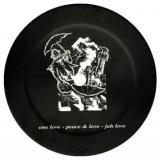
The Keith Tippett Group's Dedicated to You, But You Weren't Listening is a landmark in cutting edge fusion/avant-jazz. A vital and profoundly adventurous Jazz-Rock record that still swings very hard, it was first released on Vertigo in 1971.
Original copies are now very tricky to score and, as most of you really should know, it’s aged ridiculously well.
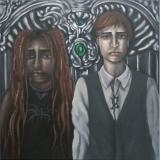
A legendary work, this Be With re-issue has been newly remastered from the original Vertigo master tapes, demonstrating just why this deserves to be back in press. The stunning gatefold jacket fully restores Roger and Martyn Dean's original, arresting album artwork to complete this must-have reissue.
Alive and bursting with a joyful energy that has to be heard to be believed, Dedicated to You, But You Weren't Listening flirts with perfection. It's truly magical and forever essential.
A brilliant jazz pianist, composer, arranger and bandleader "who could make the outlands of modern music feel like the most hospitable of places" (The Guardian), Keith Tippett's second album is oft-regarded as his Canterbury album.
Indeed, not only does he draw heavily on Soft Machine members past, present and future but the album title itself archly references a Soft Machine composition. Ray Babbington handles bass alongside Neville Whitehead and the drums are shared between Brian Spring (Nucleus), Robert Wyatt(!) and Phil Howard (who would go on to replace Wyatt in Soft Machine). Gary Boyle (Isotope) is on guitar whilst the great percussionist Tony Uter is enlisted for his conga and cow bell expertise. Elton Dean on Alto Saxello, cornetist Marc Charig and Nick Evans on trombone round out this quite stunning ensemble.
Dedicated to You, But You Weren't Listening presents a collective of superhuman musicians really, *really* enjoying themselves in the studio. The sheer exuberance of the performance is totally infectious. It's wild, energetic, atmospheric and, bluntly, bordering on chaotic at points. In a word, it's beautiful.
Robert Wyatt's drumming opens the record with a bang on the majestic Be With favourite "This Is What Happens". Some have described his work here as "easily the most inspired of his career on record." It's an ultra-funky conga-driven groove that truly sparks via the duelling interplay between the three horn players. In the background, Keith's insistent piano, in conversation with those unignorable drums, is the anchor that keeps this piece rollicking away. Breathtaking.
The epic, energetic "Thoughts to Geoff" is a 10-minute jammer that tends towards the dissonant and improvisational but becomes more fluid, laconic and melodic as it unravels. The interplay between soloists and ensembles is particularly dazzling here - blazing solos by Evans, Charig and Tippett himself in a flourish of angular arpeggios interspersed with chordal elocution. Phew.
Up next, the no less-urgent Mingus-referencing "Green and Orange Night Park" is a soaring example of ambitious jazz mixed with rock aggression, with Dean strutting his stuff by launching into a scorching solo. An absolutely jaw-dropping piece. Arguably the highlight of this album of huge highlights!
Though much of the album tends to fall on the raucous side ("Gridal Suite" approaches free-jazz at its most chaotic and, dare we say it, "difficult"), there are a few more sedate, at times spacey numbers, such as the deeply impressionistic "Five After Dawn". The rhythmically complex "Black Horse" is the most accessible track here, a sort of swinging Big Band number with tight grooves, soaring horn & reed melodies, a sizzling Boyle guitar solo and tasty electric piano riffs from Tippett. An hypnotic climax to a staggering record.
This Be With edition of Dedicated to You, But You Weren't Listening has been re-mastered from the original Vertigo master tapes, Simon Francis’ mastering working together with Cicely Balston's cut at Abbey Road Studios to weave their usual magic with these wonderful recordings. The stunning gatefold sleeve has been restored in all its brainchild glory so you know you're dealing with the definitive reissue, here. Now, are you listening?
Search:space bass
Label text:
"Conrad Pack returns to SELN Recordings with a three track EP threading the needle between London sonics and
something beyond.
The primary tracks Praise and Guidance were recorded during the height of the Scram events organised by
Leeway (Guy Gormley), and hosted by the late soundsystem luminary Julian Fairshare at Ormside Projects. The
influence of this period, and in particular of Fairshare himself, on the music is clear; both are stepper-esq, leaning
heavily on London’s musical legacy past and present, whilst still pushing a contemporary sound.
Praise is essentially a Dub track. The percussion and bass are of a familiar steppers nature, with the synths
evoking a true Big Smoke feeling. Although the melody itself wouldn’t sound out of place in a UK Drill number, the
song overall still touches on Industrial and DIY sonics, being all the stronger for doing so.
Guidance follows in solid form. Amongst the driving percussion and staunch bassline, droning pads lock in a dense
mood whilst sparse choral melodies echo throughout. Think Shaka meets Muslimgauze, but recorded in a
Woolwich Office Block.
Grotto was originally produced for the group show “The Grotto” held in January 2021 at Ridley Road Project Space.
Restructuring the track from the original stems, Pack presents a new and enchanted “stereo version” for Praise EP.
Angelic atmospheres flow amongst scattered hi-hats as sporadic Freetekno Kicks reverberate across the void.
Most accurately described as “what Curley in a K Hole might have sounded like”. "
Eager Buyers is an observation of longing, of memory, of attempted connection, of lost innocence, and irreconcilable dreams. It"s the sound of broken promises for a bright future, where rose-tinted glasses have lost their clarity, dirtied with disaffection over time. Across this sultry, smoky, cinematic epic, JASSS attempts to process mixed feelings amidst the modern malaise. Alluringly atmospheric and cerebral, but bold and direct, with high-spec sound design, JASSS spaces each element with expert definition. Searing swathes of noise nestle with crisp breakbeats, billowing bass, dark ambience, prepared piano, phosphorescent electronics and calibrated percussion.
It began with a cassette tape entitled 'Pleased To Meet You' gifted to us at Sessa's Fasching, Stockholm show by Yann Dardenne, the multi-tasking tour manager/sound engineer/producer/merch stall worker and co-owner of Seloki Records. On first listen, the selection of underground Brazilian artists from the Seloki's roster was superb, however, one song stopped us in our tracks. The hauntingly captivating ' GOSTO MEIO DOCE' by Nina Maia and Francisca Barreto, gave us a taste of Nina's ethereal, addictive voice and we knew we needed to hear more. Born in Minas Gerais but now based in Sao Paulo, the 22-year-old has already packed a lot into a relatively short space of time. The singer, songwriter, instrumentalist, and producer, has already collaborated on the soundtracks for six Brazilian feature films, including a track with the vocalists Maria Gadu, Iza, and Liniker. But things enter a new exciting era with this, her remarkable debut album entitled 'INTEIRA', which translates to English as 'whole'.
As much inspired by Billie Eilish and Rosalia, as Milton Nascimento and Toninho Horta and not sounding like other records coming out of Brazil, 'INTEIRA' is unique. Though rich in its Brazilian heritage, inspired by samba cancao, MPB, and the Clube da Esquina movement, it also channels influence from bands such as Portishead and Massive Attack, mixed with jazz, contemporary leftfield and electronic pop artists. Musically, it is not easily pigeonholed, with beautiful, well-crafted songs, sophisticated arrangements, eloquent vocals and intimate lyrics. Each track reflects different moments and stories from Nina's youth but with dialogues, feelings, and questions that span generations and resonate with all. This ambitious debut album is Nina's vision and sound, expressing herself without constraints and making music with her friends. Featuring a lineup of Thalin (drums), Valentim Frateschi (bass), Francisca Barreto (cello and vocals), Thales Hashiguti (viola and violin), Yann Dardenne (acoustic guitar and co-producer) and Nina on piano, Rhodes, guitar and production. The album led to a nomination in Paulista Association of Art Critics (APCA) award's 'Breakthrough Artist' category, who also listed 'INTEIRA' as one of the 50 best albums of 2024.
It also received support from Bandcamp Weekly and Jamz Supernova on BBC 6 Music. Released digitally by Seloki Records in Brazil in 2024, Mr Bongo in partnership with Seloki Records now present this new, deluxe worldwide edition that includes four additional songs. These comprise the brand-new exquisite 'MANHA', as well as an original twist on Vinicius de Moraes' classic 'Serenata Do Adeus'. Elsewhere you'll find a live recording showcasing Nina's remarkable energy on stage courtesy of 'DE DENTRO' and 'GOSTO MEIO DOCE' with the amazing musician/vocalist Francisca Barreto, where our whole story began. Here at Mr Bongo, we are honoured to release music by such a remarkable new talent - one whose musical trajectory is most certainly about to soar.
Sdban Records is proud to announce the first official reissue of Coal Mining, the 1978 debut album by Dutch jazz pianist René van Helsdingen. This album marks a significant milestone-the beginning of van Helsdingen's decades-spanning career as an innovative and independent musician.
Born in 1957 in Jakarta, Indonesia, but holding Dutch nationality, René van Helsdingen began classical piano studies in the Netherlands in the early 1960s. While initially following in his family's footsteps by enrolling in mining engineering at the Technical University of Delft, his passion for music ultimately prevailed. His academic path may have diverged, but it set the stage, both figuratively and literally, for what would become an extraordinary musical career.
Coal Mining was originally released on Munich Records, a respected Dutch jazz and roots label founded by music producer and musician Job Zomer. The album features a blend of jazz influences from giants such as Oscar Peterson, McCoy Tyner, and Bill Evans, and showcases van Helsdingen's distinctive voice as a composer and pianist at the very start of his professional journey.
The record includes contributions from a rich ensemble of musicians, including Wim Essed (bass), Klaus Flenter (guitar), Børge Ring (double bass), Henk Zomer (drums), Martijn Nesenberend (drums), Dick Pluim (bass), and even a student orchestra formed during van Helsdingen's time at Delft University.
Often mistakenly referred to as Piano, a result of the album's back cover design prominentlyfeaturing the word, Coal Mining is both a literal and symbolic title. It alludes not only to van Helsdingen's brief academic past, but to the depth and labor of jazz creation itself: layered, gritty, and forged under pressure.
A year after the album's release, van Helsdingen moved to Los Angeles to continue his jazz studies. While living in Hollywood, he shared a house with future musical collaborators including Kent Brinkley, Essiet Okon Essiet, Brian Batie, John Rigby, Edmond Allmond, David Best and John Butler. Even in the early stages of his career, van Helsdingen displayed the entrepreneurial spirit that would define his path, self-releasing albums and even pioneering an early form of crowdfunding by selling 400 ad spaces on a record sleeve to finance an LP project. After his jazz studies in Los Angeles, he performed extensively in Europe, Canada, the U.S., Australia and Asia, often traveling with his own 'Stage bus', which housedboth a stage and instruments.
In August 2018, van Helsdingen was diagnosed with Parkinson's disease. Despite the physical challenges brought on by the condition, he continues to perform and compose music. His openness about the diagnosis-shared publicly in a 2019 documentary-has helped raise awareness of Parkinson's and the role of creativity and improvisation as tools for resilience.
Now, nearly five decades after its initial release, Coal Mining is finally receiving a well-deserved reissue. Introducing a new generation of listeners to the raw talent and visionary beginnings of a true European jazz original.
- A1: Ersatz
- A2: Demain Berlin
- B1: Mauve
- B2: Peine Perdue
First time reissue of this French cold-wave / minimal-synth treasure.
November 1981 – In the heart of autumn, we set off in two cars along the Nationale 1 (!) to reach Choisy-le-Roi, where a 16-track studio was waiting for us—a place where, over the course of a weekend, we would finally be able to carve our own grooves into vinyl. We were quite nervous, as Guerre Froide had already been around for a year and a half. Our elders in Kas Product had already released two EPs—one with four tracks, the other with three—in 1980, even though they’d started only a few months before us. Admittedly, there wasn’t really a sense of urgency—some of us came from the punk movement, where the prevailing mood was still very much No Future, even if we’d long since stopped believing in it... And yet others had truly lost everything, like those from the generation before us. The reasons, ironically, were often the same: heroin and/or love—hard drugs, in both cases.
Speaking of which, I had a terrible stomach ache—due to nerves or some form of tension—which forced us to make a pit stop in the Oise region so I could rush to the toilet of a local café. That same stomach discomfort would hit me again once we arrived at the studio—whose name, incidentally, I’ve since forgotten...
We had gotten there thanks to the generous initiative of a friend, Sylvain S., known as “Perlin” (what a phonetic coincidence!?), who had specifically created the Stechak Products label to produce our record. Stechak because it was consistent with his earlier association called Tchernoziom, and Products as a plural tribute to the trailblazers from Nancy.
Guerre Froide originally consisted of four members: Fabrice Fruchart on guitar-synth (Korg MS-20), Patrick Mallet on bass, and Gilbert Deffais, known as “Bébert”, on Korg drum machine. At the time, I was already singing in a rock/post-punk band called Stress, and that’s how Guerre Froide picked up the bad habit of rehearsing in the same basement in Amiens as Stress. Within a month or two, we had half a dozen songs. We then had the opportunity to record a 4-track demo with a friend from Radio France Picardie, and to perform in October at a festival held at the Amiens municipal circus. Then came the now-legendary concert on November 11 at B.J.’s Club. After that, we self-produced and released 50 completely DIY copies of a cassette titled Cicatrice. A few concerts later—after Jean-Michel Bailleux had joined us on bass and Patrick had switched to guitar, which felt more natural to him—and with more concrete plans starting to take shape, we had to find a new rehearsal space and start renting a room.
Then came the moment when Fabrice told us he was leaving to go study in Lille... After the June 19, 1981 concert, which was naturally dubbed “Farewell to 2F,” Marie-José, Bébert’s wife, offered to take over on synth.
That’s when Perlin, who was a close friend of the Deffais couple and a great fan of our music, offered to fully finance the production of a 4-track 12-inch EP—covering the studio time, mastering, pressing, and artwork. What up-and-coming band would have turned that down? An improvised contract was signed with each member of Guerre Froide. The first step was choosing which four songs we would record. Berlin 81 was an obvious pick, having already become the group’s flagship track. We wanted to avoid reusing songs from Cicatrice, so the focus shifted to new material—some written before, some after Fabrice’s departure. Ersatz, for example, was his composition, but Mauve and Peine Perdue, which were also selected, were both written by Patrick.
Adam Wise, you may know, is Fabulous Lover and this new record marks his first for Pete Herbert's Music for Swimming Pools. It's a mature mix of 80s-inspired Balearic electro-funk with a tropical twist straight from his Bali studio. This sun-soaked collection bridges sunset vibes and dancefloor energy with 'It's Lonely At The Top' a funky opener with a squelchy bassline and playful riffs. 'Elevate' douses you in 80s synth sounds that glow warm, and label head remixes into a more buoyant Balearic house beat. Elsewhere is the gentle swagger of 'Low Bounce' and lush synth disco buzz of 'Automatic.' Feel-good grooves, for sure.
DJ Feedback
Ed Templ�:
"Stunning release!!"
Ben Gomori:
"Another beaut from Pete, gorgeous stuff"
Dicky Trisco:
"Nice chilled Balearic vibes"
Pathaan:
"Top release! Top package!"
S/A/M:
"Chunky, squelchy delights just how we like it :)"
Mat Anthony:
"Brilliant EP of 80's infused machine funk"
Justin Deighton:
"Will be playing a selection of these"
Joey Fitzgerald:
"Nice work!"
Bill Brewster:
"It's Lonely At The Top is the best track"
The second installment in the SEMPLATE series arrives with force, presenting "Clones" — four-track EP by British duo Evasion & Conman. Run of 200 copies on transparent red / black splatter vinyl. Across the record, Evasion & Conman navigate the spaces between drum and bass, jungle, and breaks, crafting a sound that is both raw and futuristic.
The journey begins with A1 “Closure”, a heavy workout at 165 bpm, driven by pounding drums and a sparse, stripped-back propulsion. On A2 “Nashi” at 147 bpm, unveil perhaps the most lush cut on the EP — a rolling jungle track rich with textured breaks and atmospheric washes. Flipping to the B-side, B1 “Acid Reflux” sits at 140 bpm, swirling with eerie synths and snarling bass that push into darker territory. Finally, B2 “Clones” fires off at 170 bpm, delivering a vision of futuristic broken drum and bass: fractured rhythms, stark bass hits, and cybernetic touches.
- Session 1 Sandy Chamoun, Abed Kobeissy, Pascal Semerdjian
- Session 2 Makram Aboul Hosn
- Session 3 Abdo Sawma, Anthony Tawil
- Session 4 Ghassan Sahhab
- Session 5 Wassim Tanios
- Session 6 Julia Sabra
- Session 7 Farah Kaddour
- Session 8 Marc Ernest
- Session 9 Makram Aboul Hosn
- Session 10 Fayha Choir
- Session 11 Charbel Haber, Anthony Sahyoun, Fadi Tabbal, Marwan Tohme
Recorded in the Oscar Niemeyer Dome in Tripoli, Lebanon, The Dome Sessions captures the distinctive acoustics of this iconic masterpiece.
Designed in 1962, the dome’s architectural and acoustic qualities provide a distinctive reverb and resonance, shaping a project that dissolves the boundaries between sound, space, and memory.
Featuring performances by notable musicians from Lebanon's contemporary experimental scene, the album invites listeners to engage in an immersive auditory journey, exploring the interplay of sound, memory, and space.
[a] Session 1 Sandy Chamoun, Abed Kobeissy, Pascal Semerdjian [Voice, Tanbur, Drums]
[b] Session 2 Makram Aboul Hosn [Double Bass]
[c] Session 3 Abdo Sawma, Anthony Tawil [Percussions]
[d] Session 4 Ghassan Sahhab [Qanun]
[e] Session 5 Wassim Tanios [Duduk, Acoustic Guitar and E-bow]
[f] Session 6 Julia Sabra [Voice, Acoustic Guitar]
[g] Session 7 Farah Kaddour [Buzuq]
[h] Session 8 Marc Ernest [Bassoon]
[i] Session 9 Makram Aboul Hosn [Double Bass]
[j] Session 10 Fayha Choir [Voices]
[k] Session 11 Charbel Haber, Anthony Sahyoun, Fadi Tabbal, Marwan Tohme [Acoustic Guitars and E-Bow]
- A1: Retrospect - This World Is Not My Home
- A2: Hidden Fire Improvisation
- B1: Hidden Fire Blues
- B2: Hidden Fire Blues
- C1: My Brothers The Wind And Son #9
- C2: My Brothers The Wind And Son #9
- D1: Hidden Fire I
- D2: Hidden Fire Ii
Strut Records proudly presents the official reissue of Hidden Fire Volumes 1 & 2, the final album released by Sun Ra on his El Saturn label in 1988.
Captured live over three nights at the Knitting Factory in New York City, these performances mark the closing chapter of a 33-year odyssey of radical, independent music-making. Originally issued in tiny quantities with minimal packaging and cryptic artwork—often featuring hand-written labels or Ra’s own handmade designs—Hidden Fire was among the most elusive entries in Sun Ra’s vast discography.
Musically, these recordings stand apart from Ra’s other '80s compositions. Here, Hidden Fire plunges into darker, more dissonant territory. Ra performs exclusively on the Yamaha DX7 synthesiser, pushing its digital sound palette into alien dimensions. The Arkestra lineup is uniquely configured, featuring a rare and heavy string section with three violins, including the legendary Billy Bang, and the singular space vocalist Art Jenkins, whose eerie textures and vocalisations had not been heard so prominently since the early 1960s Choreographers Workshop sessions. The music is raw, unsettled, and often overwhelming.
“Retrospect / This World Is Not My Home” opens with a palindromic riff that evokes Ellington before unraveling into a stark sermon from Ra, warning of death’s dominion over Earth-bound minds. “Hidden Fire Improvisation” is a furious explosion of tone science, with Marshall Allen, Billy Bang, and John Gilmore delivering fire-breathing solos over relentless drumming and Ra’s cascading synth clusters. “Hidden Fire Blues” offers a warped, electrified version of Ra’s familiar blues feature, led by Bruce Edwards on guitar and Rollo Radford on electric bass, transformed through the haze of DX7 textures. “My Brothers The Wind And Sun #9” evokes the experimental weight of The Heliocentric Worlds with its crashing percussion, pulsing synth-vocal duets, and string- driven chaos that seems to spiral into oblivion.
Even the quieter moments—such as “Hidden Fire II,” a duet between Ra and Art Jenkins—feel thick with unease and shadowy beauty. These performances represent a Sun Ra less concerned with cosmic joy or outer-space swing, and more focused on conjuring portals to the unknown.
Remastered from original sources and presented with archival photos, new liner notes by Paul Griffiths, and restored artwork inspired by the original Saturn editions, this reissue offers a definitive window into the last creative surge of one of music’s most visionary figures across two Vinyl LP’s.
- Plastic People
- Death Crushes Hope
- Redman
- This Side Of The Dirt
- Kiss O Shame
- Little Lizzy
- The Thorn
- Seeking The Dawn
Transparent orange vinyl[24,58 €]
Dusted Angel is a band that likes to keep it in the family. Made up of a group of close friends that have known each since the early 80s, stemming from playing in various intertwined bands engraved in the extended Santa Cruz family of friends. Featuring Ed Gregor, guitar (hedgehog, no use for a name), Eric "Dog" Fieber, guitar (Mock, creature, fire sermon) Steve Ilse drums (creature, Herbert, Automatic Animal) Clifford Dinsmore vocals (Bl'ast!, Seized Up, Spaceboy) and Eliot Young (Lost in Line, Seance) on bass. Formed in 2009, Dusted Angel is a sleeping giant that awakens from time to time to enlighten people with their unique brand of heavy, heavy groove laden music. Now it's time for a new album via Heavy Psych Sounds Records!
Transparent orange vinyl, limited to 300 copies. Dusted Angel is a band that likes to keep it in the family. Made up of a group of close friends that have known each since the early 80s, stemming from playing in various intertwined bands engraved in the extended Santa Cruz family of friends. Featuring Ed Gregor, guitar (hedgehog, no use for a name), Eric "Dog" Fieber, guitar (Mock, creature, fire sermon) Steve Ilse drums (creature, Herbert, Automatic Animal) Clifford Dinsmore vocals (Bl'ast!, Seized Up, Spaceboy) and Eliot Young (Lost in Line, Seance) on bass. Formed in 2009, Dusted Angel is a sleeping giant that awakens from time to time to enlighten people with their unique brand of heavy, heavy groove laden music. Now it's time for a new album via Heavy Psych Sounds Records!
- Strir
- Natt Natt Natt
- Vi Er
- Karja
- Sval
- Rukla
- Mange Av Oss
On Friday, September 5 Liv Andrea Hauge Trio releases its third album, Dognville, on Norwegian label Hubro. The record explores the feeling of being "dognvill" a Norwegian term describing the sensation of being out of sync with time and reality, like during jet lag or insomnia. The music inhabits this liminal space between structure and freedom, consciousness and dream. Half of the compositions were written while pianist and composer Liv Andrea Hauge was bedridden with a high fever in a semi lucid, dreamlike state. The other half emerged ahead of the trio's European tour in autumn 2024.The result is a fusion of fresh inspiration and songs shaped and seasoned through live performance a record rooted in both spontaneity and maturation.Since forming in 2022, the trio Liv Andrea Hauge (piano), Georgia Wartel Collins (bass) and August Glännestrand (drums) has become a compelling voice in modern acoustic jazz. With extensive touring across Norway and internationally, and two previous album releases, the band has cultivated a strong, intuitive musical chemistry.Dognvillereflects this presenting a sound that is more serious and contemplative than earlier works, echoing the uncertainty and introspection of our times.
- A1: Laserdance - Jumanoid Invasion (Dance Mix) Zyx55940-1
- A2: Timerider - Space Iwan (12“ Version) Zyx55940-1
- A3: Cyber People - Void Vision Zyx55940-1
- A4: Digital Mind - Count Down (Dub Version) Zyx55940-1
- B1: Koto - Jabdah (Original Zyx Remix) Zyx55940-1
- B2: Hypnosis - Pulstar (Maxi Version) Zyx55940-1
- B3: Roy - Destiny Time (Instrumental) Zyx55940-1
- B4: Faxe - Time For Changes (12“ Version) Zyx55940-1
- A1: Koto - Visitors (Vocal Remix) Zyx55941-1
- A2: Cyber People - Polaris (Club Mix) Zyx55941-1
- A3: Laserdance - Mars Invaders Zyx55941-1
- A4: Patrick Colby - Mandrill (Instrumental Version) Zyx55941-1
- B1: Gg Near - Living In A Rom (Instrumental) Zyx55941-1
- B2: Hypnosis - Droid (Maxi Version) Zyx55941-1
- B3: Space Lovers - Magic Fly (New Remix Version) Zyx55941-1
- B4: City Center - Surgery Zyx55941-1
- A1: Laserdance - Power Run Zyx54057-1
- A2: Timerider - Invader Zyx54057-1
- A3: Koto - Japanese War Game (Master Mix) Zyx54057-1
- A4: Mike Cannon Feat Hipnosis - Chantez La Chanson (Instrumental) Zyx54057-1
- B1: Hypnosis - Oxygene (7“ Version) Zyx54057-1
- B2: Daylight - Power Machine (Remix) Zyx54057-1
- B3: Samoa Park - Tubular Affair (Instrumental Version) Zyx54057-1
- B4: Cyber People - Doctor Faustu‘s (12“ Version) Zyx54057-1
Bereit für den Sound des Universums? Mit der „ZYX Italo Disco Spacesynth Box“ bekommst du eine einmalige Zeitreise zurück in die goldene Ära der 1980er Jahre, als Synthesizer den Kosmos eroberten. Diese exklusive Sammlerbox enthält drei LPs, vollgepackt mit ikonischen Tracks der größten Spacesynth-Legenden – Laserdance, Koto, Hypnosis, Cyber People und vielen mehr.
Ob pulsierende Basslines, galaktische Melodien oder futuristische Klanglandschaften – dieses Box-Set feiert den unverkennbaren Sound, der einst Tanzflächen, Videospiele und Science-Fiction-Träume gleichermaßen beherrschte.
Teresa Rotschopf, a musician and composer from Vienna, presents her second solo album, »Currents and Orders« – a radical, delicate, yet grandiose sonic journey between experimental pop, new music, and improvised composition. The album will be presented live on August 27 as part of the »Pop-Kultur« festival (silent green, Berlin) and at the »ORF RadioKulturhaus« (Vienna) on 12 September.
»Currents and Orders« was recorded in an unusual location: a stalactite cave in Styria, Austria. Together with a small group of musicians (Maria Gstättner: bassoon, contraforte; Alex Kranabetter: tuba, trumpet, French horn; Patrick Dunst: saxophone, duduk; Florian Klinger: marimba, vibraphone, glockenspiel, cymbals, gong, stalactite; Patrick Pulsinger: gong, stalactite; Ulrich Schleicher: gong) and in co-production with Patrick Pulsinger, Rotschopf recorded the album in June 2023 – deep underground, far from daylight, but all the closer to archaic sounds and resonances.
The cave becomes not only an acoustic stage, but also a symbolic space of memory, retreat, and transformation. The album comprises four pieces – including two large-scale tracks:
- the opening, mantra-like title track »Currents and Orders« (over 10 minutes)
- the final, free-jazz, expressive »I Open My Gates (for You)« (over 20 minutes)
With a minimalist structure, choral voices, vibraphone, percussion, and wind instruments, fragile yet powerful soundscapes emerge, whose spatial depth is also palpable through the cave reverberation.
Rotschopf first developed the desire to record in a cave in the summer of 2022. What began as a visual and sonic image became a concrete project – supported by the Austrian Cave Association. In June 2023, Rotschopf and her musicians spent three days in a cave in the Styrian forest. Almost a kilometer of cable was laid, and equipment and instruments were carried deep underground. Rotschopf describes the recording situation as a kind of return to herself: »I descended into this cave, as if I could descend into myself, into my own womb ... What we did in the cave could just as easily be called ›recording music,‹ but it could also be called ›remembering‹ – remembering the earth, the cave, and humanity.«
»Currents and Orders« is an album like a ritual: haunting, atmospheric, bold in its form, and deeply rooted in both physical and emotional space. Music that takes its time, uses space, and pushes boundaries.
The pre-release single »O Please My Soul (Rest On My Back)« (release: July 17, 2025) is accompanied by a striking music video shot by Antoinette Zwirchmayr on 16mm film: Teresa Rotschopf holds a real owl in her hand – an image that is as magical as it is enigmatic.
Label owner Martin Hossbach read a review of Rotschopf's first solo album, »Messiah,« in 2018 and contacted the artist. Joint releases followed, including a drone album on the sub-label Martin Hossbach Score and a Pet Shop Boys cover version on Martin Hossbach Cover.
Teresa Rotschopf, Musikerin und Komponistin aus Wien, präsentiert mit »Currents and Orders« ihr zweites Soloalbum – eine radikale, zarte und zugleich groß angelegte Klangreise zwischen experimentellem Pop, Neuer Musik und improvisierter Komposition. Das Album wird am 27.8. im Rahmen des Festivals »Pop-Kultur« (silent green, Berlin) und am 12.9. im »ORF RadioKulturhaus« (Wien) live vorgestellt.
»Currents and Orders« entstand an einem ungewöhnlichen Ort: in einer Tropfsteinhöhle in der Steiermark, Österreich. Gemeinsam mit einer kleinen Gruppe von Musiker:innen (Maria Gstättner: Fagott, Kontraforte; Alex Kranabetter: Tuba, Trompete, Waldhorn; Patrick Dunst: Saxophon, Duduk; Florian Klinger: Marimbaphon, Vibraphon, Glockenspiel, Becken, Gong, Stalakmit; Patrick Pulsinger: Gong, Stalakmit; Ulrich Schleicher: Gong) und in Ko-Produktion mit Patrick Pulsinger nahm Rotschopf das Album im Juni 2023 auf – tief unter der Erde, fern von Tageslicht, dafür umso näher an archaischen Klängen und Resonanzen.
Die Höhle wird nicht nur zur akustischen Bühne, sondern auch zum symbolischen Raum der Erinnerung, des Rückzugs, der Transformation. So umfasst das Album vier Stücke – darunter zwei großformatige Tracks: - das eröffnende mantraartige Titelstück »Currents and Orders« (über 10 Minuten) - das finale, free-jazzig-expressive »I Open My Gates (For You)« (über 20 Minuten)
Mit minimalistischer Struktur, Chorstimmen, Vibraphon, Schlag- und Blasinstrumenten entstehen fragile und zugleich mächtige Klangwelten, deren räumliche Tiefe auch durch den Höhlenhall spürbar wird.
Der Wunsch, in einer Höhle aufzunehmen, kam Rotschopf im Sommer 2022. Was als visuelles und klangliches Bild begann, wurde zu einem konkreten Vorhaben – unterstützt vom Österreichischen Höhlenverein. Im Juni 2023 begab sich Rotschopf mit ihren Musiker:innen drei Tage lang in eine Höhle im steirischen Wald. Fast ein Kilometer Kabel wurde verlegt, Equipment und Instrumente tief unter die Erde getragen. Rotschopf beschreibt die Aufnahmesituation als eine Art Rückkehr in sich selbst: »Ich stieg in diese Höhle hinab, so als ob ich in mich selbst hinabsteigen könnte, in meinen eigenen Schoß [...] Was wir in der Höhle taten, könnte man ›Musik aufnehmen‹ nennen, genauso gut aber auch ›Erinnern‹ – Erinnern von Erde, Höhle und Menschsein.«
Currents and Orders ist ein Album wie ein Ritual: eindringlich, atmosphärisch, mutig in der Form und tief verwurzelt im physischen wie emotionalen Raum. Musik, die sich Zeit nimmt, Raum nutzt und Grenzen sprengt.
Die Vorab-Single »O Please My Soul (Rest On My Back)« (VÖ: 17.7.205) wird begleitet von einem eindrücklichen Musikvideo, das Antoinette Zwirchmayr auf 16mm-Film drehte: Teresa Rotschopf hält darin eine echte Eule auf ihrer Hand – ein Bild, das genauso magisch wie rätselhaft wirkt.
Labelbetreiber Martin Hossbach las im Jahr 2018 eine Rezension des ersten Rotschopf-Soloalbums »Messiah« und nahm Kontakt zu der Künstlerin auf. Es folgten gemeinsame Veröffentlichungen – etwa ein Drone-Album auf dem Sub-Label Martin Hossbach Score und eine Pet-Shop-Boys-Coverversion auf Martin Hossbach Cover.
- Chariot Year
- To Belong
- Solid Ground
- Stay Long Enough
- The Natural Way
- Between Worlds
- Baby Boy
- Apple
- Chubby's Song
- Where Are We Going
Brooklyn-based artists Leslie Graves and Toby Goodshank have joined creative forces on their album Between Worlds (BB*ISLAND), Toby Goodshank (The Moldy Peaches, The Pizza Underground) of the OG New York Antifolk scene, is known for his precise and acrobatic vocals over nuanced acoustic guitar in songs that have been described as "a zesty thumb of the nose at domesticated bullshit." (Myles Manley) Leslie Graves (GOLD, Endless Arrows) is a performing songwriter and recording artist who takes folk subgenres into evocative and intriguing directions, including "sounding like something you could hear Donna Hayward dancing to at the Bang Bang Bar." (Ronan Conroy, "Hidden In the Days" album review) Her voice has been described as "darkwave-meets-folk" with comparisons to Lana Del Rey, Cat Powers, Mazzy Star and Julee Cruise. Acoustic guitar and vocal harmonies make up the core of their music. a slightly psychedelic, at times dream pop-like folkrock. It just draws from a variety of folk and rock. You might hear hints of Sybil Baer, Judee Sill, REM, Linda Perhacs, and Jessica Pratt, but the intersection of Toby and Leslie is truly a place of its own, warm and enchanting, or perhaps a glimmer from the spaces in between worlds. Many instrumental threads are interwoven throughout with the invaluable skills of Jake Nicoll (The Burning Hell) who lovingly engineered and embellished the recordings. Ariel Sharrat of The Burning Hell assisted him and is also featured on saxophone or bass or on some songs here. Speaking to their process, Leslie writes, "Toby is great at composing song structures quickly. It was fun to feel into the emotion of the chords and write from there. The process was like chiseling away at a stone to reveal the sculpture underneath. I like when songs come like that - when it feels that they are teaching us as they are revealed."
Unmistakable are the sonic experiments of Spanish alchemist ORBE; with this fresh release on Token. ORBE's iconically viscous textures and impactful percussion weasel their way into 'Ascender' for a deeper release on Kr!z's label. Thick, brooding atmospheres drive these tracks into stories of pursuit and escape throughout its four tracks.
A slick, pulsating low end in 'Flashback' stands out as a first impression for an imposing EP. Electric leads zip by for maximum psychosis; he's known for his uncompromising dissonance and drive. A staple of the Spanish scene, ORBE bites down hard on deep and hypnotic techno to resonate through concrete warehouses. This jagged edge to club music continues through 'W9Y' - a more drum-forward cut with noisy transitions and breathable synthwork. Sharper stabs occupy this space as opposed to the track's predecessor and tension is maintained with a lingering pad in the background. A meditative conclusion for the A side, ORBE quickly shifts his attention in the titletrack 'Ascender'. Emphasizing tone and tune on the kick, the lead comes with confrontation. Rolling through shifting hats, the producer brings boiling tension through minimal arrangement and the weight of his sound design - a skillset only the most seasoned artists can claim. To close things out, 'Break Nation' does just that - cutting off the traditional four/four rhythm and instead presenting itself as a bass stepper. With ORBE's classic unison packed synths, this dweller presents a whole other perspective on 'Ascender'. A hybrid of influences and yet still destined for the techno dancefloor, this breath of fresh air serves as deep dive into the subconscious for an eyes-closed experience.
Introducing the Evil B-Side Twins — A New Era from Yazzus & DJ TOOL
Two of the most unpredictable forces in the underground are colliding at full velocity: YAZZUS and DJ TOOL are proud to launch Evil Twin Rekords — a label and collaborative project born from the wildest corners of their shared sonic imaginations.
Under the moniker The Evil B-Side Twins, the duo are setting out to warp time and space through a blazing fusion of trance, gnarly breaks, and techno rhythms. Their sound? Think hyper-speed rave transmissions beamed in from another galaxy — distorted basslines, and acidic euphoria intersecting 90’s psychedelic textures as they soundtrack a playful, alien-friendly universe. It’s high-energy, no-rules, evil as hell club music with a space-age edge. And their debut EP Relentless Spirit delivers just that.
Four rave-ready ‘in your face’ anthems, breaking the boundaries of modern electronic music. A collision of catchy grooves, iconic motifs from the old school trance world and mental melodies that you won’t forget easily.
Evil Twin Rekords isn’t just a label. It’s a wormhole into a sound that’s too futuristic, too feral, and too fun to fit into anyone’s algorithm. Expect inter-dimensional anthems, and records that feel like they’ve been smuggled from the B-side of a black hole.
This is rave culture turned inside out — full-throttle, unapologetically weird, and always one step ahead. From the UK to Scandinavia let the band expand your horizon and welcome you to the Evil Era. Listen without prejudice.
The artwork is a specially commissioned portrait of the twins, hand painted by friend and collaborator Ryo Koike, known for his eerie, whimsical fantastical style. Throughout his visual ident, he provides an imaginative window into the twins’ cosmos and beyond.
- A1: Malavoi - Te Traigo Guajira
- A2: Los Caraibes - Donde
- A3: Tropicana - Amor En Chachacha
- A4: Ryco Jazz - Wachi Wara
- A5: Eugene Balthazar - Dap Pignan
- A6: Roger Jaffort - Oye Mi Consejo
- A7: Les Kings - Oriza
- B1: Les Supers Jaguars - Tatalibaba
- B2: Super Combo De Pointe A Pitre - Serrana
- B3: L'ensemble Abricot - Se Quedo Boogaloo
- B4: Henri Guedon - Bilonga
- B5: Les Aiglons - Pensando En Ti
- B6: Los Martiniquenos - Caterate
In Guadeloupe, many people think that jazz and ka music are like a ring and a finger. To some extent, the same could be said about so called Latin music and the music played in the French West Indies.
Both aesthetics were born in the Caribbean and bear so many connections that they can easily be considered cousins. In constant dialogue, there are lots of examples of their fruitful alliance and have been for a while. The English country dance that used to be practiced in European lounges came to be called kadrille in Martinique and contradanza in Cuba. They both featured additional percussion instruments inherited from the transatlantic deportation. Drawing from shared feelings about the same traumatized identity – later to be creolized – it would be hard not to assume that they were meant to inspire each other. The golden age of the orchestras that graced the Pigalle nights during the interwar period further proves the point. As soon as the 1930s, Havana-born Don Barreto naturally mixed danzón and biguine music in a combo based at Melody's Bar. In the following decade, Félix Valvert, a conductor who was born and raised in Basse-Terre in Guadelupe, also worked wonders in Montparnasse with La Coupole, which was an orchestra made up of eclectic musicians. Afro- Caribbean performers of various origins were often hired on rhythm and brass sections in jazz bands, which used to enliven the typical French balls of the capital. In the 1930s and onwards, Rico’s Creole Band was one of them.
Martinican violinist-clarinettist Ernest Léardée, who would become the king of biguine music as well as the main figure of French Uncle Ben's TV commercials (a dark stigma of post-colonial stereotypes), had musicians from the whole Caribbean sphere play at his Bal Blomet – and they all enchanted "ces Zazous-là" (according the words of Léardée's biguine-calypso piece). In les Antilles (French for French West Indies), music history started to speed up in the 1950s, when trade expanded and radio stations grew bigger. The Guadelupean and Martiniquais youth tuned in their old galena radio sets to South American and Caribbean music. As for the women traders, les pacotilleuses, they bought and sold goods across different islands (the "passing of items through various hands" was thought to be most pleasurable) and brought back countless sounds in their luggage. Such was the case of Madame Balthazar, who once returned from Puerto Rico with the first 45rpm and 33rpm to ever enter Martinique.
Out of this adventure was created the famous Martinican label La Maison des Merengues, a music business she opened and undertook with her husband and which proved to be a major landmark. At the end of the 1950s, in Puerto Rico, Marius Cultier competed in the Piano International Contest playing a version of Monk's Round 'Midnight. He won the first prize and this distinction foreshadowed everything that was to come. Cultier, the heretic Monk of jazz, was quickly praised for writing superb melodies, always tinged with a twist that conferred a unique sound to his music. It didn't take long for the gifted self-taught musician to get to play with Los Cubanos, making a name for himself thanks to his impressive maestria on merengues.
The rest is history. Besides, in the late 1950s, Frantz Charles-Denis, born into the upper middle class in Saint-Pierre and better known by his first name Francisco, went back home after working at La Cabane Cubaine – a club located rue Fontaine where he had caught the Latin fever. Francisco's music was therefore heavily marked by his Cuban cousins' influence, which gave the combos he led a specific style and also led to renewal. Things were swinging hard in La Savane, located in the main square in Fort-de-France. He set up the Shango club close by and tested out the biguine lélé there, a new music formula spiced up with Latin rhythms. Soon afterwards, fate had him fly to Puerto Rico and Venezuela.
As for percussionist Henri Guédon (percussions were only a part of his many talents), he was born in Fort-de-France in May 22nd 1944, the day marking the celebration of the abolition of slavery. As an old man, he could remember that in " his father's Teppaz, a lot of hectic 6/8 music was constantly playing...". In the opening lines of his Lettre à Dizzy, a small illustrated collection of writings published by Del Arco, he highlighted the huge impact that cubop had on him as a teenage boy, around 1960. He eventually turned out to be the lider maximo in La Contesta, a big band steeped in Latin jazz. He was also the one who originated the word zouk to describe music which brought the sound of the New York barrio to Paris. It was the culmination of a journey that started in Sainte-Marie: "a mythical place for bélé, the equivalent of Cuban guaguancó". In the early 1960s, the tertiary economy developed to the detriment of agriculture. Yet rural life was where roots music emerged in Martinique and in Guadeloupe.
Record companies played a major part in the process of Latin versions sweeping across the islands – before reaching everywhere else. Producer Célini, boss of the great Aux Ondes label, and Marcel Mavounzy, both the head of Émeraude records - a firm which was founded in 1953 - as well as the brother of famous saxophonist Robert Mavounzy, were big names to bear in mind. Although there were many of them - all of whom are featured on this record - Henri Debs was definitely the major figure in the recording adventure. He proved to be so influential that he even got compared to Berry Gordy. In the mid 1950s, when he acquired his first Teppaz, he worked on his first compositions: a bolero and a chachacha. Then, he became the one man who made people discover Caribbean music, from calypso to merengue. He was among the first ones to rush out to San Juan, Puerto Rico, to buy records and distribute them through a store run by one of his brothers in Fort-de-France. He had members of the Fania All Star come and perform there, which he was madly proud about. He was also the first one to pay attention to Haitian music, such as compas direct and various other rhythms which would soon flood the market. As a result, many of the combos hitting his legendary studio would end up boosted by widespread "Afro-Latin" rhythms. However, he never denied his identity: gwo ka drums were given a major role, although they were instruments which had long been banned from the "official" music spheres. The present selection bears witness to such a creative swarming. Here are fourteen tracks of untimely yet unprecedented cross-fertilization: all types of music rooted in the Creole archipelago have found their way, whatsoever, to the tracklisting. Whether originating from the city or being more rural, they all go back to what Edouard Glissant, in an interview about the place of West Indian music in the Afro-American scope, called "the trace of singing, the one which got erased by slavery." "It is so in jazz, but also in reggae, calypso, biguine, salsa... This trace also manifests through the drums, whether Guadelupean, Dominican, Jamaican or Cuban... None of them being quite the same. They all point to the idea of a trace, seeking it out and connecting to each other through it. This is the hallmark of the African diaspora: its ability to create something new, in relation to itself, out of a trace. It may be the memory of a rhythm, the crafting of a drum, a means of expression which doesn't resort to an old language but to the modalities of it." The opening track features one of the emblematic orchestras of this aesthetic identity, criscrossing many music types from the archipelago. The 1974 Ray Barretto guajira – Ray Barretto was a major New York drummer influenced by Charlie Parker and Chano Pozzo – is magnificently performed by Malavoi, a legendary Fayolais group (i.e from Fort-de-France). Additionally, the compilation ends on a piece by Los Martiniqueños de Francisco. It symbolically closes the circle as it is a genuine potomitan of Martinique culture which also functions as a tireless campaigner for Afro-Caribbean music. Practicing the danmyé rounds (a kind of capoeiria) to the rhythm of the bèlè drum, it delivers a terrific Caterete, a kind of champeta of Afro- Colombian obedience which was originally composed by Colombian Fabián Ramón Veloz Fernández for the group Wgenda Kenya. The icing on the cake is Brazilian Marku Ribas, who found refuge in Martinique in the early 1970s, bringing his singing to the last trance-inducing track. These two "versions" convey the whole tone of a selection composed of rarities and classics of the tropicalized genre, swarming with tonic accents and convoluted rhythms. It is the sort of cocktail that the West Indians never failed to spice up with their own ingredients. For instance, the Los Caraïbes cover of Dónde, a famous Cuban theme composed by producer Ernesto Duarte Brito, has a typical violin and features renowned Martinique singer Joby Valente and his piquant voice.
The track used to be – or so we think – their only existing 45rpm. The meaningful Amor en chachachá by L'Ensemble Tropicana, a band which included Haitian musicians among whom was composer and leader Michel Desgrotte, also recalls how Latin music was pervasive in the tropics in the mid-1960s. They were the ones keeping people dancing at Le Cocoteraie in Guadelupe and La Bananeraie in Martinique. Around the same time, another "foreign" band, Congolese Freddy Mars N'Kounkou's Ryco Jazz, achieved some success on both islands by covering Latin jazz classics – such as their adaptation of Wachi Wara, a "soul sauce" by Dizzy Gillespie and Chano Pozo whose interweaving of strings and percussions can have anyone hit the dancefloor. How can you resist Dap Pinian indeed, a powerful guaguancó by Eugene Balthazar, performed by the Tropicana Orchestra and published by the Martinique-founded La Maison des Merengues? It also acts as a symbol of the maelstrom at work. Going by the name Paco et L'orchestre Cachunga, Roger Jaffory used to play guaguancó too: his Fania-inspired Oye mi consejo is one example of his style. Baila!!!!! Dancing was also one of the Kings' focus points. Oriza is a Puerto Rican bomba and a "classic" originally composed by Nuevayorquino trumpeter Ernie Agosto, which reserves major space for brasses, giving it a special sheen.
Emerging from the New York barrios crucible was also La Perfecta, a Martinique group originating from Trinidad, whose name directly references the totemic Eddie Palmieri figure as well as his own band, also called La Perfecta. Here they borrow Toumbadora from Colombian producer and composer Efraín Lancheros and interpret it by emphasizing percussions, which set fire to the track even more than the wind instruments. The same goes for Martinique's Super Jaguars, who use Tatalibaba – a composition by Cuban guitarist Florencio "Picolo" Santana which was made famous by Celia Cruz & La Sonora Matencera – as a pretext for sending their cadences into a frenzy. In a more typically salsa vein, the Super Combo, a famous Guadelupean orchestra from Pointe-Noire that was formed around the Desplan family and had Roger Plonquitte and Elie Bianay on board, adapt Serana, a theme by Roberto Angleró Pepín, a Puerto Rican composer, singer and musician also known for his song Soy Boricua. Here again, their vision comes close to surpassing the original. In the 1970s, L'Ensemble Abricot provided a handful of tracks of different syles, hence reaching the pinnacle of the art of achieving variety and giving pleasure. They played boleros, biguines, compas direct, guaguancó and even a good old boogaloo - the type they wanted to keep close to their hearts for ever, "pour toujours", as they sang along together in one of their songs. Léon Bertide's Martinican ensemble excelled at the boogaloo which had been composed by Puerto Rican saxophonist Hector Santos for the legendary El Gran Combo.
Three years later, in 1972, Henri Guédon, with the help of Paul Rosine on the vibraphone, tackled the Bilongo made famous by Eddie Palmieri. Such a classic!!!!! And so were the Aiglons, the band from Guadelupe: choosing to execute Pensando en tí, a composition by Dominican Aniceto Batista, on a cooler tempo than the original, they noticeably used a wonderfully (un)tuned keyboard in place of the accordion. On the high-value collectible single – the first one released by Les Aiglons under the Duli Disc label – there is a sticker classifying the track under the generic name "Afro". Now that is what we call a symbol. Jacques Denis
fabric, the iconic hub of electronic music culture, proudly announces its latest addition to the fabric mix series: "FABRICLIVE. presents Pola & Bryson". This mix will be a dynamic exploration of contemporary drum & bass, fluid in genre, rich in emotion, and sharp in sound design. It navigates the space between soulful reflection and controlled chaos, painting a vivid picture of contrast and transformation.
Showcasing a unique blend of melancholy, emotion, and euphoria that elegantly yet purposefully harnesses the immense power of electronic music, UK-based duo Pola & Bryson have solidified themselves as one of the most talented production duos flying the flag for the genre today.
Throughout the mix, you’ll hear liquid textures layered with depth and warmth, tracks that breathe with shimmering pads, smooth rolling drums and emotionally resonant melodies. These moments evoke late night introspection and spacious clarity, tapping into the more human, melodic side of drum & bass.
But the mix doesn’t stay in one mood for long. It periodically plunges into darker, more technical territory, where the basslines twist, the rhythms fracture and tighten and the atmosphere becomes tense and futuristic. Here, the emotional gives way to the mechanical, driving energy through razor-sharp precision and relentless force.
Experimental soundscapes weave throughout, blurring genre lines and adding moments of unpredictability. At times ambient and abstract, other times intensely rhythmic, the mix balances structure with freedom, always pushing forward without losing emotional weight.
For 25 years, fabric has stood as a cornerstone of the UK’s drum and bass movement, a place where the genre has not only thrived but evolved. More than just a club, fabric has been a vital incubator for underground sounds, consistently championing drum and bass alongside a wide spectrum of electronic music. From early pioneers to cutting-edge innovators, its legendary room two has become hallowed ground for DJs and ravers alike. As a bastion of innovation and inclusion, fabric has shaped the soundscape of UK nightlife, influencing global trends while staying fiercely true to its roots.
In addition to the mix album, fabric and Pola & Bryson unveil the brand new original single "Worlds Apart" an emotional vocal lead anthem featuring the incredible vocals of Emily Makis. The track balances Emily’s heartfelt lyricism with Pola & Bryson’s signature crisp liquid drums and deep and intoxicating basslines. The 2 acts first combined on the track "Complete" alongside Monrroe and followed it up with the certified hit, "Phoneline", dubbed by Radio 1 as the D&B Anthem of 2023. With a history of making pure magic happen when they join together in the studio, "Worlds Apart" certainly delivers on those high expectations.