At the end of the roughest year in their history, Ulver is proud to release their thirteenth studio album, titled Liminal Animals. Liminal Animals is permeated by the smell of disaster and documents, with deep concern, a dark and troubled place in a dark and troubled time. The cover art features The Senseless Seven, a 1911 drawing by Austin Osman Spare. Design by grand magus wolframgrafik Paschalis Zervas.
Suche:spare time
- Citizens Of Earth
- Threat Level Midnight
- Can't Kick Up The Roots
- Kali Ma
- Gold Steps
- Lime St
- Serpents
- The Beach Is For Lovers (Not Lonely Losers)
- December
- Smooth Seas Don't Make Good Sailors
- I Hope This Comes Back To Haunt You
- Rock Bottom
Light Pink Coloured Vinyl[30,21 €]
Repressed Blood Red Vinyl of NECK DEEP's sencond full lenght proper, originally from 2015. Kerrang!: "Life's Not Out To Get You" is a must-listen for any fan of pop-punk." #31 Greatest Pop-Punk Albums of All Time - Alternative Press: "Neck Deep have solidified their position as one of the leading bands in the new wave of pop-punk. Top 10 Essential Records of 2015" - - NME: "Neck Deep have produced an album that is both anthemic and emotionally resonant." - Rock Sound: "Neck Deep have delivered their most mature and accomplished album to date." #3 on Rock Sounds Top 50 of 2015 Following "Wishful Thinking," with their second studio album, "Life's Not Out To Get You", Neck Deep, released what is easily one of their most career defining albums and one of the largest albums in the pop-punk genre. - Featuring fan favorite songs: "December," "Can't Kick Up the Roots," & "Serpents" - DIY wrote the "full-length feels both quintessential and refreshing, a modern classic_The hooks are glorious, the bounce is addictive and it's a little rough around the edges for good measure." In the little over a decade since Neck Deep formed in the Barlow brothers' spare room in Wrexham, Wales, a lot has changed. From the scrappy, naively hopeful beginnings that define the starting of so many teenage bands, the pop-punks have gone on to be one of British Rock music's most successful global exports in recent memory: top 5 records in both the US and UK, global touring, viral hits and over a billion plays, just some of the fruits of ten years spent mastering their craft. - For Fans Of | Blink-182, Green Day, & State Champs
Rob Mazurek’s Alternate Moon Cycles was our first release. The incredibly spare single-note-centered cornet, bass, and organ chant was recorded to tape at pint-sized Chicago bar Curio as part of a performance series that predates any notion of our label’s existence. Documenting this performance—highly unique even within the depths of Mazurek’s vast catalog—stirred those notions, and soon talks began of releasing the recording on a fresh imprint.
The music unfolds glacially amongst the gentle creaks, clinks, whispers, and scuffles of the active room. It’s difficult to imagine a more honest rendering of the two sidelong pieces of organic minimal music, and nearly impossible to separate the sounds from their performance context. It’s also difficult to imagine a more subtly striking way to introduce a new label to the world.
Now this long-gone gem of supernatural frequency excavation is back in print with fresh liner notes by Mikel Patrick Avery and obi design by Aaron Lowell Denton.
Featuring Rob Mazurek, Matt Lux, and Mikel Patrick Avery.
"This is ambient music, suitable for meditation, but its shifts in texture reward real listening." - New York Times
Mike Dunn is a pivotal house artist who brought his own famously raw and stripped-back style combined with infectious hip hop elements. He is behind plenty of well-known anthems, most famously 'Dance You Mutha' and 'God Made Me Phunky', and founded Dance Mutha in 1988. It released music by MD Connection, Gershon Jackson and I-ROC-T, while Dunn also co-founded seminal acid labels Warehouse Records and Muzique Records which played a key role in the development of Chicago and acid house. Dunn has continued to produce over the ensuing four decades and has landed on the likes of Defected, Nu-Groove, Classic, Trax and many more. The relaunch of the Dance Mutha label has been inspired in part by Dunn's discovery of a raft of 'lost' unreleased masters from the late '80s and early '90s. It's these tracks that provide the jumping-off point with this new release. '43:31' is the first out of the blocks and brings prickly acid texture to raw analogue drums. Slapping hits add extra bite to this most stripped-back and effective slice of pure warehouse music. Then come the snappy snares and deep bass of 'Acid Feet (Phaze 1)'. This spare, impactful cut is riddled with shapeshifting acid and caustic synth textures that bring the rugged drums to life. Last of all, the excellent Time Machine' will indeed take you all the way back to the dark, delirious and delicious days of the earliest acid house with its wonky 303s burrowing deep into the night next to coarse claps and ice-cold hits.
- A1: Plaza
- A2: He’s A Liquid
- A3: Underpass
- A4: Metal Beat
- A5: No-One Driving
- B1: A New Kind Of Man
- B2: Blurred Girl
- B3: 030
- B4: Tidal Wave
- B5: Touch And Go
Recorded 1979 at Pathway studios, an eight-track studio in Islington, North London, this is an album of inventive, timeless electro-pop. Mastered from the original analogue tapes, the album still sounds incredible thanks to Foxx’s minimalist approach, which was partly inspired by his experience of watching Lee “Scratch" Perry produce records at Island Records’ studios in the 1970s. Engineer Gareth Jones - who later worked on some of Depeche Mode’s finest recordings - also proved to be a fantastic collaborator and innovator on this record.
John Foxx:
"I was in retreat from bands, touring, etc, mightily convinced that electronics were the future, and reading too much J.G. Ballard. I lived alone in Finsbury Park, spent my spare time walking the disused train lines, cycled to the studio every day and wobbled back at dawn, imagining I was the Marcel Duchamp of electropop. Metamatic was the result. It was the first British electronic pop album. It was minimal, primitive technopunk. Carcrash music tailored by Burtons.”
- Free Press And Curl
- An Echo From The Hosts That Profess Infinitum
- Are You... Can You... Were You? (Felt)
- A Treatease Dedicated To The Avian Airess From North East Nubis (1000...)
- Youlogy
- Endeavors For Never (The Last Time We Spoke You Said You Were Not Here...)
- Recollections Of The Wraith
- The King's New Clothes Were Made By His Own Hands
- Yeah You
- Swerve... The Reeping Of All That Is Worthwhile (Noir Not Withstanding)
"Color LP" is pressed on gold vinyl. Black Up is the new sonic move from Shabazz Palaces. Like rich velvet hijabs or gold threaded abayas. Luxury as understood by the modest. Shabazz Palaces. If Bedouins herded beats instead of goats and settled in Seattle instead of the Atlas Mountains, this would be their album. Forward thinkers but nostalgic for a sparer time when ancient astronomers only recognized five planets. Hip hop. Black light uses electromagnetic radiation to eradicate microorganisms, but shabazz didn't come to kill a sound, just to shine their own incandescent lamp on this. Hear. Hard and clear. Fifty thousand years in the making. Honorable._palaceer pink gators. Produced by Knife Knights.plcrs at Gunbeat Serenade Studio in Outplace Palacelands. It was recorded and mixed in Lixx-alog by Blood.
After the high times and critical-mass arrangements of the previous two records, Snowbug exuded a breezy, spare, morning-after vibe. Edified by all manner of world-folk, classic Brazilian pop and the first volumes of the Ethiopiques comp, the Llamas recorded in London with Fulton Dingley and in Chicago with Bundy K. Brown and Jim O"Rourke engineering at Electrical Audio and John McEntire mixing at Soma. Snowbug is an understated, underrated gem.
Dark Entries celebrates its 15th anniversary with legendary synth-punk deviants Crash Course in Science. Dale Feliciello, Mallory Yago, and Michael Zodorozny formed CCIS in 1979 after meeting at art school in Philadelphia. As a gesture born of equal parts punk irreverence and brute necessity, the band incorporated toy instruments and kitchen appliances into their aggressive, angular sound. Their anthems “Cardboard Lamb” and “Flying Turns” from 1981’s Signals From Pier Thirteen EP have been staples in adventurous DJ sets for over 40 years - yet some of their finest work is to be found on Near Marineland, a full-length LP recorded in 1981 but remained unreleased in its time. Near Marineland shows the band moving into more diverse and polished territory (although it’s still as abrasive as sandpaper). Tracks like “No More Hollow Doors” and “Jump Over Barrels” highlight CCIS’s singular knack for embedding infectiously monotone hooks in their stiff-yet-funky grooves. Elsewhere we see CCIS going fully unhinged, like on the searing “Someone Reads” or the demented “Pompeii Spared”, where a spray of honks is barely glued together by a frantic synthetic pulse. While this masterwork of malfunctioning analog electronics has surfaced on a few occasions - this first time stand alone remaster includes four never-before-released bonus tracks and includes a lyric sheet. Near Marineland is crucial listening for all devotees of synth-punk and minimal electronics.
Sourcing rare records to reissue can involve meticulous research and years of digging, but then occasionally, Lady Luck smiles upon you. We probably would have never heard of the Medium Wave Band if Gary from Mr Bongo hadn't known Wolverhampton-based record dealer, Steve Ward. Whilst offering Gary some records for sale, he remembered he had a spare copy of an old 7" single that he thought Gary might like. Steve didn't know much about the release, and it had never sold on Discogs. Looking at the record itself, it was minimalist in appearance and information, there wasn't much to go on other than that it was from the Birmingham area. The mystery drew us in…
The A-side, 'So Tender’, is a late-night, jazzy slow-jam, with beautifully sultry, soulful female vocals which sounded vaguely familiar. On listening to the B side, 'Games (Instrumental)’, you are rewarded with a superb example of Britfunk / independent UK jazz-funk. The pulsating, bass-led dancefloor groove and sensibility is a sound reminiscent of productions usually found on labels such as Elite, but the 7” was not released on a label, it was a private press by the band themselves. So who are the enigmatic The Medium Wave Band?
After some fruitful internet digging and correspondence, we got the answers. The band lineup featured Elliot Browne on guitar (lead & rhythm), Ron Lyseight on guitar (rhythm), Andrew Proverbs on keyboards, Tony Peart on drums, Paul Snook on bass, Linton Levy on saxophone, and surprisingly, the beautiful vocals we had been enjoying were those of Jackie Graham, aka the hugely successful UK vocalist, Jaki Graham. Maybe best known for her pop hit with David Grant, 'Could It Be I'm Falling In Love', but also featuring on the cult classic track 'Fire In My Heart' by Escape From New York.
Influenced by artists and bands including George Benson, Ronnie Laws, Weather Report, George Duke, Azimuth and Chick Corea to name a few, the guys booked into a studio near the Botanical Gardens in Birmingham and recorded the two tracks that make up this 7”. Only 200 copies of the original 7" were ever pressed and were sold mostly in Birmingham at Summit Records by the band’s friend DJ Frenchi, as well as at live shows. Despite its limited distribution channels, the record received solid support from fans and those in the music industry, including Morgan Khan of the influential record label, Street Sounds. DJ and journalist, Lindsay Wesker, reviewed the release and this led to the band travelling to London for several radio interviews. They played live shows across the country, including at the prestigious Ronnie Scott's in London, and supported both Shakatak and Weapon of Peace in Birmingham.
Thanks to all those involved bringing this release into fruition and for solving the mystery behind a wonderful Britfunk and UK soul record that could have otherwise been lost in the mists of time.
Introducing Wishy, a brand new band from celebrated Indiana songwriters Kevin Krauter and Nina Pitchkites. Wishy came to life as a musical partnership between the two Indianapolis musicians when Pitchkites moved back home from Philadelphia in 2021. The two bonded over their love for 90s alternative bands like The Sundays and My Bloody Valentine and soon began crafting their own brand of swirling pop-rock with an introspective, grungy flair. By day Krauter works as a music teacher, giving drum and guitar lessons to students, while Pitchkites is a seamstress by trade and often makes embroidered merch for the band. While Krauter spent the better part of the last decade cementing his place as a torchbearer of Midwestern dream pop with 2018's Toss Up and 2020's Full Hand, Pitchkites delved into her own indie electro-pop project Push Pop, writing songs like "Spinning" that would later be reworked for Wishy. To round out the live band, Pitchkites and Krauter enlisted guitarist Dimitri Morris, bassist Mitch Collins, and drummer Conner Host. Across two trips to Los Angeles in late 2022 and early 2023, Krauter and Pitchkites linked up with friend and producer Ben Lumsdaine, who had some spare time between Durand Jones tours to record the pair's newly written songs. The result of their fruitful time in sunny California is the aptly named Paradise, a breezy and melodic EP that puts on full display the songwriter's musical fluency. Tastefully blending shoegaze, dreampop, and alt-rock into a heavenly haze, Wishy delivers a strong 5-song introduction that's dense with melodic earworms and stirring sentiment. Wishy's debut single for new label home Winspear, the driving and distorted "Donut," showcases Pitchkites' hypnotic vocal and Krauter's melancholic wash of guitars. Written after a period when Pitchkites was driving on a spare, "Donut" laments the cynical capitalism of Midwest living and the reliance on a car to get around. Of the song Pitchkites says "When you've got the possibility of the open road plus the limitations of your shitty car-and you're stuck driving on a donut spare tire- it's a Catch 22." Throughout Paradise, the band laments on American loneliness and idealism as it relates to our everyday lives. Across the EP's five tracks, Pitchkites and Krauter trade bittersweet reflections on love and self actualization over vast, scrappy guitar chords. The whole thing feels equally indebted to early aughts alt-rock and '90s jangle pop. Wishy's music is cathartic, yet underlined by a subtle brooding energy-sitting nicely alongside the work of their contemporaries like Momma or Tanukichan, both of whom Wishy will have shared the stage with. Wishy will be touring this Fall supporting Tanukichan, and the band will make their first festival appearance at LEVITATION in Austin, TX. After that, they have their eyes set on finishing their debut album, slated for release via Winspear in 2024
The 24 songs on this double album are in some ways a completion. Together with Young Man Songs here are nearly all the songs Kerry Lee Crabbe and Daryl Runswick wrote (and Daryl sang) which are good enough to be issued. The subject matter here is wider ranging than on Young Man Songs:love songs, but also family, heroes and antiheroes, zen, celebration, nostalgia, philosophy, life and death.
Daryl Runswick writes: "I first set Kerry Lee Crabbe's words to music in 1967; for the last time in 2010. Our most prolific period was 1970-1980 during which time we had considerable success as a songwriting team, though we didn't have big hits. The pinnacle for us was when Cleo Laine recorded a whole album of our songs (One More Day: well worth looking out for on vinyl or CD). There are a number of reasons for our lack of hits: songwriting was for neither of us our main job - not 'the principal source of his revenue' as Paul Simon put it (One Trick Pony) - we did it in our spare time. Also, neither of us had any interest in being an entrepreneur, nor did we employ a manager to push the songs; also, perhaps we were snobs who disdained moneygrubbing; but perhaps the main reason was that these are art songs: art songs in the style of pop music, yes, but not aimed (other than tangentially) at the commercial market.
We'd have loved to have hits but that's not why we did it and we didn't bother overmuch flogging our wares around. Kerry and I were introduced to one another as undergraduates at Cambridge University. Kerry had written the book and lyrics for a musical (Someone is Squeaking) and I was instructed by Clive James, then President of the Footlights Club where I was Musical Director, to compose the songs. It was put on at the Edinburgh Festival Fringe in 1967 with Julie Covington in the lead role. Kerry directed and I was musical director, playing piano in the accompanying trio. After that summer I went down to London to be a jazz bass player while Kerry had a further year at Trinity College, Cambridge. After he came down, we got together again and continued making songs."
Camelot, the legendary seat of King Arthur's court in Early Middle Ages Britain, was probably not a real place. A corruption of the name of a real Romano-Briton city, the word "Camelot" accumulated symbolic, mythic resonances over centuries, until achieving its present usage as a near-synonym of "utopia." In the mid-20th century alone, Camelot inspired an explosion of representations and appropriations, among them the violent, affectless Arthurian court of Robert Bresson's 1974 film Lancelot du Lac and the absurdist iteration of Monty Python's 1975 Holy Grail, both of which feature armored knights erupting into fountains of blood; the mystical Welsh world of novelist John Cowper Powys's profoundly weird 1951 novel Porius, with its Roman cults, wizards and witches, and wanton giants; and the nationalist nostalgia of President John F. Kennedy's White House. Unsurprisingly there are fewer Camelots in more recent memory. Camelot, Canadian songwriter Jennifer Castle's extraordinary, moving 2024 chronicle of the artist in early middle age, charts a realer, more rooted, and more metaphorical place than the fabled Camelot of the Early Middle Ages (or its myriad depictions), but it too is a space more psychic than physical. In Castle's Camelot, the fantastic interpenetrates the mundane, and the Grail, if there is one, distills everyday experience into art and art into faith, subliming terrestrial concerns into sublime celestial prayers to Mother Nature, and to the unfolding process of perfecting imperfection in one's own nature. Co-produced by Jennifer and longtime collaborator Jeff McMurrich, her seventh record is at once her most monumental and unguarded to date, demonstrating a mastery of rendering her verse and melodies alike with crisply poignant economy. For all their pointedly plainspoken lyrical detail and exhilarating full-band musical flourishes, these songs sound inevitable, eternal as morning devotions. "Back in Camelot," she sings on the lilting, vulnerable title track, "I really learned a lot / circles in the crops and / sky-high geometry." The album opens with a candid admission of sleeping "in the unfinished basement," an embarrassing joke that comes true. But the dreamer is redeemed by dreaming, setting sail in her airborne bed above "sirens and desert deities." If she questions her own agency_whether she is "wishing stones were standing" or just "pissing in the wind"_it does not diminish the ineffable existential jolt of such signs and wonders. This abiding tension between belief and doubt, magic and pragmatism, self and other, sacred and profane, and even, arguably, paganism and monotheism, suffuses these ten songs, which limn an interior landscape shot through with sunstriped shadows of "multi-felt dimensions" both mystical and quotidian. The epic scale and transport of "Camelot," with its swooning strings, gives way dramatically to "Some Friends," an acoustic-guitar-and-vocals meditation in miniature on Janus-faced friends and the lunar and solar temperatures of their promises_"bright and beaming verses" versus hot curses_which recalls her minimalist last album, 2020's achingly intimate Monarch Season. (In a symmetrical sequencing gesture, the penultimate track, the incantatory "Earthsong," bookends the central six with a similarly spare solo performance and coiled chord progression, this time an ambiguous appeal to _ a wounded lover? a wounded saint? our wounded planet?) Those whom "Trust" accuses of treacherous oaths spit through "gilded and golden tooth"_cynics, critics, hypocrites, gurus, scientists, doctors, lovers, government, the so-called entertainment industry_sow uncertainty that can infect the artist, as in "Louis": "What's that dance / and can it be done? What's that song / and can it be sung?" Answering affirmatively are "Lucky #8," an irrepressible ode to dancing as a bulwark against the "tidal pools of pain" and the "theory of collapse," and "Full Moon in Leo," which finds the narrator dancing around the house with a broom, wearing nothing but her underwear and "big hair." But the central question remains: who can we trust, and at what cost faith, in art or angels or otherwise? Castle's confidence in her collaborators is the cornerstone of Camelot. Carl Didur (piano and keys), Evan Cartwright (drums and percussion), and steadfast sideman Mike Smith (bass) comprise a rhythm section of exquisite delicacy and depth. This fundamental trio anchors the airiness of regular backing vocalists Victoria Cheong and Isla Craig and frames the guitars of Castle, McMurrich, and Paul Mortimer (and on "Lucky #8," special guest Cass McCombs). Reprising his decennial role on Castle's beloved 2014 Pink City, Owen Pallett arranged the strings for Estonia's FAMES Skopje Studio Orchestra. On the ravishing country-soul ballad "Blowing Kisses"_Pallett's crowning achievement here, which can be heard in its entirety in the penultimate episode of the third season of FX's The Bear_Jennifer contemplates time and presence, love and prayer_and how songwriting and poetry both manifest and limit all four dimensions: "No words to fumble with / I'm not a beggar to language any longer." Such rare moments of speechlessness_"I'm so fucking honoured," she bluntly proclaims_suggest a state "only a god could come up with." (If Camelot affirms Castle as one of the great song-poets of her generation, she is not immune to the despairing linguistic beggary that plagues all writers.) Camelot evinces a thoroughgoing faith not only in the natural world_including human bodies, which can, miraculously, dance and swim and bleed and embrace and birth_but also in our interpretations of and interventions in it: the "charts and diagrams" of "Lucky #8," a daydreamt billboard on Fairfax Ave. in LA in "Full Moon in Leo," the bloody invocations of the organ-stained "Mary Miracle," and all manner of water worship, rivers in particular. (Notably, Jennifer has worked as a farmer and a doula.) The album ends with "Fractal Canyon"'s repeated, exalted insistence that she's "not alone here." But where is here? The word "utopia" itself constitutes a pun, indicating in its ambiguous first syllable both the Greek "eutopia," or "good-place"_the facet most remembered today_and "outopia," or "no-place," a negative, impossible geography of the mind. Utopia, like its metonym Camelot, is imaginary. Or as fellow Canadian songwriter Neil Young once sang, "Everyone knows this is nowhere." "Can you see how I'd be tempted," Castle asks out of nowhere, held in the mystery, "to pretend I'm not alone and let the memory bend?"
. For Fans Of: The Weather Station, Weyes Blood, Adrianne Lenker, Phoebe Bridgers, Joan Shelley, Lana Del Rey, Cass McCombs, Angel Olsen & Neil Young. Camelot, the legendary seat of King Arthur’s court in Early Middle Ages Britain, was probably not a real place. A corruption of the name of a real Romano-Briton city, the word “Camelot” accumulated symbolic, mythic resonances over centuries, until achieving its present usage as a near-synonym of “utopia.” In the mid-20th century alone, Camelot inspired an explosion of representations and appropriations, among them the violent, affectless Arthurian court of Robert Bresson’s 1974 film Lancelot du Lac and the absurdist iteration of Monty Python’s 1975 Holy Grail, both of which feature armoured knights erupting into fountains of blood; the mystical Welsh world of novelist John Cowper Powys’s profoundly weird 1951 novel Porius, with its Roman cults, wizards and witches, and wanton giants; and the nationalist nostalgia of President John F. Kennedy’s White House. Unsurprisingly there are fewer Camelots in more recent memory. Camelot, Canadian songwriter Jennifer Castle’s extraordinary, moving 2024 chronicle of the artist in early middle age, charts a realer, more rooted, and more metaphorical place than the fabled Camelot of the Early Middle Ages (or its myriad depictions), but it too is a space more psychic than physical. In Castle’s Camelot, the fantastic interpenetrates the mundane, and the Grail, if there is one, distills everyday experience into art and art into faith, subliming terrestrial concerns into sublime celestial prayers to Mother Nature, and to the unfolding process of perfecting imperfection in one’s own nature. Co-produced by Jennifer and longtime collaborator Jeff McMurrich, her seventh record is at once her most monumental and unguarded to date, demonstrating a mastery of rendering her verse and melodies alike with crisply poignant economy. For all their pointedly plainspoken lyrical detail and exhilarating full-band musical flourishes, these songs sound inevitable, eternal as morning devotions. “Back in Camelot,” she sings on the lilting, vulnerable title track, “I really learned a lot / circles in the crops and / sky-high geometry.” The album opens with a candid admission of sleeping “in the unfinished basement,” an embarrassing joke that comes true. But the dreamer is redeemed by dreaming, setting sail in her airborne bed above “sirens and desert deities.” If she questions her own agency whether she is “wishing stones were standing” or just “pissing in the wind” it does not diminish the ineffable existential jolt of such signs and wonders. This abiding tension between belief and doubt, magic and pragmatism, self and other, sacred and profane, and even, arguably, paganism and monotheism, suffuses these ten songs, which limn an interior landscape shot through with sunstriped shadows of “multi-felt dimensions” both mystical and quotidian. The epic scale and transport of “Camelot,” with its swooning strings, gives way dramatically to “Some Friends,” an acoustic-guitar-and-vocals meditation in miniature on Janus-faced friends and the lunar and solar temperatures of their promises—“bright and beaming verses” versus hot curses which recalls her minimalist last album, 2020’s achingly intimate Monarch Season. (In a symmetrical sequencing gesture, the penultimate track, the incantatory “Earthsong,” bookends the central six with a similarly spare solo performance and coiled chord progression, this time an ambiguous appeal to … a wounded lover? a wounded saint? our wounded planet?). Those whom “Trust” accuses of treacherous oaths spit through “gilded and golden tooth” cynics, critics, hypocrites, gurus, scientists, doctors, lovers, government, the so-called entertainment industry sow uncertainty that can infect the artist, as in “Louis”: “What’s that dance / and can it be done? What’s that song / and can it be sung?” Answering affirmatively are “Lucky #8,” an irrepressible ode to dancing as a bulwark against the “tidal pools of pain” and the “theory of collapse,” and “Full Moon in Leo,” which finds the narrator dancing around the house with a broom, wearing nothing but her underwear and “big hair.” But the central question remains: who can we trust, and at what cost faith, in art or angels or otherwise? Castle’s confidence in her collaborators is the cornerstone of Camelot. Carl Didur (piano and keys), Evan Cartwright (drums and percussion), and steadfast sideman Mike Smith (bass) comprise a rhythm section of exquisite delicacy and depth. This fundamental trio anchors the airiness of regular backing vocalists Victoria Cheong and Isla Craig and frames the guitars of Castle, McMurrich, and Paul Mortimer (and on “Lucky #8,” special guest Cass McCombs). Reprising his decennial role on Castle’s beloved 2014 Pink City, Owen Pallett arranged the strings for Estonia’s FAMES Skopje Studio Orchestra. On the ravishing country-soul ballad “Blowing Kisses” Pallett’s crowning achievement here, which can be heard in its entirety in the penultimate episode of the third season of FX’s The Bear Jennifer contemplates time and presence, love and prayer and how songwriting and poetry both manifest and limit all four dimensions: “No words to fumble with / I’m not a beggar to language any longer.” Such rare moments of speechlessness “I’m so fucking honoured,” she bluntly proclaims suggest a state “only a god could come up with.” (If Camelot affirms Castle as one of the great song-poets of her generation, she is not immune to the despairing linguistic beggary that plagues all writers.) Camelot evinces a thoroughgoing faith not only in the natural world including human bodies, which can, miraculously, dance and swim and bleed and embrace and birth but also in our interpretations of and interventions in it: the “charts and diagrams” of “Lucky #8,” a daydreamt billboard on Fairfax Ave. in LA in “Full Moon in Leo,” the bloody invocations of the organ-stained “Mary Miracle,” and all manner of water worship, rivers in particular. (Notably, Jennifer has worked as a farmer and a doula.) The album ends with “Fractal Canyon”s repeated, exalted insistence that she’s “not alone here.” But where is here? The word “utopia” itself constitutes a pun, indicating in its ambiguous first syllable both the Greek “eutopia,” or “good-place” the facet most remembered today and “outopia,” or “no-place,” a negative, impossible geography of the mind. Utopia, like its metonym Camelot, is imaginary
Strange Power!, the fifth record from Durham, NC-based songwriter and poet Anne Malin Ringwalt, emerges from the darkest waters of the self into a world remade. Releasing in conjunction with her second book of poetry, What Floods (Inside the Castle, Oct. 2024), Strange Power! overflows with Ringwalt's teeming and sensuous personal symbolry: glowing lilacs and gentle queens, dolphins wild and girls who grew up brave _ T.S. Eliot sung by Cat Power, backed by Mount Eerie. She sings: "I rose up from water." Ringwalt writes and performs with the authority of a lifetime spent harnessing the alchemy of storytelling; her belief in the power of words to heal and transform is palpable in each achingly- delivered lyric. Made amidst profound inner and outer change, Strange Power! also sees Ringwalt taking up the role of self-producer for the first time, mirroring and supporting the record's Orphic quest by gathering contributions from a coterie of friends wielding an electric range of American instruments. Violins, vibraphones, drum machines, electric guitars dappled with spring reverb, wind-blown shells, and a host of other numinous sounds form an unfurling and shadowy world which was then carefully honed during the mixing process (shepherded by Michael Cormier-O'Leary and Lucas Knapp) _ settling the final record in an eerie meridian between spareness and verdancy. The result is a beguiling and darkly blooming realm: the sound of a personal cosmos being remade, piece by piece. Ringwalt is at the height of her spirit as both songwriter-poet and singer, her willowy voice by turns conjuring and keening as she reckons with her deep past and the stories told since. Opening track "The Pines" sets the stage for a record of truly life-long scope: "I was a child, now I hold her / I was asleep for many years." Some songs, like the gorgeous "North Carolina" and "The Saint," were written as early as 2013 but, Ringwalt says, "insisted upon being remembered" as the record took shape; in its final form, they serve as inciting moments of self-discovery before the journey to come. "The Visionary" recalls one of Ringwalt's earliest musical breakthroughs _ her re-rendering of an Emily Brontë poem into a song at age 15 _ and, she says, "`cites' the melody of that song in the context of this new one _ a holding of the past and present and every layer in between/beyond, in utter solitude _ a solitude that reflects certain aspects of abandon as a child and an adult..." This unusually lengthy time-scale lends Strange Power! a deeply moving sense of narrative fullness. Stretches of the record _ particularly the "Judgment Day" ? "River" ? "Lilac Bloom" trifecta that form the black heart of Side 1 _ may recall familiar wanderings of personal underworlds such as Mount Eerie's Lost Wisdom Pt. 2 or Neil Young's Ditch Trilogy. Yet this hollowed landscape is in turn exorcized by the a capella "I Know," in which Ringwalt sings "I won't be gutted by you / For giving and trying to heal / I won't be gutted, I am not a fool / I deserve a love that is new" before the song concludes with a piano passage that recalls hymnal music _ suggesting a faith in life itself to offer new beginnings. Side 2 features some of Ringwalt's most powerfully introspective writing to date, as the songwriter casts off myth after myth in her search for personal transformation. By the final song, "Stories," the energy that has been gathering all throughout the record breaks loose as Ringwalt reflects: "I wrote so many stories, not knowing what the end was." But at this stage in the journey, we know there is no such thing as an ending; if the healing process is never complete, the storyteller's strange power is what finally offers liberation.
"Raise a glass to the latest entry in Bloodshot’s Barrel Select Series!
Barrel Select exists to highlight the best of Bloodshot’s cask-strength catalog. Robbie Fulks has made some of the finest records we can claim as our own, but if there’s only room for one on that sacred shelf at the top, it’s Gone Away Backward.
“At a time when modern country feels like bloated spandex-and-Aquanetted pop-metal, Fulks defiantly embraces an unflinching traditionalism.” Paste’s words, not ours, but we’re not gonna argue the point they made when Gone Away Backward hit their doorstep 11 years back. They also called this “a tour du force of bluegrass-derived spare country,” which we’ll also let stand. Magnet said it was “the best album Fulks has ever made, period,” and out of respect for the wonderful work Robbie has done in the past decade, we’ll simply point out that this too is an 11-year-old review.
With Steve Albini at the board, Robbie was able to break his songs down to their core and fire his characters, his chops, his band, and his amazing voice directly at listener’s souls. “We recorded it pretty fast, in a couple of days. People are always bragging that they did it without overdubs, but that’s the way we did it.” The results are everything we ever wanted from Robbie and a high-water mark of folk or bluegrass or alt-country or whatever genre bucket you want to pour his gifts into.
Recorded by Steve Albini
10th Anniversary Barrel Select edition on Bloodshot Red vinyl
“Stunning” —Saving Country Music
“a work of great, accomplished craft . . . vivid and moving” —Ken Tucker, NPR
“The level of artistry is so complete that it suggests a world in which Fulks isn’t a household name is somehow upside down.” —Wall Street Journal"
Earlier this year we were excited to announce the return of one of our most beloved bands of recent years: New Street Adventure. To mark the 10th Anniversary of their debut album ‘No Hard Feelings’, on 4 October we are releasing a special, limited edition olive green colour vinyl reissue. The release will coincide with an extensive UK tour.
‘About eighteen months ago, someone asked if I had a spare vinyl copy of ‘No Hard Feelings’. I checked the shelves, and found my own copy and no more. I checked Discogs and saw that it was changing hands for far more than an 8-year-old album should be. Released in the pre-vinyl-revival years, its limited original pressing means that demand is now out-stripping supply – a measure of just how good this record is. With that in mind Nick Corbin and I hatched a plot for a 10th Anniversary reissue, and here it is!
I loved New Street Adventure. They were smart, looked great on stage, and in Nick was one of the best front-men and songwriters I have ever worked with. With their own ecosystem of self promoted gigs, they created their own audience, and for a while it looked like a major label deal was in the offing. Eddie Piller had wanted to sign them from the first time he met Nick, and when the big deal didn’t happen, he was still there for the band as they became an Acid Jazz act in 2013.
There were endless back-and-forths on how the album should sound (and some despair that it wasn’t quite sounding as good as it should have). Then Mitch Ayling came on board to produce the final mix. He brought out the songs, lifted the playing, delivering the shiny finished recording that took its place as one of the finest moments in the Acid Jazz catalogue. Nick’s songs now sparkled. As his love of soul shone through, his politically and socially aware lyrics showed a rare, wry observational gaze that was turned on 21st Century life. From the warnings against populist hatred of ‘On Our Front Doorstep’, to the hopeless ennui of ‘Foot In The Door’, and the day-to-day pursuits of being in your twenties in a big city. Through it all shines a passion – sometimes coming out as anger – that drives the music. It is of course encapsulated in ‘The Big A.C.’, written about the night that Nick’s dad took him to the 6Ts Allnighter at the 100 Club, which brought him into the world of Northern Soul. It’s a classic that nails the feeling of excitement as well as anything written.
The album was released late in 2014 and for those who want a vinyl copy – even the CDs cost a fair penny now – we have prepared this special 10th Anniversary Edition on transparent olive-green coloured vinyl. The inner sleeve is illustrated with never-before seen photos from the archive, both candid and by early band supporter Dean Chalkley, and has sleeve notes by Nick and myself. Nick is taking New Street back on tour this Autumn, and it you would be foolish (once more) to miss either the tour or the record.’
2024 REPRESS
Fourth corner. Physically, it's where four states in the U.S. come together at one singular point. Symbolically, it's where the four great rivers in China come together as one. Or, it could be the cycle of life during the four seasons of the year. For Trixie Whitley, it's a metaphor for trying to find balance and belonging from the songs that make up her scintillating debut album, Fourth Corner.
Whitley burst into public consciousness in 2011 as the lead singer of Black Dub, super-producer Daniel Lanois' (U2, Bob Dylan) project, blowing people away with a voice and presence beyond her now-25 years.
And it's that voice: an emotional, blues-drenched instrument that ranges from a lilting slap to a knock-you-backwards uppercut. On Fourth Corner, Whitley explores the range of human emotion in another set of four: utter love, total rage, unadulterated happiness, and crippling loneliness. "It's those elements of life I keep coming back to," she says. "Both as a person and musically as well."
Recorded in New York with producer/keyboardist Thomas Bartlett (aka Doveman, who's also worked with Glen Hansard, Antony and the Johnsons, Grizzly Bear and the National) engineer Pat Dillett (David Byrne, St. Vincent, Mary J. Blige), and string arrangements by Rob Moose (Antony, Bon Iver), aching songs like "Need Your Love" have Whitley working from a spare beginning that explodes into a blossom dripping with pleading vocals and delicate piano. On tracks like the sassy "Irene" and the sinister "Hotel No Name," Whitley lays down a snarling guitar line on top of scuzzy beats while her voice veers from defiant to remorseful.
It's a tantalizing mix of sounds that can come only from someone who says: "I'm from everywhere but have never felt like I belong." Whitley lived a nomadic life: born in Belgium, she split her time growing up there and in New York but also frequently visiting family in France, Texas, and Mexico. Her mother came from an artistic European gypsy family, filled with musicians, painters, writers, and sculptures, while her father, renowned singer-songwriter Chris Whitley, thrust her into the world of music as a toddler when she joined him onstage in Germany at age three.
After a few years of touring and recording experience with some of the most inspiring artists around, Trixie is ready to presenther anticipated first solo full length.
"I'm psyched and petrified," says Whitley in her archetypal wide-eyed wonderment mixed with a fierce determination. "As a songwriter, I want to go to places people don't expect and with that is complete freedom of expression." Perhaps that place is another version of a fourth corner: something spiritual perhaps, certainly emotional, but most definitely real.
Neil Feather has spent decades creating a musical world of his own through dozens of one-of-a-kind instruments he invented and built himself. His work as an instrument inventor, improviser, musical iconoclast, and stalwart of the idiosyncratic Baltimore experimental scene culminated in the late 2010s when filmmaker Skizz Cyzyk shot hours of footage of Feather taking stock of his workshop and his collaborations with musicians from Baltimore and beyond as he prepared to relocate permanently to New Zealand. That period produced Sound Mechanic, Skizz’s 2022 feature-length documentary about Feather’s work and music. It also produced an album-length collection of recordings of Feather’s music from the film that captures the spectrum of his unique sonic vision. Uninterested in the traditional rules and roles of music from his early years, Feather began constructing noisemakers out of what was around him—pieces of metal, spare parts from bikes and other gadgets, discarded traditional instruments, various electronics, ball bearings, and so on. By the time he moved to Baltimore in 1985, his work had become more codified into a practice of instruments and families of instruments, such as the Nondo, the Vibrawheel, and the Former Guitars. At the same time, he became a mainstay of the burgeoning experimental / improvised music scene that erupted from the Red Room and the internationally renowned High Zero Festival.
From the furnaces of Stoke-On-Trent comes the super-limited debut EP from Formal Sppeedwear, a wonky new wave teacup ready to be sipped.
Taking creative cues from Brian Eno’s Oblique Strategies and Conny Plank’s experimental recording techniques to flesh out synthpop-oriented melodies, the EP stomps along with Scary Monsters-era Bowie guitar lines, early 80s Numan basslines and surreal lyrics - “Ready, set on my mark: Tesco Extra, Marks and Sparks” cries Clewlow on 6 Lofty Ash. There’s a versatility to the tracks; with the jolting staccato of The Line counter punched by EP closer and highlight Dismount’s soaring synth slow burn.
Defying the seas of young musicians moving to London and Manchester to find their path, Beck Clewlow (Bass, Vocals, Synthesisers) Charlie Ball (Guitar, synthesisers), and Connor Wells (Drums, Guitar, Synthesisers) stuck it out in Stoke, using the city as a blank canvas - devoting their spare time to writing and experimenting, building their own studio out of charity shop finds and cash-converter synths and recording equipment.
Out in the creative wilderness of Staffordshire there’s a healthy DIY scene brewing with bands waiting to make their mark; fly posting their own shows, making one-off merch for each gig, sharing lineups with one another. “There is no sense of geographical confinement here, there’s a wealth of talent who act indifferently to their surroundings. It’s particularly nice that some of our friends from here are starting to receive attention from elsewhere” say the band. As fellow locals University and Christian Music start to garner attention from the rest of the UK, it’s time for Formal Sppeedwear to follow suit.
Stoke-on-Trent might not be the first place you’d look to find your favourite new band - The Bootleg Beatles are one of its finest exports if you ask Google - but Formal Sppeedwear are here to show you the kilns are alright.
Following a stunning introduction to the world with her 'Sometimes I Forget You're Human Too' EP release in early 2021, Bored At My Grandmas House (AKA Amber Strawbridge) is back with the compelling new single Detox.
It's a tale of navigating change with Amber explaining it’s about “feeling alienated, not knowing who you can and can’t trust, and figuring out how to be yourself whilst also discovering who you are”. “The lyrics represent exactly how I felt in that current moment, numb, confused to who I was and overwhelmed by all the changes I was starting to encounter”.
While Detox retains a lot of the indie and shoegaze elements prevalent in Amber's debut EP, it also shows growth and maturity in sound, with more contemplative lyrics asking questions of the listener. It's a stunning synth-laden track which broods and swells.
Lyrically, there is a deep introspection and a philosophical desire to question and understand human nature, culminating in the "I think we need to Detox" hook.
The track will be released on a limited edition 7" vinyl via Clue Records with a bottle green vinyl available from the artist and label and a toxic yellow version available at all good indie record shops. Following the first 2 pressings of Amber's debut EP selling out ahead of release date, these will be highly sought after.
The track was recorded by Amber at home in Cumbria before being sent to Alex Greaves (bdrmm, Working Mens Club) to add some elements and mix the track. Amber and Alex worked closely together on the final revisions.
The origins of 21 year-old Amber Strawbridge's bedroom shoegaze project Bored at My Grandma's House are perhaps unsurprising given the name. Facing an extended stay with relatives after a trip to Cambodia, Amber used the spare time to start making beats on her phone with Garageband. Fast forward to 2022, the home set up's more than evolved, she's released her debut EP 'Sometimes I Forget You're Human Too' to critical acclaim ,and now steps back into the light with new single Detox.
- A1: As Can Be
- A2: My Smile Is A Rifle
- A3: Head (Beach Arab)
- A4: Big Takeover
- A5: Curtains
- A6: Running Away Into You
- B1: Mascara
- B2: Been Insane
- B3: Skin Blues
- B4: Your Pussy's Glued To A Building On Fire
- B5: Blood On My Neck From Success
- B6: Ten To Butter Blood Voodoo
- C1: Untitled #1
- C2: Untitled #2
- C3: Untitled #3
- C4: Untitled #4
- C5: Untitled #5
- C6: Untitled #6
- C7: Untitled #7
- C8: Untitled #8
- D1: Untitled #9
- D2: Untitled #10
- D3: Untitled #11
- D4: Untitled #12
- D5: Untitled #13
2024 Repress
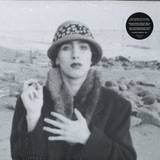
Niandra LaDes And Usually Just A T-Shirt is the first solo record by John Frusciante. Between 1990 and 1992 the guitarist made a series of 4-track recordings, which at the time were not intended for commercial release. After leaving the band Red Hot Chili Peppers in 1992, Frusciante was encouraged by friends to release the material that he wrote in his spare time during the Blood Sugar Sex Magik sessions.
Originally released on Rick Rubin's American Recordings label in 1994, Niandra LaDes is a mystifying work of tortured beauty. Frusciante plays various acoustic and electric guitars, experimenting with layers of vocals, piano and reverse tape effects. Channeling the ghosts of Syd Barrett and Skip Spence, his lyrics are at once utterly personal and willfully opaque.
Frusciante's rapidfire, angular playing shows how key he was in the Chili Peppers' evolution away from their funk-rock roots. His cover of "Big Takeover" perfectly deconstructs the Bad Brains original with laid-back tempo, twelve-string guitar and a fierce handle on melody.
The album's second part - thirteen untitled tracks that Frusciante defines as one complete piece, Usually Just A T-Shirt - contains several instrumentals featuring his signature guitar style. Sparse phrasing, delicate counterpoint and ethereal textures recall Neu/Harmonia's Michael Rother or The Durutti Column's Vini Reilly.
On the front cover, Frusciante appears in 1920s drag - a nod to Marcel Duchamp's alter-ego Rrose Sélavy - which comes from Toni Oswald's film Desert in the Shape.
This first-time vinyl release has been carefully remastered and approved by the artist. The double LP set is packaged with gatefold jacket and printed inner sleeves.
- The Green Manalishi (With The Two Prong Crown)
- Oh Well (Pt. 1)
- Rattlesnake Shake (2013 Remaster) - - 03:29
- Station Man - - 05:53
- Jewel Eyed Judy - - 03:18
- Tell Me All The Things You Do - 04:12
- Future Games - - 08:19
- Sands Of Time (Single Version) - 03:03
- Sunny Side Of Heaven - - 03:11
- Bare Trees - - 05:05
- Sentimental Lady - - 04:36
- Spare Me A Little Of Your Love - 03:46
- Remember Me - - 02:45
- Did You Ever Love Me - - 03:44
- Emerald Eyes - - 03:34
- Hypnotized - - 04:49
- Heroes Are Hard To Find - 03:36
- Angel - - 03:57
- Prove Your Love - - 03:59
Thisisnegentropy's fourth outing looks all the way to Bangkok's own DOTT who runs the More Rice Record store in Bangkok and has studio skills to spare. He heads down a minimal path here with 'Dem Swing' a kinetic mix of dry hits and well swung kicks and tripped-out FX. 'Mind Designer' then gets deeper, with more lovely hits this time landing on tight drum patterns that are detailed with whirring synths and chopped-up vocals. The flip side is taken up by 'Trouser In The Heat', a more manic cut with dense percussive layers and edgy synths that never settle and always keep you guessing. Another fine statement from this top Thai talent.
Mesh-Key reissue of a true desert island disc, criminally out of print for nearly 40 years. They've spared no expense bringing this classic back to life in a format befitting its brilliance, carefully orchestrating transfers of the original analog reel-to-reel tapes for remastering, and packaging each record in a heavy tip-on jacket with film lamination, and a double-sided, printed inner sleeve.
This seminal, eponymous post-punk album by Japanese group Aunt Sally, fronted by experimental singer Phew, was first released by the iconic Vanity Records label in 1979. Over the past forty-plus years, Phew has forged a singular path through a wide range of styles - from free improvisation to pop - and has collaborated with the likes of Ryuichi Sakamoto, members of Can, DAF, Einstürzende Neubauten, The Raincoats and more. But Aunt Sally is where she got her start and, despite the members’ young ages (still in college at the time), Phew and the band delivered a mature, timeless take on minimalistic punk. Remastered from the original analog tapes, this fully authorized reissue is packaged in a heavy, tip-on jacket from Stoughton, and is housed in a double-sided, printed inner sleeve.
Listening to The Softies has always felt like peeking into a diary, with no personal detail spared. Lyrically the band documents a lovelorn heart in every manifestation, and hope is the bright silver lining adorning each song. As the third Softies album, Holiday in Rhode Island KLP119 presents a more accessible view to the humble honesty of their emotive universe. When Holiday in Rhode Island was originally released in Sept. 2000, it had been three and a half years since The Softies previous album Winter Pageant [KLP061]. In that time Jen and Rose's introspective musings are reborn, sparkling with renewed vision, both musically and spiritually. The trademark harmonies between Jen Sbragia (All Girl Summer Fun Band) and Rose Melberg (Tiger Trap, Gaze) simply shimmer, brighter than ever before, benefiting from strong yet simple arrangements and excellent production (at a house on Galiano Island near Victoria, British Columbia) by Dave Carswell and John Collins. The beautiful surroundings and supportive production crew inspired The Softies to extend their minimalist blueprint of two delicately jangling guitars and two crystalline voices to include acoustic guitar embellishment on "Just a Day," "You and Only You;" piano and sparse drums on "Me and the Bees;" a xylophone makes subtle appearances here and there. Holiday in Rhode Island is a stunning artistic accomplishment from these two much heralded pop icons.
"Neutrals are a punk band from the San Francisco Bay Area, channeling a wide range of '70s and '80s punk, post-punk, and DIY indiepop influences. Their spare, angular songs don't skimp on melody or intimate storytelling and represent an appropriate intervention in these tense, atomized times. Their debut album ""Kebab Disco"" came out in 2019 on Emotional Response Records and garnered universal acclaim as ""an excellent collection of terse melodies, unique storytelling, and scraping pop. (AllMusic)"".
Following up their ace 2019 debut LP and a string of future-classic singles, Neutrals are now back with ""New Town Dream,"" a 13 song dispatch that takes on modern life and politics (both micro and macro) and situates their scrappy Jam-meets-Television Personalties sound firmly in 2024. Now featuring the sprightly bass and deadpan harmonies/backing vocals of bassist Lauren, Neutrals have turned in their catchiest, sharpest set of tunes yet."
- A1: Chakachas - Stories
- A2: Mad Unity - Funky Tramway
- A3: René Costy - Ostinato Bass
- A4: Alex Scorier - Topless
- B1: Open Sky Unit - Sunshine Star
- B2: Plus - Gimme Some More Of That
- B3: André Brasseur - Funky
- B4: Chicken Curry & His Pop Percussion Orchestra - Librium
- C1: Placebo - Balek
- C2: Les Hélions - Music & C°
- C3: Black Blood - Avenue Louise
- C4: S.s.o. Feat. Douglas Lucas & The Sugar Sisters - Tonight's The Night
- D1: Nico Gomez & His Afro Percussion Inc. - Ritual
- D2: André Brasseur - Saturnus
- D3: Chocolat's - El Caravanero
2024 Repress
Funky Chicken brings together some of the best Belgian dance tracks from the early seventies. Emerged in a country where virtually every musical wave passes through, most of these tunes were created and recorded by hired guns, in this case a few clusters of gifted session musicians and composers. The music on Funky Chicken is their take on (afro-)funk, soul and Latin. Some of their releases were hit parade cannon fodder, but occasionaly, some spare studio time or the urgent need for a B-side allowed for memorable musical experiments.
Funky Chicken is a post-fact documentation, the result of a quest into a period on which information is few and far between, the 'black hole' in Belgium's history of popular music. The barren wasteland between the variety orchestras of the sixties and the electronic revolution of the late seventies and early eighties. This series explores the ground the dance pioneers built upon.
London-based four-piece Adult Jazz announce their first full-length album in a decade, So Sorry So Slow, out 26 April 2024 via Spare Thought. Alongside the announcement comes lovesick new single ‘Suffer One’ featuring Owen Pallett, a cautious excavation of self and sexuality, clambering across a gorgeously shapeshifting, filmic five-minutes.
Containing some of the band’s most abrasive but gentle, beautiful and melismatic work to date, So Sorry So Slow has many defining characteristics: romance, panic, devotion and remorse, threaded together by an intentionally laser-focused love. It’s deeply personal, bruised and candid in its expressions of tenderness, and deeply pained in its concurrent reflections of ecological regret. Across its hour-long runtime, a delicate, frenetic energy and glacial heaviness coexist, the band pitting those paces against one another. In their richly experimental timbre, dancing strings and fluttering falsettos prang against a bed of brass drones like a wounded bird.
“We started writing in 2017 and began recording in 2018,” says vocalist Harry Burgess. “We genuinely thought it might be finished in 2018! But things kept developing and, having resolutely not struck while the iron was hot, there was no real external push to rush things after that, so we just kept letting things shift and unfold until it felt right. Listening back to my voice notes it’s nice to notice that there are fragments of ideas from the whole period 2017-2023 which have shaped the record.”
Recorded in bursts at studios across London and in the band members’ flats, at Konk, on the Isle of Wight and in Sussex, So Sorry is unambiguous in its evolution. Sonically, there are sparks of the arrhythmic brightness that afforded the band’s critically acclaimed debut album Gist Is its cult adoration, for fans of Arthur Russell and Meredith Monk, but with a blossoming, melancholic darkness often overhead. Piano sprees and luscious string sections appear like low-hanging stars on a night-time drive, whilst plunging vocal distortions and humming brass loops resurrect heavy limbs in a bad dream.
“I usually have objects as kind of totems for ideas,” explains Burgess. “The album initially started out to do with performance… the totem was a head mic, one of the subtle skin-tone ones, discreet on the forehead of a West End star. A number of the first songs in their original forms were almost musical theatre piano ballads. I think that was really a device to write about my life as the ‘main character’ (pre internet-speak reframing): regrets about romance, relationships - unsustainable relationships with the self and others.”
“However, once we started writing, the ideas about unsustainable personal relationships, loving unevenly and heartbreak conflated with a more expressly ecological regret. Like contending with big feelings of loss, endings, beauty, desolation, and with how much joy the earth contains in it. Feeling so much gratitude bound up in waves of sadness. Maybe witnessing a slow-motion goodbye to all that, or its last gasps. I love the earth and the life it supports so much. I love how ecosystems fit together - even the brutal stuff. It may be basic to say, but now is the time to be laser focused on that love. I was thinking about human centrality on earth, us as the ‘main character’, the way that is served by faith and romanticism, and the subsequent disingenuous understandings of our position in the ecosystem, as only stewards somehow, rather than subjects. The totems at this point: a herald’s horn, lorry inner tubes, archaeological tools. I guess from doom, industry, history respectively.”
“Now I would say the record is about gripping. Totems being: crampons, rope, drips, desalination equipment, accruing various survival tech. I think gripping sums up both of the threads. There’s the emotionally correct clinging to the earth that is the substrate of everything we value, or the delusional clinging to our imagined dominant position. But also the practical, technological aspects of creating a sustainable relationship, of remaining here. Then I think of romance again.”
So Sorry So Slow comes out 26th April 2024 on Spare Thought, mixed by Fabian Prynn at 4AD Studios and mastered by Alex Wharton at Abbey Road.
Adult Jazz is Harry Burgess, Tim Slater, Steven Wells and Tom Howe.
Nia Archives is the star at the forefront of the latest era of jungle. Since her emergence in 2020, her collagist soundscapes have helped bring the sound to a new generation of clubgoers (though fair warning: don’t call her a “revivalist” – she’s the first to point out that the scene never went away). So when it comes to talk of the 24-year-old producer, DJ, singer and songwriter’s much-anticipated debut album, the odds are you’re thinking of a full-length record of weightless jungle tracks with basslines so intense they’ll leave your ears ringing.
But the reality of the Bradford-born, Leeds-raised artist’s first ever album – while very much replete with that exquisite jungle sound she does so well – is also doing something a little different. On the thrilling and freeing Silence Is Loud, Nia Archives is looking to make music for beyond the rave. As she explains: “I think music can be experienced in different ways, and there’s different kinds of music for different scenarios. Say you’re at a festival listening to music with thousands of other people, that can feel really uniting. But then you might listen to an album on your own in the bus, or in a taxi; and this project is definitely more a record to sit and listen to than a collection of club tracks.” Nia is intent that Silence Is Loud is taken in as a full body of work of something “more song-focussed, putting interesting sounds on jungle.” It means that this is a record which finds gloomy Britpop, warm Motown, soaring indie, a love for Kings of Leon’s Aha Shake Heartbreak, skittering IDM, Madchester, classic rock, old skool hardcore and more, woven and fused into her ragga and junglist tapestry, all layered with feeling, imbued with her songwriterly lyricism about loneliness, relationships, family, navigating her 20s, and the intense potential power of silence.
The vast sonic palette on Silence Is Loud comes down to Nia’s broad array of influences through her life. With her Jamaican heritage, Nia remembers hearing jungle as a child via her nana, as well as at Bradford Carnival, where she was drawn to the soundsystem culture, dancing carefree on the floats in the parade. The first album she ever bought was Rihanna’s debut, Music of the Sun, and she also went to Pentecostal church back then, and was obsessed with gospel. Aged 16, she moved to Manchester, where she didn’t really know anybody: and so, her solution to meeting people was going out. “Partying was a huge part of my life,” she says, “They used to do little freestyle cyphers at the house parties and I would join in – that’s kind of how I got into singing.” She had found music boring at school, but in meeting all these new people she became interested in making her own music as a hobby. “I was making boom-bap kind of stuff which I didn’t really like in the end,” she laughs, “My lyrics are quite deep, so on a hip-hop beat it all sounds really depressing. I wanted people to dance to my music.” And so she began experimenting with faster tempos alongside that melancholy songwriting, teaching herself how to make beats on Logic: “It’s all been a lot of trial and error, really.”
Nia went to study music in London, and was also interested in visual art, making collages and VHS: “Before the music, I was trying to make a visual archive of my life and the people around me,” she explains, “And then my music was like my diary, and a sonic archive, as well.” Hence, she paired the word “archives” with her middle name, Nia. To this day, in her spare time she’s working on pulling together a documentary on the global nature of the jungle scene.
Back on those first two EPs, Headz Gone West (2021) and Forbidden Feelingz (2022), she honed that junglist sound, painting it with new flecks of colour and vibrance. It was only after she started releasing work that she realised pursuing music could be a viable life path for her. The decision has been paying off ever since. Nia Archives placed third in the prestigious BBC Sound Poll for 2023, alongside garnering a nomination for the Brit Awards’ Rising Star prize, plus wins at the DJ Mag, NME, the MOBOs and Artist and Manager Awards. She has also toured the world – be it North America, Europe or Asia – and even opened a show in London as part of a little something called Beyoncé’s Renaissance World Tour. She’s renowned as a party-starter in her own right, too, with takeovers at Glastonbury, Warehouse Project and her own Bad Gyalz day event. She’s done official remixes for the likes of Jorja Smith, had a huge summer hit with her Yeah Yeah Yeahs rework ‘Off Wiv Ya Headz’, and worked with brands like Corteiz, Nike, Flannels, Burberry, FIFA and Apple. In just three years, it’s fair to say that Nia Archives has become a need-to-know name in dance music.
But Nia is not interested in being one fixed thing. Building on the terrain from her third EP, Sunrise Bang Ur Head Against Tha Wall, the universe of Silence Is Loud is not totally unfamiliar territory; but it’s still emblematic of a bolder scope than we’ve heard from the artist before. Working with Ethan P. Flynn (the songwriter and producer known for his work with FKA twigs and David Byrne), the resulting record is an impressive feat of deftly-sculpted textures; sometimes big and euphoric, like the wobbly, lusty bass of ‘Forbidden Feelingz’, or elsewhere notably gentle and quiet – see: the gorgeous, surprisingly drumless ‘Silence Is Loud (Reprise)’, a heartfelt number that sits somewhere in the school of Adele. “I really sharpened my songwriting skill on this project,” Nia says, “I was really intentional about what I was writing about, and I really loved co-producing with Ethan. His process is so different to anyone I’ve worked with before, and he’s got a kind of DIY set-up like me.” Flynn’s flat overlooks the Barbican, adding that unquantifiable futurist urban quality that the area holds to the music. The pair enjoyed the collaborative process so much that the album was done within three and a half months.
Perhaps this is why Silence Is Loud maintains an exuberant immediacy while still being sleek and spacious, interspersed with flourishes of metallic beats, lush melody and topped with her sugary but powerful vocal, floating over it all. There is an intimacy to the record, perhaps in part due to Nia writing most of her lyrics while sitting in bed in her flat in Bow (once a bedroom producer, always a bedroom producer). You can hear it on the refrain for lead single ‘Crowded Roomz’, which finds rippling guitar lines cutting taut through the beats as Nia refrains: “I feel so lonely crowded rooms.” The song is an examination of life on tour, constantly surrounded by people, but not necessarily those she can be herself around; more than that, the track is exemplary in the category of sad bangers.
Silence Is Loud often finds itself in that push and pull between melancholy and euphoria. There’s a celebration of her unconditional love for her younger brother (the title track), a rumination of an evening with an Irish boy she met by Temple Bar (‘Cards On The Table), or a letter to herself on the light and airy ‘Unfinished Business’, even coming to terms with a lover having a past they haven’t quite processed yet (“nobody comes with a clean slate”). The latter was recorded the week after a music festival, and accordingly captures Nia’s vocal in its not quite healed, husky state.
Nia’s work is always a snapshot of where she’s at when she’s making it. This might not be the debut album you were expecting, but that’s what makes Silence Is Loud so special. Nia Archives has learned the rules of her sound, and is unafraid to break them, pushing jungle and herself into new, unchartered territories that, in turn, go some way to map the history of the greats of British dance music. More than that, it plants her firmly in that lineage.
During the 1990s Shizuka self-released a series of four cassettes, barely heard by anyone outside of their inner circle. Culling together live recordings and home demos, these served as companions to the scant amount of proper Shizuka releases at the time (including the recently reissued Heavenly Persona). Concentric Circles is proud to present the third and most anomalous cassette from Shizuka, simply titled III, on vinyl for the first time in an edition of 500 copies. Formed by guitarist and singer Shizuka Miura, alongside husband Maki Miura, who’d previously played with both Les Rallizes Dénudés and Fushitsusha, the group known as Shizuka started in the early 90s with Jun Kosugi (also of Fushitsusha) on drums, and a revolving cast of bass players, including J.J. Junko, whose sole recorded appearance with the band is here on III. Devoid of any of their trademark noise and bombast, III feel distinct from their studio and live albums of the era, largely due to its fragility; haunted and spare, the songs revolve around Shizuka Miura’s gentle, unforced sighs, and Maki’s flickering, flinty guitar. The first side of the album features four songs – “For You,” “Lunatic Pearl,” “The Night When The Door Opens” and “To The Sky” – which will be well-known to Shizuka fans from previous recordings, but the drastically understated renditions here are particularly moving for their quietude and intimacy. The second half of III consists of a side-long duo session, just Shizuka and Maki Miura together at home, circling around the simplest two-chord motif for twenty minutes, Shizuka singing the most heavenly melody, strung through the sky of this lengthy improvisation. It’s an astonishingly beautiful performance, one that stills time through its becalmed repetition, pointing towards the endless forever. In this respect, it feels like an ultimate extension of Opal’s early recordings, Big Star’s 3rd or even Galaxie 500’s quietest moments. III lifts the darkness away, allowing for a softer, more gentle Shizuka to shine through, bringing with it a side to the band that most never knew existed. A lovely discovery if there ever was one.
Of the countless accolades and analyses that surround Blue, no point is more significant than the fact that the 1971 Joni Mitchell album continues to become more popular, revered, referenced, and relevant with each passing day. Such vitality is not only extremely singular; it is the ultimate measure of great art and, in the context of Blue, indisputable proof of the record's accessibility, integrity, and timelessness. If the most brilliant and everlasting music seeks to find truths shared by all of humanity, Blue can be said to be universal doctrine.
Sourced from the original analogue master tapes, pressed on MoFi SuperVinyl, and strictly limited to 12,000 numbered copies, Mobile Fidelity's UltraDisc One-Step 180g 45RPM 2LP box set presents the landmark album with reference-grade detail, tonality, and directness. Marking the first time the beloved LP has received audiophile-quality treatment, it's one of six iconic 1970s Mitchell records Mobile Fidelity is reissuing on definitive-sounding vinyl and SACD sets.
Everything about Blue sounds more intimate, involving, and inescapable on this transparent pressing, which benefits from a virtually non-existent noise floor and superior groove definition. Mitchell's voice, positioned front and center, and primarily accompanied by minimalist acoustic guitar, piano, and dulcimer playing, comes across clearly and prominently. Suspended notes and radiant chords double as question marks, commas, and phrases. The in-the-room presence and spatial dimensionality make absolute the full-range spectrum of introspective emotions — hurt and distress, self-awareness and joy, difficulty and uncertainty, warmth and desire — Mitchell navigates, queries, and contemplates throughout the record. The defencelessness the singer once spoke about is laid bare here like never before.
The packaging of the Blue UD1S set complements its distinguished status. Housed in a deluxe box, both LPs come in special foil-stamped jackets with faithful-to-the-original graphics that illuminate the splendor of the recording. This UD1S reissue exists as a curatorial artifact for listeners who prize sound quality and production, and who desire to engage themselves in everything involved with the album, including the unforgettable cover photograph of a ruminative Mitchell shot by Tim Considine.
Deemed the third Greatest Album of All Time by Rolling Stone; universally celebrated by critics, fans, artists, and educators; and defined by a spell of disarmingly vulnerable songs that are at once confessional, intense, spare, honest, painful, hopeful, and exquisite, Blue charts love, spiritualism, independence, and loss like no record before or since. Widely considered the album that established the singer-songwriter template, the largely autobiographical LP changed everything shortly after its original release in June 1971. Amazingly, it continues to do so more than five decades later.
An incalculable influence on generations of artists, it stands as the through-line from Carole King, Elton John, James Taylor, Joan Armatrading, and Leonard Cohen to Patti Smith, Carly Simon, Emmylou Harris, and Rosanne Cash to 21st century contemporaries like Brandi Carlile, Taylor Swift, Sharon Van Etten, and Courtney Barnett. Teetering between agony and optimism, it is — to borrow a phrase from Mitchell's eternal "A Case of You" — a bottomless "box of paints."
The beauty of the stripped-down arrangements, intoxicating melodies, and Mitchell's wisdom on Blue didn't go unnoticed. Critical acclaim, coupled with the depth of the material and Mitchell's reputation, propelled the album into the Top 20 in the U.S. and Top 10 in the U.K. Yet while so much pop music diminishes with age, Blue has defied norms and headed in the opposite direction. Its 50th anniversary year witnessed an outpouring of tributes, reflections, and testimonials that helped frame the record's escalating importance and symbolism — apt in an age in which women have become the prominent trailblazers in rock, R&B, and hip-hop.
Perhaps most succinctly, in a 2021 article celebrating the LP, the Los Angeles Times declared: "In 1971, nothing sounded like Joni Mitchell's Blue. 50 years later, it's still a miracle." Nothing, indeed. Yet "miracle" suggests Blue partially owes to a divine agent or inexplicable circumstance. And though Mitchell's bracing conviction and forthright sincerity can appear otherworldly, her musical approach and lyrical storytelling is nothing if not personal and human. What we hear is pure truth — no matter how aching, complicated, or stark.
Much has been written about the circumstances that inspired the songs on Blue: Mitchell's romances; her time overseas; her disdain for celebrity; her lingering sense of loss at having given up her daughter for adoption; her treatment by the very same industry that her music made uncomfortable; her prolonged search for resolution. These situations and experiences pushed Mitchell to question everything — especially big-picture concepts that have always obsessed mankind: fulfilment, autonomy, love, honesty, being.
"I wanna make you feel free," Mitchell sings on the record-opening "All I Want." Mission accomplished. Blue is liberation — and the start of a freedom that continues to impact music, culture, and identity today.
More About Mobile Fidelity UltraDisc One-Step and Why It Is Superior
Mobile Fidelity Sound Lab's UltraDisc One-Step (UD1S) technique bypasses generational losses inherent to the traditional three-step plating process by removing two steps: the production of father and mother plates, which are created to yield numerous stampers from each lacquer that is cut. For UD1S plating, stampers (also called "converts") are made directly from the lacquers. Since each lacquer yields only one stamper, multiple lacquers need to be cut. Mobile Fidelity's UD1S process produces a final LP with the lowest-possible noise floor. The removal of two steps of the plating process also reveals musical details and dynamics that would otherwise be lost due to the standard multi-step process. With UD1S, every aspect of vinyl production is optimized to produce the best-sounding vinyl album available today.
Punk pioneers Crass continue their vinyl reissue series, re-pressing their limited releases by adjacent artists through Crass Records, in association with One Little Independent. The series, including over twenty bands and solo artists recorded at the legendary Southern Studios and produced by Penny Rimbaud, continues with two more historic pieces from the Crass Records catalogue; ‘Barbed Wire Halo’ by Annie Anxiety and ‘Neu Smell’ by Flux of Pink Indians.
They follow records from the likes of Captain Sensible, Omega Tribe, Honey Bane, Jane Gregory, Lack of Knowledge, Sleeping Dogs, Rudimentary Peni and Zounds. First released on 7” vinyl, limiting the sound, the new series has been remastered for 12” by Alex Gordon at Abbey Road Studios, allowing them to be heard as never before. This, plus enlarged replicas of the original covers, brings new gusto to their already radical sound.
New York City musical maverick and performance artist Annie Anxiety, aka Little Annie aka Annie Bandez, began her illustrious career (including work with Adrian Sherwood, Coil, Current 93, and Lee ‘Scratch’ Perry) with Crass. They released her first solo single, 1981’s ‘Barbed Wire Halo’ alongside ‘Cyanide Tears’, an extraordinarily prescient piece of jagged electronics, samples, and skeletal rhythms, led by Annie’s nightmarish vocals.
She tells us; “When creating this single with Penny I hadn’t heard the word ‘avant-guard’ nor could I spell it – I only got explained ‘concretism’ via an interview I did in Berlin regarding some of my work three years ago – My father was a printer so I grew up with sound of printing press and subway train beats and always heard melodies and cross rhythms within those beats – I was just making dance music / disco tunes to my mind and Pen heard those same tunes I was hearing – my first recording, in retrospect I guess, was pretty ‘out there’ at its release, but to us it was dance floor for a club yet to be invented- one day”.
Penny Rimbaud expands; “Annie Anxiety is a total enigma, a passionate voice in the wilderness of consensual reason. Dada in instinct, Monroe in affection, Rambo in inflection, Annie rams it home with divine thunder. An instigator and innovator, she’s the bonkers angel of Yonkers, NYC. With no time to spare, Annie takes to the road with complete conviction, overtaking Kerouac halfway down 5th Avenue. Catch her if you can”.
Crypt of the Wizard is proud to present Dipygus - Dipygus on vinyl and digital formats. Breaking bones, sucking the marrow dry and concocting its own mind-bending blend of cryptid death metal mutilations for over a decade now, Dipygus are a North American quartet powerhouse of crushing caveman gore grooves and monstrous neanderthal percussive slaughter. With already a blood hungry host of extended plays, splits and full-lengths under their gut string loincloths, Dipygus burst forth into 2024 with their self-titled third album—pushing the primitive psychosis of their sonic assault into new arenas of hallucinogenic cannibal combat. Rife with the foetid stench of mouldering mammoth corpses, Dipygus have spared no prisoners for their latest album; amping up their jungle fever dead dreams with skull smashing drumwork, monolithic bass brutality, captivating death hooks, venomous hypnotic leads, guttural flesh growls, ancient cryptid thematics and a truly diseased atmosphere, one that is as equally oppressive, as it is ferociously ominous. Freak induced fatalism from the backward fringes of time, Dipygus have once again laid morbid massacre to the audio waves and created their most potent slab of infectious caveman styled death metal to date, one that any cannibalistic monster marauder would be thrilled to sharpen their gnarled bone axes upon.
The acclaimed Cleveland-born saxophonist Joe Lovano came to Blue Note Records in 1990 and over the next 25 years became one of the most recorded artists in the label’s history, building a formidable and far-ranging catalog that explored the full breadth of his artistry. Recorded in September 1997, Trio Fascination: Edition One stands out as one of the more remarkable sessions in Lovano’s discography with the saxophonist joining forces with two all-time legends—bassist Dave Holland and drummer Elvin Jones—in a spare trio setting that finds these three masters conversing freely. Throughout Lovano can be heard on tenor, soprano, alto, and straight alto saxophones, as well as alto clarinet, and the set consists of nine creative Lovano originals including the pulsing opener “New York Fascination,” the spacious “Sanctuary Park,” the Sam Rivers tribute “Studio Rivbea,” and a stunning rendition of the lone standard “Ghost of a Chance.” This Tone Poet Vinyl Edition marks the album’s first-ever release on vinyl.
The Tone Poet Audiophile Vinyl Reissue Series was born out of Blue Note President Don Was’ admiration for the exceptional audiophile Blue Note LP reissues presented by Music Matters. Was brought Joe Harley, a.k.a. the “Tone Poet,” on board to curate and supervise a series of reissues from the Blue Note family of labels.
Extreme attention to detail has been paid to getting these right in every conceivable way, from the jacket graphics and printing quality to superior LP mastering (direct from the master tapes) by Kevin Gray to superb 180g audiophile LP pressings by Record Technology Inc. Every aspect of these Tone Poet releases is done to the highest possible standard. It means that you will never find a superior version. This is IT.
This stereo Tone Poet Vinyl Edition was produced by Joe Harley, mastered by Kevin Gray (Cohearent Audio) from the original analog master tapes, pressed on 180g vinyl at Record Technology Inc. (RTI), and packaged in a deluxe gatefold tip-on jacket.
Julian Cannonball Adderley's only Blue Note album, Somethin' Else, would likely forever be famous in music lore if just for the presence of Miles Davis. The iconic composer/trumpeter steps into the role of sideman on the 1958 set, one of just a handful of times he'd make such a move after the calendar passed the mid-1950s. Yet evaluating Somethin' Else strictly on Davis' involvement misses the big picture. Plain and simple, Adderley's jubilant work remains a jazz landmark due to the chemistry of its Hall of Fame personnel, enthusiasm of its participants, and sophistication of its arrangements – not to mention the reference-grade production and inclusion of the definitive renditions of two all-time jazz standards.
Limited to 6,000 numbered copies, pressed on dead-quiet MoFi SuperVinyl at RTI, and mastered from the original master tapes, Mobile Fidelity's ultra-hi-fi UltraDisc One-Step 180g 45RPM 2LP collector's edition pays tribute to the record's merit and includes the bonus track "Allison's Uncle." Offering reference-calibre sonics, this spectacular collector's version provides a clear, transparent, ultra-dynamic, and up-close view of a cornerstone effort that witnesses Adderley and Davis sharing horn duty alone for the only time in their fabled careers – an arrangement that occurred as a result of Adderley having joined Davis' majestic sextet a year prior. The premium packaging and beautiful presentation of the UD1S Somethin' Else pressing befit its extremely select status. Housed in a deluxe slipcase, it features special foil-stamped jackets and faithful-to-the-original graphics that illuminate the splendour of the recording. No expense has been spared. Aurally and visually, this UD1S reissue exists as a curatorial artefact meant to be preserved, touched, and examined. It is made for discerning listeners that prize sound quality and production, and who desire to fully immerse themselves in the art – and everything involved with the album, from the iconic photos to the gorgeous finishes.
New pressing on limited orange vinyl. In the early days of Pinback, they were known mostly as two lauded musicians who spent their spare time away from their primary projects (Three Mile Pilot, Thingy, Heavy Vegetable) to hone their home recording skills while experimenting with ideas, tones, and instrumentation that didn’t quite fit into those primary projects. Pinback hadn’t yet become their day job; it hadn’t yet become a well-oiled 5-piece touring machine; and it had no idea where it was going to go. In retrospect, that earnest curiosity is what makes those early Pinback recordings so resonant and so unique, and what separated them from every indie rock band of this century. Every bit as powerful and expressive as their first two albums, the 1999 EP, Some Voices, and the 2003 EP, Offcell, famously bucked the perception of EPs as outtakes and toss-offs. What were ostensibly minor stopgaps between albums became massive fan favorites and staples of Pinback’s live show. Having never been released on vinyl, it’s only fitting that we revisit these poignant recordings – and take the opportunity to painstakingly remaster and repackage them into the full-length album that never was, the aptly named Some Offcell Voices
During the dreaded lockdown of 2020, many people found themselves working from home, or with much more time spare than they had previously. Vasts amounts of music was being offered during this period as a result. I’ll be honest, the name Riffz I had no experience of at the time, unlike Msymiakos, which was a name I was already familiar with. The most compelling aspect of my curiosity before listening was that I was intrigued by the geographic blend of Poland and Norway. How would these distant locales combine to decipher their thoughts into this great sound we all know and love. Once I had listened, the word ‘no’ was nowhere within the vicinity of my vocabulary. Hear for yourself.
Van Halen did more than announce to the world the earthshaking arrival of a revolutionary guitarist. Performed by an enterprising California quartet that took its name from two of its principal members, the 1978 debut ripped headlines away from punk, injected fresh energy into a then-moribund rock 'n' roll scene, reimagined how heavy music and throwback pop could coexist, and invited everyone to experience the top-down pleasures of a beach-front Saturday night every day of the week no matter where they lived. Painstakingly restored by Mobile Fidelity Sound Lab, and the first of a multi-album series in an exciting partnership between the famous reissue label and Van Halen, Van Halen delivers feel-good thrills and hormonally charged desires like never before.
Limited to 12,000 numbered copies, pressed on dead-quiet MoFi SuperVinyl at RTI, and mastered from the original analogue master tapes, Mobile Fidelity's ultra-hi-fi UltraDisc One-Step 180g 45RPM 2LP collector's edition pays tribute to the record's merit and allows fans to experience Van Halen's original blend of raw power, Hollywood flair, and vaudeville fun for generations to come. Playing with reference-setting sonics that elevate a 10-times-platinum landmark whose importance cannot be quantitatively measured, this definitive version provides a clear, clean, transparent, balanced, and turn-the-volume-up-to-11 view of an album that birthed entirely new styles. Since MoFi's unique SuperVinyl compound allows you to crank the decibels to your wildest desires without risking noise-floor interference, prepare to not only hear but feel Van Halen in your chest, no fifth-row concert seat necessary.
The premium packaging and gorgeous presentation of the UD1S Van Halen pressing befit its extremely select status. Housed in a deluxe box, it features special foil-stamped jackets and faithful-to-the-original graphics that illuminate the splendor of the recording. No expense has been spared. Aurally and visually, this UD1S reissue exists as a curatorial artefact meant to be preserved, touched, and examined. It is made for discerning listeners that prize sound quality and production, and who desire to fully immerse themselves in the art – and everything involved with the album, from the iconic cover art to the meticulous finishes and, yes, of course, Eddie Van Halen's pioneering fretwork and his brother Alex's double-bass percussion.
Indeed, could a piece of music that transformed how countless guitarists approached their instrument be more fittingly named than "Eruption"? Likely not, and in just 102 seconds, Eddie Van Halen rewrote, reimagined, and reconfigured a vocabulary last significantly updated a decade earlier by fellow six-string wizard Jimi Hendrix. Akin to the Washington State legend, Eddie Van Halen developed his own techniques and tones all the while making his seismic accomplishments seem effortless. Devoid of the pretence, ego, and showiness that infected many of his imitators, the Dutch native sticks to a straightforward approach that underlines the authority, prowess, and visionary scope of his playing and then-unheard-of finger-tapping skills. Throughout Van Halen, he establishes himself as an instant idol – a savant whose otherworldly combination of breadth, poise, feel, speed, force, and melody seems beamed in from another galaxy.
As does nearly every song on the record, whose cohesiveness and dynamic put into perspective the advanced chemistry and one-for-all spirit the youthful band had out of the gates. Having paid its dues for years in bars and clubs – going as far as recording a 24-track demo for Kiss bassist Gene Simmons at Village Recorders only to be spurned by management companies that felt its music wouldn't go anywhere – Van Halen finally got a deserved break when Warner Bros. executives signed the group in 1977. The subsequent recording sessions further testify on behalf of the band's synergy and alignment. Completed in just a few weeks with producer Ted Templeman, Van Halen was primarily cut live in the studio with minimal overdubs and edits. The explosiveness, energy, and electricity remain definitive, and as heard on this UD1S set, put the group on a private stage – humming amplifiers, Frankenstrat guitar, bright spotlights, sweaty headbands, and then some.
Van Halen yielded just one hit in the form of a Top 40 single (a breathless cover of the Kinks' "You Really Got Me") but practically every song on the revered LP has become a staple. Named the 202nd Greatest Album of All Time by Rolling Stone and considered by countless experts as one of the best debuts in history, the record displays what can happen with four distinct talents gel and strive for the same purposes. In Van Halen's case, the latter almost always involved partying, freedom, sex, and, in the immortal words of singer David Lee Roth, living "life like there's no tomorrow." The celebration manifests from the opening notes of the strutting "Runnin' with the Devil" – announced with the blare of droning car horns, Michael Anthony's robust bass line, and Alex Van Halen's thumping drumming – and continues through the conclusion of the white-hot "On Fire," goosed by Eddie Van Halen's race-track-ready lines, Roth's flamboyant deliveries, and the rhythm section's cat-like pounce.
Picking out individual highlights on Van Halen is akin to trying to count all the stars in a clear nighttime desert sky: There are far too many to identify, once you see one you notice another dozen you didn't spot before, and the cluster is best enjoyed as a whole. What's evident over repeat listens is the sheer diversity, a fact that's often overlooked: The high harmonies and background funk of "Jamie's Cryin'"; the insistent cane-and-a-tophat shuffle and doo-wop shoo-bop vocal break on "I'm the One"; the throwback acoustic blues that spreads into fast-paced, single-entendre wildfire on the Roth-led standout interpretation of John Brim's "Ice Cream Man." Like the man says, on Van Halen, all the flavours are guaranteed to satisfy.
More About Mobile Fidelity UltraDisc One-Step and Why It Is Superior
Instead of utilizing the industry-standard three-step lacquer process, Mobile Fidelity Sound Lab's new UltraDisc One-Step (UD1S) uses only one step, bypassing two processes of generational loss. While three-step processing is designed for optimum yield and efficiency, UD1S is created for the ultimate in sound quality. Just as Mobile Fidelity pioneered the UHQR (Ultra High-Quality Record) with JVC in the 1980s, UD1S again represents another state-of-the-art advance in the record-manufacturing process. MFSL engineers begin with the original master recordings, painstakingly transfer them to DSD 256, and meticulously cut a set of lacquers. These lacquers are used to create a very fragile, pristine UD1S stamper called a "convert." Delicate "converts" are then formed into the actual record stampers, producing a final product that literally and figuratively brings you closer to the music. By skipping the additional steps of pulling another positive and an additional negative, as done in the three-step process used in standard pressings, UD1S produces a final LP with the lowest noise floor possible today. The removal of the additional two steps of generational loss in the plating process reveals tremendous amounts of extra musical detail and dynamics, which are otherwise lost due to the standard copying process. Every conceivable aspect of vinyl production is optimized to produce the most perfect record album available today.
MoFi SuperVinyl
Developed by NEOTECH and RTI, MoFi SuperVinyl is the most exacting-to-specification vinyl compound ever devised. Analogue lovers have never seen (or heard) anything like it. Extraordinarily expensive and extremely painstaking to produce, the special proprietary compound addresses two specific areas of improvement: noise floor reduction and enhanced groove definition. The vinyl composition features a new carbonless dye (hold the disc up to the light and see) and produces the world's quietest surfaces. This high-definition formula also allows for the creation of cleaner grooves that are indistinguishable from the original lacquer. MoFi SuperVinyl provides the closest approximation of what the label's engineers hear in the mastering lab.
In 2013 Tristan dreamt George Harrison and Tom Petty were on motorcycles circling one of those huge roundabouts in Canberra. Their long hair was blowing as they sang "You Can't Hide in Time". The Small Intestines play spare room rock'n'roll with a penchant for three-piece harmonies. They formed in Melbourne, Australia in 2016 while Matt and Rob were taking some downtime from Chook Race and Tristan was on the tail-end of his solo project, Peach Happening. Their debut album 'Hide in Time' will be released on September 29, 2023. For fans of The Go-Betweens and The Bats and any genuine big-hearted knockabout indie jangle with sweet singalong group vocals and simple pared-down arrangements. Tristan Peach - guitar, vocals - Matt Liveriadis - drums, vocals - Rob Remedios - bass, vocals
Mia Gargaret” is an ambient, (mostly) instrumental album by Chicago, IL singer, songwriter, multi-instrumentalist & producer Gia Margaret. It’s also not the follow-up she intended after the critical success of her 2018 debut, “There’s Always Glimmer”. But after she suddenly found herself without use of her primary instrument, she had to rethink her methods, at least temporarily. Gia explains: “After having to cancel tours because of illness, I was unable to sing for nearly half of the year. This left me feeling like a shell of myself, so I turned to my synthesizer for comfort. These compositions helped me hold onto my identity as a music maker. At times this music helped soothe my anxiety more than therapy or anything else could.” Documenting her self-healing and without singing or lyrics to steal the focus, the instrumental tracks on “Mia Gargaret” shine a light on Gia’s skills as a musician, composer & producer. Spare but immersive arrangements of synthesizer, piano & acoustic guitar simultaneously ache & soothe, building emotional landscapes that rise & recede like scenery through a train window. “Mia Gargaret” is a gorgeous experiment & a memorable meditation on the healing power of music. This version is a limited edition of 200 – pressed on pale blue vinyl with an exclusive lithograph print.