Search:special interest

Styles
All
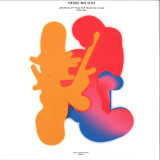
Mappa Mundi - Mosaics LP 2x12"

Repress!

Techno, Disco, Italo, Electronics, House, Library, Cosmic and Ambient frequencies - These are the bedrocks of the Midnight Drive ethos and sound. A label shining a light on overlooked or unheralded creations and respectfully reissuing them for the contemporary audience.

A label that respects and understands the connection between these disparate and sometimes forgotten forms of musical expression and celebrates them. Midnight Drive are extremely proud to reintroduce the world to the sublime after-hours, cult downtempo sounds of Belgian duo Pieter Kuyl and Jan Van Den Bergh aka Mappa Mundi.

Mappa Mundi's sole release 'Musaics' was released on Belgium's legendary USA Import label in 1990, riding on the wave of early trance and ambient house sounds and exploring the same sonic terrain and worlds as The Orb, The KLF, Sun Electric and other like minded outfits. A wonderful swirling collage or mosaic of breakbeats, samples and new-age synth stylings, 'Musaics' is indeed a real trip.

A spontaneous late night studio concoction borne of endless takes and experimentation between Kuyl and Van Den Bergh who both display a deep knowledge and a shared love of different sounds from around the world. The end result is a meditative, sprawling journey that touches on many different styles from languid widescreen techno to frantic drum machine driven machine-funk, all while retaining a feeling of post-rave atmospherics and psychedelia.

This is a very special record indeed, and is somewhat of a lost gem from a very fertile and interesting period in sample based music. Undoubtedly the perfect soundtrack to numerous late nights and early mornings to come, remastered and spread across 2 discs for maximum sonic playback.

out of Stock

Order now and we will order the item for you at our supplier.

23,95

Last In: 14 months ago
Amythyst Kiah - Still + Bright LP

On Still + Bright, her highly-anticipated follow up to, Wary + Strange, Amythyst Kiah shares a dozen songs that mark an evolution in her sound. Kiah says, “With this album, I’ve always been incredibly interested in stories and philosophy. Lots of the songs are inspired by the cosmos, space, meditation, and mindfulness. It’s a way to piece out what it means to be a human being in the modern world. It’s the general idea that we should all have the freedom to decide what path we want to choose.” Still + Bright is produced by Butch Walker (Fall Out Boy, Green Day, Weezer) and features special guests including SG Goodman, Avi Kaplan, and Billy Strings. All of the songs were brought to life by Kiah and co-writers, including Sean McConnell, Avi Kaplan, Sadler Vaden, and Tim Armstrong, among others. Still + Bright is set for release on October 25, 2024. “Years in the making, Still + Bright explores what it means to be a human being in the modern world. Songwriting is my way to marry big, overarching philosophical ideas and questions into a musical, more organized arrangement. Inspired by the cosmos, space, meditation, and mindfulness – this record directly challenges religious and political dogma, stating that we should all have the freedom to decide what path we want to choose.” Recently Kiah featured in Salon talking about her love of country and bluegrass music and was included in a New York Times T Magazine spotlight and documentary: The Next Generation of Black Folk Singers. Her episode of PBS’ The Express Way with Dulé Hill aired nationally on April 30, Kiah is featured in Episode 2: “Appalachia”. She recently appeared on a panel at the Television Critics Association Press Conference which was attended by over 200 television critics around the globe. This June she will be on the road opening for Iron & Wine.

pre-order now25.10.2024

expected to be published on 25.10.2024

25,63
Dancefloor Classics - Dancefloor Classics Vol. 4
 
4
also available

Vol.1[17,27 €]

Vol.2[19,20 €]

Vol.3[19,12 €]

Vol.5[17,44 €]


Sasu Ripatti presents the fourth volume in his "Dancefloor Classics" series with five 10" releases coming throughout 2023. Music for imaginary dancefloors, released on Ripatti's own label "Rajaton".

”Look up, into the light” she said, while the camera shutter clicked. ”Like this? Does it look holy?” His neck felt stiff. Her reply: ”Yes, just like that. What do you mean holy? Like religious? ”No, more like trying to look very far, somewhere beyond what we can see.” ”Okay, stand still, I’m going to come close to you now. The light hits your face great.” click, click, click.

He noticed her fingernails. They were not polished. Natural. Even somewhat rugged, as if something wore out the fingers slightly. What had these hands held besides the camera? What made the edges of her fingernails drift off?

He thought it’s weird to look straight into the camera. The photographer had closed her left eye, the one not looking into the lens. Then it opened, she looked up, perusing the surroundings, then she closed her eye again, then looked up, closed, looking up, very quickly. It all seemed very professional. Maybe she calculated the light, making sure it’s close to perfect. ”What will these photos look like?” – the thought popped into his head briefly. It was liberating to think it wouldn’t matter.

”What’s that song playing?” he asked. ”Wait a sec, Ol’ Dirty Bastard?” she replied. ”Oh yeah, right. But the sample?” ”Hey, could you look up again, like that. No, lower.”

New directions: ”Look out from the window, turn left.” ”My left or yours?” ”Yours, I always try to think from the direction of my model.” How professional! This is a good shoot, so natural. Should I worry about how the photos look like? No, I don’t want to. His thoughts bounced around. What would the story be like? It’s a big newspaper, everyone will read it. Maybe someone drinks coffee and eats a stroopwafel while they do it. Will they place the waffle on top of the mug for a brief while, so that it gets hot and the syrup melts a little? Then it feels wet, and you can bend the cookie.

She broke his train of thought off midway through: ”Now turn right, but look left, and slightly up, but don’t turn your face right.” ”Umm, like this? Sounds like a set of pilates instructions.” she laughed ”You do pilates?” ”Yeah, it’s hard sometimes. Have you tried?” ”No”, she said. ”I’m not good for sports that are done in groups.” ”Yeah, but in pilates you can just be inside your mind, drowning in your private thoughts.”

”What are you thinking in pilates?” she asked, taking more photos. ”Well, mostly just which way is right. And which left.” click, click.

Q&A with Sasu Ripatti:

1) Tell us something about the EP series ”Dancefloor Classics”, what’s the idea and what can we expect?

I’ve been slowly writing these sort of dance music pieces and finally curated them together for a conceptual release. I like to create music for a dancefloor that exists only in my imagination and doesn’t try to suck up to the standardized reality.

2) Your vinyl format is 10” which is quite special (as opposed to LP / 12”). Why did you choose it?

It’s my favourite format, absolutely. The size is perfect, and you can make it sound really good @ 45 rpm. And you still can make great artwork.

3) You seem interested in sampling/repurposing, what does it mean to you as an artist to approach something already existing from a new angle? How does the source material inform you about the approach to take?

I guess i could flip it around and just say I’ve outgrown synths or electronic sounds to a great extend, and having gotten rid off all my synths already good while ago I’ve used samples as my main source material a lot. It’s obvious on this series that i’ve sampled existing music, but I also sample instruments and things in the studio and resample my own library that I have built over the years, it’s quite large. To me the end result matters, not so much how I get there. Once I have something on my keyboard and play around, it’s all an instrument, though with sampling other music it becomes a really interesting and complex one as you’re possibly playing rhythm, but also harmonic content and maybe hooks or whatever, all at once.
I never sample premeditadedly, like listening to records and looking for that mindblowing 3 sec part. I just throw the cards in the air and see what lands where, just full intuition and hopefully zero mind involved, playing tons of stuff, trying things, just recording hours of stuff. Then comes the interesting part to listen to hours of mostly crazy stuff and finding that mindblowing 3 sec part.

4) What is your relationship with the dancefloor (conceptually and/or in experiences / as a performer)?

Very complicated. I have never really felt comfortable on a dancefloor but have always wanted to. There’s something in club music, in theory, that really speaks to me. It has never really materialized for me – speaking mainly from a performer’s point of view who goes to check on a dancefloor for a moment after a concert. I never have DJ’d or felt much interest towards it. But again, I love the idea and concept of DJing. As well as producing music for imaginary DJs. Lately, as in the past 10+ years, I haven’t even performed in any sort of club spaces. So my relationship to the dancefloor is quite removed and reduced, but there’s quite a bit of passion and interest left.

All tracks composed and produced by Sasu Ripatti.
Artwork & photography by Marc Hohmann.
Mastering by Stephan Mathieu for Schwebung Mastering.
Vinyl cut by SST Brueggemann.
Publishing by WARP Music Ltd.

out of Stock

Order now and we will order the item for you at our supplier.

17,27

Last In: 19 months ago
DYL & Senking - Diving Saucer Attack

Senking and DYL team up again after first collaborating for a track on 2020’s »Uniformity Of Nature« EP that also featured different solo productions by the two producers. »Diving Saucer Attack« is the first full-length record by the German artist and his Romanian collaborator, released through the Berlin-based Karaoke Kalk label, home to the former’s work for more than a quarter of a century. The six pieces, two of which were produced individually, both showcase the duo’s shared interests for dub-heavy, adventurous electronic music while also emphasising the productive friction generated by the subtle differences between their respective approaches.

Cluj-Napoca-based DYL, real name Eduard Costea, cites his colleague Jens Massel’s work and especially his »Ping« EP—released in 1999 through Karaoke Kalk—as a crucial point of reference for his own development. »He’s one of the producers who inspired me to start making music,« he says. Massel was already familiar with his partner’s eclectic productions when he was approached by him with the idea of collaborating for a piece in 2020. They didn’t stop there, as Massel explains »It went very well and ever since we’ve been sending each sounds and tracks.« As their first joint album, »Diving Saucer Attack« documents the multi-faceted results of this on-going process.

The album opens with a track in true Senking style. Throbbing bass frequencies, haunting synth melodies and carefully placed rhythmic elements form a slow, but driving groove. Before DYL’s »a7r380R« introduces the listener to his anthemic take on IDM, the collaborative second track »2024« showcases how well their respective philosophies complement one another: the two create a detailed soundscape in which an intricate interplay of percussive elements and melodies can unfold. The title track transforms rattling drums and growling bass sounds into a laid-back, spooky trip-hop tune with a live-jazz feel, while »Astral Project« sees the duo venture into the uncanny regions of dub techno. »Not Just Numbers« closes on an even more sombre note—a fitting closing statement to an album full of twists and turns.

»Diving Saucer Attack« is a special album on more than the musical level. Massel released his first records under different guises such as Fumble, Kandis, and Senking through Karaoke Kalk between 1997 and 2001, after which he focused on his work as Senking, putting out a string of iconic albums through raster-noton, among others. 23 years after his last Senking LP for Karaoke Kalk, 2001’s »Silencer,« his return is as non-nostalgic as you’d expect it from such a forward-thinking producer: together with DYL, he continues to explore the possibilities and outer limits of electronic music in an intergenerational dialogue.

out of Stock

Order now and we will order the item for you at our supplier.

19,75

Last In: 16 months ago
Various - H-Street - 35th Anniversary

In the early 1990s, before the era of social media dominance, skateboarding culture found its voice through magazines and VHS video releases, notably from brands like Santa Cruz and Powell Peralta. These videos not only shaped the skateboarding world but also influenced creativity across various industries worldwide.

In 1988 and 1989, two groundbreaking videos, "Shackle Me Not" and "Hokus Pokus," emerged from the fledgling skateboard company: H-Street, unleashed a seismic shift in street skateboarding. These videos are revered as iconic masterpieces, celebrated for their innovative skateboarding sequences and unforgettable soundtracks.

“What’s particularly interesting about Hokus Pokus was its soundtrack, largely comprised of demo cassettes, unsigned artists, and bands with loose ties to the brand. Some of the songs were goofy, others almost anthemic, and few sounded of their time. Perhaps it was the repetition or the fact that Matt Hensley could have skated to the sounds of a broken oven and it would have been iconic, but the songs in Hokus Pokus became a secret handshake for the hardcore—people who really gave a shit about skateboarding’s culture not just the act”.

Artless / Anthony Pappalardo

“When we were filming for Shackle Me Not we were still a brand new company and hardly anybody knew who we were and it was so brand new. I was so busy skating and I noticed there was like a movement in skateboarding, you could feel there was a change in the way, in the tide, not just white H-Street but with every company. I think that video, the H-Street video was saw raw, with the crazy music, and you know, just the wackiness of all of it, I think that feeling went out into the world, and kids everywhere understood you don’t need to live 20mn away from Del Mar to actually be part of what’s happening. I think that just opened up the world of skateboarding to more people”

Matt Hensley – Pro skater and Floggin Molly band member.

Fast forward 35 years, and H-Street, in collaboration with Paris (France) based label Stereo Ronin Records, embarks on a momentous project to release special edition vinyl soundtracks from these seminal videos. This exclusive release features meticulously remastered tracks, including new versions and previously unreleased gems on vinyl, making it a treasure trove for any skateboarding enthusiast.

Curated from bands like Kirk & The Jerks, Sub Society, Wonderful Broken Thing, Voluntários da Pátria and The Cry, representing the golden era of skateboarding music, this album promises an unparalleled experience for fans of Punk Rock, Indy Rock, and of course, skateboarding.

Working alongside RTM Studio in Paris, Stereo Ronin Records has undertaken a remastering journey, ensuring that this vinyl edition delivers a truly unique sonic experience, capturing the essence of a bygone era while resonating with contemporary audiences.

out of Stock

Order now and we will order the item for you at our supplier.

25,17

Last In: 17 months ago
AIDAN BAKER & DEAD NEANDERTHALS - CAST DOWN AND HUNTED

Ltd Edition - 200 copies**

Canadian-currently-residing-in-Berlin and multi intstrumentalist Aidan Baker teamed up with Dutch demolition duo Dead Neanderthals late 2023 to work on the collaborative album entitled Cast Down and Hunted.

Cast Down and Hunted is an abstract affair. Angular and dark, droney and lush. Two lengthy tracks, Subterfuge and Paranoia, each fill one side of the LP, which will be released by the Dutch label Moving Furniture Records.
The artwork was made by Steven Kenny and the album layout was done by Rutger Zuydervelt (Machinefabriek).

The album was mixed and mastered by Marlon Wolterink at White Noise Studio.

ABOUT AIDEN BAKER
Aidan Baker is a classically-trained multi-instrumentalist focusing on the electric guitar as his primary instrument. Using prepared and alternate methods of playing the guitar, along with various electronic effects, Baker creates music which generally falls within the ambient/experimental genre but draws on influences from post-rock, shoegaze, electronica, neo-classical, and jazz.
A highly prolific artist, Baker has released numerous recorded works, both solo and with various group projects—most notably his dreamsludge duo, Nadja—and including collaborations with Tim Hecker, Carla Bozulich, Jussi Lehtisalo, and Andrea Belfi, among others—on such independent labels as Karlrecords, Gizeh Records, Important Records, and his own imprint, Broken Spine Productions. A frequent live performer, Baker has toured extensively around the world, including appearances at such international festivals as FIMAV, SXSW, Incubate, Unsound, Roadburn, and Mutek.
Originally from Toronto, Canada, Baker currently resides in Berlin, Germany.

ABOUT DEAD NEANDERTHALS
Dead Neanderthals have spent more than a decade putting together an eclectic and envious back catalogue that spans multiple genres – from free-jazz to grindcore to doom drone by way of psychedelia – and continuously throwing curve balls that defy expectations. You never know what you’ll get, but you know it’ll be heavy.


ABOUT MOVING FURNITURE RECORDS
Moving Furniture Records is a label based in Amsterdam, The Netherlands specialized in releasing experimental electronic music, run by Sietse van Erve, started in October 2008. We are mostly interested in drones, minimalist, microtonal and field-recordings music.
Moving Furniture Records has released music by both renowned, musicians such as Richard Chartier, BJNilsen, Jos Smolders, Gareth Davis & Merzbow and Machinefabriek, as (young) new talent such as Gagi Petrovic, Fani Konstantinidou, and Ryan van Haesendonck.
Aside from the regular releases Moving Furniture Records has two special series: Eliane Tapes: music inspired by and dedicated to the work of Éliane Radigue. Contemporary Series: contemporary music written for acoustic and electro-acoustic ensembles and solo artists.
Moving Furniture Records also organizes concerts in various venues in Amsterdam. For all our releases and more information

pre-order now06.09.2024

expected to be published on 06.09.2024

23,74
Limahl - Don't Suppose(40th Anniversary Edition)

Originally released in November 1984, Limahl’s debut solo album ‘Don’t Suppose’ is to be reissued on recycled lavender vinyl to celebrate its 40th anniversary. The album is probably best known for the aforementioned ‘Neverending Story’. As well as featuring in the film of the same name (which is being revived for the big screen once more), it more recently found a whole army of new fans when it appeared in the final episode of the third season of Stranger Things. Set in 1985, the song is sung by Dustin (Gaten Matarazzo) and his long-distance girlfriend Suzie (Gabriella Pizzolo) as a way to reconnect after not seeing each other for some time. Following the season's release on July 4, 2019, interest in the track surged; viewership of the original music video had increased by 800% within a few days according to YouTube, while Spotify reported an 825% increase in stream requests for the song.

Further reflecting on the album Limahl goes on… “I can’t believe it’s been 40 years, yet sometimes it feels like yesterday! Looking back now, it's surreal to think that at just 24 years old, being born and raised on a Wigan council estate with no family connections in the music business, I was thrust into a whirlwind of travel and appearances to promote my music worldwide via TV, radio, and press—long before the internet.

“I’m excited to imagine where and how the song will continue its journey. It’s amazing that it still feels relevant 40 years on. I’m not too shy to say how immensely proud I am of its achievements.”

pre-order now06.09.2024

expected to be published on 06.09.2024

30,21
Frankie Stein and His Ghouls - Monster Melodies

After years of visiting graveyards, combing through haunted houses, and pursuing (heh heh) dead ends, we finally tracked down the rights to the legendary Frankie Stein and His Ghouls series! Why did we risk life, limb, and livelihood to find these records? Well, first of all, long-time Real Goners know we LOVE these campy ‘60s takes on horror rock—witness our previous macabre moves into the Zacherle, Munsters and Groovie Goolies franchises. But there’s something extra special about these Frankie Stein and His Ghouls records. You wouldn’t think that Halloween records released by a subsidiary (Power Records) of a children’s specialty label (Peter Pan Records) would be so…er…visceral, but these records are definitely the most out there of their kind. And there might be a reason for that…you see, it has been revealed that the Power label enlisted the aid of some very, very interesting musicians for some of its projects. For instance, the imprint’s 1966 album Batman and Robin by The Sensational Guitars of Dan and Dale was actually produced by Tom Wilson of Bob Dylan, Velvet Underground, and Mothers of Invention fame—and the band was made up free jazz legend Sun Ra and members of The Blues Project! Which has led to all sorts of speculation about who Frankie Stein and His Ghouls actually were; among the names bandied about are guitarist Duane Eddy, jazz saxophonist Max Greger, and, yes, Sun Ra and the Blues Project again. At any rate, prepare yourself for frenetic rock-and-twist workouts punctuated by deranged howls and shattering sound effects. And with a back story like this, it’s no wonder original copies of these albums sell for downright horrifying prices…here come the last two for a truly fiendish finale!

pre-order now06.09.2024

expected to be published on 06.09.2024

36,93
VARIOUS - RADIO VERDE (COMPILED BY AMERICO BRITO AND ARP FRIQUE) LP 2x12"

Arp Frique returns with a brand new release on his imprint Colorful World Records in collaboration with Rush Hour. A compilation of 12 Cape Verdean gems assembled with the help and knowledge of Americo Brito, there is a very special story behind it. Americo Brito, who features on Arp Frique’s original Nos Magia, is a proud and important member of the Cape Verdean community in Rotterdam. His story reveals the historical connections between radio, vinyl, Cabo Verde and Rotterdam’s international music scene in the 70s and 80s. Cape Verdean insiders say “we export all they have to other countries, only to import it back again”. Cape Verdeans have migrated all over the world, mainly to cities with big harbours, like New York, Boston and Rotterdam (Holland). Rotterdam became one of the main destinations (next to Portugal) on the European mainland. When Americo, like many of his friends and relatives moved to Rotterdam, he quickly became infected with the music virus. Surrounded on a daily basis by Cape Verdean music in Portuguese pensions and small hotels, this was where sailors ingested a dose of “sodade” through the interpretations of their beloved music by the local Cape Verdean artists. Americo took to the stage with his band Djarama in the 70s and 80s. The live music scene was buzzing and the Cape Verdean community had their own infrastructure for arranging shows, often in nightclubs where the band had to bring their own soundsystem. Interestingly, Americo didn’t stick to performing and recording music. He found another way to help spread the Cape Verdean magical secret of music across Rotterdam, Holland and beyond: “There was this spot in Rotterdam where all foreign radio stations were housed, all these different nationalities together, Surinam, Cape Verdean, Hindustani…Guy Ramos and some of my other friends made radio in the 80s there. I got involved in their radio activities. Later on I started to work as a technician and eventually as producer and radio DJ for “Radio Voz De Cabo Verde”. Radio became bigger and there were around 4 different Cape Verdean stations active at one point in Rotterdam. instrumental in the development of this was the attic of a Dutch friend, where “Radio Babalu” came to life. Radio has always held a special place in my heart.” Americo’s music collection stems from this era, also aided by his many travels across Europe to cities with Cape Verdean communities. Alongside Rotterdam local, Arp Frique, Americo unveils some of these songs: dancefloor hits and beloved radio gems known in the Cape Verdean scene by younger and older generations alike, and so far undiscovered by a “bigger” audience. The compilation showcases the worldly view of Cape Verdean music, incorporating knowledge from their travels in their compositions. It ranges from the obvious funana and coladeira, to the more unexpected influences of deep disco, new wave, uptempo reggae, jazz-funk and Brazilian pop music; demonstrating just the tip of the iceberg, but what an amazing t(r)ip it is!

out of Stock

Order now and we will order the item for you at our supplier.

24,33

Last In: 3 months ago
THE PANDORAS - IT'S ABOUT TIME LP

Bomp Records of Burbank, California was likely the most significant American independent record label of the 1970s. In 1979 Voxx was founded as a subsidiary of Bomp as a specialty label for '60s-styled garage and psychedelic inspired music and was home to the debut album of the Pandoras. The Pandoras really got started back in 1982 when triple threat Paula Pierce (guitar, vocals AND songwriter) met singer and guitarist Debbie Mendoza at Chaffey College Rancho Cucamonga, one of those dozens of small communities that make up the greater Los Angeles area. According to stories told around the campfire, Paula had posted an advertisement on the bulletin board inside the college's cafeteria. The ad was both simple and direct: Wanted: female musician to jam with. As legend has it, the ad also stressed a keen interest in 60's garage punk music. Debbie answered Paula's ad, and soon the two girls were bringing guitars to school and holding impromptu jam sessions between classes. A little later that year, Paula brought in Gwynne Kahn on keyboards and second guitar, and Debbie convinced drummer Casey Gomez to join. People who were around at the time pinpoint December 1982 as the official beginning of the Pandoras as a band. The Pandoras didn't waste any time getting down to business. They started gigging regularly, and their repertoire of tasty garage nuggets expanded substantially, fueled both by Paula's talented songwriting and also no doubt by her relationship with Unclaimed frontman Shelley Ganz and his extensive knowledge of obscure 60's gems. The Pandoras unleashed their first recordings on the world in 1983 with the "I'm Here, I'm Gone" EP on Moxie records. It was a meaty slab of girls in the garage punk rock, and while maybe not as polished as subsequent efforts, it clearly showed off the talent of the band. Greg Shaw had been alerted to the band a few months earlier, and always one to know a good thing when he heard it, he quickly signed them. "It's About Time" saw the light of the day in 1984 on Voxx Records and became one of the first and best efforts of authentic 1960's-styled garage punk to emerge from the revival scene. It was pure garage gold! Today, 40 years after its original release date, we are thrilled to reissue this essential '80s garage punk gem as part of a series of releases celebrating Bomp! 50th anniversary. Our issue includes 3 bonus tracks and liner notes by Gravedigger V's John Hanrattie. "Paula Pierce refused to play it cute. On The Pandoras' debut album she out-snarled, out-screamed, out-fuzzed and out araged the male-dominated competition-like a well-aimed go-go boot to the jugular." - Mike Stax, Ugly Things Magazine "As good a '60s punk record as any contemporary combo is likely to make." - Trouser Press

pre-order now30.08.2024

expected to be published on 30.08.2024

20,38
Søren Skov Orbit - Adrift

Søren Skov Orbit's debut album, "Adrift," is at once subtle and profound. The saxophonist and his collaborators have created something quite special and consistently deep. This record may not easily be classifiable, but the most interesting music creeps between the lines

Danish tenor and soprano saxophonist Søren Skov (Debre Damo Dining Orchestra) and keyboardist Peder Vind co-founded the trippy quintet Søren Skov Orbit in 2016 to explore “more jazzy ideas,” as the saxophonist puts it. Joined by a rhythm section steeped in contemporary improvisation and psychedelia, bassist Casper Nyvang Rask, drummer Rune Lohse and percussionist Ayi Solomon of the legendary 80's Ghanaian roots/highlife band Classique Vibes, the Orbit belts out a richly focused helping of broadly African-inspired modern jazz with a hazy sheen.

On the opening “Notifications of Nothingness,” Skov digs in his heels, a steely but languid unspooling of burnished tenor lines atop condensed, quavering piano and the thick footfalls of bass and percussion. As a tenor player, Skov has done his homework and has a kinship with Albert Ayler, Archie Shepp, J.R. Monterose, and the Dutchman Hans Dulfer, but he clearly has got his own robust phraseology and expressiveness. He also cites multi-reedists John Gilmore, Yusef Lateef, and Bilal Abdurahman as, “some of the players I’ve been listening to the most for the last 10-15 years.”

A healthy dose of reverb is present throughout the album, echoing Alton Abraham’s studio wizardry with the Sun Ra Arkestra or the trance-inducing and compressed fidelity of certain Ethio-jazz and Mystic Revelations of Rastafari sessions. Skov notes that, “everything is recorded live at the same time in the same room. I wanted to do it that way in order to catch the dynamics and authenticity of the music.” There is, in fact, a complex teeter- totter between crisp and hazy execution, achieved by a delicately balanced mix that keeps the group’s sound simultaneously advancing and receding. Vind’s phrasing is terse and introspective, a vibrating echo that nudges and reflects on Skov’s brusque tenor in a dance of sonic displacement.

“Orbiting” pits a chunky backbeat and the teetering, taut hand-rhythms of Solomon against an infectious, almost microtonal piano riff, while Skov’s arpeggios are clean and florid as he patiently rises up from under a carpet of funky loops. Following the freer “Reflections of Rif,” “Naration” lilts with a wink at “Footprints” and tugs between up-tempo polyrhythmic drive, clanging keyboard accents, and the innately steadfast keenness of the bandleader. The coupling of Solomon and Lohse is a big part of the group’s detailed energy; as the leader puts it, “Ayi knows everything about regional differences in drum patterns. He is always listening and super responsive, and his and Rune’s dynamics are amazing.” The music both presents a “vibe” and keeps the door open for engaging well under the surface as repeated listens will be extremely rewarding.

pre-order now23.08.2024

expected to be published on 23.08.2024

28,78
Gregory T.S. Walker - Minstrels & Minimoogs LP

Gregory T.S. Walker’s Minstrels & Minimoogs was self-published by a young, nomadic composer and virtuoso in 1988 to accompany an immersive multimedia performance at the University of Colorado Boulder’s Fiske Planetarium. Created with this outer, and other, world setting in mind, the four tracks find Walker stretching toward an ancient-to-future vision where Egyptian myths and Hieronymus Bosch-ian tableaus are rendered in a screaming three dimensional circuitry of electronic drums, synth guitars, and, of course, Minimoog. Given the musical terrains and outmoded topics traversed, and that this entirely DIY effort was originally released as a micro one-sided 12” edition, Minstrels & Minimoogs is as perplexing and euphoric a document lost-to-time as it is now found.

Born in 1961 into an intensely musical family spanning four generations, Gregory’s mother Helen Walker-Hill was a noted musicologist specializing in the rediscovery and work of historical Black female composers, while his father, George Walker, was the first African American composer to win the Pulitzer Prize for music. Both parents studied with the famed (and famously strict) Nadia Boulanger in Paris in the 1950s, and held to lofty aesthetic standards in their home life. Walker began studying the violin as a child, but when a burgeoning interest in the electric guitar and rock music as a teen manifested, it was largely verboten in the household. The rule was that the music played in the home was to be acoustic and classical. Although the elder Walkers eventually relented and allowed Gregory’s guitar to be plugged in for a brief interval on the weekends, the remaining days he settled for strumming it sans amplification.

Gregory, conditioned and eager for a life in music but looking to get out from under the influence and yoke of his famous composer father, ultimately chose to study computer music at the University of California at San Diego, where he earned a Master of Arts. This was followed by another MA in electronic music composition at that hotbed of West Coast experimental music, Mills College. Intermedia and multimedia in the arts was the rage in the 1980s, and Mills was one of the centers for it; audacious spectacle meeting visionary performance, such as one of the realizations for Anthony Braxton’s music for multiple orchestras a young Gregory performed in with his violin.

After a series of solo synthesizer concerts around California, Gregory followed a girlfriend on a mid-country move to Boulder, Colorado. After picking up yet another composition degree at University of Colorado Boulder, his life as a composer really started, writing a piece for extended technique for guitar, a passacaglia for vocoder and orchestra, as well as Minstrels & Minimoogs.

Envisioned as a multimedia performance such as the kind he’d experienced at Mills (which was all but unknown in Boulder at the time), Gregory roped in a number of college going or aged friends of varying skill levels and musical sympathies to accompany him with distorted sax or oblique spoken interludes. Confronted with a lack of finances, but driven to get his ideas captured in a complete musical package, the album was recorded in his brother’s apartment. If not every player assembled was on Gregory’s virtuosic level, so be it; it was more about capturing the spirit of his intentions and embracing the serendipity of mistakes.

An inspired attempt at world building, Minstrels & Minimoogs draws on the deep well of musical knowledge Gregory gathered from his parents and teachers, but all the while subverting that historical basis by incorporating mutant strains of prog and pop music. The work accumulated is not unlike the playful 1980s work of Gregorio Paniagua, where medieval estampies and rondeaus are wrenched into an anachronistic present where Hildegard Von Bingen and Kate Bush are contemporaries. Ars nova, new art, a 20th century minimalist jester and troubadour.

A one sided LP was the cheapest option Gregory found to have Minstrels & Minimoogs memorialized on vinyl, so somewhere between 50 to 100 copies were pressed. There was no distribution, outside of copies that were handed out to friends or sold at the performances at the planetarium. Gregory T.S. Walker’s cosmic-futuristic forays into oblique pop and baroque subversion could forever reside perfectly in both the domed simulacrum of our universe for which it was composed, in the formats it is being reintoduced now, and our own biblical firmament. For in the words of Gregory, straight from the original liner notes: “God Is A Minimoog”

Gregory T.S. Walker’s Minstrels & Minimoogs arrives again August 23, 2024 on vinyl and digitally as part of uncommon¢ (“uncommon sense”), an open-ended, serialized endeavor from Freedom to Spend that provides new meaning for rarefied recordings from music's outermost fringe.

pre-order now23.08.2024

expected to be published on 23.08.2024

26,68
Grateful Dead - Dick's Picks Vol.12 LP 6x12"

When we were offered the most welcome opportunity of choosing another “virgin” (as in never released on vinyl before) volume from the Dick’s Picks catalog, we did our Dead diligence, combing through the many chat rooms online to see which one the fans really wanted to see come out on LP. It will come as no surprise that opinions were varied and vehement…but a consensus emerged that Dick’s Picks Vol. 12—Providence Civic Center 6/26/74 & Boston Garden 6/28/74 was the one. Which is interesting, because that Pick is a little different, combining the second sets of two different nights instead of offering a single show. But it’s the exception that proves the rule—the playing is so extraordinary, and the repertoire so unusual, that one can understand why Dick Latvala played more curator than archivist here. Side A picks up the second set from Providence three songs in, featuring a short jam that leads into what many have labeled the most extraordinary live version of “China Cat Sunflower” ever recorded, complete with a sublime transition (“Mud Love Buddy Jam” a.k.a. “Mind Left Body Jam”) into “I Know You Rider.” The revelatory moments continue throughout the Providence set, highlighted by a dazzling, 15-minute “Spanish Jam.” But the second set of the Boston show—which appears here complete, after a superb encore performance of “Eyes of the World” from Providence—is the one that has passed into legend among Dead fans (a performance of Phil Lesh and Ned Lagin’s electronic music piece “Seastones” provides an appropriately adventurous interlude). The set boasts one of the most renowned live jams of the band’s career, a flawless, 14-minute “Weather Report Suite: Prelude/Pt. 1/Pt. 2-Let It Grow” leading into a 27-minute “Jam” that is simply one of the most far- ranging, telepathic improvisations ever played by, well, anybody. That this set also includes a separation of the “Sunshine Daydream” section from “Sugar Magnolia” for only the second time ever is just gravy. This is, of course, a “Wall of Sound” concert, so we’re working with something of a special audio source to begin with. So, we enlisted Jeffrey Norman to master the release for vinyl from the original tapes (pictured on the enclosed insert), and enlisted Clint Holley and Dave Polster over at Well Made Music to cut the lacquers. Gotta Groove Records, our manufacturer of choice, has pressed the 6 LPs on to 180-gram black vinyl housed inside a two-piece hardshell box, and we have a little stencil surprise for ya on Side L. Limited edition of 3000 hand- numbered copies!

pre-order now09.08.2024

expected to be published on 09.08.2024

277,52
Il Sogno Del Marinaio - Wing And A Prayer

Special exclusive 7" from Il Sogno Del Marinaio, the avant-rock trio formed by legendary bassist Mike Watt (Minutemen, Firehose, Stooges), cult Italian experimentalist Stefano Pilia (Massimo Volume, In Zaire, Afterhours, Rokia Traore) and drummer Paolo Mongardi (Zeus, Fuzz Orchestra, Fulkanelli). Directly from fratello Mike Watt's words: "the "wing and a prayer" seven inch on _improved sequence_ was a product of the covid19 sitch around xmas of 2020. it was put together remotely, w/me here in san pedro, california, usa while from Italy stefano pilia (in bologna) and paolo mongardi (in imola) brought what they had from italy ... yes, the internet can be used for more than spreading hate and lies - it can also be used to collaborate in the spirit of artistic expression! cazzo, imagine that? il sogno del marinaio had finished work w/their "terzo" album and I thought a good way to rally the band would be to focus on a smaller release that reflected the current sitch we were in - see, the basic tracks of "terzo" were recorded in eleven months earlier here in my pedro town at _casa hanzo_ (stefano pilia and paolo mongardi traveling here by plane) so we had no idea what was ahead of us concerning the challenges of that fucking virus sitch. now the "terzo" album was not finished w/those basic tracks getting recorded, we had spiel (vocals) to add plus other stuff and of course it had to be mixed (tim in wales did a great job w/this - much respect to him!) so those experiences of those early covid19 times got "superimposed" on the music that was created right before it was on us, very trippy. that was a big reason I brought the three tunes of this "wing and a prayer" seven inch to stefano pilia and paolo mongardi - all they had was my bass but I believed they could "take the ball and run w/it" cuz that's how powerful I believe music to be: it can be able to overcome 'pert-near any hell trying to stomp it down. stefano pilia chose "wing and a prayer" to mix, paolo mongardi chose "tantrum" and I got what was left: "hail mary pass" - oh, I got my buddies stephen perkins to help w/percussion and petra haden to help w/singing, violin and mandolin. so one reality reality is w/these three tunes is that no one is actually playing w/each other in real time on this little record! it's all done by trading files via the internet...the starting for all three tunes being was my bass - ain't that a trip? shows how bass can be that springboard or launch pad I've always known it could be when not aiding and abetting a tune after the fact – both these "roles" for bass have been very interesting to me, going back to my early days as a minutemen and writing tunes for d boon and George hurley and by also bringing bass to their stuff

pre-order now02.08.2024

expected to be published on 02.08.2024

11,35
Talking Heads - Stop Making Sense LP 2x12"

Talking Heads

Stop Making Sense LP 2x12"

2x12inch0603497824007
Rhino
26.07.2024

LOS ANGELES—To celebrate the 40th anniversary of the celebrated Talking Heads and Jonathan Demme’s concert film Stop Making Sense, the set will be re-released as a 2LP and 2CD/Blu-ray set this summer.

Released last year, the sold-out Deluxe Edition of the soundtrack will return as a 2-LP black vinyl on Rhino and 2-LP crystal clear vinyl at retail. Both variants feature a 12-page booklet with liner notes from all four band members –Tina Weymouth, David Byrne, Chris Frantz, and Jerry Harrison—and band photos. The 2CD/Blu-ray version includes the entire 28-page booklet from last year’s Deluxe Edition and a Dolby Atmos mix of the complete concert, mixed by Jerry Harrison and E.T. Thorngren, who also mixed the original release. Both will be available on July 26. Pre-order now.

The band appeared together for a sold-out screening and Q&A last night at the Pantages Theater, the same theater at which Stop Making Sense was recorded. They were joined by Blondshell, who performed “Thank You For Sending Me an Angel.” Another special screening with the band will occur in Brooklyn at the King’s Theater on June 13, with the Q&A hosted by Questlove and The Linda Linda’s performing “Found a Job.” The two events cap off a banner year of celebrations for what many consider to be the best concert film of all time.

The inspiration for Stop Making Sense came when director Jonathan Demme saw Talking Heads perform during the band’s 1983 tour for Speaking in Tongues. Afterward, he approached them with the idea of making the show into a concert film. They agreed and worked together over the next few months to finalize the details. Ultimately, Demme filmed three shows at Hollywood’s Pantages Theater in December 1983 to create Stop Making Sense.

The concert film presents a retrospective of the band up to that point, with a performance that weaves together songs from all six of its studio albums. The show progresses methodically, opening with Byrne onstage performing “Psycho Killer” alone with a drum machine. After each song, he’s joined by a new band member until Weymouth, Frantz, and Harrison are all on stage with him. The group continues to grow throughout the concert as members of the stellar touring band are added: keyboardist Bernie Worrell, percussionist Steve Scales, guitarist Alex Weir, and backup singers Lynn Mabry and Ednah Holt.

The band performs 18 songs in Stop Making Sense, including its recent single at the time, “Burning Down The House.” That summer, the song was in heavy rotation on radio and MTV, helping the song become the band’s first top 10 hit in America. It was, however, a different song from Speaking in Tongues that was destined to deliver one of the film’s signature moments. Talking Heads would perform “Girlfriend Is Better” wearing the now iconic, oversized suit inspired by costumes worn in traditional Japanese theater. For good measure, a picture of David Byrne in the suit also graces the album cover.

Stop Making Sense focuses mainly on music by Talking Heads but does include a few songs recorded outside the band: “Genius Of Love” by Tom Tom Club, “What A Day That Was” and “Big Business” from Byrne’s 1981 album, The Catherine Wheel. Limited edition vinyl versions of both of these albums, along with Harrison’s The Red And The Black, were released for this year’s Record Store Day.

When it arrived in September 1984, Stop Making Sense was an artistic and commercial triumph. The film had people dancing in theatre aisles, and the soundtrack sold over two million copies. Just last year, the Library of Congress added Stop Making Sense to the National Film Registry in recognition of its cultural, historical, and aesthetic significance.

Weymouth praises Demme as a collaborator: “…Jonathan was a very enthusiastic, highly adaptive, and imaginative guy who was just as good a listener as he was a talker and collaborator. From the get-go you just got the impression he was as flexible as he was disciplined. Being team players, that boded well for a great relationship and a great film!”

Harrison says the film still holds up today: “To me, Stop Making Sense has remained relevant because the staging and lighting techniques could have been created in a much earlier time period. For example, Vari-Lights, lights with motors to re-aim them, had just come into vogue. Had we used them, there would have been a timestamp on the film, and it eventually would have felt dated...The absence of interviews, combined with the elegant and timeless lighting, created a film that can be watched over and over.”

Byrne says it’s interesting that this album was – for many people – an introduction to Talking Heads. “We had done a live album before this, but coupled with the film, and with the improved mixes and sound quality, this record reached a whole new audience. As often happens, the songs got an added energy when we performed them live and were inspired by having an audience. In many ways, these versions are more exciting than the studio recordings, so maybe that’s why a lot of folks discovered us via this record.”

Frantz recalls the sheer joy surrounding the entire Stop Making Sense experience. “I’m talking about real, conscious, transcendent joy… I’m talking about what the Southern gospel people call ‘getting happy,’ which means ‘to be filled with the Spirit.’ That is what happened to us onstage every night, and from my seat behind the drums, I recognized that this was happening to the audience too. Joy was visible in front of me and all around me every night.”

pre-order now26.07.2024

expected to be published on 26.07.2024

38,61
Talking Heads - Stop Making Sense LP 2x12"

Talking Heads

Stop Making Sense LP 2x12"

2x12inch81227815301
Rhino
24.07.2024

LOS ANGELES—To celebrate the 40th anniversary of the celebrated Talking Heads and Jonathan Demme’s concert film Stop Making Sense, the set will be re-released as a 2LP and 2CD/Blu-ray set this summer.

Released last year, the sold-out Deluxe Edition of the soundtrack will return as a 2-LP black vinyl on Rhino and 2-LP crystal clear vinyl at retail. Both variants feature a 12-page booklet with liner notes from all four band members –Tina Weymouth, David Byrne, Chris Frantz, and Jerry Harrison—and band photos. The 2CD/Blu-ray version includes the entire 28-page booklet from last year’s Deluxe Edition and a Dolby Atmos mix of the complete concert, mixed by Jerry Harrison and E.T. Thorngren, who also mixed the original release. Both will be available on July 26. Pre-order now.

The band appeared together for a sold-out screening and Q&A last night at the Pantages Theater, the same theater at which Stop Making Sense was recorded. They were joined by Blondshell, who performed “Thank You For Sending Me an Angel.” Another special screening with the band will occur in Brooklyn at the King’s Theater on June 13, with the Q&A hosted by Questlove and The Linda Linda’s performing “Found a Job.” The two events cap off a banner year of celebrations for what many consider to be the best concert film of all time.

The inspiration for Stop Making Sense came when director Jonathan Demme saw Talking Heads perform during the band’s 1983 tour for Speaking in Tongues. Afterward, he approached them with the idea of making the show into a concert film. They agreed and worked together over the next few months to finalize the details. Ultimately, Demme filmed three shows at Hollywood’s Pantages Theater in December 1983 to create Stop Making Sense.

The concert film presents a retrospective of the band up to that point, with a performance that weaves together songs from all six of its studio albums. The show progresses methodically, opening with Byrne onstage performing “Psycho Killer” alone with a drum machine. After each song, he’s joined by a new band member until Weymouth, Frantz, and Harrison are all on stage with him. The group continues to grow throughout the concert as members of the stellar touring band are added: keyboardist Bernie Worrell, percussionist Steve Scales, guitarist Alex Weir, and backup singers Lynn Mabry and Ednah Holt.

The band performs 18 songs in Stop Making Sense, including its recent single at the time, “Burning Down The House.” That summer, the song was in heavy rotation on radio and MTV, helping the song become the band’s first top 10 hit in America. It was, however, a different song from Speaking in Tongues that was destined to deliver one of the film’s signature moments. Talking Heads would perform “Girlfriend Is Better” wearing the now iconic, oversized suit inspired by costumes worn in traditional Japanese theater. For good measure, a picture of David Byrne in the suit also graces the album cover.

Stop Making Sense focuses mainly on music by Talking Heads but does include a few songs recorded outside the band: “Genius Of Love” by Tom Tom Club, “What A Day That Was” and “Big Business” from Byrne’s 1981 album, The Catherine Wheel. Limited edition vinyl versions of both of these albums, along with Harrison’s The Red And The Black, were released for this year’s Record Store Day.

When it arrived in September 1984, Stop Making Sense was an artistic and commercial triumph. The film had people dancing in theatre aisles, and the soundtrack sold over two million copies. Just last year, the Library of Congress added Stop Making Sense to the National Film Registry in recognition of its cultural, historical, and aesthetic significance.

Weymouth praises Demme as a collaborator: “…Jonathan was a very enthusiastic, highly adaptive, and imaginative guy who was just as good a listener as he was a talker and collaborator. From the get-go you just got the impression he was as flexible as he was disciplined. Being team players, that boded well for a great relationship and a great film!”

Harrison says the film still holds up today: “To me, Stop Making Sense has remained relevant because the staging and lighting techniques could have been created in a much earlier time period. For example, Vari-Lights, lights with motors to re-aim them, had just come into vogue. Had we used them, there would have been a timestamp on the film, and it eventually would have felt dated...The absence of interviews, combined with the elegant and timeless lighting, created a film that can be watched over and over.”

Byrne says it’s interesting that this album was – for many people – an introduction to Talking Heads. “We had done a live album before this, but coupled with the film, and with the improved mixes and sound quality, this record reached a whole new audience. As often happens, the songs got an added energy when we performed them live and were inspired by having an audience. In many ways, these versions are more exciting than the studio recordings, so maybe that’s why a lot of folks discovered us via this record.”

Frantz recalls the sheer joy surrounding the entire Stop Making Sense experience. “I’m talking about real, conscious, transcendent joy… I’m talking about what the Southern gospel people call ‘getting happy,’ which means ‘to be filled with the Spirit.’ That is what happened to us onstage every night, and from my seat behind the drums, I recognized that this was happening to the audience too. Joy was visible in front of me and all around me every night.”

out of Stock

Order now and we will order the item for you at our supplier.

41,98

Last In: 21 months ago
Chase & Status - What Came Before LP

Last month, Chase and Status returned to the limelight unveiling their hard-hitting and trailblazing singles “When It Rains” ft. BackRoad Gee, complete with a Jack McMullen starring, Hector Dockrill-directed cinematic visual and the addictive smash “Don’t Be Scared” ft. Takura. Today, the duo are making a true statement of intent for the year ahead, with the announcement of their sixth studio album, What Came Before. Created by Crown & Owls, the accompanying artwork captures a truly special and magnetic live moment. Speaking on the concept, Crown & Owls state:

“We wanted to create an image that captured the very human compulsion to gather in a dark room and dance and sweat. Such scenes have a different weight to them after they were off the table for a good while, and we were very interested in capturing a moment of collective catharsis in the shadow of a period of history that pushed isolation on so many. We were really interested in the stories of the individuals in the image - what drives them to want to be in that room? The whole campaign kind of works backwards from that moment in the photo really - the intersecting stories of the dance floor, and the sense of freedom and release it brings to the individual. The record sleeve, the single covers, visualisers and elements of the music videos were all captured at this special night - it’s been a joy to work on.”

Landing alongside the album announcement is new single “Mixed Emotions” - a euphoric and recognisably brilliant dose of true Chase and Status energy that landed alongside an incredible video, filmed in two halves and directed by UKMVA-winning Femi Ladi (Pa Salieu - “My Family”). Femi Ladi states:

“On nights out like this, sometimes you just want to get fucked up. Trying to get to that moment, when you’re out of your head and completely in the moment. Sometimes music gets us there, sometimes drugs and alcohol, sometimes it’s a combination of all 3.

I want to connect our camera to the chasing of that high. A visual metaphor for trying to reach that euphoria. Each time she takes a bump, a line or a pill, the camera closes in on her. The closer she gets to that euphoric moment, the closer the camera gets to her.

By the end I want the audience to have an uncomfortable and claustrophobic feeling as our hero goes slightly overboard, a feeling that most of us know but won't dare to admit.”

Consisting of 13 tracks, What Came Before distills 15 years of unparalleled experiences into a bold, invigorating sixth album; informed by global tours, sold out headline shows, five albums, multiple awards, chart success, underground kudos, top tier collaborations and remixes, and, above all else, that unwavering dance floor energy that remains as tangible and transformative now as it has since the very beginning. This pure, unadulterated exhilaration is the glue that binds all of these experiences together, cultivating a legacy of positive vibes, unforgettable moments and the continued progression of British club culture.

For trailblazers Chase and Status, the story is cyclical - a constant process of regeneration and refinement that comes full circle. Everything that came before, from their inception point to now, has brought them back to their essence.

Landing in the wake of their critically acclaimed specialist album RTRN II JUNGLE, and the more recent news of their headlining ParkLife festival this Summer, Chase and Status’s musical return is highly anticipated. After a series of teasers were published on their social media, the duo directed their fans to whatcamebefore , unveiling a plethora of forthcoming Summer festival dates.

The forthcoming album marks the inception point for the duo’s next phase; while on forced hiatus they also went back to square one with their live show. With What Came Before Chase & Status prepare to embark on the next chapter of their illustrious career as a seasoned act ignited by the same excitement

out of Stock

Order now and we will order the item for you at our supplier.

28,78

Last In: 7 months ago
Various - HEISEI NO OTO - JAPANESE LEFT-FIELD POP FROM THE CD AGE (1989-1996) LP 2x12"

2024 repress

Music From Memory is excited to announce a special compilation that they’ve been working on for some time now; MFM053 – VA – Heisei No Oto – Japanese Left-field Pop From The CD Age (1989-1996). Compiled by long-time friends of the label, Eiji Taniguchi and Norio Sato, Heisei No Oto delves into a world of music released almost exclusively on CD and brings together a fascinating selection of discoveries from a little known and overlooked part of Japan’s musical history.

The last ten or so years have seen a global wave of interest in Japanese music encompassing ambient, jazz, new wave and pop records from the 1980s, some of which is increasingly considered the most innovative and visionary music of that time. Although some music from this period, in the form of ‘City Pop’ or ‘rare groove’ records, had been coveted by collectors and DJs for a number of years, most Japanese music from the time was little known outside and often even within Japan.

Sometime around the mid 2000s, two Osaka record store owners, Eiji Taniguchi of Revelation Time and Norio Sato of Rare Groove, along with a handful of deep Japanese diggers such as Chee Shimizu of Organic Music records in Tokyo, began to explore beyond the typical ‘grooves’ or ‘breaks’. Much like their counterparts in Europe and the US, they began delving into home-grown ambient, jazz, new wave and pop records, discovering visionary music, often driven by synthesizers or drum computers, that broke beyond the typical confines of their genres.

Spending tireless hours in local record stores and embarking on digging trips across the country, Eiji Taniguchi and Norio Sato, much like Chee Shimizu, have been at the forefront of unearthing and introducing many of the very Japanese records now loved and sought after around the world. Yet as YouTube algorithms and vinyl reissues would transport such music into the global consciousness and demand and therefore scarcity intensified for such records, so Eiji and Norio have recently begun to turn their attention to CDs.

The title of the compilation Heisei No Oto refers to the sound of the Heisei era, which began in 1989 and corresponds to the reign of Emperor Akihito until his abdication in 2019. Marking the culmination of one of the most rapid economic growths in Japanese history, 1989 also coincided with the music industry’s final shift away from vinyl in favour of CDs. And, although compact discs were first introduced seven years earlier it wasn’t until late into the ‘80s that, beyond dance music labels, CDs became the exclusive format for major and independent labels in Japan and throughout the world.

This however didn’t signal the end of the innovation in Japan. Many of those same musicians who have become known for their work in the ‘80s would continue to produce outstanding music well into the mid ‘90s, as greater innovation and advances in musical equipment allowed Japanese musicians and producers to refine and explore new sounds. While musicians such as the seminal Haruomi Hosono, whose productions feature on a number of tracks, would continue to push the boundaries of these new technologies, these technological advances also meant less established musicians were able to make use of increasingly affordable but state-of-the-art equipment.

Including music by Haruomi Hosono as well as Yasuaki Shimizu, Toshifumi Hinata and Ichiko Hashimoto who have become known and loved around the world in recent years, Hesei No Oto also features Japanese pop star Yosui Inoue, producers Jun Sato and Keisuke Kikuchi in aaddition to less established artists from the contemporary, jazz, new wave, pop and dance music scenes. Bringing together a selection of tracks that seem to define these specific genres and in fact move fluidly between a number of them, the music on the compilation is again underscored by experimentations with synthesizers and drum computers though with something of a gentle Pop sensibility. Reimagined here then under the encompassing term ‘Left-field Pop’, this is an exciting chapter in Japanese musical history that has only just begun to be fully explored.

VA - Heisei No Oto - Japanese Left-field Pop From The CD Age (1989-1996) is a 2xLP/2xCD that includes liner notes by Chee Shimizu and artwork by Hagihara Takuya and is released on February 28th.

out of Stock

Order now and we will order the item for you at our supplier.

26,26

Last In: 11 months ago
Ryuichi Sakamoto - Esperanto

Repress!

RYUICHI SAKAMOTO'S 1985 ELECTRONIC AND AMBIENT CLASSIC RELEASED OUTSIDE OF JAPAN FOR THE FIRST TIME SINCE ITS ORIGINAL RELEASE WITH NEW LINER NOTES BY ANDY BETA AND AUDIO REMASTERED BY SEIGEN ONO

Wewantsounds continues their Ryuichi Sakamoto reissue series with the release of the 1985 album "Esperanto", composed for a performance by New York avant garde choreographer Molissa Fenley. Produced and performed by Sakamoto with contribution by Arto Lindsay and Japanese percussionist Yas-Kaz, "Esperanto" is a fascinating instrumental work mixing electronica, ambient and synth pop. Released in Japan in 1985 on Midi Inc.s' School label, the album has never been released outside of Japan until now. This special reissue comes with original artwork including a 2 pages insert with a new introduction by Journalist Andy Beta. The audio has been remastered in Tokyo by Seigen Ono.
"Esperanto" originally came out in 1985 and was Ryuichi Sakamoto's sixth solo album. Coming after his stint with the influential Yellow Magic Orchestra, and also the worldwide success of Sakamoto's 1984 soundtrack for the film "Merry Christmas Mr. Lawrence" (in which he starred alongside David Bowie), "Esperanto" was a return to Sakamoto's leftfield roots.
?Composed as the soundtrack to a performance by New York choreographer Molissa Fenley (a show commissioned by Japanese producer Shozo Tsurumoto), the album was masterminded by Sakamoto with the help of the cutting-edge electronic technology of the time (the only external contributions are by Arto Lindsay on guitar and Japanese composer Yas-Kaz on percussion).
?Indeed, the album is a fascinating soundscape experimenting with the new sampler technology - which, according to Ryuichi Sakamoto from a conversation with journalist Andy Beta mentioned in the liner notes, needed a computer that was huge at the time.
?Esperanto is composed of eight tracks displaying a varied mix of influences. "A Wongga Dance Song" is pulsating with rhythms while "A Rain Song" adopts a minimalist mode with its distinctive
repetitive pattern. "Dolphins" and "A Carved Stone" are captivating ambient pieces showcasing Sakamoto's talent for setting beautiful abstract melodic ornaments over atmospheric tones.
?One of the highlights of the album is "Adelic Penguins", a fascinating proto techno piece with a funky twist stretching over six minutes which echoes the electro funk of 1981's album "Hidari Ude No Yume." "Ulu Watu", a collage-like piece featuring bird motives and a tropical soundscape closes the album with an experimental note. It's interesting to note that, a year later, the tracks from "Esperanto" would be turned into an experimental video project by New York visual artists Kit Fitzgerald and Nam June Paik collaborator Paul Garrin.
?A unique album in Ryuichi Sakamoto's rich discography, "Esperanto" is a groundbreaking work worth rediscovering in its full glory.

out of Stock

Order now and we will order the item for you at our supplier.

28,53

Last In: 3 years ago
Uun - Platform Decay EP

Uun

Platform Decay EP

12inchED007
Ego Death
08.07.2024

Uun returns to his imprint Ego Death for its 7th release. The vinyl version is pressed onto a special marble red and black color variation created specifically for this release. The artwork is printed on a partially translucent mylar lithograph.

“The more things change, the more things stay the same. The progression of the digital space from a place where like minded individuals can get together over shared interests has gone the way of everything else in the modern world. There is money to be made after all, and data is worth more than gold. All around us are rent-seekers, hucksters, and those who seek to profit from what was never theirs.

Platform Decay is the beginning of the end result. Everything that is unique and interesting is being flattened for maximum palatability and consumption. It is what the advocates like to call content. We have given all of ourselves away, so that we can be advertised to. All to chase the algorithm; the black box where art, culture, and creativity enter and only an amalgamation of disparate nothing exits.

Atrahasis is the genesis, the original story, the prime instance of human creativity and storytelling. We sell ourselves sight unseen for the simulation of a social experience. You try to walk the tightrope between physical and digital but soon realize you can’t have both. However your engagement is up which is the upside of losing everything. Reaching into the past you finally realize the meaning of the lamassu, the double aspect. Only to be forgotten again as you are consumed by the ouroboros.

The project is made whole by the evocative artwork of Ryote, who brings the themes together in a unique visual style. The beautifully printed vinyl insert lithograph print represents the digital tomb of social media, with the label art depicting the mythological double aspect.”

out of Stock

Order now and we will order the item for you at our supplier.

19,12

Last In: 22 months ago
Items per Page:
N/ABPM
Vinyl