
Buscar:spinning 9

Connecticut-based quintet Goose—Rick Mitarotonda vocals, guitar, Peter Anspach [vocals, keys, guitar], Trevor Weekz [bass], Ben Atkind [drums], and Jeff Arevalo (percussion, drums, vocals)—shimmy through the cracks between funk, alternative, and rock with
head-spinning hooks, technical fireworks, and the kind of chemistry only possible among small-town and long-time friends. The common thread through the stylistic diversity they employ is a rich and deeply rooted language of improvisation.

City Slang is thrilled to welcome Pom Pom Squad into the City Slang family. The way Mia can nod to her influences, be they of the iconic 60’s girl group, characters from a John Waters film, or cutting edge fashion from today, while simultaneously spinning a beautiful and original story in her songs, is absolutely thrilling. This is the kind of record that makes you not only excited to see what you can do with an artist in a post-pandemic future, but also how you can build their career in the present circumstances. We cannot wait for you to hear this record in its entirety!
Produced by Sarah Tudzin of Illuminati Hotties and co-produced by Berrin herself, it’s a record that plays out like an exorcism in front of your bathroom mirror -- confronting the dark we’ve had planted within us and then ripping it out, all while watching every second of it. It’s vulnerable yet triumphant, deliciously irreverent & inviting yet sneering in the faces of those that had once tried to define her. First single “Lux” was unanimously praised by press including Stereogum who called it “a serrated blast of noise in which Berrin takes someone to task with glee” and The Fader who said “come for the scrappy punk reimagining of The Virgin Suicides, stay for Pom Pom Squad's galvanizing treatise on feminine awakening in a world that would rather keep your eyes shut.”
Mia Berrin spent her childhood trying to find where she fit right in the world, looking to the pop culture icons on TV in hopes of finding an image she connected to. She connected with the films of John Waters and David Lynch, loved the dark campiness found in Heathers, was in awe of the power of women like Courtney Love and Kathleen Hanna. Growing up as a female of color who would later in her life unearth and embrace her queerness, discussing and reconciling

10
French House legend - Boston Bun (Ed Banger / Circa ‘99) is set to release his debut album - ‘There’s A Nightclub Inside My Head’ this coming April. Containing 8 unreleased tracks, ‘Whenever You’re Ready’ and the Annie Mac favourite ‘Nobody But You’, the album conceptualised during last year's lockdown & provides an introspective space for the producer and his listeners to enjoy.
‘Sometimes it’s great to take a break, sometimes it’s not. If you were on planet Earth during the year of 2020, you know what I’m talking about. I took that time to visit the nightclub inside my head. The last one open, actually. The booth, the sound system, the stairs, the bar, the smell, the noise of my left shoe on the sticky floor, everything was exactly how I left it. It got me a bit emotional to be honest, so I started thinking about the right soundtrack that could fit in that space. And here it is. I hope you’ll enjoy the night.’ - Boston Bun
‘There’s A Nightclub Inside My Head’ is for everyone, anyone who needs a moment to reflect, dance or simply be present with themselves. A chance to be transported to your own secure space, to interpret and visualise the music however you wish.


4
Premieres from Data Transmission and Bolting Bits. Early support from Hospital, Huey Morgan, Rupture, Fanu, Rob Luis, Anthony Kasper (Fokuz), Red Rack'em, Bandcamp Weekly, etc.
150 copies pressed on 180 gram vinyl. Picture shows the HF021VFELT edition which comes with 'Nuthin' But a Jungle Thang' die-cut felt sleeve insert (in assorted colours), with Heard and Felt embroidered fabric tag. HF021V edition is the same 180g vinyl without the felt sleeve insert.
With music from Jonny Faith's recent Night Lights EP appearing in Grand Theft Auto and best of 2020 lists including Gilles Peterson's, you might think Jonny would continue to mine his take on hip hop and broken beat. Well, all in good time. He's been ready to enter the jungle for 20 years, and he's not waiting any longer.
Now based in Melbourne, Jonny first got involved in music in Edinburgh as a DJ and turntablist in the 90s, getting hooked on jungle, drum & bass, hip hop and the hybrids of these championed by the Mo'Wax label. Formative experiences included hearing DJ Hype spinning in Newcastle, seeing the Roni Size/Reprazent live show with two drummers and hanging out at cult Edinburgh club night Manga, where residents G-Mac and DJ Kid hosted the likes of Marky, Grooverider and J Majik.
Jonny was keen to start making his own sounds, signing up for an electronic music production course. But it wasn't quite what he was after.
'The course turned out to be more house-oriented,' Jonny recalls. 'Sampling wasn't on the curriculum, and the students weren't allowed to touch the Akai S900, the sampler used in lots of the early jungle classics.'
When Jonny did start releasing his own productions a few years later, he was starting to explore the experimental beat scene around the time Flying Lotus and Hudson Mohawke (another Scottish turntablist) were starting to make their mark.
Jonny continued to widen his sonic palette, adding elements of dub, jazz, funk, electronica and broken beat, and picking up fans like Radio Nova Paris, KCRW, Vice and Clash Magazine along the way. But he's never been more than one degree of separation from his jungle/D&B roots. He continued to buy and play the music, did the odd D&B remix and snuck sonic elements and techniques into his tracks at various tempos. Over the years his releases have shared labels with the likes of Peshay, Om Unit, Drumagick, Reso, Kid Drama and Danny Scrilla.
Now, more than 20 years after those early experiences in Edinburgh, Jonny unveils his first jungle/D&B EP, On Lock. And it sounds like he's been making this music the whole time. In a way, he has.
The single 'Open My Eyes' bursts out the gate, chopping not only the breaks and the soul for a tune that sounds like Amerie's '1 Thing', or some Just Blaze chipmunk soul, reimagined for the 174 BPM crew. Jonny started this one as a hip hop beat for a live routine on his MPC, but it only really came together when he reframed the groove around a D&B rhythm. Next up, Jonny tries a similar trick on his own boom bap tune 'Stay in Your Lane' from the 'Night Lights' EP. His new Step Off Mix totally recontextualises US MC Lady K's slinky soulful rap and hooks with a tough and funky junglist groove. One for fans of the old Roni Size/Bahamadia collab. 'Create' then spaces things out just a touch, with atmospheric but propulsive drumfunk. Vinyl bonus track 'Nuthin' But a Jungle Thang' layers cascading amen breaks, timestretched vocals and a massive double bass-line over the wah guitars and synth whistling of a G-funk era classic.
With early support for Jonny Faith's take on jungle/D&B coming from Hospital Records, Rupture (Rinse FM) and Fanu (Metalheadz), Jonny is ready to be welcomed (back) into the scene.
b A2: Stay in Your Lane (Jonny Faith Step Off Mix) feat. Lady K
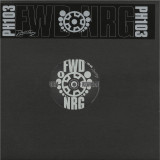
Fort Romeau provides Phantasy with a none-more-timely rave opus in the form of FWD NRG. Unleashing an unexpected, accelerated side of his immaculate studio experiments, FWD NRG is also remixed with blistering results by AceMo.
Immediately engulfing dancers in breakneck kicks, trancing synths and driven by a vampish melody, FWD NRG’s intent is rich in vintage rave texture, dusty and almost warped. This expertly controlled chaos builds to an epic wormhole of a breakdown, dissolving time and space until dancers find their minds transported to a field near Frankfurt, circa 1994.
FWD NRG could well be the maxim of New York’s AceMo, the prolific New York producer who has earned a deserved reputation as one of electronic music’s most inventive and versatile figures. His monumental ‘N Is For Nrg’ remix locates a menacing undertone in Fort Romeau’s original production, spinning off and hitting even tougher with vast rave stabs and gloriously frenetic arrangements.

Every Dunbarrow album has a hauntingly classic sound of, in the band’s own
words, “an eerie rawness.” But their third album feels like you’ve discovered a
mysterious half-century old recording tucked away in a decrepit abandoned
mansion. Perhaps there’s a note attached, begging its courier to beware. Alas,
whoever possessed the tape apparently never survived. ...that is to say, it feels like there’s a solemn
story to this album, not just in the
lyrics, but in the sound itself. Much like
the eponymous debut of Black Sabbath,
the band uses subtle sound effects to
dramatically set the scene for its mostly
clean tones and masterful use of open
space for which the band has become
known. But unlike their first two albums,
this one does see the band branching
out just a bit into heavier, more distorted
guitars. The result is a much more
in-your-face sound, while retaining the
Haugesund, Norway quintet’s masterful
proto-metal sound.
The album opens with the sound of falling
rain as Lønning and Eirik Øvregård’s
guitars seep into the speakers like
funereal bells and haunted drones on
“Death That Never Dies.” Drummer Pål
Gunnar Dale slams down three snare
beats as bassist Sondre Berge Engedal
slinks in harmony over it all. Andersen’s
crisp vocals paint a bleak picture of
dark perdition until the band slips into
a swaggering piano-led coda reminiscent
of “Sabbra Cadabra.” The 7-minute
psychedelic folk masterpiece “Turn In
Your Grave” is the album centerpiece,
replete with mournfully shimmering
Mellotron and bleak folkloric lyrics. Its
hypnotically spinning guitar notes and
old European parlando-rubato singing
hearken to dark early Steeleye Span with
a sinister edge. “In My Heart” perfectly
showcases the band’s penchant for folk
based, yet head-banging riffs that break
with tradition that has stilted modern
heavy music.
“I think with this record, we have managed
to create our own unique sound
with its own Dunbarrow tag,” says the
band. With that sound comes the perfect
artwork: A cover illustration from the
early 1900’s by artist Harry Clarke from
his work for Edgar Allen Poe’s Tales of
Mystery and Imagination.

Juan Wauters’ fifth solo album, Real Life Situations, is a multifaceted ode to sur- rendering control and taking life as it comes. References to radio abound on its 21 tracks, and with good reason - the album spans genres, narrators, languages, and perspectives with the ease of spinning a rotary knob. Mining older songs, phone notes, new material, and snippets from TV and YouTube, Wauters has crafted an aural document of the year through his eyes.
Despite the circumstances of its creation, Real Life Situations is not a quarantine record. In many ways it’s the opposite of one, taking togetherness as both its subject and its primary medium. Pre-lockdown collaborations with Mac DeMar- co, Peter Sagar (AKA Homeshake), Nick Hakim, Cola Boyy, El David Aguilar, and more playfully offset Wauters’ more pensive solo tracks, and even in its sparest moments the album pulses with life. This is due in part to an impressive array of interludes and samples, most of which are field recordings that Wauters collects on his phone, ranging from the innocuous (“A Peter Pan Donuts Conversation”) to the intense (“Crack Dabbling”).
Under his care, these small moments become coordinates for the peaks and valleys of human experience, coloring the album with Wauters’ unique shade of realism. “Some people think I’m an optimist”, he explains, “but I’m not. I’m always seeing all sides of things.”
Of course, Wauters himself never disappears in the boisterous crowd - he lends his chameleonic songwriting to experiments in hip-hop (“Unity”), lo-fi R&B (“Mon- soon”), and deft indie folk (“Lion Dome”). Themes of loneliness, personal growth, patience, and companionship arise again and again; we can feel Wauters navi- gating a rapidly-changing world in real time. Jubilant choruses and spoken word poetry bleed into city noises and overheard conversations. Real freedom, the album suggests, comes not from gaining control, but from accepting its artifice. Like the programming on a radio station, there’s something here for everyone. All you have to do is listen.

- A1: Beating My Head
- A2: I’m Still Waiting
- A3: Take It All Away
- A4: Happy
- A5: He’s Read
- A6: See The Fire
- B1: Monkeys On Juice
- B2: Push
- B3: Silence
- B4: Hollow Eyes
- B5: Russia
- B6: Beating My Head (12” Version)
- C1: Chance
- C2: Generation
- C3: Spinning Round
- C4: Spinning Round (Crash Mix), Hold Yourself Down
- C5: Paint Your Wagon
- C6: More Jipp
- D1: Jipp (Instrumental Mix)^
- D2: Cut Down
- D3: Running Fever
- D4: Pushed Me
- D5: Crawling Mantra
- D6: Hang Man
- D7: All The Same
- D8: Shout At The Sky (Live)
26
For the first time ever this 27 track double album collects all of their singles on Red Rhino and Beggars Banquet/Situation Two on Vinyl. A mandatory compilation that also includes the bonus 7 inch originally appeared on the first ltd version of the 1986 album ‘Paint Your Wagon’ (Paint Your Wagon/More Jipp), an alternative and harder rendition of ‘Beating My Head’ (originally appeared o the Ep ‘This Today’) and ‘Russia’ from the 1984 Ep ‘Hollow Eyes’. Red Lorry Yellow Lorry were one of the most successful independent bands of the 80’s with their dark and often manic rhythms.

- 1: Shelter Song
- 2: High & Hurt
- 3: Love Kills Slowly
- 4: Vendetta
- 5: Drink Rain
- 6: Gold City
- 7: Dear Saint Cecilia
- 8: The Wider Powder Blue
- 9: The Holding Hand
A decade on from their first record, Iceage continue to harness their lives together through music. This journey, in music and life, has never progressed in a linear fashion. Seek Shelter — Iceage’s fifth LP and first for Mexican Summer — is proof that their lives are still happening through their music, and that they remain determined to harness it. Enrolling Sonic Boom (Pete Kember of Spacemen 3) to produce, Seek Shelter sees Iceage’s propulsive momentum pushing them in new, expansive, ecstatic directions. The sound of an emotional core unwound, Seek Shelter radiates warmth and a profound desire for salvation in a world that’s spinning further and further out of control. In an extraordinary and unexpected run following the release of their debut LP, Iceage went from the fertile hyperlocal Copenhagen scene to stages all over the world. Their recordings reflect their journey: 2012’s You’re Nothing was hard, fast and raw, a bold doubling-down on the aggression of youth in the first record as well as the weight of expectation. Plowing Into the Field of Love (2014) and Beyondless (2018) saw a softening of the band’s hardest edges and the arrival of a certain world-weary vaudeville in the Iceage sound. The band’s past two records — all filtered twangy guitar riffs, sparse piano arrangements, and slinky, slow-moving rhythms — ventured into an intoxicated but knowing swirl, surveying the party at the end of the night. They’d seen it all, at least once, and their music rode the crest of that chaos. Seek Shelter, the band’s first record made with an outside producer, is the place they have been called to next. The LP was recorded at Namouche, a dilapidated wood-paneled Lisbon radio studio of 1960s vintage where the band set up for 12 days. It is the longest time they have spent recording a record. Steady rain dripped through the ceiling; they had to arrange their equipment around puddles and slowly-filling buckets covered in cloth so that the sound of droplets wouldn’t reach the mics. Sonic Boom arranged garden lamps from a nearby party store for mood lighting in the high-ceiling space. A choir, the Lisboa Gospel Collective, joined the band for two tracks on the final day in the studio providing a new scale to Rønnenfelt’s incantations. Singer and primary songwriter Elias Rønnenfelt casts their new producer as a sparring partner, another wayward mind to bounce ideas off of. “We wanted a partner that had some noise that we didn’t have, more a wizard than a producer. “When we started, I think we were just lashing out, completely blindfolded with no idea as to why and how we were doing anything. For Seek Shelter, we had a definite vision of how we wanted the album to be carved out, yet still the end result came as a surprise in terms of where we sonically were able to push our boundaries.” He’s speaking of the new record and also of their entire existence as a band, a travelogue that has catapulted these four friends far past the horizons of punk. “Some of that we wanted to remain intact. We try to keep the mystery. If there's no sense of mystery in it for us, then it's not fun.” Seek Shelter is a record that now exists at a moment of a collective unknown, when every beating heart wonders what will happens next.
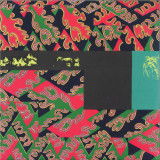
Rich in musical associations yet utterly singular in its voice, joyous with an inner tranquility, the music of Natural Information Society is unlike any other being made today. Their sixth album in eleven years for eremite records, descension (Out of Our Constrictions) is the first to be recorded live, featuring a set from London’s Cafe OTO with veteran English free-improv great Evan Parker, & the first to feature just one extended composition. The 75-minute performance, inspired by the galvanizing presence of Parker, is a sustained bacchanalia of collective ecstasy. You could call it their party album.
This was the second time Parker played with NIS. Joshua Abrams: “Both times we played compositions with Evan in mind. I don’t tell Evan anything. He’s a free agent.”
The music is focused & malleable, energized & even-keeled, drawing on concepts of ensemble playing common to musics from many locations & eras without any one specific aesthetic realization completely defining it.
“The rhythms that Mikel plays are not an exact reference to Chicago house, but that’s in there,” Abrams says. “I like to take a cyclic view of music history, can we take that four-on-the-floor, & consider how it connects to swing-era music? Can we articulate a through line? I dee-jayed for years in Chicago & lessons I learned from playing records for dancing inform how I think about the group’s music. The listener can make connections to aspects of soul music, electronic music, minimalism, traditional folk musics, & other musics of the diaspora as well. It’s about these aspects coming together. I don’t need to mimic something, I need to embody it to get to the spirit, to get to the living thing.”
For jazz fans, the sound of Parker’s soprano & Jason Stein’s bass clarinet might evoke Coltrane & Dolphy, even though they didn’t necessarily set out to do that & they play with complete individuality. Abrams sees a bridge to the historical precedent, too. “Since we first met in the 1990s, one of the things that Evan and I connected on was Coltrane’s music,” he says. “I hoped that we would tap into that sound world intuitively. In this case, I think that level of evocation adds another layer of depth, versus a layer of reference.”
Indeed, this is a performance in which the connections among the ensemble & the creative tension between improvisation and composition build into a complex mesh of associations & interactions. While the band confines itself to the territory mapped out by Abrams’ composition, they are remarkably attentive & responsive, making adjustments to Parker’s improvisations. When Parker’s intricate patterns of notes interweave with the band, the parts reinforce one another & the music rockets upward. Sometimes, Parker’s lines are cradled by the group’s gentle pulse & an unearthly lyrical balance is struck.
Drummer Mikel Patrick Avery is locked-in, playing with hellacious long-form discipline, feel & responsiveness. Jason Stein’s animated, vocalized bass clarinet weaves in & out with Lisa Alvarado’s harmonium to state the piece’s thematic material; the pulsing tremolo on the harmonium brings a Spacemen 3 vibe to the party. Abrams ties together melody & rhythm on guimbri, a presence that leads without seeming to. Like his bandmates, he shifts modes of playing frequently, improvising & then returning to the composed structure.
“As specific as the composition is, the goal is to internalize it & mix it up,” Abrams says. “The idea is to get so comfortable that we can make spontaneous changes, find new routes of activity, stasis & byways every gig. It’s like a web we’re spinning. If someone makes a move, we all aim to be aware of it, make room for it. Experiencing & listening is what it’s about, & Evan supercharges that.”
& “supercharged” is the word for this album. With Parker further opening up their music, descension (Out of Our Constrictions) is the sound of Natural Information Society growing both more disciplined and freer, one of the great bands of its time on a deep run.
Aguirre edition: Mastered by Helge Sten, Audio Virus, Oslo. Lacquers by Dubplates & Mastering. Liner Notes by Theaster Gates. LPs pressed on premium audiophile-quality vinyl at Pallas Records. US 2xLP edition available thru Eremite records.

It's a strange world we're living in and these addictive cuts mirror it well.
Dancing all night in cheerful melancholy with two strictly limited edits.
The A-side renders gothic synth pop at cruising tempo, spinning a web of tape delay as your mind unravels. A bassline throbs, pistons hiss and a paranoia takes hold of an icy vocal. Lose yourself in the otherwhere.
We step into a pristine wilderness on the B-side, stately pads gliding over a supple rhythm section while tender chimes tug at your heartstrings. Emotion abounds on an instrumental which never was. Big boys do cry, and this dove's weeping over broken wings…

14
The Glass Passenger is the second album by American alternative rockers Jack’s Mannequin. It captures frontman Andrew McMahon during a darker period, after he was diagnosed with leukaemia. Some painful subjects are woven into the pop- rock and orchestral sounds. From the slow-burning “Spinning” to the razor sharp single “Swim”, it’s a versatile and colourful album.
Jack’s Mannequin is the side project of Andrew McMahon from pop punk band Something Corporate. They recorded three albums during their existence. McMahon crafted some incredible pop songs for the band.
The album, which also contains bonus track “Miss California”, is available as a limited edition of 2500 individually numbered copies on silver vinyl.

10
Bobby Would LP#2. Wistful waltztime psychobeat for warding off / wallowing in the 2020-21 Weltschmerz. Swelling and smearing the vision of 2018’s skeletal rock’n’roll heartbreaker Baby, most of the songs here are ballads – minimalist, ultra-hypnotic but lavishly melodic space-punk lullabies and bright, bruised expressions of jingle-jangle mourning. Highs, lows and heavenly blows. BW’s guitar is, more than ever, a thing of fearsome and filigree beauty, moving effortlessly from misty, mellifluous DIY pop-dreams to wailing vertiginous whiplash leads and dazed, epiphanic, angels-wept metha-drone, ringing in infinity - and tethered to this earth only by his beloved monotone, numbed-out, serial-killer croon. Spinning in its own orbit, but with recognisable dabs - perhaps - of Phantom Payn / JG39, Les Rallizes Denudes, Gary War, Peter Gutteridge’s Pure...and of course Bobby’s own work in Heavy Metal and Itchy Bugger.

10
The band that became Nightshift formed in 2019 in the ecosystem of Glasgow's current indie scene. The city's fertile & creative group of musicians have been committed to pushing the boundaries of and blurring the lines between DIY, punk, experimentalism and indie pop for decades now; a home to bands like Shopping, Vital Idles, Current Affairs, Still House Plants, and Happy Meals as well as forebears like Orange Juice, Teenage Fanclub and Yummy Fur. Nightshift slot right in with all mentioned, featuring members from current indie stalwarts Spinning Coin, 2 Ply and Robert Sotelo. Initially formed by guitarist David Campbell and bassist Andrew Doig as a "No Wave/No New York/ early Sonic Youth/This Heat-esque" group, the addition of Eothen Stern (keyboards/vocals) and Chris White (drums) instantaneously transformed their approach (guitarist/vocalist/clarinetist Georgia Harris joined as the band was writing "Zöe"). The band self-released a full-length tape on CUSP Recordings in early 2020, laying the foundation of their sound; hypnotic, melodic, understated indie post-punk with hooks that stick around long after you've heard them. "Zöe" is the band's newest effort, and first for Trouble In Mind. Unlike the band's previous album, the songs on "Zöe" weren't conceived live in the band's practice space, but rather pieced together and recorded remotely during quarantine lockdown, with each member composing or improvising their parts in homes/home studios, layering ideas over loops someone made and passing it on. The isolation actually allowed for an openness and creativity to flow and many of the songs took on radically different forms from when they were originally envisioned. Vocalist & primary lyricist Eothen Stern says "The process of writing these songs separately during lockdown was a kind of exquisite corpse - I liked this gesticulation of reaching out to one another and responding. Building up the next layer and passing it on." Stern says "poetic restraints" to writing & Eno's Oblique Strategies concepts were on their mind when composing the words to the songs on "Zöe" and lists the influence of author Rosi Bradiotti's book "The Posthuman". "Zöe" means "live drive", derived from the word conatus. Bradiotti defines conatus as "an effort or striving, endeavour, impulse, inclination, tendency, undertaking, serving is an innate inclination of a thing to continue to exist and enhance itself." and Stern views it as "...a kind of feminist re-claiming of communal public, anti- privatisation, looking to strive for social and environmental justice. Zöe kind of became a character of striving for me when writing.". "Zöe" kicks off with "Piece Together", a hypnotic song anchored by the band's chanted vocals and serpentine guitar licks. "Spraypaint the Bridge" showcases Harris' clarinet in an unexpected & delightful melodic shift during the song's anti-chorus. Elsewhere tunes like the swooning "Infinity Winner" and "Outta Space"s minimalist, slinky rhythm swirl in a late-night vibe, while "Make Kin" ruminates on "Looking to kinship as a way of engaging with entangled environmental and reproductive issues... how a band is a bond" and lurches forward with kinetic guitar strangling and staccato rhythmic percussion from White and Doig. "Power Cut" is the album's centerpiece, kicking off side two and lures the listener into its world over it's 7-minute runtime. Lulling them into involuntary movement with its waves of melodic harmonies, synth drones and metronomic pulse, until they all come crashing down in the song's dissonant midsection. The band acknowledges the whiffs of nostalgia prevalent in "Zöe"s songs (the title track in particular), and the nature of writing and recording the album is soaked in the self-work, reflection and reevaluations involved not only personally but creatively in each member's lives. Consequently, the album becomes a collection of sketches of hope, growth, awareness of the power of the world and the power of self, kith, kinship, friendship, resistance, and possibility.

10
The band that became Nightshift formed in 2019 in the ecosystem of Glasgow's current indie scene. The city's fertile & creative group of musicians have been committed to pushing the boundaries of and blurring the lines between DIY, punk, experimentalism and indie pop for decades now; a home to bands like Shopping, Vital Idles, Current Affairs, Still House Plants, and Happy Meals as well as forebears like Orange Juice, Teenage Fanclub and Yummy Fur. Nightshift slot right in with all mentioned, featuring members from current indie stalwarts Spinning Coin, 2 Ply and Robert Sotelo. Initially formed by guitarist David Campbell and bassist Andrew Doig as a "No Wave/No New York/ early Sonic Youth/This Heat-esque" group, the addition of Eothen Stern (keyboards/vocals) and Chris White (drums) instantaneously transformed their approach (guitarist/vocalist/clarinetist Georgia Harris joined as the band was writing "Zöe"). The band self-released a full-length tape on CUSP Recordings in early 2020, laying the foundation of their sound; hypnotic, melodic, understated indie post-punk with hooks that stick around long after you've heard them. "Zöe" is the band's newest effort, and first for Trouble In Mind. Unlike the band's previous album, the songs on "Zöe" weren't conceived live in the band's practice space, but rather pieced together and recorded remotely during quarantine lockdown, with each member composing or improvising their parts in homes/home studios, layering ideas over loops someone made and passing it on. The isolation actually allowed for an openness and creativity to flow and many of the songs took on radically different forms from when they were originally envisioned. Vocalist & primary lyricist Eothen Stern says "The process of writing these songs separately during lockdown was a kind of exquisite corpse - I liked this gesticulation of reaching out to one another and responding. Building up the next layer and passing it on." Stern says "poetic restraints" to writing & Eno's Oblique Strategies concepts were on their mind when composing the words to the songs on "Zöe" and lists the influence of author Rosi Bradiotti's book "The Posthuman". "Zöe" means "live drive", derived from the word conatus. Bradiotti defines conatus as "an effort or striving, endeavour, impulse, inclination, tendency, undertaking, serving is an innate inclination of a thing to continue to exist and enhance itself." and Stern views it as "...a kind of feminist re-claiming of communal public, anti- privatisation, looking to strive for social and environmental justice. Zöe kind of became a character of striving for me when writing.". "Zöe" kicks off with "Piece Together", a hypnotic song anchored by the band's chanted vocals and serpentine guitar licks. "Spraypaint the Bridge" showcases Harris' clarinet in an unexpected & delightful melodic shift during the song's anti-chorus. Elsewhere tunes like the swooning "Infinity Winner" and "Outta Space"s minimalist, slinky rhythm swirl in a late-night vibe, while "Make Kin" ruminates on "Looking to kinship as a way of engaging with entangled environmental and reproductive issues... how a band is a bond" and lurches forward with kinetic guitar strangling and staccato rhythmic percussion from White and Doig. "Power Cut" is the album's centerpiece, kicking off side two and lures the listener into its world over it's 7-minute runtime. Lulling them into involuntary movement with its waves of melodic harmonies, synth drones and metronomic pulse, until they all come crashing down in the song's dissonant midsection. The band acknowledges the whiffs of nostalgia prevalent in "Zöe"s songs (the title track in particular), and the nature of writing and recording the album is soaked in the self-work, reflection and reevaluations involved not only personally but creatively in each member's lives. Consequently, the album becomes a collection of sketches of hope, growth, awareness of the power of the world and the power of self, kith, kinship, friendship, resistance, and possibility.

10
The band that became Nightshift formed in 2019 in the ecosystem of Glasgow's current indie scene. The city's fertile & creative group of musicians have been committed to pushing the boundaries of and blurring the lines between DIY, punk, experimentalism and indie pop for decades now; a home to bands like Shopping, Vital Idles, Current Affairs, Still House Plants, and Happy Meals as well as forebears like Orange Juice, Teenage Fanclub and Yummy Fur. Nightshift slot right in with all mentioned, featuring members from current indie stalwarts Spinning Coin, 2 Ply and Robert Sotelo. Initially formed by guitarist David Campbell and bassist Andrew Doig as a "No Wave/No New York/ early Sonic Youth/This Heat-esque" group, the addition of Eothen Stern (keyboards/vocals) and Chris White (drums) instantaneously transformed their approach (guitarist/vocalist/clarinetist Georgia Harris joined as the band was writing "Zöe"). The band self-released a full-length tape on CUSP Recordings in early 2020, laying the foundation of their sound; hypnotic, melodic, understated indie post-punk with hooks that stick around long after you've heard them. "Zöe" is the band's newest effort, and first for Trouble In Mind. Unlike the band's previous album, the songs on "Zöe" weren't conceived live in the band's practice space, but rather pieced together and recorded remotely during quarantine lockdown, with each member composing or improvising their parts in homes/home studios, layering ideas over loops someone made and passing it on. The isolation actually allowed for an openness and creativity to flow and many of the songs took on radically different forms from when they were originally envisioned. Vocalist & primary lyricist Eothen Stern says "The process of writing these songs separately during lockdown was a kind of exquisite corpse - I liked this gesticulation of reaching out to one another and responding. Building up the next layer and passing it on." Stern says "poetic restraints" to writing & Eno's Oblique Strategies concepts were on their mind when composing the words to the songs on "Zöe" and lists the influence of author Rosi Bradiotti's book "The Posthuman". "Zöe" means "live drive", derived from the word conatus. Bradiotti defines conatus as "an effort or striving, endeavour, impulse, inclination, tendency, undertaking, serving is an innate inclination of a thing to continue to exist and enhance itself." and Stern views it as "...a kind of feminist re-claiming of communal public, anti- privatisation, looking to strive for social and environmental justice. Zöe kind of became a character of striving for me when writing.". "Zöe" kicks off with "Piece Together", a hypnotic song anchored by the band's chanted vocals and serpentine guitar licks. "Spraypaint the Bridge" showcases Harris' clarinet in an unexpected & delightful melodic shift during the song's anti-chorus. Elsewhere tunes like the swooning "Infinity Winner" and "Outta Space"s minimalist, slinky rhythm swirl in a late-night vibe, while "Make Kin" ruminates on "Looking to kinship as a way of engaging with entangled environmental and reproductive issues... how a band is a bond" and lurches forward with kinetic guitar strangling and staccato rhythmic percussion from White and Doig. "Power Cut" is the album's centerpiece, kicking off side two and lures the listener into its world over it's 7-minute runtime. Lulling them into involuntary movement with its waves of melodic harmonies, synth drones and metronomic pulse, until they all come crashing down in the song's dissonant midsection. The band acknowledges the whiffs of nostalgia prevalent in "Zöe"s songs (the title track in particular), and the nature of writing and recording the album is soaked in the self-work, reflection and reevaluations involved not only personally but creatively in each member's lives. Consequently, the album becomes a collection of sketches of hope, growth, awareness of the power of the world and the power of self, kith, kinship, friendship, resistance, and possibility.

11
After the heaviest of years, it should be time to take a little weight off with the playful sounds of The Person. Mapping its own Bermuda Triangle between dub-pop, sugary synthwave and Balearic boogie, ‘Tide Life’ transports Compass Point to Soggy Bottom, providing maximum fun, sun and bitmap escapism.
The eagle-eared may recognise The Person from the aspirational Italo-rockers Steaming Jeans, whose chalet-ready romp on Bordello A Parigi scored a Winter Olympic gold back in early 2020. Now left to her own devices, Minna Wight swaps the slopes for a jet ski and takes a Wave Race from Summer Bay to Monkey Island across 11 cuts of vintage oddball pop.
Whether she’s borrowing Brenda’s Beach Balls for the dubby daydream of ‘Snail Cafe’ and ‘The Place’, serving lost library cues to SNES club scenes on ‘Barry R Reef’ and ‘Elastic Shoes’ or spinning high school slow jams into synth soul ballads like ‘Nice Feeling’, Minna disguises serious musicianship behind a naive aesthetic. Disarmed by charm, we’re powerless to resist her tidal pull.
Patrick Ryder

14
Recorded in 2011 in a dusty, beloved barn, ‘Even Your Drums Will Die’ is a time machine, a real one, to a moment packed thick with Richard Swift’s singular, crackling liveliness. Where Swift’s studio recordings are marked by texture, tone and mood, ‘Even Your Drums Will Die’ puts a spotlight on Swift’s voice, his lyrics and his songwriting.
Running through all of Swift’s tunes is a certain agitation - a fidgetiness, a restlessness. It’s clearer than ever now, over two years after Swift’s passing, that he used his music to let a little pressure out of his tire. ‘A Song for Milton Feher’ nods to all this, its namesake coming from the professional dancer and director who taught his students to release their “habits of tension.” The song feels like a skeleton key to Swift’s oeuvre, a clear look into the wild wheels spinning inside his big old artist noggin.
On the flipside is ‘Lady Luck’. The classic. The revived ghost of a lost 45 that never existed, or maybe always did, but that only Richard Swift could make real.
If you know these songs, you will find them set alight here. If you don’t, ‘Even Your Drums Will Die’ is an incomparable snapshot of both art and artist. It is a genie, a real one, let loose from the lamp with Richard Swift’s explosive energy, imagination and mischief.
Recorded Live at Pickathon, 2011.
Swift was a celebrated recording artist, collaborator (The Black Keys, The Shins, the Arcs) and producer (Nathaniel Rateliff, Kevin Morby, Guster, Pretenders).
