SUBPLATES - THE ICONIC SUBURBAN BASE SERIES RETURNS
Forthcoming on Subbase Progression is the all new SUBPLATES Vol 6 EP. The iconic series of releases from the first wave of SubBase now sees a brand new 4 track EP dropping soon as a stunning picture disc.
Way back in 1993, Suburban Base Records launched the Sub Plates series, a homage to the dubplate culture of early jungle music, it was even released in the 10” vinyl format to reflect the acetate plates DJ’s were playing.
Now in 2022 the way we consume music has evolved, DJ’s are no longer playing the 10” dubs, and the average vinyl buyer is a collector and connoisseur of great music. This iteration of the Subplates series reflects this change. Aimed squarely at the vinyl collectors Subplates Vol 6 is presented as a stunning double-sided picture disc.
Incredible art direction has long been a hallmark of Suburban Base and this release definitely delivers with one of the most stunning looking releases ever from the label. Instantly recognisable as SubBase with the cool graffiti/street art style mural and including the labels original & iconic SB logo within the design.
There’s more to this release than just an eye-catching design though… Imprinted into the grooves of this collectible limited edition vinyl are 4 brand new tracks from some of the labels most recognised artists!
Marvellous Cain, Dead Dread, Cool Hand Flex, Badman& D.B.H each bring a track to this new format Sub Plates release. Original jungle vibes & flavours bought bang up to date for 2022…
Sweet Ting by Marvellous Cain is currently getting radio support from Rampage on BBC Radio 1, Heartless Crew on BBC 1Xtra, and international club support from Brazilian turntable wizard DJ Marky.
Поиск:square records
Все
4LP Deluxe Edition[60,92 €]
Following on from the success of 2020's deluxe reissue of 'Vienna',
Chrysalis Records are proud to release a 40th Anniversary of the bands
second album with Midge Ure, 'Rage In Eden'
Originally released in October 1981 and like the bands previous two albums, it
was produced by Conny Plank (Kraftwerk, Can, Neu!), this time recorded at
Conny's studio in Cologne during the summer of '81.
This new 6 Disc box set contains 52 tracks, with 22 previously unreleased
recordings. CD's 1 to 5 contain the original 1981 album production master, a new
stereo mix by Steven Wilson, A-sides, B-sides & live tracks along with previously
unreleased cassette rehearsals and a newly mixed concert recorded at
Hammersmith Odeon in October 1981. The DVD (Audio Only) contains a new 5.1
Surround Sound Mix of the Album/B-sides by Steven Wilson along with 24/96 HiRes audio of the new mixes and the original 1980 Master/B-sides.
The set is packaged in a 12"x12" Rigid Slipcase and contains a 20 page 12"
square booklet featuring contributions from the band, unseen photos from Midge
Ure's and Chris Cross' personal collection, reproduction of the Rage In Eden tour
programme, 6 discs in card wallets housed in two 12" gatefold album sleeves.
2LP Half-Speed Mastered[30,67 €]
Following on from the success of 2020's deluxe reissue of 'Vienna',
Chrysalis Records are proud to release a 40th Anniversary of the bands
second album with Midge Ure, 'Rage In Eden'
Originally released in October 1981 and like the bands previous two albums, it
was produced by Conny Plank (Kraftwerk, Can, Neu!), this time recorded at
Conny's studio in Cologne during the summer of '81.
This new 6 Disc box set contains 52 tracks, with 22 previously unreleased
recordings. CD's 1 to 5 contain the original 1981 album production master, a new
stereo mix by Steven Wilson, A-sides, B-sides & live tracks along with previously
unreleased cassette rehearsals and a newly mixed concert recorded at
Hammersmith Odeon in October 1981. The DVD (Audio Only) contains a new 5.1
Surround Sound Mix of the Album/B-sides by Steven Wilson along with 24/96 HiRes audio of the new mixes and the original 1980 Master/B-sides.
The set is packaged in a 12"x12" Rigid Slipcase and contains a 20 page 12"
square booklet featuring contributions from the band, unseen photos from Midge
Ure's and Chris Cross' personal collection, reproduction of the Rage In Eden tour
programme, 6 discs in card wallets housed in two 12" gatefold album sleeves.
Nach einer fünfjährigen Auszeit, in der er sich ganz unterschiedlichen Musikprojekten widmete, kündigt Squarepusher sein nächstes Studioalbum "Be Up A Hello" an. Für das neue Album setzte Tom Jenkinson nach vielen Jahren erstmals wieder auf dieselbe digitale und analoge Hardware, mit der er in den frühen 1990ern seinen Trademark-Sound definierte. Die Verwendung der Vintage-Synthesizer und -Effekte (inkl. eines Commodore Vic-20) markiert eine radikale Kehrtwende für den Briten, der auf dem Vorgänger "Damogen Furies" noch komplett auf moderne Tools und die neueste Software setzte, von ihm selbst im Laufe von 15 Jahren programmiert und optimiert. Das Ergebnis klingt vor allem ausgelassen, wenn Tom astreine Breakbeat-Tunes wie "Nervelevers" und "Terminal Slam" – klassisches Dancefloor-Material – vom Stapel lässt. Düstere Tracks wie "Vortrack" und "Mekrev Bass" belegen derweil, dass er nach wie vor ein Faible für perfekt ausbalancierten Psycho-Overload hat. Insgesamt verweist "Be Up A Hello" auf die Ära der DIY-Raves in Essex, deren Ekstase, Ausgelassenheit und Hemmungslosigkeit die ganze Herangehensweise von Tom nachhaltig prägen sollten.
"Tommy Womack has been a revered and fearless leader among his
generation of fellow artists and kindred spirits for a long time now
Even the stories he makes up are true" — Todd Snider."Tommy Womack is a multihyphenated treasure: what you get when you put Keith Richards, Billy Graham,
and Hunter S. Thompson in a blender and turn it on high." — Marshall Chapman,
author of Goodbye, Little Rock and Roller and They Came to Nashville"One of
Nashville's finest singer-songwriters. For round pegs in square holes everywhere."
- John Hiatt
Eric Dolphy's final studio album is hailed as one of the finest examples of mid-'60s post bop. Its reputation is purely one of backwards significance. Dolphy, having recorded the album in February 1964, was in Europe less than six weeks later and his all-too-brief life ended less than two months after that. Though likely he never held a copy in his hands or heard any critical opinion of it, it marked his last flurry of original compositions and is considered his apex. It is fascinating to consider whether he would had moved past or away from the album in 1965, had he lived.
Though Dolphy should not be considered an avant-garde musician by the term's most common definitions, most interpretations of Out To Lunch have been done by players working squarely in that area. So it is with this album, the most ambitious in its recreation of the five-tune disc (with one original added to the final "Straight Up and Down, extending the piece to almost thirty minutes). All five compositions from the original quintet LP are revisited in the same order, the record sleeve even duplicates the old album jacket, down to the typeface and black-and-blue color scheme, although a photo taken by Daidō Moriyama inside Tokyo's massive (and massively busy) Shinjuku railway station replaces the Dolphy's album's enigmatic "Will Be Back" sign, whose clock hands indicated no conventional time of expected return.
Otomo Yoshihide first came to international prominence in the 1990s as the leader of the experimental rock group Ground Zero, and has since worked in a variety of contexts, ranging from free improvisation to noise, jazz, avant-garde and contemporary classical. The always surprising and sometimes confounding turntablist, sound artist, onkyo improviser and now avant jazzer heading up a 15-piece aggregation of Japanese and European experimentalists. Who better to grapple with Dolphy's legacy -- so idiosyncratic in its day and yet so influential to creative improvisers who followed -- than a musician with his own singular take on how sounds can be organized in the jazz realm over 40 years later and half a world away? In other words don't expect the conventional from Otomo any more than you would from Dolphy himself. That's not to say that recognizable themes ("Hat and Beard," "Out to Lunch," "Straight Up and Down") don't appear, or that individual players -- including Alfred Harth on bass clarinet bursting into the mix and leaping across the instrument's tonal range in a way that recalls the master himself -- don't carry forward echoes from the past in the spirit of a sincere and heartfelt homage.
However, a good deal of the time all bets are off; in addition to the usual brass, reeds, bass, and drums (and of course a bit of vibraphone, here played by Takara Kumiko in far less prominent role than that of Bobby Hutcherson) are such sonic paraphernalia as sine waves, contact mike, no-input mixing board, and, of course, "computer." (Otomo himself plays skronky electric guitar.) From composition to composition and even during episodes within compositions, the band takes radically different approaches. There are blasts of free jazz energy not too far removed from the Peter Brötzmann Tentet, an impression reinforced by the presence of spluttering wildman Mats Gustafsson on baritone sax. Not surprisingly and often in contrast with the Dolphy original, the music is dense and filled to overflowing with sounds -- sometimes due to fundamental reworkings in structure rather than just the larger size of the ensemble. The middle section of "Something Sweet, Something Tender" somewhat belies the original's title with elongated howls and cries from the horns over slo-mo bass, drums, and electronic noise poised somewhere between dirge and drone, and the sudden explosion of punk-ish rock energy in the following "Gazzelloni" is a startling contrast.
At times, the feeling is that of listening to the original Out To Lunch while a séance is going on to contact Dolphy's ghost, with supernatural sounds swirling around the stereo. The effect is disconcerting, as is the post-apocalyptic cloud hanging over the arrangements, but it makes the effort more than an unnecessary tribute album. Instead, Dolphy is transported into the 21st Century and allowed to romp through modern developments in music. An inspiring concept and an album that will stretch the boundaries of anyone who comes into contact with it.
Slave To Society is the new solo project of Andrew Bowen (Ex AnD / Shadows)
Dystopian concepts and themes help build the intense sound and vision of the project. Known for exploring the extremities of the hardcore sound, tempo unrelated this is about the amalgamation of industrial and
experimental noise music, mixed with cinematic atmospheres, technoid rhythms, mechanical breaks and raw low frequency distortion. Releasing music with PRSPCT, Bank NYC, Murder Channel, Cyberspeak, Pure Hate Trax and many more. Think for ourselves, create and move outside the realm of ordinary submission.
Don’t be a Slave to Society!
Written Produced and Recorded by Andrew Bowen
Mastered and cut by Dietrich Schoenemann
Published by BANK Records NYC Ltd
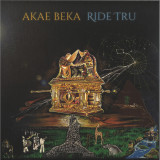
Akae Beka's inimitable style of rich, deep, multi-layered songwriting, uncompromising devotion to RasTafari and soulful healing melodies developed over decades performing with St. Croix based band Midnite and countless recordings. At the point of his untimely passing in 2019, he had released over 70LP's. He is without a doubt one of the most prolific reggae artists ever known.
The stellar production trinity that is Zion I Kings have been involved collectively and individually in creating some of the most highly regarded contributions to the vast Akae Beka catalogue. Ride Tru, originally released digitally and on CD in 2014, stood every chance disappearing into the all eclipsing shadow of the LP released by them earlier that year, Beauty for Ashes, which had been named by iTunes as the reggae album of the year. A monumental achievement for undiluted, uncompromising RasTafari roots reggae music this side of the millennium. So needless to say, the bar was high and Vaughn Benjamin and Zion I Kings must have known that, as they managed to raise it higher again.
Ride Tru continues in the same form, rootsy, soulful, refreshingly polished and authentically raw, the threads of anciency that any devout reggae lover will be looking for and the threads of modernity that keep it alive and appealing in the modern day. A uniquely regal tapestry that has become synonymous with music created from the unity of Zion I Kings and Vaughn Benjamin
Following 8 years of anxious anticipation, for the countless Akae Beka fans that are also vinyl connoisseurs, this LP is now being released on as a 12" vinyl LP courtesy of Before Zero Records. This offers the listener not only the chance to enjoy this LP in an analogue form, but also the chance to hold the artwork as a 12" square masterpiece, created by the hands of Ras Marcus, the artist who gave the powerful visual presence that became synonymous to much of the I Grade / Akae Beka works over the years.
“How does an artist follow an album considered by many to be the best reggae album of 2014?..... you get right back in the studio with the same brilliant production team and follow that album a few short months later with one that nearly eclipses it entirely.”
Midnight Raver — Worldareggae
“...remarkable for the clarity of Tippy’s mix and the contrast between the hardness of Lloyd Richards’ drums and the softness of the guitars, keyboards and brass. The woozy analogue warmth of an old Augustus Pablo production – Son of Jah Dub - for Worry Free demonstrates how well Vaughn sits on the sounds of the original masters (an avenue that should be pursued further). Another veteran guest is the late Style Scott - who beats out one of his final patterns on How I & I Carry On.”
Angus Taylor — United Reggae
- A1: Brace Yourself Jason
- A2: Hasty Boom Alert
- A3: Mushroom Compost
- B1: Blainville
- B2: Lunatic Harness
- B3: Approaching Menace
- C1: My Little Beautiful
- C2: Secret Stair (Part 1)
- C3: Secret Stair (Part 2)
- C4: Wannabe
- D1: Catkin & Teasel
- D2: London
- D3: Midwinter Log
- E1: Hanky Pokery
- E2: Jiggery Panky
- E3: Worcester
- E4: The Cut Of My Jib
- F1: Lunatic Harness
- F2: Lunatic Harness (Remix)
- F3: Mr Angry (Remix)
- G1: Brace Yourself (Remix)
- G2: Kubba
- G3: Vaken Bolt
- G4: Losers' March
- H3: Abmoit
- H4: Brace Yourself (Reprise)
- H1: Summer Living 2
- H2: Intellitag
Clear Vinyl[116,60 €]
Lunatic Harness, µ-Ziq's rare and sought-after fourth album, was originally released in July 1997 on Virgin's Hut Recordings label. It is generally considered to be Mike Paradinas's best work of the nineties. An Apple Music review describes Lunatic Harness as "the prettiest album to come out of the mid-'90s "drill'n'bass movement", noting that Paradinas eschewed the abrasiveness of similar works by Squarepusher and Aphex Twin in favour of "atmospheres of ethereal color and shimmering melody", bringing the album "closer to pop music than anything Paradinas had previously attempted". Planet Mu has compiled a special 256th anniversary edition 4xLP boxset bringing together the My Little Beautiful EP, the Lunatic Harness album and May 1998's Brace Yourself EP (released by USA's Astralwerks label) with the addition of four rare tracks. Discs one and two of the vinyl are the original Lunatic Harness album, disc three compiles the My Little Beautiful b-sides with three unreleased cuts from the period and a remix of Mr.Angry from 1997's Mealtime compilation, while disc four is the 8-track Brace Yourself EP which hasn't been re-issued since 1998. This all comes in individual printed sleeves housed in a rigid box with an insert collage of some of the press Mike received at the time. There is also a 2xCD edition with the same tracklisting.
Bringing together some of the most incredibly spellbinding songs from a masterclass in song writing and one of R&B's biggest forces in the development of
black music. More than any other artist on the planet, Stevie Wonder's music has crossed the divides and cemented different races and generations with
million-selling records that offer both depth and jubilation. Greatest Hits Live celebrates the journey to worldwide success with a sublime collection of live
performances that not only capture his most iconic hits, but also the soul of the man who made them.
Get Yer Vinyl Out invites you to experience the legendary Stevie Wonder, performing hit after hit, live on stage, in a sensational and exclusive collection.
Superb, professionally remastered original broadcasts, presented with background liners and timeline photos.
Tracks recorded at ‘Wonderlove’, Soul! TV, New York City, NY, 19th November 1972 (WNET 13); Masonic Temple Theatre, Detroit, MI 14th April 1984 (WRIFFM); ‘NYC Song Competition Awards’, Madison Square Garden, New York, NY 27th September 1986 (WNEW-FM) and Fox Theatre, Atlanta, GA, 28th
November 1988 (WREK-FM).
A 180g Eco mixed vinyl release, pressed on randomly mixed colour compound and presented in a deluxe gatefold sleeve.
- 1: Connais Tu L'animal Qui Inventa Le Calcul Integral?
- 2: Evariste Aux Fans
- 3: Les Pommes De Lune
- 4: La Chasse Au Boson Intermédiaire
- 5: Dans La Lune
- 6: La Faute À Nanterre
- 7: Ma Mie
- 8: Wo I Nee
- 9: Si J'ai Les Cheveux Longs C'est Pour Pas M'enrhumer, Atchoum!
- 10: La Révolution
- 11: Je Ne Pense Qu'a Ça
- 12: Je Chante Pour Vous Faire Marcher
- 13: Je Ne Suis Pas Simple
- 14: Si Les Étoiles Pouvaient Parler
Évariste is one of the rare specimens of artist-cum-scientists. Among his kind stand others like Pierre Schaeffer, a Polytechnique graduate (an engineer but also the father of musique concrète) and the eccentric Boby Lapointe (graduate of the École centrale and inventor of the Bibi-binaire system, patented in 1968). Évariste's songwriting, joyful and full of energy (albeit extremely critical), shrouds an original tragedy: born in 1943 among résistants, Joël Sternheimer (aka Évariste) grew up without a father, lost to Auschwitz. Although he makes little reference to Jewish culture in his music, his origins leave their mark: in 1974, he sings a Hebrew song on television. In 1966, the young Joël sports Princeton's colourful paraphernalia - that's because he's freshly returning from the US, where he was sent to pursue his research on "particle mass and the interpretation of observed regularities, such as the effects of a wave" (will understand who may). When he gets there the country's in the midst of the Vietnam War. With McNamara keen to find an alternative to the nuclear weapon and calling upon the country's biggest brains to undertake the task, there's a "fund shift" within the university - a diplomatic way to give notice to whoever may not be disposed to follow the government's scheme. Joël, who's under the supervision of a rebellious physician, is dismissed. He regardless keeps following the prestigious seminaries of the Institute for Advanced Study, chaired by Oppenheimer, inventor of the atomic bomb. Likely inspired by the hippie movement and music, Joël buys a guitar and starts playing in Washington Square - after all, Bob Dylan himself started there. He blithely skips Oppenheimer and receives a warm (though surprised) welcome from a crowd thoroughly unfamiliar with French. When the ageing physicist questions him about his decreasing attendance, Joël explains how drawn he is to music, and how he thinks it could help him in self-financing his research. Évariste recalls seeing the sickened man, his face torn by remorse, lighten up to his words and say: "What's keeping you - go for it! If I was still young that's exactly what I'd do." The student takes these words as a testimony from his professor - and it's enough to convince him . And so he takes the leap during the Christmas vacations he spends in Paris. A journalist friend he often sees around the Sorbonne introduces him to the artistic director of Disques AZ. The latter passes the tapes on to the label's boss, Lucien Morisse, also program manager on Europe N°1. Morisse is blown away - and signs him onto the label right away. Michel Colombier, arranger for Serge Gainsbourg and co-author of "Psyché Rock", with Pierre Henry, contributes some of his original ideas to the 7 inch "E=mc2": Évariste's preoccupation with the percussion sound on the track "Le calcul intégral" is that it goes "poom poom" and not "tock tock" - Colombier is aware of the issue and records Évariste's guitar like a percussion in an isolated booth. The organist Eddy Louis, who is to participate, in 1969, to the success of Claude Nougaro's "Paris mai", also appears on the record. It's 1966 and the Antoine phenomenon (signed on Vogue) storms through France. The two singers share similarities: Antoine is an engineer of the École centrale, gifted with a great originality in his song-writing. A godsend for the two labels who turn this resemblance into a commercial strategy, setting them out as rivals. To this day though, Évariste still denies what was little more than slushy tabloïd gossip. Success comes around swiftly and in 1967 Évariste launches into a second 7 inch, "Wo I nee", again arranged by Michel Colombier. Quantum mechanics fans finally get their anthem with "La Chasse Au Boson Intermédiaire" (or the "Intermediary Boson Pursuit"). To sum up what's a boson, say he's a close pal of the meson, photon and other gluons. A few months later, it's May 68 and everything's turned upside down. Évariste writes a series of songs inspired by the events, which he immediately submits to Lucien Morisse. When the man behind "Salut les copains", once married to Dalida, hears the song "La révolution" - a father and son dialogue - he can't take any more: AZ simply cannot release this. But there and then Lucien Morisse makes a gesture which will remain engraved in French music's history: sorry to be unable to officially stand by the singer, he encourages him to self-produce the record, but with his tacit support. He calls the pressing factory and asks they apply the same rate for Évariste as they would for AZ. The singer and his musicians use the same studio as for the previous record, all of them playing for free awaiting a return on investment. Évariste keeps singing at the Sorbonne with "Jussieu's gang" and "the young Renaud" he nicknames "le p'tit gavroche" (or "street urchin"). Renaud volunteers to type the lyrics of the song "La révolution" so that the chorus can be sung and recorded. A boy in the group is related to Wolinski and introduces them. The two get along so well that Wolinski ends up drawing the cover for the record "La révolution", for free. The self-released 7 inch "La révolution / La faute à Nanterre" is sold under the table and door-to-door for half the price of a standard record, on and around the boulevard Saint-Michel; and it runs out fast. In the end, there will be 6 releases of the record, and 25000 copies sold. When the theatre director Claude Confortès decides to adapt Wolinski's drawing series titled "Je ne veux pas mourir idiot" ("I don't want to die a fool"), he asks Évariste to write the original soundtrack. His friend, now cartoonist for Hara-Kiri Hebdo, often promotes him in accordance with a principle dear to him by virtue of which he gives a special place to his friends. Dominique Grange (writer of the song "Nous sommes les nouveaux partisans") soon joins the team. After 150 performances, Évariste leaves his place to Dominique Maurin (brother of Patrick Dewaere). Évariste composes the songs for Claude Confortès' next play, "Je ne pense qu'à ça" ("That's all I think about"), co-wrote with Wolinski in 1969. The comedians of the play record the songs on a 7 inch, with a cover signed, again, by Wolinski. In 1971, French television produces the documentary "Évariste et les 7 dimensions", but doesn't air it. Indeed, the scientific sub-comity of the programming comity (sic) censors the show. The given justification is that "Évariste dangerously mixed science with science-fiction, numerology and other non-scientific disciplines". The underlying motive might have been a will to censor the singer-mathematician's political discourse. In the documentary and among other things, Évariste discusses hierarchy, alienation and revolution. Half a century later the documentary remains invisible, though some excerpts resurfaced in 1992 in the cult show "L'oeil du cyclone", on Canal +. Though flourishing, Évariste's career is nearing its end. 1970 is the beginning of a decade in the course of which he is to make a decisive discovery in the musical and scientific domains. Following this breakthrough, he moves away from self-produced music and gaucho magazines to focus on science. He keeps Oppenheimer's encouraging words in mind, now freely pursuing his research thanks to the sales of his records. Joël realises that when decoding protein sequences, one finds musical sequences recognisable to humans. He names them "proteodies". If, when listening to a proteody, one responds by being so sensitive as to finding it beautiful, then it reveals a deficiency of the related protein - and this peculiar music may be the cure. We could trace back the music history in light of proteins lacking in a given artist, or within a public's majority. You always thought these hysterical groupies who'd throw their underwear with passion and faint in the pit had miraculously appeared because they had never heard anything as wonderful as the Beatles? Make no mistake! For Évariste, it all boils down to an intro's protein content. Indeed, the beginning of their first hit "Love Me Do" corresponds to dopamine, the neurotransmitter linked to compulsive buying. An intro like this could only unleash the fervour of groupies, victims of fashion and biology. Évariste's success is such that the income from his sales gives him the autonomy to which he had aspired when confiding to Oppenheimer. It made it possible for him to pursue his research without any institutional constraints. He now devotes himself to his proteodies, sat in the offices of the European University for Research, just around the corner from the Sorbonne he knew so well. Évariste is no more. Joël regained control of this strange and comical beast.
- A1: Brace Yourself Jason
- A2: Hasty Boom Alert
- A3: Mushroom Compost
- B1: Blainville
- B2: Lunatic Harness
- B3: Approaching Menace
- C1: My Little Beautiful
- C2: Secret Stair (Part 1)
- C3: Secret Stair (Part 2)
- C4: Wannabe
- D1: Catkin & Teasel
- D2: London
- D3: Midwinter Log
- E1: Hanky Pokery
- E2: Jiggery Panky
- E3: Worcester
- E4: The Cut Of My Jib
- F1: Lunatic Harness
- F2: Lunatic Harness (Remix)
- F3: Mr Angry (Remix)
- G1: Brace Yourself (Remix)
- G2: Kubba
- G3: Vaken Bolt
- G4: Losers' March
- H3: Abmoit
- H4: Brace Yourself (Reprise)
- H1: Summer Living 2
- H2: Intellitag
Black Vinyl[107,69 €]
Lunatic Harness, µ-Ziq's rare and sought-after fourth album, was originally released in July 1997 on Virgin's Hut Recordings label. It is generally considered to be Mike Paradinas's best work of the nineties. An Apple Music review describes Lunatic Harness as "the prettiest album to come out of the mid-'90s "drill'n'bass movement", noting that Paradinas eschewed the abrasiveness of similar works by Squarepusher and Aphex Twin in favour of "atmospheres of ethereal color and shimmering melody", bringing the album "closer to pop music than anything Paradinas had previously attempted". Planet Mu has compiled a special 256th anniversary edition 4xLP boxset bringing together the My Little Beautiful EP, the Lunatic Harness album and May 1998's Brace Yourself EP (released by USA's Astralwerks label) with the addition of four rare tracks. Discs one and two of the vinyl are the original Lunatic Harness album, disc three compiles the My Little Beautiful b-sides with three unreleased cuts from the period and a remix of Mr.Angry from 1997's Mealtime compilation, while disc four is the 8-track Brace Yourself EP which hasn't been re-issued since 1998. This all comes in individual printed sleeves housed in a rigid box with an insert collage of some of the press Mike received at the time. There is also a 2xCD edition with the same tracklisting.
What if music had no beginning, no end Can music exist 'for itself' or 'of itself,' without structure constraining it, defining it Can music be non-linear, non-narrative, simply experiential, existential The second full-length album on Mysteries of the Deep, Musica Enterrada from Portland's William Selman, neither answers these questions nor supposes them. But in listening, one can't help but wonder: What if I disappeared into this record forever In another time and place, William Selman was known as Warmdesk, an alias through which he issued a series of sharply precise minimal techno records. In recent past, Selman shifted gears, shedding the dynamics of tension and release that characterized his previous alias' output. Under his own name, Selman began releasing process-oriented, freeform experimental music on cassette-focused outlets like Digitalis and Hausu Mountain. Now comes Musica Enterrada, a diaphanous, weightless musical vision not unlike the theoretical square root of GRM and Popol Vuh's early electronic forays. Split into six tracks across two sides of vinyl, Musica Enterrada bubbles, churns, drifts, and dozes. Dulcet tones pile up gently like waves on shore. Patterns repeat and reconfigure, as if heard from different angles. Rhythms appear, shift the frame, then disappear, into the ether whence they came. Play Musica Enterrada on repeat. And if you disappear into it, fret not — you have drifted into solace.
- A1: The Dynamic Sound
- A2: Girls And Boys
- A3: 7 Nation Army
- A4: Land Of 1000 Dances
- A5: Rockit
- B1: Green Onions
- B2: Miss You (Long Edit)
- B3: Brothers On The Slide
- B4: Lay Lady Lay
- C1: Whole Lotta Love
- C2: 90 % Of Me Is You
- C3: Music
- C4: Feel Like Making Love
- D1: The Creator Has A Masterplan
- D2: Fever
- D3: Move On Up
Stix Records, a sub-label of Favorite Recordings, proudly presents the long awaited reissue of Version Excursions, first album by The Dynamics. Originally released in 2007 and highly hard to find today, it could be considered as a modern reggae classic.
The band composed of Bruno “Patchwork” Hovart (production & programming), Eric “Flab” True (programming) and a vocal trio made of Mr Day, Sandra “Mounam” and Stevie Levi, quickly became famous with a 7inch single series, displaying their unique recipe of covers from classic hits by Madonna, Curtis Mayfield or The White Stripes to name just a few. True to Rocksteady and Reggae’s timeless tradition, everything from Pop, Roots, Disco, Soul & Rock is distilled through their fuzzy hypnotic filters to create amazing cover versions.
Originally hailing from the villages of Cameroon, the halls of Harvard, the palaces of Versailles, the boweries of Bristol, or the squares of Provence, it’s then in Lyon that The Dynamics united and created their timeless music, both vintage and fresh. 15 years after its release, the album’s still a real success, with more than 350k listeners on Spotify every month. An achievement easily explained by the quality of the tracks gathered, which also brought the original release to become quite rare years after years, now selling for crazy prices on the second-hand market.
"Whole Lotta Love" (Led Zeppelin), "Fever" (Peggy Lee), "The Creator Has A Master Plan" (Pharoah Sanders), "Lay Lady Lay" (Bob Dylan), these are only a few of the Rock, Pop, Soul and Jazz most famous hits reimagined by The Dynamics. In addition to the original tracklisting, you'll find on our 2022 remastered edition their cover of "Music" by Madonna, previously only available as 7inch.
“Radiant Bloom“ is the third full-length album from New England rock outfit, ASTRONOID. Often hard to categorize, the band has been dubbed "shoegaze black metal" due to their unique ability to weave together songs containing soaring, lush guitars over classic blast-beats. Coming in over the top are singer / guitarist Brett Boland's Mew-like vocals, a band he openly cites as a major influence. The band's last two albums, 2016's “Air“ and 2019's “Self-Titled“ follow up, have cemented ASTRONOID as trailblazers in the hard music genre with tons of support coming from the music press and some high profile tours under their belts with the likes of Periphery, Animals As Leaders, Between the Buried and Me, Coheed and Cambria and many more. While “Radiant Bloom“ is still squarely "Astronoid" and their sound is still remarkably obvious to those who know them, the album is focused more on song structure and arrangements, as they explored a more "pop" approach to writing. The combination of classic ASTRONOID songs written in that style leads to what is easily the band's most complete work to date, “Radiant Bloom“ is available as Ltd. CD Edition, Gatefold colored LP and Digital Album
- 1: I’ll Never Not Love You
- 2: My Valentine
- 3: A Nightingale Sang In Berkeley Square
- 4: Make You Feel My Love
- 5: Baby I’ll Wait
- 6: Higher
- 7: Crazy (With Willie Nelson)
- 8: Bring It On Home To Me
- 9: Don’t Get Around Much Anymore
- 10: Mother
- 11: Don’t Take Your Love From Me
- 12: You’re The First, The Last, My Everything
- 13: Smile
28. Januar 2022 – Gut drei Jahre nach seinem letzten Album erfreut Michael Bublé seine weltweite Fangemeinde mit der Ankündigung eines neuen Werkes: „HIGHER“ wird am 25. März 2022 über Warner Records / Reprise Records erscheinen und ist das insgesamt 11. Studioalbum des mehrfachen Grammy-Gewinners, vielfachen Juno-Preisträgers und weltweiten Multiplatin-Superstars. Die erste Single „I’ll Never Not Love You“ erscheint bereits heute und zeigt den Kanadier stimmlich und kreativ in Bestform. Der neue Track wurde von Greg Wells und Bob Rock zusammen mit Allen Chang, Jason „Spicy G“ Goldman und Sir Paul McCartney produziert.
Zu den Highlights des Albums gehören ein magisches Duett mit Willie Nelson für dessen Song „Crazy“, Bublés gefühlvoll gesungene Interpretation von Sir Paul McCartneys Song „My Valentine“ (produziert von McCartney) und der Bob-Dylan-Klassiker „Make You Feel My Love“, außerdem die drei von Bublé neu geschriebenen Titel, zu denen auch die erste Single „I'll Never Not Love You“ zählt. Absolut gelungen sind auch Bublés Interpretation des Sam-Cooke-Klassikers „Bring It On Home To Me”, „You're The First, The Last, My Everything” und das beschwingte „A Nightingale Sang in Berkeley Square". Den Abschluss des Albums bildet eine dramatische und atemberaubende Version von „Smile“, bei der Bublé von einem Gospelchor begleitet wird.
Bublé kommentiert: „Ich habe mich diesmal komplett geöffnet, um neue Dinge auszuprobieren. Ich wühlte mich tief in die Materie ein, umgeben von einigen der großartigsten musikalischen Vordenker, die wir auf diesem Planeten haben – Menschen mit einer gigantischen Vorstellungskraft. Ob ich mich mit Ryan Tedder und Greg Wells für Songwriting-Sessions zusammensetzte, mit meinem Kumpel Bob Rock drei Songs an einem Tag aufnahm – zusammen mit 40 fantastischen Studiomusikern, die seit 15 Monaten nicht mehr musiziert hatten –, oder einfach nur in Unterwäsche lachend und weinend durch mein Homestudio tanzte, weil ein Song genau richtig klang – jeder Moment fühlte sich magisch an. Als hätte sich das Universum verbündet, um mich nach 20 erstaunlichen Jahren genau an diesen Punkt zu bringen. Ich war noch nie so aus dem Häuschen, nachdem ich ein Album fertiggestellt hatte.“
„Michael Bublé ist ein großartiger Tanzpartner“, kommentiert Greg Wells. „Er zollt mir viel Anerkennung, doch der wahre Respekt gebührt ihm – dafür, dass er das Vertrauen hatte, mit einem neuen Team zu arbeiten. Er ist ein phänomenaler Hitmaker.“
Bublés langjähriger Produzent Bob Rock sagt: „Ich habe Michael noch nie so fokussiert und inspiriert erlebt. Er hatte eine ganz bestimmte Vorstellung von dem Album, das er machen wollte, eine klar umrissene Vision. Als wir uns ans Werk machten, hängte er sich bei jedem Song so lange rein, bis er so klang, wie er ihn in seinem Kopf hörte.“
Vor vielen Jahren entdeckte ein damals vierjähriger Michael Bublé im heimischen Elternhaus in Burnaby, Kanada seine Liebe zum Singen – und ließ sie seitdem nie mehr los. Sein selbstbetiteltes Debütalbum bei Reprise Records erschien 2005, gefolgt von einer Serie an Multiplatin- und #1-Erfolgen, darunter „Call Me Irresponsible“, „Crazy Love“, „To Be Loved“ und „Christmas“. Sein letztes Album „Love“ (2018) erreichte u.a. Platz 1 in den USA und UK und Platz 6 in Deutschland. Im Laufe seiner erstaunlichen Karriere hat Bublé über 75 Millionen Alben verkauft, sein Weihnachtsalbum wird auch zehn Jahre nach der ursprünglichen Veröffentlichung weiterhin millionenfach gekauft und gestreamt und seine Stimme ist der Inbegriff von Weihnachtszeit. Auch live hat Bublé in den letzten Jahrzehnten herausragende Erfolge gefeiert und ausverkaufte Shows in über 30 Ländern gespielt. Seine jüngste Tournee „An Evening With Michael Bublé“ (2019 bis 2022) wurde von über einer Million Fans auf der ganzen Welt besucht. Michael liebt Eishockey, Fantasy Football, TikTok und – na klar – Singen. Er ist der stolze Vater von Noah, Eli und Vida.
JOYFULTALK returns with its third album for Constellation; another vibrantly divergent stylistic take on the analog materiality and sensibility of electronic composer-producer Jay Crocker, whose previous two records forged trance-inducing polyrhythmic intricacy, each from a distinct angle and sound palette, each enlisting a single instrumental collaborator. Familiar Science rallies contributions from a larger cast of musicians into a looser, cosmic recombinant combo_still shot through with JOYFULTALK's singular mixing desk kinetics, but this time deep-diving into gnarled and twisted, spliced and diced out-jazz. Crocker draws inspiration from 1980s M-Base music and Ornette Coleman's harmolodic funk period, while his own prior history as an improv guitarist also resurfaces for the first time in many years_an element in this polyvalent artist's chemistry set that hasn't appeared prominently in his own music for over a decade. Familiar Science finds Crocker folding time (as lockdown will do), immersed in his present-day kaleidoscope of solitary art and music practices in rural Nova Scotia, while channeling his former life as a bustling jazz collaborator in Calgary, Alberta. Building outwards from roiling resampled acoustic drums, Crocker extracted additional sonic and rhythmic textures, then formed the head of each song using dusted-off archival recordings and his own bass, keys and midi sequencing. Albertan percussionists Eric Hamelin (Ghostkeeper, Chad Vangaalen) and Chris Dadge (Lab Coast, Alvvays) provided improvised drum tracks to be chopped and harvested; Nova Scotia-based Nicola Miller (Ryan Driver, Doug Tielli) laid down resplendent excursions on saxophone and flute; Crocker's own dexterous guitar appears on several cuts. Familiar Science also poignantly features samples from live recordings by the late Calgary saxophonisticonoclast Dan Meichel, catalysing some of the album's heaviest contortions. Crocker weaves all these raw materials into exuberant compositions that blur the line between sizzling corporeal combo and sampledelic futurist jamz, variously conjuring (leftfield) Flying Lotus, (later) Tortoise, BADBADNOTGOOD and Squarepusher's Music Is Rotted One Note. The rubbery hyper-compression of boom-bap opener "Body Stone" initiates the séance, and the album offers a panoply of skittering grooves and soaring melodic pathways thereafter, through quags of heady jazz alternately streaked with dayglo delirium and other more vaporous states of revelry. Crocker's own wordless stacked vocals are the giddy secret sauce on several cuts, and his lead guitar work (in kinship with the lean progressions of Mary Halvorson or Jeff Parker) features on "Take It To The Grave", "Stop Freaking Out!" and the album's title track. More honeyed passages on songs like "Blissed For A Minute" and "Ballad In 9" center around Miller's bouyant alto sax and flute. Familiar Science is a rousing feast of noise-tinged polychrome electronic avant-jazz: richly harmolodic compositions teeming with intersecting textures and turbulences; exploratory, exhilarated and indeed joyful.
After meeting and working with Janko Nilovic - the extraordinary French library maestro - on a new album, while traveling and performing together around the world for almost 10 years, Igor Zhukovsky & Romeo Miussky - the multi-instrumentalist production duo, and rhythm core of The Soul Surfers - were inspired to make a record of free, spiritual, esoteric sounds which blended together on tape and made Sound Excitement happen.
Drawing on their experience as soundtrack composers and using heavyweight Soviet analog equipment, including a few vintage personal instruments belonging to some legends of the Soviet leftfield music scene, Igor & Romeo started experimenting with genre-blending music. The outcome of their recordings are a mixed bag of different moods and genres.
“It's something similar to a library record or more like a compilation of many different library records on one LP for a good decade if you know what I mean? It's the work which we're really excited about and excited to share with you! ...oh that's hell of a wordplay!"- I. Zhukovsky
DJ Stingray 313's highly-praised FTNWO LP returns to heed its sonic warnings and powerful messages on his own label, Micron Audio. Originally released on WeMe Records in 2012, FTNWO displays the high-tempo, ever forward production DJ Stingray 313 is known world around for. DJ Stingray 313 says "FTNWO was conceptually centered on conspiracy theory, science, prepper doomsday preparation / survivalism and social commentary," and the foreboding introduction of "Evil Agenda" sonically explains just what lies ahead for the listener. The stark warning leads into DJ Stingray 313's stomping "Dark Arts", beginning the FTNWO experience. "Room Clearance" gets straight to business with raw, gritty and true-to-the-art Detroit electro sounds, along with a heavy, quivering lead to piece the track together.
FTNWO's cyber-explorations continue with "Denial Of Service". "I NEED a computer!" shouts a destitute voice throughout the track, as a hypnotic siren lead weaves through pounding 808s. The uptempo onslaught continues with "Interest Rate" - pads that give a feeling of falling accompany samples lamenting the realities of debt in modern society. These statements in the samples permeating the aptly titled track eerily foretell many present-day situations in 2022, as well as prove testament to DJ Stingray 313's ahead-of-the-curve production techniques. "No Knock" also carries on with arpeggiated square waves and dissonant FM stabs laced intricately over thundering drums. "Outsourced" has a call and response feel, with lush, bright tiny synths talking with each other over a thundering rhythm akin to a drum & bass arrangement.
DJ Stingray 313's sound also stretches to more melodic planes, as "Reverse Engineering" displays. Brooding pads and icy percussion engage in a sonic dance. In the same on "Image Search", cold drums and riffs intertwine the warmer layering pads and leads. Both create two powerful compositions on FTNWO that move unlike any other. "Remote Viewing" only moves lower in tempo compared to the rest of FTNWO, DJ Stingray 313's keen ear to melody still burning brightly. F.T.N.W.O. remains an ageless album - an ominous piece from a near-distant past, back again as part of the Micron Audio catalog to soundtrack the new and uncertain times we live in.