Atua Blues is the meeting of two rare talents, two diverse yet highly complementary cultures, and a deeply rooted desire to blend it all into a kind of communal pot where blues (for the backbone), soul (for the interpretation), and country (for the "exotic" touch) come together to give birth to an album that is simply exceptional. Atua Blues thus brings together Grant Haua, the brilliant Maori bluesman who needs no introduction, and David Noël, the charismatic singer of the Supersoul Brothers, the Paubased band everyone is talking about. Carried by standout tracks such as "River Blues," "No Competition," "I Get The Blues," "What Have We Done," and the moving rendition of "Amazing Grace," this "Two Roots" lives up to its name beautifully, marking a summit encounter of two cultures bound by a shared passion-a sentiment perfectly encapsulated by the surprising cover of "My Sweet Lord," sung in English, Maori, and Occitan.
Buscar:stan
- Oxymoron
- Consequence
- Sacrificial Lamb
- Crisium Bound
- Symmetry
- The Law
- Transparent Eye
- Trinity
- Renewal
- Prolonging
Transparent Coke Bottle Clear Vinyl[29,37 €]
Nach über drei Jahrzehnten endlich neue Musik der Schweizer Metal-Pioniere CORONER. „Dissonance Theory“ enthält 10 neue Songs auf 47 Minuten, aufgenommen von Tommy Vetterli in den New Sound Studios in der Schweiz und gemischt/gemastert von Jens Bogren in den Fascination Street Studios in Schweden (Opeth, Kreator, Amon Amarth, etc.). Erhältlich als Limited 2CD Mediabook (mit erweitertem Booklet und dem legendären „Death Cult“-4-Track-Demo von 1986 – mit Tom G. Warrior Triptykon, Celtic Frost, Hellhammer am Gesang – als Bonus-CD), Standard-CD-Jewelcase und LP auf 180g Vinyl. Brutale Präzision. Unerbittliche Klarheit.
Zum 10-jährigen Jubiläum von Meliora erscheint eine exklusive Deluxe-Edition auf Vinyl.
Das Album umfasst 15 Songs auf 2xLP Standard-Vinyl und kommt in einem hochwertigen Doppelcover
mit breitem Rücken und glänzendem Finish. Jede Edition enthält ein spezielles Vinyl in Sonderfarbe sowie
eine Papa III Mummy Dust Gedenkprägung mit metallic-grünem Pantone-Detail.
Abgerundet wird das Package durch einen 10th Anniversary Sticker auf der Folienverschweißung, der die
besondere Natur dieser Pressung hervorhebt.
Carolina Blues Man ist das Solo-Akustikalbum des Sängers und Gitarristen Pink Anderson. Das Album
erschien ursprünglich 1961 auf dem Prestige-Label Bluesville und zeichnet sich durch seine Mischung aus
Fingerpicking und Strumming aus, mit der er Blues-Standards wie „My Baby Left Me This Morning“ und
„Baby, Please Don’t Go“ auf einzigartige Weise interpretiert. Diese Veröffentlichung wurde bei QRP auf
180-Gramm-Vinyl gepresst und neu (AAA) vom Original remastert, während eine Replik der Tip-On-Hülle
das Paket abrundet.
Das hochgelobte Debütalbum des genreübergreifenden Gitarristen, Sängers und Songwriters Terry Callier
ist wieder auf Vinyl erhältlich. Das Album wurde ursprünglich 1964 für Prestige Records aufgenommen
und enthält Calliers Versionen von Standards wie „Cotton Eyed Joe“ und „900 Miles“. AllMusic bezeichnet
es als Calliers „zeitlosestes und einladendstes“ Album. Es wurde bei QRP auf 180-Gramm-Vinyl gepresst
und neu (AAA) von den Originalbändern remastert, während eine Replik der Tip-On-Hülle das Paket
vervollständigt.
- Robespierre?
- Berio
- Kaldur Vindur
- Cipher
- Well, Actually
- Oslo
- Fount
- Ry
- Sneaking Around
Leading Danish contemporary jazz label April Records is proud to present Well, actually..., the third album from Polish acoustic jazz quartet O.N.E. Grounded in the spirit of democracy andcollective improvisation, the album offers a tightly woven set of original compositions that blur the lines between modal jazz lyricism and the raw energy of free improvisation.The band name O.N.E. is a clever double entendre: in Polish, "one" (pronounced oh-neh) means "they" in the feminine plural - an apt nod to the all-female lineup. In English, of course, it signifies unity. Both meanings reflect the band"s egalitarian, leaderless approach and cohesive group sound.Almost three years after the recording of their previous release Entoloma(Audio Cave), the group reunited in December 2024 at Studio S4 in Warsaw to record a fresh set of ten compositions. Spread over two sides, the album captures the continued evolution of a band that thrives on interaction, trust, and shared purpose - even in a society fractured by post-pandemic socio-economic uncertainty and political ambiguity. Featuring contributions from all four members - pianist Kateryna Ziabliuk, saxophonist Monia Muc, bassist Kamila Drabek, and drummer Patrycja Wybranczyk - the recordreflects their commitment to artistic democracy. Each voice is given space, yet the music always feels greater than the sum of its parts. Even on the miniature solo track solo form, the other three players remain present, supportive, and responsive. From Ziabliuk"s percussive piano textures and dreamlike voicings on tracks like Osloand Berio, to Muc"s expressive, woody tone on alto and baritone sax, each piece explores dynamic interplay and shifting emotional landscapes. Drabek"s resonant, grounded bass - by turns lyrical and propulsive - provides a central thread, while Wybranczyk"s drumming fizzes with precision and imagination, as heard on Cipherand the angular closer Sneaking Around.Together, these four distinctive creative forces have developed a shared language built on mutual respect, long-term collaboration, and deep listening. Their concerts across Europe (including Jazzahead, B-Jazz, Umea, and the Edinburgh Jazz & Blues Festival) haveaffirmed their standing as a boundary-pushing group with something new to say.
[f] [SOLO FORM]
- 1: Can You Face The Water?
- 2: Mama Don't
- 3: Sitting At The Station
- 4: Poison Down The Wire
- 5: Desert Showers
- 6: Transatlantic Nights
- 7: Roses In The Desert
- 8: Sticks & Stones
- 9: The Cabin On The Hill
- 10: Bonfire
- 11: Seeing Ghosts
The Scunthorpian partners-in-crime Rupert and Henry Stansall, mythologized in wanted posters as Ruen Brothers, are back in the saddle with their fourth studio album: Awooo. Titled after the lycanthropic howling chorus of their melancholic track “Sitting at the Station,” Awooo finds the duo on the road again, full of ruminative wanderlust and exploring sprawling, dark deserts, carrying with only their songbook of western-inspired folklore. The meditative, building desire of “The Cabin on the Hill,” the pensive yearning etched inside “Poison Down the Wire,“ and a tasteful reimagining of the tried-and-true traditional “Mama Don’t” that could easily pass as an original, all exhibit the creative growth that these young troubadours have established over their decade-long career. This limited first edition pressing of Awooo is pressed on frosted shadow color vinyl and is limited to 800 copies worldwide.
Jahre vor Connie Francis’ viralem TikTok-Moment mit ”Pretty Little Baby” war sie die fleißigste Frau im
Showbusiness: Mit 24 Jahren hatte sie bereits drei Nr. 1-Hits in den Hot 100, war zwischen 1959 und 1964
die meistverkaufte Sängerin und verkaufte im Laufe ihres Lebens weit über 100 Millionen Platten.
Dieses Weihnachtsalbum, das ursprünglich 1959 veröffentlicht wurde, zeigt die Königin auf dem Höhepunkt
ihrer Herrschaft über die globale Popkultur.
Ab jetzt erhältlich als Standard 1LP auf schwarzem Vinyl, als 1LP auf Lippenstift roter Vinyl und auf einer
CD mit zusätzlichen zwei Bonustracks.
- 1: Rock 'N Roll Saviors
- 2: Rock 'N Roll Saviors
- 3: Under The Blade
- 4: Pay The Price
- 5: Follow Me
- 6: Train Kept A Rolling
- 7: Great Balls Of Fire
- 8: Under The Blade
- 9: Guitar Solo
- 10: Follow Me
- 11: I'll Never Grow Up Now
- 12: Can't Stand Still
- 13: Lady's Boy
- 14: Workin' On You Baby
- 15: Come Back
- 16: Without You
- 17: Chinese Hustle
- 18: Plastic Money
- 19: Johnny B Goode
- A1: Heavy Is The Crown - Original Score - Mike Shinoda, Emily Armstrong
- A2: I Can't Hear It Now - Freya Ridings
- A3: Sucker - Marcus King
- A4: Renegade (We Never Run) - Raja Kumari, Stefflon Don, Jarina De Marco
- A5: Hellfire - Fever 333
- A6: To Ashes And Blood - Woodkid
- B1: Paint The Town Blue - Ashnikko
- B2: Remember Me - Intro - D4Vd
- B3: Remember Me - D4Vd
- B4: Track 10
- B5: Cocktail Molotov - Zand
- C1: What Have They Done To Us - Mako, Grey
- C2: Rebel Heart - Djerv
- C3: The Beast - Misha Mansoor
- C4: Spin The Wheel
- C5: Ma Meilleure Ennemie - Stromae, Pomme
- C6: Fantastic - King Princess
- D1: The Line - Twenty One Pilots
- D2: Blood Sweat & Tears - Sheryl Lee Ralph
- D3: Come Play - Stray Kids, Young Miko, Tom Morello
- D4: Wasteland - Royal & The Serpent
- D5: Enemy - Opening Title Version - Imagine Dragons, Jid
Der offizielle Soundtrack zur zweiten Staffel der Sensations-Animationsserie Arcane.
Standard schwarze LP mit dem Megahit „Ma Meilleure Ennemie“ und allen Lieblingssongs aus dem rekordverdächtigen Soundtrack der zweiten Staffel.
2x 180g Vinyl in Widespine Jacket, mit bedruckten Innenhüllen, Einlage und neuem Cover
Talulah’s Tape is the debut offering from magnetic Midwest-jangle collective Good Flying Birds. Across a patchwork mixtape of stripped-down home recordings that span the independent-guitar spectrum, the band delivers colorful, intricate pop songs perched between the immediacy of DIY punk and the intimate sweetness of twee. Breakbeats, memes, and noise glue everything together, making the album feel as chronically online as it is timeless.
Originally released on cassette in January 2025 by Midwest-punk legend Martin Meyers’s Rotten Apple label, the tape sold more than 300 copies in under a month and quickly became an out-of-print and coveted item. Meyers called it “certified catnip for popheads.” Now, with a refined track list and a fresh master from Greg Obis, Talulah’s Tape returns on LP and CD via Carpark and Smoking Room in October 2025.
While production and approach vary, a through-line of sensitive self-contemplation rests on bright, scrappy guitars and hyperactive melodic bass. Opener “Down on Me” rides a buoyant bass line while jangling guitars frame reflections on overcoming trauma: “I see you in the mirror every time I cry / I hear your voice every time I try.” Next, the guitars trade twinkling counter-melodies on “I Care for You,” pairing sugary, lovestruck lyrics with effervescent strums: “You catch me when I fall / You build me up so tall.”
The rosy grin occasionally twists into a wicked smirk. “Dynamic” warns, “You used to paint the face, but now you’re just the clown,” while “Glass” asks, “Is it lonely at the top when everyone follows the trend, and you hold the pen?” Both tracks brim with sparkling guitar interplay. By the closing, nearly five-minute “Last Straw,” Good Flying Birds stand far beyond conventional indie-pop or 4-track punk, unveiling a roller-coaster of unpredictable changes, vocal harmonies, and instrumental cross-talk.
Altogether, Talulah’s Tape is a pastel-yellow, candy-coated shell filled with thoughtful juxtapositions and melodic experiments. Standing on the same ground as idiosyncratic songwriters like Connie Converse and Daniel Johnston, Good Flying Birds find sweetness in sadness, tear stains on a colorful flower-print couch. Simultaneously, it’s packed with the scratchy guitars and vibrant rhythms of Scottish guitar groups like The Pastels, Orange Juice, and Josef K. It’s a tremendous opening statement from a band just getting started.
Following up the big room belters on Pablo and Shoey 'Raw Human Emotion' EP was going to be quite the task for those lovable Dublin disco messers at Fatty Fatty Phonographics, so they handed the reins over to one of the true maestros of the artform - NYC legend Mr. K.
The A-side is a propulsive extension of 'Let The Sunshine In', featuring ecstatic, gospel-shouting breakdowns. Dropped at the right moment, this is one of those tunes that brings everyone together with that look on their face, the hairs on the back of the neck standing up, arms instinctively flying toward the sky, disco fingers aloft...Excuse us, we just have something in our eye here...
Flip it over for a serious one for the heads...A few years ago Mr. K put out '1,2,3' on a 7-inch on the aptly named Most Excellent label. It was an edit of a roaring clav-funk number from the acetate collection of the legendary 'DJ's DJ' Walter Gibbons.
The Fatty folk persuaded him to revisit it, and he did a magical job of extending it out across the full 12 inches of vinyl, just the way the good Lord intended. 2 sides of utter dancefloor devastation here, be quick!
On September 19, 2025, Mac Declos will release his second album, MTY-013 « Nothing Stands Still », on Mama Told Ya. Following the acclaimed MTY-007 « Hard Work Always Pays Off » and a trilogy of striking EPs : Angel Eyes (2025), Endless Cycle (2024), and Cuir en Cage (2023), as well as countless DJ sets and All Night Longs around the globe, Mac is now ready to unveil a bold new chapter in his musical journey.
Nothing Stands Still is a sonic artefact: a double-vinyl album composed of 12 timeless tracks. Eleven pieces are produced solely by Mac Declos, with one co-produced alongside Anetha. The album also features unique contributions from Mac’s mother, Doona Rolls, and Mac’s dad, Eric Declosmenil, adding emotional
depth to the project. While music is often elusive and ephemeral, with Nothing Stands Still, Mac Declos set out to create an archive of the future that transcends time and trend, an echo meant to endure. Once again, Mama Told Ya reminds us: Music remains.
Plastik People's limited series hits double figures with a personal collection of standout tunes from label boss Marc Cotterell, including a licensed remix originally released through Defected Records that made a big impact last year and is now finally available on vinyl. Alongside that is the much-loved trumpet track, which is perfect for sunny outdoor dances, and a massive remix by Mikey More & Andy Tee from Groove Culture. Rounding out the release are two more quality tracks that showcase the artist's range and sound - the shuffling garage undercurrent of 'Searching For Your Love' and deep garage-house bounce of 'Get To It'.
STANDFIRST Titanic, the project spearheaded by Mabe Fratti and Hector Tosta (aka I. la Católica), return with a sumptuous and life-affirming new album.
In her sensational 1929 biography Tiger Woman, dancer and socialite Betty May claimed her ‘coster’s eye’ meant she liked to wear as many colours as possible. “Colours to me are like children to a loving mother. Each is my favourite, yet I can never bring myself to deny the others by preferring one.” May’s bold and inclusive strategy is one that manages to transfer itself, almost a century later, to Hagen, the new record by Titanic.
Many will know Titanic as the Mexico City-based brainchild of cellist and singer Mabe Fratti and multiinstrumentalist Hector Tosta who is now operating under the pseudonym, I. la Católica, (taken, rather unusually, from the name of the street the pair live on). With Hagen, and their previous release, Vidrio, (2023), the pair are creating a distinctive signature sound in modern alternative pop music. Nobody else sounds quite like them. Both records have an open hearted nature and simple, winning melodies that play off against a taste for drama, spectacular orchestration and a feeling of otherworldly mystery. Hagen is the more ambitious, sometimes more mystical effort. From the opening handclaps of ‘Lágrima del Sol’, (a wonderfully uptempo playground chant translating as a tear from the sun but, surely, not referencing the brand of pineapple wine?), the record dances its way through various mid-to-late-eighties inspirations, lush and widescreen passages of melancholy and vertiginous contrasts.
Mystery is often found in the simple but slightly odd song titles. English translations of various track titles give, ‘you swallowed the gum’, ‘leak’, ‘a tear from the sun’, ‘raising the trophy’ ‘digging dimensions’, ‘the owner’, ‘the decapitated hen’ and ‘the trap is exposed’. All denote striking images, metaphysical hints and emotional cues or simple, even childlike actions. Though Fratti and Tosta don’t reveal its provenance, the album’s title could even be a crafty play on words: the listener would be forgiven in thinking the moments of brash contrast and eyebrow raising theatricalism in the music constitute a musical nod to German punk chanteuse, Nina Hagen.
On Hagen, singer and cellist Mabe Fratti once again displays her brilliant knack of speaking to us directly. There is never the suspicion of her playing to the gallery, and the directness of many of the lyrics don’t allow it. Parallel to this, Fratti has an almost magical ability to give Hector Tosta’s melodies, and her and Tosta’s lyrics ones imbued with an insight and meaning that feels otherworldly. Tosta admitted it was “pretty wild to hear Mabe take the interpretations to a different place” and the listener can pick up on the delight Fratti takes in (literally) adding a voice to the many narratives.
Two examples can be shown here: ‘Gotera’ (Leak) uses harsh slashes of cello and tough, gunfire-like guitars and drums and multiple vocal lines that could be acting as a Greek chorus. They play off brilliantly against Fratti’s soft, slightly baleful vocal take that delivers lyrics such as: ‘nobody knows where the leak is / but I know where it is / they fight in front of the door and / nobody can go in’. With ‘La Gallina Degollada’ the somewhat blithe melody melody line, sung with what could be sarcastic brio by Fratti, plays against an itchting rhythm and rasping guitar part. The punch comes when you see that the song is about a chicken that has been decapitated and read lyrics such as: ‘I already saw it, it moved, the decapitated chicken’ / ‘could it be that I'm broken’ and ‘Two people hurt each other by thinking that they no longer agree’/ ‘Hours pass and the chicken represents what scares me’.
There may be death and fights to deal with, but there is also a quality of chirpy self-reliance about Hagen that is a key part of its nature. Like Betty May and her colourful outfits, Hagen’s sound often revels in its own sense of richness. Throughout, the record delivers vaulting string sections or glutinous guitar squeals that could, like the powerful, driving ‘Escarbo Dimensiones’ (Digging Dimensions) have come directly from a glossy 1980s TV series. Fratti sees this “glam sound” developed by Tosta on the aforementioned track and ‘Te Tragaste el Chicle’ (You Swallowed The Gum), as moments that were truly “revealing” for the album as a whole during its making.
What else? The thud and thump of ‘La Trampa Sale’ (The Trap is Exposed), and its sudden change of tempo and mood betrays a monstrously ambitious piece of music, the players almost greedily creating the sounds. Other moments are heart wrenching: ‘Libra’ ends on a poppy chord switch that cleverly ramps up the emotion inherent in the music’s notation. You could almost imagine a teenager in a bedroom forty years ago, rewinding the track over and over on a small, cheap cassette player, unable to get enough of that sugarsweet switch. Elsewhere, Oneohtrix Point Never adds stardust and an unearthly sense of space on the changeable, slightly moody meditation, ‘Pájaro de Fuego’ (Firebird). The record ends with ‘Alzando el Trofeo’ (Lifting the Trophy), a track that could soundtrack a state wedding, what with its beautiful cascading piano parts, a sugary vocal and short triumphal guitar riffs that add a rich patina to the overall sound. Fratti: “When I doubled those vocals on ‘Alzando el Trofeo’ I felt there was an epiphany happening, right at that moment.”
Making a good record is a team game. Tosta and Fratti recall seeing Randall from Circular Ruin Studios in NYC “tweak the drums in ‘Libra’ to make that amazing effect of the gated reverb”, or the shaping of ‘Gotera’, “when (recording engineer) Nate Salon added some synths to the track.” Drummer Eli Keszler, “an amazing and versatile player” had the songs down pat in a couple of days” and, according to Tosta, Oneohtrix Point Never “just came to one of the sessions and we hung out, and after all the recordings he and Nate were together in some studio and out of nowhere they sent us some beautiful tracks for ‘Pájaro de Fuego’! Fratti concurs. “He decided that he wanted to record because he was listening to the record (Nate works closely with him) and he really liked it! It was a total honour, indeed!”
Bedazzled by the playing, the skyscraping ambition in the arrangements and the giddy moments of contrast thrown up by Hagen, we could allow ourselves a brief moment of flippancy and state that Titanic’s new record is Yacht Rock meets Aeschylus, full-on. It’s also worth speculating that, in this hyper-sensitive, intemperate age, Titanic’s music has the power, however fleetingly, to heal hurts. Hagen is a brilliant showcase for a fresh and enriching form of pop music: displaying a magpie eye for what glints and plundering what has gone before.
Like Vidrio, Hagen was partially and additionally recorded at Fratti and Tosta’s house, aka Tinho Studios in Mexico City, as well as Golden Girl Studios & Circular Ruin Studios in New York City. Mixing was done by Santiago Parra in Pedro y el Lobo Studios, Mexico City and mastered by Rafael Anton Irisarri at Black Knoll Studios, New York City. The recording engineer was Nate Salon.
Hagen featured Mabe Fratti on cello, vocals & backing vocals, I. la Católica on guitar, keyboards, prepared piano, bass & backing vocals, drums by Eli Keszler and synths in ‘Pájaro de Fuego’ from Daniel Lopatin and Nate Salon.
All compositions on Hagen are written by I. la Católica, except ‘Escarbo Dimensiones’ & ‘Pájaro de Fuego’, which were composed by I. la Católica and Mabe Fratti. The record was produced by I. la Católica and co-produced by Nate Salon & Mabe Fratti. And all lyrics are by I. la Católica except ‘Escarbo Dimensiones’, ‘Gotera’, ‘Gallina degollada’ & ‘Pájaro de Fuego’, which were written by I. la Católica & Mabe Fratti.
STANDFIRST Titanic, the project spearheaded by Mabe Fratti and Hector Tosta (aka I. la Católica), return with a sumptuous and life-affirming new album.
In her sensational 1929 biography Tiger Woman, dancer and socialite Betty May claimed her ‘coster’s eye’ meant she liked to wear as many colours as possible. “Colours to me are like children to a loving mother. Each is my favourite, yet I can never bring myself to deny the others by preferring one.” May’s bold and inclusive strategy is one that manages to transfer itself, almost a century later, to Hagen, the new record by Titanic.
Many will know Titanic as the Mexico City-based brainchild of cellist and singer Mabe Fratti and multiinstrumentalist Hector Tosta who is now operating under the pseudonym, I. la Católica, (taken, rather unusually, from the name of the street the pair live on). With Hagen, and their previous release, Vidrio, (2023), the pair are creating a distinctive signature sound in modern alternative pop music. Nobody else sounds quite like them. Both records have an open hearted nature and simple, winning melodies that play off against a taste for drama, spectacular orchestration and a feeling of otherworldly mystery. Hagen is the more ambitious, sometimes more mystical effort. From the opening handclaps of ‘Lágrima del Sol’, (a wonderfully uptempo playground chant translating as a tear from the sun but, surely, not referencing the brand of pineapple wine?), the record dances its way through various mid-to-late-eighties inspirations, lush and widescreen passages of melancholy and vertiginous contrasts.
Mystery is often found in the simple but slightly odd song titles. English translations of various track titles give, ‘you swallowed the gum’, ‘leak’, ‘a tear from the sun’, ‘raising the trophy’ ‘digging dimensions’, ‘the owner’, ‘the decapitated hen’ and ‘the trap is exposed’. All denote striking images, metaphysical hints and emotional cues or simple, even childlike actions. Though Fratti and Tosta don’t reveal its provenance, the album’s title could even be a crafty play on words: the listener would be forgiven in thinking the moments of brash contrast and eyebrow raising theatricalism in the music constitute a musical nod to German punk chanteuse, Nina Hagen.
On Hagen, singer and cellist Mabe Fratti once again displays her brilliant knack of speaking to us directly. There is never the suspicion of her playing to the gallery, and the directness of many of the lyrics don’t allow it. Parallel to this, Fratti has an almost magical ability to give Hector Tosta’s melodies, and her and Tosta’s lyrics ones imbued with an insight and meaning that feels otherworldly. Tosta admitted it was “pretty wild to hear Mabe take the interpretations to a different place” and the listener can pick up on the delight Fratti takes in (literally) adding a voice to the many narratives.
Two examples can be shown here: ‘Gotera’ (Leak) uses harsh slashes of cello and tough, gunfire-like guitars and drums and multiple vocal lines that could be acting as a Greek chorus. They play off brilliantly against Fratti’s soft, slightly baleful vocal take that delivers lyrics such as: ‘nobody knows where the leak is / but I know where it is / they fight in front of the door and / nobody can go in’. With ‘La Gallina Degollada’ the somewhat blithe melody melody line, sung with what could be sarcastic brio by Fratti, plays against an itchting rhythm and rasping guitar part. The punch comes when you see that the song is about a chicken that has been decapitated and read lyrics such as: ‘I already saw it, it moved, the decapitated chicken’ / ‘could it be that I'm broken’ and ‘Two people hurt each other by thinking that they no longer agree’/ ‘Hours pass and the chicken represents what scares me’.
There may be death and fights to deal with, but there is also a quality of chirpy self-reliance about Hagen that is a key part of its nature. Like Betty May and her colourful outfits, Hagen’s sound often revels in its own sense of richness. Throughout, the record delivers vaulting string sections or glutinous guitar squeals that could, like the powerful, driving ‘Escarbo Dimensiones’ (Digging Dimensions) have come directly from a glossy 1980s TV series. Fratti sees this “glam sound” developed by Tosta on the aforementioned track and ‘Te Tragaste el Chicle’ (You Swallowed The Gum), as moments that were truly “revealing” for the album as a whole during its making.
What else? The thud and thump of ‘La Trampa Sale’ (The Trap is Exposed), and its sudden change of tempo and mood betrays a monstrously ambitious piece of music, the players almost greedily creating the sounds. Other moments are heart wrenching: ‘Libra’ ends on a poppy chord switch that cleverly ramps up the emotion inherent in the music’s notation. You could almost imagine a teenager in a bedroom forty years ago, rewinding the track over and over on a small, cheap cassette player, unable to get enough of that sugarsweet switch. Elsewhere, Oneohtrix Point Never adds stardust and an unearthly sense of space on the changeable, slightly moody meditation, ‘Pájaro de Fuego’ (Firebird). The record ends with ‘Alzando el Trofeo’ (Lifting the Trophy), a track that could soundtrack a state wedding, what with its beautiful cascading piano parts, a sugary vocal and short triumphal guitar riffs that add a rich patina to the overall sound. Fratti: “When I doubled those vocals on ‘Alzando el Trofeo’ I felt there was an epiphany happening, right at that moment.”
Making a good record is a team game. Tosta and Fratti recall seeing Randall from Circular Ruin Studios in NYC “tweak the drums in ‘Libra’ to make that amazing effect of the gated reverb”, or the shaping of ‘Gotera’, “when (recording engineer) Nate Salon added some synths to the track.” Drummer Eli Keszler, “an amazing and versatile player” had the songs down pat in a couple of days” and, according to Tosta, Oneohtrix Point Never “just came to one of the sessions and we hung out, and after all the recordings he and Nate were together in some studio and out of nowhere they sent us some beautiful tracks for ‘Pájaro de Fuego’! Fratti concurs. “He decided that he wanted to record because he was listening to the record (Nate works closely with him) and he really liked it! It was a total honour, indeed!”
Bedazzled by the playing, the skyscraping ambition in the arrangements and the giddy moments of contrast thrown up by Hagen, we could allow ourselves a brief moment of flippancy and state that Titanic’s new record is Yacht Rock meets Aeschylus, full-on. It’s also worth speculating that, in this hyper-sensitive, intemperate age, Titanic’s music has the power, however fleetingly, to heal hurts. Hagen is a brilliant showcase for a fresh and enriching form of pop music: displaying a magpie eye for what glints and plundering what has gone before.
Like Vidrio, Hagen was partially and additionally recorded at Fratti and Tosta’s house, aka Tinho Studios in Mexico City, as well as Golden Girl Studios & Circular Ruin Studios in New York City. Mixing was done by Santiago Parra in Pedro y el Lobo Studios, Mexico City and mastered by Rafael Anton Irisarri at Black Knoll Studios, New York City. The recording engineer was Nate Salon.
Hagen featured Mabe Fratti on cello, vocals & backing vocals, I. la Católica on guitar, keyboards, prepared piano, bass & backing vocals, drums by Eli Keszler and synths in ‘Pájaro de Fuego’ from Daniel Lopatin and Nate Salon.
All compositions on Hagen are written by I. la Católica, except ‘Escarbo Dimensiones’ & ‘Pájaro de Fuego’, which were composed by I. la Católica and Mabe Fratti. The record was produced by I. la Católica and co-produced by Nate Salon & Mabe Fratti. And all lyrics are by I. la Católica except ‘Escarbo Dimensiones’, ‘Gotera’, ‘Gallina degollada’ & ‘Pájaro de Fuego’, which were written by I. la Católica & Mabe Fratti.
- A1: This Is A Never Ending Story (You Just Need To Close It)
- A2: Hidden Road (For Yoo Jae-Ha)
- A3: It Must've Been The Sunset (That Altered My Memory From That Day)
- A4: Good Morning, Harrison, It's Time To Go
- A5: Let's Walk Down To The Swamp Together
- B1: Rainy Night Ride With Roy
- B2: Crows Over My Shoulder (Take Me)
- B3: Spiral Dance (Up Or Down, I'm Not Too Sure)
- B4: Dear Oddie, Today Rainbows Are Falling From The Sky
- B5: Lying Here Half Awake, I Hear Kids Outside Laughing With Their Hearts
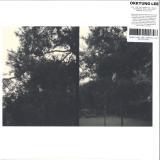
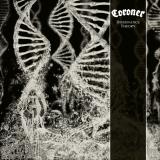
Unlike anything we have heard from her before, Okkyung Lee returns to Shelter Press with "Just Like Any Other Day: Background Music For Your Mundane Activities", a deeply intimate body of recordings at the juncture of ambient music, minimalism, and the baroque, that stands as radical intervention with what experimental music can be, and the place that organisations of sound occupy in our lives. For more than two decades, Okkyung Lee has stood at the forefront of the most radical trajectories of experimental music: a virtuosic cellist and improviser, renowned for her creative rigour and emotive depth. Particularly noteworthy for her range, dexterity, and adaptability, over the last five years Lee's output has revealed unexpected shifts and developments that move far afield from the realms of free improvisation for which she is most well known. 2020's "Yeo - Neun", a heart-wrenching, ambient chamber work - drawing inspiration from the Korean popular music of her youth - was issued by Shelter Press to great critical response, followed closely by "Teum (The Silvery Slit)" - one of a series engrossing electroacoustic works created at Groupe de Recherches Musicales in Paris - on Portraits GRM, and then "Na-Reul" in 2021, regarded by Lee as a closing statement of more than two decades living in New York, which set the precedent of her allowing her emotions to fully occupy the forefront of the music for the first time. Marking her return to Shelter press, "Just Like Any Other Day": Background Music For Your Mundane Activities", encounters Lee upturning the apple cart once again, weaving a profoundly intimate artistic statement on completely unexpected terms. Like its three aforementioned predecessors, "Just Like Any Other Day" belongs to broadening shift in Lee's approach to composing that roughly aligns with her return to her native South Korea, having lived in the United States since her late teens. Infused with a deep reengagement with her own culture and relationship to memory, it is equally a response to those critical challenges and questions provoked by significant life change. Worked on in isolation, and continuously returned to, over the course of four years, the album's nine pieces began with a simple recognition that experimental music is not always what we imagine it to be. It is a practice and a pursuit - a music for which, at its inception, the outcome is unknown - rather than an idiom defined by certain syntaxes, approaches, and qualities of structure and sound. From this departure point, Lee began to inquire after the utility of music itself: what is it for, what does it do, and what place does it (or can it) occupy in our lives? This solitary and durational journey, each composition gradually moving through different phases and evolutions over years, led Lee toward uncharted ground: a music that is not only playful, introspective, and seductive, but also intended to provoke a relationship to experimental music beyond its normative expectations. Rather active or deep listening, it pursues passive listening. Rather than a grand statement, it is discreet. Rather than virtuosity, it embraces the elegant and direct. Even more strikingly, for the first time, the music of "Just Like Any Other Day" encounters Lee leaving the cello entirely behind. Created at home on keyboard, computer, and an inexpensive cassette recorder, "Just Like Any Other Day" presents a remarkable form of ambient music - organisations of sound that become their own environment, to be occupied - intended, as the album's subheading infers, as Background Music For Your Mundane Activities. An expansion of the creative pathways opened by the Korean pop imbued compositions of Yeo - Neun, aspects of electronic process explored by "Teum (The Silvery Slit)", and the emotive foregrounding of "Na-Reul", each of the pieces presented across the two sides of "Just Like Any Other Day" implies something far greater than the limits of its own temporarily: a mood, provocations of memory and place, mirrors for the solitude within which it was made, and palpable emotion lingering just out of grasp. For Lee, each of the album's compositions could be continued or looped for an indeterminate duration: straddling a ground between the minimal and the baroque, enveloping the listener in endless cycles of appreciating, repetitive and rhythmical notes, flirting with the melodic and implying a disembodied imagism that borders on the profound. Remarkably beautiful and direct, Okkyung Lee's "Just Like Any Other Day: Background Music For Your Mundane Activities" - issued by Shelter Press on vinyl - represents a radical reconfiguration of experiential music, stripped to its bare essence in defiance of the widely presumed aesthetic signifiers. Unlike anything we've heard from her before, this immersive body of intimate recordings not only reveals new dimensions of Lee's striking range as an artist, but also of how we might regard and occupy music itself: an ambience to lived and felt like a second skin.
- A1: By Your Side
- A2: The Old Blue House
- A3: Prayer To Life
- B1: Selfish Girl
- B2: The Lost Sky
- B3: I Saw Cecelia Coming
- B4: Tumanako
- C1: The First Time Ever I Saw Your Face
- C2: The Journey Will Be Long
- C3: With Every Healing Mile
- D1: Katrina’s Paper Dolls
- D2: All I’m Thinking About
- D3: A Thousand Kisses Deep
- D4: So Still
After last year's extroverted and funky album "Be Who You Wanna Be," Stef Kamil Carlens presents a more introspective double album recorded with Nel Ponsaers and Rahmat Emonds. Featuring 14 songs—some of his own compositions and very surprising covers or reinterpretations—this album emphasizes lyrics, vocals, and a band sound primarily driven by acoustic instruments. Once again, it stands as a key addition to the already very eclectic catalog of one of Belgium’s most versatile and productive artists. Stef Kamil Carlens & The Poem will tour starting in October 2025.
Modularz 93: UHFVHF – A Sonic Exploration of Analog and Digital Frequencies
Modularz is proud to present Modularz 93, a groundbreaking collaborative project between two heavyweights in the techno scene: Developer, the visionary producer and label head, and Stanislav Tolkachev, the Ukrainian techno ambassador known for his raw and experimental approach to sound. Their new release, UHFVHF, is a deep and immersive journey into the sonic interplay of analog and digital frequencies, a love letter to the mystique of over-the-air signals and the grey areas where the known meets the unknown. This project marks the culmination of countless hours spent in the studio in Berlin, where Developer and Stanislav have fused their unique creative processes. By blending analog hardware with cutting-edge digital techniques, the duo has crafted a sound that is both timeless and forward-thinking. The result is a series of tracks that explore rhythm and texture in their rawest form, pushing the boundaries of techno’s narrative and embracing the unfiltered power of sound. Through UHFVHF, Developer and Stanislav continue to redefine the parameters of contemporary techno, offering an uncompromising experience that speaks to both the mind and the body. This release is a testament to their dedication to the art of sound, offering a sonic landscape that pushes the boundaries of what techno can be. Modularz 93 – UHFVHF is a must-listen for anyone who seeks the raw energy and unapologetic power that defines the heart of true techno.