he new vinyl-only record label 'Intelligent Sound' from Ukraine is happy to present first release with KiRiK and his EP To Experience Joy. The label stands for groovy beats and intelligent sound. The new label founded by Gals is connected with love for house and minimal music. The record will be available in limited edition.
Buscar:stan
Sugaray Rayford returns with 'In Too Deep', the follow up to his 2020
Grammy® nominated 'Somebody Save Me', an album which also earned
Rayford two major Blues Music Awards for BB King Entertainer and Soul
Blues Male Artist of the Year (2 straight years)
Combining classic soul melodies with funky R & B grooves, raw blues power and
mashed up with modern sensibilities, the album takes on social issues, such as,
PTSD, civil rights and social justice. With vibrantly detailed arrangements tailored
to showcase Rayford's deft portrayals and interpretations, 'In Too Deep' is a
poignant album that seeks to inspire and uplift.
Albumism described Rayford as having "a sound that's undeniably fresh and
inspired," while PopMatters declared it "will appeal to fans of Gary Clark Jr. and
Chicano Batman."
At his core, Sugaray Rayford is a galvanizing uniter. His live shows are a party.
Some conversations may be had, and some self-reflection may occur, but at the
end of the day, people leave feeling a sense of joy and togetherness.
Sugaray Rayford returns with 'In Too Deep', the follow up to his 2020
Grammy® nominated 'Somebody Save Me', an album which also earned
Rayford two major Blues Music Awards for BB King Entertainer and Soul
Blues Male Artist of the Year (2 straight years)
Combining classic soul melodies with funky R & B grooves, raw blues power and
mashed up with modern sensibilities, the album takes on social issues, such as,
PTSD, civil rights and social justice. With vibrantly detailed arrangements tailored
to showcase Rayford's deft portrayals and interpretations, 'In Too Deep' is a
poignant album that seeks to inspire and uplift.
Albumism described Rayford as having "a sound that's undeniably fresh and
inspired," while PopMatters declared it "will appeal to fans of Gary Clark Jr. and
Chicano Batman."
At his core, Sugaray Rayford is a galvanizing uniter. His live shows are a party.
Some conversations may be had, and some self-reflection may occur, but at the
end of the day, people leave feeling a sense of joy and togetherness.
Idrissa Soumaoro, L’Eclipse De L’I.J.A.’s sought-after album ‘Le Tioko-Tioko’ was originally released in the German Democratic Republic (GDR) in 1978 and has been a long-time favourite at Mr Bongo. Two tracks from the album were featured on our 2017 compilation ‘The Original Sound Of Mali’ (MRBLP135), and we subsequently released the track ‘Nissodia’ on its own 12” (MRB12053) in 2020, complete with a blistering dancefloor re-edit by Mike D of The Beastie Boys.
‘Le Tioko-Tioko' is one of the rarest vinyl albums from the already scarce Malian vinyl discography, partly as the album was never released commercially, only independently distributed via the Malian Association for the Blind in Bamako. Though recorded at Radio Mali under the aegis of master engineer Boubacar Traoré; the album was originally released in East Germany. The tapes had been taken by some Malian students to East Berlin as part of a student exchange program. It was then manufactured and released on the East German state-owned label Eterna with only a few boxes of records being shipped back to Bamako.
A true masterpiece, this legendary LP offers some devastating songs such as ‘Djama’ (society), ‘Nissodia’ (joy of optimism), and ‘Fama Allah’ (an ode to god). Hypnotic organ riffs and breakbeats convey an unknown funk quality in Malian music, it now stands as a loving tribute to an unsung Malian golden age. Sadly, like many of the other now desired and prized vinyl rarities, at the time of release, it almost immediately disappeared without a trace due to a lack of promotion, and distribution. So, it feels fitting to share this gem of a record again, and hopefully it will reach the wider audience it deserved over 45 years ago.
Many thanks to Florent Mazzoleni for contributing sections of these notes.
In a generation of musicians that came of age in postwar Japan, Kazuki Tomokawa stands as a pioneer of radical individualism, with a sound marked by shocking intimacy and blistering honesty. In his third album, A String of Paper Cranes Clenched between My Teeth, released by Harvest Records in 1977, Tomokawa creeps "ever more inward," as Kiichi Takahara writes in the record's original introductory text-embracing an attitude pervasive amongst musicians of the time who interrogated the prosaic and the profound alike, eschewing politics and society in favor of an "attitude of total self-containment." Tomokawa recorded the album over the course of a month-from August 24 to September 25, 1977-at Tokyo's famed Onkio Haus studio in the bustling Ginza district. The arrangements, accordingly, are amped up: paired with the Black Panther Orchestra, Tomokawa's "screaming philosopher" vocals find their match with the orchestra's electric guitar, bass, piano, tuba, and ground-thumping drums played by the Brain Police's Toshi Ishizuka-who appears on Tomokawa's first three records and remains his collaborator to this day. "This is Kazuki Tomokawa in the flesh," concludes Takahara. A String of Paper Cranes Clenched between My Teeth is, in Tomokawa's uncanny way, able to cut through facade and artifice in pursuit of truth. "You call that life?" he heckles, exhausted by the melodrama and nihilism of youth counterculture, "try saying you're alive!"
The dance floor as devotional is a trope as old as the club itself. But, with her new album, Jesus Was An Alien, Perel subverts the stakes of our collective communion: Who are our arms raised to? Who are we seeking salvation from?
“Jesus Was An Alien is a discourse about whether Jesus was an actual alien,” she explains, “but also a social debate about what is and implies religion today.” She offers up her provocative second record – her first on Kompakt – as a soundtrack for the listener’s own journey through the intricacies and ironies of modern belief.
Picking up on the themes she brought to her debut, the 2018’s LP Hermetica on DFA, Perel has created ten tracks rich with spirit and allusion. Her influences are myriad, from the indie dance hitmakers of the early 2000s – Hot Chip, Simian Mobile Disco, Justice – to rave compilations that predate her ascent to the DJ booth, to more abstract inputs. Living with synesthesia, she says, “I feel emotions and colors piling up inside me, then there’s a triggering sound or event that opens a valve. My tracks are color streams that tell a story.”
Jesus Was An Alien is not just multicolored – it’s multi-lingual too, slipping in and out of tongues in a single track, sometimes dispensing with words altogether (the ecstatic breakdown of “The Principle of Vibration”). The album features Perel’s voice almost entirely but for her special collaboration with Canadian songwriter Marie Davidson on the title track.
“Jesus Was An Alien” stirs like a late-night revelation, a heady discovery awakened in the dark. Perel lays out a fiercely disciplined electro pulse, with Davidson’s proclamations growing more fervent over the song’s sensual stride. “I already said everything with my synthesizers and the melodies I created,” Perel explains of the collaboration, but “somehow she gave the song a voice I couldn’t.”
Perel drives further not only spiritually but sonically across the ten tracks, taking thrilling production risks: standouts include her breathy vocals atop a melodic piano strut on “Matrix;” the delirious blur of ghostly chimes and disembodied voices of “Religion;” and the retro radiance of “The Principle of Vibration,” in which Perel exhorts us to “come on and vibe” over an athletic riff and shuffling percussion.
“Kill The System,” meanwhile, hits the listener with tense acid pulses, building to only an imagined release and calls out the end of patriarchy. Album closer “Am Kanal” starts as a pensive cloud of a track, finally breaking into a rich textural rain of synths and stabs.
The variety throughout Jesus Was An Alien underlines Perel’s purpose in this latest project; she’s experimenting her way to answers – or maybe just more questions. After all, she says, “questions are the beginning of something new.”
Tinnitus Tonight is the latest & sneakiest full-measure serving from LARS FINBERG, world-class bon vivant and prolific Panic Rock artiste. Why so sneaky? Here’s the dirt: Finberg developed a nerve rash leading up his 2017 tootle, the TY SEGALL-assisted Moonlight Over Bakersfield. Rather than blindly leap from the comfy zone, he tip-toed in secret to a friendly but far-flung (cough*Sacramento*cough) studio to capture a reserve of slanted tunes with a proven-effective team of buds. Those comrades – the glorious LAUREN MARIE MIKUS on keys, frequent collaborator & forever-gent KAANAN TUPPER on drums and, at the controls and elsewhere, the indestructible CHRIS WOODHOUSE – all fostered a supportive framework that first allowed Finberg to “think” beyond THE INTELLIGENCE, gearing him up for a life in the spotlight (or moonlight, as it were). So yes indeed: what appears to be an adventurous follow-up also doubles as a prequel. Keep accurate score or you’re dusted. The core of Tinnitus Tonight centers on an assemblage of Finberg’s most golden riffs – trash-coustic but driftwood-smooth, naughty and infinite, all of ‘em bangers and/or buggers. Tunes sprout and move matador-like until an inevitable goring. The past-it grunt that kicks off “Burger Queen” prompts a mimed chef’s kiss. “My Prison” and “The Doors” are quintessential, truly distilled Finberg moments, compounding his trademark acerbic, out-for-blood wit with these absurdly cool, whip-crack guitars. The massively impressive “Public Admirer” is unequivocally the loudest, most damaged blurt from this doggie in at least a decade. In total, Tinnitus Tonight is a wonderful and welcome reminder that our guy is a very real rouser and a vital, unique purveyor of artful aggression, playful and powerful. Finberg beams really fuckin’ brightly under his own name, perhaps more so than with any group orchestration he happens to be braising with. Do these higher personal stakes call for a dastardlier delivery? Maybe this permeating 2020 End Times feeling prohibits the normal corralling of the subconscious mind? Whatever the answers are, you will find them here.
"The gift Lars Finberg has to disfigure rock riffs into minor chord marvels should serve as a glowing example for those who feel the need to pick up a guitar and make some noise to share with the world. Using the conventional tools of rock and roll flavored with a mix of garage punk, post punk, synth punk and mutant surf, Mr. Finberg, with seemingly effortless cool, has crafted or contributed to countless albums with bands like The Intelligence, Puberty, Rubber Blanket, A Frames and more, all with a magnetic pull and genius lyrics that stand out from the indie rock heap and reveal an exceptionally creative mind that’s actually done its homework." - Noise For Zeros
Ye Vagabonds release their second album for Rough Trade's River Lea
label.Nine Waves was recorded in the Dublin Mountains at Hellfire
Studios, produced by John 'Spud' Murphy (whose previous work includes records by black midi, Lankum and caroline)
The album features 11 tracks of both traditional and original songs and tunes. Nine Waves follows the duo's standalone single I'm A Rover, which won them an RTE Radio One Folk Award for Best Traditional Folk Track. Ye Vagabonds were also named Best Folk Group for the second time at the 2021 ceremony, where they hold the record for most awarded artists.The brotherly harmonies and multiinstrumental abilities of Diarmuid and Brían Mac Gloinn were joined on Nine Waves by Kate Ellis (cello) and Caimin Gilmore (double bass), both members of the Irish contemporary classical group Crash Ensemble, and Ryan Hargadon (Anna Mieke, Rachael Lavelle, Kojaque) on piano and saxophone.
Stunning debut release from RAFRAM aka Irdial legend Ramjac Corporation and the Toronto legend (& honorary Glaswegian) Raf Reza.
300 copies only, full printed sleeves plus riso insert.
Orphic Apparition is a new label born out of a transatlantic meeting of minds. Facilitated by a long, hedonistic party in one of present-day London’s ‘meanwhile use’ venues Grow Tottenham, Canadian producer Raf Reza and British acid house luminary Paul Chivers spent a precious day in the studio to record a 3 hour straight to DAT session before Reza's return to Canada. The result of this spontaneous yet intuitive collaboration blurs the lines between Chiver’s long-standing Ramjac Corporation alias and Reza’s genre-spanning approach to dub, breaks and house styles. Part of the early 90s rave scene and an important member of the blueprint-setting Irdial label, Ramjac locks heads with the self-professed ‘lazy music guy from Toronto’ to adapt their studio session into five separate mixdowns.
‘In The Grow’ begins with a bouncy, cut-up sounding Errorsmith-esque rhythm, the recurring fright night melody that distinguishes the record coming in all quick and powerful. The A2 ‘Rotten Mix’ offers a more traditional house approach in its composition, with dub FX and a nice DJ friendly outro. On the final uptempo choice the pair opt for a head-scrambling electro take. Choose your fighter! The ‘Swampy Dub’ on the flip really dismantles everything we’ve heard prior, slo-mo drums allowing a much different DJ experience and altering the freaky synthetic propulsion into an almost modern classical sound. A little like Paul Dresher’s eternal ‘Channels Passing’ (tip). Combined with the other edits this version almost becomes a totally different track. The final ‘Rootless Dub’ gives its clues in the title, removing all the tough drum sounds and allowing for an ambient decompression.
Orphic Apparition will return soon.
After lurking on the internet as an outlet for Dreamlogicc's solo and collaborative work, cheeky Peak Time Dance Music launches its physical imprint with a half dozen tracks of drum-driven madness. Drawing raw rhythms and rugged sound design from gqom, integrating elements of electro, grime, and techno, these flexible beats absolutely stomp. While the core sound remains, the moody grooves from his Kimochi Sound releases and bassy halftime from Main Drain Studios take the back seat here: it's a 12" for the club.
Thanks to this mini-LP format, Interface Palm gets to showcase more of his talent. He explores a wide range of influences and offers an overview of his wide musical palette, from broken beat, to cosmic jazz, hip-hop and house music. A true milestone for Interface Palm, this “Curated Space” mini-LP is the perfect example of artists willing to set new standards by blurring the lines of musical styles.
Welcome to the Broken District !
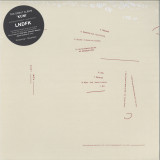
LNDFK (aka Linda Feki) presents her ground-breaking debut album, "Kuni" on Brooklyn-based Bastard Jazz Recordings. Undeniably on the rise after her 2019 breakout performance at Primavera Sound, LNDFK has already caught the attention of Pitchfork, Rolling Stone, Clash Magazine, Noisey, and Brooklyn Vegan (among many others) while being championed by the likes of Gilles Peterson, Tom Ravenscroft, and Jamz Supernova & landing spots on tastemaker playlists like Spotify's "Pollen" and "Fresh Finds."
"Kuni" is a spellbinding exploration of dichotomies: Love & Death (Eros & Thanatos), Flower & Fire, Delicacy & Violence, Poetry & Realism, Purification & Destruction. These opposites are reified in the 10-track LPs multifarious and multifaceted sounds, elegantly meandering through a variety of styles and genres, spearheaded by Linda and features the production wizardry of Darrio Bassolino who co-wrote the album.
"Kuni" opens with "Hana-bi," an ambient instrumental piece that sets the tone for the album. Inspired by the Takeshi Kitano 1997 film of the same name – particularly Joe Hisaishi's stunning soundtrack, as well as Kitano's paintings which appear in the film. "Hana-bi" expresses the dialoguing opposites of flowers and fire, the first of many dichotomous representations throughout the album. "Takeshi" acts as an extension and to "Hana-bi," albeit one of opposing sound, with its driving, highly syncopated drums (which reappear throughout "Kuni") – à la Karriem Riggins, Questlove, or Yussef Dayes – frenetic bass line, and jazz chords. Linda's sultry voice is interspersed, initially jumping around in scat fashion, being triggered as if a sample, before her lyrics come in; her vocals are used like an additional instrument, adding to the song's rich texture. "Kuni" truly hits its stride with the next song, "Smoke – a moon or a button" (its title lifted from the 1959 book by Ruth Krauss and Remy Charlip), which is structured like a jazz standard yet flows into neo-soul territory sonically with those prodigious drums a highlight once again.
LNDFK touches on experimental hip hop in two songs on the record (both of which were released as singles in 2021): "Don't Know I'm Dead or Not (feat. Chester Watson)" – track #4 – and "How Do We Know We're Alive (feat. Pink Siifu)" – track #9. Although they embrace a more hip hop-leaning sound, these songs by no means shy away from the exploratory theme, and feature two of the alt-rap scenes rising stars with Chester Watson and Pink Siifu who offer provocatively impressing verses, combining dense word play with unconventional flows. While these tracks may first appear to be outliers on the album, they are undeniably in tune with "Kuni's" message and sonic palette, acting as testaments to LNDFK's willingness to explore and experiment.
Meanwhile, "Ku" – the third and last single before the album release – furthers the pre-established future soul sound while meandering through nu jazz and left-field electronic. Inspired by the graphic novel and film, "Sin City," and its female assassin protagonist Miho, "Ku" is a musical interpretation of Miho's story, incorporating both her beauty – the first half of the song – and murderous tendencies – the second half – to create a stunning juxtaposition, culminating in an ambient finale that suggests the character's vulnerability and inner peace. The song gracefully bridges the gap between Hiatus Kaiyote-esque songwriting, Dilla's rhythmic syncopation, and Thundercat's instrumental prowess (LNDFK has shared a stage Brainfeeder labelmate Kamasi Washington).
Mixed in throughout "Kuni" are a series of instrumental pieces that function as something akin to an interlude. The aforementioned intro, "Hana-bi," and the album closer "se mi stacco da te, mi strappo tutto:" act as bookends, while "Om" indicates the half-way mark, and "Ktm" sees Jason Lindner add his sound the album. These tracks are the ambient foundation of "Kuni," representing the thematic duality of the work. Clocking in at only 24 minutes, "Kuni" packs an astonishingly diverse array of sounds, styles, and themes, all while showcasing virtuosic musicianship and instrumental prowess.
Appearing on "Hana-bi" and "Ktm," renowned international artists Asa-Chang and Jason Lindner add an additional perspective to "Kuni": Asa-Chang on "Hana-bi," and Jason Lindner on "Ktm." Asa-Chang - famously of the Japanese avant-garde group Asa-Chang & Junray - provides vocals and percussion to an alternate version of the instrumental opener, while the acclaimed keyboardist Jason Lindner offers his synth expertise on "Ktm." These features highlight the spirit of collaboration found in LNDFK's music, always willing to try out new ways of working.
LNDFK is a singer and songwriter, born of two cultures – an Italian mother and Arab father. She grew up in Naples, away from her father, the Sahara, her homeland and traditions, which has helped nourish the desire to rediscover – through art – an engagement to her roots. Her music melts with jazz, neo-soul and hip-hop influences, filtered through her experiences and sensibility.
Her first EP, "Lust Blue," was composed with the artistic production of Dario Bass and released by Feelin' Music; after that she released several singles that saw international radio support (BBC, NTS, Wordwide FM) and gained a massive audience on digital platforms. Together with her band, she toured around Europe, performing alongside such notable artists as Kamasi Washington and Mndsgn, among others. Most recently she toured Italy, and performed at Primavera Sound Festival 2019 in Barcelona.
"Kuni," is due out on NYC label Bastard Jazz Recordings in February, 2022, while the vinyl LP will follow shortly after.
A Sagittarium returns to Rekids this May with ‘Strange Brew EP’
Following his ‘Mazes & Monoliths’ EP on Rekids in 2021, as well as releases on Running Back, Hypercolour, Idle Hands, and Craigie Knowes, the Elastic Dreams boss returns to Radio Slave’s label for another standout three-track EP of colourful and psychedelic cuts.
Leading the release is ‘The Mind Blanks At The Glare’, which sees the Bristolian utilise low-slung breakbeats, bouncing basslines, and fluttering synths for a chugging start to the EP. ‘Don’t Look In The Freezer’ follows with dubbed-out FX and stomping low end, before ‘Cosmic Trigger’ brings hypnotic bass together with trippy, twinkling arps and dreamy pads for a gentle final.
The Mutual Torture pay homage to many of their music heroes from the early 80es. Consequently, their modus operandi is deeply rooted in Post Punk paranoia, alien soundtracks, improvisation, and simulation. Their outcome is coolness that's glowing cold under the red sun, structure and order, and 12 transcendental messages. In the end, there are no more heroes left but just The Mutual Torture.
This band of non-standard humans appears with a conceptual approach to transforming the energy and the boldness of a genre which is known for its pioneering spirit, overwhelming playfulness and a strong desire to experiment. The Mutual Torture are soulmates of those who formed this genre: a German-Chilean band with an attitude and a plan to tour their album live. In particular: Tobias Freund (drum computers and electronics), André Schöne (bass), and Javiera González (vibrantly morphing vocals).
All tracks have been written and produced by Tobias Freund at Non Standard Studios ©2021.
Until recently, it was thought that we had heard all there was to hear from Saâda Bonaire. The German studio project's 1980s recordings had been compiled on the now cult-classic double LP Saâda Bonaire, released by Captured Tracks in 2013. Though the group had continued working until 1994, founder Ralph "von" Richtoven had firmly stated that all of their post-1986 work was lost. Released now for the first time ever, 1992 compiles the band's long-lost early nineties material. Produced between Bremen and New York City, the 12 songs presented here capture the group's attempts at steering their trademark fusion sound (reggae, afro-funk, Eastern music, and sultry German female vocals) into uncharted nu jazz, trip-hop, and house territories. It's no surprise, given both the time lapse and the fluid nature of the project, that these recordings differ sonically from the 1980s material. 1992 finds Saâda Bonaire folding new influences from the time (house, hip-hop, rap) into their eclectic sonic universe. Vocalist Andrea Ebert's soulful voice -the result of a church choir background and an early love of American soul and jazz music- offset Stephanie Lange's laid-back, more German-sounding vocals. This unique interplay bolstered the band's new direction - evident in their inspired takes on James Brown's "Woman" and Syreeta Wright and Stevie Wonder's "To Know You Is To Love You". The American influence was also made literal via contributions by renowned DJ Matthias Heillbronn and rapper Jimmy Lee Patterson, both of whom lent some stardust to the tracks at François Kevorkian's Axis Studios in NYC. Unfortunately, the demo recordings were considered too bizarre for 1990s record label standards, and as a result were never published. As with all things Saâda Bonaire, the discovery of these discarded recordings feels like a sort of magical impossibility. It's been nearly ten years since the release of the last compilation, and thirty since the recordings were originally captured. That they still manage to sound fresh and avant garde is a testament to Saâda Bonaire's flair for creating pop music for past, present, and future outsiders.
Edizioni Ishtar and Schema Records proudly celebrate the 15th anniversary of one of their most successful releases and artists (more than 30 million streams and 300 thousand monthly listeners on Spotify) with the first ever vinyl edition of Toco’s Outro Lugar. Produced by S-Tone Inc., this record includes fan-favourite tracks “Outro Lugar”, “Samba Noir
” and most of all “Guarapiranga”, which was chosen for the soundtrack of “Silver Linings Playbook”, a film that awarded Jennifer Lawrence an Academy Award prize as best actress in a leading role in 2013. The strings at the beginning of the title-track have also been sampled by PinkPantheress for her song “Nineteen”, out of her latest album “To Hell With It”.
Outro Lugar hasn’t aged a bit during all these years, for various reasons; first of all it benefits from the outstanding contribution of bossa nova pioneer and inspiration source Roberto Menescal, who played guitar in every track. Most of the album was recorded in Rio De Janeiro at Menescal’s studio, with the participation of some of the best ‘carioca’ musicians, especially double-bass player Adriano Giffoni and pianist Adriano Souza. All these elements gave the album exactly the taste requested by the artist and the producer: inspired from the past yet, through thorough attention, aimed at a sound at the same time fresh and modern, slightly electronic, filled with grooves perfectly blending into acoustic instruments. The second part of the recording was carried out in Milan, with some of the best musicians in the Milanese jazz scene.
The album also sees the contribution of Rosalia De Souza, singing in several tracks and standing out in “Bom Motivo” especially. French chanteuse Coralie Clément appears in “Contradição”, her own piece here re-interpreted by Toco.
Outro Lugar is an album for any kinds of Brazilian music lovers that showed the world what Toco was capable of: a refined and cultured musician, a gifted performer of a warm and smooth voice able to awaken the emotions of the most sensitive listeners.