Few albums have treated human voice and drone as a whole entity like ABoneCroneDrone, the third in a trilogy for Real World Records that this record closed back in 1996. In Sheila Chandra’s own words “it was about the gateways between vocal techniques from different cultures and how it was possible to cross between them within a single word or phrase.”
Indipop Recordings founder Steve Coe, probably best known for helping to popularise the term World Music in the early eighties, produced and worked with extreme accuracy along with Chandra on all drones and set a new industry standard of what was possible in the treatment of voice. With the help of bagpipes, didgeridoos and guitars, ABoneCroneDrone puts drones under the microscope and encourages listeners to retrain their ears to hear the nuances that musicians have always heard in them. Emitting low, chantlike waves, Chandra sings deep spaced atonal words while haunting chord sounds flow and drones slowly interact with listener.
This is the first vinyl pressing. It includes a fold-out insert with a new Sheila Chandra interview, original sleeve notes edited by Chandra herself and unseen pictures taken from the 1996 sessions. Limited to 500 copies, no digital release this time.
“The artistry of ABoneCroneDrone is in the attention to detail. The album is beautifully performed, mixed and compiled with intelligence and strong sense of structure. It makes good use of a listener’s valuable time while issuing a challenge to hear in a fresh way.” John L. Walters, The Wire issue 150.
Suche:steve digital
- A1: Ich Will Dir Helfen
- A2: A La Manière (With Roya Arab)
- A3: Ondine
- B1: Aspiration (With Mona Soyoc)
- B2: One Of These Days (With Hafdis Huld)
- B3: Théorème
- B4: Mortel Battement / Nocturne (With Alain Bashung)
- C1: Organique
- C2: The Watcher (With Mona Soyoc)
- C3: Qu’est-Ce Qui M’a Pris (With Philippe Poirier)
- D1: Xr 116 / Messe Rouge
- D2: Untitled
- D3: Ondine (Alt Take)
- D4: Piasong
The sensitive mountain » (la montagne sensible) is the nickname Alain Bashung came up with for Arnaud Rebotini. At the height of his fame, after the success of Fantaisie Militaire in 1998, Bashung readily agreed to create an album with Rebotini. The two men didn’t know each other; their record label had introduced them. Bashung brought in “Mortel Battement” and “Nocturne,” two poems by Jean Tardieu, which he recited in a voice simultaneously warm and flat, and Arnaud produced an impressionist soundscape that ended with an apocalypse of metal. Bashung was so proud of their collaboration that he offered to give several interviews to promote the record. Today, listening back to this moving Léo Ferré influenced "talking singing" exercise, it’s hard not to hear the template for L'Imprudence, the album that Bashung went on to record with Rebotini two years later. In a similar way, the album Organique sparked a productive partnership between Rebotini and filmmaker Robin Campillo, which resulted in their being awarded a César for Best Original Music in 2018. The director, who trusted Rebotini to create the soundtracks for his films Eastern Boys and 120 Beats per Minute, never kept his love for the 2000 record a secret.
Yet it’s an understatement to say that when it was released, Organique was not in the spirit of times. That year was all about the French touch. The funky samples of Modjo’s “Lady” and Superfunk’s “Lucky Star” ruled the sweaty dancefloors. Although Rebotini was familiar with the electronic scene, he had something else in mind when he set about creating Organique. Under his own name or under the pseudonyms Aleph, Avalanche, Black Strobe, Maison Laffitte, and of course Zend Avesta, he had already released several quite bizarre and experimental techno, house, or jungle maxi singles on pioneering labels like P.O.F., Source, and Artefact, run by his friend Jérôme Mestre’s, whom he had met back when both were working as record salesmen at Rough Trade’s ephemeral Parisian store. It was at Artefact, still financed at the time by Barclay and Universal, that he naturally proposed this record project, which was a bit "different." It was his first real album.
Arnaud Rebotini has never hidden his love-hate relationship with the electronic scene. He’s a fan of rave music, Rex, and later Pulp, but he listens mostly to metal and contemporary music, mainly American minimalists such as Terry Riley, Philip Glass, Steve Reich. He wanted to mix this genre with a more French aesthetic inspired by Debussy, whose unconventionality fascinates him. From the first suspended guitar note of Organique, you can pick up another influence, possibly poppier. In the style of Mark Hollis, the erratic leader of Talk Talk, whose only solo album’s silences and dissonances left their mark two years earlier, we hear the fingers touching the keys of the clarinet on “Ondine.” The instruments have presence, character. Nothing is smooth. Everything is organic.
Although it’s sometimes labeled as electronica because of Rebotini’s career, there’s nothing digital about Organique. No "pro tools" editing or samples, only programmed drums and some synth layering. And his guest vocalists. Playing the role of electro producer, he invited Bashung, of course, to join him on the album, but also Roya Arab, who Rebotini first spotted while she was playing in Archive, and her sister Leila, Gus Gus alum Hafdis Huld, Kat Onoma’s Philippe Poirier on the “Samuel Hall” inspired track “Qu’est ce qui m’a pris,” and former KaS Product member Mona Soyoc.
The frustration of a tour where he had "little to do on stage," the desire to sing himself, and the creation of the Black Strobe project, a haunting mix of blues and rock, stopped Zend Avesta from putting out another album. Eighteen years later, the Organique we rediscover today has lost nothing of its strangeness, nor beauty. When it came out, Bashung said, "What is interesting for a musician is to feel that you have a piece of wasteland in front of you, something to clear.” That remains true today.
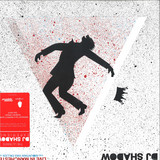
DJ Shadow has shared the artwork for his anticipated live album and film, Live In Manchester: The Mountain Has Fallen Tour. Recorded at a sold out Albert Hall in Manchester, England, the release (out 13th July on Mass Appeal Records) is now on vinyl, CD, and digitally.
Live In Manchester: The Mountain Has Fallen Tour, documents DJ Shadow's most ambitious, extensive worldwide tour yet - surrounded by stunning visuals, he blasts through classics and more obscure cuts from his discography. Watch the trailer here.
The release will be available on gatefold 12' vinyl, CD / DVD double pack, digital audio and digital video formats.
The news follows the recent announcement of DJ Shadow's podcast, DJ Shadow Presents Find, Share, Rewind, broadcast on Manchester-based radio station and music platform, MCR Live. Episodes are online here, and the first instalment hit number 1 in Apple's music podcasts chart.
Bay Area producer DJ Shadow (Josh Davis) was catapulted to prominence thanks to his landmark debut album, Endtroducing, acknowledged by Guinness World Records as the first LP created entirely from samples. Since then, Shadow has continually moved forward releasing innovative albums and collaborating with the likes of Thom Yorke, Massive Attack, Jason Newsted (Metallica), Mike D (Beastie Boys), Zack de la Rocha and several others. Live In Manchester: The Mountain Has Fallen Tour continues an exceptional couple of years for the producer: in 2016 he unleashed innovate new album The Mountain Will Fall, which birthed his biggest single yet, Nobody Speak featuring Run The Jewels; a massive worldwide tour followed - The Mountain Has Fallen Tour - plus an EP featuring collaborations with Oscar-winning film composer Steven Price, rap maverick Danny Brown and hip-hop hero Nas.
Right here, right now ADF are the most important band in Britain. NME 1997
Rafis Revenge originally peaked at number 20 on the UK Albums Chart and was shortlisted for the 1998 Mercury Music Prize, with Bobby Gillespie hailing them at the time as the best live act in Britain. This 21 year anniversary reissue includes a limited edition, coloured 2xLP plus expanded digital & CD editions with bonus tracks selected by Adrian Sherwood. To celebrate the release the band are playing at Rich Mix, London on 28th March.
By the time they recorded Rafis Revenge in 1998, Asian Dub Foundation were primed to explode. Having initially emerged from East Londons grassroots Community Music project as a largely studio-based collective, the band had galvanised themselves into a riotously exciting touring machine by the late Nineties. Their extraordinary live shows around this period were electrifying to witness, kinetic and dynamic, incendiary and euphoric, confrontational yet celebratory. For sheer roof-raising energy, they were unrivalled. ADF have evolved enormously over the last two decades, of course, but their breakthrough album remains a fascinating chapter in the real, complex, unwritten history of Britpop. Expanded and enlarged for this anniversary edition, these multi-layered musical treasures still dazzle and delight with their grandiose ambition and riotous energ
The story of Seattle's rise to global rock supremacy in the late 80s and early 90s begins with Green River. Made up of Jeff Ament (bass), Mark Arm (guitar/vocals), Bruce Fairweather (guitar), Stone Gossard (guitar) and Alex Shumway (drums), the
quintet put out three 12's and a 7' single during its brief existence.
Green River's influence on Seattle's music scene spread far and wide thanks to the members' dispersion into bands including Pearl Jam, Mudhoney and Love Battery, as well as the punk glam sludge rock songs they left behind. 'By '83, '84, there was
definitely a movement that was happening within hardcore, like Black Flag slowing down for My War,' says Arm. 'The Replacements and Butthole Surfers were rearing
their heads, and they're very different bands, but they're not hardcore - the Replacements are pretty much straight-up rock, and Butthole Surfers were God knows what. Sonic Youth's Bad Moon Rising was around, and a lot of really
interesting post-hardcore things were happening.'
Green River, formed in 1984, were part of that evolution, with a sound that straddled a lot of different genres - blues, punk, bloozy straight-ahead rock. The mini-LP 'Dry As A Bone' - which came out in 1987 - and the band's lone full-length
'Rehab Doll' - which came out in 1988 - were released as a single CD with a few bonus cuts, including their sneering cover of David Bowie's 'Queen Bitch' and their marauding version of Dead Boys' 'Ain't Nothin' to Do', in 1990 - but they've been
unavailable on vinyl for years.
Now, these slices of Seattle music history are not only back in print, they're accompanied by items from the vaults that had been forgotten about for decades.
'Dry As A Bone' was recorded at Jack Endino's Reciprocal Recording in 1986 and it shows the band in furious form, with Arm's yowl battling Fairweather and Gossard's
ferocious guitar playing on 'This Town' and 'Unwind' opening as a slow bluesy grind then jump-starting itself into a hyperactive chase. The deluxe edition includes Green
River's cuts from the crucial Seattle-scene compilation 'Deep Six', as well as long-lost songs that were recorded to the now-archaic format Betamax.
'Rehab Doll', recorded largely at Seattle's Steve Lawson Studios., bridges the gap between the taut, punky energy of 'Dry As A Bone' and the bigger drums and thicker
riffs that were coming to dominate rock in the late 80s. This new edition of 'Rehab Doll' includes a version of 'Swallow My Pride' recorded to 8-track at Endino's Reciprocal Recording, which features a more accurate depiction of how the band
sounded when they played live. 'When I listen to these mixes, I think, 'This is how we actually sounded - this is the kind of energy we had,'' says Shumway.
Green River's place in American music history is without question but these recordings paint a more complete picture of the band - and of rock in the mid to late 80s, when punk's faster-and-louder ideals had begun shape-shifting into other ideas.
CDs in digipack with 12-page booklet. 2LP formats in gatefold jacket with custom dust sleeve and digital download code.
Zeitreise: go Back', Way Back. Die Musik Erinnert An Arthur Russell, Es Hat Aber Nicht Nur Abstrakte Reminszenzen An Arthur Russell's Garage Sound: Steven Hall Aka Nirosta Steel, Der Hier Singt Und Gitarre Spielt, War Der Gitarrist Und Sänger Von Arthur Russell's Hits Wie is It All Over My Face', in The Light Of A Miracle' Oder tell You Today'.
Der Niemals Oxidierende Nirosta Steel Trifft Hier Dj, Produzent Und Chinesischen Record Shop Betreibenden Tomasz Guiddo, Der Bereits Eine Maxi Auf Compost Disco Veröffentlicht Hatte. Als Kalabrese Das Original Hörte, Sagte Er Spontan: Klingt Für Ihn Wie Ein Versteckter Talking Heads Track. Auf Jeden Fall Hat Kalabrese Seinen Typischen Hand-gespielten Coolen Disco-ritt Draus Gemacht, Während Shahrokh Dini go Back' In Die Oberste House-hemisphäre Puscht. Es Gibt Auch Noch Einen Michael Reinboth Remix, Exklusiv Auf Vinyl Und Digital In Dem Fetten 25 Years Compost Records 10x12' Box-set (2019).
- 1: White Wedding (Cray Remix)
- 2: Dancing With Myself (Rac Remix)
- 3: Eyes Without A Face (Tropkillaz Remix)
- 4: Rebel Yell (The Crystal Method Remix)
- 5: (Do Not) Stand In The Shadows (Moby Remix)
- 6: Flesh For Fantasy (St. Francis Hotel Remix)
- 7: Catch My Fall (Juan Maclean Remix)
- 8: One Breath Away (Paul Oakenfold Remix)
- 9: To Be A Lover (Djds Remix)
- 10: Don't Need A Gun (Shiba San Remix)
- 11: Hot In The City (Shotgun Mike Remix)
Los Angeles - September 7, 2018 - Billy Idol's 1980's remix collection, Vital Idol, is getting a modern-day upgrade with Vital Idol: Revitalized, set for release on CD and digital by Capitol/UMe on September 28. A 2LP 180-gram black vinyl in addition to a limited edition, color variant will follow on November 16.
More than 30 years after his groundbreaking Vital Idol compilation cemented the vibrancy of the dance-rock remix genre in the second half of the 1980's, Idol's Revitalized collection features 11 brand-new remixes of his most classic and enduring hits. Lending their hands to the Revitalized proceedings are electronic dance luminaries Moby, The Crystal Method and Paul Oakenfold as well as current innovators including Tropkillaz, Shiba San, Juan Maclean, CRAY and RAC, who's remix of 'Dancing With Myself' debuts today.
Vital Idol, initially released in Britain in 1985 and subsequently issued in the United States in 1987, was the first remix record released by a rock superstar. Besides being certified platinum, Vital Idol was accompanied by a version of 'Mony Mony' that reached No. 1 on the Billboard Hot 100 Singles chart, as well as hitting the Top 10 on the U.K. Singles chart.
Highlights found within the grooves of Revitalized include The Crystal Method's percussive, explosive stab at 'Rebel Yell,' CRAY's bass-and-keyboard-blessed 'White Wedding,' Tropkillaz's trop-house framing of 'Eyes Without A Face,' St. Francis Hotel's shimmering stop/start caress of 'Flesh For Fantasy,' and RAC's retro-harmonic, fist-pumping 'Dancing With Myself.'
Meanwhile, the digital version of Revitalized features four additional exclusive remixes, namely the brand new Billy Idol/Steve Stevens Remix of 'Mony Mony,' Paul Oakenfold's Extended Remix of 'One Breath Away,' Moby's 'Half Time Version' of his take on '(Do Not) Stand In The Shadows' and 'Save Me Now (Lost Dog Remix),' reworked by Billy Idol's son, Willem Wolfe with Brandon Rauch and Ed Bedrosian.
Finally after years of quality techno and music,Pushmaster Discs is proud to present the 20th release of the label with the label boss Mattia Trani and his solo EP.
This Time Mattia chosed a banging tune 'Time Struggle' with the first new school version, classic heavy techno beat with saturated 303 sub melodies and a futuristic pad to complete this version. The Old school version is more percussive acidic, no pad melodies, no compromises, just straight to the point for killing every dance floor.
In the B side there's a perfect rework from a dutch techno master Steve Rachmad as Sterac, more 909 clean beat rhythmic and minimal detroit infected. The last track 'Floating Life' is a typical Drum'n'Bass spirit influence of Mattia, 170 percussive beat with space pads typical of 90 jungle works in the UK.
As a hidden track on digital only 'Cyber Resurrection' is another killer track with an amazing mysterious sample from rave typical 90 stuff.
Happy 20th release Pushmaster Discs!
German producer and DJ Boys Noize has announced the release of his much-anticipated cover version of Adamski and Seal's 1990 rave classic 'Killer' on 12 vinyl, via The Vinyl Factory and Boysnoize Records.
Featuring vocalist Steven A. Clark, the original 12 version is backed by an instrumental, both of which you can listen to below:
As Boys Noize says: 'Being a '90s kid I kind of grew up with this song which later became one of these tunes I'd play out at the end of the night. When I met Steven and heard his voice for the first time I immediately thought of that track and the idea of doing a cover version was born. It was initially just for fun but it turned banging and lit the dance floors wherever I'd drop it.'
Adamski and Seal's original represented something of a breakthrough for both the producer and vocalist, spending four weeks at the top of the UK Singles Chart in the summer of 1990.
Speaking to journalist Dave Simpson in The Guardian in 2013 Seal explains the impact the song had on his career: 'Within a week, I went from being a relative nobody - this weird guy at raves, with silver bits in my hair - to a household name.'
Boys Noize' 'Killer' is out now digitally and on 12 vinyl, limited to 500 copies.
Since the late 80s, Mudhoney - the Seattle-based foursome
whose muck-crusted version of rock, shot through with caustic
wit and battened down by a ferocious low end - has been a
high-pH tonic against the ludicrous and the insipid. Thirty years
later, the world is experiencing a particularly high-water
moment for both those ideals. Just in time, vocalist Mark Arm,
guitarist Steve Turner, bassist Guy Maddison and drummer Dan
Peters are back with 'Digital Garbage', a barbed-wire-trimmed
collection of sonic brickbats.
Arm's raw yawp and his bandmates' long-honed chemistry
make 'Digital Garbage' an ideal release valve for the 2018
pressure cooker. 'My sense of humor is dark, and these are
dark times,' says Arm. 'I suppose it's only getting darker.'
'I would've really just loved to write songs about just hanging
out on the beach, and going on a nice vacation,' says Arm.
'But, you know, that probably doesn't make for great rock.'
Mudhoney, however, know what does make great rock - and
the riffs and fury of 'Digital Garbage' will stand the test of time,
even if the particulars fade away. 'I've tried to keep things
somewhat universal, so that this album doesn't just seem like
of this time - hopefully some of this stuff will go away,' Arm
laughs. 'You don't want to say in the future, 'Hey, those lyrics
are still relevant. Great!''
Mudhoney will be touring Europe in 2018.
CD in die-cut gatefold digipak with custom dust sleeve. LP in
die-cut gatefold jacket with custom dust sleeve and digital
download coupon. Cassette in four-panel J-card in clear case.
Digital download album.
Ark Angel Jah Mel is a recording artist, songwriter and musician from Jamaica. Beginning his career as a performer on the stage shows of the Twelve Tribes Of Israel of which he has been a member since his youth, Jah Mel made his debut sharing the stage with artists such as Dennis Brown, Bob Marley, Freddie McGregor, Sugar Minott, Brigadier Jerry & Denroy Morgan. His writing credits include songs written for Marcia Griffiths, Cecile, DaVille, Itana & Jah Mali, for whom he also produced tracks on his debut album El Shaddai. Jah Mel has worked with all of Jamaica's top producers & musician in Jamaica such as the great Sly & Robbie, Steely & Cleevie, Earl Chinna Smith, Steve 'Lenky' Marsden & Donovan Germaine to who's Penthouse label Jahmel was signed.
Jah Mel sees himself as a musical bridge between the original reggae sound & the dancehall sound of today, representing what he calls the real dancehall revolution, merging the spirituality of the old school & the energy of the new school. 'Guiding Star' and 'Stand Up To It' are the perfect examples to overstand this definition. Both song were produced by Roydale Anderson aka Andy's. 'Guding Star' will definitely give you thrills if you are into
deep synth and heavy digital rhythm while the superb piano notes will warm you in the analog style. Beware of 'Guiding Star' dub version called 'Guidance (Dance Mix)' that will break any bunker. 'Stand Up To It' rhythm is an adaptation of one of the most classic Jamaican riddim called 'Heavenless'. You will never know this riddim like before; This version takes the riddim to another level. A positive song with a bionic nuclear bomb
dubwise! Play it loud, Jah is our guiding star!
This special collector's edition electronically reproduced stereo 7' single (only 200 copies), comes in two fantastic coloured vinyl options (100 x red vinyl and 100 x purple vinyl). A refreshingly new take on mono to stereo conversion. Elvis fans growing up in the 1960's and 1970's unwittingly listened to his 1950's catalogue in electronically reprocessed stereo, love it or loathe, it was pretty much all there was back then unless you could afford to track down expensive mono copies. To better understand where the electronically reprocessed stereo versions originate from, we need to go back to 1961, at which point RCA had begun the process of taking Elvis' 1950's mono masters and converting them into a stereo sounding effect. By 1960 when Elvis returned from the army, he was recording in true stereo and as far as RCA were concerned, mono was a thing of the past. You just need to listen to the sound quality of the 1960 'Living Stereo' version of the 'Elvis Is Back' album, to appreciate just how much the recording industry had moved on in just two years. Such was the demand for stereo records in the early 1960's most major labels had created their own process for converting mono into stereo or 'fake' stereo as it became known, with some labels producing better results than others. Opinions on Elvis' 1960's electronically reprocessed stereo versions are mixed, with some recordings making the transition from mono to stereo effect better than others. Some DJ's actually preferred playing the electronically reprocessed stereo versions, believing they gave a wider fuller sound on the dancefloor. By late 1970's, RCA had once again begun to re-issue original mono masters, giving many fans their first opportunity to hear how these tracks were originally issued. By the time compact discs had arrived on the scene in the 1980's, electronically reprocessed stereo was well and truly dead and buried. Very few electronically reprocessed stereo recordings ever made it onto a digital format and the few that did are now highly collectible. Recorded at RCA Studio 1, New York on the 30th of January 1956, My Baby Left Me is a driving powerhouse rockabilly masterpiece with a real Sun Records vibe to it (produced by Steve Scholes with Elvis on vocals and acoustic guitar, Scotty Moore on electric guitar, Bill Black on bass and D.J. Fontana on drums). Our flip side Blue Moon Of Kentucky is another rockabilly classic which first appeared as the opposite side to That's All Right (Sun 209) in 1955 (Elvis' first single). Blue Moon Of Kentucky was recorded on the 7th of July 1954 at Sun Records (produced by Sam Phillips with Elvis on vocals and acoustic guitar, Scotty Moore on electric guitar and Bill Black on bass). Both tracks have been painstakingly re-engineered to create a stereo effect sound. The result is a bigger, sharper sound that jumps straight outta the grooves at ya! One reviewer described the process as - it's as if a veil has been lifted off the tracks'. Both tracks are taken from the forthcoming album titled 'Elvis Presley - The 50's In Stereo' (mono to stereo re-visited). For best results play this killer double-sider very loud!!!
Distant Images is D.K.'s fourth release on Antinote and we can say quite safely that Dang Khoa Chau fueled a few identifiable obsessions over the years - for those familiar with his work, it probably won't feel like uncharted territory when they'll hear a somehow well-known guitar in the background of the title-track.
.
What time spent collaborating with D.K. also showed us is how much his sound magnified itself and its textures sharpened for the past three years. We now know for sure that his music only seems versatile on the surface as Distant Images confirms that the Paris-based musician has been, in fact, digging deeper in the same direction, each new record working like a diaphragm, always more precisely adjusted to capture his inner vision. It feels, for instance, like D.K.'s music is constantly trying to reach a higher level of evanescence from one record to an other, a process which possibly accelerated after a visit from Suzanne Kraft - who he recorded an album with, earlier this year (coming out on Melody As Truth).
With Distant Images, D.K.'s sound also took a step further into reality - the most attentive ears will hear seagulls on Distant Images while rain is softly falling on Leaving - and slightly departed from the digital universes that his previous records seemed to set in motion. From the most abstract songs - like the Steve Reich-ian Shaker Loops
- to the most evocative ones, the five compositions on Distant Images are like stained glass, gently filtering natural light. It is therefore no coincidence if, of all the senses, the titles of the songs mostly refer to Sight: close your eyes while listening to the cinematographic Days Of Steam and visions of an industrious city might appearbefore you.
The beauty that emanates from Distant Images is of a diaphanous kind and the record a collection of kaleidoscopic moments.
This record is meant to be enjoyed like a seascape. It offers a Mediterranean journey, one that Ulysses, Aeneas, and Jason with his Argonauts charted first and Valencian artist, Pep Llopis, retraced and retread — from the islands of Menorca to Santorini. All of his experiences are aboard this vessel of sound: no format in mind, no course but the chasm within self. While Poiemusia La Nau Dels Argonautes materializes at this moment as an album, another object suits Pep's project: Lewis Carroll's Map of the Ocean' from his The Hunting of the Snark. It's a simple illustration: the thin outline of a blank rectangle that represents the sea with no trace of land. Carroll offers this empty space as an object that all can understand, a container for possibility. Likewise, Poiemusia offers a musical language that any listener can understand. Untethered to the meaning of words, one is set adrift and free in minimalist sound and traditional music. Llopis, who often composed for dance, originally wrote Poiemusia for a performance at the Poiemusia festival (the Greek contraction of poetry and music). Peer composers, Carles Santos and Wim Mertens, also participated in the festival, which took place over several days at the Teatro Princesa in Valencia. Llopis paired his newly formed avant-garde compositions with the poems of fellow Valencian, Salvador Jàfer.
In the studio presentation of Poiemusia, voices softly converse, only to evaporate. The poetry is incanted by the poet himself. Jàfer enunciates at the verge of song, drawing dimension from his Mediterranean travels. He is accompanied by Montse Anfruns' vaporous voice. She extends the roll of her r's and the hiss of each s as if casting a spell of Salacia. Pep bathes their conversational performance in slight delays and reverb, allowing their voices to dissolve into an ocean of sound.
Llopis was influenced by minimal American composers like Steve Reich and La Monte Young. He embraces the melodic sides of these masters in the winds of El Vell Rei De La Serp' and the tender piano on Nits de cristall.' You will find yourself submerged in tonality on tracks like Jardins Aquàtics' and La Nau Dels Argonautes' which have a kinship to Philip Glass or Daniel Lentz. Each piece extends from 5 to almost 14 minutes. The music gently laps against listening skin— sometimes placid, sometimes shimmering. Ripples of sound swell and quicken. Flutes like schools of fish. The spray of chimes. Taught strings break like the shore. Tingling, undulating synths. The record cover acts as a map, tracing the forms of the original art and providing the poems in Catalana and Spanish. Once bathed in these sounds one will emerge like Carroll's map: a perfect and absolute blank.' Poiemusia La Nau Dels Argonaute emerges in vinyl and digital formats on May 19, 2017 through Freedom To Spend.
- A1: Hortense Ellis - Sitting In The Park
- A2: The Termites - Rub Up Push Up
- A3: Carlton & The Shoes - Never Let Go
- A4: Alton Ellis - I'm Still In Love With You
- A5: Owen Gray - Give Me A Little Sign
- B1: The Bassies - Big Mistake
- B2: Alton & Hortense Ellis - Breaking Up Is Hard To Do
- B3: Slim Smith - Born To Love
- B4: Cannon & The Soul Vendors - Bad Treatment
- B5: John Holt - Strange Things
- C1: The Actions - Giddy Up
- C2: Larry Marshall - It Makes Me Feel
- C3: The Paragons - Change Your Style
- C4: Jerry Jones - Trying Times
- D1: The Heptones - I Shall Be Released
- D2: The Gaylads - The Soul Beat
- D3: Delroy Wilson - Run Run
- D4: The Soul Two - Puppy Love
- D5: Delroy Wilson - Riding For A Fall
'Soul Jazz Records' new journey into the mighty vaults of Clement Dodd's Studio One steps once more into the fertile musical environment of Jamaican music in the late 1960's and early 1970's, from the sweet harmony vocals of seminal 1960s Rocksteady right up to the nascent birth of Reggae and Roots music at the start of the 1970's. Sleevenotes to this album are by Steve Barrow, author of 'Rough Guide to Reggae' as well as Soul Jazz Records' own 'Reggae Soundsystem Cover Art' books.
While Ska at the start of the 1960's had taken American Rhythm and Blues as its main influence, Rocksteady focused on the emergence of American Soul music - with Jamaican vocal harmony groups such as The Gaylads, John Holt & The Paragons, Carlton & The Shoes showing a particular fascination with the close harmonies of Curtis Mayfield and The Impressions and other US Soul acts. Here The Heptones even feature with a cover of Bob Dylan's 'I Shall Be Released'.
The influence of Soul music on Jamaican Rocksteady and Reggae is almost palpable, so much so that one wonders how much more successful singers like Delroy Wilson, Alton Ellis, Slim Smith and John Holt would have been had they been born in Chicago, Detroit or Memphis. Artists such as Alton Ellis, Delroy Wilson and Owen Gray defined the era - a slowed down beat as Jamaican political and social heat slowly increased when the 1960's progressed into the start of the 1970's - and the music evolved further from Rocksteady into Roots Reggae. This album is released on heavyweight gatefold sleeve double vinyl (plus download code), CD with slipcase and digital album (ex-North America).
Genesa Records is proud to presend the debut solo EP of the Japanese techno wizard Ducerey Ada Nexino aka Yuji Kondo! Whether as Ducerey Ada Nexino, Yuji Kondo or in the collab-duo Steven Porter (with Katsunori Sawa), this producer and co-founder of the notorious 10 Label imprint, has been making floor shaking tunes for a while now and gaining a lots of attention, proven by appearances on labels like Semantica or Perc Trax. 'Cycles, Children & Islands EP' represents the culmination of his work under the 'Ducerey Ada Nexino' moniker. On board are 3 originals, a remix by the label-head Scalameriya and a digital, 'bonus' ambient / noise track. All of that, beautifully packed on a grey/black marbled vinyl.


![Ducerey Ada Nexino - Cycles, Children And Islands Ep [marbled Vinyl]](https://www.deejay.de/images/l/7/5/141475.jpg)