Buscar:steve strange

Estilos
Todo
Disco Zombies - South London Stinks 2x12"

It was 1977, there may well have been “knives in West 11”, but at a student’s hall of residence in Leicester, a packed room of cross legged intellectuals were about to witness the debut of The Disco Zombies; Andy Ross on vocals and guitar, Geoff Dodimead on bass, Johnny ‘Guitar’ Hawkins on guitar and Andy Fullerton on drums. They were loud, fast and they had some witty one-liners.
The four-piece became five with the addition of Dave Henderson from The Blazers, a chirpy power pop punk quintet, who were part of a burgeoning scene in the city that included The Foamettes, Dead Fly Syndrome, Wendy Tunes, The RTRs, Robin Banks And The Payrolls and many more. Wine bars, canteens and bowling alleys in pubs were the home of this phenomenon until Subway Sect and The Lou’s arrived for The Great Unknown Tour. They needed a local band for support and the Disco Zombies obliged.
Record Shop owner - and now Mayor Of Mablethorpe - Carl Tebbutt was keen to ride the punk rollercoaster and decided to launch Uptwon Records with a Disco Zombies EP. Recorded in Chester in one four hour session, it included The Blazers’ ‘Top Of The Pops’ and Andy’s ‘Time Will Tell’, ‘Punk A Go Go’ and ‘Disco Zombies’.
Carl had done a deal with a one-stop music production company who went bust almost immediately and the record was shelved. Unperturbed the band pressed on and recorded a session at the local radio station, ‘TV Screen Existence’ being the only track that survived. A tour of Leicester – five pubs in five days – was the end of that era and the band without Johnny ‘Guitar’ who had another year to do at Uni, relocated to London taking with them The Foamettes’ guitarist Steve Gerrard who wisely returned to Leicester and become part of The Bomb Party. Steve was replaced by Mark Sutherland in what was to become the recognised line up of The Disco Zombies for several years, playing lots of London gigs from The Hope And Anchor to The Moonlight Club, North London Poly to the Scala.
By 1978, there was an eruption of small DIY indie labels and Andy Ross launched South Circular Records to release the band’s debut single, ‘Drums Over London’ - an ironic stab at people’s hostility to the arrival of other cultures, a piss-take of Spear And Jackson-wielding Tory attitudes. John Peel played it regularly until Rock Against Racism complained even though Peel explained that it was actually supporting their views. Ho hum. South Circular wasn’t to last but Dave Henderson launched Dining Out. Dave and Andy journeyed to Ipswich to record the debut EP from the Peel-approved Adicts, the plan being to follow it with a Disco Zombies’ single and regain momentum. ‘Here Comes The Buts’ was the second Dining Out release, featuring the breakthrough Dr Boss drum machine; it was greeted with great enthusiasm in some quarters, although strangely it was likened to The Cramps meets Neil Young in NME.
Dining Out was always just one step ahead of going out of business and even though the follow up had been recorded - ‘The Year Of The Sex Olympics’, backed with ‘Target Practice’ and ‘New Scars’ – it never saw the light of day as the money finally ran out.
Somehow, Dining Out had a second lease of life and Andy wanted to record a new track for a new release amid 45s from The Sinatras, New Age and Spit Like Paint. By now, the Zombies had been through their dark post punk phase and ‘Where Have You Been Lately Tony Hateley’ was a clever upbeat anthem which told the tale of the nomadic footballer. The test pressing gained many Peel minutes but by the time it was ready to release, the band had finally split up. It eventually saw the light of day on the Cordelia label’s ‘Obscure Independent Classics’ album. Very fitting.
So, it was 1980: Mark Sutherland opened a studio in Bow, Dod got a day job, Andy Fullerton already had one. Andy and Dave went a bit experimental in Club Tango; Andy eventually discovering Blur for Food which he started with The Teardrop Explodes’ David Balfe, while Dave flirted with Worldbackwards.
In 2011, the drum machine line up descended on Mark’s studio, rehearsing for a show at the Bull And Gate. They recorded two of their lengthier tracks – ‘Night Of The Big Heat’ and ‘LHO’ powered by a waning Dr Rhythm – these were pressed as an extremely limited edition ten-inch. A few years later Andy Fullerton returned to the fold recording three more originals ‘Hit’, ‘Lenin’s Tomb’ and ‘Paint It Red’ for an even more limited edition ten-inch in 2018 and a show in October that year at The Dublin Castle.
Since then, meandering lunchtime discussions in restaurants that were popular in the ‘70s (Joe Allen, Café De Pacifico, etc) have led to arguments about the lost tracks – ‘Man From UNCLE’, ‘I Need You Like I Need VD’, ‘Throwaway Line’, ‘I Thought You Were Only Joking’, ‘London Nights’, ‘Cosmetics For China’, ‘When Doo Wop Hit Hampstead’. It’s only a matter of time. Until then.....

Reservar29.01.2021

debe ser publicado en 29.01.2021

21,30
Douglas Adams - Dirk Gently: The Long Dark Tea-Time of the Soul (140g Red, Blue and Yellow Vinyl)
  • Episode One
  • Episode Two
  • Episode Three
  • Episode Four
  • Episode Five
  • Episode Six

‘‘I am not as other detectives!’
Presently in triple gatefold vinyl for the very first time, Dirk Gently – The Long Dark Tea-Time of the Soul sees Harry Enfield return as the singular detective in this full-cast BBC radio dramatisation of the novel by Douglas Adams. First broadcast on Radio 4 in 2008, these fantastically entertaining comedy sci-fi dramas are adapted and directed by Dirk Maggs, acclaimed for his dramatisations of The Hitchhiker’s Guide to the Galaxy, Good Omens, Neverwhere and many others.
When Dirk Gently’s long-suffering secretary, Janice, resigns to work in an airport, it’s the beginning of a very strange adventure for both of them. The detective takes to reading palms whilst dressed as an old gypsy woman, but meanwhile the ancient Norse God Odin has fallen into the hands of an unscrupulous advertising executive (and her husband). Bring on Odin’s son, Thor, a godlike curse that turns Janice into a vending machine, and countless other interconnected things…
Starring Harry Enfield as Dirk Gently and Olivia Colman as Janice, with Billy Boyd as Richard MacDuff, Laurel Lefkow as Kate Schechter, Stephen Moore as Odin, John Fortune as Dr Standish, Philip Jackson as the Vagrant, Jan Ravens as Cynthia Draycott and Peter Davison as Simon Draycott, with a guest cast including Rupert Degas, Morwenna Banks, Sally Grace, Jon Glover, Michael Fenton Stevens and Susan Sheridan, and music by Philip Pope. Adapted by Dirk Maggs and John Langdon from the novel of the same name by Douglas Adams. Directed by Dirk Maggs.
Three 140g coloured vinyl discs – in Holistic Red, Yellow and Blue - are presented in an illustratedc triple gatefold sleeve, with an exclusive sleeve note by Dirk Maggs.

Reservar29.01.2021

debe ser publicado en 29.01.2021

39,71
BUZZCOCKS - 30

Buzzcocks

30

2x12inchBRED827
CHERRY RED
22.01.2021

RECORDED LIVE ON THE BAND’S 30TH ANNIVERSARY TOUR. LIVE AT THE FORUM, LONDON, DECEMBER 2006. INCLUDES THE CLASSICS ‘EVER FALLEN IN LOVE’, ‘ORGASM ADDICT’, ‘WHAT DO I GET?’, ‘HARMONY IN MY HEAD’, ‘WHY SHE’S A GIRL FROM THE CHAINSTORE’ AND TRACKS FROM ACROSS THE BAND’S EXTENSIVE BACK CATALOGUE.

NEVER BEFORE ON VINYL.

PRESSED ON RED VINYL.

LIMITED TO 1,000 COPIES WORLDWIDE.

Join Buzzcocks as they celebrate the 30th Anniversary of the band’s formation in front of a ravenous London audience. Recorded in December 2006, and never before released on vinyl, ‘30’ captures the band on excellent form, performing twentyeight songs from across their back catalogue, including the seminal late ‘70s hits and highlights from the rest of their career. Still wired, still buzzing with punk energy and still playing loud, fast and unapologetically, this is the sound of a band on unstoppable form, led, as ever, by the inimitable combination of Pete Shelley and Steve Diggle.
This red vinyl edition promises to be a must-have for die-hards and collectors, and a brilliant primer for those not yet in the know.

Reservar22.01.2021

debe ser publicado en 22.01.2021

33,10
Out of the Ordinary Featuring Rosanne Erskine / Check Masses - Kind of Strange EP

'Kind of Strange' is taken from Edinburgh super group, Out of the Ordinary's debut album, 'Stranger Things Have Happened'. The original version is an eerily, atmospheric track with a classic film noir vibe, underscored with beats provided by Joseph Malik on the ones and twos, in collaboration with Check Masses members Vic Galloway, Saleem Andrew McGroarty and Philly Collins. Vocal powerhouses, Rosanne Erskine and Philly Collins will have you looking over your shoulder with their edgy, unsettling vocal delivery – was that a ghostly outline or just a curtain blowing in the breeze?

Combine all of these elements with the mighty Steven Christie's keyboard, Paulo ‘Brother’ Riddle’s anchoring percussion and Saleem Andrew McGroarty at the production controls, something rather special comes out of the speakers.

To prepare for their ‘North Street’ remixes, Jo Wallace and Darren Morris immersed themselves in continuous re-runs of iconic TV series, ‘Randall + Hopkirk Deceased’ and ‘Tales of the Unexpected’ enabling them to channel their inner John Barry. Throughout the track, Darren provides swirling, cinematic vamps and lush string arrangements echoing the Warsaw Concerto whilst Chris Greive’s haunting trombone and Vic Galloway, on his electric guitar, beautifully underpin the melody, transporting the listener back to a world of Black and White mystery and suspense.

No en stock

Haga su pedido ahora y le encargaremos el artículo en nuestro proveedor.

10,50

Ültimo hace: 5 Años
Hypnoskull - The Trickster 7"

Hypnoskull is part of the global anti-music conspiracy networkTM (since 1992). Hypnoskull was created in 1992 as a solo project in order to experiment in the area of electronic noise combined with rhythmical structures. In the first years of its existence, Hypnoskull was releasing cassettes and tracks on international labels in the so-called cassette network, a widely spread network of independent and experimental musicians and artists who expressed themselves throughout limited tape releases often including artworks, ideas, texts. In 1998, hypnoskull signed to the German label ant-zen and up to today he is still releasing his albums on this highly influential record label. That is not a coincidence: ant-zen stands for ‘anti-zensur’ (anti-censorship), one of the main starting points of the provocative hypnoskull project. Patrick Stevens does not limit himself to just producing music as such, albums always include a severe message, a thought-provoking underlying concept text, questions. The main philosophy: ‘the dance floors, the clubs, the festivals,… are staged warzones with a different set of rules – a therapeutic zone where hidden anger and even aggression of both the artists as well as the spectators can be released in a proper, human way. Music as a means to open up the deepest anger inside human beings, letting it out in a way which is not harmful to others. A strange symbiosis between the two worlds Patrick Stevens is a part of: the techno and the industrial scene. Techno being a genre promoting a peaceful yet hedonistic way of life, industrial on the other hand being a highly nihilistic, philosophic but pitch black reflection on society. The mix of both musical as well as content wise elements of these genres result in what hypnoskull is all about. Added to this an explosive mixture of post-war and contemporary western subversive philosophy – in a rather impulsive manner – makes the project what it is today, after 30 years of existence.

No en stock

Haga su pedido ahora y le encargaremos el artículo en nuestro proveedor.

8,87

Ültimo hace: 4 Años
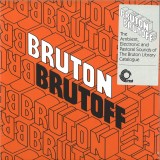
Various - Bruton Brutoff – The Ambient, Electronic and Pastoral side of the the Bruton library catalogue

Rare musical magic from the Bruton library catalogue – ambient, spacey, pastoral and electronic. Music by John Cameron, Alan Hawkshaw, Fran-cis Monkman, Brian Bennett and more – all total masters of the scene. All very cool. All very now. All will sell very fast.

Over the last three decades Jonny Trunk has collected and written about library music. But he’s never had a great deal of luck with the Bruton catalogue. By this he means that he’s never stumbled across a massive stash, or lucked-out buying a huge run for practically nothing –that’s the kind of thing that used to happen in the 1990s and the early noughties if you were out there looking hard for library music. But he did manage to get about 25 in one hit about 20 years ago when the BBC shut down their “TV Training Department” near Lime Grove and also when a box of Brutons ended up being dumped at a hospital radio, and they didn’t want the records, so Jonny got a call.

There are lots of Bruton albums in existence – over 330 LPs in the vinyl catalogue, issued between 1978 and 1985. That’s a lot of music to wade through if you are looking for sublime modern day sounds. For many years now the “trophies” from the Bruton catalogue have been the beat or action driven LPs – the two Drama Montage albums (BRJ2 and BRJ8) have always been the big hitters, and others such as High Adventure (BRK2) too.

But Jonny has always found himself drawn to the lime green LPs, the pastoral, peaceful albums (The BRDs), which were full of the kind of gentle, lovely music that would turn up in Take Hart as Tony was paint-ing a woodpecker or a badger or an Autumn tree. The other Brutons he likes are the orange ones (The BRIs) simply because they are full of ex-perimental futuristic electronics and would remind him of 1980s ITV backgrounds. This LP series includes Brian Bennett’s cosmic classic Fantasia (BRI 10). Jonny has been knows to refer to this style of library music as “Krypton Factor library”, because it’s exactly what that strange but successful 1980s TV quiz show sounded like.

In recent years as interest in library music has expanded, we’ve watched
the price of a handful of Brutons really going through the roof - not the just the action and drama ones, but the more esoteric and experimental LPs too – like the BRDs and the BRIs. Jonny gets the vibe that people fi-nally want to hear this other more interesting and experimental side of the Bruton catalogue. So what better time than now to put together a compilation of such sublime period sounds.

Not only does this album bring together a set of fabulous cues that would cost the average man in the street a month’s wages (if the origi-nals were all wanted and if you could even track them all down), but it also chops out the need to listen to other tracks on library albums that are nowhere near as good.

The cues here all date from between 1978 and 1984. They come from the BRD, BRI, BRH, BRJ, BRM, BRR and BRs catalogues.

The composers are all legends within the genre, and here, were doing what great library composers do best – fulfilling a brief and utilising modern studio equipment to both commercial and beguiling effect.

No en stock

Haga su pedido ahora y le encargaremos el artículo en nuestro proveedor.

15,92

Ültimo hace: 5 Años
Ron Geesin - Pot-Boilers – Ron Geesin Soundtracks To Stephen Dwoskin Films, 1966 - 1970

Sublime, unique, sexy and peculiar unreleased scores by electronic and jazz pioneer Ron Geesin, made for the sublime, unique, sexy and peculiar films by maverick director Stephen Dwoskin. There. we’ve said it. And if you have not heard of one or either of these two dudes it doesn’t really matter. Geesin made great music and worked with Pink Floyd. Dwoskin made odd films, most of them are in the BFI permanent collection. They are great and a bit strange.
These superb unreleased soundtracks come from a fascinating, progressive and important period in British film history. They represent an intriguing collaboration between the lively Ron Geesin from Scotland and the American Stephen Dwoskin, who both met in London.
Musically they are minimal, charismatic and quite groundbreaking. Here is the story…
HISTORY:
Steve Dwoskin arrived in London in 1964, aged 25, with several 16mm films in his trunk, shot in the cold-water flats of Greenwich Village. He had been on the fringe of the Factory scene, and some of his films starred Beverly Grant, ‘the queen of the underground’. But they had scarcely been seen, and they didn’t have soundtracks. For almost a year they stayed in the trunk, and stayed silent. Then he met Ron Geesin, somewhere around Portobello Road.
‘Slept last night, completely dressed after working over 12 hours on sound tracks at Ron’s,’ wrote Dwoskin in his diary for 29 July 1965. ‘My films are not anywhere near being anything. I need more energy, more concise and positive ideas and less inhibition. And of course space, money and people.’ Dwoskin, who taught and practised graphic design by day, had recently decided to stay in London beyond the term of the Fulbright scholarship that had brought him there.
Ron, living with Frankie in a basement flat in Elgin Crescent – they would marry the next year, with Dwoskin as best man – was about to leave the Original Downtown Syncopators, the trad jazz band he had joined aged seventeen-and-a-half, and was trying to go solo. On stage he would make vigorous use of piano and banjo; at home Frankie had bought him a new kind of instrument – a tape recorder. ‘Soon I had one tape recorder, two tape recorders, three tape recorders.’

Ron, wrote Dwoskin in his unpublished autobiography, ‘loved to record, and to cut and splice the quarter-inch recording tape to make new sounds. This triggered in me the idea of getting back to my films and finishing them’. Soon he was living in a dank basement in Denbigh Road, a few minutes’ walk from Elgin Crescent. Ron’s soundtracks for Dwoskin’ films, recorded in the Geesins’ flat, encompassed Ron’s very eclectic range of styles – madcap piano and fretted banjo as well as tape manipulation.
Aside from Ron’s soundtracks, some of which belong to films that no longer exist (including Pot Boiler), Frankie would act in one of the films that Dwoskin either lost or never finished during these years. He was disabled, having contracted polio as a child, and Ron and Frankie were both carers and collaborators; Ron had met him when he was struggling into his car.
There was no London equivalent to the underground film scene that Dwoskin had known in New York, and his films remained unseen until such a scene began to come into being, in the autumn of 1966. Some of them made their debut at the Mercury Theatre, near Notting Hill Gate, that September. Dwoskin wrote that Alone, starring Zelda Nelson (from Ron Rice’s Chumlum), and Chinese Checkers, with Beverly Grant and Dwoskin’s friend Joan Adler, went over best.
Soon both Dwoskin and Geesin became involved in the nascent London Film-Makers’ Co-op, which put on screenings in Better Books on Charing Cross Road – ‘if you can call them screenings,’ Ron recalls; ‘I’d call it fifteen blokes in various stages of disarray, peering through the smoke’. One or more of the films had been ‘striped’ with magnetic audiotape; with others ‘we had no means of direct syncing to the picture, so he started the film and I started the tape recorder’.
In the same autumn, Dwoskin moved into a flat almost opposite the Geesins on Elgin Crescent. More collaborations followed, including Naissant, on which Gavin Bryars, whom Geesin had met during a stint on the northern club circuit with novelty act Dr Crock and His Crackpots, played double bass.
Around the end of 1967 Geesin released his first solo LP, A Raise of Eyebrows, and Dwoskin won recognition the Fourth Experimental Film Competition, aka EXPRMNTL 4, an occasional film festival staged at Knokke-le-Zoute in Belgium. By now the films had optical soundtracks.
It was only after this that Dwoskin completed his first ‘British’ films, including Me Myself and I, with Barbara Gladstone, an American dancer who had appeared in Barbara Rubin’s Christmas on Earth, and with whom Dwoskin and Geesin had at one point devised a stage show, never produced. For Moment, a single-shot film, Geesin provided his most experimental score yet. At the time of its debut in 1970, Dwoskin and the Geesins were sharing a house in Ladbroke Grove.
By then, Ron was working with Pink Floyd, and soon afterwards he and Frankie moved out to the country, to be replaced by Bryars both in the house and as Dwoskin’s principal collaborator.
Until now these scores have remained part of the Geesin Archive and have never been issued.

No en stock

Haga su pedido ahora y le encargaremos el artículo en nuestro proveedor.

15,92

Ültimo hace: 5 Años
Genius / Gza - Liquid Swords Instrumentals 2x12"

Pressed On Limited Edition Black And White Vinyl! Available on 2LP, with the look of a silk-screened jacket we are excited to bring to you these Liquid Swords Instrumentals. There are many reasons why Wu-Tang Clan rapper GZA's second solo album Liquid Swords is considered one of the greatest hip-hop records of all time. Critics and historians point to GZA's raw, and starkly poetic lyrics which featured references to chess, crime and philosophy, as well as superb guest performances from his Wu-Tang Clan contemporaries. One can't comment on Liquid Swords' brilliance however without touching upon the production, courtesy of Wu-Tang's own mastermind RZA. Behind a hazy and murky backdrop of rare samples and classic boom-bap beats, RZA crafted a bleak atmosphere of urban dystopia for GZA's esoteric rhymes to flourish in,cribbing from a wide panoply of sources ranging from the dusty soul of The Bar-Kays and Ohio Players, the nostalgic jazz of Cannonball Adderley and Willie Mitchell, and even the experimental weirdness of Mothers Of Invention. In a retrospective 5-star AllMusic review of Liquid Swords, writer Steve Huey said of RZA’s production: “The Genius' eerie calm is a great match for RZA's atmospheric production, which is tremendously effective in this context; the kung fu dialogue here is among the creepiest he's put on record, and he experiments quite a bit with stranger sounds and more layered tracks.” These instrumentals, peppered with frequent interludes of dialogue from the classic samurai flick Shogun Assassin, became the core of the GZA’s acclaimed sophomore LP. The full Liquid Swords instrumentals are now available in a white and black vinyl pressing, a nod to the chessboard art synonymous with the album’s cover art. All tracks have been restored, with re-mastered audio from the original source tapes.

No en stock

Haga su pedido ahora y le encargaremos el artículo en nuestro proveedor.

34,92

Ültimo hace: 4 Años
Imaginary Softwoods - Annual Flowers in Color

"Annual Flowers in Color" is an absolutely gorgeous, perfectly weathered, subtly strange record. It's exactly the thing you're thinking of when you think "I want to hear really killer polysynths and tape delay" but it's also much more, glistening with distended reflections of Steve Roach and Stapleton, ringing with simultaneous sublimated echoes of the dorkiest and most expensive French mellotron prog and the most incandescent cheap heat from the $2 exotica bin, and dripping with the "as above, so below" that characterizes synthesizer records at their best. It's both a welcoming point of entry for the uninitiated and a sticky, seductive cut deep enough to envelop any heads seeking a way station on the search for the apocryphal second volume of Cosmos Farm Sessions.

Chris Madak Philadelphia, February 2020

No en stock

Haga su pedido ahora y le encargaremos el artículo en nuestro proveedor.

18,45

Ültimo hace: 5 Años
BENJAMIN LEW - LE PERSONNAGE PRINCIPAL EST UN PEUPLE ISOLÉ

'Benjamin Lew was an enlightened amateur, in the noble and almost Renaissance-like sense of the word: he dabbled with equal grace in photography, writing, visual arts ... and worked part-time as a cocktail mixer in a tropical bar which was one of the favourite watering holes of Brussels' thriving artistic community of the early '80s. Tuxedomoon had just moved to Brussels, and Steven Brown was among the many musicians, designers & artists who patronized the bar. Benjamin had a secret passion: he wasn't a musician, but had acquired a small analog computer, with which he had started creating these strange mysterious little pieces. Benjamin played them to Steven and asked him if he'd agree to record with him. Steven was taken with them and accepted. The Douzième Journée was largely created in the studio by both protagonists, with the help of Gilles Martin and myself, in the spring of '82. Listening to his albums (he went on to record four more with Crammed) is like embarking on a dream journey to the Sahara or the Far East. You'd think that some of the pieces feature non-European musicians or samples but: no... this is just Benjamin's imagination, his synths, and his friends...'

Marc Hollander, Feb. 2019

No en stock

Haga su pedido ahora y le encargaremos el artículo en nuestro proveedor.

21,64

Ültimo hace: 6 Años
Zend Avesta - Organique

The sensitive mountain » (la montagne sensible) is the nickname Alain Bashung came up with for Arnaud Rebotini. At the height of his fame, after the success of Fantaisie Militaire in 1998, Bashung readily agreed to create an album with Rebotini. The two men didn’t know each other; their record label had introduced them. Bashung brought in “Mortel Battement” and “Nocturne,” two poems by Jean Tardieu, which he recited in a voice simultaneously warm and flat, and Arnaud produced an impressionist soundscape that ended with an apocalypse of metal. Bashung was so proud of their collaboration that he offered to give several interviews to promote the record. Today, listening back to this moving Léo Ferré influenced "talking singing" exercise, it’s hard not to hear the template for L'Imprudence, the album that Bashung went on to record with Rebotini two years later. In a similar way, the album Organique sparked a productive partnership between Rebotini and filmmaker Robin Campillo, which resulted in their being awarded a César for Best Original Music in 2018. The director, who trusted Rebotini to create the soundtracks for his films Eastern Boys and 120 Beats per Minute, never kept his love for the 2000 record a secret.

Yet it’s an understatement to say that when it was released, Organique was not in the spirit of times. That year was all about the French touch. The funky samples of Modjo’s “Lady” and Superfunk’s “Lucky Star” ruled the sweaty dancefloors. Although Rebotini was familiar with the electronic scene, he had something else in mind when he set about creating Organique. Under his own name or under the pseudonyms Aleph, Avalanche, Black Strobe, Maison Laffitte, and of course Zend Avesta, he had already released several quite bizarre and experimental techno, house, or jungle maxi singles on pioneering labels like P.O.F., Source, and Artefact, run by his friend Jérôme Mestre’s, whom he had met back when both were working as record salesmen at Rough Trade’s ephemeral Parisian store. It was at Artefact, still financed at the time by Barclay and Universal, that he naturally proposed this record project, which was a bit "different." It was his first real album.

Arnaud Rebotini has never hidden his love-hate relationship with the electronic scene. He’s a fan of rave music, Rex, and later Pulp, but he listens mostly to metal and contemporary music, mainly American minimalists such as Terry Riley, Philip Glass, Steve Reich. He wanted to mix this genre with a more French aesthetic inspired by Debussy, whose unconventionality fascinates him. From the first suspended guitar note of Organique, you can pick up another influence, possibly poppier. In the style of Mark Hollis, the erratic leader of Talk Talk, whose only solo album’s silences and dissonances left their mark two years earlier, we hear the fingers touching the keys of the clarinet on “Ondine.” The instruments have presence, character. Nothing is smooth. Everything is organic.

Although it’s sometimes labeled as electronica because of Rebotini’s career, there’s nothing digital about Organique. No "pro tools" editing or samples, only programmed drums and some synth layering. And his guest vocalists. Playing the role of electro producer, he invited Bashung, of course, to join him on the album, but also Roya Arab, who Rebotini first spotted while she was playing in Archive, and her sister Leila, Gus Gus alum Hafdis Huld, Kat Onoma’s Philippe Poirier on the “Samuel Hall” inspired track “Qu’est ce qui m’a pris,” and former KaS Product member Mona Soyoc.

The frustration of a tour where he had "little to do on stage," the desire to sing himself, and the creation of the Black Strobe project, a haunting mix of blues and rock, stopped Zend Avesta from putting out another album. Eighteen years later, the Organique we rediscover today has lost nothing of its strangeness, nor beauty. When it came out, Bashung said, "What is interesting for a musician is to feel that you have a piece of wasteland in front of you, something to clear.” That remains true today.

No en stock

Haga su pedido ahora y le encargaremos el artículo en nuestro proveedor.

30,21

Ültimo hace: 7 Años
Hawkwind - Best Of Live

Hawkwind

Best Of Live

12inchSECLP191Y
DREAMCATCHER/SECRET
30.06.2018

Side A Tracks 1-4 1977 Spirit Of The Age Tour. De Montfort Hall, Leicester Band Line-up: Bob Calvert (vocals) Dave Brock (guitar, Vocals) Simon King (drums) Simon House (keyboards, Violin).

Side B Tracks 1-2 1979 Unknown Venue: Band Line-up: Dave Brock (guitar, Vocals) Huw Lloyd Langton (guitar) Simon King (drums) Tim Blake (keyboards) Harvey Bainbridge (bass Guitar). Side B Track 3 1982 Autumn Choose Your

Masques U.k. Tour Hammersmith Odeon, London. Band Line-up: Bob Calvert (vocals, Generator) Dave Brock (guitar, Keyboards, Vocals) Martin Griffin (drums) Steve Swindells (keyboards) Harvey Bainbridge (bass Guitar,

Keyboards) Huw Lloyd Langton (guitar) Nik Turner (saxophone, Flute). Side B Track 4 1978 Unknown Venue. Band Line-up: Bob Calvert (vocals, Generator) Dave Brock (guitar, Vocals) Martin Griffin (drums) Steve Swindells (keyboards)

Harvey Bainbridge (bass Guitar) Advertising In Record Collector, Shindig, Vive Le Rock

Reservar30.06.2018

debe ser publicado en 30.06.2018

24,16
Soul Jazz Records Presents - Studio One Rocksteady 2

'Soul Jazz Records' new journey into the mighty vaults of Clement Dodd's Studio One steps once more into the fertile musical environment of Jamaican music in the late 1960's and early 1970's, from the sweet harmony vocals of seminal 1960s Rocksteady right up to the nascent birth of Reggae and Roots music at the start of the 1970's. Sleevenotes to this album are by Steve Barrow, author of 'Rough Guide to Reggae' as well as Soul Jazz Records' own 'Reggae Soundsystem Cover Art' books.

While Ska at the start of the 1960's had taken American Rhythm and Blues as its main influence, Rocksteady focused on the emergence of American Soul music - with Jamaican vocal harmony groups such as The Gaylads, John Holt & The Paragons, Carlton & The Shoes showing a particular fascination with the close harmonies of Curtis Mayfield and The Impressions and other US Soul acts. Here The Heptones even feature with a cover of Bob Dylan's 'I Shall Be Released'.

The influence of Soul music on Jamaican Rocksteady and Reggae is almost palpable, so much so that one wonders how much more successful singers like Delroy Wilson, Alton Ellis, Slim Smith and John Holt would have been had they been born in Chicago, Detroit or Memphis. Artists such as Alton Ellis, Delroy Wilson and Owen Gray defined the era - a slowed down beat as Jamaican political and social heat slowly increased when the 1960's progressed into the start of the 1970's - and the music evolved further from Rocksteady into Roots Reggae. This album is released on heavyweight gatefold sleeve double vinyl (plus download code), CD with slipcase and digital album (ex-North America).

No en stock

Haga su pedido ahora y le encargaremos el artículo en nuestro proveedor.

30,21

Ültimo hace: 9 Años
Artículos por página
N/ABPM
Vinyl