Daughters Of The Sun's singer / guitarist Nick Koenigs has been toiling solo as Filthy Huns for a couple quiet years at this point, layering grease-stained drum machines with badlands guitar, mirage keys, and desolate vocals, alternately broke-down and road-burned. His debut is a dusty midnight ride through black hills. “Watch Of The Bear” in particular captures a loner-in-leather mood, headlight off, pushing 70, chasing the horizon under a sea of stars. Elsewhere there's woozy, hungover dub (“Hot Morning”), peyote campfire awakening (“Infinite Ride”) and stoned sunshine raga (“Out Of The Grave"). Barren times on the highway, through darkening deserts.
quête:stoned
- A1: Werewolves On Wheels (Main Theme)
- A2: Mount Shasta Home
- A3: Ritual
- A4: One
- A5: Ritual 2
- A6: The Devil's Advocates
- A7: The Devil's Advocates (Reprise)
- B1: One Foot In Heaven
- B2: Burning
- B3: Tarot
- B4: Tarot Trail
- B5: Dust Bowl
- B6: The Devil's Advocates 2
- B7: Ritual 3
- B8: Werewolves On Wheels (End Theme)
B-movie junkies, gather round and prepare yourselves for what could only be described as a cinematic speedball. Take a combined hit of two of the most potent strains of toxic cinema, dress it up in ritualistic robes and make it dance to the beat of a stoned, motoric, country commune soundtrack. Like an exploito double bill where both films merge into a single feature, this directorial debut by an ex-Roger Corman protege and future Russ Meyer art director (another heady cocktail) is the product of one writing duo's fleeting time in the driving seat as the moviedrome marathon approached its dwindling finish line.
Werewolves On Wheels emerged in 1971 in a climate where the B-movie genre of the previous two decades began to make way for the early glimpses of imported slasher films and video nasties. Entirely out of popular context in 1971, the soundtrack music of Don Gere would perhaps reveal him as the most versatile actor involved in the whole production. Until this point, Don Gere had been a pop folk songwriter and a country music devotee, but while riding with the werewolves, Don Gere became a disjointed psych rock stoner making ritualistic commune country with more coincidentally in common with Germany's emerging Krautrock scene or the more localised stoner psych of Skip Spence (whose radically ahead of its time LP OAR was recognised by Columbia Records as their lowest selling record in the company's history). Imagine guitarist Sandy Bull jamming with Munich's Amon Duul 1 or some Swedish prog outfits like Trad, Gras och Stenar or a sedated Kebnekaise. In comparison to the Curb/Allan scores, for films like Wild Angels, Devil's Angels, Thunder Alley, and Born Losers (often released on Curb's own Sidewalk or Tower records), the new music made by Don Gere, only three years down the line, sounds like it's from an entirely different generation...
"Pre-certified biker psych from the hillbilly Haxan. Amazing!" - SEAN CANTY (DEMDIKE STARE)
- A1: As I Breathe On The T. T. C
- A2: Anna King
- A3: Space Age Punks
- A4: God Is A Machine
- A5: Feable
- A6: Got To Get Off The Earth
- B1: *Electronic Pink Panther
- B2: Human Question
- B3: Traffic
- B4: Loneliness
- B5: Jungle Chant
- B6: Hidden Melodies
- C1: This Time
- C2: Come On Over
- C3: Old Hollywood
- C4: A Kiss Without Lust
- C5: You Are The Special One
- C6: The Movement
- C7: Nuclear Waste
- D1: Fusion
- D2: Shadows
- D3: Interlude (Demo)
- D4: Feable (Demo)
- D5: Anna King (Demo)
- D6: Come On Over (Alt Version
Drama were the Canadian duo of Eric Simpson (Vocals, Bass Guitar, Guitar) and Don Stagg (Keyboards). Formed in in Mississauga, Ontario in 1978, the pair had previously played together in progressive psych bands Majik and VIIth Temple. Almost every Saturday, Eric and Don would record one song on a TEAC 4 track tape recorder after a couple of takes with very little over dubbing. The pair were influenced by what was playing on the radio during the recording sessions. Everyone else at that time was in a rock or pop band yet Drama were making electronic music. The pair released their debut LP 'Loneliness' on Psycho Records in 1979. There were 500 albums made and about 200 ended up in the garbage as band members shuffled from apartment to apartment. This was followed by a 4-track 7' later that year featuring live drums and additional guitar.
Seance Centre says it best, 'On Loneliness, the pair traded in their velvet and chord charts for thin ties and a cheap drum-machine. The LP still carries a whiff of patchouli, but the sound stings of solder and electricity, and inhabits a nascent zone somewhere between krautrock and new-wave. The vocal cuts are all clustered on the A-side, starting with an ode to the inefficiency of the Toronto Transit Commission - some things never change! The dystopian sci-fi themes are par for the League, and highlights are the love ballad 'Anna King' and the charming 'Feable'. The instrumentals on the B-side feel decidedly more Teutonic, and have a certain CBC charm that sounds like JP Decerf recording for Parry Music. It even opens with a slinky stoned Pink Panther.' For this first time vinyl reissue we've expanded to a double LP with a bonus album of the 4 songs from Old Hollywood 7' and 9 previously unreleased tracks and demo versions. All songs are remastered for vinyl by George Horn at Fantasy Studios in Berkeley. The vinyl comes housed in a jacket with original photo by Don Stagg taken from his apartment rooftop overlooking Toronto of a young teenager sniffing glue and includes an insert with photos and liner notes by Drama.
If you check the credits of The Rolling Stones' Goats Head Soup LP from 1973 you'll find a certain "Pascal" listed on the percussion section. That is none other than Los Angeles based artist Nicolas Pascal Raicevik (1933-1994), aka 107-34-8933, aka Head, aka Nik Pascal, aka Nik Raicevic. Besides his hitting the bongoes on the Stones album, Nik was a great artist on his own, both as a painter and as a musician. As a musician, he was a pioneer in the use of synthesizers, preceeding the Berlin school by some years when his Head LP was released on on Buddah in 1970. Buddah probably saw in Head the opportunity to cash in some money from the remains of the psychedelic scene - the three tracks on the LP are named after drugs used in the late sixties. The sounds, however, are accomplished works that show Raicevic as one of the most interesting pioneers in the use of synths. The album probably didn't do too well, since Buddah didn't renew the contract with Raicevic, who instead took his own way releasing his works on his very own Narco Records and Tapes label. Between 1968 and 1975 Narco would issue 4 LPs credited either to Nik Raicevic (Beyond The End... Eternity) or Nik Pascal (The Sixth Ear, Magnetic Web and Zero Gravity) plus one credited to 107-34-8933 (Numbers, which is in fact the same LP as Buddah's Head, albeit with different cover art). Copies of these LPs came with an ironic sticker over the shrinkwrap that read "Do not listen to this LP if you are stoned".
1972 saw the release of The Sixth Ear (Narco NR666), this time credited to Nik Pascal. A more complex work than Beyond The End..., it adds consistent rhythmic patterns to the mix with the addition of bongoes and also explores some interesting chord progressions.
Besides his musical explorations, Nik was also an interesting painter. His paintings are auctioned from time to time, and are consciousness expanding works influenced by abstract cubism and surrealism, some kind of Salvador Dalí on drugs exploring the outter and inner space. All the artwork on the sleeves of his LPs is done by himself. Spacey landscapes and psychedelic colours that fit perfectly to the music they contain.
"Nik Raicevic's music is at the intersection of radical psycho-electronic weirdness and kraut kosmische music (in particular the scifi-hypno-minimal modules of Conrad Schnitzler in Grun, Rot and Blau). It presents mega epic & tripped out electronic improvisations.
"This is an absolute must for collectors and fans of visceral, neurotic soundscapes." (progarchives)
"As far as late-60s / early-70s American Bedroom' Electronic Music goes, these LPS have to be among the first transmissions from this sector, made all the more attractive when coupled with Raicevic's alien topographIes - the covers are high-color portrayals of Venusian lanes, knotted growths, & future-past architecture in a style you might equate with Vintage' sci-fi pulp-novel covers - & copious Downer' sentiment. This music is imbued with a sort of lonely, anti-social sensibility that's about as far as you can get from the Academic' Early Electronic vector. I will say that if the Steve Birchall, Cellutron & the Invisible, and/or Pythagoron™ seed your garden, this will likely do the same." (twoheadeddog)
Never reissued before on vinyl format, the Wah Wah reissue features original sleeve artwork made of paintings and drawings by Nik himself and reproduction of the famous ironic "Do not listen if you are stoned" sticker. Limited edition, 500 copies only.
If you check the credits of The Rolling Stones' Goats Head Soup LP from 1973 you'll find a certain "Pascal" listed on the percussion section. That is none other than Los Angeles based artist Nicolas Pascal Raicevik (1933-1994), aka 107-34-8933, aka Head, aka Nik Pascal, aka Nik Raicevic. Besides his hitting the bongoes on the Stones album, Nik was a great artist on his own, both as a painter and as a musician. As a musician, he was a pioneer in the use of synthesizers, preceeding the Berlin school by some years when his Head LP was released on on Buddah in 1970. Buddah probably saw in Head the opportunity to cash in some money from the remains of the psychedelic scene - the three tracks on the LP are named after drugs used in the late sixties. The sounds, however, are accomplished works that show Raicevic as one of the most interesting pioneers in the use of synths. The album probably didn't do too well, since Buddah didn't renew the contract with Raicevic, who instead took his own way releasing his works on his very own Narco Records and Tapes label. Between 1968 and 1975 Narco would issue 4 LPs credited either to Nik Raicevic (Beyond The End... Eternity) or Nik Pascal (The Sixth Ear, Magnetic Web and Zero Gravity) plus one credited to 107-34-8933 (Numbers, which is in fact the same LP as Buddah's Head, albeit with different cover art). Copies of these LPs came with an ironic sticker over the shrinkwrap that read "Do not listen to this LP if you are stoned".
Magnetic Web was released in 1973. It appeared under the Nik Pascal monicker and showed a clear evolution in sound, favoured by the addition of an Arp 2600 and some rhythm boxes. It also included percussions and cymbals. The Two Headed Dog site thinks "this is his masterpiece in all of its acid-laced glory."
Besides his musical explorations, Nik was also an interesting painter. His paintings are auctioned from time to time, and are consciousness expanding works influenced by abstract cubism and surrealism, some kind of Salvador Dalí on drugs exploring the outter and inner space. All the artwork on the sleeves of his LPs is done by himself. Spacey landscapes and psychedelic colours that fit perfectly to the music they contain.
"Nik Raicevic's music is at the intersection of radical psycho-electronic weirdness and kraut kosmische music (in particular the scifi-hypno-minimal modules of Conrad Schnitzler in Grun, Rot and Blau). It presents mega epic & tripped out electronic improvisations.
"This is an absolute must for collectors and fans of visceral, neurotic soundscapes."
"As far as late-60s / early-70s American Bedroom' Electronic Music goes, these LPS have to be among the first transmissions from this sector, made all the more attractive when coupled with Raicevic's alien topographIes - the covers are high-color portrayals of Venusian lanes, knotted growths, & future-past architecture in a style you might equate with Vintage' sci-fi pulp-novel covers - & copious Downer' sentiment. This music is imbued with a sort of lonely, anti-social sensibility that's about as far as you can get from the Academic' Early Electronic vector. I will say that if the Steve Birchall, Cellutron & the Invisible, and/or Pythagoron™ seed your garden, this will likely do the same."
Never reissued before on vinyl format, the Wah Wah reissue features original sleeve artwork made of paintings and drawings by Nik himself, and reproduction of the famous ironic "Do not listen if you are stoned" sticker. Limited edition, 500 copies only.
If you check the credits of The Rolling Stones' Goats Head Soup LP from 1973 you'll find a certain "Pascal" listed on the percussion section. That is none other than Los Angeles based artist Nicolas Pascal Raicevik (1933-1994), aka 107-34-8933, aka Head, aka Nik Pascal, aka Nik Raicevic. Besides his hitting the bongoes on the Stones album, Nik was a great artist on his own, both as a painter and as a musician. As a musician, he was a pioneer in the use of synthesizers, preceeding the Berlin school by some years when his Head LP was released on on Buddah in 1970. Buddah probably saw in Head the opportunity to cash in some money from the remains of the psychedelic scene - the three tracks on the LP are named after drugs used in the late sixties. The sounds, however, are accomplished works that show Raicevic as one of the most interesting pioneers in the use of synths. The album probably didn't do too well, since Buddah didn't renew the contract with Raicevic, who instead took his own way releasing his works on his very own Narco Records and Tapes label. Between 1968 and 1975 Narco would issue 4 LPs credited either to Nik Raicevic (Beyond The End... Eternity) or Nik Pascal (The Sixth Ear, Magnetic Web and Zero Gravity) plus one credited to 107-34-8933 (Numbers, which is in fact the same LP as Buddah's Head, albeit with different cover art). Copies of these LPs came with an ironic sticker over the shrinkwrap that read "Do not listen to this LP if you are stoned".
Nik's last album, Zero Gravity (Narco NR123) came under the Nik Pascal name and had a fantastic side long piece on the title track which reminisces of the works of Cluster. B side features four tracks that also bear some Conrad Schnitzler reminiscences. This was to be Nik's last LP before he would sell all his synths to ex car racer and future electronic/ambient music star Steve Roach.
Besides his musical explorations, Nik was also an interesting painter. His paintings are auctioned from time to time, and are consciousness expanding works influenced by abstract cubism and surrealism, some kind of Salvador Dalí on drugs exploring the outter and inner space. All the artwork on the sleeves of his LPs is done by himself. Spacey landscapes and psychedelic colours that fit perfectly to the music they contain.
"Nik Raicevic's music is at the intersection of radical psycho-electronic weirdness and kraut kosmische music (in particular the scifi-hypno-minimal modules of Conrad Schnitzler in Grun, Rot and Blau). It presents mega epic & tripped out electronic improvisations.
"This is an absolute must for collectors and fans of visceral, neurotic soundscapes."
"As far as late-60s / early-70s American Bedroom' Electronic Music goes, these LPS have to be among the first transmissions from this sector, made all the more attractive when coupled with Raicevic's alien topographIes - the covers are high-color portrayals of Venusian lanes, knotted growths, & future-past architecture in a style you might equate with Vintage' sci-fi pulp-novel covers - & copious Downer' sentiment. This music is imbued with a sort of lonely, anti-social sensibility that's about as far as you can get from the Academic' Early Electronic vector. I will say that if the Steve Birchall, Cellutron & the Invisible, and/or Pythagoron™ seed your garden, this will likely do the same."
Never reissued before on vinyl format, the Wah Wah reissue features original sleeve artwork made of paintings and drawings by Nik himself, and reproduction of the famous ironic "Do not listen if you are stoned" sticker. Limited edition, 500 copies only.
Sweltering, humid emotion permeates the gauzy atmosphere and rolling basslines on Neotnas' latest. The tracks here combine the artists' loves of junglism, 'ardcore, stoned ambience, and classic house.
Taken together, it's a batch of instantly nostalgic grooves and future / past chillout rave reimaginings.
REVENGE NEVER SWEETER". 3 rare disco tracks edited by the same guy behind last week's LO-FIEDIT's STONED 12" (LOFIEDITS006). More dirty disco business. Tracks: "IT'S A WONDER NIGHT", "JZ'S REVENGE", and "JZ'S REVENGE REVERSE". Warehouse find! Limited stock on this release. HOUSE DISCO EDIT
Don't wanna move to Southern California / I wasn't really meant for LA...' So sang Dent May once upon a time, now he's eating those words with a side of avocado toast in his new Los Angeles bungalow. What made the lifelong Mississippi boy pull up stakes and head west No one looks at you funny if you wear a tuxedo to the supermarket.' What he means is he moved there to shake up his surroundings, clear his head, and write the most accomplished record of his young career, the magical mystery tour de force Across the Multiverse.
Following the lead of musical-polymaths-with-LA-ties before him like Brian Wilson, Van Dyke Parks, and Harry Nilsson, Dent's style on Across the Multiverse will be familiar to fans of his previous work. Yet there's something more refined about this collection... Stately strings mingle with boogie piano like old friends. Synths weave a celestial backdrop throughout. Every verse, bridge and chorus in its right place, giving it the unmistakable feel of a true songwriting craftsman at work. Lyrically Dent has never been sharper, musing on themes like modern romance ( Picture on a Screen', Face Down in the Gutter of Your Love'), existential dread ( Dream 4 Me', I'm Gonna Live Forever Until I'm Dead'), and the distance to the moon ( Distance to the Moon') as he searches for meaning among the infinite scrolling feeds of our 21st century augmented reality. The title track, a duet with Frankie Cosmos, is a deep space love song about finding love beyond impossible boundaries.
Across the Multiverse was written and recorded in a sunny bedroom in LA's Highland Park neighborhood, with Dent producing and playing nearly every instrument himself. The tracks were selected from dozens of songs written after the LA move, a gold rush of productivity inspired by late nights DJing rare disco funk cuts at local watering holes. It's his first record for new label Carpark and will be released August 18th.
Dent May is a self-described hotel bar lounge singer and aspiring daytime TV talk show host - has been charming his way into the hearts of music fans since the release of his debut album The Good Feeling Music of Dent May & His Magnificent Ukulele on Animal Collective's Paw Tracks label in 2009. The Mississippi-born, Los Angeles-based songwriter, performer, and Dolly Parton enthusiast has since released two more acclaimed records, Do Things (2012) and Warm Blanket (2013), dropped the holiday smash I'll Be Stoned For Christmas', and played hundreds of shows from Shanghai to Chicago. His latest album, Across the Multiverse, is an interstellar voyage of mythic proportions.
Following contributions by DJ Deep and DJ Hell, Tresor Records are proud to present the third instalment in their Kern mix-series, this time headed by Berlin based producer Objekt, his first release following his 2014 debut album Flatland for PAN. In keeping with the series mission of showcasing a more personal approach to mixing Hertz describes his process as such;
Kern Vol. 3 is made up of tracks that I know I will play and love for years to come. Some of these records have been in my bag for years; others are almost as new to me as they are to you. A handful are by lesser known artists whom I admire and who I think deserve wider recognition. Planned, recorded, embellished, reworked, tweaked and chiselled away at over a period of 6 months, the mix was gradually carved out in a way that makes use of new and old techniques alike, presenting itself primarily as a DJ mix but settling in a sweet spot between live recording and studio trickery. The tracklist spans styles, decades and BPMs in an attempt to craft a mix that's unpredictable and compelling in equal measure - one that draws from the more adventurous corners of my club sets, but above all, one that's a pleasure to listen to.
Clocking in at 75min across 36 tracks, Kern Vol. 3 delivers on Objekt's promise, stitching together everything from the playful breakbeats of Beatrice Dillon's "Halfway" to Kirk DiGiorgio's classic techno "Nebula Variation" and the lightspeed IDM of Aleksi Perälä and Ueno Masaaki without missing a beat. A descent through ambient bliss, thundering cello drones and vocal contortions (courtesy of Anna Caragnano, Yair Elazar Glotman and Senyawa's Rully Shabara respectively) give way to the stoned haze of Sensational vs Sotofett and metalwork of Machine Woman and Skarn, rounding up a highly eclectic and adventurous mix which also includes previously unreleased tracks by Bristol's Shanti Celeste, rising Brooklyn producer Via App and accomplished electro technicians Clatterbox and Polzer.
The Brstl label reaches it's tenth release with a return to where it started with a 12 from October & Borai. The label was set up by Rhythmic Theory, Chris Farrell and Shanti Celeste in 2011 from the Idle Hands record shop as a means to showcase the finest house and techno being produced in their city, Bristol.
October's 'Head 4 Phuture' is a nod to the acid pioneers without resorting to revivalism. Instead a heady groove is teased out over several minutes, perfect DJ gear. October & Borai 'Too High The Future' is a heady stoned house groove, from Bristol's highest producers - with some weighty sub to propel things along.
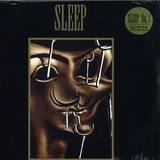
BACK IN STOCK NOW!! "Volume One is the debut album. It was the only album recorded with original guitarist Justin Marler, before he became an Orthodox monk. Volume One showcases a darker sound and stronger doom metal influence than Sleep's later work. The image featured on the cover is taken from the Salvador Dali painting "Soft Self-Portrait with Fried Bacon".
Their only album as a four piece of Al Cisneros, Matt Pike, Justin Marler and Chris Haikus
LP repressed for first time in many years.
allmusic
"For all their budding, precocious talent, Sleep's 1991 debut, Volume One, quickly betrays their still quite heavy debt to doom metal forefathers like Black Sabbath, Witchfinder, and Saint Vitus. Driven by Matt Pike and Justin Marler's lumbering mass of low-tuned guitar riffs, Al Cisneros' (still going as Luke here) serpentine bass and ragged screams, and drummer Chris Haikus' cyclopean kit pummeling, occasional highlights such as "The Suffering," "Nebuchadnezzar's Dream," and "The Wall of Yawn" prove less memorable than they are sensorially overwhelming. And yet, ironically, Sleep's rhythm guitars would never again be kept as under control, nor would their leads sound quite as refined as they do here (see the cleaner harmonies employed to good use on "Numb" and "Catatonic," for example). This was probably due to the onetime involvement of the significantly less stoned Marler, who would soon exchange the group for a monastery where he would study to become a monk. Fittingly enough, however, losing the versatility of a second guitarist was exactly what Sleep needed to focus their singular power into a crushing force, and the remaining trio would flourish immediately behind the sheer physicality of Pike's six-string style, as proven by 1993's superlative sophomore LP, Sleep's Holy Mountain."
Hot on the heels of his last outing for the Delsin house series comes this, another essential new offering from German producer Erdbeerschnitzel. The experienced producer has many skills in his arsenal and this new EP proves that once again. The title track The Ample Waters is a joyous and lively concoction that fuses curious melodies with busy little piano stabs and more trilling, sunny melodies. It's busy house for bustling dancefloors and next up, Never Tilt slows things down with jumbled, woody percussion falling over lazy drums and stretched, yawning synth smears. Colourful and effervescent, it's a track that makes you want to shake your limbs. With Level Hopes is again characterised by melodic colour, with pixelated patterns stretched over a funky, gooey bassline and clacking percussion. There's a beautifully DIY feel to the loosely assembled track that gives it a life all of its own before closer Yet Unfulfilled pairs slo-mo beats with neo-soul vocal snippets, lazy and stoned summer chords. It's the most emotive of the lot, but all four tracks are truly feel good jams that have come just in time for some serious summer action.