Alphawaves, is a new project by dj and electronic music producer Alex Tsotsos combining both the meditative as well as the healing power of music! The idea behind Alphawaves is to stimulate mind, body and soul through broad and repetitive soundscapes that unfold on top of elegantly pulsating rhythmics.
Each track is recorded live in the studio and moves along the lines of techno in the ultra deep field. Single takes performed in real time until the tape stops rolling. Alphawaves is inspired by the analog sound pioneered by acts like Rhythm and Sound, Maurizio and Alpha and Omega.
A01020304 EP is the sophomore release of Lowpass recordings. A record label that explores the analog realm of underground electronic music and deep techno.
quête:stop me
Rare debut LP by the eccentric Peruvian singer Jean Paul "El Troglodita", known for his wild performances and extreme way of life. Enrique Roberto Tellería made his Peruvian television debut in 1965 under the stage name Jean Paul El Troglodita and wearing an imitation leopard skin suit. He would switch from melodic calm to shouting wildly or suddenly drop to the floor on his knees and smash the furniture like crazy. At the age of 19, DisPerú signed him to the label on the strength of these early performances. His first single included a freely translated version of 'Secret Agent Man' in Spanish. He began to work on the eleven cover versions that would feature on his first LP immediately, writing all his own lyrics and accompanied by the beat band Los Steivos. Despite the predominance of English beat music in Peru, the album only included three songs directly related to the British invasion: 'Bus Stop' by The Hollies, also played in raga rock style; 'Paint it Black' by The Rolling Stones; and 'The House of the Rising Sun', which follows the arrangement recorded by The Animals. So most songs come the American songbook. Apart from 'Tema de El Troglodita' (a versión of 'Secret Agent' by The Challengers), we find the bluesy 'Mustang Sally' (Sir Mack Rice). Two other US numbers, originally performed with orchestral accompaniment, were adapted to fit the rock band format: 'Poor Side of Town' (Johnny Rivers) and 'Take Me to the Moon' (Kaye Ballard). 'El verdadero amor' ('True Love'), an uncredited version is in a similar vein. The Spanish song 'Negro es negro' (Los Bravos) and the Brazilian track 'Que todo se vaya al infierno' (Roberto Carlos) also feature on the LP. El Troglodita's association with the so-called nueva ola, indicated on the back cover, needs clarification. In Peru, nueva ola was a mixed bag rather than a specific musical style and encompassed slow rock, twist, bossa nova and all the styles that the record industry produced to tame the wild rock 'n' roll impulses of teenagers in the early sixties. The Peruvian artists that performed these inoffensive Spanish adaptations of Paul Anka, Neil Sedaka or Frankie Avalon, were presented as successful models of youth culture. This was until 1964, when the Beatles with their mop-top haircuts hit the charts, vindicating rock 'n' roll and imposing the group format over the soloist model. Meanwhile the press continued to call any youth music recorded during the rest of the decade nueva ola. Jean Paul noted these distinctions early on and distanced himself from it in several statements. He saw his performance more in a style as a solo artist as following in the footsteps of e.g. Los Saicos. His 'hippie' lifestyle got him arrested by the new de facto military government in 1968, who accused him of promoting drug consumption and corrupting the Peruvian youth. The charges were soon dropped but his reputation was tarnished, and he ended up emigrating to Central America. The album includes Spanish sung versions of British beat songs and covers of the American songbook as well as various international hits.
In a testament to Ireland’s vibrant musical history, Allchival presents an anthology celebrating the disco era’s hidden gems from Stuart Bingham's Sunshine. Culled from the annals of their studio recordings, this collection shines a light on the country’s lesser-known contributions to the global disco phenomenon.
Kicking off the compilation with Sunshine's electrifying "Boogie on Up," a testament to the band's prowess in embracing disco rhythms despite their pop cover origins. Produced by the acclaimed Paul Curtis, the track embodies the infectious spirit of disco, marking a pivotal moment for Irish disco hits. Accompanying it is "Don't Stop Me," radiating with Euro-disco vibes, further exemplifying Sunshine's versatility. Bingham recounts the bittersweet journey of "If This Is Free." Initially slated for success under Curtis's wing, the disco era's abrupt demise altered its trajectory, leading to an independent recording that retains a raw, garagey edge reminiscent of the era's ethos.
"Give It To Me" is another standout, blending Nile Rodgers-inspired arrangements with a Euro-disco flair. Stuart Bingham's production prowess and Rosey's captivating vocals converge to create an irresistible groove that transcends disco conventions.
Venturing into more experimental territory, "The Boogie Bug" showcases some Irish ingenuity in rap-infused grooves. Despite its ahead-of-its-time sound, the track faced resistance in a disco-weary landscape and rounding out the compilation is "Oh Gee, I Got U B.B.," a playful nod to dub-mix traditions.
This Sunshine anthology is a journey through Ireland's disco era, unearthing forgotten gems and shedding light on the country's rich musical tapestry. From Sunshine's infectious rhythms to Stuart Bingham's resilient spirit, each track encapsulates the era's vibrancy and innovation.
LP, 2024 Repress - half speed mastering
"The 50 best IDM albums of all time"
Pitchfork
"A liquidy headbox of aural shapes, whose forms hardly change yet seem to encompass infinite viscosity within them, like rainbow pools of oil on water"
Wire
"Before IDM became a nation of Aphex and Autechre cosplayers, the genre was less defined by aesthetics than by a shared ideology. Here was a loosely connected axis of post-rave kids, united by little more than a shared willingness to subvert the tools of their techno idols and create sounds that hadn't previously been imagined. No record of the era better embodies this find-a-machine-and-freak-it ethos than Islets in Pink Polypropylene, the otherworldly debut by British producer Anthony Manning."
Pitchfork
"It’s refreshing to hear an all-electronic album that sounds so organic yet so totally alien."
Fact
"One of the UK’s first post-rave ambient records proper; sharing much more in common with Autechre’s Amber or AFX’s Selected Ambient Works Vol. II - which were both released in that same year - than anything else before or around it."
Boomkat
For fans of avant everything innovative and experimental music.
About The Album>>>>
The whole album was composed and realized on the Roland R8 drum machine. It followed the same process as the Elastic Variations pieces, with the major addition of many, many hours of editing.
Each piece was composed as a series of patterns, of varying lengths ( 5,6,7 bars long ). The stock R8 sounds were embellished with one of several ROM sound library cards ( mostly the Dance card, number 10 ).
These patterns were created by tapping out a rhythm, then, in real time, using the Pitch slider as the pattern looped, to create improvised melodies for each of the pattern's voices.
The rough version of each piece was built by stitching the patterns together as a song, listening to each addition over and over, to make sure the melodies flowed into each other in a vaguely coherent manner.
Once this initial rough structure was in place I set about fine tuning every single note.
The R8 doesn't allow you to assign a pitch to a note in the conventional sense. It's not possible to assign a pitch of Middle C to the first note of the first bar. Instead, it assigns a numerical value to a note's pitch, between -4800 and +4800 ( I think those numbers are correct - that little screen is seared into my memory ).
If you restrict all notes within a piece to a multiple of, say, 400, you therefore create the possibility of a sort of scale. For multiples of 400, you have a total number of 24 permissable notes. However, most of the percussive sounds, when pitch shifted, only sounded 'good' over a reduced range.
The first editing step was to go through the entire piece, and change every note's pitch to its nearest multiple of 400.
The second step was to draw out the entire piece on graph paper, the Y axis being pitch, X being time. This drawing gave me a visual sense of a melody's flow. It was easy to see too many notes clustering around too tight a pitch range for instance, or a single note straying way down into the lower register while all others at that point in the melody were in the upper.
Once these first 'clearing-up' edits were complete I could set about re-writing elements that didn't sound right melodically. Often this meant stripping out whole chunks of superfluous notes, to reveal a cleaner melody line, then shifting its shape slightly. If the flow of the line of dots on the graph 'looked' balanced and sweetly sinuous, then often it sounded so.
This entire process took many weeks per piece. Weeks of doing almost nothing else. Listening. Re-drawing. Re-writing. Listening. Round and round and round. When I could hear the whole thing in my head, from beginning to end, and nothing seemed to jar ( too excessively ), I knew it was done, time to move on.
I imagine it's very similar to the process of stop animation. Your days are filled with painfully tiny incremental changes that seem to be getting nowhere. Then, slowly, a shape, narrative, starts to appear. Then, all of a sudden, somehow, it's done.
When all the pieces were complete the R8 was taken into Irdial's studio where some simple effects were added, each voice recorded individually for clarity onto 8-track tape and mastered onto an ex-BBC half-inch tape deck.
Then I slept. And vowed never to do it again.
*****
And the title ?
Soon after finishing the pieces I happened to read a magazine article about Christo's "Surrounded Islands" installation with the music playing in the background.
There was something about a particular cluster of words within a random sentence that seemed pleasing and somehow appropriate.
"Islets in Pink Polypropylene" seemed to make as much sense as anything else.
All-woman garage rock band from Phoenix return to pour another down one’s throat. Continuing to tour relentlessly around the world. Produced by Mark Rains (Hooveriii, Death Valley Girls, Hunx and His Punx). The Darts can’t stop, won’t stop! Hot on the heels on last year’s groundbreaking album Snake Oil, The Darts have returned guns blazing with a brand-new album, Boomerang! While on a break from their intense international touring schedule, the band stopped at
Station House Studio in Los Angeles to work with producer Mark Rains (Hooveriii, Death Valley Girls, Hunx and His Punx) with the mission of capturing the band’s raw rock spirit. From the opening chords of “Hang Around,” listeners are launched into an explosive garage party, with the Farfisa organ bringing a carnival and snarky gang vocals adding to the fray. The band doesn’t let up from there. With Nicole Laurenne on vocals and Farfisa, Christina Nunez on bass and backup vocals, Meliza Jackson on guitars, and Mary Rose Gonzales on drums, the tight lineup fuels the album’s themes of resilience and empowerment. Each track on Boomerang packs a punch, drawing the listener into a world of infectious hooks and soaring riffs. “Boomerang is a reference to the fact that, right after we released Snake Oil, we turned right around and went back into the studio to do a whole new full-length album! I can’t stop writing songs! But ‘boomerang’ also refers to a lyric on the album that describes toxic people and things that keep coming back into your life despite your repeated attempts to fling them as far away as possible. This album is my manifesto about finding strength the kind of strength it takes to do what you personally need to do to be peaceful and healthy. For me it meant cutting a lot of stuff out of my life, and that was really hard, but it also meant adding a lot of amazing stuff I never thought I’d see. I’m in a better place than I’ve ever been, and I think you can feel that power in this record.” – Nicole Laurenne
Features
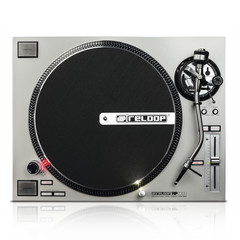
NEW features of the MK2 version
Built for the club: Rigid chassis construction with an even heavier design with additional reinforcements made of metal, rubber and molding compound for high vibration damping and isolation
More powerful starting torque (adjustable from 2.8 - 4.5 kg/cm)
Fine-tuned motor control for further optimization of wow and flutter and rotation
Newly developed, height-adjustable tone arm base (VTA) and Anti-Skating control
Particularly light weight and rigid, satin aluminium material used for tone arm pipe
Pitch scale for precise adjustments
Optional ground terminal offers additional protection in complex club & studio environments
Easily replaceable, freely rotatable LED needle light in new aluminium design
High-quality and hard-wearing silver metallic finish
Quartz driven DJ turntable with upper-torque direct drive
Adjustable stop speed (0.2 - 6 sec.)
Precise control of motor with 3 speeds (33 1/3, 45 & 78 RPM)
Precision manufactured, die cast aluminium turntable
Rubber inlays for reduction of vibrations and background noise
Statically-balanced universal S-shaped tonearm with hydraulic lift and anti-skating mechanism
Universal connection for pickup systems (SME)
Pitch range +/-8 %, +/-16 %, +/-50 % (Ultra Pitch)
Quartz lock
Additional start/stop button for vertical positioning
Reverse function: switch for forwards and reverse operation
Recessed connection cavity for easy installation in cases & seamless adjustment
Phono and line out (no grounding required)
Removable mains and RCA cable
Safety mains switch
Shock-absorbing feet against vibrations
Technical Data
Turntable:
Type: direct-drive turntable
Drive: quartz driven upper-torque direct drive
Motor: 16-pole, 3-phase, brushless motor
Turntable speeds: 3 speeds, manual (33 1/3, 45, 78 RPM)
Starting torque: 2.8 - 4.5 kg/cm (adjustable)
Adjustable stop time (0.2 - 6 sec.)
Start-up time / change to RPM: 55dB (DIN-B)
Brake system: electronic brake
Platter:
Material: die cast aluminium
Diameter: 332 mm
Weight: approx. 1.5 kg
Tone arm:
Type: universal, statically balanced, S-shaped
Effective length: 230 mm
Overhang: 15 mm
Tracking error range: < 3°
VTA setting range: 0-6 mm
Useable weight of pickups: 3.5~8.5 g (incl. headshell 13~18 g)
Anti-skating range: 0 - 3 g
Effective tone arm mass: 30 g
Connections: 1x Phono/Line Out (gold-plated), 1x GND earth connection
General:
Power supply: AC 115/230 V, 60/50 Hz (EU/US), AC 100 V, 50/60 Hz (JP)
Power consumption: 13 W
Dimensions: 458 x 354 x 144,6 mm
Weight: approx. 11.7 kg
Accessories included: turntable, slipmat, LED needle light, counterweight, PHONO Cinch cable with earth, AC mains adapter, operating instructions
Limited vinyl edition of 300 copies on 180g white vinyl with download card. Deleted Scene, the 8th studio album from UK producer Stumbleine, overflows with beautiful nostalgia-tinged electronica. The album is steeped with cloud-like beauty, with opener I Can Stop Anytime I Like fusing addictive sampled vocals with soft, glassy guitars, as if a reflecting pool of the listeners' memories. Cinderhaze ripples that pool with a more driving, magnetic force, shifting and pulling its emotional weight in cyclic waves. Ursa Minor Sleeps Forever is fittingly sleepy, circling soft slow synth arpeggios in a dreamy haze, a sound built upon by Somnia to an epiphany-like string bed, never straying too far from Stumbleine's serene haven of melodic grace. On Catastrophette Stumbleine crafts a more dramatic and poignant web of sound, as if running through the memories created by the rest of Deleted Scene. The album as a whole is an escape to a dream-state of Stumbleine's making, captivating, yet familiar, and completely enveloping. According to Peter, "Deleted scene refers to the memories that play over and over inside your own head, replaying hazy copies of hazy copies that evolve into a bittersweet fever dream. Everybody has their own unique collection of deleted scenes slowly distorting and fading away." 'Stumbleine is the alias of Peter Cooper. With roots in the UK post rock scene, the reclusive producer began blending slow dream-like pop with fractured lo-fi beats as Stumbleine in 2012. Melancholic rnb vocals ebb and flow above submerged guitar ballads. Sand blasted samples intertwine with broken beats to create music with a nostalgic fragile warmth. Stumbleine is known for a DIY ethic, releasing music directly to fans or via the independent label Monotreme Records.'
Ein Muss in der Geschichte des amerikanischen Death Metal, remastered! Die legendäre Chicagoer Death Metal Band Oppressor wurde 1991 von
Bassist/Sänger Tim King und Gitarrist Adam Zadel gegründet, bald kamen Gitarrist Jim Stopper und Drummer Tom Schofield hinzu. Oppressor hat sich
neu formiert und spielt wieder live!Oppressor nahmen zwei Demos auf... und ihr zweites Demo, "As Blood Flows" von 1993, brachte sie 1993 unter
Vertrag. Dieses Demo wurde als eine sehr starke Veröffentlichung angesehen, die über 30 Minuten dauerte und eine anständige Produktion aufwies.
Im darauffolgenden Jahr wurde das Debütalbum "Solstice of Oppression" veröffentlicht, das von ausgiebigen Tourneen begleitet wurde, aber das
Label von Oppressor ging kurz darauf in Konkurs. Um ihren Namen in der Öffentlichkeit zu halten, veröffentlichten Oppressor eine halb Live- und halb
Studio-Compilation namens "European Oppression Live/As Blood Flows", die Live-Material von ihrer europäischen Support-Tour für ihr Debüt und
Studiomaterial enthielt, das aus dem kompletten "As Blood Flows"-Demo der Band von 1993 bestand.
Rising from the fiercely DIY Philadelphia underground, CARLY COSGROVE graft achingly vulnerable lyrics atop a bed of mathy rhythms, intricate guitar work and a penchant for indie-rock cool meets emo authenticity. Their debut album, 2022's See You In Chemistry, was the sound of figuring life out in real time, tracing personal growth through anxiety, depression, and self-actualization - heavy subjects for a band originally formed as a low-stress side-project stopgap in 2018.
The quest for the answers to life's big questions is once again front and center on the band's second album, THE CLEANEST OF HOUSES ARE EMPTY, as Naylor, bassist Helen Bars and drummer Tyler Kramer find themselves face to face with the chronic emotional struggles of life in the modern age.
From the stop-start polyrhythms of first single "You Old Dog" and garage-rock sheen of "Random Dancing" and "What Are You, A Cop," which sounds like Motion City Soundtrack filtering "Everlong" through their idiosyncratic rock tilt, The Cleanest Of Houses is the type of record Carly Cosgrove simply couldn't have made last time - not musically, and certainly not emotionally. They needed to live, through hard touring and harder life experiences.
Having been based in Sussex, Philip moved to an old mill in France and never stopped writing. In 2014 he released his organic and honest solo debut album "I'm Not The Man I Used To Be". This was followed up by the critically acclaimed Mental Home Recordings is upon us. And now Philip Parfitt is set to release Dark light via Chicago/London/Paris based label Tip Top Recordings.
A significant milestone in his long accomplished career, Dark Light features 10 beautifully crafted pieces, including deep cuts 'I know I shouldn't but voices' and 'Dark light' the title track, give ample evidence of Philip's prowess as a wordsmith and musician, but also arranger and producer. Think Nick Drake and Captain Beefheart accidentally bumping into each other at a private viewing of Bright Sta
in Heaven, you won't be too far out of the crease. Philip is accompanied by a merry band of friends and luminaries including Alex Creepy Mojo, Amelie Fish, Lucie Robet (who also wrote title track Dark Light with Philip), Gilda Scouarnec, Rog Mogale (who also mastered the album), and Mark Refoy.
Dark Light is released on digital, CD, limited edition vinyl LP with 200 copies in black and 200 copies in dark purple to match the darkly beautiful artwork by Fernando Ruibal. Sleeve notes come from Matthew Spector within the included booklet with art from Joane Charlotte Senechal, photography by Sarah Baba, and design by Anna Mort.
- A1: Don't Stop The Show
- A2: I Do Rock'n'roll
- A3: Another 45 Miles
- A4: Long Blond Animal
- B1: When The Lady Smiles
- B2: Liquid Soul
- B3: Twilight Zone
- C1: Going To The Run
- C2: Vanilla Queen
- C3: Hold Me Now
- D1: Say When
- D2: The Devil Made Me Do It
- D3: Johnny Make Believe
- E1: Rinus On Bass
- E2: Radar Love Part 1
- E3: Cesar On Drums
- E4: Radar Love Part 2
- F1: She Flies On Strange Wings
- F2: Legalize Telepathy
Reissue of this long out of print overlooked gem of Swiss Hardcore, originally recorded in 1983. A great chance to rediscover an obscure masterpiece of primo European Hardcore. Remastered from the original master tapes. Includes a bonus track not included on the original vinyl version and a fold out insert with lyrics and an interview with the band. Remastered reissue of this overlooked gem: a long out of print Euro Hardcore classic made in Switzerland that needs to be heard to be believed. With strong sonic ties to the best American Hardcore (think Black Flag and early SST and Touch & Go bands) it still sounds as fresh, powerful and aggressive as when it was originally recorded in 1983! 15 tracks of pure unaltered anger and frustration. A must!
Described as an "intensely British" record, Peanuts is a wry and observational album, with a newfound sense of compassion and reflection on Liz's inner feelings and their projection on the outside world. Peanuts is a playground game, also known as Mercy, where two kids twist each other's fingers until one cries out, 'Peanuts!', signaling that they have met their pain threshold. From 2013, Liz was performing as a backing singer for Bombay Bicycle Club up to their hiatus in 2016, and again when they reformed in 2019, touring the world. Liz has been a regular collaborator with the band ever since, "It was a life-raft for me. It was such a natural fit, and they became my friends for life" says Liz. Peanuts is Liz Lawrence's first album release with Chrysalis Records, spanning 11 tracks full of topics spanning from plant names to the gender wealth gap. "Peanuts is Cate Le Bon meets Primal Scream going off on one about landowners. It's learning the names of different trees and sweating over being polite in emails. It's a petition to stop Elon Musk from spacejunking up the atmosphere so we can't see the stars anymore and it's a big deep breath after going under." -Liz Lawrence
Needle Mythology, the label founded by music writer, author and broadcaster Pete Paphides, is thrilled to announce the signing of the eagerly anticipated debut album by London singer-songwriter and renowned DJ Iraina Mancini. Iraina’s singular pop vision will be known to regular listeners of 6 Music, where her singles ‘Undo The Blue’, ‘Deep End’, ‘Shotgun’ and ‘Do It (You Stole The Rhythm)’ have all been enthusiastically embraced. Iraina's obsession with music stretches back into her early childhood, much of which was spent absorbing her parents’ collection of old 45s, in particular her dad’s Northern Soul records – an alternative education which meant that, by her early 20s, she was a familiar presence in the DJ booth at many discerning London club nights. Her love of French ye-ye, British freakbeat, Brazilian bossa nova, soul, and Turkish psych will be well-known to regular listeners of her Soho Radio show. Having always sung from a young age, Iraina embarked on a string of collaborators such as Jagz Kooner (Sabres Of Paradise), Sunglasses For Jaws (Miles Kane) and Simon Dine (Paul Weller, Noonday Underground) which truly saw her find her metier as a songwriter, conjuring melodies that stand shoulder to shoulder alongside her impeccable influences. Iraina describes her first single for Needle Mythology ‘Cannonball’ as “a celebration of that moment when you meet someone you really fall for and it knocks you for six. It can be a bit scary, but you’ve just got to go with what your intuition is telling you.” Written with Simon Dine, the vertiginous heart-in-mouth abandon of the song perfectly mirrors the circumstances that brought it into being. Iraina cites Jacqueline Taïeb’s 1967 single 7h du Matin as an early inspiration for the song: “There’s such a great energy about that song. Her vocal is amazing and all those stops and starts that grab your attention.” “This is an artist I absolutely love, one of our rising stars at 6Music.“ Lauren Laverne BBC 6Music “Iraina seizes on the best aspects of the past, blurring those impeccable 60s and 70s influences with a touch of modernity.” Clash “Full of femme fatale poise and swooning chanteuse flourishes.” The Times
Roy Orbison was an American singer, songwriter, and musician known for his impassioned singing style, complex song structures, and dark, emotional ballads. Orbison's music is mostly in the rock genre and his most successful periods were in the early 1960s and the late 1980s. He performed with minimal motion and in black clothes, matching his dyed black hair and dark sunglasses. His nicknames were "The Caruso of Rock" and "The Big O". On this LP a selection of his 60’s hit singles including "Only the Lonely", "Running Scared", the ballad "Crying", the swinging rockabilly "Ooby Dooby", and "The Great Pretender”.
Clear Vinyl[23,95 €]
Belgian progressive post-hardcore quintet Hippotraktor have announced their second full-length album, `Stasis'. The combination of impressionistic songwriting ambitions and powerful, narrative-charged lyrics proved to be a perfest match for the band so far. Operating at the intersection of Meshuggah's relentless, polyrhythmic pounding and Gojira's colossal atmospheric weight, Hippotraktor have expanded upon their already distinctive sound by introducing De Graef's vocals that bring with them an intriguing new dedication to musical storytelling. "Stasis tells a story of human nature," explains lead vocalist Stefan De Graef about the album's narrative. "As the protagonist enters a new world in which he is confronted with other humans for the first time, he acquaints himself with their customs and ethics, discovering generosity and empathy, but also greed, jealousy and hatred." Taken from the Greek for `stoppage', `Stasis' sees Hippotraktor doing anything but stagnating. Hippotraktor chart intricate melodies and sprawling riffs as a map showing how humanity has come of age in a chaotic world of its own making. Deftly unveiling tender truths whilst tenderly shrouding the violent majesty at its core, `Stasis' is a fitting soundtrack to life in a world that's hurtling towards a stand still.
- A1: Double Exposure Ten Percent (Original Acappella Version)
- A2: Double Exposure Ten Percent (Original Background Vocals)
- A3: Bunny Sigler By The Way You Dance (Original Acappella Version)
- A4: Bunny Sigler By The Way You Dance (Original Background Vocals Acappella)
- A5: Eddie Holman I've Been Singing Love Songs (Original Re-Edit Acappella Version)
- B1: Love Committee Cheaters Never Wins (Original Acappella Version)
- B2: Love Committee Cheaters Never Wins (Original Background Vocals Acappella)
- B3: Double Exposure My Love Is Free (Original Acappella Version)
- B4: Double Exposure My Love Is Free (Original Background Vocals Acappella)
- C1: Aurra Checking You Out (Original Acappella Version)
- C2: Aurra Checking You Out (Original Background Vocals)
- C3: Jimmy Castor It Gets To Me (Original Acappella Version)
- C4: Double Exposure Everyman (Original Acappella Version)
- C5: Double Exposure Everyman (Original Background Vocals)
- D1: Instant Funk No Stoppin' That Rockin' (Original Acappella Version)
- D2: Instant Funk No Stoppin' That Rockin' (Original Background Vocals Acappella)
- D3: Instant Funk No Stoppin' That Rockin' (Original Voicebox Acappella)
- D4: Jimmy Castor Amazon (Original Acappella Version)
- D5: Jimmy Castor Amazon (Original Chorus Acappella)
- D6: Jimmy Castor Amazon (Original Skit Acappella)
- D7: Anthony White I Cant' Turn You Loose (Original Acappella Version)
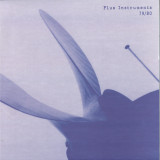
While she was still a member of Nasmak, one of the leading bands of the Dutch ultra-movement, Truus de Groot started Plus Instruments in 1978 with herself as the sole member. When the project evolved, she found a wide range of rotating collaborators like Michel Waisvisz, Lee Ranaldo and James Sclavunos. Plus Instruments was about freedom and the live performances were largely improvised. The sound minimal but captivating. The music always came from within, but De Groot was also triggered by bands like Red Crayola, Suicide, DAF, Wire, Per Ubu, Devo and the No Wave scene in NY. She was always experimenting with primitive multi-track recording and whatever crappy gadgets she could find. Always looking for a gritty, dirty sound and bizarre overtones.
At a young age she travelled to New York and began to immerse herself in the nightlife of the city that never sleeps. Here she found true creativity, passion and expression. The club scene was alive but highly competitive, so this fearless Dutch girl would just knock on promoter’s doors to get gigs booked at places like CBGB’s, Peppermint Lounge, Underground and the Pyramid. De Groot eventually settled in the United States and never stopped experimenting with sound. In recent years she reinvented Plus Instruments and led the group into new territory.
The recordings for this LP were made by De Groot at home and the music is experimental, minimal, industrial but also playful, sounding nothing like most of the later material. 14 tracks in total of which 7 are taken from the elusive and impossible to find self-released debut cassette as ‘Truss Plus Instruments’ which was sparingly distributed by Nigel Jacklin and his legendary Alien Brains fanzine in 1980. The remaining 7 tracks are from the same period (1979-1980) and were carefully selected from the vast archive of De Groot. We are glad to present this anthology that serves as a long overdue testimony to the formative phase of a unique female pioneer of electronic music.
- 1: Different Type Time (Prod. Quelle Chris & Cavalier)
- 2: Custard Spoon (Prod. Quelle Chris)
- 3: Can’t Leave It Alone Feat. Eric Jaye (Prod. Glassc!Ty)
- 4: Come Proper (Prod. Jacob Rochester)
- 5: Touchtones (Prod. Aummaah)
- 6: Déjà Vu / Tydro ‘97 (Prod. Messiah Muzik / Quelle Chris)
- 7: Doodoo Damien (Prod. Quelle Chris)
- 8: Baby I’m Home (Prod. Wino Willy)
- 9: Yeah Boiii (Prod. Quelle Chris)
- 10: All Things Considered (Prod. Wino Willy)
- 11: Pears (Prod. Malik Abdul-Rahmaan)
- 12: Told You (Prod. Fushou)
- 13: Badvice (Prod. Low Key)
- 14: Think About It Feat. Billzegypt (Prod. Obliv)
- 15: Up From Here / 7Th Ward Spyboy (Prod. Ahwlee / Quelle Chris)
- 16: Manigaults / I Miss Them (Prod. Ruffiankick)
- 17: Lazaroos (Prod. Vinny Cuzns)
- 18: Bespoke Feat. Dominic Minix (Prod. Hann_11)
- 19: 50 Bags Feat. Lord Chilla (Prod. Child Actor)
- 20: Axiom / My Gawd (Prod. Glassc!Ty / Quelle Chris)
- 21: Flourish (Prod. Quelle Chris)
"It seemed that if I didn’t somehow repeat the process of greatness, and do so immediately, multiple times away to satisfy playlist and binge watch culture, then I “wasn’t shit”. After a while I was like “nah this doesn’t feel good,… I don’t know if I am finding joy in this”. I would record songs and not release them, obsess over sessions recorded in my home with 30 takes of vocals and wake up only to delete them. When it began to feel right I found solace in an epiphany that I was not obligated to operate at any other wavelength. I am moving on a different type of time, and that doesn’t expire." -Cavalier
For heads of a certain time period of NYC hip-hop, Brooklyn born, New Orleans-based rapper and songwriter, Cavalier was the one that got away. The outrageously talented artist whose name and reputation preceded him everywhere you went in the scene. The rapper who everyone knew was so dope that he had to blow, but who never seemed concerned with any of that. The pretty boy draped in Polo who stole every live show with a feather in his hair and a mouth full of gold fronts. The cat so dedicated to his own independence that even indie labels stopped trying to sign him and projects came when they came, but when they came they were undeniable.
Cavalier was THAT guy for a lot of us; a silver-tongued philosopher with an eye for the poignant details of black life and a delivery as effortless as a young Ken Griffey’s swing. All that said, it never really felt like Cav had that moment in the spotlight that we always assumed was coming. After chiseling away through headier cult corners of the NYC hip-hop scene Cavalier was recognized for his memorable co-pilot to Quelle Chris’ 2013 Mello Music debut, Niggas Is Men. The critically acclaimed LP helped propel Quelle Chris into the forefront of indie hip-hop (and also happened to be the first production credits for Messiah Muzik). Cav followed up with his first full length, Chief, which sports a notable Raekwon feature but also early work from producers like Ohbliv and Tall Black Guy. A relocation to New Orleans and partnership with producer/vocalist Iman Omari yielded two more projects: 2015’s Lemonade EP and Private Stock in 2018. Great records all; eagerly sought by collectors and signal boosted by influential media like OkayPlayer, Solange’s Saint Heron, and Pitchfork. Cavalier’s bonafides have never been in question, but his new album Different Type Time feels like a revelation—a sonic suspension bridge between his rich history and the artform’s future.
Different Type Time doesn’t sound like the future though, its vibrations are somewhere all their own. It sounds like jazz, like a conversation overheard in roti shop, or a pool hall, or the foyer of your old building on a fall day, front door propped open with a brick. The blues is in there too, and the south—the American South, and theGlobal South, and South Brooklyn. It’s not that it sounds like the past, but you can hear everything that came before in the thick of the basslines and the yearning of the keys. Different Type Time also doesn’t sound like now, it sounds like RIGHT NOW; the bounce of the lyrics like the staccato of basketball in the park, carried on a spring breeze.
Although he doesn’t rap on DTT, Quelle Chris plays a pivotal role; producing eight songs and serving as associate producer/consigliere to Cav throughout the creative process. “There is no time wasted in explaining things when I collaborate with Quelle. He understands the universe I am in and the realities I want to create. He’s in them. And I don’t think I can envision one without him,” Cavalier explains. Messiah Muzik, Wino Willy, Ohbliv, Ahwlee, Child Actor, Fushou and several other producers round out the credits, all lending their talents to the album’s spaciously soulful sound. At the center of all these alchemies is Cavalier, nimbly dancing in and out of pockets like a sidewalk game of jumprope. Different Type Time is a masterclass in this thing we call hip-hop; daring and original, yet always standing deeply rooted in the culture.
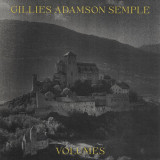
Artist and musician Gillies Adamson Semple explores the material resonance of drone
on new vinyl-only album Volumes.
In 2022, Gillies Adamson Semple made a pilgrimage to the Valère Basilica in the Swiss Alps to play the oldest functioning pipe organ in the world. Built in 1435, this unique instrument is the centrepiece of this sensitive and stirring 6-track release, tracing the elemental themes of spirituality, anatomy, ecological collapse, and the nature of listening in its glacial minimalist drones.
Drawing inspiration from the long-form compositions of Sarah Davachi and Kali Malone, Volumes was built from in-situ recordings Semple made in Switzerland, with the aim of capturing the physical qualities of the sound, from the stops and pedals to the air rushing through the organ’s ancient pipes. Treated like sculptural material and re-assembled at Semple’s London studio in the tradition of musique concrète, the tracks evoke a sense of exquisite timelessness, at once part of and floating free of their environment.
As Semple explains: “What I like about the organ is that you can make it feel very physical. It has all these mechanical parts that sound really beautiful. And the piece is never performed. It is something that is rooted in the site. The whole pilgrimage to see this organ in Switzerland ended up acting like that, where you’re going to this very sacred place to see this specific instrument, but all you’re taking back is recording.”
Released on vinyl via Fourth Sounds, Volumes was initially conceived as the soundtrack to Semple’s 2023 exhibition of the same name at Cedric Bardawil in London.
Edition of 200 with risograph insert, liner notes by Anton Spice. Fully remastered for vinyl.