Buscar:story

Estilos
Todo
M.O.P. - To The Death LP (2x12")

M.o.p.

To The Death LP (2x12")

2x12inchSELE8511LP
SELECT RECORDS
28.10.2022

The legendary Brownsville duo of Lil Fame and Billy Danze followed up their first group single "How About Some Hardcore" with their first full-length studio album, To The Death, in the Spring of 1994, and they haven’t let up the pressure since. While some solo offerings came earlier - most notably Fame’s appearance on The Hill That’s Real compilation- the classic aggressive energy the two emcees exhibit while trading rhymes back and forth is what street-rap fans have come to know and love from the group. If you are not into the that smash-ya-face-in style, then simply put, the Mash Out Posse is not for you. The album was produced entirely by DR Period, except for track "Guns N' Roses" (produced by Silver D), and it solidified what has become a successful 30 year career for M.O.P. Fame and Danze haven’t waivered from their grimy, crimey, high-energy boom bap style to this day, and the songs on this album established that fact early on. Tracks like "Rugged Neva Smoove", “Blue Steel”, “Guns N’ Roses”, and the robbery-story driven "Heistmasters" are early indicators of the ruckus they would later bring on anthems like “Stick To Ya Gunz” and “Ante Up”.

Reservar28.10.2022

debe ser publicado en 28.10.2022

38,61
Disasterpeace - It Follows OST

Directed by David Robert Mitchell, the supernatural horror film It Follows tells the story of a teenager (Maika Monroe) who finds herself haunted by nightmarish visions and the inescapable sense that something menacing is after her. The film was met with much critical acclaim and established Monroe as the movie industry’s newest “scream queen”.

It Follows features a stunning, electronic-driven score, heavy with pulsating synths and dread in equal measure. It was composed by the renowned musician Disasterpeace. This electro, 80s influenced score is a character in itself in the movie, and will haunt the listener long after the film has stopped rolling.

Reservar28.10.2022

debe ser publicado en 28.10.2022

33,57
Arild Andersen Quartet - Affirmation LP

Kontrabass-Doyen Arild Andersen nimmt seit mehr als fünfzig Jahren bei ECM auf und stellt sich gerne
neuen Herausforderungen. Die erste Aufnahme mit diesem jüngst formierten Quartett – zu dem auch
die aufstrebenden Norweger Marius Neset und Helge Lien (jeweils selbst Bandleader) gehören – ist fast
vollständig improvisiert. Die Musiker gehen dieses Wagnis gemeinsam ein und entwickeln Formen im
Moment: ein Lehrstück in spontaner Gruppenkreativität. Affirmation wurde im November 2021 im Osloer
Rainbow Studio aufgenommen.

Reservar28.10.2022

debe ser publicado en 28.10.2022

19,12
Soreption - Jord

Soreption

Jord

12inchULR338LP
Unique Leader Records
28.10.2022

Formed in 2005 in Sundsvall, Sweden, Technical Metal Masters SOREPTION are known for their razor-sharp technical riffs, schizophrenic time signatures topped with catchy chugging grooves and intense vocals. From this they have created their signature sound, not yet replicated by any other modern band, with a strong following to back. The band’s debut full-length Deterioration Of Minds brought major attention to the band as a formidable force in the genre. Deterioration Of Minds was released by Ninetone Records in 2010 and was rereleased by Unique Leader Records in 2014, and their follow-up punishing album “Engineering the Void” was released February 2014 also on Unique Leader Records to critical acclaim. 2015 saw SOREPTION take their technical prowess to the masses, with tours supporting extreme metal machine Cryptopsy, tech-death masters Origin, and the legendary death metal giant Cannibal Corpse. Following the on-road success, the industry and fans sat up and took notice, resulting in the band signing with Sumerian Records in 2018 releasing their next full-length “Monument of the End in the late summer of that same year. The album highlighted the growth of the outfit and continued razor-sharp precision that SOREPTION has become known for. Prior to the release of “Monument of the End” the band earned a spot on the 2018 edition of The Summer Slaughter Tour and followed it up with a support slot for Revocation on “The Outer Ones Global Invasion Part II” European Tour, solidifying them again as a live force to be reckoned with. When the world was shuttered from a worldwide pandemic, SOREPTION saw this as an opportunity to shift gears, refocus their tech machine and set out to create an album that is the natural continuation of ‘Monument of the End’, both musically and concept-wise. 2022 sees the return of SOREPTION to Unique Leader Records with the highly anticipated new album “Jord”, mixed and mastered by Buster Odeholm and featuring artwork by Caelan Stokkerman who handled artistic duties on their previous releases.

Reservar28.10.2022

debe ser publicado en 28.10.2022

21,81
Gallowstreet, Shamis & Rebiere - 52 North (Soul Supreme Remix) / Backpack (Soul Supreme Remix)

The Amsterdam-based producer, keyboardist, and music-lover Soul Supreme, known for his covers of classic cuts by the likes of A Tribe Called Quest, Mos Def or MF DOOM steps away from the cover format for a moment, and channels his fresh take into remixes of two INI Movement releases.

Leaving out the brass, both remixes eloquently underline the low-end essence of the compositions and explore new realms in a special way. The upbeat remix of '52 North' by Gallowstreet and LYMA on the A-side brings a percussion-heavy instrumentation & layers of signature keys to an ode to the city of Amsterdam. Staying close to the original composition, the remix expands the richness and depth, bringing the tune even closer to the dancefloor crowd.

On the flipside of the 45, the luscious rework of Shamis & Rebiere's track 'Backpack' brings a laid-back, soulful production to a personal story of co-parenting. We're immersed in a wistful hip hop bounce with a reference to Common, stunning Rhodes solo and an extra guitar layer by Johnny Biner. The vulnerable theme of the original song is accentuated with an alternative ending, leaving us with a feeling of reassurance, love and encouragement. All of that on a limited 7'' with artwork by Dase Boogie, released on Soul Supreme Records in collaboration with INI Movement label.

No en stock

Haga su pedido ahora y le encargaremos el artículo en nuestro proveedor.

11,98

Ültimo hace: 3 Años
Elektro Nova - Elektro Nova 2x12"

Like a rediscovered Viking burial ship, Electro Nova compiles near-mythical drone recordings produced in 1998 and described by Helge Sten aka Deathprod as some of the most important music to ever come out of Norway. It's the work of Kåre Dehlie Thorstad and compiles two of the earliest releases on Smalltown Supersound, back when it was basically no more than a bedroom operation. It’s taken over two decades, but finally the label have given the material a first ever proper release on vinyl, complete with mixing and mastering by Deathprod. If you’re into the ice cold swells of anyone from Thomas Köner to Harley Gaber, Biosphere, Kali Malone or, of course, Deathprod - this one's as essential as they come.

Kaare Dehlie Thorstad's Elektro Nova produced just two releases during the late ‘90s that have since slipped into drone lore - Trans-Inter-Ference and Elektro Nova/Electro Nova. Admired not only by Deathprod and Joakim Haugland of Smalltown, but also by his contemporaries Lasse Marhaug and Biosphere, his work has evaded pretty much any attention outside of Norway these last two decades. Following a chance meeting with Thorstad at Oslo airport a few years back, Smalltown were prompted to give the recordings a second wind, presenting what is essentially a captivating new release, and crucial addition to the Norsk drone canon.

As the story goes, Thorstad was studying photography in the late 90’s in Scotland, but instead of delivering a photo for his final exam he made a record - a double album (2CDs) and a 10” to be precise. That should provide some idea of the textural synaesthetic and landscaping qualities evoked by his music, which he ended up sending to a then-young Smalltown label, who were mostly issuing tapes at the time. With no proper distribution the records largely bypassed wider attention, and become a personal favourite of Smalltown’s Joakim Haugland, as well as avowed fan Helge Sten (Deathprod), who helped render its diaphanous scale in mix down, and Lasse Marhaug who describes them as "two perfect records that deserved much bigger attention”.

Between its jaw-dropping opener; the post-apocalyptic vision of its untitled part; and the cinematic white-out of the 10” tracks; Thorstad comes as close as we’ve ever heard to evoking the inhospitable nature and stark beauty of the wild far north. We can hear those landscapes palpably internalised and alchemically transmuted into its coarse grained textural swells and a reverberating multi-dimensionality, variously sustained to extents that evoke an abandonment of the senses, or likewise squashed and isolated to imply the relative anxiety relief of atmospheric flux, where a few degrees temperature rise or a drop in the wind speed can make the difference between life and death.

Impressively, Thorstad realised after the release of Elektro Nova and just two live shows that he couldn’t really follow up the work and instead pursued a career as professional cyclist, eventually combining his visual skills to become a pro cycling photographer. In that sense, he’s a bit like composer-turned-tennis coach Harley Gaber, whose almighty ‘The Winds Rise In The North’ (1976) is in some ways richly prescient of this work. Like Gaber, Thorstad can remain safe in the knowledge that his contribution to the drone sphere will endure for the ages, especially with this important, impressive new edition.

No en stock

Haga su pedido ahora y le encargaremos el artículo en nuestro proveedor.

32,56

Ültimo hace: 3 Años
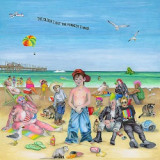
WHITMER THOMAS - THE OLDER I GET, THE FUNNIER I WAS

The Older I Get, the Funnier I Was, which follows Thomas’ brilliant 2020 HBO special The Golden One and his Can't Believe You're Happy Here EP released earlier this year, surveys a range of emotion and offers a broad sonic palette, moving between pop punk, electro, and the obvious influence of the singer-songwriters he grew up listening to in early childhood. It conjures the ennui of Bright Eyes alongside the barefaced storytelling of John Prine, the overstuffed lists of Fred Thomas with the lackadaisical humor of Colleen Green, among many others.

Thomas attributes the dexterity of the record to Duterte, who recorded and engineered most of it in addition to serving up plenty of encouragement when Thomas got down on the process. “As a comic, I used to test out new songs during sets to see if the funny bits were hitting, but since I wrote this in isolation I ended up writing lyrics and worrying less about making jokes,” Thomas says. That said, the album’s plenty funny. Stand-out and lead single “Rigamarole” opens with a Thomas-voiced infomercial that recalls his oft-cited lookalike Jim Carrey as the Grinch, before launching into a buoyant pop song about being depressed.

Whitmer Thomas will admit that when he traveled home to small town Gulf Shores, Alabama to record his HBO stand-up special, The Golden One, he expected to be greeted as a returning hero, a conquering king, or at minimum, a guy with a moderately successful career as an entertainer in Los Angeles. “I expected a big welcome home, open arms, but when I went back I realized: nobody fucking knows me. Nobody remembers me,” Thomas says. “In the years I’d been performing that show, I’d been romanticizing my childhood in this mythologized place, but the visit made me see that I’m not really from there anymore.”

The sense of alienation compounded when Thomas recognized how few people in town remembered his mom, to whom The Golden One is dedicated and largely about. Thomas grew up watching her perform with her twin sister at the legendary Flora-Bama Lounge, where he set the special, and still counts her as one of his musical influences. His new album, The Older I Get, the Funnier I Was, isn’t overtly about his mom, her presence is deeply felt throughout. While in Gulf Shores, Thomas discovered dozens of her old recordings, all of which had been wrecked by Katrina, but upon returning to LA, Thomas paid “a fancy place in Hollywood” to fix the tapes and hired Melina Duterte (Jay Som, Bachelor, Routine) to mix them. The two struck up a collaborative friendship, and Thomas had the sound of his mom’s voice back. “I was listening to songs she recorded when she was about my age, just these heartfelt, sweet Americana songs,” he says. “I decided then that I wanted to lose the Ian Curtis voice I always sing with; I wanted to do what came naturally, because my mom always sounded like herself, even when she was singing some cheesy reggae song about, like, Jamaica.”

Thus he went into The Older I Get, the Funnier I Was knowing it was time to retire his darkwave persona, and leaning into his natural, chirpier voice, which he says sounds “like a 12-year-old’s.” It makes sense: much of the album chronicles what Thomas calls “being a kid and feeling like you have no control and overcompensating by being annoying.” “So much of the album is about witnessing drug and alcohol addiction as a kid and seeing what it does to people, but also realizing that there's nothing you can do about it,” Thomas says. It’s familiar territory (see: “Partied to Death”) but the methodology is different this time around; true to its title, The Older I Get, the Funnier I Was isn’t always looking for laughs. Thomas might’ve left his hometown behind, but his kid self is still tagging along, a Peter Pan shadow he can’t untether himself from. The first line he sings on The Older I Get, the Funnier I Was is: “There should be a room at every party where you can just sit and watch a movie.” Find a 12-year-old who wouldn’t say the same.

Reservar21.10.2022

debe ser publicado en 21.10.2022

27,10
What Are People For? - What Are People For?

What Are People For? make the perfect kind of dystopic dance music for our times. Born from a collaboration between artist Anna McCarthy and musician/producer Manuela Rzytki, the band could be the illicit lovechild of Tom Tom Club and Throbbing Gristle, displaying the ideal balance of hip shaking vibes and dark provocative content.

On their collaborative debut, McCarthy and Rzytki share songwriting duties. The album was produced by Rzytki herself. They are joined by Paulina Nolte on backing vocals and Tom Wu on drums, while Keith Tenniswood mastered the record.

The whole project stems from a publication and exhibition by McCarthy laying the foundations for the content and lyrics of the album, which is humorous, poetic and political. As a lyricist, McCarthy uses her storytelling ability to explore anxieties and desires, digging into free surreal word associations reminiscent of Su Tissues’ tongue in cheek experiments with Suburban Lawns, but also explosive and gripping like a Kae Tempest rap.
Rzytki’s precise sonic palette and talent at penning structured bangers perfectly complement McCarthy’s playful and subversive language manipulations. Rzytki's beats are rooted in old school Hiphop loop principles and an authentic love for the analog. Her use of an array of synthesizers and other "real" instruments adds to WAPF's depth, soul and sincerity.

The album opens with a joyful anthem, full of energy and melodic hooks. The audience is confronted with the quintessential titular question What Are People For? and told that they are just a mere disposable commodity. Throughout the album, lyrical themes revolve around underground aspects of society, violence, political ideologies, sexuality and mysticism. The content is deep but the album is as danceable as it is biting.

73, with its drum machine hysteria and hypnotic synth basses is a a text collage written on the 73 bus through London, consisting of situations and conversation snippets encountered along the way. Drones indulges in the narrator’s paranoia as they feel they are being watched by cigarette machines, whilst the haunting choir is half spoken, half sung, ending on the orgasmic chanting of the word “mummy”. Nursery Rhyme brings more soothing incantations. There is definitely an affinity for fairytales, albeit adult ones and especially the anarchistic ones such as The Moomins, who were a consistent influence on the band. The artwork for the record, created by McCarthy, is a beautiful children's book-style painting of the group in a forest, seemingly about to engage in a magical encounter to which we are invited.

WAPF? have absorbed and digested a variety of influences. Trip hop, Punk and Techno are rubbing shoulders on Party Time. 1977 was coined “Summer of Hate” in the UK and unsurprisingly in WAPF?’s Summer of War, ethereal singing alternates with a powerful marching Garage/Grime chorus reminiscent of street protests and UK culture.

Mz. Lazy starts like an invitation to meditation and references Gertrude Stein’s book Ida in which she develops the idea that publicity is a new religion and people are now famous for being famous. Repressed anger explodes into violence and freedom at the end of the song as our heroine eventually grabs an axe to destroy her oppressors.
Fantasize, on its part, is raw, sexual and liberating while the closing track Bring Back the Dirt is a welcome hymn into a world that is becoming more and more sanitised.

While exploring deep subject matters throughout their album, WAPF? manage to remain satirical, exciting and funny. Each and everyone of their songs have a cathartic quality.

The visual identity of the band is intrinsic to their appeal. Live, they are eccentric, wild and unapologetic, wearing see-through costumes, bright miniskirts and intricate headpieces while delivering their songs with sharp intensity. Their performances radiate queer sexiness and transcend B52's thrift store aesthetics, creating a space for collective dreaming.

WAPF? is a rare combination of contemporary punk energy, irresistible groove, absurdist dry humour and astounding depth of field. They have the mighty power to create a party with their music and soon you will find yourself lifting your arms as if controlled by an external force, to chant: WAPF? WAPF? WAPF?

– Marie Merlet (Malphino, Little Trouble Girls, London)

Reservar21.10.2022

debe ser publicado en 21.10.2022

18,45
AUSTIN LEONARD JONES - DEAD CALM

Austin Leonard Jones

DEAD CALM

12inchSWA157
SWAMI
21.10.2022

Perpetual Doom proudly presents the new album from Austin Leonard Jones: Dead Calm. On this collection of nine new tracks, the Texas-based troubadour channels his eclectic talent into a melancholy country groove. Full of signature tumbleweed melodies and his deadpan wit, it is an essential addition to Jones’ unique and varied catalog.

Like any good country record, Dead Calm starts with a joke and ends in tears. “A werewolf walks into a bar,” Jones sings on opener “Cape Fear,” where vampires pour drinks and no one seems to escape. The town might be full of the undead, but it could be anywhere—after all, as Jones says, “It’s hard on the living in Cape Fear.” The slide guitar and faint bright keys set the tone for an album that mixes domestic sorrow with a touch of kitsch, like Conway Twitty at a seasonal Halloween outlet. “I’m the sole survivor of the all-night show,” he sings on “Back in the Black Lagoon,” “and it cost a thousand tears for every episode.” Somewhere between a funeral and a costume party, Dead Calm bursts with classic songwriting sure to get you on the dance floor and crying.

All these ghost towns, desert bars, and haunted capes emerge from the small town outside Austin where Jones wrote and recorded the album. Alongside producer Jesse Woods, he crafted a sound based on the traditional country palette of acoustic and slide guitar, organ and gentle drums. Songs like “Night Parrots” and “Demon Sands” take stock of life’s disappointments as Jones’ maudlin voice and Jesse Siebenberg’s pedal steel twist tighter around each other. “The Australia Song” puts autobiographical storytelling first, while “Exotics” laughs at our tendency to seek satisfaction in far-off places and things. It all comes together on “Its Treachery,” where Jones confronts the intimate betrayals of “a whole life not working out as planned.”

Sound familiar? Austin Leonard Jones invites you to join the club.

Reservar21.10.2022

debe ser publicado en 21.10.2022

31,72
R.A. The Rugged Man - Legendary Classics Vol.1

Reissue! Before the acclaimed albums "Legends Never Die" and "All My Heroes Are Dead" brought his career to new heights, R.A. The Rugged Man spent years as an underrated rap enigma, with a slew of storied records to his name that had never received a proper release.

With the 2009 compilation "Legendary Classics Vol. 1, R.A. finally unleashed many of the lost gems that earned him a reputation as one of hip-hop's most feared lyricists, showcasing his undeniable history.

An essential collection from a true hip-hop original, the album features appearances by The Notorious B.I.G., Havoc of Mobb Deep, Jedi Mind Tricks, Kool G Rap, J-Live, Hell Razah, Tragedy Khadafi, Akinyele, and Sadat X, along with track-by-track commentary from the Rugged Man himself. This "Legendary Classics Vol. 1" reissue also includes the new bonus track “The Greatest” featuring famed Italian singer Marcella Puppini, which has never before been available on vinyl.

Reservar21.10.2022

debe ser publicado en 21.10.2022

36,98
We Are The Ocean - Maybe Today, Maybe Tomorrow

We Are The Ocean's third album 'Maybe Today, Maybe Tomorrow', pressed on vinyl for the first time in celebration of the 10th anniversary of it's original release.

Features the singles 'Young Heart', 'Machine', and 'TheRoad'. Available in this cream pressing variant, limited to just 500 worldwide.

Reservar21.10.2022

debe ser publicado en 21.10.2022

26,01
Akademie für Alte Musik Berlin, René Jacobs - ‘A Christmas Night - Classical and traditional favorites’

With selections ranging from Praetorius to Britten,
plus all-time favourites by J.S. Bach (The
Christmas Oratorio) and Handel (Messiah), this
album brings together some of the most beautiful
and justly famous musical settings of the Nativity
story.
Festive or intimate, exuberant or elegiac, these
highlights from iconic recordings in harmonia
mundi’s voluminous catalogue are an ideal
sampling of the Christmas magic across epochs
and styles.

Reservar21.10.2022

debe ser publicado en 21.10.2022

23,32
FASTWAY - TRICK OR TREAT OTS

Fastway

TRICK OR TREAT OTS

12inchMOVATM346C
Music On Vinyl
21.10.2022

Trick Or Treat is the 1986 American horror film by De Laurentiis Entertainment Group, starring Marc Price and Tony Fields. The film featured special appearances by Gene Simmons and Ozzy Osbourne. The story follows a teenager who is haunted by the ghost of his rock hero.

The score is by Fastway, a British heavy metal band formed by Motörhead guitarist “Fast” Eddie Clarke, who also co- produced the album. The score entered the Billboard 200, where it remained for eleven months. Despite the successes, Trick Or Treat was the final album of band in their original line-up, which included Dave King, who is also known as the founding member of Flogging Molly, on vocals.

Trick Or Treat is available as a limited edition of 1500
individually numbered copies on flaming coloured vinyl.

Reservar21.10.2022

debe ser publicado en 21.10.2022

33,57
Chicago - Born For This Moment LP 2x12"

Born for This Moment captures the true heart of Chicago at their full creative capacity. From the undeniable swing of the lead single "If This Is Goodbye" to the unbreakable bonds of "For the Love" to the deeply personal storytelling of "Safe Harbours," the patriarchal aspirations of "Make a Man Outta Me, " the romantic reveries of "If This Isn't Love," and the sultry flare of "Firecracker," it's quite clear the collective force of nature that is Chicago is indeed alive and well


Disc 1 - Side A
1. Born For This Moment / 2. If This Is Goodbye / 3. Firecracker / 4. Someone Needed Me The Most / 5. Safer Harbours
Disc 1 - Side B
1. Our New York Time / 2. Make A Man Outta Me / 3. Crazy Idea / 4. You've Got To Believe / 5. For The Love
Disc 2 - Side A
1. She's Right / 2. House On The Hill / 3. If This Isn't Love / 4. "The Mermaid" Sereia Do Mar

Reservar21.10.2022

debe ser publicado en 21.10.2022

26,26
Marasma - Vussa LP

Marasma

Vussa LP

12inchAEH3456F
NOT ON LABEL
19.10.2022

'Marasma Vussa is the Brainchild of Antonio Feola a long standing figure on the London music scene, Antonio has been running the Fish Factory Studio in Willesden, North London for over two decades now. Throughout the years, he has had a major role in helping many of the current lead players of the London scene have a place to record and define their sound.

Antonio's project Masmara has existed for over 30 years and here has found its place on record. Recorded on tape over time with some of the most sought after players in London and edited during the lockdown period, Vussa is an album of mind-bending deep, cosmic mediative jazz experiments. Boasting catchy melodies and heavy, heavy jazz breaks!'

No en stock

Haga su pedido ahora y le encargaremos el artículo en nuestro proveedor.

17,61

Ültimo hace: 3 Años
Lee Tracy & Isaac Manning - Is it What You Want

As the sun sets on a quaint East Nashville house, a young man bares a piece of his soul. Facing the camera, sporting a silky suit jacket/shirt/slacks/fingerless gloves ensemble that announces "singer" before he's even opened his mouth, Lee Tracy Johnson settles onto his stage, the front yard. He sways to the dirge-like drum machine pulse of a synth-soaked slow jam, extends his arms as if gaining his balance, and croons in affecting, fragile earnest, "I need your love… oh baby…"

Dogs in the yard next door begin barking. A mysterious cardboard robot figure, beamed in from galaxies unknown and affixed to a tree, is less vocal. Lee doesn't acknowledge either's presence. He's busy feeling it, arms and hands gesticulating. His voice rises in falsetto over the now-quiet dogs, over the ambient noise from the street that seeps into the handheld camcorder's microphone, over the recording of his own voice played back from a boombox off-camera. After six minutes the single, continuous shot ends. In this intimate creative universe there are no re-takes. There are many more music videos to shoot, and as Lee later puts it, "The first time you do it is actually the best. Because you can never get that again. You expressing yourself from within."

"I Need Your Love" dates from a lost heyday. From some time in the '80s or early '90s, when Lee Tracy (as he was known in performance) and his music partner/producer/manager Isaac Manning committed hours upon hours of their sonic and visual ideas to tape. Embracing drum machines and synthesizers – electronics that made their personal futurism palpable – they recorded exclusively at home, live in a room into a simple cassette deck. Soul, funk, electro and new wave informed their songs, yet Lee and Isaac eschewed the confinement of conventional categories and genres, preferring to let experimentation guide them.

"Anytime somebody put out a new record they had the same instruments or the same sound," explains Isaac. "So I basically wanted to find something that's really gonna stand out away from all of the rest of 'em." Their ethos meant that every idea they came up with was at least worth trying: echoed out half-rapped exhortations over frantic techno-style beats, gospel synth soul, modal electro-funk, oddball pop reinterpretations, emo AOR balladry, nods to Prince and the Fat Boys, or arrangements that might collapse mid-song into a mess of arcade game-ish blips before rallying to reach the finish line. All of it conjoined by consistent tape hiss, and most vitally, Lee's chameleonic voice, which managed to wildly shape shift and still evoke something sincere – whether toggling between falsetto and tenor exalting Jesus's return, or punctuating a melismatic romantic adlib with a succinct, "We all know how it feels to be alone."

"People think we went to a studio," says Isaac derisively. "We never went to no studio. We didn't have the money to go to no studio! We did this stuff at home. I shot videos in my front yard with whatever we could to get things together." Sometimes Isaac would just put on an instrumental record, be it "Planet Rock" or "Don't Cry For Me Argentina" (from Evita), press "record," and let Lee improvise over it, yielding peculiar love songs, would-be patriotic anthems, or Elvis Presley or Marilyn Monroe tributes. Technical limitations and a lack of professional polish never dissuaded them. They believed they were onto something.

"That struggle," Isaac says, "made that sound sound good to me."

In the parlance of modern music criticism Lee and Isaac's dizzying DIY efforts would inevitably be described as "outsider." But "outsider" carries the burden of untold additional layers of meaning if you're Black and from the South, creating on a budget, and trying to get someone, anyone within the country music capital of the world to take your vision seriously. "What category should we put it in?" Isaac asks rhetorically. "I don't know. All I know is feeling. I ain't gonna name it nothing. It's music. If it grabs your soul and touch your heart that's what it basically is supposed to do."

=

Born in 1963, the baby boy of nine siblings, Lee Tracy spent his earliest years living amidst the shotgun houses on Nashville's south side. "We was poor, man!" he says, recalling the outhouse his family used for a bathroom and the blocks of ice they kept in the kitchen to chill perishables. "But I actually don't think I really realized I was in poverty until I got grown and started thinking about it." Lee's mom worked at the Holiday Inn; his dad did whatever he had to do, from selling fruit from a horse drawn cart to bootlegging. "We didn't have much," Lee continues, "but my mother and my father got us the things we needed, the clothes on our back." By the end of the decade with the city's urban renewal programs razing entire neighborhoods to accommodate construction of the Interstate, the family moved to Edgehill Projects. Lee remembers music and art as a constant source of inspiration for he and his brothers and sisters – especially after seeing the Jackson 5 perform on Ed Sullivan. "As a small child I just knew that was what I wanted to do."

His older brother Don began musically mentoring him, introducing Lee to a variety of instruments and sounds. "He would never play one particular type of music, like R&B," says Lee. "I was surrounded by jazz, hard rock and roll, easy listening, gospel, reggae, country music; I mean I was a sponge absorbing all of that." Lee taught himself to play drums by beating on cardboard boxes, gaining a rep around the way for his timekeeping, and his singing voice. Emulating his favorites, Earth Wind & Fire and Cameo, he formed groups with other kids with era-evocative band names like Concept and TNT Connection, and emerged as the leader of disciplined rehearsals. "I made them practice," says Lee. "We practiced and practiced and practiced. Because I wanted that perfection." By high school the most accomplished of these bands would take top prize in a prominent local talent show. It was a big moment for Lee, and he felt ready to take things to the next level. But his band-mates had other ideas.

"I don't know what happened," he says, still miffed at the memory. "It must have blew they mind after we won and people started showing notice, because it's like everybody quit! I was like, where the hell did everybody go?" Lee had always made a point of interrogating prospective musicians about their intentions before joining his groups: were they really serious or just looking for a way to pick up girls? Now he understood even more the importance of finding a collaborator just as committed to the music as he was.

=

Isaac Manning had spent much of his life immersed in music and the arts – singing in the church choir with his family on Nashville's north side, writing, painting, dancing, and working various gigs within the entertainment industry. After serving in the armed forces, in the early '70s he ran The Teenage Place, a music and performance venue that catered to the local youth. But he was forced out of town when word of one of his recreational routines created a stir beyond the safe haven of his bohemian circles.

"I was growing marijuana," Isaac explains. "It wasn't no business, I was smoking it myself… I would put marijuana in scrambled eggs, cornbread and stuff." His weed use originated as a form of self-medication to combat severe tooth pain. But when he began sharing it with some of the other young people he hung out with, some of who just so happened to be the kids of Nashville politicians, the cops came calling. "When I got busted," he remembers, "they were talking about how they were gonna get rid of me because they didn't want me saying nothing about they children because of the politics and stuff. So I got my family, took two raggedy cars, and left Nashville and went to Vegas."

Out in the desert, Isaac happened to meet Chubby Checker of "The Twist" fame while the singer was gigging at The Flamingo. Impressed by Isaac's zeal, Checker invited him to go on the road with him as his tour manager/roadie/valet. The experience gave Isaac a window into a part of the entertainment world he'd never encountered – a glimpse of what a true pop act's audience looked like. "Chubby Checker, none of his shows were played for Black folks," he remembers. "All his gigs were done at high-class white people areas." Returning home after a few years with Chubby, Isaac was properly motivated to make it in Music City. He began writing songs and scouting around Nashville for local talent anywhere he could find it with an expressed goal: "Find someone who can deliver your songs the way you want 'em delivered and make people feel what you want them to feel."

One day while walking through Edgehill Projects Isaac heard someone playing the drums in a way that made him stop and take notice. "The music was so tight, just the drums made me feel like, oh I'm-a find this person," he recalls. "So I circled through the projects until I found who it was.

"That's how I met him – Lee Tracy. When I found him and he started singing and stuff, I said, ohhh, this is somebody different."

=

Theirs was a true complementary partnership: young Lee possessed the raw talent, the older Isaac the belief. "He's really the only one besides my brother and my family that really seen the potential in me," says Lee. "He made me see that I could do it."

Isaac long being a night owl, his house also made for a fertile collaborative environment – a space where there always seemed to be a new piece of his visual art on display: paintings, illustrations, and dolls and figures (including an enigmatic cardboard robot). Lee and Issac would hang out together and talk, listen to music, conjure ideas, and smoke the herb Isaac had resumed growing in his yard. "It got to where I could trust him, he could trust me," Isaac says of their bond. They also worked together for hours on drawings, spreading larges rolls of paper on the walls and sketching faces with abstract patterns and imagery: alien-like beings, tri-horned horse heads, inverted Janus-like characters where one visage blurred into the other.

Soon it became apparent that they didn't need other collaborators; self-sufficiency was the natural way forward. At Isaac's behest Lee, already fed up with dealing with band musicians, began playing around with a poly-sonic Yamaha keyboard at the local music store. "It had everything on it – trumpet, bass, drums, organ," remembers Lee. "And that's when I started recording my own stuff."

The technology afforded Lee the flexibility and independence he craved, setting him on a path other bedroom musicians and producers around the world were simultaneously following through the '80s into the early '90s. Saving up money from day jobs, he eventually supplemented the Yamaha Isaac had gotten him with Roland and Casio drum machines and a Moog. Lee was living in an apartment in Hillside at that point caring for his dad, who'd been partially paralyzed since early in life. In the evenings up in his second floor room, the music put him in a zone where he could tune out everything and lose himself in his ideas.

"Oh I loved it," he recalls. "I would really experiment with the instruments and use a lot of different sound effects. I was looking for something nobody else had. I wanted something totally different. And once I found the sound I was looking for, I would just smoke me a good joint and just let it go, hit the record button." More potent a creative stimulant than even Isaac's weed was the holistic flow and spontaneity of recording. Between sessions at Isaac's place and Lee's apartment, their volume of output quickly ballooned.

"We was always recording," says Lee. "That's why we have so much music. Even when I went to Isaac's and we start creating, I get home, my mind is racing, I gotta start creating, creating, creating. I remember there were times when I took a 90-minute tape from front to back and just filled it up."

"We never practiced," says Isaac. "See, that was just so odd about the whole thing. I could relate to him, and tell him about the songs I had ideas for and everything and stuff. And then he would bring it back or whatever, and we'd get together and put it down." Once the taskmaster hell bent on rehearsing, Lee had flipped a full 180. Perfection was no longer an aspiration, but the enemy of inspiration.

"I seen where practicing and practicing got me," says Lee. "A lot of musicians you get to playing and they gotta stop, they have to analyze the music. But while you analyzing you losing a lot of the greatness of what you creating. Stop analyzing what you play, just play! And it'll all take shape."

=

"I hope you understood the beginning of the record because this was invented from a dream I had today… (You tell me, I'll tell you, we'll figure it out together)" – Lee Tracy and Isaac Manning, "Hope You Understand"

Lee lets loose a maniacal cackle when he acknowledges that the material that he and Isaac recorded was by anyone's estimation pretty out there. It's the same laugh that commences "Hope You Understand" – a chaotic transmission that encapsulates the duality at the heart of their music: a stated desire to reach people and a compulsion to go as leftfield as they saw fit.

"We just did it," says Lee. "We cut the music on and cut loose. I don't sit around and write. I do it by listening, get a feeling, play the music, and the lyrics and stuff just come out of me."

The approach proved adaptable to interpreting other artists' material. While recording a cover of Whitney Houston's pop ballad "Saving All My Love For You," Lee played Whitney's version in his headphones as he laid down his own vocals – partially following the lyrics, partially using them as a departure point. The end result is barely recognizable compared with the original, Lee and Isaac having switched up the time signature and reinvented the melody along the way towards morphing a slick mainstream radio standard into something that sounds solely their own.

"I really used that song to get me started," says Lee. "Then I said, well I need something else, something is missing. Something just came over me. That's when I came up with 'Is It What You Want.'"

The song would become the centerpiece of Lee and Isaac's repertoire. Pushed along by a percolating metronomic Rhythm King style beat somewhere between a military march and a samba, "Is It What You Want" finds Lee pleading the sincerity of his commitment to a potential love interest embellished by vocal tics and hiccups subtlely reminiscent of his childhood hero MJ. Absent chord changes, only synth riffs gliding in and out like apparitions, the song achieves a lingering lo-fi power that leaves you feeling like it's still playing, somewhere, even after the fade out.

"I don't know, it's like a real spiritual song," Lee reflects. "But it's not just spiritual. To me the more I listen to it it's like about everything that you do in your everyday life, period. Is it what you want? Do you want a car or you don't want a car? Do you want Jesus or do you want the Devil? It's basically asking you the question. Can't nobody answer the question but you yourself."

In 1989 Lee won a lawsuit stemming from injuries sustained from a fight he'd gotten into. He took part of the settlement money and with Isaac pressed up "Saving All My Love For You" b/w "Is It What You Want" as a 45 single. Isaac christened the label One Chance Records. "Because that's all we wanted," he says with a laugh, "one chance."

Isaac sent the record out to radio stations and major labels, hoping for it to make enough noise to get picked up nationally. But the response he and Lee were hoping for never materialized. According to Isaac the closest the single got to getting played on the radio is when a disk jock from a local station made a highly unusual announcement on air: "The dude said on the radio, 107.5 – 'We are not gonna play 'Is It What You Want.' We cracked up! Wow, that's deep.

"It was a whole racist thing that was going on," he reflects. "So we just looked over and kept on going. That was it. That was about the way it goes… If you were Black and you were living in Nashville and stuff, that's the way you got treated." Isaac already knew as much from all the times he'd brought he and Lee's tapes (even their cache of country music tunes) over to Music Row to try to drum up interest to no avail.

"Isaac, he really worked his ass off," says Lee. "He probably been to every record place down on Music Row." Nashville's famed recording and music business corridor wasn't but a few blocks from where Lee grew up. Close enough, he remembers, for him to ride his bike along its back alleys and stumble upon the occasional random treasure, like a discarded box of harmonicas. Getting in through the front door, however, still felt a world away.

"I just don't think at the time our music fell into a category for them," he concedes. "It was before its time."

=

Lee stopped making music some time in the latter part of the '90s, around the time his mom passed away and life became increasingly tough to manage. "When my mother died I had a nervous breakdown," he says, "So I shut down for a long time. I was in such a sadness frame of mind. That's why nobody seen me. I had just disappeared off the map." He fell out of touch with Isaac, and in an indication of just how bad things had gotten for him, lost track of all the recordings they'd made together. Music became a distant memory.

Fortunately, Isaac kept the faith. In a self-published collection of his poetry – paeans to some of his favorite entertainment and public figures entitled Friends and Dick Clark – he'd written that he believed "music has a life of its own." But his prescience and presence of mind were truly manifested in the fact that he kept an archive of he and Lee's work. As perfectly imperfect as "Is It What You Want" now sounds in a post-Personal Space world, Lee and Isaac's lone official release was in fact just a taste. The bulk of the Is It What You Want album is culled from the pair's essentially unheard home recordings – complete songs, half-realized experiments, Isaac's blue monologues and pronouncements et al – compiled, mixed and programmed in the loose and impulsive creative spirit of their regular get-togethers from decades ago. The rest of us, it seems, may have finally caught up to them.

On the prospect of at long last reaching a wider audience, Isaac says simply, "I been trying for a long time, it feels good." Ever the survivor, he adds, "The only way I know how to make it to the top is to keep climbing. If one leg break on the ladder, hey, you gotta fix it and keep on going… That's where I be at. I'll kill death to make it out there."

For Lee it all feels akin to a personal resurrection: "It's like I was in a tomb and the tomb was opened and I'm back… Man, it feels so great. I feel like I'm gonna jump out of my skin." Success at this stage of his life, he realizes, probably means something different than what it did back when he was singing and dancing in Isaac's front yard. "What I really mean by 'making it,'" he explains isn't just the music being heard but, "the story being told."

Occasionally Lee will pull up "Is It What You Want" on YouTube on his phone, put on his headphones, and listen. He remembers the first time he heard his recorded voice. How surreal it was, how he thought to himself, "Is that really me?" What would he say to that younger version of himself now?

"I would probably tell myself, hang in there, don't give up. Keep striving for the goal. And everything will work out."

Despite what's printed on the record label, sometimes you do get more than one chance.

No en stock

Haga su pedido ahora y le encargaremos el artículo en nuestro proveedor.

11,72

Ültimo hace: 3 Años
Upstairs - It's Hard To Get In The Showbiz

Upstairs, a band from Frankfurt, Germany was active from 1977 to 1983. Though considering themselves mainly a rock group, the band incorporated elements of funk, jazz rock and disco into their music. On their rare and privately released debut album "It's Hard To Get In The Showbiz" from 1980 they created something that could be called Germany's definite answer to AOR, yet still with an edgy and unique krautrock flavor.

The album starts with "Wontcha Try," a track where core songwriter, guitarist and lead singer Helmer Sauer is telling the story about being dismissed from his job: "They tried to tell me in a fucking gentle way, that the time had come to kick me…". Sauer serves more personal, hard-edged lyrics on the album as well. On "Happy Hooker," for example, he tells the story of a working girl in the red light milieu: "The job is as hard that you really can never imagine, she serves for the money, degradin' herself in a way - if you'd know how she's feelin' you wouldn't laugh at all". An empathetic view on the subject of prostitution rarely heard at that time.

But aside from the profound lyrics and songwriting, the album has a lot to offer on the groovy side of things. With catchy bass lines, rhythm guitar, Fender Rhodes, Moog synthesizer, Clavinet and swift crisp drumming "It's Hard To Get In The Showbiz" is one of the best examples of late 70s flavored funky rock from Germany. Additional to the aforementioned "Wontcha Try" another DJ delight should be "Make Your Steps On Better Lines" which showcases a superb synth line and disco funk flavors. We also get the slick mellow latinesque AOR grooves of "Get On A Plane" as well as the now-classic "You're Just Yourself", which marks the most soulful track of the LP. As followers of our label are already well aware, "You're Just Yourself" was featured on the compilation, "Boogie On The Mainline - A Collection Of Rare Disco, Funk And Boogie From Germany 1980-1987" from 2018.

The band mainly performed locally and never really had ambitions to release their music on a bigger label. Too bad that Upstairs only released this one album. Of course, the highly sought-after original pressing is almost impossible to find nowadays. Therefore, we are proud to finally make this record available again after 40 years for a reasonable, regular LP price. Only 300 copies of the carefully re-mastered repress have been produced, and included is a printed lyrics insert identical to the original.

No en stock

Haga su pedido ahora y le encargaremos el artículo en nuestro proveedor.

18,45

Ültimo hace: 3 Años
Ara Pacis - Ara Pacis To the Westcoast / My Fate (Revisited)  7"

With "To the Westcoast / My Fate (Revisited)" by Ara Pacis we are proud to officially release two of the most exciting AOR tracks hailing from Germany.

Ara Pacis, a group from the island Föhr in the North Sea, was originally founded in 1971. Initially influenced by blues and classic rock by The Rolling Stones, The Who, and the like, they were also inspired by bands such as Steely Dan as well as the German/British group Lake. However, Ara Pacis created a style of their own when their privately pressed and self-distributed "To the Westcoast" LP was released in 1979. The songs were mainly characterized by two-part guitar riffs by Töns Brautlecht-Deppe and Wolfgang Schiffner, who also were the core songwriters of the band.

The freshly remastered single starts with the title track "To the Westcoast". Due to its sunny and yacht-y vibe it is easily amongst the best and most authentic tunes out of the "Westcoast rock" genre recorded in Germany. With family connections in California, lead singer Töns Brautlecht-Deppe was able to create and capture the feeling of the Pacific sea shore just perfectly.

The single is backed with a revised studio version of "My Fate". Here, lead singer Töns Brautlecht tells his story about getting into playing guitar as a young boy. The track is also featured on the album but the version we present on the 7" vinyl is an unreleased, even quite funky and more powerful take. It was recorded in 1981 at the Rüssl studio in Hamburg where Brautlecht had just started to work as an engineer.

As the "To the Westcoast" LP was released during a time when styles like New Wave, Synth Pop and Punk became popular in Germany and the interest in organic and soulful rock declined, Ara Pacis' debut remained relatively unnoticed until today and even the Krautrock collector's scene does not seem to be fully aware of this hard to find gem yet of which only 1000 copies were originally pressed. The band is still kept in good memory by their fans as a quite legendary live act and although they officially split in 1982, the group still served their fan base with revival concerts in 1990 and 2002 plus a website with full band story and lots of images from the early days.

We hope this single sheds new light on this great band. It is limited to 350 copies and released in a beautiful picture sleeve which shows the original LP artwork.

No en stock

Haga su pedido ahora y le encargaremos el artículo en nuestro proveedor.

12,23

Ültimo hace: 3 Años
No. 2 - First Love

No. 2

First Love

12inchLPJBR218LEC
Jealous Butcher / Jackpot
14.10.2022

The story of this album is a story of love and lust - it's a love letter to rock
music - Your first love being the first time you held that instrument or
lover that would propel you into the next chapter
Your first heartbreak. Your first fear. Your first fuck. There's a constant need to
feed the first because all of that unfinished business fuels the second.
But the truth about the first is that it was there all along. These songs were out
there years ago, playing out their melodies to a closeted, jealous, angry Iowa City
gay boy trying to find his way towards freedom. Decades later, No. 2 grabs those
songs down and punches the idea of a first all open. First Love reintroduces No. 2
to us all, driven by the propulsive lyrics of Neil Gust along with the incomparable
Gilly Hanner on bass and the unparalleled Paul Pulvirenti on drums.
Produced by Joanna Bolme (Stephen Malkmus & The Jicks) and mixed by Gary
Jarman (The Cribs) and Tony Lash (Heatmiser). The album was recorded over 3
years in studios and basements across Portland, OR and finished in a boathouse
in Connecticut during Covid. Special guest Rebecca Cole (The Minders, Wild Flag)
shows up on keyboards here and there.
Racing through queer anthems, noir grooves, and more under and over ground
rock references than a Quentin Tarantino movie, First Love bursts with all the
infectious chemistry that made the band so much fun in the first place.

Reservar14.10.2022

debe ser publicado en 14.10.2022

27,10
Various - MIDNIGHT TO SIX...FIRST TIME FROM JAMAICA

2022 Repress

The legendary gig that Joe Strummer, singer from the Punk Rock band 'The Clash' attended and inspired his writing their classic 'White Man In Hammersmith Palais' took place on the 05th June 1977.
At the Hammersmith Palais venue on Shepherd's Bush Road W6, London during the height of Punk Mania. The full line up for the show were all Jamaican artists Dillinger, Leroy Smart, Delroy Wilson (all the first time from Jamaica) and Ken Boothe.
'Ken Boothe for UK pop reggae' who had already scored some hits with 'Everything I own' and 'Crying Over You' in 1974. Joe Strummer was expecting Roots, Rock, Reggae but the Sound System this evening 'Admiral Ken Sound' was playing 'Four Tops all night' as in soul and northern soul that were staple crowd pleasers at the time to warm up the audience, but in Joe's eyes the music should have reflected more Jamaican roots based music. The song also deals with bigger issues of black and white unity, but some people including the Punk Rockers.
'They're all too busy fighting, for a good place under the lighting'. Joe Strummer himself was looking for fun. 'I'm the Whiteman in the Palais....Just Looking for Fun'

The artwork supplied by Punk Artist MAL-ONE has used the two posters that were made for this gig, the reggae promoters 'Star Promotions' poster, that contained a picture of Ken Boothe and the venue's own poster that used text to announce it's line up for that evenings performance. Alongside these lost relics he has also combined the groups own poster for the 'White Man In Hammersmith Palais' single that incorporated the use of rifle target sights, perhaps enhancing the air of violence contained in the songs message.
MAL-ONE has collaged these together joining the two stories as indeed the song lyrics reflected. People often forget that the songs release was in fact as year after the actual gig, we have tied this release to the 40th anniversary of the song's release. Joe Strummer was one of the few voices from the Punk Era that used his lyrics as a weapon to tell the events that were happening around him and their relevance to those times.
The song itsel a Clash Classic and also a Punk Anthem, released on the 16th June 1978. We have compiled this album with songs by these artists, most of which you would have heard that night. As a post script to this story when the Hammersmith Palais sadly closed its doors for the last time after 82 years' service in 1999, the owners thought it fitting to present Joe Strummer with a sign from the venue's entrance. Mr Strummer's understated reply 'I guess I'll have to send a man with a van round to pick it up'.
Hope you Enjoy the set....

No en stock

Haga su pedido ahora y le encargaremos el artículo en nuestro proveedor.

13,40

Ültimo hace: 3 Años
Artículos por página
N/ABPM
Vinyl