Bézier returns to Dark Entries with Valencia, a six track rumination on memory, geography, and transmutation. Multi-instrumentalist Robert Yang’s Bézier project has appeared on Dark Entries many times over the last decade, most recently with the 2018 LP Parler Musique. Says Yang, “What started as a project to investigate the love of the sound and scenery while living in San Francisco quickly developed into a passionate search for interlocking melodies and driving rhythms.”
On Valencia, Bézier invokes twinned places. The Valencia Street of San Francisco is channeled, which was the center of the city’s vibrant new wave scene in the 1980s.
But also echoed is Valencia, Spain, and La Ruta del Bakalao aka La Ruta Destroy, the Spanish clubbing scene throughout the 80s and 90s famed for its aggressive and synthetic sounds. Valencia is a darker record for Yang, exploring themes of submission and catharsis with nods to SF’s gay leather bars of the 70s and 80s. The high BPM salvos of “Valencia” and “Scrupulous” capture the frantic energy of Bakalao and Valencian wave acts like Última Emoción. Elsewhere Yang mines the dreamy space disco and Hi-NRG sounds they’re known for, like on the brooding “Past the Marshes” or the anthemic “Reservoir”, which features their partner Len.Leo on vocals. Bézier deftly navigates past and present, light and dark, pain and pleasure, the stasis of memory and the flux of time.
Valencia was mastered by Alex Michalski, with EQ for vinyl done by George Horn. Gwenaël Rattke designed the sleeve, which features an 80’s punk zine-esque geometric grid pattern mirroring San Francisco street maps. Also included is a 5x7 postcard with notes.
Search:street sound inc
In 2022, Soom T is back with her new studio album "Good" entirely self-produced through her own label Renegade Masters.
In this new reggae-dub album, the result of ten years of writing, composition and production, the Scottish MC blends the studio recordings of her musicians, The Stone Monks, with digital productions from various composers. From this multitude of musicians and producers, an original sound is born at the crossroads of reggae, dub and jazz, even sometimes pop.
The tracks "Big Bad World", "Yes My People", "Born Free", "My Struggle", "Your Time" and "My Shelter" composed by the French producer Kiko, bring a distinctive digital sound to an important part of the album. While "Don't Stand for Dis" and "Steps" are signed by London dub legend Gaudi and pay homage to the early hours of dub music with great echoes and reverberations in the purest tradition of the style . "One Real Friend" composed by Alex Dupuis of Flash Hit Records brings a welcome swing and jazz touch.
“World We Live In”, “Our Day”, “I Wanna Live”, “Get the Fruit” and “One More Tune” were composed and recorded in Paris over several years with The Stone Monks, under the supervision of Xavier Waks. He also mixed the entire album in his 31DB studio before passing it on to Simon Capony for mastering at Basalte Studio.
As usual, Soom T continues to denounce nowadays political and social issues, all with a spiritual approach, an inimitable style and an incisive flow of her own. If she deplores the dark sides of our time in songs like "Big Bad World", she also tries to find a ray of hope with tracks carrying positive messages, sometimes very melodic, such as "Don't Stand for Dis ”, or catchy, like“ Yes My People ”. "I Wanna Live" and its heady guitar riff, "Our Day" with its bright major chords or even "Amazing Graces" pour a flood of optimism amidst much heavier themes.
On the cover of "Good" we find a portrait of Soom T, a microphone in her hand, designed by the French street artist specialized in 3D, Nikita.
Get ready for a unique musical journey in search of all that is good in this world with "Good", the long awaited new album from Soom T aka the “The Raggamuffin Queen”!
Tower Of Power is known to blend soul, funk, jazz and rock like no other band and has done so successfully for the past
50 years. Their debut album East Bay Grease was originally released in 1970 on Bill Graham’s Fillmore Records. The name of the album also describes its genre, which includes a “brass heavy funk-rock sound”. The album features the popular tracks “Sparkling In The Sand”, “Back On The Streets Again” and “Knock Yourself Out”.
FROM MUSIC COMES HARMONY
HARMONY BRINGS BALANCE
BALANCE RESTORES PEACE
Enter the heart of drums ..
With obvious intent Nui and Simon set out to create an album that encompasses all of their influences and experiences as musicians and journeymen in the world of African inspired rhythm and sound and have arrived at a work that is at once global, innovative and deeply funky !
It’s been an incredible journey that has taken them from the wilds of the northern hinterlands of New South Wales in Australia to the dreamy secret gardens of Marrakesh, from the onsite recordings of Afro-Cuban choirs of Havana, to the Gnawa street sounds of Moroccan medinas.
Nui and Simon have traversed the globe to create these recordings and have collected diverse and international group of artists to collaborate with in the making of Heart of Drums.
Artists such as Cazeaux Oslo, who is an African-American Mc and vocalist hailing from California.
Olugbade Okunade , Nigerian trumpeter and vocalist , was formerly a member of the Femi Kuti Positive Force band.
Members of Clave y Guaguanco, One of Cuba’s foremost folkloric groups, who have been around since the 60’s.
Lalita Yagnik, Portuguese Speaking Indian, vocalist and martial artist.
Radouan Naim, Traditional Moroccan vocalist and instrumentalist .
And
Close Counters, Australian Up and coming Electronic duo.
Digital Afrika is made up of two main protagonists:
Zhonu ‘Nui” Moon (Future Roots)
An African-Australian producer, percussionist and Dj that has performed and recorded all over the world.
With a strong focus on African music,He has worked with the likes of Femi Kuti , Mulatu Astake and Tony Allen.
And Simon Durrington (Si Fixion ) who is an Australian based producer, keys player and DJ. With extensive experience of working with Melanesian , Indian and world musicians.
Drawing on these influences, Si weaves these styles together seamlessly with his unique high quality electronic production.
This album ‘Heart of Drums’ is a synergy of lush analog electronica and fiery African percussion, vocals and instrumentation.
With occasional reinvented throwbacks to the Disco and Funk era as well as forward thinking Afro-futuristic Record bag essentials, Heart of Drums really brings the party!
These are constructed dance floor motivators for any environment.
The artwork for this record deserves special mention as the mask was handcrafted by the interesting and talented artist Ju Mu Monster. Based in Berlin, the studied fashion designer creates colourful, wildly dancing image-worlds, in which beings from diverse cultures are combined with shamanism and spiritual worlds. Her enchanting works of art include murals and canvases as well as magical masks.
All tracks produced and arranged by Zhonu (Nui) Moon & Simon Durrington
- A1: Please The Nation
- A2: Angel Face
- A3: I Am Selfish
- A4: Eniweth
- A5: No More Crying
- A6: Making Life Out Of Music
- B1: Walking Down The Street
- B2: Rock & Roll Soul
- B3: Lovely Lady
- B4: Widow
- B5: Worthless Woman
- B6: Looking For The Day
- C1: Lonely
- C2: No More Crying
- C3: Beginning
- C4: Good Turning Bad
- D1: I Am Selfish
- D2: Dancing
- D3: Are You Satisfied
- D4: Worthless Woman
- D5: Rock & Roll Soul
- D6: Waiting For The Chance
The Effect Of Heavy Music: Rock Music And Revolution In 70s Zimbabwe. Eye Q’s music has never been collated and issued outside of its country of origin. Now, as part of the Now-Again Reserve series, their rare singles and even rarer album are presented in full. Just as the hippie era came to an end in America, a second 60s was beginning: in what is now Zimbabwe, young people created a rock and roll counterculture that drew inspiration from hippie ideals and the sounds of Hendrix and Deep Purple. The kids in the scene called their music “heavy,” because they could feel its impact, and it resonated from Zambia to Nigeria. At its peak in the mid-70s, the heavy rock scene united tens of thousands of young progressives of all racial and social backgrounds. The country was called Rhodesia then, one of the last bastions of White rule in Africa, and heavy rockers defied segregation laws and secret police to make a stand for democratic change. Eye Q is one of the greatest bands of the scene: their rock stands on par with the early Zamrock of WITCH and Ngozi Family. Please The Nation encapsulated Eye Q’s desire to forge forth, in a new, free country, and this set collates their 7” singles, ultra-rare album and songs from master tape and presents their music for the first time outside of Zimbabwe. In the accompanying oversized booklet, a trio of authors collaborate to tell the Eye Q story, and to investigate the genesis of the heavy rock scene under Ian Smith’s racist, oppressive government, and its dissipation after Zimbabwe’s liberation. The set also includes a download card for WAV files for all vinyl tracks, as well as bonus tracks.
Historically informed violin player, prize-winning street musician, new age experimentalist, chamber ensemble performer and conservatoire deviant. The career of Valentina Goncharova (b. Kyiv 1953) shares parallels with those associated with the broader new music movement of the 20th century and the dissemination of home recording technologies.
Valentina’s was a youth spent immersed in the world of classical music study under soviet rule, first in Kyiv- later in Leningrad & now St. Petersburg, from the age of 16. With the supervision of professors M. Vayman and B. Gutnikov she learned concert violin and developed alternate playing styles alongside skilled pianists. A student of the Leningrad conservatoire during the years 1969 - 1983, her repertoire included music for violin and later expanded to contemporary music composition.
The improvisatory nature of free jazz and then-budding experimental rock circles also intrigued Valentina during this period in Leningrad. Departing from the rules of the conservatoire, she briefly performed in underground rock clubs alongside future members of the industrial group Pop- Mechanika (Popular Mechanics). This perpetual state of flux is central to the variety found within ‘Recordings Vol. 1’, though as opposed to any degree of uncertainty Valentina’s practice is one
in flux by way of earnest curiosity.
Pushing further into an exploration of solo electro-acoustic sounds, she took to home taping on a modified Olimp reel to reel recorder. Intrigued by the manipulability of dubbing and the fresh sounds of DIY effects chains, Goncharova developed pickups alongside her husband Igor Zubkov. Her infatuation with the music of Stockhausen, Xenakis, Ganelin Trio and Pierre Boulez channels through considerations of space and erratic sound design, the 3 movements of ‘Metamorphoses’ embodying this textural approach to musique concrete.
The compositional skills developed in Leningrad unfold in the romantic gestures of ‘Higher Frequencies’, whilst manipulated cello combines with synthesise keys across ‘Passageway To Eternity’.
The slow, pulsating drone soundscapes recall the likes of Robert Rutman’s US Steel Cello Ensemble or even deep listening pioneer Pauline Oliveros.
The juxtaposition of written notation and improvisatory flare is central to Goncharova’s sound world. This period of home recording documents a confluence of minimalism, free form and flirtations
with new age tropes (inc. bell chimes and cavernous vocal mantras).
Experimenting with unusual performance techniques, such as shouting into amplified cello strings, Valentina’s home studio functioned as a place to foster full artistic and creative freedom
away from any academic strictures.
Relocating to Estonia in 1984, and in parallel to the deeply personal music of ‘Recordings Vol. 1’, Valentina performed at jazz festivals and gave classical concerts across Eastern Europe. In a sense, the recordings on these discs offer only a glimpse into her lifelong body of work. Over the past few decades she has taught at Tallinn Music College, expanded and updated post- Soviet popular music repertoire, collaborated with the Russian Philharmonic Society of Estonia and given concerts and charity events alongside the Catholic Church.
Hers is a life dedicated to the exploration of sound, a career forged through careful study and ceaseless intrigue. In a time where technological interconnectedness has allowed for music of the pas
to be continually mined and evaluated through new lenses, Shukai present an artist whose tendency for private home-taping had allowed recordings to go unheard for thirty years.
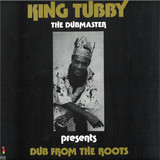
Tubby did three original dub albums, “Dub From The Roots, “The Roots Of Dub” and the third is “Brass Rockers” with Tommy McCook ’pon the flying cymbals. Where he mixed it with the horn going in and out in a dub way and one named “Shalom Dub” you can call Tubby’s too because he mixed the versions as they were off the forty fives.
King Tubby and Producer Bunny “Striker” Lee are intertwined in the birth of Dub Music. After discovering a mistake that made a “serious joke” (more of which later…) they went on to release the first pressings of this new musical genre namely “Dub Music”. Tubby’s vast knowledge of electronics and Bunny’s vast catalogue of rhythms would lay the foundations of what today is taken as a standard…. The Remix / Version cuts to an existing vocal tune.
Osborne “King Tubby” Ruddock was born in Kingston, Jamaican the 28th January 1941 and grew up in the High Holborn Street area of downtown Kingston. He studied electronics at Kingston’s National Technical College and also on two correspondence courses from the USA. When he had qualified, Tubby began repairing radios and other electrical appliances in a shack in the back yard of his mother’s home. His work in the early days included winding transformers and building amplifiers for Kingston’s Sound Systems. Tubby built his first Sound System in 1957 playing jazz and Rhythm and Blues at local weddings and birthday parties His reputation as a man who knew and understood both electronics and music grew steadily and as the sixties drew to a close. Tubby purchased his own basic two track equipment. He installed this alongside his dub cutting machine, a homemade mixing console and his impressive collection of Jazz albums in the back bedroom of his home at 18 Dromilly Avenue which he christened his music room.
Dynamic Sounds upgraded to sixteen track recording in 1972 and Tubby purchased, again with the help of a deal brokered by Bunny Lee. The old four track equipment and the MCI console from their Studio B. The four tracks now gave him far wider scope to work with and he began to create a new musical form where the bass and drum parts were brought up while the faders allowed Tubby to ease the vocal and rhythm in and out of the mix. It was only a matter of time before Tubby’s dub plate experiments began to make it on to vinyl and the first ever long playing King Tubby releases would feature a collection of his mixes to a selection of Striker’s rhythms. So please sit back and enjoy this historic set of sounds. Lovingly restored and with a few extra gems added to the CD editions. These releases were the first to carry the name of King Tubby and the first to credit the great musicians that contributed so much to the rhythms that made these albums possible.
Hope you enjoy the set……
- A1: Opening (0:21)
- A2: Long Distance (1:26)
- A3: The Shinobi (2:43)
- A4: Terrible Beat (1:27)
- A5: Sunrise Blvd. (1:41)
- A6: Make Me Dance (2:58)
- A7: Like A Wind (1:32)
- A8: Run Or Die (1:53)
- A9: Round Clear (0:06)
- B1: Ninja Step (1:40)
- B2: The Dark City (1:17)
- B3: China Town (2:44)
- B4: Over The Bay (2:11)
- B5: Labyrinth (0:48)
- B6: The Ninja Master (1:09)
- B7: Silence Night (0:45)
- B8: My Lover (2:08)
- B9: Failure (0:05)
- B10: Game Over (0:09)
Collaborating once again with legendary composer Yuzo Koshiro, Data Discs is thrilled to present one of the most revered and timeless soundtracks of the 16bit era: The Revenge of Shinobi. Composed in 1989, the music for the Mega Drive game (known as The Super Shinobi in Japan) blended Western dance music with Japanese overtones, to create something truly unlike anything else before. The soundtrack was Koshiro's first commissioned work for SEGA and served as a forerunner to his seminal Streets of Rage trilogy, where the concepts and styles he founded with Shinobi would be expanded upon to astonishing effect. Koshiro's work on The Revenge of Shinobi remains a testament to the ingenuity of early game composers who, when given enough creative freedom, found the means of drawing new and unexpected sounds from extremely limited hardware.
The Revenge of Shinobi is presented as a 180g bone coloured LP, cut at 45rpm and packaged in a 425gsm outer sleeve, with heavyweight inner sleeve and double-sided lithographic print, featuring original artwork sourced from the SEGA archives in Japan. The release also includes exclusive liner notes written by Koshiro himself.
- A1: Triston Palma - Bad Boys
- A2: Tony Tuff - Never Trouble Trouble
- A3: Robert Ffrench - Single Life
- A4: Michael Palmer - String Up The Sound System
- A5: Puddy Roots - Champion Bubbler
- A6: Ashanti Waugh - Police Police
- A7: Triston Palma - Fancyness
- B1: Phillip Frazer - A Little Bit Of Love
- B2: Bill Blast - Barrel Mentality
- B3: Cutty Ranks & Triston Palma - Inner City Blues
- B4: Michael Forbes - Reggae Fever
- B5: Tony Carver - Ethiopia
- B6: Eddie Constantine - Strawberry
- B7: Rod Taylor - The Lord Is My Light
At the beginning of the eighties reggae music became increasingly in tune with what was happening in Kingston’s dance halls… probably more so than at any time since the sound system operators had started to make their own shuffle and boogie recordings in the late fifties. The international audience and the critics were too busy looking for a new Bob Marley to appreciate what was happening downtown and failed to acknowledge that this was a return to the real, raw roots of the music. Brash, confident, young record producers who were totally in tune with the youth audience stepped forward and seized the moment…
Oswald ‘Ossie’ Thomas began his apprenticeship in the music business at the age of fourteen and served his time as a record salesman for Bunny ‘Striker’ Lee and Winston ‘Niney The Observer’ Holness before moving on to Miss Sonia Pottinger’s Tip Top Records.
“I ended up working in three record stores on Orange Street from 1976 to 1981… Yeah man! Me deh ‘pon me bicycle till I buy my motorcycle! Them days records were coming out left, right and centre… every day!” Ossie Thomas
It was during his time with Miss Pottinger that Ossie began to produce records for himself and in 1979 Ossie and Phillip Morgan began the Black Solidarity label based deep in the Kingston ghetto on Delamere Avenue. Phillip initially inspired Ossie to start the label and soon Triston Palma, Phillip Frazer and “a youth named Gary Robertson” joined in although Gary later left for Canada.
The Soul Syndicate rehearsed in the Delamere Avenue area and Tony Chin gave Ossie a cut of a rhythm that he used for Triston Palma’s ‘A Class Girl’… the label’s inaugural release. The record was a sizeable success and paved the way for hit after hit after hit on Black Solidarity. Ossie worked with just about everybody who was anybody during this critical period of the music’s development including vocalists Robert Ffrench, Little John, Sugar Minott, Frankie Paul and most notably Triston Palma.
“But Delamere must be considered as a music street sheltering as it does such artists as Junior Byles, Don Angelo, Triston Palma, Phillip Frazer and producer Ossie of the Black Solidarity label…” Beth Lesser
And the man who had made his name in the business selling other people’s records now became one of the most important and influential record producers of the era.
With grateful thanks to: Paul Coote, Nick Hodgson & Hasse Huss
In the summer of 1981, The Fall embarked on their second American tour, criss-crossing the States over a two-month period. Featuring the dual guitar of Marc Riley and Craig Scanlon and rhythm section of Stephen Hanley and Karl Burns, A Part Of America Therein, 1981 would document this fabled journey with crucial performances that show the band evolve from noisemaking lout cultists into true post-punk legends.
"From the riot-torn streets of Manchester, England to the scenic sewers of Chicago ..." as the album opens unforgettably with a nameless promoter introducing The Fall, who proceed to tear into a hypnotic take on "The N.W.R.A." stretched into a near stare-down that is wholly different than the studio version on Grotesque. The LP highlights Mark E. Smith's incomparable bite, heard most notably on the adlibbed vitriol of "Totally Wired," where not even the costumed punks were safe from a proper dressing down.
A Part Of America Therein, 1981 proves once again that The Fall's constant rally against complacency was a top-down directive and intrinsic to their wonderful and frightening sound.
Liner notes by Brian Turner.
Cypress Hill shifts culture. Since releasing its eponymous debut album in 1991, the California rap group has regularly revolutionized rap. B-Real and Sen Dog’s innovative lyrics, distinctive voices and poignant street-centered subject matter catapulted the group to superstar status. Its first LP sold more than 2 million units and its second album, 1993’s Black Sunday, pushed another 3 million units thanks to the Grammy-nominated singles “Insane In The Brain” and “I Ain’t Goin’ Out Like That”.
Along the way, Cypress Hill earned a star on the Hollywood Walk of Fame, sold more than 9 million albums, and were nominated for three Grammy Awards. During a time increasingly defined by singles of the moment, rappers B-Real and Sen Dog wanted to make a statement by releasing an album. Back in Black, the group’s forthcoming tenth studio project, finds the group flexing its musical muscles and pushing itself creatively. With a mesmerizing mix of celebratory, confrontational, inspirational, reflective, and rugged songs, Cypress Hill shines throughout Back in Black. Entirely produced by Black Milk (Slum Village, Lloyd Banks, Pharoahe Monch), the LP is an homage to Cypress Hill’s return and its collaboration with Black Milk.
Repress
Dancefloor Damage all the way. The new Soul Notes VA 12'' has been building anticipation all around.
Since it includes 4 of the most in demand names from the rough house scenes at the moment, this one is not to be missed. Labelowner Kastil pulled out the big guns and got soul notes usual Fulbert on one record with himself and the ever so amazing Malin Genie who has been making waves through the whole of europe with his thumping sound. Fulbert, Kastil and Malin delivered 3 excellent productions that will perfectly fit into one peaktime set.
This is music for the dancefloor and nothing else. Bass bin wrecking club slicers for true house heads.
Last but not least, the excentric Jefferson Belmondo makes an appearance With a disco'ish anthem called Booty Groove. The title kind off reveals where he's coming from as Jefferson might be unknown for most, on the streets of Miami he is a bonafide legend. After spending most of his life in shady motels and as a DJ in extravagantnightclubs, Jefferson finally took out his old DAT tapes and got this track to Kastil through a mutual friend.
All and all, Many Shades of Soul Notes Vol.1 is a peaktime record that is above all meant for clubplay.
This fine package includes a 180GR 12'' and a designed sleeve. This 6th installment in the Soul Notes series will be available from
March 4th through all respected retailers.
Johnny Marr started his career with The Smiths, beginning an amazing history as one of the most influential songwriters and guitarists in British independent music. His subsequent creative journey has seen him at the heart of The The, Electronic, Modest Mouse and The Cribs, as well as working with such names as The Pretenders, Talking Heads, The Avalanches, and the musician and composer Hans Zimmer - with whom he recently recorded the score and soundtrack for the forthcoming James Bond film, No Time To Die, including the title track created with Billie Eilish.
In the wake of his time leading The Healers, Marr’s solo career has given rise to three UK Top Ten albums - The Messenger (2013), Playland (2014) and 2018’s Call The Comet, and he will be returning in February with his most expansive work to date, Fever Dreams Pts 1-4. It was created during the long, uncertain period that followed the arrival of the UK’s first lockdown, when his focus was pushed into both his interior life, and evoking the emotional states of others. “It’s an inspired record, and I couldn’t wait to get in and record every day,” he says. “But I had to go inwards.”
The upcoming album reflects his multi-faceted past, but takes his music somewhere startlingly new. “There’s a set of influences and a very broad sound that I’ve been developing - really since getting out of The Smiths,” he says. “And I hear it in this record. There are so many strands of music in it. I think it’s the most ambitious solo record I’ve done.”
Sammy Burdson/Klaus Weiss/Larry Robbins Backgr Ound Rhythms
Dramatic Tempi / Larry Robbins Background Rhythms
- A1: Pop Waves (1:49)
- A2: Cyclodrom (1:10)
- A3: Devils Drive (1:28)
- A4: Crime Ways (2:06)
- A5: Is It Hip (2:00)
- A6: The Camp (3:29)
- A7: Tomorrow (1:53)
- A8: Rhythm Trip (4:28)
- B1: Vox Pop (1:22)
- B2: Rock Pop (2:47)
- B3: Pop Phase (2:46)
- B4: Pop Twang (0:55)
- B5: Canned Pop (1:40)
- B6: Percussion Take 1 (1:24)
- B7: Percussion Take 2 (1:08)
- B8: Percussion Take 3 (1:16)
- B9: Percussion Take 4 (1:10)
- B10: Percussion Take 5 (0:52)
- B11: Percussion Take 6 (1:54)
- B12: Percussion Take 7 (1:24)
C-L-A-S-S-I-C library breaks and beats set of heavy drums and louche funk.
One of two Be With forays into the archives of revered British library institution Conroy, we present one of our favourites on the label - the super in-demand Dramatic Tempi / Larry Robbins Background Rhythms, originally released in 1975. Rare and sought-after for many years now, this is one of those cult library LPs that rarely turns up on even the deepest dig.
As a single LP, Dramatic Tempi / Larry Robbins Background Rhythms is two distinctly different collections of music. The first side, Dramatic Tempi, is made up of four tracks each from Sammy Burdson and Klaus Weiss.
Sammy Burdson was one of the many, many aliases of the mighty Austrian composer, arranger and conductor, Gerhard Narholz. Founder of adored library label Sonoton in 1965, and a classically trained composer, his work runs from easy listening through pop, jazz and electronic, to avant-garde.
About as cult as it gets when it comes to library music legends (German or otherwise) Klaus Weiss produced essential records on German library labels Coloursound, Selected Sound and Sonoton, as well as making two essential entries in the Conroy catalogue. Having started his career at the age of 16 as a jazz drummer, the Klaus Weiss trademark electronic sound is unsurprisingly built on top of sometimes funky, sometimes frenetic, but always hard-hitting drums.
The second side is both titled and also credited to Larry Robbins Background Rhythms. We have to admit to being stumped as to who Larry was, but we don’t think it’s too much of a stretch to assume it might well be yet another incarnation of Gerhard Narholz’s.
First up from Dramatic Tempi are the phased, gargantuan hip-hop beats of Sammy Burdson’s impeccable “Pop Waves”. This is otherworldly funk on a whole new level. Hearing is believing. The magnificently titled “Cyclodrom” is up next, a beast of booming bass and wah wah guitars over frenetic funk drums. “Devils Drive” is dramatic, blaxploitation street funk with rolling, pounding drums. “Crime Ways” is an acid-squelch, slow-pace neck-snapper.
Klaus Weiss starts by askings us “Is It Hip” and we can only answer “yes it is!” to the clean, skipping drums, booming bass and proto-hip-hop bells, layered beneath laconic and melodic guitar shredding. This is just horizontal soul perfection. “The Camp”, propelled by jazzy guitar à la Joe Pass over fast drum and conga breaks, gives way to the dark guitars and cymbal crashes of “Tomorrow”. It sounds like an early New Order jam session. Closing out a pretty startling side of library greatness, “Rhythm Trip” presents early stuttering funk before easin' on in to a jazzy, soulful groove; all breezy guitar and warm keys. Lush.
Larry Robbins Background Rhythms is a lighter, poppier affair, but it’s not without its drum-heavy bangers. “Vox Pop” and “Pop Phase” each have clean, open-ish drum breaks, ripe for sampling or more daring DJ sets. “Pop Twang” is a short and sweet beat-heavy number that gives way to the fantastically out-there “Canned Pop”. We‘d love to know if this was ever actually licensed for something! The final seven tracks are a set of 1-to-2 minute “Percussion Takes”. All compelling, and all equally useful for any number of production needs. Get sampling.
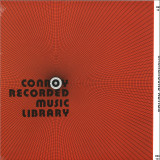
The British library label with those instantly recognisable “orangey-red” sleeves, Conroy began releasing production music in 1965. A sub-label of Berry Music Co, its catalogue typified the library industry’s strange mixture of tradition and experimentation from the start. Conroy’s early releases included work by big band stalwarts like Eddie Warner as well as early electronic recordings by the likes of Belgian experimental pioneer Arséne Souffriau. With Berry Music Co working as a distribution partner to the German library label Sonoton, it was through the Conroy that a great deal of German library music found its way into the UK market.
Conroy stopped putting out new music in the 1980s, but its history and its catalogue offer an excellent window into the trends and eccentricities of a highly unique industry at the height of its international appeal.
This re-issue of Dramatic Tempi / Larry Robbins Background Rhythms has been mastered for vinyl by Be With regular Simon Francis from audio from the original tapes. Richard Robinson has handled reproducing the iconic, hypnotic original Conroy sleeve. Essential.
- A1: Speed Unlimited A (2:00)
- A2: Speed Unlimited B (0:45)
- A3: Speed Unlimited C (0:41)
- A4: Hurricane Wheels A (2:15)
- A5: Hurricane Wheels B (0:51)
- A6: Hurricane Wheels C (1:43)
- A7: Hurricane Wheels D (0:45)
- A8: Hurricane Wheels E (1:42)
- A9: Hurricane Wheels F (0:45)
- A10: Hurricane Wheels G (1:42)
- A11: Route Africaine A (1:14)
- A12: Route Africaine B (1:14)
- A13: Route Africaine C (1:14)
- B1: Kabul Trip A (1:58)
- B2: Kabul Trip B (1:58)
- B3: Kabul Trip C (0:47)
- B4: Kabul Trip D (1:16)
- B5: Water Pollution A (1:47)
- B6: Water Pollution B (1:02)
- B7: Water Pollution C (0:29)
- B8: Centurion A (1:47)
- B9: Centurion B (1:33)
- B10: Centurion C (1:09)
- B11: Gladiators (1:54)
- B12: News Background A (2:31)
- B13: News Background B (1:39)
C-L-A-S-S-I-C library breaks and beats set of super-heavyweight espionage-funk.
One of two Be With forays into the archives of revered British library institution Conroy, we present one of our favourites on the label - the super in-demand Background Action from Sammy Burdson, originally released in 1975. Rare and sought-after for many years now, this is one of those cult library LPs that rarely turns up on even the deepest dig.
Sammy Burdson was one of the many, many aliases of the mighty Austrian composer, arranger and conductor, Gerhard Narholz. Founder of adored library label Sonoton in 1965, and a classically trained composer, his work runs from easy listening through pop, jazz and electronic, to avant-garde.
Background Action’s first side is all Blaxploitation wah-wah, funky clav and heavy, heavy drums. It’s top-quality takes on the sort of hard-knocking psychedelic sleuth-funk that the library labels gave us in spades. However, we think the real killers are over on side B. Styles upon styles upon styles is what we have. The trio of swish “Water Pollution” variations are pure gold. The two-part mid-tempo b-boy drumathon “News Background” is nothing short of epic whilst the sensational “Kabul Trip A” and “Kabul Trip B” are two different takes on some tough funk, street jazz style with some dope organ, bass and drum sounds. In short, this is a must for both DJs and producers.
The British library label with those instantly recognisable “orangey-red” sleeves, Conroy began releasing production music in 1965. A sub-label of Berry Music Co, its catalogue typified the library industry’s strange mixture of tradition and experimentation from the start. Conroy’s early releases included work by big band stalwarts like Eddie Warner as well as early electronic recordings by the likes of Belgian experimental pioneer Arséne Souffriau. With Berry Music Co working as a distribution partner to the German library label Sonoton, it was through the Conroy that a great deal of German library music found its way into the UK market.
Conroy stopped putting out new music in the 1980s, but its history and its catalogue offer an excellent window into the trends and eccentricities of a highly unique industry at the height of its international appeal.
This re-issue of Background Action has been mastered for vinyl by Be With regular Simon Francis from audio from the original tapes. Richard Robinson has handled reproducing the iconic, hypnotic original Conroy sleeve. Essential.
"It’s a voice that soars –pure, clear and true —above bass and synths, traditional percussion and infectious Mande guitar grooves. A stop-you-in-your-tracks voice instantly familiar to anyone in Mali, West Africa: Rokia Koné, aka the Rose of Bamako. On her debut international release, she’s teamed with Irish-born, California-based rock producer Jacknife Lee —and reimagined the Malian sound in ways leftfield and ground breaking.
BAMANAN is a collaboration that connects the great ancient kingdoms of Mali and the bustling modern street life of its capital, Bamako to a remote recording studio nestled within California’s Topanga Canyon. That bridges deep tradition and forward-facing innovation. One of Mali’s most beloved and dynamic artists, Rokia Koné is a force to be reckoned with. Her captivating performances in the city’s local maquis clubs very often last for hours, as Koné runs the gamut of emotion from joy to despair, fury to tenderness, wielding that astounding voice with grace and power. In 2016, she joined feminist supergroup Les Amazones d’Afrique and made her debut on an international stage alongside the likes of Oumou Sangaré, Angélique Kidjo and Kandia Kouyaté. Jacknife Lee is the acclaimed producer of bands including U2, R.E.M and The Killers, and has a Grammy for his work on Taylor Swift’s multi-million selling Red. Stadium-sized soundscapes are his speciality. Yet BAMANAN finds Lee upholding the stark beauty of Rokia’s voice with subtlety and sensitivity. Every nuance and breath is heard, each inflection and melismatic improvisation carefully preserved on this exciting debut."
WHEN TWO LONDON HIP-HOP HEAVYWEIGHTS JOIN FORCES, IT’S GOING TO BE “STYLE SO INCREDIBLE” THE ENIGMA HOWARD STEVENS PRODUCES A HARD HITTING SLAB OF B-BOY
ROCKING HIP-HOP FEATURING THE MAN WITH THE GOLDEN SOUND, LEWIS PARKER.
CONSCIOUS STREET LYRICS FLOW EFFORTLESSLY OVER THE UPTEMPO CLASSICALLY STYLED BEAT, WITH A FURIOUS FUNKY SCRATCH CHORUS & REMIX FROM PRODUCER/DJ JUICE. ADD A HOT VIDEO DIRECTED BY RINGZ OV SATURN AND THE
WHOLE HIP HOP PACKAGE IS IN ORDER.
Pressed on 140g Black Vinyl Including a signed print from Eddie Piller, limited to 750.
Demon are proud to release “Eddie Piller Presents British Mod Sounds Of the 1960s”, the follow up the “The
Mod Revival”. Featuring 100 original tracks across 6LPs, its a deep dive into the Mod scene in '60s Britain.
Including a selection of classic and rare tracks, tracing the scene from its R&B rootsto a soulful finale
Curated by Acid Jazz Records and Modcast founder Eddie Piller, and featuring new sleeve notes from
respected author and broadcaster Paul 'Smiler' Anderson.
As Eddie Piller points out in the forward to the extensive sleeve notes that accompany this collection, he
chose the word 'Sounds' carefully, reflecting the variety of talent contained here, from uncool session
musicians without an ounce of style in them, acts who saw an opportunity to jump on the Mod bandwagon
and bands who whole heartedly embraced Mod way of life.
And so this new collection mixes the Mod mainstays (Small Faces, The High Numbers The Action, The Fleur
De Lys), with a generous selection of future superstars (David Bowie, Rod Stewart, Elton John, Marc Bolan,
Jeff Beck and Graham Gouldman of 10cc are all represented here), and a few artists so obscure, so rare, that
they never got to release a record in the '60s, but Eddie has tracked down the tapes nonetheless.
"Be in with the In Crowd once more."
Every great youth cult deserves a great soundtrack, and when the '60s Mods adopted classic American R&B,
with a side order of hip Jazz, they undoubtedly found the right music for their exuberant and stylish way of
life. And yet, buying expensive imports, hoping for a local release or praying for a rare visit from overseas
talent was never going to be enough to satisfy British youth with a thirst for the latest sounds. Certainly not
those on the dancefloor and definitely not those with their own musical ambitions.
It was a music scene that began with imitation, before skill and imagination lead curious minds to innovation,
a scene that evolved from average (at best) copies of releases on the Chess, Motown and Stax labels, to
become something more sophisticated,something quite unique, something very British.
All formats are stylishly packaged (of course) and include new sleeve notes by Paul 'Smiler' Anderson, author
of the best-selling and highly regarded books'Mods: The New Religion' and 'Mod Art'.
- A1: Rain (Featuring Taylor Pace)
- A2: My Life
- A3: A Poem
- B1: Harlem
- B2: Brooklyn (Featuring Ade Da Poet)
- B3: To Begin (Featuring Pharoah Davis)
- C1: Praise The Lord
- C2: Spirit (Featuring Melodie Nicole)
- C3: Without You (Featuring Jessica Care Moore)
- D1: Occupy (Featuring Mosi)
- D2: Right Here Waiting (Featuring J Ivy)
- D3: What I Want To See
Gratitude is the eagerly anticipated new solo album from Abiodun Oyewole, the poet, teacher and founding member of The Last Poets. The album liner notes include an extensive new interview with Abiodun himself, detailing the writing process of the album.
Looking back, the Last Poets are often referred to as the godfathers of rap, and by listening to their early recordings; it’s easy to hear why. Their words encompass revolution, sex, death, drugs, and Black Power - they own their words. From their mouths – words are a sense of pride, a statement, and a feeling of empowerment. There’s no self-conscious hang-up with the Last Poets using words as an art form. On May 19th, 1968 (in celebration of Malcolm X’s birthday), The Last Poets performed their first ever concert in Mount Morris Park (in Harlem), now called Marcus Garvey Park. Their debut album was released in 1970 including poet/singer Abiodun Oyewole.
Now AFAR is proud to present a whole new way of thinking socially, politically, emotionally, and humanly – via the perspective of Abiodun Oyewole of The Last Poets with his new solo album ‘Gratitude’ - it's not a protest album, it's an inspirational LP/CD via the inclusive words and God-like voice of Abiodun - this is not an angry man, but an older wiser man - reflecting on his life and spiritual quests. Rappers love him for coining the phrase "Party and Bullshit" decades ago - but this is not that - this is a sacred journey with a universal message for all people regardless of their background and nationality.
“ONE OF THE MOST INFLUENTIAL SPOKEN-WORD GROUPS THAT PIONEERED HIP-HOP” NPR
“EXPERIMENTING WITH STREET POETRY AND PERCUSSIVE SOUND, THE MUSIC OF HARLEM’S LAST POETS HELPED LAY THE GROUNDWORK FOR HIP-HOP” ROLLING STONE
- A1: Main Title
- A2: The Bank Robbery
- A3: Prison Introduction (Dialogue)
- A4: Over The Wall/ Airforce One
- A5: He's Still Alive / Romero
- A6: Snake' Plissken" (Dialogue)
- B1: Orientation
- B2: Tell Him" (Dialogue)
- B3: Engulfed Cathedral (Debussy)
- B4: Across The Roof
- B5: Descent Into New York
- B6: Back To The Pod - Version #1
- B7: Everyone's Coming To New York
- C1: Don't Go Down There" (Dialogue)
- C2: Back To The Pod - Version #2/ The Crazies Come Out
- C3: I Heard You Were Dead" (Dialogue)
- C4: Arrival At The Library
- C5: You Are The Duke Of New York" (Dialogue)
- C6: The Duke Arrives / Barricade
- C7: President At The Train
- C8: Who Are You" (Dialogue)
- C9: Police Action
- C10: Romero And The President
- D1: The President Is Gone
- D2: V69Th Street Bridge
- D3: Over The Wall
- D4: The Name Is Plissken (Dialogue)
- D5: Snake Shake
Originally released on CD in 2000, the expanded soundtrack edition of John Carpenter's classic 1981 thriller included over 20 minutes of previously unreleased music plus music from scenes deleted from the final print. The masters were re-mixed from the original multi-track session tapes by long-time John Carpenter associate Alan Howarth.This is the first time the expanded edition has appeared on vinyl in its complete form, including original dialogue highlights