Benjamin Damage is back on ARTSCORE with a stunningly crafted record that explores the deepest parts of his mind.
We strongly believe that an Artist should have the freedom to express many phases of his thoughts, and doing it with the power of Techno is one of our main goals to inspire you. Benjamin is clearly on top of his game, and we are proud to deliver something very powerful here, done in one of the most elegant ways.
Поиск:stu j
Все
In October 1974, the first number of “L'Indépendant du Jazz”, a small self-produced magazine DIY -before punk supposedly invented the concept- was launched by Jef Gilson, Gérard Terronès, Jean-Jacques Pussiau and a few other specialists of a different kind of jazz in France, it looked at the already long career of Jef Gilson and in detail at the album with saxophonist Philippe Maté:
“The ‘Workshop’ is, with Philippe Maté (alto-sax), an undeniable success. Maté is genuinely ‘the’ most inventive French saxophonist since Michel Portal burst onto the jazz scene (who has also worked with Jef Gilson on both “Enfin” and “Gaveau”).”
Even though the author of the article is a mysterious I.H. Dubiniou, and it is difficult to know if it is a real person or a pseudonym used by one of the merry bunch, it is also tempting to hear it as what Jef Gilson really thought about his new discovery. Even more so as the two men would work together over a long period, as Maté became one of the key figures of Gilson’s Europamerica orchestra up until the 1980s.
Philippe Maté had started to make a name for himself with the Acting Trio when they released an album on the BYG label in 1969, and he was also one of the regular sidemen for the Saravah studios (he can notably be heard on albums by Higelin, Fontaine or his cult duo album with Daniel Vallancien).
The album was recorded on 4 February 1972, at the Foyer de Montorgueuil, where Gilson had set up his studio, with more or less the same team found on “La Marche Dans Le Désert” by Sahib Shihab + Gilson Unit (recorded ten days later). This was drummer Jean-Claude Pourtier and pianist Pierre Moret (regular Gilson accomplices since “Le Massacre Du Printemps”), alongside Maurice Bouhana and Bruno Di Gioa on various percussions and/or wind instruments. On bass is Didier Levallet, of the now mythical Perception, (Jean-François Catoire would replace him with Shihab) and Philippe Maté who took top billing, rather than the American saxophonist afterwards. The two albums are however quite different. This “Workshop” is more abrasive, more free. Made up of two long improvisations each of over 22mn, “L'Œil” on side A and “Vision” on side B (Gilson specialists would recognise the nod to one of his albums from the 60s), the album plunges you into the depths, attempting to drown you in electronic waves, dragging you back to the surface by the collar, giving you a good shakedown, before showing you the light, leaving you breathless on the shore after 46mn of the most intense music French has to offer. “An undeniable success”, they said. (by Jérôme "Kalcha" Simonneau)
August Greene culminates years of mutual respect and friendship, channeling the musicians’ various talents into a cohesive project. The perfect marriage of jazz, hip-hop and soul, it’s music that just is. This is black expression the way God intended: earnest, unfiltered, and harmonious. Throughout August Greene, you feel the abundance of Glasper’s rolling keys, the sheer honesty of Com’s lyrics, and the nuanced subtlety of Riggins’ drum work. It’s a fluid sound that’s sorely needed in today’s landscape, and a teachable moment for the next wave of creators. “I feel like we need to set the bar for this generation of musicians and producers,” Riggins says. “There’s a lot of computer-driven music. This is the opposite of that. We’re showing you can still use your creative muscle on an instrument to generate your own sound.” August Greene is a meditative offering that stands tall against the era of “fake news.” “They body snatching black girls in D.C. / Politics and propaganda on the TV,” Common observes on the opening track. On “Nirvana,” the lyricist uses a stuttering percussive loop and faint piano chords to search his inner being: “Thought I was gonna fly when Obama became the king … when it’s all done, will I have heaven’s dress code, and been able to let God and let go.” As Com puts it, Glasper and Riggins’ soundtrack allowed him to open up in ways he hadn’t done previously. Like on “Fly Away,” for instance, where he riffs on the public relationships he’s had. Other songs, like “Black Kennedy,” feel spacious and scenic. “I got to go new places with the music, and it didn’t have to fit within a genre for me to participate on it,” he says. “This gave me an experience I haven’t had in a long time, so I want people to feel that. I want this to be a cleansing of whatever doesn’t feel good or inspiring.” In the end, August Greene speaks to those pushing through the dark for brighter days. It's a masterpiece from which virtue can shine. “I want people to go on the ride and be open,” Glasper says. “We just created and it became a sound. I want people to approach this with an open mind and without expectations.” —Marcus J. Moore
- A1: Dillinger - Tighten Up
- A2: Sir Lord Comic - Django Shoots First
- A3: The Upsetters - Uncle Charley
- A4: The Upsetters - Sokup
- A5: The Upsetters - Double Power
- A6: The Upsetters - Lover (Version)
- B1: The Upsetters - Rumpelsteelkin
- B2: Dillinger - Skanking
- B3: The Upsetters - Kuchy Skank
- B4: Dillinger - Connection
- B5: The Upsetters - Opperation
Rhythm Shower is the 1973 studio album by The Upsetters, but also features tracks by Dillinger and Sir Lord Comic. Many of the rhythms on the album are known as those done by Lee “Scratch” Perry. Originally released in a very limited Jamaican pressing with no sleeve, it became better known after its reissue by Trojan Records as part of The Upsetter Collection.
Rhythm Shower is available as a limited edition of 1500 individually numbered copies on orange coloured vinyl. Since the original release contained no sleeve, this edition is housed in a custom made sleeve by Music On Vinyl in collaboration with Trojan Records.
James Curd presents the fourth instalment from his already essential PRONTO label, delivering a hyper-infectious original alongside a bumper pack of top-drawer remixes on ‘I Am One, I Am Many’.
First up, Curd’s original version of ‘I Am One, I Am Many’ bursts from the blocks with its lively tempo and feel-good groove. Built around an empowering spoken word vocal and pitched somewhere in the fertile soil between disco and house, the funk-laden jam rolls over thick bass, dramatic strings and jaunty guitar licks, with irresistible horn motifs lifting spirits as the dance-ready arrangement unfolds.
Next, renegade UK collective Adelphi Music Factory maintain the uncompromising approach that has seen them garner universal tastemaker heat thanks to impactful releases on Shall Not Fade, Nervous, and their own Beat Factory label. Adding weight to the drums, they stay true to the intention of the original, retaining the track’s key parts while tastefully reforming them as an unfettered main room banger.
The UK remix flavour extends into the third iteration, with notorious party-starters Make A Dance continuing their club-focused manifesto with their brilliantly atmospheric revision. Here, M.A.D. carry on the fine work they’ve been manifesting on their eponymous label, constructing an almost entirely new track around the iconic vocal. A contagious organ hook drives the energy as saucer-eyed sweeps and off-kilter synths meander across the panorama, the sturdy house rhythm expertly powering the kinetically charged groove.
Tel Aviv’s Nenor rounds off the remixes, the esteemed producer and DJ showing the kind of sparkling form that has seen his work appear on benchmark labels including Mahogani, Strictly Rhythm, Heist, and Razor N Tape among many others. Transposing the track into deeper territory, Nenor strips back the instrumentation to serve a mesmerising heads-down roller. The vocal soars over brooding bass and syncopated chords, with loose rhythms and subtle textures combining to hypnotic effect.
Arma Records is about to drop its 25th release, an album by Vakula, an Ukrainian producer, active contributor to the underground community that has been united around Moscow's Arma17 since early 2010s.
On the 25th of June, '108 Mysteries' — a double vinyl comprising 9 tracks created by Vakula at his studio, mostly by the artist himself, few in collaboration with the vocalist Amrita Ananda — will be available on major distribution platforms.
Affected by circumstances, the release was repeatedly postponed until a mutual decision to move forward with its publication was made by the artist and the label. The tragedy that was forced upon Ukrainian and Russian people, throwing both nations into an unthinkable circle of pain, hatred and death, had a devastating effect on our cultures, historically perceived as a whole. The catastrophe unwraps further, taking lives, burning homes, destroying connections between people. At that terrifying moment we, the community of artists, still have the voice that used to bring us together — our music.
Philosophical and meditative, '108 Mysteries' is a new chapter in Vakula's discography. 'Highest Love', 'A Breath Of Life', '?????? ?????', 'Spirit Okarine' are a high-spirited mix of oriental and Ukrainian folk motifs — an unusual combination that happens to sound so full of life.
'Intensely textured, interlocking guitar riffs weave together on New Bright Object, the debut album from Berlin and Edinburgh-based duo I’m Not You.
Working under the name I’m Not You, artist Alex Gibbs (bass & vocals) and sound designer Niall McCallum (guitar & drums) have honed a sound that draws in equal measure from jazz funk of Weather Report and the math rock of Don Caballero. Their debut album, New Bright Object is their most developed statement to date, an intricate, robust and unique collection of songs born from serpentine jam sessions in rural idylls.
The duo make no secret of their admiration for bands like Battles and Tortoise. They reference Jim O’Rourke’s lounge numbers and the droll lyricism of Modern Lovers’ Jonathan Richman. There’s a touch of Vini Reilly in their sparse and serpentine guitar lines. A hint perhaps of Mogwai. All these names place New Bright Object within a constellation of albums made with bigger budgets for wider audiences.
New Bright Object opens In a flash of light, comet-like, with the sound of ‘Mr. Wind- Up Bird’. The threads they weave are full with intent, as moments of density rise like hills from the track’s quieter valleys. It’s easy to imagine the pair looking out over the rolling fields of the garden studio in East Lothian where they recorded the album, as they assiduously try and draw their own landscapes in sound.
Similarly, there is a crispness to ‘A Certain Arrangement Of Atoms’ - every clipped hat, rim-shot snare and tightly wound tom a fine-tipped mark on the score. It is intricate and precise, a result perhaps of Niall’s attention to detail. Then there is the piano, Alex’s grandmother’s, slightly out of tune, which adds a few expressionist strokes to this pointillist composition. The piece loosens, until all we’re left with is the bass.
Although the album orbits around the pendulum sway of ‘The Older I Get’, it is ‘What Cats Think About’ that stands out most. That it does is by design – a nod to the Sun City Girls and albums that like to throw their listeners a curveball every now and then. Pleasantly ramshackle, confusingly domestic, agreeably strange.
All this speaks to the spirit of the album and the creative relationship between two best friends whose differences seem to have been the only things they could agree on.'
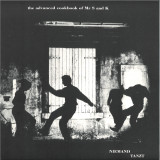
Andreas Koeper is a German contemporary/experimental composer and drummer with a background in Philosophy and Art history. “Niemand Tanzt” was originally released in 1989 and in the past years it has become a sought after obscurity amongst diggers ever since Chee Shimizu put it on the radar after unearthing it throughout inspection rounds in Berlin record stores. Although the A-side might have been the essence of the single at the time, it's the B-side's “Pink Rhythm” that puts this release on the map for DJs, the track's gradient from an empty half tempo to rich 4 on the floor patterns serves any well versed DJ as an on-ramp for new gears to be put into place as the track grows into various ramifications of Andreas' studio production techniques: playful percussive elements, provocative guitar riffs over a solid rhythm section. Freshly remastered by manmade in Berlin.
Franco Esse is the moniker of Francesco Semproni, who in the late 60s began working as a music and recording assistant in major recording studios in Rome, Italy. He started out at Dirmaphone (then located in Via Pola) under sound engineer Gianni Fornari, before following him to the Emmequattro studios in Viale Mazzini, which at the time were the headquarters of Edipan, the record label founded by composer and conductor Bruno Nicolai after parting ways with friend and fellow composer Ennio Morricone.
Semproni tried to become a singer-songwriter in the early 80s, when he recorded a number of demos with the session musicians who gravitated around the studios. None of these demos was ever released though, for reasons that are still unclear today – his thorny and stubborn personality may have been a factor, since it apparently made him reluctant to compromise with the major record labels of the time.
The unsuccessful efforts to launch his solo artist career led to a personal crisis, and Franco Esse eventually quit music to go to work as a sales assistant in a toyshop in Rome's Prati neighbourhood.
Today he seems to have vanished without a trace, but after extensive research, we managed to dig some of his demos out of an abandoned archive and miraculously bring back to life two semi-instrumental tracks he recorded in 1983.
Both of them reveal Franco Esse as a refined musician with a reserved personality, an almost minimalist approach to lyric-writing, and a strongly cinematic synth-pop style that is in line with the musical trends of the time and gives a nod to the soundtracks of Fabio Liberatori, falling somewhere in between slow-wave and new-romantic.
These two ballads would have been the perfect soundtrack to cold winter nights in the early 80s, with snowflakes floating down on ski slopes, people clad in puffy down jackets, and music pouring into headphones from walkmans kept in back jean pockets.
Memento records is thrilled to announce "Hotter than Hell" a dancefloor twister release produced by Matteo Lago, Andrea Santini and Miky R, three DJs with more than e decade of experience behind the Booth. They are best known for their sweaty kinky party named Pandemonium that is soon becoming a record label as an output for their studio work.
"Make Some Changes" by Andrea Santini is a groovy hi-shuffled percussive track with a juicy acidic touch with an outbreak of good vibes and positive energy
"The Party Zone" by Matteo Lago is a killer cutting edge House track with an hypnotic synth, a full-bodied kick and sharp hi hats that lead straight into an anthemic 90s vocal hook
Miky R's techoid "Wild Flight' spreads elegant quirks rand clinks over a relentless sub bass and sophisticated uplifting Detroit-reminiscent chords.
Don't miss it! It's gonna make a Pandemonium!
- A1: Dogs - Je Suis Une Calamite
- A2: The Barracudas - Toutes Les Nuits
- A3: The Kids Are Alright
- A4: Le Supermarche
- A5: Behind Your Sunglasses
- A6: Pas La Peine
- A7: Le Garcon De New York
- A8: You Can't Sit Down
- A9: Malhabile
- B1: With A Boy Like You
- B2: Nicolas
- B3: Teach Me How To Shimmy
- B4: Boy From New York City
- B5: C'est Embetant
- B6: Velomoteur
- B7: Jen Ferais Bien Mon Quarte-Heure
- B8: Down At Lulu's (Feat Les Calamites)
- B9: Down In The Boondocks (Feat Les Calamites)
18 track compilation of cult '80s French rock band Les Calamités,
includes their biggest hit "Vélomoteur" and tracks with the bands the
Dogs and The Barracudas Available as a digipak CD with 36-page booklet and vinyl with 8 page booklet and download code, with liner notes in French and English. Wouldn't it do them justice to rid Les Calamités (literally "the calamities") of the embarrassing phrase "girl band", durably stuck to their skins and plaited skirts? It's nothing but a pink puffy cloud obscuring their true importance as a "band" full stop, as well as their fleeting though mind-bending trajectory. In just a few months after going on stage with a handful of original songs recorded here and there, they became, from Dijon to Rouen, Paris to Toulouse, Bordeaux to Strasbourg, the darlings of an uncompromising rockers' demanding scene. Tolerated by some, maybe, they were also consecrated, certainly (should they have needed the accolade). The trade-off was a succession of quick and distinctive verse-choruses for which the adjectives "fresh" and "light" seemed to have been invented again.
They delivered just as many covers, which gave an idea of the origins of their songwriting: one foot in the fifties (on the dancefloor), the other in the sixties (in the garage). All of this leading to their final hit, a successful incursion in the top sales with a popular song for everyone to hum at ease, from seaside campsites to the cool kids of the capital.
Everything the Calamités touched, with their classy, rigorous, casual ways - plus just enough amused detachment - turned into gold.
- A1: Chris Rock (Intro)
- A2: Life Is What You Make It
- A3: Live My Life (Feat Ashtin Martin)
- A4: Faithful (Feat Westside Gunn)
- A5: The Rear View
- A6: Godly (Feat Ashtin Martin)
- A7: Neva Settle (Feat Ashtin Martin & Dre)
- B1: Ouuu (Feat Stacy Epps)
- B2: Smoke Sumthin
- B3: The Wrong Thing (Feat Ashtin Martin)
- B4: Flying High (Feat Posdnuos)
- B5: The Man's Swift
- B6: The Scorn (Feat Kp)
- B7: Inertia
Fresh off the heels of 2021’s collaborative LP, Gotham from Talib Kweli and Diamond D, the BX icon returns with his sixth studio album, The Rear View. Comprised of 13 tracks, the album proves that without a shadow of a doubt, Diamond D’s reputation as the best producer on the mic remains unrivaled.
Never one to bogart the spotlight, Diamond is joined by a supporting cast of guest appearances that include Westside Gunn, Dre (Cool & Dre), Posdnuos (De La Soul), Ashtin Martin, Stacy Epps and KP, with a momentous introduction from the great Chris Rock. To boot, Diamond adds to the unblemished production value with additional board work from the likes of Nottz, Focus, D.R.U.G.S. Beats and Mr. Brady.
"I took my time crafting this LP to make sure every track could stand on its own as a possible single,” says Diamond. “Every feature and track was carefully selected from an elite group of artists and producers that I had the honor of working with. The end result is top tier bar work over pristine production,” he concludes.
After successful releases on Transatlantic and Monnom Black, German FM synthesis wizard Luca Daniel Schwarz (aka LDS) presents his latest record ‘algo5’. The EP captures a wide range of sonic ground with innovative and futuristic edge.
’nbdfoil’ the opening track starts the voyage with mesmerising awe before sliding into ‘kizzt_VF’ where reality distorts and mind-warping events unfold. Closing out the A side the interlude ‘<13’ stumbles along with playful weirdness and explorative sonic gestures. Back in more familiar territory the B-side’s ‘fl+’ and ‘Vone’ propel dynamic rhythms through the ether until arriving at the final track, ‘mfäg’ where fragmented arps and cinematic ambience give an emotional sense of closure.
LDS’s ability to compose to a high level of depth and intrigue is unmistakably a significant feat for any electronic dance music producer and testament to the possibilities of modern sound design.
Dies Lexic is a duo by Inês Tartaruga Água and Xavier Paes. Part of Favela Discos collective and label, they explore the channelling potentialities of sound, wandering between spectrums, ethereal soundscapes and zones of sonic subduction through means of DIY electro-acoustic instruments, amplified objects, electronics and composition processes based on repetition, language, chaosmosis and error.
Lexicon Hall, the long overdue debut album by the Portuguese duo of intrepid sound explorers, is a sort of digital ayahuasca, an intense psychedelic journey guided by drums and harshly bowed strings, channelling voices from other planes and fusing them with Dies Lexic’s very own distinctive voice. If you close your eyes hard enough you can probably see Tony Conrad waving hello in the middle of a dark jungle that is inhabited by tribes of our ancestors.
Artists bio:
Inês Tartaruga Água is a multidisciplinary artist, focused on the issues of deep ecology and radical regeneration, sound explorer and practitioner of DIY philosophy as well as collaborative and participatory practices in public space. Participates in collective exhibitions since 2013, highlighting the “XIII International Biennial of Artistic Ceramics” (Aveiro, 2017), “Убежище / Suoja / Shelter Festival - Laboratory” (Helsinki, 2019), «48 часов Новосибирск» (Siberia, 2019), or “Soundscapes” (Bahrain, 2019), and has her first individual artistic residency “Méhtēr: Matter, Form and Transformation” at Júlio Dinis Museum in Ovar (2018). Recently, Água has debuted sound pieces in Casa de Serralves (Porto, 2021) and in Casa das Conchas (Spain, 2021).
Xavier Paes is a transdisciplinary artist based in Porto. He divides his practice between visual arts, sound, performance, gleaning improvisation and multi-instrumentalism, focusing on ideas such as acoustic phenomena, repetition, resonant and sympathetic bodies, echo and ecology. He has presented his work at institutions, galleries, festivals, kiosks, raves and after-parties, highlighting places such as Serralves Museum, Oliva Arts Center, Porto Municipal Gallery, Stichting Centrum (The Hague), OCCII and Vondelbunker (Amsterdam), La Pointe Lafayette and L'international (Paris), STUK (Louven), Overtoon (Brussels) and Villa Arson (Nice).
Flexi Cuts is pleased to introduce Lazy Snail's new EP, Lucky Life. A truly valuable work, the result of time and research, where Alessandro (aka Lazy Snail) wanted to explore different sides of electronic music of an inner and mature nature at the same time.
Lucky Life is like going up to the attic and finding something precious to take care of; it sums up a long musical journey, from the past to the present, in five tracks full of meaning.
The first track, Remèrcier, is a tribute to 'dance' music, an intense talk over a hypnotic moog bass.
This is followed by Vagrants, dedicated to his hometown (Cudgnola), where we find an 808 rhythmic patterns as involving and beating as a walk in the rain.
The B-side opens with One Place, which features a vocal stunning collaboration with Flicker Fox, who brings the track into a techno universe with percussion and intimate echoes.
Climbin' High was inspired by Alessandro's passion and admiration for the mountains. He composed it imagining an extreme climb, and immediately afterwards an equally dangerous but necessary descent. Just like in reality.
The record ends with No Evil, an ambient-flavoured gem that opens on the climax in a riot of expert snares and synths.
Falling by the Wayside – A Motown flavored uplifting, unmissable and irresistible new single.
Singer Paul Mac Innes and producer Mattias Axelsson share a great love for the timeless Motown sound that led them to write "Falling by the Wayside" sometime before the pandemic. The song was put on hold. But at a live performance, they chose to perform the song and then understood that the time had come to record this track for real. They booked the new studio Skeppet in Gothenburg and brought along some of the city's best musicians.
Support and rotation on Swedish National Radio P3 and P4 (Swedish equivalent to BBC)
“Tune of year for me. I played it on my weekly section of Lost and Found on WMBR in Boston in August and on the September Metropolitan Soul Show and I’m so pleased this is coming on vinyl!”
Simon White — Metropolitan Soul Show
“And there’s no stopping. Much to our delight, Paul has released a bonus B-side Instrument version! Now there are tears in my eyes!”
— Scandinavian soul
“…The sound is timeless, conceived sometime in Detroit - the implementation extremely competent and in all departments with the ability to give the joy of Motown a few more rounds….”
— Sonic Soul Reviews…
Nearly 10 years on since his last solo LP, Berlin techno icon Marcel Dettmann arrives on Dekmantel with an expansive album captured in a flash of inspiration.
In many ways Fear Of Programming is a reflection on the artistic process – the critical hurdles one has to overcome, the constant strive for originality, the ability to capture inspiration in its pure moment of inception. Bar the closing title track (and we all know Marcel loves a surprise closing), these 13 tracks came together during a period in which our hirsute host was able to immerse himself in studio practice and set the intention to record an album’s worth of material every single day. From the resulting mass of work there were many options to choose from, and Fear Of Programming stood out as one of the most complete statements on Dettmann’s approach in the here and now.
Unconcerned with an overarching concept, it was the work in the studio which drove the musical direction. No labouring over knotty arrangements, no painstaking mix downs – just honest expression, a moment caught, a groove locked, a stroke of synth sent pirouetting over a cavernous bed of texture. The results are varied, and while you might well hear plenty of bruising machinations in line with the techno Dettmann has made his name on, there are plenty of other shades expressed across the album.
Ambient sojourns, beatless epics and angular electronica have equal footing with strident, floor-friendly workouts. Standout piece ‘Water’ offers an icy ballet of swinging minimal and drip-drop melodics fronted by Ryan Elliott on lesser-spotted vocal duties, urging, ‘give me a sign, just a little something to let me know that you’re mine’. It’s playful, but still underpinned with the sincerity that comes with Dettmann’s work.
Running on instinct, Dettmann presents an honest version of himself in the here and now, speaking through the sonics and not over-thinking the results. His decades of experience helming a thousand techno parties speak for themselves, while his evolution as a musical entity through collaboration and his own BAD MANNERS label demonstrate his appetite for change. Indeed, the working method which resulted in the album also spurred him on to create a live set beyond his well-established DJ practice. Without resorting to a conceited overhaul, Fear Of Programming opens up the idea of what Dettmann represents in the modern techno landscape.
Presented together for the first time, American composer John McGuire’s Pulse Music series (1975-1979) blurs the popular narrative that Minimalism was a reaction against Europe’s angular, intellectual, inscrutable high-modernism. McGuire, born in California, studied at Occidental College in Los Angeles and UC Berkeley before going to Europe to study with Karlheinz Stockhausen, Krzysztof Penderecki, and Gottfried Michael Koenig. His compositions lock serialism’s warped geometries onto an evenly spaced grid, perfectly preserving serial music’s multi-dimensionality while smoothing its wildest disjunctures and sharpest angles. If serialism is Montreal’s Habitat 67 modular housing complex, McGuire’s Pulse Music compositions are the primary-colored grids of Le Corbusier’s L’Habitation apartment complex — an exuberant expression of the same materials and principles.
Every layer of pulses is made distinct through its timbre, register, and tempo. We hear them as a plurality, organized like stars in the sky. Every so often the sky rotates and the stars appear in a different arrangement. Our ear naturally starts to draw connections and, as it sweeps between one layer and another, what was discrete becomes continuous. Pulses become flows; quantitative reality becomes qualitative experience.