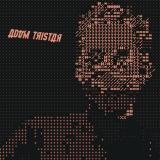
Following “The Red Pill” and “Suicide Neighborhood”, VHS Horror Tape marks the next chapter in the sonic universe of Dutch synthwave wizard Adam Tristar. The album expands on his signature sound with darker tones, gritty analog textures, and a strong cinematic horror influence, evoking late-night VHS aesthetics, neon-lit nightmares, and retro-futuristic suspense. It’s a haunting journey that blends nostalgia with menace, pushing his synthwave style into deeper, more ominous territory. Presented in ONE-OFF truly limited edition of 300 copies lacquered pressed on 180 gr. high quality solid BLACK viny. All tracks have been specially remastered and mastered for vinyl by Daniel Hallhuber at Young and Cold Studios (Germany).
Suche:studio 12
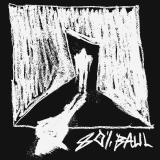
“Música Para Caminar” is the new album by 80%Baul, and the record that confirms his definitive leap from revelation to legend. Following the critically acclaimed debut Ayer y Ahora, this release positions 80%Baul alongside the great names of Spanish post-punk, standing shoulder to shoulder with seminal acts such as Décima Víctima and Parálisis Permanente. Rooted in a dark, introspective sensibility, Música Para Caminar also connects seamlessly with the vitality of today’s Spanish underground, aligning with the current wave of forward-thinking artists, including labelmates like Yvgoslavia. But this album is not defined by sound alone. Once again, 80%Baul surprises with songs that function as poems—bleak, incisive reflections on a decaying, dystopian present. More than music, Música Para Caminar is a statement: music with intention, depth, and meaning—an artistic vision that transcends genre and cements 80%Baul as one of the essential voices of contemporary Spanish post-punk. Presented in ONE-OFF truly limited edition of 300 copies lacquered pressed on 180 gr. high quality solid BLACK vinyl tracks have been specially remastered and mastered for vinyl by Daniel Hallhuber at Young and Cold Studios (Germany).
In just five years, The Spy has gone from underground newcomer to one of the most talked-about names in the European electro and EBM dark electro scene. Early releases on Osáre Editions and Mechatronica quickly placed him on the radar of forward-thinking clubs and selectors across Europe. Now landing on Oráculo Records, he presents his most wave-driven and club-oriented material to date: pure, physical electro built for dark rooms and late hours. Driving basslines and sharp machine rhythms—infused with subtle, classic post-punk tension—define a sound that connects the dancefloor with the shadows, drawing clear parallels to artists like L.F.T, Credit 00 or Gesloten Cirkel. This is music made to move bodies without sacrificing attitude—raw, confrontational, and far removed from formulaic club clichés. Five years in, the message is clear: this is not hype, but momentum—an artist fully in command of a modern electro language built for the underground. Presented in ONE-OFF truly limited edition of 300 copies lacquered pressed on 180 gr. high quality solid BLACK vinyl. All tracks have been specially remastered and mastered for vinyl by Daniel Hallhuber at Young and Cold Studios (Germany).
- A1: All My Love
- B1: Can't Get Over You
The world of discovering Soul music and artists can lead to sheer moments of jubilation. The thought of igniting a long lost sound, reviving the energy of a once exuberant individual . But not every story that's told is filled with joy. Some are peppered along the way with struggles and heartache. Over time artists have battled with over powering label owners, record executives who just don't back what you do. The story of Tommy Hill is one such story. Tommy along with friend and longtime collaborator Ricky Tarbo had a deal with Motown records back in the early 1980's which turned sour very quickly. His release "Flame"/"Super Star Of Love' was dropped pretty quickly with no promotion and record boss Sylvia Rhône calling the shots within the duo questioning skin colour within the group and even trying to get vocals wiped off the release to sabotage it.
This said the single didn't amount to much and nothing else was recorded for Motown records. The duo did record some 4 demo's in LA before Tommy headed to re-record them again in New York circa 1982.
The A side has never been released until now, which is such a crying shame as the quality is so damn good. It's an uptempo boogie cut called "All My Love" which we gave a sexy 45 mix so you get some slamming synth work half way in. Tommy Hill's vocal range is nothing but astonishing. Just check out the 2 step ballad of "Can't Get Over You", which was recorded and released back in 1980 by The James Simpson penetration Band written by Tommy Hill, who went back into the studio 2 years later to give the song much more depth not only within the production but also to his vocal range. Tommy Hill headed back to LA after not securing a record deal and a few years later tried to get this singing career back on track. Like many of the artists who have moved on to a higher place Tommy succumbed to his own mental health issues and took his life. We hope this record does you proud Tommy Hill
The origins of Body System date back around 35 years. Dissatisfied with previous experiences, the project was conceived as a meeting point between Sheffield and Detroit techno and German and Belgian body music. At the time, it never fully developed and remained largely an idea, with only a few sketches recorded on DAT. More than three decades later, that original concept has been revived. Following an invitation to contribute the track In Your Mind to the soundtrack of Electronic Body Movie, directed by Pietro Anton, the project was reopened and reworked, taking shape in the present while remaining rooted in its initial vision. These five tracks reflect an awareness of both past and contemporary electronic music, filtered through an undiminished experimental approach and a conscious refusal to adhere to stylistic conventions or predefined genres. Presented in ONE-OFF truly limited edition of 300 copies lacquered pressed on 180 gr. high quality solid BLACK vinyl. All tracks have been specially remastered and mastered for vinyl by Daniel Hallhuber at Young and Cold Studios (Germany).
With Dispersion, Loom & Thread return to the volatile architecture of the expanded piano trio - and quietly fracture it from within.
Daniel Klein (drums), Tobias Fröhlich (double bass) and Tom Schneider (keys, sampler) remain the sole agents on stage and in the final recording. The triangle holds. And yet, the field has expanded. For their second studio album, the trio fed their improvisations with the timbral signatures of guest saxophone and vibraphone players - not just as additional voices to be featured, but also as material to be absorbed, atomized and redistributed. The result is not augmentation but thorough refraction.
Where the debut album explored the recursive labyrinth of Schneider's live sampling of his own piano, Dispersion introduces an external grain into the feedback system. Breath and metal. Reed turbulence and struck resonance. The trio sampled extended improvisations by saxophone and vibes players: Victor Fox, Asger Nissen, Volker Heuken, and L&T's own Daniel Klein; dissected their attacks, overtones and decay curves, and integrated these fragments into the trio's internal circuitry. What emerges is a play of presences without bodies - instrumental ghosts circulating through the dense weave of rhythm and keys.
At first, one might hear the familiar relational tension: Klein's polyrhythmic elasticity interlocking with Fröhlich's tensile double bass figurations, Schneider poised at the hinge between tonal field and percussive impulse. But soon, the surface splinters - again. A vibraphone shimmer appears, yet no mallets are visible. A reed multiphonic surges through the texture, bending space between bass and drums. These events are neither quotations nor overlays; they are redistributed energies, dispersed across the trio's grammar. A digital multidimensional interplay ensues.
If the first album unfolded as a two-tiered game - live phrase and sampled reflection - Dispersion adds a further axis. The sampled materials from other improvisers are stripped of their erstwhile two-way interaction and reconstituted as malleable particles. Signifier detached from origin, resonance detached from gesture. The trio navigates a constantly shifting topology in which acoustic memory and electronic manipulation are indistinguishable.
Crucially, the album never abandons the physical urgency of three musicians reacting in real time. The additional timbral layers do not thicken the texture into opacity; rather, they introduce stark points and arrows of diffraction. Density opens into prismatic clarity. Lines splinter and regroup. What seems like a quartet or quintet collapses back into three bodies negotiating an expanded field.
Dispersion is not about addition but about distribution - of agency, of timbre, of temporal perspective. It is an album in which the trio setting becomes a site of multiplicity without surrendering its immediacy. A dissolution not only of the divide between present experience and memory, but between inside and outside, self and other.
Three musicians. Countless vectors. A music that fractures in order to cohere.
CREDITS:
Tom Schneider: piano & sampler
Tobi Fröhlich: double bass
Daniel Klein: drums & percussion
sample sources:
Victor Fox: tenor saxophone
Asger Nissen: alto saxophone
Volker Heuken: vibes
Daniel Klein: vibes
Recorded by Martin Dressler at Bauer Studios, Ludwigsburg.
Mixed & mastered by Martin Ruch.
Artwork by Viet Hoa Le.
- 1: Sozialismus In Discos
- 2: Bleibm
- 3: Muv
- 4: Entnazifiziert
- 5: Du&I
- 6: Sei
- 7: Regen
- 8: Mau
- 9: Wos
- 10: Hendihenga
- 11: Feministische Gstanzln
- 12: Kum Vorbei
- 13: Muast Ned
- 14: Zwiefacher Nachts
Mit "wos" legen Attwenger ihr zehntes Studioalbum vor - ein Werk, das erneut beweist, warum diese Band seit fast vier Jahrzehnten wie ein Naturphänomen durch die deutschsprachige Musiklandschaft fegt. Was 1991 mit einer Kassette, einem VHS-Tape und dem legendären Satz "Attwenger heißt im Dialekt denken, heißt den Schädel in den Most tunken" begann, hat sich zu einem der eigenständigsten Projekte des Landes entwickelt: Slangpunk, Dialekt-Avantgarde und anarchischer Groove, der keine Schublade akzeptiert. Auf "wos" treffen elektrisch aufgeladene Ziehharmonika-Linien auf treibende Drum- und Sequenzer-Beats. Worte fransen aus, Geschichten wirbeln herum, Sprache wird gebogen, gedehnt, zerlegt - und wieder zusammengesetzt zu einem Sound, der gleichzeitig tief verwurzelt und radikal zeitgenössisch ist. Attwenger kommentieren den Zustand einer überhitzten Gesellschaft, ohne den moralischen Zeigefinger zu heben. Stattdessen öffnen sie Räume zwischen den Zeilen: Orte für Humor, Auswege, Widerstand und befreiende Bewegungen jenseits der Erwartung. "wos is. is wos." - dieses Album lässt keinen kalt. Es fordert heraus, groovt, fräst, fragt, widerspricht. Und es zeigt einmal mehr: Attwenger bleiben unkopierbar.
- 1: Wisco (5:09)
- 2: Bborn Again (6:44)
- 3: Pez (4:4)
- 4: Coni (5:7)
- 5: Plz (6:21)
PPP: a whirlwind new link-up between contemporary club heartthrobs Piezo, DJ Plead and DJ Python. A trio of the best in the game come together for a new collaborative project on Facta and K-LONE’s Wisdom Teeth imprint.
The project was recorded gradually over a two year period at Piezo’s studio in Milan. Initial sketches were written when Python came to stay for a few days in late 2023. Later, when Plead travelled through the city, he stopped by to add his own contributions - and the record grew incrementally and organically from there across multiple visits.
The initial MO was to workshop a warped take on early 00s minimal and tech house - but at a certain point the record took on a life and soul of its own, spreading out in a number of disparate yet interconnected creative directions: from the peak-time euphoria/melancholia of ‘Wisco’ through to the shoegazed minimal of ‘Plz’, via proggy psychedelia (‘Bborn Again’), glitched Perlon reconstructions (‘Pez’) and downbeat downtempo (‘Coni’).
At points you can clearly hear their individual voices break through: be it Python’s whale-song melodies on ‘Coni’, Plead’s frenetic hand drums on ‘Wisco’, or Piezo’s sound-design freakouts on ‘Pez’. At other points the joins are harder to find as the record takes on a unique voice far beyond the sum of its parts.
- 1: Ach, Die Menschen
- 2: Bummelzug
- 3: Die Tuer Sagt
- 4: Fasching Im Februar
- 5: Gute Fee
- 6: Hinter Dicken Mauern
- 7: In Gefahr
- 8: Kurzhalten
- 9: Stern
- 10: Stolz
- 11: Sultan Tanzt Samba
- 12: Therapie
Mit "Ach, die Menschen" legt Keimzeit ihr mittlerweile 14. Studioalbum vor - ein Werk, das die Band erneut als souveräne, eigenständige Größe innerhalb der deutschen Musiklandschaft bestätigt. Unbeeindruckt von Trends setzt Keimzeit auf Kontinuität, poetische Beobachtungen und musikalische Gelassenheit. Im Zentrum stehen die charakteristischen Texte von Norbert Leisegang, die Alltagsmomente, Menschlichkeit und feine Zwischentöne mit liebevoller Präzision einfangen. Zwischen Reggae-Anklängen ("Bummelzug"), chansonhaftem Erzählen ("Fasching im Februar"), folkrockigen Elementen ("Gute Fee") und rockig-psychedelischen Momenten ("Stern") zeigt das Album die stilistische Bandbreite der Band. Auch persönliche Themen wie in "Therapie" und humorvolle Miniaturen wie "Sultan tanzt Samba" fügen sich zu einem warmen, lebensnahen Gesamtbild. "Ach, die Menschen" ist ein durch und durch typisches Keimzeit-Album - poetisch, geerdet, musikalisch frei atmend und voller liebevoller Alltagsparabeln.
- 1: Through Darkened Glass
- 2: Very Heavy Greening
- 3: Wet Skull
- 4: The Magus
- 5: Exodus
- 6: Music For Mandrax
- 7: Return To Earth
- 8: The Middle Way
A magus is a wizard…a sorcerer. Magus, the band, is certainly interested in such things (who isn’t), but the name is especially apt due to the band’s approach to alchemy, the blending of rock, gothic, proto metal, and psychedelic styles to create a sound that is, ultimately, unique. Part of that uniqueness comes from the instrumentation. While guitar is often a dominant instrument of the rock oeuvre, the Fender Rhodes generally plays a supportive role. Not so here, where Jessica Weeks’ deft use of the keyboard dovetails with Greg Weeks’ more standard six-string approach. Not standard is the band’s sound. Doomy yet inspirational, dour yet vibrant, the duo’s tunes map sinister realms whose subjects span metaphysical creatures to enigmatic portals. You know, the typical stuff that rubs elbows with a magus.
Formed in late 2024, Magus sprung from a desire by both artists to experiment with darker, heavier sounds. Long enamored of artists like Flower Travelling Band,, Black Sabbath, and Deep Purple, the duo delved deeply into trance like riffs and euphoric solos to create the backbone of what has become their debut album, Music for Mandrax. This thirteenth Language of Stone offering features grounded, metronomic grooves, organic, lugubrious synth lines, and tandem vocals (supplied by both Weekses) that, in total, weave a heavy, trancelike spell sure to entice fans of bands as disparate as Sabbath is to Pink Floyd. Recorded at Weeks’ Hexham Head studio (to analog tape, of course), the band enlisted long-time counterparts Jesse Sparhawk (bass) and Ben McConnell (drums) to round out their sound and lock down the grooves that propel the album.
Mixed by Brian McTear and Amy Morrisey at Miner Street in Philadelphia, the band’s fully realized vision came to fruition, which left only the album art to contemplate. The band, wishing to further the gothic aesthetic of their sound, enlisted fashion designer and artist extraordinaire Hogan McLaughlin (Game of Thrones) to create the starkly beautiful line drawings of the front and back covers. The duo travelled to Salem, MA to complete the package with Courtney Brooke Hall, who shot the moody and evocative photographs that grace the gatefold release’s inner panels.
- A1: El Balajú / Serenata Huasteca
- A2: Mexicana Hermosa
- A3: Veracruz
- B1: Una Vida
- B2: Hasta La Raíz
- B3: Ya No Vivo Por Vivir
- C1: Mi Religión
- C2: Para Qué Sufrir
- C3: Nunca Es Suficiente
- C4: Sembrando Flores
- D1: Lo Que Construimos
- D2: Un Derecho De Nacimiento
- D3: Mi Tierra Veracruzana
VOL. 1 black vinyl[31,51 €]
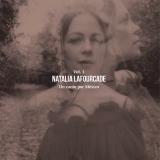
Un Canto por México, Vol. 1 is the eighth studio album by Natalia Lafourcade. The album was part of a project destined for the reconstruction of the Centro de Documentatión del Son Jarocho at Jáltipan de Morelos, a cultural building that was damaged after 2017 Puebla earthquake on 19 September 2017.
The album was a great success and gave Lafourcade three Latin Grammy Awards and the album also won the Best Regional Mexican Music Album at the 63rd Annual Grammy Awards.
Un Canto por México, Vol. 1 is available as a limited edition of 2000 individually numbered copies on yellow vinyl, packaged in a gatefold sleeve, with printed inner sleeves
“III” is an intimate, cinematic and dream-like body of work — written, produced and mixed by Morita Vargas, and recorded in Buenos Aires between 2014 and 2025. The album was mastered by Rafael Anton Irisarri at Black Knoll Studio (NY), adding depth and clarity to its carefully built sonic landscape.
The visual world of the record is an essential part of the release. The cover artwork was crafted by Juliana Guglielmi, Ariadna Aylen Barrios, and Noelia Garreffa, whose combined vision creates a unified visual narrative that reflects the album’s emotional depth and atmospheric essence. The LP layout and full manufacturing realization were carefully executed by Ilja Tulit, translating the complex design ideas into their final tangible form of a vinyl release.
“III” marks a special release for Hidden Harmony Recordings. Morita Vargas was among the first artists released when the label began in 2020–2021, and her work played an important role in shaping the spirit and direction of Hidden Harmony.
Coloured vinyl reissue of Jungle Rot's fourth studio album, Fueled By Hate, delivering a solid slab of mid-paced death metal that prioritizes crushing rhythm over fret-shredding histrionics.
- 1: Intro
- 2: I Cut Up Rough
- 3: Bitch In A Bullet Belt
- 4: In The Night Back In The Day
- 5: I Can Hear The Angels Cumming
- 6: Motorboatin
- 7: I Fucked Her Mind
- 8: Motorboatin
- 9: I Fucked Her Mind
- 10: Killed To Death
- 11: Beer Monkeys
- 12: Doomhill
- 13: Into It
- 14: Fullmoon Crazy
Geboren im Sommer '96/'97 - dem Jahr des Höllenschweins - brannten Mustang als soziales Experiment aus der Innenstadt Tasmaniens heraus. Sie kamen mit ziemlich viel davon, andere hätten für weniger wohl nicht mehr gleich ausgesehen.Sie sauf-ten, machten Sachen kaputt und brachten dieses Chaos in das Schreiben von Banger-Songs - während sie sich bei den ,Proben" XXX Ales reinzogen und bei sehr wichtigen ,Bandmeetings" Protokolle führten.Mustang schütteten Benzin über ihre tasmanische Ödnis, bevor sie 7,69 Millionen Quadratkilometer Landmasse der Erde in sich aufsogen und dort ,dominierten", auf die einzige Art, die sie kannten: laut, wütend und zu ihren eigenen Bedingungen - und nahmen dabei Horden williger Partygänger mit auf die Reise.Über drei Non-Studio-Alben und eine Handvoll kleiner Veröffentlichungen hinweg bauten Mustang einen Katalog auf, der von Bier, Speed und störrischer Unabhängigkeit geprägt war. Kein Glanz. Kein Trendgehechel. Kein Buckeln vor dem Mann. Sie ritten ein, tranken, was da war, und hinterließen klingelnde Köpfe.Cut Up Rough (2015) war ihr Schwanengesang - geboren in einer Heuscheune am ausgefransten Rand von Tasmaniens Rock-Hochburg. Aufgenommen über zwei schlaflose, bierselige Tage wurde das Album mit improvisierten Drum-Takes, aufgedrehten Gitarren und purem Instinkt in die Existenz gerissen. Die Band lebte während der Aufnahmen buchstäblich in der Scheune - schiss ins Gras, schlief zwischen leeren Dosen, und ließ Isolation und Absurdität direkt in billige Mikrofone bluten.
PRODUCED BY: Winston Edwards RECORDED AT: King Tubby's Recorded approximately 1973-1975, mixed by King Tubby.
Seminal dub album
Death Is Not The End collaborate with Uzbek label Maqom Soul to deliver an LP counterpart to last year's mixtape of the same title, compiling specially picked & fully licensed individual belters from the ex-soviet studios of Central Asian republics between 1978 and 1989 - incl. Uzbek, Tajik, Kurdish & Uyghur artists pulling traditional folk motifs together with pop & rock and psych elements.
"These recordings do not form a smooth or coherent history. They feel more like a sequence of discoveries made at different moments and in different circumstances. Songs and instrumental pieces that once lived inside specific contexts radio broadcasts, philharmonic programs, touring routes now sit side by side, revealing hidden connections as well as clear fractures between them.
Nasiba Abdullaeva appears here as a voice from the end of an era. Trained within a conservatory system, she worked inside the format of the Soviet pop song while filling it with melodic logic that did not come from Moscow or Leningrad. Her voice is soft and sustained, shaped by Eastern melisma, and it never functions as decoration. Even in tightly structured songs there is a sense of resistance, an effort to preserve a musical language rooted in Uzbek tradition rather than fully adapted to an all Union standard.
The ensemble Sintez, later renamed Navo, represents a different path. Beginning as a student rock group, the band was gradually absorbed into the official VIA system with all its limitations and compromises. Yet it was precisely within those boundaries that Sintez and Navo developed a recognizable sound. Electric guitars and jazz rock harmonies do not overpower the folk material but remain in tension with it. Their recordings feel like negotiations between what the musicians wanted to play and what they were allowed to perform.
The Tajik ensemble Gulshan reflects an institutional approach carried to a high professional level. Formed under television and radio structures, the group treated folk material almost as a written score. Carefully constructed arrangements, close attention to orchestration, and restrained use of pop techniques define their sound. There is less spontaneity here, but a strong sense of discipline and structure, where national melody becomes part of a carefully controlled sonic framework.
Koma Wetan occupies a very different space. Formed in the 1970s, this Kurdish rock group approached poetry and folklore as tools of cultural assertion. Their psychedelic rock never feels like a stylistic borrowing. Instead it functions as a contemporary vessel for language and themes that might otherwise have remained unheard. Even today these recordings sound fragile and stubborn at the same time.
The Uyghur ensemble Yashlik, closely connected to a musical drama theatre, operated somewhere between stage performance and popular music. Their songs are built on folk melodies but shaped for wide audiences. What emerges is a constant attempt to preserve the recognizability of Uyghur musical identity without freezing it in a folkloric frame. Yashlik's music exists in a state of balance between representation and development.
Digging Central Asia does not attempt to establish hierarchies or offer a single wayof listening. Names and dates matter less than the sound itself. Tape noise, abrupt transitions, and unexpected timbres remain part of the material rather than flaws to be corrected. This music existed at the crossroads of multiple routes geographic, cultural, and ideological. Heard today in a new context, it no longer feels peripheral. Instead it stands as a reminder that the history of popular music is far more fragmented, layered, and polyphonic than it is usually allowed to be."
Un Canto por México, Vol. 1 is the eighth studio album by Natalia Lafourcade. The album was part of a project destined for the reconstruction of the Centro de Documentatión del Son Jarocho at Jáltipan de Morelos, a cultural building that was damaged after 2017 Puebla earthquake on 19 September 2017.
The album was a great success and gave Lafourcade three Latin Grammy Awards and the album also won the Best Regional Mexican Music Album at the 63rd Annual Grammy Awards.
Un Canto por México, Vol. 1 is available as a limited edition of 2000 individually numbered copies on yellow vinyl, packaged in a gatefold sleeve, with printed inner sleeves
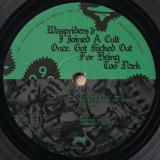
Straight out of Toronto, Waspriders )) issue an ultimatum to the current state of things - smashing heavyweight bass music into the sonic DNA of transcendental techno raves. Modern esoteric experience, engineered for those who know how to lose themselves on a sweaty dance floor. Tss - stay quiet when the bass talks. Bass is the source of truth. Bass is your new god! Behind Waspriders )) are two unhinged creative minds - Danny Voicu (aka Dan Only, ½ Cloudsteppers) and Alex Pletnev (aka Pletnev, Moisk). These transmissions started taking shape in a Toronto studio back in 2024. Toronto's own Cindy Ciel - also ½ of Cloudsteppers - blessed the EP with a body-moving banger of her own.