It has been almost 30 years since Mantris shared music with the world. Together with his good friend Christoph Waelkens, the producer was the driving force behind pioneering house outfits The Black Sun and Brown Hardware Inc. Their creative connection led to three consecutive releases in 1992 on cult label Elektron, a short-term sublabel of USA Import Records. A productive music career was forecasted, but Mantris vanished into thin air and no more music was ever heard of him.
Until early 2020, when Brussels based Kong DJ got his hands on a mysterious playlist. Sent from Bombay in India, little information was annexed apart from a reference to the above mentioned records Mantris produced - favorites in Kong’s record bag for many years. Blown away by what he heard, the DJ decided to launch a new record label and invited good friends Hill Men to join forces. Borrowing the original playlist’s title ‘Souvenirs From Imaginary Cities’ as label name, their first release is what you hold in front of you.
mantris, real name Dirk Eggermont, prefers to stay under the radar. In his small apartment in Bombay he hasn’t stopped making music ever since he left Belgium twenty years ago. He composes instinctively, far away from hypes and contemporary scenes, creating intriguing and timeless jams. Utterly cinematic, his story-telling is rich and phantasy provoking. Each of the 10 tracks pencils a singular atmosphere, yet the 40 minutes entirety comes as a coherent whole full of surprising sounds and meandering dreams. Close your eyes for a unique musical vision here offered as a 12” album, reminiscing of the finests UK leftfield experiments, Detroit future sounds of jazz and sophisticated house not house.
Поиск:sub love
Все
There is a blink-and-you’ll-miss-it anecdote tucked into one of
the many fine documentaries about seminal 20th Century artist
Jean-Michel Basquiat regarding the habits of his studio practice.
As we watch inspiring footage of Basquiat darting from one
piece to the next with rapid-fire brush strokes, a friend or
gallerist in a voice over says that it was not unusual for
Basquiat to be working on several paintings in the same
moment as several radio stations and televisions played in the
background. Not much more time is spent on the anecdote but
it feels like a skeleton key into Basquiat’s endlessly alluring,
neoexpressionist work.
And while Bryan Devendorf’s solo curio ‘Royal Green’ doesn’t
possess the only-in-New York vibe of Basquiat’s work, there is
something shared in its many-channels-open style of creation.
Satellite signals, strange voices from lost television
documentaries and radio operas are all woven into its fabric -
like it’s using these endless tides of media and information to
unlock the subconscious. Even its covers - Bob Dylan,
Fleetwood Mac, The National (with a nice big wink), The
Beatles - are like stunning, albeit satanic takes on hymns, or
like American standards almost dragged into the underworld.
Like the best of Spacemen 3, Sparklehorse or massively
underrated San Fran band Skygreen Leopards - the music
makes you queasy in one movement and lulls you into
blissmode in the next. It’s the very edge of outsider pop
songwriting.
For all the amphitheaters and festival fields Devendorf has
played to over his career, ‘Royal Green’ almost feels like an unlearning and a newfound love of homemade/found/fractured
sounds - and how, if collaged just so, detritus can become
stunningly gorgeous and surreal. And not without hooks. Look
no further than ‘Frosty’, which could be Little Billy Corgan’s
decayed demo tape from just before the Smashing Pumpkins
appeared on the scene. And the unspooling, slightly unglued
dream-pop of ‘Breaking the River’ is as rapturous as it is
sinister. And that’s probably where Devendorf wants it.
In the 2000’s Chee Shimizu helmed an untouchable Tokyo DJ collective called Discossession alongside Dr Nishimura (House music buyer for Cisco Records at the time). Balancing out this unit were a young Scotsman-abroad named Jonny Nash (who’d later form Sombrero Galaxy ESP001 and Gaussian Curve as well as the Melody As Truth imprint), and the late guitar virtuoso and tattoo artist Zecky. Formidable DJs and multi-talents on the Tokyo scene, Discossession released two EPs on Kenji Takimi’s Crue-L imprint and various mixes individually on lovefingers, all holding well-deserved eternal cult status. Chee’s Denshi Meisou 2006 and Follow My Dream 2007 for Lovefingers as well as his legendary “listening sessions” at HiFi lounge SHeLTeR in the Tokyo suburb of Hachioji, laid foundation for what would become known to his followers as “Organic Music” or “Obscure Sound”, the former extending as the name of his record shop and the latter as the title of his 2013 book.
Obscure Sound chronicled his tastes in detail and has since become a sort of diggers bible for peers and younger generations. At the ESP Institute’s inception in 2009, Shimizu contributed two tracks to Lovefingers’ Concentration Vol 1 compilation as apéritifs to a later release. “Later” eventually became “forever” and the mythical piano track (appearing only as a demo on Golden Age and Dekmantel 061) is still, to this day, not ready for formal release. Skip a dozen years, musical interests and major life changes, and Chee has now unveiled something quite special in accordance with his Obscure Sound—rather than making new out of old rope, he presents a collaboration with Tokyo guitarist miku-mari a.k.a. Takahiro Matsumura. The artists frequently collaborate at the experimental audio/visual event, Sacrifice, held irregularly at Tokyo’s ForestLimit, and in 2018 when Chee was invited to DJ at Japan’s only Ambient festival Camp Off-Tone, he and miku-mari endeavored to expand these works into a 2-hour improvised performance. Chee collaged various percussion samples and personal field recordings utilizing four CDJs, supplementing with live windchimes and Andean chajchas, while miku-mari coupled a guitar-controlled synthesizer, Sound Tube software (developed by Japanese Ambient composer Hiroshi Yoshimura) and more live elements such as Tibetan bells and pyramid crystals. Rehearsals for this performance were held prior to the festival at ForestLimit, recorded as multi-tracks and edited into these two cerebral Reconstructions.
There is a blink-and-you'll-miss-it anecdote tucked into one of the many fine documentaries about seminal 20th Century artist Jean-Michel Basquiat regarding the habits of his studio practice. As we watch inspiring footage of Basquiat darting from one piece to the next with rapid-fire brush strokes, a friend or gallerist in a voice over says that it was not unusual for Basquiat to be working on several paintings in the same moment as several radio stations and televisions played in the background. Not much more time is spent on the anecdote, but it feels like a skeleton key into Basquiat's endlessly alluring, neoexpressionist work. And while Bryan Devendorf's solo curio `Royal Green' doesn't possess the only-in-New York vibe of Basquiat's work, there is something shared in its many-channels-open style of creation. Satellite signals, strange voices from lost television documentaries and radio operas are all woven into its fabric _ like it's using these endless tides of media and information to unlock the subconscious. Even its covers _ Bob Dylan, Fleetwood Mac, The National (with a nice big wink), The Beatles _ are like stunning, albeit satanic takes on hymns, or like American standards almost dragged into the underworld. Like the best of Spacemen 3, Sparklehorse or massively underrated San Fran band Skygreen Leopards _ the music makes you queasy in one movement and lulls you into blissmode in the next. It's the very edge of outsider pop songwriting. For all the amphitheaters and festival fields Devendorf has played to over his career, `Royal Green' almost feels like an un-learning and a newfound love of homemade/found/fractured sounds _ and how, if collaged just so, detritus can become stunningly gorgeous and surreal. And not without hooks. Look no further than "Frosty" which could be Little Billy Corgan's decayed demo tape from just before the Smashing Pumpkins appeared on the scene. And the unspooling, slightly unglued dream-pop of "Breaking the River" is as rapturous as it is sinister. And that's probably where Devendorf wants it.
Discodelic presents the second release in this series of exclusive 45 RPM records. From the Caribbean coast of Costa Rica, province of Limón, the town of Cahuita, we present you with the incredible BOCARACÁ!
Bocaracá is without a doubt a gem from Caribbean Central America, bridging a spectacular concoction of Psychedelia with Afro Latin rhythms. Created by Isidor Asch and Luis Jákamo, two restless "limonenses", who were on the path of discovering their Latin musical roots since childhood, while also experimenting with soul and Rock in their own compositions. Together and on their own, they have written a big chunk of the history of Soul in Costa Rica with their subsequent outstanding groups: Marfil, Grupo Stop, and Manantial.
This limited edition is part of a project that has been in the making for several years. This is a labor of love and respect for the music of this singular band. Four “maes” who were known as “the only hippies in Limón” in their hometown.
This reissue includes historic material that was originally recorded between 1973 and 1974 in Audio Centro, a recording facility in San José. It’s a priceless and important document, a window to what was happening with music in the largely abandoned and forgotten province of Limón, where a musical revolution was cooking in the early ’70s, and where Bocaracá was the cornerstone.
Get to know the full story of Bocaracá in the special liner notes included in the release, prepared with love for all of you, featuring band anecdotes and photos.
The five members of Sun June spent their early years spread out across the United States, from the boonies of the Hudson Valley to the sprawling outskirts of LA. Having spent their college years within the gloomy, cold winters of the North East, Laura Colwell and Stephen Salisbury found themselves in the vibrant melting-pot of inspiration that is Austin, Texas. Meeting each other while working on Terrence Malick's 'Song to Song', the pair were immediately taken by the city's bustling small clubs and honky-tonk scene, and the fact that there was always an instrument within reach, always someone to play alongside. Coming alive in this newly discovered landscape, Colwell and Salisbury formed Sun June alongside Michael Bain on lead guitar, Sarah Schultz on drums, and Justin Harris on bass and recorded their debut album live to tape, releasing it via the city's esteemed Keeled Scales label in 2018. The band coined the term 'regret pop' to describe the music they made on the 'Years' LP. Though somewhat tongue in cheek, it made perfect sense ~ the gentle sway of their country leaning pop songs seeped in melancholy, as if each subtle turn of phrase was always grasping for something just out of reach. Sun June returns with Somewhere, a brand new album, out February 2021. It's a record that feels distinctly more present than its predecessor. In the time since, Colwell and Salisbury have become a couple, and it's had a profound effect on their work; if Years was about how loss evolves, Somewhere is about how love evolves. "We explore a lot of the same themes across it," Colwell says, "but I think there's a lot more love here." Somewhere is Sun June at their most decadent, a richly diverse album which sees them exploring bright new corners with full hearts and wide eyes. Embracing a more pop-oriented sound the album consists of eleven beautiful new songs and is deliberately more collaborative and fully arranged: Laura played guitar for the first time; band members swapped instruments, and producer Danny Reisch helped flesh out layers of synth and percussion that provides a sweeping undercurrent to the whole thing. Throughout Somewhere you can hear Sun June blossom into a living-and-breathing five-piece, the album formed from an exploratory track building process which results in a more formidable version of the band we once knew. 'Real Thing' is most indicative of this, a fully collaborative effort which encompasses all of the nuances that come to define the album. "Are you the real thing?" Laura Colwell questions in the song's repeated refrain. "Honey I'm the real thing," she answers back. They've called this one their 'prom' record; a sincere, alive-in-the-moment snapshot of the heady rush of love. "The prom idea started as a mood for us to arrange and shape the music to, which we hadn't done before," the band explains. " Prom isn't all rosy and perfect. The songs show you the crying in the bathroom,, the fear of dancing, the joy of a kiss - all the highs and all the lows." It's in both those highs and lows where Somewhere comes alive. Laura Colwell's voice is mesmerising throughout, and while the record is a document of falling in love, there's still room for her to wilt and linger, the vibrancy of the production creating beautiful contrasts for her voice to pull us through. Opening track 'Bad With Time' sets this tone from the outset, both dark and mysterious, sad and sultry as it fascinatingly unrolls. "I didn't mean what I said," Colwell sings. "But I wanted you to think I did." Somewhere showcases a gentle but eminently pronounced maturation of Sun June's sound, a second record full of quiet revelation, eleven songs that bristle with love and longing. It finds a band at the height of their collective potency, a marked stride forward from the band that created that debut record, but also one that once again is able to transport the listener into a fascinating new landscape, one that lies somewhere between the town and the city, between the head and the heart; neither here nor there, but certainly somewhere.
Soul Intent delivers his second studio album, this time on Dope Plates, the 90s influenced sub-label for his Lossless Music imprint.
"Everything And Nothing" sees Soul Intent reach back 25 years to the sounds and vibes that soundtracked his teenage years in the mid 90s. It was this period when he first discovered rave and jungle through his brothers CD collection, MTV's Party Zone and Dreamscape tape packs, which were being passed around at school.
Some of the track names refer to memories from this era including "Standard Deluxe" (a long since defunct skate/surf clothing brand) and "Tribal Gathering" - the legendary 1993 rave put on by event organisers Universe.
“The album title ADELA comes from a song by Rodrigo which constitutes the emotional culmination of our duo’s programme. What counts is not the name, but the person we love and long for. Everyone certainly has such a person, and so we hope that each listener will find something close to his or her heart on our album.
The piano and classical guitar virtually never collaborate in music. However, after our first joint performance with Łukasz Kuropaczewski, we immediately realised that we could create intriguing music worlds together. We followed the same line of thinking in our choice of programme, which derives from both the piano and guitar repertoires, though the spirit of the South that informs most of that music is more typically associated with the guitar tradition. In my arrangements of classical works, I strove to represent the sonic qualities of both instruments, their unique expression, and cultural associations. I reworked Domenico Scarlatti’s famous “Sonata in D Minor (Toccata)” K. 141 so as to bring out its Spanish roots. Titled “Domingo” on our album, it features distinctive flamenco qualities and an improvised layer. The “Aranjuez Concerto BWV 1056” is, as its very name suggests, a fusion of the world’s most famous piece for guitar and orchestra, Joaquin Rodrigo’s “Concierto de Aranjuez”, with Johann Sebastian Bach’s “Keyboard Concerto in F Minor” BWV 1056. Themes from the second, slow movements of both concertos interlink here as in the film cross-cutting technique, and we swap roles, Łukasz leading the Bach theme while I take up Rodrigo’s.
Three of the works on this album have been enriched by the angelic voice of Jakub Józef Orliński. In these three, Egberto Gismonti’s guitar composition “Água e Vinho”, my own “Quarantine Song”, and even the famous “Adela” by Joaquin Rodrigo, the voice has been treated more as an instrument than a lyrical subject. “Quarantine Song” was composed during the COVID-19 quarantine in 2020 specially for Jakub Józef Orliński as its performer. “Pedro” was inspired by the films of Pedro Almodóvar.
[c] A3. Água e Vinho [feat. Jakub Józef Orliński] - Egberto Gismonti
[f] B2. Quarantine Song [feat. Jakub Józef Orliński] - Aleksander Dębicz
[h] B4. Adela [feat. Jakub Józef Orliński] - Joaquín Rodrigo
"Over the years, I have had the absolute pleasure of meeting countless wonderful people in every corner of this beautiful planet, and a lot of times these music enthusiasts have expressed a very similar-sounding story. That our presence – whether it be via a studio recording or our ferocious show – is capable of transporting them to a better place and washing away all earthly worries. Doesn't this sound amazing – especially during these challenging times?"
This gentle voice belongs to the vocalist-guitarist Jonne Järvelä, who happens to be the creative force behind the unique Finnish ensemble KORPIKLAANI. Having experienced multiple triumphant years within the inner circle of folk-influenced heavy metal, Jonne now acknowledges his position as one of the most recognisable artists ever coming from the land of a hundred thousand lakes.
KORPIKLAANI – preceded by Jonne's own project SHAMAANI DUO (1993-1997) and the band SHAMAN (1997-2003) – was founded somewhere deep in the primeval northern forests in 2003. Ten celebrated studio albums, numerous world tours and hundreds of millions of digital streams alongside multiple other releases, have established KORPIKLAANI’s status as one of the leaders of innovative heavy music. For their diehard legion of fans, they are known as Folk Metal Superstars.
"I have always been fascinated by ancient Lappish/Samish culture and the infectious melodies of aged folk songs. However, that's only one side of the coin as I have loved rip-roaring metal since I was a frantic kid looking for some rebellious sounds. My butt was kicked by the likes of MOTÖRHEAD, IRON MAIDEN and JUDAS PRIEST", says Jonne.
"Since the early 2000s, KORPIKLAANI has combined these elements as we have tirelessly attempted to pump new life into the ancient tales of joy and heartbreak, and added the enormous energy of current heavy metal into that folk metal melting pot.We have always been on a mission to create something new and unprecedented."
Here and now, KORPIKLAANI’s fearless journey continues on – and this time, the journey is powered by rather serious subject matter. Their eleventh full-length studio record "Jylhä" (which has no direct translation but can be described as majestic, or wild and rugged in a beautiful way) brings all the well-known and essential ingredients to the table: heavy-duty guitar riffing, rhythmic folk melodies and more.
What about the tales of the wilderness then? The fascinating and miscellaneous tales have always been a crucial part of KORPIKLAANI’s journey within the realms of unspoiled Finnish nature, ancient Scandinavian myths, shamanistic voyages and beyond. "Did I already mention that "Jylhä" offers some new angles?", the singer/guitarist laughs. "Well, lyrically, there are definitely some previously unknown passages – such as fables connected to the infamous Lake Bodom murders in Southern Finland in early 1960s."
KORPIKLAANI’s long-time lyricist Tuomas Keskimäki – the renowned Finnish poet and author, comments: "When I am coming up with narratives, interesting wordplays and other ideas for KORPIKLAANI, I often feel like I am diving into some absorbing fantasy world. I would describe this state of mind as some kind of a deep trance", says Keskimäki.
"As a whole textual piece, "Jylhä" is rather widespread. For example, there are stories about the fragility of life, revealed by using nature metaphors. ‘Miero’ is one of these tales: after all, it's a fact that the lifetime of a human being is just one blink of an eye compared to the eternal aeons of the cosmos."
"On the darker side, there are several murder songs - I wasn't really planning these rather untraditional lyrics, they just happened... One of these is ‘Kiuru’, and that story is inspired by a famous Finnish double homicide case, which took place in the small village of Tulilahti in 1959. In these lyrics, the character called Kiuru – Skylark in English – acts as eyewitness and a prophet, but at the same time, this creature also functions as an allegory of many things... All in all, I am really happy with the lyrics and all these new themes!"
When asked about his current sentiment regarding the new KORPIKLAANI opus "Jylhä", the commander of the forest clan sighs and smiles. "Using "Jylhä" as our solid steppingstone, we are able to reach completely new heights. For me, it's crystal clear that KORPIKLANI has never been better."
It is a fitting album for our dark times, summed up well by the song ‘Huolettomat’ (The Careless). It talks about living in the present moment, alongside a story of joy and celebration. Today is today, tomorrow is uncertain.
- 1: So Young
- 2: Animal Nitrate
- 3: She’s Not Dead
- 4: Moving
- 5: Pantomime Horse
- 1: The Drowners
- 2: Sleeping Pills
- 3: Breakdown
- 4: Metal Mickey
- 5: Animal Lover
- 6: The Next Life
• Released in March 1993, “Suede” was the fastest-selling debut album ever in the UK.
• Available on vinyl for the first time in the US, the album contains what Rolling Stone called “its triptych of instantly classic singles” - “The Drowners”, “Metal Mickey” and “Animal Nitrate”.
• At the time, the album’s release in the US was hampered by an injunction from an existing US act called Suede. As a result, the band’s subsequent album releases in the US were ‘branded’ as being by “The London Suede”, but the first album was never re-branded.
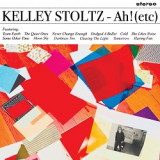
**400 ONLY REPRESS PHOTOLUMINESCENT COLOUR VINYL///!! 200 FOR EUROPE** “I was guzzling wine at my favorite bar in San Francisco, the Rite Spot, and the entertainment that night was some local opera singers singing along with a big video screen showing a collage of various operatic moments with subtitles. One particular subtitle, ‘Ah!-(etc)’ made me laugh, I thought it was a perfect description of life - the joy of existence against the etcetera of it all, the struggle. With a heavy head of rose’ it seemed like ecstatic poetry! I scribbled it on a napkin and thought it might make a good title for something” And so the mystery behind the title of Kelley Stoltz new record is solved. Less of a mystery is the quality contained therein… after 12 self-titled releases and a several more under pseudonyms, Stoltz is the word for “one-man-band-home-recording-pop-songs of idiosyncratic character.” A quick follow up to his more power pop and pub rock LP only “Hard Feelings” offering in the summer, “Ah-(etc)” finds Stoltz returning to his sweet spot, writing songs that never were, but should have been in the 60’s and 80’s.
As with other LPs Stoltz makes virtually every noise on the album which was written and recorded in 2019 at his Electric Duck Studio in. San Francisco. A few friends popped in to play along… Stoltz former bandmate, Echo & the Bunnymen’s Will Sergeant adds electric guitar to “The Quiet Ones” a sort of Scott Walker lyrical take on strangers and neighbors. Karina Denike formerly of Dance Hall Crashers adds gorgeous vocals on the bossanova groover “Moon Shy”, where Sergeant pops up again in a spoken word role on the outro. Allyson Baker of SF’s Dirty Ghosts sings on “She Like Noise”, a song Stoltz wrote for her in celebration of her love of seeing live bands.
The album was mastered by Mikey Young in Australia.
‘Giants of All Sizes’ was recorded at Hamburg’s Clouds Hill Studio, The Dairy in Brixton, 604 Studios in Vancouver and Blueprint Studios in Salford with additional recording taking place at various band member’s home studios spread across Manchester. As with their previous four studio albums, ‘Giants’ was produced and mixed by Craig Potter. Guests across the album include Jesca Hoop, The Plumedores and South London newcomer Chilli Chilton.
Given such bleak, if ultimately redeemed, subject matter, it is also, perversely, the most relaxed record which elbow have made in some time. On ‘Giants of All Sizes’, each band member extended their usual process of working on demos alone and followed their vision to its conclusion rather than, as Craig Potter puts it, ‘taking the edges off things to find compromise’. In tandem with this, they returned to playing live in the studio, encouraged to experiment with the banks of analogue equipment at Clouds Hill in Northern Germany, giving songs a looser, more live feel. The result is the most starkly dynamic record from the band in recent times, “Sonically unabashed”, as Guy would have it. Whilst album closer ‘Weightless’ has the gossamer melodies and communal harmonies for which the band have latterly been known, this album echoes earlier elbow work at times whilst also breaking new ground.
‘White Noise White Heat’ is motorik, metal machine soul driven by a vocal that is rage incarnate, ‘Doldrums’ mixes John Carpenter with The Plastic Ono Band to brilliantly disturbing effect and ‘On Deronda Road’ hitches stark bass beats and glitches to an ad-hoc choir. ‘Empires’ delivers dark resignation via an insidious melody and ‘Seven Veils’ continues the subversion by inverting the perception of elbow as a band for lovers into a band for haters, a double-barrelled fuck-you song par excellence. ‘The Delayed 3:15’ marries mariarchi guitars to jazz dynamics, Morricone via Buddy Rich, and ‘My Trouble’ is a clockwork, analogue shuffle housing a delicate melody that builds over the course of the song into a fragile monolith to the power of love.
Lead track, ‘Dexter & Sinister’, released on 10” ahead of the album, encapsulates the whole. A seven-minute musical journey that blends deep bass grooves, sudden keyboard stabs, dislocated piano and guitar runs and soul stylings then abruptly shifts gear, parts the storm clouds and takes wing, flying towards the heat of the sun. It is the soundtrack for these ‘hope free, faith free, charity free days’, a denial of the divine and a reconciliation, two songs in one song, two emotions for one emotion, human, fragile and brilliant like the album which it opens.
one of the very rarest underground folk rock private pressings with just one hand made copy known to exist, ntp perform a delicate and complex pop inflected downtempo folk with arch wit and charm, at times very reminiscent of the brilliant and largely forgotten Jimmy Campbell. the masterpiece 'Miranda' is lovelorn and infectious in its bittersweet melody, and all the songs are very subtle and understated, the lyrics often tackle deliberately mundane subjects in a poetic and clever way, much like the aforementioned Campbell. Acoustic Guitar, Piano and vocal...its folky pop and hard to categorise, with outstanding compositions.
- A1: Top Of The Pops
- A2: Time Will Tell
- A3: Punk A Go Go
- A4: Disco Zombies
- A5: Tv Screen Existence
- B1: Drums Over London
- B2: Heartbeats Love
- B3: Here Come The Buts
- B4: Mary Millington
- B5: Where Have You Been Lately, Tony Hateley?
- C1: The Year Of The Sex Olympics
- C2: Target Practice
- C3: New Scars
- C4: Greenland
- C5: Paint It Red
- D1: Night Of The Big Heat
- D2: Lho
- D3: Paint It Red #2
- D4: Lenin’s Tomb 5 Hit
It was 1977, there may well have been “knives in West 11”, but at a student’s hall of residence in Leicester, a packed room of cross legged intellectuals were about to witness the debut of The Disco Zombies; Andy Ross on vocals and guitar, Geoff Dodimead on bass, Johnny ‘Guitar’ Hawkins on guitar and Andy Fullerton on drums. They were loud, fast and they had some witty one-liners.
The four-piece became five with the addition of Dave Henderson from The Blazers, a chirpy power pop punk quintet, who were part of a burgeoning scene in the city that included The Foamettes, Dead Fly Syndrome, Wendy Tunes, The RTRs, Robin Banks And The Payrolls and many more. Wine bars, canteens and bowling alleys in pubs were the home of this phenomenon until Subway Sect and The Lou’s arrived for The Great Unknown Tour. They needed a local band for support and the Disco Zombies obliged.
Record Shop owner - and now Mayor Of Mablethorpe - Carl Tebbutt was keen to ride the punk rollercoaster and decided to launch Uptwon Records with a Disco Zombies EP. Recorded in Chester in one four hour session, it included The Blazers’ ‘Top Of The Pops’ and Andy’s ‘Time Will Tell’, ‘Punk A Go Go’ and ‘Disco Zombies’.
Carl had done a deal with a one-stop music production company who went bust almost immediately and the record was shelved. Unperturbed the band pressed on and recorded a session at the local radio station, ‘TV Screen Existence’ being the only track that survived. A tour of Leicester – five pubs in five days – was the end of that era and the band without Johnny ‘Guitar’ who had another year to do at Uni, relocated to London taking with them The Foamettes’ guitarist Steve Gerrard who wisely returned to Leicester and become part of The Bomb Party. Steve was replaced by Mark Sutherland in what was to become the recognised line up of The Disco Zombies for several years, playing lots of London gigs from The Hope And Anchor to The Moonlight Club, North London Poly to the Scala.
By 1978, there was an eruption of small DIY indie labels and Andy Ross launched South Circular Records to release the band’s debut single, ‘Drums Over London’ - an ironic stab at people’s hostility to the arrival of other cultures, a piss-take of Spear And Jackson-wielding Tory attitudes. John Peel played it regularly until Rock Against Racism complained even though Peel explained that it was actually supporting their views. Ho hum. South Circular wasn’t to last but Dave Henderson launched Dining Out. Dave and Andy journeyed to Ipswich to record the debut EP from the Peel-approved Adicts, the plan being to follow it with a Disco Zombies’ single and regain momentum. ‘Here Comes The Buts’ was the second Dining Out release, featuring the breakthrough Dr Boss drum machine; it was greeted with great enthusiasm in some quarters, although strangely it was likened to The Cramps meets Neil Young in NME.
Dining Out was always just one step ahead of going out of business and even though the follow up had been recorded - ‘The Year Of The Sex Olympics’, backed with ‘Target Practice’ and ‘New Scars’ – it never saw the light of day as the money finally ran out.
Somehow, Dining Out had a second lease of life and Andy wanted to record a new track for a new release amid 45s from The Sinatras, New Age and Spit Like Paint. By now, the Zombies had been through their dark post punk phase and ‘Where Have You Been Lately Tony Hateley’ was a clever upbeat anthem which told the tale of the nomadic footballer. The test pressing gained many Peel minutes but by the time it was ready to release, the band had finally split up. It eventually saw the light of day on the Cordelia label’s ‘Obscure Independent Classics’ album. Very fitting.
So, it was 1980: Mark Sutherland opened a studio in Bow, Dod got a day job, Andy Fullerton already had one. Andy and Dave went a bit experimental in Club Tango; Andy eventually discovering Blur for Food which he started with The Teardrop Explodes’ David Balfe, while Dave flirted with Worldbackwards.
In 2011, the drum machine line up descended on Mark’s studio, rehearsing for a show at the Bull And Gate. They recorded two of their lengthier tracks – ‘Night Of The Big Heat’ and ‘LHO’ powered by a waning Dr Rhythm – these were pressed as an extremely limited edition ten-inch. A few years later Andy Fullerton returned to the fold recording three more originals ‘Hit’, ‘Lenin’s Tomb’ and ‘Paint It Red’ for an even more limited edition ten-inch in 2018 and a show in October that year at The Dublin Castle.
Since then, meandering lunchtime discussions in restaurants that were popular in the ‘70s (Joe Allen, Café De Pacifico, etc) have led to arguments about the lost tracks – ‘Man From UNCLE’, ‘I Need You Like I Need VD’, ‘Throwaway Line’, ‘I Thought You Were Only Joking’, ‘London Nights’, ‘Cosmetics For China’, ‘When Doo Wop Hit Hampstead’. It’s only a matter of time. Until then.....
- A1: Celima
- A2: Du Vent Dans Les Voiles
- A3: La Vie À Bord
- A4: Marche Dans La Montagne
- A5: Enterrement De Said Ali
- A6: Générique
- A7: La Mer, La Nuit
- A8: Pêcheur De Perles
- A9: Les Plus Belles Perles Du Monde
- A10: Thème De L’adieu (Final)
- A11: Générique (Version 2)
- B1: Mafia Au Moyen-Orient
- B2: Hadji
- B3: La Pêche
- B4: Amina
- B5: L’esclave Gabré
- B6: Les Pirates
- B7: L’enlèvement
- B8: L’évasion
- B9: Désert
- B10: Amina (Version 2)
Transversales Disques presents for the first time on LP, François de Roubaix’s full score for the French TV series Les Secrets de la Mer Rouge, an adaptation of the epic travel, through the Middle East, of the famous writer and explorer Henri de Monfreid. This album is a collection of the original (1967) themes and those recorded later in 1975 when the TV series was continued.
In the 1967 soundtrack, de Roubaix uses various flutes, marine conches, and for underwater views, unexpected instruments such as a celesta or a crystal xylophone. By 1975, electronic technology had dramatically developed and this evolution is clearly apparent when one listens to the recordings of the two seasons. For the later 1975 series, de Roubaix composed a new music score, mixing old and new sounds, a great combination of EMS VCS3 synthesizer subtly mixed with acoustic instruments.
For François de Roubaix, there was never a border between fiction, life and music, and writing music for Les secrets de la Mer Rouge was an extension of his love of the open sea.
• The Creation was formed in 1966 from beat combo The Mark Four, and was quickly signed to a production deal with Shel Talmy, The Who’s producer. The first release was the urgent “Making Time”, which featured guitarist Eddie Phillips playing his guitar with a violin bow, two years before Jimmy Page started doing so.
• In January 1985, The Mark Four reformed for a one-off show in Cheshunt, and subsequently Eddie Phillips and original lead vocalist Kenny Pickett reunited to make some new Creation recordings. At the time, only two tracks – “Spirit Called Love” and a new version of “Making Time” – were issued as a single in 1987, before the record label went out of business. These two tracks plus the remainder of the recordings were finally issued as the album “Psychedelic Rose” in 2004.
• The album is pressed on 140 gram clear vinyl.
[f] B1. Making Time [new version]
James Yorkston and The Second Hand Orchestra release ‘The Wide, Wide River’. The album came to be after the blossoming of a long-term friendship between James Yorkston and Karl-Jonas Winqvist, the Swedish music producer, leader and conductor of The Second Hand Orchestra.
That communal feeling is apparent across the entire album. Recorded and mixed in Sweden over the course of three days, with a selection of musicians Winqvist had brought together, including Peter Morén (Peter, Bjorn & John), Cecilia Österholm (one of Sweden’s best-known nyckelharpa players), Emma Nordenstam (piano & cello) and Ulrika Gyllenberg (violin).
The studio approach with The Second Hand Orchestra was entirely improvised around Yorkston’s songs and the only song they heard in advance was ‘Ella Mary Leather’; Yorkston didn’t want to direct anyone too much but instead allowed for a welcoming, instinctive, free-spirited and joyful atmosphere.
‘The Wide, Wide River’ is a soothing, warm and sublime listen whilst also highlighting Yorkston’s skills for songwriting, collaboration and as a musical conductor. The record takes in past loves, advancing age and friends now gone, whilst also containing some of the most sanguine songs Yorkston has ever made.
Switch is the tenth studio album by Dutch rock band Golden Earring, released in 1975 as the follow-up of the band’s international breakthrough album Moontan. Switch actually marked a switch for Golden Earring, as it was more influenced by funk and prog than any of the band’s previous or subsequent releases. Lead single “Kill Me (Ce Soir)” perfectly demonstrates how Golden Earring experimented with a new sound. This reissue comes with a 4 page insert. Switch is available as a limited edition of 1500 individually numbered copies on transparent blue vinyl.
The first release for Broad Channel is from label head Derek Russo, whose early immersion in house music and long-held love for techno come through in this four-track EP. Primordial Stance, as it’s named, offers techno with a twist; these tracks are leftfield in their approach and yet firmly rooted in a soulful, classic sound. The EP is both cohesive and fully dynamic, presenting a range of styles from rugged, acidic techno to entrancing ambient.
With this EP it’s difficult to pick a standout; each track is distinctive and able to hold its own, offering multitudes to the release as a whole. A through-line is felt in Russo’s original production style, marked by twists and departures that feel original, creating perpetual elements of surprise. Whether introducing new rhythmic structures mid-groove, incorporating raw percussion, or peppering a track with an organic element (i.e. bird sounds) as in the house-infused gem “Ocean Hill Groove”, Russo knows how to keep listeners engaged. “Primordial Stance”, the title track, is a prime example of this interesting layering: metallic percussion and a submerged bassline give way to claps and a hypnotic vocal sample, before ushering in a Recondite-style acid line. “Mosquito Paranoia” is a gritty dance floor requiem, in which crazed synth arpeggiation induces the kind of madness one expects from only the best warehouse parties. A similar kind of synth work is adopted for the send off track, “Long Afternoon of Earth” — a beatless arrangement that rounds out the release and encourages deep listening. These tracks expand and unfurl as they progress, until both ear and body are utterly hooked. Absolutely one for the collection.