
Buscar:sub

- Sunday Morning
- Sun
- Love Songs
- Thoughts
- Don't Go Away
- Take A Picture
- What Can I Give You
- Think Of Rain
- Can You Tell
- Someone I Know
- Love
- California Shake
Auf dieser Tribute-Compilation finden sich Interpretationen von Margo-Guryan-Songs von TOPS, Rahill, Clairo, June McDoom, MUNYA und Kainalu, Frankie Cosmos und Good Morning, Kate Bollinger, Pearl & The Oysters, Bedouine und Sylvie, Empress Of, Barrie, und Margo Price. Die meisten unserer Geschichten über Kultmusiker, die ein oder zwei Alben machen und dann zu verschwinden scheinen, sind von Trauer, Verzweiflung und ausgefranstem Ehrgeiz umrahmt. Nicht so bei Margo Guryan, einer begeisterten Jazz-Ausnahmeerscheinung, die Popmusik verachtete, bis sie 1966 „God Only Knows“ hörte, das ihr ein Fenster zu den Wundern öffnete, die diese Musik-Form enthalten konnte. Nur zwei Jahre später veröffentlichte sie auf dem Album „Take a Picture“ ihre eigenen kleinen Popsinfonien und erntete dafür großes Lob und hohe Erwartungen. Aber da sie sich bereits von dem Posaunisten Bob Brookmeyer hatte scheiden lassen, lehnte sie es ab, ein Musikerleben zu führen und auf Tournee zu gehen oder auch nur darüber zu sprechen. Ihre Zurückhaltung führte dazu, dass „Take a Picture“ bald in den Regalen der Discounter und letztlich in den Mülleimern landete. Sie schrieb weiterhin Songs und nahm noch jahrelang auf, arbeitete sogar mit der Band von Neil Diamond zusammen, aber meistens schien sie mit ihrem relativ privaten Leben zufrieden zu sein. Wie es sich für eine so atemberaubende und subtile Musik gehört, erlebte die 2021 verstorbene Guryan in den letzten sechs Jahrzehnten mehrere Wiederauferstehungen. Und jetzt geschieht es wieder: Kurz nachdem ihre fast geflüsterte und liebeskranke Hymne „Why Do I Cry“ sie 2021, im selben Jahr, in dem sie starb, zum TikTok-Star machte, startete die Numero Group eine Wiederveröffentlichungskampagne, aus der 2024 das hochgelobte Set „Words and Music“ hervorging. Und jetzt haben ein Dutzend Künstler - von denen keiner geboren war, als „Take a Picture“ entstand - das gesamte Album (plus einen Bonustrack) für „Like Someone I Know: A Celebration of Margo Guryan“ neu interpretiert. Empress Of, Margo Price, Clairo, June McDoom: Sie alle bestätigen Guryans Schärfe als Songwriterin und die Brillanz eines Albums, das den Werbezyklus, den Guryan vor so langer Zeit ablehnte, bei weitem übertroffen hat. Guryan wurde in einer weitläufigen Familie in Far Rockaway geboren, als der Ort noch größtenteils von Bäumen umrahmt war. Während ihres Kompositionsstudiums an der Boston University stolperte Guryan in einen Auftritt als Pianistin zwischen den Konzerten des Miles Davis Quintet, unterschrieb einen Vertrag als Songwriterin bei Atlantic Records und verpatzte eine Session mit Nesuhi Ertegun. Aber sie war nicht darauf aus, ein Gesangsstar zu werden. 1959 ging sie an die Lenox School of Jazz in den Berkshires, um für Ornette Coleman und Don Cherry zu schreiben, die Aufmerksamkeit des Dozenten Max Roach zu gewinnen und in Gunther Schuller einen langjährigen Mentor und Freund zu finden. Sie wurde eine versierte Texterin und schrieb nicht nur für Coleman und Nancy Harrow, sondern auch für Harry Belafonte und Gary MacFarland. Aber es war die spätere Begegnung mit den Beach Boys, die Guryan die Tür zu „Take a Picture“ und einer Reihe anderer großartiger Songs öffnete, von denen viele auf „Words and Music“ erschienen sind. „Take a Picture“ ist eine ausgefeilte Bestandsaufnahme der Romantik und Unentschlossenheit der Mittzwanziger, vom koketten Treiben in „Sunday Morning“ und der Verliebtheit in „Can You Tell“ bis zur verzweifelten Hilflosigkeit in „What Can I Give You“. Ihre ewig weiche Stimme, ihre kühne Songkunst und ihre völlige Offenheit: Guryan machte 1968 und darüber hinaus gewagte Musik, egal wie sanft sich diese Klänge zu bewegen schienen. „Like Someone I Know: A Celebration of Margo Guryan“ unterstreicht die Stärke von Guryans Liedern, indem es einem Dutzend verschiedener Künstler erlaubt, sie auf ihre eigene Reise mitzunehmen. Im Laufe der letzten Jahrzehnte ist immer deutlicher geworden, wie gut Guryan war, wie stabil ihre Lieder inmitten der wechselnden Geschmacksrichtungen. „Like Someone I Know: A Celebration of Margo Guryan“ ist eine absolute Bestätigung, ein Zeugnis für die anhaltende Relevanz und Brillanz von Guryans Arbeit. Ein Teil des Erlöses dieses Albums wird für die Bereitstellung von und den Einsatz für erschwingliche reproduktive Gesundheitsdienste gespendet.

13

También disponible
Sparkle Vinyl[28,99 €]

12
Sub Pop and Mudhoney celebrate the barnstorming self-titled debut album by Seattle punk/rock/fuzz/g****e legends Mudhoney, originally released in 1989, with a fresh colored-vinyl pressing. This classic album contains 12 tracks of roaring rock music, including the megahits "This Gift" and "Here Comes Sickness." Mudhoney frontman Mark Arm says "Turn up the tape hiss!!" This special 35th anniversary edition is limited to 1000 copies on Petrol coloured vinyl, YES PETROL, it looks mighty fine, and comes in a single-LP jacket with poster insert!

First time vinyl reissue of Univers Zero's legendary Crawling Wind, originally released in 1981 on the Japanese 'Chaos International Series' label, with the original cover artwork has been beautifully redesigned by Thierry Moreau.
Toujours Plus à l'Est, as the title suggests, is heavily influenced by the traditional music of Eastern Europe, particularly Bulgaria., and paying tribute to the iconic catchphrase of Professor Calculus (Tournesol), the character from the Belgian comic series Tintin. Before The Heat, played live a few times, is an ambient composition by Andy Kirk, who is part of the EP's lineup alongside Daniel Denis, Guy Segers, Alan Ward, and Dirk Descheemaeker. Central Belgium in the Dark is a live improvisation from a period when Univers Zéro dedicated part of their concerts to complete improvisation. What makes this recording unique is that one of Andy Kirk's effects pedals picked up and emitted the sound of a mysterious radio signal, seemingly coming from "nowhere," especially noticeable at the end of the piece. The title of this improv is a nod to contemporary composer Charles Ives' work Central Park in the Dark. Central Belgium refers to the concert venue where the piece was recorded (Haine-St-Pierre).
Univers Zero represents one of the longest-living bands in Belgium. It was established in 1974. Drummer Daniel Denis had the brilliant idea to gather together a team of professionals sharing the same taste for music. The band has adopted an instrumental progressive style. Over the last couple of decades, the band has also implemented a series of influences from chamber music - most commonly, chamber music from the 20th century. Even if the line-up changes a lot over the years, the overall sound of UZ remained fairly consistent.

Brand new remastered version of PENTAGRAM legendary album Sub-Basement in new coloured vinyl and with a brand new cover designed by Solo Macello. Doom is made out of 666 tons heavy riffing, vocals filled with pain, regret and spite as well as leaden song-structures stretched taut to the point of ripping. PENTAGRAM embody all those virtues like no other contender in this oldest of all genres of Metal being founded by none other than Black Sabbath. Many have named PENTAGRAM the true heirs of those originators of Heavy Metal and honourably dubbed them 'the American Black Sabbath'. In this sixth incarnation of the band, Doom lord Bobby Liebling had reunited with drummer Joe Hasselvander, who had already been a member of PENTAGRAM twice before. Hasselvander played all the instruments, while Liebling added his matchless vocals. "Sub-Basement" was the second output of this line-up and is regarded as the most Rock N' Roll effort of the doomsters ever. On top of PENTAGRAM's perfect Doom sound an irresistible groove and capturing catchiness was added, which made the album an all time favourite for many fans. "Sub-Basement" will kick your ass and twist your legs.

Blue jay vinyl, limited to 400 copies. Brand new remastered version of PENTAGRAM legendary album Sub-Basement in new coloured vinyl and with a brand new cover designed by Solo Macello. Doom is made out of 666 tons heavy riffing, vocals filled with pain, regret and spite as well as leaden song-structures stretched taut to the point of ripping. PENTAGRAM embody all those virtues like no other contender in this oldest of all genres of Metal being founded by none other than Black Sabbath. Many have named PENTAGRAM the true heirs of those originators of Heavy Metal and honourably dubbed them 'the American Black Sabbath'. In this sixth incarnation of the band, Doom lord Bobby Liebling had reunited with drummer Joe Hasselvander, who had already been a member of PENTAGRAM twice before. Hasselvander played all the instruments, while Liebling added his matchless vocals. "Sub-Basement" was the second output of this line-up and is regarded as the most Rock N' Roll effort of the doomsters ever. On top of PENTAGRAM's perfect Doom sound an irresistible groove and capturing catchiness was added, which made the album an all time favourite for many fans. "Sub-Basement" will kick your ass and twist your legs.

Most of the writing of Naima Bock's second album, Below A Massive Dark Land, was a solitary affair. It may not sound like it - it's made up of strong, purposeful arrangements with a huge host of musicians, filled with cradling space and warm light. This will also come as a surprise to anyone who has seen Naima perform in the time since the release of her 2022 debut Giant Palm, which was undoubtedly a communal experience. But there's power in the solitary, too. Giant Palm was arranged with collaborator Joel Burton, but going this one alone in search of something that was truly hers, Naima found she was capable of more. "After me and Joel stopped working together", she remembers, "it was an impossibility to even fathom doing arrangements myself but then I started learning violin and it was possible". Finding that she could go it alone was incredibly powerful for Naima: "I think I needed it, to be able to feel proud of something". Beyond the writing process, however, the record is not a stark, stripped back affair. Below_ still has the majesty that made Giant Palm so remarkable. Having tugged the first record down from the skies and spreading it across the earth, Naima finds a newfound vocal power and confidence born from hundreds of hours on stage, and the music sounds fuller, more tangible, and no less enveloping. This can be heard on the album's lead singles: "Kaley" feels fresh and surprising in its rug-pull choppiness but is distinctly Naima in its swinging, jubilant choruses. The accompanying "Further Away" takes a different tack, drawing you in with its simplicity. Finally, the hazy, luxurious beauty of "Feed My Release" draws on the sepia-toned traditions of The Roches, John Prine and Loudon Wainwright III and imbues them with the kind of stark confessional songwriting of Mount Eerie. These are ambitious, rich arrangements that reach deeper and darker lyrically than Giant Palm. Below a Massive Dark Land was predominantly produced by Jack Osborne (Bingo Fury) and Joe Jones, and recorded at The Crypt in north London, with additional production and arrangement by Oliver Hamilton (caroline, Shovel Dance Collective) and Naima herself. Six of the tracks on Below_ were mixed by Jason Agel, with the remainder done by Osborne and Jones. The album was mastered by Kevin Tuffy.

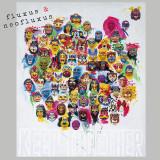
- Milan Knízák - (Maybe) Sonata (1971)
- Henning Christiansen - Mond-Glass-Fiber-Rohr (1986)
- Milan Knízák - Novelties (From The Cycle Processes Mainly For The Space Of Mind) (1978)
- La Monte Young - Piano Piece For David Tudor #2 (1960)
- Philip Corner - Cello Walking - I. Walk The Walk (2017)
- Philip Corner - Cello Walking - Præludium: Cello Slow Drag (2017)
- Bengt Af Klintberg - Triad No. 2 (2021)
- George Maciunas - Solo For Violin (For Sylvano Bussotti) (1962)
- Milan Knízák - Negations (From Cycle Processes Mainly For The Space Of Mind) (1978)
- Takako Saito - Untitled (2018)
- Toshi Ichiyanagi - In Memoriam Of John Cage (1992-93)
- George Maciunas - Solo For Sick Man (1962)
- Milan Knízák - Destroyed Händel & Chopin (1981)
- Philip Corner - Good Jew, After A Listen To Julius Eastman's Evil Nigger Version Iii
- Philip Corner - Man In Field (Sound As "Hero") (2020)
- John Cage - Mozart Mix (Edit) (1991)
- Geoffrey Hendricks - Sky Music V. Ii (1985)
- Nam June Paik - Video Flag (1985)
- Sara Miyamoto - Peck And Plunk (2022)
- Ken Friedman - Rational Music (1987)
- Yoko Ono - Voice Piece For Soprano (Scream Against The Sky) (1961)
- Yoko Ono - Voice Piece For Soprano (Scream Against The Wall) (1961)
- Yoko Ono - Voice Piece For Soprano (Scream Against The Wind) (1961)
- Josef Anton Riedl - Tabchiernchau (Für Sprechen) (1998)
- Giancarlo Cardini - Foglie D'autunno Lentamente Trascolorano (1983)
- Ay-O - Ha He Fu Hi Ho (1976)
- Milan Knízák - Tramp Sonate (2021)
- George Brecht - Water (1963)
- Philip Corner - Good Jew, After A Listen To Julius Eastman's Evil Nigger Version I (2021)
- Jen Friedman - Zen For Record (1966)
30
In April 2023, there was released the first part of the Fluxus edition called Stolen Symphony. The year has come and gone and there is the second part of the Fluxus edition called Keep Together. At the centre of both parts of this edition was a broken piano, acquired by the Opening Performance Orchestra for the purpose of making live and studio recordings. During this time other new works for this broken piano were written by diverse Fluxus and non-Fluxus composers. In the spring of 2022, the Opening Performance Orchestra and broken piano participated in an event hosted by Mieko Shiomi. This was a new version of her early work Spatial Poem, documentation of which was presented at the 2022 Aichi Triennale in Tokyo. At present, broken piano lies in the open air in Prague and is subject to gradual decay.
These both parts of this edition contain 73 new and old pieces, live and studio recordings, finished pieces and scores to be performed, solos and pieces for ensemble, using classical and special instruments from 33 Fluxus artists, which have been played by 10 soloists and 4 ensembles. There are new essays and articles from 15 writers on the theme Fluxus, original photos and other documentation in the booklets.


11
The way you're saying it, "prolific" isn't the right word for The Bug Club. You've got to say it with the trademark Welsh lilt and pay due homage to this inimitable band's origins in the renowned hit factory of Caldicot, South Wales. Do that, and you're about right with how to summarize a group who've released ten singles, two albums, two EPs, three things nobody knew how to describe, and an album under a different band's name, all since 2021, and while playing 200+ gigs a year. Initially comprising the songwriting core of Sam Willmett (vocals/guitar) and Tilly Harris (vocals/bass) with Dan Matthew (drums), The Bug Club started plying their trade in 2016. They were signed by UK label Bingo Records in Autumn of 2020. BBC 6 Music's Marc Riley was an early champion, hammering the single, booking the band in for a session as soon as it was allowed, and rightfully praising songwriters capable of singing the whole alphabet in a two-minute song and making it work. Third LP On The Intricate Inner Workings Of The System - their first for Sub Pop - sees the band serve up a beefy slab of their speciality Modern-Lovers-meets-Nuggets garage rock. There's B-52's call-and-response fun mixed with AC/DC power chord grunt. Leaning towards fast-paced punk, opening double salvo "War Movies" and "Quality Pints" sets out the stall: duel vocal piss-taking, surreal takes on everyday topics that go full circle and become profound, riffs all day long and then all the next day too. "Quality Pints" deals with the pressing concerns of any conscientious touring outfit, taking to heart the rule of the three R's as penned by renowned fellow pints fan Mark E. Smith of The Fall. Repetition, repetition, repetition. If it's that important, which it is, it's worth saying again. "War Movies" dresses distorted chugging with a comprehensive 'best of' list for the genre, with Sam Willmett offering a solo casually chucked out in a way that will make your dad promptly give up any resurgent guitar playing ambitions. And "A Bit Like James Bond" tackles the UK's sleaziest undercover export at the same time as the embarrassing ego problem that besets much of its population - but it's only heavy(ish) in the fun, loads-of-riffs sense. So, that's what they've been finishing up during their massive month-long break from gigs. In a bid to avoid being branded layabouts, The Bug Club will support their upcoming Sub Pop release with a springtime tour of the UK and Europe beginning May 10, before heading out to the US in September.

- Pretty Sister
- Crazy Town
- Copacetic
- Here Comes
- Pop Loser
- Living Well
- A Chang
- Audrey's Eyes
- Lisa Librarian
- 57: Waltz
- Candy Apples
- Catching Squirrels
- Warm/Crawl
- Creepy
- Stupid Thing
- Even Die
- Here Comes (Peel Session Version)
- Always (Peel Session Version)
- Crazy Town (Peel Session Version)
- 57: Waltz (Peel Session Version)
- Copacetic (Peel Session Version)
Doppel-LP auf rotem Vinyl, limitiert auf 2000 Stück. Das lange vergriffene Debütalbum der beliebten Indie-Rock-Band Velocity Girl aus dem Jahr 1993 ist wieder erhältlich, mit einem neuen, von der Band genehmigten Mix und einem kompletten Album mit Bonustracks, das Singles, Outtakes und die Peel Session der Band von 1993 enthält. Velocity Girl gründeten sich etwa 1989 an der Universität von Maryland außerhalb von Washington DC und setzten sich kurz darauf aus Gitarrist Archie Moore (Black Tambourine), Gitarrist Brian Nelson (Black Tambourine), Schlagzeuger Jim Spellman (Starry Eyes, Foxhall Stacks, High Back Chairs, Julie Ocean, Piper Club), Bassist Kelly Riles (Starry Eyes) und Sängerin Sarah Shannon (Starry Eyes, The Not Its) zusammen. Die Band kombinierte englisch inspirierten lärmenden Shoegaze-Fuzz mit rauem US-Indie-Rock und klassischem 60er-Jahre-Pop-Songwriting. Eine Killer-Single auf Slumberland und pausenloses Touren erregten die Aufmerksamkeit der damaligen Indie-Rock-Kenner, und nach einem hitzigen Werben, das sowohl Abendessen als auch Nachtisch beinhaltete, unterzeichneten Velocity Girl in Hoboken, New Jersey einen Vertrag auf einer Motorhaube, und machten Sub Pop zu ihrer Heimat. 1992 begann die Band mit der Arbeit an ihrem Debütalbum "Copacetic" in den Easley Studios in Memphis - einst Heimat der Bar-Kays und anderer klassischer Soul-Bands - unter der Leitung von Bob Weston (Volcano Suns, Shellac), und mischte das Album anschließend mit Weston in Chicago. Obwohl das Album starke Songs enthielt - Popsongs wie "Audrey's Eyes", "Pop Loser" und "Living Well" neben ehrgeizigen Erkundungen wie "Pretty Sister" und "Here Comes" - hatte die Band wenig Erfahrung mit der Produktion und es fehlte ihr an den Fähigkeiten, im Studio "das Boot zu steuern". Infolgedessen war das Album eine eher schlichte Angelegenheit, der es an der Üppigkeit der früheren Aufnahmen mangelte. In den Ohren der Band war das ein Schock, und sie merkten bald, dass dies nicht die Platte war, die sie zu machen hofften. Bob Weston hatte genau das getan, was von ihm verlangt wurde, und die Klänge eingefangen, aber die Band hatte nicht ihren Teil dazu beigetragen, eine klare Vision zu formulieren. Aber die Zeit der Band im Studio war vorbei, und Polvo war gerade aufgetaucht, um an ihrem Album zu arbeiten, also machten sich Velocity Girl auf, um das Video zu Audrey's Eyes" zu drehen. "Copacetic" kam 1993 auf den Markt und die Leute schienen es zu mögen, aber innerhalb der Band gab es ein Gefühl der Enttäuschung bis zu dem Punkt, an dem die meisten Mitglieder es nicht mehr ertragen konnten, die Platte zu hören. Seitdem hat die Band viel über Aufnahmen gelernt, und Archie Moore eine Karriere als Tontechniker eingeschlagen, so dass die Band schließlich beschloss, sich mit "Copacetic" nochmal auseinanderzusetzen. Nach umfangreichen Ausgrabungen tauchten die 2"-Bandspulen im Haus der Mutter von Jims Ex-Frau auf, und im Frühjahr 2023 begann Archie mit der Arbeit an einem Remix. Song für Song entstanden die neuen Abmischungen genau so, wie die Band sie sich vorgestellt hatte. Der erhabene Gesang von Sarah (die am College Oper studiert hat), die klingende Leadgitarre, die saftigen, verwaschenen Rhythmusgitarren und das klare, stampfende Schlagzeug. Die Popsongs sind viel poppiger. Der Klang ist kraftvoller, und die Platte ist ein zusammenhängendes Werk, das von Song zu Song fließt. Der Ansatz war nicht, ein Album zu machen, das nach 2024 klingt, sondern sich auf das Jahr 1992 zurückzubesinnen und das Album zu machen, das die Band damals hätte machen sollen. Das Ergebnis, "UltraCopacetic (Copacetic Remixed and Expanded)", ist eine spannende alternative Geschichte von "Copacetic". Und während sie dabei waren, hat die Band den Rest ihres Studiomaterials aus dieser Zeit ausgegraben und aufgefrischt: "Ultracopacetic" enthält "Warm/Crawl" von der Velocity Girl/Tsunami Split 7", ,Creepy' von der Crazy Town 7", "Stupid Thing" von der Audrey's Eyes 7" und die unveröffentlichte Albumauskopplung ,Even Die'. Abgerundet wird das Ganze durch die komplette John-Peel-Session der Band aus dem Jahr 1993 mit fünf Liedern, darunter zwei Tracks, die seit der ursprünglichen Sendung nicht mehr zu hören waren. "UltraCopacetic" ist wirklich die definitive Version von Velocity Girls erstem Album.

To experience Justin R. Cruz Gallego's pulverizing Sub Pop debut is to get burned down to ashes and burst forth, born anew. Grim Iconic...(Sadistic Mantra), the Tacoma-based artist's second album, is driven by opposing forces: noisy abstractions and tightly structured beats, anguish and dissolution at the outside world and empowerment within, apathy and catharsis. Grim Iconic...(Sadistic Mantra) weds scouring electronics to hooky songs and Gallego's powerful drumming in a way that feels visceral and new. It's his most personal statement to date, at once playful and intent, driven and combustible, total fucking chaos mixed into glints of broken-glass beauty. Born in Tucson, Arizona, Gallego experienced culture shock as a child after relocating to the frigid climes of the Pacific Northwest. He found solace in the Seattle punk scene centered around Iron Lung Records and has since remained a fixture in the underground community. "I see this record as first and foremost a musical statement," Gallego says. "I grew up in punk and DIY subcultures, but before that I had Latin music playing in the background through my childhood and every phase of adolescence. It was surprisingly natural to incorporate. I realized I wanted to go deeper into these rhythms. I wanted to make a record that felt as experimental as much as it felt from the perspective of a Latino. When I got a glimmer of that possibility, it felt exciting." Lead single "Dogear" is a face-melting party starter that sounds like someone forced Talking Heads and Rudimentary Peni to share a practice space. "I wanted a song that felt playful in the way it attempted to be dissonant without taking itself too seriously," Gallego says. "Cholla Beat" is even more ambitious, an anthemic mix of WAR and Wire led by unruly synthesizers spiraling down a labyrinth of production. Gallego's influences for the album are vast, ranging from British documentary filmmaker Adam Curtis to electric Miles Davis to audio miscreants like Demdike Stare and Oneohtrix Point Never. But it's Gallego's assured sonic vision that resounds the loudest. And, while J.R.C.G. is a solo project, conceived and executed primarily in Gallego's home studio, he found strength in opening the project to others, starting with Seth Manchester as co-producer. Manchester's penchant for bone-rattling frequencies, as seen in his production work with The Body, Battles, and Mdou Moctar, made him a natural fit for Gallego. Together, they retained the intimacy of Gallego's home recordings while taking advantage of the hi-fi stylings of his Machines With Magnets Studio in Rhode Island. The closing song, "World i," offers a glimpse into the live experience of Grim Iconic...(Sadistic Mantra), with upwards of seven band members blasting off. The album features a fascinating mix of supporting players, many of whom cycle through J.R.C.G.'s live lineup: Morgan Henderson (The Blood Brothers, Fleet Foxes), Jason Clackley (Dreamdecay, The Exquisites), Jon Scheid (Dreamdecay, U Sco), Erica Miller (Casual Hex, Big Bite), Veronica Dye (Terminator) Phil Cleary (U Sco), and Alex Gaziano (Dreamdecay, Kidcrash, Science Amplification). Taken as a whole, G.I.S.M. is a whirlwind of sound, pummeling, and cleansing. It's a sweaty, thrilling aural adventure and, like a great basement show, it'll leave you breathless, exhausted, and wanting to repeat it all over again. As any good mantra should.


10
LIMITED INDIES LOSER EDITION PRESSED ON BLUE TRANSPARENT VINYL! Stella makes her Sub Pop debut with the mesmerizing Up and Away, an old-school pop paean to the pangs and raptures of love. From the Greek folk-inflected get-go, we're swept up in Stella's world - and it's quite the captivating place to be. The singer-songwriter joined forces with artist and producer Tom Calvert (aka Redinho), and it was a match made in Athens; the results are heavenly. Tom caught one of Stella's gigs on a visit to the city. He reached out, they started hanging out, and the pair soon clicked creatively. Both mention chemistry when asked about their collaboration and it's clear, from what we hear, they had it in spades. The meld is seamless. Stella's songs have always riffed on American and Greek mid-century pop but Up and Away doubles down on the vintage aesthetic. Tom says he styled the record "as if it was a rare gem from the '60s found in a box of records in Athens," and Stella notes she was ready for a more "deeply Greek touch - it felt comfortable and right, smoothly fusing with the pop." The bouzouki appears on a full five tracks played by Christos Skondras who, she says, "was brilliant at improvising," while Sofia Labropoulou on the kanun "brought an insane amount of dreaminess to the last two songs. Having these amazing musicians play for Up and Away - I couldn't be more grateful." While not exclusively a confessional artist, Stella is always intimate - when she sings, it's personal. She writes "about things I feel passion for. Stories about me, about others, about all that's there in love and war." Stella was "in a very emotional state at the time, which came through in the lyrics and vocals." And it's true, her honeyed voice - layered in those unmistakable harmonies of hers - thrillingly runs the gamut from tender to terse, by turns bracing and smitten, aching and forlorn. But it's the lyrics that feel key. Across her output, Stella has proven herself a strong storyteller, and Up and Away is no exception (the guise of the medieval bard she assumes on the cover is telling). Past releases have been studded with gem-like vignettes - a diverse array of stories set tightly together to form non-linear narratives unified by emotion. Her latest feels singular in that it seems to trace a longer-form tale across songs, with each track escalating the record's erotic arc. By the end of the album, Up and Away's core concerns are clear: the conflicting and conflicted emotions inherent in love, that live on in ways we can't always understand or control. Love is like this record: when it's over, you still feel it for time to come.
After a few concerts/screenings improvised as a duo in Cairo and Beirut, as well as for the Rencontres d’Arles, the Lille photography center and the Belgian magazine Halogénure, Dargent and Oberland have teamed up with mavericks Elieh and Halal for a puzzling cross-border manifesto. The first sonic moves of this eclectic quartet, made in a bunker studio somewhere between Paris and Berlin,
urgently took the form of a quest, that of a neo-folklore for troubled times, a music seeping with many kinds of atavism and experimenting in all directions. A fertile no-man’s-land where trance and contem1plation, jazz and electronica, acoustics and electricity would merge in a stimulating mystical magma. From the possible emergence of a Babelian language to the shared desire to rediscover mu[1]sic as a ceremonial act, this encounter took place over three days of improvised sound bacchanalia, the phases of which were all recorded by Benoit Bel (Zombie Zombie, Thurston Moore Group, Oi[1]seaux-Tempête). A hallucinated and generous testimony, SIHR is a synergy of many different worlds and many different possibilities, the sonic vision of a present conjugated in a hybrid tense and exalted by too many tangos danced on the glowing ashes of our days

10
Am 28. Juni wird Sub Pop das fünfte und bisher kühnste Album von Washed Out veröffentlichen: „Notes From a Quiet Life“. Die Musik von Washed Out kreierte schon immer eine Art zeitlosen Schwebezustand, mit eindringlichem, amorphem Gesang, weitläufigen Klanglandschaften und wehmütigen Erzählungen. 2021 verließ Ernest Greene, die kreative Kraft hinter Washed Out, die Stadt Atlanta, um in die ländliche Gegend zurückzukehren, in der er aufgewachsen war. Wo früher Eskapismus seine Gedanken durchflutete, beschäftigt er sich heute mit dem Universum der Wunder in der Realität um ihn herum. Die ehemalige Pferdefarm, auf die er gezogen ist, hat er "Endymion" genannt (nach dem pastoralen Gedicht von John Keats über einen von Liebeskummer geplagten Hirten, dessen erste Zeile lautet: "A thing of beauty is a joy for ever"). Sie hat alles geprägt, was er dort geschaffen hat, von seiner Musik über die kreative Ausrichtung des Albums bis hin zu seinen geplanten groß angelegten Experimenten in der bildenden Kunst. Diese Reinheit der Vision ist es, die „Notes From a Quiet Life“ so wirkungsvoll macht. Es ist das erste Album, das Greene komplett selbst produziert hat, mit Unterstützung von Nathan Boddy (James Blake, Mura Masa) und David Wrench (Caribou, Florence + the Machine). Für das Musikvideo zur Leadsingle „The Hardest Part" holte Greene den multidisziplinären Künstler, Autor und Regisseur Paul Trillo ins Boot. Das Video wurde mit Sora von OpenAI erstellt und ist die erste Zusammenarbeit zwischen einem Musiker und einem Filmemacher, die vollständig mit dieser neuen Technologie realisiert wurde.

11
January 2023, Dorset. Snow is piled at the door, icy roads are closed, and Emily Cross is in a coffin. Not a setting typical for a rebirth. But for Loma, this is where they bring their band back from the brink. "It's like a demon enters the room, whenever we get together", writer, singer and instrumentalist Cross says of the struggle to bring new Loma music into the world. Following the release of their 2020 second album Don't Shy Away, Loma's three members were cast around the globe and the band-not for the first time-entered a deep sleep. Multi-instrumentalist and recording engineer Dan Duszynski remained in his studio in Don't Shy Away's central Texas heart, but Cross, a UK citizen, moved to Dorset, and writer and instrumentalist Jonathan Meiburg left the US for Germany to research a book. In the pandemic years, even being in the same room was impossible, and attempts to start a new record faltered. The following winter, in an attempt to salvage the record and the band, Cross suggested they regroup in the UK, in the tiny stone house-once a coffin-maker's workshop-where she works as an end-of-life doula. With minimal recording gear and few instruments, Loma turned two whitewashed rooms into a makeshift studio, using a padded coffin as a vocal booth. It was a turning point. They scrapped much of what they'd made, letting a new place set a new course. The one-lane roads, hedgerows and dark skies of Dorset gave the new songs an ineffable but unmistakable Englishness. The band used the ruin of a 12th-century chapel as a reverb chamber-surprising hillwalkers who peeked in to find them singing to no one-and the sounds of Cross's chilly workshop wormed their way into the recording: a leaky pipe, a drummer's brushes on a metal lampshade, the voices left on an ancient answering machine. What emerged was How Will I Live Without A Body?: a gorgeous, unique, and oddly comforting album about partnership, loss, regeneration, and fighting the feeling that we're all in this alone. Many of its songs have a feeling of restless motion; faceless characters drift through meetings and partings, tangling together and slipping away. "I Swallowed A Stone" is like a nightmare with a happy ending; "How It Starts" and "Broken Doorbell" reflect on the challenge (and necessity) of wrestling with agoraphobia. Though the record nods to the trio's separate lives- a German percussion ensemble, a pair of Texan owls, and the surf at Chesil Beach make guest appearances-the core of Loma's sound remains intact: earthy, organic and deeply human, anchored by Cross's cool, clear voice. Loma's previous album, Don't Shy Away, was galvanized by the unexpected encouragement and contributions of Brian Eno. This time, they found inspiration in another hero, Laurie Anderson, who offered a chance to work with an AI trained on her entire body of work. Meiburg sent her a photo from his book-in-progress about the once and future life of Antarctica; Anderson's AI responded with two haunting poems. "We used parts of them in a few songs," he says. "And then Dan noticed that one of its lines, 'How will I live without a body?' would be a perfect name for the album, since we nearly lost sight of each other in the recording process." In the end, Loma's efforts to reconnect with one another are the album's central focus: what do you owe a shared past, when everyone and everything has changed? "Making this record tested us all," says Duszynski. "I think that feeling was alchemized through the music." Alchemized, because How Will I Live Without A Body? is by no means a stressed-out record: an undercurrent of deep calm runs through it. But maybe 'relaxed' isn't the right word. It's more like a feeling of relief, of making it through a tough journey together.
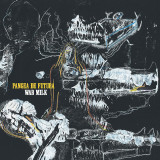
Octet supergroup lead by Eric Quach aka Thisquietarmy. Including 3 drummers, guitar, synth & brass players (who also play in bands such as Godspeed You! Black Emperor, Exhaust, Hanged Up, Avec Le Soleil Sortant De Sa Bouche & more); Pangea De Futura brings together the merged and emerging territories of Montreal's exploratory music scene.
War Milk is the debut studio album from the supergroup Pangea de Futura, an octet that has been exploring since 2019, the many ways of - slowly - constructing massive textural musical shapes and droning tribal post-rock ambiances. Each track simultaneously encapsulates its structure emerging from and within a flux, alongside its impending entropy, creating a suspended moment. This intense experience is crafted through the combined rhythmic contributions of Aidan Girt, Eric Craven, Samuel Bobony, the merging brass arrangements of Véronique Janosy, Reüel Ordoñez, Neboysha Rakic, the electronic textures provided by Charles Bussières, and the intense drones / soundscapes created by Eric Quach's guitar playing. Eight musicians, involved - in total - in some fifty projects from the Montreal scene (a.o. : Godspeed You! Black Emperor, Silver Mt. Zion, Fly Pan Am, Some Became Hollow Tube, HRSTA, BLD, Black Givre, Avec le Soleil Sortant de sa Bouche...)
Earth, Water, Air, Fire... the genesis of a complex and perpetually evolving life.

11
When Man Man released its last album, "Dream Hunting in the Valley of the In Between," frontman Honus Honus (née Ryan Kattner) was in a state of unrest, oscillating between hope and cynicism. Perhaps fittingly, the album dropped during the pandemic, a time at which we could all relate. But, much like that bizarre turn of events, the ennui now seems so distant to Man Man. A revived sense of purpose washes through Man Man's new album, Carrot on Strings, radiating a mix of calm and confidence. Kattner always embodied a wild-man pied-piper vibe: his melodic, unhinged art-rock was at once intriguing and angsty. He was so alluringly creative that you went along with it, even if you were never sure where Man Man would take you. Carrot on Strings is no less inventive, but its ethos is radical in context of the band's two-decade career. "When I was younger, I would feed off of chaos. I would, you know, be upset and get drunk and smash chairs," Kattner explains. "Now those chairs are in my head: It's less of an outward projection, more of an interior monologue." The name "Carrot on Strings" came to Kattner while experimenting with the sound of someone munching on the vegetable, which you can hear in the cacophonous, similarly named song. It alludes to how success always seemed to dangle uncertainly before him, often just out of reach. But listen intently and you'll hear a more content Kattner finding an uneasy peace: "Life, as far as I've known it, has always been side hustles. Would it be great if I could go into a studio and record for a year without figuring out how to finance it? Yeah, it would be," he says. "But ultimately, I need to keep making music because art is an extension of my psyche. It's how I have learned to translate the palpitations of my heart. Simply put, I'd go insane without it." Growing up as a multiracial Hapa kid (half Filipino, half white) with a father in the U.S. Air Force, Kattner lived an itinerant childhood that included a few pivotal years in Germany, where he honed in on an appreciation for out there German cinema and art. His film obsessions and screenwriting background were crucial to Carrot on Strings. The album nods to the films of Werner Herzog and Rainer Werner Fassbinder as much as Italo-disco, Randy Newman, goth rock, and avant pop. (Kattner continues to work in the film industry with an acting role in the upcoming horror-comedy movie Destroy All Neighbors, for which he also served as composer; music supervising season 1 & 2 of the Interview With The Vampire AMC TV series; and shopping around, with director Matthew Goodhue, a script he wrote that he describes as a Wim Wenders road movie on acid.) In a bid to not overthink anything - his last album took seven years to make - he recorded the bulk of Carrot On Strings in five days in Mant Sounds studio in Glassell Park, Los Angeles with "very chill" producer Matt Schuessler, who had worked on Man Man's cover of Neu!'s "Super" for the seminal Krautrock band's box set. The resulting album represents a newfound sense of self for Kattner, who finds himself inspired and at peace both personally and artistically in ways that eluded him for most of his first 15 years playing music. When, on Carrot On Strings, you hear Kattner croon humbly, or sing of the tension between his outsize stage persona and the thoughtful, soulful guy he actually is, you're hearing Kattner liberate himself. "I first got into music to escape from myself," he says. "And now, it sounds so corny, but I have zero doubt that music ended up saving my life."


11
In one sense, it's easy for artists-songwriters, specifically-to express their feelings in their work. After all, that's what the lyrics are for! But it's much harder to convey emotional energy in how you play, slash at the guitar, and the structure of the music itself. That's precisely why Girl and Girl's Sub Pop debut, Call A Doctor, feels like such a vital, electrifying shock to the senses. Not since the early work of Car Seat Headrest or Conor Oberst's widescreen emotional brutality as Bright Eyes has indie rock managed to come across as this intimate and grandiose, as the Australian quartet led by Kai James lay a lifetime's worth of woes-mental health, the human race's planned obsolescence if you've been living on this cursed rock you know what we're getting at-across a canvas of indie rock that feels both timeless and in-the-moment. An audacious and aggressively tuneful blast of a record, Call A Doctor is an unforgettable first bow from Girl and Girl, whose origins lie in James and guitarist Jayden Williams jamming in his mother's garage in the afternoon after school. One afternoon, James' Aunty Liss headed down to their practice space after walking her dog and asked if she could sit in on drums. "It sounded really great," James recalls. "We begged her to stay, and she said, 'I'll stay until you find another drummer.' We wore her down, and she eventually became a permanent member." After bassist Fraser Bell joined to round things out, Girl and Girl hit the road and began to make a name for themselves beyond the Australian bush, eventually signing to Sub Pop off the strength of word of mouth. Call A Doctor came together quickly soon after, largely recorded in marathon sessions in a two-story industrial complex over the course of two weeks. "That added to the intensity of the album," James says about the frenzied creative process overseen by producer Burke Reid. "I can hear the stress in the record, which is good because that's what it's about-being tense, tied up, and in your own head." Call A Doctor's eleven songs-spanning sweeping guitar epics and wry acoustic shuffles to spiky punk maneuvers and the type of raw, adoringly unvarnished indie-pop associated with legendary PacNW label K Records-are literally plucked from James' personal history, as he reworked older recordings with newer lyrics reflecting his past struggles as well as new anxieties that emerged prior to the album's recording. "I've struggled with mental health for a lot of my life," he explains, "and I went through a particularly difficult patch when we were making the album; the band had started to get some attention, and I felt an enormous amount of pressure to live up to it." "This record is about an individual who's too far in their head, trying to get out," James continues while discussing Call A Doctor's overall outlook-specifically the snapshot it offers of its creator. But even though this record deals with uneasy topics we all know well from within ourselves, it's important to emphasize how teeming with life Girl and Girl's music is. There's a brazen, bold sense of humor to this stuff, an undeniable brightness to the darkness that makes it impossible not to be drawn in as a listener. Feeling down never sounded so goddamn good.

11
In one sense, it’s easy for artists—songwriters, specifically—to express their feelings in their work. After all, that’s what the lyrics are for! But it’s much harder to convey emotional energy in how you play, slash at the guitar, and the structure of the music itself. That’s precisely why Girl and Girl’s Sub Pop debut, Call A Doctor, feels like such a vital, electrifying shock to the senses. Not since the early work of Car Seat Headrest or Conor Oberst’s widescreen emotional brutality as Bright Eyes has indie rock managed to come across as this intimate and grandiose, as the Australian quartet led by Kai James lay a lifetime’s worth of woes—mental health, the human race’s planned obsolescence if you’ve been living on this cursed rock you know what we’re getting at—across a canvas of indie rock that feels both timeless and in-the-moment.
An audacious and aggressively tuneful blast of a record, Call A Doctor is an unforgettable first bow from Girl and Girl, whose origins lie in James and guitarist Jayden Williams jamming in his mother’s garage in the afternoon after school. One afternoon, James’ Aunty Liss headed down to their practice space after walking her dog and asked if she could sit in on drums. “It sounded really great,” James recalls. “We begged her to stay, and she said, ‘I’ll stay until you find another drummer.’ We wore her down, and she eventually became a permanent member.”
After bassist Fraser Bell joined to round things out, Girl and Girl hit the road and began to make a name for themselves beyond the Australian bush, eventually signing to Sub Pop off the strength of word of mouth. Call A Doctor came together quickly soon after, largely recorded in marathon sessions in a two-story industrial complex over the course of two weeks. “That added to the intensity of the album,” James says about the frenzied creative process overseen by producer Burke Reid. “I can hear the stress in the record, which is good because that’s what it’s about—being tense, tied up, and in your own head.”
Call A Doctor’s eleven songs—spanning sweeping guitar epics and wry acoustic shuffles to spiky punk maneuvers and the type of raw, adoringly unvarnished indie-pop associated with legendary PacNW label K Records—are literally plucked from James’ personal history, as he reworked older recordings with newer lyrics reflecting his past struggles as well as new anxieties that emerged prior to the album’s recording. “I’ve struggled with mental health for a lot of my life,” he explains, “and I went through a particularly difficult patch when we were making the album; the band had started to get some attention, and I felt an enormous amount of pressure to live up to it.”
Far from the sound of collapsing under pressure, Call A Doctor finds James and Co. stepping up with their entire collective chest. This is a record that’s so out-and-out alive that you nearly feel like you’re in the same room with Girl and Girl as you listen to it; lead single “Hello” practically bursts through the speakers, amplified by Aunty Liss’ unbelievable stickhandling duties. “‘Hello’ is all about romanticizing your own misery. Letting those deep, dark, dirty thoughts take over. Understanding that even if you could pull yourself out, you wouldn’t because the constant stress and worry is far too familiar and comfortable.”
“Mother” pogos on a spiky groove that’s reminiscent of the geographically close New Zealanders who make up the legendary Flying Nun label, while “Oh Boy” draws from the Shins’ own jangly sound, injected with James’ wonderfully nervy vocals. Then there’s Call A Doctor’s sorta-centerpiece “Maple Jean and the Anthropocene,” a five-minute epic offering a new perspective on climate change and the notion of what it means, in a personal sense, to suffer: “I live in the bushland, and I was driving home one night and hit and killed a wallaby with my car,” James recalls while discussing the song’s lyrical inspiration. “My first thought was, ‘What is the universe trying to tell me?’ No remorse, no guilt, just total self-centeredness. Which was like, Woah, you fucking psychopath! This wallaby wasn’t put on this earth to send you a message. That’s what the song is about, our egocentric species - thinking you’re the main character and that everything that happens is somehow about you.”
“This record is about an individual who’s too far in their head, trying to get out,” James continues while discussing Call A Doctor’s overall outlook—specifically the snapshot it offers of its creator. But even though this record deals with uneasy topics we all know well from within ourselves, it’s important to emphasize how teeming with life Girl and Girl’s music is. There’s a brazen, bold sense of humor to this stuff, an undeniable brightness to the darkness that makes it impossible not to be drawn in as a listener. Feeling down never sounded so goddamn good.

12
"I was in a dream, but now I can see that change is the only law." With a credo adapted from science fiction author Octavia E. Butler, an album title from a collection of metaphysical poetry, and an expansion in consciousness brought on by personal crisis, guitarist and songwriter Shana Cleveland learns to embrace a changing world with unconditional love on News of the Universe, the new full-length from California rock band La Luz. News of the Universe is a record born of calamity, a work of dark, beautiful psychedelia reflecting Cleveland's experience of having her world blown apart by a breast cancer diagnosis just two years after the birth of her son. It's also a portrait of a band in flux, marking the first appearance for drummer Audrey Johnson and the final ones from longtime members bassist Lena Simon and keyboardist Alice Sandahl, whose contributions add a bittersweet edge to a record that is both elegy for an old world and cosmic road map to a strange new one. But is there any band in the world more suited to capturing the chaos of change in all its messy beauty than La Luz? Formed by Cleveland in 2012, La Luz is beloved for their ability to balance bedlam and bliss, each new record another fine-tuning of the band's mix of swaggering riffs with angelic vocals borrowed from doo-wop and folk; a band so reliably great that it makes the huge step forward in confidence and sheer musicality that is News of the Universe all the more formidable. Cleveland, also a writer and painter, has developed into a truly original songwriter with her own canon of haunted psychedelia. Yet if Cleveland has spent years writing songs about ghosts, what lurks in the shadows of News of the Universe is nothing less than death itself. "There are moments on this album that sound to me like the last frantic confession before an asteroid destroys the earth," says Cleveland. The powerful sense of openness that permeates News of the Universe is at least partially due to the fact that it is a record made entirely by women-from the performing, writing, and producing all the way through to the recording, engineering, and mastering. Working with producer Maryam Qudos (Spacemoth), the all-female environment allowed Cleveland to feel safe tapping into difficult places and expressing hard emotions women are socialized to suppress. Unashamedly vulnerable, unabashedly feminine, and undeniably triumphant, News of the Universe is another knockout record from a band so reliably great that it has perhaps led people to overlook how pioneering La Luz really are: women of color in indie music forging their own path by following their own artistic star into galaxies beyond current musical trends, always led by an earnest belief in the cosmic power of love and a great riff. Never is that more true than on News of the Universe, which might be La Luz's most brutal record to date but also their most blissful.
3
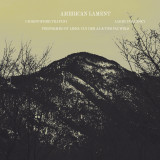
With Folksong Distortions, Pauwels and Van der Aa create a journey of lament through the soul of times gone by. Their radical renditions of works by Larry Polansky and Christopher Trapanido not distort the more upbeat rhythm and tradition of folk songs, but rather reveal and highlight the essence of hard lives, imposed choices - choices that were illusions in the first place - and the difficult times and conditions they have always depicted.
Christopher Trapani arranged two classics from the U.S. South, effects. The work, developed in collaboration with Tom Pauwels and Liesa Van der Aa, was originally made and featured on ICTUS' American Lament programme. The duo was given considerable room for improvisation and interpretation in the process. The first song, 'Wayfaring Stranger', is a well-known folk/gospel melody in A minor. The lyrics contrast an aimless journey through a harsh, hostile world, with the Christian promise of heaven as a 'home' and reunion with lost loved ones. The second song, 'Freight Train', was written by Elizabeth Cotten, a left-handed guitarist who held her guitar upside down, resulting in a very recognisable strumming style.
Sweet Betsy from Pike and Eskimo Lullaby are taken from Larry Polansky's 2005 'Songs and Toads', a five-section piece that computer-composed pieces. The work was originally written for guitar, more specifically for the national steel guitar, refretted in a specific intonation designed by Lou Harrison. Each piece explores a different guitar tuning. A significant intervention to the original work is made to accommodate Liesa Van der Aa's violin with effect pedals, opening to an epic re-reading of the work as conceived by the American composer Larry Polansky. What this set-up enables is a melancholy, slow-paced approach that quite radically opposes the more upbeat and joyful nature of the folk songs.
SIHR: sonic manifesto by a post-anything quartet feat. multi-instrumentalists from the Mediterranean inland Sea. New folklore for a devastated planet, including Frédéric D. Oberland (Oiseaux-Tempête), Grégory Dargent (H), Tony Elieh (Karkhana) & Wassim Halal (Polyphème).
After a few concerts/screenings improvised as a duo in Cairo and Beirut, as well as for the Rencontres d’Arles, the Lille photography center and the Belgian magazine Halogénure, Dargent and Oberland have teamed up with mavericks Elieh and Halal for a puzzling cross-border manifesto. The first sonic moves of this eclectic quartet, made in a bunker studio somewhere between Paris and Berlin, urgently took the form of a quest, that of a neo-folklore for troubled times, a music seeping with many kinds of atavism and experimenting in all directions. A fertile no-man’s-land where trance and contem- plation, jazz and electronica, acoustics and electricity would merge in a stimulating mystical magma.
From the possible emergence of a Babelian language to the shared desire to rediscover music as a ceremonial act, this encounter took place over three days of improvised sound bacchanalia, the phases of which were all recorded by Benoit Bel (Zombie Zombie, Thurston Moore Group, Oi- seaux-Tempête). A hallucinated and generous testimony, SIHR is a synergy of many different worlds and many different possibilities, the sonic vision of a present conjugated in a hybrid tense and exalted by too many tangos danced on the glowing ashes of our days.
Multi-instrumentalist & photographer, Frédéric D. Oberland has been leading the Oiseaux-Tempête collective for over ten years, lying somewhere between avant-rock and free jazz, repetitive music and electronics. Founding member of the bands FOUDRE! and Le Réveil des Tropiques, he’s also perfor- ming solo and composing soundtracks for cinema and installation art. Since 2018, Oberland co-cu- rates the NAHAL Recordings imprint alongside producer Mondkopf.
Electric guitarist, oud player, composer and photographer, Grégory Dargent cultivates his musical schizophrenia and identity through improvised music, trance music, jazz, hijacked maqam, repeti- tive music, pop, electro-acoustic installations and French chanson. From L’Hijâz’Car to Babx, from Berber singer Houria Aïchi to Rachid Taha, from Trio H to Sirventés enragés, from music for images to contemporary choreography, from the most acoustic of ouds to the most nuclear of guitars, he conducts, accompanies, composes, deciphers, questions, delves, makes mistakes, bounces back, ar- ranges, orchestrates and tirelessly shares his creative passions.
Tony Elieh is one of the pioneers of experimental music in Lebanon. A founding member of the first post-rock group of post-war Lebanon, The Scrambled Eggs, he has since developed his unique elec- tric bass skills in various groups and styles of music including collaborating with in groups such as Karkhana, Calamita and Wormholes Electric. Relocated in Berlin in recent years, he has performed a solo set of heavily processed bass generated sounds.
Is Wassim Halal only a darbuka player? Maybe !? But what about his music, compositions, ideas. You can find him with Polyphème playing and co-composing popular-contemporary music with Gamelan Puspawarna, or next to the french bagpiper Erwan Keravec, with the Bey.Ler.Bey trio (w/ Laurent Clouet & Florian Demonsant) working on an improvised-balkan-already-improvised-music, with per- formers and drawers Benjamin Efrati and Diego Verastegui, with Gregory Dargent and Anil Eraslan in H, creating a new pedal generating »Random taksim«, composing his own »Poème Symphonique pour 100 youyou« or composing pieces for ensembles.

10
2024 Repress
Mannequin Records is proud to present a full length by the Philly minimal-synth princess Void Vision.
Void Vision is a Philadelphia-based electronic project helmed by Shari Vari. It began around 2009 at a time when a wave of synth-revivalists were materializing, but the quality of the songwriting and intense vocals set the band apart from the pack. In a rare instance, Void Vision has managed to combine vintage dance elements with melodic structures, haunting melancholy, and lyrics that have a palpable soul. The songs themselves are dynamic, referencing a cross-section of the last 30 years of electronic music, while simultaneously retaining a uniqueness all their own.
The infamous Wierd Records weekly club night in New York, which showcased a variety of talented electronic and coldwave artists, served as an incubator for Void Vision in it's early stages. After a standout debut performance at the club, they immediately caught the attention of Blind Prophet Records, who consequently released their first 7" single, 'In 20 Years', which received excellent reviews.
Vari has continued performing and recording steadily over the last few years, releasing songs on compilations for various labels, including Rough Trade, and in 2012 the song 'Everything is Fine' was selected for Artforum magazine's 'Best of 2012' issue. In 2013, Void Vision toured the West Coast and later that year released a split 12" with Portland-based band, Vice Device. The first official full-length album, entitled 'Sub Rosa' is set to debut on Berlin-based Mannequin Records, followed by a European tour in 2015.
Shari Vari formed Void Vision in 2009 originally as a duo, during the explosion of the new minimal synth and cold wave scene in United States. Sharing the same scene of the Wierd Records associates like Led Er Est, Martial Canterel, Xeno & Oaklander, Automelodi, in 2010 VV released 'In Twenty Years' on Blind Prophet (Sean Ragon's Cult Of Youth record label), receiving also the attention of the Rough Trade dudes, who asked to put out a track for one of their synth wave compilations.
After other split vinyls, tapes and compilations, Mannequin approached Shari with the intention to continue what Wierd Records started, giving a proper shape to her beautiful and youthful dark electronic sound. The result is 10 hypnotic cold analog tracks dominated by the warm and fragile Shari's voice, some more 'pop orientated' some others belonging to the original 'cold wave' atmosphere.
"Sub Rosa" is an edition of 400 copies on 160 gram black vinyl and 100 copies on 160 gram white vinyl.

10
"All our dreamers lose to the light" - from "Angels Go Home" When the pandemic began, and the world shut down, so did the process of creating for Iron & Wine's Sam Beam. In its place was a domesticity that the singer hadn't felt in a long time, and although it was filled with many rewards, making music was not one of them. Reflecting on that time, Beam notes: "I feel blessed and grateful that I and most of my friends and family made it through the pandemic relatively unscathed compared to so many others, but it completely paralyzed the songwriter in me. The last thing I wanted to write about was COVID, and yet every moment I sat with my pen, it lingered around the edges and wouldn't leave. This lasted for over two years." The journey back began with a recording session in Memphis to record a handful of Lori McKenna tracks for the EP Lori with friend and producer Matt Ross-Spang. The cathartic experience reconnected Beam with his love for making music, and soon enough the paralysis had passed, and he was finishing lyrics and booking studio time for what would become Light Verse. Light Verse was recorded with engineer and mixer Dave Way at his studio Waystation high up in Laurel Canyon (with an additional session at Silent Zoo Studio with a 24-piece orchestra), with a host of talented musicians joining Beam: Tyler Chester, Sebastian Steinberg, David Garza, Griffin Goldsmith, Beth Goodfellow, Kyle Crane, and Paul Cartwright. And, Fiona Apple joined Beam on vocals for the duet "All In Good Time." Beam lyrically once again takes focus on a series of both fictional and personal insights, filled with desperate characters and wide-eyed optimists, offering promise and a dose of heartache, tears and laughter, life and love. Taking stock in the album's title, he jokes, "Light verse is a form of poetry about playful themes that often uses nonsense and wordplay, and it's my first official Iron & Wine comedy album!_. Just kidding_." While true this may be Iron & Wine's most playful record, Beam says the title mostly reflects the way the songs were born with joy after the heaviness and anxiety of the pandemic. Where recent records like Beast Epic or Weed Garden gave air to the disquiet of middle-aged frailty and brokenness, these songs trade that for the focus acceptance can bring. Moment by moment, they delight in being pointed or silly (or both) and attempt beauty over prettiness. Light Verse arrives April 26th, and it's Iron & Wine's seventh full-length overall and fifth for Sub Pop Records. Fashioned as an album that should be taken as a whole, it sounds lovingly handmade and self-assured as a secret handshake. Track by track, its equal parts elegy, kaleidoscope, truth, and dare.

You get older, you have a family, and you start to slow down-that's how things are supposed to go, right? Not for Montreal band Corridor, who have returned on their fourth album, Mimi, with a sound and style that's more widescreen and expansive than anything that's preceded it. The follow-up to 2019's Junior is a huge step forward for the band, as the members themselves have undergone the type of personal changes that accompany the passage of time; even as these eight songs reflect a newfound and contemplative maturity, however, Corridor are branching out more than ever with richly detailed music, resulting in a record that feels like a fresh break for a band that's already established themselves as forward-thinkers. Mimi immediately recalls the best of the best when it comes to indie rock-Deerhunter's silvery atmospherics immediately come to mind, as well as the spiky effervescence of classic post-punk-but despite these easy comparisons, Corridor remain impossible to pin down from song to song, which makes Mimi all the more thrilling as a listen. "The goal was to work differently, which is the goal we have every time we work on a new album-to build something in a new way," Robert explains. "This time, we took our time." And so in the summer of 2020, Corridor's members-Robert, vocalist/bassist Dominic Berthiaume, drummer Julien Bakvis, and multi-instrumentalist Samuel Gougoux-holed away in a cottage to engage in the sort of creative experimentation that would lead to Mimi's ultimate creation. Corridor tinkered with the songs' raw parts digitally and remotely over the next few years, with co-producer Joojoo Ashworth (Dummy, Automatic) lending their own specific talents in the theoretical booth. The process was a byproduct of not having access to their rehearsal space due to the COVID-19 pandemic, but also a result of the four-piece leaning harder into incorporating electronic textures than on previous records. "For a long time, we identified as a guitar-oriented band, and the goal of making this whole record was trying to get away from that," Berthiaume states. Berthiaume also describes Mimi as a record about "getting older" and "figuring out new parts of life"-but despite any claims of transitional growing pains from the band, Mimi is a record bursting with new energy and life, a vibrance that's owed in no small part to Gougoux joining the band full-time after pitching in on live performances in the past. "I come more from a background of electronic music, so it was nice to involve that with the band more," he explains, and Mimi contains a distinct rhythmic pulse reminiscent of classic era-post-punk's own melding of dance and rock textures. Over bright, chiming guitars and ascending synths, Robert addresses his looming mortality on "Mourir Demain": "I wrote it when my girlfriend and I were shopping for life insurance," he laughs. With our little daughter growing up, we also considered making our will. I said to myself, 'Oh shit, from now on I'm slowly starting to plan my death." Don't mistake this as music about dead ends, though, as Mimi embraces and champions unfettered creativity while paving a way for Corridor's own bright future. "We just focused on making a record that sounded the way we wanted," Gougoux exclaims while discussing the band's aims. "There were no limitations when it came to what was possible."

8
With time, we come to understand the way the joy of connection is mirrored by the void of loss, how the constancy of love is matched only by the impermanence of life, the simple idea that we could not create light if we did not risk the dark - we'd never need to. So it is with METZ, a band once known for blowing out eardrums with songs of joyous rage who have, over their past few records, begun exploring ways to turn abrasiveness into atmospherics, the evolution of their sound not only a reflection of the maturing of the band themselves but also of a changed world that demands nuance and compassion to comprehend and to survive. It was a journey already underway on 2020's Atlas Vending, but one that reaches new heights on Up On Gravity Hill, where the Canadian trio creates a kaleidoscopic sonic world as tender as it is dark, aided once again by engineer Seth Manchester (Mdou Moctar, Lingua Ignota, Battles, The Body). Deep, detailed, and unyieldingly personal, it is not only METZ's most powerful record to date but also their most beautiful. Still three punks from Ontario at heart, guitarist and vocalist Alex Edkins, drummer Hayden Menzies, and bassist Chris Slorach waste no time as opener "No Reservation/Love Comes Crashing" sweeps in like a wave, sonically and thematically setting the scene for the record to come. A dynamic song about feeling suspended in stasis, layers of dissonance melt into a restlessly heady outro marked by escalating crescendos of shimmering noise that reach for the stars - and is that a violin quivering brightly beneath those elegant swells of guitar, those charging drum fills, those intricate bass lines? It is indeed, courtesy of composer Owen Pallett; his presence an immediate indicator that METZ are thinking more cinematically than ever before. The change is partially inspired by Edkins' work as a scorer for film and television and his pop-leaning solo project, Weird Nightmare, where, he says, he learned to write more intuitively, letting his emotions lead the way. But make no mistake: Up On Gravity Hill is a total band effort, the work of three musicians who have been playing together for over a decade, with all the trust that entails. For those who believe in the power of the rock band to exemplify the highest resonance of human connection, there is much on Up On Gravity Hill to lift the spirit, a puzzle worth repeated listening to unlock or just to get lost in again and again. Rather than the music being flattened into a single plane, the band explores "the space above the cymbals," resulting in some of the most spacious, sympathetic, and accessible songs - could we call them pop? - of their career. If this seems contradictory, well, METZ has always been something of a contradiction. "We've never been heavy enough for metal or hardcore purists, but we're way too heavy for indie rock. We just don't have a lane - and that's okay. We exist outside the lines of delineation. I think this record is even more like that," says Edkins.

5
This LP reveals the extraordinary diversity of research - almost all hidden - by Spanish musicians in the '50s and '60s. Five composers who most often work outside the rules and without the possibility of help from their own country. Those pieces were composed while the country was under the tyranny of Francisco Franco. It is truly the ultimate grail, developed by musicologist Miguel Álvarez-Fernández, he is its curator, editor and commentator. This undoubtedly marks a major step in the approach and understanding of this music which had to fight to exist before the death of Franco in 1975. Miguel Álvarez-Fernández (Madrid, 1979) is a writer. He hosts the weekly radio broadcast Ars Sonora - dedicated to sound art and experimental music, and offering hundreds of freely available podcasts on Radio Clásica (Spanish National Radio).
Jose Val del Omar (1904-1982) is essentially a creator, a filmmaker developing a dreamlike art - not without links with Federico Garcia Lorca or Luis Buñuel.
Eduardo Polonio (1941- ) between 1966 and 1970 at the Institute of Psychoacoustics and Electronic Music-IPEM of the University of Ghent, Belgium. Eduardo Polonio, has published, in forty years, more than a hundred works.
Josep Maria Mestres Quadreny (1929-2011) in 1952 he joined the Manuel de Falla Circle and in 1974 he founded the Laboratori de Música Electroacústica Phonos. During his life he collaborated with Joan Miró and Antoni Tàpies.
Juan Hidalgo (1927-2018) in 1957 he participated in the music festival XII Internationale Ferienkurse Fur Neue Musik in Darmstadt. The following year he met the American composers John Cage and David Tudor. Member of Fluxus, in 1966 he participated with Gustav Metzger, Otto Muehl, Wolf Vostell and Hermann Nitsch in the Destruction in Art Symposium in London.
Cristóbal Halffter (1930-2021) was soon considered one of the most important composers of his generation. As a lecturer at the Internationale Ferienkurse für Neue Musik in Darmstadt, he worked with Pierre Boulez, Karlheinz Stockhausen and Luciano Berio.


10
What Do We Do Now is the fifth solo studio LP recorded by J Mascis since 1996. This is obviously not a very aggressive release schedule, but when you figure in the live albums, guest spots, and records done with his various other bands (Dinosaur Jr., The Fog, Heavy Blanket, Witch, Sweet Apple, and so on), well, to paraphrase Lou Reed, "J's week beats your year." What Do We Do Now began to come together during the waning days of the Pandemic. Utilizing his own Bisquiteen Studio, J started working on writing a series of tunes on acoustic with a different dynamic than the stuff he creates for Dino. "When I'm writing for the band," he says, "I'm always trying to think of doing things Lou and Murph would fit into. For myself, I'm thinking more about what I can do with just an acoustic guitar, even for the leads. Of course, this time, I added full drums and electric leads, although the rhythm parts are still all acoustic. Usually, I try to do the solo stuff more simply so I can play it by myself, but I really wanted to add the drums. Once that started, everything else just fell into place. So it ended up sounding a lot more like a band record. I dunno why I did that exactly, but it's just what happened." Two guest musicians are playing this time out; Western Mass local Ken Mauri (of the B52s) plays piano on several tracks. Since J himself has some experience with keys, when asked why he needed a hired gun, he says, "Ken is great, and he plays all the keys. I tried playing some keyboards on the first Fog album, but I'm really only comfortable playing the white notes, so it's kind of limiting. laughs Nowadays, I could just turn the pitch on a mini Mellotron to play different sounds, but black keys just seem hard. For whatever reason, I just like banging on the white ones. Seems like it's harder to figure out how to stretch your fingers around the other ones." Mauri has no such qualms and plays all the keys very damn well. He sounds especially great on "I Can't Find You," where he is Jack Nitzsche to J's Neil Young, creating one of the album's loveliest tunes. The other guest musician, Matthew "Doc" Dunn, is also prominent on this track. Dunn's steel guitar manages to both widen and soften the musical edges of the music, giving it a full classicist profile. Dunn is an Ontario-based polymath who J met through Matt Valentine. After J played on Doc's great 2022 Sub Pop single, "Your Feel," he figured it was time for payback. Both Dunn and Mauri add beautifully to the songs here, helping to transform them from acoustic sketches into full-blown post-core power ballads. What Do We Do Now is the finest set of solo tunes J has yet penned, and the way they're presented is just about perfect. Asked if he would be touring to support the album, J says he'll be doing some weekend dates, but he probably won't be putting a band together. And I'm sure these songs will sound great solo and acoustic, but the arrangements on this album are truly great and put a cool, different spin on Mascis' instantly Recognizable approach to making music. So, what do we do now? Not sure. But apparently, what J does is to make one of his most killer records ever. Hats off to him. - Byron Coley

ORANGE VINYL
Daniel Boeckner understands the grit and gravel that accumulates in the heart and that it takes an unwavering courage to crack through that clutter and burrow to the other side. And in Boeckner's hands, that quest comes via post-apocalyptic synth and guitar heroism, a rallying cry for those always coming home through the scorched clouds. Throughout his work with Wolf Parade, Handsome Furs, Divine Fits, Operators, Atlas Strategic, and more, the iconic Canadian indie rocker recognizes that few feelings are more gratifying-more memorable, more generative, more abundant-than hope. But it takes getting the hell out of your own way. A culmination of that deep library of musical reference, Boeckner is set to release his first album under his own name: Boeckner! No matter where his genre exploration has taken him, there's something about growing up in punk and DIY spaces that puts collaboration in Boeckner's blood. Composed of a collection of intimately familiar elements, Boeckner! elicits the same thrill of young passion and discovery. It's a jet-powered chase through a tech-noir cityscape-fueled by a dream and that special someone in the passenger seat. That urgency and passion have always been a trademark of Boeckner's, and writing on his own pushes those feelings further into the center of the scope. But while Boeckner may be the clear driving force behind the album, he's not without collaborators for his solo debut. After meeting producer Randall Dunn while contributing to the soundtrack to the Nicolas Cage-starring psychedelic horror film Mandy, Boeckner knew he'd found the perfect counterpart for his solo debut. "I'd been a fan of his forever, especially the Sunn0))) records he produced," Boeckner says. "Working with Randall really unlocked some suppressed musical urges, things that I enjoy in my private life but don't normally weave into what I'm releasing-like occult synth, pseudo-metal, krautrock, and heavy psych influences." That base allows Boeckner to thoughtfully weave between emotional imagism and more grounded storytelling. Throughout the record, his imagery delves into science fiction, but it's charged first and foremost by experience. The trio of Boeckner, Dunn, and drummer Matt Chamberlain (Pearl Jam, David Bowie, Fiona Apple) formed a sort of dark engine for the album, and Chamberlain's ingenious approach of triggering a vintage Arp synthesizer simultaneously with each drum track helped Boeckner shape the record's atmosphere. That tense futurism was influenced by Boeckner's time staying in Dunn's Circular Ruin studio, a dusky, electronic aura burned into every track. By the end of the album, Boeckner! eases from sci-fi epic into something more akin to a torched VHS copy of a John Cassevetes film, the chemtrails and nuclear fallout fading long in the distance. Like all good sci-fi, the emotion and pain hits home for the author and listener alike, and the genre flourishes bolster the human experience. In revealing more than ever before, Boeckner! ratchets up the musical intensity to unforeseen levels and hopes to find some peace at the end of the journey.


También disponible
Coke bottle green[28,95 €]
Pissed Jeans has never been a band that goes halfway-they're known for their feral vocals, biting lyrics, buzzsaw guitars, and unhinged live shows, and their sixth album, Half-Divorced is no exception. These songs skewer the tension between youthful optimism and the sobering realities of adulthood, and when viewed through frontman Matt Korvette's scowl, everything takes on a level of violent absurdity. Pissed Jeans' notorious acerbic sense of humor remains sharper than ever as they dismember some of the joys that contemporary adult life has to offer, from helicopter parents to stolen catalytic converters to being $62,000 in debt. On "Seatbelt Alarm Silencer," Korvette growls, "Call it a death drive but that ain't fair / Drive implies I'm headed somewhere." Korvette, Brad Fry (guitar), Randy Huth (bass), and Sean McGuinness (drums) weren't in any rush to finish Half-Divorced, which was recorded by Don Godwin at Tonal Park in Takoma Park, Maryland. "We're not the kind of band that bangs out a new record every two years," Korvette said. "Pissed Jeans is truly like an art project for us, which is what makes it so fun." This lack of restraint rages within the songs that unexpectedly veer into classic hardcore punk territory-often coming in at under two minutes long and erupting like the "butane tank explosion" Korvette sings about in "Junktime." In the last song, "Moving On," Korvette sneers, "Cheesing into my camera phone / Pretending that I'm not alone / Life's the first thing that we all postpone." One gets the sense that Pissed Jeans refuses to "postpone" life in quite the same way-life, like art, is something that happens now, not later. - Chelsea Hodson
