Henning Baer caught our attention after his first release on Adam X's Sonic Groove label. Nearly a decade after, Berlin's techno front-runner tweaked his machines into a moody electro escapade for his debut on Pinkman. Industrial tinged heavy kicks layered with futuristic mellow soundscapes. With Sui Generis Henning Baer once again shows his versatility & years of experience.
out of Stock
Last delivered 15 months ago available to reorder, subject to availability
Bringing together the elder statesman of the Zulu guitar Madala Kunene and internationally acclaimed Sibusile Xaba, kwaNTU pulls two generations of South African guitar mastery into a single point of focus. Under-represented on recordings outside of South Africa, Madala Kunene (b. 1951), the ‘King of the Zulu Guitar’, is revered as the greatest living master of the Zulu guitar tradition. Sibusile Xaba, whose collaboration with Mushroom Hour Half Hour reaches back to his first recording in 2017 (Open Letter To Adoniah/Unlearning), has garnered international acclaim for his unique voice and virtuoso guitar stylings, which bring together multiple South African guitar lineages in an original, spiritualised fusion. Collaborating with Mushroom Hour and New Soil for kwaNTU, the two players come together to weave a filigree sonic fabric which reaches down to the heartwood of Zulu guitar music but moves resolutely outward, building on the past to create a deeply rooted statement about present conditions and future travels. kwaNTU – which can be roughly translated ‘the place of the life-spirit’ – is also conclave of teacher and student, as Xaba has been taught by Kunene for the last decade. Meditative, rich and sonically sui generis, kwaNTU finds these two musicians linking up within the inimitable space of sound and spirit that they share through Kunene’s teaching.
The great masters of South African music have not all had equal exposure. For many years the generation of musicians who were exiled during apartheid took centre stage, as the regime made it very difficult for those at home to be heard. More recently, a new cohort of important voices, especially in jazz, has broken through to international consciousness. But for the generation of musicians in between – those who shone like beacons in the most difficult final years of apartheid and immediately afterward – international recognition has been slow in coming.
Madala Kunene, ‘the King of the Zulu Guitar’, is among this number. A revered figure for current generations of South African musicians, Kunene began his recording career in 1990, at the bitter end of apartheid, with a now classic self-titled LP for David Marks’ storied Third Ear imprint. Born in 1951 in Cato Manor, near Durban, he had determined to be a musician from early childhood, and by the time he first entered a recording studio he had already had a long career as a popular performer. His virtuoso absorption and transformation of the venerable Zulu maskanda guitar tradition and his richly spiritualised approach to music immediately marked him out as someone special, and in the years that followed, Kunene cemented his position as one of South Africa’s musical elders. He is without doubt the grand master of the Zulu guitar tradition, but his sound and sensibility ranges far beyond it into varied sonic terrain, and he has collaborated with a wide range of musicians both at home and abroad. Now in his mid-seventies, he remains a shining light for those that are making music in contemporary South Africa.
‘He is really an amazing person,’ says the guitarist Sibusile Xaba, who has been mentored by Kunene for over a decade, and now invites a collaboration with him on kwaNTU. ‘As a mentor, he's really powerful in showing us the way. For us to have this opportunity to make music together and have a project together is really a blessing to me.’
Xaba himself grew up in Newcastle, KwaZulu-Natal, where his mother had been in a band and his father sang in a church choir, and from early childhood Xaba played homemade tin guitars. He only later realised that music was his calling. ‘I just loved music. I was fortunate. My parents loved music. And when it was time for me to leave home and go to study outside Newcastle, I knew that music was what I wanted to do. There was no second option. It was just music.’ Moving to Pretoria to study music formally, Xaba committed himself to his craft, developing a unique style that draws on both US jazz masters such as Wes Montgomery and Jim Hall, and the rich and varied heritage of the South African guitar, from inspirational jazz players such as Allen Kwela and Enoch Mthalane, to the music of the Malombo groups and Dr. Philip Tabane (Xaba has previously collaborated with Dr. Tabane’s late son, Thabang), and the Zulu guitar tradition embodied by Kunene.
‘I was really in love with the jazz guitar, I really admired it, and I was digging a lot in that direction,’ says Xaba, recalling his first encounter with Kunene’s music, over a decade ago. ‘And then one day on my timeline, Kunene popped up, and I was like – “What's this sound?” I was so connected to it. It really touched me deep. I started checking out his records, and then I found out he's from the same region as I am, which is Zululand.’ After Kunene played a show at the Afrikan Freedom Station in Johannesburg, Xaba make contact with him, and visited him at home in Durban. They struck up a friendship, and Xaba became the elder’s student, as Kunene began to pass on his knowledge and his inimitable way of playing.
kwaNTU is a tribute to this relationship and the deep learning that has defined it. The album was recorded in Zululand in the town of Utrecht, at a cultural centre called Kwantu Village, which gives its name to the album. ‘It's such a broad word,’ Xaba says, ‘but the elders teach us that Ntu is basically an energy, almost chi, an energy, a force that all living beings have within them. It's a living energy, so kwaNTU is like, almost the place of this energy.’ The two men sequestered themselves for five days of jamming, improvising and planning, and then the session was recorded in one take over a single night, with Gontse Makhene joining on percussion and backing vocals and Fakazile on vocals. Other voices and overdubs were later added in the studio in Johannesburg.
The result is a rich and meditative recording that finds two generations in a deeply engaged dialogue. Teaching and passing on his knowledge, the elder Kunene has brought Xaba into a space of sound and knowledge that they now share; Xaba’s own practice of deep communion with nature and his dedication to his musical craft make him the perfect interlocutor for Kunene. The result is an album that foregrounds the two musicians engaged at the highest levels of responsive listening, sympathetic unity, and collaborative concentration. Bringing an elder statesman of South African music to an international listening audience for the first time in decades by pairing him with one of South Africa’s most important new voices, kwaNTU is a meeting of generations and a powerful demonstration of musical lineage and continuity.
‘Before music, there is sound,’ Xaba observes, speaking of Kunene’s unique approach to music. ‘And sound is like a common compartment…it's not restricted to particular people or particular geographic places, you know what I mean? It's sound. Everybody can hear it. So when he constructs that sound into music, I think everybody resonates with the energy behind his construction of sound into song. Here at home, we really love him for preserving our history through the guitar, through his stories as well the music, the songs that he writes. We really, really admire him.’
You Can Can is an echoed affirmation, an album which traces song forms around silence, field recordings, and degraded analog memories. This is folk music transmogrified and mutated, as if recorded and reconstructed in Pierre Schaffer’s GRM studio.
Not your typical Mariposa folk duo, the group is comprised of Toronto avant-music scene stalwarts, vocalist Felicity Williams (Bernice, Bahamas) and bricolage artist and synthesist Andrew Zukerman (Fleshtone Aura, Badge Epoch). The album feels like a somnambulant conversation, fragmented and half-remembered with Williams’ vocals traveling through a landscape of field recordings and Zukerman’s saturated concrète topographies. It is an electro-acoustic assemblage, both analog and digital, comprised of air, electricity, minerals, wood, and water. Although the album nods towards traditional forms of folk and musique concrète (if at this point it can be called a traditional form), it is outwardly and inwardly contemporary; non-linear, citational, opaque, and sui generis. In a way it feels like a sonic index of the narrative experiments found on the infamous Language school-related publisher The Figures, in the work of Lyn Hejinian, Clark Coolidge, and Lydia Davis. In the musical continuum, the album picks up where Linda Perhacs left off in the early 70’s—explored by Gastr Del Sol in the ‘90s—a convergence of rural acoustic idioms and urban avant-electronics. This is country music for the discerning cosmopolitan citizen of the 21st Century.
RIYL: Luc Ferrari, Brannten Schnüre, William Basinski, Oval, Eric Chenaux, Emmanuelle Parrenin About Everything In Time and Failure Figures, Felicity Williams says:
Everything In Time is indebted to the language of Brazilian author Clarice Lispector (as translated by Alison Entrekin). Drawing on insights from psychoanalysis, we trace the roots of melancholy to render them available to consciousness; words from the ghostly realm of the transpersonal filter through dreams and shine a beam of light onto a lone trillium in a forest at night. Other influences include the experience of not knowing, of being subject to a gestation outside of one’s control. This is an ode to the power of naming to obliterate, to set free.
Failure Figures is a meditation on the radical contingency of reality and the vicissitudes of the will. With Slavoj Zizek as my guide (think: “Hegel for dummies” - I’m the dummy in this scenario), I wander through the valley of the shadow of death, and take heart. The last verse refers to an experience I had recording at a studio in Brussels. I was singing in French, with which I have some fluency, and the producer was complaining to the artist whose song it was that my delivery was not convincing. Thinking I was out of ear shot, he said in French, “c’est comme elle n'est pas là”; I was pronouncing the words correctly, but I failed to express anything. So what or whom is responsible for conveying meaning, if not the form of the word itself? And if the connection between meaning and form is broken, how do we fix it?
Gratitude to Thom Gill (guitar) and Daniel Fortin (bass) who joined us on the recording of Failure Figures. Thanks as well to my old roommate Christopher Willes, who unwittingly left behind his hand bells deep in the hall closet. We unearthed them by accident, and the bells became an important sound element. Thanks to other past roomies Robin Dann and Claire Harvie, whose childhood piano and guitar respectively still reside with us, and were used in the recording. Field recordings were made in Toronto, Canada and Celestún, Mexico in 2020.
From a research work started in full lockdown three years ago, finally sees the light (or darkness) Echi Senza Fine, a remastered collection of sound material by Tasaday. Inspired by the controversial media story in 1971 of the discovery of a tribe in the Philippines that apparently had technology that had stood still in the Stone Age, the project officially borrows the name Tasaday in 1984 from the evolution of Nulla Perreale, in turn union of Die Form (musical part) & Orgasm Denied (performative part).
To put it in the words of Marcello Ambrosini, the Tasadays find in Die Form the controlled destruction of the form after its careful design and construction, while in Nulla Iperreale the spontaneity free from any possible superstructure. They declare themselves new primitives, not in the perspective of a nostalgic return to a pre-industrial or prehistoric external world, but in the exception of an inner experience in stark contrast to the leviathan of the single utilitarian thought that has dominated the West for centuries.
Their production-action does not allow itself to be tempted by the repetitiveness used by many industrial groups of those years, thus resulting seminal in the evolution of the scene. Their impulse to go further and not remain caged in the format of the new wave is witnessed by their particular sound vocabulary that sees, along with the use of conventional instruments, the use of DIY tools such as Chopper Vox and highly sui generis tools, like the Camolofono, cariole loaded with sheets, stones, tubes, chains and “garbage” of various shapes and sizes.
A discography dotted with primordial electronic experiments that reaches the new millennium through several vinyl records and an endless number of cassettes. From this undefined and mysterious number of tapes that is born Echi Senza Fine: 14 tracks (+ 2 digital bonuses) remastered, collected by Asymmetrical, who also edited the release insert, a collage of visual and textual material from their fanzines. A series of 300 transparent vinyl + Insert.
As long as she can remember, Jane Remover has practiced her own autonomy as much as possible. The nineteen year old songwriter is an omnivorous listener that produces everything herself. She has been lauded by fans and writers alike, for accidentally creating entire genres in the wake of her prolific two-year run.
Her debut album Frailty was written amidst the purgatorial summer after a high school graduation, en route to turning eighteen that September. The lyrics are a wayward coming-of-age diary of an LGBT+ teenager, stuck in the suburbs of a confusing, socio-politically turbulent America.
Janeʼs words sting, but are shrouded in meticulous production; a sui generis vein of DIY rock. Simultaneously, itʼs steeped in the lo-bit, nostalgic synths that soundtrack a final glimpse of younger memories.
The LP was warmly received: Album of the Year List placements from Pitchfork and The Needle Drop, glowing reception from Paste, Insider and FADER, and a widespread resonance from a young audience who consider the album cathartic and relatable.
‘Best tunes for your answering machine’ is the debut album of oblique, introspective electronic music by the mysterious solo artist Tekamolo.
Fusing melancholic synth pop and absurdist trip hop, ‘best tunes for your answering machine’ is a special assemblage of pitch-modified vocals, retrofuturist samples and freeform electronics that coalesces into music both outlandish and bittersweet, playful and profound.
Produced by a renowned artist, opting to conceal their identity under the guise of a new pseudonym, Tekamolo presents a series of curious, incognito confessionals with ‘best tunes for your answering machine’. An album led by a voice like a sentient, heavy-hearted android, the nine tracks collected here contend with themes of inertia, solitude and longing, revealing an inspired, affecting stream of messages from an unknown caller.
Without preconceptions tied to provenance, this is music liberated from the burdens of biographical detail. Music that eschews ego and the cult of the self. An album that can be heard purely for the strange, poignant sounds unfurled throughout.
For Tekamolo, the album signifies an attempt to navigate aesthetic reductionism, as well as an absolute sense of seclusion:
“An audio diary of a lonely soul. Broken, wounded mantra-songs. Memories of things that never happened. Dreams that never had the chance to be dreamed. Disassembled songs. As if testing the limits of emptiness — how much void can a song endure while still remaining a song? How much can be stripped away, how bare can it be, and still, the groove lingers, the melody pierces the memory, sinking into the listener's mind.
These are the skeletons of songs, an attempt to assemble music from the bare minimum — words, sounds, fragments of memory.
The songs are filled with desperate calm. They are not sung to the world, nor to anyone tangible, but solely to oneself and to the unseen. In a way, they could be considered songs of the end of the world: you wake up, and there is not a single person left in the world. At least, no one you can see. You wander through empty streets and deserted shopping malls, humming softly to yourself, hoping that someone — anyone — might hear you.”
‘best tunes for your answering machine’ is a sui generis conception of warped 21st century blues from an enigmatic figure, a work filled with surreal, indelible songs of modern isolation. Lost contemporary hymns, now recovered. Voicemails worth hearing.
Released in 1999 on Taylor Deupree’s 12k label, »optimal.lp« was the debut album by Dan Abrams under his Shuttle358 moniker. For its 25th anniversary, Keplar presents it on vinyl for the first time with three previously unreleased tracks—the digital version also includes a alternative version of »Tank«—as well as a new artwork recreated by Daniel Castrejón and a remaster by Andreas LUPO Lubich based on the original pre-masters that were been restored and cleaned up for the reissue project by Abrams. »optimal.lp« was inspired by the rich tradition of ambient music and the rhythmic complexity of 1990s electronica while also sharing many traits with the then-emerging clicks’n’cuts movement, making it a true sui generis piece of work—both informed by tradition and visionary, idiosyncratic and seminal for many artists after him.
Abrams developed an interest in ambient music when he was still a child, scouring through cassette tapes of environmental sounds, new age music, and world percussion. Discovering Brian Eno’s »Thursday Afternoon« as a young teenager marked a turning point for him. »It gave me the idea that ambient music could be an intentional creative act, that tone itself is a legitimate form of expression,« he says today. During the 1990s, he increasingly immersed himself in the electronica scene and the output of labels such as Instinct, where Deupree worked as an Art Director and released his first records as Human Mesh Dance. Abrams found a home on 12k after sending Deupree a demo tape that would later evolve into »optimal.lp,« released as the label’s fifth catalogue number.
Abrams was still in college when he started experimenting with a sound module, his laptop and a mixer as well as a MIDI card and a small controller. »Each note was composed in MIDI and played back when I was ready to record,« he explains his working process at the time. »The tracks could be replayed, but the sound interactions with glitches and noise would be a little different each time. I decided to base the concept of the album on these interactions.« Each piece started with a single sound or tone that, as Abrams puts it, already contained the entire composition: »I let these interactions guide me, and tried to complement them as I added sounds. It’s a conversation of sorts with the medium.«
While refining this technique that he would go on to use on every album until 2004’s »Chessa,« reissued by Keplar in 2021, he also used the first-ever Native Instrument product, the Generator soft synth, to write the record’s title track—possibly making it the first album on which it was being used. »optimal.lp« is marked by this curious interplay of cutting-edge technology, the limitations with which every college student with a small budget is faced, and boundless creativity. »I’ve talked with other artists about how we feel about our early work,« Abrams says today. »We all agreed that there were elements that remain a part of us in a timeless way, despite our techniques—or lack thereof—at the time. ›optimal.lp‹ has a lot of things that will always be with me, that are me. I think I left some clues in there for my future self.«
This sense of timelessness remains tangible after a quarter of a century after the album’s original CD release and is even being expanded upon by the vinyl reissue, which is complemented by three pieces that were made while Abrams was working on the album. The digital release even features an entirely new take on the original album’s final piece, »Tank.« While Abrams let one of the masters go through his customised reverb unit when preparing the reissue, he started recording the results of this accidental dialogue between past and present. It’s a fitting tribute to an album whose delicate circular rhythms, rich textures, and ethereal melodies are precisely so exhilarating because their interplay seems to suspend the passing of time altogether.
out of Stock
Last delivered 10 months ago available to reorder, subject to availability
Black Truffle is thrilled to present the first vinyl reissue of David Rosenboom’s unique Future Travel, originally released on the short-lived Detroit label Street Records in 1981 and here presented in an expanded edition with an additional LP of wild, previously unheard live and studio material from the same period.
Future Travel emerged from the confluence of two important streams in Rosenboom’s work at this time. First, his exploration of ‘propositional music’, defined as ‘complete cognitive models of music’ that start from the radical question, ‘What is music?’ In this case, the music belongs to the universe of Rosenboom’s In the Beginning (1978-1981), in which proportional relationships determine the material available to the composer in all musical parameters (harmonic relationships, melodic shapes, rhythmic subdivisions, dynamics, and so on). Second, the work documents a key moment in Rosenboom’s long collaboration with synthesizer pioneer Don Buchla. Having played a role in developing concepts for some of the modules of the Buchla 300 Series Electric Music Box (an innovative analogue modular system controlled by micro-processors), Rosenboom went on to write the software for Buchla’s hybrid analogue-digital keyboard synthesiser, the Touché, the instrument heard most prominently here.
In a way that no purely analogue synthesizer could, the 300 Series and Touché allowed Rosenboom to work with the In the Beginning algorithms in real time, the synthesizers becoming ‘intelligent instruments’ that actively collaborate with the performer. Developing the open structures of the electronic pieces from In the Beginning, Future Travel explored the possibilities of simply ‘playing the system’, recording live at Francis Ford Coppola’s Zoetrope studio in San Francisco. Working from loose sketches, Rosenboom added acoustic instruments to the electronic sounds and, on some pieces, the processed voice of Jacqueline Humbert. Like Rosenboom’s collaboration with Humbert on the abstracted synth-chanson of Daytime Viewing, this music set out deliberately to challenge the ‘stratified and illusorily coagulated identities in the musical culture of the time,’ refusing distinctions between ‘serious’ and popular music. But where Daytime Viewing achieves this in part through genre references, Future Travel is bracingly sui generis, existing in a unique universe where radical formalisation à la Xenakis spontaneously gives rise to expressive jazz harmonies and old-timey folk melodies.
The crystalline quality of many of the Touché sounds gives Future Travel a sparkling, immediately enticing surface, its layers of shifting ostinato patterns pulsating outside conventional meter, rippling like waves on the surface of water. On opener ‘Station Oaxaca’, ping-ponging synth arpeggios and hand percussion accompany a sentimental violin melody, abruptly overtaken by layered keyboard runs, before the entry of tinkling marimba-like sounds reframe the scene as sci-fi Martin Denny exotica. ‘Time Arroyo’ begins as an austere study in staccato synth sounds in multiple overlapping tempi, reminiscent of Ligeti’s famous ‘clock’ rhythmic effects. Before long, it opens up into a melodic passage with the gentle heroism of classic Roedelius, which proves to be only a brief interlude before the layers of rhythmically distinct synthesiser patterns begin to build and accelerate into an increasingly dense cacophony. The wildest twists and turns are saved for the epic closer ‘Nova Wind’, where the arrangement focuses on Rosenboom’s virtuoso piano playing, perfectly embodying the project’s radical disregard of stylistic orthodoxies as he moves from hyperactive pointillistic flurries to a kind of space-age gospel.
At several points throughout the record, the distinctive voice of Jacqueline Humbert is heard reading passages from the text component of In the Beginning, a dialogue between The Double (an embodiment of humanity’s timeless desire to replicate itself in spiritual and technological copies) and two Spirit Characters. Fittingly, as all are conceived as embodiments of a future form of techno-human collective consciousness, distinctions between the three characters are not immediately evident in Humbert’s delivery, just as the music blurs the boundaries between intelligent computing and human spontaneity. Adorned with a striking retro-futurist cover (and here accompanied by extensive new liner notes and archival images), Future Travel is a time capsule of radical imaginings at the birth of our digital age, reminding us of utopian possibilities of which our own present seems so often to fall short.
out of Stock
Last delivered 2 years ago available to reorder, subject to availability
Budapest’s Alley Catss wants m Helux to serve as both a new station in their work and an homage to the new age-influenced and sample-heavy synthesis of previous albums (such as 2020’s "compassion & paralysis", 2016’s ℶ, or 2021’s "exophage"), and it already feels like a genre unto itself: Absurd Ambient. Inspired by the emptiness and silliness of theatrical sets left empty, devoid of action, still and incomplete, m Helux is an awkward place of bleak humour; poured over and yet frozen.
Produced by Máté Janky over the course of late 2023 through to early 2024, this is an unpredictable collage of hefty symbolic audio mysticism, 90s sampling, dub influences, fractured R&B vocals. It’s nonetheless interspersed with the knowing cheesiness of new agey bells and chimes, at times cut up to cartoonish levels, melding their most laughable and wonderful connotations.
Influenced by the likes of Klein, Alley Catss’ collaging and sampling techniques seek to sonify utopic scholastic visual concepts –poking a dose of fun at them along the way.
These seven tracks shimmer and shake, but never rumble. Alley Catss’ sui generis approach creates a beautiful parody of reference genres. Myriad tropes are desiccated and reworked into an exquisite corpse of blissed out sounds and voices. This is maddening music that’s monstrous and pretty, often all at once.
"In a small room, tilt’s sound rings out like one big voice. Composed of vocalist Isabel Crespo Pardo, vocalist/bassist Carmen Quill, and trombonist/vocalist Kalia Vandever, the Brooklyn-based group writes intricate, viscerally affecting art-pop compositions that blend carefully interwoven motifs with improvisation. Their melodies are chiseled at extremes, vacillating between the angular and the achingly lyrical. All three members are accomplished artists and composers in their own right, coming from strong backgrounds in the jazz world, and featured alongside artists such as Harry Styles, Mary Halvorson, Dave Douglas, Matthew Barney and more. Their stunning debut LP "Something We Once Knew" is in its own class—a record that teaches us how to listen to it as it progresses. Recorded live in the studio without overdubs, its songs chart troubled and surreal journeys toward understanding or acceptance, passing through mystical corners of its members’ singular musical vocabularies. In these pieces, Quill and Vandever move fluidly between handling melodies with their voices and their instruments, harmonizing closely with Pardo’s melismatic lines. Though the band often works in carefully coordinated group gestures, some of the sharpest moments of catharsis on the record come during virtuosic passages highlighting individual members. Often, Crespo steps into the foreground of pieces, their unfettered vocal phrasing and unorthodox technical approaches investing the lyrics with additional layers of meaning. The music on "Something We Once Knew" might be most readily categorized as jazz, but it is hard to focus on anything but its sui generis aspects and its emotional charge."
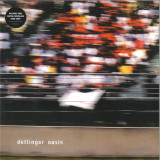
Dettinger’s Intershop and Oasis have long been held, by many fans of ambient and electronic music, to be some of the finest albums in their field. Produced by the mysterious Olaf Dettinger, about whom not much is publicly known, they were some of the earliest full-lengths released by the then-nascent Kompakt, and in many ways, they both articulated and defined the sound that would come to be known as Pop Ambient, while also existing, somehow, to the leftfield of any clearly recognisable genre.
Beautiful, sui generis works, it is a rare pleasure to see them being reissued on vinyl for a new generation of listeners to embrace. Originally released on CD only in 1999, Intershop was Kompakt’s first artist full-length. The music here simmers and broods, with opulent banks of tone marking out territory for rhythms that seem to be built from the clacking detritus of technology – hisses, thunks, knocks. Bass is deployed carefully, each drop a dubbed-out depth charge; drones spin and spiral, warping and weaving between the beats.
Oasis, released in 2000, refined the palette that Dettinger had explored on its predecessor. A blurred crusade of ambient texturology, its unassuming patterns, and subtle, incremental dynamics, admit to real beauty, and a kind of abstract sensuality that you don’t often experience with music that is, perhaps, similarly tooled, but not as poetic. Through seemingly simple gestures – whether lushly expansive repetitions, hyper-acute tremolo tones, or ear-tickling rhythms – it builds complex emotional resonance. It’s no surprise to discover Oasis is held in high esteem by artists like Panda Bear of Animal Collective, who once said of Dettinger, “For us, he was the dude.”
There is, of course, other music to know Dettinger by, too – his three excellent EPs for Kompakt, Blond (1998), Puma and Totentanz (1999), the latter of which, Michael Mayer once argued, “invented dubstep.” There is also a small, yet graceful run of compilation contributions, many of which can be found on Kompakt’s Total and Pop Ambient series. All this music has plenty to recommend it, sharing a clarity of purpose, and a rare, human warmth and depth. But Intershop and Oasis are the releases that distil Dettinger’s singular vision, and allow him, should he wish, to claim his place as a modern master of ambient and electronic music.
Dettingers Intershop und Oasis werden von vielen Fans von Ambient und elektronischer Musik seit langem als einige der besten Alben in diesem Bereich angesehen. Produziert von dem mysteriösen Olaf Dettinger, über den nicht viel bekannt ist, gehörten sie zu den ersten Alben, die von der damals aufstrebenden Plattenfirma Kompakt veröffentlicht wurden. In vielerlei Hinsicht formulierten und definierten sie den Sound, der später als Pop-Ambient bekannt werden sollte, während sie gleichzeitig irgendwie links von jedem klar erkennbaren Genre existierten.
Es ist eine seltene Freude zu sehen, dass diese wunderschönen Werke auf Vinyl wiederveröffentlicht werden, um sie einer neuen Generation von Hörern zugänglich zu machen. Ursprünglich wurde Intershop 1999 nur auf CD veröffentlicht und war Kompakts erstes komplettes Künstleralbum. Die Musik hier brodelt und brütet, mit opulenten Klangbänken, die das Territorium für Rhythmen abstecken, die aus dem klappernden Gerümpel der Technik gebaut zu sein scheinen – Zischen, Klopfen, Schaben. Der Bass wird sorgfältig eingesetzt, jeder Drop ist eine synchronisierte Tiefenladung; Drones drehen und winden sich spiralförmig und verflechten sich zwischen den Beats.
Oasis, das im Jahr 2000 erschien, verfeinerte die Palette, die Dettinger auf seinem Vorgänger erkundet hatte. Ein verschwommener Kreuzzug der Ambient-Texturologie, dessen unaufdringliche Muster und subtile, schrittweise Dynamik echte Schönheit und eine Art abstrakter Sinnlichkeit zulassen, die man nicht oft bei Musik erlebt, die vielleicht ähnlich ausgestattet, aber nicht so poetisch ist. Durch scheinbar einfache Gesten – seien es üppig ausladende Wiederholungen, hyperakute Tremolotöne oder ohrenbetäubende Rhythmen – baut sie eine komplexe emotionale Resonanz auf. Es ist keine Überraschung, dass Oasis von Künstlern wie Panda Bear von Animal Collective hoch geschätzt wird, der einmal über Dettinger sagte: “Für uns war er DER Typ”.
Es gibt natürlich auch noch andere Musik, die Dettinger bekannt macht – seine drei ausgezeichneten EPs für Kompakt, Blond (1998), Puma und Totentanz (1999), von denen letztere, wie Michael Mayer einmal kühn behauptete, “den Dubstep erfand”. Es gibt auch eine kleine, aber feine Reihe von Compilation-Beiträgen, von denen viele auf Kompakts Total- und Pop-Ambient-Serien zu finden sind. All diese Musik ist sehr empfehlenswert und zeichnet sich durch eine klare Zielsetzung und eine seltene, menschliche Wärme und Tiefe aus. Aber Intershop und Oasis sind die Veröffentlichungen, die Dettingers einzigartige Vision destillieren und es ihm ermöglichen, seinen Platz als moderner Meister der Ambient- und elektronischen Musik zu behaupten, sollte er dies wünschen.
out of Stock
Last delivered 2 years ago available to reorder, subject to availability
Dettinger’s Intershop and Oasis have long been held, by many fans of ambient and electronic music, to be some of the finest albums in their field. Produced by the mysterious Olaf Dettinger, about whom not much is publicly known, they were some of the earliest full-lengths released by the then-nascent Kompakt, and in many ways, they both articulated and defined the sound that would come to be known as Pop Ambient, while also existing, somehow, to the leftfield of any clearly recognisable genre.
Beautiful, sui generis works, it is a rare pleasure to see them being reissued on vinyl for a new generation of listeners to embrace. Originally released on CD only in 1999, Intershop was Kompakt’s first artist full-length. The music here simmers and broods, with opulent banks of tone marking out territory for rhythms that seem to be built from the clacking detritus of technology – hisses, thunks, knocks. Bass is deployed carefully, each drop a dubbed-out depth charge; drones spin and spiral, warping and weaving between the beats.
Oasis, released in 2000, refined the palette that Dettinger had explored on its predecessor. A blurred crusade of ambient texturology, its unassuming patterns, and subtle, incremental dynamics, admit to real beauty, and a kind of abstract sensuality that you don’t often experience with music that is, perhaps, similarly tooled, but not as poetic. Through seemingly simple gestures – whether lushly expansive repetitions, hyper-acute tremolo tones, or ear-tickling rhythms – it builds complex emotional resonance. It’s no surprise to discover Oasis is held in high esteem by artists like Panda Bear of Animal Collective, who once said of Dettinger, “For us, he was the dude.”
There is, of course, other music to know Dettinger by, too – his three excellent EPs for Kompakt, Blond (1998), Puma and Totentanz (1999), the latter of which, Michael Mayer once argued, “invented dubstep.” There is also a small, yet graceful run of compilation contributions, many of which can be found on Kompakt’s Total and Pop Ambient series. All this music has plenty to recommend it, sharing a clarity of purpose, and a rare, human warmth and depth. But Intershop and Oasis are the releases that distil Dettinger’s singular vision, and allow him, should he wish, to claim his place as a modern master of ambient and electronic music.
Dettingers Intershop und Oasis werden von vielen Fans von Ambient und elektronischer Musik seit langem als einige der besten Alben in diesem Bereich angesehen. Produziert von dem mysteriösen Olaf Dettinger, über den nicht viel bekannt ist, gehörten sie zu den ersten Alben, die von der damals aufstrebenden Plattenfirma Kompakt veröffentlicht wurden. In vielerlei Hinsicht formulierten und definierten sie den Sound, der später als Pop-Ambient bekannt werden sollte, während sie gleichzeitig irgendwie links von jedem klar erkennbaren Genre existierten.
Es ist eine seltene Freude zu sehen, dass diese wunderschönen Werke auf Vinyl wiederveröffentlicht werden, um sie einer neuen Generation von Hörern zugänglich zu machen. Ursprünglich wurde Intershop 1999 nur auf CD veröffentlicht und war Kompakts erstes komplettes Künstleralbum. Die Musik hier brodelt und brütet, mit opulenten Klangbänken, die das Territorium für Rhythmen abstecken, die aus dem klappernden Gerümpel der Technik gebaut zu sein scheinen – Zischen, Klopfen, Schaben. Der Bass wird sorgfältig eingesetzt, jeder Drop ist eine synchronisierte Tiefenladung; Drones drehen und winden sich spiralförmig und verflechten sich zwischen den Beats.
Oasis, das im Jahr 2000 erschien, verfeinerte die Palette, die Dettinger auf seinem Vorgänger erkundet hatte. Ein verschwommener Kreuzzug der Ambient-Texturologie, dessen unaufdringliche Muster und subtile, schrittweise Dynamik echte Schönheit und eine Art abstrakter Sinnlichkeit zulassen, die man nicht oft bei Musik erlebt, die vielleicht ähnlich ausgestattet, aber nicht so poetisch ist. Durch scheinbar einfache Gesten – seien es üppig ausladende Wiederholungen, hyperakute Tremolotöne oder ohrenbetäubende Rhythmen – baut sie eine komplexe emotionale Resonanz auf. Es ist keine Überraschung, dass Oasis von Künstlern wie Panda Bear von Animal Collective hoch geschätzt wird, der einmal über Dettinger sagte: “Für uns war er DER Typ”.
Es gibt natürlich auch noch andere Musik, die Dettinger bekannt macht – seine drei ausgezeichneten EPs für Kompakt, Blond (1998), Puma und Totentanz (1999), von denen letztere, wie Michael Mayer einmal kühn behauptete, “den Dubstep erfand”. Es gibt auch eine kleine, aber feine Reihe von Compilation-Beiträgen, von denen viele auf Kompakts Total- und Pop-Ambient-Serien zu finden sind. All diese Musik ist sehr empfehlenswert und zeichnet sich durch eine klare Zielsetzung und eine seltene, menschliche Wärme und Tiefe aus. Aber Intershop und Oasis sind die Veröffentlichungen, die Dettingers einzigartige Vision destillieren und es ihm ermöglichen, seinen Platz als moderner Meister der Ambient- und elektronischen Musik zu behaupten, sollte er dies wünschen.
out of Stock
Last delivered 18 months ago available to reorder, subject to availability
Off World presents the final album in its trilogy of surreal and spacious leftfield electronics. "A stellar project headed by Sandro Perri, one of the most singular producers in contemporary music" (Boomkat), this third volume is another distinctive collection of tracks constructed from semi-improvised ensemble recordings made over the past decade with a varied cast of coconspirators. Drew Brown, Matthew Cooper, Susumu Mukai and Andrew Zukerman join Perri again on a variety of synths and machines, along with violinist Jesse Zubot (Tanya Tagaq, Fond Of Tigers). Perri also continues to add organ and piano to the mix, while Volume 3 notably features first-time Off World contributors Nicole Rampersaud on trumpet and Martin Arnold on guitar, both mainstays of Toronto's vibrant improv and out-music scenes. The Quietus calls Off World "genuinely explorative_the musical equivalent of a Dali-esque landscape" which through all sorts of genre-defying twists and turns, at times evokes "offkilter, late Miles Davis ambience". Off World 3 doubles down on that jazz-adjacent trope in certain respects, while holding fast to Pitchfork's dictum that Perri "cultivates his own genreless brand of futurism." Marked by longer tracks than previous collections, three of the album's five songs clock in around the 10-minute mark, where overtly improvised instrumental playing wends its way across alternately bubbling and woozy electronic beds. "Impulse Controller" is a languidly skewed rhumba where ambling melodic undercurrents and dubby electronic pointillism provide a dulcet promenade for Rampersaud's Miles-esque trumpet excursions. "Ludic Loop" see-saws along in a slow synthy two-step, punctuated by Perri's restrained piano chords and Arnold's fried electric guitar. "Empasse" is perhaps most reminiscent of earlier Off World collections, though again slowed and stretched, with oozing synth bass ostinatos counterposed by ambient layers of viola and violin filigree from Zubot. These three centerpiece longform tracks each highlight one of the album's instrumental improvisers, and taken together, make for the most scintillating sedate and ruminant album in the trilogy. Off World 3 sounds as sui generis as ever, but in wrapping up the series, Perri sprinkles the project's emblematic alien surrealism with decidedly anthropic elements and temporalities. This final volume in the trilogy could also be seen as a re-statement of Perri's politico-aesthetic mission, as aptly celebrated by Pitchfork and its glowing 8.0+ reviews of Perri's 2018/2019 solo albums In Another Life and Soft Landing (released between Off World 2 and the present volume): a uniquely purposeful, subtly detailed cannon of songs "busy, vibrant, and bursting with life, but that aren't ever in a rush to get anywhere."
Throughout their legendary, decade-long run, the Shadow Ring were an enigmatic force on the international musical sub-underground. Before their disbandment in 2002, this shambolic rock outfit, formed by a group of rowdy teenagers in southeast England, left behind a mighty run of eight LPs, a handful of 7"s, and a spate of raucous live shows and cryptic zine appearances on both sides of the Atlantic, all which have bolstered their enduring word-of-mouth mystique. Beginning this year with the first-ever vinyl pressing of the self-released pre-Shadow Ring tape The Cat & Bells Club (1992), Blank Forms Editions is conducting a systematic retrospective of the storied group, including a multi-year LP reissue effort and a forthcoming comprehensive CD box set and an over five hundred page book. Recorded and self-released by the group's own Dry Leaf Discs in 1993, City Lights is the debut record of the then duo Graham Lambkin and Darren Harris_an assured arrival statement teeming with stripling angst and ambition. Lifelong chums Lambkin and Harris were barely nineteen and living at home in the seaside town of Folkestone, Kent, with few overhead expenses. The two were freshly employed as a forklift operator at a hardware store and an aide at a home for children with disabilities, respectively, affording them the time and funds to commit to a proper full-length release. Frontman Lambkin describes the album as a "microscopic examination of leisure activities, this time centered around a nightclub," a conceit surging through its lyrics, song titles, cover art (depicting an audience of cats and mice at the Leas Club, a Folkestone fixture), and flip side (replete with fictional bandmates and pseudonymous liner notes). On a recently-acquired secondhand guitar, Lambkin plays repetitive, brooding licks that form the record's backbone, weaving in and out of sync with Harris's free-form percussion and the pair's sing-song poetry. Tracks range from unraveling nursery-rhyme ditties to extended jams awash with Casiotone and toy piano noodling. The duo's musical hobby-horses work themselves in: the influence of Mark E. Smith's breathless deadpan, the headless outer-edges of ESP-Disk's back catalog, the eerie atmospherics of Hirsche Nicht Aufs Sofa, and the deconstructed rock tunes of the Dunedin scene are all detectable, although there is a sui generis quality to the Shadow Ring's artless temerity. "I've got to see and taste those city lights," intones Lambkin on the album's title track_indeed, this is a record of naked drive and pent-up desperation, and a shimmering glimpse of what's to come. For Fans of The Fall, Royal Trux, The Dead C, Shirley Collins, '70s British progressive rock, Dean Blunt.
The latest project by "El Gusano", a moniker of the elusive Pablo Arrangoiz, aka Dj Fitness, Bauzer Vep, Señor Faxwater, Glue Boy, Goiz and too many more to list (seriously, check out his Bandcamp/discogs). Arrangoiz is a Mexican native based in Miami, known as much for his ever varying aliases as he is for his scrupulous production and sui generis live and DJ sets. Focused on incorporating Latin ritmos with contemporary elements of his other influences such as house, techno, free jazz, German new wave, electro, Miami bass, noise, and more, Arrangoiz’s production, much like the artist himself, is one of a kind.
Saka La Bolsita", the inaugural release on Impacto, the new label and love child of Miami powerhouse producers Nick León and Jonny From Space, is a sonic conglomeration of acid cumbia with slivering jazz chords, microtonal reggaetón constructed with a tuning system made by finding the overtones of air conditioners, demonic dembow with a dash of house, Autotune Festival sex music, and all out pure ratchet core with an El Chavó sample. Including collaborations with lifetime friend Matt Angel AKA "El Descarao".
out of Stock
Last delivered 2 years ago available to reorder, subject to availability
A.R. Kive collates the three most astonishing works from that most miraculous of duos - A.R. Kane - comprising the ‘Up Home’ EP from 1988 that signified the band’s dawning realisation of their own powers and possibilities, their legendary debut LP ‘sixty nine’ (1988) and its kaleidoscopic, prophetic double-LP follow up ‘i’ (1989).
In founder-member Rudy Tambala’s new remastering, the music on these pivotal transmissions from the birth of dream pop, have been reinvigorated and re-infused with a new power, a new depth and intimacy, a new height and immensity. Vivid, timeless and yet always timely whenever they’re recalled, these records still force any listener to realise that despite the habits of retrospective myth-making and the
safe neutering effects of ‘genre’, thirty years have in no way dimmed how resistant and dissident to critical habits of categorisation A.R. Kane always were. Never quite ‘avant-pop’ or ‘shoegaze’ or ‘post-rock’ or any of those sobriquets designed to file and categorise, A.R. Kive is a reminder that those genres had to be coined, had to be invented precisely to contain the astonishing sound of A.R. Kane, because
previous formulations couldn’t come close to their sui generis sound and suggestiveness. This is music that pointed towards futures which a whole generation of artists and sonic explorers would map out. Now beautifully repackaged, remastered and fleshed out with extensive sleeve notes and accompanying materials, ‘A.R. Kive’ reveals that 35 years on it’s still a struggle to defuse the revolutionary and inspirational possibility of A.R. Kane’s music.
A.R. Kane were formed in 1986 by Rudy Tambala and Alex Ayuli, two second-generation immigrants who grew up together in Stratford, East London. From the off the pair were outsiders in the culturally mixed (cockney/Irish/West Indian/Asian) milieu of the East End, with Alex and Rudy’s folks first generation immigrants from Nigeria and Malawi, respectively. The two of them quickly developed and fostered an innate and near-telepathic mutual understanding forged in musical, literary and artistic exploration. Like a lot of second-generation immigrants, they were ferocious autodidacts in all kinds of areas, especially around music and literature. Diving deep into the music of afro-futurist luminaries such as Sun Ra, Miles Davis, Lee Perry and
Hendrix, as well as devouring the explorations of lysergic noise and feedback from contemporaries like Sonic Youth and Butthole Surfers, they also thoroughly immersed themselves in the alternate literary realities of sci-fi and ancient history (the fascination with the arcane that gave the band their name), all to feed their voracious cultural thirsts and intellectual curiosity.
It was seeing the Cocteau Twins performing on Channel 4 show the Tube that spurred A.R. Kane into being - “They had no drummer. They used tapes and technology and Liz Fraser looked completely otherworldly with those big eyes. And the noise coming out of Robin’s guitar! That was the ‘Fuck! We could do that! We could express ourselves like that!’ moment”, recalls Tambala - and through a mix of
confidence, chutzpah, ad hoc almost-mythical live shows and sheer innocent will the duo debuted with the astonishing ‘When You’re Sad’ single for One Little Indian in 1986. Immediately dubbed a ‘black Jesus & Mary Chain’ by a press unsure of WHERE to put a black band clearly immersed in feedback and noise, what was immediately apparent for listeners was just how much more was going on here - a
tapping of dub’s stealth and guile, a resonant umbilicus back to fusion and jazz, the music less a conjuration of past highs than a re-summoning of lost spirits.
The run of singles and EPs that followed picked up increasingly rapt reviews in the press, but it was the ‘Up Home EP’ released in 1988 on their new home, Rough Trade that really suggested something immense was about to break. Simon Reynolds noted the EP was: Their most concentrated slab of iridescent awesomeness and a true pinnacle of an era that abounded with astounding landmarks of guitar-reinvention, A.R. Kane at their most elixir-like.
If anything, the remastered ‘Up Home’ that forms the first part of ‘A.R. Kive’ is even more dazzling, even more startling than it was when it first emerged, and listening now you again wonder not just about how many bands christened ‘shoegaze’ tried to emulate it, but how all of them fell so far short of its lambent, pellucid wonder. This remains intrinsically experimental music but with none of the frowning orthodoxy those words imply. A.R. Kane, thanks to that second generation auto-didacticism were always supremely aware about the interstices of music and magic, but at the same time gloriously free in the way they explored that connection within their own sound, fascinated always with the creation of ‘perfect mistakes’ and the possibilities inherent in informed play.
‘sixty nine’ the group’s debut LP that emerged in 1988 had
critics and listeners struggling to fit language around A.R. Kane’s sound. As a title it was telling - the year of ‘Bitches Brew’, the year of ‘In A Silent Way’, the erotic möbius between two lovers - and as originally coined by the band themselves, ‘dream pop’ (before it became a free-floating signifier of vague import) was entirely apposite for the music A.R. Kane were making. Crafted in a dark small basement studio in which Tambala recalls the duo had “complete freedom - We wanted to go as far out as we could, and in doing so we discovered the point where it stops being music”. There was an irresistibly dreamy, somnambulant, sensual and almost surreal flow to ‘sixty nine’s sound, but also real darkness/dankness, the ruptures of the primordial and the reverberations of the subconscious, within the grooves of remarkable songs like ‘Dizzy’ and ‘Crazy Blue’. Alex’s plangent vocals floated and surged amidst exquisite peals of refracted feedback but crucially there was BASS here, lugubrious and funky and full of dread, sonic pleasure and sonic disturbance crushed together to make music with a center so deep it felt subcutaneous, music constructed from both the accidental and the deliberate, generous enough to dance with both serendipity and chaos. ‘sixty nine’ remains - especially in this remastered iteration - ravishing, revolutionary.
The final part of this ‘A.R. Kive’ contains 1989’s astonishing double-LP ‘i’ which followed up on ‘sixty nine’s promise and saw the duo fully unleash their experimental pop sensibilities over 26 tracks, plunging the A.R. Kane sound into a dazzlingly kaleidoscopic vision of pop experiment and play. Suffused with new digital technologies and combining searingly sweet and danceable pop with perhaps the duo’s strangest and boundary-pushing compositions, the album did exactly what a great double-set should do - indulge the artists sprawling pursuit of their own imaginations but always with a concision and an ear for those moments where pop both transcends and toys with the listeners expectations. Jason Ankeny has noted that “In retrospect, ‘i’ now seems like a crystal ball prophesying virtually every major musical development of the 1990s; from the shimmering techno of ‘A Love from Outer Space’ to the liquid dub of ‘What’s All This Then?’, from the alien drone-pop of ‘Conundrum’ to the sinister shoegazer miasma of ‘Supervixens’ — it’s all here, an underground road map for countless bands to follow.” Perhaps the most overwhelmingly all-encompassing transmission from A.R. Kane, ‘i’ bookended a three year period in which the duo had made some of the most prophetic and revelatory music of the entire decade.
After ‘i’ the duo’s output became more sporadic with Tambala and Ayuli moving in different directions both geographically and musically, with only 1994’s ‘New Clear Child’ a crystalline re-fraction of future and past echoes of jazz, folk and soul, before the duo went their separate ways. Since then, A.R. Kane’s music has endured, not thanks to the usual sepia’d false memories that seem to maintain interest in so much of the musical past, but because those who hear A.R. Kane music and are changed irrevocably, have to share that universe which A.R. Kane opened up, with anyone else who will listen. Far more than other lauded documents of the late 80s it still sounds astonishingly fresh, astonishingly livid and vivid and necessary and NOW.
'Malombo music is an indigenous kind of music. If you listen to it, you can feel that it can heal you, if you’ve got something wrong. It’s healing music.'
Lucky Ranku
"Lucas ‘Lucky’ Madumetja Ranku (1941-2016) was one of the greatest African guitarists of his generation. He first made his name with the Malombo Jazz Makers – the successor group to the legendary Malombo Jazzmen, formed in Mamelodi township by guitarist Philip Tabane, drummer Julian Bahula and flautist Abbey Cindi. When Tabane left the Jazzmen in 1965, Bahula and Cindi called on Lucky to replace him, and the Malombo Jazz Makers were born. Building on the popularity and success of the original Malombo Jazzmen, the Malombo Jazz Makers become immensely popular, touring widely, winning numerous jazz competitions, and recording two successful albums for the Gallo label.
The deep and hypnotic Down Lucky’s Way was their third album. Recorded in 1969, it was the first Malombo Jazz Makers album to feature additional instruments, and the first to feature Abbey Cindi on soprano saxophone as well as flute. But more than anything else, Down Lucky’s Way is a transfixing showcase for Lucky Ranku’s sui generis guitar virtuosity. Quite different from their previous recordings, the album shifted the Jazz Makers’ sound toward hypnotic, extended compositions, layered by organ bass and guitar overdubs. Of all the Malombo Jazz Makers recordings, Down Lucky’s Way is the deepest of mood, and the richest of vision.
However, through one of the erasures that are ubiquitous in South African musical history under apartheid, it seems that the record may not ever have been properly issued. Original copies are outrageously rare – only a few are known among collectors. When we asked Lucky about the album, he was unaware it had ever been released, and had never seen a copy. Perhaps it was pulled; perhaps it was pulped; perhaps Gallo simply took their eye off the ball. Nobody knows, but it is not impossible that the apartheid authorities were involved, for by 1969, the Malombo Jazz Makers were well known to them.
Julian Bahula’s introduction of malopo drums to the music of the original Malombo Jazzmen was a moment of crucial political and cultural radicalism for South African jazz. Traditionally used by BaPedi people for healing, the malopo drums of Malombo music re-centered jazz
around indigenous sounds and culture, and over the next decade, the Malombo Jazz Makers became deeply involved in political opposition to apartheid. Their recovery of indigenous sounds made them the musical standard bearer for the Black Consciousness movement, and they toured South Africa clandestinely with the writer and anti-apartheid activist Steve Biko. They also broke apartheid laws by playing with the white rock group Freedom’s Children, sometimes appearing on stage in masks or made up with UV paint to avoid detection by the authorities; they appeared regularly at the rule-bending Free People’s Concerts organized by David Marks, where Marks’ clever exploitation of a loophole – mixed audiences were prohibited from attending ticketed concerts where anyone was being paid, but the law said nothing about private functions played by artists for free – meant people could come together in defiance of apartheid laws. The notorious Special Branch would raid their concerts; Lucky remembered police storming an auditorium, throwing smoke bombs.
Eventually the political situation became too dangerous, and the band were being actively sought by the police. Though Abbey Cindi remained in South Africa, both Julian Bahula and Lucky Ranku went into political exile in the UK, where Bahula founded the group Jabula with Lucky and former members of Cymande, Steve Scipio and Michael ‘Bami’ Rose. With Jabula, Julian and Lucky worked tirelessly for the anti-apartheid movement, raising funds and awareness all over Europe and in the US. They played with Dudu Pukwana’s Spear in the joint formation Jabula-Spear, and worked together in Bahula’s Jazz Afrika formation, and Bahula organized the first Concert for Mandela in 1984 (it was Jabula that supplied the chorus for The Special A.K.A.’s hit single ‘Nelson Mandela’). Lucky also played and recorded with Chris McGregor’s South African Exiles Thunderbolt group. After the fall of apartheid, they both remained living and working in the UK. In 2012 the South African government awarded Julian Bahula the Gold Order of Ikhamanga for his cultural work during the struggle against apartheid.
Until his death in 2016, Lucky continued to play with countless groups and musicians. putting together the band Township Express with Pinise Saul, and leading his own African Jazz Allstars. The influence of his playing on the international perception of South African township music was immense, and he was held in the highest regard by his peers – ‘Lucky was a guitarist who could bring any house down’, said Michael ‘Bami’ Rose.
But despite his continuous presence on the UK live circuit over four decades, Lucky Ranku never recorded an album as leader. And so as well as restoring an important lost piece of South African musical heritage, Down Lucky’s Way is a precious opportunity to hear one of Africa’s foremost guitarists stretching out, in focus and in his element."
First issue since 1969 of the Malombo Jazz Maker’s unknown third album.
Liner notes featuring interviews with Julian Bahula and Lucky Ranku.
Fully licensed from Julian Bahula.
Easy Weapons was the debut from North Carolina’s Public Acid. Originally self-released by the band in 2018 in a criminally small press of 300, LVEUM is proud to finally get it back in print. PUBLIC ACID’s debut is an extremely ugly, powerfully distorted record. Taking cues from the outer fringes of both Japanese and Italian hardcore punk and combining it with the weirdness of early primitive black metal, pushing the feedback, noise and performing intensity in to the red from the first note. PUBLIC ACID execute very idiosyncratic song writing. Full of memorable riffs that twist and turn on a constantly out of control ride, which gives it a very urgent feeling of confusion and chaos. The ferocity and out-there-ness of luminaries ala G.I.S.M. or PARABELLUM, and the immediacy of WRETCHED, NERORGASMO or SHOTGUN SOLUTION in the hell of a modern sui-generis punk album.
When Isa Gordon sent the demo of this album to me I knew I wanted to release it before I had got half way through it. I had previously released her super good Resili collaborative project but I wasn’t quite prepared for how good this was going to be. Isa is patently a once in a blue moon talent and I feel honoured to help get her unique, visionary sounds out into the world. This is next level programming & sound design but always with soul, and musicality. Sui generis.
Isa says
“For you only came about in the lockdown winter in 2020. I started seeing a lot of beats and motifs that I’d been working on working together as a collection and spent a few months compiling, completing, mixing and weaving together the tracks into a coherent album.
It was many nights tucked away entering the wormholes of making music and trying to honour the emotion contained in each song by expanding the sentiments within them into complete pieces, chasing down the journey in each one.
It was a very personal, solitary exploration of how I interpret and compose instrumentals, with the rare global situation inhibiting outsider contact and influence. I include a mix of tempos, styles and freely combine digital and live instruments in order to serve whatever intention or feeling needs to be heard”.
Isa is an Ayrshire bred, Glasgow based producer and singer. Impressed upon by myriad styles; Singing folk music since a youngster, Playing guitar since a teen, Producing electronic music thereafter. Now freely cherry-picking whatever sounds, instruments, words and methods serve the feeling. Exploring solitary beat making as Isa Gordon and Singing and writing heartfelt lyrical ditties with her band Fantasy Land.
out of Stock
Last delivered 4 years ago available to reorder, subject to availability
Grönland Records announce a revised, remastered reissue of “Sleepwalkers” by DAVID SYLVIAN. Available as a gatefold 2LP with exclusive art print and as a gatefold digipack CD, this new edition also features the previously unreleased track “Modern Interiors”.
in the 00s, DAVID SYLVIAN produced two of his strongest and most solitary statements, BLEMISH and MANAFON. but those records don’t tell the whole story. during that the same period, SYLVIAN created an alternate body of work: a series of collaborations and side projects with leading talents of pop and improv, electronic and contemporary classical music. the best of these recordings are gathered here on SLEEPWALKERS, meticulously sequenced and remixed: the fruits of one-off meetings and lifelong partnerships, they jump from bliss to intrigue, romance to sensuality, as arch experiments lead into the lushest pop.
the single ‘world citizen – i won’t be disappointed,’ written with RYUICHI SAKAMOTO, is a sublime example, with an impeccable melody and lyric warmed by SYLVIAN’S gorgeous tenor. SYLVIAN has worked with SAKAMOTO for close to three decades. by contrast, on ‘pure genius,’ a collaboration with CHRIS VRENNA aka tweaker, he sounds like he’s walked into a heist flick, singing the part of a delusional, dangerous bedroom genius. as sylvian explains, tracks like this ‘give me a chance to write in a way that’s completely non-personal, playful. it’s an exercise of some kind, working within the parameters of a given assignment.’
intrigue of a different kind drives ‘sugarfuel,’ with music by JEAN-PHILIPPE VERDIN, aka READYMADE FC. the lyrics offered ‘an opportunity to grapple with a more overt sexual theme than anything i’d previously attempted, as suggested by a vocal sample in the original track provided, a threateningly insistent ‘i’m on your side.’ so i took that as my point of entry and ran with it. i would love to write more on this subject should i find the right context. you’re always aware of walking a thin line exploring sexuality with language alone. the failings of the great and the good are strewn all around.’
NINE HORSES’ ‘wonderful world’ strolls in on a black tie bassline and the echoing coos of swedish chanteuse STINA NORDENSTAM, whose high chirps brush hands with SYLVIAN’S lead; there’s the blistering ‘money for all’ by FRIEDMAN and SYLVIAN, an oblique response to the fallout of 9/11 and the war on iraq. this is followed by the last known recording of SYLVIAN’S singing voice in over a decade, ‘do you know me now?’, a live studio recording later augmented by JAN BANG, EIVIND AARSET and ERIK HONORÉ. it’s certainly a title that’s become more relevant over time as SYLVIAN, in the latter stages of his career, repeatedly comes face to face with a new generation of admirers fixated on the life and times of the band formed by his younger self. SYLVIAN is one of only a handful of musicians to have successfully moved on from overt pop beginnings into a domain all his own but is consistently plagued by the misguided desires or expectations of some unfamiliar with his evolution to do a u-turn, pick up where he left off in the late 90s. although this compilation, as well as his writing for NINE HORSES, adequately shows SYLVIAN’S traditional love of melody is
intact, that it’s consistently remained part of his output, there’s no denying his focus has shifted, evolved.
the refusal to embrace complacency, the need to cover new ground ‘as older generations of popular musicians have a moral duty to explore despite, or because of, the greater possibility of failure’ will, i believe, lead to a reassessment of his later work that embraces a sightly more complex relationship with what we’re referring to as ‘melodic’, accompanied by an exploration of improvisation without dogma or beholden to any ‘givens’ for which he’s not infrequently been castigated. for SYLVIAN, there are no such boundaries. it’s obvious that different facets of his work co-exist without conflict but not necessarily for the majority of his audience. again, this places SYLVIAN in the odd, rare, unenviable(?) position of moving forwards leaving many in his devoted audience behind as, should he decide to return to music, it’s unlikely he’ll be aiming to placate an audience in love with work that preceded the 00s. in fact we’ve no idea where new work, should it surface, may lead.
SLEEPWALKERS also spotlights the innovators who contributed to MANAFON and BLEMISH. CHRISTIAN FENNESZ hangs a crackling, shimmering curtain behind the vocal on ‘transit,’ matching his signature mass of sui generis sounds to sylvian’s stately performance. and the title track began with an instrumental handed to SYLVIAN by MARTIN BRANDLMAYR of POLWECHSEL, soon after the first recording session for MANAFON. spite crackles in the gaps between the percussion, and onkyo artists TOSHIMARU NAKAMURA and SACHIKO M set the stage for the scathing lyrics in the chorus.
it cuts close to the bone and so do the two spoken word cuts, ‘angel’ and ‘thermal,’ produced by SAMADHISOUND recording artists JAN BANG and ERIK HONORÉ (and featuring ARVE HENRIKSEN on trumpet). SYLVIAN describes the latter work as a ‘love poem’ to his daughter. ‘‘thermal’ reflects on a period when our time in sonoma, ca was coming to an end. we’d stayed in temporary accommodation which had lulled us into a false sense of security. we had pear, apple, lemon, and figs trees growing in the yard. a small but exotic paradise. a cocoon. but the cracks were beginning to show in the relationship between ex-wife INGRID CHAVEZ and i which is where i think this underlying sense of anxiety, which runs throughout the poem, is derived from, coupled with the need to provide physical and spiritual stability to the children, the youngest of whom was just under two at the time. the poem is addressed to her. our world was dissipating, coming apart at the seams, but we were an island unto ourselves.’
‘five lines’ marked the start of a new partnership with acclaimed young composer DAI FUJIKURA, who at the time of recording was also working on remixes of MANAFON for what became DIED IN THE WOOL. the string quartet was performed by the celebrated ICE ENSEMBLE and written for SYLVIAN, who FUJIKURA cites as an early influence. says SYLVIAN, ‘the composition moves through numerous changes in time signature but as i had no knowledge of what these were i just relied on my gut instinct, and responded, as i always do, with what felt right to me, composing an entirely new melody in the process. some months later i was working in a studio in london and dai dropped by. i rather tentatively asked if he’d like to hear a rough mix of the song as it stood, painfully aware that my contribution might make no sense to him at all but, to my relief he loved the result.’
there’s one further new addition to this collection, the first official release of a track composed in response to the tsunami in fukushma, ‘modern interiors’, featuring SYLVIAN once again in collaboration with BANG and AARSET.
like 2000s EVERYTHING AND NOTHING, SLEEPWALKERS is a retrospective of a particular decade when SYLVIAN was free of major label interference and could follow his own instincts without having to explaining himself – but it’s also an eye-opening complement to his solo releases. as SYLVIAN explains, ‘some collaborations seem to be a one-off exchange but you can never be too certain of that fact. others have been long term. in this respect, RYUICHI comes to mind. there’s others with whom you hope to continue working as you feel you’ve barely scratched the surface. other times offers come out of the blue, welcome, inspired. regardless, it’s wonderfully explorative to have so many possibilities to juggle with. each collaboration seems timely. it’s as if there’s a rightness to the exchange at a given moment in time.’
in the meantime, we hope you enjoy the work presented here, personally selected, remixed and sequenced and entirely remastered. these are the orphans, abused, estranged, exotic, migrating from diverse corners of the globe, brought together under one roof which they're learning to share despite their differences.
‘as many of you will already be aware, despite relatively continuous work on solo albums, i’ve maintained strong ties with a number of musicians throughout my life in one context or another. on this new collection, let’s call it SLEEPWALKERS 2.0, a selection of collaborative work produced over the period encompassing blemish through to manafon, i’ve included compositions by nine horses as well as more fleeting flirtations and one-offs. neglected offspring. represented also is long term friend and writing partner, RYUICHI SAKAMOTO, as well as more recent but potentially equally productive partnerships such as CHRISTIAN FENNESZ, ARVE HENRIKSEN and contemporary classical composer DAI FUJIKURA.
i hope you enjoy the work presented here, personally selected, remixed and sequenced and entirely remastered. these are the orphans, abused, estranged, exotic, migrating from diverse corners of the globe, brought together under one roof which they're learning to share despite their differences.
we contain multitudes. we’re nothing if not contradictory.’
DAVID SYLVIAN, 2010
(consistency is contrary to nature, contrary to life: aldous huxley)
out of Stock
Last delivered 4 years ago available to reorder, subject to availability
Camille Bertault and David Helbock are two of the most jawdroppingly talented members of the cohort of European jazz
musicians currently in their mid-Thirties. Their journeys in improvised
music are always adventurous, playful and exciting.
She is the rising star of French vocal jazz. He, Austrian-born, is one
of the most fascinating pianists on the scene. Their personalities
appear to be polar opposites, yet Bertault’s livewire humour and
Helbock’s calm self-assuredness only appear different on the surface.
When it comes to the musical choices they make, they are
emphatically on the same page. Each is astonishingly versatile, with
an innate sense of dramaturgy. This voice / piano duo reaches
unbelievable levels of inventiveness here on ‘Playground’.
“We both love Egberto Gismonti and Hermeto Pascoal, Björk and
Monk,” Helbock explains. “We also wanted a classical piece.” The
duo found the initial repertoire to explore and to spread their musical
wings with relative ease. Bertault’s vocal artistry is hers and hers
alone. Her voice is a magnificent instrument to carry a melody,
whether at breakneck speed and with devastating precision or at
pindrop volume. Helbock’s creativity, as he exploits all the sound
possibilities of the grand piano, is completely ‘sui generis’ as well. He
dampens the piano strings, he plays directly on them, he uses the
piano case as a percussion instrument, he makes use of electronics.
And ‘Playground’ is the first time he has worked with loops.
His accompaniment therefore has an almost orchestral scale and
depth, a jewel case for this scintillating and very special voice. The
pair have written seven new numbers for the album: we hear the
whimsical blues of ‘Lonely Supamen’, the mysterious ‘Fabelwesen’,
the chanson-esque ‘Aide-moi’ and the ethereal-melancholic ‘Bizarre’.
‘Playground’ is a kaleidoscope of sounds and emotions which
invigorates, excites - and will always surprise. The craft and
technique may be breath taking, but neither musician ever forgets the
essential: “It’s not about showing strength or virtuosity, but about
expressing the truth of the moment,” says Camille Bertault. And that
is what she and David Helbock have delivered with each and every
track.
The Brkn Record is a new project led and produced by Jake Ferguson, the co-founder and bass player for the UK's foundational deep jazz outfit the Heliocentrics. With fellow Heliocentrics co-founder and legendary drummer Malcolm Catto, Ferguson has been a regular collaborator with globally recognised artists including Archie Shepp, Mulatu Astatke, Melvin Van Peebles, Orlando Julius and many others. The Architecture of Oppression Part 1 represents Ferguson's debut as a bandleader and orchestrator, and manifests as a committed and soulful response to ongoing and systemic anti-black racism, social oppression and state violence both at home in London and across the globe. Combining poetry, testimony and song with rich and cinematic backdrops, Ferguson has produced a sui generis sound that conjures flavours of Arthur Verocai, Ennio Morricone, classic library productions, Madlib-style deep-jazz beat science, and psychedelic soul. With bandmate Malcolm Catto on drums, Ferguson draws on their long years of collaborative experience in the Heliocentrics to build an album of striking texture and depth.
The Brkn Record is a new project led and produced by Jake Ferguson, the co-founder and bass player for the UK's foundational deep jazz outfit the Heliocentrics. With fellow Heliocentrics co-founder and legendary drummer Malcolm Catto, Ferguson has been a regular collaborator with globally recognised artists including Archie Shepp, Mulatu Astatke, Melvin Van Peebles, Orlando Julius and many others. The Architecture of Oppression Part 1 represents Ferguson's debut as a bandleader and orchestrator, and manifests as a committed and soulful response to ongoing and systemic anti-black racism, social oppression and state violence both at home in London and across the globe. Combining poetry, testimony and song with rich and cinematic backdrops, Ferguson has produced a sui generis sound that conjures flavours of Arthur Verocai, Ennio Morricone, classic library productions, Madlib-style deep-jazz beat science, and psychedelic soul. With bandmate Malcolm Catto on drums, Ferguson draws on their long years of collaborative experience in the Heliocentrics to build an album of striking texture and depth.
"King Gizzard & The Lizard Wizard have always greeted creative boundaries with the same respect bulldozers visit upon anything foolish enough to stray into their path. Over 11 years and across their 17 studio albums to date, the sui generis sextet have turned their many hands to luminous acid-rock daydreams (I’m In Your Mind Fuzz), gritty western horse operas (Eyes Like The Sky), never-ending science-fiction song cycles (Nonagon Infinity), dystopian death-metal epics (Infest The Rat’s Nest) and winningly mellifluous jazz-folk (Sketches Of Brunswick East). They’ve even invented their own musical instrument – a hybrid electric guitar sharing much of its DNA with the traditional Turkish bağlama – to explore the notes between the notes (a mission that’s yielded three albums thus far: Flying Microtonal Banana, K.G. and L.W.).
But their 18th album, Butterfly 3000, might be their most fearless leap into the unknown yet: a suite of ten songs that all began life as arpeggiated loops composed on modular synthesisers, before being fashioned into addictive, optimistic and utterly seductive dream-pop by the six-piece. The album sounds simultaneously like nothing they’ve ever done before, and thoroughly, unmistakeably Gizz, down to its climactic neon psych-a-tronic flourish. "
Jac Berrocal, David Fenech and Vincent Epplay return with Ice Exposure, their second album for Blackest Ever Black. A sequel and companion piece of sorts to 2015's Antigravity, its title couldn't be more apt: sonically it is both colder, and more exposed - in the sense of rawer, more volatile, more vulnerable - than its predecessor, capturing the combustible energy and barely suppressed violence of the trio's celebrated live performances with aspects of noir jazz, musique concrète, no wave art-rock, sound poetry and spectral electronics all interpenetrating in unpredictable and exhilarating ways. While there are moments of great sensitivity and even a cautious romanticism, the prevailing mood is one of anxiety, paranoia, and mounting psychodrama: close your eyes and Ice Exposure feels like a dissociative Hörspiel broadcasting from the seedy backstreets of your own troubled mind. Before he picks up an instrument or opens his mouth, Berrocal's unique and compelling presence can be felt: a combination of studied, glacial cool and anarchic, in-the-moment intensity that has served him well over a long and storied career. It was honed during his time as a theatre and film actor, and in the 70s Paris improv scene, it powered his influential Catalogue group in the 1970s, numerous seminal, sui generis solo sides, and far-sighted collaborations with the likes of Nurse With Wound, Lol Coxhill, Pascal Comelade and James Chance which have seen him come to be valorised by two generations of avant-garde agitators and eccentrics. Now in his eighth decade, it comes with an added gravitas, perhaps, but no less energy or vitality. On Ice Exposure, his lyrical, instantly recognisable trumpet playing is a key feature - see especially the ghostly, dubwise take on Ornette's 'Lonely Woman', the dissolute exotica of 'Salta Girls', and the sublime echo-chamber soliloquy 'Opportunity'. But more often it's his voice that commands centre-stage, whether casually discharging surreal poetic monologues or moaning in animal despair - a vocal tour de force that transcends language and culminates in the Dionysian frenzy of 'Why', Berrocal's half-spoken, half-howled exclamations jostling with David Fenech's slashes of dissonant guitar, over Badalamenti-ish, panther-stalk drums. Fenech's origins are in the mail-art scene of the early '90s, when he led the Peu Importe collective in Grenoble, and since then, in addition to his own recordings he has worked as a software developer at IRCAM and played with Jad Fair, Rhys Chatham and many others. Together with Vincent Epplay he is responsible for Ice Exposure's inspired arrangements and vivid, vertiginous sound design. Epplay is a visual artist and composer with particular interest in aleatory composition, concrete, and the reappropriation of vintage sound and film material. He and Fenech fashion a remarkable mise-en-scene for Berrocal to inhabit, one that embraces cutting-edge electronics while also paying homage to the best traditions of outlaw jazz and libidinous rock'n'roll ('Soundcheck' invokes the brutish spirit of Berrocal's hero Vince 'Rock N Roll Station' Taylor). On 'Blanche de Blanc', Berrocal's voice is framed by a groaning, ghoulish orchestra of industrial drones, while 'Equivoque' evokes the most humid and hostile Fourth World landscapes and 'Panic In Surabaya' lives up to its name, a hectic, pulse-quickening concrète collage that leaves you gasping for air. This is a searching and singular trio operating at the absolute peak of their powers, with an interplay that transcends studio and stage and occurs at an almost telepathic level. Ice Exposure is a triumph of that group mind, an underworld dérive as life-affirming as it is unnerving and psychologically precarious.