Having initially met more than a decade ago at a local community radio station, sometimes doing guest slots on each other’s live, improvised noise shows, Cormac Culkeen and Dave Grenon knew they had a mutual interest in working with sonic textures. They listened to each other’s bands for a handful of years, and in 2017, “made good on a threat” that they’d been making for quite a long time: to start a band. At Cormac’s gentle but clear urging—declaring that they’d gone ahead and booked a space in which to record a video—the two wrote their first song, “Sebaldus,” an ambitious 12-minute trip, which also serves as the fireworks finale to their self-titled debut album. With surges of pathos that smooth out into something more soothing in turn, Cormac goes: “The hunter, you’ve seen him / The archer, his arrows are strong / And hunger, you’ve known her / I know the winter is long.” The track is as much about enduring a Canadian winter as it is about the eponymous 8th century hermit, shot through with sublimated desire. As Cormac put it, Joyful Joyful’s songs are “a little bit outside of time.” But while the lyrics beg close, oblique reading unto themselves, there’s also a distinct sense that they’re only one of many more ways that the duo shapes sound. Cormac, whose voice is like a sea with irregular tides, lights up about an idea in traditional sean-nós Irish music that songs already exist and are out there; it’s up to the singer to become the conduit. This belief in music as something to be channelled, and something more than sound, resonates with the singer’s fundamentalist religious past. To paraphrase: lots of group singing, harmonies, no instrumentation, totally unmediated, no priest, congregational—not choral, not a performance, not about talent, the spirit moves through people. “Of course that informs how I think about singing,” Cormac says. So, when they were exiled from the church because of their queerness, they took the music with them, dislocating it from its dogmatic bounds but not from its transcendent potential. This record might be thought of, then, as a kind of queering of sacred, devotional traditions—or at the very least, a space where all of these things can be held at once. Perhaps perceivable by some as contradictions, these intersecting influences create the conditions for an incredibly singular sound. Dave is steady and exploratory in his handling of this multiplicity, arranging sounds as they’re revealed, corralling them, coaxing them into form. “Because Dave is there,” Cormac says, “I get to sing three times higher, and three times lower, and faster, and backwards, and all of these sounds! That are there. They’re all there.” When asked about early musical memories, Cormac recalled an immediate fascination with harmony: from demanding that the first person they ever heard singing it explain what they were doing, to always (still, to this day) singing in harmony with their twin sister around the house, to being part of a children’s choir that sang soprano in Handel’s Messiah—not realizing until they entered the room with all the other ranges that their learned melody was but one part of the whole. Just as tellingly, Dave reflects on his early attraction to “abstraction and becoming abstract,” describing childhood afternoons messing with microphone and speaker feedback loops, producing long, enduring sounds with almost undetectable variations. In a way unique to the coalescing of these two listeners, notions of harmony are central to their output. Dave samples field recordings, old keyboards and synths, and vocal drones, running the live singing through four or five parallel effects chains, sampling and treating everything again in the moment. “Another way to put it is that Cormac’s voice comes into the board and then comes back out shifted, delayed, and shattered; Cormac and I hear it, live with it, and respond,” Dave says. This work is contingent not only on a deep intuition (neither of them read sheet music) of polyphony and due proportion (something St Thomas Aquinas famously listed as an attribute of beauty) but also on their connection to each other and ability to read subtle cues. Dave says they’d hold each other’s hands while performing if it was more convenient to do so, riffing on something else Cormac mentioned about traditional Irish singing: that someone would always hold the singer’s hand, for fear that without a tether to the ground they might find themselves utterly lost, unsure how to return. Joyful Joyful doesn’t shy away from offering such experiences of departure; they’re willing to unsettle their audiences because they themselves are unsettled. Their shared penchant for spooky, heavy music, and self-described “omnivorous” listening practices equip them with an array of sonic concepts that support this effort; Diamanda Galás, The Rankin Family, Pan Sonic, Pauline Oliveros, Keith Fullerton Whitman, Yma Sumac, and Catholic hymnody were just a few that came up. Observing their audience gives them insight about the effect of each song—something they considered while arranging the album. Its arc is marked by soft, sometimes sudden oscillations between cacophony and euphony, day and night (listen for insects), and from sexual, visceral entanglements to more ephemeral, celestial ones. Front to back, it arouses expansion, unraveling. Of lightning, Vicki Kirby writes: “quite curious initiation rites precede these electrical encounters. An intriguing communication, a sort of stuttering chatter between the ground and the sky, appears to anticipate the actual stroke.” By all accounts, something similar seems to happen at Joyful Joyful shows, between those on the stage and those off it, between what’s earthly and what’s beyond. “A lightning bolt is not a straightforward resolution of the buildup of a charge difference between the earth and a cloud … there is, as it were, some kind of nonlocal communication effected between the two,” writes Karen Barad, extrapolating on Kirby’s thought. Cormac acknowledges that while they and Dave play a role in this mysterious charge that comes about, they’re not solely responsible. However ineffable it may be, it’s undoubtedly a form of communion—and a sensuously shocking one at that
Cerca:sum of things
Fresno is the highly anticipated 6th studio album by Joyce Manor
Produced by Rob Schnapf, this 9 song album is an honest, hard-hitting, post-emo,
power pop masterpiece packed with the elevated writing and earnest delivery
Joyce Manor is loved for.Joyce Manor is a band from Torrance, CA consisting of
Barry Johnson (vocals/ guitar), Chase Knobbe (guitar), Matt Ebert (bass), Neil
Hennessy (new drummer, from The Lawrence Arms). Johnson and Knobbe
started the band in 2008 in the Disneyland parking lot, named after an apartment
complex that Johnson would walk past every day. Joyce Manor made their debut
as an acoustic two-piece. Quickly they learned that playing loud was much more
fun and invited friends to join the lineup. The band has released five studio
albums; Joyce Manor (2011), Of All Things I Will Soon Grow Tired (2012), Never
Hungover Again (2014), Cody (2016), and Million Dollars to Kill Me (2018).
Joyce Manor has toured extensively and their live show has been the driver
behind the band's success. They have made festival appearances at FYF Fest,
Coachella, Riot Fest and since the release of their last studio album in 2018, the
band has headlined NYC Central Park SummerStage, sold out two nights at the
Palladium in LA, and sold out two matinee show at LA's historic Union Station.
Two and a half years after the inception of Shall Not Fade's bass-focused sub-label, and a year since its last edition, Time Is Now is proud to present Allstars Vol.3.
For most, the artists featured on the compilation need little introduction. This will almost certainly be true for the Leicester duo who kick off proceedings with a fresh garage cut. "Pick Me Up" is Y U QT's second contribution to the Time Is Now catalogue and sees them rep the Midlands sound with their take on UKG, complete with a 4x4 speed garage switch-up, sure to energise any dancefloor.
Next up, proving that all good things come in twos, is Manchester duo Cortese who first blessed the label with the warmth of their tuneful concoctions in June last year. This time around is no different: "Regatta" is a real summertime banger, with sunny piano stabs and arpeggiating synths that drift above.
Keeping things soulful is Dublin producer PROZAK who hots things up with the buoyant 4x4 garage track "Next To You" - his third release on TIN.
Yosh sees in the compilation's B-side with "To Me" - a track that captures the London badman's ability to keep you on your toes with stuttering breaks that catch you off-guard.
Next up, and repping Copenhagen for the third time on the label, is Main Phase with the aptly-named "Pull Up Tool"- a thumping 4x4 UKG track which gives a healthy dose of ruffage before Groovy D closes proceedings with speed garage banger "Wun4Me". Set closer business.
Cave dwellers TEMPLE OF VOID finally return from the inky abyss on their highly anticipated new album, Summoning the Slayer. The critically acclaimed, Michigan-based quintet—featuring Alex Awn (guitars), Don Durr (guitars), Mike Erdody (vocals), Jason Pearce (drums), and Brent Satterly (bass)—hunkered down during the last two years, expanding upon their brand of fusty, artfully brutish death-doom with equal parts process and imagination. The outcome is an album that feels massive yet sepulchral, exploratory yet distinguishable—as if crafted deep below and inspired by all the things (mentally and physically) that come with their subterranean endeavor. Summoning the Slayer creepily evolves TEMPLE OF VOID. Produced, mixed, and mastered by Arthur Rizk (Power Trip, Sumerlands, Candy, and more,) Summoning the Slayer pairs long-time influences and a bevy of non-metal vectors into hulking columns of heavy and desolation. Focus tracks “Deathtouch,” “Hex Curse,” and “The Transcending Horror” showcases TEMPLE OF VOID’s death-doom at its heights and their massive, crushing lows. But the group’s fourth album is more than that. The album’s capper, “Dissolution,” is one example of the Detroiters stretching out, the song’s ‘70s rock/singer-songwriter motifs hitting The Moody Blues and Nick Drake hard. Lyrically, Summoning the Slayer eschews commonplace horror tropes with a deeper, broader psychological discussion of the self. TEMPLE OF VOID’s ultimate death-doom metal journey is now complete.
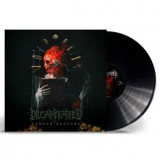
Across eight studio albums, DECAPITATED grew from the adolescent dream of teenagers from a small Central European town to one of the leaders of the metal genre. Each successive album further expands the band’s sound with genre-bending authenticity and integrity. As Metal Injection rightfully observed, “any self-respecting death metalhead knows the name well.”
DECAPITATED’s music is a weapon forged by four young men from a historic medieval-fortified town in Poland, which catapulted them to the top of a worldwide subculture. Like a rose in the devil’s garden, the DECAPITATED story builds triumph from tragedy. The gleeful grotesquery of extreme metal imagery and rifftastic bludgeoning beckons listeners to uncover broader truths.Upon the release of 2017’s Anticult, Metal Hammer declared DECAPITATED “a serious successor to the likes of Pantera and Lamb Of God – a band who can draw new legions into the metal world as its new champions.” Their diverse follow-up, 2022’s Cancer Culture, delivers on that promise.
Instantly recognizable devastation and deceptively sinister hooks abound. Freshly minted DECAPITATED anthems like “Last Supper,” “Hello Death,” “Just Cigarette,” “No Cure,” “Iconoclast,” and “Cancer Culture” shimmer with sonically sharp production and unrelenting bombast. There’s also a newly increased emphasis on melody, even venturing into darkly romantic territory. Wacław "Vogg" Kiełtyka (guitar), Rafał "Rasta" Piotrowski (vocals), Paweł Pasek (bass), and James Stewart (drums) are at the top of their game, delivering the goods at peak performance. Jinjer vocalist Tatiana Shmayluk and Machine Head frontman Robb Flynn make guest appearances.
Set on the descending plains of a mountain range amid a dense forest, Krosno boasts a 14th-century Gothic church, a Subcarpathian museum, and stunning artisan glassware. In this Polish town, teenage music student Wacław "Vogg" Kiełtyka discovered records from bands like Morbid Angel, Cannibal Corpse, Metallica, and Machine Head. The guitarist and his younger brother, drummer Witold “Vitek” Kiełtyka, cofounded DECAPITATED in 1996, inspired by a wide range of technical death, blackened thrash, and local heroes, like KAT and the world-renowned Vader. Death and black metal reigned supreme in the Polish scene of the 1990s, where Behemoth originated as well. In fact, a Vader song called “Decapitated Saints” inspired the band’s moniker.
The organic musical chemistry between the Kiełtykas was akin to the brotherly connectivity and vibe driving Pantera, Gojira, and the classic era of Sepultura. In 2006, Kerrang! praised the first three DECAPITATED albums - Winds of Creation (2000), Nihility (2002), and The Negation (2004) – as “superbly conceived and executed eruptions of technical brilliance and razor-sharp songwriting that turned these youthful Poles into one of the genre’s most widely respected bands.” That year’s Organic Hallucinosis further perfected Vogg’s penchant for blending extremity with catchy hooks.
The rule-breaking ferocity and invention of the first four albums reinvigorated death metal, as DECAPITATED inspired a new generation of bands who followed suit. Sadly, this era came to a shocking end in late 2007. While touring Russia, the band’s bus collided with a large truck near the border with Belarus. Both Vitak and then-singer Adrian “Covan” Kowanek sustained severe head injuries. Tragically, Vitak passed away in a Russian hospital a few days later. He was just 23.Vogg summoned the courage to continue, in honor of his brother and what they created, and returned with a new incarnation of DECAPITATED and the fiercely adventurous comeback album, Carnival is Forever (2011) featuring new vocalist Rafał "Rasta" Piotrowski. Blood Mantra (2014) introduced bassist, Paweł Pasek. Blabbermouth declared it “perhaps the most poised and gutsy” DECAPITATED album, adding “its courageous bends make it a turbulent but pleasurable ride.”
Cancer Culture sounds brilliant, modern, and tasty. “There is no place for any fake, plastic, bullshit drum machine or anything like that,” Vogg insists. “It’s all organic, pure, and clear, showing the true face of the band. Vogg and company entrusted the Cancer Culture mix to David Castillo at Sweden’s Fascination Street Studios / Studio Gröndahl (Sepultura, Carcass, Opeth, Katatonia), and legendary American producer Ted Jensen (Metallica, Slipknot, Pantera, Machine Head, Korn).
The devoted supporters who traveled to see DECAPITATED on international tours with the likes of Lamb Of God, Meshuggah, Soulfly, Fear Factory, and Suffocation over the years will recognize the ever-present pummeling backbone. Longtime fans and newcomers alike will connect to the variety of atmospheric depth throughout Cancer Culture’s ten boundlessly energetic and creative tracks.
“If you told me 25 years ago, in my neighborhood in the South of Poland, that I would be in Machine Head, sharing riffs with Robb Flynn,” Vogg marvels. “It’s simply incredible. It means that everything is possible in your life. That gives me the faith to believe that I can achieve even more in my career. The dreams we have when we are kids, things we can barely imagine, can happen.” Flynn contributes a hauntingly beautiful vocal to the Cancer Culture track “Iconoclast.” “Clean vocal singing is a really new thing in DECAPITATED,” Vogg notes. “It’s really unique and amazing.”
Driven by Vogg’s passion and integrity, the dual emphasis on creative invention and technical prowess maintains DECAPITATED’s stature as genre-leaders in 2022 and beyond. The band’s supporters continually demonstrate confidence and absolute certainty DECAPITATED will deliver.
Across eight studio albums, DECAPITATED grew from the adolescent dream of teenagers from a small Central European town to one of the leaders of the metal genre. Each successive album further expands the band’s sound with genre-bending authenticity and integrity. As Metal Injection rightfully observed, “any self-respecting death metalhead knows the name well.”
DECAPITATED’s music is a weapon forged by four young men from a historic medieval-fortified town in Poland, which catapulted them to the top of a worldwide subculture. Like a rose in the devil’s garden, the DECAPITATED story builds triumph from tragedy. The gleeful grotesquery of extreme metal imagery and rifftastic bludgeoning beckons listeners to uncover broader truths.Upon the release of 2017’s Anticult, Metal Hammer declared DECAPITATED “a serious successor to the likes of Pantera and Lamb Of God – a band who can draw new legions into the metal world as its new champions.” Their diverse follow-up, 2022’s Cancer Culture, delivers on that promise.
Instantly recognizable devastation and deceptively sinister hooks abound. Freshly minted DECAPITATED anthems like “Last Supper,” “Hello Death,” “Just Cigarette,” “No Cure,” “Iconoclast,” and “Cancer Culture” shimmer with sonically sharp production and unrelenting bombast. There’s also a newly increased emphasis on melody, even venturing into darkly romantic territory. Wacław "Vogg" Kiełtyka (guitar), Rafał "Rasta" Piotrowski (vocals), Paweł Pasek (bass), and James Stewart (drums) are at the top of their game, delivering the goods at peak performance. Jinjer vocalist Tatiana Shmayluk and Machine Head frontman Robb Flynn make guest appearances.
Set on the descending plains of a mountain range amid a dense forest, Krosno boasts a 14th-century Gothic church, a Subcarpathian museum, and stunning artisan glassware. In this Polish town, teenage music student Wacław "Vogg" Kiełtyka discovered records from bands like Morbid Angel, Cannibal Corpse, Metallica, and Machine Head. The guitarist and his younger brother, drummer Witold “Vitek” Kiełtyka, cofounded DECAPITATED in 1996, inspired by a wide range of technical death, blackened thrash, and local heroes, like KAT and the world-renowned Vader. Death and black metal reigned supreme in the Polish scene of the 1990s, where Behemoth originated as well. In fact, a Vader song called “Decapitated Saints” inspired the band’s moniker.
The organic musical chemistry between the Kiełtykas was akin to the brotherly connectivity and vibe driving Pantera, Gojira, and the classic era of Sepultura. In 2006, Kerrang! praised the first three DECAPITATED albums - Winds of Creation (2000), Nihility (2002), and The Negation (2004) – as “superbly conceived and executed eruptions of technical brilliance and razor-sharp songwriting that turned these youthful Poles into one of the genre’s most widely respected bands.” That year’s Organic Hallucinosis further perfected Vogg’s penchant for blending extremity with catchy hooks.
The rule-breaking ferocity and invention of the first four albums reinvigorated death metal, as DECAPITATED inspired a new generation of bands who followed suit. Sadly, this era came to a shocking end in late 2007. While touring Russia, the band’s bus collided with a large truck near the border with Belarus. Both Vitak and then-singer Adrian “Covan” Kowanek sustained severe head injuries. Tragically, Vitak passed away in a Russian hospital a few days later. He was just 23.Vogg summoned the courage to continue, in honor of his brother and what they created, and returned with a new incarnation of DECAPITATED and the fiercely adventurous comeback album, Carnival is Forever (2011) featuring new vocalist Rafał "Rasta" Piotrowski. Blood Mantra (2014) introduced bassist, Paweł Pasek. Blabbermouth declared it “perhaps the most poised and gutsy” DECAPITATED album, adding “its courageous bends make it a turbulent but pleasurable ride.”
Cancer Culture sounds brilliant, modern, and tasty. “There is no place for any fake, plastic, bullshit drum machine or anything like that,” Vogg insists. “It’s all organic, pure, and clear, showing the true face of the band. Vogg and company entrusted the Cancer Culture mix to David Castillo at Sweden’s Fascination Street Studios / Studio Gröndahl (Sepultura, Carcass, Opeth, Katatonia), and legendary American producer Ted Jensen (Metallica, Slipknot, Pantera, Machine Head, Korn).
The devoted supporters who traveled to see DECAPITATED on international tours with the likes of Lamb Of God, Meshuggah, Soulfly, Fear Factory, and Suffocation over the years will recognize the ever-present pummeling backbone. Longtime fans and newcomers alike will connect to the variety of atmospheric depth throughout Cancer Culture’s ten boundlessly energetic and creative tracks.
“If you told me 25 years ago, in my neighborhood in the South of Poland, that I would be in Machine Head, sharing riffs with Robb Flynn,” Vogg marvels. “It’s simply incredible. It means that everything is possible in your life. That gives me the faith to believe that I can achieve even more in my career. The dreams we have when we are kids, things we can barely imagine, can happen.” Flynn contributes a hauntingly beautiful vocal to the Cancer Culture track “Iconoclast.” “Clean vocal singing is a really new thing in DECAPITATED,” Vogg notes. “It’s really unique and amazing.”
Driven by Vogg’s passion and integrity, the dual emphasis on creative invention and technical prowess maintains DECAPITATED’s stature as genre-leaders in 2022 and beyond. The band’s supporters continually demonstrate confidence and absolute certainty DECAPITATED will deliver.
Ty Segall meets a new non-rock challenge head-on; soundtrack music for
Matt Yoka’s compelling documentary film ‘Whirlybird’. A variety of synth
sounds, electric keyboards, drums, percussion and saxophone (and yeah, a
few guitars) form a shifting impressionist counterpart, instrumental music that
dialogues with and serves to frame the film’s compulsive themes and
images.
Released to great acclaim in Summer 2021, ‘Whirlybird’ tells the story of
Zoey Tur and Marika Gerrard, former partners and founders of the Los
Angeles News Service, and deftly tracks their extraordinary and oftenreckless pursuit of breaking news throughout the 80s and 90s - a time in
which they pioneered the use of a helicopter to report on Los Angeles at its
most chaotic, capturing historical moments like the 1992 riots and the OJ
Simpson slow speed pursuit.
Through striking interviews and one-of-a-kind archival footage, Yoka’s
documentary expertly tells the story of Zoey and Marika’s unravelling
marriage as they singlehandedly changed broadcast news forever. These
two arcs intertwine to create an electric view of the encroaching intensities of
that era, when the 24-hour news cycle first rose to dominate our national
consciousness.
Ty Segall has previously scored scenes and interstitial bits for film and video
things here and there - but this is his first full-on feature film score, a work
done in collaboration with the director, whose friendship and creative
partnership with Ty has grown over a decade-plus of music videos and other
projects. Working off notes and feels from Matt and responding to the images
and story on screen, Ty crafted some of his most creative arrangements to
date, using synth, drum machine, Wurlitzer keyboard, guitars, drums and
percussion (plus saxes played by Mikal Cronin, who also cowrote the title
track with Ty) to articulate a multitude of tones running through the film.
For a shape-shifter like Ty, this apex of tone colour is no mean feat, an
achievement further highlighted by the full set of pieces. Rather than simply
throw a bunch of songs-with-singing at the project, Ty’s score perfectly
epitomizes the film’s ethos, providing an instrumental counterpart that
dialogues with and helps frame the film’s provocative themes and images.
As both Matt and Ty are natives to the Southern Californian milieu,
particularly the era ‘Whirlybird’ depicts, their collaboration involved a journey
through their past. In realizing the music, they revisited their own Los
Angeles awakenings, adding another personal layer to the deeply felt
meditations and elegies sighted by the remarkable ‘Whirlybird’ - now an
equally thrilling counterpart to be experienced through the original
soundtrack.
We’ve come to expect big things from Liam Gallagher, but today he reveals plans for 2022 that are biblical even by his colossal standards. He is set to release his new album ‘C’MON YOU KNOW’ on May 27th as he looks to score a fourth consecutive #1 UK record. He also celebrates the 25th anniversary of Oasis’ era-defining gigs at Knebworth Park with the news that he’ll return there to play the biggest show of his solo career to date on June 4th.
‘C’MON YOU KNOW’ follows the huge success of Liam’s previous studio albums ‘As You Were’ (2017) and ‘Why Me? Why Not.’ (2019), which established his iconic status for a whole new generation. His ‘MTV Unplugged’ also went straight to #1 on the Official Album Chart. Between his triumphs as a solo artist and his phenomenal success with Oasis, Liam has spent a combined total of almost six months at #1 across eleven chart-topping albums. More details regarding ‘C’MON YOU KNOW’ will follow.
The Knebworth Park show will see Liam return to the site where Oasis famously played two unforgettable nights there in 1996. The 25th anniversary of the shows was marked with the release of the feature-length documentary ‘Oasis Knebworth 1996’, which NME described as “an era-defining gig that will live forever.” The Knebworth Park gig will be the biggest show of Liam’s solo career to date. It follows his triumphant return to touring this summer with headline sets at Reading, Leeds and TRNSMT alongside a free gig for NHS staff at The O2.
Liam says, "I'm absolutely buzzing to announce that on 4th June 2022 I'll be playing Knebworth Park. It's gonna be biblical. C'mon You Know. LG x"
Released in 1961, My Favorite Things made John Coltrane a star with box-office pulling power previously preserved for the likes of Dave Brubeck, Stan Getz, the MJQ, and Miles Davis. The dazzling quartet treatment of the Richard Rodgers hit song, features Coltrane on soprano saxophone for the first time on record, exercised a hypnotic effect on all sorts of music lovers and trend-spotters. The title track was a hit single, and the album became a major commercial success. In 1998, the album received the Grammy Hall of Fame award. It attained gold record status in 2018, having sold 500,000 copies. The mono version of this album, believed lost, was recently found, and is included in this deluxe package, as well as the stereo version, both mastered from the original tapes.
The packaging includes liner notes by award-winning writer Ben Ratliff, as well as photos and Atlantic Records ephemera.
- 1: White Over
- 2: Time To Drink
- 3: Rites Of Spring
- 4: Interlude
- 5: I Think, I Think
- 6: Litres Into Metres/Susurrus
- 7: Ghost Story (Flexidisc - Bonus)
Repress[24,16 €]
This is the second Haress album, a five piece from Shropshire. They channel the sounds of Fairport Convention, Lungfish, Papa M, Earth, Robert Wyatt, John Fahey, and Talk Talk. Taking influence and making it their own. The first vinyl press comes with a bonus flexi disc telling the story of the week the band spent recording the album, the weirdness, the positively supernatural happenings. On this album the core duo of Elizabeth Still and David Hand are joined by David Smyth (Mind Mountain, Kling Klang) on drums, Chris Summerlin (Hey Colossus, Kogumaza) on guitar, Thomas House (Sweet Williams, Charlottefield) on vocals and Nathan Bell (Lungfish, Human Bell) on trumpet. In early 2020 the group travelled to a disused water mill in North Wales for a week to record with engineer Phil Booth (JT Soar) and his mobile studio. The stories of what occurred are told on the flexi disc that accompanies the LP but the group’s plans for a relaxing break in the country were scuppered by events that were either highly unusual, or positively supernatural (depending on your own beliefs in such things). Well-made plans were abandoned and the recording was forced to develop according to the location it was being made in. Chance and accident were welcomed as a collaborator rather than a saboteur and the group exited the sessions extremely freaked-out but with the makings of an album. Ghosts is an incredible piece of work and posits Haress on their own when it comes to developing new approaches to traditional musical forms. The music contains many moments of immediate joy - the relative pop of House’s vocals on White Over, the wild horns of I Think I Think, the rush of warmth as Time To Drink morphs into focus. But it also stretches the sound Haress have carefully developed almost to breaking point with sections of music that feel like somebody - something - else is steering the ship. The 2 final songs – Litres Into Metres and Sussurus – are joined together by a collage of site-specific sound. It was decided to add the output from a detuned long wave radio to this section on the final night of recording. Static hissed from the device but as soon as the record light illuminated, a rich male baritone voice sang loud and clear from the radio, taking a solo right where it was needed and then disappearing into space forever like the Ghosts of the title.
Bazan got his start playing to the Christian rock scene, but the narrative
arc of his albums has traced his crisis of faith and his questioning of the
Evangelical Christian world in which he was raised
Yet, this record is not a final statement, not a "breakup letter to G_d." It's the
deepest and most explicit exploration of his struggles to date, and a meditation
on all things passed between the generations, and for the first time in a while,
Bazan seems actually interested in re- engaging in conversations with the
Evangelical community about his doubts (for example, for the first time in years,
he'll be playing huge Christian music festival Cornerstone this summer). Curse
Your Branches is a masterwork by a modern American poet (Paste called him one
of the "100 best American songwriters" in a piece that followed the release of his
solo EP Fewer Moving Parts) at the height of his powers.
The summer starts beating to our doors and now that the nightmare of the pandemic (looks like) is coming to an end, mysterious dj and producer Hal Incandenza has taken over the control of MM Discos in order to get the things warmer and rock the dance-floors and festivals around the world.
Besides his amazing skills as producer, Henry Saiz the man behind the project of Hal Incandenza, has also made his path in music as songwriter, musician, graphic designer and dj.
This time introduces us to "Incivitas", a killer track that oscillates between House and Nu-Disco ready to dinamite the peak time of the most selected clubs. Hypnotic, selvatic and very wild.
Things turn even wilder with "Ceremony", highly influenced by the legacy of Daft Punk while Marvin & Guy closes the EP with an epic italo-dance version of "Invicitas", if you wonder why the duo from Parma are one of the fitter guys when it comes to burn down the house, just have a listen.
Bomba EP!!
Dena Miller grew up on a diet of folk before spending 6 years writing and exploring projects through Philly's punk scene, Oberlin's conservatory experimentalist and NY's DIY history before arriving at her debut album 'Woodpecker' . Think Waxahatchee, Told Slant & Moldy Peaches...
Black vinyl with inner sleeve lyrics & download.
Deer Scout’s debut full length Woodpecker is a record about memory and the subconscious. And like an unforgettable dream that keeps you puzzling over its riddles for days, it’s as packed with direct symbols as it is with ruminative haze. “I approach songwriting as a process of boxing things up, or putting away a time capsule,” explains front person Dena Miller, who wrote the album over a period of six years. It’s a culminating collection of the project’s many sounds and influences to date, from Philly’s punk cooperatives to Oberlin’s conservatory experimentalism to New York’s DIY history. At the center is Miller’s assured guitar fingerpicking and boldly clear voice, firmly grounded even as it gently probes uncertain emotional and musical terrain.
Raised by two folk musicians in Yonkers, Miller began recording songs as Deer Scout her freshman year of college in Philadelphia. There, she wrote Woodpecker’s earliest song “Synesthesia” about a train ride home from a basement show: “Night in the city / Big house on the corner / Her voice has the timbre of summers ago,” recalls Miller resonantly. After Miller’s transfer to Oberlin College, Deer Scout began touring DIY venues around the country and sharing stages with favorite artists including Waxahatchee and Told Slant. The twinned intimacy and intricacy of those two influences is reflected in the carefully adventurous arrangements on Woodpecker, which features, among other contributors, bass from close collaborator Ko Takasugi-Czernowin, cello from Zuzia Weyman, drums from Madel Rafter, and guitar from Miller’s father Mark—who also wrote the song “Peace with the Damage” and originally released it with his band Spuyten Duyvil in 2011.
Many of the songs on Woodpecker were written during periods of grief or change. “I used to sing myself to sleep as a baby and I think music still plays the same role in my life—it’s a way of self-soothing or seeking comfort,” explains Miller. “But there’s also part of it that comes from wanting to connect with people." Recorded and mixed primarily by Heather Jones at So Big Auditory in Philly with overdubs by Miller at home, Woodpecker is an exercise in portraying the incommunicable. “Cup”—about a relational psychology test called “a walk in the woods” that turns encounters with symbols into meaning—uses watery arpeggios, wintry strings, and roving bass to create a liminal sonic space, optimistic but tense. “Cowboy,” with airy layers of acoustic guitar riffs and Miller’s charmingly double tracked voice, takes its little fish, big pond inspiration from the character Joe Buck in Midnight Cowboy. And “Afterthought,” with its unexpectedly bright resolutions, is about God, love, and the complexity of empathy; “Heaven isn’t watching us,” sings Miller candidly over pedal steel.
Though Woodpecker is a record about uncertainty and the unknown, it’s also about compassion and connection—as Miller was able to find over the course of writing and recording this next chapter for Deer Scout and first release for Carpark, which she’s excited to at last share with the world.
Part of IF Music founder Jean-Claude’s ever expanding ‘YOU NEED THIS!’ series of compilation albums, the London record shop impresario and DJ takes us on another scintillating musical journey, this time exploring the catalogue of German jazz imprint, Enja Records. Like Jean-Claude’s ‘Journey Into Deep Jazz’ series on BBE Music and his 2017 exploration of Black Saint & Soul Note Records before it, ‘IF MUSIC PRESENTS YOU NEED THIS!: AN INTRODUCTION TO ENJA RECORDS’ provides another impeccably curated and programmed selection of music, assembled by simply one of the most knowledgeable and passionate vinyl specialists in the business. Featuring performances by John Stubblefield, Bobby Hutcherson, Harold Land, Don Cherry, Cecil McBee and Pharoah Sanders collaborator Marvin Hannibal Peterson to name but a few, this collection provides a great jumping-off point for Enja’s rich and diverse back catalogue. Founded in 1971 by Munich natives and jazz obsessives Matthias Winckelmann and Horst Weber, in its heyday Enja released albums by Eric Dolphy, Charles Mingus, Tommy Flanagan and John Scofield, as well as Kenny Barron, Chet Baker, Abbey Lincoln, Bea Benjamin, Freddie Hubbard, to name but a few. Having firmly established itself as “a bastion of all things deep in jazz” as Jean-Claude neatly sums up, Enja also went on to issue early World Music projects from Abdullah Ibrahim, Rabih Abou-Khalil, Mahmoud Turkmani and many others, and it remains active to this day. “There is no doubt that to the uninitiated, a compilation introducing such an esteemed archive is well overdue” says Jean-Claude. “As with previous albums curated by us, this is just a soupçon of this label’s vast back catalogue, which we hope will lead the listener to discover new music and to search out more from this criminally underrated, class act.”
Tracklisting
T. Gowdy has kept up a productive albeit mostly virtual pace since the release of Therapy With Colour (his third full-length album and first for Constellation) which dropped just as things were locking down back in spring 2020: performances at numerous festivals including MUTEK Montréal, Node Festival and NEW NOW; audiovisual pieces exhibited at various European galleries and events; a track and video for Constellation's Corona Borealis Longplay Singles Series; sound design for the documentary Atalaya by filmmaker Emma Roufs. Gowdy now returns with Miracles, his second full-length for Constellation, which draws on source materials originally performed in 2018 for an unreleased audio/visual project based around surveillance footage_a precursor to videocapped, monitor-based horizons that soon took on new meanings. Re-immersing himself in those recordings, Gowdy disassembles and deploys them as raw source material for new experiments with vactrols, noise gates and analog-to-digital triggering and aliasing, the original recordings juxtaposed anew amidst their successive textural and rhythmic treatments. Gowdy keeps this re-composition process stripped down, elemental and purposive, guided by an ascetic Aufhebung: synthesis as sublation_subjecting a temporal material/theme to analysis and transformation, reintegrating to form a whole that overcomes what it preserves without erasure, reshaping and intrinsically carrying its origins forward. Where Therapy With Colour was strictly and rigorously a set of stereo live performances, Miracles fuses iterative_though still spartan_layers of performance. "Therapy With Colour was about healing through self-hypnosis; Miracles is about forging a future with memory through subjection to trigger mechanisms" notes Gowdy. The result is a captivating collection of minimal IDM and oscillated electronics from the Montréal/Berlin producer, working primarily in a 120-140 BPM zone of tonal percussion and corrugated pulse. Gowdy's sensibility and sound palette gets deeper and dirtier, summoning new pathways of alluvial flicker and abraded euphoria. As the album progresses, low-pass gate vactrols coalesce into a clear and vital theme, conveying immanence through woody timbres at times reminiscent of the Shinrin-yoku aesthetic (Japanese `forest bathing'), though always with a grainy transcendence rather than invoking any clean pure sheen. Gowdy consistently heats and heightens the presence of each component in the mix, balancing different elements in democratic compression/distortion, attaining an unornamental and earnest form of mantric-industrial majesty. Miracles is live, corporeal, activated electronic music of the highest caliber, deployed with monastic and meditative focus.
In a very special edition of our Basement Tracks series, house legends Alan Fitzpatrick and DJ Deeon team up on a Chicago-inspired house track, later flipped by Shall Not Fade family member, DJOKO.
A figure who needs little introduction, Alan Fitzpatrick has long been electrifying dance floors with his big-room selections and production. This EP sees the tech-house icon collaborate with the equally illustrious DJ Deeon on a track which gleams from the Chicago producer's musical heritage in juke and Ghetto house. "Shake That Thang" cruises along a deep house beat whilst Deeon's unmistakable vocal chops float over the top, offering a blissed-out take on the genre before Cologne's house music stalwart DJOKO who brings the funk on a buoyant flip. Rounding things off, "Learning to Love" sees Fitzpatrick fly solo with a sunshine-doused melody and euphoric drops. This one's sure to be heard on festival stages all across the globe this summer.
We've always done things our own way and without any outside pressure,” says Paul Isherwood of The Soundcarriers. “Making music like this keeps things fresh, you always lose something and gain something as you go along but I think of it as just another chapter.”
There have been many chapters in the life of the band to date and each one is defined by the singular approach and style of the group. Since forming in 2007 the band - comprised of Isherwood, Adam Cann, Dorian Conway and Leonore Wheatley - have released three albums that position them as a distinct and unique force in British music. Eschewing fads and trends that come and go, they have instead focused on honing their own sonic world that glides between woozy psychedelia, immersive grooves, subtle pop and rich, enveloping soundscapes. They’ve consistently moved at their own pace and on their own terms and on their fourth album, Wilds, they return after seven years since their last. “The sessions started in a cottage in the wilds so there's a literal meaning,” Isherwood says of the title. “But figuratively we've pretty much been in the wild for the last few years as far as a lot of people are concerned.”
The recording was staggered over a few different locations, from cottages to primary schools, before finishing in an art gallery. “The beauty of recording in non-studio studios is you have the time for the unexpected to happen,” says Isherwood. “Which is really what keeps you coming back for more.” As a result of the timeframe of the album, it’s one that has changed and grown a lot over the years. “The record has been through a lot of stages,” says Isherwood. “It's almost been circular. We started off wanting to do an album of more shorter, concise tracks and then sort of sidestepped into some more spacey ambient ideas so in a way the album is kind of a synthesis of the two phases, overall carrying on with many of the themes and influences of the first three but with a more focused approach.”
The opening ‘Waves’ leaps out the gate with an infectious hook kissed by a touch of French pop before leaping into a devilishly catchy chorus and into a mini prog-like flute breakdown. It sets the tone for an album that is rich in adventure and unpredictability that manages to balance experimentation with accessibility. ‘At The Time’ is almost unrelenting in its grinding charge, managing to create a groove that cracks and pulses at the same time, ‘Wilds’ is a gorgeously floating piece of music that skips along with strutting bass as Wheatley’s vocals merge melody with texture magically. The closing ‘Happens Too Soon gently stirs to life with an almost pastoral folk air to it, as it slowly builds into swirling psych pop rich in texture before reaching a rousing crescendo. “I feel this album sums up a lot of our influences,” says Isherwood. “There’s a strong folk influence in the sense of the actual songwriting but musically we wanted to create songs that were like those rare oddities you find on a bizarre charity shop record. A collection of "one offs" capturing a moment rather than trying to make a hit song.”
This sense of it being an album of unique songs is clearly apparent throughout but it also maintains a natural flow and cohesion. This is something that stems from the band’s approach to songwriting for the record. “A lot of the tracks started with a feel or groove,” says Isherwood. “Then building it into a more concise arranged piece. We were conscious that we didn't want the recording to sound too over-polished so although a lot of the tracks were quite painstaking in how they evolved we wanted the actual recording to be quite raw and not be reliant on cutting things up or overly editing things. We wanted it to sound natural rather than perfect.”
Linda Fredriksson (they/them) shares their debut solo album "Juniper" on We Jazz Records, 29 Oct 2021. Linda (of Mopo and Superposition) has been working on the compositions heard on the album for several years, composing them mostly on guitar, keys and by singing. Only later have they been arranged for the band heard on the album, including Fredriksson on saxes and various instruments, Tuomo Prättälä (of ilmiliekki Quartet) on rhodes, moog and piano, Minna Koivisto on modular synth, moog and OP, Olavi Louhivuori (of Superposition) on drums, and Mikael Saastamoinen (of OK:KO and Superposition) on bass, plus featuring the Swedish artist Matti Bye on piano.
At heart, "Juniper" is a "singer-songwriter album", performed by an instrumental jazz band. The end result is unique, personal, and as Linda themself puts it "quiet and introspective". The first single from the album is "Neon Light and the sky was trans", "a song from the shining streets – the beginning of something new", featuring field recordings of rain falling down behind the window of Linda's Helsinki working space.
It's a fitting introduction to an album full on wonders and carefully crafted secrets ready to be discovered. "Juniper" is a world unto itself, and Fredriksson describes the process as one of isolation and of learning slowly to do new things. After the demo stage, the songs were taken to the full band, but what's on the record often stays true to the minimal nature of the early demos. Linda credits their co-producer Minna Koivisto as a key ally in the process of maintaining the demo sessions' fragile beauty on the actual finished record.
With regards to instrumentation, those who have heard Linda Fredriksson in Mopo and Superposition are likely to be surprised by their credit listing including not only alto and baritone saxophones, plus bass clarinet, but also guitar, Rhythmic8 synths, ambience recordings and drum programming. Linda describes the way of finding new sounds through their beloved old guitar as follows: "It's an old acoustic guitar that has been hit by a car and is literally full of holes, but that makes the sound just perfect for this album and you can hear the instrument on 'Pinetree song' and 'Lempilauluni' (Finnish for 'My Loved Song')."
In fact, Linda began their music-making with guitar and vocals, and the debut of the hole-filled vintage acoustic guitar makes perfect sense here, while also describing the album's immediate sound perhaps better than any other individual instrument used. The influence list for the album name checks the likes of Feist, Neil Young, Susanne Sundfør, Alice Coltrane, Pharoah Sanders, Eric Dolphy and Fever Ray, yet the number one inspiration for Fredriksson prior to making the album was "Carrie and Lowell", the 2017 album by Sufjan Stevens. Different as the albums are in terms of instrumentation and general scope, it's fascinating to draw parallels between them by listening to the quietness and immediacy of the music. "Nana – Tepalle" also relates to the world of "Carrie and Lowell" in being a dedication to a lost family member, Linda's grandmother (she is featured in the digital single artwork).
Throughout the album, Linda plays their saxophones in a way that is serving music first and foremost. The musician's ego, so often at the forefront in jazz, takes a backseat, and the songs themselves remain. Linda thinks as a composer, utilising their instrument where and how necessary, not presenting "chops". "It's sometimes hard to play simple," they say, "but I tried to follow my instinct about what the songs need. The mood rules here, any solos or improvisations happen around that at all times."
"Juniper" can still be heard as a jazz album, but perhaps one reminding that the word doesn't need to mean any one thing in particular. At its best, jazz music is highly personal and "of the moment", both true on "Juniper". The album has been made in two different studios, three homes, two summer cottages and four working spaces. It was recorded with professional studio equipment but also with an iPhone and on a basic built-in laptop speaker. With that, "Juniper" stands as a remarkable musical diary of a creative musician and composer during the early 2020's.
I came across the music of IYv shortly after I encountered the dark ambient project Skeldos. Both are projects by the same musician. The IYv debut release (and only so far) “Upės” I had missed when it was released on tape. But I had been listening to it a lot when I was away during the winter of 2020 at a small house at a lake. There was a bluetooth speaker in the house so I could listen to the music there. The beauty of this music really resonated with me. Some time later after the musician contacted me (there are no coincidences) to order the Ô Paradis & Nový Svět LP I released on Vrystaete I dared to ask him if he would be into doing a vinyl version of this long sold out tape release. I was very happy he and his partner in crime involved in this project liked the idea. About IYv… it is a project by Vytenis (Skeldos) and Inga (Rūkana) from Lithuania and “Upės” (meaning “Rivers”) was released by themselves in 2017 in a small edition of 72 copies. While Skeldos is more towards the dark ambient sort of thing with hints of (post-)industrial music, IYv is much more on the melancholy side of things… accordion, electronica and Lithuanian vocals make up for a beautiful post-folklore album… The musicians themselves described the album in a perfect way… so I will not try myself to capture the mood and spirit of the music: “Upės” is an album about travelling. About the hearing of birds, close to the rock chains, which twists on the surface of mountains, through marks of our memory just like the rivers. The album was recorded in seclusion: in a log barn and wooden summerhouse. It’s decorated with deliberately left spontaneous inaccuracies and coherent crookedness. Nostalgic loops of ambient music tells a natural story about the composers: approaching gritty earth, enjoying crackling fire in the night, enduring live rain and swimming through the river streams. LP, 150 copies with screen printed artwork,